

The verdict
A struggling subcompact suv, strong on ownership and held back by performance.
The 2026 Eclipse Cross sells one idea well: $29,490 delivered buys a turbocharged crossover with genuine S-AWC all-wheel drive standard on every trim, backed by a 10-year/100,000-mile powertrain warranty and two years of free maintenance — an AWD Honda HR-V or Subaru Crosstrek costs more and the warranty isn't close. What you accept in return is a car that has been on sale essentially unchanged since 2018: 152 horsepower and 8.4 seconds to 60 mph, 25 MPG combined with no hybrid option, and 23.4 cu ft of cargo space that is the smallest in the subcompact class. The safety story is split — 5 stars from NHTSA, but Poor results on the two IIHS tests updated since launch and no lane-keeping assist at any price. And the low sticker doesn't stay a bargain: at 50% depreciation over five years, the Eclipse Cross gives back most of what it saved you up front.
Jump to scoresStrengths
- One of the best warranties sold in America
- 5-star federal crash rating and a clean recall sheet
- Real all-wheel drive standard on every trim
What holds it back
- Slow, and there is no faster version
- The smallest cargo hold in the class
- Poor fuel economy with nothing to fix it
Top alternatives
Cars shoppers cross-shop with the Mitsubishi Eclipse Cross 2.05C
2.05C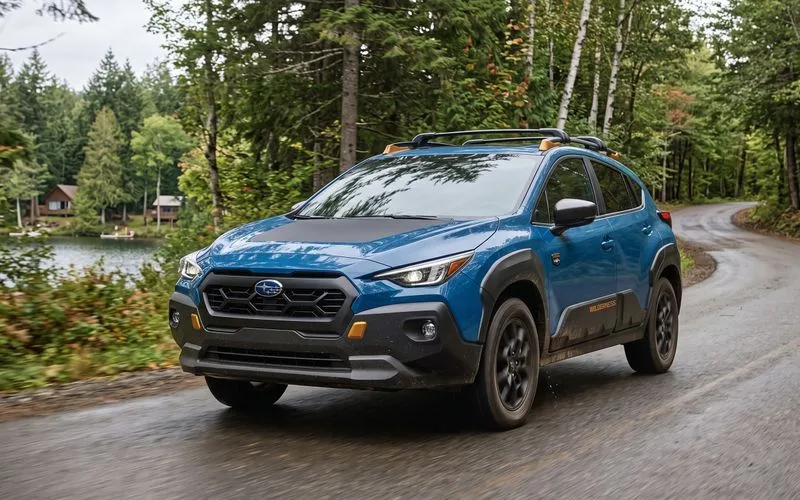 Subaru CrosstrekSubcompact SUVBetter at: Resale value
It's the other standard-AWD subcompact, and it beats the Eclipse Cross on fuel economy, driver assistance and resale while asking only a small price premium.
Compare 1.54D
1.54D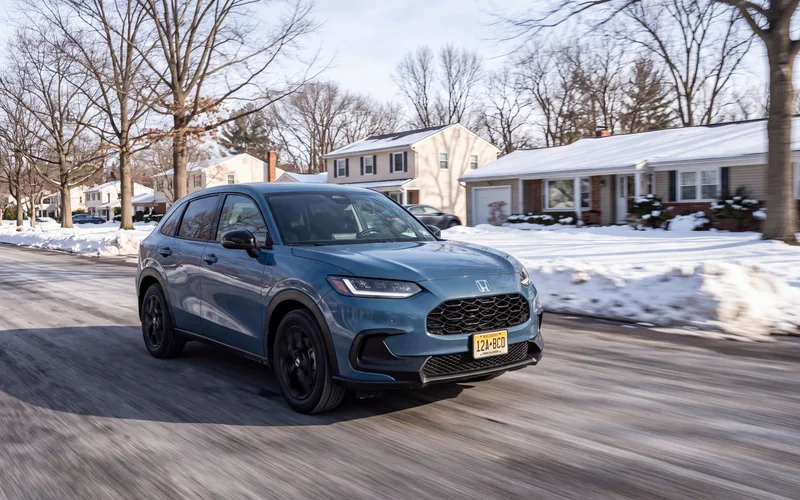 Honda HR-VSubcompact SUVBetter at: Safety tech
A more modern, better-riding crossover with more cargo room and a full standard safety suite, for buyers willing to pay extra for all-wheel drive.
Compare 1.52D
1.52D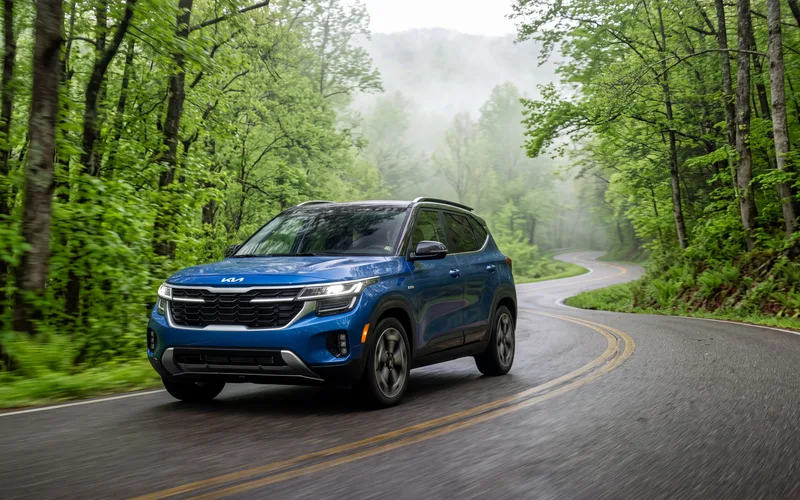 Kia SeltosSubcompact SUVBetter at: Cargo space
Matches Mitsubishi's 10-year powertrain warranty but adds 26.6 cu ft of cargo, a far newer interior and an available turbo engine with real power.
CompareHow it's evolved
8 scored model years · 2018–2026
Subject scores by year
Hover or tap a score to see what moved it versus the year before. A corner mark flags a big swing.
| Year | Performance | Efficiency | Safety | Space | Cost | Reliability | Tech | Use-case | Driving | Value |
|---|---|---|---|---|---|---|---|---|---|---|
| 2026 | 27 | 51 | 54 | 37 | 79 | 63 | 42 | 46 | 58 | 53 |
| 2025 | 27 | 49 | 54 | 37 | 79 | 63 | 41 | 46 | 58 | 53 |
| 2024 | 27 | 49 | 52 | 37 | 78 | 64 | 40 | 46 | 58 | 53 |
| 2023 | 27 | 49 | 48 | 34 | 77 | 63 | 38 | 43 | 55 | 53 |
| 2022 | 22 | 56 | 55 | 34 | 80 | 65 | 36 | 39 | 46 | 49 |
| 2020 | 21 | 56 | 50 | 33 | 79 | 57 | 31 | 47 | 48 | 52 |
| 2019 | 22 | 61 | 36 | 30 | 78 | 47 | 40 | 42 | 43 | 54 |
| 2018 | 23 | 52 | 35 | 31 | 81 | 45 | 40 | 39 | 48 | 56 |
Compare two years
Best fit & conditions
Higher scores mean a better fit for that use case. Learn more about use-case fit →
Subject profile
Academic Probation · NHTSA safety recalls
No NHTSA safety recall is on record for the 2026 Mitsubishi Eclipse Cross. Other model years of the Eclipse Cross have 2 — listed below.
2 recalls on other model years of the Eclipse Cross (2018–2019)
Sep 14, 2018Electrical system: software · Electronic stability control (esc) · Forward collision avoidance: adaptive cruise control · Service brakes, hydraulic: antilock/traction control/electronic limited slipThe software for the Hydraulic Unit Electronic Control Unit (ECU) may be incorrect, possibly preventing the intervention of a safety system such as automatic emergency braking, Anti-lock Braking (ABS), Electronic Stability Control (ESC), or the Brake Auto Hold (BAH) function when any of these systems are in use.
Defect
Mitsubishi Motors North America, Inc. (MMNA) is recalling certain 2018 Mitsubishi Outlander Sport vehicles equipped with a Forward Collision Mitigation (FCM) system and 2018 Mitsubishi Outlander PHEV and Eclipse Cross vehicles and 2017-2018 Outlander vehicles equipped with an Adaptive Cruise Control (ACC) system and/or an Electric Parking Brake (EPB) system. The software for the Hydraulic Unit Electronic Control Unit (ECU) may be incorrect, possibly preventing the intervention of a safety system such as automatic emergency braking, Anti-lock Braking (ABS), Electronic Stability Control (ESC), or the Brake Auto Hold (BAH) function when any of these systems are in use.
Risk
If the safety systems do not function as intended, it can increase the risk of a crash.
Remedy
MMNA will notify owners, and dealers will update the Hydraulic Unit-ECU software, free of charge. The recall began October 16, 2018. Owners may contact MMNA customer service at 1-888-648-7820. MMNA's number for this recall is SR-18-008.
NHTSA campaign 18V621000 ↗Manufacturer no. SR-18-00858,916 vehicles potentially affected (all models in the campaign)Owners notified Oct 16, 2018Filed by Mitsubishi Motors North America, Inc.Filed as ECLIPSE CROSSSep 14, 2018Electrical system: software · Forward collision avoidance: software: pedestrian/cyclist/object/obstacle/ recognitionDue to incorrect software, the FCM-ECU (Electronic Control Unit) may apply braking for longer than needed, even after a pedestrian is no longer detected.
Defect
Mitsubishi Motors North America (MMNA) is recalling certain 2018 Mitsubishi Outlander PHEV, Outlander Sport, 2018-2019 Eclipse Cross, and 2017-2018 Outlander vehicles equipped with a Forward Collision Mitigation (FCM) system that detects pedestrians. Due to incorrect software, the FCM-ECU (Electronic Control Unit) may apply braking for longer than needed, even after a pedestrian is no longer detected.
Risk
If the FCM-ECU software activates the brake for longer than necessary, the driver may react by applying additional braking. The resulting rapid deceleration of the vehicle can increase the risk of a rear-end collision.
Remedy
MMNA will notify owners, and dealers will reprogram the FCM-ECU software with updated software, free of charge. The recall is began October 16, 2018. Owners may contact MMNA customer service at 1-888-648-7820. MMNA's number for this recall is SR-18-007.
NHTSA campaign 18V620000 ↗Manufacturer no. SR-18-0079,166 vehicles potentially affected (all models in the campaign)Owners notified Oct 16, 2018Filed by Mitsubishi Motors North America, Inc.Filed as ECLIPSE CROSS
Source: NHTSA Office of Defects Investigation recall database, model years 2018–2026. Recalls are listed by model year as the manufacturer filed them; whether a specific car is affected depends on its VIN — check a VIN at nhtsa.gov ↗. NHTSA model names matched to this page: ECLIPSE CROSS.
Detailed scoring by subject
1Performance & PowertrainThe Eclipse Cross's lowest-graded category.0.00F
The 2026 Eclipse Cross carries over a single 1.5L turbocharged four rated at 152 hp across all trims — ES, LE, SE, SEL, SEL Touring, Black Edition and the new Ralliart — so there is no output upgrade anywhere in the lineup. That sits at the very bottom of the SUV normalization band (150–550 hp).
Peak torque of 184 lb-ft arrives early at 2,000 rpm, which is the powertrain's one genuine strength — low-rpm response around town is better than the horsepower figure suggests — but the absolute number is still low for the SUV band (130–500 lb-ft).
Car and Driver instrumented an Eclipse Cross SEL S-AWC at 8.4 s to 60 mph with a 16.6 s quarter mile at 83 mph; the powertrain, CVT and standard AWD are unchanged for 2026, so that figure carries. Aggregated tests across the generation average roughly 8.8 s, so 8.4 s is the optimistic end of a slow-to-adequate range.
The early 2,000-rpm torque peak gives the 1.5T decent off-the-line response and untaxed part-throttle manners, but there is noticeable turbo lag from a standstill and the engine turns coarse and loud when worked — a recurring complaint about acceleration in owner and critic reviews. It is a step behind the Outlander's newer mild-hybrid 1.5T, which has 48V assist to smooth the same basic engine.
A CVT with eight programmed ratios and paddle shifters keeps the engine near its torque peak in normal driving and simulates shifts to mask the elastic feel, but it still drones under sustained load and the stepped logic can feel artificial. Mid-pack CVT behavior for the segment — better than the Outlander Sport's older unit, no better than the Outlander's.
Rated at 1,500 lbs when equipped with the factory hitch — enough for a small utility trailer or a pair of jet skis and nothing more. That is near the floor of the SUV band (1,000–8,000 lbs) and below the Outlander's 2,000 lbs.
Every 2026 Eclipse Cross is S-AWC all-wheel drive — there is no front-drive trim, unlike the Outlander and most subcompact rivals where AWD is a paid option. The system adds Active Yaw Control brake-based torque vectoring across the rear axle and Auto/Snow/Gravel drive modes (plus Tarmac on higher trims), which is real sophistication at this price. No low range keeps it out of the top of the band.
8.5 inches of ground clearance and a Gravel mode that exploits the S-AWC torque split make it competent on a forest-service road, but this is a unibody crossover on street tires with no skid plates, no locking differential, no low range and no off-road trim. Light-duty dirt only — comparable to the Outlander Sport and well short of a Crosstrek.
One engine, one transmission, one drivetrain across all seven-plus trims: 1.5L turbo, CVT, S-AWC. No hybrid, no PHEV and no larger engine is offered in the US — the plug-in Eclipse Cross sold in other markets has never come here, and the new-generation electric Eclipse Cross is a Europe-only model. Textbook take-it-or-leave-it.
2Efficiency & RangeGrades below the middle of the scale.1.41D
The 1.5L turbo/CVT/S-AWC combination returns 25 MPG combined on every trim above the base ES, which manages 26 MPG on its smaller wheels. Standard all-wheel drive with no hybrid assist leaves it near the bottom of the SUV band (18–45) and behind its own showroom-mate, the 26-MPG Outlander Sport.
25 MPG city is uniform across the lineup — the ES/upper-trim split shows up only on the highway cycle. The early 2,000-rpm torque peak keeps the small turbo off boost in traffic, but there is no stop-start-plus-hybrid hardware to lift it further.
26 MPG highway on the volume trims is weak for a subcompact crossover — full-time S-AWC and the tall, heavily styled body both cost cruising economy. The base ES claws back 2 MPG on narrower rolling stock.
A 15.8-gallon tank paired with 25 MPG combined yields roughly 395 miles between fill-ups — mid-pack for the SUV band (230–600 mi) and the one efficiency measure where the Eclipse Cross is merely ordinary rather than poor. Modest economy is offset by a tank sized for a larger vehicle.
At EPA's 2026 assumptions the volume trims burn about 590 gallons a year, roughly $2,450 — a poor result in the SUV band (700–3,200, lower better) and about $250–450/yr worse than efficient subcompact rivals like the Corolla Cross or Trailblazer. Cheap regular fuel is the only thing keeping the number from being worse.
The 1.5L turbo runs on 87-octane regular with no premium recommendation, so the per-gallon cost is as low as gasoline gets and there are no special energy needs. Points off only because there is no flex-fuel, diesel or plug-in alternative to fall back on.
3SafetyGrades below the middle of the scale.1.61D
NHTSA rates the Eclipse Cross 5 stars overall — 4 stars frontal, 5 stars side, 4 stars rollover at 18.5% rollover probability — the best result in Mitsubishi's US SUV lineup and unchanged for the carryover 2026 model year. Replaces the placeholder 4-star estimate with the real tested figure.
The GK Eclipse Cross earned Good ratings across the original IIHS battery and a 2019 Top Safety Pick, but the two tests IIHS has since updated both come back Poor: the updated moderate overlap front (rear-occupant protection) and the updated side test. Those are Marginal/Poor results in key modern tests, and the car holds no current award.
Standard content on the $27,395 ES is Forward Collision Mitigation with pedestrian detection, lane departure warning, rear-seat reminder and a backup camera — no adaptive cruise, no blind-spot monitoring, and not even automatic high beams, which start on LE. ACC, BSW/LCA and RCTA all wait until the SE ($30,145), and lane-keeping assist is absent from every US trim.
The vehicle-to-vehicle system earned Superior under the original IIHS protocol, avoiding collisions at both 12 and 25 mph, and FCM with pedestrian detection is now standard rather than a Touring-package option. But the pedestrian system was rated only Basic for daytime, and nothing has been run through the current higher-speed pedestrian or night protocols; the SE's higher-speed FCM upgrade also leaves the base ES on the weaker calibration.
Blind Spot Warning with Lane Change Assist and Rear Cross Traffic Alert are standard from the SE up, covering three of five trims, but the two cheapest — ES and LE, where most of the volume sits — go without. Coverage is alert-only, with no steering or braking intervention.
The US Eclipse Cross offers lane departure warning only — an audible/visual alert with no steering intervention — on every trim. There is no lane keep assist and no lane centering; the MI-PILOT Assist package that pairs ACC with lane keeping is reserved for the larger Outlander, and the LKA-equipped Traffic Jam Assist reported for 2026 belongs to the new-generation Eclipse Cross sold outside the US, not this carryover GK.
Radar-based adaptive cruise is genuinely available — a meaningful advantage over the Outlander Sport, which offers none — but it is locked behind the SE and above, and with no lane keeping or centering to pair with it there is no combined highway-assist mode. The hardware and calibration date to the 2022 refresh of a 2018 platform.
No hands-free highway driving system is offered on any 2026 Eclipse Cross trim, and Mitsubishi markets nothing comparable to BlueCruise or Super Cruise in the US. The car lacks the lane centering such a system would be built on.
IIHS has rated two headlight variants on this generation and neither reaches Good — low beams show inadequate visibility on curves in all four curve tests plus some glare, and high beams are inadequate on both straightaways and curves. Automatic high beams help but skip the base ES entirely.
The 2022 refresh deleted the split rear window and enlarged the backlight, and reviewers now call the sightlines a strength — upright glass, a high seating position and slim front pillars. Camera compensation is thin below the top trim, though: the Multi-View 360-degree system is confined to the SEL, leaving volume trims with the mandated backup camera alone.
Two complete LATCH sets serve the rear outboard positions with tether anchors available, and the sliding, reclining rear bench buys back some room for a rear-facing seat. But the anchors are set into the seat bight rather than exposed, three-across is impractical on a 105.1-inch wheelbase, and the updated moderate overlap front result flags weaker rear-occupant protection generally.
4Space & ComfortOne of the Eclipse Cross's weakest categories.0.47F
Two-row, five-passenger layout across the entire 2026 lineup (ES, LE, Ralliart, SE, Black Edition, SEL) — no seven-seat configuration exists. Replaces the placeholder 5.7-seat figure.
Tall-crossover roofline gives mid-pack front headroom for the subcompact SUV class; the optional panoramic roof on SE/SEL and the Touring package costs roughly an inch and a half.
40.9 in sits near the bottom of the SUV band — a consequence of the short 105.1-in wheelbase and the second row's sliding travel eating into overall cabin length.
The sloping coupe-like tailgate and reclining rear backrest trade rear headroom for styling; 37.3 in is below the segment midpoint.
The strongest passenger-space number on the car: 37.1 in is genuinely good for a subcompact, and the 60/40 bench slides about eight inches and reclines through nine positions, so rear legroom can be traded against cargo depth.
No third row is offered in any 2026 Eclipse Cross trim — the model is a strictly two-row, five-seat subcompact SUV. Buyers needing a third row must move up to the Outlander.
23.4 cu ft falls below the 25 cu ft floor of the SUV normalization band — the weakest part of the package, and worse than nearly every subcompact rival (HR-V 24.4, Seltos 26.6, Trailblazer 25.3). Sliding the bench forward recovers some depth but that comes out of rear legroom.
50.1 cu ft seats-folded is also under the 55 cu ft band floor for SUVs; the tapered roof and high load floor cap what the fold-flat bench can deliver.
Competent rather than clever: the sliding/reclining 60/40 rear bench is the one genuinely useful flexibility feature, and there is a hands-free power liftgate from LE up, but the console bin, door pockets and cubbies are small and conventional, with no underfloor cargo tricks or onboard power.
Front buckets are consistently described as well-padded and supportive with good adjustability (8-way power driver's seat from SE, power passenger seat on SEL), but the rear bench is flat and thinly padded for long stints — a front-good/rear-mediocre split.
The 2022 refresh's softer tune absorbs rough pavement decently, but testers repeatedly flag secondary motions — the body rocks and feels bouncy over undulating surfaces, with noticeable roll in corners. Composed enough for commuting, short of the segment's better-damped entries.
Steady-state cruising is acceptable — the refresh added insulation and wind/road noise is reasonably contained — but the 1.5T sounds gritty and metallic under load and the CVT holds high revs, so the cabin is loud whenever you ask for acceleration.
The key comfort kit lands on mid trims: heated front seats from LE, dual-zone automatic climate from SE, heated steering wheel and leather only on SEL, and heated rear seats plus panoramic sunroof bundled into the $1,850 Touring package. No ventilated seats and no dedicated rear-seat climate vents at any price.
5Cost of OwnershipThe Eclipse Cross's best-graded category.3.34B+
The 2026 Eclipse Cross opens at $27,695 for the ES before destination, and every trim includes S-AWC all-wheel drive as standard — most subcompact rivals charge $1,400–$2,000 extra for AWD, so the delivered entry price undercuts an AWD HR-V, Corolla Cross or Crosstrek. It sits well into the low half of the SUV price band, though roughly $2,900 above its own Outlander Sport stablemate.
The SE is the trim reviewers single out as the value pick — it adds heated front seats, upgraded cabin materials and the fuller driver-assist suite over the LE for about $1,100 — landing near $32,200 as typically equipped. That is still under the delivered price of many AWD compact SUVs, but the whole six-trim ladder is compressed enough that the well-equipped SEL is only about $1,450 further on.
Running costs are low for the class: cheap parts, a modest 1.5-liter turbo four, and the first two years/30,000 miles of scheduled service covered by Mitsubishi. Repair exposure across the five-year window is unusually small because the 5-year/60,000-mile bumper-to-bumper warranty spans nearly all of it, where most rivals' basic coverage lapses at 3 years/36,000 miles — the standard S-AWC hardware (extra fluid services, four-wheel tire and brake wear) is what keeps this above the Outlander Sport's figure rather than at it.
Depreciation is what undoes the low purchase price. Both major residual trackers put the Eclipse Cross meaningfully behind its class — a consequence of a platform dating to 2018 with no redesign in sight, heavy incentive support, and thin Mitsubishi brand equity — and it is the weakest single item in this category by a wide margin.
Mitsubishi's 5-year/60,000-mile New Vehicle Limited Warranty tops the SUV normalization band and doubles the duration of the 3-year/36,000-mile coverage offered by nearly every mainstream rival this car is cross-shopped against. The balance transfers to subsequent owners.
The 10-year/100,000-mile powertrain warranty is the ceiling of the band and matches Hyundai/Kia for the longest coverage sold in the US — genuinely reassuring on a turbocharged CVT drivetrain with standard all-wheel drive. It runs from the original in-service date and applies to the original owner only.
The Mitsubishi Motors Confidence program bundles 2 years/30,000 miles of complimentary scheduled maintenance — three oil-and-filter changes, three tire rotations, three multi-point inspections and a cabin filter — with 5 years of unlimited-mileage roadside assistance, a strong package at this price. It falls short of the top band because the maintenance window is two years rather than three-plus and the connected-services trial is short and limited to upper trims; the maintenance benefit is also non-transferable.
$32,190 volume-trim price minus its estimated resale value after 5 years (47% retained, or about $15,129) leaves about $17,061 in depreciation. Add the projected $4,400 in 5-year maintenance and repairs, and owning this vehicle for 5 years costs about $21,461 in total.
6Reliability & QualityOne of the Eclipse Cross's strongest categories.2.27C
Consumer Reports predicts about-average reliability for the 2026 Eclipse Cross, extrapolated from brand history rather than model-specific survey depth, and the GK platform has been in production since 2017 with no major re-engineering — mature, but the 1.5T/CVT combination carries more wear-item risk than a naturally aspirated rival. Owner sentiment splits: KBB reviewers rate reliability a strength while calling quality the weakest attribute.
Mitsubishi finished at the bottom of the 2025 J.D. Power VDS at 256 PP100 against a 202 industry average, and Consumer Reports cannot rank the brand at all because it fields too few models to meet the two-models/two-model-years data minimum. RepairPal's shop-data view is far kinder, which keeps this out of the bottom band but well below mid-pack.
The Eclipse Cross's recall record is genuinely clean: NHTSA lists zero recalls for the 2024, 2025 and 2026 model years, and the generation's only significant campaign is the 2018–2019 forward-collision-mitigation software fix. Complaint volume across the whole 2018–2025 run is very low in absolute terms for an eight-year nameplate.
The 4B40 1.5-liter turbo and INVECS-III CVT are a moderate-risk pairing: teardown and service literature puts realistic engine life around 140k–150k miles with timing-chain stretch and turbo wear as the limiters, and the CVT at roughly 100k–150k with maintenance. In the Eclipse Cross's favor, its NHTSA complaint mix is dominated by electrical faults rather than the transmission cluster that plagues the sibling Outlander Sport.
Reviewers consistently place the cabin below the subcompact-SUV norm on materials — smudge-prone piano black and hard plastics through the rear compartment — and the 2018-vintage design concedes visibly to newer rivals like the Kona and Equinox. The 2022 facelift and the now-standard 8-inch touchscreen keep it clear of the bottom band that the far older Outlander Sport occupies.
Assembly is solid — the car is built at Mitsubishi's Okazaki, Aichi plant on a long-settled line, and there is no rattle, squeak or panel-alignment cluster in the NHTSA complaint data. Owner surveys nonetheless single out quality as the model's weakest attribute, which keeps this mid-band rather than higher.
Coverage is thin and still contracting — under 300 US stores after a 16% network shrink and 35 franchise terminations in 18 months — but the service experience inside those stores is currently the best in the mass market, with Mitsubishi taking the top mass-market spot in the 2026 J.D. Power CSI study on the largest year-over-year gain of any brand. Strong satisfaction partly offsets a sparse footprint that can still mean a long drive to a dealer.
Routine ownership costs are ordinary and the warranty is class-leading — 10 years/100,000 miles on the powertrain ties Hyundai and Kia for the longest in the segment — but the 1.5T's turbocharger and direct-injection hardware make the expensive repairs genuinely expensive, and Mitsubishi's aftermarket is small compared with a RAV4 or CR-V.
7Technology & InfotainmentOne of the Eclipse Cross's weakest categories.0.79F
For 2026 Mitsubishi deleted the base ES's 7.0-inch head unit, so the 8.0-inch Smartphone-Link Display Audio (SDA) is now the only screen offered — there is no larger option anywhere in the lineup, leaving it near the bottom of the SUV band.
The SDA system is a plain, dated but honest interface — Edmunds notes it is easier to use than the old touchpad-controlled setup and that physical volume and climate knobs survive, but the graphics, resolution and menu depth are a generation behind subcompact rivals. Usable rather than good.
Wired Apple CarPlay and Android Auto are now standard on every trim including the base ES — a real 2026 gain — but wireless projection is restricted to the top SEL/SEL Touring, so the volume LE and SE buyers still plug in.
Built-in navigation was dropped entirely for 2026, and onboard voice is limited to basic steering-wheel voice recognition — anything conversational comes from Siri or Google Assistant through phone projection, so the car itself offers almost nothing.
The ES makes do with four speakers, the SE steps to six, and the best system available is an eight-speaker Mitsubishi Power Sound System bundled into the $1,850 Touring package on the $33,695 range-topper — there is no branded premium audio anywhere in the lineup.
The Eclipse Cross keeps conventional analog dials with a small color driver-information display between them; no configurable full-digital cluster is offered on any 2026 trim, which is behind subcompact rivals that now fit 8–12-inch digital clusters.
There is no meaningful over-the-air update capability — Mitsubishi Connect is a telematics/remote-services channel, not a software delivery pipeline, and with built-in navigation deleted for 2026 there aren't even map updates to push. Infotainment fixes require a dealer visit.
My Mitsubishi Connect covers the core basics — remote start/stop, lock/unlock, vehicle status, locate, SOS and roadside — with a 24-month trial, but it is unavailable on the base ES, has no digital key, and reverts to a paid yearly subscription (about $99) once the trial lapses.
Device power is thin: one front USB on the ES, a second front port from the LE, and a rear USB port only from the SE up. Wireless phone charging is not offered on any trim and there is no household AC outlet — only 12V sockets.
FAST-Key proximity entry with push-button start is standard from the LE up and app-based remote start comes with Mitsubishi Connect, and the SE adds a hands-free power tailgate — but the base ES is still a plain remote-keyless-entry car and phone-as-key does not exist.
A rearview camera is standard and blind-spot warning with rear cross-traffic alert arrives on the SE, but the Multi-View (360-degree) camera is locked to the $31,845 SEL and above, its resolution is modest, and there is no automated parking assist.
A head-up display does exist — unusual for the class — but only inside the $1,850 Touring package on the top SEL, i.e. a $33,695 car, so no volume-trim buyer can get one.
8Use-Case FitGrades below the middle of the scale.1.09D
The sliding, reclining 60/40 rear bench is a genuine family asset — about eight inches of fore/aft travel and nine recline positions let a bulky rear-facing seat buy back the room it needs from the front passenger, and 37.1 in of rear legroom is good for a subcompact. What undoes it is cargo: 23.4 cu ft behind the second row is the smallest in the class, so a stroller plus a grocery run is a real squeeze, and sliding the bench forward to fix that takes the legroom back. LATCH is two outboard sets with anchors buried in the seat bight, and three-across on a 105.1-in wheelbase is impractical.
The headline is good — NHTSA rates it 5 stars overall, and Forward Collision Mitigation with pedestrian detection plus a rear-seat reminder are standard on the $27,395 ES. The substance is worse: the two IIHS tests updated since this generation launched both come back Poor, including the updated moderate-overlap front test that exists specifically to measure rear-occupant protection, headlights reach no better than Marginal, and there is no lane keeping or centering at any price. Blind-spot warning and rear cross-traffic alert start at the SE, so the two cheapest trims — where family buyers actually shop — go without.
Adequate for a two-hour drive, thin for a two-day one. The rear seat has the legroom and the recline range, but the bench itself is flat and lightly padded, there are no dedicated rear climate vents at any price, rear USB power starts at the SE, and heated rear seats exist only inside the $1,850 Touring package on the range-topper. With four aboard and their luggage, 23.4 cu ft runs out first, and the cabin gets loud whenever the 1.5T is asked to climb.
The commute is where this powertrain looks best — peak torque at 2,000 rpm means it pulls away from lights without downshift drama, and the CVT is smooth in stop-and-go. The 2022 refresh's enlarged backlight, upright glass and high seating position make it easy to place in traffic. Against that: noticeable turbo lag from a standstill, a gritty engine note whenever you exceed light throttle, a soft suspension that gets bouncy on broken pavement, and adaptive cruise that the LE and ES buyer cannot have at all.
Split verdict: the fuel bill is bad and everything else is cheap. 25 MPG combined is poor for a subcompact crossover in 2026 — worse than the showroom-mate Outlander Sport and roughly $250–450/yr behind a Corolla Cross or Trailblazer, with no hybrid or even 48V option to close the gap. But it drinks 87 octane, parts are inexpensive, the first 2 years/30,000 miles of scheduled service are covered, and the 5-year/60,000-mile bumper-to-bumper warranty means five years of commuting carries almost no repair exposure.
Genuinely easy to thread through a city: 179.0 inches on a 105.1-inch wheelbase is a small footprint, and the refresh that deleted the split rear window left sightlines reviewers now call a strength. Camera support is where it gives ground — a rearview camera is the only standard aid, the Multi-View 360-degree system is locked to the SEL and above, rear cross-traffic alert starts at the SE, and no trim offers automated parking.
Not a work vehicle in any meaningful sense. The factory hitch unlocks 1,500 lbs — enough for a small utility trailer, and more than the zero-rated HR-V or Trax, but 500 lbs short of its own Outlander. Behind that sits 152 hp through a CVT and 23.4 cu ft of cargo, so a load of materials and a trailer are mutually exclusive propositions. There is no bed, no payload-oriented configuration and no commercial variant.
The warranty is the strongest argument — 10 years/100,000 miles on the powertrain, and a clean recall sheet with zero NHTSA campaigns across 2024–2026. The hardware is less reassuring under abuse: service literature puts realistic 4B40 turbo-four life around 140k–150k miles and the INVECS-III CVT at roughly 100k–150k, neither of which is a duty-cycle story. There is no fleet presence to draw on, the interior offers no wear-focused surfaces, and a US dealer network under 300 stores makes downtime harder to plan around.
Almost nothing here is aimed at work. There is no onboard AC power of any kind — 12V sockets only, no household outlet, not even wireless charging — the cargo floor is carpeted rather than washable, tie-down provision is the basic set of floor hooks, and the upfit ecosystem amounts to a dealer accessory catalog (hitch, roof crossbars, cargo tray). The hands-free power liftgate from the LE up is the one feature that helps with hands full.
Range is the good news — a 15.8-gallon tank at 25 MPG combined is roughly 395 miles, about 411 on the highway, so fuel stops are normal-length and normally spaced. The fatigue side is weaker: adaptive cruise exists but only from the SE up and has no lane centering to pair with, so there is no highway-assist mode at any price; the front buckets are well-shaped but the rear bench is not; and the combination of soft, bouncy damping over undulating pavement and a coarse engine note on grades wears on you across a long day. 152 hp with four aboard makes mountain passes a downshifted, noisy affair.
The one mission where the Eclipse Cross out-argues cheaper rivals: S-AWC all-wheel drive is standard on every single trim — no front-drive base model, no AWD upcharge — with Active Yaw Control torque vectoring and Snow and Gravel drive modes, on 8.5 inches of ground clearance. That covers a trailhead, a ski road or a washboard forest-service track properly. It stops there: street tires, no skid plates, no low range, no off-road trim, a 1,500-lb tow rating that rules out most trailered toys, and no onboard power for camping.
Flexible in shape, short on volume. The sliding and reclining 60/40 bench genuinely lets you trade passenger space for cargo depth, and the hands-free liftgate from the LE up helps with an armful, but 23.4 cu ft seats-up and 50.1 cu ft seats-folded both fall below the floor of the SUV normalization band — the worst pair of numbers in the subcompact class. A tapered roofline caps how much a fold-flat bench can deliver, the load floor is high, and there is no underfloor storage. A factory hitch and accessory crossbars move bikes outside, which is often the answer here.
9Driving ExperienceOne of the Eclipse Cross's strongest categories.1.91C-
Secure but soft: the comfort-biased suspension produces pronounced body lean and an unsettled ride on broken pavement, and S-AWC's Active Yaw Control adds foul-weather traction rather than cornering bite. Bottom of the 'secure but unremarkable' band, below segment agility leaders like the Kona and Taos.
Overly light and numb — tuned for parking-lot ease rather than feedback, and CR ties the lack of cornering confidence partly to the steering weight. Precise enough in a straight line but well short of the 50-79 'precise but numb' midpoint.
The clearest dynamic strength: an instrumented 60-0 mph stop a couple of feet shorter than class norm with an easily modulated pedal. Held out of the 80+ band by front-end instability under hard braking.
Tip-in and part-throttle delivery are genuinely smooth and torque peaks at 2,000 rpm, but 152 hp through a CVT means the drivetrain is always working, and the simulated 8-speed shift steps can jolt. No mild-hybrid assist to smooth stop/start, unlike the Outlander's version of this engine.
Wind and road isolation is respectable, but the engine's character under load is the problem — a gritty, droning note whenever the CVT holds revs, which is often given the power deficit. Sources split on cruise refinement, so this scores on the loaded-throttle behavior the item asks about.
Best-in-class maneuverability and the vehicle's standout everyday-driving trait — 34.8 ft sits at the tight end of the SUV normalization band. Corrects the 36.9 ft placeholder, which was not a real figure.
Well-shaped, adjustable front seats and a high, commanding seating position, but the coupe-like roofline and thick rear pillars restrict outward visibility — the 2022 refresh's single rear window helped without fixing it. Comfortable for most with real blind spots, squarely mid-band.
Appliance-like by design and by result: ~8.4-9.0 s to 60 mph, numb light steering, body roll, and a CVT drone under load. The new-for-2026 Ralliart trim borrows a motorsport name but adds only graphics, badging and trim over the LE — no mechanical change.
10Value & Market PositionGrades below the middle of the scale.1.56D
Every 2026 Eclipse Cross — including the $27,695 ES — includes S-AWC all-wheel drive, LED headlamps, automatic climate control, power-adjustable front seats and an 8-inch touchscreen with Apple CarPlay/Android Auto, where an AWD HR-V, Corolla Cross or Trailblazer costs $1,400–$2,000 extra for the driveline alone. That genuine hardware advantage is offset by thin standard driver assistance: the ES and LE get only forward collision mitigation with pedestrian detection and lane departure warning, with blind-spot warning and adaptive cruise withheld until the SE and no lane-keeping assist or lane centering offered on any trim in 2026.
The entry point is the strongest part of the case — $29,490 delivered for a turbocharged AWD crossover backed by a 10-year/100,000-mile powertrain warranty that only Hyundai and Kia match — but the content-per-dollar argument thins going up the range, where a $32,190 delivered SE meets far more modern rivals. Working against it are 152 hp and an 8.4-second 0–60, a cabin U.S. News calls lower in material quality than competitors, no navigation or digital cluster on any trim, and the worst depreciation in the class, which erases much of the up-front saving over an ownership cycle.
Six trims — ES, LE, Ralliart, SE, Black Edition and SEL — plus a $1,850 SEL Touring Package span a narrow $27,695–$31,845 window, so budgets are covered but the ladder is short and the rungs are close together. Real mechanical choice is nil: one 1.5-liter turbo with a CVT and S-AWC on every car, with no FWD version to cut the entry price, no hybrid or PHEV in the US lineup, and Ralliart and Black Edition amounting to appearance packages on the LE's mechanical base rather than distinct configurations.
Trajectory is the bright spot: 17,508 US sales in 2025 was up nearly 38% year over year and the nameplate's second-best full year ever, capped by a Q4 that doubled against the prior year — a rare gain inside a brand whose total volume fell 14% to under 100,000 units. Absolute volume still keeps it well down the segment order, an order of magnitude behind subcompact leaders like the Trax and HR-V, so it reads as a rising niche seller rather than a mainstream one.
Mitsubishi is a weak badge in the US market and it measurably costs Eclipse Cross owners money: the brand finished bottom-10 of the mass-market field in J.D. Power's 2025 Vehicle Dependability Study, its dealer network has shrunk 16% to roughly 297 stores, total US volume dropped below 100,000, and the model carries class-worst depreciation that reviewers tie directly to brand standing rather than to the car. The 10-year powertrain warranty and the residual enthusiast equity in the Ralliart name provide some counterweight, but the image is a drag on the product, not a halo.
Cash buyers do well here — subvented financing from 1.99% APR over 48 months is advertised on the 2026 car and Mitsubishi's average rebate across the lineup runs about $3,500, on a slow-moving brand where dealers negotiate readily. The buyer benefit is one-sided, though: because residual values are so weak, leases are quoted from about $426/month and are singled out as among the worst in the lineup, so the discount advantage only materializes on a purchase.
The GK-generation Eclipse Cross has been in production since October 2017 and on sale in the US since the 2018 model year, making 2026 the ninth model year of one generation, and its single facelift — a substantial one with a new hood, face and rear tailgate/window — arrived five model years ago for 2022. Nothing changed for 2026 beyond a $350 price increase, and Mitsubishi's announced 2026 product news is entirely Outlander-focused, so buyers face a visibly dated car with no confirmed replacement to wait for.
Expert verdicts put it last or near-last in the class — U.S. News scores it 7.2/10 but writes that it 'finds itself safely at the bottom of our rankings,' and KBB's expert rating is 3.3 out of 5 — with no 10Best, NACTOY or comparison-test wins to its name and no IIHS Top Safety Pick, the headlight rating being the blocker. Owners are markedly warmer than critics, rating it 4.2/5 at KBB and 4/5 at Edmunds, which keeps it out of the very bottom of this band, but there is no award or comparison result to point to.