

The verdict
A struggling subcompact suv, strong on ownership and held back by performance.
The 2024 Eclipse Cross is a cheap way into a small SUV with all-wheel drive and a long warranty. AWD is standard on every trim from $27,840 delivered, the powertrain is covered for 10 years/100,000 miles, and the first two years of maintenance are included. The costs are a slow 152-hp engine, a small 23.4 cu ft cargo hold, Poor IIHS headlight and updated crash-test results, and some of the weakest resale value in the class. It makes sense if you buy on a deep discount and plan to keep it a long time, and much less sense if you trade in every few years.
Jump to scoresStrengths
- Long warranty and low running costs
- Standard AWD at a low price
- Easy to park and turn
What holds it back
- Slow, strained powertrain
- Small cargo hold
- Weak IIHS results and poor headlights
Top alternatives
Cars shoppers cross-shop with the Mitsubishi Eclipse Cross 2.05C
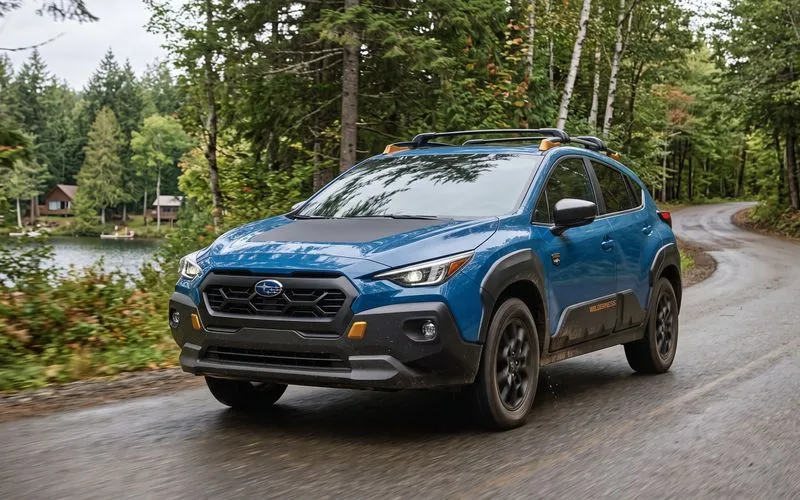 Subaru CrosstrekSubcompact SUVBetter at: Resale value
It's the other standard-AWD subcompact, and it beats the Eclipse Cross on fuel economy, driver assistance and resale while asking only a small price premium.
Compare 1.54D
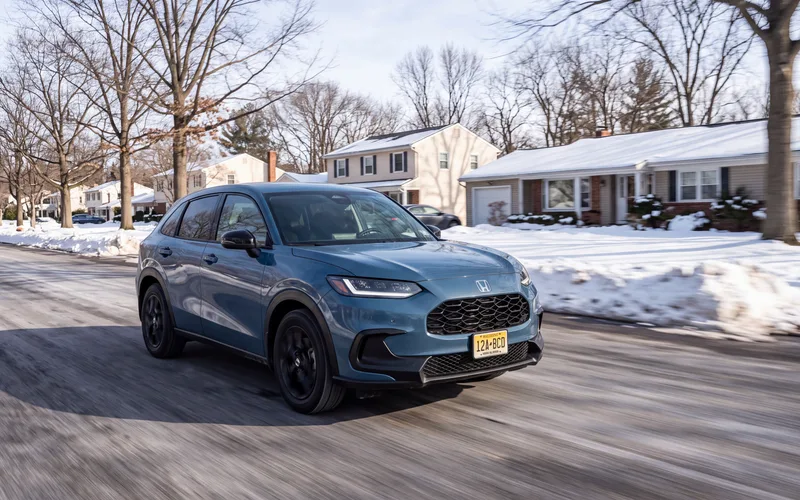 Honda HR-VSubcompact SUVBetter at: Safety tech
A more modern, better-riding crossover with more cargo room and a full standard safety suite, for buyers willing to pay extra for all-wheel drive.
Compare 1.52D
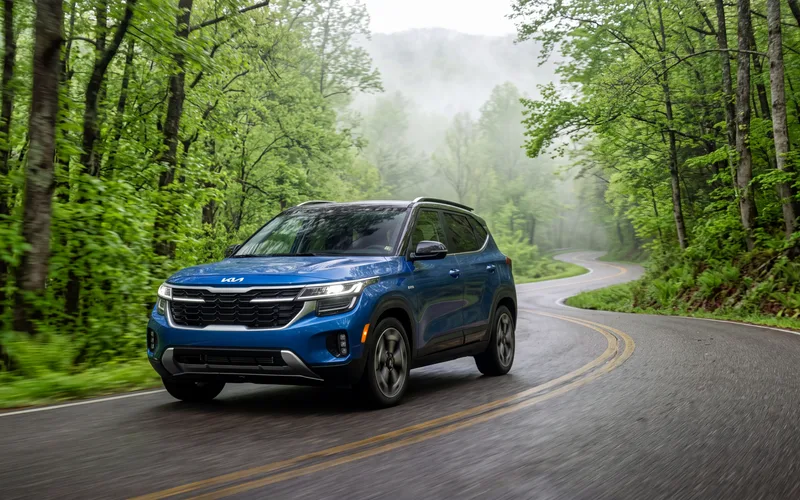 Kia SeltosSubcompact SUVBetter at: Cargo space
Matches Mitsubishi's 10-year powertrain warranty but adds 26.6 cu ft of cargo, a far newer interior and an available turbo engine with real power.
CompareHow it's evolved
8 scored model years · 2018–2026
Subject scores by year
Hover or tap a score to see what moved it versus the year before. A corner mark flags a big swing.
| Year | Performance | Efficiency | Safety | Space | Cost | Reliability | Tech | Use-case | Driving | Value |
|---|---|---|---|---|---|---|---|---|---|---|
| 2026 | 27 | 51 | 54 | 37 | 79 | 63 | 42 | 46 | 58 | 53 |
| 2025 | 27 | 49 | 54 | 37 | 79 | 63 | 41 | 46 | 58 | 53 |
| 2024 | 27 | 49 | 52 | 37 | 78 | 64 | 40 | 46 | 58 | 53 |
| 2023 | 27 | 49 | 48 | 34 | 77 | 63 | 38 | 43 | 55 | 53 |
| 2022 | 22 | 56 | 55 | 34 | 80 | 65 | 36 | 39 | 46 | 49 |
| 2020 | 21 | 56 | 50 | 33 | 79 | 57 | 31 | 47 | 48 | 52 |
| 2019 | 22 | 61 | 36 | 30 | 78 | 47 | 40 | 42 | 43 | 54 |
| 2018 | 23 | 52 | 35 | 31 | 81 | 45 | 40 | 39 | 48 | 56 |
Compare two years
Best fit & conditions
Higher scores mean a better fit for that use case. Learn more about use-case fit →
Subject profile
Academic Probation · NHTSA safety recalls
No NHTSA safety recall is on record for the 2024 Mitsubishi Eclipse Cross. Other model years of the Eclipse Cross have 2 — listed below.
2 recalls on other model years of the Eclipse Cross (2018–2019)
Sep 14, 2018Electrical system: software · Electronic stability control (esc) · Forward collision avoidance: adaptive cruise control · Service brakes, hydraulic: antilock/traction control/electronic limited slipThe software for the Hydraulic Unit Electronic Control Unit (ECU) may be incorrect, possibly preventing the intervention of a safety system such as automatic emergency braking, Anti-lock Braking (ABS), Electronic Stability Control (ESC), or the Brake Auto Hold (BAH) function when any of these systems are in use.
Defect
Mitsubishi Motors North America, Inc. (MMNA) is recalling certain 2018 Mitsubishi Outlander Sport vehicles equipped with a Forward Collision Mitigation (FCM) system and 2018 Mitsubishi Outlander PHEV and Eclipse Cross vehicles and 2017-2018 Outlander vehicles equipped with an Adaptive Cruise Control (ACC) system and/or an Electric Parking Brake (EPB) system. The software for the Hydraulic Unit Electronic Control Unit (ECU) may be incorrect, possibly preventing the intervention of a safety system such as automatic emergency braking, Anti-lock Braking (ABS), Electronic Stability Control (ESC), or the Brake Auto Hold (BAH) function when any of these systems are in use.
Risk
If the safety systems do not function as intended, it can increase the risk of a crash.
Remedy
MMNA will notify owners, and dealers will update the Hydraulic Unit-ECU software, free of charge. The recall began October 16, 2018. Owners may contact MMNA customer service at 1-888-648-7820. MMNA's number for this recall is SR-18-008.
NHTSA campaign 18V621000 ↗Manufacturer no. SR-18-00858,916 vehicles potentially affected (all models in the campaign)Owners notified Oct 16, 2018Filed by Mitsubishi Motors North America, Inc.Filed as ECLIPSE CROSSSep 14, 2018Electrical system: software · Forward collision avoidance: software: pedestrian/cyclist/object/obstacle/ recognitionDue to incorrect software, the FCM-ECU (Electronic Control Unit) may apply braking for longer than needed, even after a pedestrian is no longer detected.
Defect
Mitsubishi Motors North America (MMNA) is recalling certain 2018 Mitsubishi Outlander PHEV, Outlander Sport, 2018-2019 Eclipse Cross, and 2017-2018 Outlander vehicles equipped with a Forward Collision Mitigation (FCM) system that detects pedestrians. Due to incorrect software, the FCM-ECU (Electronic Control Unit) may apply braking for longer than needed, even after a pedestrian is no longer detected.
Risk
If the FCM-ECU software activates the brake for longer than necessary, the driver may react by applying additional braking. The resulting rapid deceleration of the vehicle can increase the risk of a rear-end collision.
Remedy
MMNA will notify owners, and dealers will reprogram the FCM-ECU software with updated software, free of charge. The recall is began October 16, 2018. Owners may contact MMNA customer service at 1-888-648-7820. MMNA's number for this recall is SR-18-007.
NHTSA campaign 18V620000 ↗Manufacturer no. SR-18-0079,166 vehicles potentially affected (all models in the campaign)Owners notified Oct 16, 2018Filed by Mitsubishi Motors North America, Inc.Filed as ECLIPSE CROSS
Source: NHTSA Office of Defects Investigation recall database, model years 2018–2026. Recalls are listed by model year as the manufacturer filed them; whether a specific car is affected depends on its VIN — check a VIN at nhtsa.gov ↗. NHTSA model names matched to this page: ECLIPSE CROSS.
Detailed scoring by subject
1Performance & PowertrainThe Eclipse Cross's lowest-graded category.0.00F
The 2024 Eclipse Cross is a carry-over year of the facelifted first generation. It uses a single 152-hp 1.5L direct-injection turbo four on all four trims (ES, LE, SE, SEL), which puts it at the very bottom of the SUV band.
Peak torque is 184 lb-ft on a broad low-rpm plateau. That is useful around town but low for the SUV band.
Car and Driver ran a post-facelift SEL S-AWC from 0 to 60 in 8.4 s. The 2024 car has the same engine, CVT and weight, so that result carries over. Acceleration is slow-to-adequate for the class.
The early torque plateau gives decent part-throttle response. There is lag from a stop, and the engine turns coarse and loud when worked hard. Reviewers repeatedly name acceleration as a weakness.
The CVT has eight simulated steps and paddle shifters, which hide some of the rubber-band feel. It still drones under sustained load, which is mid-pack CVT behavior.
Every trim is rated to tow 1,500 lbs, enough for a small utility trailer. That is near the floor of the SUV band.
S-AWC all-wheel drive is standard on the 2024 retail trims. It adds Active Yaw Control brake-based torque vectoring and Auto/Snow/Gravel modes, which is real sophistication at this price. It has no low range, and EPA also lists a 2WD certification.
It has about 8.5 in of ground clearance and a Gravel mode, which is fine for dirt roads. It is a unibody crossover on street tires, with no skid plates, lockers, low range or off-road trim.
One engine and one CVT across all trims. No hybrid or PHEV is offered in the US; the overseas Eclipse Cross PHEV was never sold here.
2Efficiency & RangeGrades below the middle of the scale.1.29D
The volume S-AWC trims are EPA-rated at 25 MPG combined, and the base ES gets 26. With AWD and no hybrid assist, it sits in the lower-middle of the gas SUV pool.
Every 2024 configuration is rated 25 MPG city.
26 MPG on the highway is weak for a small crossover. The AWD system and tall body both hurt cruising economy.
A 15.8-gallon tank at 25 MPG combined gives about 395 miles per fill-up, an ordinary figure for the band.
EPA's annual fuel-cost estimate for the volume trims is $2,700 on regular fuel, which is below average for a small SUV.
The 1.5L turbo runs on 87-octane regular; premium is neither required nor recommended.
3SafetyGrades below the middle of the scale.1.52D
NHTSA rates both the FWD and AWD 2024 Eclipse Cross 5 stars overall, with 4-star frontal, 5-star side and 4-star rollover results.
The small overlap front and original moderate overlap tests are still Good. Both of the tests IIHS has since updated come back Poor, though: the updated moderate overlap front scores the rear passenger's head/neck Poor, and the updated side test scores structure Marginal and driver torso Poor. Seat belt reminders are Poor too, so the car has no 2024 award.
Every trim gets Forward Collision Mitigation with pedestrian detection and lane departure warning. Blind-spot warning, rear cross-traffic alert and adaptive cruise (new on the SE for 2024) arrive only at SE; the ES and LE go without all three.
Under the original IIHS protocol this generation's vehicle-to-vehicle system earned Superior, avoiding collisions at 12 and 25 mph, but its pedestrian AEB rated only Basic. IIHS publishes no front crash prevention rating for 2024 under the current protocols, and no nighttime pedestrian result exists.
Blind Spot Warning with Lane Change Assist and Rear Cross Traffic Alert are standard on the SE and SEL but absent from the ES and LE. They only warn; they never brake or steer.
US trims get lane departure warning only, an alert with no steering input. No trim offers lane keep assist or lane centering; Mitsubishi keeps MI-PILOT Assist for the Outlander.
For 2024, radar adaptive cruise became standard on the SE, where it had been a Touring-package option, and it is standard on the SEL. The ES and LE still have conventional cruise only. With no lane keeping to pair it with, there is no highway assist on any trim.
No 2024 Eclipse Cross trim offers hands-free highway driving, and the car lacks the lane centering such a system would need.
IIHS rates the halogen projectors on the ES and LE, the volume trims, Poor. Low beams are inadequate in all four curve tests with some glare, and high beams are inadequate on straights and curves. High-beam assist on the LE doesn't lift the rating, and the SE/SEL LEDs are not rated for 2024 (the 2022 LEDs rated Poor too).
The 2022 refresh replaced the split rear window with a single backlight, and reviewers now credit the upright glass and high seating position. The coupe-like C-pillars still limit the rear three-quarter view, and the multi-view camera comes only on the SEL.
IIHS rates LATCH ease of use Good, with full hardware in both outboard rear seats, and the sliding, reclining rear bench helps fit a rear-facing seat. Fitting three across is impractical on a 105.1-inch wheelbase, and the Poor rear-passenger result in the updated moderate overlap test tempers the picture.
4Space & ComfortOne of the Eclipse Cross's weakest categories.0.42F
Two-row, five-passenger subcompact SUV on every 2024 trim.
Competitive front headroom without the Touring package's panoramic roof.
Front legroom is below the SUV band midpoint.
Adequate rear headroom despite the coupe-like roofline.
Generous rear legroom for a subcompact; the rear bench slides and reclines.
No third row is offered on any trim.
Cargo behind the rear seat is small for an SUV and sits below the band floor.
Maximum cargo trails the class and sits below the band floor.
Sliding rear bench trades legroom for cargo and SE adds a hands-free liftgate for 2024, but storage is otherwise ordinary and there is no AC outlet.
Front buckets are supportive with decent adjustment, but the rear bench is flat and reviewers call the seats thinly padded.
Soft, bouncy suspension that still gets harsh over sharp imperfections.
Wind and road noise are reasonably contained, but the engine and CVT are loud under acceleration.
Heated front seats from LE, dual-zone climate from SE, heated wheel on SEL; heated rear seats only in the SEL Touring package and no ventilated seats.
5Cost of OwnershipThe Eclipse Cross's best-graded category.3.31B+
For 2024 every trim gets S-AWC all-wheel drive as standard (FWD dropped), so the entry ES is an AWD car at under $28k delivered.
The SE is the mid-range trim that carries the bulk of dealer inventory; price as delivered with destination.
Industry estimates bracket $2.4k–$4.4k; the 2024 model year is the first with 2-year/30,000-mile complimentary maintenance, which trims out-of-pocket early servicing, so a midpoint is used.
Resale is among the weakest in the segment; CarEdge's 56% five-year depreciation and KBB's harsher SE projection put retention in the low 40s.
Mitsubishi's 5-year/60,000-mile New Vehicle Limited Warranty tops the 3-year/36,000-mile segment norm.
Class-leading powertrain coverage matched only by Hyundai/Kia, though it does not transfer to subsequent owners.
2024 is the first model year with included scheduled maintenance (2 yr/30k mi of oil changes, rotations, inspections), on top of 5-year unlimited-mile roadside assistance — solid, though shorter than Toyota's or Hyundai's programs.
$30,540 volume-trim price minus its estimated resale value after 5 years (42% retained, or about $12,827) leaves about $17,713 in depreciation. Add the projected $3,400 in 5-year maintenance and repairs, and owning this vehicle for 5 years costs about $21,113 in total.
6Reliability & QualityOne of the Eclipse Cross's strongest categories.2.35C+
J.D. Power gives the 2024 Eclipse Cross a 'Great' 81/100 Quality & Reliability score, while Consumer Reports' outlook for the model has been about-average and built largely on brand history, given the small survey sample. 2024 is a carry-over year of the 2018 first generation, facelifted for MY2022, so the design is mature, but the 1.5T/CVT pairing keeps it out of the top band.
Mitsubishi's dependability record is volatile: it ranked fourth among mass-market brands in J.D. Power's 2023 VDS, then fell to near the bottom in 2025. Consumer Reports can't rank the brand because it doesn't have enough models with survey data. Around the 2024 model year that averages out to mid-pack at best, with little consistency.
NHTSA shows no recall campaigns on file for the 2024 Eclipse Cross. The generation's only campaigns are the two 2018 launch-year software recalls, one of which also covers 2019. Complaints across the run cluster on electrical and driver-assist systems in the launch years, not on a systemic powertrain or fire issue.
The 2024 uses the same 4B40 1.5-liter turbo with the INVECS-III CVT and standard S-AWC, which is a moderate-risk pairing. Realistic engine life is quoted around 140k–150k miles, with timing-chain stretch and turbo wear as the limits, and the CVT around 100k–150k with fluid service. No transmission failure cluster shows up in complaint data.
Reviewers rate the cabin materials below the subcompact-SUV norm, citing piano-black trim that smudges easily and hard plastics, especially in the rear seat area. The 2022 facelift keeps the cabin out of the bottom band, but it looks dated next to newer rivals.
The Eclipse Cross is built in Japan on a mature line, and NHTSA complaint data shows no rattle or panel-alignment cluster. J.D. Power's strong 2024 quality score supports solid initial quality, though owners still rate quality below styling and reliability.
The US dealer network is thin, at roughly 300 stores after a sustained contraction, so the nearest dealer can be a long drive. Service satisfaction at those stores is strong, though: Mitsubishi ranked first among mass-market brands in J.D. Power's 2023 Customer Service Index, which partly offsets the sparse coverage.
Routine ownership costs are ordinary, and the warranty is among the longest in the class. Against that, the turbo and direct-injection hardware make major repairs costly, and the aftermarket is small compared with class leaders.
7Technology & InfotainmentOne of the Eclipse Cross's weakest categories.0.64F
The volume LE/SE trims get a small 8-in display; the base ES has 7 in.
Straightforward and responsive with physical climate/volume controls, but the interface looks dated.
Wired CarPlay/Android Auto only from LE up; the base ES lacks phone projection and wireless is not offered.
Native navigation comes on SE and above with basic voice recognition; most owners will use phone projection.
Four speakers on ES, six on SE; the only upgrade is an 8-speaker system in the SEL Touring package.
Analog gauges flanking a color multi-information display on every trim; no digital cluster.
No over-the-air software update program for the vehicle.
My Mitsubishi Connect on LE and up for 2024 offers remote start, lock and status on a trial-then-subscription basis.
A single USB on ES, a second from LE, a rear port new on SE for 2024; no wireless charging.
Proximity entry/push-button start became standard on LE for 2024; remote start via app; hands-free liftgate from SE; no phone-as-key.
Rear camera standard, surround-view limited to SEL; no parking automation.
A color HUD is available, but only in the top SEL Touring package.
8Use-Case FitGrades below the middle of the scale.1.09D
Good rear legroom, sliding bench and easy LATCH help, but cargo space is tight for strollers and gear.
Five-star NHTSA overall, but Poor IIHS updated-test and headlight results, and blind-spot monitoring skips the cheaper ES/LE trims.
Rear bench is flat and thinly padded, rear amenities are sparse and cargo with seats up is small.
Torquey turbo helps around town and SE now has ACC, but the ride is jittery and the CVT's fake shifts can jolt.
Average running costs: regular fuel, 25 mpg combined, plus two years of free maintenance new for 2024.
Compact footprint and a tight turning circle make it easy in the city; surround-view on SEL only.
A 1,500-lb tow rating and small cargo hold make it unsuited to real work.
Long powertrain warranty, but a small turbo/CVT powertrain with no fleet reputation for hard use.
12V outlets and USB only, accessory hitch and crossbars; no work-oriented features or upfit program.
About 395 miles per tank and ACC on SE and up, but no lane centering, a bouncy ride and engine noise limit it as a tourer.
S-AWC with a Gravel mode and 8.5 in of clearance handles dirt roads; tow rating is modest.
Small cargo hold even with seats folded; a sliding rear bench and an accessory hitch/roof bars help a little.
9Driving ExperienceOne of the Eclipse Cross's strongest categories.1.91C-
Safe and predictable, but body lean is pronounced and there is little composure when pushed.
Light and numb, fine for parking, uninvolving elsewhere.
Short instrumented stops and an easily modulated pedal; some front-end wiggle under hard braking.
Turbo torque arrives low and delivery is smooth, but acceleration is slow and the CVT's simulated shifts can jolt.
Engine turns gritty and loud under hard acceleration.
One of the tightest turning circles among SUVs.
Good seat and wheel adjustability and simple controls; rear three-quarter visibility is limited by the sloping roofline.
Slow and appliance-like; the 2024 Ralliart special edition is cosmetic only.
10Value & Market PositionGrades below the middle of the scale.1.55D
For 2024 S-AWC all-wheel drive became standard on every trim, alongside forward collision mitigation, an 8-inch touchscreen with smartphone integration and heated front seats — rivals typically charge $1,500+ for AWD alone.
Cheap standard AWD, a 10-year powertrain warranty and newly included maintenance are offset by a 152-hp powertrain, mediocre fuel economy, a dated cabin and weak resale, so value is fair rather than a bargain.
Six trims (ES, LE, SE, Black Edition, SEL, Ralliart) spread over ~$4,800, but one engine, one transmission and — with FWD dropped for 2024 — one drivetrain.
12,724 US sales in 2024 is up sharply year on year but a small fraction of segment leaders selling well over 100,000 units.
Mitsubishi is a budget/value brand in the US with a thin dealer network and a weak resale reputation; the image drags on the model more than it helps.
Low-volume Mitsubishi dealers routinely ran promotional APR and cash-back offers on the Eclipse Cross through 2024, making it very negotiable.
First generation launched for MY2018 with its only facelift for MY2022; by 2024 it is an aging design, and the second-generation nameplate is a Europe-only EV with no US successor announced.
Reviewers credit styling, standard AWD and the warranty but rank it near the bottom of the class on refinement, power, efficiency and cargo; no major awards.