

The verdict
A struggling subcompact suv, strong on ownership and held back by performance.
The 2019 Eclipse Cross is a budget subcompact SUV that trades outright polish for a genuinely class-leading warranty and low running costs: a 10-year/100,000-mile powertrain warranty, regular-gas fuel, and a projected $2,413 in 5-year maintenance make it cheap to keep. What you give up is obvious the moment you drive it or load it — a 152 hp turbo four needs 9.1 seconds to reach 60 mph, the ride wallows through corners, and the 22.6 cu ft cargo hold trails nearly every rival in the segment. It's a sensible pick for someone who wants AWD and warranty peace of mind at a low price and doesn't care much about how it drives or how much it can carry.
Jump to scoresStrengths
- Best-in-class powertrain warranty
- Cheap to buy and cheap to keep
- IIHS Top Safety Pick on regular gas
What holds it back
- Slow and underpowered
- Sloppy handling and vague steering
- Smallest-in-class cargo hold
Top alternatives
Cars shoppers cross-shop with the Mitsubishi Eclipse Cross 2.05C
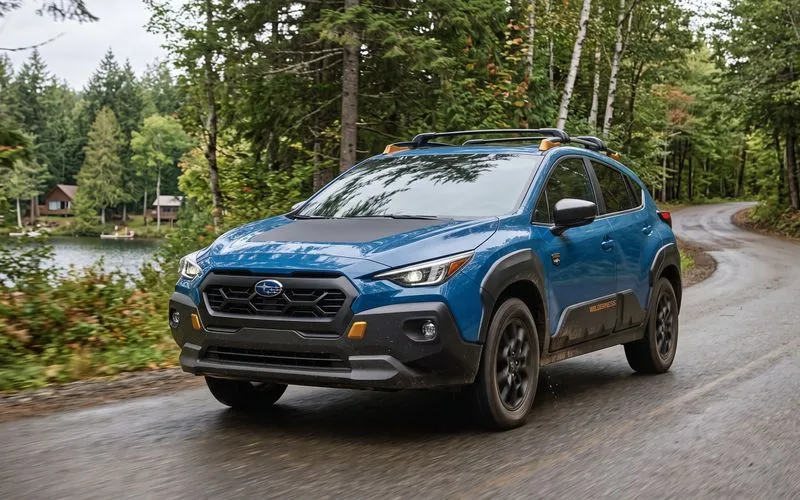 Subaru CrosstrekSubcompact SUVBetter at: Resale value
It's the other standard-AWD subcompact, and it beats the Eclipse Cross on fuel economy, driver assistance and resale while asking only a small price premium.
Compare 1.54D
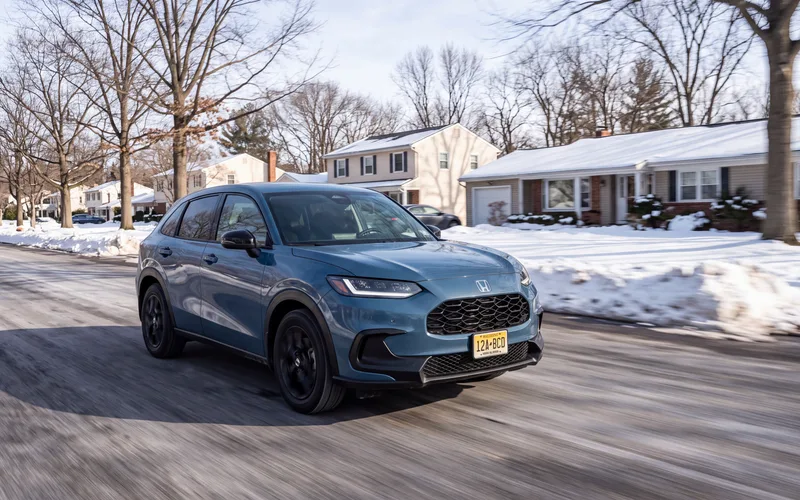 Honda HR-VSubcompact SUVBetter at: Safety tech
A more modern, better-riding crossover with more cargo room and a full standard safety suite, for buyers willing to pay extra for all-wheel drive.
Compare 1.52D
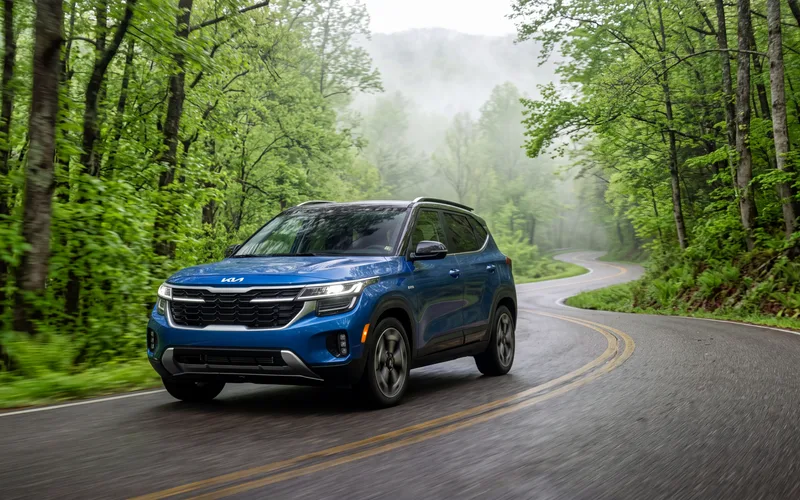 Kia SeltosSubcompact SUVBetter at: Cargo space
Matches Mitsubishi's 10-year powertrain warranty but adds 26.6 cu ft of cargo, a far newer interior and an available turbo engine with real power.
CompareHow it's evolved
8 scored model years · 2018–2026
Subject scores by year
Hover or tap a score to see what moved it versus the year before. A corner mark flags a big swing.
| Year | Performance | Efficiency | Safety | Space | Cost | Reliability | Tech | Use-case | Driving | Value |
|---|---|---|---|---|---|---|---|---|---|---|
| 2026 | 27 | 51 | 54 | 37 | 79 | 63 | 42 | 46 | 58 | 53 |
| 2025 | 27 | 49 | 54 | 37 | 79 | 63 | 41 | 46 | 58 | 53 |
| 2024 | 27 | 49 | 52 | 37 | 78 | 64 | 40 | 46 | 58 | 53 |
| 2023 | 27 | 49 | 48 | 34 | 77 | 63 | 38 | 43 | 55 | 53 |
| 2022 | 22 | 56 | 55 | 34 | 80 | 65 | 36 | 39 | 46 | 49 |
| 2020 | 21 | 56 | 50 | 33 | 79 | 57 | 31 | 47 | 48 | 52 |
| 2019 | 22 | 61 | 36 | 30 | 78 | 47 | 40 | 42 | 43 | 54 |
| 2018 | 23 | 52 | 35 | 31 | 81 | 45 | 40 | 39 | 48 | 56 |
Compare two years
Best fit & conditions
Higher scores mean a better fit for that use case. Learn more about use-case fit →
Subject profile
Academic Probation · NHTSA safety recalls
Sep 14, 2018Electrical system: software · Forward collision avoidance: software: pedestrian/cyclist/object/obstacle/ recognitionDue to incorrect software, the FCM-ECU (Electronic Control Unit) may apply braking for longer than needed, even after a pedestrian is no longer detected.
Defect
Mitsubishi Motors North America (MMNA) is recalling certain 2018 Mitsubishi Outlander PHEV, Outlander Sport, 2018-2019 Eclipse Cross, and 2017-2018 Outlander vehicles equipped with a Forward Collision Mitigation (FCM) system that detects pedestrians. Due to incorrect software, the FCM-ECU (Electronic Control Unit) may apply braking for longer than needed, even after a pedestrian is no longer detected.
Risk
If the FCM-ECU software activates the brake for longer than necessary, the driver may react by applying additional braking. The resulting rapid deceleration of the vehicle can increase the risk of a rear-end collision.
Remedy
MMNA will notify owners, and dealers will reprogram the FCM-ECU software with updated software, free of charge. The recall is began October 16, 2018. Owners may contact MMNA customer service at 1-888-648-7820. MMNA's number for this recall is SR-18-007.
NHTSA campaign 18V620000 ↗Manufacturer no. SR-18-0079,166 vehicles potentially affected (all models in the campaign)Owners notified Oct 16, 2018Filed by Mitsubishi Motors North America, Inc.Filed as ECLIPSE CROSS
1 recall on other model years of the Eclipse Cross (2018)
Sep 14, 2018Electrical system: software · Electronic stability control (esc) · Forward collision avoidance: adaptive cruise control · Service brakes, hydraulic: antilock/traction control/electronic limited slipThe software for the Hydraulic Unit Electronic Control Unit (ECU) may be incorrect, possibly preventing the intervention of a safety system such as automatic emergency braking, Anti-lock Braking (ABS), Electronic Stability Control (ESC), or the Brake Auto Hold (BAH) function when any of these systems are in use.
Defect
Mitsubishi Motors North America, Inc. (MMNA) is recalling certain 2018 Mitsubishi Outlander Sport vehicles equipped with a Forward Collision Mitigation (FCM) system and 2018 Mitsubishi Outlander PHEV and Eclipse Cross vehicles and 2017-2018 Outlander vehicles equipped with an Adaptive Cruise Control (ACC) system and/or an Electric Parking Brake (EPB) system. The software for the Hydraulic Unit Electronic Control Unit (ECU) may be incorrect, possibly preventing the intervention of a safety system such as automatic emergency braking, Anti-lock Braking (ABS), Electronic Stability Control (ESC), or the Brake Auto Hold (BAH) function when any of these systems are in use.
Risk
If the safety systems do not function as intended, it can increase the risk of a crash.
Remedy
MMNA will notify owners, and dealers will update the Hydraulic Unit-ECU software, free of charge. The recall began October 16, 2018. Owners may contact MMNA customer service at 1-888-648-7820. MMNA's number for this recall is SR-18-008.
NHTSA campaign 18V621000 ↗Manufacturer no. SR-18-00858,916 vehicles potentially affected (all models in the campaign)Owners notified Oct 16, 2018Filed by Mitsubishi Motors North America, Inc.Filed as ECLIPSE CROSS
Source: NHTSA Office of Defects Investigation recall database, model years 2018–2026. Recalls are listed by model year as the manufacturer filed them; whether a specific car is affected depends on its VIN — check a VIN at nhtsa.gov ↗. NHTSA model names matched to this page: ECLIPSE CROSS.
Detailed scoring by subject
1Performance & PowertrainThe Eclipse Cross's lowest-graded category.0.00F
Single-engine lineup for 2019; 152 hp sits at the bottom of the subcompact SUV horsepower band.
Modest peak torque arriving early helps low-speed response but is low versus the segment band.
Instrumented tests cluster in the high-8 to low-9 second range for this powertrain; no trim is quick.
Turbo delivery is smooth at cruising speeds but reviewers note the engine feels strained and short on power under full throttle, with some turbo lag off idle.
The CVT (branded 'INVECS-III' with 8 simulated steps and paddle shifters) behaves reasonably in Sport mode but drones and hunts under harder acceleration, typical CVT criticism from reviewers.
Towing capacity is at the low end of the subcompact SUV band — this is a crossover, not a work-capable vehicle.
S-AWC (Super All-Wheel Control) with Active Yaw Control is optional on all non-base trims for 2019, adding auto/snow/gravel drive modes — genuinely sophisticated for the class, but not standard across the whole lineup and unavailable on the base ES.
180mm (7.1in) ground clearance is modest for the class, no low-range, skid plates or dedicated off-road trim; S-AWC's gravel/snow modes are about traction on loose surfaces, not off-road capability.
Single 1.5L turbo gas engine across every 2019 trim (ES through GT) — no hybrid, PHEV, or alternate engine option for the Eclipse Cross nameplate this model year.
2Efficiency & RangeOne of the Eclipse Cross's strongest categories.2.08C
FWD volume trim posts 27 combined, mid-pack for a gas subcompact SUV; AWD costs 1 MPG combined.
City figure is solidly mid-to-upper range for the segment.
Highway figure is mid-pack, unremarkable versus segment leaders in the high 30s.
Range is mid-pack for the class on a modest fuel tank, aided by the combined MPG figure.
Annual fuel cost sits roughly in the middle of the segment band at EPA's standard 15,000 mi/yr assumption.
Runs on regular unleaded across all trims despite being turbocharged — no premium requirement or recommendation.
3SafetyOne of the Eclipse Cross's weakest categories.0.34F
NHTSA never tested the 2019 Eclipse Cross; the nameplate's first NHTSA overall rating (5 stars) was announced for the 2020 model year.
IIHS named the 2019 Eclipse Cross a Top Safety Pick (not TSP+, blocked by headlight ratings) with Good results in all six original crashworthiness tests, though IIHS's later, tougher updated side-impact protocol rates the same structure Poor.
On the volume LE trim, none of AEB, adaptive cruise, lane-keeping, blind-spot monitoring, or rear cross-traffic alert are standard or even offered as an option — those all require stepping up to SE or SEL, with forward collision mitigation, adaptive cruise, and lane departure warning locked to the top SEL Touring package.
The optional front crash prevention system (SEL Touring package only) rates Superior for vehicle-to-vehicle avoidance at 12 and 25 mph, but only Basic for daytime pedestrian detection, with no nighttime pedestrian test result published.
Blind-spot warning with rear cross-traffic alert is standard on SE and SEL but is not offered at all — standard or optional — on the ES and LE trims, so roughly half the lineup including the volume trim has no path to it.
There is no lane-centering or active lane-keep steering assist in this generation at all — only a warning-only lane departure warning, and even that is exclusive to the SEL Touring package.
Adaptive cruise control is available only as part of the SEL Touring package — a radar-based system with no lane-centering integration or true highway-assist behavior, and entirely unavailable on the ES, LE, and SE trims.
No hands-free highway driving system exists on the 2019 Eclipse Cross in any trim or package.
The halogen headlights standard on ES, LE, and SE — the great majority of the lineup — rate Poor from IIHS; only the LED projector headlights on SEL rate Acceptable, still short of Good.
The coupe-like roofline, thick rear roof pillars, and taillight-split rear glass are consistently singled out by reviewers as severely compromising rearward visibility, mitigated only by the standard backup camera.
IIHS rates the LATCH hardware Good, with two rear seating positions carrying complete lower-anchor-and-tether hardware and a third with a tether anchor only — workable but not class-leading given the subcompact SUV's tighter rear quarters.
4Space & ComfortOne of the Eclipse Cross's weakest categories.0.00F
Standard 2-row, 5-seat compact crossover across all 2019 trims (ES through SEL); no 6/7-seat configuration offered.
Front headroom figure is consistent across multiple aggregator spec sheets citing manufacturer dimensions.
Front legroom sits at the low end of the compact-SUV norm, consistent across published spec sheets.
The sloping 'coupe-crossover' roofline trims rear headroom versus boxier segment rivals.
Rear legroom is tight for the segment; the sliding/reclining rear bench (where fitted) doesn't offset the short wheelbase.
The Eclipse Cross is a strict 2-row, 5-seat compact crossover with no third-row option in any model year, so it scores at the bottom of the band like any 2-row SUV.
Cargo volume behind the rear seats is notably small for the segment, a widely cited weak point tied to the sloping rear roofline and liftgate angle.
Maximum cargo volume with seats folded trails most compact/subcompact SUV rivals.
Reviewers note a shallow center console and unremarkable door-pocket/cubby provisions; no standout storage features like a giga-console or in-floor bins.
Front seats are adequately cushioned for daily use but not singled out for long-haul praise; rear bench comfort is limited by the tight legroom.
Multiple outlets independently flagged a subpar suspension tune that struggles on rough pavement, with noticeable body roll in corners.
The turbo 1.5L and CVT combination is widely described as droning and intrusive under acceleration, undercutting overall refinement.
Heated front seats arrive at the SE trim and up, with heated rear seats/heated steering wheel reserved for the SEL Touring package — features are present but gated to upper trims rather than broadly available.
5Cost of OwnershipThe Eclipse Cross's best-graded category.3.33B+
Entry ES FWD trim with destination charge is the lowest-priced way into a 2019 Eclipse Cross.
SE with standard S-AWC all-wheel drive is the volume trim and Edmunds' top pick for the lineup, sitting mid-pack between the ES/LE and range-topping SEL.
Industry estimate for the nameplate is well below the subcompact SUV band, consistent with a simple single-engine, CVT-based platform and Mitsubishi's low probability of major repair in the first 5 years.
Mitsubishi resale values trail the mainstream subcompact SUV field; CarEdge's depreciation curve for this nameplate puts retention near the bottom of the segment band, consistent with the brand's weaker residual reputation.
Standard Mitsubishi New Vehicle Limited Warranty for 2019, longer than the 3yr/36k most mainstream rivals offer.
Mitsubishi's 10-year/100,000-mile powertrain coverage for the original owner is class-leading, 5 years/40,000 miles longer than Toyota, Honda, Nissan, Subaru, Mazda or Ford.
No complimentary scheduled maintenance was offered on 2019 Mitsubishi models (that program didn't start until 2024 MY) — owners cover all service costs from day one. The only included perk is 5 years/unlimited-mile roadside assistance, which lands this near the bottom of the 'basic roadside only' band.
$27,690 volume-trim price minus its estimated resale value after 5 years (44% retained, or about $12,184) leaves about $15,506 in depreciation. Add the projected $2,413 in 5-year maintenance and repairs, and owning this vehicle for 5 years costs about $17,919 in total.
6Reliability & QualityGrades below the middle of the scale.1.16D
Consumer Reports has no detailed 2019 Eclipse Cross reliability data (sample too small to publish), but U.S. News' aggregated predicted-reliability score for the 2019 model year is a subpar 2.5/5, and long-term owner/forum reports corroborate emerging powertrain issues (see 6.1.4) that surface well within a typical ownership window.
Mitsubishi was not ranked in J.D. Power's 2019 or 2020 Vehicle Dependability Study (insufficient volume/ranking data), and finished 30th of roughly 32 brands in the 2019 J.D. Power Initial Quality Study — a bottom-tier showing for the era this model year was built and sold — before a sharp recovery to 6th in the 2020 IQS. The trajectory is improving but starts from a weak multi-year standing.
Two NHTSA campaigns cover the 2018-2019 Eclipse Cross, both software-only reprogramming fixes with no hardware failure or fire risk: FCM-ECU pedestrian-braking software (18V620000, ~9,166 units) and a Hydraulic Unit-ECU software defect that could disable ABS/ESC/AEB/Brake Auto Hold (18V621000, ~58,916 units, i.e. most of the model's early production). Safety-system-adjacent but remedied by a dealer software flash, not a systemic mechanical defect — typical activity for a new nameplate's launch year, not the 0-49 band's repeated/major pattern.
The 1.5L turbo 4B40 paired with the CVT is a newer combination with real, corroborated red flags: multiple independent teardown/repair sources report premature turbocharger failure in the 50,000-80,000 mile range (oil starvation, carbon buildup, bearing wear), excessive oil consumption developing after roughly 40,000 miles, and CVT jerky-shifting/delayed-response complaints beginning around 30,000 km with a second failure wave near 100,000 km. Estimated usable engine life (~140,000-150,000 miles) runs short of class norms.
Reviewers were split but net-positive for the price point: the dash and door sills use textured, stitched soft-touch material with piano-black and metallic-look accents in high-touch areas, which several outlets called a step up for Mitsubishi, while others flagged cost-cutting hard plastics in secondary surfaces as feeling cheap. Competitive with expected hard-plastic low-touch zones rather than class-leading.
Assembly consistency passed muster with reviewers — no reported squeaks, rattles, or panel misalignment on test vehicles — though the doors were noted to close with a hollow, tinny sound rather than the reassuring thunk of class leaders, a minor but repeated critique.
Mitsubishi's US dealer footprint in 2019 numbered roughly 325-355 stores nationwide, a fraction of the network density of mainstream Japanese and domestic rivals in the subcompact SUV segment, meaning longer drives to a dealer and thinner service capacity in many markets even though satisfaction at existing stores is not reported as notably poor.
RepairPal's brand-wide average annual repair cost for Mitsubishi ($535) sits near the industry average, but Eclipse Cross-specific line items run notably high for a subcompact crossover — alternator replacement $1,465-$1,540, radiator $1,109-$1,223, fuel level sending unit $2,633-$2,702 — and the model's low US sales volume relative to segment leaders limits aftermarket part sourcing and independent-shop familiarity.
7Technology & InfotainmentGrades near the bottom of the scale.0.62F
The 7-inch Smartphone Link Display Audio touchscreen is standard from LE trim up through SEL for 2019; no larger screen is offered.
The Smartphone Link Display Audio (SDA) interface is simple and touchpad/touchscreen operable but has a sparse native menu, leaning heavily on phone projection rather than a robust proprietary UI.
Apple CarPlay and Android Auto are standard from LE trim up via USB connection, but 2019 offers no wireless projection on any trim.
There is no embedded native navigation system on mainstream trims; owners rely on Apple Maps/Google Maps through CarPlay/Android Auto, and voice control is limited to phone-assistant pass-through (Siri/Google Assistant).
Base audio is adequate but unremarkable; the 710-watt 9-speaker Rockford Fosgate premium system is a Touring-package option restricted to the range-topping SEL trim, so most buyers don't get it.
2019 trims use analog gauges with a small color multi-information display inset between them, not a configurable full-digital cluster on any trim.
The 2019 Eclipse Cross has no meaningful over-the-air update capability for infotainment or vehicle software; Mitsubishi Connect at this point handles telematics/remote functions, not OTA software updates.
The My Mitsubishi Connect app (SE trim and up, requires the telematics control unit) offers remote start, lock/unlock, lights, horn and a 1-mile-radius car finder, gated behind a subscription after an included 2-year trial.
USB connectivity is limited to the front of the cabin for music/charging with no wireless charging pad offered and no rear-seat USB ports reported for the 2019 model year.
Fast-key passive entry with push-button start arrives at the SE trim, plus app-based remote start/lock via Mitsubishi Connect, but ES/LE buyers get a conventional key/fob without proximity entry.
A rearview camera is standard across all trims, but the Multi-View (360-degree) camera system is reserved for the range-topping SEL trim, with no parking-sensor mention on mainstream trims.
A head-up display is offered only on the top SEL trim for 2019, unavailable on ES through SE.
8Use-Case FitGrades near the bottom of the scale.0.80F
Standard LATCH anchors and a 60/40 rear bench handle car seats adequately, but tight rear legroom and a sloped roofline make loading bulkier convertible seats or strollers more of a chore than in boxier rivals.
The 2019 Eclipse Cross earned an IIHS Top Safety Pick (good ratings across all six crashworthiness tests, superior front crash prevention), but that award requires the optional forward-collision/LED-headlight package, and blind-spot monitoring only becomes standard at SE — active safety costs extra on the trims families can afford.
Cramped rear legroom, a noisy powertrain at highway speed, and the smallest-in-class cargo hold behind the second row make multi-hour family trips with gear more compromised than in most segment rivals.
Light, low-effort steering and a responsive CVT make low-speed city driving easy, though the same light, overly quick steering becomes a mild annoyance holding a highway lane.
EPA-rated combined fuel economy for the turbo 1.5L is average for a gas-only subcompact SUV, neither a standout nor a penalty versus segment norms.
A tight 34.8 ft turning circle and compact footprint make it easy to place in city parking, though rearward visibility suffers from the sloping roofline and small rear glass unless the camera is used.
A modest maximum tow rating of roughly 1,500 lbs and no work-oriented cargo provisions leave little headroom for real work duty.
As a car-based crossover with no fleet/commercial track record and an unproven suspension/interior under hard use, it carries no particular durability reputation for work contexts.
No onboard power outlets, tie-down provisions, or upfit ecosystem are offered — it is a passenger-oriented crossover with essentially no jobsite features.
Highway refinement is undercut by engine/CVT drone and the softer-but-rolly ride, and adaptive cruise / driver-assist features are absent below the top trims — an average-at-best long-haul companion.
Standard Super All-Wheel Control (S-AWC) from LE trim up, with selectable drive modes and a reasonable 8.5 in ground clearance on AWD trims, gives genuine light-duty gravel/foul-weather capability for a crossover this size.
A 60/40 split-folding rear seat is standard, but the segment-small cargo hold (22.6 cu ft / 48.9 cu ft max) restricts how much bulky gear it can swallow versus class rivals.
9Driving ExperienceGrades near the bottom of the scale.0.85F
Multiple 2019 reviews independently criticized noticeable body roll that worsens progressively through a corner, calling back-to-back corners uncomfortable.
Steering is described as vague and imprecise, overly light off-center, and too quick at highway speed, requiring extra concentration to hold a lane.
No instrumented stopping-distance outlier was found in reviews; pedal feel is generally described as unremarkable rather than a specific strength or weakness, consistent with a mainstream economy-crossover tune.
The turbo 1.5L delivers strong low-end torque and the CVT convincingly simulates a stepped automatic, but the engine feels strained and acceleration tails off above roughly 40 mph.
The engine is widely described as loud regardless of speed, with an irritating droning hum under hard acceleration.
A 34.8 ft turning circle sits near the tight end of the compact-SUV band, aiding maneuverability.
Seating position and control layout are conventional and workable, but the sloping roofline and small rear window reduce rearward visibility, a recurring design-driven ergonomic complaint.
Vague steering, body roll, and a droning powertrain combine to make the Eclipse Cross feel more appliance-like than engaging, despite its sportier styling ambitions.
10Value & Market PositionOne of the Eclipse Cross's strongest categories.1.62D
Even the base ES bundles a 7-inch touchscreen with Apple CarPlay/Android Auto, forward collision mitigation, LED daytime running lights and heated mirrors — features some rivals reserve for pricier trims — though the base screen lacks embedded navigation.
Strong content at the base price is offset by reviewers flagging that the range-topping SEL creeps up to money that buys more refined, more powerful rivals — fair value overall but not a standout bargain across the whole range.
Five trims (ES, LE, SP, SE, SEL) span a reasonable $23,595–$28,195 spread, but every trim shares the same single 1.5L turbo engine and CVT — the only real configuration choice is FWD vs. optional/standard S-AWC.
19,661 US units in 2019, with sales front-loaded into Q1 (8,997) and falling off sharply through the rest of the year — a modest, declining showing versus subcompact/compact crossover segment leaders that sell several times that volume.
Mitsubishi's US brand image in 2019 was weak relative to mainstream rivals — a shrinking dealer network, thin model lineup, and reputation as a budget also-ran rather than an aspirational choice, though the 10-year powertrain warranty gives it a distinct selling point.
As a lower-volume nameplate from a brand fighting for US market share, Mitsubishi dealers commonly discounted and financed the Eclipse Cross to move metal, giving buyers real negotiating room without the vehicle being a distress sale.
2019 is the second model year of the first generation (launched for MY2018), a carry-over year with only a new SP trim and cosmetic LE trim tweaks added — current and not yet dated, but no major tech refresh (that came with the 2022 facelift).
Reviewers were lukewarm to critical: Edmunds scored it 7.1/10 citing rough ride and poor handling, and Consumer Reports' contemporary verdict on the platform was blunt ('all flash, no substance'). No major comparison-test wins or industry awards for the 2019 model year.