

The verdict
A struggling subcompact suv, strong on ownership and held back by performance.
The 2022 Mitsubishi Eclipse Cross is a budget subcompact SUV whose strongest selling points are financial: a $24,690 starting price, a 10-year/100,000-mile powertrain warranty, and a projected $2,413 in 5-year maintenance costs. It backs that up with a 5-star NHTSA crash rating and easy LATCH car-seat installs, but a sluggish 152-hp turbo four paired with a droning CVT, some of the smallest cargo figures in its class (23.4 cu ft behind the rear seats), and weak 43.9% resale retention make it a value play rather than a well-rounded pick. Shoppers who prioritize long-term ownership cost and warranty coverage over cargo room, tech, or driving engagement will find real value here — everyone else should cross-shop a Kia Seltos or Subaru Crosstrek first.
Jump to scoresStrengths
- Class-leading warranty coverage
- Low starting price and cheap to maintain
- 5-star crash rating and easy car-seat installs
What holds it back
- Smallest cargo hold in the subcompact SUV class
- Slow, coarse powertrain
- Poor headlights and a low driver-assist ceiling
Top alternatives
Cars shoppers cross-shop with the Mitsubishi Eclipse Cross 2.05C
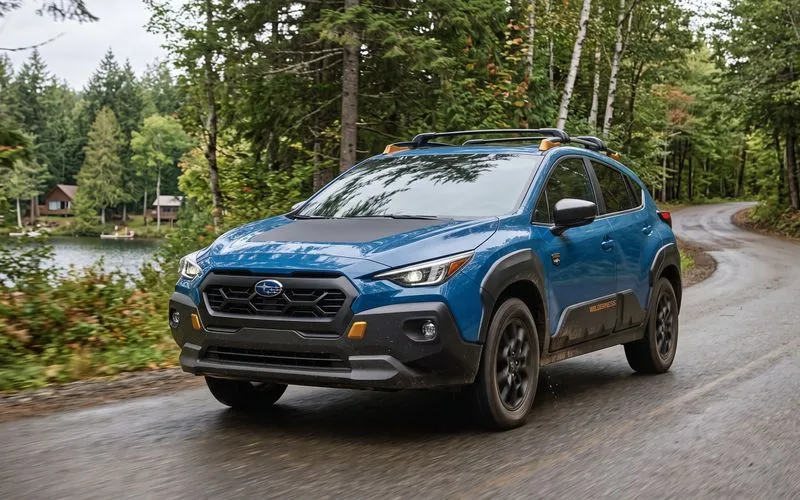 Subaru CrosstrekSubcompact SUVBetter at: Resale value
It's the other standard-AWD subcompact, and it beats the Eclipse Cross on fuel economy, driver assistance and resale while asking only a small price premium.
Compare 1.54D
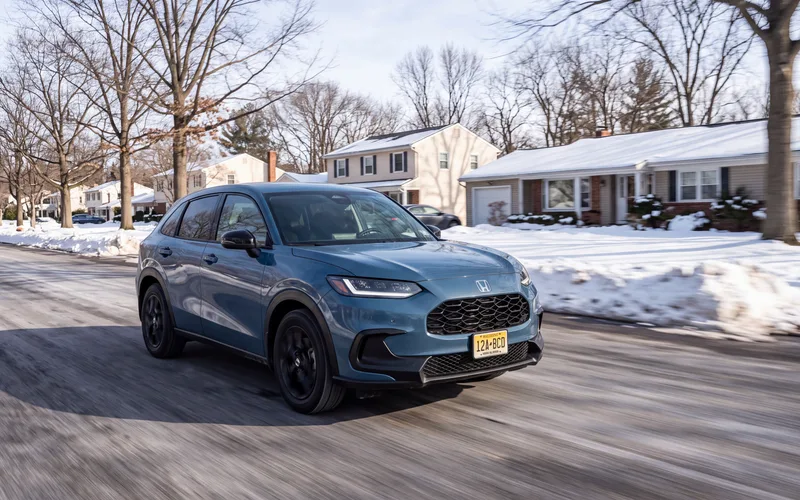 Honda HR-VSubcompact SUVBetter at: Safety tech
A more modern, better-riding crossover with more cargo room and a full standard safety suite, for buyers willing to pay extra for all-wheel drive.
Compare 1.52D
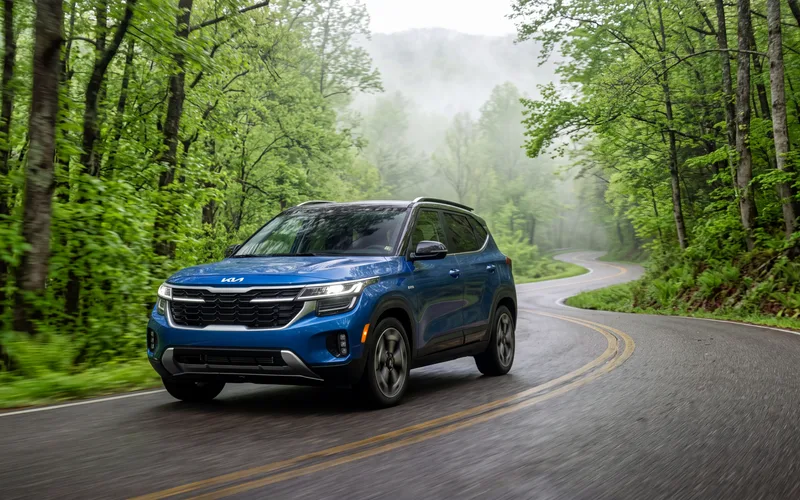 Kia SeltosSubcompact SUVBetter at: Cargo space
Matches Mitsubishi's 10-year powertrain warranty but adds 26.6 cu ft of cargo, a far newer interior and an available turbo engine with real power.
CompareHow it's evolved
8 scored model years · 2018–2026
Subject scores by year
Hover or tap a score to see what moved it versus the year before. A corner mark flags a big swing.
| Year | Performance | Efficiency | Safety | Space | Cost | Reliability | Tech | Use-case | Driving | Value |
|---|---|---|---|---|---|---|---|---|---|---|
| 2026 | 27 | 51 | 54 | 37 | 79 | 63 | 42 | 46 | 58 | 53 |
| 2025 | 27 | 49 | 54 | 37 | 79 | 63 | 41 | 46 | 58 | 53 |
| 2024 | 27 | 49 | 52 | 37 | 78 | 64 | 40 | 46 | 58 | 53 |
| 2023 | 27 | 49 | 48 | 34 | 77 | 63 | 38 | 43 | 55 | 53 |
| 2022 | 22 | 56 | 55 | 34 | 80 | 65 | 36 | 39 | 46 | 49 |
| 2020 | 21 | 56 | 50 | 33 | 79 | 57 | 31 | 47 | 48 | 52 |
| 2019 | 22 | 61 | 36 | 30 | 78 | 47 | 40 | 42 | 43 | 54 |
| 2018 | 23 | 52 | 35 | 31 | 81 | 45 | 40 | 39 | 48 | 56 |
Compare two years
Best fit & conditions
Higher scores mean a better fit for that use case. Learn more about use-case fit →
Subject profile
Academic Probation · NHTSA safety recalls
No NHTSA safety recall is on record for the 2022 Mitsubishi Eclipse Cross. Other model years of the Eclipse Cross have 2 — listed below.
2 recalls on other model years of the Eclipse Cross (2018–2019)
Sep 14, 2018Electrical system: software · Electronic stability control (esc) · Forward collision avoidance: adaptive cruise control · Service brakes, hydraulic: antilock/traction control/electronic limited slipThe software for the Hydraulic Unit Electronic Control Unit (ECU) may be incorrect, possibly preventing the intervention of a safety system such as automatic emergency braking, Anti-lock Braking (ABS), Electronic Stability Control (ESC), or the Brake Auto Hold (BAH) function when any of these systems are in use.
Defect
Mitsubishi Motors North America, Inc. (MMNA) is recalling certain 2018 Mitsubishi Outlander Sport vehicles equipped with a Forward Collision Mitigation (FCM) system and 2018 Mitsubishi Outlander PHEV and Eclipse Cross vehicles and 2017-2018 Outlander vehicles equipped with an Adaptive Cruise Control (ACC) system and/or an Electric Parking Brake (EPB) system. The software for the Hydraulic Unit Electronic Control Unit (ECU) may be incorrect, possibly preventing the intervention of a safety system such as automatic emergency braking, Anti-lock Braking (ABS), Electronic Stability Control (ESC), or the Brake Auto Hold (BAH) function when any of these systems are in use.
Risk
If the safety systems do not function as intended, it can increase the risk of a crash.
Remedy
MMNA will notify owners, and dealers will update the Hydraulic Unit-ECU software, free of charge. The recall began October 16, 2018. Owners may contact MMNA customer service at 1-888-648-7820. MMNA's number for this recall is SR-18-008.
NHTSA campaign 18V621000 ↗Manufacturer no. SR-18-00858,916 vehicles potentially affected (all models in the campaign)Owners notified Oct 16, 2018Filed by Mitsubishi Motors North America, Inc.Filed as ECLIPSE CROSSSep 14, 2018Electrical system: software · Forward collision avoidance: software: pedestrian/cyclist/object/obstacle/ recognitionDue to incorrect software, the FCM-ECU (Electronic Control Unit) may apply braking for longer than needed, even after a pedestrian is no longer detected.
Defect
Mitsubishi Motors North America (MMNA) is recalling certain 2018 Mitsubishi Outlander PHEV, Outlander Sport, 2018-2019 Eclipse Cross, and 2017-2018 Outlander vehicles equipped with a Forward Collision Mitigation (FCM) system that detects pedestrians. Due to incorrect software, the FCM-ECU (Electronic Control Unit) may apply braking for longer than needed, even after a pedestrian is no longer detected.
Risk
If the FCM-ECU software activates the brake for longer than necessary, the driver may react by applying additional braking. The resulting rapid deceleration of the vehicle can increase the risk of a rear-end collision.
Remedy
MMNA will notify owners, and dealers will reprogram the FCM-ECU software with updated software, free of charge. The recall is began October 16, 2018. Owners may contact MMNA customer service at 1-888-648-7820. MMNA's number for this recall is SR-18-007.
NHTSA campaign 18V620000 ↗Manufacturer no. SR-18-0079,166 vehicles potentially affected (all models in the campaign)Owners notified Oct 16, 2018Filed by Mitsubishi Motors North America, Inc.Filed as ECLIPSE CROSS
Source: NHTSA Office of Defects Investigation recall database, model years 2018–2026. Recalls are listed by model year as the manufacturer filed them; whether a specific car is affected depends on its VIN — check a VIN at nhtsa.gov ↗. NHTSA model names matched to this page: ECLIPSE CROSS.
Detailed scoring by subject
1Performance & PowertrainThe Eclipse Cross's lowest-graded category.0.00F
Single gas powertrain across the 2022 US lineup (ES/LE/SE/SEL, FWD or S-AWC) — same 1.5L turbo four regardless of trim.
Peak torque figure for the sole US gas powertrain, unchanged across trims.
Instrumented test on the heavier S-AWC trim; a FWD trim would be marginally quicker, but this is the best-sourced figure available for the 2022 model year.
The 1.5L turbo is adequate around town but strains and gets coarse under hard acceleration, with noticeable turbo lag off the line; reviewers describe it as unremarkable rather than smooth.
The CVT (with simulated 8-step 'Sport Mode' shifts) drones under acceleration and is slow to respond to throttle inputs; it is functional but a common complaint in period reviews.
Modest towing rating typical of a subcompact crossover, unchanged by drivetrain (FWD or S-AWC).
S-AWC (Super All-Wheel Control) is optional across the trim range (ES through SEL) with selectable Normal/Snow/Gravel modes — meaningfully more sophisticated than a basic AWD system, but not standard equipment and with no low-range or locking hardware.
Roughly 8.5 in of ground clearance and S-AWC's Gravel mode give it mild light-duty capability, but there is no dedicated off-road trim, skid plating, or locking differential — firmly pavement-oriented.
A single 1.5L turbo gas engine is the only powertrain sold in the US for the 2022 model year — the global PHEV variant introduced this generation was never brought to North America.
2Efficiency & RangeOne of the Eclipse Cross's strongest categories.1.79C-
EPA combined rating for the LE/SE/SEL trims (18-in wheels); the base ES trim's smaller wheels post a slightly better 27 combined.
EPA city rating, consistent across FWD and S-AWC on the volume trims.
EPA highway rating, consistent across FWD and S-AWC on the volume trims.
EPA-derived range from the fuel tank capacity and combined MPG rating; the S-AWC drivetrain's added weight and identical tank trims range down to 411 mi.
EPA annual fuel cost estimate for the volume (non-ES) trims at standard assumptions.
The 1.5L turbo runs on regular unleaded across the entire US lineup, with no premium recommendation.
3SafetyGrades below the middle of the scale.1.67D
The redesigned 2022 Eclipse Cross earned NHTSA's top overall rating on both FWD and S-AWC configurations.
Good on every original-protocol crashworthiness test (small overlap both sides, original moderate overlap, original side, roof strength, head restraints), but the 2022 model year is the first to be run through IIHS's updated, more stringent moderate-overlap and side-impact tests and scored Poor on both — a real structural regression the original tests didn't catch. Combined with Poor headlights on every trim and a Poor seat-belt-reminder rating, the car carries no Top Safety Pick award.
Forward Collision Mitigation with Pedestrian Detection and Lane Departure Warning are standard on every 2022 trim and package per Mitsubishi's own announcement, but Blind Spot Warning/Lane Change Assist and Rear Cross Traffic Alert are held back to SE and above (absent on ES and LE), and adaptive cruise control is not available at all except bundled into the SEL's optional Touring Package.
IIHS rated the Forward Collision Mitigation system Superior for vehicle-to-vehicle front crash prevention, avoiding collisions in both the 12 mph and 25 mph tests; no separate pedestrian day/night rating is published for this vehicle, which is why this stops short of the top band despite the strong vehicle-to-vehicle result. IIHS lists the tested system as trim-optional (SE/SEL), which sits at odds with Mitsubishi's own claim that FCM with pedestrian detection is standard across the range.
Blind Spot Warning with Lane Change Assist and Rear Cross Traffic Alert are alert-only systems (no active braking/steering intervention) and are withheld from the two lower trims (ES, LE), becoming standard only from SE up — coverage exists but isn't universal on the volume end of the range.
Standard Lane Departure Warning with a basic lane-keep assist nudge is fitted across the range, but this is a warning/correction system rather than true lane-centering, and no reviewer describes it as smooth or trustworthy hands-on-wheel centering.
Adaptive cruise control is not available on the ES/LE/SE volume trims at all and is bundled only into the top SEL's optional Touring Package — the volume-trim buyer gets conventional cruise control only, with no highway-assist layer offered on this generation at any price.
No hands-free highway driving system is offered on the Eclipse Cross at any trim or package for 2022; the most advanced driver-assist layer available is optional adaptive cruise control with no hands-free capability.
IIHS rated headlights Poor across all three tested configurations — ES halogen projector, LE halogen projector with high-beam assist, and SE/SEL LED projector with high-beam assist — so even the top-trim LED setup fails to reach an acceptable rating.
The 2022 redesign dropped the old split rear window that used to bisect the driver's rearward view, a genuine improvement reviewers credit, but the swoopy roofline still leaves a high beltline and thick C-pillars that reviewers flag as making rear three-quarter visibility and reverse parking harder than average for the segment.
IIHS rates LATCH ease of use Good, with two rear seating positions offering complete, easy-to-find LATCH hardware and a third position with a tether anchor only — solid coverage for a subcompact SUV's rear bench.
4Space & ComfortOne of the Eclipse Cross's weakest categories.0.23F
Single 5-seat, two-row configuration across the entire 2022 US lineup — no 3rd-row or 4-seat option offered.
Corroborated across multiple spec aggregators for the redesigned 2022 cabin; unchanged whether sunroof is fitted per published figures.
At the low end of the subcompact SUV band — the Eclipse Cross's coupe-like proportions trade front legroom for styling.
The sloping coupe-SUV roofline noticeably pinches rear headroom versus boxier segment rivals.
Mid-pack for a subcompact SUV, though reviewers still describe the flat rear bench as tight for adults on longer stints.
No third row is offered on the Eclipse Cross in any market or trim for 2022 — it is a strict two-row subcompact crossover.
Below the subcompact SUV norm; the sloped hatch roofline cuts into usable behind-seat volume.
Near the bottom of the class with seats folded flat — one of the smaller max-cargo figures in the subcompact SUV segment.
Conventional console bin, door pockets and a usable underfloor cargo tray, but nothing that stands out versus segment rivals — no clever fold-flat or power-outlet innovation.
Front leather-trimmed bucket seats are supportive and well-shaped with good adjustability, but the flat, thinly padded rear bench draws consistent criticism for longer rides.
Composed over most surfaces and comfortable around town, but reviewers note some hopping and bobbing at highway speed over rougher pavement.
A genuine strength — the rigid facelifted body structure filters out wind and road noise well for the segment, with no rattles from the hatch or door seals.
Heated front seats are available from the LE trim up, but a heated steering wheel and heated rear seats are gated behind the top SEL trim's Touring package — thin coverage on the volume trim.
5Cost of OwnershipThe Eclipse Cross's best-graded category.3.46B+
Manufacturer press release confirms base ES MSRP; destination charge corroborated by CarsDirect.
SE is cited by multiple pricing aggregators as the most popular Eclipse Cross trim for 2022.
CarEdge's class-data model projects low 5-year costs, consistent with the Eclipse Cross's simple naturally-aspirated/turbo four and CVT shared with other Mitsubishi crossovers.
Mitsubishi's weaker resale reputation and low sales volume translate into below-average residuals for the segment.
Mitsubishi's standard new-vehicle limited warranty, among the longest basic warranties in the mainstream segment.
Mitsubishi's signature 10-year/100,000-mile powertrain warranty is a class-leading figure, though it is non-transferable to second owners.
2022 Mitsubishis carried 5-year/unlimited-mile roadside assistance but no complimentary scheduled maintenance — that benefit (2 years/3 visits) wasn't introduced until the 2024 model year, so 2022 buyers get roadside coverage only.
$27,740 volume-trim price minus its estimated resale value after 5 years (43.9% retained, or about $12,178) leaves about $15,562 in depreciation. Add the projected $2,413 in 5-year maintenance and repairs, and owning this vehicle for 5 years costs about $17,975 in total.
6Reliability & QualityOne of the Eclipse Cross's strongest categories.2.39C+
No detailed Consumer Reports predicted-reliability data is published for the 2022 Eclipse Cross specifically, and J.D. Power's vehicle-level predicted score for this model sits in the average band with some conflicting figures across aggregators. Treated as average/mixed given the carry-over 1.5T/CVT powertrain shared with prior model years.
Mitsubishi ranked 4th among mass-market brands in J.D. Power's 2023 U.S. Vehicle Dependability Study (167 PP100), edging out Toyota (168 PP100) — a genuinely top-tier multi-year dependability standing for the brand.
No NHTSA safety recalls are on record for the 2022 Eclipse Cross. Scattered owner complaints and forum-documented TSBs about CVT shift quality exist but there is no systemic or safety-critical campaign against this generation.
The 1.5L turbo (4B40) paired with a CVT carries a mixed long-term reputation: owner and independent-mechanic reporting describes CVT shift-quality degradation (jerky/delayed shifts) emerging as early as 30,000 km with a further wave near 100,000 km, and typical CVT service life cited around 100,000-120,000 miles — a real but not catastrophic concern rather than a proven high-mileage track record.
Reviewers consistently criticize the cabin as heavy on hard black plastic with few soft-touch surfaces; even after Mitsubishi's 2022 interior revision, multiple outlets describe the materials as cheap-feeling and behind mainstream competitors, with the digital climate display singled out as looking dated.
Mitsubishi revised the interior design and fit/finish for the 2022 model year; reviewers note the improvement but stop short of praising it, and no widespread rattle/panel-gap complaints surfaced in owner reporting — an average assembly-quality showing rather than a standout or a problem area.
Mitsubishi's US network (roughly 330 dealers in 2022) is meaningfully thinner than mainstream Japanese and domestic rivals, though customer-experience perception was improving — the brand placed 2nd among mass-market automakers in Reputation's 2022 Automotive Report after a 112-point year-over-year gain.
RepairPal data puts 10-year maintenance/repair costs below the compact-SUV average ($7,690 vs. an average $822 higher), and routine repairs price normally, but Mitsubishi's smaller dealer footprint and thinner aftermarket mean parts sourcing is slower than for higher-volume competitors, and a turbocharger replacement runs a notable $2,600-2,800.
7Technology & InfotainmentOne of the Eclipse Cross's weakest categories.0.34F
The 2022 facelift brought an upscaled 8-inch Smartphone Link Display Audio touchscreen to LE and above; the base ES retains a smaller 7-inch unit.
The redesigned system is positioned closer to the driver and logically laid out, but period reviews describe it as merely improved rather than class-leading, with dated graphics.
Wired Apple CarPlay and Android Auto are standard via the Smartphone Link Display Audio system, but no trim offers wireless phone projection for 2022 — owners rely on aftermarket adapters.
Built-in navigation is an available option rather than standard, and the native voice system is basic; most owners default to phone-projection maps instead.
No branded premium audio system (e.g. Rockford Fosgate, offered on other Mitsubishi models) is available on the Eclipse Cross for 2022 — just a conventional base speaker set across trims.
Analog gauges flank a small 4.2-inch multi-information display rather than a configurable full-digital cluster — dated versus segment norms even at launch.
No whole-vehicle or infotainment OTA update capability is documented for this generation's hardware; software updates, if any, require dealer visits.
The My Mitsubishi Connect app supports remote start/stop, lock/unlock, horn/lights and vehicle locate, a reasonably complete remote feature set, though it is subscription-based after an initial trial.
USB port count is thin (one on base ES, two from LE up) and there is no wireless phone charging pad offered on any 2022 trim.
Proximity keyless entry with push-button start is available from mid trims up and remote engine start is offered via Mitsubishi Connect, but it is not a full phone-as-key system.
A rearview camera is standard across trims and rear parking sensors/blind-spot warning are available on upper trims, but no 360-degree surround-view camera is offered on the Eclipse Cross.
A color LCD head-up display is offered, but only as part of the Touring package on the range-topping SEL trim — far from the volume trim's equipment.
8Use-Case FitGrades near the bottom of the scale.0.57F
IIHS rates LATCH ease-of-use Good with two complete rear positions, which helps daily car-seat installs, but tight rear legroom (35.3 in) and a narrow hatch opening make loading kids and gear more of a squeeze than in boxier rivals.
NHTSA's 5-star overall rating and a standard ADAS suite on every trim are real positives, but IIHS scored the updated side-impact test and headlights Poor, and adaptive cruise/lane centering are locked behind the top SEL Touring package that family buyers on a budget rarely reach.
A flat, thinly padded rear bench and the smallest cargo figures in the subcompact class (23.4 cu ft behind the second row) make multi-hour family trips with luggage a real compromise.
Light, low-effort steering and a comfortable low-speed ride make it relaxing around town, though the CVT's drone and lag under throttle are a minor daily annoyance.
26 MPG combined (27 on the base ES) is unremarkable for a subcompact crossover — adequate but not a cost-efficiency standout against segment rivals with more modern powertrains.
Compact subcompact-SUV footprint and a competitive curb-to-curb turning circle make it easy to place in city parking, helped by a standard backup camera.
A 1,500 lb max tow rating and modest cargo volume leave essentially no headroom for real work duty — this is a car-based crossover, not a work tool.
The Eclipse Cross carries no fleet or commercial-duty reputation, and Mitsubishi's brand reliability perception sits below mainstream segment leaders — unproven rather than demonstrated for hard use.
No onboard power outlets, cargo tie-downs, or upfit accessory ecosystem are offered — the small cargo area and passenger-car construction leave nothing for jobsite use.
A quiet cabin at cruising speed is a genuine plus for touring, but limited rear-seat comfort, modest highway MPG, and adaptive cruise gated to the top trim's option package cap its long-haul appeal.
Optional S-AWC with selectable Gravel mode adds genuine light-duty capability, but modest ~8.5 in ground clearance and no dedicated off-road hardware keep it firmly pavement-biased.
With the smallest cargo figures in its class and no standard roof rails or hitch beyond the light-duty tow package, bulky gear is a genuine squeeze.
9Driving ExperienceGrades below the middle of the scale.1.08D
Reviewers describe the Eclipse Cross as mediocre in corners, with more body lean and roll than expected and a doughy overall character — comfort-oriented rather than agile.
Steering is heavily boosted and light, prioritizing low-effort maneuvering over feedback — reviewers call it numb and not tuned for enthusiastic driving.
No major complaints about pedal feel or stopping performance surface in period reviews, suggesting adequate, unremarkable braking consistent with the rest of the driving experience.
The 1.5L turbo shows noticeable lag off the line and the CVT (even with its simulated 8-step 'Sport Mode') drones and responds slowly to throttle inputs.
The engine gets audibly coarse under hard acceleration and the CVT drones, but the overall cabin stays reasonably isolated at a cruise thanks to the rigid facelifted body.
A tight turning circle for the segment, consistent with the Eclipse Cross's compact footprint — a genuine everyday-usability plus.
Front seats offer good adjustability for a wide range of drivers and the redesigned touchscreen sits closer to the driver's reach, though hard cabin plastics and higher beltlines slightly hamper sightlines.
Numb steering, CVT drone, and body lean in corners add up to an appliance-like character with little to recommend it to an enthusiast driver despite its sporty styling.
10Value & Market PositionGrades below the middle of the scale.1.26D
The refreshed 2022 ES base trim adds forward collision mitigation, lane-departure warning, an 8-inch touchscreen with wired Apple CarPlay/Android Auto, and heated front seats as standard — competitive for a sub-$24,700 base price, though rivals like the CR-V and Crosstrek match or beat this at similar money.
Edmunds' 2022 review credits pricing that undercuts some rivals and a roomy, comfortable cabin, but marks the Eclipse Cross down overall for dated tech, subpar fuel economy, and low-grade interior materials — a wash rather than a standout value.
Four trims (ES, LE, SE, SEL) each offered with FWD or S-AWC all-wheel drive gives a reasonable spread from value-focused to loaded, though there's no true work-grade or performance variant.
US sales landed in the 8,000-11,000 unit range for 2022 — a slow seller next to segment volumes in the hundreds of thousands for the CR-V, RAV4 and even niche rivals like the Crosstrek.
Mitsubishi holds a modest, value/budget-oriented image in the US market rather than an aspirational one, though its long warranty and small loyal following keep it from the bottom of the scale.
As a low-volume, slower-selling nameplate, Mitsubishi dealers commonly ran rebates and promotional financing on the Eclipse Cross through 2022, giving buyers real negotiating room versus segment leaders that routinely sold at or near MSRP.
2022 brought a mid-cycle facelift (revealed October 2020, on sale February 2021) with new front/rear styling, a new LE trim, and an updated touchscreen — a meaningful refresh, but still riding the platform and basic architecture introduced for 2018, now five model years old.
Reviewers acknowledged the styling and ride improvements from the facelift but consistently placed the Eclipse Cross behind class leaders on handling, interior quality and efficiency, with no major comparison-test wins or industry awards identified for the 2022 model year.