

The verdict
A struggling subcompact suv, strong on ownership and held back by performance.
The 2018 Eclipse Cross launched Mitsubishi's swoopy new subcompact SUV with an eye-catching price ($23,295 to start) and a genuinely strong warranty, but the fastback roofline that gives it its look also steals cargo room — just 22.6 cu ft behind the rear seats, among the smallest in its class. A single 152-hp turbo engine with a droning CVT feels slow (8.6 seconds to 60 mph) and the strongest safety tech is locked behind a $2,000 option package. It's a reasonable buy for someone chasing style and a low sticker price on a tight budget, but not for anyone prioritizing space, resale value, or class-leading safety features.
Jump to scoresStrengths
- Class-leading warranty coverage
- Low sticker price and cheap fuel
- All-new for 2018, with real generational freshness
What holds it back
- Slow and coarse under real acceleration
- Tiny cargo hold for the class
- No NHTSA crash rating and poor base headlights
Top alternatives
Cars shoppers cross-shop with the Mitsubishi Eclipse Cross 2.05C
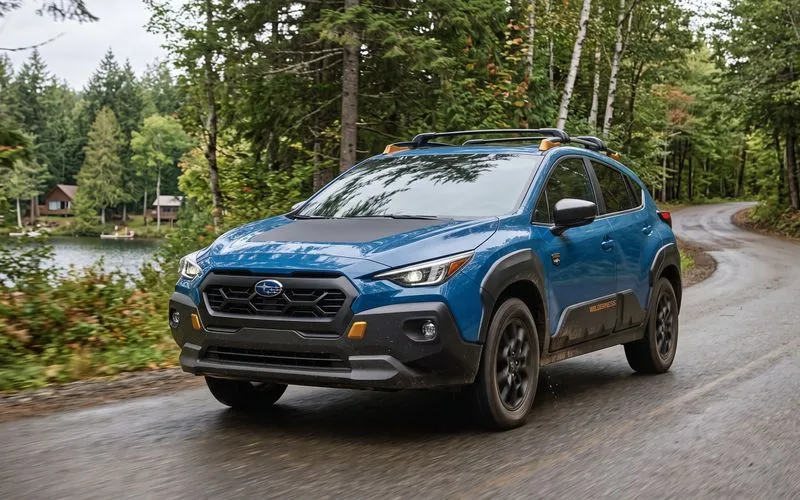 Subaru CrosstrekSubcompact SUVBetter at: Resale value
It's the other standard-AWD subcompact, and it beats the Eclipse Cross on fuel economy, driver assistance and resale while asking only a small price premium.
Compare 1.54D
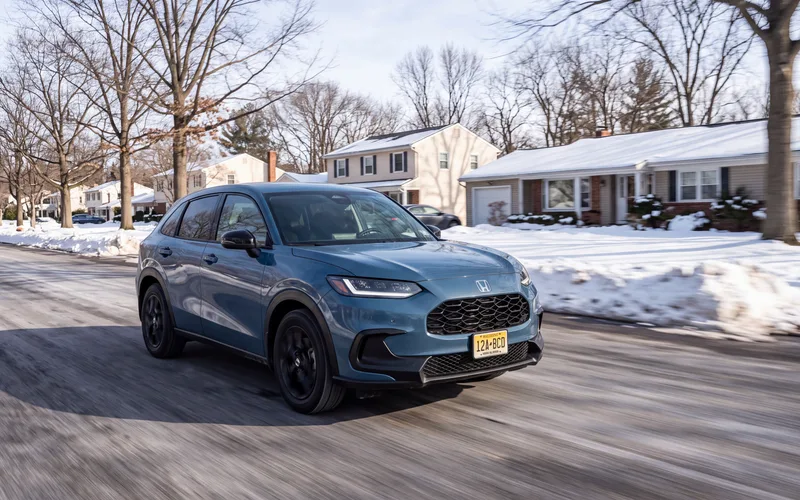 Honda HR-VSubcompact SUVBetter at: Safety tech
A more modern, better-riding crossover with more cargo room and a full standard safety suite, for buyers willing to pay extra for all-wheel drive.
Compare 1.52D
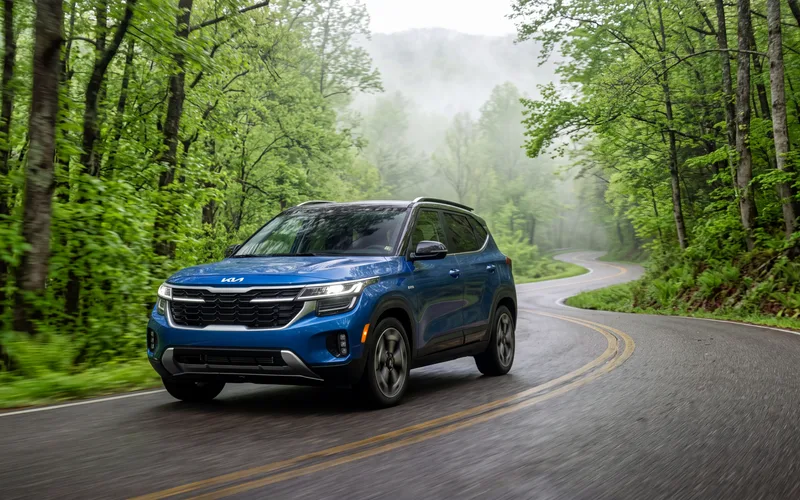 Kia SeltosSubcompact SUVBetter at: Cargo space
Matches Mitsubishi's 10-year powertrain warranty but adds 26.6 cu ft of cargo, a far newer interior and an available turbo engine with real power.
CompareHow it's evolved
8 scored model years · 2018–2026
Subject scores by year
Hover or tap a score to see what moved it versus the year before. A corner mark flags a big swing.
| Year | Performance | Efficiency | Safety | Space | Cost | Reliability | Tech | Use-case | Driving | Value |
|---|---|---|---|---|---|---|---|---|---|---|
| 2026 | 27 | 51 | 54 | 37 | 79 | 63 | 42 | 46 | 58 | 53 |
| 2025 | 27 | 49 | 54 | 37 | 79 | 63 | 41 | 46 | 58 | 53 |
| 2024 | 27 | 49 | 52 | 37 | 78 | 64 | 40 | 46 | 58 | 53 |
| 2023 | 27 | 49 | 48 | 34 | 77 | 63 | 38 | 43 | 55 | 53 |
| 2022 | 22 | 56 | 55 | 34 | 80 | 65 | 36 | 39 | 46 | 49 |
| 2020 | 21 | 56 | 50 | 33 | 79 | 57 | 31 | 47 | 48 | 52 |
| 2019 | 22 | 61 | 36 | 30 | 78 | 47 | 40 | 42 | 43 | 54 |
| 2018 | 23 | 52 | 35 | 31 | 81 | 45 | 40 | 39 | 48 | 56 |
Compare two years
Best fit & conditions
Higher scores mean a better fit for that use case. Learn more about use-case fit →
Subject profile
Academic Probation · NHTSA safety recalls
Sep 14, 2018Electrical system: software · Electronic stability control (esc) · Forward collision avoidance: adaptive cruise control · Service brakes, hydraulic: antilock/traction control/electronic limited slipThe software for the Hydraulic Unit Electronic Control Unit (ECU) may be incorrect, possibly preventing the intervention of a safety system such as automatic emergency braking, Anti-lock Braking (ABS), Electronic Stability Control (ESC), or the Brake Auto Hold (BAH) function when any of these systems are in use.
Defect
Mitsubishi Motors North America, Inc. (MMNA) is recalling certain 2018 Mitsubishi Outlander Sport vehicles equipped with a Forward Collision Mitigation (FCM) system and 2018 Mitsubishi Outlander PHEV and Eclipse Cross vehicles and 2017-2018 Outlander vehicles equipped with an Adaptive Cruise Control (ACC) system and/or an Electric Parking Brake (EPB) system. The software for the Hydraulic Unit Electronic Control Unit (ECU) may be incorrect, possibly preventing the intervention of a safety system such as automatic emergency braking, Anti-lock Braking (ABS), Electronic Stability Control (ESC), or the Brake Auto Hold (BAH) function when any of these systems are in use.
Risk
If the safety systems do not function as intended, it can increase the risk of a crash.
Remedy
MMNA will notify owners, and dealers will update the Hydraulic Unit-ECU software, free of charge. The recall began October 16, 2018. Owners may contact MMNA customer service at 1-888-648-7820. MMNA's number for this recall is SR-18-008.
NHTSA campaign 18V621000 ↗Manufacturer no. SR-18-00858,916 vehicles potentially affected (all models in the campaign)Owners notified Oct 16, 2018Filed by Mitsubishi Motors North America, Inc.Filed as ECLIPSE CROSSSep 14, 2018Electrical system: software · Forward collision avoidance: software: pedestrian/cyclist/object/obstacle/ recognitionDue to incorrect software, the FCM-ECU (Electronic Control Unit) may apply braking for longer than needed, even after a pedestrian is no longer detected.
Defect
Mitsubishi Motors North America (MMNA) is recalling certain 2018 Mitsubishi Outlander PHEV, Outlander Sport, 2018-2019 Eclipse Cross, and 2017-2018 Outlander vehicles equipped with a Forward Collision Mitigation (FCM) system that detects pedestrians. Due to incorrect software, the FCM-ECU (Electronic Control Unit) may apply braking for longer than needed, even after a pedestrian is no longer detected.
Risk
If the FCM-ECU software activates the brake for longer than necessary, the driver may react by applying additional braking. The resulting rapid deceleration of the vehicle can increase the risk of a rear-end collision.
Remedy
MMNA will notify owners, and dealers will reprogram the FCM-ECU software with updated software, free of charge. The recall is began October 16, 2018. Owners may contact MMNA customer service at 1-888-648-7820. MMNA's number for this recall is SR-18-007.
NHTSA campaign 18V620000 ↗Manufacturer no. SR-18-0079,166 vehicles potentially affected (all models in the campaign)Owners notified Oct 16, 2018Filed by Mitsubishi Motors North America, Inc.Filed as ECLIPSE CROSS
Source: NHTSA Office of Defects Investigation recall database, model years 2018–2026. Recalls are listed by model year as the manufacturer filed them; whether a specific car is affected depends on its VIN — check a VIN at nhtsa.gov ↗. NHTSA model names matched to this page: ECLIPSE CROSS.
Detailed scoring by subject
1Performance & PowertrainThe Eclipse Cross's lowest-graded category.0.00F
Single engine across the entire 2018 lineup: Mitsubishi's new 1.5L turbocharged inline-4, the only powertrain offered on ES/LE/SE/SEL.
Peak torque arrives early (2,000 rpm) from the turbo 1.5L, the same engine across all trims.
Instrumented test of the turbo-CVT-AWD powertrain shared across LE/SE/SEL, corroborated by a second outlet's road test.
The 1.5T pulls smoothly off idle with torque arriving at 2,000 rpm, but reviewers noted mild turbo lag and a coarse, strained note when pushed hard.
CVT with an 8-step simulated-gear Sport mode; reviewers found it competent but prone to drone under hard acceleration, with the stepped mode adding character rather than real responsiveness.
A light-duty rating typical of subcompact/compact crossovers in this class; consistent across trims.
Mitsubishi's Super All-Wheel Control (S-AWC) is optional on base ES (+$600) and standard on LE/SE/SEL — available across nearly the whole range — but offers only Auto/Snow/Gravel modes with no low range or locking hardware.
A pavement-oriented crossover with modest ground clearance (about 8.5 in. with S-AWC) and no skid plates, lockers, or dedicated off-road trim.
One engine, one transmission for the entire 2018 US lineup — only FWD vs. S-AWC varies. No hybrid, PHEV, or EV variant was offered in the US this model year (the Eclipse Cross PHEV was Europe-only and arrived later).
2Efficiency & RangeOne of the Eclipse Cross's strongest categories.1.45D
EPA rating for the S-AWC drivetrain shared by LE/SE/SEL (the volume trims); FWD ES rates slightly higher at 26 combined.
EPA city figure for the S-AWC drivetrain.
EPA highway figure for the S-AWC drivetrain.
Derived from the 15.8-gallon fuel tank and EPA combined rating for the S-AWC drivetrain; FWD's larger-MPG rating stretches slightly farther.
EPA estimate at standard 15,000 mi/yr assumptions for the 25-combined-MPG S-AWC drivetrain.
Runs on regular unleaded across the entire lineup despite the turbocharged engine — no premium requirement or recommendation.
3SafetyOne of the Eclipse Cross's weakest categories.0.27F
NHTSA had not conducted New Car Assessment Program testing on the Eclipse Cross by the 2018 launch, and no 2018 or 2019 model-year rating was ever published; the nameplate's first NHTSA overall rating (5 stars) was awarded to the facelifted 2020 model year in December 2019.
IIHS rated the 2018 Eclipse Cross Good on moderate-overlap front, small-overlap front (both driver and passenger side), roof strength and head restraints under the original protocols in effect at launch, but the structure scores Poor under IIHS's later-updated side-impact test, and it received no Top Safety Pick award — no single trim combined the Good crashworthiness sheet with the Acceptable+ headlights and standard front crash prevention TSP requires.
On the volume SE trim, blind-spot warning and rear cross-traffic alert are standard, but forward collision mitigation (AEB), lane departure warning and adaptive cruise control are bundled only in a separate $2,000 SE Tech Package — the core crash-avoidance items are a paid option even on the volume trim, not just absent on base ES/LE.
IIHS rated the optional forward collision mitigation system Superior for vehicle-to-vehicle front crash prevention, avoiding collisions in both the 12 mph and 25 mph test runs; no IIHS pedestrian or nighttime AEB result was published for this generation, so the top Advanced-with-night-pedestrian tier can't be confirmed.
Blind-spot warning and rear cross-traffic alert are standard on the SE and SEL trims (not the base ES/LE), and function as alert-only systems with no active braking intervention or trailer-aware coverage mentioned in period coverage.
The system is lane departure warning only — a steering-wheel vibration/alert, not a lane-keeping or centering system with steering input — and even that is optional, bundled in the SE Tech Package rather than standard.
Adaptive cruise control is available only as part of the optional SE Tech Package and is a conventional radar cruise system with no combined lane-centering highway-assist mode or stop-and-go confirmation in period coverage.
No hands-free highway-driving system (BlueCruise/Super Cruise/FSD-class) existed on the Eclipse Cross in this era; the most advanced driver-assist offered is optional adaptive cruise control requiring hands on the wheel.
The volume SE trim (and ES/LE/SP) run halogen headlights, which IIHS rated Poor; only the SEL and SEL Touring trims with LED headlights improve to Acceptable — still short of Good.
The swept-back roofline, split rear glass and absence of a small rear-quarter window create a pronounced blind spot and a dark rear three-quarter view that multiple period reviewers flagged as hindering reversing and lane changes, despite a good view out the front windshield.
Consumer Reports found the exposed lower LATCH anchors easy to use and the rear seat roomy enough for two child seats, but the top tether anchors were tough to access and three-across installation is cramped — a workable but not effortless setup.
4Space & ComfortOne of the Eclipse Cross's weakest categories.0.04F
Standard 2-row, 5-passenger configuration across all 2018 Eclipse Cross trims.
Mid-pack front headroom for the subcompact SUV class.
Front legroom sits near the low end of the suv normalization band.
Sloping coupe-like roofline trims rear headroom versus boxier subcompact SUV rivals.
Rear legroom trails segment leaders like the CR-V (40.4 in) and RAV4 (37.2 in).
Strict 2-row subcompact SUV with no third-row seating offered on any 2018 trim.
Cargo behind the second row is well below the suv band floor, a direct consequence of the sloped fastback liftgate.
Max cargo with seats folded is below the suv band floor, among the smallest in the subcompact SUV class.
Conventional console bin, door pockets and dual USB ports near the shifter; nothing standout versus rivals with underfloor bins or larger consoles.
Reviewers found the seats adequate for daily use but unremarkable, with no standout long-haul praise or notable criticism.
Generally smooth on good pavement but multiple reviewers noted the rear end bounces on broken surfaces, below segment-leading composure.
Turbo 1.5L four-cylinder paired with a CVT drones under hard acceleration, and reviewers flagged limited sound insulation versus class leaders.
Heated front seats arrive on SE and up, with heated rear seats only on the SEL Touring package; no ventilated seats or standard rear climate vents.
5Cost of OwnershipThe Eclipse Cross's best-graded category.3.49B+
Entry ES trim FWD starting price for the debut 2018 model year of the all-new nameplate, which launched in the US in March 2018.
SE was the mid-range volume trim most commonly tested by reviewers and carries standard all-wheel drive, heated seats, dual-zone climate and the 7-inch touchscreen.
Industry estimate for a mainstream compact/subcompact crossover with a simple naturally-aspirated-turbo/CVT drivetrain; CarEdge's class data puts maintenance+repair on the low end for this nameplate, and the long powertrain warranty limits early repair exposure.
Mitsubishi's weak brand equity and heavy incentive spending in the US drive faster-than-average depreciation for the segment.
Mitsubishi's standard bumper-to-bumper coverage, at the top of the segment band.
Mitsubishi's powertrain warranty is best-in-class for the segment, doubling most rivals' coverage for the original registered owner.
Mitsubishi bundles 5-year/60,000-mile roadside assistance with the warranty but does not include complimentary scheduled maintenance, unlike some rivals' 2-3 year included-service programs — a solid basic-coverage floor without added perks.
$26,395 volume-trim price minus its estimated resale value after 5 years (44% retained, or about $11,614) leaves about $14,781 in depreciation. Add the projected $3,400 in 5-year maintenance and repairs, and owning this vehicle for 5 years costs about $18,181 in total.
6Reliability & QualityGrades below the middle of the scale.1.00D
2018 was the Eclipse Cross's launch year in the US, so owner-history data was thin; J.D. Power's predicted reliability landed at an average 3/5, and Consumer Reports had no detailed reliability data yet for the model at this point.
Mitsubishi entered the 2018 model year with a historically below-average, bottom-third dependability standing; J.D. Power's 2021 Vehicle Dependability Study (surveying 2018 model-year owners after 3 years) noted Mitsubishi posted the largest PP100 improvement among above-average brands, implying it was working up from a weak baseline rather than already mid-pack in 2018.
Two NHTSA recalls hit the 2018 Eclipse Cross directly, both touching active safety systems rather than minor components: a Forward Collision Mitigation software fault causing prolonged/excessive braking (9,166 vehicles), and a Hydraulic Unit ECU software error that could disable AEB, ABS, ESC or Brake Auto Hold (58,916 vehicles) — the latter a large-scale safety-system recall, not a cosmetic or minor fix.
The 1.5L turbo 4B40 engine paired with a CVT was new to the lineup for 2018 with no long-term track record at launch, and the powertrain combination went on to develop a reputation for CVT shudder/delayed shifting (onset ~30,000 km, second wave near 100,000 km) and turbo-engine oil consumption after ~40,000 miles — an unproven design at the time that has since shown real red flags.
Reviewers described a stylishly chiseled cabin let down by extensive hard plastics on the center console and lower surfaces — competitive styling but materials that read as downscale for the class, consistent with the mid-band scoring guidance rather than class-leading.
No pattern of panel-gap, rattle or assembly complaints surfaced in launch-year reviews or owner forums beyond general interior-material criticism, suggesting generally solid assembly without being called out as a strength.
Mitsubishi's US dealer footprint in 2018 was roughly 355-360 stores, a sparse network next to mainstream rivals (Toyota/Honda/Nissan each run well over 1,000 US dealers), meaning service access and drive times are materially worse for typical owners.
Mitsubishi parts pricing is not notably expensive, but the brand's small US sales volume and dealer footprint mean thinner aftermarket support and parts stocking than high-volume competitors, landing this in the normal-but-unremarkable band rather than abundant/cheap.
7Technology & InfotainmentGrades near the bottom of the scale.0.64F
A single 7-inch screen size runs across the whole 2018 lineup, near the low end of the suv band.
The SE/SEL Smartphone Link system pairs a non-touch 7-inch screen with a center-console touchpad that reviewers and owners found fiddly and imprecise versus a direct touchscreen.
Apple CarPlay and Android Auto are standard across the lineup, but only as wired connections — no wireless projection was offered for 2018.
No built-in native navigation is offered on the base Display Audio system; owners rely on Siri/Google Assistant through CarPlay/Android Auto for voice and mapping.
Base audio is a modest 4-6 speaker setup, but the optional 710-watt 9-speaker Rockford Fosgate system with 10-inch subwoofer on SEL Touring is a genuine premium upgrade.
The main gauge cluster is analog with a small multi-info display; the 7-inch screen sits separately atop the dash for infotainment, not as a configurable digital cluster.
Mitsubishi Connect debuting on the 2018 Eclipse Cross covers remote/telematics functions only; there is no whole-vehicle or infotainment software OTA update path.
The new-for-2018 Mitsubishi Connect app adds remote start, lock/unlock, horn/lights, car finder and parental controls, gated behind a telematics subscription on equipped trims.
Dual USB ports are standard near the shifter, with an available wireless charging pad on upper trims, but no household AC outlet or rear-row USB.
Remote keyless entry is standard across ES/LE/SE; FAST-Key passive entry with push-button start arrives on SEL and up, and the Connect app adds phone-based remote start.
A rearview camera is standard, with rear parking sensors bundled into the Touring package on SEL; the U.S. lineup does not offer the 360-degree camera sold in other markets on the base Eclipse Cross.
A full-color, adjustable head-up display is available on upper trims, notable for a mainstream subcompact SUV, though it is not standard on lower trims.
8Use-Case FitGrades near the bottom of the scale.0.60F
Rear doors and bench seat accommodate a car seat reasonably, but the sloped roofline narrows the rear door aperture and the small cargo area behind the second row makes stroller/gear loading tighter than class rivals.
Forward collision warning, lane departure warning and rearview camera are standard, but the strongest suite (adaptive cruise, blind-spot, rear cross-traffic, front/rear parking sensors) is bundled into the roughly $2,500 Touring package on the top SEL trim rather than available on family-affordable trims.
Rear legroom (35.3 in) trails family SUV norms and there is no rear climate control or rear USB/entertainment provision on most trims, limiting multi-hour comfort for four occupants plus luggage.
Light steering and a CVT make low-speed traffic driving easy, though reviewers noted some body roll and CVT droning under harder throttle that dents overall refinement.
EPA-rated 25-27 mpg combined is below the subcompact SUV median, and the turbo engine calls for premium-adjacent care though runs on regular; running costs are average-to-below-average for the class.
A compact footprint and standard rearview camera help in the city, but a roughly 35-foot turning diameter and thick rear pillars (from the split rear glass) limit visibility and tight-space ease versus segment leaders.
A 1,500 lb max tow rating and modest payload leave little headroom for real work duty; this is a passenger-oriented crossover, not a work tool.
As a first-year model on a new platform, the Eclipse Cross has no fleet or long-term durability track record yet, and the interior is trimmed for comfort rather than hard use.
No onboard AC power outlet, tie-down provisions, or upfit ecosystem are offered; cargo area is small and carpeted rather than work-oriented.
A roughly 400-mile highway range on a 63L tank is reasonable, but road/engine noise under load and average seat comfort keep it short of top touring credentials; adaptive cruise for fatigue reduction is Touring-package-only.
Optional Super All-Wheel Control (S-AWC) with selectable drive modes and 8.6 in of ground clearance give it light gravel/snow ability, though it is not built for real off-pavement use.
60/40 split-folding rear seats are standard, but with only 22.6 cu ft behind the second row and 48.9 cu ft maximum, this is among the smallest cargo holds in the subcompact SUV class, and no roof rails are standard.
9Driving ExperienceGrades below the middle of the scale.1.22D
Reviewers gave mixed verdicts: some praised flat cornering from the four-wheel independent suspension, while others cited noticeable body roll and a tall stance that undercut the car's sporty marketing.
Steering is consistently described as light and short on feedback, undermining the confidence needed for the sporty character Mitsubishi marketed.
An instrumented 60-0 mph stop of 112 ft is roughly average for the subcompact SUV class, with no reports of a particularly strong or weak pedal.
The turbo 1.5L/CVT pairing delivers adequate low-speed response but exhibits the characteristic CVT drone and hesitation reviewers flagged when pushed hard.
Engine and CVT noise become intrusive under acceleration, a recurring criticism across 2018 launch reviews.
A roughly 35 ft turning diameter is about mid-pack for the suv band.
An elevated SUV seating position and clear front sightlines are pluses, but the swept-back rear roofline and split tailgate glass hurt rear-quarter visibility.
Mitsubishi pitched the Eclipse Cross as a sporty crossover, but vague steering and body roll left reviewers describing it as pleasant rather than genuinely engaging.
10Value & Market PositionOne of the Eclipse Cross's strongest categories.1.75C-
Even the base 2018 ES trim included forward collision mitigation, a 7-inch touchscreen with Apple CarPlay/Android Auto, heated front seats and dual-zone climate control — generous for the price versus some rivals that gate those features to upper trims.
Reviewers called it 'a very compelling package' for the money, but the payoff came with real compromises — a maddening infotainment system and CVT/engine strain on hills — keeping it fair rather than a standout bargain.
Four trims (ES, LE, SE, SEL) but a single 1.5L turbo/CVT powertrain and FWD offered only on the base ES — a narrow, take-it-or-leave-it lineup with no engine or transmission choice.
A slow-building debut year: roughly 9,500 US units sold in 2018 after a March on-sale date, well below segment leaders and even most subcompact-crossover rivals in their launch years.
Mitsubishi's US brand image remained weak in 2018 — a shrinking dealer network, limited model range, and no strong halo product — dragging on resale and cross-shopping consideration versus mainstream Japanese and Korean rivals.
Mitsubishi leaned on incentives and lease deals to build volume for the new nameplate in a crowded segment, which benefited buyers even though it signals soft organic demand.
2018 is the debut model year of an all-new nameplate and the first year of its first generation — as fresh as a scorecard gets, with no redesign risk on the horizon.
Reception was split: some outlets praised the driving feel and standard equipment, while Consumer Reports' 'All Flash, No Substance' verdict and widespread infotainment/visibility criticism kept it out of comparison-test wins and off major award lists in its debut year.