

The verdict
A mixed-report mid-size luxury sedan, strong on safety and held back by ownership.
The 2023 Model 3 is one of the cheapest cars in America to run. The RWD is EPA-rated at 132 MPGe, costs about $550 a year to charge, and comes with Supercharger access, five-star crash ratings and some of the best software in the industry. Its weak spots are the ones you notice day to day: a firm, noisy ride, a cramped rear seat, no CarPlay, Android Auto or instrument cluster, and build quality that is still uneven. 2023 was the last year of the original design, and Tesla cut prices hard that year, so a used one depreciates quickly but can be a strong buy if you shop for one now.
Jump to scoresStrengths
- Rock-bottom running costs
- Smooth, instant electric drive
- Software that keeps improving
What holds it back
- No CarPlay, no gauges, no head-up display
- Steep depreciation on an outgoing design
- Base RWD's modest range and charging speed
Top alternatives
Cars shoppers cross-shop with the Tesla Model 3 2.73B-
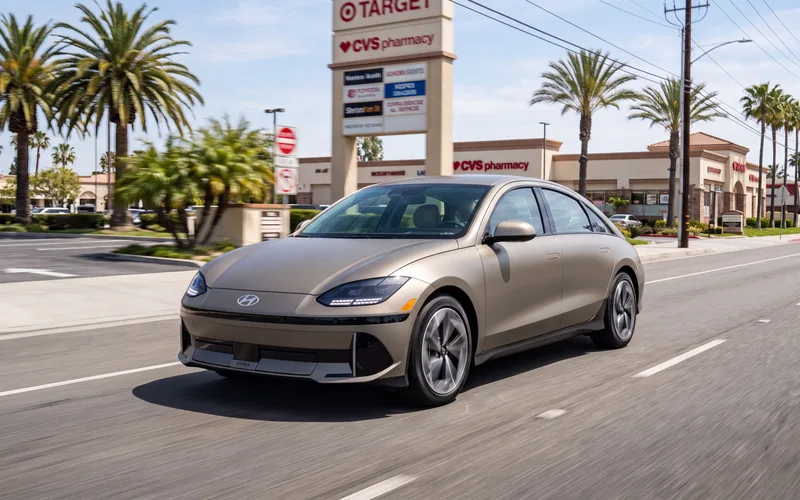 Hyundai Ioniq 6Mid-Size SedanBetter at: Charging speed
The direct EV-sedan competitor: nearly as efficient, faster to charge on its 800-volt system, and it keeps CarPlay, physical controls and a gauge cluster along with a far stronger warranty.
Compare 3.00B
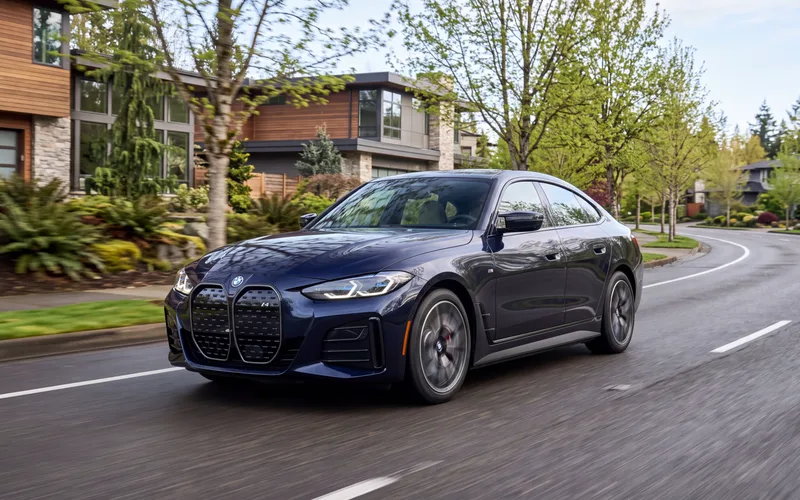 BMW i4Compact Luxury SedanBetter at: Interior quality
For a shopper at the same $45–55k who cares more about interior quality, steering feel and a liftback's practicality than about range or running cost.
Compare 2.84B-
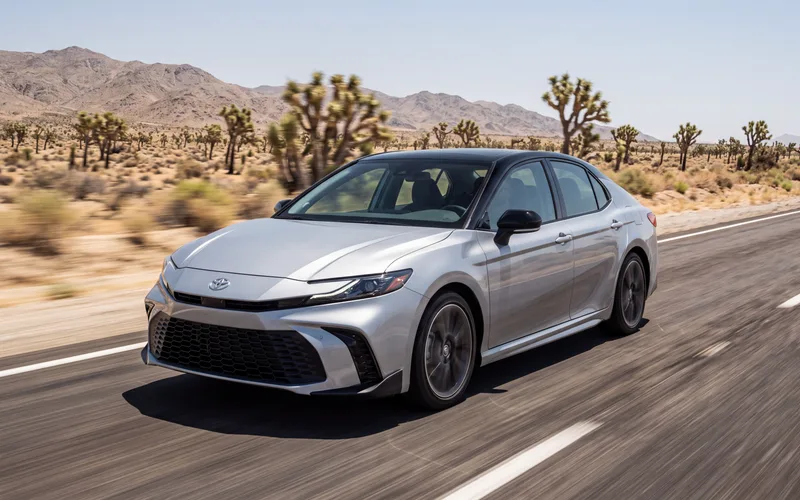 Toyota CamryMid-Size SedanBetter at: Resale value
The default fallback for anyone without home charging or worried about depreciation — cheaper to buy and insure, roomier in back, and it holds its value far better.
CompareHow it's evolved
10 scored model years · 2017–2026
Subject scores by year
Hover or tap a score to see what moved it versus the year before. A corner mark flags a big swing.
| Year | Performance | Efficiency | Safety | Space | Cost | Reliability | Tech | Use-case | Driving | Value |
|---|---|---|---|---|---|---|---|---|---|---|
| 2026 | 76 | 74 | 84 | 77 | 50 | 64 | 68 | 59 | 71 | 74 |
| 2025 | 76 | 73 | 80 | 77 | 46 | 63 | 67 | 59 | 72 | 74 |
| 2024 | 76 | 73 | 77 | 76 | 36 | 65 | 66 | 58 | 72 | 76 |
| 2023 | 59 | 68 | 76 | 73 | 48 | 56 | 62 | 54 | 72 | 73 |
| 2022 | 58 | 68 | 79 | 73 | 37 | 47 | 65 | 55 | 72 | 71 |
| 2021 | 61 | 67 | 80 | 67 | 28 | 51 | 64 | 57 | 75 | 68 |
| 2020 | 61 | 68 | 81 | 64 | 64 | 52 | 61 | 56 | 75 | 75 |
| 2019 | 60 | 67 | 80 | 66 | 56 | 41 | 59 | 52 | 73 | 77 |
| 2018 | 56 | 63 | 71 | 62 | 52 | 51 | 62 | 53 | 71 | 74 |
| 2017 | 53 | 59 | 66 | 62 | 48 | 47 | 57 | 51 | 70 | 59 |
Compare two years
Best fit & conditions
Higher scores mean a better fit for that use case. Learn more about use-case fit →
Subject profile
Trims & configurations
3 trimsScores above reflect the volume trim. Per-trim specs and scores are rolling out — the full lineup:
Academic Probation · NHTSA safety recalls
Aug 4, 2026Exterior lighting: headlightsThe headlight low beams may be too bright and exceed the maximum light output. As such, these vehicles fail to comply with the requirements of Federal Motor Vehicle Safety Standard (FMVSS) number 108, "Lamps, Reflective Devices, and Associated Equipment."
Defect
Tesla, Inc. (Tesla) is recalling certain 2017-2023 Model 3 and 2020-2023 Model Y vehicles. The headlight low beams may be too bright and exceed the maximum light output. As such, these vehicles fail to comply with the requirements of Federal Motor Vehicle Safety Standard (FMVSS) number 108, "Lamps, Reflective Devices, and Associated Equipment."
Risk
Headlight low beams that are too bright can reduce visibility for oncoming drivers, increasing the risk of a crash.
Remedy
Tesla Service will replace the headlights, free of charge. Interim owner notification letters explaining the safety risk were be mailed October 3, 2026. Another notice will be sent once the repair becomes available. Owners may contact Tesla customer service at 1-877-798-3752. Tesla's number for this recall is SB-24-17-003.
NHTSA campaign 26V507000 ↗Manufacturer no. SB-24-17-00320,349 vehicles potentially affected (all models in the campaign)Filed by Tesla, Inc.Filed as MODEL 3May 4, 2026Back over prevention: softwareThe rearview camera image may be delayed when the vehicle is placed in reverse. As such, these vehicles fail to comply with the requirements of Federal Motor Vehicle Safety Standard number 111, "Rear Visibility."
Defect
Tesla, Inc. (Tesla) is recalling certain 2017, 2021-2023 Model 3, 2020-2023 Model Y, 2021-2023 Model S, and Model X vehicles operating software version 2026.8.6. The rearview camera image may be delayed when the vehicle is placed in reverse. As such, these vehicles fail to comply with the requirements of Federal Motor Vehicle Safety Standard number 111, "Rear Visibility."
Risk
A delayed rearview image reduces the driver's view behind the vehicle, increasing the risk of a crash.
Remedy
Tesla has released an over-the-air (OTA) software update, free of charge. Owner notification letters were mailed July 3, 2026. Owners may contact Tesla customer service at 1-877-798-3752. Tesla's number for this recall is SB-26-00-001.
NHTSA campaign 26V283000 ↗Manufacturer no. SB-26-00-001218,868 vehicles potentially affected (all models in the campaign)Owners notified Jul 3, 2026Filed by Tesla, Inc.Filed as MODEL 3Feb 14, 2025Steering: electric power assist systemThe printed circuit board for the electronic power steering assist may experience an overstress condition, causing a loss of power steering assist when the vehicle reaches a stop and then accelerates again.
Defect
Tesla, Inc. (Tesla) is recalling certain 2023 Model 3 and Model Y vehicles operating software prior to 2023.38.4. The printed circuit board for the electronic power steering assist may experience an overstress condition, causing a loss of power steering assist when the vehicle reaches a stop and then accelerates again.
Risk
A loss of power steering assist can require greater steering effort, especially at low speeds, increasing the risk of a crash.
Remedy
Tesla has released an over-the-air (OTA) software update, free of charge. Owner notification letters were mailed March 25, 2025. Owners may contact Tesla customer service at 1-877-798-3752. Tesla's number for this recall is SB-25-00-004.
NHTSA campaign 25V092000 ↗Manufacturer no. SB-25-00-004376,241 vehicles potentially affected (all models in the campaign)Owners notified Mar 25, 2025Filed by Tesla, Inc.Filed as MODEL 3Dec 17, 2024Tires: pressure monitoring and regulating systemsThe tire pressure monitoring system (TPMS) warning light may not remain illuminated between drive cycles, failing to warn the driver of low tire pressure. As such, these vehicles fail to comply with the requirements of Federal Motor Vehicle Safety Standard number 138, "Tire Pressure Monitoring Systems."
Defect
Tesla, Inc. (Tesla) is recalling certain 2024 Cybertruck, 2017-2025 Model 3, and 2020-2025 Model Y vehicles. The tire pressure monitoring system (TPMS) warning light may not remain illuminated between drive cycles, failing to warn the driver of low tire pressure. As such, these vehicles fail to comply with the requirements of Federal Motor Vehicle Safety Standard number 138, "Tire Pressure Monitoring Systems."
Risk
Driving with improperly inflated tires increases the risk of a crash.
Remedy
Tesla released an over-the-air (OTA) software update, free of charge. Owner notification letters were mailed February 15, 2025. Owners may contact Tesla customer service at 1-877-798-3752. Tesla's number for this recall is SB-24-00-018.
NHTSA campaign 24V935000 ↗Manufacturer no. SB-24-00-018696,281 vehicles potentially affected (all models in the campaign)Owners notified Feb 15, 2025Filed by Tesla, Inc.Filed as MODEL 3Jul 24, 2024Electrical system: software · Latches/locks/linkages: hood: latchThe hood latch assembly may fail to detect an unlatched hood condition after the hood has been opened.
Defect
Tesla, Inc. (Tesla) is recalling certain 2021-2024 Model 3, Model S, Model X, and 2020-2024 Model Y vehicles. The hood latch assembly may fail to detect an unlatched hood condition after the hood has been opened.
Risk
An unlatched hood can fully open, obstructing the driver's view and increasing the risk of a crash.
Remedy
Tesla has released an over-the-air (OTA) software update, free of charge. Owner notification letters were mailed September 24, 2024. Owners may contact Tesla customer service at 1-877-798-3752. Tesla's number for this recall is SB-24-00-012.
NHTSA campaign 24V554000 ↗Manufacturer no. SB-24-00-0121,849,638 vehicles potentially affected (all models in the campaign)Owners notified Sep 22, 2024Filed by Tesla, Inc.Filed as MODEL 3May 28, 2024Seat belts: front: warning light/devicesIn the event of an unbelted driver, the seat belt warning light and audible chime may not activate as intended. As such, these vehicles fail to comply with the requirements of Federal Motor Vehicle Safety Standard number 208, "Occupant Crash Protection."
Defect
Tesla, Inc. (Tesla) is recalling certain 2012-2024 Model S, 2015-2024 Model X, 2017-2023 Model 3, and 2020-2023 Model Y vehicles. In the event of an unbelted driver, the seat belt warning light and audible chime may not activate as intended. As such, these vehicles fail to comply with the requirements of Federal Motor Vehicle Safety Standard number 208, "Occupant Crash Protection."
Risk
A seat belt warning system that fails to alert occupants of an unbelted seat belt can increase the risk of injury during a crash.
Remedy
Tesla will release an over-the-air (OTA) software update. Owner notification letters were mailed July 26, 2024. Owners may contact Tesla customer service at 1-877-798-3752. Tesla's number for this recall is SB-24-00-008.
NHTSA campaign 24V376000 ↗Manufacturer no. SB-24-00-008125,233 vehicles potentially affected (all models in the campaign)Owners notified Jul 26, 2024Filed by Tesla, Inc.Filed as MODEL 3Jan 30, 2024Electrical system: instrument cluster/panelAn incorrect font size is displayed on the instrument panel for the Brake, Park, and Antilock Brake System (ABS) warning lights. As such, these vehicles fail to comply with the requirements of Federal Motor Vehicle Safety Standard number 105, "Hydraulic and Electric Brake Systems" and 135, "Light Vehicle Brake Systems."
Defect
Tesla, Inc. (Tesla) is recalling certain 2012-2023 Model S, 2016-2024 Model X, 2017-2023 Model 3, 2019-2024 Model Y, and 2024 Cybertruck vehicles. An incorrect font size is displayed on the instrument panel for the Brake, Park, and Antilock Brake System (ABS) warning lights. As such, these vehicles fail to comply with the requirements of Federal Motor Vehicle Safety Standard number 105, "Hydraulic and Electric Brake Systems" and 135, "Light Vehicle Brake Systems."
Risk
Warning lights with a smaller font size can make critical safety information on the instrument panel difficult to read, increasing the risk of a crash.
Remedy
Tesla began releasing an over-the-air (OTA) software update, free of charge. Owners may contact Tesla customer service at 1-877-798-3752. Tesla's number for this recall is SB-24-00-003.
NHTSA campaign 24V051000 ↗Manufacturer no. SB-24-00-0032,193,869 vehicles potentially affected (all models in the campaign)Owners notified Feb 21, 2024Filed by Tesla, Inc.Filed as MODEL 3Dec 12, 2023Electrical system: adas: driver monitoring: softwareTesla, Inc. (Tesla) is recalling 2012-2023 Model S, 2016-2023 Model X, 2017-2023 Model 3, and 2020-2023 Model Y vehicles equipped with all versions of Autosteer leading up to the version(s) that contains the recall remedy. In certain circumstances when Autosteer is engaged, the prominence and scope of the feature's controls may not be sufficient to prevent driver misuse of the SAE Level 2 advanced driver-assistance feature.
Defect
Tesla, Inc. (Tesla) is recalling 2012-2023 Model S, 2016-2023 Model X, 2017-2023 Model 3, and 2020-2023 Model Y vehicles equipped with all versions of Autosteer leading up to the version(s) that contains the recall remedy. In certain circumstances when Autosteer is engaged, the prominence and scope of the feature's controls may not be sufficient to prevent driver misuse of the SAE Level 2 advanced driver-assistance feature.
Risk
In certain circumstances when Autosteer is engaged, and the driver does not maintain responsibility for vehicle operation and is unprepared to intervene as necessary or fails to recognize when Autosteer is canceled or not engaged, there may be an increased risk of a crash.
Remedy
Tesla will release an over-the-air (OTA) software update, free of charge. Owner notification letters were mailed February 10, 2024. Owners may contact Tesla customer service at 1-877-798-3752. Tesla's number for this recall is SB-23-00-008.
NHTSA campaign 23V838000 ↗Manufacturer no. SB-23-00-0082,031,220 vehicles potentially affected (all models in the campaign)Owners notified Feb 10, 2024Filed by Tesla, Inc.Filed as MODEL 3Jun 19, 2023Electrical system: propulsion system: traction batteryThe pyrotechnic battery disconnect may be defective.
Defect
Tesla, Inc. (Tesla) is recalling certain 2023 Model 3 and Model Y vehicles. The pyrotechnic battery disconnect may be defective.
Risk
A defective battery disconnect may not isolate the vehicle's high voltage battery after a crash or fault detection, increasing the risk of electrical shock and injury.
Remedy
Tesla Service will replace the pyrotechnic battery disconnect, free of charge. Owner notification letters were mailed August 18, 2023. Owners may contact Tesla customer service at 1-877-798-3752. Tesla's number for this recall is SB-23-16-005.
NHTSA campaign 23V434000 ↗Manufacturer no. SB-23-16-00526 vehicles potentially affected (all models in the campaign)Owners notified Aug 18, 2023Filed by Tesla, Inc.Filed as MODEL 3Feb 15, 2023Steering: automated/adaptive steeringIn addition, the system may respond insufficiently to changes in posted speed limits or not adequately account for the driver's adjustment of the vehicle's speed to exceed posted speed limits.
Defect
Tesla, Inc. (Tesla) is recalling certain 2016-2023 Model S, Model X, 2017-2023 Model 3, and 2020-2023 Model Y vehicles equipped with Full Self-Driving Beta (FSD Beta) software or pending installation. The FSD Beta system may allow the vehicle to act unsafe around intersections, such as traveling straight through an intersection while in a turn-only lane, entering a stop sign-controlled intersection without coming to a complete stop, or proceeding into an intersection during a steady yellow traffic signal without due caution. In addition, the system may respond insufficiently to changes in posted speed limits or not adequately account for the driver's adjustment of the vehicle's speed to exceed posted speed limits.
Risk
FSD Beta software that allows a vehicle to exceed speed limits or travel through intersections in an unlawful or unpredictable manner increases the risk of a crash.
Remedy
Tesla will release an over-the-air (OTA) software update, free of charge. Owner notification letters were mailed April 15, 2023. Owners may contact Tesla customer service at 1-877-798-3752. Tesla's number for this recall is SB-23-00-001.
NHTSA campaign 23V085000 ↗Manufacturer no. SB-23-00-001362,758 vehicles potentially affected (all models in the campaign)Owners notified Apr 15, 2023Filed by Tesla, Inc.Filed as MODEL 3Nov 15, 2022Exterior lighting: tail lightsOne or both taillights may intermittently fail to illuminate.
Defect
Tesla, Inc. (Tesla) is recalling certain 2023 Model 3 and 2020-2023 Model Y vehicles. One or both taillights may intermittently fail to illuminate.
Risk
A taillight that fails to illuminate may reduce the visibility of the vehicle, increasing the risk of a crash.
Remedy
Tesla has released an over-the-air (OTA) software update, free of charge. Owner notification letters were mailed January 14, 2023. Owners may contact Tesla customer service at 1-877-798-3752. Tesla's number for this recall is SB-22-00-016.
NHTSA campaign 22V844000 ↗Manufacturer no. SB-22-00-016321,628 vehicles potentially affected (all models in the campaign)Owners notified Jan 14, 2023Filed by Tesla, Inc.Filed as MODEL 3Oct 25, 2021Air bags: side/window: curtainThe left and/or right side curtain air bag may have been improperly secured to the roof rail, which could result in a twisted air bag. As such, these vehicles fail to comply with the requirements of Federal Motor Vehicle Safety Standard numbers 214, "Side Impact Protection" and 226, "Ejection Mitigation."
Defect
Tesla, Inc. (Tesla) is recalling certain 2020-2021, 2023 Model 3 vehicles. The left and/or right side curtain air bag may have been improperly secured to the roof rail, which could result in a twisted air bag. As such, these vehicles fail to comply with the requirements of Federal Motor Vehicle Safety Standard numbers 214, "Side Impact Protection" and 226, "Ejection Mitigation."
Risk
A twisted side curtain air bag may improperly deploy, increasing the risk of injury or occupant ejection during a crash.
Remedy
Tesla Service will inspect and realign the left and right side curtain air bag as necessary, free of charge. Owner notification letters were mailed December 23, 2021. Owners may contact Tesla customer service at 1-877-798-3752. Tesla's number for this recall is SB-21-20-006.
NHTSA campaign 21V834000 ↗Manufacturer no. SB-21-20-0063 vehicles potentially affected (all models in the campaign)Owners notified Dec 23, 2021Filed by Tesla, Inc.Filed as MODEL 3
24 recalls on other model years of the Model 3 (2017–2022, 2024–2026)
Jul 7, 2026Air bags: knee bolster · Structure: body: bumpersThe vehicles were originally built for a foreign market and do not have knee air bags, may not be equipped with certain interior safety countermeasures, and may not have been tested for bumper impact resistance procedures. As such, these vehicles fail to comply with the requirements of Federal Motor Vehicle Safety Standard numbers, 208, "Occupant Crash Protection," 201, "Occupant Protection in Interior Impact," and Part 581, "Bumper Standards."
Defect
Tesla, Inc. (Tesla) is recalling certain 2026 Model Y and 2024 Model 3 vehicles. The vehicles were originally built for a foreign market and do not have knee air bags, may not be equipped with certain interior safety countermeasures, and may not have been tested for bumper impact resistance procedures. As such, these vehicles fail to comply with the requirements of Federal Motor Vehicle Safety Standard numbers, 208, "Occupant Crash Protection," 201, "Occupant Protection in Interior Impact," and Part 581, "Bumper Standards."
Risk
A noncompliant vehicle may have reduced occupant protections, increasing the risk of injury during a crash.
Remedy
Tesla will repurchase noncompliant vehicles currently registered in the United States, free of charge. Owner notification letters are expected to be mailed September 5, 2026. Owners may contact Tesla customer service at 1-877-798-3752 or [email protected]. Tesla's number for this recall is SB-26-00-004.
NHTSA campaign 26V445000 ↗Manufacturer no. SB-26-00-00415 vehicles potentially affected (all models in the campaign)Filed by Tesla, Inc.Filed as MODEL 3Oct 10, 2025Electrical system: propulsion system: fuses, relays, contacts, and shuntsThe battery pack contactors may fail, causing a loss of drive power.
Defect
Tesla, Inc. (Tesla) is recalling certain 2025 Model 3 and 2026 Model Y vehicles. The battery pack contactors may fail, causing a loss of drive power.
Risk
A loss of drive power can increase the risk of a crash.
Remedy
Tesla Service will replace the battery pack contactors, free of charge. Owner notification letters were mailed December 9, 2025. Owners may contact Tesla customer service at 1-877-798-3752. Tesla's number for this recall is SB-25-16-005.
NHTSA campaign 25V690000 ↗Manufacturer no. SB-25-16-00512,963 vehicles potentially affected (all models in the campaign)Owners notified Dec 9, 2025Filed by Tesla, Inc.Filed as MODEL 3Jun 18, 2025Seats: critical fastenersThe fasteners attaching the seat back to the seat bottom may have been improperly tightened.
Defect
Tesla, Inc. (Tesla) is recalling certain 2026 Model 3 and Model Y vehicles. The fasteners attaching the seat back to the seat bottom may have been improperly tightened.
Risk
The seat may not properly restrain the occupant, increasing the risk of injury during a crash.
Remedy
Tesla Service Centers will inspect and tighten or replace the seat assembly fasteners as necessary, free of charge. Owner notification letters were mailed August 16, 2025. Owners may contact Tesla customer service at 1-877-798-3752. Tesla's number for this recall is SB-25-13-003.
NHTSA campaign 25V410000 ↗Manufacturer no. SB-25-13-00348 vehicles potentially affected (all models in the campaign)Owners notified Aug 16, 2025Filed by Tesla, Inc.Filed as MODEL 3Jan 6, 2025Back over prevention: software · Electrical systemThe computer circuit board may short, resulting in the loss of the rearview camera image. As such, these vehicles fail to comply with the requirements of Federal Motor Vehicle Safety Standard (FMVSS) number 111, "Rear Visibility."
Defect
Tesla, Inc. (Tesla) is recalling certain 2024-2025 Model 3, Model S, 2023-2025 Model X, and Model Y vehicles. The computer circuit board may short, resulting in the loss of the rearview camera image. As such, these vehicles fail to comply with the requirements of Federal Motor Vehicle Safety Standard (FMVSS) number 111, "Rear Visibility."
Risk
A rearview camera that does not display an image reduces the driver's rear view, increasing the risk of a crash.
Remedy
Tesla released an over-the-air (OTA) software update, free of charge. Tesla will also identify any vehicles that experienced a circuit board failure, or stress that may lead to a circuit board failure, and replace the affected computers, free of charge. Owner notification letters were mailed March 7, 2025. Owners may contact Tesla customer service at 1-877-798-3752. Tesla's number for this recall is SB-25-00-001.
NHTSA campaign 25V002000 ↗Manufacturer no. SB-25-00-001239,382 vehicles potentially affected (all models in the campaign)Owners notified Mar 7, 2025Filed by Tesla, Inc.Filed as MODEL 3Apr 19, 2024Air bags: side/window: thoraxTesla, Inc. (Tesla) is recalling one 2024 Model 3 vehicle. The driver seat side air bag module was assembled without a deflector that directs gas flow during deployment.
Defect
Tesla, Inc. (Tesla) is recalling one 2024 Model 3 vehicle. The driver seat side air bag module was assembled without a deflector that directs gas flow during deployment.
Risk
Without a deflector, the air bag may deploy improperly, increasing the risk of injury during a crash.
Remedy
Tesla service replaced the side air bag, free of charge. The affected vehicle was repaired April 12, 2024. Owners may contact Tesla customer service at 1-877-798-3752. Tesla's number for this recall is SB-24-13-001.
NHTSA campaign 24V284000 ↗Manufacturer no. SB-24-13-0011 vehicles potentially affected (all models in the campaign)Owners notified Apr 12, 2024Filed by Tesla, Inc.Filed as MODEL 3Feb 27, 2024Electrical system: software · Forward collision avoidance: warnings: external/pedestrian alertA factory reset muted the Pedestrian Warning System (PWS) sounds. As such, these vehicles fail to comply with the requirements of Federal Motor Vehicle Safety Standard number 141, "Minimum Sound Requirements for Hybrid and Electric Vehicles."
Defect
Tesla, Inc. (Tesla) is recalling certain 2013, 2018-2021 Model S, 2020-2021 Model X, 2018-2022 Model 3, and 2020-2022 Model Y vehicles. A factory reset muted the Pedestrian Warning System (PWS) sounds. As such, these vehicles fail to comply with the requirements of Federal Motor Vehicle Safety Standard number 141, "Minimum Sound Requirements for Hybrid and Electric Vehicles."
Risk
Pedestrians may be unaware of an approaching vehicle if the PWS sounds are muted, increasing the risk of a crash.
Remedy
Tesla released an over-the-air (OTA) software update, release 2023.44.30.14, free of charge. Owner notification letters were mailed April 27, 2024. Owners may contact Tesla customer service at 1-877-798-3752. Tesla's number for this recall is SB-24-00-006.
NHTSA campaign 24V153000 ↗Manufacturer no. SB-24-00-0066,557 vehicles potentially affected (all models in the campaign)Owners notified Apr 27, 2024Filed by Tesla, Inc.Filed as MODEL 3Mar 31, 2023Suspension: critical fasteners · Suspension: frontThe front suspension lateral link fasteners may loosen, allowing the lateral link to separate from the sub-frame.
Defect
Tesla, Inc. (Tesla) is recalling certain 2018-2019 Model 3 vehicles. The front suspension lateral link fasteners may loosen, allowing the lateral link to separate from the sub-frame.
Risk
A lateral link separation could shift the wheel alignment, causing instability and increasing the risk of a crash.
Remedy
Tesla Service will tighten or replace the lateral link fasteners as necessary, free of charge. Owner notification letters were mailed May 30, 2023. Owners may contact Tesla customer service at 1-877-798-3752. Tesla's number for this recall is SB-23-31-001. This recall is an expansion of previous recall number 21V-835.
NHTSA campaign 23V235000 ↗Manufacturer no. SB-23-31-001422 vehicles potentially affected (all models in the campaign)Owners notified May 30, 2023Filed by Tesla, Inc.Filed as MODEL 3Oct 21, 2022Seat belts: rear/other: anchorageThe second-row left seat belt buckle and second-row center seat belt anchor may have been incorrectly reassembled during vehicle service.
Defect
Tesla, Inc. (Tesla) is recalling certain 2017-2022 Model 3 vehicles. The second-row left seat belt buckle and second-row center seat belt anchor may have been incorrectly reassembled during vehicle service.
Risk
An incorrectly reassembled seat belt anchor can impair the performance of the seat belt during a crash, increasing the risk of injury.
Remedy
Tesla Service will inspect and reassemble the seat belt anchors as necessary, free of charge. Owner notification letters were mailed December 20, 2022. Owners may contact Tesla customer service at 1-877-798-3752. Tesla's number for this recall is SB-22-20-004.
NHTSA campaign 22V798000 ↗Manufacturer no. SB-22-20-00424,064 vehicles potentially affected (all models in the campaign)Owners notified Dec 20, 2022Filed by Tesla, Inc.Filed as MODEL 3Sep 19, 2022Visibility: power window devices and controlsThe window automatic reversal system may not react correctly after detecting an obstruction. As such, these vehicles fail to comply with the requirements of Federal Motor Vehicle Safety Standard number 118, "Power-Operated Window Systems."
Defect
Tesla, Inc. (Tesla) is recalling certain 2017-2022 Model 3, 2020-2022 Model Y, and 2021-2022 Model S and Model X vehicles. The window automatic reversal system may not react correctly after detecting an obstruction. As such, these vehicles fail to comply with the requirements of Federal Motor Vehicle Safety Standard number 118, "Power-Operated Window Systems."
Risk
A closing window may exert excessive force by pinching a driver or passenger before retracting, increasing the risk of injury.
Remedy
Tesla will perform an over-the-air (OTA) software update of the automatic window reversal system, free of charge. Owner notification letters were mailed March 31, 2032. Owners may contact Tesla customer service at 1-877-798-3752. Tesla's number for this recall is SB-22-00-013.
NHTSA campaign 22V702000 ↗Manufacturer no. SB-22-00-0131,096,762 vehicles potentially affected (all models in the campaign)Owners notified Mar 31, 2023Filed by Tesla, Inc.Filed as MODEL 3May 9, 2022Electrical system: adas: driver monitoring: camera/sensor · Forward collision avoidance: automatic emergency braking · Lane departure: lane keep: automatic steeringThe fisheye and narrow camera cable terminals were incorrectly installed in the cable harness connector, resulting in swapped camera views.
Defect
Tesla, Inc. (Tesla) is recalling certain 2020-2021 Model 3 and 2021 Model Y vehicles. The fisheye and narrow camera cable terminals were incorrectly installed in the cable harness connector, resulting in swapped camera views.
Risk
Swapped camera views can prevent the vehicle's cameras from detecting crossing objects and high-curvature lane lines, impairing the Autosteer and Automatic Emergency Braking (AEB) performance, and increasing the risk of a crash.
Remedy
Tesla Service will correct the swapped terminals and recalibrate the cameras, free of charge. Owner notification letters were mailed July 8, 2022. Owners may contact Tesla customer service at 1-877-798-3752. Tesla's number for this recall is SB-22-17-007.
NHTSA campaign 22V317000 ↗Manufacturer no. SB-22-17-0077 vehicles potentially affected (all models in the campaign)Owners notified Jul 8, 2022Filed by Tesla, Inc.Filed as MODEL 3May 3, 2022Back over prevention: display function · Equipment: electrical: infotainment: video (touch)screen/monitor/unitThe infotainment central processing unit (CPU) may overheat during the preparation or process of fast-charging, causing the CPU to lag or restart.
Defect
Tesla, Inc. (Tesla) is recalling certain 2021-2022 Model S, Model X, and 2022 Model 3 and Model Y vehicles operating certain firmware releases. The infotainment central processing unit (CPU) may overheat during the preparation or process of fast-charging, causing the CPU to lag or restart.
Risk
A lagging or restarting CPU may prevent the center screen from displaying the rearview camera image, gear selection, windshield visibility control settings, and warning lights, increasing the risk of a crash.
Remedy
Tesla will perform an over-the-air (OTA) software update that will improve CPU temperature management, free of charge. Owner notification letters were mailed July 1, 2022. Owners may contact Tesla customer service at 1-877-798-3752. Tesla's number for this recall is SB-22-00-009.
NHTSA campaign 22V296000 ↗Manufacturer no. SB-22-00-009129,960 vehicles potentially affected (all models in the campaign)Owners notified Jul 1, 2022Filed by Tesla, Inc.Filed as MODEL 3Apr 18, 2022Electrical system: instrument cluster/panelThe unit of speed (mph or km/h) may fail to display on the speedometer while in Track Mode. As such, these vehicles fail to comply with the requirements of Federal Motor Vehicle Safety Standard number 101, "Control and Displays."
Defect
Tesla, Inc. (Tesla) is recalling certain 2018-2022 Model 3 Performance vehicles. The unit of speed (mph or km/h) may fail to display on the speedometer while in Track Mode. As such, these vehicles fail to comply with the requirements of Federal Motor Vehicle Safety Standard number 101, "Control and Displays."
Risk
The driver may not know how fast the vehicle is traveling without the mph or km/h unit display, increasing the risk of a crash.
Remedy
Tesla will perform an over-the-air (OTA) software update, free of charge. Owner notification letters were mailed June 17, 2022. Owners may contact Tesla customer service at 1-877-798-3752. Tesla's number for this recall is SB-22-00-008.
NHTSA campaign 22V263000 ↗Manufacturer no. SB-22-00-00848,184 vehicles potentially affected (all models in the campaign)Owners notified Jun 17, 2022Filed by Tesla, Inc.Filed as MODEL 3Apr 12, 2022Electrical system: software · Forward collision avoidance: warnings: external/pedestrian alertThe Boombox function allows sounds to be played through an external speaker while the vehicle is in motion, which may obscure the Pedestrian Warning System (PWS) sounds. As such, these vehicles fail to comply with the requirements of Federal Motor Vehicle Safety Standard number 141, "Minimum Sound Requirements for Hybrid and Electric Vehicles."
Defect
Tesla, Inc. (Tesla) is recalling certain 2020-2022 Model Y, Model X, Model S, and 2017-2022 Model 3 vehicles. The Boombox function allows sounds to be played through an external speaker while the vehicle is in motion, which may obscure the Pedestrian Warning System (PWS) sounds. As such, these vehicles fail to comply with the requirements of Federal Motor Vehicle Safety Standard number 141, "Minimum Sound Requirements for Hybrid and Electric Vehicles."
Risk
Pedestrians may be unaware of an approaching vehicle if the PWS sounds are obscured, increasing the risk of a crash.
Remedy
Tesla will perform an over-the-air (OTA) software update that will disable the Boombox functionality when the vehicle is in Drive, Neutral and Reverse modes, including Summon and Smart Summon, free of charge. Owner notification letters were mailed June 6, 2022. Owners may contact Tesla customer service at 1-877-798-3752. Tesla's number for this recall is SB-22-00-003. Note: This recall supersedes recall 22V-063. Vehicles configured with Summon or Smart Summon and already remedied under 22V-063 will need to have the new remedy software installed.
NHTSA campaign 22V235000 ↗Manufacturer no. SB-22-00-003594,894 vehicles potentially affected (all models in the campaign)Owners notified Jun 6, 2022Filed by Tesla, Inc.Filed as MODEL 3Mar 18, 2022Back over prevention: display functionThe rearview image may not immediately display when the vehicle begins to reverse. As such, these vehicles fail to comply with the requirements of Federal Motor Vehicle Safety Standard number 111, "Rear Visibility."
Defect
Tesla, Inc. (Tesla) is recalling certain 2018-2019 Model S, Model X, and 2017-2020 Model 3 vehicles equipped with Autopilot Computer 2.5 and operating certain firmware releases. The rearview image may not immediately display when the vehicle begins to reverse. As such, these vehicles fail to comply with the requirements of Federal Motor Vehicle Safety Standard number 111, "Rear Visibility."
Risk
A delayed rearview camera image reduces the driver's rear view, increasing the risk of a crash.
Remedy
Tesla will perform an over-the-air (OTA) software update, free of charge. Owner notification letters were mailed May 17, 2022. Owners may contact Tesla customer service at 1-877-798-3752. Tesla's number for this recall is SB-22-00-004.
NHTSA campaign 22V169000 ↗Manufacturer no. SB-22-00-004947 vehicles potentially affected (all models in the campaign)Owners notified May 17, 2022Filed by Tesla, Inc.Filed as MODEL 3Feb 4, 2022Electrical system: software · Forward collision avoidance: warnings: external/pedestrian alertThe Boombox function allows sounds to be played through an external speaker while the vehicle is in motion, which may obscure the Pedestrian Warning System (PWS) sounds. As such, these vehicles fail to comply with the requirements of Federal Motor Vehicle Safety Standard number 141, "Minimum Sound Requirements for Hybrid and Electric Vehicles."
Defect
Tesla, Inc. (Tesla) is recalling certain 2020-2022 Model S, Model X, Model Y, and 2017-2022 Model 3 vehicles. The Boombox function allows sounds to be played through an external speaker while the vehicle is in motion, which may obscure the Pedestrian Warning System (PWS) sounds. As such, these vehicles fail to comply with the requirements of Federal Motor Vehicle Safety Standard number 141, "Minimum Sound Requirements for Hybrid and Electric Vehicles."
Risk
Pedestrians may be unaware of an approaching vehicle if the PWS sounds are obscured, increasing the risk of a crash.
Remedy
Tesla will perform an over-the-air (OTA) software update that will disable the Boombox functionality when the vehicle is in Drive, Neutral and Reverse modes, free of charge. Owner notification letters are expected to be mailed April 5, 2022. Owners may contact Tesla customer service at 1-877-798-3752. Tesla's number for this recall is SB-22-00-003. Note: This recall has been superseded by Recall 22V-235. Tesla's number for the new recall is SB-22-00-003.
NHTSA campaign 22V063000 ↗Manufacturer no. SB-22-00-003578,607 vehicles potentially affected (all models in the campaign)Owners notified Apr 12, 2022Filed by Tesla, Inc.Filed as MODEL 3Feb 2, 2022Electrical system: software · Visibility: defroster/defogger/hvac system: air handler/chamber, ducts, and valvesA software error may cause a valve in the heat pump to open unintentionally and trap the refrigerant inside the evaporator, resulting in decreased defrosting performance. As such, these vehicles fail to comply with the requirements of Federal Motor Vehicle Safety Standard number 103, "Windshield Defrosting and Defogging Systems."
Defect
Tesla, Inc. (Tesla) is recalling certain 2021-2022 Model 3, Model S, Model X, and 2020-2022 Model Y vehicles. A software error may cause a valve in the heat pump to open unintentionally and trap the refrigerant inside the evaporator, resulting in decreased defrosting performance. As such, these vehicles fail to comply with the requirements of Federal Motor Vehicle Safety Standard number 103, "Windshield Defrosting and Defogging Systems."
Risk
Decreased defrosting performance may reduce the driver's visibility, increasing the risk of a crash.
Remedy
Tesla will perform an over-the-air (OTA) software update, free of charge. Owner notification letters were mailed April 1, 2022. Owners may contact Tesla customer service at 1-877-798-3752. Tesla's number for this recall is SB-22-18-002.
NHTSA campaign 22V050000 ↗Manufacturer no. SB-22-18-00226,681 vehicles potentially affected (all models in the campaign)Owners notified Apr 1, 2022Filed by Tesla, Inc.Filed as MODEL 3Feb 1, 2022Electrical system: software · Seat belts: frontThe audible chime may not activate when the vehicle starts and the driver has not buckled their seat belt. As such, these vehicles fail to comply with the requirements of Federal Motor Vehicle Safety Standard number 208, "Occupant Crash Protection."
Defect
Tesla, Inc. (Tesla) is recalling certain 2021-2022 Model S and Model X, 2017-2022 Model 3, and 2020-2022 Model Y vehicles. The audible chime may not activate when the vehicle starts and the driver has not buckled their seat belt. As such, these vehicles fail to comply with the requirements of Federal Motor Vehicle Safety Standard number 208, "Occupant Crash Protection."
Risk
The driver may be unaware that their seat belt is not fastened, increasing the risk of injury during a crash.
Remedy
Tesla will perform an over-the-air (OTA) software update, free of charge. Owner notification letters were mailed April 1, 2022. Owners may contact Tesla customer service at 1-877-798-3752. Tesla's number for this recall is SB-22-00-002.
NHTSA campaign 22V045000 ↗Manufacturer no. SB-22-00-002817,143 vehicles potentially affected (all models in the campaign)Owners notified Apr 1, 2022Filed by Tesla, Inc.Filed as MODEL 3Jan 27, 2022Steering: automated/adaptive steeringThe "rolling stop" functionality available as part of the Full Self-Driving (Beta) software may allow the vehicle to travel through an all-way stop intersection without first coming to a stop.
Defect
Tesla, Inc. (Tesla) is recalling certain 2016-2022 Model S and Model X, 2017-2022 Model 3, and 2020-2022 Model Y vehicles. The "rolling stop" functionality available as part of the Full Self-Driving (Beta) software may allow the vehicle to travel through an all-way stop intersection without first coming to a stop.
Risk
Failing to stop at a stop sign can increase the risk of a crash.
Remedy
Tesla will perform an over-the-air (OTA) software update that disables the "rolling stop" functionality, free of charge. Owner notification letters were mailed March 28, 2022. Owners may contact Tesla customer service at 1-877-798-3752. Tesla's number for this recall is SB-22-00-001.
NHTSA campaign 22V037000 ↗Manufacturer no. SB-22-00-00153,822 vehicles potentially affected (all models in the campaign)Owners notified Mar 28, 2022Filed by Tesla, Inc.Filed as MODEL 3Dec 21, 2021Back over prevention: sensing system: camera · Electrical system: wiring: rear compartment/trunk · Visibility: rearview mirrors/devices: interiorTesla, Inc. (Tesla) is recalling all 2017-2020 Model 3 vehicles. The rearview camera cable harness may be damaged by the opening and closing of the trunk lid, preventing the rearview camera image from displaying.
Defect
Tesla, Inc. (Tesla) is recalling all 2017-2020 Model 3 vehicles. The rearview camera cable harness may be damaged by the opening and closing of the trunk lid, preventing the rearview camera image from displaying.
Risk
A rearview camera that does not function reduces the driver's rear view, increasing the risk of a crash.
Remedy
Tesla Service will inspect and install a guide protector and new cable harness as necessary, free of charge. Owner notification letters were mailed April 24, 2022. Owners may contact Tesla customer service at 1-877-798-3752. Tesla's number for this recall is SB-21-17-008.
NHTSA campaign 21V00D000 ↗Manufacturer no. SB-21-17-008356,309 vehicles potentially affected (all models in the campaign)Owners notified Apr 25, 2022Filed by Tesla, Inc.Filed as MODEL 3Oct 29, 2021Forward collision avoidance: automatic emergency braking · Forward collision avoidance: sensing system: camera · Forward collision avoidance: warnings · Forward collision avoidance: softwareA communication error may cause false forward-collision warning (FCW) or unexpected activation of the automatic emergency brake (AEB) system.
Defect
Tesla, Inc. (Tesla) is recalling certain 2017-2021 Model S, Model 3, Model X, and 2020-2021 Model Y vehicles operating software version 2021.36.5.2. A communication error may cause false forward-collision warning (FCW) or unexpected activation of the automatic emergency brake (AEB) system.
Risk
Unexpected activation of the AEB system may cause the car to stop suddenly, increasing the risk of a crash.
Remedy
Tesla Service has released an over-the-air (OTA) software update, free of charge. The recall began October 25, 2021. Owners may contact Tesla customer service at 1-877-798-3752. Tesla's number for this recall is SB-21-00-004.
NHTSA campaign 21V846000 ↗Manufacturer no. SB-21-00-00411,728 vehicles potentially affected (all models in the campaign)Owners notified Oct 25, 2021Filed by Tesla, Inc.Filed as MODEL 3Oct 25, 2021Suspension: critical fasteners · Suspension: frontThe front suspension lateral link fasteners may loosen, allowing the lateral link to separate from the sub-frame.
Defect
Tesla, Inc. (Tesla) is recalling certain 2020-2021 Model Y and 2019-2021 Model 3 vehicles. The front suspension lateral link fasteners may loosen, allowing the lateral link to separate from the sub-frame.
Risk
A lateral link separation could shift the wheel alignment, causing instability and increasing the risk of a crash.
Remedy
Tesla Service will tighten or replace the lateral link fasteners as necessary, free of charge. Owner notification letters were mailed December 20, 2021. Owners may contact Tesla customer service at 1-877-798-3752. Tesla's number for this recall is SB-21-31-003.
NHTSA campaign 21V835000 ↗Manufacturer no. SB-21-31-0032,791 vehicles potentially affected (all models in the campaign)Owners notified Dec 20, 2021Filed by Tesla, Inc.Filed as MODEL 3May 25, 2021Seat belts · Seat belts: critical fastenersOne or both fasteners that secure the front seat shoulder belt to the b-pillar may not be properly attached.
Defect
Tesla, Inc. (Tesla) is recalling certain 2018-2020 Model 3 and 2019-2021 Model Y vehicles. One or both fasteners that secure the front seat shoulder belt to the b-pillar may not be properly attached.
Risk
An improperly attached fastener may prevent the seat belt system from performing as designed, increasing the risk of injury.
Remedy
Tesla Service will inspect and repair both fasteners if necessary, free of charge. Owner notification letters were mailed July 23, 2021. Owners may contact Tesla customer service online by visiting www.tesla.com/support/contact or by calling 1-877-79-TESLA (or 1-877-798-3752). Tesla's number for this recall is SB-21-20-001.
NHTSA campaign 21V389000 ↗Manufacturer no. SB-21-20-0015,530 vehicles potentially affected (all models in the campaign)Owners notified Jul 23, 2021Filed by Tesla, Inc.Filed as MODEL 3May 25, 2021Service brakes, hydraulic: critical fasteners · Service brakes, hydraulic: foundation components: disc: caliperThe brake caliper bolts may be loose, allowing the brake caliper to separate and contact the wheel rim.
Defect
Tesla, Inc. (Tesla) is recalling certain 2019-2021 Model 3 and 2020-2021 Model Y vehicles. The brake caliper bolts may be loose, allowing the brake caliper to separate and contact the wheel rim.
Risk
Contact with the rim may cause a loss of tire pressure, increasing the risk of a crash.
Remedy
Tesla Service will inspect and tighten, or replace the caliper bolts as necessary, free of charge. Owner notification letters were mailed July 23, 2021. Owners may contact Tesla customer service online by visiting www.tesla.com/support/contact or by calling 1-877-79-TESLA (or 1-877-798-3752). Tesla's number for this recall is SB-21-33-002.
NHTSA campaign 21V387000 ↗Manufacturer no. SB-21-33-0025,974 vehicles potentially affected (all models in the campaign)Owners notified Jul 23, 2021Filed by Tesla, Inc.Filed as MODEL 3Oct 10, 2019Equipment: other: labelsThe driver-side sun visor may not have the required air bag warning information. As such, these vehicles fail to comply with the requirements of Federal Motor Vehicle Safety Standard (FMVSS) number 208, "Occupant Crash Protection."
Defect
Tesla Motors, Inc. (Tesla) is recalling certain 2019 Tesla Model 3 vehicles. The driver-side sun visor may not have the required air bag warning information. As such, these vehicles fail to comply with the requirements of Federal Motor Vehicle Safety Standard (FMVSS) number 208, "Occupant Crash Protection."
Risk
Failure to provide the air bag warning information increases the risk of injury.
Remedy
Tesla will notify owners, and Tesla Service Centers will inspect the visor and replace it, as necessary, free of charge. The recall began December 6, 2019. Owners may contact Tesla customer service at 1-877-798-3752. Tesla's number for this recall is SB-19-15-003.
NHTSA campaign 19V719000 ↗Manufacturer no. SB-19-15-00389 vehicles potentially affected (all models in the campaign)Owners notified Dec 6, 2019Filed by Tesla, Inc.Filed as MODEL 3
Source: NHTSA Office of Defects Investigation recall database, model years 2017–2026. Recalls are listed by model year as the manufacturer filed them; whether a specific car is affected depends on its VIN — check a VIN at nhtsa.gov ↗. NHTSA model names matched to this page: MODEL 3.
Detailed scoring by subject
1Performance & PowertrainMid-pack among this car's ten categories.1.97C-
Scored on the single-motor RWD (LFP pack), the 2023 volume configuration after the year's price cuts and full-credit eligibility. 2023 is a carry-over year of the 2017 generation, before the 2024 Highland refresh. Tesla publishes no horsepower figure, so this is a third-party number; sources range 271–283 hp.
Peak torque of the single rear permanent-magnet motor, available from standstill. Tesla publishes no US torque rating and the third-party figures disagree.
Tesla's quoted 5.8 s for the LFP-pack RWD, unchanged from 2022. That is brisk for the segment, and the dual-motor trims are much quicker.
Instant, linear, lag-free single-motor thrust with no engine or hybrid transitions. Held below the 2024 Highland car and the Lucid and BMW i4 by the pre-refresh car's road and wind noise, audible motor whine, and abrupt one-pedal regen at low speed.
A single-speed reduction gear with no shifts, hunting or drone. The 2023 car keeps a conventional column drive-selector stalk, but regen strength is no longer driver-selectable.
The volume RWD is rear-drive only. Dual-motor AWD is one step up on the Long Range and standard on the Performance, so two of the three trims offer it, but there are no terrain modes.
There are three battery-electric configurations: LFP single-motor RWD, Long Range dual-motor and Performance dual-motor. They span 5.8 s to 3.1 s and 272 to 358 miles, but there is no hybrid or gas alternative.
2Efficiency & RangeMid-pack among this car's ten categories.2.57C+
The EPA combined rating for the 2023 Model 3 RWD (25.5 kWh/100 mi) is among the most efficient of any EV sedan.
This is the EPA city efficiency rating for the 2023 Model 3 RWD.
This is the EPA highway efficiency rating for the 2023 Model 3 RWD. The low-drag body keeps it close to the city figure.
The EPA full-charge range of the LFP-pack RWD is unchanged from 2022 and sits short of most EV-sedan rivals. The Long Range AWD is well above the segment midpoint.
The RWD's CATL LFP pack peaks lower than the 250 kW of the Long Range and Performance NCA/NCM packs. It has a native Tesla (NACS) DC inlet.
Tesla quotes no 10–80% time for the US car, so this comes from independent charge-curve tests. They put the LFP RWD at about 21–28 minutes depending on conditions, which is mid-pack.
This is EPA's standard 15,000-mile annual electricity cost, among the lowest of any vehicle on sale.
It is about as easy to keep charged as any EV. It has a native connector for the largest and most reliable US fast-charging network, an onboard AC charger good for overnight 240 V charging, and very low consumption. The LFP pack can also be routinely charged to 100%.
3SafetyThe Model 3's best-graded category.3.15B
NHTSA rates both 2023 Model 3 listings, RWD and AWD, at five stars overall, with five stars in the frontal, side barrier, side pole and rollover tests. 2023 is the last carry-over year of the original 2017 body before the Highland refresh.
Every crashworthiness test IIHS publishes for the 2023 car is Good: small overlap on both sides, the original moderate overlap test, roof strength, and head restraints. The car won Top Safety Pick+ in 2022, but IIHS lists no 2023 award, because it was never run through the updated side test that the stricter 2023 criteria require. All results are Good but there is no award, so it scores at the top of the 50–79 band rather than in the award band.
Every 2023 trim comes standard with Autopilot (Traffic-Aware Cruise Control plus Autosteer), AEB, forward collision warning, lane departure warning and prevention, blind-spot warning and auto high beams. The car has no rear cross-traffic alert and no safe-exit warning. Cars built from late 2022 onward also shipped without ultrasonic parking sensors; Tesla Vision park assist only replaced them in a 2023 software update.
IIHS rates the standard camera-only (Tesla Vision) system Superior in the vehicle-to-vehicle, daytime pedestrian and nighttime pedestrian tests, and those ratings apply to 2022-23 models. Points come off for the well-documented phantom-braking complaints on radar-less Model 3/Y cars.
Blind-spot warning is standard, using the side repeater cameras and small pillar indicators, and Autosteer resists a lane change into an occupied lane. There is no rear cross-traffic alert, cross-traffic braking or safe-exit alert on the 2023 car, and losing the ultrasonic sensors weakened low-speed proximity warnings for part of the year.
Standard Autosteer centers smoothly on marked highways, and by 2023 it had largely recovered from the 2021-22 vision-only transition. Driver-attention nags and abrupt hand-backs when lane markings fade keep it off the top of the band.
Traffic-Aware Cruise Control covers the full speed range with stop-and-go and works with Autosteer as one standard Autopilot mode. Phantom-braking complaints on the vision-only system and paid gating of Navigate on Autopilot and auto lane change (Enhanced Autopilot or FSD) keep it mid-band.
The 2023 Model 3 has no hands-free mode. FSD Beta opened to every North American buyer in late 2022, but it and Autopilot both required steady steering-wheel torque throughout 2023; camera-based hands-off supervision only arrived with FSD v12.4 in 2024. A score just above zero reflects the wide, supervised but hands-on capability that was on offer.
IIHS rates the single LED projector headlight fitted to every trim Good, with high-beam assist credit. It has no adaptive or matrix beam.
Forward and side sightlines are good thanks to the low cowl and glass roof, but the small fastback rear window and thick C-pillars limit the rear view. There is a backup camera but no 360° view, and late-2022/early-2023 builds lacked parking sensors until Tesla Vision park assist arrived.
IIHS rates the LATCH hardware Acceptable: the two outboard seats have full LATCH, and the center seat has only a tether anchor. The flat floor and wide rear doors help, while the low roofline makes rear-facing installs tight.
4Space & ComfortOne of the Model 3's strongest categories.2.92B-
Every 2023 Model 3 trim seats five (2+3); there is no other seating configuration.
The all-glass roof is standard on every trim, so there is no sunroof variant to separate out.
Front legroom is the same on RWD, Long Range and Performance, which share one interior package.
Rear headroom under the glass roof is decent for a fastback sedan, but the falling roofline limits tall rear riders.
Rear legroom is on the snug side for a mid-size sedan, and the raised battery floor puts rear passengers in a knees-up position.
The rear trunk is deep for a sedan and has an underfloor well, but its opening is a trunk lid rather than a hatch. The separate front trunk adds roughly 3 cu ft that this item does not count.
For a sedan, the front trunk is rare and genuinely useful. The car also has a deep center-console bin, a dual wireless phone pad and a flat rear floor with no transmission tunnel. The door pockets are small, and the console lid and trim drew build-quality complaints.
Reviewers split on the seats: some call the front buckets very comfortable and supportive, while others find them firm. The rear bench sits low with a knees-up position, and the front passenger seat had no power lumbar after 2021.
The pre-Highland car (Highland is the 2024 refresh) rides firmly. It is composed on smooth roads, but reviewers describe it as busy, nervous or jittery over broken pavement, and the 2024 refresh's retuned suspension was a big step forward.
With no engine, the cabin is calm at low speed. Road noise is boomy over bumps, wind noise leaks around the frameless windows, and interior panels creak; the 2024 refresh added acoustic glass to fix these.
Heated front and rear seats, a heated steering wheel, dual-zone automatic climate, a heat pump and app-based cabin preconditioning are all standard on the RWD. Ventilated seats were not offered before the 2024 refresh.
5Cost of OwnershipThe Model 3's lowest-graded category.1.22D
2023 was Tesla's price-war year: the RWD fell in steps from $46,990 (late 2022) to $43,990 (13 Jan), $42,990, $41,990 (6 Apr), $39,990 (19 Apr) and $38,990 (Oct). The $39,990 price, which held for most of the model year, is used here. Tax credits are excluded in any case.
This scorecard's cat1 and cat2 score the RWD as the representative 2023 configuration, so the RWD is priced here too. It was the cheapest Tesla and the trim Tesla built most of in 2023 (the Long Range was briefly unorderable in April). Tesla publishes no trim mix, so the volume-trim choice is MEDIUM confidence.
Scheduled maintenance is minimal (no oil, plugs or transmission service, and regen spares the brakes). Repair estimates rise once the 4-year/50,000-mile basic warranty runs out, and tires wear quickly. Third-party estimates disagree widely, so this is a mid-range figure.
A 2023 car keeps 55.8% of its value about three years in, and on CarEdge's curve 4- and 5-year-old Model 3s sit at 41–42%. That points to roughly 42% at five years. Tesla's own new-car price cuts, the arrival of the Highland refresh and the 2025 brand slump all weighed on it.
This is unchanged across 2022–2024. It beats the mainstream 3-year/36,000-mile norm and matches the German luxury brands, but trails Hyundai, Kia and Genesis.
Eight years is the US EV norm. The explicit 70% capacity floor puts a contractual limit on battery degradation.
There is no complimentary scheduled maintenance. Roadside assistance covers only the 4-year/50,000-mile basic term, and Premium Connectivity is paid after a trial. The 2023 extras were short promotions, such as end-of-quarter inventory free-Supercharging offers and a Q3 2023 FSD transfer window, not standard ownership benefits.
$41,380 volume-trim price minus its estimated resale value after 5 years (42% retained, or about $17,380) leaves about $24,000 in depreciation. Add the projected $5,500 in 5-year maintenance and repairs, and owning this vehicle for 5 years costs about $29,500 in total.
6Reliability & QualityOne of the Model 3's weakest categories.1.75C-
Consumer Reports' subscriber survey rates the 2023 Model 3, the last pre-Highland model year, about average against other 2023 cars. That is a clear step up from the below-average 2022, but trouble spots are spread across many systems, and J.D. Power keeps placing Tesla below the industry average. The score therefore sits in the lower-middle of the mixed-signal band.
Over the years that matter for a 2023 car, Tesla's standing sat at the lower end of mid-pack. In Consumer Reports' brand rankings it moved around the lower-middle, while J.D. Power's dependability study placed it among the worst brands measured. The Model 3 and Model Y are the brand's most reliable products. The S, X and early Model Y pull the brand average down.
The 2023 Model 3 has 12 NHTSA campaigns, a high count. Most are OTA software fixes covering the whole fleet (FSD Beta behaviour, Autopilot driver monitoring, instrument-panel font size, TPMS, seat-belt chime, headlight brightness). Two hardware campaigns specific to the 2023 model year are more serious: a defective pyrotechnic battery disconnect that can cut drive power, and an EPAS circuit-board fault that can cause loss of power-steering assist. That puts it at the boundary between typical and repeated recall activity.
This is the category's strength. The 2023 car uses the mature permanent-magnet drive unit and pack family that has been in US volume production since 2017. There is no multi-speed transmission, and high-mileage examples routinely keep their original packs and drive units. The score is held just below the 2024's because the 2023-only pyrotechnic-disconnect recall touched the traction-battery system, though it is not a durability pattern.
This is the pre-refresh minimalist cabin: comfortable vegan-leather seats and a wood or textile dash strip, but hard plastics in lower zones and, after Tesla's 2021–22 cost-cutting, less soft-touch trim. It is competitive for the money, but sparse next to mid-size luxury rivals. The 2024 Highland refresh upgraded the cabin, and its absence is what separates this year from the next.
Assembly improved from the 2022's visible panel-gap problems, but it remains inconsistent. Consumer Reports owners report trunk water leaks, rattles, seal problems and loose exterior trim on the 2023. CR also notes Tesla's problem rates for body hardware and paint/trim have fallen substantially in recent years.
Tesla's company-owned network of roughly 180–200 US service centers is far sparser than a franchised luxury network. Mobile service and app scheduling help, and many fixes arrive over the air. Owners still report multi-week appointment waits and difficulty reaching a person, which keeps it in the lower part of the adequate band.
Collision parts are dealer-only through Tesla's distribution, with documented backorders, above-average part prices and mandatory ADAS recalibration. Repair costs run about 20–30% above comparable sedans. Two things partly offset this: the 2017–2023 platform's large installed base has built the widest Tesla aftermarket and salvage-parts pool, and routine maintenance is minimal.
7Technology & InfotainmentMid-pack among this car's ten categories.2.17C
A single central touchscreen is the only display; the same unit is fitted to every 2023 trim.
The AMD Ryzen-based system, fitted to US cars from late 2021, is among the fastest and most fluid in the industry. Points come off because almost every control, including wipers, mirrors and vents, sits in the screen, which pulls attention from the road.
Tesla does not offer Apple CarPlay or Android Auto, wired or wireless, on any 2023 Model 3. It is absent by design.
Native Google-based maps with live traffic and Supercharger-aware trip planning are excellent for EV road trips. Voice commands cover many cabin functions but are less conversational than phone assistants.
The volume RWD trim has a 7-speaker, single-amplifier system that sounds decent. The richer 14-speaker immersive system with subwoofer is reserved for the Long Range and Performance.
The 2023 Model 3 has no display behind the wheel or head-up display. Speed and driving status sit in the corner of the center screen.
Tesla's whole-vehicle OTA updates regularly add features. During 2023 alone they changed braking/regen behavior and delivered Tesla Vision park assist to sensor-less cars, among other functions; it is the industry benchmark.
The free Tesla app covers phone-as-key, remote climate, lock and unlock, locate, Sentry Mode viewing and charge control, with no subscription needed for the core functions.
There are three 65 W USB-C ports across the front console and rear, plus a dual wireless charging pad up front. There is no household AC outlet.
Bluetooth phone-as-key with walk-up unlock is standard, with a key card as backup. Remote climate replaces remote start, and the trunk is powered.
Every 2023 car has a backup camera, and the Autopilot cameras give side views when reversing, but there is no 360-degree bird's-eye view. Cars built from October 2022 also lack ultrasonic parking sensors, so they had no distance warnings until Tesla Vision park assist arrived by OTA in late 2023, and reviewers judged it less precise.
No head-up display is offered on any 2023 Model 3 trim.
8Use-Case FitOne of the Model 3's weakest categories.1.63D
The outboard LATCH positions, flat rear floor and wide trunk help. The low roofline, low rear seat and sedan door apertures make car-seat installs and loading kids harder than in an SUV, and IIHS rates the LATCH hardware only Acceptable.
The car has 5-star NHTSA ratings, all-Good IIHS crashworthiness results, and standard Autopilot plus AEB on the cheapest trim. It loses points for having no rear cross-traffic alert, no rear-seat reminder, and missing ultrasonic sensors on late builds.
Heated rear seats, rear USB-C ports, rear vents, the trunk and frunk all help on long trips. A knees-up rear bench, the firm ride and road noise limit multi-hour comfort for four adults.
Instant, smooth torque, strong one-pedal regen and standard traffic-aware cruise make stop-and-go traffic easy. The touchscreen-centric controls and firm low-speed ride are minor annoyances.
The EPA rates the RWD at 132 MPGe combined. With home charging and minimal scheduled maintenance, per-mile running costs are among the lowest of any car sold.
The sedan is easy to place in traffic, but its 38.8 ft turning circle is wide, the rear view is limited, and there is no 360 camera. Late-2022/2023 builds without sensors had to wait for Vision park assist.
The US-market Model 3 has no tow rating and no bed or commercial cargo layout, so it is not meaningfully work-capable.
The EV drivetrain is mechanically simple, but the car is not built or marketed for hard work use, and reviewers documented interior build-quality and trim issues.
There is no factory hitch, no tie-down system, no onboard AC outlet and no upfit ecosystem.
The RWD's 272-mile EPA range is modest, but the Supercharger network, built-in trip planner and standard Autopilot make long trips easy. Ride firmness and road noise limit long-haul comfort.
The volume trim is rear-drive with low ground clearance and no US tow rating. Camp Mode and the frunk are small pluses, but the car is essentially pavement-bound.
The 60/40 split rear seat, deep trunk and frunk carry normal luggage well. The narrow trunk-lid opening and lack of factory roof rails or a hitch limit bulky gear.
9Driving ExperienceGrades above the middle of the scale.2.85B-
The battery under the floor gives a low center of gravity, so the car corners flat and sharp, near the top of the class even in RWD form.
The steering is quick and precise with selectable weight modes, but reviewers find it somewhat numb and synthetic.
Instrumented stops are competitive and regen is strong and predictable. The regen level is no longer selectable, so one-pedal behavior can feel abrupt at low speed.
The single-speed EV drive delivers instant, linear torque with no shift shock or hybrid transitions. Low-speed regen can be a little abrupt.
The motor is near-silent in normal driving and transmits no vibration, though a faint motor whine is audible under load on the pre-refresh car.
The turning circle is the same on every 2023 trim and is wider than most mid-size sedan rivals.
Forward visibility is superb thanks to the low cowl, and the power seat and column adjust widely. Pushing mirrors, wipers and vents into the touchscreen and the limited rear view are ergonomic penalties.
Quick acceleration (5.8 s 0-60 in RWD), sharp turn-in and instant torque make it genuinely engaging; the Performance trim is more so.
10Value & Market PositionOne of the Model 3's strongest categories.2.98B-
Even the ~$40k RWD came with the 15" touchscreen, glass roof, heated front seats, power-folding mirrors and standard Autopilot (traffic-aware cruise plus lane centring). Rivals often charged extra for that level of driver assistance. The holes are the same as every pre-Highland year: no Apple CarPlay or Android Auto, no ventilated seats or rear screen (those came with the 2024 refresh), and FSD is a $15,000 option.
The 2023 price cuts made the Model 3 the value pick among premium EVs: a 272-mile RWD dropped below $40k, and a 358-mile Long Range AWD sold for about $45–47k with the full $7,500 IRA credit. Exclusive Supercharger access added value that rivals could not yet match. The RWD's credit fell to $3,750 from April 2023, and FSD is a costly add-on.
There were three trims (RWD, Long Range AWD, Performance) spanning roughly $39k–$54k, with clear range and power steps, but the Long Range was briefly unorderable in spring 2023. Option choice is limited to paint, wheels, interior colour and FSD, with no packages.
2023 was the Model 3's US sales peak at roughly 230,000 units, making it the #2 EV behind the Model Y. It outsold every other electric sedan many times over and topped the luxury-car segment.
In 2023 Tesla still had strong owner loyalty, the Supercharger halo and record sales. But the Twitter/X controversy was starting to dent consideration, and the steep price cuts angered earlier buyers and eroded the brand's premium pricing power. The 2025 brand slump also now weighs on used values for a 2023 owner.
Buyers did very well in 2023. Tesla cut the RWD's price by about $8,000 across the year, the IRA restored a federal credit ($7,500, or $3,750 on the RWD from April), and end-of-quarter inventory discounts and subsidised financing appeared. Direct sales also meant no dealer markup. Fixed pricing means there was nothing to negotiate, and frequent cuts punished early buyers.
2023 is the final North American year of the original 2017 generation. The Highland refresh was unveiled abroad in September 2023 and reached the US in January 2024 with new styling, much better NVH, ventilated seats and a rear screen. That makes a 2023 an aging design with its replacement imminent, though over-the-air updates kept the software current.
Reviewers still praised its range, efficiency, performance and Supercharger access. But by 2023 newer rivals (Ioniq 6, i4, Polestar 2) often beat it in comparisons on ride, refinement and build quality, and touchscreen-only controls and the lack of CarPlay drew criticism. IIHS gave the 2023 car no award, after a Top Safety Pick+ in 2022.