

The verdict
A mixed-report compact sedan, strong on reliability and held back by performance.
Overall 2.28 (C) across 10 graded subjects. Its strongest is reliability & quality at 3.53 (A-), its weakest performance & powertrain at 0.00 (F). 8 of 10 subjects grade at C− or better.
Jump to scoresStrengths
- Reliability & Quality
- Cost of Ownership
- Safety
What holds it back
- Performance & Powertrain
- Technology & Infotainment
- Use-Case Fit
Top alternatives
Cars shoppers cross-shop with the Toyota Corolla 2.44C+
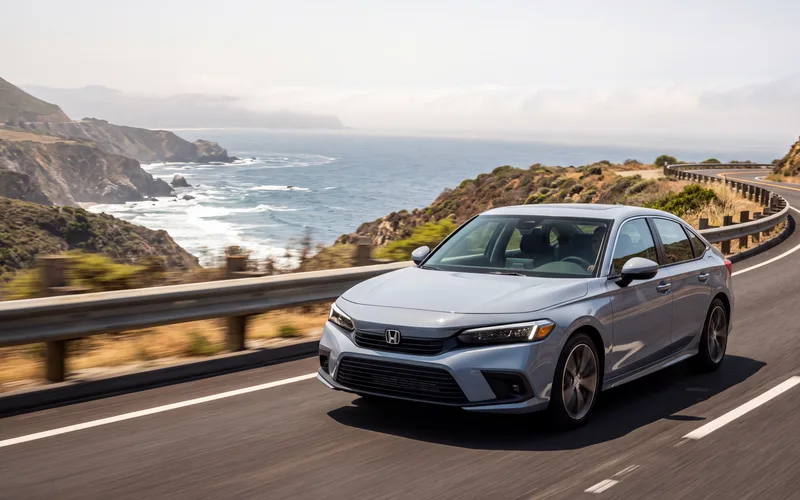 Honda CivicCompact SedanBetter at: Space and driving
It matches the Corolla's fuel economy and reliability while adding 2.6 inches of rear legroom, a bigger trunk and a genuinely better drive.
Compare 2.13C
2.13C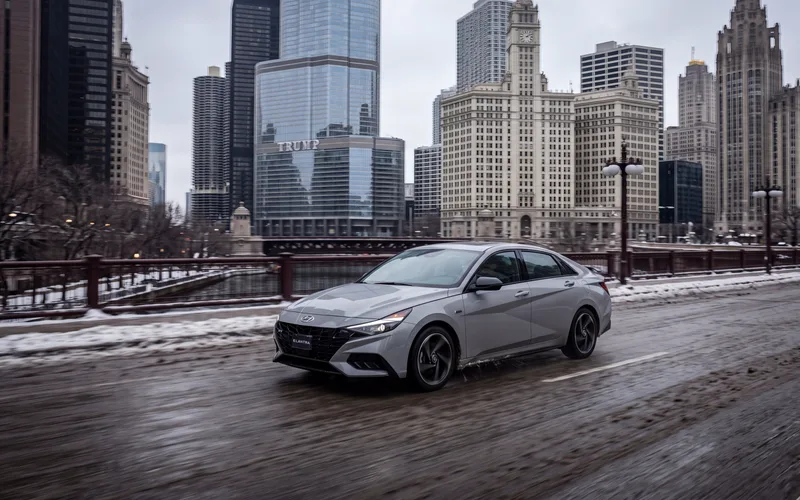 Hyundai ElantraCompact SedanBetter at: Warranty and room
It starts lower, offers 38.0 inches of rear legroom, and backs it with a 10-year/100,000-mile powertrain warranty against Toyota's 5/60.
Compare 2.19C
2.19C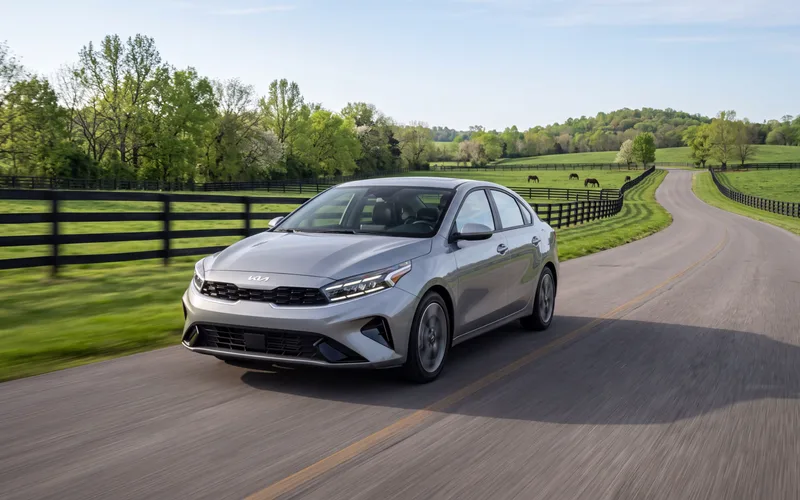 Kia K4Compact SedanBetter at: Tech per dollar
A newer design with more standard tech and screen for the money, plus Kia's long warranty, if you don't need a hybrid.
CompareHow it's evolved
4 scored model years · 2023–2026
Subject scores by year
Hover or tap a score to see what moved it versus the year before. A corner mark flags a big swing.
| Year | Performance | Efficiency | Safety | Space | Cost | Reliability | Tech | Use-case | Driving | Value |
|---|---|---|---|---|---|---|---|---|---|---|
| 2026 | 31 | 66 | 74 | 57 | 74 | 85 | 60 | 56 | 67 | 73 |
| 2025 | 32 | 66 | 73 | 58 | 74 | 86 | 55 | 56 | 66 | 72 |
| 2024 | 31 | 66 | 70 | 58 | 74 | 83 | 55 | 55 | 66 | 72 |
| 2023 | 31 | 66 | 73 | 58 | 74 | 81 | 55 | 56 | 67 | 71 |
Compare two years
Best fit & conditions
Higher scores mean a better fit for that use case. Learn more about use-case fit →
Subject profile
Trims & configurations
7 trimsScores above reflect the volume trim. Per-trim specs and scores are rolling out — the full lineup:
Detailed scoring by subject
1Performance & PowertrainThe Corolla's lowest-graded category.0.00F
2023 is the model year the Corolla sedan standardized on the 2.0L M20A-FKS Dynamic Force four at 169 hp: Toyota dropped the L grade and retired the 139-hp 1.8L, moving the volume LE onto the bigger engine. 169 hp is the gas lineup maximum and sits near the floor of the 130–520 hp sedan band; the hybrid alternative is weaker still at 138 hp net, itself up from 121 hp for 2023.
The naturally aspirated 2.0L peaks at 151 lb-ft, and with no turbocharged option anywhere in the 2023 US Corolla sedan range that is the gas lineup maximum. It lands barely above the 120 lb-ft floor of the sedan band. The hybrid's 1.8L Atkinson-cycle four makes only 105 lb-ft on its own, though electric assist lifts combined system torque to roughly 156 lb-ft at low speed.
Toyota publishes no 0–60 claim for the Corolla sedan. Edmunds' instrumented figure for the 2.0L/CVT car is 8.8 s and is the number it carries for the 2023 sedan; Car and Driver recorded 8.3 s for the heavier 2023 Corolla hatchback with the same engine, so 8.8 s is the conservative representative value for the volume LE. Toyota's own framing is that the 2023 LE is roughly two seconds quicker to 60 than the 1.8L car it replaced. The hybrid is slower at about 9.0 s.
The Dynamic Force four is clean and lag-free at light throttle — there is no turbo to wait on — and the THS II hybrid blends motor and engine seamlessly, but 169 hp moving a compact sedan means the engine spends a lot of time near its ceiling, where reviewers consistently describe it as loud and coarse. Competent and predictable rather than genuinely refined, which is par for the segment; the 2023 power bump made the car noticeably less strained than the 1.8L it replaced without changing its character.
Toyota's Direct Shift-CVT is better engineered than most: a physical launch gear removes the rubber-band feel from a standing start before handing off to the belt-and-pulley range, and SE/XSE trims add a simulated ten-speed sequential mode with paddles. It never hunts and is smooth in ordinary driving, but at sustained wide-open throttle it still pins the revs and drones the way a geared automatic would not. The hybrid's planetary-type e-CVT is seamless but equally vocal under load.
Every gas Corolla is front-drive only; all-wheel drive arrived for 2023 solely on the Hybrid LE AWD and Hybrid SE AWD grades via Toyota's Electronic On-Demand rear-motor system, with no low range, locking differential or terrain modes (the Hybrid XLE stays FWD). Being one of the very few compact sedans offering AWD at all is a genuine advantage over the FWD-only Civic, Elantra and Jetta, but it is tied to one powertrain and two grades, so it stays below the 'available on most trims' band.
Two genuinely distinct powertrains are offered for 2023 — the 169-hp 2.0L gas four and the newly uprated 138-hp 1.8L THS II hybrid, the latter in FWD or AWD form — which covers mainstream compact-sedan needs and includes an electrified choice that expanded substantially this model year. What keeps it out of the top band is the absence of any turbocharged, plug-in hybrid or battery-electric Corolla sedan; the sporty packages are suspension and appearance only, and the hot GR Corolla is a separate hatchback nameplate.
2Efficiency & RangeMid-pack among this car's ten categories.2.47C+
2023 is the year the 169-hp 2.0L Dynamic Force four became standard across every gas Corolla — the volume LE's old 139-hp 1.8L was retired — and the LE's K120 CVT calibration returns 35 MPG combined. That is mid-pack for a 2023 compact sedan and only about a third of the way up the sedan normalization band; the optional hybrid's 50 MPG combined is the class benchmark but is not the representative trim.
City is the gas Corolla's weakest reading — 32 MPG is what a naturally aspirated four with no electric assist and no engine stop-start manages in stop-and-go traffic, landing in the bottom third of the sedan band. The 21-MPG gap to the Hybrid LE's 53 MPG city is the single strongest argument for stepping up to the electrified powertrain, and 2023 is the first year that step is available in five different hybrid configurations.
41 MPG highway is the gas Corolla's best number and genuinely competitive for the class — the LE's taller CVT calibration beats the sportier three-mode SE/XSE tune by 1 MPG. The hybrid's highway advantage is only 5 MPG, far narrower than its 21-MPG city edge, so a high-mileage highway commuter has much less to gain from it.
A 13.2-gallon tank at the LE's 35 MPG combined works out to 462 miles of total range — mid-band for a sedan and enough to cover most road-trip legs without a fuel stop. The hybrid gives up nearly two gallons of tank capacity (11.3 gal) yet still stretches to 565 miles, a full 100 miles further.
EPA puts the gas LE at $1,750/yr at 15,000 miles on regular — about 8.5 barrels of oil a year — which is unremarkable for the class and worth 48 points against the sedan band. The $500/yr saving on the Hybrid LE pays back its roughly $1,250-$1,500 price premium in about three years, and EPA credits the gas LE with $2,250 saved over five years versus the average new vehicle against the hybrid's $4,750.
Every 2023 Corolla sedan — gas LE/SE/Nightshade/XSE and Hybrid LE/SE/XLE, FWD or eFour AWD — runs on 87-octane regular unleaded with no premium recommendation, no plug and no charging infrastructure to arrange. About as cheap and simple to fuel as a new car gets.
3SafetyOne of the Corolla's strongest categories.2.92B-
NHTSA gave the 2023 Corolla sedan the maximum 5-star overall rating and five stars in every crash test it runs — frontal driver and passenger, side barrier front and rear, and side pole. The four-star rollover result with a 10.5% risk and no tip in the dynamic maneuver is the normal ceiling for a front-drive compact sedan and does not pull the overall figure down.
The 2023 Corolla sedan is a genuine IIHS TOP SAFETY PICK winner — the badge sits at the top of its ratings page — and most of the sheet backs it up: Good in small overlap front on both driver and passenger sides, Good in the original moderate overlap test, Good roof strength, and Good head restraints and seats. Two results keep it out of the top band and out of TSP+. The updated side test returns Acceptable, with Acceptable structure and a Marginal driver pelvis at 6.0 kN of combined force. More seriously, the updated moderate overlap front test — run by IIHS on a 2023 Corolla LE, so this is the 2023 car itself, not a carried-over result — comes back Marginal, driven entirely by the second row: rear passenger restraints and dummy kinematics Marginal and rear chest Acceptable, even though Toyota added rear seat belt load limiters and pretensioners for 2023 specifically to improve rear-occupant protection. The driver is protected well throughout. An award-winning car with a real rear-passenger weakness lands at the top of the middle band — above the 2024 car, which posts identical crash results but lost the award when the criteria tightened, and below the 2025 car, which fixed both the side and moderate overlap results.
2023 is the year Toyota Safety Sense stepped up to 3.0 on the Corolla, and it is standard on every grade — gas LE, SE and XSE, and Hybrid LE, LE AWD, SE, SE AWD, XLE and the Infrared Edition. The content is deep for a compact sedan: Pre-Collision System with Pedestrian Detection, Full-Speed Range Dynamic Radar Cruise Control, Lane Departure Alert with Steering Assist, Lane Tracing Assist, Road Sign Assist, Automatic High Beams, and the new-for-2023 Proactive Driving Assist with Obstacle Anticipation Assist and Deceleration Assist, plus a standard backup camera and eight airbags. Getting full-speed-range adaptive cruise and lane centering on the base LE beats several rivals at this price. The hole is blind-spot coverage: Blind Spot Monitor with Rear Cross-Traffic Alert is standard only on the XSE and is an extra-cost option on the LE and SE, which are the volume grades, so most Corollas leave the lot without it. Core suite standard with the key item optional across most of the range is squarely the middle band.
The standard TSS 3.0 Pre-Collision System with Pedestrian Detection earns Superior — the top grade — in both the daytime and the nighttime IIHS pedestrian front crash prevention evaluations, and it earns them outright: the car avoided a collision in every single scenario IIHS ran. That includes the crossing child at 12 and 25 mph, the crossing adult at night at both speeds on high and low beams, and the hardest test in the protocol, the 37 mph parallel adult at night, where it avoided the collision on low beams as well as high. Night and pedestrian performance is exactly where most systems in this class fall apart, so a clean sweep is what puts this in the top band. It stops short of the ceiling because IIHS publishes no vehicle-to-vehicle front crash prevention result for this car, leaving the hardest car-to-car closing speeds unproven, and because part of the night credit comes from high-beam assist rather than the low beams alone.
Blind Spot Monitor with Rear Cross-Traffic Alert on the 2023 Corolla is alert-only — mirror-mounted warning lights and a chime, with no steering or braking intervention, no rear automatic braking and no safe-exit alert — and it is standard only on the XSE. Both volume grades, LE and SE, have to pay for it, which is why IIHS records it simply as 'optional blind spot detection'. The Corolla sedan also offers no surround-view camera at any 2023 grade; the one adjacent option is Front and Rear Parking Assist with Automatic Braking, which covers low-speed maneuvering rather than the rear-quarter blind zones. Alert-only hardware that most buyers do not get lands in the lower half of the middle band.
Every 2023 Corolla gets Lane Departure Alert with Steering Assist plus Lane Tracing Assist inside standard TSS 3.0, and 3.0 is a real step up on the TSS 2.0 calibration this generation launched with — smoother corrections and less nagging. It stays out of the top band for the same structural reason it does on later years: Lane Tracing Assist only centers the car while Dynamic Radar Cruise Control is engaged and clear markings are present, so there is no standalone centering mode, and it wanders or hands back on winding roads, faded paint, heavy rain and low sun. Functional and unobtrusive rather than something a driver leans on.
Full-Speed Range Dynamic Radar Cruise Control is standard on every 2023 Corolla grade including the base LE — it works down to a full stop and resumes, which is not a given in the compact class — and TSS 3.0 adds the new-for-2023 Proactive Driving Assist, which applies gentle braking into curves and around pedestrians and cyclists even with cruise switched off. Paired with Lane Tracing Assist that makes a credible highway-assist package at this price. It is held out of the top band because the following behavior is tuned conservatively, with generous gaps and an unhurried resume after a cut-in, and because there is no navigation-linked speed adjustment or lane-change assist of the sort the best-rated systems include.
No hands-free highway driving is offered on the 2023 Corolla at any grade or price. Toyota's hands-free Advanced Drive / Teammate system was confined to the Lexus LS and Toyota Mirai in the US market for this model year and was never extended to the Corolla, so there is no equivalent to BlueCruise, Super Cruise or Tesla's supervised systems. Lane Tracing Assist is a hands-on aid that warns and disengages if the driver releases the wheel.
This is the 2023 Corolla's standout crash-avoidance result and the reason it cleared the Top Safety Pick headlight requirement: IIHS rates two headlight variations across the range and both come back Good, so every trim from base LE to XSE leaves the factory with Good-rated lighting. All are LED projectors with standard high-beam assist via TSS 3.0, and low-beam reach on the straightaway is a long 120-121 m on the right edge. It lands in the top band but short of the ceiling because neither variation is curve-adaptive, low-beam visibility drops to only fair on the sharp curves for both systems, the upper-trim variation exceeded the glare threshold by 6.5% on one right-hand curve, and the LE's high beams are rated inadequate on both sharp curves.
The E210 Corolla's low cowl and slim A-pillars give genuinely good forward and three-quarter sightlines, and the compact footprint makes the car easy to place in a parking space. Against that, the fastback-influenced roofline leaves a shallow rear window and thick C-pillars that create real over-the-shoulder blind zones, and the Corolla sedan offers no surround-view camera at any 2023 grade — a plain backup camera is the only standard electronic compensation, with the blind-spot and rear cross-traffic systems that would cover those zones optional on both volume trims. Average visibility with identifiable blind spots and minimal camera backup.
The hardware is genuinely good and IIHS measured it that way: Good overall for LATCH ease of use with a plus for extra positions, two full LATCH seating positions plus a third that can borrow lower anchors, and easy-to-find tether anchors. The lower anchors are visible rather than buried in the seat bight, need no meaningful force to attach and offer generous clearance angles, which is better than most compact sedans manage. What keeps it out of the top band is packaging rather than hardware: at roughly 34.8 inches of rear legroom a rear-facing seat behind a tall driver is a squeeze, three-across is effectively out, and the middle position depends on borrowed anchors that then become unavailable in their own seats.
4Space & ComfortMid-pack among this car's ten categories.1.89C-
Every 2023 Corolla sedan grade seats five, including the electric-AWD hybrids added to the lineup this model year. Five is the maximum a compact sedan offers, so the item tops out.
38.3 inches of front headroom is a genuine strong point for a low-slung compact sedan, and tall drivers are well accommodated up front. The power moonroof costs a small amount of that clearance on the trims that carry it.
42.0 inches of front legroom is squarely mid-pack for the compact-sedan class — sufficient for tall front occupants but no more generous than the Civic, Elantra or Jetta. The figure does not vary by trim or by powertrain, and the 2023 refresh did not change it.
37.1 inches of rear headroom is average for the segment on paper. In practice the low, sloping roofline of this generation makes the space feel tighter than the number suggests and complicates getting in and out of the back seat.
34.8 inches is the 2023 Corolla's single biggest space liability: the Civic (37.4), Elantra (38.0) and Forte all give rear passengers meaningfully more room, and only the Sentra and Mazda3 are comparably tight. Reviewers rate the sedan's back seat as adequate for two adults on shorter runs, but it trails the class on the tape measure.
13.1 cubic feet is below the compact-sedan norm — the Civic offers 14.8, the Elantra 14.2 and the Jetta 14.1 — leaving the 2023 Corolla near the bottom of the class alongside the Mazda3. The one real win is that neither the hybrid system nor the new-for-2023 electric AWD costs any trunk space, since the battery lives under the rear seat and the rear drive motor sits on the axle.
The 2023 Corolla covers the basics without a single clever idea: a center console bin, two front cupholders, a covered armrest box, bottle-capable front and rear door pockets, a rear center armrest with cupholders, and the 60/40-split folding rear seatback that lets long items through from the trunk. Nothing is innovative — no configurable console, no underfloor bin, no onboard power beyond USB — and Qi wireless charging is reserved for the XSE and Hybrid XLE rather than being available across the range. Persistent owner complaints about the console bin's size and cupholders that let smaller cups tip keep this from the upper half of the middle band.
Front seats are the better half of this story: Edmunds found them comfortable with enough adjustment range for tall and short drivers alike, and U.S. News calls them supportive and reasonably spacious for taller occupants. But the 8-way power driver's seat with power lumbar is confined to the XSE and Hybrid XLE, so the volume LE driver gets a 6-way manual chair with no way to dial in support. The rear bench is the real limitation — 34.8 inches of legroom, a sloping roof and a small door opening make it tolerable for two adults on short runs and cramped over distance. Comfortable for most with genuine limits in back: solidly mid-band.
Ride is the 2023 Corolla's clearest comfort strength — Edmunds calls it smooth over a variety of road surfaces and gives it high marks for ride comfort, while keeping body motions in check. The volume LE's 16-inch wheels and tall sidewalls are the sweet spot; the SE, Nightshade and XSE ride noticeably firmer on 18s. Dropping the lowered, stiffly sprung APEX Edition for 2023 removes the harshest-riding version of the car from the lineup, but the 18-inch trims still keep this just below the segment-leading band.
Noise is the 2023 Corolla's weakest comfort trait and the one reviewers single out. Edmunds calls road noise ever-present and loud enough on the highway that you crank the stereo to cover it, and its first drive of the refreshed hybrid reported the gas engine jumping straight to 3,000–4,000 rpm with an obnoxious buzz filling the cabin; Consumer Reports found the engines loud and raspy with the CVT letting revs flare under mild acceleration. Wind and traffic noise are damped acceptably for a compact, which keeps this in the average band, but powertrain drone plus road roar puts it at the bottom of that band.
Automatic climate control with a pollen/dust filter is standard on every 2023 grade, which counts in the Corolla's favor, but nearly everything above it is gated to the top of the range: heated front seats and SofTex trim arrive only on the gas XSE and Hybrid XLE, dual-zone automatic climate control comes with those same trims, and the moonroof is optional on SE and standard on XSE. Ventilated seats do not exist on this car, there is no rear-seat climate control or rear vent bank, and the US-market 2023 Corolla sedan goes without a heated steering wheel entirely — a real omission for a cold-climate commuter that the Elantra and Forte both offer for less money. Key comfort features on upper trims only, with two simply unavailable: the low half of the middle band.
5Cost of OwnershipOne of the Corolla's strongest categories.3.05B
2023 was the Corolla's mid-cycle refresh year and prices rose across the board — by as much as $2,315 on some grades — but the entry LE still opened at $21,550 before a $1,095 delivery charge, or $22,645 delivered. With the L trim retired after 2022, the LE became the cheapest Corolla, and it still sits essentially at the floor of the sedan band. The refresh made that price better value than the number suggests: the LE swapped its 139-hp 1.8L for the 169-hp 2.0L Dynamic Force four.
The LE gas sedan is the Corolla's volume seller by a wide margin, and a typically-equipped example with the common convenience and all-weather packages lands near $23,300 delivered — below the floor of the sedan band. Even the loaded XSE and Hybrid XLE stay under $28,000, so the entire ladder sits in the cheapest quarter of the segment.
Running costs are among the lowest in the class: the 2.0L Dynamic Force four that arrived on the LE for 2023 and the newly fifth-generation hybrid system are high-volume, long-interval powertrains with cheap, widely stocked parts, and ToyotaCare absorbs scheduled service through the first two years. Published estimates spread widely by methodology, so this sits at a consensus midpoint — modestly below the Civic and clearly below the compact-sedan average, and a touch above the newer 2024/2025 cars whose projections start from a later baseline.
Residuals are the Corolla's strongest ownership metric after purchase price — relentless used-market demand, Toyota's reliability reputation, and light incentive spend keep depreciation shallow. It trails only the Civic among mainstream compact sedans in this dataset and beats the compact-car average by a clear margin. The elevated 2023 transaction prices are a mild headwind on retention-of-MSRP, offset by the refresh content that keeps 2023-and-later cars desirable used.
Standard Toyota bumper-to-bumper coverage, unchanged by the 2023 refresh. It sits at the floor of the segment band, matching Honda, Mazda and VW but two full years short of Hyundai and Kia.
The 5-year/60,000-mile powertrain term is the base of the segment band and half of Hyundai/Kia's 10/100k. The real coverage story for hybrid buyers is elsewhere: Toyota's 10-year/150,000-mile traction-battery warranty is the longest battery term of any mainstream brand and materially de-risks the newly AWD-capable 2023 Corolla Hybrid, but it is not what this item measures.
ToyotaCare covers factory-scheduled maintenance for 2 years/25,000 miles with 2 years of unlimited-mileage roadside assistance — real included coverage that Honda and Mazda do not offer at all on a compact sedan, which is why this lands comfortably above the Civic. It falls short of Hyundai's 3-year/36,000-mile plan and Bluelink+'s no-expiry connected services, and the connected-service trials that expanded with the 2023 refresh's new 8-inch multimedia system (Safety Connect, Remote Connect, Drive Connect) lapse into paid subscriptions, so it sits mid-band rather than high.
$23,300 volume-trim price minus its estimated resale value after 5 years (61% retained, or about $14,213) leaves about $9,087 in depreciation. Add the projected $3,900 in 5-year maintenance and repairs, and owning this vehicle for 5 years costs about $12,987 in total.
6Reliability & QualityThe Corolla's best-graded category.3.53A-
The 2023 Corolla is no longer a prediction — it now has three years of owner data behind it, and that data is top-tier. J.D. Power's 2026 Vehicle Dependability Study surveyed original owners of 2023 model-year vehicles at the three-year mark and gave the Corolla a model-level segment award, one of only eight awards Toyota Motor Corporation took. The prior-generation 2022 car did the same thing in the 2025 VDS, so this is a back-to-back result on the same platform rather than a one-year outlier. RepairPal's ownership data corroborates it with unscheduled shop visits at 0.3 per year and low repair severity. The only thing keeping it out of the very top of the band is that Consumer Reports' own 2023 Corolla verdict is merely at-or-around average for the model year, so the sources are not perfectly unanimous.
Toyota is the reference point the rest of the industry is measured against, and the most recent data still says so: it is Consumer Reports' single most reliable brand for 2026, having edged past Subaru, and in J.D. Power's dependability study it sits comfortably ahead of the industry average. The one thing short of a perfect score is that Toyota places eighth on J.D. Power's own PP100 list rather than top-five — the marques above it are mostly low-volume or luxury nameplates, but the study is what it is, and Toyota's advantage is a consistent-across-years one rather than an outright statistical lead in every survey.
Recall activity is normal in volume for a mainstream compact — aggregators count three to four campaigns against the 2023 Corolla — but the severity is not trivial. NHTSA 23V-480 covers an insufficiently welded connection in the steering-column spiral cable that can deactivate the driver's airbag, and Toyota had to issue a second campaign (25V-040) to re-do repairs that were performed incorrectly the first time, which is a process failure on top of the original defect. A rear seat belt assembly whose dual-mode locking mechanism may not lock as intended also applies. None of it is powertrain, fire or structural, and there is no systemic pattern here, but two separate occupant-restraint campaigns plus a botched remedy is more than a clean record.
Both 2023 powertrains are naturally aspirated Toyota fours with no turbo, no dual-clutch and no direct-injection-only fuelling to go wrong. The Hybrid's 1.8L THS II system is about as proven as any drivetrain sold — the same planetary e-CVT architecture has accumulated a taxi-fleet, high-mileage record over four generations, and its traction battery is a known quantity. The volume gas LE's 2.0L M20A-FKS is the newer half of the story: in service since 2017 with no systemic failure mode, but with a shorter accumulated record than the 1.8L 2ZR it replaced, and long-mileage owner reports do surface EGR cooler leaks and sticking EGR valves. The Direct Shift-CVT's physical launch gear also takes the belt out of the highest-load moment, which helps its outlook. Proven family, one relatively young member.
This is the Corolla's clear weak spot and the reason its build-quality subscore drags on an otherwise excellent category. Reviewers are consistent and blunt: hard plastics dominate the dash and door panels, the door and center armrests are barely padded enough to rest on during a long drive, and the cabin is explicitly judged to fall short of the Honda Civic, Mazda3 and Kia Forte — the exact cars a compact-sedan shopper cross-shops. It avoids the bottom band because the plastics are well-grained enough that you often notice by touch rather than by eye, the switchgear works properly, and the price point genuinely is lower than the class leaders'. But there is no argument that this is a competitive cabin for the money.
Assembly is structurally sound — panel gaps are consistent and there are no reports of misaligned bodywork or water intrusion — but interior rattles are the single most consistently reported owner complaint on this generation. Owners repeatedly flag noise from the dashboard, the plastic shroud around the Toyota Safety Sense camera at the rearview mirror, and the passenger seatback hinge or belt tensioner, some of it appearing at low mileage. That places it squarely in the 'generally solid with scattered complaints' band rather than the top one: nothing here is a structural quality failure, but a car whose reliability record is this good ought not to be buzzing at idle.
Toyota operates one of the two or three densest dealer networks in the United States, which for a Corolla owner means service is reachable essentially anywhere in the country including small markets where import rivals thin out — a real, practical advantage over a Mazda or Volkswagen buyer. Service satisfaction is good rather than best-in-class: Toyota places well in J.D. Power's Customer Service Index but the mass-market top spots go to lower-volume brands whose dealers handle fewer cars. Density plus solid-if-not-leading satisfaction lands it high in the top band without topping it.
Close to the best case available anywhere in the market. The Corolla is the best-selling nameplate in automotive history, so OEM parts, aftermarket alternatives and independent-shop familiarity are all abundant and cheap, and no component on the volume gas car is exotic. RepairPal puts annual maintenance and repair at roughly a third less than the compact-car average and nearly half the all-vehicle average, and the ten-year projection beats the popular-sedan average by around three thousand dollars. Even the hybrid, historically the expensive-parts worry, runs a battery and transaxle family that independents have been servicing for two decades.
7Technology & InfotainmentOne of the Corolla's weakest categories.1.68D
2023 is the year the Corolla adopted the new Toyota Audio Multimedia head unit, and Toyota fitted the same 8-inch high-resolution panel to every grade — there is no step-up display anywhere in the sedan lineup (the 10.5-inch screen does not reach the Corolla until 2025).
The all-new-for-2023 Toyota Audio Multimedia unit runs a much faster processor than the Entune system it replaced, uses a clean tile layout, and keeps a rotary volume knob plus hard buttons and physical climate controls; reviewers also singled out the anti-glare coating that fixed the old system's worst flaw. The 8-inch panel is still small and graphically plain next to a Civic's or Elantra's, so it lands as competent rather than class-leading.
Wireless Apple CarPlay and Android Auto became standard on every 2023 Corolla grade including the base L — no option package, no trim walk — and reviewers reported the wireless link pairing easily and holding without dropouts. This is comfortably the strongest part of the car's tech case, and in 2023 it was still a genuine differentiator in the compact class.
The new 'Hey Toyota' Intelligent Assistant arrived with the 2023 multimedia system and handles climate, audio and destination requests competently, but there is no embedded navigation — maps come only from cloud-based Drive Connect on a trial that converts to a paid subscription, so most owners fall back on phone projection.
Six speakers are standard across the range and sound merely adequate; the JBL Premium Audio upgrade with 800-watt amplifier and subwoofer is an extra-cost option confined to upper grades, so the volume LE buyer has no practical upgrade path. Standard HD Radio across the line is a small bright spot.
L, LE and SE use a 4.2-inch multi-information display flanked by analog dials, and the top XLE/XSE only step up to a 7-inch MID inside a still part-analog cluster — no 2023 Corolla sedan offers a fully digital configurable gauge display.
The 2023 multimedia system was Toyota's first Corolla application with over-the-air updating, covering head-unit software and cloud map data over Wi-Fi or the embedded modem — but there is no whole-vehicle OTA that adds powertrain, driver-assist or feature-level capability after delivery.
The Toyota app delivers remote start/climate, lock/unlock, vehicle locate and guest-driver alerts through Remote Connect on a trial that later becomes paid; there is no digital key, and remote start depends on the Smart Key System that the volume LE does not carry as standard.
Four USB-C ports — two front, two rear — are standard for 2023, genuinely generous in a compact sedan and a real upgrade over the outgoing USB-A layout, but Qi wireless charging is standard only on XSE and packaged elsewhere, and there is no household AC outlet.
Smart Key with push-button start is standard only on SE, XLE and XSE; the volume LE ships with a conventional key and remote keyless entry and needs the LE Convenience Package to get proximity entry, and the base L is worse still. No Corolla offers phone-as-key, which holds it in the bottom band.
A rear camera is standard as federally required, but front and rear parking sensors are optional rather than standard, Toyota's Panoramic View Monitor is not offered on the Corolla sedan at any grade, and there is no automated parking — well behind rivals that put a surround-view camera on their top trims.
No head-up display is offered on any 2023 Corolla sedan grade or option package at any price — unlike the Camry a class above, which offers a 10-inch color HUD on upper trims.
8Use-Case FitOne of the Corolla's weakest categories.1.75C-
The hardware is adequate — two outboard sets of LATCH lower anchors, three top-tether anchors and a folding rear seatback standard from the LE up — but the E210 packaging fights daily family logistics. At 34.8 in of rear legroom the 2023 Corolla is the tightest compact sedan in the class, so a rear-facing seat crowds the front passenger, the fixed rear head restraints stop a forward-facing convertible sitting flush against the seatback, and three car seats across simply do not fit. The 13.1 cu ft trunk is the smallest among mainstream compact sedans, so a full-size stroller plus a grocery run is a genuine squeeze. Family duty with recurring compromises rather than outright failure.
2023 is the year Toyota Safety Sense 3.0 arrived on the Corolla and it is standard on every grade including the base LE families actually buy — full-speed-range Dynamic Radar Cruise Control, pedestrian-detecting Pre-Collision, Lane Tracing Assist and the new Proactive Driving Assist — backed by eight airbags, a standard backup camera, an IIHS TOP SAFETY PICK and NHTSA's full 5-star overall. Two things hold it below the 2025 car: the crash results are weaker under the newer protocols (updated side only Acceptable, updated moderate overlap Marginal — the rear-passenger protocol that matters most for a kid), and blind-spot monitoring with rear cross-traffic alert is an extra-cost option rather than standard anywhere in the 2023 lineup.
Workable for four on a medium haul, thin for a long one. The back seat gives 34.8 in of legroom under a sloping roofline, there are no rear climate vents or rear climate controls on any 2023 grade, rear amenities stop at two USB-C ports, and the 13.1 cu ft trunk means luggage for four plus a stroller requires folding a rear seatback. Add the car's most-cited flaw — omnipresent highway road noise — and the CVT letting the 2.0-liter drone on grades, and it reads as competent-with-compromises rather than a genuine family tourer.
This is the mission the Corolla is built for, and 2023 improved it materially: the volume LE swapped the old 139-hp 1.8-liter for the 169-hp 2.0-liter Dynamic Force four, so the base car finally merges without straining, while light steering, a low cowl, a compact footprint, physical climate controls and standard full-speed-range Dynamic Radar Cruise Control with stop-and-go on every grade make traffic genuinely low-effort. The hybrid adds smooth electric creep from rest. What keeps it out of the top band is the CVT pinning revs and droning under load, and the LE still shipping with a conventional key — proximity entry and push-button start are a Convenience Package option.
Among the cheapest cars in America to commute in. The 2023 Hybrid LE returns 50 MPG combined — 53 in the city, exactly where commuting miles are spent — for roughly $1,250 a year, and even the gas LE manages 35 combined at about $1,750. Everything runs on 87-octane regular with no plug to arrange, and Corolla upkeep is the cheapest in the compact class with a deep, low-cost parts supply. Held just below the 90s because the volume trim is the gas car rather than the hybrid, and a plug-in rival can beat it on short commutes.
A 182.5-inch compact footprint on a 106.3-inch wheelbase, a tight turning circle and a low nose you can place confidently make city parking easy, and the volume LE's 16-inch wheels keep the turning radius at the tighter end of the range. The offsets are real, though: the fastback-influenced roofline gives a shallow rear window with thick C-pillars and tall rear headrests that pinch the over-the-shoulder view, no surround-view camera is offered on the sedan at any price so every grade gets a plain backup camera, parking sensors are optional, and blind-spot monitoring is an extra-cost option across the whole 2023 lineup rather than standard on any trim.
There is no factory tow rating for the Corolla sedan in the US, no bed, no published payload beyond ordinary passenger-car duty, and a 13.1 cu ft trunk behind a 169-hp economy powertrain tuned for fuel numbers rather than pulling. It is not a work vehicle in any meaningful sense — scored in the low band because the item measures capability the car simply does not have, not because of missing data.
The drivetrain is one of the most fleet-proven in the world — the Corolla is a global taxi and rideshare staple, the cheapest compact car in the class to keep running, and routinely taken past 200,000 miles. But the vehicle around it is a low-slung passenger sedan: roughly 5.3 in of ground clearance, fabric or SofTex upholstery, a carpeted trunk, and no rubber-floor, vinyl-seat or fleet work package on any 2023 grade. It will survive hard commercial miles; it is not built to be abused with tools and materials.
Work provisions amount to trunk tie-down hooks and a genuine-accessory removable roof crossbar kit. There is no 120V AC inverter outlet on any 2023 grade — device power stops at four USB-C ports plus a 12V socket — no washable interior surfaces, no factory hitch, bed or ladder rack, and effectively no commercial upfit ecosystem for a compact sedan.
Range is the genuine strength: EPA figures put the Hybrid LE at roughly 565 miles per tank and the gas LE at 462, so fuel stops are rare, and TSS 3.0's full-speed adaptive cruise plus Lane Tracing Assist are standard on every grade and meaningfully cut highway fatigue. Against that, road noise is the single most-cited flaw in the 2023 car, the driver's seat offers no adjustable lumbar below the top grade, and passing on a grade means holding the CVT at high revs. A competent long-hauler, not a relaxing one.
Roughly 5.3 inches of ground clearance, no tow rating, no skid plates and no off-pavement drive modes make this a pavement-bound car — a gravel forest road and a snowy trailhead are its limit. What lifts it above the floor is genuinely new for 2023: Electronic On-Demand All-Wheel Drive arrived on the Corolla Hybrid (LE AWD and SE AWD) via a rear electric motor, something the FWD-only Civic, Elantra and Jetta sedans cannot match at any price, and the accessory roof crossbar kit carries bikes, skis or a cargo box. All-season confidence rather than adventure capability.
A 60/40-split folding rear seatback lets long items pass through from the trunk and the accessory roof crossbars extend the car's reach, but the starting point is poor: 13.1 cu ft is the smallest trunk among mainstream compact sedans, the seatbacks do not fold flat with the trunk floor, and everything has to go through a sedan's letterbox aperture. There is no underfloor bin, no hitch and no hatch. The one clean win is that choosing the hybrid costs nothing in cargo space, since the battery lives under the rear seat.
9Driving ExperienceMid-pack among this car's ten categories.2.53C+
The 12th-gen (E210) TNGA-C platform with its multi-link rear suspension gives the 2023 Corolla stable, composed cornering with body roll well controlled, but the tuning target is comfort and security rather than the athleticism of a Mazda3 or Civic. The 2023 mid-cycle update is a styling/powertrain/tech refresh — no change to the sedan's suspension architecture — though the enthusiast option in the lineup shifted this year as the lowered, stiff-sprung Apex Edition was retired and the GR Corolla arrived to carry the performance banner.
Accurately geared and naturally weighted for an economy car, and the Corolla's small footprint makes it easy to place, but the electric rack relays almost no road information. 2023 is the one year with a genuine steering change: with the Apex Edition retired, its firmer-feel EPS calibration was handed down to the SE grades (FWD and AWD), so a buyer who wants more heft can now get it in the mainstream range — the volume LE keeps the standard tune.
Pedal feel is dependable and progressive in the gas car and measured stops are unremarkable but adequate for a light compact; the hybrid is the weaker half, where the handoff from regen to friction brakes reads as squishy at the top of the pedal and grabby at low speed. 2023 adds two things on the credit side: Toyota lists enhanced brake control for the hybrids, and TSS 3.0's new Proactive Driving Assist applies gentle braking ahead of a slowing vehicle or corner.
2023 is the year both drivetrains got materially better: the volume LE moved from the 139-hp 1.8L to the 169-hp 2.0L Dynamic Force four — Toyota claims two seconds quicker to 60 mph — and the hybrid stepped up to a 138-hp fifth-generation THS II system with an optional rear drive motor. Calibration is clean: the Direct Shift-CVT's mechanical launch gear makes tip-in linear and shudder-free, and the hybrid's engine start/stop and gas-electric transitions are well isolated. It is still a slow car that sends revs high on modest throttle, and the AWD-e rear motor's boost fades above about 25 mph.
The four turns coarse and buzzy under load and the CVT holds high revs on even mild acceleration, with ever-present highway road noise layered on top — this is the trait reviewers single out. The CVT's simulated stepped ratios do cut the classic CVT drone, and steady-state vibration through the wheel and pedals is negligible, which keeps it out of the bottom band.
35.6 ft curb-to-curb is tight for a compact sedan and better than the Civic, Elantra or Jetta, making the Corolla genuinely easy in parking structures and U-turns. The figure holds across the range despite the 16-in LE and 18-in SE/XSE wheel difference, and is unchanged by the 2023 refresh or by the new hybrid AWD grades.
A standard manual seat-height adjuster, low cowl, thin A-pillars and large mirrors give unusually good forward sightlines for the class, and the 2023 redesigned dash keeps physical knobs and hard buttons for climate and volume alongside the new 8-in Toyota Audio Multimedia screen. Marks come off for a low hip point, thick rear roof pillars, and a 6-way manual driver's seat on the volume LE — the 8-way power chair with lumbar is reserved for XSE and Hybrid XLE.
The chassis pays off in comfort and security rather than involvement, and while the LE's new-for-2023 2.0L finally gives the volume car enough thrust to be pleasant on a back road, the vocal CVT powertrain removes any urge to take the long way home. 2023 also polarizes the lineup: the Apex Edition — the one Corolla sedan tuned for enthusiasts — is gone, and buyers wanting genuine engagement are pointed at the new GR Corolla hatch or a Civic Si.
10Value & Market PositionGrades above the middle of the scale.2.83B-
2023 is the year the base Corolla got materially more for the money: the LE (~$21,550, about $22,645 with the $1,095 destination charge) swapped the old 139-hp 1.8L for the 169-hp 2.0L Dynamic Force engine previously reserved for SE and above, and every grade gained Toyota Safety Sense 3.0 (pre-collision with pedestrian detection, full-speed adaptive cruise, lane-departure steering assist, lane tracing, proactive driving assist, road sign assist) plus the new Toyota Audio Multimedia system with a standard 8-inch touchscreen, wireless Apple CarPlay/Android Auto and two years of ToyotaCare maintenance. It stops short of generous, though — blind-spot monitoring, Smart Key push-button start, heated seats and wireless charging all require moving to SE/XSE or adding packages, so a Hyundai Elantra SEL or Kia Forte GT-Line still puts more visible content in front of the buyer at similar money.
On paper the 2023 Corolla is a strong value: the re-engineered fifth-generation Corolla Hybrid opens around $22,800 ($23,895 delivered) for roughly 50 mpg combined, and electronic AWD is available for about $1,400 more — nothing from Civic, Elantra, Jetta or Forte matched a sub-$25K hybrid with all-wheel drive that year. Best-in-class resale and cost-to-own stretch the money further. What holds it back is that 2023 buyers frequently could not transact at these prices amid the inventory shortage, and the car itself gives up a below-average 13.1-cu-ft trunk and hard interior plastics to rivals that sticker for less.
Eight sedan configurations spanning roughly $21,550 to $27,000 — gas LE, SE and XSE, plus hybrid LE, LE AWD, SE, SE AWD and XLE — with hybrid AWD offered in North America for the first time and the hybrid range growing from a single trim to five. The catch is that the breadth moved rather than grew: Toyota simplified the gas sedan for 2023 by dropping the L, the gas XLE, Nightshade and the APEX editions, so gas buyers have fewer choices than in 2022, and there is still no manual gearbox and no AWD on any gas Corolla.
The Corolla sold 232,370 units in the US in calendar 2023 — the best-selling compact car in the country and comfortably ahead of a resurgent Honda Civic at 200,381 — while also being one of the highest-volume nameplates in the world. Volume was up on 2022's 222,216 despite a segment the industry has spent a decade abandoning, though the Civic's roughly 50% rebound that year narrowed the gap sharply.
Toyota carries the strongest mainstream-brand equity in the US on dependability and resale — it was a top brand winner in KBB's 2023 5-Year Cost to Own awards, with the Corolla Hybrid taking its class — and the Corolla nameplate is shorthand for a car that will not let its owner down, which pays off directly at trade-in. It is respected more than desired, though: the sedan has no performance halo of its own (the GR Corolla is a separate hatchback), so it lacks the enthusiast pull the Civic borrows from the Si and Type R.
2023 was close to the worst year in memory to negotiate a Corolla. Post-pandemic inventory shortages left Toyota dealers with little on the ground, factory customer cash on the sedan was effectively absent, and buyers routinely faced addendum markups — roughly $2,000 over sticker on an LE was common, with far worse in tight regions. What was available amounted to loyalty and college-grad/military rebates and the occasional factory order at MSRP, so the practical buyer benefit was minimal even by the standards of a car that never discounts hard.
2023 is the freshest year of the E210 generation short of its launch: it is the substantial mid-cycle facelift, announced in June 2022, bringing restyled front and rear ends, Toyota Safety Sense 3.0, the new Toyota Audio Multimedia infotainment stack, the 169-hp 2.0L on the base grade, a re-engineered fifth-generation hybrid system and the first North American Corolla hybrid AWD. The underlying TNGA-C platform still dates to the 2018 international launch (US MY2020), so the bones are mid-cycle even though the content is new.
Reviewers consistently recommend the Corolla and rank it near the top of the compact class for reliability, efficiency and safety — it earned a 2023 IIHS Top Safety Pick as a sedan, scoring an 'A' on the tougher updated side test, and the Hybrid took a KBB 5-Year Cost to Own award. It is rarely the outright winner of a comparison test, though: the Mazda3 was the only compact sedan of the group to reach Top Safety Pick+ that year, testers put the Civic and Elantra ahead for front-seat comfort and driving engagement and the Mazda3 ahead on interior polish, and the car has no 10Best or NACTOY hardware.