

The verdict
A mixed-report compact sedan, strong on reliability and held back by performance.
Overall 2.27 (C) across 10 graded subjects. Its strongest is reliability & quality at 3.66 (A-), its weakest performance & powertrain at 0.00 (F). 8 of 10 subjects grade at C− or better.
Jump to scoresStrengths
- Reliability & Quality
- Cost of Ownership
- Value & Market Position
What holds it back
- Performance & Powertrain
- Technology & Infotainment
- Use-Case Fit
Top alternatives
Cars shoppers cross-shop with the Toyota Corolla 2.44C+
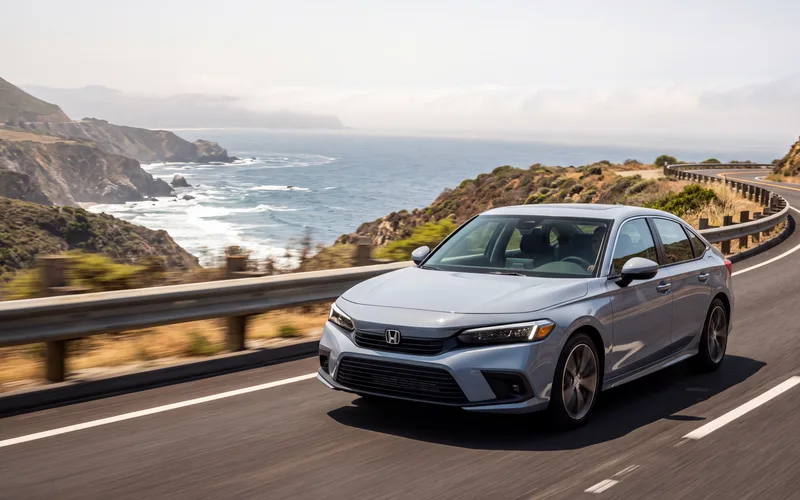 Honda CivicCompact SedanBetter at: Space and driving
It matches the Corolla's fuel economy and reliability while adding 2.6 inches of rear legroom, a bigger trunk and a genuinely better drive.
Compare 2.13C
2.13C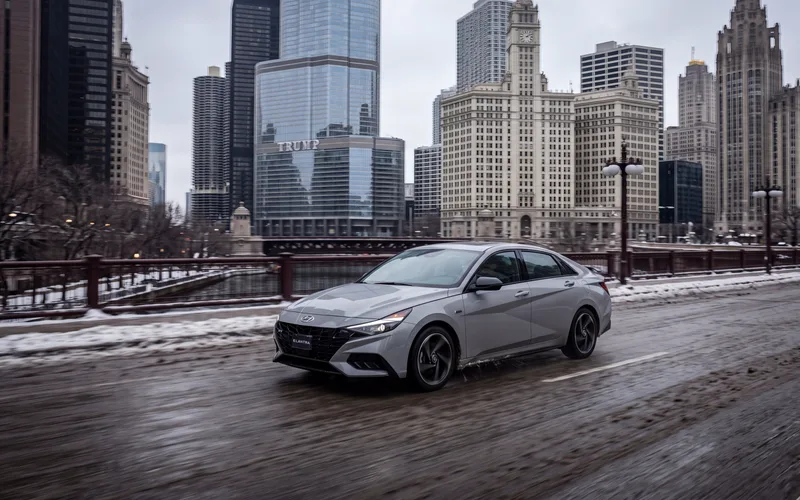 Hyundai ElantraCompact SedanBetter at: Warranty and room
It starts lower, offers 38.0 inches of rear legroom, and backs it with a 10-year/100,000-mile powertrain warranty against Toyota's 5/60.
Compare 2.19C
2.19C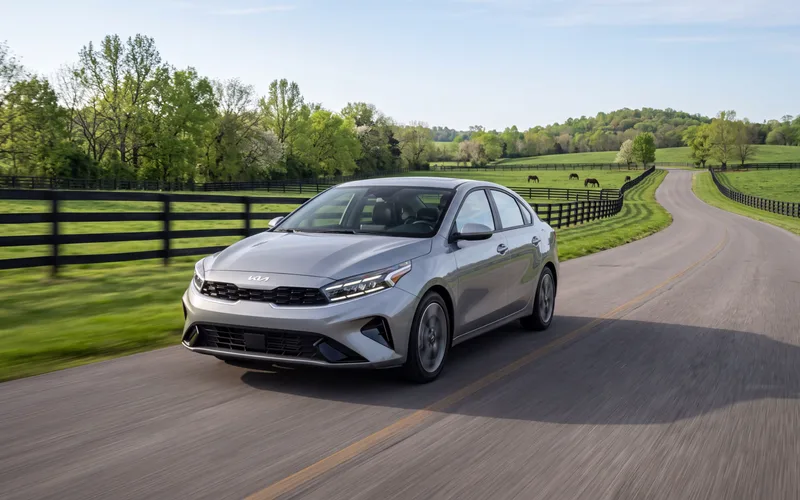 Kia K4Compact SedanBetter at: Tech per dollar
A newer design with more standard tech and screen for the money, plus Kia's long warranty, if you don't need a hybrid.
CompareHow it's evolved
4 scored model years · 2023–2026
Subject scores by year
Hover or tap a score to see what moved it versus the year before. A corner mark flags a big swing.
| Year | Performance | Efficiency | Safety | Space | Cost | Reliability | Tech | Use-case | Driving | Value |
|---|---|---|---|---|---|---|---|---|---|---|
| 2026 | 31 | 66 | 74 | 57 | 74 | 85 | 60 | 56 | 67 | 73 |
| 2025 | 32 | 66 | 73 | 58 | 74 | 86 | 55 | 56 | 66 | 72 |
| 2024 | 31 | 66 | 70 | 58 | 74 | 83 | 55 | 55 | 66 | 72 |
| 2023 | 31 | 66 | 73 | 58 | 74 | 81 | 55 | 56 | 67 | 71 |
Compare two years
Best fit & conditions
Higher scores mean a better fit for that use case. Learn more about use-case fit →
Subject profile
Trims & configurations
7 trimsScores above reflect the volume trim. Per-trim specs and scores are rolling out — the full lineup:
Detailed scoring by subject
1Performance & PowertrainThe Corolla's lowest-graded category.0.00F
The 2024 Corolla sedan's volume LE trim uses the 2.0L M20A-FKS Dynamic Force four rated at 169 hp, the same engine fitted to every gas trim since Toyota retired the 139-hp 1.8L from the US sedan for the 2023 model year. 169 hp is therefore the lineup maximum and sits near the floor of the 130–520 hp sedan band; the hybrid alternative is weaker still at 138 hp net.
The naturally aspirated 2.0L peaks at 151 lb-ft, and with no turbocharged option anywhere in the US Corolla sedan range that is the lineup maximum. It lands barely above the 120 lb-ft floor of the sedan band, and the hybrid's 1.8L peaks lower again at 105 lb-ft.
Toyota publishes no 0–60 claim for the Corolla sedan. Edmunds' track test of the 2.0L/CVT car returned 8.8 s and U.S. News reports the same figure for the 2024 model, so 8.8 s is used as the representative gas number; the lighter LE on smaller wheels is likely a couple of tenths quicker, and other outlets have recorded low-8s runs. The hybrid is slower still at roughly 9.7 s.
The Dynamic Force four is clean and lag-free in light-throttle driving — there is no turbo to wait on — and the hybrid blends motor and engine seamlessly, but 169 hp moving a compact sedan means the engine spends a lot of time near its ceiling, where reviewers consistently describe it as loud and coarse. Competent and predictable rather than genuinely refined, which is the norm for this segment.
Toyota's Direct Shift-CVT is better engineered than most: a physical launch gear removes the rubber-band feel from a standing start before handing off to the belt-and-pulley range, and SE/Nightshade/XSE trims add a simulated ten-speed sequential mode. It never hunts and is smooth in ordinary driving, but at sustained wide-open throttle it still pins the revs and drones the way a geared automatic would not.
Every gas Corolla is front-drive only; all-wheel drive exists solely on the Hybrid LE, Hybrid SE and Hybrid Nightshade via Toyota's Electronic On-Demand rear-motor system, with no low range, locking differential or terrain modes. Offering AWD at all is a genuine advantage over the FWD-only Civic, Elantra and Jetta, but it is tied to one powertrain and costs a $1,400 premium, so it stays below the 'available on most trims' band.
Two genuinely distinct powertrains are offered — the 169-hp 2.0L gas four and the 138-hp 1.8L THS II hybrid, the latter in FWD or AWD form — which covers mainstream compact-sedan needs and includes an electrified choice. What keeps it out of the top band is the absence of any turbocharged, plug-in hybrid or battery-electric Corolla sedan; the hot GR Corolla is a separate hatchback nameplate.
2Efficiency & RangeMid-pack among this car's ten categories.2.47C+
The volume gas LE returns 35 MPG combined from the 169-hp 2.0L Dynamic Force four and K120 CVT that the 2023 mid-cycle refresh made standard across the non-hybrid range — mid-pack for a 2024 compact sedan, a point behind the Civic LX's 36, and only about a third of the way up the sedan normalization band. The optional hybrid's 50 MPG combined is the class benchmark but is not the representative trim.
City is the gas Corolla's weakest reading — 32 MPG is what a naturally aspirated four with no electric assist manages in stop-and-go traffic, and it lands in the bottom third of the sedan band. The 21-MPG gap to the Hybrid LE's 53 MPG city is the single strongest argument for stepping up to the electrified powertrain.
41 MPG highway is the gas Corolla's best number and genuinely competitive for the class — the LE's taller CVT calibration beats the sportier three-mode SE/XSE tune by 1 MPG. The hybrid's highway advantage is only 5 MPG, far narrower than its 21-MPG city edge, so a high-mileage highway commuter has much less to gain from it.
EPA publishes 462 miles of total range for the volume gas LE — a 13.2-gallon tank at 35 MPG combined — which sits mid-band for a sedan and covers most road-trip legs without a fuel stop. The hybrid gives up nearly two gallons of tank capacity (11.3 gal) yet still stretches to 565 miles, a full 100 miles further.
EPA puts the gas LE at $1,750/yr at 15,000 miles on regular — about 429 gallons a year — which is unremarkable for the class and worth 48 points against the sedan band. The $500/yr saving on the Hybrid LE pays back its roughly $1,450 price premium in about three years, and EPA credits the gas LE with $2,250 saved over five years versus the average new vehicle.
Every 2024 Corolla sedan — gas LE/SE/Nightshade/XSE and Hybrid LE/SE/Nightshade/XLE, FWD or eFour AWD — runs on 87-octane regular unleaded with no premium recommendation, no plug and no charging infrastructure to arrange. About as cheap and simple to fuel as a new car gets.
3SafetyGrades above the middle of the scale.2.77B-
NHTSA awarded the 2024 Corolla sedan the maximum 5-star overall rating, with five stars in every crash test it conducts — frontal driver and passenger, side barrier front and rear, and side pole. The rollover rating is four stars with a 10.5% risk and no tip in the dynamic maneuver, which is the normal ceiling for a front-drive compact sedan and does not pull the overall figure down.
The 2024 Corolla sedan carries no 2024 IIHS award — it is absent from the 2024 TOP SAFETY PICK list and its ratings page still displays the older 2023 award badge, because the 2024 criteria raised the updated side test bar to Good and the Corolla only manages Acceptable there. Worse, the updated moderate overlap front test returns an outright Marginal for this model year, driven by the rear passenger: restraints and dummy kinematics rated Marginal and rear chest Acceptable, with 4.2 kN of shoulder belt tension and a chest index of 36 on the second-row dummy. The structural side of the sheet is genuinely strong — Good in small overlap front on both driver and passenger sides and Good in the original moderate overlap test — and the driver is well protected throughout, but a Marginal in a key modern crashworthiness test plus an Acceptable side result with Marginal driver pelvis loading is what holds this to the bottom of the middle band. Toyota fixed both weak spots for 2025 with revised rear seat cushions and reinforced side structure and airbags, so this is a genuinely worse crash car than the model year that follows it.
Toyota Safety Sense 3.0 is standard on every 2024 Corolla grade — gas LE, SE, XSE and the returning Nightshade Edition, and Hybrid LE, LE AWD, SE, SE AWD and XSE — and the content is deep for the money: Pre-Collision System with Pedestrian Detection, Full-Speed Range Dynamic Radar Cruise Control, Lane Departure Alert with Steering Assist, Lane Tracing Assist, Proactive Driving Assist, Road Sign Assist and Automatic High Beams, plus a standard backup camera. Getting full-speed-range adaptive cruise and lane centering on the base LE is better than several rivals manage at this price. The hole is blind-spot coverage, and for 2024 it is a bigger hole than in 2025: Blind Spot Monitor with Rear Cross-Traffic Alert is standard only on XSE and is a package option on both LE and SE, so the two highest-volume trims can leave the lot without it. Core features standard with the key convenience-safety item optional across most of the range is the middle band, and the SE exclusion keeps it a notch below the 2025 car.
The standard TSS 3.0 Pre-Collision System with Pedestrian Detection earns Good — the top grade — in the IIHS pedestrian front crash prevention evaluation, and it earns it convincingly: the car avoided a collision in every scenario IIHS ran, including the crossing child at 12 and 25 mph, the crossing adult at night at both speeds, and the hardest test, the 37 mph parallel adult at night, on low beams as well as high. That last result is what separates this from the middle band, where night and pedestrian performance typically falls apart. It sits short of the ceiling because IIHS publishes no result for the newer higher-speed vehicle-to-vehicle front crash prevention protocol on this car, so the hardest car-to-car closing speeds are unproven, and part of the pedestrian credit comes from high-beam assist rather than the low beams alone.
Blind Spot Monitor with Rear Cross-Traffic Alert on the 2024 Corolla is alert-only — mirror-mounted warning lights and a chime, with no steering or braking intervention, no rear automatic braking and no safe-exit alert — and it is standard only on the XSE. Both volume grades, LE and SE, need the Convenience Package to get it, which IIHS records simply as 'optional blind spot detection'. Alert-only hardware that most buyers have to pay extra for lands in the lower half of the middle band, and below the 2025 car where the feature became standard from SE upward.
Every 2024 Corolla gets Lane Departure Alert with Steering Assist plus Lane Tracing Assist inside standard TSS 3.0, and the 3.0 calibration is noticeably smoother than the TSS 2.0 software this generation launched with. It stays out of the top band because Lane Tracing Assist only centers the car while Dynamic Radar Cruise Control is engaged and clear markings are present — there is no standalone centering mode — and it wanders or hands back on winding roads, faded paint, heavy rain and low sun. Functional and unobtrusive rather than something a driver leans on.
Full-Speed Range Dynamic Radar Cruise Control is standard on every 2024 Corolla grade including the base LE — it works down to a stop and resumes, which is not a given in the compact class — and TSS 3.0 layers on Proactive Driving Assist, which applies gentle braking into curves and around pedestrians and cyclists even with cruise switched off. Combined with Lane Tracing Assist that makes a credible highway-assist package for the price. It is held out of the top band because the following behavior is tuned conservatively, with generous gaps and an unhurried resume after a cut-in, and because there is no navigation-linked speed adjustment or lane-change assist of the sort the best-rated systems include.
No hands-free highway driving is offered on the 2024 Corolla at any grade or price. Toyota's hands-free Advanced Drive / Teammate system was confined to the Lexus LS and Toyota Mirai in the US market for this model year and was never extended to the Corolla, so there is no equivalent to BlueCruise, Super Cruise or Tesla's supervised systems. Lane Tracing Assist is a hands-on aid that warns and disengages if the driver releases the wheel.
This is the 2024 Corolla's standout safety result: IIHS rates two headlight variations across the range and both come back Good, so every trim from base LE to XSE leaves the factory with Good-rated lighting. All are LED projectors with standard high-beam assist via TSS 3.0, and low-beam reach on the straightaway is a long 120 m on the right edge. It lands in the top band but short of the ceiling because neither variation is curve-adaptive, low-beam visibility drops to only 'fair' on the sharp curves for both systems, and the multi-trim variation exceeded the glare threshold by 6.5% on one right-hand curve.
The E210 Corolla's low cowl and slim A-pillars give genuinely good forward and three-quarter sightlines, and the compact footprint makes the car easy to place in a parking space. Against that, the fastback-influenced roofline leaves a shallow rear window and thick C-pillars that create real over-the-shoulder blind zones, and the Corolla sedan offers no surround-view camera at any 2024 grade — a plain backup camera is the only electronic compensation, with the blind-spot and rear cross-traffic systems that would cover those zones optional on both volume trims. Average visibility with identifiable blind spots and minimal camera backup.
The hardware itself is genuinely good and IIHS measured it that way: Good overall for LATCH ease of use with a plus for extra positions, two full LATCH seating positions plus a third that can borrow lower anchors, and all three positions carrying easy-to-find tether anchors on the rear deck. The lower anchors are visible rather than buried in the seat bight, need zero pounds of force to attach and offer 75-78 degrees of clearance, which is better than most compact sedans manage. What keeps it out of the top band is packaging rather than hardware: at roughly 34.8 inches of rear legroom a rear-facing seat behind a tall driver is a squeeze, three-across is effectively out, and the middle position depends on borrowed anchors that then become unavailable in their own seats.
4Space & ComfortMid-pack among this car's ten categories.1.89C-
Every 2024 Corolla sedan grade seats five, including the base gas L and the AWD-capable hybrids added to the lineup for this generation. Five is the maximum a compact sedan offers, so the item tops out.
38.3 inches of front headroom is a genuine strong point for a low-slung compact sedan, and tall drivers are well accommodated up front. The power moonroof — optional on SE, standard on XSE — costs a small amount of that clearance.
42.0 inches of front legroom is squarely mid-pack for the compact-sedan class — sufficient for tall front occupants but no more generous than the Civic, Elantra or Jetta. The figure does not vary by trim or by powertrain.
37.1 inches of rear headroom is average for the segment on paper. In practice the low, sloping roofline of this generation makes the space feel tighter than the number suggests and complicates getting in and out of the back seat.
34.8 inches is the 2024 Corolla's single biggest space liability: the Civic (37.4), Elantra (38.0) and Forte all give rear passengers meaningfully more room, and only the Sentra and Mazda3 are comparably tight. Testers describe adult rear legroom as severely limited, with a small door aperture as an added obstacle.
13.1 cubic feet is below the compact-sedan norm — the Civic offers 14.8, the Elantra 14.2 and the Jetta 14.1 — leaving the 2024 Corolla near the bottom of the class alongside the Mazda3. The one real win is that choosing the hybrid costs nothing in trunk space, since the battery lives under the rear seat rather than in the boot.
The 2024 Corolla covers the basics without a single clever idea: a center console bin, two front cupholders, a covered armrest box, bottle-capable front and rear door pockets, a rear center armrest with cupholders, and the 60/40-split folding rear seatback that lets long items through from the trunk. Nothing is innovative — no configurable console, no underfloor bin, no onboard power beyond USB — and Qi wireless charging is reserved for the XSE rather than being available across the range. Persistent owner complaints about the console bin's size and cupholders that let smaller cups tip keep this from the upper half of the middle band.
Front seats are the better half of this story: Edmunds found them comfortable with enough adjustment range for tall and short drivers alike, and notes the cloth trim breathes better on hot days than the XSE's SofTex. But adjustable lumbar support and the power driver's seat are confined to the top grades, so the volume LE driver gets no way to dial in support. The rear bench is the real limitation — 34.8 inches of legroom, a sloping roof and a small door opening make it an uncomfortable place for adults over any distance. Comfortable for most with genuine limits in back: solidly mid-band.
Ride is the 2024 Corolla's clearest comfort strength — Edmunds calls it smooth over a variety of road surfaces and credits it with soaking up bumps as well as anything in the compact class, while still keeping body motions in check. The volume LE's 16-inch wheels and tall sidewalls are the sweet spot; the SE, Nightshade and XSE ride noticeably firmer on 18s, which is what holds this just below the segment-leading band.
Noise is the 2024 Corolla's weakest comfort trait and the one reviewers single out. Edmunds calls road noise ever-present and loud enough on the highway that you crank the stereo to cover it; Consumer Reports found both versions it tested had loud, raspy engines, with the CVT letting revs flare under mild acceleration. Sealing against wind is acceptable, but road roar plus drivetrain drone put this at the bottom of the average band rather than the middle.
Automatic climate control is standard from the LE, which counts in the Corolla's favor, but nearly everything above it is gated to the top of the range: heated front seats arrive only on the gas XSE and hybrid XLE (packaged with SofTex and a power driver's seat), dual-zone automatic climate is likewise an XSE item, and the moonroof is optional on SE and standard on XSE. Ventilated seats do not exist on this car, there is no rear-seat climate control or rear vent bank, and the US-market 2024 Corolla goes without a heated steering wheel entirely — a real omission for a cold-climate commuter that the Elantra and Forte both offer for less money. Key comfort features on upper trims only, with two simply unavailable: the low half of the middle band.
5Cost of OwnershipOne of the Corolla's strongest categories.3.05B
The 2024 Corolla is a carryover year after the 2023 mid-cycle refresh, and Toyota held the entry price at $22,050 before a $1,095 delivery charge — $23,145 out the door. That keeps it near the bottom of the sedan band and among the cheapest new cars sold in the US; the Hybrid LE at $24,395 delivered was the least expensive hybrid on the market.
The LE gas sedan is the Corolla's volume seller by a wide margin, and a typically-equipped example with the common convenience and all-weather packages lands near $23,800 delivered — below the floor of the sedan band. Even the loaded XSE and Hybrid XLE stay comfortably under $28,300, so the whole ladder sits in the cheapest quarter of the segment.
Running costs are among the lowest in the class: the 1.8L and 2.0L Dynamic Force fours and the fifth-generation hybrid system are high-volume, long-interval powertrains with cheap, widely stocked parts, and ToyotaCare absorbs scheduled service through the first two years. Published estimates spread widely by methodology, so this sits at a consensus midpoint — modestly below the Civic and clearly below the compact-sedan average.
Residuals are the Corolla's strongest ownership metric after purchase price — relentless used-market demand, Toyota's reliability reputation, and light incentive spend keep depreciation shallow. It trails only the Civic among mainstream compact sedans in this dataset and beats the compact-car average by a clear margin.
Standard Toyota bumper-to-bumper coverage, unchanged for 2024. It sits at the floor of the segment band, matching Honda, Mazda and VW but two full years short of Hyundai and Kia.
The 5-year/60,000-mile powertrain term is the base of the segment band and half of Hyundai/Kia's 10/100k. The real coverage story for hybrid buyers is elsewhere: Toyota's 10-year/150,000-mile traction-battery warranty is the longest battery term of any mainstream brand and materially de-risks the Hybrid LE, but it is not what this item measures.
ToyotaCare covers factory-scheduled maintenance for 2 years/25,000 miles with 2 years of unlimited-mileage roadside assistance — real included coverage that Honda and Mazda do not offer at all on a compact sedan, which is why this lands comfortably above the Civic. It falls short of Hyundai's 3-year/36,000-mile plan and Bluelink+'s no-expiry connected services, and Toyota's Safety Connect / Remote Connect subscriptions lapse after their trial period, so it sits mid-band rather than high.
$23,800 volume-trim price minus its estimated resale value after 5 years (61% retained, or about $14,518) leaves about $9,282 in depreciation. Add the projected $3,800 in 5-year maintenance and repairs, and owning this vehicle for 5 years costs about $13,082 in total.
6Reliability & QualityThe Corolla's best-graded category.3.66A-
Among the safest bets in the compact class. Consumer Reports rates the 2024 Corolla much more reliable than other cars from the same model year, and the nameplate has taken the J.D. Power compact-car dependability award in three consecutive Vehicle Dependability Studies (2024, 2025 and 2026, covering the 2021, 2022 and 2023 model years). 2024 is the sixth year of the E210 generation with no mechanical change — the only substantive addition is the revived Nightshade appearance package and Toyota Safety Sense 3.0 becoming standard — so there is no new-design risk to price in. Held to 90 rather than higher because the 2024 car has now been on the road long enough to generate a real owner-complaint record, and it clusters in transmission and brake behavior rather than being empty.
Toyota's multi-year dependability standing is as strong as any mass-market brand's, and stronger still on the owner-survey side where Consumer Reports places it first of all brands. What keeps this at 90 rather than higher is that the Toyota brand itself has not led the J.D. Power mass-market VDS ranking in recent studies — Buick has — even as Toyota Motor Corp collects the most model-level segment awards of any automaker and Lexus leads the premium ranking.
Ordinary recall activity for a high-volume nameplate, but distinctly busier than the 2025 car and with one genuinely serious failure mode. The 2024 Corolla is inside the steering intermediate-shaft campaign — a shaft that can fracture and detach from the steering column, which is loss-of-steering-control territory. The mitigating facts are that it is a manufacturing-crack defect bounded to a nine-week build window and only 8,057 vehicles, not a design flaw, with a one-hour free shaft replacement as the remedy. Hybrid buyers also carry a skid-control ECU software error that can cost power brake assist mid-corner, again remedied by a free flash. A third campaign is a Gulf States Toyota load-capacity label reprint on accessory-equipped cars — paperwork, not hardware. TSB traffic is the familiar Corolla engine-mount rattle thread, and owner complaint volume at 45 problems is real but modest for a car this common, concentrated in CVT driveability and brake feel.
Both 2024 Corolla powertrains are proven, low-complexity, naturally aspirated designs carried over unchanged. The volume 2.0-liter M20A-FKS Dynamic Force four has been in US service since 2019 and routinely runs past 200,000 miles, paired with a Direct Shift-CVT whose physical launch gear takes the belt out of the highest-load range — the single most common durability objection to a CVT. The hybrid's 1.8-liter 2ZR-FXE with planetary eCVT is the most durable electrified drivetrain sold in America. Marked a couple of points below the 2025 car because the 2024 fleet has accumulated a visible CVT thread in owner reports — sluggish and noisy operation, jerky low-speed behavior, and at least one transmission replacement at 28,000 miles — and because the M20A family's high-mileage record, while good, is documented as shorter than the legendary older Toyota fours.
The clearest weak spot in an otherwise excellent car, and unchanged for 2024. Reviewers consistently flag the substantial number of hard plastic panels covering everything and too much glossy black trim, and the two compact sedans the Corolla competes with head-on — the Civic and the Mazda3 — are the acknowledged material benchmarks at the same money. This is par-for-price rather than genuinely bad: the surfaces are durable, dashboard stitching keeps the design from reading monotonous, and upper trims add SofTex. But on the volume LE the cabin reads as built to a cost.
Assembly is genuinely solid — reviewers who criticize the plastics still say the car feels well built underneath them, and by 2024 the E210 body had been in production five years, long past the point where tooling variation gets worked out. What holds this to the low-70s is that the Corolla was not the initial-quality leader in its own model year (the Kia Forte took the compact-car IQS award for a second straight year), plus a persistent noise-and-sealing thread Toyota has a bulletin open for and a scattered set of electrical and lighting annoyances in the 2024 owner record.
Toyota fields roughly 1,250 US dealerships, the densest non-domestic network in the country, and the Corolla is the single most familiar car in any Toyota service bay in America — parts, flat-rate times and hybrid-qualified technicians are reachable almost anywhere, including the rural markets where import coverage thins out. Every 2024 Corolla also arrives with two years of scheduled maintenance included. Service satisfaction is good rather than category-leading: Toyota does not appear in the J.D. Power CSI mass-market top three, and the study's industry-wide finding of long appointment waits bites hardest at the highest-volume brands.
This is the best-case version of this item in the entire market. The Corolla is the highest-volume nameplate ever built, so consumables and wear parts are stocked by every dealer, every chain store and a vast independent aftermarket, and the M20A engine and Direct Shift-CVT are shared with the Corolla Cross, Corolla Hatchback and RAV4 to deepen the parts pool further. The cost data is unambiguous: RepairPal puts average annual repair and maintenance at $362 against a $526 compact-car average, ranks the Corolla first of 36 compact cars, and puts ten-year maintenance and repair roughly $1,500 below the sedan average. Nothing about the car is dealer-only or proprietary, and by 2024 the E210 parts catalog is five years mature.
7Technology & InfotainmentOne of the Corolla's weakest categories.1.66D
Every 2024 Corolla sedan runs the same 8-inch Toyota Audio Multimedia head unit; unlike the Camry and Corolla Cross there is no step-up display anywhere in the lineup, and the 10.5-inch screen does not arrive until the 2025 model year.
Toyota Audio Multimedia boots quickly, uses a logical tile layout and keeps a real volume knob alongside physical climate controls, which reviewers consistently credit as easy to live with; the 8-inch panel is small and graphically plain next to a Civic's or Elantra's, and for 2024 there is no larger option at any price.
Wireless Apple CarPlay and Android Auto are standard on every 2024 Corolla grade including the base LE — no option package and no trim walk, which is comfortably the strongest part of this car's tech case.
The 'Hey Toyota' Intelligent Assistant handles climate, audio and destination requests competently, but there is no embedded navigation — maps come only from cloud-based Drive Connect on a trial that converts to a paid subscription, so most owners default to phone projection.
Six speakers are standard across the range and sound merely adequate; the nine-speaker JBL system with amplifier and subwoofer is optional and confined to Nightshade, XLE and XSE, so the volume LE buyer has no upgrade path at all.
LE and SE use a 4.2-inch multi-information display flanked by analog dials, and the top XSE/XLE only step up to a 7-inch MID within a part-analog cluster — no 2024 Corolla sedan offers a fully digital configurable gauge display.
Over-the-air updates reach the Toyota Audio Multimedia head unit and cloud map data via Wi-Fi or the embedded modem, but there is no whole-vehicle OTA that adds powertrain, driver-assist or feature-level capability after delivery.
The Toyota app covers remote start/climate, lock/unlock, vehicle locate and guest-driver alerts through Remote Connect on a trial that later becomes paid, there is no digital key, and remote start depends on the Smart Key System the volume LE does not carry as standard.
Four USB-C ports split two front and two rear are standard, genuinely generous for a compact sedan, but the Qi wireless charging pad is bundled into packages/upper grades rather than standard and there is no household AC outlet.
The volume LE ships with a conventional key and remote keyless entry — proximity entry and push-button start are bundled into the LE Convenience Package — and no Corolla offers phone-as-key, which holds it in the bottom band even though Smart Key is standard on XSE.
A rear camera is standard as federally required, but front and rear parking sensors are optional rather than standard, Toyota's Panoramic View Monitor is not offered on the Corolla sedan at any grade, and there is no automated parking function.
No head-up display is offered on any 2024 Corolla sedan grade or option package, at any price — unlike the Camry a class above, which offers a 10-inch HUD on upper trims.
8Use-Case FitOne of the Corolla's weakest categories.1.72C-
The car-seat hardware is genuinely good — IIHS rates LATCH ease of use Good with a bonus for extra positions, the lower anchors are visible rather than buried and take zero pounds of force, and all three rear positions have easy tether anchors on the rear deck. What limits it is packaging, not hardware: 34.8 in of rear legroom is among the tightest in the compact class, so a rear-facing seat behind a tall driver is a squeeze, three-across is effectively out, and the middle position has to borrow lower anchors from the outboard seats. The 13.1 cu ft trunk swallows one stroller, not a stroller plus a week of gear.
Toyota Safety Sense 3.0 is standard on every 2024 grade — pedestrian-detecting AEB, full-speed-range adaptive cruise, lane departure alert with steering assist and lane tracing — and NHTSA gives the car 5 stars overall, which is a lot of standard safety content at a family-friendly price. But 2024 specifically is the weak model year: the updated IIHS moderate overlap front test returns MARGINAL, driven by the second-row dummy's restraints and kinematics, which is precisely the seat a family cares about, and the updated side test is only Acceptable. The 2024 Corolla sedan earns no 2024 IIHS award as a result. Blind Spot Monitor with Rear Cross-Traffic Alert is standard only on the XSE, so the LE and SE trims families actually buy need the Convenience Package to get it. Good bones, with a real crash-test gap and the key convenience-safety feature behind a paywall.
Fine for four on a medium haul, thin for a long one. The back seat has 34.8 in of legroom under a 37.1 in roofline, there are no rear climate vents at any grade, and rear amenities stop at a fold-down center armrest and two USB-C charge ports — no rear seat heating, no rear sunshades, no screens. Luggage space is the harder limit: 13.1 cu ft is small for the class, and with four aboard and the rear seat up, a family of four's week of luggage does not fit. Road noise is the other tax on a long day, with Edmunds calling it 'ever present' at highway speed.
This is the mission the Corolla is engineered around. Light steering, a compact 182.3-inch footprint, a low cowl with thin front pillars and good forward sightlines, physical climate knobs and a volume knob rather than screen menus, and a hybrid powertrain that creeps through stop-and-go traffic on the electric motor without any driveline shunt. Full-speed-range Dynamic Radar Cruise Control with Lane Tracing Assist is standard on the base LE, so even the cheapest car in the range can follow traffic to a stop. The gas 2.0-litre's CVT drone under acceleration and constant road noise are the annoyances that keep it out of the top band.
Among the cheapest cars in America to commute in. The Corolla Hybrid LE returns 50 MPG combined and 53 MPG city — the city figure is where commuting miles actually land — on regular unleaded, for an EPA estimated $1,250 a year. Even the plain gas LE manages 35 MPG combined at $1,750/yr. The hybrid asks only about $1,450 more than the gas car at base-to-base MSRP, so the payback is short, and consumables are ordinary compact-car parts with regenerative braking sparing the pads. Only a plug-in or a cheaply-charged EV beats it.
A 182.3-inch body on a 106.3-inch wheelbase with a 35.6-foot turning circle and a low, short nose you can place confidently makes city parking easy, and the front pillars are thin enough to see around at junctions. Two things keep it below the top band: chunky rear roof pillars that pinch the over-shoulder view, and camera hardware that stops at a plain reversing camera — front and rear parking sensors are optional and there is no surround-view system on any 2024 grade.
Not meaningfully work-capable, and Toyota does not pretend otherwise. There is no factory tow rating for the Corolla sedan in the United States for 2024 — the 1,500 lb figures that circulate come from Australian-market listings, not the US spec sheet — there is no bed, no published payload rating beyond ordinary passenger duty, and no hitch in the US accessory catalogue. The 13.1 cu ft sealed trunk with a narrow aperture is the only load space. The 169 hp 2.0-litre is adequate for the car unladen and nothing more.
The mechanicals are about as fleet-proven as anything sold — the Corolla is a global taxi, driving-school and rideshare staple, the E210 chassis and the 2.0-litre Dynamic Force / hybrid system have millions of high-mileage examples behind them, and Toyota's hybrid transaxle has an unusually clean long-term record. What it lacks is work-duty hardware rather than reliability: cloth or SofTex seats and carpet rather than washable vinyl, no rubber floor as standard, and a unibody compact-car structure never designed to be loaded or abused. It will survive high mileage; it will not survive a jobsite.
Work provisions amount to trunk tie-down hooks and a genuine-accessory removable roof crossbar kit. There is no 120V AC inverter or household outlet at any grade, no bed or tailgate, no factory hitch in the US catalogue, no upfitter ecosystem, and every interior surface is carpet or cloth rather than something you can hose out. The two rear USB-C ports will charge a phone and that is the extent of onboard power.
Range is the genuine strength: EPA puts the Corolla Hybrid LE at 565 miles per tank and the gas LE at 462, so fuel stops are rare and cheap, and standard full-speed-range adaptive cruise with Lane Tracing Assist takes real work out of a long interstate stint on even the base trim. Against that, cabin quietness is the weak link — road noise is loud enough at highway speed that reviewers complain — the front seats are comfortable but lack the long-haul adjustability of a bigger car, and 34.8 in of rear legroom means the back seat is the limiting factor on any multi-hour trip with four aboard.
Pavement-bound with one useful caveat. Roughly 5.3 inches of ground clearance, no tow rating, no skid plates and no off-pavement drive modes rule out anything beyond a maintained gravel road or a snowy trailhead lot. The caveat is the electric rear motor: the 2024 Corolla Hybrid offers AWD on the LE and SE for about $1,500, which genuinely helps in snow and on loose surfaces even though it adds no ground clearance. Accessory roof crossbars will take a bike or a box. There is no onboard AC power for camping and no flat-folding load floor.
Standard 60/40-split folding rear seatbacks let skis or lumber pass through from the trunk, and the accessory roof crossbars extend capacity to a bike or a cargo box, which is more flexibility than several rivals in this class offer as standard. But the starting point is small and awkward: 13.1 cu ft is below the compact-sedan norm, the sedan bootlid means a fixed opening rather than a hatch, the folded seats leave a step rather than a flat floor, and there is no underfloor bin or factory hitch for a rack. Normal suitcases fit; bulky gear is a genuine squeeze.
9Driving ExperienceMid-pack among this car's ten categories.2.47C+
The 12th-gen (E210) TNGA-C platform with multi-link rear suspension gives the 2024 Corolla composed, secure cornering with body roll kept in check and a ride tuned for comfort, but it stops well short of the athleticism of the Mazda3 or Civic. Nothing dynamic changed for 2024 — the only new item is the SE-based Nightshade, an appearance package (blacked-out trim, bronze 18-in wheels) with no suspension or steering revision.
The electric rack is accurately geared and better weighted than most economy-car systems, and the car's small footprint makes it easy to place in traffic, but it relays essentially no road information. There is no sport-tuned EPS calibration anywhere in the 2024 range — Toyota did not add one until the 2025 FX Special Edition.
Pedal feel is the strong half — natural, progressive and dependable in the gas car — but measured stops are mediocre for a light compact sedan, and hybrid drivers notice the handoff from regen to the friction brakes as the car settles to a stop. Brake hardware is carryover for 2024.
Calibration is clean — the Dynamic-Shift CVT uses a real mechanical launch gear so tip-in is linear and shudder-free, and the hybrid's engine start/stop events and gas-electric transitions are well isolated — but the car is simply slow in both drivetrains and the CVT sends revs high on modest throttle. 2024 is the first year the gas sedan is 2.0L-only: the 1.8L base engine is gone, so the volume LE now gets 169 hp instead of 139.
The four turns coarse and raspy under load and the CVT holds high revs even under light acceleration, which amplifies it; freeway road noise layers on top. Cruising vibration through the wheel and pedals is minimal, which is what keeps this out of the bottom band.
Toyota quotes 35.6 ft curb-to-curb for the 2024 Corolla sedan, unchanged across LE, SE/Nightshade and XSE despite the 16- vs 18-in wheel difference — tight for a compact sedan and better than Civic, Elantra or Jetta.
A standard manual seat-height adjuster, low cowl, thin A-pillars and large mirrors give unusually good forward sightlines for the class, and Toyota keeps physical knobs and hard buttons for climate and volume. Marks come off for a low-set hip point, thin center-armrest padding, chunky rear roof pillars, and seats several owners find unsupportive past an hour.
The payoff of the Corolla's chassis is comfort and security rather than involvement, and the slow, vocal powertrain removes any urge to take the long way home. The one thing added for 2024 — the Nightshade — is a blacked-out appearance package with no added power or chassis changes, and enthusiasts are still pointed at the GR Corolla or a Civic Si.
10Value & Market PositionOne of the Corolla's strongest categories.2.90B-
The 2024 LE lands at $23,145 delivered with the full Toyota Safety Sense 3.0 suite (pre-collision with pedestrian detection, full-speed adaptive cruise, lane-departure steering assist, lane tracing, proactive driving assist, road sign assist), an 8-inch Toyota Audio Multimedia touchscreen with wireless Apple CarPlay/Android Auto, and two years of ToyotaCare scheduled maintenance that most rivals do not match. It is held back relative to 2025 by the base engine — the LE still carries the 139-hp 1.8L, with the 169-hp 2.0L reserved for SE and above — and blind-spot monitoring, push-button start, heated seats and wireless charging all require moving up or adding packages, so a Hyundai Elantra SEL or Kia Forte GT-Line puts more visible content in front of the buyer at similar money.
The Corolla Hybrid is the value story: from roughly $23,500 it returns an EPA 53/46/50 mpg, and electronic AWD is available for about $1,400 more — no Civic, Elantra, Jetta or Forte offered a hybrid with AWD at that price in 2024. Class-leading resale and cost-to-own stretch the money further. Against that, the gas LE's 139-hp 1.8L is genuinely slow, the 13.1-cu-ft trunk is below segment average, and interior plastics are hard, so buyers chasing content-per-dollar on paper still do better in an Elantra.
Ten sedan configurations across two powertrains — gas LE, SE, Nightshade and XSE, plus hybrid LE, LE AWD, SE, SE AWD, Nightshade and XLE — spanning roughly $23,100 to $28,300 with well-spaced steps and a Nightshade appearance grade newly restored for 2024. The gaps are the same as ever: no manual gearbox and no AWD on the gas cars, so all-weather buyers are pushed into the hybrid.
The Corolla sold 232,908 units in the US in 2024, making it one of the two dominant compact cars and one of the highest-volume nameplates in the world — remarkable in a segment the industry has spent a decade abandoning. It sits just short of the top of the class rather than at it: the Civic took America's retail best-selling compact car title for 2024, with the Corolla retaking the segment lead the following year.
Toyota carries the strongest mainstream-brand equity in the US on dependability and resale — KBB named it the best brand for resale value for 2024 — and the Corolla nameplate is shorthand for a car that will not let its owner down, which pays off directly at trade-in. It is respected more than desired, though: the sedan has no performance halo of its own (the GR Corolla is a separate hatchback), so it lacks the enthusiast pull the Civic borrows from the Si and Type R.
By 2024 Toyota inventory had recovered enough that Corollas were no longer transacting over sticker, but demand still keeps them close to it and broad national customer cash is rare. What buyers actually see is subvented financing — roughly 4.99% for 60 months and 5.99% for 72 — plus college-grad and military-appreciation rebates and regional lease support. That is more headroom than a Civic Hybrid offered but well short of the discounting available on a Sentra, Jetta or Malibu.
2024 is the fifth US model year of the E210 generation, which arrived here for MY2020, so the platform is mid-to-late cycle. It benefits from being only the second year after the substantial MY2023 facelift, which brought Toyota Safety Sense 3.0, the Toyota Audio Multimedia infotainment stack, a stronger 138-hp fifth-gen hybrid system and — a first for North America — available hybrid AWD. The 2024 changes themselves are cosmetic (the returning Nightshade appearance grade), and the car sits on aging bones with a successor generation on the horizon.
Reviewers consistently recommend the Corolla and rank it at or near the top of the compact class on the strength of reliability, efficiency and safety — it is a 2024 IIHS Top Safety Pick with a five-star NHTSA overall rating, and Edmunds scored it 7.4/10 praising ride comfort, interior quality and standard driver aids. It is rarely the outright winner of a comparison test, though: testers put the Civic and Elantra ahead for front-seat comfort and driving engagement and the Mazda3 ahead on interior polish, they knock the slow 1.8L LE and the 13.1-cu-ft trunk, and the car has no 10Best or NACTOY hardware.