
The verdict
A struggling sports car, strong on reliability and held back by use-case.
The 2024 Camaro is the last one ever built, and it goes out driving better than anything else at the price — even the volume 335-hp V6 LT, at 3,411 lb the lightest Camaro of its generation, is the sharpest-turning car in the muscle-car class and starts at $32,495 delivered. It is also a nine-year-old design that never got modern safety equipment: there is no automatic emergency braking, no lane keeping and no adaptive cruise control on any trim at any price. The cabin is hard plastic with a 7-inch screen on the trims most people buy, the back seat has 29.9 inches of legroom, the trunk holds 9.1 cubic feet through a narrow slot, and Consumer Reports calls the outward visibility "atrocious." Buy it as a car you love driving on a Sunday, not as the only car in the driveway.
Jump to scoresStrengths
- One of the best-driving cars at any price
- Cheap to fix, and serviceable at any Chevrolet dealer
- A settled ninth-year build with no first-year risk
What holds it back
- No automatic emergency braking, lane keeping or adaptive cruise — at any price
- The back seat and trunk are close to unusable
- Thirsty even in its most sensible form
Top alternatives
Cars shoppers cross-shop with the Chevrolet Camaro 2.47C+
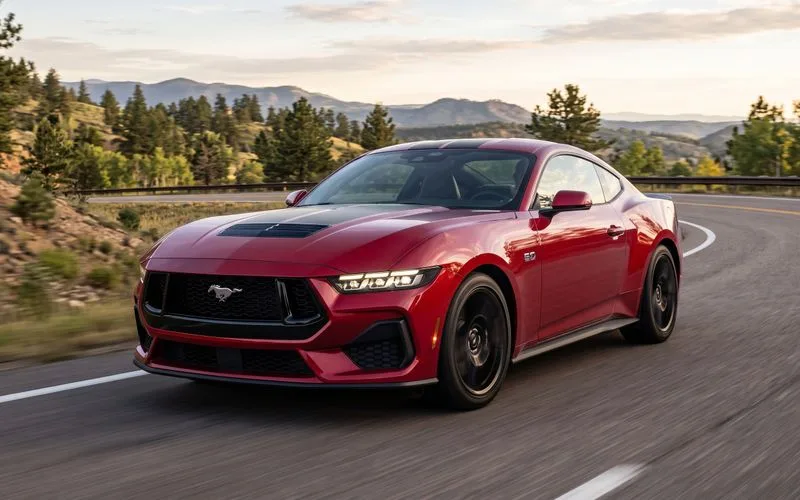 Ford MustangSports CarBetter at: Daily usability
Similar money buys a still-in-production coupe with standard automatic emergency braking, adaptive cruise, a modern digital cabin, a usable 13.3 cu ft trunk and a rear seat an adult can briefly sit in.
Compare 2.49C+
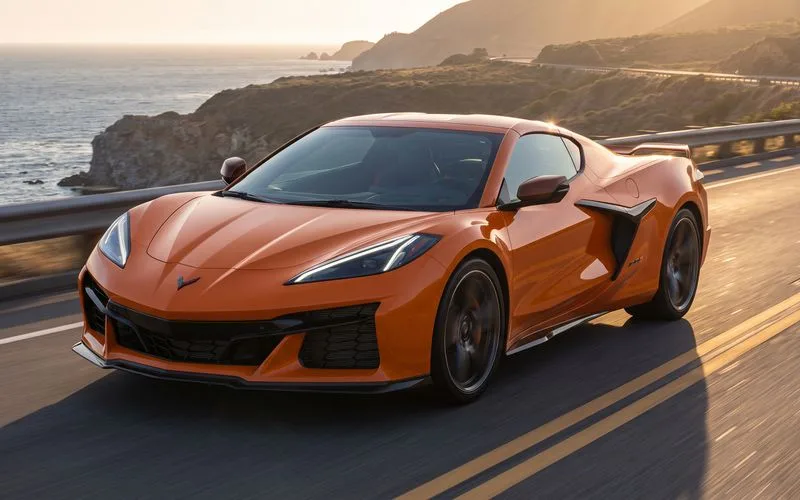 Chevrolet CorvetteSports CarBetter at: Outright performance
If the budget stretches past the SS, the mid-engine Corvette delivers a better interior, higher limits and two real cargo compartments while staying inside the same Chevrolet service network.
Compare 1.92C-
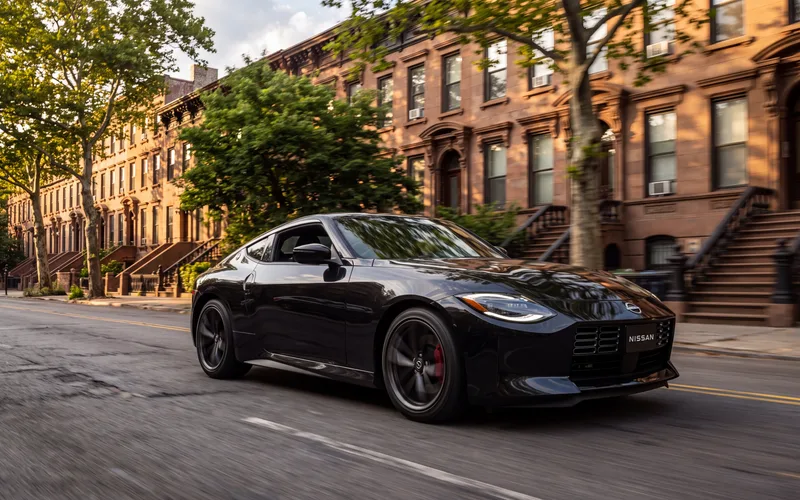 Nissan ZSports CarBetter at: Standard safety
A twin-turbo rear-drive coupe at similar money with the standard safety tech and modern cabin the Camaro never got, for buyers who do not need the back seat.
CompareHow it's evolved
8 scored model years · 2017–2024
Subject scores by year
Hover or tap a score to see what moved it versus the year before. A corner mark flags a big swing.
| Year | Performance | Efficiency | Safety | Space | Cost | Reliability | Tech | Use-case | Driving | Value |
|---|---|---|---|---|---|---|---|---|---|---|
| 2024 | 56 | 27 | 36 | 43 | 60 | 75 | 57 | 27 | 72 | 58 |
| 2023 | 49 | 31 | 36 | 43 | 64 | 75 | 57 | 27 | 67 | 62 |
| 2022 | 49 | 31 | 37 | 44 | 63 | 59 | 58 | 22 | 69 | 57 |
| 2021 | 49 | 31 | 36 | 45 | 64 | 69 | 53 | 31 | 69 | 59 |
| 2020 | 49 | 30 | 38 | 45 | 66 | 62 | 51 | 29 | 62 | 56 |
| 2019 | 51 | 34 | 38 | 48 | 61 | 59 | 49 | 28 | 70 | 54 |
| 2018 | 51 | 33 | 35 | 44 | 63 | 69 | 48 | 26 | 71 | 62 |
| 2017 | 51 | 31 | 38 | 44 | 78 | 65 | 43 | 25 | 65 | 71 |
Compare two years
Best fit & conditions
Higher scores mean a better fit for that use case. Learn more about use-case fit →
Subject profile
Academic Probation · NHTSA safety recalls
No NHTSA safety recall is on record for the 2024 Chevrolet Camaro. Other model years of the Camaro have 7 — listed below.
7 recalls on other model years of the Camaro (2017–2022)
Mar 20, 2025Steering: electric power assist systemThe electric power steering (EPS) assist may fail.
Defect
General Motors LLC (GM) is recalling certain 2016-2018 Cadillac CTS, 2017-2018 Cadillac ATS, Chevrolet Camaro, and Chevrolet Corvette vehicles. The electric power steering (EPS) assist may fail.
Risk
A loss of power steering assist can require greater steering effort, especially at low speeds, increasing the risk of a crash.
Remedy
Dealers will replace the power steering gear assembly, free of charge. Owner notification letters were mailed April 15, 2025. Owners may contact Cadilac customer service at 1-800-333-4223 or Chevrolet customer service at 1-800-222-1020. GM's number for this recall is N252497020.
NHTSA campaign 25V175000 ↗Manufacturer no. N252497020934 vehicles potentially affected (all models in the campaign)Owners notified Apr 15, 2025Filed by General Motors, LLCFiled as CAMAROMar 6, 2025Power train: automatic transmissionThe transmission may become damaged internally and cause the wheels to lock-up.
Defect
General Motors LLC (GM) is recalling certain 2019-2020 Cadillac CT6, 2020-2021 CT4, CT5, and 2020-2022 Chevrolet Camaro vehicles equipped with a 10-speed transmission. The transmission may become damaged internally and cause the wheels to lock-up.
Risk
Wheel lock-up while driving increases the risk of a crash.
Remedy
Dealers will install transmission control module monitoring software, free of charge. Owner notification letters were mailed April 7, 2025. Owners may contact Cadillac customer service at 1-800-333-4223 or Chevrolet customer service at 1-800-222-1020. GM's number for this recall is N242480630.
NHTSA campaign 25V148000 ↗Manufacturer no. N24248063090,081 vehicles potentially affected (all models in the campaign)Owners notified Apr 7, 2025Filed by General Motors, LLCFiled as CAMAROMar 25, 2021Air bags: frontalThe plastic "Camaro" emblem, located on the steering wheel air bag cover, may separate during deployment of the frontal driver air bag.
Defect
General Motors, LLC (GM) is recalling certain 2017-2021 Chevrolet Camaro vehicles. The plastic "Camaro" emblem, located on the steering wheel air bag cover, may separate during deployment of the frontal driver air bag.
Risk
In the event of a crash, plastic pieces of emblem may act as projectiles from deployment of the driver air bag can increase the risk of injury.
Remedy
GM will notify owners, and dealers will replace the frontal driver side air bag module, free of charge. The recall began April 14, 2021. Owners may contact Chevrolet customer service at 1-800-222-1020. GM's number for this recall is N212327220.
NHTSA campaign 21V211000 ↗Manufacturer no. N21232722030 vehicles potentially affected (all models in the campaign)Owners notified Apr 14, 2021Filed by General Motors, LLCFiled as CAMAROMar 18, 2021Power train: axle assembly: axle shaftThe left or right axle shaft may be missing a retaining ring, which could allow the axle shaft to separate while driving.
Defect
General Motors, LLC (GM) is recalling certain 2021 Chevrolet Camaro vehicles. The left or right axle shaft may be missing a retaining ring, which could allow the axle shaft to separate while driving.
Risk
A separated axle shaft can cause a loss of drive power, increasing the risk of a crash.
Remedy
GM will notify owners, and dealers will replace the left or right axle shaft as necessary, free of charge. The recall began April 21, 2021. Owners may contact Chevrolet customer service at 1-800-222-1020. GM's number for this recall is N212331000.
NHTSA campaign 21V188000 ↗Manufacturer no. N2123310008 vehicles potentially affected (all models in the campaign)Owners notified Apr 21, 2021Filed by General Motors, LLCFiled as CAMARODec 23, 2020Seat belts · Seat belts: critical fastenersIncorrect bolts may have been used at one or more fastening locations to secure the seat belts to the vehicle. If an incorrect bolt was used, the seat belt may not be properly attached to the vehicle.
Defect
General Motors, LLC (GM) is recalling certain 2020 Chevrolet Bolt EV and 2021 GMC Canyon and Sierra 1500, 2500 and 3500, Yukon, Yukon XL, Cadillac Escalade and Escalade ESV and Chevrolet Blazer, Camaro, Colorado, Equinox, Silverado 1500, 2500 and 3500, Suburban and Tahoe vehicles. Incorrect bolts may have been used at one or more fastening locations to secure the seat belts to the vehicle. If an incorrect bolt was used, the seat belt may not be properly attached to the vehicle.
Risk
If a seat belt assembly is not properly attached to the vehicle, the seat belt may not properly restrain an occupant in the event of a crash, increasing the risk of injury.
Remedy
GM will notify owners, and dealers will replace the suspect bolts, free of charge. The recall began January 29, 2021. Owners may contact GMC customer service at 1-800-462-8785, Cadillac customer service at 1-800-458-8006, or Chevrolet customer service at 1-800-222-1020. GM's number for this recall is N202322230.
NHTSA campaign 20V811000 ↗Manufacturer no. N202322230470 vehicles potentially affected (all models in the campaign)Owners notified Jan 29, 2021Filed by General Motors, LLCFiled as CAMARONov 21, 2019Fuel system, gasoline: delivery: fuel pumpThe fuel pump may be missing a pressure regulator, allowing for over-pressurization of the fuel system.
Defect
General Motors LLC (GM) is recalling certain 2020 Cadillac Escalade, Escalade ESV, Chevrolet Camaro, Silverado 1500, Suburban, Tahoe, GMC Sierra 1500, Yukon, and Yukon XL vehicles. The fuel pump may be missing a pressure regulator, allowing for over-pressurization of the fuel system.
Risk
Over-pressurization can crack the fuel pump and cause leaks, increasing the risk of a fire in the presence of an ignition source.
Remedy
GM will notify owners, and dealers will replace the fuel pump, free of charge. The recall began December 18, 2019. Owners may contact Cadillac customer service at 1-800-333-4223, Chevrolet customer service at 1-800-222-1020, or GMC customer service at 1-888-988-7267. GM's number for this recall is N192283991.
NHTSA campaign 19V837000 ↗Manufacturer no. N192283991502 vehicles potentially affected (all models in the campaign)Owners notified Dec 18, 2019Filed by General Motors LLCFiled as CAMAROFeb 7, 2019Steering: electric power assist systemThe electric power steering (EPS) assist system may fail.
Defect
General Motors LLC (GM) is recalling certain 2016-2018 Cadillac CTS, and 2017 Cadillac ATS, Chevrolet Camaro, and Chevrolet Corvette vehicles. The electric power steering (EPS) assist system may fail.
Risk
Loss of power steering assist would require a higher steering effort, especially at lower speeds, which may increase the risk of a crash.
Remedy
GM will notify owners, and dealers will replace the power steering gear assembly, free of charge. The recall began June 13, 2019. GM' number for this recall is N182182760.
NHTSA campaign 19V086000 ↗Manufacturer no. N18218276026,772 vehicles potentially affected (all models in the campaign)Owners notified Jun 13, 2019Filed by General Motors LLCFiled as CAMARO
Source: NHTSA Office of Defects Investigation recall database, model years 2017–2024. Recalls are listed by model year as the manufacturer filed them; whether a specific car is affected depends on its VIN — check a VIN at nhtsa.gov ↗. NHTSA model names matched to this page: CAMARO.
Detailed scoring by subject
1Performance & PowertrainMid-pack among this car's ten categories.1.79C-
Scored on the 3.6L LGX V6 at 335 hp, which is the volume configuration for 2024: Chevrolet deleted the 275 hp 2.0L turbo four and the 1LS trim for the final model year, making the V6 the standard engine across the entire LT line (1LT/2LT/3LT). Re-scored from the previous V8 figure — scoring the 455 hp LT1 here invented a 180 hp jump between 2023 and 2024 that the car never had, since the sixth generation carried the same engine lineup throughout.
284 lb-ft from the naturally aspirated V6 is mid-band for a coupe, and it arrives high at 5,300 rpm — the engine has to be worked to give its best, unlike the LT1 V8's 455 lb-ft shelf at 4,400 rpm. Re-scored off the V8 figure to match the volume trim, consistent with how 2017–2022 were scored on their base engine.
Chevrolet's quoted figure for the V6 Camaro is roughly 5.2 seconds to 60 mph (about 13.3 s in the quarter mile), with published times spreading 5.2–5.4 s depending on transmission and test conditions; the mechanical package is unchanged for 2024 apart from the turbo four's deletion. Quoted rather than instrumented for this exact model year, hence MEDIUM.
The volume engine for 2024 is a naturally aspirated, direct-injected DOHC V6 with completely linear throttle response and zero lag anywhere — a clear step up in refinement over the 275 hp turbo four it replaces, which carried the lag and coarse-under-load notes that held earlier model years down. It stops short of the top band because the 284 lb-ft peak sits at 5,300 rpm, so the engine feels flat below about 3,000 rpm and has to be revved hard to deliver, and it turns thrashy near the redline where the LT1 V8 stays effortless.
The V6 volume car pairs a standard six-speed manual with well-defined gates and rev matching against an optional 10-speed automatic — the 10-speed replaced the V6's former eight-speed for 2020 and its closer ratio spacing suits an engine whose torque lives high in the range, shifting quickly and smoothly. Points come off for the 10-speed occasionally shuffling among its many ratios in part-throttle driving, where the V6's narrow torque band gives it more work to do than it does behind the V8.
Rear-wheel drive only on every 2024 trim from 1LT to ZL1, with no all-wheel-drive option offered at any point in the Camaro's history including the entire sixth generation. That is a deliberate rear-drive pony-car brief rather than an omission, but the item measures availability and there is none — the same position as the Mustang and the Nissan Z. Unchanged for 2024.
Three genuinely distinct engines remain for 2024 — the 3.6L V6, the naturally aspirated 6.2L LT1 V8 and the supercharged 6.2L LT4 in the ZL1 — across seven trims with a choice of six-speed manual or 10-speed automatic, which still beats one-engine rivals like the Z and Supra. But the range narrowed for the final model year with the 275 hp turbo four and the 1LS trim deleted, the entry price rose $4,700 as a result, and there is no electrified option of any kind, so it sits mid-band rather than near the Mustang's broader lineup.
2Efficiency & RangeOne of the Camaro's weakest categories.0.00F
Scored on the 335 hp 3.6L V6 with the 10-speed automatic, which is the volume configuration for 2024: the 2.0L turbo four and the 1LS trim were both deleted for the final model year, so the V6 became the standard engine across the entire LT range. 22 MPG combined lands exactly on the floor of the 22–60 coupe band — respectable for a naturally aspirated 3.6L in a 3,700 lb pony car, but nothing a coupe band calibrated around four-cylinder and hybrid rivals will reward.
18 MPG city sits below the 20 MPG floor of the coupe band. The V6's cylinder deactivation and the 10-speed's short lower gears help the EPA cycle a little — the manual, which has no cylinder deactivation, drops to 16 — but a 3.6L rear-drive coupe has no city-cycle story to tell against a segment band that reaches to 60.
Highway is the volume Camaro's best efficiency showing — the 10-speed automatic's tall overdrive gears plus cylinder deactivation at steady cruise return 29 MPG, three above the 26 MPG floor of the coupe band and enough to clear the V8 by a genuine margin. It still only reaches the bottom tenth of a 26–58 band, which is where a large-displacement naturally aspirated coupe belongs.
The 19.0-gallon tank is common to the whole 2024 lineup, so range tracks fuel economy directly: roughly 418 miles combined on the volume V6 automatic and about 550 on a steady highway run. That is genuine touring range for a two-door and lands a little above the bottom third of the 280–650 mi coupe band — the V8 and ZL1 give back 40 and 115 miles respectively.
EPA puts the volume V6 automatic at $2,800 a year, right at the top of the 600–2,800 $/yr coupe band — the item scores 0, but the volume trim is a thousand dollars a year cheaper to fuel than the V8 and nearly two thousand cheaper than the ZL1, because it burns less and burns regular. EPA's own five-year comparison still tags it as spending $3,000 more than the average new vehicle.
The volume 2024 Camaro runs on regular. EPA classifies both 3.6L V6 entries as Regular Gasoline and GM's owner literature calls for 87 octane or higher on the V6, so an LT buyer pays the cheapest pump price with no premium surcharge, no E85 or diesel complication and no charging infrastructure to arrange. It stays just under the top band only because the requirement is mixed across the lineup — every 6.2L trim (LT1, 1SS/2SS, ZL1) is EPA-classified Premium Gasoline at 91 octane minimum — and because a gasoline-only car gets none of the running-cost upside a home-charged rival has. A substantial improvement on 2021–2023, where the volume turbo four and the V8 alike required premium.
3SafetyOne of the Camaro's weakest categories.0.37F
NHTSA tested the 2024 Camaro coupe itself — this is not a carry-forward figure — and awarded the full five stars overall, with five stars in both the side barrier and side pole tests and a 0.083 rollover probability. Only the frontal test held it to four stars, on both driver and passenger sides. This is the strongest part of the car's safety case and the one place the Camaro clearly out-points the Corvette.
The sixth-generation Camaro earns Good in driver-side small overlap front, moderate overlap front, side and head restraints/seats, with Acceptable roof strength — a solid result, but every one of those is the retired original protocol. IIHS never ran the updated moderate overlap, the updated side test or the passenger-side small overlap on this car, never rated its headlights, and the 2024 entry carries a Poor for pedestrian front crash prevention. The Camaro consequently never earned a Top Safety Pick in this generation, and GM took zero IIHS awards for 2024. Lands mid-band: mostly Good results, an Acceptable, and no award.
Base and volume trims get essentially no active driver assistance — eight airbags, StabiliTrak, an HD rear vision camera and Teen Driver, all passive or basic. Every genuine ADAS item (Forward Collision Alert, Lane Change Alert with Side Blind Zone Alert, Rear Cross Traffic Alert, Rear Park Assist) is optional and bundled onto upper trims, and there is no adaptive cruise control, no lane keeping and no automatic emergency braking anywhere in the 2024 order book. This was a 2016-vintage platform shipped into 2024 with no ADAS modernization; Chevrolet's own Safety Assist bundle, standard across the rest of the 2024 lineup, deliberately skipped the Camaro in its final year. Deep in the bottom band — significant safety features locked to upper trims or simply unavailable.
IIHS rates the Camaro's optional vehicle-to-vehicle front crash prevention as Basic — the lowest of the three tiers, credit for a warning that meets NHTSA criteria rather than for any autobrake capability — and the system is an extra-cost option rather than standard equipment. Pedestrian detection is not offered at all, day or night, earning an outright Poor. Practically, the volume Camaro leaves the lot with forward collision warning at best and no automatic braking, which is a generation behind the Mustang's standard Co-Pilot360 AEB with pedestrian detection.
Lane Change Alert with Side Blind Zone Alert and Rear Cross Traffic Alert are both offered and both are alert-only, with no active steering or braking intervention. They are optional rather than standard and arrive bundled on 3LT/2SS-and-up configurations, so a 1LT or 2LT buyer typically goes without — the coverage exists but a volume car may not have it. Rear Park Assist is likewise optional. This is the one ADAS area where the Camaro is merely dated rather than absent, and the equipment matters more here than on most cars given how little the driver can see over their shoulder.
There is no lane keeping, no lane centering and no lane departure warning on the 2024 Camaro at any trim or price — NHTSA records the feature as flatly Not Available, and no lane-keep RPO appears in the order guide. The only lane-related feature is Lane Change Alert, which is blind-spot monitoring for adjacent traffic and scored under 3.2.3, not a lane-keeping system. Bottom band by absence.
The 2024 Camaro offers conventional fixed-speed cruise control only. No adaptive cruise control RPO exists anywhere in the order guide and there is no highway assist function of any kind — the car ended production in December 2023 on hardware that predated GM's rollout of ACC across the Chevrolet line. Numerous dealer-marketing pages claim ACC is available on upper trims; that claim is boilerplate copied from other 2024 Chevrolet models and is contradicted by the order guide and by the absence of any forward radar beyond the optional Forward Collision Alert camera.
Super Cruise was never offered on the Camaro in any model year, and it could not be — the system is built on adaptive cruise control, which this car does not have. No hands-free capability of any kind exists on the 2024 car.
The 2019 facelift brought LED headlamps across the LS/LT/SS range and the 2020 update reshaped the housings, so the 2024 car has modern projector-LED lighting as standard rather than the halogen units of early sixth-generation cars. But IIHS never published a headlight rating for any model year of this generation, so there is no independent measure of seeing distance or glare, and that missing evaluation is itself part of why the car could never qualify for a Top Safety Pick. IntelliBeam automatic high beam does not appear in the 2024 order book. Scored mid-band as adequate-but-unverified modern LED equipment with no adaptive function.
Outward visibility is the Camaro's most-criticized everyday flaw and the single biggest reason it feels unsafe in traffic despite five NHTSA stars. The high beltline, shallow gun-slit side glass, thick A- and C-pillars and tiny rear window leave large blind zones in every direction, and the chopped roofline makes over-the-shoulder checks close to useless. The Rear Camera Mirror is genuine and effective compensation for the rearward view, but there is no 360-degree camera, front sensors are absent and even Rear Park Assist is optional — so the compensation is partial and does not reach the side and over-shoulder zones where the problem is worst.
IIHS rates the Camaro's LATCH ease of use Marginal across the generation — anchors that are buried and hard to reach. The physical constraints are worse than that rating alone conveys: it is a two-door 2+2, so there are no rear doors and every seat installation means tilting and holding a front seat forward through a narrow aperture, and the rear bench is short on both legroom and headroom, which makes a rear-facing seat impractical without pushing the front passenger seat well forward. Fitting two seats is a struggle and three-across is not possible. Bottom band on both anchor access and rear-quarter space.
4Space & ComfortGrades near the bottom of the scale.0.88F
The sixth-generation Camaro is a 2+2 coupe with four belted positions in every 2024 trim — coupe and convertible alike. Four seats is the floor of the coupe normalization band, and unlike a strict two-seater the Camaro is measured against rivals that offer usable rear seats, which it does not.
38.5 inches is the strongest passenger-space figure the Camaro has, sitting comfortably above the coupe band midpoint — a consequence of the low seating position rather than a tall cabin, and it is the number that most flatters an otherwise cramped-feeling interior. The optional power sunroof costs close to two inches, which drops the car to the bottom of the band for buyers who tick that box.
43.9 inches is near the top of the coupe band and the Camaro's single best space measurement — the front seats slide far enough back for tall drivers, which is why the rear seat is as compromised as it is. Front occupants are genuinely well accommodated for length even though shoulder room (55.5 in) and the high beltline make the cabin feel tighter than the number suggests.
At 33.5 inches the rear seat falls below the bottom of the coupe normalization band (35 in), scoring zero. The chopped roofline that defines the sixth-generation profile lands directly on rear passengers' heads — adults sit with their skulls against the glass, and reviewers consistently report that even children are awkward back there.
29.9 inches sits more than two inches below the floor of the coupe band and is emergency-only space — barely more than the Mustang's 29.0 in and far short of anything usable for an adult on a real trip. Combined with 33.5 in of rear headroom and no rear doors, the back seat functions as padded luggage space rather than seating, which also drives the bottom-band child-seat result in cat3.
9.1 cubic feet falls below the 10 cu ft floor of the coupe band, and the usable figure is worse than the number — the trunk opening is a narrow slot with a tall liftover, so bulky items that would fit by volume will not physically pass through. The Mustang's 13.3 cu ft and the Corvette's front-plus-rear arrangement both clear this comfortably; the Camaro does not.
In-cabin storage is sparse even by sports-coupe standards: a small under-armrest console bin, a shallow glovebox, and door pockets reviewers describe as tiny, with the wide center tunnel eating the space a console would otherwise use. There is no clever solution anywhere — no underfloor bin, no fold-flat surface, no onboard power beyond a 12V outlet and USB ports, and wireless charging arrives only at 3LT. The two credits are cupholders that are usefully sized and positioned clear of the shifter, and a rear seatback that folds to extend the trunk. Bottom band, a step below the Mustang's more considered cabin.
The front seats are the good half of this item — well-shaped backrests with lateral support that holds without pinching, effectively padded door and center armrests, and power adjustment standard from 1LT, with optional Recaro buckets on SS and ZL1 for track use. Against that: the bottom cushion is tight for larger occupants, the backrests do not recline as far as long-haul drivers want, and the rear seats are not comfortable for anyone beyond a short hop. Because this item weighs front and rear together, a strong front row and a token rear one average to the middle of the band.
The Alpha platform gives the Camaro genuinely good body control and a ride that is firm but rarely harsh — the best-executed comfort attribute the car has. Optional Magnetic Ride Control (SS 1LE, ZL1, and available on SS) is the standout: reviewers report it filters broken pavement in Tour mode while still controlling motions on a track, making the car livable on long trips. The volume LT on its standard passive dampers and 20-inch wheels is noticeably stiffer over expansion joints and patched city pavement, and owners of firmer setups report a genuinely rough ride, which keeps this out of the upper band.
Mid-band, with the caveat that some of the noise is deliberate. All three powertrains cruise quietly enough at a steady highway speed, and the small glass area that ruins visibility at least limits wind noise. What intrudes is road roar from the wide performance tires on coarse pavement and, on the V8, exhaust drone that the dual-mode system only partly tames in Tour mode. There is no active noise cancellation and no acoustic glass package, and the convertible gives up more again with its fabric roof.
The key comfort items exist but are stacked onto mid and upper trims, which is exactly the middle of this band. Heated and ventilated front seats become standard at 2LT, dual-zone automatic climate control with the signature ring-shaped vent controls arrives on the same trims, and a heated steering wheel plus driver memory wait until 3LT. Base 1LT buyers get cloth, single-zone air and a power driver's seat and nothing more. Remote start is standard on automatic cars but there is no true pre-conditioning, and with no second row worth conditioning there are no rear vents or rear controls at all.
5Cost of OwnershipOne of the Camaro's strongest categories.2.07C
For 2024 — the sixth generation's final model year — Chevrolet deleted the 1LS trim and the 275-hp 2.0L turbo four, making the 335-hp 3.6L V6 1LT the entry car at $30,900 + $1,595 destination = $32,495. That is a $5,300 jump in the price of entry over 2023's $27,195 1LS, but entry pricing still well under the coupe band ceiling remains the Camaro's structural ownership-cost advantage over the Corvette and the German coupes.
Re-scored onto the volume V6 LT configuration. With the 1LS and the turbo four deleted, the 1LT is the entry car and the 3.6L V6 is the volume engine for 2024, so the representative build is a 1LT coupe optioned the way these actually left dealers — $32,495 delivered plus the $1,595 10-speed automatic (the 6-speed manual is standard) and the $1,950 RS appearance package = $36,040. The previous pass used the $40,395 LT1 V8, which is the halo powertrain, not the volume one; that choice also broke the year-over-year series, which scores the 1LT for every model year from 2018 through 2023.
Published estimates diverge by nearly 4x on methodology: CarEdge projects $2,453 in maintenance and repairs over five years and RepairPal puts unscheduled repair frequency at just 0.2 shop visits per year (below the 0.3 midsize average), while Edmunds ($5,666 maintenance + $842 repairs = $6,508) and KBB ($7,314 + $1,937 = $9,251) fold in performance tires and brakes. The LGX V6 on cheap, universally-stocked GM parts keeps routine work inexpensive; the wear-inclusive figures are inflated by the V8 cars' staggered summer tires and big brakes, which the volume V6 build does not carry. Mid-band figure reflects the spread.
Depreciation resistance is by far this category's strongest item and the reason the Camaro out-earns most of the coupe set on cost of ownership. The nameplate already retained value above the sports-coupe norm, and 2024 being the final model year — production ended December 2023, with no successor — adds a scarcity premium that ordinary residual models do not capture. The forward-looking projection is used rather than the measured figure, which reflects an inflated used market.
Chevrolet's standard 3-year/36,000-mile bumper-to-bumper coverage applies to the Camaro with no performance-model extension — exactly at the segment band floor, and no better than Ford's Mustang coverage.
Chevrolet's 5-year/60,000-mile powertrain coverage is the industry floor and the bottom of the band — far short of Hyundai/Kia's 10-year/100,000-mile terms, and identical to the Corvette's.
Chevrolet includes exactly one complimentary scheduled maintenance visit in the first 12 months — an oil-and-filter change, four-tire rotation and multi-point inspection — among the thinnest included-service offers in the segment, well behind Toyota's 2-year ToyotaCare on the GR86/Supra and the multi-year programs from BMW and Porsche. Roadside assistance and courtesy transportation matching the 5-year/60,000-mile powertrain term, plus the OnStar/Chevrolet Connected Services trial, are what keep this out of the bottom band. Scored level with the Corvette, which carries the identical corporate program.
$36,040 volume-trim price minus its estimated resale value after 5 years (62% retained, or about $22,345) leaves about $13,695 in depreciation. Add the projected $5,900 in 5-year maintenance and repairs, and owning this vehicle for 5 years costs about $19,595 in total.
6Reliability & QualityThe Camaro's best-graded category.3.08B
2024 is the sixth generation's ninth and final model year — a settled, carry-over build with no new powertrain, no redesign and no first-year risk, which is the single best structural argument for its dependability. J.D. Power rates the 2024 Camaro 87/100 for quality & reliability, inside its 81–90 'Great' band, and the sixth generation held that band from 2018 through its last year, topping its class in 2021 and finishing second in 2022. Consumer Reports is the dissenting voice, calling 2024 reliability only 'about average' versus all new cars. Great-from-one-source, average-from-the-other puts this in the upper half of the mixed-signal band rather than the top tier, well clear of the 2024 Mustang (6.1.1 = 62, first year of the S650) and above the C8 Corvette.
The two authoritative brand studies disagree sharply, so this lands mid-band but at the top of it. J.D. Power's Vehicle Dependability Study has put Chevrolet in the top five three years running — 4th in 2024, 5th in 2025, 3rd among mass-market brands in 2026 — which by the letter of this item's guidance is top-band behaviour. Consumer Reports flatly contradicts it, ranking Chevrolet 17th of 20+ brands with a score of 42, dragged down by the Blazer EV (19) and the redesigned Equinox (17) rather than by anything resembling a Camaro. Scored above the Ford of the same period (6.1.2 = 58) on the strength of the VDS record. NOTE for future passes: this score sits deliberately above the 53–57 carried by the rest of the Chevrolet fleet in this dataset, whose evidence fields describe J.D. Power as placing Chevrolet 'near industry average' — that characterisation is stale and the fleet's 6.1.2 should be re-verified.
The 2024 model year itself is clean: NHTSA lists zero recall campaigns and zero owner complaints against it, which is close to the best result available and directly reflects a final-year car built on a line that had nine years to work its problems out. The deduction is generational rather than year-specific — the sixth generation accumulated a real, if unremarkable, campaign list (10-speed transmission control-valve wear on 2020–2022 cars, the 2017–2021 steering-wheel emblem/airbag campaign, 2021 axle-shaft retaining ring, 2021 seat-belt fastener bolts) plus a well-documented TSB pattern of 8L45/8L90 eight-speed shudder on 2016–2019 builds. None of those campaigns names a 2024 car, and the eight-speed was gone from the Camaro before 2024. Typical activity, nothing systemic, with the specific year being scored carrying none of it.
Scored on the volume 2024 build, the V8 LT1 (the 2.0L turbo four and the 1LS were deleted for 2024, leaving the 3.6L LGX V6 and the 6.2L V8). The LT1 is a naturally-aspirated Gen V pushrod small-block — the most numerous and best-understood performance V8 family in America, with a deep high-mileage record — behind either a Tremec six-speed manual or the 10L80 ten-speed automatic, itself a stout unit used in trucks and drag racing. The one genuine black mark is Active Fuel Management: the collapsible cylinder-deactivation lifters are the LT1's known weak point, and when one fails it typically takes the camshaft and pushrods with it, a $4,000–$7,000 job. Manual SS and ZL1 cars have AFM disabled in software but still carry the de-ac lifters. That is a real, well-documented tail risk on an otherwise proven powertrain, which is what holds this just under the 2024 Mustang's Coyote/10R80 combination.
The weakest item in the category by a wide margin and the Camaro's most consistent critical failing. Reviewers describe a cabin assembled from the GM parts bin, dominated by hard plastics with controls set at odd angles and an awkwardly canted touchscreen — a design that was already dated when the generation launched in 2016 and received no material upgrade before it ended. Against a ~$40,000 representative LT1 that is below par, particularly next to the S650 Mustang's fully digital dual-screen dashboard. Edmunds is the kindest source and still flags plastics that seem out of place. Placed near the bottom of the coupe set and clearly under the Mustang.
A separate question from what the materials are made of, and the Camaro does far better on it. Lansing Grand River had built this body for nine years by the time the last car left on 14 December 2023, and reviewers report the assembly as solid — Edmunds explicitly notes no creaks or squeaks. The brand-level initial-quality evidence backs that up: Chevrolet ranked second among mass-market brands in the 2024 J.D. Power IQS. Zero NHTSA complaints against the 2024 model year is a further, if thin, corroboration. Short of the top band only because there is no model-specific initial-quality figure to point at and the Camaro is not built to the standard of a Supra or a hand-assembled AMG.
One of the Camaro's real ownership advantages and a straightforward win over every import rival in the segment: roughly 2,900 Chevrolet stores nationwide, every one of them able to service a front-engine pushrod V8 with no certification programme, no specialist tooling and no waiting for a regional performance centre — the constraint that costs the mid-engine Corvette points here. Service satisfaction is measured, not assumed: Chevrolet placed second among mass-market brands in the 2024 J.D. Power Customer Service Index. The only real caveat is forward-looking — with the nameplate discontinued, dealer familiarity with the car will thin over the years rather than grow.
Near the top of the coupe set. The LT1 and LGX share their parts channel with millions of GM vehicles, so components are cheap and universally stocked, and the Camaro aftermarket is one of the two largest for any American performance car — an owner has a genuine choice between dealer, independent shop and enthusiast supplier for almost any job. RepairPal measures the result: $585 average annual repair cost and only 0.2 unscheduled shop visits a year, below the 0.3 midsize average, though it also notes that when repairs do come they tend to be more severe than average. What keeps this a few points under the Mustang is performance consumables — staggered summer tyres, six-piston Brembos and 15-inch rotors on the V8 cars — plus the AFM cam-and-lifter job priced above, and the fact that the nameplate is out of production.
7Technology & InfotainmentMid-pack among this car's ten categories.1.84C-
The volume LT1 coupe carries Chevrolet Infotainment 3 with a 7-inch touchscreen; the 8-inch Infotainment 3 Plus screen is standard only on 3LT, 1SS, 2SS and ZL1, or optional on LT trims via the Technology Package. Even the 8-inch maximum is small for a 2024 car.
Chevrolet Infotainment 3 is one of the better legacy-domestic systems — quick response, clear graphics, logical menus and a genuine complement of hard buttons and knobs — but the display is small and mounted at an awkward downward angle, and the system dates to the 2016 sixth-generation launch with no 2024 update.
RPO (PPW) Wireless Apple CarPlay / Wireless Android Auto is standard on every 2024 Camaro coupe and convertible trim, including the base 1LT — a genuine strength that offsets the small screen, since most owners will run projection rather than the native interface.
The volume LT1's base Infotainment 3 offers only voice-command pass-through to the phone and has no built-in navigation; enhanced voice recognition arrives with Infotainment 3 Plus and connected navigation is a separate paid option on selected trims. Functional but bypassed by anyone using CarPlay.
The volume LT1 ships with a plain 6-speaker system; the Bose premium 9-speaker coupe system is standard only on 3LT, 2SS and ZL1 and reaches LT trims only bundled inside the Technology Package — and is not offered at all on 1SS. Competent rather than notable, and fighting a loud cabin.
LT1 and the other lower trims get analog gauges with a small color Driver Information Center between them; the configurable 8-inch digital cluster is standard on 3LT, 1SS, 2SS and ZL1 and cannot be ordered on the volume trim. Classic partial-digital-on-the-volume-trim case.
Infotainment 3 supports over-the-air infotainment and map software updates through OnStar data or home Wi-Fi, but the Camaro's Alpha-platform electrical architecture predates GM's whole-vehicle OTA stack — no feature-adding vehicle-wide updates, and the car went out of production in December 2023.
The myChevrolet app covers the core set — remote start/stop, lock/unlock, horn and lights, vehicle locate and diagnostics — and GM now bundles a Remote Access Plan into the purchase price, but it lapses to a paid OnStar plan afterward, there is no phone-as-key, and remote start requires the automatic transmission.
Two front USB ports in the center console are the whole story — no rear-seat ports for the vestigial back seat, no household AC outlet, and wireless charging is standard only on 3LT, 2SS and ZL1 with no way to add it to the volume LT1 or 1SS.
Keyless Open and Start with push-button ignition is standard on every trim and remote start is standard on automatic-equipped cars, which covers the basics well. There is no phone-as-key and no powered or hands-free trunk — the coupe's decklid is manual.
A rear vision camera is standard but renders in non-HD on the base Infotainment 3 head unit, and Rear Park Assist is standard only on 3LT/2SS/ZL1 — it cannot be ordered on the volume LT1 or on 1SS. No surround-view camera, no front sensors, no parking automation, in a car with notoriously poor outward visibility.
The Camaro's HUD is a good one — speed, gear, g-force, tachometer, audio, turn-by-turn and phone data in color — but it is standard on 3LT, 2SS and ZL1 only and is not orderable on the volume LT1 or 1SS except bundled inside the SS 1LE track package.
8Use-Case FitThe Camaro's lowest-graded category.0.00F
A two-door 2+2 with no rear doors, 29.9 in of rear legroom and 33.5 in of rear headroom, so every child-seat installation means tilting and holding a front seat forward and reaching through a narrow aperture under a chopped roofline. IIHS rates LATCH ease of use Marginal across the generation, only two rear positions exist so three-across is structurally impossible, and a rear-facing seat needs the front passenger seat pushed well forward. The stroller half of this item is worse still: the 9.1 cu ft trunk is the smallest in the segment and its opening is a narrow slot with a high liftover. Well above the strict two-seaters, which have no capability at all, but clearly below the Mustang's 34.8 in of rear headroom and 13.3 cu ft trunk.
The crash credential is genuinely good — NHTSA tested the 2024 coupe itself and gave it five stars overall — but this item is about what a family actually drives off the lot with, and on that count the Camaro is a generation behind. There is no automatic emergency braking at any trim or price, no lane keeping, no adaptive cruise, no rear-occupant alert, and IIHS scores pedestrian front crash prevention Poor because the system is not offered. Blind-spot and rear cross-traffic alert are optional and bundled onto 3LT/2SS-and-up, so the affordable trims a family would buy go without. Chevrolet's Safety Assist bundle, standard across the rest of the 2024 lineup, deliberately skipped the Camaro in its final year.
Four belted seats exist, but only two of them work for a multi-hour drive. The rear bench is short on both legroom (29.9 in) and headroom (33.5 in), there are no rear climate outlets, no rear USB ports and no rear amenities of any kind — with no second row worth conditioning, Chevrolet simply did not fit any. Luggage space with all four seats occupied is the 9.1 cu ft trunk, which will not hold a long-weekend load for four. Ahead of the two-seaters only because a child can be carried at all.
The mechanical side is good: the Alpha chassis gives real body control, the 10-speed automatic is smooth and decisive in traffic, and Magnetic Ride Control (available on SS, standard on ZL1) filters broken pavement well enough that reviewers call the car livable on long trips. What drags it down is everything around that. Outward visibility is the Camaro's most-criticized everyday flaw — Consumer Reports calls it "atrocious" — and there is no adaptive cruise control at any price to take the edge off stop-and-go, no lane keeping, and Rear Park Assist cannot even be ordered on the volume LT1. The manual adds GM's skip-shift, and the volume LT on passive dampers and 20-inch wheels is noticeably stiff over city pavement. Below every peer here, including the Mustang, which at least offers ACC.
The representative 6.2L LT1 V8 returns 20 MPG combined on required premium, which EPA costs at $3,800 a year — a double penalty of heavy consumption and a per-gallon surcharge, and roughly $1,200 a year more than the Mustang EcoBoost's regular-fuel 26 MPG. Insurance runs about $2,600 a year and the SS's staggered summer tires are an expensive consumable. Two things keep it off the floor: a pushrod V8 on cheap, universally stocked GM parts is genuinely inexpensive to service (RepairPal records 0.2 unscheduled shop visits a year against a 0.3 midsize average), and the V6 LT trims offer a real regular-fuel escape at 22 MPG combined and $2,800 a year.
The footprint is actually competitive — 188.3 in long and 74.7 in wide with a 38.1 ft turning diameter, marginally tidier than the Mustang on all three. The problem is that the driver cannot see out of it. The high beltline, gun-slit side glass, thick A- and C-pillars and tiny rear window leave large blind zones in every direction, and the chopped roofline makes over-the-shoulder checks close to useless in a parking structure. Camera help is thin where it matters: there is no surround-view camera and no front sensors anywhere in the range, and both Rear Park Assist and the Rear Camera Mirror are restricted to 3LT/2SS/ZL1 — a volume LT1 buyer gets a rear camera that is not even HD on the base head unit. Long, heavy doors and a low nose complete the picture.
There is no work capability to measure. Chevrolet publishes no towing capacity for the 2024 Camaro — the car is absent from every towing table in GM's own 2024 Trailering Guide, and the one chart it does appear in rates it "No" for even being dinghy-towed behind a motor home. There is no bed, no payload rating, and the cargo case is a 9.1 cu ft trunk reached through a narrow slot. The only thing separating it from a strict two-seater is a fold-down rear seatback that lets a long item pass into the cabin.
The hardware underneath is more robust than the car's mission suggests. The LT1 pushrod V8 and LGX V6 are extremely high-volume GM architectures with cheap, universally stocked parts and the broadest dealer network in the country, and RepairPal measures fewer unscheduled shop visits per year than the midsize average. The Alpha platform is shared with the Cadillac ATS/CT4. But nothing about the car is configured for work duty: no wash-out surfaces, leather or cloth trim throughout, staggered low-profile summer tires on the SS, 4 in of ground clearance, and no fleet or service variant was offered in the sixth generation. Above the Z and Corvette on powertrain commonality, just below the Mustang.
Close to nothing, but not literally nothing. Chevrolet Accessories catalogs a 1.25-inch Hitch Carrier Mount Platform for the 2024 Camaro plus a two-bike hitch-mounted carrier that tilts for trunk access, along with a trunk cargo net and an all-weather cargo mat — a small but genuine factory accessory path the Mustang does not have. Against that there is no 120V outlet, no roof rack or roof rails, no bed or bed substitute, no tie-down system beyond the net, and the platform is a carrier mount rather than a tow hitch, since the car has no tow rating to use it with.
Range is a real strength — a 19.0-gallon tank at 26 MPG highway gives roughly 490 miles between stops on the V8 automatic, comfortably more than a Mustang GT — and the front seats are well shaped with supportive backrests and effectively padded armrests, while Magnetic Ride Control in Tour mode makes the SS a credible mile-eater. Three things hold it mid-band. The backrests do not recline as far as long-haul drivers want; the cabin takes real road roar from wide performance tires plus V8 exhaust drone with no active noise cancellation or acoustic glass; and there is no adaptive cruise control or lane centering at any price, so fatigue reduction on a multi-hour interstate leg is whatever the driver's right foot manages.
Pavement-bound by design. Rear-wheel drive only on every trim with no AWD ever offered in any Camaro generation, roughly 4 inches of ground clearance — the lowest in this peer set — summer performance tires standard on SS and ZL1, no roof rails or roof-rack accessory, no tow rating for a trailer or toy hauler, and no camping-friendly provisions since there is no 120V outlet and the rear seat folds to a stepped rather than flat surface. A gravel forest road will test the front fascia, and winter use depends entirely on a second set of tires. A notch below the Mustang on ground clearance; the only credit is the accessory hitch bike carrier.
The 9.1 cu ft trunk is the smallest in the segment on paper and worse than that in practice — Edmunds describes a tiny opening and a high liftover, so bulky items that would fit by volume will not physically pass through. The redeeming feature is that the rear seatback does fold down to extend the trunk into the cabin, which handles skis or a golf bag, and the accessory hitch carrier platform opens a bike-rack path. But it is a one-piece fold rather than a 60/40 split, so there is no carry-a-passenger-and-long-item compromise, and there are no roof rails, no underfloor storage and no tow hitch. Below the Mustang's 13.3 cu ft split-folding arrangement and below even the Corvette's two usable compartments.
9Driving ExperienceOne of the Camaro's strongest categories.2.88B-
Re-scored on the volume 3.6L V6 LT rather than the SS. The GM Alpha chassis is unchanged across the range and is still the best in the muscle-car class, and the V6 LT is the lightest Camaro built — 3,411 lb, roughly 270 lb under the SS coupe and with far less mass over the nose — which reviewers say makes it the most agile car in the lineup. It gives up ultimate grip, not composure: 0.91 g on the standard 245/50R18 all-seasons against roughly 0.97–1.02 g for the SS on summer rubber, and the LT cannot be ordered with Magnetic Ride Control at all (it is V8-only), so it sits just below the top of the band rather than at it.
Identical hardware across the whole 2024 range — a ZF rack-mounted electric, variable-ratio rack-and-pinion — so the volume V6 loses nothing to the SS here, and reviewers consistently note that the lighter V6 nose makes the rack feel more accurate and agile than it does in the V8 car. It is quick just off-center with a natural build-up of effort and is held honest by a very stiff body structure, but it is accurately weighted rather than genuinely feelsome, which keeps it well short of the 911.
Re-scored off the SS's Brembo hardware, which the volume trim does not have: the 2024 LT's standard brakes are 12.6-inch front / 12.4-inch rear discs with single-piston sliding calipers, the four-piston Brembo system being a V8 item (the LT's only upgrade is the 13.6-inch rotor option). Pedal feel is the strong part — firm, smooth initial bite, easy to modulate — and instrumented stops of 158 ft from 70 mph and about 111 ft from 60 mph on all-season tires are solid for the class. It lands just under the top band because those distances trail the SS's 102 ft on summer rubber and the non-Brembo package has less repeat-stop fade margin.
The volume engine for 2024 is the naturally aspirated, direct-injected 3.6L LGX V6 — completely linear tip-in with no lag anywhere, paired with either a six-speed manual with Active Rev Match or a 10-speed automatic that shifts crisply. Three calibration items keep it out of the top band: the 284 lb-ft peak sits at 5,300 rpm so response below about 3,000 rpm is flat and the engine must be worked, the LGX runs Active Fuel Management (three-cylinder cruise) plus auto stop-start whose re-engagement is perceptible, and the manual carries GM's CAGS skip-shift that forces 1st-to-4th under light throttle. Consistent with this vehicle's cat1 powertrain-refinement score of 76.
Re-scored for the V6, and the trade is genuinely two-sided rather than a straight downgrade. The LGX is one of the better-sounding modern sixes and, ordered with the optional NPP dual-mode exhaust, it delivers a deep growl on throttle while still closing its valves for a quiet Tour/Stealth cruise — something the V8 LT1 with its fixed exhaust cannot do, and the reason the constant-drone complaint that held the V8 score down does not apply here. Against that, the standard single-mode exhaust the volume car ships with is muted and characterless, and the V6 turns coarse and thrashy near its 7,000 rpm redline where the LT1 stays effortless.
GM's own 2024 spec table publishes 38.1 ft for the LT, the volume trim scored here, with only the wide-tired ZL1 stretching to 38.4 ft — so unlike most items on this card the figure does not move with the trim change. That is near the wrong end of the 34–40 ft coupe band: the 110.7-inch wheelbase and 74.7-inch width make it awkward in parking structures and three-point turns, an everyday-usability weakness rather than a dynamic one.
The sixth generation's defining flaw, never fixed across nine model years: a high beltline, gun-slit side glass, a very low roof and enormous rear pillars leave the driver in a bunker with a letterbox rear view and severe over-shoulder blind spots, ingress over the wide sill is awkward, and the parts-bin interior scatters controls at odd angles. Scored two points lower than the SS-based figure it replaces because the volume 1LT/2LT has less to compensate with — the camera rearview mirror and rear park assist are options or absent on the LT line, and Edmunds explicitly steers buyers to the 2SS to get the driver aids that offset the visibility. The genuinely excellent front seats and good adjustment range are most of what keeps it out of the bottom band.
Re-scored for the volume V6, which is a genuinely enjoyable car rather than a consolation prize — the sharpest-turning Camaro of the generation, an easy-shifting six-speed manual, a rear-drive chassis reviewers rate above every rival at the price, and a good noise with the dual-mode exhaust; 2024, the final model year after production ended in December 2023, adds a last-of-the-line pull. It drops below the V8 figure it replaces on the two things the LT1 supplies and the V6 cannot: 5.4 seconds to 60 rather than 4.0, and the soundtrack and bragging rights that are half of why anyone buys a pony car.
10Value & Market PositionMid-pack among this car's ten categories.1.87C-
Comfort content on the volume 1LT is adequate — 18-inch alloys, automatic climate control, power driver's seat, keyless open/start, projector-LED headlamps (from the 2019 facelift), rear vision camera and a 7-inch Chevrolet Infotainment 3 screen with wireless Apple CarPlay/Android Auto standard on every trim. Driver assistance is the hole and 2024 makes it worse: forward collision alert, lane change alert with side blind zone alert, rear cross-traffic alert and rear park assist only become standard at 3LT ($36,900) and are not offered on the volume 1LT/2LT or on the LT1/1SS V8s, there is no AEB, adaptive cruise or lane keep at any trim or any price, and deleting the 1LS pushed the entry point up $4,700 for the same content — while the Mustang bundles the full Co-Pilot360 suite in at base and the Z, GR86 and BRZ all ship AEB standard.
Performance per dollar is the Camaro's strongest value argument and it holds up in its final year: the LT1 at $38,800 was the cheapest route to a 455-hp naturally aspirated V8 RWD coupe with a 4.0-second 0–60, undercutting the 480-hp Mustang GT by roughly $2,700, and the 650-hp ZL1 at $72,100 had no rival within $50K of its output. Two offsets keep it out of the 80s: thin content for the money — 7-inch screen, analog gauges, hard-plastic cabin, no active safety tech below 3LT — and the loss of the 1LS/turbo-four rung, which raised the cheapest way into a Camaro by $4,700 and leaves the volume buyer paying $32,495 delivered for a V6.
Seven trims for 2024 — 1LT, 2LT, 3LT, LT1, 1SS, 2SS and ZL1 — spanning $30,900 to $72,100 before destination, each available as coupe or convertible (about $6,000 more), with a six-speed manual or 8/10-speed automatic across the range, 1LE track packages on V6, SS and ZL1, and a Collector's Edition offered across the lineup. That is still one of the widest ladders in the segment, but it narrowed measurably for the send-off: the 1LS trim and the 295-hp 2.0L LTG turbo four were deleted, along with the lowered-suspension and sway-bar options, the 20-inch Caliente wheels and two paint colours, so the bottom rung sits $4,700 higher than in 2023.
A sustained, steep decline across the whole sixth generation — 72,705 US units in 2016 falling to 21,893 by 2021 and third of three in the muscle-car field behind the Mustang and Challenger for most of the run — and it was that trajectory that killed the car. The 2023 rebound to 31,028 was a send-off spike, not a recovery. Calendar-2024 deliveries of roughly 5,859 units reflect an empty pipeline rather than fresh demand, since production had already ended on 14 December 2023, but the generation's arc is unambiguously a sharp decline and the nameplate now has no successor.
The Camaro badge carries 57 years of heritage, a large and active enthusiast base, Trans-Am, IROC and NASCAR lineage, nine Indianapolis 500 pace-car appearances and the Bumblebee pop-culture halo, and the discontinuation itself adds collectibility — visible in the unusually strong resale retention scored in cat5. Chevrolet as a corporate brand is solidly mainstream rather than aspirational, which caps the pull at the premium end of the coupe field, and within GM the Corvette absorbs most of the halo; the Camaro also sits a step behind the Mustang in cultural reach.
Buyer benefit was real but front-loaded and short-lived. Chevrolet never ran a final-sale rebate on the Camaro the way Stellantis did on the Challenger — factory cash topped out around $750 through January and March 2024 — though promotional leases (1LT $349/mo and LT1 V8 $309/mo, both 39 months) and dealer discounts of $4,700–$5,300 on 1LTs were available early in the year. Inventory then collapsed: under 1,500 units nationwide by mid-2024 and roughly 100 by October, which ended negotiability altogether, and Collector's Edition ZL1s traded at markups throughout.
The worst freshness case available. 2024 is the ninth and final model year of a generation launched for 2016 on the GM Alpha platform, four years past its last styling update (2020), and production had already ended on 14 December 2023 — before most of the model year was even on sale. The Alpha electrical architecture predates GM's modern software stack, which is why no AEB, adaptive cruise, lane keep or Super Cruise could be fitted at any price. A buyer faces no redesign risk only because there is no replacement: the nameplate was retired outright with no announced successor.
The generation's award record is genuinely strong — MotorTrend 2016 Car of the Year, Car and Driver 10Best in 2016, 2017 and 2018, J.D. Power Most Dependable Midsize Sporty Car in 2016, 2017 and 2021, and the 2023 Initial Quality Study segment win — and reviewers rated the Alpha chassis the sharpest-handling car in the muscle-car field, beating the Mustang in handling-led comparison tests through the generation. None of that attaches to the 2024 car, which collected no model-year awards of its own and drew the same split verdict as ever: praised for powertrain, steering and body control, criticised almost universally for gun-slit outward visibility, hard-plastic interior materials, an awkwardly angled screen, a token rear seat and a small trunk.