
The verdict
A struggling sports car, strong on ownership and held back by use-case.
The 2017 Camaro pairs genuinely sports-car-grade handling with pony-car muscle and an unusually low starting price — a 1LT coupe with the standard 275-hp turbo-four starts around $27,600 and Chevrolet's own Alpha chassis out-handles most rivals in its class. The tradeoffs are steep, though: rear-seat space (29.9 in legroom, 33.5 in headroom) and a 9.1 cu ft trunk are among the smallest in the segment, fuel costs run near $3,050/year even on the base engine, and zero driver-assistance tech (no AEB, no adaptive cruise) was offered this model year. It's a rewarding buy for a driving enthusiast who mostly drives alone or with one passenger, not a practical daily car for a family.
Jump to scoresStrengths
- Genuinely sports-car handling, not just muscle-car straight-line speed
- Affordable to buy and strong at resale
- Wide performance lineup with real power at every tier
What holds it back
- Thirsty and expensive to fuel, even in base form
- Rear seats and trunk are nearly unusable
- Almost no driver-assistance technology
Top alternatives
Cars shoppers cross-shop with the Chevrolet Camaro 2.47C+
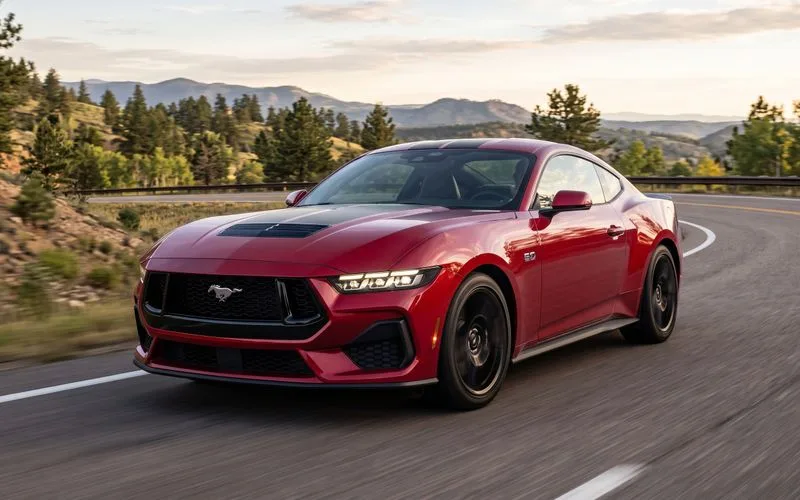 Ford MustangSports CarBetter at: Daily usability
Similar money buys a still-in-production coupe with standard automatic emergency braking, adaptive cruise, a modern digital cabin, a usable 13.3 cu ft trunk and a rear seat an adult can briefly sit in.
Compare 2.49C+
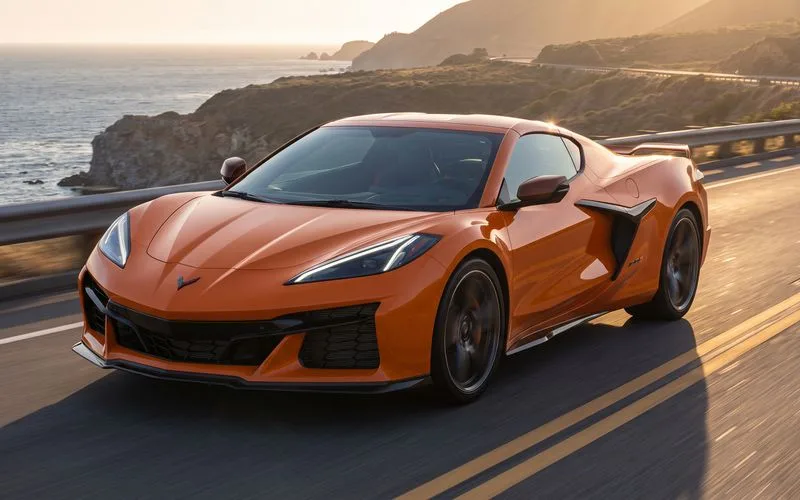 Chevrolet CorvetteSports CarBetter at: Outright performance
If the budget stretches past the SS, the mid-engine Corvette delivers a better interior, higher limits and two real cargo compartments while staying inside the same Chevrolet service network.
Compare 1.92C-
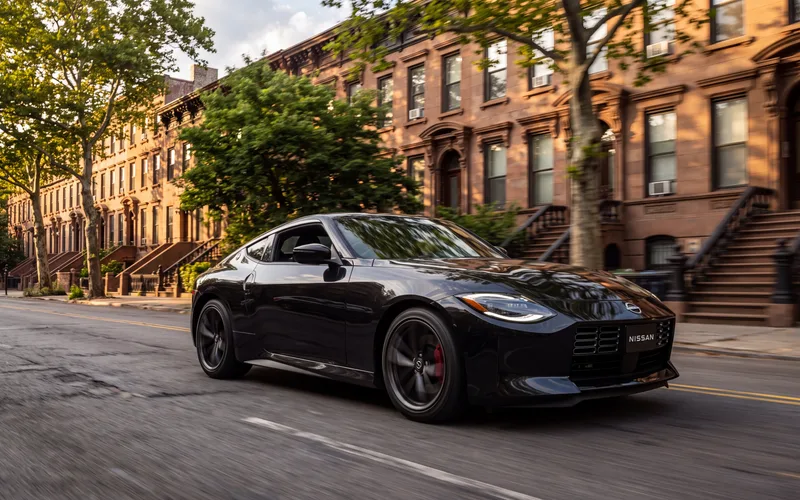 Nissan ZSports CarBetter at: Standard safety
A twin-turbo rear-drive coupe at similar money with the standard safety tech and modern cabin the Camaro never got, for buyers who do not need the back seat.
CompareHow it's evolved
8 scored model years · 2017–2024
Subject scores by year
Hover or tap a score to see what moved it versus the year before. A corner mark flags a big swing.
| Year | Performance | Efficiency | Safety | Space | Cost | Reliability | Tech | Use-case | Driving | Value |
|---|---|---|---|---|---|---|---|---|---|---|
| 2024 | 56 | 27 | 36 | 43 | 60 | 75 | 57 | 27 | 72 | 58 |
| 2023 | 49 | 31 | 36 | 43 | 64 | 75 | 57 | 27 | 67 | 62 |
| 2022 | 49 | 31 | 37 | 44 | 63 | 59 | 58 | 22 | 69 | 57 |
| 2021 | 49 | 31 | 36 | 45 | 64 | 69 | 53 | 31 | 69 | 59 |
| 2020 | 49 | 30 | 38 | 45 | 66 | 62 | 51 | 29 | 62 | 56 |
| 2019 | 51 | 34 | 38 | 48 | 61 | 59 | 49 | 28 | 70 | 54 |
| 2018 | 51 | 33 | 35 | 44 | 63 | 69 | 48 | 26 | 71 | 62 |
| 2017 | 51 | 31 | 38 | 44 | 78 | 65 | 43 | 25 | 65 | 71 |
Compare two years
Best fit & conditions
Higher scores mean a better fit for that use case. Learn more about use-case fit →
Subject profile
Detailed scoring by subject
1Performance & PowertrainGrades below the middle of the scale.1.42D
The 1LT with the standard 2.0L turbo-four is the Camaro's best-selling configuration for 2017; 275 hp is Chevrolet's rated figure, unchanged from the 2016 sixth-gen launch year.
Peak torque for the volume 1LT/2LT 2.0T powertrain, sourced against Chevrolet-reported figures for the unchanged sixth-generation engine lineup carried into 2017.
Chevrolet's own estimate and independent instrumented tests both place the standard 2.0T at roughly 5.4 seconds manual / 5.5 seconds automatic; used that figure for the volume 1LT/2LT trim.
Reviewers of the 2017 turbo-four Camaro describe minimal lag and confident mid-range pull for a mainstream four-cylinder, while the naturally aspirated V8 and supercharged LT4 in the SS/ZL1 deliver smooth, immediate power; kept out of the top band because the turbo-four still trades outright refinement for the V8 models' effortless response.
The standard 6-speed manual on the volume 1LT/2LT trim is engaging and direct; the optional 8-speed automatic (turbo-four/V6/SS) shifts smoothly, and the ZL1's newly-optional-for-2017 10-speed automatic with paddle shift is well regarded for crisp, decisive shifts alongside the carryover 6-speed manual.
The sixth-generation Camaro is rear-wheel drive only across every 2017 trim (LS through ZL1); no all-wheel-drive option is offered.
Four distinct gasoline engines span the 2017 range - 2.0L turbo I4, 3.6L V6, 6.2L LT1 V8 (SS), and supercharged 6.2L LT4 V8 (ZL1) - plus the returning 1LE track package on V6 and V8 - a wide output spread, but there is no hybrid, PHEV, or EV option, which caps it out of the top band per the scoring guidance.
2Efficiency & RangeOne of the Camaro's weakest categories.0.02F
EPA combined rating for the volume 2.0T LT with 8-speed automatic, the best-selling 2017 Camaro configuration. Sits near the bottom of the coupe band because Camaro is scored against efficiency-oriented coupes/hatchbacks, not just muscle-car peers.
EPA city figure for the volume 2.0T automatic trim.
EPA highway figure for the volume 2.0T automatic trim, the strongest of the three fuel-economy metrics thanks to the turbo four's cruising efficiency.
Gas coupes don't get an EPA-published range figure; computed from EPA combined MPG and the Camaro's published 19.0-gallon fuel tank. Mid-pack for the segment despite weak MPG, because the tank is larger than most sports coupes.
EPA's standard 15,000 mi/yr estimate for the volume 2.0T automatic trim, using premium fuel pricing. Well above the coupe band ceiling, so it bottoms out the score — Camaro's smallest engine still costs more to fuel than most sedans/hatchbacks/coupes in the framework's comparison set.
The volume 2.0T engine and both V8 engines (SS, ZL1) all require premium 91+ octane per GM's fuel recommendation; only the 3.6L V6 runs on regular. Since the representative volume trim is the 2.0T, premium is required, not merely recommended.
3SafetyOne of the Camaro's weakest categories.0.52F
NHTSA's overall 5-star rating for the 2017 Camaro coupe is pulled down only by a 4-star frontal result; side and rollover both earned the top mark.
IIHS rated the 2017 Camaro coupe Good in small overlap front, moderate overlap front, side, and head restraints/seats, but only Acceptable in roof strength — the single weak result that kept it off the Top Safety Pick list.
The 2017 Camaro predates GM's Driver Confidence packages on this nameplate — there is no forward collision alert, automatic emergency braking, or adaptive cruise control at any trim. Blind-spot monitoring, rear cross-traffic alert and lane departure warning are bundled with rear parking sensors in a Convenience & Lighting package that is standard only on 2SS/ZL1 and optional lower in the range, so the volume 1LT/2LT trims ship with essentially no driver-assistance tech.
No automatic emergency braking was offered on the 2017 Camaro at any trim — GM did not add even forward-collision warning to the nameplate until the 2019 refresh, and IIHS lists front crash prevention (vehicle-to-vehicle) as not available for this model year.
Blind-spot monitoring and rear cross-traffic alert (alert-only, no active braking intervention) are standard solely on 2SS and ZL1 and offered as an option package further down the lineup, so the volume trim doesn't get it without an added package.
The 2017 Camaro only offers lane departure warning (a chime/visual alert), with no lane-keep assist or centering function — and even that warning is limited to 2SS/ZL1 standard, package-optional elsewhere.
Adaptive cruise control was not offered on the 2017 Camaro at any trim; only conventional cruise control was available. There is no highway-assist feature to evaluate.
No hands-free highway driving system (e.g. Super Cruise) was available on the Camaro in 2017 or at any point in its production run.
IIHS did not publish a headlight test result for the 2017 Camaro coupe. The volume trim used halogen projector headlights typical of the era (HID/LED reserved for upper trims), which generally scored Marginal-to-Acceptable in period IIHS testing of comparable GM vehicles.
Reviewers consistently flag the sixth-gen Camaro's low roofline, thick pillars, and small greenhouse as a real everyday liability — forward and side sightlines are the bigger problem than the already-poor rear view, making the car hard to place in tight spots even with the standard backup camera.
IIHS rated LATCH ease of use Marginal (second-lowest tier) for the 2017 Camaro — lower anchors are set deep in the seat cushions and require significant force to clip in a car seat, compounded by genuinely tight rear-seat space for a rear-facing or forward-facing seat.
4Space & ComfortGrades near the bottom of the scale.0.92F
The sixth-generation Camaro coupe (2016-2024, which the 2017 model year belongs to per Wikipedia — a carry-over year aside from the 1LE package expansion and 50th Anniversary Edition) is a fixed 2+2 layout across LS/LT/SS/ZL1 trims; no bench or 2-seat-only config exists.
Front headroom is mid-band for the coupe segment; the low, sloped roofline that defines the sixth-gen's silhouette costs roughly an inch of headroom when the optional sunroof is fitted.
Front legroom sits near the top of the coupe band — the sixth-gen's long wheelbase-to-cabin ratio favors the driver and front passenger even as rear space is sacrificed.
Rear headroom falls well below the coupe normalization band (35-39 in) — the fastback roofline that defines the sixth-gen's styling leaves the back seat nearly unusable for adults, a widely-reported complaint since the 2016 redesign.
Rear legroom falls below the coupe normalization band (32-42 in) — reviewers describe rear legroom as existing 'more on paper than in practice,' especially reduced further when a tall front occupant slides their seat back.
Trunk volume falls below the coupe normalization band (10-20 cu ft) — a narrow trunk opening and shallow floor (worsened further on convertible models, not scored here) make the Camaro's trunk one of the smallest in the sports-coupe class, notably behind the Mustang's.
Interior storage is sparse and widely criticized: a shallow, narrow console box, small door pockets, and no notable clever-storage features. Consistent with sixth-gen Camaro reviews that flag poor everyday practicality as a tradeoff for its low, wide sports-car cabin.
Front seats are well-shaped with good lateral support and are praised as comfortable and supportive for all-day driving, though some reviewers note the bottom cushion feels tight; the rear seats are so cramped that comfort there is effectively a non-factor, dragging the overall item down from the front-seat-only ceiling.
The base suspension delivers a supple, well-damped ride for a car with this much performance intent, and the optional magnetic/adaptive dampers (available on SS and ZL1) further improve compliance over larger impacts without sacrificing body control.
Road and tire noise become noticeable at highway speed, exhaust/drivetrain resonance carries into the cabin (especially on V8 SS models), and NHTSA-logged technical service bulletins for 2016-2017 Camaros address a wind-buffeting complaint tied to the rear pressure-relief valve design — collectively below-average quietness for the segment.
Heated and ventilated front seats become available starting at the 2LT trim (not standard on base 1LS/1LT/1SS), and a heated leather-wrapped steering wheel requires the Convenience and Lighting package on 2LT/2SS — comfort equipment is real but gated behind mid-to-upper trims and option packages rather than broadly available.
5Cost of OwnershipThe Camaro's best-graded category.3.27B+
Sixth-gen Camaro carried over unchanged in structure for 2017 (1LE and 50th Anniversary Edition added, no base-trim redesign); base 1LS turbo-four coupe rose $605 over the 2016 model.
LT is the Camaro's volume trim (V6, more standard convenience/tech than LS); priced from published 1LT starting price plus the $995 destination charge confirmed for MY2017.
No official 5-year Edmunds TCO figure retrieved (page blocked automated fetch); estimated from RepairPal's per-year maintenance figure plus its typical unscheduled-repair cost range, in line with average-cost domestic V6/V8 coupe ownership.
Camaro consistently ranks among the strongest-residual mainstream coupes; current used-market SS trade-in values (9 years out, post-discontinuation scarcity) still sit well above typical depreciation curves, corroborating the strong 5-year figure.
Standard GM basic warranty for MY2017, at the floor of the segment's 3–5 year band; unchanged from prior Camaro model years.
Standard GM powertrain coverage for MY2017, at the floor of the segment's 5–10 year band — shorter than the 10-year coverage offered by Hyundai/Kia/Genesis rivals of the era.
No complimentary scheduled-maintenance visits included; roadside assistance is bundled for the 5-year/60,000-mile life of the powertrain warranty, and buyers get a short OnStar connected-services trial. Basic roadside/trial coverage only, no maintenance perk — mid-low band.
$27,595 volume-trim price minus its estimated resale value after 5 years (76% retained, or about $20,972) leaves about $6,623 in depreciation. Add the projected $4,200 in 5-year maintenance and repairs, and owning this vehicle for 5 years costs about $10,823 in total.
6Reliability & QualityMid-pack among this car's ten categories.2.39C+
J.D. Power gave the 2017 Camaro a slightly-above-average 3.5/5 predicted reliability rating; RepairPal separately scores the model 3.5/5 but ranks it 21st of 24 in its (broader, non-segment-matched) midsize-car set. No published Consumer Reports predicted-reliability circle was found for this model year, so the read is average-to-mixed rather than top-tier.
Chevrolet placed 8th among all brands in J.D. Power's 2017 Vehicle Dependability Study (142 problems per 100 vehicles, just ahead of Honda's 143), a solid but not top-5 dependability standing. The 'most awarded brand' marketing claim from the same event is a separate, broader honor and not itself a dependability ranking.
The 2017 Camaro carries 3 NHTSA recalls: an electric power steering (EPS) assist-system failure recall shared with 2016-2018 Cadillac ATS/CTS and Corvette (loss of power-steering assist, replaced steering gear), a steering-wheel airbag-emblem separation recall spanning 2017-2021 Camaros, plus a third campaign. None are engine-fire or systemic-powertrain scale, but the EPS recall is safety-relevant (increased crash risk at low speed), keeping this out of the 'few, minor' top band.
The volume-trim 3.6L LFX V6 (offered since 2010) and the 2.0L turbo-four are largely proven with no red-flag failure patterns beyond routine turbo-lag/carbon-buildup complaints. The optional LT1 6.2L V8 (SS) has documented owner reports of premature failure tied to Active Fuel Management roller-lifter wear, a known GM AFM weak point, which tempers the family's overall durability reputation even though it doesn't affect the base/volume powertrain.
Reviewers note a real step up in material quality over prior Camaros with attractive styling and cleverly integrated HVAC controls, but hard plastics remain in several touch points and switchgear/shift paddles are criticized as cheap-feeling; multiple outlets rank cabin materials behind the Ford Mustang and Dodge Challenger.
No pattern of assembly complaints (panel gaps, rattles, squeaks) specific to the 2017 model year surfaced in owner or press reviews; the sixth-generation Camaro is generally regarded as solidly screwed together, in line with the mid-pack brand dependability standing above rather than a class-leading initial-quality result.
Chevrolet operates one of the largest dealer networks in the US (thousands of franchised dealers nationwide), so parts, warranty, and routine service access for the Camaro is essentially universal regardless of location.
GM parts are widely stocked and the Camaro has one of the largest performance aftermarket followings of any car sold, keeping parts sourcing easy. Typical repair/maintenance costs are moderate for the segment ($683-$834 average repair, $758/year maintenance per RepairPal), though a few individual jobs (e.g., battery replacement near $400) run higher than a typical economy car.
7Technology & InfotainmentGrades near the bottom of the scale.0.87F
Volume trim (1LT) carries the base 7-inch Chevrolet MyLink touchscreen; the 8-inch unit is an upgrade tied to higher trims/packages, not the representative configuration.
Chevrolet MyLink in this generation was widely praised as quick and simple with large virtual buttons, but the base 7-inch unit's graphics and menu depth trail class leaders of the era, and physical climate controls are separate and clear, aiding usability.
Apple CarPlay and Android Auto are standard across trims via MyLink, but only as a wired (USB) connection — wireless phone projection did not exist on any Camaro trim in this generation until later model years.
MyLink's built-in voice recognition handles basic phone/audio commands, and factory navigation was an SD-card-based add-on available mainly on higher trims rather than a robust native system — most owners relied on CarPlay/Android Auto maps instead.
Base trims get a modest 6-speaker system; the available 9-speaker Bose premium system on 2LT/2SS/RS-equipped cars is a genuine step up and well regarded for a sporty coupe, but it isn't offered on the true base configuration.
Gauges remain analog on all trims; an available 8-inch reconfigurable color Driver Information Center sits between the analog dials rather than replacing them with a full digital cluster, and it is not standard on the volume trim.
MyLink in this generation had no whole-vehicle over-the-air software update capability; OnStar handled connected services (remote commands, diagnostics alerts) rather than pushing feature-adding software updates.
The OnStar RemoteLink/myChevrolet app covers remote start, lock/unlock, vehicle locate and diagnostics, but full functionality requires an active OnStar/4G LTE subscription after the trial period rather than being free long-term.
Two USB-A ports and an aux jack are standard, and a wireless charging pad is available (part of the Convenience and Lighting package on 2LT/optional; included on 2SS) — but USB-C did not yet exist for this vehicle and base 1LT/1SS trims lack wireless charging.
Keyless entry with push-button start is standard from 1LT up (the entry-level 1LS trim uses a traditional key), and remote start is available via OnStar RemoteLink app or the Convenience package — solid for the class but not phone-as-key capable.
A standard rearview camera is included from 1LT up (federally mandated backup-camera rules were also phasing in for this model year), but rear parking sensors are bundled only in the optional Convenience and Lighting package and no 360-degree camera or parking automation is offered.
A head-up display is available but gated to the 2LT (via Convenience and Lighting package) and standard on 2SS — it is not offered on the volume 1LT/1SS trims, limiting it to upper configurations.
8Use-Case FitThe Camaro's lowest-graded category.0.00F
Sixth-gen Camaro's low roofline, small rear door openings and steeply raked rear glass make loading a child seat or lifting a kid in/out a genuine struggle; rear seat is a tight 2+2 with minimal headroom. LATCH anchors exist at the outboard rear positions but are hard to reach through the narrow opening.
IIHS rated the 2017 Camaro coupe 'Good' on small-overlap front, moderate-overlap front, side and rear crash tests but only 'Acceptable' on roof strength; forward collision alert, lane-change alert and rear cross-traffic alert were optional (not standard) and not available at all on base LS, so families buying the affordable trim skip them.
A 9.1 cu ft trunk and a rear bench with minimal knee/head room make the Camaro coupe poor for carrying four adults or a family's road-trip gear for more than a short hop; rear amenities (vents, USB, entertainment) are absent for back-seat passengers.
The sixth-gen platform is praised for a comfortable, well-controlled ride and light, precise steering that make it easy to drive smoothly at low speeds, but the deep dashboard, tiny rear glass and thick pillars create notoriously poor outward visibility that adds fatigue and stress in traffic and lane changes.
The standard turbo 2.0L four returns 22/31 mpg city/highway (20/30 manual), competitive for a sports coupe though well behind dedicated commuter cars; the V6 (19/28) and V8 SS (17/27) volume trims cost noticeably more per mile, and premium fuel is recommended on the turbo/V6.
Compact overall footprint helps in tight parking, but the low seating position, high beltline, small rear window and thick roof pillars badly compromise sightlines — a rearview camera is standard, but rear cross-traffic/parking sensors are optional extras, so unassisted parking is stressful.
The Camaro is a two-door sports coupe with no cargo bed, no cab/bed configuration, and no manufacturer-published tow rating — Chevrolet does not position or equip it for towing or hauling of any kind.
Powertrains (LT1/LT4 V8s, 3.6L V6, 2.0T) are mechanically robust and share DNA with proven GM engines, but the Camaro has no fleet or work-vehicle presence, low-slung ground clearance (~4 in) invites damage on rough terrain, and low-profile performance tires wear quickly under load.
No onboard 120V power, no tie-down points, no bed or rack mounting provisions, and no aftermarket upfit ecosystem exists for a two-door sports coupe — it offers essentially nothing for jobsite use.
Supportive seats and a settled highway ride make the front seats reasonably comfortable on long hauls, and highway range on the V6/turbo four is decent, but poor outward visibility adds fatigue and adaptive cruise/driver-assist tech was not offered on the 2017 model, so there's no fatigue-reducing ADAS suite.
Rear-wheel drive only, no AWD option, low ~3.5–4.3 in ground clearance, and low-profile performance tires make the Camaro strictly pavement-bound with essentially no light off-road or foul-weather capability.
A 9.1 cu ft trunk with a narrow opening limits what fits, though a rear-seat pass-through (where equipped) helps with longer items like skis; no roof rails, no factory hitch, and no underfloor storage beyond the spare-free trunk well.
9Driving ExperienceOne of the Camaro's strongest categories.2.42C+
The sixth-generation Alpha-platform chassis shared across every 2017 Camaro trim is consistently rated among the best-handling cars in its class — lighter and stiffer than the outgoing fifth-gen and the Ford Mustang, with quick direction changes, strong grip, and body control that reads more sports car than muscle car even on the base turbo-four's less aggressive suspension tune.
Electric power steering on the 2017 Camaro is sharp and precise with real buildup of effort and quick response; Sport/Track drive modes add weight while Tour mode lightens it without going numb, putting it ahead of most rivals' EPS tuning of the era.
Instrumented 60-0 mph stops for the 2017 Camaro range from roughly 117 ft on the standard SS package down to 107 ft on the track-tuned SS 1LE with upgraded Brembo hardware; the volume 1LT/2LT turbo-four rides on smaller, less aggressive brakes than the SS, giving adequate but unremarkable pedal feel and stopping power rather than segment-leading performance.
The 2.0L LTG turbo-four on the volume 1LT/2LT trim is well-calibrated for a mainstream four-cylinder with only minor turbo lag and confident mid-range response, a marked improvement over prior four-cylinder Camaros, but it still trades outright smoothness for the V6/V8 models' more effortless delivery.
The turbo-four's natural note is a thin, hot-hatch-like zing with turbo whoosh rather than a traditional muscle-car soundtrack, and Chevrolet pipes in synthesized engine sound (driver-defeatable) to compensate — reviewers call the real exhaust note underwhelming for the segment, though it stays inoffensive rather than harsh or droning.
No single figure appears on an official Chevrolet spec sheet reachable this run, but multiple independent spec databases converge on roughly 37.7-38.4 ft for the sixth-generation Camaro coupe regardless of trim, wider than typical sedans/hatchbacks in the coupe normalization band due to the car's low, wide stance.
Front seats are supportive and well-bolstered with a proper low, sporty driving position, but the high beltline, thick A-pillars and narrow 'gun-slit' greenhouse are repeatedly singled out as producing genuinely poor outward visibility in every direction, and the low roofline compromises headroom and ingress/egress for taller drivers.
Even in base turbo-four form the Camaro's chassis, quick steering and available manual gearbox make it genuinely engaging and enthusiast-recommended — reviewers frame the 2017 as arguably the best-driving Camaro yet, with the caveat that the four-cylinder's soundtrack undercuts some of the emotional theater the V8 models deliver.
10Value & Market PositionOne of the Camaro's strongest categories.2.84B-
The 2017 Camaro's base 1LS/1LT undercuts a loaded econobox: standard 7-in touchscreen with Apple CarPlay/Android Auto, rearview camera, keyless access/ignition, 4G LTE Wi-Fi hotspot, automatic climate control, and a limited-slip differential on manual cars — content that many rivals still charged extra for in 2017, though cloth seats and a smaller info display remain base-grade.
275-hp turbo-four starts at $25,905 and the 455-hp LT1 V8 2SS starts around $41,905 — both undercut comparable Mustang GT and Challenger R/T trims while matching or beating them on power and chassis capability (independent 5-link rear, near-50/50 weight distribution), giving the 2017 Camaro standout performance-per-dollar even before incentives.
Wide, well-spaced lineup for 2017: LS/1LT/2LT/1SS/2SS coupe and convertible, plus the returning 1LE track package (offered on both V6 and SS for the first time), the supercharged 650-hp ZL1, and a 50th Anniversary Edition — spans commuter turbo-four to track-focused V8 within one nameplate.
The Camaro finished 2017 with roughly 67,940 US units versus the Mustang's 81,866, losing the full-year muscle-car sales race despite winning several individual months (April, September, October) — a steady but clearly second-place seller in a shrinking segment.
Chevrolet is a mainstream, broadly trusted American brand, and the Camaro nameplate carries genuine enthusiast heritage reinforced by the 2017 50th Anniversary Edition — a real halo, but Chevrolet's everyday-brand image doesn't command the aspirational pull of a genuine performance marque.
Incentives on the 2017 Camaro were modest rather than desperate: a standard $500 GM lessee-loyalty coupon, 2.9% APR financing for 60 months, and a national lease offer around $279/month on the LT coupe — real but unremarkable buyer benefit, consistent with a car that still sold close to sticker.
2017 is only the second model year of the all-new sixth-generation Alpha-platform Camaro (launched for 2016), and it's a change year on top of that — the 1LE package returned for both V6 and SS, plus a new 50th Anniversary Edition — well ahead of any redesign risk.
The sixth-gen Camaro won 2016 Motor Trend Car of the Year at launch and the 2017 model year made Car and Driver's 10Best Cars list, with contemporary comparison tests (Car and Driver, Motor Trend) frequently ranking it ahead of the Mustang and Challenger on chassis dynamics — consistent top-of-class critical standing.