
The verdict
A struggling sports car, strong on driving and held back by use-case.
The 2019 Camaro is a genuinely fantastic car to drive — sharp steering, a poised chassis, and a manual gearbox on the volume trim — wrapped around a coupe that asks a lot of its owner day to day. Rear seats with 29.9 in of legroom and a 9.1 cu ft trunk are for cargo and kids in name only, driver-assist tech lags rivals like the Mustang, and reviewers panned the 2019 facelift's styling on SS models. Best suited to a buyer who wants a fun, well-priced second car and doesn't need it to do much else.
Jump to scoresStrengths
- Sharp, engaging handling
- 5-star overall crash rating
- Comfortable ride and supportive front seats for a sports coupe
What holds it back
- Rear seat and cargo space are essentially unusable
- Worst-in-class outward visibility
- Thin driver-assist tech even on paper
Top alternatives
Cars shoppers cross-shop with the Chevrolet Camaro 2.47C+
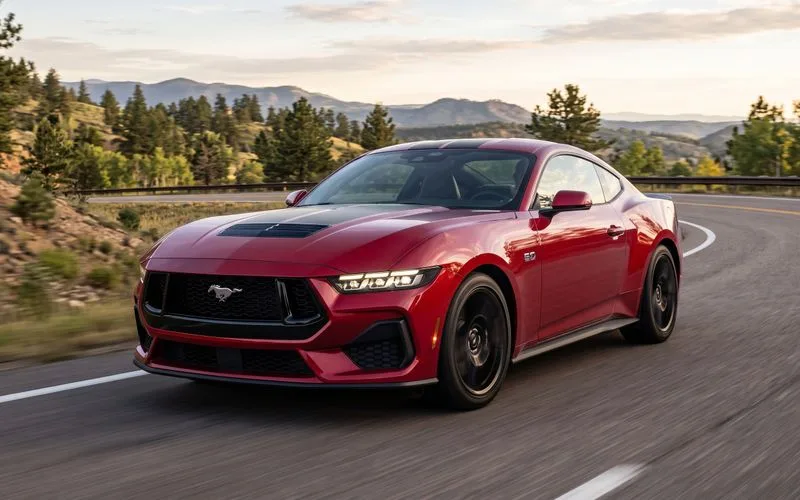 Ford MustangSports CarBetter at: Daily usability
Similar money buys a still-in-production coupe with standard automatic emergency braking, adaptive cruise, a modern digital cabin, a usable 13.3 cu ft trunk and a rear seat an adult can briefly sit in.
Compare 2.49C+
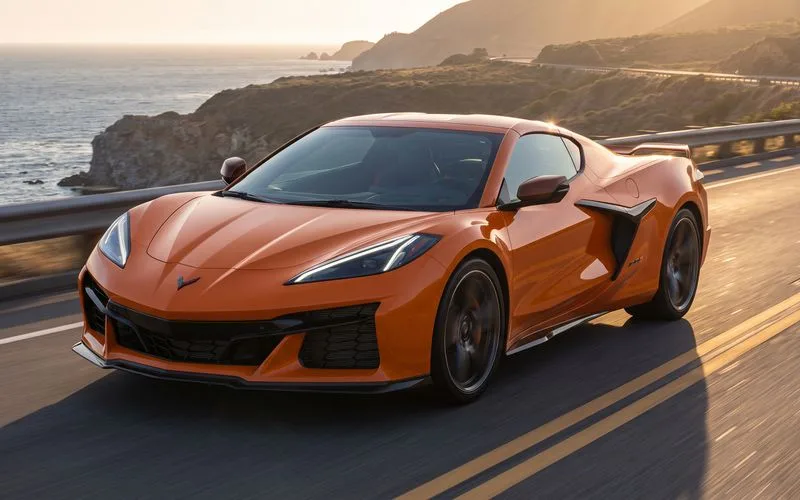 Chevrolet CorvetteSports CarBetter at: Outright performance
If the budget stretches past the SS, the mid-engine Corvette delivers a better interior, higher limits and two real cargo compartments while staying inside the same Chevrolet service network.
Compare 1.92C-
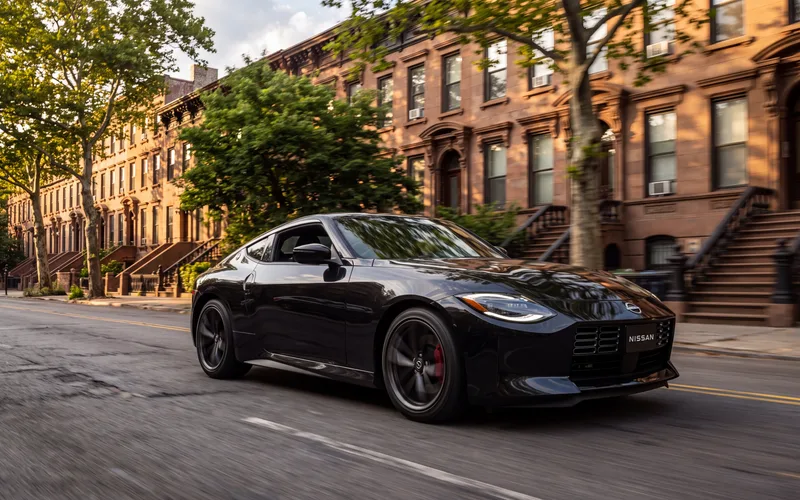 Nissan ZSports CarBetter at: Standard safety
A twin-turbo rear-drive coupe at similar money with the standard safety tech and modern cabin the Camaro never got, for buyers who do not need the back seat.
CompareHow it's evolved
8 scored model years · 2017–2024
Subject scores by year
Hover or tap a score to see what moved it versus the year before. A corner mark flags a big swing.
| Year | Performance | Efficiency | Safety | Space | Cost | Reliability | Tech | Use-case | Driving | Value |
|---|---|---|---|---|---|---|---|---|---|---|
| 2024 | 56 | 27 | 36 | 43 | 60 | 75 | 57 | 27 | 72 | 58 |
| 2023 | 49 | 31 | 36 | 43 | 64 | 75 | 57 | 27 | 67 | 62 |
| 2022 | 49 | 31 | 37 | 44 | 63 | 59 | 58 | 22 | 69 | 57 |
| 2021 | 49 | 31 | 36 | 45 | 64 | 69 | 53 | 31 | 69 | 59 |
| 2020 | 49 | 30 | 38 | 45 | 66 | 62 | 51 | 29 | 62 | 56 |
| 2019 | 51 | 34 | 38 | 48 | 61 | 59 | 49 | 28 | 70 | 54 |
| 2018 | 51 | 33 | 35 | 44 | 63 | 69 | 48 | 26 | 71 | 62 |
| 2017 | 51 | 31 | 38 | 44 | 78 | 65 | 43 | 25 | 65 | 71 |
Compare two years
Best fit & conditions
Higher scores mean a better fit for that use case. Learn more about use-case fit →
Subject profile
Academic Probation · NHTSA safety recalls
Mar 25, 2021Air bags: frontalThe plastic "Camaro" emblem, located on the steering wheel air bag cover, may separate during deployment of the frontal driver air bag.
Defect
General Motors, LLC (GM) is recalling certain 2017-2021 Chevrolet Camaro vehicles. The plastic "Camaro" emblem, located on the steering wheel air bag cover, may separate during deployment of the frontal driver air bag.
Risk
In the event of a crash, plastic pieces of emblem may act as projectiles from deployment of the driver air bag can increase the risk of injury.
Remedy
GM will notify owners, and dealers will replace the frontal driver side air bag module, free of charge. The recall began April 14, 2021. Owners may contact Chevrolet customer service at 1-800-222-1020. GM's number for this recall is N212327220.
NHTSA campaign 21V211000 ↗Manufacturer no. N21232722030 vehicles potentially affected (all models in the campaign)Owners notified Apr 14, 2021Filed by General Motors, LLCFiled as CAMARO
6 recalls on other model years of the Camaro (2017–2018, 2020–2022)
Mar 20, 2025Steering: electric power assist systemThe electric power steering (EPS) assist may fail.
Defect
General Motors LLC (GM) is recalling certain 2016-2018 Cadillac CTS, 2017-2018 Cadillac ATS, Chevrolet Camaro, and Chevrolet Corvette vehicles. The electric power steering (EPS) assist may fail.
Risk
A loss of power steering assist can require greater steering effort, especially at low speeds, increasing the risk of a crash.
Remedy
Dealers will replace the power steering gear assembly, free of charge. Owner notification letters were mailed April 15, 2025. Owners may contact Cadilac customer service at 1-800-333-4223 or Chevrolet customer service at 1-800-222-1020. GM's number for this recall is N252497020.
NHTSA campaign 25V175000 ↗Manufacturer no. N252497020934 vehicles potentially affected (all models in the campaign)Owners notified Apr 15, 2025Filed by General Motors, LLCFiled as CAMAROMar 6, 2025Power train: automatic transmissionThe transmission may become damaged internally and cause the wheels to lock-up.
Defect
General Motors LLC (GM) is recalling certain 2019-2020 Cadillac CT6, 2020-2021 CT4, CT5, and 2020-2022 Chevrolet Camaro vehicles equipped with a 10-speed transmission. The transmission may become damaged internally and cause the wheels to lock-up.
Risk
Wheel lock-up while driving increases the risk of a crash.
Remedy
Dealers will install transmission control module monitoring software, free of charge. Owner notification letters were mailed April 7, 2025. Owners may contact Cadillac customer service at 1-800-333-4223 or Chevrolet customer service at 1-800-222-1020. GM's number for this recall is N242480630.
NHTSA campaign 25V148000 ↗Manufacturer no. N24248063090,081 vehicles potentially affected (all models in the campaign)Owners notified Apr 7, 2025Filed by General Motors, LLCFiled as CAMAROMar 18, 2021Power train: axle assembly: axle shaftThe left or right axle shaft may be missing a retaining ring, which could allow the axle shaft to separate while driving.
Defect
General Motors, LLC (GM) is recalling certain 2021 Chevrolet Camaro vehicles. The left or right axle shaft may be missing a retaining ring, which could allow the axle shaft to separate while driving.
Risk
A separated axle shaft can cause a loss of drive power, increasing the risk of a crash.
Remedy
GM will notify owners, and dealers will replace the left or right axle shaft as necessary, free of charge. The recall began April 21, 2021. Owners may contact Chevrolet customer service at 1-800-222-1020. GM's number for this recall is N212331000.
NHTSA campaign 21V188000 ↗Manufacturer no. N2123310008 vehicles potentially affected (all models in the campaign)Owners notified Apr 21, 2021Filed by General Motors, LLCFiled as CAMARODec 23, 2020Seat belts · Seat belts: critical fastenersIncorrect bolts may have been used at one or more fastening locations to secure the seat belts to the vehicle. If an incorrect bolt was used, the seat belt may not be properly attached to the vehicle.
Defect
General Motors, LLC (GM) is recalling certain 2020 Chevrolet Bolt EV and 2021 GMC Canyon and Sierra 1500, 2500 and 3500, Yukon, Yukon XL, Cadillac Escalade and Escalade ESV and Chevrolet Blazer, Camaro, Colorado, Equinox, Silverado 1500, 2500 and 3500, Suburban and Tahoe vehicles. Incorrect bolts may have been used at one or more fastening locations to secure the seat belts to the vehicle. If an incorrect bolt was used, the seat belt may not be properly attached to the vehicle.
Risk
If a seat belt assembly is not properly attached to the vehicle, the seat belt may not properly restrain an occupant in the event of a crash, increasing the risk of injury.
Remedy
GM will notify owners, and dealers will replace the suspect bolts, free of charge. The recall began January 29, 2021. Owners may contact GMC customer service at 1-800-462-8785, Cadillac customer service at 1-800-458-8006, or Chevrolet customer service at 1-800-222-1020. GM's number for this recall is N202322230.
NHTSA campaign 20V811000 ↗Manufacturer no. N202322230470 vehicles potentially affected (all models in the campaign)Owners notified Jan 29, 2021Filed by General Motors, LLCFiled as CAMARONov 21, 2019Fuel system, gasoline: delivery: fuel pumpThe fuel pump may be missing a pressure regulator, allowing for over-pressurization of the fuel system.
Defect
General Motors LLC (GM) is recalling certain 2020 Cadillac Escalade, Escalade ESV, Chevrolet Camaro, Silverado 1500, Suburban, Tahoe, GMC Sierra 1500, Yukon, and Yukon XL vehicles. The fuel pump may be missing a pressure regulator, allowing for over-pressurization of the fuel system.
Risk
Over-pressurization can crack the fuel pump and cause leaks, increasing the risk of a fire in the presence of an ignition source.
Remedy
GM will notify owners, and dealers will replace the fuel pump, free of charge. The recall began December 18, 2019. Owners may contact Cadillac customer service at 1-800-333-4223, Chevrolet customer service at 1-800-222-1020, or GMC customer service at 1-888-988-7267. GM's number for this recall is N192283991.
NHTSA campaign 19V837000 ↗Manufacturer no. N192283991502 vehicles potentially affected (all models in the campaign)Owners notified Dec 18, 2019Filed by General Motors LLCFiled as CAMAROFeb 7, 2019Steering: electric power assist systemThe electric power steering (EPS) assist system may fail.
Defect
General Motors LLC (GM) is recalling certain 2016-2018 Cadillac CTS, and 2017 Cadillac ATS, Chevrolet Camaro, and Chevrolet Corvette vehicles. The electric power steering (EPS) assist system may fail.
Risk
Loss of power steering assist would require a higher steering effort, especially at lower speeds, which may increase the risk of a crash.
Remedy
GM will notify owners, and dealers will replace the power steering gear assembly, free of charge. The recall began June 13, 2019. GM' number for this recall is N182182760.
NHTSA campaign 19V086000 ↗Manufacturer no. N18218276026,772 vehicles potentially affected (all models in the campaign)Owners notified Jun 13, 2019Filed by General Motors LLCFiled as CAMARO
Source: NHTSA Office of Defects Investigation recall database, model years 2017–2024. Recalls are listed by model year as the manufacturer filed them; whether a specific car is affected depends on its VIN — check a VIN at nhtsa.gov ↗. NHTSA model names matched to this page: CAMARO.
Detailed scoring by subject
1Performance & PowertrainGrades below the middle of the scale.1.39D
Volume trim is the 1LT/2LT with the standard 2.0L LTG turbo-four; 275 hp is the manufacturer-rated figure carried for 2019 (facelift year, no powertrain change from 2018).
Peak torque for the volume 2.0T powertrain, unchanged for the 2019 model-year facelift.
Chevrolet's own estimate for the 2.0T is 5.4 seconds; multiple outlets corroborate a 5.4-6.0s range for this configuration, so used the manufacturer figure for the volume 1LT/2LT trim.
The 2.0L turbo-four delivers strong, efficient midrange torque and pulls cleanly from ~3,000 rpm to its 5,600 rpm power peak, but reviewers note it leans on boost with some turbo lag off idle and tails off at higher rpm compared to the optional V6/V8s, keeping it out of the top band.
The standard 6-speed manual on the volume 1LT/2LT trim is generally well-regarded for a direct, engaging shift action; the optional 8-speed automatic on 2019 4-cylinder/V6 models had documented shudder/harsh-shift complaints that GM addressed mid-year with a revised transmission fluid, which weighs against a higher score for the powertrain lineup as a whole.
The sixth-generation Camaro, including the 2019 model year, is rear-wheel drive only across every trim (LS through ZL1) with no all-wheel-drive option offered.
Four distinct gasoline engines span the 2019 range - 2.0L turbo I4, 3.6L V6, 6.2L V8 (SS), and supercharged 6.2L V8 (ZL1) - a wide spread by output, but there is no electrified or hybrid option, which caps it out of the top band per the scoring guidance.
2Efficiency & RangeOne of the Camaro's weakest categories.0.21F
EPA-rated combined economy for the volume 2.0L turbo automatic configuration, the Camaro's highest-volume 2019 powertrain.
EPA city rating for the 2.0L turbo automatic, the volume 2019 powertrain.
EPA highway rating for the 2.0L turbo automatic, the volume 2019 powertrain.
Calculated from the 19.0-gallon fuel tank (consistent across 2019 Camaro trims) and the volume powertrain's 25 MPG combined EPA rating.
EPA annual fuel cost estimate for the volume 2.0L turbo automatic at standard 15k mi/yr assumptions; exceeds the coupe segment's upper band because performance-coupe fuel costs run well above mainstream coupes.
The volume 2.0L turbo engine's owner's manual permits 87-octane regular but recommends 91+ premium for full power and knock protection; EPA lists the engine's rating fuel as premium. V6/V8 SS and ZL1 variants require premium outright.
3SafetyOne of the Camaro's weakest categories.0.53F
NHTSA's official database rates the 2019 Camaro 2-door RWD 5 stars overall despite a 4-star frontal result, because side (5★) and rollover (5★, 8.3% tip probability) pull the composite up.
IIHS rates the 2016-23-generation coupe Good on small-overlap front (driver), moderate-overlap front, side, and head restraints, but only Acceptable on roof strength, and its front crash prevention is 'Basic' (warning-only, no autobrake) — that combination rules out any Top Safety Pick award.
The 2019 refresh added a Chevy Infotainment 3 rearview camera as standard, but the entire active-safety suite — forward collision alert, blind-spot monitoring, rear cross-traffic alert, lane-change alert — is bundled into an optional Convenience and Lighting package that isn't even offered on the base 1LT/1SS; there is no adaptive cruise or lane-keeping at any trim.
IIHS front crash prevention for the 2019 Camaro is rated 'Basic' — the optional system issues a forward collision warning but has no autobrake capability at all, and pedestrian detection isn't offered; this is well behind rivals like the 2019 Mustang, which added standard AEB that same year.
Blind-spot monitoring and rear cross-traffic alert are alert-only (no braking intervention) and bundled in the Convenience and Lighting package — optional on 1LT/2LT/1SS, standard only once buyers step up to 3LT/2SS and above, so volume-trim coverage is limited.
The 2019 Camaro offers no lane departure warning or lane keep assist at any trim or option package — it's absent from the lineup entirely, not merely limited to upper trims.
No adaptive cruise control was offered on the sixth-generation Camaro for 2019 at any trim or package; only conventional fixed-speed cruise control is available.
No hands-free highway driving system (e.g. Super Cruise) was available on the 2019 Camaro — GM limited Super Cruise to Cadillac during this period.
The 2019 facelift brought new LED headlights standard across LS/LT/SS trims (a step up from the outgoing halogen/HID mix), but IIHS has no published headlight-glare rating for this low-volume coupe and there's no adaptive/auto high-beam feature offered, so this is scored to segment norms rather than a direct test result.
The sixth-generation Camaro's low, tunnel-like greenhouse, thick pillars, high beltline and shallow rear glass are a near-universal reviewer complaint, producing poor rear and rear-three-quarter sightlines uncompensated by any standard 360-degree camera.
IIHS rates the Camaro's LATCH system 'Marginal' — anchors are set too deep in the seat bight and require excessive force to attach — compounding the coupe's already tight 2+2 rear quarters that make fitting a child seat and reaching the seating position difficult.
4Space & ComfortGrades below the middle of the scale.1.20D
Sixth-generation Camaro coupe (2016–2024, unchanged for 2019) is a strict 2+2 with a token rear bench across LS/LT/SS/ZL1.
Mid-band front headroom for the segment, unchanged from the 6th-gen coupe's cabin architecture; 2019's facelift touched only lighting and fascias, not glass/roofline.
Long, low-slung cabin gives the driver and front passenger stretch-out room near the top of the coupe band.
Steeply raked fastback roofline leaves the rear seats with almost no headroom — below the coupe normalization floor and one of the tightest in the class.
Rear legroom is token-seat territory, below the coupe normalization floor; the back seat is unusable for adults on anything but the shortest trips.
Trunk volume sits just below the coupe normalization floor and trails key rivals like the Mustang; a narrow trunk opening and high liftover further hurt usability.
Reviewers single out the Camaro's door pockets and under-armrest bin as unusually small even by sports-coupe standards, though the cupholders themselves are well sized and out of the shifter's way.
Front seats earn praise for lateral support and all-day comfort (some testers found the bottom cushion a touch flat), with heated/ventilated seats and optional form-fitting Recaros on SS; the rear seat is token space only.
Base suspension delivers a notably supple, well-damped ride for a sports coupe; the optional Magnetic Ride Control (V8 models) further improves compliance over larger impacts without sacrificing body control.
Wind and road noise are acceptable for the segment at cruising speed, but road noise becomes noticeable on rough pavement and with the wider tires on SS models; V8 exhaust is intentionally vocal under throttle when the active exhaust is fitted.
Dual-zone automatic climate control plus heated and ventilated front seats become standard starting at 2LT, and a heated steering wheel is available via the 3LT Convenience and Lighting package and standard on 2SS — solid mid-pack availability but nothing on the base 1LS/1LT.
5Cost of OwnershipOne of the Camaro's strongest categories.2.10C
2019 is a facelift year within the sixth generation (new LED headlights/fascia, Infotainment 3, standard backup camera) but the trim structure and entry powertrain carry over — the 1LS turbo-four remains the floor of the lineup and actually dropped $405 from 2018, keeping the Camaro among the cheapest cars in this coupe set behind only the Mustang/BRZ/GR86.
The 2019 coupe ladder ran 1LS $25,995 / 1LT turbo $26,495 / 1LT V6 $28,985 / 2LT ~$29,490 / 3LT $32,990 / 1SS $38,990 / 2SS $43,990 / ZL1 $65,190 (incl. $995 destination). Reviewers identify the V6 1LT as the most popular non-SS trim, and a typically-equipped one — the 335-hp V6 with 8-speed automatic and the ~$1,950 RS appearance package most LT buyers add — lands around $31,400.
Estimates diverge by roughly 3.5x depending on what they fold in. CarEdge-style forward models project maintenance-plus-repairs near $2,450 over five years and RepairPal-style data puts the Camaro's unscheduled repair frequency below the midsize-car average, while Edmunds/KBB-style True Cost to Own figures that include performance tires and brake wear run toward $8,600. The pushrod-derived LGX V6 and turbo-four run on cheap, widely stocked GM parts, which keeps routine service inexpensive; staggered summer tires and big brakes on SS/ZL1 builds are what push the wear-inclusive estimates up. Mid-band figure reflects both, consistent with adjacent sixth-generation model years.
Unlike a current model year, the 2019 Camaro's 5-year mark has already passed, so this is measured used-market data rather than a forward-looking projection. Depreciation resistance remains one of this category's stronger items — the Camaro sits well inside the coupe band and ahead of most rivals — though slightly behind the newer facelifted model years' projected figures, consistent with actual transaction data reflecting a real used market rather than an optimistic residual model.
Chevrolet's standard 3-year/36,000-mile bumper-to-bumper coverage applies to the Camaro with no performance-model extension — exactly at the segment band floor, matching the Mustang's coverage.
Chevrolet's 5-year/60,000-mile powertrain coverage is the industry floor and the bottom of the band — far short of Hyundai/Kia's 10-year/100,000-mile terms, and identical to the Corvette's.
2019 is the model year GM cut its complimentary maintenance program down to a single covered visit in the first 12 months (oil/filter change, tire rotation, multi-point inspection), from two visits previously — among the thinnest included-service offers in the segment, well behind Toyota's 2-year ToyotaCare on the GR86/Supra and multi-year programs from BMW and Porsche. Roadside assistance and courtesy transportation matching the 5-year/60,000-mile powertrain term, plus a 1-month OnStar/Chevrolet Connected Services trial, keep it out of the bottom band.
$31,435 volume-trim price minus its estimated resale value after 5 years (57% retained, or about $17,918) leaves about $13,517 in depreciation. Add the projected $5,600 in 5-year maintenance and repairs, and owning this vehicle for 5 years costs about $19,117 in total.
6Reliability & QualityOne of the Camaro's strongest categories.1.96C-
Sources conflict sharply for this vintage: Consumer Reports' November 2019 Annual Auto Reliability Survey scored the Camaro just 5 (out of 100), naming it — alongside the Chevrolet Colorado — among the least reliable vehicles in America that year, versus a category-leading Lexus average of 81. J.D. Power's separate quality/reliability tracking rates the sixth-generation Camaro 'Great' for 2018 and after, a much more favorable read. Weighing CR's model-year-specific, negatively-corroborated survey data (widely reported) more heavily than J.D. Power's broader brand-cycle rating keeps this below average.
Chevrolet sits mid-pack in longer-run dependability studies: J.D. Power's 2022 U.S. Vehicle Dependability Study (surveying 3-year-old, 2019-model-year vehicles) ranked Chevrolet 10th of roughly 28 brands, just behind Cadillac and ahead of MINI, with several nameplate-level segment awards — an above-median showing. Consumer Reports' own brand-level rankings have historically placed Chevrolet below the industry average, pulling the overall picture back toward the middle.
NHTSA lists one recall touching the 2019 Camaro (part of a 2017-2021 range): the plastic 'Camaro' steering-wheel airbag emblem can separate and become a projectile during frontal airbag deployment, a real but narrow safety risk addressed by free airbag-module replacement. A GM technical service bulletin (18-NA-355) also covers turbo-engine loss-of-power/acceleration complaints tied to the air intake and fuel delivery system, plus owner-reported infotainment freezing/Bluetooth glitches — typical isolated TSB activity rather than a systemic pattern.
2019 is a facelift year on carryover powertrains: the volume LT trims use the LTG 2.0L turbo-four or LGX 3.6L V6, and the SS uses the LT1 6.2L V8 (newly offered with a 10-speed automatic for 2019). The LGX V6 and Corvette-derived LT1 V8 both carry solid, multi-year durability reputations with no red flags; the LTG turbo-four shares GM's direct-injection family history of intake-valve carbon buildup and some turbo-lag complaints, and the new-for-2019 10-speed automatic pairing with the V8 was unproven at launch, though it is not the volume-trim transmission.
Professional reviewers consistently flag the cabin as the Camaro's weak point relative to price: heavy use of hard, shiny plastic across the dash, doors and console despite a visually appealing retro-inspired design, and switchgear that looks substantial but feels cheap. Owner sentiment is more forgiving of seat comfort and material feel day-to-day, but comfort/interior was rated owners' weakest-rated attribute even as they praised performance.
No widespread panel-gap, squeak, or rattle pattern turns up in 2019-specific coverage; the one documented fit complaint is a rear-fascia/ground-effects valance gap on cars equipped with the ground-effects package, a narrow trim-fitment issue rather than a broad assembly problem. Overall assembly is regarded as appropriate for the price point, consistent with a facelift year on an established platform.
Chevrolet runs one of the largest, densest dealer networks in the US — thousands of outlets across every state — giving Camaro owners broad, convenient access to warranty and service work regardless of location.
As a high-volume domestic nameplate on well-established GM small-block V8/turbo-four/V6 architecture, the Camaro has wide OEM parts availability and one of the largest aftermarket support ecosystems of any current sports car. Independent cost estimates put annual maintenance/repair around $585 and roughly $7,600 over the first 10 years — below the average for coupe/sports-car peers.
7Technology & InfotainmentGrades below the middle of the scale.1.31D
2019 is the first model year of Chevrolet's redesigned Infotainment 3 system, replacing the prior MyLink software, per the Wikipedia facelift notes; the base screen size stayed at 7 inches, with the larger 8-inch unit reserved for upper trims/packages as in the outgoing generation.
The newly introduced Infotainment 3 software brought faster response times and cleaner graphics over the old MyLink system while keeping physical volume/tuning knobs, and contemporaneous coverage described it as simple and user-friendly, though the small base screen and dated overall look keep it out of the top tier of the segment.
Apple CarPlay and Android Auto are standard across the 2019 Camaro lineup on both the 7-inch and 8-inch units, but only via a wired USB connection — GM's factory wireless projection rollout (Silverado/Sierra/Blazer/Camaro) didn't begin until the 2020 model year, and even then arrived via later software updates, not at 2019 launch.
Voice recognition is standard through Infotainment 3 on every trim, but embedded navigation is bundled into the optional Technology Package (1LT/2LT) or standard only on 3LT/2SS/ZL1, so most volume-trim buyers lean on CarPlay/Android Auto maps instead of the factory system.
The base system is an adequate but unremarkable multi-speaker setup, while a 9-speaker Bose premium system with Active Sound Management (engine harmonic cancellation/enhancement) is available via the Technology Package and standard on upper trims, giving most buyers a real upgrade path.
The sixth-generation Camaro retains a traditional analog gauge cluster with red needles for 2019, flanked by a small color Driver Information Center readout rather than a full reconfigurable digital cluster — this generation never offered a Corvette/Mustang-style all-digital gauge display.
Infotainment 3's marketed "over-the-air updates" cover infotainment software and map data delivered via the built-in 4G LTE connection, not whole-vehicle software — GM's full-vehicle OTA platform (Ultifi) did not exist for this generation of Camaro.
The myChevrolet app covers the core remote set on the 2019 Camaro — remote start (on automatic-transmission cars so equipped), lock/unlock, and vehicle locate — but full remote access requires an active OnStar plan once the complimentary trial included with a new vehicle expires.
The cabin has a modest two-USB-port setup in the center armrest plus a 12V outlet, with a wireless charging pad available as an upgrade and standard on 2SS — adequate for the segment but nothing abundant, and no rear-seat charging in this 2+2 coupe.
Proximity keyless entry and push-button start are available broadly across the 2019 Camaro range with remote start offered on automatic-transmission cars, but there is no phone-as-key digital-key feature and base LS trims can ship with more basic access equipment.
A rearview camera is standard fleet-wide (newly required by federal regulation for the 2019 model year per the Wikipedia refresh notes), but rear parking sensors are bundled into the optional Convenience and Lighting Package for LT/1SS and only standard on higher trims, and Chevrolet has never offered a 360-degree camera on the Camaro.
A head-up display is offered on the 2019 Camaro through the Convenience and Lighting Package on LT trims and is standard on higher SS/ZL1 trims, but it is absent from base LS models, matching the guidance's "limited to top trims" band.
8Use-Case FitThe Camaro's lowest-graded category.0.00F
The sixth-gen Camaro's 2+2 rear seat is among the tightest in the pony-car class — smaller rear head/legroom than the Mustang it's cross-shopped against — with a low, steeply raked roofline and narrow door openings that make wrestling a car seat past the front seatback genuinely difficult. LATCH anchors are present but hard to reach.
NHTSA rated the 2019 Camaro 5 stars overall (4 stars frontal, 5 stars side/rollover), a solid baseline, but forward collision alert and automatic emergency braking were bundled in the optional Driver Confidence Package rather than standard on the LS/1LT trims families are most likely to buy, and there is no rear-seat reminder system.
Just 9.1 cu ft of trunk space and a rear seat unsuited to adults beyond short hops make multi-hour family trips a squeeze; no rear climate vents or rear USB ports on lower trims, and poor rear visibility adds stress for the driver.
The base 2.0T and V6 are civil in traffic with smooth automatic-transmission behavior and a standard 8-inch Infotainment 3 touchscreen (new for 2019, replacing MyLink) that eases daily use; the low seating position, long doors, and thick pillars add fatigue that keeps this from a top-tier score.
The volume 2.0L turbo-four returns EPA-rated 22 city/31 highway/25 combined mpg with the automatic — respectable for a RWD sports coupe and cheaper to run than the V6 or V8 — though not exceptional against efficiency-focused commuters.
A compact footprint helps in tight spaces, but the Camaro is consistently singled out for the worst outward visibility in its class — small windows, a high beltline, and a tiny rear window — partially offset by the standard backup camera required on all 2019 model-year vehicles.
No published tow rating and negligible usable cargo volume — the Camaro is a pure sports/muscle coupe with no work-capable configuration.
GM's small-block V8 and turbo-four powertrains are mechanically robust, but the low-slung chassis, performance suspension, and cloth/leather-only cabin are not designed for abuse, cargo, or fleet-style duty cycles.
No bed, no 110V outlet, no tie-downs or rack/upfit ecosystem, and minimal ground clearance — essentially no jobsite provisions.
V6 and SS/V8 models are strong, quiet-enough highway cruisers with power in reserve and a roughly 400-mile highway range on the 19-gallon tank; Infotainment 3 adds Apple CarPlay/Android Auto for 2019, but firm sport suspension tuning and road noise limit all-day comfort versus a true GT.
RWD-only with no AWD option, low ground clearance, and no roof-rack or accessory-mount provisions make this strictly pavement-bound.
The 9.1 cu ft trunk is small, but a standard 60/40-split folding rear seat opens a pass-through for skis or long items, giving it more flexibility than strict two-seat rivals even if it can't swallow much bulky gear.
9Driving ExperienceThe Camaro's best-graded category.2.77B-
2019 is a facelift year on the unchanged Alpha-platform chassis (revised fascias/lighting only, per Wikipedia — no suspension changes). The Camaro's double-pivot MacPherson-strut front / five-link independent rear and near-50/50 weight distribution are consistently rated the sharpest, most composed chassis in the pony-car class, ahead of the Mustang; even the base Turbo 1LE achieves near-perfect front/mid weight balance.
Electric power steering across the range is praised for accuracy and buildup of effort with genuine road feel, considered a step above segment rivals; unchanged for 2019.
Brake feel is firm and easy to modulate across the lineup. The volume 1LT/2LT trims use single-piston front calipers that are adequate but not standout; the SS's larger Brembo package is notably stronger (instrumented 60-0 stop of 102 ft on summer tires), so the range spans adequate-to-excellent depending on trim.
Volume trim uses the 2.0L turbo I4 (275 hp) with 6-speed manual or 8-speed automatic; drivability is generally clean but exhibits mild turbo lag off idle and less inherent smoothness than the optional 3.6L V6 or 6.2L V8, both of which are notably smoother. No powertrain changes for 2019 beyond the ZL1 1LE's turbo I4 revisions (not the volume trim).
The 2.0T is audible and somewhat coarse under hard throttle compared with the V6/V8's more pleasant notes; cabin isolation is adequate but the turbo four lacks the sound character enthusiasts associate with the nameplate.
Sixth-generation Camaro turning circle is consistently reported at 38 ft 1 in (11.6 m) across model years/trims on this unchanged Alpha platform; wide at the top of the coupe normalization band, a known Camaro drawback for low-speed maneuvering.
Low, reclined seating and a deep dash with a low roofline give a sporty driving position but at the cost of severely restricted outward visibility — thick pillars, a shallow rear window, and high beltline are the single most-cited Camaro complaint across reviews, unresolved by the 2019 refresh which only touched exterior lighting/fascia.
Widely regarded as the most engaging, driver-focused car in the pony-car class — sharp chassis, quick steering, and available manual gearbox earn consistent enthusiast praise even on the base turbo model, with the 1LE and SS pushing further into genuine sports-car territory.
10Value & Market PositionGrades below the middle of the scale.1.59D
The 2019 refresh brought Chevrolet's new Infotainment 3 system (replacing the aging MyLink) and a standard rearview camera to meet updated federal rules, plus LED headlights on LS/LT, but the 1LS still starts at $25,000 with cloth seats and 18-in wheels, and adaptive cruise control and forward-collision alert/AEB remain optional rather than standard even on top trims.
Power-per-dollar remains a strong point: the 1SS delivers the Corvette-derived 455-hp LT1 V8 for $37,000 and the ZL1 offers a factory 650-hp supercharged car for $62,000, both undercutting comparable Ford/Dodge halo performance, while a new 10-speed automatic option on SS models adds usability without a price penalty — though cramped cabin and small trunk still limit everyday value.
Seven coupe trims (1LS through ZL1) plus convertible variants span turbo-four, V6, and two V8 states of tune, manual or automatic gearboxes, and multiple 1LE track packages; for 2019 a new 3LT coupe/convertible combo was added and some SS-only packages became available on LT, broadening the range further, though the LS convertible was discontinued, narrowing the entry-level drop-top choice.
Full calendar-year 2019 US/North America sales fell roughly 5% to 48,265 units, and the Camaro slipped to third place in the pony/muscle-car race behind both the Ford Mustang and Dodge Challenger for the year, though the decline was milder than the cratering that followed in 2020.
The Camaro nameplate carries genuine enthusiast heritage and racing pedigree (Trans-Am, NASCAR), giving it a loyal following, but mainstream Chevrolet brand image is neutral and the 2019 facelift's polarizing reception (see 10.3.2) dented the model's cultural cachet relative to the Mustang during this period.
Slower sales through 2019 produced real buyer benefit: a 15% discount was offered in March 2019 ($500 customer cash plus $1,000 select-market bonus cash), and Chevrolet ran a conquest program giving Mustang and Challenger trade-in owners up to $3,000 cash allowance on a 2019 Camaro through October 2019.
The sixth generation launched for 2016, and 2019 is itself the mid-cycle facelift year — new LED headlights, revised front/rear fascias, and the Infotainment 3 system — so it carries the newest sheet metal and tech of the generation to date, even though the underlying platform is three years old and the facelift proved cosmetically controversial (see 10.3.2).
Reviewers continued to praise the Camaro's chassis and steering, but the 2019 facelift itself was widely panned — the SS's new polished-black grille drew sharp backlash, with Motor Trend's Christian Seabaugh calling it 'botched plastic surgery' and other critics labeling it a 'horrible mistake'; the model won no major 2019 comparison test or industry award, and Chevrolet had to walk back the design within a year via the corrective 2020 refresh.