
The verdict
A struggling sports car, strong on driving and held back by use-case.
The 2018 Camaro is a genuinely great-handling, affordable performance coupe — a turbo-four starts under $27,000 while a 455-hp V8 SS runs about $37,000 and the supercharged 650-hp ZL1 tops out near $62,500 — but it asks real everyday sacrifices in return. The back seat and 9.1 cu ft trunk are barely usable, fuel economy trails the segment (25 MPG combined on premium gas), and this pre-facelift model year offers no forward-collision warning, lane-keeping, or adaptive cruise at any price. It's a strong buy for a driver-focused second car or a solo/couple commuter who values handling and V8-for-the-money over practicality or driver-assist tech.
Jump to scoresStrengths
- Benchmark handling and genuine driving fun
- Dependable mechanicals backed by GM's dealer network
- Huge performance-per-dollar spread
What holds it back
- Rear seat and trunk are nearly unusable
- Almost no driver-assist technology at any price
- Below-average fuel economy on required premium gas
Top alternatives
Cars shoppers cross-shop with the Chevrolet Camaro 2.47C+
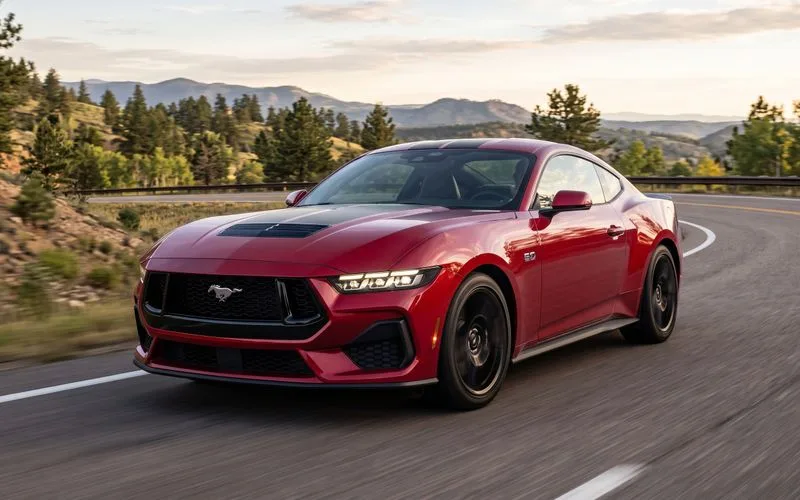 Ford MustangSports CarBetter at: Daily usability
Similar money buys a still-in-production coupe with standard automatic emergency braking, adaptive cruise, a modern digital cabin, a usable 13.3 cu ft trunk and a rear seat an adult can briefly sit in.
Compare 2.49C+
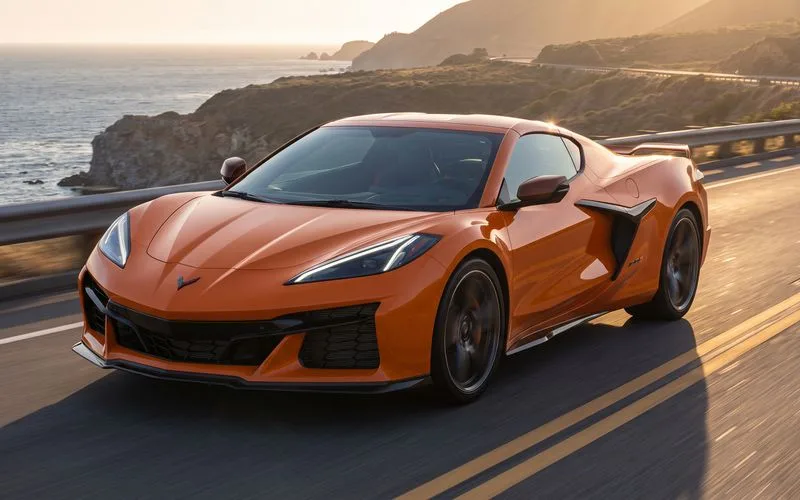 Chevrolet CorvetteSports CarBetter at: Outright performance
If the budget stretches past the SS, the mid-engine Corvette delivers a better interior, higher limits and two real cargo compartments while staying inside the same Chevrolet service network.
Compare 1.92C-
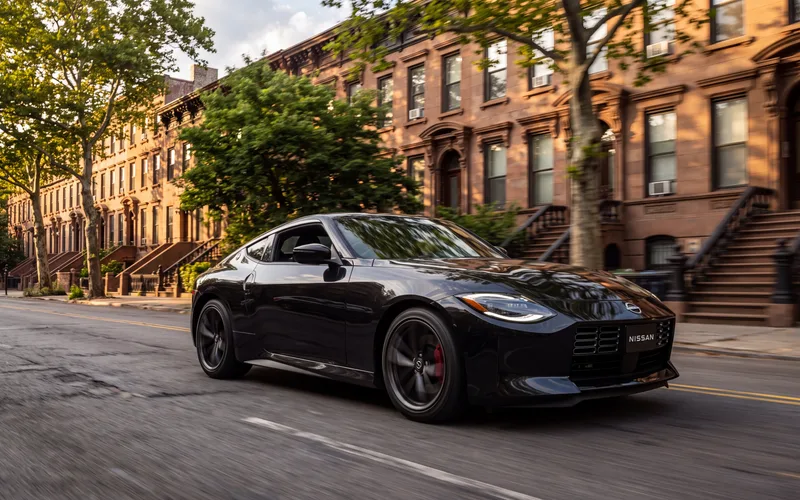 Nissan ZSports CarBetter at: Standard safety
A twin-turbo rear-drive coupe at similar money with the standard safety tech and modern cabin the Camaro never got, for buyers who do not need the back seat.
CompareHow it's evolved
8 scored model years · 2017–2024
Subject scores by year
Hover or tap a score to see what moved it versus the year before. A corner mark flags a big swing.
| Year | Performance | Efficiency | Safety | Space | Cost | Reliability | Tech | Use-case | Driving | Value |
|---|---|---|---|---|---|---|---|---|---|---|
| 2024 | 56 | 27 | 36 | 43 | 60 | 75 | 57 | 27 | 72 | 58 |
| 2023 | 49 | 31 | 36 | 43 | 64 | 75 | 57 | 27 | 67 | 62 |
| 2022 | 49 | 31 | 37 | 44 | 63 | 59 | 58 | 22 | 69 | 57 |
| 2021 | 49 | 31 | 36 | 45 | 64 | 69 | 53 | 31 | 69 | 59 |
| 2020 | 49 | 30 | 38 | 45 | 66 | 62 | 51 | 29 | 62 | 56 |
| 2019 | 51 | 34 | 38 | 48 | 61 | 59 | 49 | 28 | 70 | 54 |
| 2018 | 51 | 33 | 35 | 44 | 63 | 69 | 48 | 26 | 71 | 62 |
| 2017 | 51 | 31 | 38 | 44 | 78 | 65 | 43 | 25 | 65 | 71 |
Compare two years
Best fit & conditions
Higher scores mean a better fit for that use case. Learn more about use-case fit →
Subject profile
Detailed scoring by subject
1Performance & PowertrainGrades below the middle of the scale.1.43D
The 1LT with the standard 2.0L turbo-four is the Camaro's best-selling configuration; 275 hp is Chevrolet's rated figure and is unchanged from prior sixth-gen model years.
Peak torque for the volume 1LT/2LT 2.0T powertrain, sourced against Chevrolet-reported figures for the unchanged sixth-generation engine lineup.
Chevrolet's own estimate and independent instrumented tests both place the standard 2.0T at roughly 5.4 seconds; used that figure for the volume 1LT/2LT trim.
Reviewers of the 2018 turbo-four Camaro describe minimal lag and responsive, mature power delivery relative to earlier sixth-gen model years, while the naturally aspirated V8 and supercharged LT4 in the SS/ZL1 deliver smooth, immediate power; kept out of the top band because the turbo-four still trades outright refinement for the V8 models' effortless pull.
The standard 6-speed manual on the volume 1LT/2LT trim is engaging and direct; the optional 8-speed automatic (turbo-four/V6/SS) shifts smoothly, and the ZL1's optional 10-speed automatic with paddle shift and Active Rev Match (also standard with the ZL1 1LE's 6-speed manual) is well regarded for crisp, decisive shifts.
The sixth-generation Camaro is rear-wheel drive only across every 2018 trim (LS through ZL1); no all-wheel-drive option is offered.
Four distinct gasoline engines span the 2018 range - 2.0L turbo I4, 3.6L V6, 6.2L LT1 V8 (SS), and supercharged 6.2L LT4 V8 (ZL1, now also in the new-for-2018 ZL1 1LE track package) - a wide output spread, but there is no hybrid, PHEV, or EV option, which caps it out of the top band per the scoring guidance.
2Efficiency & RangeOne of the Camaro's weakest categories.0.18F
2018 is a facelift year within the sixth generation (added the ZL1 1LE package) but powertrains carry over unchanged: standard 2.0L turbo I4 on 1LS/1LT/2LT, optional 3.6L V6, 6.2L V8 (SS), supercharged 6.2L V8 (ZL1/ZL1 1LE). Scoring the volume 2.0L turbo automatic trim.
EPA city figure for the volume 2.0L turbo automatic trim.
EPA highway figure for the volume 2.0L turbo automatic trim.
EPA-published total range for the volume 2.0L turbo automatic trim; the coupe's mid-size fuel tank keeps range competitive despite modest combined MPG.
EPA annual fuel cost estimate for the volume 2.0L turbo automatic trim, which requires premium gasoline; the cost sits above the coupe segment's normalization ceiling because sports-car fuel economy plus a premium-fuel requirement compound.
The volume 2.0L turbo I4 and the 6.2L V8/supercharged V8 trims all require premium gasoline (91+ octane), but the 3.6L V6 trim runs on regular — genuinely mixed requirements across the trim lineup rather than a uniform premium mandate.
3SafetyOne of the Camaro's weakest categories.0.32F
NHTSA rates the 2018 Camaro 2-door RWD 5 stars overall; the 4-star frontal result is offset by 5-star side and 5-star rollover results, consistent across the 2016-23 generation.
IIHS rates the 2018 Camaro 2-door coupe (2016-23 test group) Good on small-overlap front (driver), moderate-overlap front, side, and head restraints, but only Acceptable on roof strength, and front crash prevention is 'Not available' — that combination rules out any Top Safety Pick award for this model year.
2018 predates the 2019 facelift that introduced Chevy's Convenience and Lighting package; for this model year there is no forward collision alert, no AEB, and no lane departure warning offered at any trim or option package, and blind-spot monitoring is the only active-safety item available at all, as an option on upper trims — a materially thinner suite than the following model year.
IIHS lists front crash prevention (vehicle-to-vehicle) as 'Not available' for the 2018 Camaro — there is no forward collision warning or automatic braking system offered at any trim, not even a warning-only version, and pedestrian detection isn't offered either.
Blind-spot monitoring is alert-only (no braking intervention) and optional, available only on upper trims via an equipment package; rear cross-traffic alert follows the same limited availability, so volume-trim coverage is thin.
The 2018 Camaro offers no lane departure warning or lane keep assist at any trim or option package — this feature wasn't added to the lineup until the 2019 facelift's Convenience and Lighting package.
No adaptive cruise control was offered on the sixth-generation Camaro for 2018 at any trim or package; only conventional fixed-speed cruise control is available.
No hands-free highway driving system (e.g. Super Cruise) was available on the 2018 Camaro — GM limited Super Cruise to the Cadillac CT6 during this period.
2018 predates the 2019 facelift's new LED headlight design — this model year runs the original 2016-2018 halogen/HID projector setup, which IIHS did not separately test for this coupe, and there is no adaptive or auto high-beam feature offered at any trim.
The sixth-generation Camaro's low, tunnel-like greenhouse, thick pillars, high beltline and shallow rear glass are a near-universal reviewer complaint, producing poor rear and rear-three-quarter sightlines uncompensated by any standard 360-degree camera — unchanged for 2018.
IIHS rates the Camaro's LATCH system 'Marginal' for the 2016-23 generation — anchors are set too deep in the seat bight and require excessive force to attach — compounding the coupe's already tight 2+2 rear quarters that make fitting a child seat and reaching the seating position difficult.
4Space & ComfortGrades near the bottom of the scale.0.94F
The 2018 Camaro coupe is a strict 2+2, at the floor of the coupe seating band; no 5-seat configuration exists.
Front headroom sits comfortably mid-to-upper band for a coupe; the sixth-gen cabin, despite the low roofline, measures generously in this dimension.
Front legroom is near the top of the coupe band, a byproduct of the low, reclined driving position typical of the sixth-gen platform.
Rear headroom falls below the coupe normalization floor; the fastback roofline and low seating position leave almost no room for adult rear occupants.
Rear legroom is well below the coupe band floor — among the tightest back seats in the sports-coupe class, unusable for adults once the front seat is set for a driver of average height or taller.
At 9.1 cu ft the Camaro coupe's trunk sits just below the sedan/coupe normalization floor — one of the smallest trunks in the segment, with a narrow opening that further limits usable capacity.
Center console and door storage are modest and the trunk opening is cramped, drawing repeated criticism as under-sized versus rivals; the console-ring climate controls do free up dash space but don't offset the lack of usable stowage.
Front bucket seats are well-bolstered and comfortable for longer stints, though the bottom cushion feels tight to some testers; rear seats are essentially unusable for adults, dragging the overall (front + rear) score down.
The base suspension delivers a surprisingly supple, well-damped ride for a sports coupe, and the optional magnetic-ride (adaptive) dampers on SS/ZL1 improve compliance further over larger impacts.
Both four- and six-cylinder Camaros cruise acceptably quietly on the highway, but wider performance tires (SS) and thin body panels let more road and tire noise through than segment leaders.
Heated and ventilated front seats are standard from 2LT up and a heated steering wheel is available as a package on 2LT/SS, but base 1LS/1LT trims go without — comfort equipment is real but trim-gated rather than broadly available.
5Cost of OwnershipOne of the Camaro's strongest categories.2.23C
2018 falls within the sixth generation's original (pre-facelift) trim structure — the LED-headlight/Infotainment 3 refresh didn't arrive until 2019 — and pricing was held flat from 2017, so the entry Camaro remains one of the cheapest cars in this coupe set behind only the Mustang/BRZ/GR86, well under the segment band ceiling. 2018's headline change was the new ZL1 1LE track package at the top of the range, which doesn't touch entry pricing.
The 2018 coupe ladder ran 1LS $26,900 / 1LT $27,695 / 2LT / 1SS / 2SS / ZL1 $62,495 (incl. $995 destination). Reviewers identify the 1LT as the most popular non-SS trim, and a typically-equipped one — the 335-hp V6 upgrade (~$1,495) with the 8-speed automatic and the $1,950 RS appearance package that most LT buyers add — lands around $31,100.
Estimates diverge sharply depending on what they fold in. CarEdge/RepairPal-style forward models project maintenance-plus-repairs near $2,450–$3,000 over five years with below-average unscheduled-repair frequency, while Edmunds-style True Cost to Own figures that fold in performance tires, brake wear and out-of-warranty repairs run well over $10,000 for the 2018 model year specifically. The turbo-four and pushrod LGX V6 run on cheap, widely stocked GM parts, which keeps routine service inexpensive; staggered summer tires and big brakes on SS/ZL1 builds are what push the wear-inclusive estimates up. A mid-band figure, consistent with adjacent sixth-generation model years, is used given the wide spread.
Unlike a current model year, the 2018 Camaro's 5-year mark has long since passed, so this is measured used-market data rather than a forward-looking projection. Depreciation resistance remains one of this category's stronger items — the Camaro sits well inside the coupe band and ahead of most rivals, matching the adjacent 2019 model year's measured retention.
Chevrolet's standard 3-year/36,000-mile bumper-to-bumper coverage applies to the Camaro with no performance-model extension — exactly at the segment band floor, matching the Mustang's coverage.
Chevrolet's 5-year/60,000-mile powertrain coverage is the industry floor and the bottom of the band — far short of Hyundai/Kia's 10-year/100,000-mile terms, and identical to the Corvette's.
2018 predates GM's cut to a single covered visit (which began with 2019 models) — Chevrolet Complete Care for 2018 still covers two scheduled maintenance visits (oil/filter change, tire rotation) within the first 24 months or 24,000 miles, a stronger offer than the following two model years but still short of Toyota's 2-year ToyotaCare on the GR86/Supra or the multi-year programs from BMW and Porsche. A 5-year/100,000-mile 24-hour roadside assistance and courtesy transportation benefit, plus a Chevrolet Connected Services/OnStar trial, round out the package.
$31,140 volume-trim price minus its estimated resale value after 5 years (57% retained, or about $17,750) leaves about $13,390 in depreciation. Add the projected $5,600 in 5-year maintenance and repairs, and owning this vehicle for 5 years costs about $18,990 in total.
6Reliability & QualityOne of the Camaro's strongest categories.2.68C+
JD Power rated the 2018 Camaro's predicted reliability 3.5/5 ('above average'), and by the 2018 model year its quality score had climbed to 'Great,' edging out the Ford Mustang; no Consumer Reports predicted-reliability figure specific to 2018 was found to corroborate independently.
Chevrolet's mid-2010s dependability standing was mid-pack rather than top-tier or bottom-third — several 2018 Chevrolet models (Equinox, Malibu, Traverse, Silverado) earned individual JD Power VDS segment awards, but the brand as a whole did not rank among the top-5 most dependable makes.
NHTSA lists two recalls touching the 2018 Camaro: a driver-airbag steering-wheel emblem that can shed projectile plastic pieces on deployment (2017-2021 Camaro), and an electric power steering (EPS) assist failure shared with Cadillac ATS/CTS and Corvette (2016-2018) that can increase steering effort and crash risk. Two recalls is a typical count, but the EPS failure is a genuine steering-system concern, not cosmetic.
The volume-trim powertrains (2.0L turbo-four and 3.6L V6) are established GM units used across multiple product lines with no systemic failure pattern by 2018; the SS's 6.2L LT1 V8, shared with the Corvette C7, has a strong reputation for reaching 150,000-200,000+ miles with routine maintenance despite direct-injection/AFM complexity.
Reviewers credit a real step up from the 5th-generation cabin but still knock the dash, doors and center console for heavy hard-plastic use and cheap-feeling switchgear/paddle shifters, placing materials behind rivals like the Mustang and Challenger.
No pattern of rattles, panel-gap or assembly complaints surfaced in period reviews or owner feedback for the 2018 model year; assembly is generally regarded as solid for a mainstream domestic coupe, but this is inferred from the absence of complaints rather than a dedicated initial-quality study.
Chevrolet operates one of the largest dealer networks in the United States, giving Camaro owners broad geographic access to warranty and routine service compared with import or luxury sports-coupe rivals.
The Camaro draws on GM's shared parts bins (LT1/LT4 engines, common GM electronics) and supports one of the largest aftermarket ecosystems of any current muscle/sports car, keeping routine parts cheap and abundant relative to European or luxury coupe rivals.
7Technology & InfotainmentGrades below the middle of the scale.1.18D
Sixth-gen (2016–2019) Camaro carries the pre-refacelift MyLink system; 2018 is a carry-over tech year (the bigger Infotainment 3 overhaul arrives for 2019), so the 7 in base / 8 in optional split from prior years holds.
MyLink on the 2018 Camaro is quick to respond with large, simple touch targets and a useful physical volume/shortcut cluster below the screen, but by 2018 its graphics and menu depth read as dated next to Ford's SYNC 3 in the rival Mustang.
Apple CarPlay and Android Auto are standard on every 2018 Camaro trim via MyLink, but only as a wired (USB) connection — the 2016–2018 MyLink hardware does not support wireless projection.
MyLink supports Siri Eyes Free and Google Assistant hands-free pass-through plus its own voice commands for phone/media, and an optional embedded turn-by-turn navigation app (IO6 package) is available, but most owners lean on phone projection instead of the native system.
Base audio is adequate, and an available 9-speaker Bose premium system with Active Sound Management (engine harmonic cancellation/enhancement) is a genuine step up, putting the Camaro's optional audio ahead of segment norms.
The 2018 Camaro keeps traditional twin analog gauges (speedometer/tach) flanking a small central Driver Information Center — monochrome on LS/LT, multi-color graphic on SS/ZL1 — not a configurable full-digital cluster.
The 2018 MyLink platform predates GM's whole-vehicle OTA push (which arrives with the newer Infotainment 3 generation); connectivity in 2018 is limited to OnStar 4G LTE data/hotspot and dealer-installed software/map updates rather than owner-facing OTA feature updates.
The myChevrolet app (via OnStar) covers remote start/stop, lock/unlock, vehicle locate and diagnostics, but full functionality requires an active OnStar plan beyond the initial trial — core remote functions with a subscription gate.
Two USB ports (Type-A, pre-USB-C era) are standard, and an available Qi wireless charging pad is offered on upper/optioned trims, but there's no rear-seat charging provision and no household AC outlet — adequate but dated for a 2018 car.
Keyless open and push-button start are standard from the base 1LS trim up, and remote start is available through the myChevrolet/OnStar app — full keyless convenience across the lineup, short of phone-as-key.
A rear vision camera is standard fleet-wide, and rear park assist sensors are available starting on 1LT, but there is no surround/360-degree camera offered at any trim — rear camera plus optional sensors only.
A full-color head-up display is available (bundled in the Convenience and Lighting package from 2LT up, standard on higher SS/ZL1 configurations) but is not offered on the base 1LS/1LT — a genuine, well-regarded feature gated to mid-and-up trims.
8Use-Case FitThe Camaro's lowest-graded category.0.00F
Sixth-gen Camaro's low roofline, narrow rear door openings, and deeply reclined rear bench make installing a child seat and buckling a kid in a daily chore rather than a formality; reviewers routinely flag it as one of the least car-seat-friendly coupes on sale.
IIHS rated the 2018 Camaro coupe Good across small-overlap (driver side), moderate-overlap, side, and rear crash tests, and it carries 8 standard airbags, but it lacks standard forward-collision warning/automatic emergency braking on affordable trims — Chevy's Convenience & Lighting driver-assist package (lane-departure warning, blind-spot, rear cross-traffic) was standard only on 2SS/ZL1 and a costly option elsewhere, and FCW/AEB weren't offered at all — which kept it off IIHS's Top Safety Pick list.
The 2+2 layout leaves adult-size rear passengers with almost no headroom or legroom for anything beyond short hops, there's no rear climate or USB provisioning, and the 9.1 cu ft trunk (7.3 on convertibles) with a narrow opening struggles with more than a couple of soft bags.
Base 2.0T and V6 Camaros ride reasonably well around town with light steering and a smooth 8-speed automatic option, but the low, reclined seating position and famously narrow greenhouse — thick pillars, tiny rear glass — hurt everyday sightlines enough that it's a recurring complaint even in favorable reviews; SS/ZL1 trims add stiffer suspension tuning that trades comfort for track manners.
The volume 2.0L turbo-four is EPA-rated 22/31/25 mpg city/highway/combined, roughly average for the sports-coupe class and behind the segment's efficiency leaders; GM recommends premium fuel for the turbo engine, which further erodes per-mile cost versus regular-fuel rivals. V6 and V8 models trade further mileage for performance.
A compact sports-coupe footprint and a standard rearview camera help in tight lots, but the Camaro's slit-like rear window and thick roof pillars — a widely repeated criticism of the sixth generation — make judging distances at low speed and backing out of spaces noticeably harder than in most rivals.
The Camaro has no published towing rating and no cargo bed; its only load space is a 9.1 cu ft trunk through a narrow opening, making it unsuitable for any real work duty.
The Alpha-platform chassis and GM powertrains are mechanically robust, but the car is engineered purely as a performance coupe with no fleet or commercial-duty pedigree, low-slung ground clearance, and cabin materials not suited to abuse.
No bed, roof rack, tie-down points, upfitter ecosystem, or onboard power provisions beyond a standard 12V outlet — nothing about the car is oriented toward jobsite use.
The turbo and V6 models are reasonably quiet, composed highway cruisers with roughly 380 miles of range on a 19-gallon tank at their 31-mpg highway rating, but the 2018 model year offers no adaptive cruise control or forward-collision mitigation to ease long stints, and the firmer SS/ZL1 suspensions trade endurance comfort for handling.
Rear-wheel drive only, low ground clearance, no AWD option, no roof rails or accessory mounts, and no tow rating leave it with essentially no light off-pavement or gear-hauling ability.
A standard folding rear seatback with a pass-through to the 9.1 cu ft trunk lets it swallow a couple of duffels or a golf bag, but there are no roof rails, no hitch option, and the narrow trunk opening limits anything bulky.
9Driving ExperienceThe Camaro's best-graded category.2.83B-
The unchanged sixth-generation Alpha-platform chassis is the class benchmark among 2018 pony/sports coupes for body control and cornering composure, with contemporary reviews consistently rating the Camaro's balanced, planted handling above its Mustang rival even before stepping up to the SS or ZL1.
Steering is crisp and precise, with a noticeable weight/feedback increase in Sport and Track drive modes versus a lighter, lazier Tour calibration; accurate enough to be a strength but not the most feelsome in the segment.
Reviewers describe assertive, confidence-inspiring brake feel; instrumented 60-0 mph testing of the V6/turbo-four trims on all-season rubber landed around 111 ft (SS on summer tires stopped noticeably shorter at ~102 ft), a middling but not alarming distance for the volume powertrain.
The standard 2.0L turbo-four on the volume 1LT/2LT trim exhibits minimal turbo lag and pulls cleanly through the rev range with either the 6-speed manual or 8-speed automatic; well-calibrated tip-in for a small-displacement turbo engine, though it lacks the effortless immediacy of the V8-powered SS/ZL1 trims.
The turbo-four is audible and workmanlike rather than characterful under load compared with the V8 models' richer soundtrack; no contemporary source flagged intrusive coarseness or harshness, but the engine note is unremarkable for a car sold on driving enjoyment.
No single Chevrolet-published figure could be directly retrieved for the 2018 model year, but multiple third-party spec aggregations for the unchanged 6th-generation Camaro coupe chassis converge in the high-37-ft range; used the midpoint as the representative figure for the volume 18-inch-wheel 1LT/2LT trim.
Seats and control layout are well regarded, but the low, deeply cowled dashboard, high beltline, and small rear glass produce notably poor outward visibility and pronounced blind spots that are a recurring, consistent complaint across 2018-era owner and press reviews — a real ergonomic tax the segment's better-visibility rivals don't pay.
Even in base turbo-four form the 2018 Camaro is widely praised by enthusiast outlets as genuinely engaging and a strong value proposition for the money, with the manual-equipped ZL1 1LE (new for 2018) representing a genuine track-honed halo that reinforces the nameplate's fun-to-drive credibility across the range.
10Value & Market PositionMid-pack among this car's ten categories.2.20C
Base 1LS ($25,905) runs a 2.0T with cloth seats, a 7-in touchscreen, and no standard forward-collision or lane-departure warning — those live in an optional Driver Confidence package even on mid trims. Reviewers (Edmunds, U.S. News) consistently flag sparse base content and a tight, low-visibility cabin as the price of the Camaro's driving focus.
Performance-per-dollar is the Camaro's strongest value case: the 1SS delivers a naturally-aspirated 455-hp/455-lb-ft 6.2L V8 from $37,000, and the ZL1's supercharged 650-hp LT4 undercuts most exotic-power rivals at $62,495. That capability-for-price outweighs the thin base trim, though heavy real-world discounting (below) signals the sticker itself runs rich.
Six core trims (1LS, 1LT, 2LT, 1SS, 2SS, ZL1) span turbo-four commuter to supercharged halo car, each offered as coupe or convertible, plus V6 and SS 1LE track packages and the new-for-2018 ZL1 1LE. Few rivals cover as wide a band from budget four-cylinder to Nürburgring-tuned track weapon under one nameplate.
Calendar-year 2018 US sales fell about 25% to 50,963 units, and Camaro lost the pony-car sales race to both the Ford Mustang and Dodge Challenger in Q4 2018 — a clear decline rather than a steady mid-pack year.
Camaro carries genuine enthusiast cachet — a 10Best-winning nameplate with deep racing/pop-culture heritage — but Chevrolet as a mass-market brand doesn't carry the aspirational pull of a premium marque, and the sixth-gen's sales slide reflects a softening halo versus its early-decade peak.
Slow 2018 sales pushed Chevrolet into meaningful, non-desperate incentives — around $2,000 (roughly 15%) off in-stock 2SS models and comparable offers across the range — a real buyer benefit even though it signals soft demand.
The sixth generation launched for 2016, making 2018 its third model year on the still-current Alpha platform — mid-cycle, ahead of the 2019 facelift, with no redesign imminent yet the styling and infotainment (pre-Infotainment 3) starting to trail newer rivals.
The Camaro (V6, SS, and 1LE coupes) won Car and Driver's 2018 10Best, and the new ZL1 1LE package set a Nürburgring Nordschleife time of 7:16.04 — about 13.6 seconds faster than the prior automatic ZL1 — reinforcing the car's reputation as the class's handling benchmark even as base-trim reviews stayed more mixed.