
The verdict
A struggling sports car, strong on driving and held back by use-case.
The 2022 Chevrolet Camaro is a mechanical carry-over year that leads its pony-car class on chassis feel — sharp steering (84/100), agile handling (86/100), and genuine value starting at $26,195 for the 1LS turbo-four. That focus comes at a real practicality cost: rear headroom (33.5 in) and legroom (29.9 in) are nearly unusable, the trunk holds just 9.1 cu ft, and driver-assist tech like adaptive cruise and lane centering is unavailable on any 2022 trim. It's a rewarding daily driver for a solo or two-person household that prioritizes how a car feels over how much it can carry, but families and safety-tech shoppers should look elsewhere.
Jump to scoresStrengths
- Segment-best handling and steering
- A lot of performance per dollar
- Holds its value better than most muscle cars
What holds it back
- The back seat and trunk are barely usable
- Driver-assist tech is thin across the board
- Warranty coverage is the bare industry minimum
Top alternatives
Cars shoppers cross-shop with the Chevrolet Camaro 2.47C+
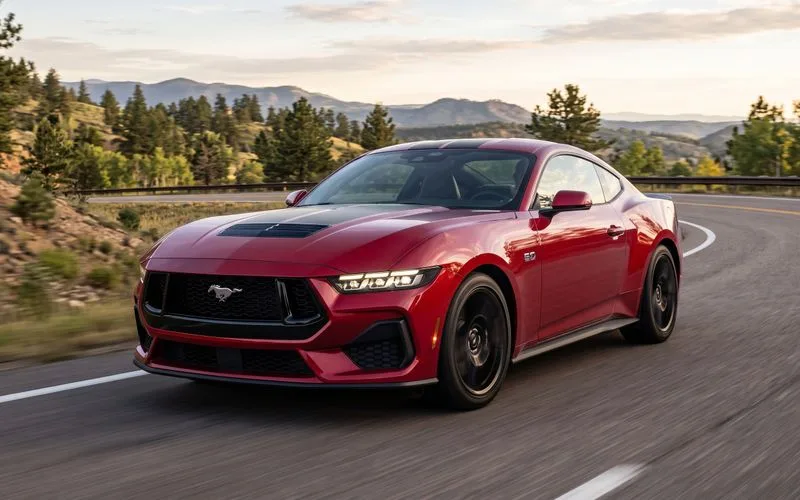 Ford MustangSports CarBetter at: Daily usability
Similar money buys a still-in-production coupe with standard automatic emergency braking, adaptive cruise, a modern digital cabin, a usable 13.3 cu ft trunk and a rear seat an adult can briefly sit in.
Compare 2.49C+
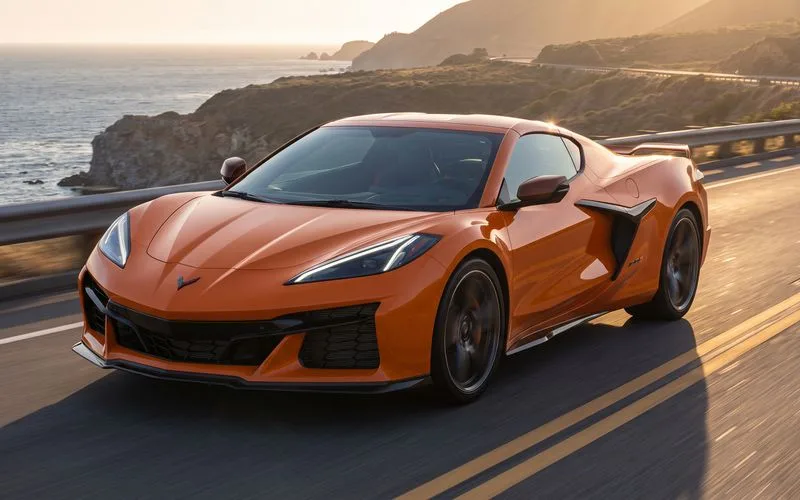 Chevrolet CorvetteSports CarBetter at: Outright performance
If the budget stretches past the SS, the mid-engine Corvette delivers a better interior, higher limits and two real cargo compartments while staying inside the same Chevrolet service network.
Compare 1.92C-
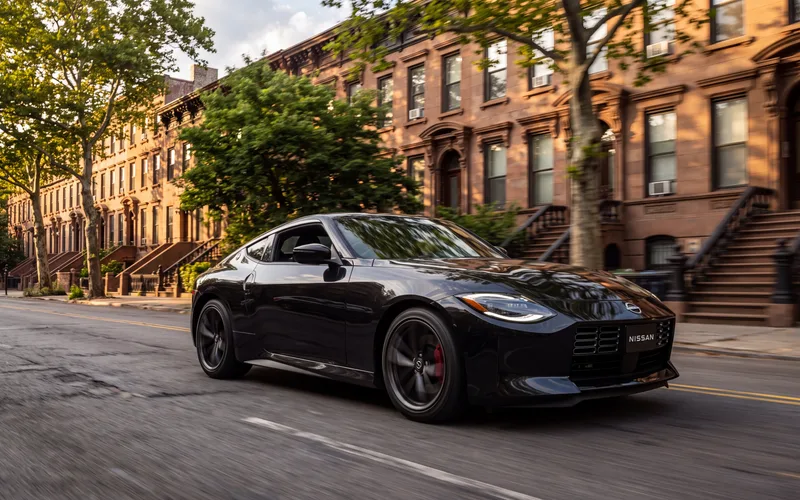 Nissan ZSports CarBetter at: Standard safety
A twin-turbo rear-drive coupe at similar money with the standard safety tech and modern cabin the Camaro never got, for buyers who do not need the back seat.
CompareHow it's evolved
8 scored model years · 2017–2024
Subject scores by year
Hover or tap a score to see what moved it versus the year before. A corner mark flags a big swing.
| Year | Performance | Efficiency | Safety | Space | Cost | Reliability | Tech | Use-case | Driving | Value |
|---|---|---|---|---|---|---|---|---|---|---|
| 2024 | 56 | 27 | 36 | 43 | 60 | 75 | 57 | 27 | 72 | 58 |
| 2023 | 49 | 31 | 36 | 43 | 64 | 75 | 57 | 27 | 67 | 62 |
| 2022 | 49 | 31 | 37 | 44 | 63 | 59 | 58 | 22 | 69 | 57 |
| 2021 | 49 | 31 | 36 | 45 | 64 | 69 | 53 | 31 | 69 | 59 |
| 2020 | 49 | 30 | 38 | 45 | 66 | 62 | 51 | 29 | 62 | 56 |
| 2019 | 51 | 34 | 38 | 48 | 61 | 59 | 49 | 28 | 70 | 54 |
| 2018 | 51 | 33 | 35 | 44 | 63 | 69 | 48 | 26 | 71 | 62 |
| 2017 | 51 | 31 | 38 | 44 | 78 | 65 | 43 | 25 | 65 | 71 |
Compare two years
Best fit & conditions
Higher scores mean a better fit for that use case. Learn more about use-case fit →
Subject profile
Academic Probation · NHTSA safety recalls
Mar 6, 2025Power train: automatic transmissionThe transmission may become damaged internally and cause the wheels to lock-up.
Defect
General Motors LLC (GM) is recalling certain 2019-2020 Cadillac CT6, 2020-2021 CT4, CT5, and 2020-2022 Chevrolet Camaro vehicles equipped with a 10-speed transmission. The transmission may become damaged internally and cause the wheels to lock-up.
Risk
Wheel lock-up while driving increases the risk of a crash.
Remedy
Dealers will install transmission control module monitoring software, free of charge. Owner notification letters were mailed April 7, 2025. Owners may contact Cadillac customer service at 1-800-333-4223 or Chevrolet customer service at 1-800-222-1020. GM's number for this recall is N242480630.
NHTSA campaign 25V148000 ↗Manufacturer no. N24248063090,081 vehicles potentially affected (all models in the campaign)Owners notified Apr 7, 2025Filed by General Motors, LLCFiled as CAMARO
6 recalls on other model years of the Camaro (2017–2021)
Mar 20, 2025Steering: electric power assist systemThe electric power steering (EPS) assist may fail.
Defect
General Motors LLC (GM) is recalling certain 2016-2018 Cadillac CTS, 2017-2018 Cadillac ATS, Chevrolet Camaro, and Chevrolet Corvette vehicles. The electric power steering (EPS) assist may fail.
Risk
A loss of power steering assist can require greater steering effort, especially at low speeds, increasing the risk of a crash.
Remedy
Dealers will replace the power steering gear assembly, free of charge. Owner notification letters were mailed April 15, 2025. Owners may contact Cadilac customer service at 1-800-333-4223 or Chevrolet customer service at 1-800-222-1020. GM's number for this recall is N252497020.
NHTSA campaign 25V175000 ↗Manufacturer no. N252497020934 vehicles potentially affected (all models in the campaign)Owners notified Apr 15, 2025Filed by General Motors, LLCFiled as CAMAROMar 25, 2021Air bags: frontalThe plastic "Camaro" emblem, located on the steering wheel air bag cover, may separate during deployment of the frontal driver air bag.
Defect
General Motors, LLC (GM) is recalling certain 2017-2021 Chevrolet Camaro vehicles. The plastic "Camaro" emblem, located on the steering wheel air bag cover, may separate during deployment of the frontal driver air bag.
Risk
In the event of a crash, plastic pieces of emblem may act as projectiles from deployment of the driver air bag can increase the risk of injury.
Remedy
GM will notify owners, and dealers will replace the frontal driver side air bag module, free of charge. The recall began April 14, 2021. Owners may contact Chevrolet customer service at 1-800-222-1020. GM's number for this recall is N212327220.
NHTSA campaign 21V211000 ↗Manufacturer no. N21232722030 vehicles potentially affected (all models in the campaign)Owners notified Apr 14, 2021Filed by General Motors, LLCFiled as CAMAROMar 18, 2021Power train: axle assembly: axle shaftThe left or right axle shaft may be missing a retaining ring, which could allow the axle shaft to separate while driving.
Defect
General Motors, LLC (GM) is recalling certain 2021 Chevrolet Camaro vehicles. The left or right axle shaft may be missing a retaining ring, which could allow the axle shaft to separate while driving.
Risk
A separated axle shaft can cause a loss of drive power, increasing the risk of a crash.
Remedy
GM will notify owners, and dealers will replace the left or right axle shaft as necessary, free of charge. The recall began April 21, 2021. Owners may contact Chevrolet customer service at 1-800-222-1020. GM's number for this recall is N212331000.
NHTSA campaign 21V188000 ↗Manufacturer no. N2123310008 vehicles potentially affected (all models in the campaign)Owners notified Apr 21, 2021Filed by General Motors, LLCFiled as CAMARODec 23, 2020Seat belts · Seat belts: critical fastenersIncorrect bolts may have been used at one or more fastening locations to secure the seat belts to the vehicle. If an incorrect bolt was used, the seat belt may not be properly attached to the vehicle.
Defect
General Motors, LLC (GM) is recalling certain 2020 Chevrolet Bolt EV and 2021 GMC Canyon and Sierra 1500, 2500 and 3500, Yukon, Yukon XL, Cadillac Escalade and Escalade ESV and Chevrolet Blazer, Camaro, Colorado, Equinox, Silverado 1500, 2500 and 3500, Suburban and Tahoe vehicles. Incorrect bolts may have been used at one or more fastening locations to secure the seat belts to the vehicle. If an incorrect bolt was used, the seat belt may not be properly attached to the vehicle.
Risk
If a seat belt assembly is not properly attached to the vehicle, the seat belt may not properly restrain an occupant in the event of a crash, increasing the risk of injury.
Remedy
GM will notify owners, and dealers will replace the suspect bolts, free of charge. The recall began January 29, 2021. Owners may contact GMC customer service at 1-800-462-8785, Cadillac customer service at 1-800-458-8006, or Chevrolet customer service at 1-800-222-1020. GM's number for this recall is N202322230.
NHTSA campaign 20V811000 ↗Manufacturer no. N202322230470 vehicles potentially affected (all models in the campaign)Owners notified Jan 29, 2021Filed by General Motors, LLCFiled as CAMARONov 21, 2019Fuel system, gasoline: delivery: fuel pumpThe fuel pump may be missing a pressure regulator, allowing for over-pressurization of the fuel system.
Defect
General Motors LLC (GM) is recalling certain 2020 Cadillac Escalade, Escalade ESV, Chevrolet Camaro, Silverado 1500, Suburban, Tahoe, GMC Sierra 1500, Yukon, and Yukon XL vehicles. The fuel pump may be missing a pressure regulator, allowing for over-pressurization of the fuel system.
Risk
Over-pressurization can crack the fuel pump and cause leaks, increasing the risk of a fire in the presence of an ignition source.
Remedy
GM will notify owners, and dealers will replace the fuel pump, free of charge. The recall began December 18, 2019. Owners may contact Cadillac customer service at 1-800-333-4223, Chevrolet customer service at 1-800-222-1020, or GMC customer service at 1-888-988-7267. GM's number for this recall is N192283991.
NHTSA campaign 19V837000 ↗Manufacturer no. N192283991502 vehicles potentially affected (all models in the campaign)Owners notified Dec 18, 2019Filed by General Motors LLCFiled as CAMAROFeb 7, 2019Steering: electric power assist systemThe electric power steering (EPS) assist system may fail.
Defect
General Motors LLC (GM) is recalling certain 2016-2018 Cadillac CTS, and 2017 Cadillac ATS, Chevrolet Camaro, and Chevrolet Corvette vehicles. The electric power steering (EPS) assist system may fail.
Risk
Loss of power steering assist would require a higher steering effort, especially at lower speeds, which may increase the risk of a crash.
Remedy
GM will notify owners, and dealers will replace the power steering gear assembly, free of charge. The recall began June 13, 2019. GM' number for this recall is N182182760.
NHTSA campaign 19V086000 ↗Manufacturer no. N18218276026,772 vehicles potentially affected (all models in the campaign)Owners notified Jun 13, 2019Filed by General Motors LLCFiled as CAMARO
Source: NHTSA Office of Defects Investigation recall database, model years 2017–2024. Recalls are listed by model year as the manufacturer filed them; whether a specific car is affected depends on its VIN — check a VIN at nhtsa.gov ↗. NHTSA model names matched to this page: CAMARO.
Detailed scoring by subject
1Performance & PowertrainGrades below the middle of the scale.1.29D
2022 is a mechanical carry-over year for the sixth-gen Camaro (facelifted 2019/2020) — only colors, Design Package 3, and trim-content tweaks changed per GM Authority. Volume/entry trims (1LS, 1LT) run the 2.0L turbo I4.
Torque figure for the volume 2.0L turbo I4 powertrain; full lineup spans to 650 lb-ft on the ZL1.
Instrumented/manufacturer-sourced 0-60 figures for the turbo-four volume trim, with SS and ZL1 figures noted for lineup range; no Car and Driver-specific instrumented test surfaced for this exact model year, so corroborated across multiple outlets instead.
The volume 2.0L turbo I4 is strong on paper but reviewers flagged uneven throttle response and a coarse, unsporting exhaust note under load; the optional V6 and V8s deliver noticeably smoother, more characterful power. Net refinement lands mid-pack against sports-car rivals.
Standard 6-speed manual with active rev-matching (LT1 and up) is crisp and well-regarded; the 8-speed automatic on the I4 and 10-speed automatic on V6/V8 trims shift smoothly with only occasional hesitation in eco-oriented drive modes.
The Camaro is rear-wheel drive only across every trim and engine — no AWD or 4WD option exists anywhere in the sixth-generation lineup, including 2022.
Four distinct gasoline powertrains spanning a wide performance range (2.0L turbo I4, 3.6L V6, naturally-aspirated 6.2L V8, supercharged 6.2L V8), but no hybrid, PHEV, or EV variant is offered — breadth is strong within gas power tiers, not across fuel types.
2Efficiency & RangeOne of the Camaro's weakest categories.0.01F
Scored on the 2.0L turbo I4 automatic, the volume/entry powertrain used throughout this scorecard's cat1 (1LS/1LT trims), matching cat1's representative-trim choice for this model year. 2022 is a mechanical carry-over year for the sixth-gen Camaro — only colors and trim content changed — so the powertrain lineup and EPA figures are unchanged from the prior facelift cycle. 25 MPG combined clears the 22 MPG floor of the coupe band by a modest margin; the SS V8 and ZL1 both fall below it.
22 MPG city on the volume turbo-four automatic clears the 20 MPG floor of the coupe band by 2 MPG — the smallest engine in the lineup pays off in stop-and-go driving where the V8 and supercharged ZL1 both fall well short.
30 MPG highway on the volume turbo-four automatic is the best figure in the 2022 lineup and comfortably clears the 26 MPG floor of the coupe band — a genuinely efficient result for a 275-hp sports coupe on the open road.
The 19.0-gallon tank is shared across every 2022 trim, so range tracks fuel economy directly: the volume turbo-four automatic reaches roughly 475 miles combined, comfortably in the upper half of the 280–650 mi coupe band, while the V8 SS drops to about 380 miles and the ZL1 to roughly 300.
EPA puts the volume turbo-four automatic at $3,050 a year — still past the top of the 600–2,800 $/yr coupe band because the turbo engine requires premium fuel despite its efficiency edge. The 3.6L V6 automatic is the only path to the band ceiling at $2,800 on regular gas; the V8 SS runs $3,800 and the ZL1 $4,750.
EPA classifies the volume 2.0L turbo I4 as Premium Gasoline, same as the 6.2L V8 and supercharged ZL1 — so the entry-level engine carries the same per-gallon surcharge as the performance trims, with no E85, diesel or home-charging alternative. It avoids the bottom of the band only because the 3.6L V6 (1LT/2LT/3LT) runs on regular 87 octane, giving a buyer who wants a 2022 Camaro one genuine regular-fuel path.
3SafetyOne of the Camaro's weakest categories.0.46F
NHTSA tested the 2022 Camaro coupe and awarded a 5-star overall rating, with 5 stars in side crash and rollover and 4 stars in frontal crash.
IIHS rates the 2022 Camaro coupe Good in moderate overlap front, small overlap front (driver), side, and head restraints/seats, with Acceptable roof strength — a Mostly-Good crashworthiness profile — but weak crash-avoidance and LATCH results keep it from any Top Safety Pick award.
No AEB or adaptive cruise is offered on any 2022 Camaro trim, and even Forward Collision Alert plus Lane Change Alert with Side Blind Zone Alert only become standard starting at 3LT — the 1LS, 1LT and 2LT volume trims ship with essentially no active driver-assist features.
The Camaro's optional front crash prevention system meets forward-collision-warning requirements only — IIHS rates it the lowest tier, Basic — with no autobrake and no pedestrian detection day or night.
Lane Change Alert with Side Blind Zone Alert and Rear Cross Traffic Alert are alert-only (no active braking/steering intervention) and limited to 3LT and above, leaving the base 1LS/1LT/2LT trims — likely the volume sellers — without any blind-spot coverage.
The 2022 Camaro offers no lane keep assist or lane centering on any trim — only a lane-change/side blind-zone alert, which is a warning feature rather than active steering assistance.
Adaptive cruise control is not offered on any 2022 Camaro trim; the car has conventional cruise control only, with no combined highway-assist function.
GM's Super Cruise hands-free system was not offered on the Camaro for 2022 — it was limited to models like the CT6, Escalade, Yukon, and Bolt EUV — so the Camaro has no hands-free driving option at all.
The 2022 Camaro's volume trims ship with halogen headlights, a lighting type that historically scores toward the Marginal/Poor end of IIHS's headlight test; IIHS has not published a headlight rating for this generation, so this is inferred from equipment level rather than a direct test result.
The Camaro's low roof, high beltline, thick pillars and tiny rear window produce some of the worst outward visibility in its class; Consumer Reports has rated it the worst sporty car for visibility, and owners describe the rear quarter view as nearly blocked by the front headrests.
IIHS rates the Camaro's LATCH ease of use Marginal — the lower anchors sit too deep in the seat bight and require excessive force to attach — compounded by a cramped 2+2 rear seat that makes fitting a car seat difficult.
4Space & ComfortGrades near the bottom of the scale.0.94F
The 2022 Camaro coupe is a 2+2 with a nominally 4-passenger rating; the sixth generation's interior and seating layout carried over unchanged for 2022.
Multiple aggregator sources for the unchanged sixth-generation coupe interior converge in the high-38 to 39-inch range; exact figure varies slightly by trim/roof option.
Front legroom is generous for the segment thanks to the long-hood/short-cabin proportions typical of the pony-car layout.
The sixth-generation Camaro's low, sloping roofline is a defining weakness of the car's practicality; the figure has been consistently published across 2020–2024 model years with no interior changes for 2022.
The rear seat is widely described by reviewers as token/cargo-only space; 29.9 in is among the tightest in the class and has been unchanged since the sixth generation launched.
Trunk volume is small even by sports-coupe standards, well behind rivals like the Mustang, due to the low deck and narrow trunk opening.
A modest center console box, door pockets, and a small pass-through are the extent of storage; nothing distinguishes the Camaro from segment norms and the low beltline/small trunk opening make loading awkward.
Front seats are well-regarded — supportive with good bolstering, and the optional Recaro buckets on SS/1LE trims are praised for track use — but the rear seat is universally described as cramped and usable only for short hops or cargo.
The volume LT trim on standard dampers rides reasonably well for a performance coupe, balancing agility with acceptable compliance; ride firms up and gets jiggly on higher-performance trims with larger wheels/lower-profile tires, which the volume trim avoids.
Typical performance-coupe road and tire noise at highway speed with no notable acoustic glass or active noise cancellation on the volume trim; not a strength relative to more isolated GT-style rivals.
Heated front seats and a heated steering wheel are available starting mid-trim (RS/2LT package) but ventilated seats and rear climate controls are not offered, reflecting the car's 2+2 sports-coupe focus rather than a comfort-first mission.
5Cost of OwnershipOne of the Camaro's strongest categories.2.26C
2022 is a sixth-generation carry-over year — Wikipedia records no powertrain or trim-structure change between 2020's facelift and the 2024 deletion of the 1LS/turbo-four — so the entry Camaro remains the cheapest car in this coupe set behind only the Mustang/BRZ/GR86, well under the segment band ceiling.
The 2022 coupe ladder ran 1LS $26,195 / 1LT $26,695 / 2LT $28,695 / 3LT $32,695 / LT1 $35,195 / 1SS $38,695 / 2SS $43,695 / ZL1 $64,195 (incl. $1,195 destination). Reviewers identify the 1LT as the most popular trim, and a typically-equipped one — the 335-hp V6 with 10-speed automatic and the $1,950 RS appearance package that most LT buyers add — lands around $31,800; V8 LT1/SS builds are a meaningful minority of the mix but not the volume seller.
Estimates diverge by roughly 3.5x depending on what they fold in. CarEdge projects $2,453 in combined maintenance and repairs over five years and RepairPal puts the Camaro at $585 average annual repair cost with major repairs described as uncommon, while Edmunds-style True Cost to Own figures that include performance tires and brake wear run toward $8,600. The pushrod LT1 V8 and LGX V6 run on cheap, universally stocked GM parts, which keeps routine service inexpensive; staggered summer tires and big brakes on the V8 cars are what push the wear-inclusive estimates up. Mid-band figure reflects both.
Depreciation resistance is by far this category's strongest item and the reason the Camaro out-earns most of the coupe set on cost of ownership. Forward-looking residual models put the Camaro around 61-62% retained after 5 years; measured transactions on actual five-year-old cars run notably better, with iSeeCars ranking the Camaro coupe #3 among Chevrolet models for resale value.
Chevrolet's standard 3-year/36,000-mile bumper-to-bumper coverage applies to the Camaro with no performance-model extension — exactly at the segment band floor, and no better than the Mustang's.
Chevrolet's 5-year/60,000-mile powertrain coverage is the industry floor and the bottom of the band — far short of Hyundai/Kia's 10-year/100,000-mile terms, and identical to the Corvette's.
Chevrolet includes exactly one complimentary scheduled maintenance visit in the first year of ownership — oil and filter change, tire rotation and a multi-point inspection — a reduced program GM has run since the 2019 model year (down from two visits previously). That is among the thinnest included-service offers in the segment, well behind Toyota's 2-year ToyotaCare on the GR86/Supra and the multi-year programs from BMW and Porsche. Roadside assistance and courtesy transportation matching the 5-year/60,000-mile powertrain term, plus the OnStar/Chevrolet Connected Services trial, are what keep this out of the bottom band.
$31,835 volume-trim price minus its estimated resale value after 5 years (61% retained, or about $19,419) leaves about $12,416 in depreciation. Add the projected $5,600 in 5-year maintenance and repairs, and owning this vehicle for 5 years costs about $18,016 in total.
6Reliability & QualityOne of the Camaro's strongest categories.1.97C-
Sixth-gen Camaro (2016-2024, unchanged mechanically for 2022) tracks below segment average on third-party dependability aggregators, and the 10-speed automatic on SS/ZL1 has a documented wheel-lockup fault pattern for this model year range.
Chevrolet's standing is mixed across the two major studies around this model year: solidly mid-pack in J.D. Power's long-term dependability data but well down in Consumer Reports' brand rankings the same year.
A single notable recall touches the 2022 model year for this generation: a 10-speed-transmission wheel-lockup issue on SS/ZL1 automatic cars, remedied with a software update rather than a hardware replacement. No powertrain-fire or airbag-class issues affect 2022 specifically.
The 3.6L LGX V6 and 6.2L LT1 V8 (shared with the C7/C8 Corvette) are mature, high-mileage-proven GM engines with no systemic red flags; the 2.0L LTG turbo-four has a longer service history too, though turbo-four direct-injection designs generally draw more owner-reported carbon/PCV complaints than the V6/V8. The transmission recall above tempers an otherwise strong reputation.
Reviewers consistently single out the cabin as the Camaro's weakest point for the price, citing hard, low-rent plastics that feel out of place as options push the sticker higher.
Despite the criticized materials, assembly itself is described as tight and consistent, with reviewers noting no rattles or squeaks even on test cars.
Chevrolet runs one of the largest dealer networks in the US, giving Camaro owners broad geographic access to warranty and service work, typical of a mainstream domestic brand rather than a low-volume specialty import.
Repair costs track close to segment norms and the Camaro benefits from one of the largest domestic-performance aftermarket ecosystems in the US, keeping both OEM and aftermarket parts widely available.
7Technology & InfotainmentMid-pack among this car's ten categories.1.88C-
Base 2022 Camaro trims carry Chevrolet Infotainment 3 with a 7-inch screen; the 8-inch HD unit steps in on higher trims. No single GM spec-sheet fetch succeeded (chevrolet.com and GM content-delivery PDFs both returned 403), so this is corroborated across several dealer/aggregator sources rather than one manufacturer document.
Chevrolet Infotainment 3 on the 2022 Camaro is a mature, straightforward system with retained physical volume/tuning controls and logical menus, but the base 7-inch screen and dated graphics compared to segment leaders keep it out of the top tier; reviewers consistently call it competent rather than impressive.
Wireless Apple CarPlay and Android Auto are listed as standard equipment on the 2022 Camaro's Infotainment 3 system, alongside a standard WiFi hotspot and voice recognition — ahead of most direct sports-car rivals of this era that still required a wired connection.
Built-in voice recognition is standard, but factory navigation is an upgrade tied to the 8-inch screen/Infotainment 3 Plus package rather than standard, and most owners default to CarPlay/Android Auto maps instead of the native system.
A 6-speaker system is standard; a 7- or 9-speaker Bose premium system is standard on 3LT/2SS/ZL1 and optional lower in the range, giving most buyers a genuine upgrade path without the base system being weak.
An 8-inch configurable digital cluster is fitted to 3LT, 2SS and ZL1, but 1LS/1LT/2LT retain a mostly analog gauge cluster, so the feature is upper-trim-only rather than standard or widely available.
The 2022 Camaro's Infotainment 3/OnStar telematics stack supports over-the-air software and map updates delivered via built-in cellular or WiFi, but this era of GM software did not push whole-vehicle feature-adding updates the way newer Ultium-based OTA does.
The myChevrolet app covers the core remote set — remote start, lock/unlock, vehicle locate, and Teen Driver trip/boundary reporting — but remote start and other connected features require an active paid OnStar Remote Access plan rather than being free.
The cabin has a modest dual-USB-A setup up front with no rear-seat charging provisions typical of a 2+2 coupe, and a wireless charging pad exists as GM hardware (documented on SS/ZL1 consoles) but is not standard across the lineup.
Keyless Open and Start (proximity entry, push-button start) and a remote-start-capable key fob are standard across the entire 2022 Camaro lineup including the base 1LS, though the car offers no phone-as-key digital key option.
A federally mandated backup camera is standard across the lineup, but rear park assist sensors are limited to 3LT/2SS/ZL1 and not offered at all on 1LS/1LT/2LT/LT1/1SS, and Chevrolet has never offered a 360-degree camera system on the Camaro.
A head-up display is standard on 3LT, 2SS and ZL1 but unavailable on the lower-volume 1LS/1LT/2LT/LT1/1SS trims, matching the guidance's "limited to top trims" band.
8Use-Case FitThe Camaro's lowest-graded category.0.00F
The 2022 Camaro's 2+2 rear seat is barely usable for a child seat: IIHS rates LATCH ease of use Marginal (anchors too deep, excess force required), and the low roofline plus narrow rear door opening make loading a car seat or a squirming toddler genuinely difficult.
NHTSA's 5-star overall rating (4-star frontal) is respectable, but forward collision alert and blind-zone/cross-traffic alerts are absent below 3LT, there is no standard or available AEB with autobrake (IIHS rates the optional front crash prevention Basic), and adaptive cruise/lane keeping are unavailable on any trim — real safety-tech gaps at the price points families actually shop.
With only 9.1 cu ft of trunk space behind a small opening and a rear seat too tight for adults or bulky child gear on a multi-hour trip, the Camaro coupe offers little for a family beyond the front two occupants.
Automatic-equipped LT/RS trims are smooth and easy in stop-and-go traffic with light steering effort, but the Camaro's low seating position, thick pillars and tiny rear glass produce some of the worst outward visibility in the segment, adding real fatigue and stress in daily traffic and parking situations.
The volume 2.0L turbo four is the only reasonably efficient engine choice at roughly 19-22 mpg city / 29-30 mpg highway, and while regular 87-octane is technically acceptable, Chevrolet's own fuel-cap guidance and several owners note premium is recommended for the turbo four; V6 (~19/28) and V8 (13-14 city/20-21 hwy) trims are considerably thirstier, so per-mile costs are only average at best for the class.
The Camaro's compact footprint helps it thread through city streets and tight parking, but the same rear-quarter blind spots and tiny rear window that hurt daily driving make reverse parking stressful even with the standard rearview camera, and lower trims lack rear park assist or cross-traffic alert entirely.
Chevrolet publishes no towing rating for the Camaro and its 9.1 cu ft trunk with a narrow opening rules out meaningful cargo hauling — it is a rear-drive sports coupe with essentially zero work capability.
The Camaro's Alpha-platform chassis and low-slung body are engineered for handling and performance, not repeated abuse or heavy loads; there is no fleet or commercial variant and low ground clearance makes rough-surface, load-bearing use impractical.
There are no tie-down points, cargo bed, roof rack mounts, onboard 120V power, or upfit ecosystem of any kind — the small, awkwardly shaped trunk and low ride height leave essentially no jobsite provisions.
Higher trims offer supportive seats and a reasonably quiet cabin for highway stints, and the base turbo four's ~29-30 mpg highway figure gives roughly 500+ miles of range on its 19-gallon tank, but the total absence of adaptive cruise control or lane centering on any 2022 trim (confirmed against IIHS/manufacturer data) means the driver shoulders more of the fatigue on long hauls than segment rivals with available highway-assist tech.
Rear-wheel drive only with no AWD option, low factory ground clearance, and no roof rails, hitch, or accessory ecosystem make the Camaro strictly pavement-bound with nothing to offer for off-pavement or gear-hauling adventure use.
At 9.1 cu ft (7.3 cu ft for the convertible) behind a narrow trunk opening, the Camaro swallows a couple of soft bags at best; there is no hitch option and no flat-folding rear seat pass-through comparable to a hatchback, so bulky gear is a hard no.
9Driving ExperienceThe Camaro's best-graded category.2.64C+
The sixth-generation Camaro (2016-2024, unchanged for 2022) rides on GM's Alpha architecture shared with the Cadillac ATS/CTS — stiff, low-mass, and widely regarded as the sharpest-handling car in the pony-car class, often compared favorably to BMW sport sedans and rated ahead of the Mustang and Challenger for composure and grip.
Sixth-gen Camaro steering is consistently praised across trims as precise and naturally weighted with genuine road feedback, a standout in the segment.
The volume 1LT trim uses standard (non-Brembo) brakes adequate for street use with a firm pedal, but doesn't match the fade resistance and bite of the Brembo setups fitted to LT1/SS and ZL1 trims; no instrumented 60-0 test for the 2022 1LT specifically was found.
The standard 2.0L turbo-four (275 hp/295 lb-ft) paired with the 8-speed automatic has an eager, responsive midrange for daily driving but noticeably tapers off at higher rpm and exhibits some turbo lag versus the naturally-aspirated V8 trims.
The turbo-four is audible but inoffensive around town; it lacks the V8's exhaust character and can drone at sustained highway rpm, a common complaint against the base-engine Camaro versus its V8-powered stablemates.
Curb-to-curb turning diameter carried over unchanged across the sixth-generation Camaro's Alpha-platform lifecycle (2016-2024, including the 2019/2020 facelifts); no chassis or track changes occurred for 2022. Wide relative to the coupe segment band due to the car's long wheelbase and wide track.
The driver's seat and wheel adjustment range are well regarded, but the low-slung, deep-set cockpit gives notoriously poor outward visibility (narrow windshield, high beltline, tiny rear glass) that reviewers cite as the car's most consistent complaint.
Even in base turbo-four form the Camaro is widely recommended by enthusiast press for its chassis balance and steering, though it's less visceral than the V8 SS/ZL1 trims that define the nameplate's reputation.
10Value & Market PositionMid-pack among this car's ten categories.1.86C-
1LT starts around $26,700 with 8-inch Chevrolet Infotainment 3 touchscreen, Apple CarPlay/Android Auto, rear-view camera and forward collision alert standard, but items like blind-spot monitoring, heated seats and the RS appearance package remain trim-locked upsells — competitive but not class-leading generosity versus the similarly priced Mustang.
Strong performance-per-dollar across the range: a 275-hp turbo-four starts near $26k, the 455-hp LT1 V8 SS lands in the low-to-mid $40s, and the 650-hp supercharged ZL1 starts at $64,195 — each undercutting comparable-output rivals (Mustang GT, Challenger R/T, and sports coupes costing far more per horsepower).
Eight distinct trims (1LS, 1LT, 2LT, 3LT, LT1, 1SS, 2SS, ZL1) span a turbo-four commuter coupe to a supercharged track weapon, each available as coupe or convertible (except 1LS), plus 1LE performance packages — one of the widest spreads in the segment.
Camaro finished a distant third in the shrinking pony-car race for 2022 at roughly 24,652 US units — less than half of segment-leader Dodge Challenger's volume — even though full-year sales rose about 13% off a low base.
Chevrolet is a mainstream, high-volume brand rather than an aspirational one, but Camaro carries genuine enthusiast heritage and a loyal owner community that gives it more image pull than the average Chevy product, without matching a Mustang or European sports-coupe halo.
2022 was a low-inventory, chip-shortage-era market; period reporting shows Chevrolet offering low-interest financing and a national LT1 lease on the Camaro but no cash purchase rebates that summer, meaning buyers had little room to negotiate off MSRP.
The sixth-generation Camaro (Wikipedia: 2016–2024) launched for 2016 and had its major styling refresh for 2019/2020; by the 2022 model year it is six model years into that generation with no facelift since 2020, making it a mid-cycle, aging design relative to segment norms — though the March 2023 discontinuation announcement was not yet public during MY2022.
Reviewers consistently praise the 2022 Camaro's chassis and steering as the best-driving car in the pony-car trio — Edmunds calls it the best-driving muscle car of its segment, edging pricier sports cars on thrills — but it is dinged hard for poor outward visibility and cramped practicality, and it hasn't collected a major comparison-test win or industry award in this generation's later years.