
The verdict
A struggling sports car, strong on ownership and held back by use-case.
The 2020 Chevrolet Camaro is a sharp, fun-to-drive sports coupe with a wide performance ladder — from a 275-hp turbo-four starting around $25,000 to a 650-hp supercharged ZL1 — backed by strong resale value (roughly 62% of MSRP retained at 5 years) and a 5-star NHTSA crash rating. It's a poor daily-use choice, though: the back seat (29.9 in of rear legroom) and 9.1 cu ft trunk are barely usable, fuel economy tops out at 25 mpg combined on premium gas, driver-assist tech is thin (no adaptive cruise, no lane-keeping, no autobrake), and outward visibility is famously bad. This is a car for an enthusiast buying a second car, not a family's only vehicle.
Jump to scoresStrengths
- Genuinely fun, sharp-handling sports coupe
- Cheap to buy, holds its value unusually well
- Strong crash-test results
What holds it back
- Thirsty and expensive to fuel
- Rear seat and trunk are nearly unusable
- Driver-assist tech is years behind rivals
Top alternatives
Cars shoppers cross-shop with the Chevrolet Camaro 2.47C+
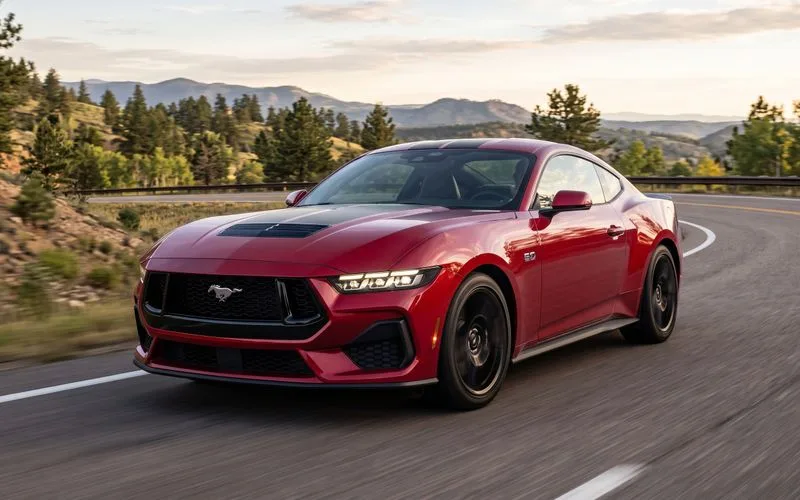 Ford MustangSports CarBetter at: Daily usability
Similar money buys a still-in-production coupe with standard automatic emergency braking, adaptive cruise, a modern digital cabin, a usable 13.3 cu ft trunk and a rear seat an adult can briefly sit in.
Compare 2.49C+
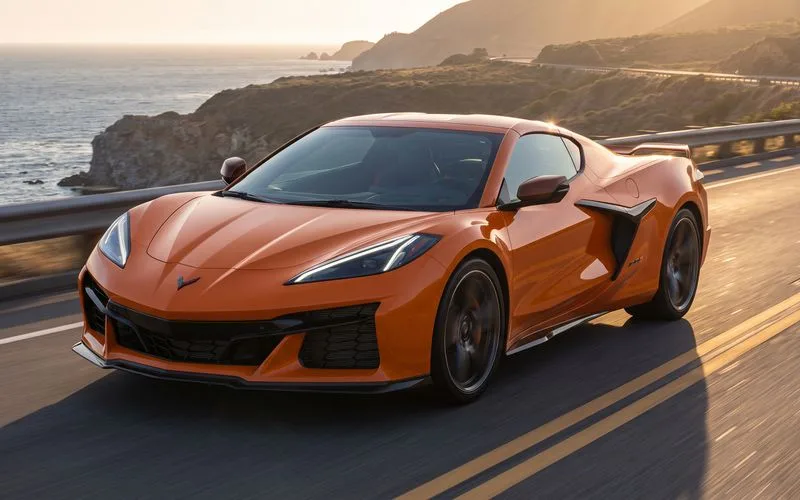 Chevrolet CorvetteSports CarBetter at: Outright performance
If the budget stretches past the SS, the mid-engine Corvette delivers a better interior, higher limits and two real cargo compartments while staying inside the same Chevrolet service network.
Compare 1.92C-
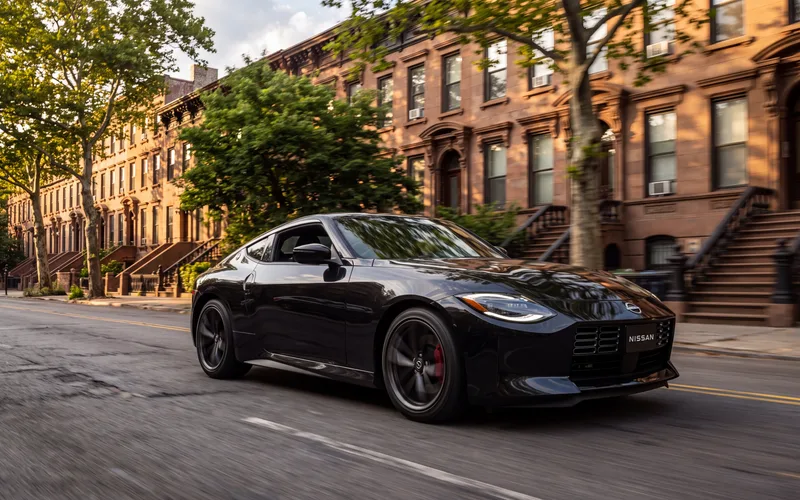 Nissan ZSports CarBetter at: Standard safety
A twin-turbo rear-drive coupe at similar money with the standard safety tech and modern cabin the Camaro never got, for buyers who do not need the back seat.
CompareHow it's evolved
8 scored model years · 2017–2024
Subject scores by year
Hover or tap a score to see what moved it versus the year before. A corner mark flags a big swing.
| Year | Performance | Efficiency | Safety | Space | Cost | Reliability | Tech | Use-case | Driving | Value |
|---|---|---|---|---|---|---|---|---|---|---|
| 2024 | 56 | 27 | 36 | 43 | 60 | 75 | 57 | 27 | 72 | 58 |
| 2023 | 49 | 31 | 36 | 43 | 64 | 75 | 57 | 27 | 67 | 62 |
| 2022 | 49 | 31 | 37 | 44 | 63 | 59 | 58 | 22 | 69 | 57 |
| 2021 | 49 | 31 | 36 | 45 | 64 | 69 | 53 | 31 | 69 | 59 |
| 2020 | 49 | 30 | 38 | 45 | 66 | 62 | 51 | 29 | 62 | 56 |
| 2019 | 51 | 34 | 38 | 48 | 61 | 59 | 49 | 28 | 70 | 54 |
| 2018 | 51 | 33 | 35 | 44 | 63 | 69 | 48 | 26 | 71 | 62 |
| 2017 | 51 | 31 | 38 | 44 | 78 | 65 | 43 | 25 | 65 | 71 |
Compare two years
Best fit & conditions
Higher scores mean a better fit for that use case. Learn more about use-case fit →
Subject profile
Detailed scoring by subject
1Performance & PowertrainGrades below the middle of the scale.1.29D
2020 is the sixth-gen's facelift year (per Wikipedia: new SS front fascia with body-colored crossbar, relocated bowtie, reshaped headlights, addressing 2019 criticism) but the powertrain lineup carries over unchanged; the new-for-2020 LT1 trim pairs the LT body with the SS's naturally-aspirated 6.2L V8. Volume/entry trims (1LS, 1LT) run the 2.0L turbo I4.
Torque figure for the volume 2.0L turbo I4 powertrain, unchanged from 2019; full lineup spans to 650 lb-ft on the ZL1.
Manufacturer-quoted 0-60 for the turbo-four volume trim, corroborated by dealer performance pages; SS and ZL1 figures noted for lineup range. No Car and Driver-specific instrumented test surfaced for this exact model year, so figures are corroborated across multiple outlets instead.
The volume 2.0L turbo I4 is strong on paper but reviewers flagged uneven throttle response and a coarse, unsporting exhaust note under load, consistent with 2019-2021 turbo-four commentary since the engine itself is unchanged for 2020; the optional V6 and V8s (now including the new LT1 trim) deliver noticeably smoother, more characterful power. Net refinement lands mid-pack against sports-car rivals.
Standard 6-speed manual with active rev-matching (LT1 trim and up) is crisp and well-regarded; the 8-speed automatic on the I4 and 10-speed automatic on V6/V8 trims shift smoothly with only occasional hesitation in eco-oriented drive modes. Transmission hardware is unchanged from 2019.
The Camaro is rear-wheel drive only across every trim and engine — no AWD or 4WD option exists anywhere in the sixth-generation lineup, including 2020.
Four distinct gasoline powertrains spanning a wide performance range (2.0L turbo I4, 3.6L V6, naturally-aspirated 6.2L V8, supercharged 6.2L V8), with the new-for-2020 LT1 trim widening V8 access within the lineup, but no hybrid, PHEV, or EV variant is offered — breadth is strong within gas power tiers, not across fuel types.
2Efficiency & RangeOne of the Camaro's weakest categories.0.00F
EPA combined rating for the volume 2.0L turbo I4 automatic powertrain, unchanged from 2019 since 2020 is a styling-only facelift year per Wikipedia. Scores low against the coupe normalization band because that band spans up to hybrid/efficient coupes, and a rear-drive muscle coupe sits at the bottom of it.
EPA city rating for the volume turbo-four automatic; carried over from 2019 with no powertrain changes for the 2020 facelift.
EPA highway rating for the volume turbo-four automatic; carried over from 2019 with no powertrain changes for the 2020 facelift.
EPA-derived range for the volume turbo-four automatic using its rated 19-gallon fuel tank and 25 MPG combined rating; this is the strongest efficiency-related item for the Camaro since a coupe's large tank offsets its modest MPG.
EPA annual fuel cost estimate for the volume turbo-four automatic at standard 15k mi/yr assumptions; the figure reflects both modest combined MPG and a premium-fuel requirement, placing it above the top of the coupe cost band entirely.
The volume 2.0L turbo I4 and both 6.2L V8 engines require premium gasoline per EPA; only the optional 3.6L V6 runs on regular. Since the base/volume trim itself demands premium, this lands in the low band rather than the 'recommended but not required' middle band.
3SafetyOne of the Camaro's weakest categories.0.48F
NHTSA rated the 2020 Camaro coupe 5 stars overall on its harder post-2011 protocol, with only frontal impact scoring 4 stars.
IIHS rates the 6th-gen Camaro (tested as a 2016 1SS, ratings carried through 2016-23) Good in small overlap front, moderate overlap front, side, and head restraints/seats, but only Acceptable for roof strength, which alone disqualifies it from Top Safety Pick.
Chevy Safety Assist (the bundled AEB/LKA suite) was not offered on the Camaro for 2020 — it launched on the Equinox that year and reached the Camaro only later. Forward Collision Alert, blind-spot monitoring and rear cross-traffic alert are optional/package items gated to the 3LT-and-above Convenience and Lighting Package, absent on LS/1LT/2LT, and there is no lane-keeping or adaptive cruise system at any trim.
IIHS classifies the Camaro's front crash prevention as "Basic with optional equipment" — the optional Forward Collision Alert has no autobrake function — and pedestrian daytime AEB is not available at all.
Blind-spot monitoring and rear cross-traffic alert come standard only on 3LT and above (2SS, ZL1), remain optional lower in the lineup, and are alert-only with no active steering/braking intervention — a meaningful gap given the Camaro's notoriously poor rear sightlines.
No lane departure warning, lane keep assist, or lane centering system was offered on the 2020 Camaro at any trim or package level.
Adaptive cruise control was not offered on any 2020 Camaro trim, including ZL1 (which had briefly offered it for 2018-2019 before it was dropped for 2020); only standard cruise control is available.
No hands-free highway driving system (e.g. Super Cruise) was offered on the Camaro for 2020 or any 6th-generation model year.
IIHS has not published a headlight rating specifically for the 2020 Camaro; scored from segment/era norms — only a small fraction of 2020-model-year vehicles tested by IIHS earned a Good headlight rating, and the Camaro's low, raked headlamp housings are a common cause of poor beam pattern/reach on cars of this style.
The Camaro's low roofline, raked windshield, thick pillars and tiny rear window are widely cited as among the worst outward visibility in the sports-car class, with the front passenger headrest further blocking the small rear glass.
IIHS rated the Camaro's LATCH anchor accessibility Marginal — anchors are mounted too deep in the seat bight and require excessive force to attach — compounded by the coupe's tight rear doors and minimal rear-seat space.
4Space & ComfortGrades near the bottom of the scale.0.97F
2020 Camaro coupe is a 2+2 layout across all trims (LS/LT/SS/ZL1) — no seating option beyond four.
Sixth-gen coupe cabin is unchanged for the 2020 facelift, which only altered the front fascia/grille — interior dimensions carry over from the 2016-2019 coupe.
Front seating position is unchanged for the 2020 facelift year.
The sixth-gen coupe's steeply raked fastback roofline is a known weak point for rear headroom, well below segment norms for a coupe.
Widely reported as one of the tightest rear seats in the pony/muscle car class — token seating only, consistent with owner and reviewer complaints.
Trunk volume is unchanged for the facelift; small even by sports-coupe standards, though the coupe's 50/50 split-folding rear seat adds some flexibility.
Small center console bin, small door pockets, and a narrow glovebox; the low, tunnel-heavy cabin leaves little practical storage beyond the split-fold rear seat pass-through, and reviewers consistently flag poor outward visibility compounding the cramped feel.
Front seats (including optional heated/cooled Recaro sport buckets) draw consistent praise for bolstering and support, but the rear seat is described as token/near-unusable, pulling the item average down from a front-only score.
Standard suspension delivers a more compliant ride than the Camaro's sporty image suggests, and the available magnetic/adaptive ride control (SS and up) smooths broken pavement well without excessive float.
Road and tire noise become noticeable at highway speed, and V8 exhaust note (louder still with the optional performance exhaust) intrudes into the cabin under throttle — average to below-average for the segment rather than notably hushed.
Heated and ventilated front seats and a heated steering wheel become available starting at 2LT/2SS and are standard on upper trims, but base LS/1LT trims go without — comfort equipment is mid-trim-and-up rather than broadly standard.
5Cost of OwnershipThe Camaro's best-graded category.2.46C+
2020 is a sixth-generation carry-over year mechanically — per Wikipedia the only change is a styling facelift (new body-colored front crossbar grille, relocated bowtie badge, reshaped headlights) that fixed the negatively-received 2019 SS front-end design. No trim-structure or base-price change accompanied the facelift. Entry MSRP is comfortably under the coupe band ceiling and cheaper than every rival in this set except the BRZ/GR86.
The 2020 coupe ladder ran 1LS $25,000 / 1LT $25,500 / 2LT $27,500 / 3LT $31,500 / LT1 $34,000 / 1SS $37,500 / 2SS $42,500 / ZL1 $63,000 (incl. $995 destination). 1LT was the highest-volume trim by inventory share; a typically-equipped example — 3.6L V6, automatic transmission, and the RS appearance package most LT buyers add — lands around $29,000–$29,500 versus the $25,500 base sticker.
The sixth-generation Camaro's running gear (LGX V6, pushrod LT1/LT4 V8s) is unchanged across 2019-2020, so class-level maintenance-cost studies for the generation apply. CarEdge projects roughly $2,450 in maintenance and repairs over five years and RepairPal puts annual repair cost near $585 with major repairs uncommon; Edmunds-style True Cost to Own figures that fold in performance tires, brake wear and a well-equipped SS build run toward $11,300. Mid-band figure reflects both ends.
The 2020 model year is now six years old, so real transaction data is available rather than a forward-looking residual model. A base 1LS trades around $16,300 today against a $25,000 original MSRP (65% retained at 6 years), and industry depreciation studies put the nameplate at roughly 38% depreciation (62% retained) at the 5-year mark specifically. This remains the category's strongest item and a key reason the Camaro out-earns most of the coupe set on cost of ownership.
Chevrolet's standard 3-year/36,000-mile bumper-to-bumper coverage applies to the Camaro with no performance-model extension — exactly at the segment band floor, and no better than the Mustang's.
Chevrolet's 5-year/60,000-mile powertrain coverage is the industry floor and the bottom of the band — far short of Hyundai/Kia's 10-year/100,000-mile terms, and identical to the Corvette's.
Chevrolet includes exactly one complimentary scheduled maintenance visit in the first year of ownership — oil and filter change, tire rotation and a multi-point inspection — a reduced program GM has run since the 2019 model year (down from two visits previously), unchanged for 2020. That is among the thinnest included-service offers in the segment, well behind Toyota's 2-year ToyotaCare on the GR86/Supra and the multi-year programs from BMW and Porsche. Roadside assistance and courtesy transportation matching the 5-year/60,000-mile powertrain term, plus an OnStar/Chevrolet Connected Services trial, are what keep this out of the bottom band.
$29,200 volume-trim price minus its estimated resale value after 5 years (62% retained, or about $18,104) leaves about $11,096 in depreciation. Add the projected $5,500 in 5-year maintenance and repairs, and owning this vehicle for 5 years costs about $16,596 in total.
6Reliability & QualityOne of the Camaro's strongest categories.2.17C
Owner-survey sources are mixed on the sixth-gen Camaro: J.D. Power's consumer/owner ratings for the 2020 model are decent, but RepairPal scores the nameplate 3.5/5.0 (21st of 24 midsize cars) and Consumer Reports has historically rated Chevrolet's brand-level predicted reliability below average, with Camaro too low-volume for its own detailed CR reliability history.
Signals diverge by source: J.D. Power's 2021 Vehicle Dependability Study (surveying 2020 model-year vehicles) placed Chevrolet above the industry average with the most segment awards among all brands, while Consumer Reports' longer-run brand reliability rankings place Chevrolet below average — a mid-pack overall standing.
NHTSA lists three recalls touching the 2020 Camaro: a 2020–2022 10-speed automatic transmission control-module software fix (wheel lock-up risk), a 2017–2021 steering-wheel airbag emblem separation recall, and a 2020-only fuel pump recall for a missing pressure regulator that could crack the pump and leak fuel. None are high-volume systemic failures, but the fuel-pump and transmission issues involve genuine safety risk (fire, lock-up), keeping this out of the top band.
2020 is a mid-cycle facelift year with carryover powertrains: the 2.0L turbo-four and 3.6L V6 (volume LT trims) and the 6.2L LT1 V8 (SS) are all multi-year-proven by 2020 with no systemic failure pattern, though the turbo-four shares its family with GM applications that saw earlier PCV/oil-consumption complaints. The LT1 V8 traces to the Corvette small-block lineage and carries a strong durability reputation; the 10-speed automatic (SS) needed the 2020-2022 recall above.
Reviewers consistently single out the Camaro's cabin as a weak point relative to its price and rivals: extensive hard, shiny plastic on the dash, console and doors, switchgear that looks substantial but feels flimsy, and at least one reported case of console trim popping loose. The retro-styled dash looks good but reviewers note interior quality can't match segment rivals.
Assembly consistency itself draws fewer complaints than materials — reviewers' fit-and-finish gripes are mostly about trim attachment (loose console trim) rather than panel gaps or squeaks, and GM's Lansing Grand River plant has a generally solid initial-quality record, but the material criticism above bleeds into perceived fit-and-finish.
Chevrolet runs one of the largest dealer networks in the US — roughly 2,800-3,000 dealerships across all 50 states — giving Camaro owners dense, convenient access to service regardless of location.
As a high-volume domestic nameplate built on well-known GM small-block/turbo-four architecture, the Camaro benefits from wide parts availability and one of the largest aftermarket support ecosystems of any current sports car, especially for V8 SS models. RepairPal pegs average annual repair cost at $585, in line with the segment.
7Technology & InfotainmentGrades below the middle of the scale.1.38D
Base 2020 Camaro trims run Chevrolet Infotainment 3 with a 7-inch screen carried over unchanged from 2019 (the 2020 update was exterior-only — new grille, badge placement, headlight shape); the 8-inch HD unit steps in standard on 3LT and SS/ZL1 and is optional lower in the range.
Chevrolet Infotainment 3 on the 2020 Camaro is a mature, straightforward system with retained physical volume/tuning knobs and logical menus, but the base 7-inch screen and dated graphics compared to segment leaders keep it out of the top tier — reviewers consistently call it easy to learn rather than impressive.
Apple CarPlay and Android Auto are standard across every 2020 Camaro trim, but only in wired form — GM confirmed it had no factory wireless CarPlay/Android Auto option for this generation as of late 2020, with wireless projection only reachable via a dealer/aftermarket module.
Built-in voice recognition is standard through Infotainment 3, but embedded navigation is bundled with the optional 8-inch Technology Package rather than standard equipment, so most 2020 Camaro buyers rely on CarPlay/Android Auto maps instead of the native system.
A 6-speaker system is standard on base trims; a 9-speaker Bose premium system is standard on 3LT/2SS/ZL1 and reachable on 1LT/2LT through the Technology Package, giving most buyers a genuine upgrade path without a weak base system.
An 8-inch configurable color driver-information display is fitted to 3LT, 2SS and ZL1 (part of the larger information-display equipment noted on the 3LT), but 1LS/1LT/2LT retain primarily analog gauges with a smaller basic trip-computer readout, so full configurability is upper-trim-only.
The 2020 Camaro's OnStar/Infotainment 3 telematics stack supports infotainment and map software updates delivered over the built-in 4G LTE hotspot, but GM's whole-vehicle, feature-adding OTA capability did not exist yet for this generation — updates of this era are scoped to connectivity/map software only.
The myChevrolet app covers the core remote set — remote start, lock/unlock, and vehicle locate — but full remote functionality requires an active paid OnStar Remote Access plan once the trial period included with a new 2020 Camaro expires.
The cabin has a modest two-USB-port setup up front via Infotainment 3 with no rear-seat charging provisions in this 2+2 coupe, and a wireless charging pad exists as GM hardware but is not standard across the lineup.
Keyless Open and Start (proximity entry, push-button start) and a remote-start-capable key fob are standard across the entire 2020 Camaro lineup including the base 1LS, though the car offers no phone-as-key digital-key option.
A federally mandated rearview camera is standard across the lineup, but rear park assist sensors are limited to 2SS/ZL1 (optional on 3LT) and unavailable on 1LS/1LT/2LT/LT1/1SS, and Chevrolet has never offered a 360-degree camera system on the Camaro.
A head-up display is standard on 3LT, 2SS and ZL1 (bundled into the Convenience and Lighting package on 3LT) but unavailable on the lower-volume 1LS/1LT/2LT/LT1/1SS trims, matching the guidance's "limited to top trims" band.
8Use-Case FitThe Camaro's lowest-graded category.0.00F
2+2 rear seat with only 29.9 in of legroom and a low, steeply raked roofline makes rear-seat access and forward-facing car-seat installation a fight even with LATCH anchors present; the tiny rear door openings compound it.
Strong crash results (5-star NHTSA overall, IIHS Good across moderate/small overlap front, side, and head restraint tests) but forward-collision alert/AEB and blind-spot monitoring are gated to the optional Driver Confidence Package rather than standard on the entry 1LS/1LT trims families would actually buy.
Poor outward visibility from the thick pillars and low glasshouse, a cramped 2+2 rear bench unsuitable for adults on a multi-hour trip, and only 9.1 cu ft of trunk space leave little room for family gear.
The volume 1LT with the turbo-four and 8-speed automatic is smooth and easy around town, but the Camaro's famously narrow greenhouse, thick pillars, and small rear glass make low-speed maneuvers and lane changes more tiring than most daily drivers.
The volume 2.0L turbo-four with the automatic returns 22/31 mpg city/highway on regular fuel, roughly average for a commuting sports coupe but well behind mainstream commuter cars.
Low nose, poor rearward and over-shoulder visibility from the small back glass and high beltline make tight parking and city maneuvers stressful; a rear camera is standard but doesn't offset the sightlines.
A two-door sports coupe with a 9.1 cu ft trunk, no published tow rating, and no cargo bed — it has essentially no fitness for hauling or towing work.
GM's small-block V8 and turbo-four powertrains are mechanically proven, but the low-slung sports-car body, low ground clearance, and performance-oriented interior trim are not suited to abuse or fleet-style hard use.
No bed, no roof rack mounting, no factory tie-down or upfit ecosystem — a coupe with a small trunk offers essentially nothing for jobsite use.
A 19.0-gallon tank and efficient turbo-four give roughly 550+ highway miles between fill-ups and the front seats are supportive for long stints, but road/wind noise and a stiff ride on SS/1LE suspensions cut into endurance comfort.
Rear-wheel drive only with no AWD option, low sports-car ground clearance, and no roof/tow provisions for gear — the Camaro is strictly pavement-bound.
9.1 cu ft of trunk space with a narrow opening and no through-loading pass-through for most trims, no roof rails, and only 1LE/SS versions offering a factory hitch adapter — bulky gear is a poor fit.
9Driving ExperienceOne of the Camaro's strongest categories.2.16C
The sixth-gen Alpha-platform chassis (unchanged mechanically for the 2020 facelift, which only revised the front fascia/grille) is widely regarded as the sharpest-handling car in the muscle-car class, and reviewers note handling stays 'honest and lithe' even on four-cylinder volume trims with the standard FE2 sport suspension; magnetic ride control and wider tires (FE3/1LE) on higher trims sharpen it further but aren't standard on the volume 1LT/2LT.
Electric power steering carried over unchanged from 2019 is consistently praised as quick and precise with real weight and decent feedback, a genuine strength versus segment rivals even though it isn't hydraulic-rack-level communicative.
The volume 1LT/2LT trims run the standard (non-Brembo) brake package, which delivers adequate, fade-free stopping in ordinary driving without the fade-resistance data available for the SS's optional 4-piston Brembo fronts; no widespread complaints of soft or grabby pedal feel surfaced for base trims.
The standard 2.0L turbo I4 (unchanged for 2020) is criticized for uneven throttle tip-in and a coarse character; the 8-speed automatic and 6-speed manual themselves shift cleanly, but overall drivability calibration on the volume engine lags the optional V6/V8s.
Reviewers describe the four-cylinder's exhaust note as 'hard to like' and 'boisterous' rather than pleasant, and multiple owner/press sources flag noticeable cabin noise; a clear weak point versus the more characterful optional V8s.
Curb-to-curb turning diameter unchanged for the facelift year; toward the wide end of the coupe normalization band, consistent with the Camaro's low, long sixth-gen proportions.
Outward visibility is a persistent, widely reported weak point (deep beltline, high rear deck, thick pillars make stoplights, merging and parking difficult) and the low-slung cabin is described as intimate/cramped with limited headroom for taller drivers; front seat adjustability and control layout are otherwise sound.
Despite the coarser four-cylinder soundtrack, reviewers rate the overall package as genuinely engaging — sharp steering, planted handling, and available manual transmission with rev-matching add up to real enthusiast appeal, with more than one outlet calling it the best-driving car in its class.
10Value & Market PositionMid-pack among this car's ten categories.1.79C-
2020 Camaro 1LS starts at $25,000 with the 2.0L turbo-four, 18-in wheels, cloth seats, a 7-in Chevrolet Infotainment 3 touchscreen and rearview camera, but the lineup offers no adaptive cruise control at any trim and forward-collision alert/automatic emergency braking are optional rather than standard even on top trims — rivals like the Mustang bundle more active-safety tech as standard for similar money.
Performance per dollar is strong across the range: the 1SS delivers 455 hp for $37,500 and the ZL1's supercharged 650 hp at $63,000 undercuts comparable Ford/Dodge halo cars, even though cabin tech and creature comforts lag the segment.
Nine coupe/convertible trims span 1LS through ZL1 with turbo-four, V6, and two V8 states of tune, manual or automatic gearboxes, and multiple 1LE track packages (V6 1LE, SS 1LE, ZL1 1LE), giving a wide, well-spaced range from commuter to track weapon.
Camaro sales cratered in calendar-year 2020 to 29,775 units, down roughly 38% from 2019's 48,265, an all-time low for the sixth generation, and the model trailed both the Ford Mustang and Dodge Challenger for the year.
The Camaro nameplate carries genuine enthusiast heritage and a loyal following, but mainstream Chevrolet brand image is neutral and the model's cultural cachet trailed the Mustang's in this period, tempering any halo effect.
Slow sales translated into real buyer benefit throughout 2020, with cash incentives ranging roughly $1,500-$3,750, 0% APR financing offers, and conquest cash for Mustang/Challenger owners running for most of the model year.
The sixth generation launched for 2016 and received a controversial facelift for 2019; 2020 is a corrective refresh year (body-colored grille crossbar, relocated bowtie, reshaped headlights) rather than a new platform, putting it squarely mid-cycle.
Reviewers consistently praised the 2020 Camaro's chassis, steering and engine range — Edmunds called it the best-driving muscle car in its class and The Car Connection named it a Best Performance Car to Buy for 2020 — but it did not make Car and Driver's 2020 10Best list (Corvette did instead) and was marked down for poor outward visibility, a cramped rear seat and tiny trunk.