
The verdict
A mixed-report compact luxury sedan, strong on reliability and held back by efficiency.
The 2025 Lexus IS is the compact luxury sedan you buy for how little trouble it gives you, not for how modern it feels. It is the last model year of a bodyshell that has been in production since 2013, so the cabin still has a CD player, an 8-inch screen and a console touchpad — but it also delivers Lexus's first-place J.D. Power dependability record, roughly $5,000 in five-year upkeep, and about 57% of its money back after five years, which is thousands better than a BMW 3 Series or Mercedes C-Class. The catch is space and running cost: 32.2 inches of rear legroom and a 10.8 cu-ft trunk are near the bottom of the class, and 25 MPG combined on required premium fuel works out to roughly $3,100 a year. Take it as a two-person sedan with an unusually cheap ownership bill, and it makes sense; ask it to carry a family and it doesn't.
Jump to scoresStrengths
- Best-in-class dependability, from the platform up
- The cheapest compact luxury sedan to own
- Every safety feature that matters is standard on the cheapest one
What holds it back
- The back seat and trunk are the smallest in the class
- Ordinary fuel economy on mandatory premium
- Infotainment a full generation behind the price tag
Top alternatives
Cars shoppers cross-shop with the Lexus IS 3.07B
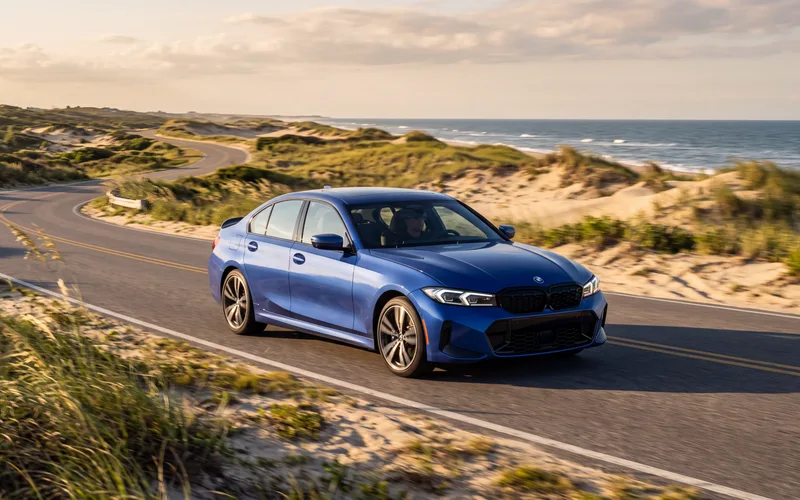 BMW 3 SeriesCompact Luxury SedanBetter at: Space and pace
For about $3,000 more it fixes nearly every practical complaint about the IS — rear seat, trunk, fuel economy, screens, and pace — if you can accept higher running costs.
Compare 2.71B-
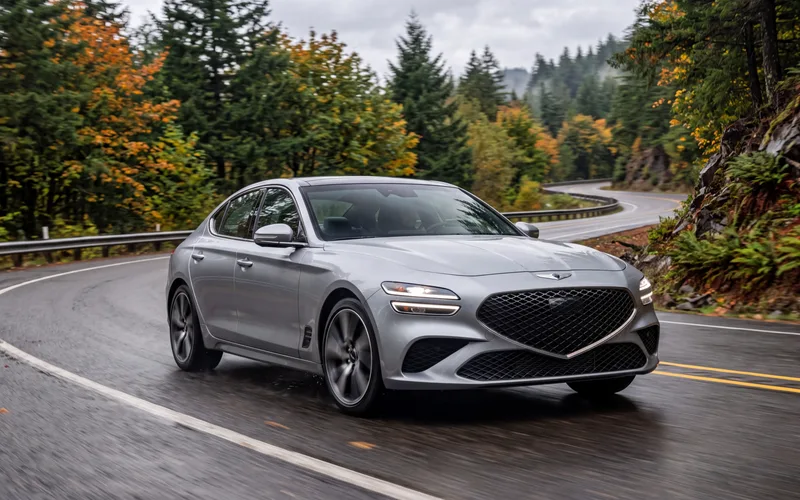 Genesis G70Compact Luxury SedanBetter at: Content per dollar
Delivers more standard equipment, a modern infotainment system, and a 10-year/100,000-mile powertrain warranty for similar money.
Compare 3.11B
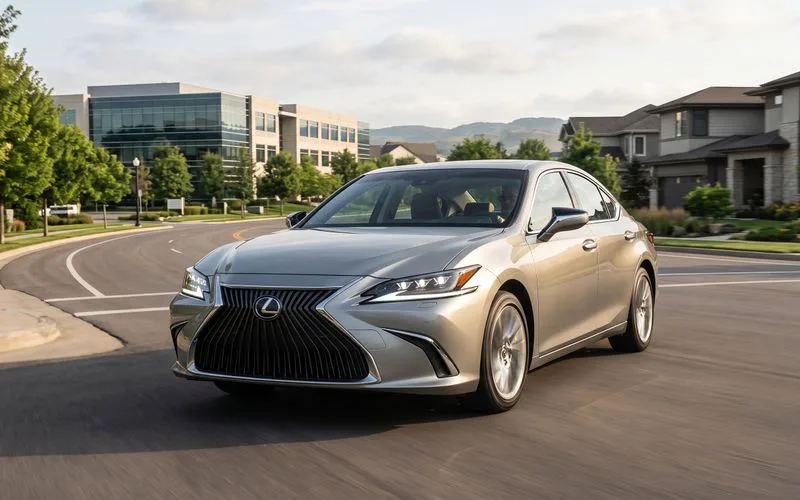 Lexus ESMid-Size Luxury SedanBetter at: Space and efficiency
The same Lexus reliability and service experience in a bigger, quieter, hybrid-available sedan for buyers who don't need rear-wheel drive.
CompareHow it's evolved
10 scored model years · 2017–2026
Subject scores by year
Hover or tap a score to see what moved it versus the year before. A corner mark flags a big swing.
| Year | Performance | Efficiency | Safety | Space | Cost | Reliability | Tech | Use-case | Driving | Value |
|---|---|---|---|---|---|---|---|---|---|---|
| 2026 | 50 | 32 | 67 | 57 | 55 | 86 | 62 | 45 | 80 | 63 |
| 2025 | 48 | 27 | 73 | 52 | 58 | 87 | 45 | 39 | 70 | 66 |
| 2024 | 46 | 27 | 74 | 56 | 60 | 87 | 46 | 43 | 73 | 67 |
| 2023 | 48 | 27 | 79 | 52 | 58 | 88 | 44 | 43 | 67 | 66 |
| 2022 | 48 | 27 | 78 | 55 | 59 | 85 | 46 | 43 | 72 | 65 |
| 2021 | 47 | 27 | 80 | 56 | 67 | 88 | 46 | 45 | 73 | 68 |
| 2020 | 45 | 23 | 64 | 55 | 63 | 87 | 31 | 41 | 65 | 57 |
| 2019 | 45 | 23 | 67 | 56 | 61 | 84 | 34 | 46 | 71 | 61 |
| 2018 | 44 | 30 | 70 | 54 | 59 | 86 | 33 | 46 | 69 | 70 |
| 2017 | 44 | 30 | 69 | 54 | 60 | 80 | 30 | 44 | 62 | 66 |
Compare two years
Best fit & conditions
Higher scores mean a better fit for that use case. Learn more about use-case fit →
Subject profile
Academic Probation · NHTSA safety recalls
No NHTSA safety recall is on record for the 2025 Lexus IS. Other model years of the IS have 3 — listed below.
3 recalls on other model years of the IS (2017–2019, 2022)
Apr 8, 2026Fuel system, gasoline: delivery: fuel pumpThe low-pressure fuel pump inside the fuel tank may fail.
Defect
Toyota Motor Engineering & Manufacturing (Toyota) is recalling certain 2015-2022 Lexus RC, 2016-2020 GS, and 2022 IS vehicles. The low-pressure fuel pump inside the fuel tank may fail.
Risk
Fuel pump failure can cause an engine stall, increasing the risk of a crash.
Remedy
Dealers will replace the fuel pump assembly, free of charge. Owner letters were mailed October 15, 2026. Owners may contact Toyota's customer service at 1-800-331-4331. Toyota's numbers for this recall are 26LB05 and 26LA05.
NHTSA campaign 26V222000 ↗Manufacturer no. 26LB05/26LA059,139 vehicles potentially affected (all models in the campaign)Owners notified Oct 14, 2026Filed by Toyota Motor Engineering & ManufacturingFiled as ISNov 4, 2020Fuel system, gasoline: delivery: fuel pumpThe low-pressure fuel pump inside the fuel tank may fail.
Defect
Toyota Motor Engineering & Manufacturing (Toyota) is recalling certain 2018-2019 4Runner, 2019-2020 Avalon, 2019 Corolla Hatchback, 2017-2019 Highlander, 2018-2020 Camry, 2020 Corolla, 2018-2019 Land Cruiser, 2017-2020 Tacoma, 2019-2020 RAV4, 2019-2020 Sequoia, 2017-2020 Sienna, 2019-2020 Tundra, 2018-2020 Lexus ES350, 2017 Lexus GS200t, 2017-2019 Lexus GS350, 2019 Lexus GS300, 2018-2020 Lexus LC500h, 2019-2020 Lexus LS500, 2018-2019 Lexus GX460, 2017 Lexus IS200t, 2019 Lexus IS300, 2019 Lexus IS350, 2018-2020 Lexus LC500, 2018 Lexus LS500, 2019 Lexus LS500h, 2018-2019 Lexus LX570, 2017 Lexus RC200t, 2019 Lexus RC300, RC350, 2017 and 2019-2020 Lexus RX350, 2018-2020 RX350L, 2019 Lexus UX200, 2018-2019 Lexus NX300 vehicles. The low-pressure fuel pump inside the fuel tank may fail.
Risk
If the fuel pump fails, the engine can stall while driving, increasing the risk of a crash.
Remedy
Toyota will notify owners, and dealers will replace the fuel pump assembly with an improved one, free of charge. Owners of specific models were notified that remedy parts were available starting January 21, 2021. Owners of other models will be notified as remedy parts become available. Remedy parts should be available for all affected vehicles by late March 2021. Owners may contact Toyota customer service at 1-888-270-9371 or Lexus customer service at 1-800-255-3987. Note: This recall is an expansion of recall 20V-012. Toyota's number for this recall is 20TA02. Lexus' number for this recall is 20LA01.
NHTSA campaign 20V682000 ↗Manufacturer no. 20TA02, 20LA011,525,742 vehicles potentially affected (all models in the campaign)Owners notified Jan 21, 2021Filed by Toyota Motor Engineering & ManufacturingFiled as IS 300, IS 350, IS200TJan 13, 2020Fuel system, gasoline: delivery: fuel pumpToyota Motor Engineering & Manufacturing (Toyota) recalled certain 2018-2019 4Runner, Highlander, Camry, Land Cruiser, Sequoia, Sienna, Tacoma and Tundra, and Lexus RC 300, RC 350, GS 350, GX 460, IS 300, LC 500, LS 500, LX 570, RX 350L, and 2019 Toyota Avalon and Corolla, and certain Lexus NX 300, and ES 350 vehicles on January 13, 2020. On March 4, 2020, Toyota expanded the recall to include certain 2014-2015 Toyota 4Runner and Land Cruiser, 2018 Avalon, Corolla, 2014 FJ Cruiser, 2017 Sienna and Lexus 2018 ES 350, 2018-2019 GS 300, 2013-2014 GS350, 2014-2015 GX 460, IS 350 and LX 570, 2014 IS F, 2018-2019 IS 350, LC 500H and LS 500H, 2013-2015 LS 460, 2015 NX 200T and RC350, 2017 RC 200T and RX 350. Toyota also removed the 2018-2019 Toyota 4Runner and Land Cruiser and 2018-2019 Lexus GX 460 and LX 570 and 2019 NX300 from inclusion in this recall. On March 19, 2020, Toyota expanded the recall to include 2015 Lexus GS350 vehicles. The low-pressure fuel pump inside the fuel tank may fail.
Defect
Toyota Motor Engineering & Manufacturing (Toyota) recalled certain 2018-2019 4Runner, Highlander, Camry, Land Cruiser, Sequoia, Sienna, Tacoma and Tundra, and Lexus RC 300, RC 350, GS 350, GX 460, IS 300, LC 500, LS 500, LX 570, RX 350L, and 2019 Toyota Avalon and Corolla, and certain Lexus NX 300, and ES 350 vehicles on January 13, 2020. On March 4, 2020, Toyota expanded the recall to include certain 2014-2015 Toyota 4Runner and Land Cruiser, 2018 Avalon, Corolla, 2014 FJ Cruiser, 2017 Sienna and Lexus 2018 ES 350, 2018-2019 GS 300, 2013-2014 GS350, 2014-2015 GX 460, IS 350 and LX 570, 2014 IS F, 2018-2019 IS 350, LC 500H and LS 500H, 2013-2015 LS 460, 2015 NX 200T and RC350, 2017 RC 200T and RX 350. Toyota also removed the 2018-2019 Toyota 4Runner and Land Cruiser and 2018-2019 Lexus GX 460 and LX 570 and 2019 NX300 from inclusion in this recall. On March 19, 2020, Toyota expanded the recall to include 2015 Lexus GS350 vehicles. The low-pressure fuel pump inside the fuel tank may fail.
Risk
If the fuel pump fails, the engine can stall while driving, increasing the risk of a crash.
Remedy
Toyota will notify owners, and dealers will replace the fuel pump, free of charge. The recall began May 4, 2020. Owners may contact Toyota customer service at 1-888-270-9371 or Lexus customer service at 1-800-255-3987. Toyota's numbers for this recall are 20TB02 and 20TA02 for Toyota vehicles and 20LB01 and 20LA01 for Lexus vehicles.
NHTSA campaign 20V012000 ↗Manufacturer no. 20TB02/20TA02/20LB011,830,752 vehicles potentially affected (all models in the campaign)Owners notified May 1, 2020Filed by Toyota Motor Engineering & ManufacturingFiled as IS 300, IS 350, IS200T
Source: NHTSA Office of Defects Investigation recall database, model years 2017–2026. Recalls are listed by model year as the manufacturer filed them; whether a specific car is affected depends on its VIN — check a VIN at nhtsa.gov ↗. NHTSA model names matched to this page: IS, IS 300, IS 350, IS200T.
Detailed scoring by subject
1Performance & PowertrainGrades below the middle of the scale.1.19D
The volume IS 300 RWD carries the 2.0L twin-scroll turbocharged 8AR-FTS four rated 241 hp. 2025 is a carry-over year mechanically for the third-generation (XE30) IS — the changes Lexus listed were equipment (power folding mirrors, heated steering wheel on select grades, power tilt/telescoping column) and a limited IS 500 Special Appearance Package, not powertrain. 241 hp is modest for a compact luxury sedan and sits below the BMW 330i and Mercedes C 300.
The turbo four's 258 lb-ft is the strongest torque figure in the non-V8 lineup and arrives low on a wide plateau, so the base IS 300 actually out-twists the V6 IS 300 AWD in everyday driving despite giving up 19 hp to it.
Lexus quotes 6.9 s for the RWD IS 300, and instrumented testing brackets it closely (Edmunds recorded 6.8 s for the same 2.0T RWD car; Consumer Reports describes it as "just over six seconds"). Adequate but unremarkable for a compact luxury sedan — a 330i or C 300 is roughly a second quicker — and the reason buyers are routinely steered up to the IS 350.
Lexus-grade isolation is present — the four is well muted at a cruise and the car is notably quiet — but the delivery itself is the IS 300's weakest trait: reviewers consistently note a beat of turbo lag off the line and a coarse, uninspiring note when the engine is worked, and repeatedly recommend paying up for the naturally aspirated V6 for its linear, cultivated power. Scored slightly above the mechanically identical RC 300 (60) because the lighter sedan body masks the engine's effort a little better, and below the segment's sharper-responding German turbo fours.
The RWD car's 8-speed Direct-Shift automatic shifts smoothly and accepts paddle inputs, but is calibrated for economy and is slow to hand back a downshift under hard use. The structural weakness is the same one the whole XE30 family carries: choosing all-wheel drive drops you to an older 6-speed automatic paired with the V6, so the better transmission and the better traction cannot be had together.
All-wheel drive is genuinely available across the mainstream range for 2025 — IS 300 AWD and IS 350 AWD are both catalogued, not confined to a halo trim — using a full-time planetary center-differential system rather than a reactive on-demand coupling. Held out of the top band because there is no low range or terrain mode, the IS 500 remains RWD-only, and taking AWD forces a different engine and the older 6-speed.
Three genuinely distinct gas engines in the 2025 US lineup — 2.0L turbo four, 3.5L V6 in two states of tune, and the hand-assembled naturally aspirated 5.0L V8 in the IS 500 — which is real breadth for a compact sedan and more than most rivals offer. But the range is entirely unelectrified: the IS 300h hybrid has never been a US model, and there is no PHEV or EV, which caps this item in the middle band.
2Efficiency & RangeThe IS's lowest-graded category.0.00F
The volume IS 300 RWD pairs the 2.0L turbo four with an 8-speed automatic for 25 MPG combined — the best figure in the 2025 IS range, but only ordinary for a compact luxury sedan, because the XE30 platform dates to 2014 and its powertrains never received the efficiency work (48-volt assist, hybridization) that lifted the German competition.
21 MPG city is where the IS gives up the most ground. With no hybrid assist and no cylinder deactivation anywhere in the lineup, stop-and-go driving falls back entirely on the turbo four, and a hybrid rival in the same showroom (the ES 300h) roughly doubles this figure.
31 MPG highway is the IS 300's strongest efficiency showing — a tall eighth gear and a small-displacement engine off boost make steady cruising the one case where the car is competitive — but it still trails the 35–38 MPG highway that current turbo-four rivals post.
A 17.4-gallon tank against 25 MPG combined gives roughly 435 miles between fills — respectable rather than exceptional, and enough that range never becomes a practical complaint even though the economy producing it is ordinary. The economy half is EPA-confirmed; the tank figure comes from third-party spec databases and the Canadian-market Lexus listing (66 L) rather than a US Lexus document that could be fetched directly.
The EPA's $3,100 annual estimate lands essentially at the bottom of the gas-sedan band, and the cause is the combination the IS cannot escape: only-average fuel economy multiplied by a mandatory premium-fuel price. A regular-fuel sedan returning the same 25 MPG combined would run several hundred dollars a year cheaper, and this is the single largest drag on the category score.
Premium 91-octane is required, not merely recommended, across the entire 2025 IS line — the turbo four and both V6s and the V8 alike — and there is no electrified variant in the US, so no cheaper energy path exists. It avoids the very bottom band only because premium gasoline is universally available and the 17.4-gallon tank is a normal size to fill.
3SafetyOne of the IS's strongest categories.2.94B-
NHTSA rated the 2025 IS 300 in both RWD and AWD form and awarded 5 stars overall, with 4 stars frontal, 5 stars side (barrier and pole) and 5 stars rollover at a 9.5% rollover risk.
The 2025 IS earns no IIHS award: small overlap front is Good on both sides, but the updated side test returns only Acceptable with a Marginal structure and Marginal driver pelvis, and the car has no updated moderate overlap rating at all — the 2026 IS, which added an improved driver belt load limiter specifically to help in that test, still scored Marginal, so the 2025 car's likely result is worse.
Every 2025 IS trim, including the volume IS 300 RWD, carries Lexus Safety System+ 2.5 — pre-collision with pedestrian detection, full-speed-range adaptive cruise, lane departure alert with steering assist, lane tracing assist, road sign assist and intelligent high beams — plus standard Blind Spot Monitor with Rear Cross-Traffic Alert, so AEB/ACC/LKA/BSM/RCTA are all standard on the base car. It falls short of a perfect score because rear automatic braking is optional and the surround-view camera is reserved for the top trims.
IIHS rates the 2025 IS Superior in daytime pedestrian front crash prevention, avoiding the crossing child and crossing adult entirely at both 12 and 25 mph. It is held back from the top band because IIHS publishes no nighttime pedestrian result and no vehicle-to-vehicle rating for the 2025 car — those Good ratings on the 2026 page come from Lexus Safety System+ 3.0 and explicitly apply to 2026 models only.
Blind Spot Monitor with Rear Cross-Traffic Alert is standard on every 2025 IS trim, which is better than several German rivals that package it, but the coverage is alert-only on the volume car — rear automatic braking is an option rather than standard, and there is no safe-exit alert.
Lane Departure Alert with Steering Assist and Lane Tracing Assist are standard, and IIHS credits the car with lane departure warning and prevention, but LTA is a second-generation Toyota/Lexus system that only centers with adaptive cruise engaged and is generally described as functional rather than confident — it wanders and hands back on poor markings rather than holding a steady line.
Full-Speed Range Dynamic Radar Cruise Control with stop-and-go is standard on every trim and pairs with Lane Tracing Assist for a competent combined highway assist, but the integration is a generation behind the best in the compact luxury class and stops well short of the coordinated systems in the C-Class or 3 Series.
No hands-free highway driving is offered on the 2025 IS at any trim or price. Lexus Teammate Advanced Drive — the brand's hands-free Level 2 system — remains confined to the LS 500h, so the IS tops out at hands-on Lane Tracing Assist.
The volume IS 300's standard LED projectors are IIHS Good with no glare exceedance and good straightaway visibility on both sides, and high-beam assist is included. The score stops at the bottom of the top band because the picture inverts on the options sheet — the Premium Triple-Beam LED Headlamps package drops to Acceptable, with inadequate visibility on the gradual left curve — and neither variation is curve-adaptive.
The IS is a low, fast-roofed sport sedan with a high beltline, thick C-pillars and a shallow rear window, so rearward and over-the-shoulder sightlines are among the weaker points of the package. Standard blind-spot monitoring and rear cross-traffic alert cover the worst of it, but the volume IS 300 gets only a backup camera — the Panoramic View Monitor that would genuinely compensate is reserved for the top IS 500 trims.
The hardware itself is excellent — IIHS rates LATCH ease of use Good, with visible lower anchors needing zero pounds of attaching force and clearly labelled tether anchors on the rear deck. What caps the score is space rather than access: only the two outboard positions have complete LATCH hardware, the center seat is tether-only, and car-seat checks on this generation repeatedly find rear legroom too tight for a rear-facing seat without pushing the front passenger forward, with three seats across a non-starter.
4Space & ComfortGrades below the middle of the scale.1.50D
The IS is a conventional five-seat four-door across the entire 2025 range, from the IS 300 to the IS 500 F SPORT Performance. Five is the top of the sedan band, though the rear bench is realistically a two-adult space.
38.2 inches is mid-pack for a compact sedan and comfortable up front despite the car's low roofline, because the IS seats the driver very low in the chassis. The power tilt-and-slide moonroof — a package option on IS 300 and standard from IS 500 up — eats into it.
44.8 inches is at the top of the sedan band and the IS's one genuinely generous interior dimension. The published figure flatters the AWD cars, though — Consumer Reports found the center tunnel intrudes into the driver's footwell badly enough that some testers called it a deal-breaker.
36.9 inches sits just below the middle of the sedan band. The fast, coupe-like roofline of the third-generation (XE30) body costs rear passengers more in practice than the number suggests, because the seat cushion is low and the roof slopes over the outboard positions.
32.2 inches is effectively the floor of the sedan normalization band and the IS's single worst measurement. A BMW 3 Series gives rear passengers roughly 35.2 in and a Mercedes C-Class about 36 in, so the IS surrenders three to four inches to the cars it is cross-shopped against.
10.8 cubic feet is barely above the bottom of the sedan band and small even by compact-luxury standards — a 3 Series carries 17 cu ft. The rear seatback splits 60/40 and folds, which recovers some long-item capability, but the aperture is narrow and the trunk itself is shallow.
Storage is the weakest part of an already-tight cabin: a small center console bin, shallow door pockets, no wireless charging pad anywhere in the range, and — on the volume IS 300 — not even a rear center armrest with cupholders, which Lexus reserves for the Premium Package. There is no underfloor storage, no configurable console and no onboard power beyond a 12V socket.
The front seats are the good news — eight-way power on the IS 300, ten-way with lumbar and four-way headrests plus bolstering, heating and ventilation on the F SPORT grades, and NuLuxe trim that wears well. What caps the score is everything aft and outboard of them: the rear bench is cramped enough that Consumer Reports calls the cabin "very snug front and rear," and the AWD cars' center-tunnel intrusion pushes the driver's left foot out of position.
The IS rides with a thin layer of Lexus isolation on good pavement and loses it on bad — Consumer Reports describes short, quick motions that upset the cabin over broken surfaces. F SPORT-tuned Adaptive Variable Suspension is available (Handling Package on IS 350 F SPORT, standard on IS 500), but the volume IS 300 has passive dampers and the F SPORT grades' 19-inch staggered wheels on summer rubber work against compliance.
Quiet by class standards but not by Lexus standards, which is precisely how reviewers frame it. The turbo four is well muted at a steady cruise and little road or wind noise intrudes, but Consumer Reports explicitly notes the IS is not as hushed as a Lexus buyer would expect, and the engine turns coarse when worked hard.
Dual-zone automatic climate control and heated mirrors are standard, and the F SPORT grades that actually sell carry a heated wheel (F SPORT Design and up for 2025) plus heated and ventilated front seats. But the entry IS 300 has neither heated seats nor a heated wheel without the Comfort Package, there is no rear climate zone or rear vents at all, and remote pre-conditioning runs through Enform Remote on a three-year trial and a subscription after that.
5Cost of OwnershipMid-pack among this car's ten categories.1.93C-
The entry IS 300 RWD opens at $40,535 with Lexus's $1,175 DPH fee included, roughly $6,000 under a 2025 BMW 330i and the cheapest way into a premium-brand compact sport sedan short of an Audi A3. Sources disagree by about $1,100 — Edmunds carries the October-2024 launch MSRP while KBB and dealer price lists reflect a mid-year increase — so confidence is MEDIUM rather than HIGH.
IS volume skews heavily toward the F SPORT Design grades rather than the stripped IS 300 — the base car leaves heated seats, the memory package and power-folding mirrors on the options sheet, and AWD is close to mandatory in the snow-belt markets where this car sells. F SPORT Design RWD lists at $43,580 and AWD at $45,620, so a realistic transaction sits right around $45,000. Estimated from the published grade walk, not a transaction-price feed.
The IS is one of the cheapest compact luxury sedans to keep running: a long-mature 2.0T/3.5L V6 driveline shared with Toyota, a decade of debugged production, and Lexus's class-low repair frequency put it thousands below the German rivals. Nudged slightly above the mechanically simpler ES because the F SPORT grades wear 19-inch performance rubber and larger brakes, which is where the consumables money actually goes.
Resale is the IS's single strongest ownership argument — it retains value far better than the German compact sedans, which typically shed 50–55%. Figure set at 57% rather than iSeeCars' headline 58.7%, because observed used-market retention on 2019–2021 cars is still carrying some of the pandemic pricing bubble, while forward-looking residual books sit a few points lower.
Lexus's standard 48-month/50,000-mile basic coverage is the luxury-segment norm — identical to BMW, Mercedes, Audi and Acura — and well short of Genesis's 5 yr / 60,000 mi. Middle of the 3–5 year normalization band.
Six years/70,000 miles is competitive among the Germans but sits near the bottom of the 5–10 year band, and unlike the hybrid Lexus models the gas IS carries no 8- or 10-year battery-side coverage to extend it. Genesis (10 yr / 100,000 mi) and Hyundai/Kia outclass it outright.
Mixed, and scored identically to the Lexus ES because it is the same brand-wide LexusCare package. Complimentary scheduled maintenance covers only the first two visits — 6 months/5,000 miles and 12 months/10,000 miles — which is shorter than parent-brand ToyotaCare's 2 yr / 25,000 mi and far behind Genesis's 3 yr / 36,000 mi with valet pickup. What lifts it above that is the surrounding package: 4 years of unlimited-mileage roadside assistance, complimentary loaner vehicles and a car wash at every dealer visit, and a long Safety Connect/connected-services allowance. Comfortably better than BMW, which dropped included maintenance entirely after MY2019, and better than the 2025 Audi A4's nothing-at-all.
$45,000 volume-trim price minus its estimated resale value after 5 years (57% retained, or about $25,650) leaves about $19,350 in depreciation. Add the projected $5,000 in 5-year maintenance and repairs, and owning this vehicle for 5 years costs about $24,350 in total.
6Reliability & QualityThe IS's best-graded category.3.94A+
Two things stack in the 2025 IS's favor: a strong published predicted-reliability figure, and the fact that it is a twelfth-year XE30 carrying no new hardware — MY2025 adds only equipment (heated steering wheel, memory package, power-folding mirrors on the F SPORT grades) and an IS 500 appearance package, with the redesigned fascia, 12.3-inch screen and variable-ratio steering not arriving until the facelift announced 9 September 2025 for MY2026. A design with no fresh electronics or powertrain to debug is exactly the profile that predicts well, and it is why the IS sits at the top of the compact-luxury field rather than mid-pack with the C-Class and 3 Series.
Lexus is not merely top-5, it is first outright in both of the studies this item names, and not for the first time. Ranking highest in long-term dependability three years running while also ranking highest in initial quality is the strongest possible reading of this criterion, and it is the single biggest reason the IS out-scores its German rivals on cat6 despite being the oldest platform in the class.
The IS nameplate carries only three NHTSA campaigns in the post-2010 database, and all three are the same defect — the Denso low-pressure fuel pump that swept essentially the whole Toyota/Lexus range, not an IS-specific fault. None of them reaches MY2025, and no campaign has been filed against the 2025 IS at all. Held just below the top band rather than at it because the fuel-pump family recurred three times (2020, again in 2020 as an expansion, and a fresh 2026 filing covering MY2022 cars), which is a repeat pattern even if the per-model exposure is small.
Every 2025 IS drivetrain is a known quantity with a decade-plus in service and no dual-clutch, no turbo V6 and no high-output hybrid in the range: the volume IS 300 RWD runs the 2.0-liter 8AR-FTS turbo four through an Aisin 8-speed torque-converter automatic, while the IS 300 AWD and IS 350 use the naturally aspirated 2GR-FKS 3.5 V6 (8-speed RWD, 6-speed AWD) and the IS 500 the 2UR-GSE V8. The 2GR family routinely passes 200,000 miles and is shared across the Camry, Highlander and Tacoma. Short of 100 because it is not spotless — the GR V6s have a well-documented front timing-cover oil leak plus water-pump and ignition-coil attrition, reports of premature cylinder-wall and piston-ring wear have accumulated on 2GR-FKS units since 2022, and the direct-injected 8AR-FTS is the least-proven of the three.
The materials themselves are good — standard NuLuxe synthetic leather that reviewers describe as convincing and soft, available open-pore wood, and solid-feeling switchgear — but this is the weakest link in the IS's otherwise excellent cat6 case. The MY2025 cabin is the pre-facelift one, still carrying the analogue clock, CD player and touchpad that the MY2026 redesign deletes, and reviewers consistently call it dated against a $40,535-and-up price. Graded against price rather than against taste, it lands mid-pack: competitive materials in a presentation the class has moved past.
Assembly is the part of the IS that a dated design does not undermine. The car is built at Tahara in Japan, the plant Lexus reserves for its sedans, and the brand posted the best initial-quality result of any marque in 2025 — the study that most directly measures the squeaks, rattles and misassembly this item asks about. The creak-and-rattle complaints that do exist in the XE30 record attach to pre-2020 cars, before the 2021 refresh that produced this bodyshell.
Lexus does not have the raw site count of a mass-market brand — roughly 240-250 US dealerships against Toyota's ~1,200 — but coverage is nationwide with no meaningful dead zones, and satisfaction is the best in the business outside Porsche. The IS owner also benefits from complimentary loaners, a wash at every visit and four years of unlimited-mileage roadside assistance, which is what turns adequate density into a genuinely strong service experience. Held off the very top only by that density: a rural owner may drive considerably further to a Lexus store than to a Toyota one.
Repair cost is the quiet advantage of scoring a Lexus rather than a German compact sedan: the 2GR-FKS V6, the Aisin automatics and most of the chassis and electrical hardware are shared with high-volume Toyotas, so parts are abundant, independent shops will work on the car, and the aftermarket is deep. Measured annual repair spend comes in below the luxury-midsize average. Not in the top band because this is still a premium brand — body panels, the Mark Levinson audio, F SPORT-specific suspension and Lexus-branded trim carry luxury pricing and are effectively dealer-only.
7Technology & InfotainmentOne of the IS's weakest categories.1.01D
The volume car ships an 8.0-inch display, near the bottom of the sedan band and small for a 2025 luxury sedan at any price. The 10.3-inch screen exists but is locked behind the Navigation Package rather than sold on its own.
This is the 2025 IS's weakest area and the one reviewers return to every time. The 2021 facelift moved the screen forward and made it touch-capable, and Lexus kept real knobs for volume and climate — but it also kept the Remote Touch touchpad on the console, a control method criticized for a decade as distracting and imprecise, and the underlying Enform-era software is visibly dated against the segment. Scored at the boundary because the system is genuinely usable day to day, not broken.
Both Apple CarPlay and Android Auto are standard on every 2025 IS trim including the base IS 300, which is the good half. The bad half is that neither is wireless on any trim at any price — owners of brand-new 2025 cars are buying aftermarket dongles to get it — so the car sits at the bottom of the wired-standard band rather than the top.
Native navigation is not standard equipment at all — it is a package on every trim below IS 500 F SPORT Performance Premium — and the connected pieces that make it worthwhile (Dynamic Navigation, Dynamic Voice Command, Destination Assist) are trial-then-subscription. The embedded voice recognition is the pre-Lexus Interface generation, command-driven rather than natural language, and most owners default to CarPlay or Android Auto for both maps and voice.
The available Mark Levinson system is a legitimate segment-best premium audio option — 17 speakers, 1,800 watts, 7.1-channel architecture with QuantumLogic surround — and it is the strongest single piece of technology in the car. It costs a package to get and the base system is merely adequate, which holds this at the bottom of the top band rather than higher.
The full F SPORT grades get the LFA-descended digital meter with a physically sliding bezel, which is distinctive and genuinely good. But it is an F SPORT item only: the IS 300 and the F SPORT Design grade that carries much of the volume run conventional analog gauges with a small multi-information display, so the representative configuration is partial digital at best. The 12.3-inch full-digital cluster is a 2026 facelift item.
There is no whole-vehicle over-the-air update capability on the 2025 IS. The only thing that refreshes remotely is map and POI data through Enform Dynamic Navigation, and that requires the optional Navigation Package plus an active subscription — so on the volume IS 300 as sold, nothing updates over the air at all.
The Lexus app covers the core set competently — remote engine start/stop, lock/unlock, vehicle locate, vehicle status, service scheduling — backed by Safety Connect for collision notification and Service Connect for maintenance data. It lands mid-band because the remote functions run on a three-year Enform Remote trial and then a paid subscription, and because there is no digital key: a phone cannot be used to unlock or start this car.
Two USB ports up front, a 12V socket, and nothing else — no wireless charging pad on any trim, no USB-C, and no rear-seat charging provision for the passengers who are already the most compromised part of this car. Wi-Fi hotspot service is available on trial, which is the only modern note here.
SmartAccess proximity entry with push-button start is standard, and remote start is available through the Lexus app, so the everyday keyless experience is complete. It stops short of the top band because remote start is subscription-gated after the trial, there is no phone-as-key, and the SmartAccess card key is confined to a single limited-edition package.
A backup camera with dynamic gridlines is standard on every trim and that is where standard provision ends. Intuitive Parking Assist with Auto Braking — the ultrasonic sensors — is an option rather than standard equipment, and the Panoramic View Monitor is reserved for the IS 500 F SPORT Performance Premium and the options sheet. On a car with a high beltline and a shallow rear window, that is a meaningful gap.
No head-up display is offered on the 2025 IS at any trim, in any package, at any price — unusual for a luxury sport sedan in 2025 and for a brand that fits HUDs to the NX, RX and LX. The feature simply does not exist on this platform.
8Use-Case FitOne of the IS's weakest categories.0.60F
The hardware is excellent and the space is not. IIHS rates the LATCH system Good — visible anchors, zero pounds of attaching force, clearly labelled tethers — but only the two outboard positions have complete hardware, and 32.2 inches of rear legroom is not enough to fit a rear-facing seat without driving the front passenger forward. Three seats across is a non-starter, the rear door openings are small, and a 10.8 cu ft trunk does not swallow a stroller plus a week's gear.
Lexus does the important thing right — Lexus Safety System+ 2.5 and Blind Spot Monitor with Rear Cross-Traffic Alert are standard on the cheapest IS 300, not optional on the trims families would actually buy, and NHTSA gives the car five stars overall. What keeps it out of the top band is IIHS: no award for 2025, only Acceptable in the updated side test with a Marginal structure, no updated moderate overlap rating, and no rear-occupant alert.
Four adults for four hours is where this car stops working. The rear bench is cramped by class standards, there are no rear air vents or rear USB ports at all, the base IS 300 does not even get a rear center armrest with cupholders without the Premium Package, and 10.8 cu ft of trunk will not hold four people's luggage. A power rear sunshade is the one rear-seat amenity, and it is an option.
A relaxed commuter in the ways Lexus traditionally gets right — the 8-speed shifts unobtrusively, the cabin is reasonably quiet, full-speed-range adaptive cruise with stop-and-go is standard on every trim, and controls are light and conventional. It is held back by a beat of turbo lag off the line in the volume IS 300, a ride that turns jittery on broken city pavement, and the dated infotainment the driver has to interact with every trip.
Expensive per mile for a compact car. Even the thriftiest IS 300 RWD returns 21 MPG in the city on required 91-octane premium, which the EPA turns into roughly $3,100 a year at 15,000 miles; the V6 AWD models are worse again. The partial offset is real and worth something — Lexus maintenance costs are class-low and the drivetrain is durable — but that shows up over years, not per commute.
The footprint genuinely helps — 185 inches long and 72 inches wide is compact for a luxury sedan, and the 34.2 ft turning circle is unremarkable but adequate. Visibility undoes much of it: the fast roofline, high beltline and thick C-pillars make over-the-shoulder checks poor, and the volume car gets only a backup camera, with parking sensors optional and the surround-view monitor reserved for the top IS 500.
Not a work vehicle in any sense the item measures. Lexus publishes no towing capacity for the US IS, there is no payload provision beyond passengers and a 10.8 cu ft trunk, and the F SPORT grades run staggered-width wheels on summer tires. The only nod toward load carrying is a 60/40 split-folding rear seatback.
Squarely in the low band because this is a luxury coupe-profile sedan with NuLuxe upholstery and a carpeted trunk, not a tool — but placed at the top of that band rather than the bottom, because the mechanical package underneath is exceptionally proven: a Toyota-shared 2.0T and 3.5L V6 in a chassis that has been in production since 2013, with class-leading Lexus reliability and unusually low repair costs.
Essentially nothing here. No bed, no onboard AC power, no roof rails or rack provision, no factory hitch, no tie-downs beyond a dealer-accessory cargo net, and carpeted rather than washable surfaces. The Lexus accessory catalogue for the IS runs to trunk mats and paint protection film.
A decent two-person tourer. Roughly 435 miles between fills, comfortable and supportive front seats, a quiet-enough cabin at a steady cruise, and standard full-speed adaptive cruise with lane tracing to take the edge off the miles. It is capped by the things that only matter on a long trip: a ride that gets busy on poor interstate concrete, a trunk too small for four people's bags, and premium fuel at every stop.
Pavement-bound. All-wheel drive is genuinely available on IS 300 and IS 350, which is the one real point in its favour for bad weather, but it forces the V6 and the older 6-speed; the volume RWD car has around six inches of ground clearance, no roof rails or rack provision, no tow rating for a small trailer, and no onboard power for camping. F SPORT grades on summer tires are worse still off good tarmac.
The 60/40 split-folding rear seatback is the saving grace and the reason this is not scored with the work items — skis or a bike wheel will go through. Everything else is restrictive: 10.8 cu ft is small even for the class, the trunk is shallow with a narrow aperture, there is no underfloor storage, no roof rails to add a box, and no hitch for a rack.
9Driving ExperienceOne of the IS's strongest categories.2.75B-
The chassis is the best part of the car and the reason the IS still has enthusiast defenders: rear-wheel drive, a wide track, and a suspension firm enough to keep the body planted without going brittle mid-corner. It stops short of the class benchmarks because the nose goes heavy when pushed hard, and because the adaptive dampers and Torsen limited-slip differential that sharpen it are package items on the IS 350 F SPORT rather than anything the volume IS 300 can have.
Accurate and consistently weighted, and quick enough to place the car precisely — but the feedback is not there. Reviewers describe it as responsive yet short of the tactile connection a proper sport sedan delivers, which is exactly the middle-band definition of precise but numb. Lexus itself acknowledged the limitation by adding variable-ratio steering with the September 2025 facelift, a change the 2025 car does not have.
Brakes are singled out alongside the handling as better than the engine deserves — firm, consistent pedal with no vagueness at the top of the travel and no fade in normal use. The volume IS 300 runs conventional single-piece rotors, so the genuinely serious hardware (two-piece aluminum 14.0-inch front discs) belongs to the IS 500 rather than the car most buyers get.
The 8-speed Direct-Shift automatic behind the 2.0T is smooth and unobtrusive in everyday driving and Lexus's isolation work is evident, but the calibration is economy-first: there is a beat of turbo lag on tip-in and the transmission is slow to return a downshift when hurried. The structural flaw is the AWD cars, which pair the V6 with an older 6-speed, so the better transmission and the better traction cannot be bought together.
Well muted at a steady cruise, but the 2.0L turbo four has no acoustic charm and turns coarse and uninspiring when worked — the single most common criticism levelled at the volume IS 300, and the reason reviewers routinely steer buyers to the naturally aspirated V6. The V8 IS 500 sits at the opposite extreme, but that is a different car at a different price.
34.2 feet is tight for a rear-drive sedan and near the top of the band, helped by the IS's compact 185-inch length and 110-inch wheelbase. Confidence is MEDIUM because published figures vary by wheel and drive configuration — cars.com rounds to 34 ft, KBB lists 35.4 ft for a wider-wheeled configuration — and Lexus does not publish the figure in the 2025 brochure.
The seating position itself is a highlight — low, sporting, with a proper relationship between wheel, pedals and shifter, eight-way power as standard and ten-way with power tilt-and-telescoping on the F SPORT grades. Two things pull it down hard: Consumer Reports found the AWD cars' center tunnel intrudes into the driver's footwell enough to be a deal-breaker for some testers, and the console still carries the Remote Touch pad that makes the infotainment awkward to operate while moving.
There is real character in the rear-drive balance and the way the chassis responds, and the IS is described as satisfying to hustle down a good road — but the volume IS 300's 241 hp and 6.9-second 0-60 mean the car is always asking for more engine than it has, and the numb steering keeps it short of genuinely engaging. Enthusiasts recommend this nameplate, but they recommend the IS 350 or the V8 IS 500, not the car most buyers drive home.
10Value & Market PositionMid-pack among this car's ten categories.2.48C+
The safety and connectivity kit is genuinely generous — every 2025 IS ships with Lexus Safety System+ 2.5 (pre-collision with pedestrian and bicyclist detection, full-speed radar cruise, lane tracing, road sign assist), blind-spot monitor, a touchscreen with wireless Apple CarPlay and Android Auto, and 8-way power front seats, at a price ~$6,000 under a 330i. The comfort list is thinner: heated seats, memory, wireless charging and the moonroof all live in packages on the base IS 300, and the standard screen is only 8 inches unless you take navigation. 2025 did move the needle slightly, making the heated steering wheel standard on F SPORT Design and the memory package standard on F SPORT.
Value is bimodal. At the bottom the IS 300 is the cheapest premium-brand compact sport sedan on the market and pairs that with class-leading predicted repair costs and resale — a real argument. At the top, the IS 500 F SPORT Performance puts a 472-hp naturally aspirated V8 on the road for $60,595 when the nearest V8 rivals cost tens of thousands more, and it is the only NA V8 left in the class. What holds the score to the middle of the band is the muddle in between: a 241-hp turbo-four that is merely adequate, a decade-old cabin and infotainment stack, and packaging (11 cu ft of trunk, a very tight rear seat) that costs real usability per dollar.
Unusually wide for a shrinking segment: three distinct engines (2.0L turbo-four, 3.5L V6, 5.0L V8), rear- or all-wheel drive on the IS 300 and IS 350, and a four-step visual/equipment walk from base through F SPORT Design and F SPORT to F SPORT Performance — roughly a dozen buildable configurations spanning $40,535 to about $66,000, plus a 180-unit Flare Yellow Special Appearance Package. Only the absence of a hybrid or any electrified option keeps it out of the top of the band, and that gap is real now that most rivals offer one.
A steady mid-pack seller that is quietly gaining ground: 19,714 US deliveries in calendar 2025, up 4.05% year over year, which is a notable result for an eleven-year-old platform in a segment most buyers are abandoning for crossovers. It is not close to the BMW 3 Series at the top of the class, but it is no longer a fading nameplate either, and it outsells the Acura TLX and Genesis G70.
Lexus is about as strong a badge as this category has for the traits that survive five years of ownership — it finished first overall (not merely first in luxury) in the 2025 J.D. Power Initial Quality Study and took the Vehicle Dependability Study for a third consecutive year, and it passed Mercedes-Benz in US luxury volume. Short of a 100 only because the brand's halo is built on refinement and durability rather than driving aspiration, and in a sport-sedan shootout the roundel and the three-pointed star still carry more desire.
Scored for buyer benefit: real money was on the table through the 2025 model year without the car ever sliding into desperation pricing. Lexus Financial ran $1,000 customer cash on the IS along with subvented 3.49% APR for 48 months and advertised lease support, and dealers negotiate normally on IS 300 and IS 350 stock. The exception is the IS 500 — and especially the 180-unit Flare Yellow package — which moves at or above sticker, so the incentive picture does not cover the whole lineup.
The weakest point in the car's case. 2025 is the twelfth model year of the third-generation XE30 platform that entered production at Tahara in April 2013, four years past the substantial 2021 facelift, and the 2025 changes were trim-and-equipment shuffles only. It also turned out to be the last year before a significant update — Lexus announced the third facelift on 9 September 2025 with a new fascia, redesigned interior, 12.3-inch central display and digital cluster — so a 2025 buyer was one model year ahead of a visibly newer car. Not quite bottom-of-band, because the 2021 refresh did modernize the body structure, suspension and driver-assist stack and the car does not feel abandoned.
Squarely "well-reviewed, rarely the pick of the class." Reviewers reliably credit the build quality, the ownership case and the IS 500's V8, and aggregate scores land above average — but the IS does not win comparison tests against the 3 Series, C-Class or G70, and the recurring criticisms are structural rather than cosmetic: a cramped rear seat, an 11-cubic-foot trunk, a dated cabin and an ageing infotainment stack, and a chassis that several outlets judge less sporty than its F SPORT badging promises. The major hardware it does collect — J.D. Power IQS and VDS — are brand awards, not model awards, so they belong to 10.2.2 rather than here.