
The verdict
A mixed-report compact luxury sedan, strong on reliability and held back by efficiency.
The 2018 Lexus IS is the compact luxury sedan you buy when you want the badge and the quiet without the repair bills — Lexus finished first among all brands in the dependability study covering this model year, and projected five-year maintenance runs about $4,400 against roughly $7,300 for a comparable Audi A4. What you give up is space and technology: 32.2 inches of rear legroom and a 10.8 cu ft trunk are near the bottom of the class, and the volume IS 300 gets a 7-inch non-touch screen driven by a trackpad with no Apple CarPlay or Android Auto available at any price. The 241-hp turbo four takes 6.9 seconds to 60 mph and drinks premium for an EPA-estimated $3,000 a year. As a used buy in 2026 it is one of the safest, most durable ways into a luxury sedan — just not the fastest, roomiest, or most connected one.
Jump to scoresStrengths
- Lexus reliability at its absolute peak year
- Cheap to keep by luxury-sedan standards
- Safety gear standard when rivals charged for it
What holds it back
- No CarPlay, no Android Auto, no touchscreen
- The back seat and trunk are among the smallest in the class
- Expensive to fuel for a compact four-cylinder sedan
Top alternatives
Cars shoppers cross-shop with the Lexus IS 3.07B
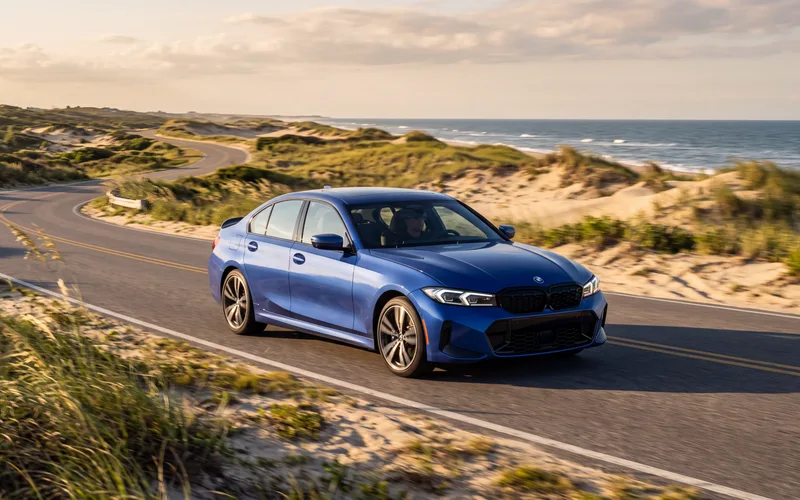 BMW 3 SeriesCompact Luxury SedanBetter at: Space and pace
For about $3,000 more it fixes nearly every practical complaint about the IS — rear seat, trunk, fuel economy, screens, and pace — if you can accept higher running costs.
Compare 2.71B-
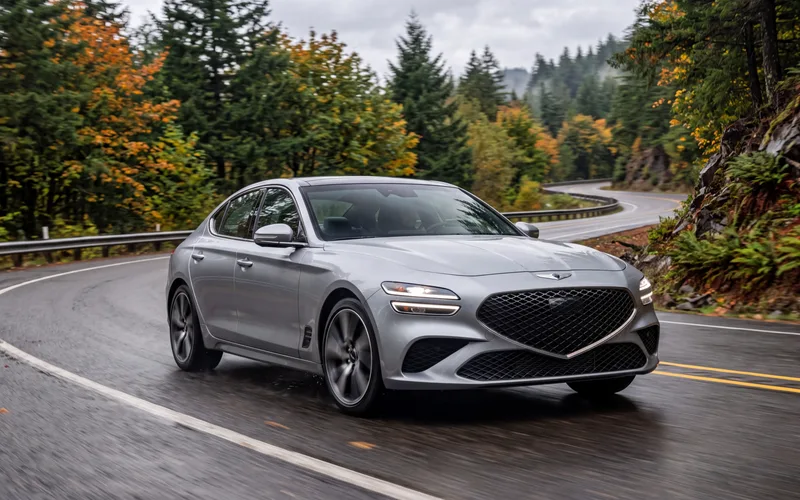 Genesis G70Compact Luxury SedanBetter at: Content per dollar
Delivers more standard equipment, a modern infotainment system, and a 10-year/100,000-mile powertrain warranty for similar money.
Compare 3.11B
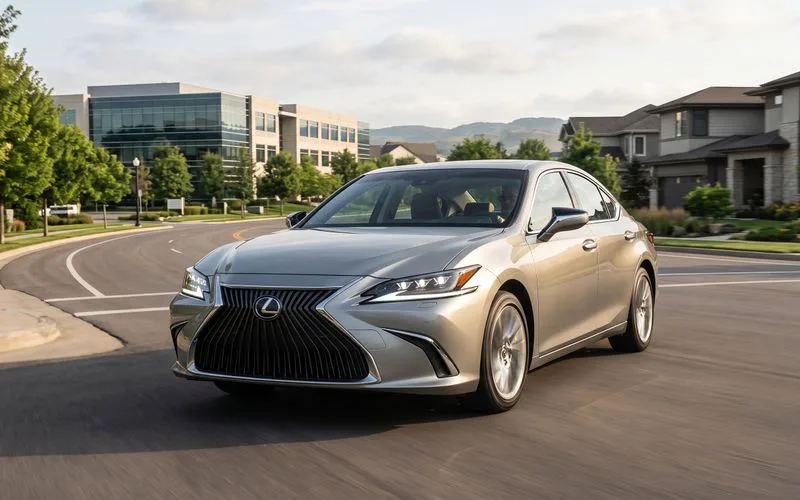 Lexus ESMid-Size Luxury SedanBetter at: Space and efficiency
The same Lexus reliability and service experience in a bigger, quieter, hybrid-available sedan for buyers who don't need rear-wheel drive.
CompareHow it's evolved
10 scored model years · 2017–2026
Subject scores by year
Hover or tap a score to see what moved it versus the year before. A corner mark flags a big swing.
| Year | Performance | Efficiency | Safety | Space | Cost | Reliability | Tech | Use-case | Driving | Value |
|---|---|---|---|---|---|---|---|---|---|---|
| 2026 | 50 | 32 | 67 | 57 | 55 | 86 | 62 | 45 | 80 | 63 |
| 2025 | 48 | 27 | 73 | 52 | 58 | 87 | 45 | 39 | 70 | 66 |
| 2024 | 46 | 27 | 74 | 56 | 60 | 87 | 46 | 43 | 73 | 67 |
| 2023 | 48 | 27 | 79 | 52 | 58 | 88 | 44 | 43 | 67 | 66 |
| 2022 | 48 | 27 | 78 | 55 | 59 | 85 | 46 | 43 | 72 | 65 |
| 2021 | 47 | 27 | 80 | 56 | 67 | 88 | 46 | 45 | 73 | 68 |
| 2020 | 45 | 23 | 64 | 55 | 63 | 87 | 31 | 41 | 65 | 57 |
| 2019 | 45 | 23 | 67 | 56 | 61 | 84 | 34 | 46 | 71 | 61 |
| 2018 | 44 | 30 | 70 | 54 | 59 | 86 | 33 | 46 | 69 | 70 |
| 2017 | 44 | 30 | 69 | 54 | 60 | 80 | 30 | 44 | 62 | 66 |
Compare two years
Best fit & conditions
Higher scores mean a better fit for that use case. Learn more about use-case fit →
Subject profile
Academic Probation · NHTSA safety recalls
Jan 13, 2020Fuel system, gasoline: delivery: fuel pumpToyota Motor Engineering & Manufacturing (Toyota) recalled certain 2018-2019 4Runner, Highlander, Camry, Land Cruiser, Sequoia, Sienna, Tacoma and Tundra, and Lexus RC 300, RC 350, GS 350, GX 460, IS 300, LC 500, LS 500, LX 570, RX 350L, and 2019 Toyota Avalon and Corolla, and certain Lexus NX 300, and ES 350 vehicles on January 13, 2020. On March 4, 2020, Toyota expanded the recall to include certain 2014-2015 Toyota 4Runner and Land Cruiser, 2018 Avalon, Corolla, 2014 FJ Cruiser, 2017 Sienna and Lexus 2018 ES 350, 2018-2019 GS 300, 2013-2014 GS350, 2014-2015 GX 460, IS 350 and LX 570, 2014 IS F, 2018-2019 IS 350, LC 500H and LS 500H, 2013-2015 LS 460, 2015 NX 200T and RC350, 2017 RC 200T and RX 350. Toyota also removed the 2018-2019 Toyota 4Runner and Land Cruiser and 2018-2019 Lexus GX 460 and LX 570 and 2019 NX300 from inclusion in this recall. On March 19, 2020, Toyota expanded the recall to include 2015 Lexus GS350 vehicles. The low-pressure fuel pump inside the fuel tank may fail.
Defect
Toyota Motor Engineering & Manufacturing (Toyota) recalled certain 2018-2019 4Runner, Highlander, Camry, Land Cruiser, Sequoia, Sienna, Tacoma and Tundra, and Lexus RC 300, RC 350, GS 350, GX 460, IS 300, LC 500, LS 500, LX 570, RX 350L, and 2019 Toyota Avalon and Corolla, and certain Lexus NX 300, and ES 350 vehicles on January 13, 2020. On March 4, 2020, Toyota expanded the recall to include certain 2014-2015 Toyota 4Runner and Land Cruiser, 2018 Avalon, Corolla, 2014 FJ Cruiser, 2017 Sienna and Lexus 2018 ES 350, 2018-2019 GS 300, 2013-2014 GS350, 2014-2015 GX 460, IS 350 and LX 570, 2014 IS F, 2018-2019 IS 350, LC 500H and LS 500H, 2013-2015 LS 460, 2015 NX 200T and RC350, 2017 RC 200T and RX 350. Toyota also removed the 2018-2019 Toyota 4Runner and Land Cruiser and 2018-2019 Lexus GX 460 and LX 570 and 2019 NX300 from inclusion in this recall. On March 19, 2020, Toyota expanded the recall to include 2015 Lexus GS350 vehicles. The low-pressure fuel pump inside the fuel tank may fail.
Risk
If the fuel pump fails, the engine can stall while driving, increasing the risk of a crash.
Remedy
Toyota will notify owners, and dealers will replace the fuel pump, free of charge. The recall began May 4, 2020. Owners may contact Toyota customer service at 1-888-270-9371 or Lexus customer service at 1-800-255-3987. Toyota's numbers for this recall are 20TB02 and 20TA02 for Toyota vehicles and 20LB01 and 20LA01 for Lexus vehicles.
NHTSA campaign 20V012000 ↗Manufacturer no. 20TB02/20TA02/20LB011,830,752 vehicles potentially affected (all models in the campaign)Owners notified May 1, 2020Filed by Toyota Motor Engineering & ManufacturingFiled as IS 300, IS 350, IS200T
2 recalls on other model years of the IS (2017, 2019, 2022)
Apr 8, 2026Fuel system, gasoline: delivery: fuel pumpThe low-pressure fuel pump inside the fuel tank may fail.
Defect
Toyota Motor Engineering & Manufacturing (Toyota) is recalling certain 2015-2022 Lexus RC, 2016-2020 GS, and 2022 IS vehicles. The low-pressure fuel pump inside the fuel tank may fail.
Risk
Fuel pump failure can cause an engine stall, increasing the risk of a crash.
Remedy
Dealers will replace the fuel pump assembly, free of charge. Owner letters were mailed October 15, 2026. Owners may contact Toyota's customer service at 1-800-331-4331. Toyota's numbers for this recall are 26LB05 and 26LA05.
NHTSA campaign 26V222000 ↗Manufacturer no. 26LB05/26LA059,139 vehicles potentially affected (all models in the campaign)Owners notified Oct 14, 2026Filed by Toyota Motor Engineering & ManufacturingFiled as ISNov 4, 2020Fuel system, gasoline: delivery: fuel pumpThe low-pressure fuel pump inside the fuel tank may fail.
Defect
Toyota Motor Engineering & Manufacturing (Toyota) is recalling certain 2018-2019 4Runner, 2019-2020 Avalon, 2019 Corolla Hatchback, 2017-2019 Highlander, 2018-2020 Camry, 2020 Corolla, 2018-2019 Land Cruiser, 2017-2020 Tacoma, 2019-2020 RAV4, 2019-2020 Sequoia, 2017-2020 Sienna, 2019-2020 Tundra, 2018-2020 Lexus ES350, 2017 Lexus GS200t, 2017-2019 Lexus GS350, 2019 Lexus GS300, 2018-2020 Lexus LC500h, 2019-2020 Lexus LS500, 2018-2019 Lexus GX460, 2017 Lexus IS200t, 2019 Lexus IS300, 2019 Lexus IS350, 2018-2020 Lexus LC500, 2018 Lexus LS500, 2019 Lexus LS500h, 2018-2019 Lexus LX570, 2017 Lexus RC200t, 2019 Lexus RC300, RC350, 2017 and 2019-2020 Lexus RX350, 2018-2020 RX350L, 2019 Lexus UX200, 2018-2019 Lexus NX300 vehicles. The low-pressure fuel pump inside the fuel tank may fail.
Risk
If the fuel pump fails, the engine can stall while driving, increasing the risk of a crash.
Remedy
Toyota will notify owners, and dealers will replace the fuel pump assembly with an improved one, free of charge. Owners of specific models were notified that remedy parts were available starting January 21, 2021. Owners of other models will be notified as remedy parts become available. Remedy parts should be available for all affected vehicles by late March 2021. Owners may contact Toyota customer service at 1-888-270-9371 or Lexus customer service at 1-800-255-3987. Note: This recall is an expansion of recall 20V-012. Toyota's number for this recall is 20TA02. Lexus' number for this recall is 20LA01.
NHTSA campaign 20V682000 ↗Manufacturer no. 20TA02, 20LA011,525,742 vehicles potentially affected (all models in the campaign)Owners notified Jan 21, 2021Filed by Toyota Motor Engineering & ManufacturingFiled as IS 300, IS 350, IS200T
Source: NHTSA Office of Defects Investigation recall database, model years 2017–2026. Recalls are listed by model year as the manufacturer filed them; whether a specific car is affected depends on its VIN — check a VIN at nhtsa.gov ↗. NHTSA model names matched to this page: IS, IS 300, IS 350, IS200T.
Detailed scoring by subject
1Performance & PowertrainOne of the IS's weakest categories.0.93F
2018 is the facelift year in which the IS 200t RWD was renamed IS 300 while keeping the 8AR-FTS 2.0L twin-scroll turbo four at 241 hp; the V6 cars gained five horsepower, but 241 hp is modest for a compact luxury sedan and the range tops out at 311 hp.
The turbo four's 258 lb-ft plateau opens at 1,650 rpm, so the rear-drive IS 300 out-pulls the naturally aspirated 3.5L V6 fitted to the AWD car at low revs despite giving away 1.5 litres of displacement.
6.9 seconds to 60 mph is mid-pack at best for a rear-drive compact luxury sedan — the V6 IS 350 is more than a second quicker, and turbocharged German rivals of the era were quicker still from smaller engines.
The 2.0T is quiet and well isolated at a cruise and reviewers rate it smoother-sounding than BMW's contemporary 2.0-litre four, but it makes only adequate thrust and 2018 predates the ECU retune Lexus applied to the RWD IS 300 for 2019 to sharpen throttle and turbocharger response.
The volume RWD IS 300 gets the better of the two 2018 gearboxes — the 8-speed Sport Direct Shift with paddles, where every AWD car is stuck with an older 6-speed — but its logic is biased toward efficiency rather than sport, and the optimized shift programming Lexus added arrives only for 2019.
All-wheel drive is offered on both IS 300 and IS 350 for 2018, but never with the volume 2.0T engine — ticking AWD forces the 3.5L V6 and the older 6-speed automatic — and the system is conventional full-time all-weather AWD with no terrain modes or low range.
Two gasoline engines only for 2018 — the 2.0L turbo four and the 3.5L V6 in two states of tune — with no hybrid, plug-in or electric option in the US lineup. The IS 300h sold overseas was never offered here and the 5.0L V8 IS 500 does not arrive until 2022.
2Efficiency & RangeThe IS's lowest-graded category.0.00F
At 26 MPG combined the volume IS 300 RWD is the most efficient 2018 IS and rates two MPG better than the 2019 car does, but it is still an unremarkable figure in a compact sedan band whose upper end is set by hybrids — and every gallon is premium.
22 MPG in town is the weakest part of the IS 300's economy picture — there is no electrification anywhere in the 2018 US lineup to help the city cycle, and the V6 AWD cars drop to 19 MPG.
The tall 8-speed Sport Direct Shift automatic and small frontal area give the RWD turbo four a 32 MPG highway rating — its strongest EPA figure and the clearest efficiency argument for taking it over the V6 cars.
A 17.4-gallon tank at the EPA's 26 MPG combined works out to roughly 452 miles between fills — genuinely useful touring range for the class, though every fill is at premium prices.
EPA puts the IS 300 at $3,000 a year at standard assumptions — a figure driven as much by the mandatory premium grade as by the 26 MPG rating, and near the top of the compact sedan cost band.
Every 2018 IS engine, the volume 2.0T included, calls for 91-octane premium unleaded, which carries a real per-gallon penalty over regular and is the main reason the annual fuel cost lands where it does. No flex-fuel, hybrid or plug-in alternative exists in the US lineup.
3SafetyOne of the IS's strongest categories.2.72B-
NHTSA NCAP rated both 2018 IS 300 body styles 5 stars overall, with 4 stars in the frontal barrier test and 5 stars in side and rollover; the 9.5% rollover risk and No-Tip dynamic result reflect the low-slung RWD sedan layout.
A 2018 IIHS TOP SAFETY PICK with Good in every crashworthiness test conducted — and, unusually, it won with no 'with specific headlights' qualifier, so every 2018 IS earns the award rather than one option-coded build. Short of TSP+ because the Acceptable headlights fell below the Good that 2018 TSP+ demanded, and the passenger-side small overlap test was never run on this generation.
Lexus Safety System+ is standard on every 2018 IS trim — pre-collision braking, lane departure alert with steering assist, intelligent high beam and radar cruise — and a backup camera became standard equipment this year, which in 2018 put the IS ahead of German rivals that still charged for driver-assist bundles. It falls short of the top band because blind-spot monitoring and rear cross-traffic alert stay optional and the radar cruise is high-speed only.
IIHS rated the standard pre-collision system Superior for vehicle-to-vehicle front crash prevention, the top result available. Held out of the 80+ band because IIHS never ran a pedestrian front-crash-prevention evaluation on this vehicle — that test postdates the 2018 model year — so there is no verified daytime or nighttime pedestrian result to credit.
Blind Spot Monitor with Rear Cross-Traffic Alert is alert-only with no braking intervention and no safe-exit warning, and it is not standard on any trim — it arrives bundled in the $1,220 Comfort Package (or higher option groups), so a base IS 300 leaves the lot without it. Available across the range rather than locked to a top trim, which keeps it in the middle band.
Lane Departure Alert with Steering Assist is standard, but it is a departure-triggered corrective nudge rather than continuous lane centering — there is no lane-trace/centering mode on the 2018 IS, so the car does not hold itself in the lane between the lines. Functional as a warning-plus-assist system, which is where the middle band starts.
A real radar-based adaptive cruise system is standard, but it is the High-Speed Dynamic Radar Cruise Control variant that only operates above roughly 25 mph — no stop-and-go follow, so it disengages in exactly the traffic where ACC earns its keep. There is no combined highway-assist mode pairing it with steering.
No hands-free highway driving system is offered on the 2018 IS at any trim or option level; Lexus Teammate Advanced Drive did not exist in the US lineup until the 2022 LS 500h.
IIHS rated the LED projector headlights Acceptable on both IS 300 and IS 350 — no Marginal or Poor build exists, which is why the IS took its 2018 TOP SAFETY PICK without the 'with specific headlights' caveat attached to the ES, RX and RC. Intelligent High Beam is standard and an Adaptive Front Lighting System that steers the beam with the wheel became available for 2018, but Acceptable rather than Good keeps it out of the top band.
The low roofline, high beltline and thick rear pillars of the XE30 body create real rear three-quarter blind zones, and camera compensation is thin for the year — a backup camera is standard (new for 2018) but parking sensors cost extra and no surround-view monitor is offered. Forward sightlines over the low hood are good, which keeps it out of the bottom band.
IIHS rates the LATCH hardware itself Good, with two complete sets of anchors in the outboard rear positions. The limiting factor is the room around them, not the hardware: this is one of the tightest rear compartments in the compact luxury class, so a rear-facing seat pushes the front passenger seat well forward and three-across is not realistic, and the sloping roofline narrows the door aperture for lifting a seat in.
4Space & ComfortGrades below the middle of the scale.1.63D
The 2018 IS is a conventional five-seat compact sedan across the whole range — IS 300 RWD, IS 300 AWD, IS 350 RWD/AWD and their F SPORT variants all carry 2+3 seating.
Published front headroom for the XE30 IS; the power moonroof is standard on US cars, so 38.2 in is the as-delivered figure for the volume IS 300 rather than a sunroof-delete number.
Front-row legroom is genuinely generous for the compact luxury class and is one of the few interior dimensions where the IS beats its German rivals outright.
Mid-pack rear headroom — the fastback roofline costs some, but it is the rear legroom rather than headroom that defines the IS back seat.
At 32.2 in on a 110.2-inch wheelbase the IS has among the tightest rear quarters of any compact luxury sedan — it sits essentially at the floor of the segment band, and the 2018 facelift changed nothing about the XE30 passenger cell.
A 10.8 cu ft trunk is small even for a compact sedan, and the spare tire beneath the floor plus a narrow high-liftover aperture further limit what actually fits.
Storage is the weak point of an otherwise beautifully finished cabin: small-item space is limited to the armrest bin, door pockets and glovebox, and the 60/40 rear seat does not fold flat. No underfloor tray, no wireless charging pad and no onboard power beyond 12-volt outlets.
The 10-way power NuLuxe sport seats are well bolstered and beautifully finished, but Edmunds singles out a fixed lumbar support mounted too high for an average-size driver — a real long-haul penalty — and the short-cushioned rear bench caps a category judged front and rear.
Reviewers split on the 2018 car: Edmunds calls ride comfort a standout with solid body control and smooth compliance, while Consumer Reports' road test of the same year finds it 'needlessly jittery' and neither plush nor tied down. Adaptive Variable Suspension is available only with F SPORT on the V6 cars, so the volume IS 300 gets fixed damping.
Wind and engine isolation are genuinely strong — Edmunds calls the hushed cabin a standout — but tire roar on coarse surfaces is the consistent complaint against this model year, flagged by both AAA and Consumer Reports, which keeps it out of the class-leading band.
High-efficiency dual-zone automatic climate, second-row vents and a power moonroof are standard, and Enform Remote can pre-condition the car from a phone — but heated and ventilated front seats require the Premium or F SPORT package, the heated steering wheel is bundled into a separate leather/wood option group, and there are no rear climate controls.
5Cost of OwnershipMid-pack among this car's ten categories.1.97C-
For 2018 the entry car is the renamed IS 300 RWD — the 241-hp 2.0-liter turbo four that was badged IS 200t through 2017 — at $38,210 before Lexus' $1,025 delivery, processing and handling fee. That opens about $1,000 below a 2018 BMW 330i or Mercedes-Benz C 300 and roughly $2,250 above a front-drive Audi A4 2.0T ultra Premium.
There are no named trims on the 2018 IS — every car is an IS 300 or IS 350 configured with packages — so the representative car is an IS 300 with the equipment most buyers actually ordered: the heated/ventilated seat package, Blind Spot Monitor with Rear Cross-Traffic Alert (which is optional on every 2018 IS), and the 10.3-inch Navigation package. That lands near $43,500, between the $39,235 base RWD car and the $41,685 delivered price of the V6 IS 300 AWD that cold-weather buyers took.
The IS is among the cheapest luxury compacts to run: RepairPal puts Lexus at $551/yr against $739/yr for luxury midsize cars, and CarEdge projects only $1,944 in maintenance and repair across the IS 350's first five years before wear items. Two structural advantages compound that — Lexus pays for the 5,000- and 10,000-mile services, and the whole five-year window falls inside the 6-year/70,000-mile powertrain warranty, which is exactly the period when a German rival's out-of-warranty year 5 starts generating bills.
This car's five-year mark landed in 2023, near the top of the inflated post-pandemic used market, and KBB's own back-cast puts its 2023 resale value around $22,000 — about 56% of the base delivered price but nearer 54% of an optioned car, since packages retain value poorly. Either way the IS depreciates distinctly slower than its German rivals: the 2018 A4 scorecard carries 51%, and iSeeCars has the IS beating the 45.6% five-year loss of the luxury-compact class.
Lexus' 4-year/50,000-mile basic coverage matched BMW, Mercedes-Benz and Audi for 2018 and beats the 3-year/36,000-mile mainstream standard, but trails the 5-year/60,000-mile terms Jaguar and Genesis offered that year. Mid-band for the segment and unchanged across the XE30 generation.
72 months/70,000 miles on the 2.0-liter turbo four or 3.5-liter V6 and its driveline is two years longer than the basic warranty and better than the German rivals, none of which published a separate powertrain term in 2018 — an Audi A4's engine was covered for exactly as long as its trim panels. It still sits near the bottom of the 5–10 year band the item normalizes against, well short of the 10-year/100,000-mile coverage Hyundai, Kia and Genesis offered that year.
Lexus covers the first two scheduled services — 6 months/5,000 miles and 12 months/10,000 miles — so included maintenance runs one year, shorter than BMW's Ultimate Care (3 yr/36,000 mi) or Jaguar's and Volvo's 2018 programs, though it is more than Audi's nothing-at-all. What lifts this above a plain short-plan score is a perk that is specifically new for 2018: Lexus made Enform Safety Connect and Service Connect complimentary for the first ten years rather than charging a subscription after a one-year trial, which is an unusually long giveaway for the era and covers automatic collision notification, emergency assistance, stolen-vehicle locator and vehicle health reports. Four years of 24-hour Lexus Roadside Assistance runs alongside the warranty.
$43,500 volume-trim price minus its estimated resale value after 5 years (54% retained, or about $23,490) leaves about $20,010 in depreciation. Add the projected $4,400 in 5-year maintenance and repairs, and owning this vehicle for 5 years costs about $24,410 in total.
6Reliability & QualityThe IS's best-graded category.3.83A
2018 is the fifth model year of the XE30 generation and the first year after the 2017 facelift, a package-and-naming update rather than an engineering one — the RWD IS 200t becomes the IS 300, the V6 gains five horsepower, adaptive front lighting joins the options list and the IS 350 F SPORT RWD picks up a standard limited-slip differential. No platform, electrical-architecture or gearbox change. It is also the strongest dependability cohort of any IS year in this dataset: the J.D. Power study that surveyed this exact model year at three years put Lexus first among all brands at 81 PP100 against a 121 industry average, the best brand result in the study's history at the time. Eight years of field exposure have produced nine NHTSA complaints across all three model strings and no investigation. Scored two points above the 2019 IS (86) — that year's cohort study placed Lexus second rather than first, and it carries two recall campaigns to this year's one — and one below the campaign-free 2020 car (89). Consumer Reports carries no numeric verdict for this model year, which is what keeps it out of the low 90s. Far above the sedan peer median (71.5) and the German compact-luxury field.
Judged on the studies contemporary with this model year, 2018 is Lexus at its benchmark: the brand ranked first among all brands in the dependability study that surveyed this model year at three years — its ninth first-place finish in ten years, at a record-low 81 PP100 — and took the No. 1 spot in Consumer Reports' 2018 annual reliability survey, displacing Toyota for the sixth straight year the two led the table. That is comfortably inside the 'consistently top-5' band and two to four bands clear of the German and Italian rivals in the calibration table (BMW 3 Series cat6 72.9, Mercedes-Benz C-Class 69.4, Alfa Romeo Giulia 49.2). Held at 93 rather than higher for the same reason as the 2018 ES, scored identically: initial quality was the weak leg that year — Lexus finished outside the Initial Quality Study's top five despite a large year-over-year gain — and in dealer-service satisfaction it was only tied for third among luxury brands rather than first.
One safety campaign reaches this model year, and it is the Denso low-pressure fuel-pump defect that runs through the whole Toyota and Lexus range of the period: the January 2020 campaign names the 2018-2019 IS 300 in its original scope and picked up the 2018-2019 IS 350 in the March 4, 2020 expansion, so both engines are covered by the single action. The failure mode is an engine stall while driving rather than a nuisance, which is what keeps this out of the top band, but the root cause is a supplier-wide one — a low-density resin impeller that absorbs fuel, swells and seizes against the pump body, across roughly 1.8 million vehicles — not an IS design flaw, remedy parts have been free and available since May 2020, and NHTSA carries no investigation and only nine complaints in eight years. Scored six points above the 2019 IS (70), which draws two separate campaigns against the same part, and four above the 2022 car (72), whose campaign is still open; well below the campaign-free 2020 IS (90). The secondary drag is bulletin volume: CarComplaints lists 161 TSBs for the 2018 IS 300 against 101 for the 2018 ES 350, mostly informational and process bulletins (Bluetooth pairing, parking-assist monitor, DCM replacement, storage-mode short pin) rather than defect patterns, but a heavier book than its stablemate. Squarely in the 'typical recall activity, nothing systemic' band.
Every engine and gearbox in the 2018 lineup is a long-serving, high-mileage-proven Toyota unit, and none of them is implicated in this year's one campaign: the 8AR-FTS 2.0-liter twin-scroll turbo four in the volume IS 300 RWD is shared with the NX 200t/300, RX 300 and GS 200t, the 2GR-FKS V6 in the AWD cars and the IS 350 with the Highlander, Tacoma and Camry V6, and both automatics — the eight-speed Sport Direct-Shift on RWD cars and the six-speed on AWD — are conventional Aisin torque-converter designs with no dual-clutch or CVT exposure. What holds it a point below the 2020 IS (88) is the same distinction that puts the 2019 and 2022 cars at 86: a fuel-delivery component in this model year's propulsion system was defective enough to be recalled, so there is a known weak part in the system even though it is a supplier in-tank pump rather than the engine or transmission. It sits a point above 2019 because that year's pump was recalled twice and this one once. The direct-injected turbo four's ordinary carbon-buildup and turbo exposure keeps it short of a clean-sheet score independently of that.
This is the XE30 cabin one year after the 2017 facelift brought the 10.3-inch display, revised steering wheel and added contrast stitching along the dash, and reviewers of the 2018 car separate the materials from the technology exactly as they do for the later years: soft-touch composites in all the expected places, tastefully applied metallic accents, mostly high-quality switchgear, quality seat stitching, and a wide-console, tiered-dash design reviewers compare to cars costing two or three times as much. The criticism lands on the aging Remote Touch interface, the tight rear cabin and dated technology rather than on material grade, with the wrinkled leather around the steering wheel's thumb rests the one specific material complaint. Scored a point above the 2019 IS (75) on the same cabin because a year earlier it was measured against a field the redesigned G20 3 Series had not yet entered, and two below the 2021 car (78). Below the 3 Series (80). Scored for the volume IS 300 on standard NuLuxe rather than an F SPORT with the premium seats.
Assembly remains the IS's strongest quality attribute: built at Toyota's Tahara plant on a body the line had four years to converge on by this model year, with contemporary reviews singling out tight panel fit and solid door seals and no squeak-and-rattle thread in owner reports. Scored two points below the 2019 and 2020 cars (both 90) for one specific reason rather than a general impression — three of the nine NHTSA complaints filed against this model year in eight years are spontaneous sunroof-glass shatters while driving, filed in November 2018, April 2022 and January 2024. Three of nine is the only visible pattern in an otherwise clean complaint record, and a glass or assembly failure is what this item measures, even though the absolute count is tiny and NHTSA opened no investigation. Lexus's initial-quality standing in the study covering this model year was above average but outside the top five, so there is nothing on that side to offset it. Still above the 3 Series (86) and level with the 2024 IS (88).
Coverage is thinner than BMW's or Mercedes-Benz's at roughly 240 US rooftops and far thinner than parent Toyota's, but Lexus's service reputation is the segment's most durable and the brand has sat at or near the top of the dealer-service study for decades. Held to 85 — below the 87-90 the later IS years earn and matching the 2018 ES scored on the same result — because in the Customer Service Index study contemporary with this model year Lexus was only tied for third among luxury brands rather than first, behind Infiniti, which took the luxury lead for the first time since 2003, and Porsche. The sustained record rather than that single year is what carries the score. This is a brand-wide attribute with no model-specific component beyond the study result.
An eight-year-old luxury sedan from a generation that ran a decade sharing engines, transmissions and driveline hardware with high-volume Toyotas is close to the best case this item measures: OEM mechanical parts are abundant and cheap by class standards, used and salvage supply is the deepest of any IS year in this dataset simply because it is the oldest, an enthusiast aftermarket serves the IS/RC/GS family, and independent shops will take the work without dealer-only tooling. The one recall on this model year does not weigh here — remedy parts have been free and available since May 2020, unlike the 2022 IS's still-open campaign — though NHTSA does carry one March 2020 complaint from an owner who was notified of 20V012000 before parts were in stock. Scored level with the 2019 IS (86) and above every later year. Far above the dealer-dependent Germans (3 Series 55) and the low-volume Lexus LS flagship (68), but short of a Toyota-badged car because luxury-specific trim, glass, lighting and body panels still price at a premium — and the recurring sunroof-glass complaints on this year are exactly that kind of part.
7Technology & InfotainmentOne of the IS's weakest categories.0.19F
The volume IS 300 ships with a 7-inch Lexus Display Audio screen; the 10.3-inch split-screen unit is new for 2018 but arrives only with the optional navigation system. Neither display is touch-operated — both are driven by the second-generation Remote Touch trackpad.
The Remote Touch trackpad is the most criticized part of the car — Consumer Reports describes hitting on-screen targets as a game of cat and mouse — and the menu structure was dated even in 2018. Physical climate and volume controls are the only saving grace. The second-generation RTI adds Enter buttons on either side of the pad, which does not fix the underlying problem.
The 2018 IS offers no phone projection at all — not wireless, not even wired. It is also excluded from the dealer retrofit Lexus later offered for 2018 cars, because that upgrade requires the Enform 2.0 head unit the IS does not have. Siri Eyes Free and Scout GPS Link mirroring are the substitutes.
Voice recognition is rigid command-word style rather than natural language, and embedded navigation is a cost option — the standard car makes do with Scout GPS Link projecting turn-by-turn directions from a phone onto the 7-inch screen. The optional 10.3-inch nav is a genuine upgrade, but it is not what the volume trim leaves the lot with.
The standard eight-speaker system is a solid base for the class, and the optional Mark Levinson Premium Surround setup — 835 watts through 15 speakers — remains one of the better factory systems available at this price.
The volume IS 300 uses conventional analog dials with a small multi-information display; the LFA-inspired single-ring moving-bezel digital meter — genuinely excellent and unique in the class — is restricted to F SPORT models.
No over-the-air vehicle software updates. Map updates for the optional navigation are a dealer or physical-media operation, and no feature was ever added to this car after delivery — the CarPlay upgrade Lexus offered other 2018 models was a dealer hardware job the IS could not even take.
Lexus Enform Remote covers the core set — remote engine start and climate, lock/unlock, vehicle locate and fuel level — through the app or the SmartAccess fob, and Safety Connect plus Service Connect are complimentary for ten years on this model year. Remote itself runs on a shorter trial before a subscription tied to Safety Connect, there is no digital key, and the smartwatch/Alexa expansion did not reach the IS until 2019.
Device power is thin and dated even for 2018: front USB-A with an aux jack plus 12-volt outlets, no USB-C anywhere, no rear-seat ports and no Qi wireless charging pad — a tray Lexus was already fitting to other lines by this year.
SmartAccess proximity entry with push-button start is standard on every trim, and remote engine start is available through the fob or the Enform app on Enform Remote cars. No phone-as-key and no hands-free trunk release, both of which German rivals were beginning to offer.
A backup camera became standard on all 2018 IS models — a real gain for this model year — and Intuitive Parking Assist adds front and rear sonar, but there is no surround-view camera at any price and the rear camera image is low-resolution by 2018 standards.
No head-up display is offered on the XE30 IS at any trim or option level, F SPORT included — a visible gap against the 3 Series, C-Class and A4, all of which offered one in 2018.
8Use-Case FitGrades below the middle of the scale.1.06D
IIHS rates the LATCH hardware itself Good with two complete sets in the outboard rear positions, but 32.2 in of rear legroom means a rear-facing seat pushes the front passenger well forward, the sloping roofline narrows the door aperture for lifting a seat in, and a 10.8 cu ft trunk swallows one stroller and little else.
This is the 2018 IS's strongest family argument: Lexus Safety System+ is standard on every trim and a backup camera became standard this year, so a base IS 300 needs no options to be well defended, and the car is a 2018 IIHS TOP SAFETY PICK with no headlight qualifier alongside a 5-star NHTSA overall rating. Acceptable headlights, optional-only blind-spot monitoring and no rear-occupant alert keep it below the top band.
Up front it is a quiet, well-equipped long-hauler, but the back seat is where family duty breaks down: 32.2 in of legroom, second-row vents but no rear climate controls, no rear USB ports or entertainment, and a trunk too small for four people's luggage.
Commuting is what the IS does best — a hushed cabin, a smooth eight-speed automatic on the volume RWD car and compliant damping make it low-effort in traffic. Two things hold it back this year: the standard radar cruise is the High-Speed variant that quits below roughly 25 mph, exactly where stop-and-go traffic lives, and the RWD IS 300 had not yet received the ECU retune for throttle response and turbo lag that arrives for 2019.
At 26 MPG combined the 2018 IS 300 RWD is the most efficient IS of this generation and rates two MPG better than the 2019 car, which lifts it above average for a rear-drive luxury sedan — but 91-octane premium is required on every engine, and the EPA still puts annual fuel cost at $3,000. Lexus dealer service is not cheap, though the Toyota-derived mechanicals keep consumables predictable.
A 184.3-inch footprint and a tight 34.2-foot turning circle make it easy to place in city traffic, and the backup camera becoming standard for 2018 helps materially — but the high beltline and thick rear pillars hurt over-shoulder visibility, and parking sensors remain an option rather than standard equipment.
A compact luxury sedan with no US tow rating, no payload provision beyond passengers and luggage, and a 10.8 cu ft sealed trunk — it is not a work vehicle in any sense this category measures.
The Toyota-derived 2.0-liter turbo, 3.5-liter V6 and GS-derived chassis are as durable as anything in the class and Lexus sits at the top of long-term dependability surveys, but NuLuxe or leather trim, roughly five inches of ground clearance and a sealed trunk make the IS a poor candidate for abuse, and no fleet or work configuration exists.
There is no onboard power beyond 12-volt outlets, no tie-down system, no roof rails or factory rack provision, no hitch and no upfit ecosystem of any kind.
A quiet, well-damped cabin, standard radar cruise and roughly 450 miles between fills — the best touring range of any XE30 IS model year — make it a genuinely restful highway car. Edmunds' complaint about the fixed, too-high lumbar support is the one real endurance limit for the driver; rear passengers and luggage capacity are the others.
All-wheel drive is available but only bundled with the 3.5-liter V6 and the older six-speed automatic, never with the volume turbo four; ground clearance is sedan-low at about five inches, there are no roof rails or factory hitch, and no tow rating for bikes or a small trailer. A SNOW mode in Drive Mode Select is the extent of the low-grip provision, and gravel roads are the practical limit.
The 60/40 split-folding rear seat is the only flexibility on offer and it does not fold flat, opening into a 10.8 cu ft trunk raised over the spare tire — bulky gear such as skis or a bike simply does not fit, and there is no hitch or roof rack the car can take instead.
9Driving ExperienceMid-pack among this car's ten categories.2.69C+
The rear-drive XE30 chassis — double-wishbone front, GS-derived multi-link rear — stays flat and drama-free when pushed and reviewers call the handling precise, but it is tuned for comfort first and falls short of the 3 Series benchmark for outright engagement. For 2018 the F SPORT package gains a Torsen limited-slip rear differential as standard on the IS 350 RWD, with Adaptive Variable Suspension available.
The electric rack is accurate off-center and naturally weighted, which is more than several rivals manage, but feedback through the rim is muted — precise without telling the driver much about what the front tires are doing.
Four-wheel ventilated discs give consistent, progressive pedal feel and stops are secure in road testing, with F SPORT adding upgraded brake pads. No reviewer of the 2018 car reports fade, grabbiness or long stops, but nothing about the setup stands out against the segment's best either.
The eight-speed Sport Direct Shift automatic is smooth and well matched to the 241-hp 2.0-liter turbo on the volume RWD car, with 258 lb-ft available from 1,650 rpm. Off-the-line turbo lag is still present — the ECU retune that specifically targets tip-in response arrives only for 2019 — and 6.9 seconds to 60 mph is mid-pack. Choosing AWD is worse: it forces the V6 onto an older six-speed automatic.
The four is well isolated and inoffensive at a cruise — reviewers note little engine noise reaches the cabin — but under load it sounds ordinary and lacks the tuneful edge of the 3.5-liter V6; on F SPORT cars an intake sound generator is doing some of that work artificially.
A tight curb-to-curb circle for a rear-drive sedan, helped by the compact 110.2-inch wheelbase — it makes U-turns and parking-garage ramps easy and is one of the IS's quiet everyday strengths.
The low-slung seating position with 10-way power adjustment and a tilt/telescoping wheel suits a wide range of drivers, the low beltline helps forward and side sightlines, and climate and audio keep physical controls — but the fixed high lumbar support, the awkward reach to the Remote Touch pad on the move, and a low roofline that complicates ingress all cost it.
There is real enjoyment in the rear-drive balance, the crisp eight-speed and a chassis that stays composed, and AAA signs off on the 2018 car as fun to drive — but with 241 hp, 6.9 seconds to 60 and a comfort-first tune, the volume IS 300 is pleasant rather than thrilling; enthusiasts step up to the 311-hp IS 350 F SPORT with its new-for-2018 limited-slip differential.
10Value & Market PositionOne of the IS's strongest categories.2.71B-
The driver-assistance content is the standout: Lexus Safety System+ — pre-collision with pedestrian detection, lane departure alert with steering assist, intelligent high beam and full-speed dynamic radar cruise — is standard on every 2018 IS, at a time when BMW, Mercedes-Benz and Audi all charged four figures for packages to get close. Add ten airbags, a now-standard backup camera, NuLuxe upholstery, 10-way power sport seats, dual-zone climate, a power moonroof and SmartAccess push-button start on a $39,235 car and the base spec is generous. Two real gaps hold it out of the top band: there is no Apple CarPlay or Android Auto on a 2018 Lexus at any price, and Blind Spot Monitor with Rear Cross-Traffic Alert, navigation and leather all cost extra.
Fair value rather than a bargain. The $39,235 IS 300 undercuts a 330i and C 300 while including the full adaptive-cruise-and-braking suite they charged for, and the money that matters most over five years — Lexus' maintenance costs and resale — is genuinely better than the German set. Against that, the 241-hp 2.0T is the slowest engine in the class, rear-seat and trunk space are among the smallest, the Remote Touch interface was widely judged the worst in the segment, and the options that make the car feel like a $45,000 luxury sedan stack up fast: a loaded IS 300 stickers past $46,000.
Four distinct powertrain/drivetrain combinations across a tight $38,210–$43,995 band — a turbo four with rear drive, a V6 with all-wheel drive, and the 311-hp IS 350 either way — each available with the F SPORT treatment and layered with Premium, Comfort, Luxury, Navigation and Mark Levinson packages, so a buyer can leave the lot anywhere from $39,000 to past $50,000. The gaps are at the ends: no manual, no hybrid in the US market, and nothing above the IS 350 since the IS F went away, so there is no halo trim and no genuine bargain entry point below $38,000.
22,927 US deliveries in 2018 is still a real number, but the trajectory is the story: down 13% from 2017 and down 39% from 2016, the fourth year of an unbroken slide that would halve volume again by 2020. The IS finished behind the C-Class, 3 Series and A4 in its own segment while compact luxury SUVs drained the buyers, and Wikipedia records the nameplate as having 'spent a decade sliding as buyers moved to crossovers' from its 2007 peak.
Lexus in 2018 is a top-three US luxury brand by volume and effectively the reference for dependability, which is a durable, dollar-denominated kind of desirability — it is why the IS resells better than its German rivals and costs less to keep. It is a step short of aspirational, though, and specifically so in this segment: the badge carries reliability and comfort rather than the driver-focused cachet a 3 Series or Giulia trades on, which is the axis compact sport sedan buyers shop.
Scored on buyer benefit, 2018 was an excellent year to take an IS home. This is the pre-chip-shortage market and a nameplate losing double-digit volume, and Lexus supported it accordingly: stackable lease cash, conquest and college-grad money, and a money factor close to zero. A $46,078-sticker IS 300 leasing at $395/month on $1,000 down is deep support, not a rounding error, and it sits at the opposite end of the scale from the 2022–2023 market where luxury sedans transacted at or above MSRP.
2018 is the fifth model year of the XE30 generation and the second since its facelift, so the car is current but no longer new: the updates for 2018 are light — five more horsepower for the V6s, the IS 200t renamed IS 300, a standard backup camera, optional adaptive front lighting and a limited-slip diff on one F SPORT variant. Redesign risk is low for a 2018 buyer, since the fourth generation did not arrive until 2021, but the platform's cabin technology had visibly aged: a 7-inch screen run by a haptic touchpad, no smartphone mirroring of any kind, and an interior architecture laid down in 2013.
Solidly well-reviewed and never the pick of the class. U.S. News scored it 8.1/10 and ranked it fifth among 2018 luxury small cars — top third — praising the interior, the ride and the safety record, and made it a finalist for Best Luxury Small Car for the Money; IIHS named the sedan a Top Safety Pick. But the same reviews converge on the same two complaints, a cramped rear seat and small trunk plus the worst infotainment controller in the segment, and the IS won no comparison tests against the 3 Series, A4 or Giulia and took no 10Best or NACTOY honors in a year when the Giulia did.