
The verdict
A mixed-report compact luxury sedan, strong on reliability and held back by efficiency.
The 2020 Lexus IS is the last and most thoroughly debugged year of a platform that dated to 2014, and it shows on both sides of the ledger: bulletproof build quality, zero NHTSA recalls six years on, five-star crash ratings and roughly 60% of its sticker still in the car at five years — against a 7-inch non-touch screen with no Apple CarPlay or Android Auto at any price, 32.2 inches of rear legroom, a 10.8 cu ft trunk and a 241 hp turbo four that needs 6.9 seconds to reach 60 mph. Buy it used as a dependable, quiet, cheap-to-keep luxury commuter with a small footprint, not as a sport sedan or a family car. Anyone who cares about back-seat space, cargo, screens or straight-line speed is shopping the wrong car — and the 2021 redesign fixed most of those complaints.
Jump to scoresStrengths
- Reliability that is genuinely class-leading, with the field record to prove it
- It holds its money and costs little to keep
- Five-star crash protection with real active safety standard
What holds it back
- No Apple CarPlay, no Android Auto, and no touchscreen at any price
- The back seat and trunk are the smallest in the class
- Expensive to fuel for a small sedan — and premium only
Top alternatives
Cars shoppers cross-shop with the Lexus IS 3.07B
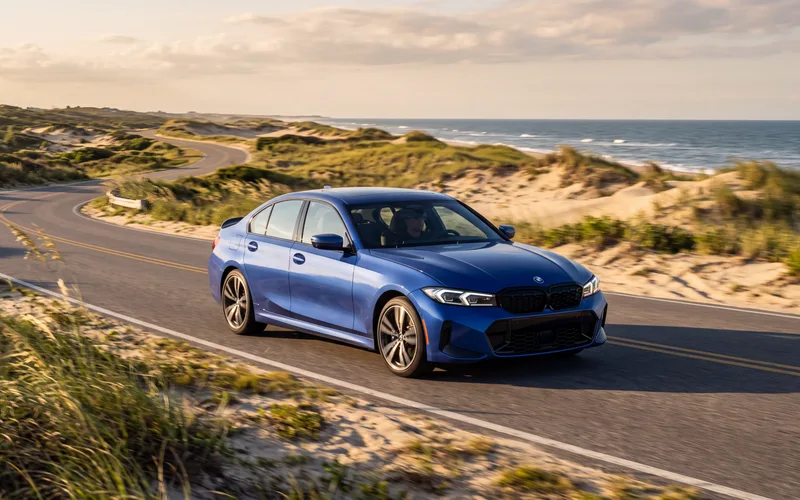 BMW 3 SeriesCompact Luxury SedanBetter at: Space and pace
For about $3,000 more it fixes nearly every practical complaint about the IS — rear seat, trunk, fuel economy, screens, and pace — if you can accept higher running costs.
Compare 2.71B-
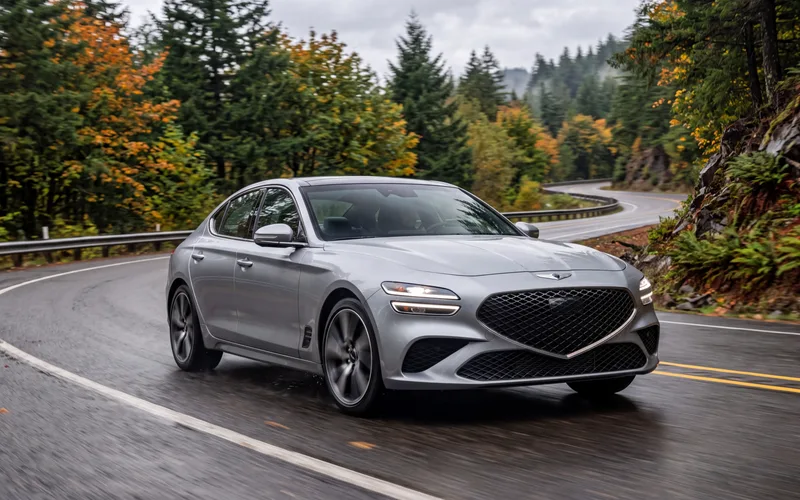 Genesis G70Compact Luxury SedanBetter at: Content per dollar
Delivers more standard equipment, a modern infotainment system, and a 10-year/100,000-mile powertrain warranty for similar money.
Compare 3.11B
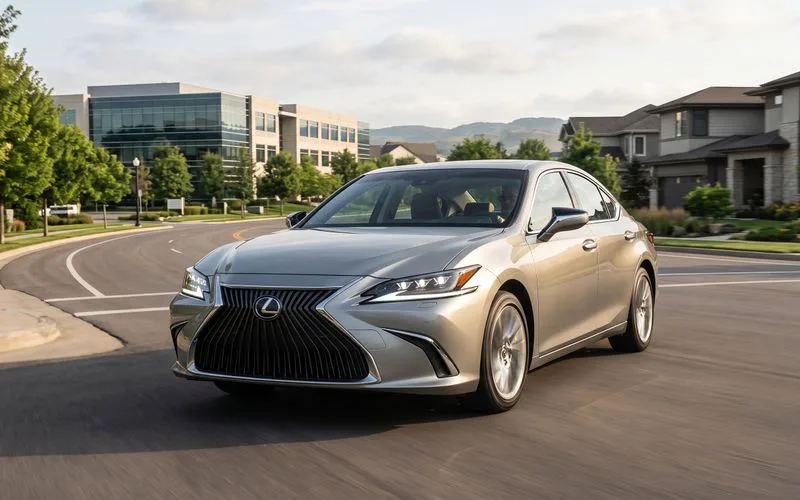 Lexus ESMid-Size Luxury SedanBetter at: Space and efficiency
The same Lexus reliability and service experience in a bigger, quieter, hybrid-available sedan for buyers who don't need rear-wheel drive.
CompareHow it's evolved
10 scored model years · 2017–2026
Subject scores by year
Hover or tap a score to see what moved it versus the year before. A corner mark flags a big swing.
| Year | Performance | Efficiency | Safety | Space | Cost | Reliability | Tech | Use-case | Driving | Value |
|---|---|---|---|---|---|---|---|---|---|---|
| 2026 | 50 | 32 | 67 | 57 | 55 | 86 | 62 | 45 | 80 | 63 |
| 2025 | 48 | 27 | 73 | 52 | 58 | 87 | 45 | 39 | 70 | 66 |
| 2024 | 46 | 27 | 74 | 56 | 60 | 87 | 46 | 43 | 73 | 67 |
| 2023 | 48 | 27 | 79 | 52 | 58 | 88 | 44 | 43 | 67 | 66 |
| 2022 | 48 | 27 | 78 | 55 | 59 | 85 | 46 | 43 | 72 | 65 |
| 2021 | 47 | 27 | 80 | 56 | 67 | 88 | 46 | 45 | 73 | 68 |
| 2020 | 45 | 23 | 64 | 55 | 63 | 87 | 31 | 41 | 65 | 57 |
| 2019 | 45 | 23 | 67 | 56 | 61 | 84 | 34 | 46 | 71 | 61 |
| 2018 | 44 | 30 | 70 | 54 | 59 | 86 | 33 | 46 | 69 | 70 |
| 2017 | 44 | 30 | 69 | 54 | 60 | 80 | 30 | 44 | 62 | 66 |
Compare two years
Best fit & conditions
Higher scores mean a better fit for that use case. Learn more about use-case fit →
Subject profile
Academic Probation · NHTSA safety recalls
No NHTSA safety recall is on record for the 2020 Lexus IS. Other model years of the IS have 3 — listed below.
3 recalls on other model years of the IS (2017–2019, 2022)
Apr 8, 2026Fuel system, gasoline: delivery: fuel pumpThe low-pressure fuel pump inside the fuel tank may fail.
Defect
Toyota Motor Engineering & Manufacturing (Toyota) is recalling certain 2015-2022 Lexus RC, 2016-2020 GS, and 2022 IS vehicles. The low-pressure fuel pump inside the fuel tank may fail.
Risk
Fuel pump failure can cause an engine stall, increasing the risk of a crash.
Remedy
Dealers will replace the fuel pump assembly, free of charge. Owner letters were mailed October 15, 2026. Owners may contact Toyota's customer service at 1-800-331-4331. Toyota's numbers for this recall are 26LB05 and 26LA05.
NHTSA campaign 26V222000 ↗Manufacturer no. 26LB05/26LA059,139 vehicles potentially affected (all models in the campaign)Owners notified Oct 14, 2026Filed by Toyota Motor Engineering & ManufacturingFiled as ISNov 4, 2020Fuel system, gasoline: delivery: fuel pumpThe low-pressure fuel pump inside the fuel tank may fail.
Defect
Toyota Motor Engineering & Manufacturing (Toyota) is recalling certain 2018-2019 4Runner, 2019-2020 Avalon, 2019 Corolla Hatchback, 2017-2019 Highlander, 2018-2020 Camry, 2020 Corolla, 2018-2019 Land Cruiser, 2017-2020 Tacoma, 2019-2020 RAV4, 2019-2020 Sequoia, 2017-2020 Sienna, 2019-2020 Tundra, 2018-2020 Lexus ES350, 2017 Lexus GS200t, 2017-2019 Lexus GS350, 2019 Lexus GS300, 2018-2020 Lexus LC500h, 2019-2020 Lexus LS500, 2018-2019 Lexus GX460, 2017 Lexus IS200t, 2019 Lexus IS300, 2019 Lexus IS350, 2018-2020 Lexus LC500, 2018 Lexus LS500, 2019 Lexus LS500h, 2018-2019 Lexus LX570, 2017 Lexus RC200t, 2019 Lexus RC300, RC350, 2017 and 2019-2020 Lexus RX350, 2018-2020 RX350L, 2019 Lexus UX200, 2018-2019 Lexus NX300 vehicles. The low-pressure fuel pump inside the fuel tank may fail.
Risk
If the fuel pump fails, the engine can stall while driving, increasing the risk of a crash.
Remedy
Toyota will notify owners, and dealers will replace the fuel pump assembly with an improved one, free of charge. Owners of specific models were notified that remedy parts were available starting January 21, 2021. Owners of other models will be notified as remedy parts become available. Remedy parts should be available for all affected vehicles by late March 2021. Owners may contact Toyota customer service at 1-888-270-9371 or Lexus customer service at 1-800-255-3987. Note: This recall is an expansion of recall 20V-012. Toyota's number for this recall is 20TA02. Lexus' number for this recall is 20LA01.
NHTSA campaign 20V682000 ↗Manufacturer no. 20TA02, 20LA011,525,742 vehicles potentially affected (all models in the campaign)Owners notified Jan 21, 2021Filed by Toyota Motor Engineering & ManufacturingFiled as IS 300, IS 350, IS200TJan 13, 2020Fuel system, gasoline: delivery: fuel pumpToyota Motor Engineering & Manufacturing (Toyota) recalled certain 2018-2019 4Runner, Highlander, Camry, Land Cruiser, Sequoia, Sienna, Tacoma and Tundra, and Lexus RC 300, RC 350, GS 350, GX 460, IS 300, LC 500, LS 500, LX 570, RX 350L, and 2019 Toyota Avalon and Corolla, and certain Lexus NX 300, and ES 350 vehicles on January 13, 2020. On March 4, 2020, Toyota expanded the recall to include certain 2014-2015 Toyota 4Runner and Land Cruiser, 2018 Avalon, Corolla, 2014 FJ Cruiser, 2017 Sienna and Lexus 2018 ES 350, 2018-2019 GS 300, 2013-2014 GS350, 2014-2015 GX 460, IS 350 and LX 570, 2014 IS F, 2018-2019 IS 350, LC 500H and LS 500H, 2013-2015 LS 460, 2015 NX 200T and RC350, 2017 RC 200T and RX 350. Toyota also removed the 2018-2019 Toyota 4Runner and Land Cruiser and 2018-2019 Lexus GX 460 and LX 570 and 2019 NX300 from inclusion in this recall. On March 19, 2020, Toyota expanded the recall to include 2015 Lexus GS350 vehicles. The low-pressure fuel pump inside the fuel tank may fail.
Defect
Toyota Motor Engineering & Manufacturing (Toyota) recalled certain 2018-2019 4Runner, Highlander, Camry, Land Cruiser, Sequoia, Sienna, Tacoma and Tundra, and Lexus RC 300, RC 350, GS 350, GX 460, IS 300, LC 500, LS 500, LX 570, RX 350L, and 2019 Toyota Avalon and Corolla, and certain Lexus NX 300, and ES 350 vehicles on January 13, 2020. On March 4, 2020, Toyota expanded the recall to include certain 2014-2015 Toyota 4Runner and Land Cruiser, 2018 Avalon, Corolla, 2014 FJ Cruiser, 2017 Sienna and Lexus 2018 ES 350, 2018-2019 GS 300, 2013-2014 GS350, 2014-2015 GX 460, IS 350 and LX 570, 2014 IS F, 2018-2019 IS 350, LC 500H and LS 500H, 2013-2015 LS 460, 2015 NX 200T and RC350, 2017 RC 200T and RX 350. Toyota also removed the 2018-2019 Toyota 4Runner and Land Cruiser and 2018-2019 Lexus GX 460 and LX 570 and 2019 NX300 from inclusion in this recall. On March 19, 2020, Toyota expanded the recall to include 2015 Lexus GS350 vehicles. The low-pressure fuel pump inside the fuel tank may fail.
Risk
If the fuel pump fails, the engine can stall while driving, increasing the risk of a crash.
Remedy
Toyota will notify owners, and dealers will replace the fuel pump, free of charge. The recall began May 4, 2020. Owners may contact Toyota customer service at 1-888-270-9371 or Lexus customer service at 1-800-255-3987. Toyota's numbers for this recall are 20TB02 and 20TA02 for Toyota vehicles and 20LB01 and 20LA01 for Lexus vehicles.
NHTSA campaign 20V012000 ↗Manufacturer no. 20TB02/20TA02/20LB011,830,752 vehicles potentially affected (all models in the campaign)Owners notified May 1, 2020Filed by Toyota Motor Engineering & ManufacturingFiled as IS 300, IS 350, IS200T
Source: NHTSA Office of Defects Investigation recall database, model years 2017–2026. Recalls are listed by model year as the manufacturer filed them; whether a specific car is affected depends on its VIN — check a VIN at nhtsa.gov ↗. NHTSA model names matched to this page: IS, IS 300, IS 350, IS200T.
Detailed scoring by subject
1Performance & PowertrainGrades near the bottom of the scale.0.98F
The volume 2020 IS 300 RWD uses the 8AR-FTS 2.0L turbocharged four rated 241 hp — modest output for a compact luxury sedan, and with no V8 in the 2020 lineup the range tops out at the 311 hp V6.
The turbo four's 258 lb-ft plateau starts at just 1,650 rpm, giving the RWD IS 300 more low-end pull than the naturally aspirated V6 fitted to the AWD car despite giving away 1.5 litres.
6.9 seconds to 60 mph puts the volume IS 300 mid-pack at best for a rear-drive compact luxury sedan — the V6 IS 350 is more than a second quicker, and turbocharged German rivals of the era were quicker still.
The 2.0T is quiet and well isolated at a cruise in typical Lexus fashion, but it is the least polished element of the car: reviewers of this pre-facelift XE30 call the output 'middling' and note the engine sounds ordinary and feels soft off boost next to the V6 alternative.
The RWD IS 300 gets the better of the two gearboxes — the 8-speed Sport Direct-Shift automatic with paddles, where AWD cars are stuck with an older 6-speed — but reviewers of the 2020 car specifically fault it for clunky shifts and slow responses outside Sport mode, so it sits below the smooth-and-decisive band.
All-wheel drive is offered on both IS 300 and IS 350 for 2020, but never with the volume 2.0T engine — choosing AWD forces the 3.5L V6 and the older 6-speed automatic — and the system is a conventional full-time AWD with no terrain modes or low range.
Two gasoline engines only for 2020 — the 2.0L turbo four and the 3.5L V6 in two states of tune — with no hybrid, plug-in or electric option anywhere in the US lineup. The 5.0L V8 IS 500 that broadens the range later does not arrive until 2022, so 2020 is the narrowest the XE30 lineup gets.
2Efficiency & RangeThe IS's lowest-graded category.0.00F
At 24 MPG combined the volume IS 300 RWD is the most efficient 2020 IS, but that is a point behind what the same engine returns after the 2021 refresh and unremarkable for a compact sedan band that reaches into hybrid territory.
21 MPG in town is the weakest part of the IS 300's economy picture — there is no electrification anywhere in the 2020 lineup to help the city cycle, and the AWD V6 cars drop as low as 18 MPG.
The tall 8-speed automatic and small frontal area give the RWD turbo four a 30 MPG highway rating, its strongest EPA figure and the clearest reason to take it over the V6 cars for commuting.
A 17.4-gallon tank at the EPA's 24 MPG combined works out to roughly 418 miles between fills — workable for road trips but short of the 500-mile figures more efficient sedans manage, and the premium-only requirement makes each fill expensive.
EPA puts the IS 300 at $3,250 a year at standard assumptions — a figure driven as much by the mandatory premium grade as by the 24 MPG rating, and above the top of the compact sedan cost band.
Every 2020 IS engine, the volume 2.0T included, requires 91-octane premium unleaded, which carries a real per-gallon penalty over regular and is the main reason the annual fuel cost lands where it does. There is no flex-fuel, hybrid or plug-in alternative in the lineup.
3SafetyOne of the IS's strongest categories.2.34C+
NHTSA rated both 2020 IS 300 RWD and AWD at 5 stars overall; the frontal component is the weak leg at 4 stars (4 driver / 4 passenger) while side barrier, side pole and rollover all return 5.
Good in every IIHS test it was given — driver-side small overlap, moderate overlap, side, roof strength, head restraints & seats — but the passenger-side small overlap test was never run on the 2020 IS and headlights top out at Acceptable, so it earned no Top Safety Pick for 2020 (the 2021 refresh, tested on the passenger side, did).
Lexus Safety System+ became standard across the whole 2020 US Lexus line, so the volume IS 300 RWD gets AEB with pedestrian detection, lane departure alert with steering assist, intelligent high beam and radar cruise as standard — but blind-spot monitor and rear cross-traffic alert remain optional on it (standard only on IS 350 AWD, IS 300 F SPORT Series 1, the Black Line edition and certain IS 300 AWD packages), and there is no lane centering at all.
IIHS rated the 2020 IS Superior for vehicle-to-vehicle front crash prevention, avoiding the barrier outright in both the 12 mph and 25 mph runs. Pedestrian detection is fitted but IIHS published no pedestrian rating for this model year, day or night, so the harder half of the test is unverified.
Blind Spot Monitor with Rear Cross-Traffic Alert is alert-only (no braking intervention, no safe-exit warning) and is a package or upper-trim item on the volume IS 300 RWD rather than standard, which matters more than usual here because the car's thick rear pillars are a documented blind zone.
The 2020 IS carries Lane Departure Alert with Steering Assist — a corrective nudge off the lane marking — and no lane centering whatsoever; Lane Tracing Assist only reached the IS with the Lexus Safety System+ 2.0 upgrade in the 2021 refresh. It works as a departure guard but cannot hold the car in the lane.
The IS ran the older high-speed-only Dynamic Radar Cruise Control through 2020 — it operates roughly above 25 mph and will not creep or resume in stop-and-go traffic — and with no lane centering to pair it with there is no highway-assist behavior at all. Full-speed-range DRCC arrived on the 2021 car.
No hands-free highway driving system was offered on the 2020 IS, at any trim or price. Lexus had no equivalent to Super Cruise or BlueCruise in the US at this point.
IIHS rated the IS headlights Acceptable — the same LED projector setup with high-beam assist runs across the 300 and 350 trims, so there is no better-lit trim to step up to, and the measured performance is fair right-side / inadequate left-side on straightaways with no curve-adaptive function.
The low roofline and heavy rear pillars of the XE30 sedan cut the over-shoulder view and shrink the backlight, and the compensation on offer is thin — a rearview camera is standard but a 360-degree surround view is not available and parking sensors are optional, so on a base IS 300 the driver is relying on mirrors.
IIHS rates the LATCH hardware itself Good, with complete anchor sets in two rear positions, but the compact cabin works against it — tight rear legroom makes a rear-facing seat a real front-seat compromise, the sloping roof eats headroom, and the transmission tunnel rules out a usable center position, so three-across is not happening.
4Space & ComfortMid-pack among this car's ten categories.1.72C-
Standard five-seat compact sport-sedan packaging across the whole 2020 IS range — no trim reduces or adds a seat.
38.2 inches is mid-pack for a compact sedan, and unusually it is the published figure with the power moonroof that every 2020 IS carries as standard rather than a no-sunroof best case.
44.8 inches is at the top of the sedan band and the clear high point of the IS's packaging — the front row is generous even though the car is one of the smallest in its class outside.
36.9 inches lands just below the middle of the sedan band, and reviewers consistently flag it in practice because the XE30's fast rear roofline cuts into the space right where a taller adult's head sits.
32.2 inches sits at the very bottom of the sedan band and is the single worst number on this scorecard: the 2020 IS gives rear passengers roughly three inches less than a contemporary 3 Series or A4, and the transmission tunnel rules out a usable centre seat on top of it.
10.8 cubic feet is near the floor of the sedan band and small even by compact-luxury standards — a 3 Series of the same year carries 17 cu ft — so weekend luggage for four is a genuine squeeze despite the folding rear seatback.
There is nothing clever here and the basics are compromised: a wide, tall centre console that reviewers say physically crowds the driver, modest door pockets and a small covered bin, two USB-A ports and a 12V socket, no wireless charging tray anywhere in the 2020 order guide, and the only flexibility on offer is the 60/40 rear seat fold.
The front seats are a strength — supportive, well bolstered and rated good for long stints, with 10-way power adjustment standard and heated and ventilated cushions available — but lumbar support is set too high for some drivers and the rear bench is undone by the legroom and roofline rather than by its padding.
On the standard 17-inch wheels the IS rides the way a Lexus is supposed to — compliant over broken pavement with genuinely good body control — and Car and Driver rates ride and interior serenity as the car's best attributes; the F SPORT's sport tuning and 18-inch wheels are markedly firmer and cost it that advantage.
Powertrain isolation is very good and owners single out the sound-deadening, but this pre-facelift XE30 lets in more road roar at highway speed than its class position suggests, so it is quiet rather than library-quiet.
Dual-zone automatic climate control, rear vents and a power moonroof are standard, but almost every comfort feature a buyer actually shops for is behind a package on the volume IS 300 RWD — heated and ventilated front seats and a power tilt-and-telescopic column come with the Premium Package, the heated steering wheel and power rear sunshade are separate options, heated seats are standard only if you take AWD, and remote climate pre-conditioning runs through Enform Remote, which is free for one year and a subscription after that.
5Cost of OwnershipMid-pack among this car's ten categories.2.27C
The 2020 lineup opens with the rear-drive IS 300 and its 241 hp 2.0L turbo four at $38,560 before Lexus's $1,025 delivery, processing and handling fee — a price that undercuts a 2020 BMW 330i and sits close to the Audi A4 Premium, though the IS is the oldest car of that group.
The IS 300 AWD — the 3.5L V6 all-wheel-drive car, not the turbo four — is the volume configuration in the IS's strongest regions, at $42,035 delivered, and it is rarely retailed stripped: blind spot monitoring, navigation with the 10.3-inch screen and the Premium package's heated/ventilated seats and moonroof are all extra-cost, which puts a typical retail example near $43,000 and just under an F SPORT.
Projected on the dealer-rate basis this catalog applies across vehicles — scheduled service plus tires, brakes and unscheduled repairs — which lands the IS just under the sibling 2020 ES and well under the German compact sedans; owner-facing trackers come in far lower, so treat this as a conservative ceiling rather than a typical bill.
Resale is the 2020 IS's strongest ownership attribute and the main reason it out-owns its German rivals despite being the oldest design in the class — roughly 60% retained at five years against a compact luxury segment that typically retains under 50%.
Standard Lexus basic coverage — a year beyond mainstream 3/36 terms and level with BMW, Audi, Mercedes-Benz and Cadillac in 2020, but short of the 5-year terms Genesis and Jaguar offered in the same segment.
Six years and 70,000 miles is mid-pack for a 2020 luxury sedan and well behind Genesis's 10 yr / 100,000 mi; with no hybrid in the 2020 IS lineup, the extended 10 yr / 150,000 mi battery coverage Lexus introduced for MY2020 hybrids does not apply here.
The included-maintenance window is short — two scheduled visits inside the first year — but the surrounding package is better than that alone suggests: four years of roadside assistance with no mileage cap, and a full ten-year complimentary Enform Safety Connect and Service Connect subscription that MY2018-and-later Lexus vehicles carry. That places the 2020 IS above Cadillac's single free visit and Audi's no-maintenance stance, and below the multi-year programs BMW (3 yr / 36,000 mi Ultimate Care), Volvo and Genesis offered the same year.
$43,000 volume-trim price minus its estimated resale value after 5 years (60% retained, or about $25,800) leaves about $17,200 in depreciation. Add the projected $4,600 in 5-year maintenance and repairs, and owning this vehicle for 5 years costs about $21,800 in total.
6Reliability & QualityThe IS's best-graded category.3.94A+
The 2020 IS is the seventh model year of the XE30 generation and the last one before the 2021 facelift — a fully debugged carry-over whose only changes were a Black Line Special Edition limited to 900 cars and two discontinued paint colors, nothing touching the platform, powertrain or electrical architecture. This model year has the hardest field evidence anywhere in the IS window: J.D. Power's 2023 Vehicle Dependability Study surveyed original owners of 2020 model-year vehicles after three years and put Lexus first among all brands, 28% better than the industry. Six years on, NHTSA carries zero recalls, zero investigations and six complaints against the 2020 IS. Scored a point below the 2023 IS (90) because Consumer Reports has never accumulated enough survey responses to populate a trouble-spot grid for this model year, and because Lexus's own standing in the studies conducted during the 2020 cycle was third-place rather than first. Still at the top of this dataset's sedan field (peer median 71.5, peer max 84.8 on the Lexus LS).
2020 is the weakest year for this item anywhere in the IS window, and the reason is specific rather than general: Lexus was top-three in every study conducted that cycle but first in none of them — second to Genesis in the Vehicle Dependability Study, third behind Mazda and Toyota in Consumer Reports' brand table after a six-year run at the top ended, and second among premium brands in Initial Quality. That is still comfortably inside the 'consistently top-5' band and far clear of the German compact-luxury field in this dataset (BMW 3 Series cat6 72.9, Mercedes-Benz C-Class 69.4, Alfa Romeo Giulia 49.2), but it is a real step below the 2022 IS (90) and 2023 IS (93), when Lexus led outright. Judged on the studies contemporary with this model year rather than on later ones, which by 2023 had swung back to first place.
The strongest recall record of any IS model year in this dataset, and it is not a matter of the car being too new to have been caught: six years after build, NHTSA carries no safety campaign, no investigation and six complaints against the 2020 IS. The Denso low-pressure fuel-pump actions that swept the nameplate stopped at model year 2019 on one side and reached only the 2022 car on the other, so the year being scored sits in the gap with the revised pump. The six service bulletins on file are minor and non-structural — a body water-intrusion/musty-odor advisory, an A/C dye leak-detection procedure, head-unit audio data recovery, and paint staining after removal of the factory Rapgard transport film. Held at 90 rather than higher because the same in-tank pump family produced campaigns on both adjacent model years, which leaves more residual exposure than a component with no history at all; scored above the campaign-free but younger 2023 IS (88) on six years of clean field exposure, and well above the 2022 car (72), which carries an open unremedied campaign.
Every engine and gearbox in the 2020 IS is a long-serving, high-mileage-proven Toyota unit. The volume IS 300 RWD's 8AR-FTS 2.0-liter turbo four is the weakest of them — sound in service, but a direct-injected turbo carries more carbon-buildup, turbo and water-pump exposure than the naturally aspirated V6 alternatives — and that is what holds this below a clean-sheet score rather than any model-specific failure mode. The Aisin 8-speed (RWD) and 6-speed (AWD) automatics are conventional torque-converter designs with excellent field records. Scored level with the 2023 IS (88) and above the 2022 car (86): the hardware is identical, and unlike 2022 this model year's fuel-delivery components were never the subject of a campaign, so there is no known weak part in the system at all.
Reviewers of the 2020 car separate the materials from the design exactly as they do for later years, but the gap is at its widest here: this is the pre-facelift cabin, six model years into a 2014 architecture, judged against the freshly redesigned BMW 3 Series (G20) and Genesis G70. Standard NuLuxe upholstery, well-padded surfaces, optional wood or aluminum trim and a notably quiet, well-sound-proofed cabin carry it — nothing in it feels cheap — while the criticism lands on dated trimmings and switchgear rather than on material grade. Scored three points below the 2022 IS (77) and two below 2023 (76), which get the benefit of the 2021 facelift's revised console and trim, and level with the 2026 car (74), whose penalty comes from the segment moving on instead. Clearly above the similarly aged Cadillac CT4 (68) and below the 3 Series (80).
The IS's strongest quality attribute even in its oldest pre-facelift form: built at Toyota's Tahara plant on a body and line that had six years to converge, with reviewers explicitly singling out assembly as beyond criticism and essentially no squeak-and-rattle thread in owner reports. Six years of field exposure have produced six NHTSA complaints in total and no assembly-defect pattern; the one assembly-adjacent bulletin on file is a body water-intrusion/musty-odor advisory, which is a sealing service item rather than a misalignment complaint. Scored two points below the 2022 and 2023 cars (92), which each have a year-specific J.D. Power Initial Quality Study segment win behind them — no such model-level award exists for the 2020 IS, and Lexus's brand IQS standing that year was only 12th overall — and level with the 2026 IS (90). Still well above the 3 Series (86).
Coverage is thinner than BMW's or Mercedes-Benz's at roughly 245 US stores, but Lexus was the outright leader in luxury dealer-service satisfaction in the year this car was sold, with loaners and pickup-and-delivery standard practice. Scored level with the 2022 IS (90) — both years rest on a year-specific Customer Service Index first place with a published margin rather than a brand-level recollection — and above the 2023 entry (88), BMW (85) and Cadillac (78). This is a brand-wide attribute with no model-year component beyond that.
A six-year-old luxury sedan from a generation that ran a decade sharing engines and driveline hardware with high-volume Toyotas is close to the best case this item measures: OEM mechanical parts are abundant and cheap by class standards, the used and salvage supply is now deep rather than merely emerging, an enthusiast aftermarket serves the IS/RC/GS family, and independent shops will take the work without dealer-only tooling. Scored a point above the 2023 and 2026 cars (84) on that maturity — same generation and parts commonality, but more years of secondhand supply behind it and, unlike the 2022 IS, no open campaign waiting on parts that do not yet exist. Far above the dealer-dependent Germans (3 Series 55) and the low-volume Lexus LS flagship (68), but short of the Toyota-badged cars because luxury-specific trim, glass, lighting and body panels still price at a premium.
7Technology & InfotainmentOne of the IS's weakest categories.0.03F
The volume IS 300 ships with a 7.0-inch display at the bottom of the sedan band, and the larger 10.3-inch screen — which Lexus still marketed as class-leading in 2020 — only arrives with the Navigation Package; neither is a touchscreen, both are driven by the console Remote Touch controller.
Interaction is the 2020 IS's worst feature: there is no touchscreen at any price, every input goes through the Remote Touch console pad, and the menu structure and graphics date to the generation's 2014 launch — reviewers of this exact model year call the controls complicated, and the layout demands eyes-off-road time that a rival's touchscreen does not.
Neither Apple CarPlay nor Android Auto was offered on the 2020 IS in any form, wired or wireless — Lexus rolled projection out to the RX, ES, UX and NX for 2020 but left the IS behind until the 2021 refresh, so the closest thing on offer is Siri Eyes Free and Alexa voice integration through Bluetooth.
Built-in navigation is an extra-cost package rather than standard equipment; the standard answer is Scout GPS Link, which mirrors turn-by-turn directions off the driver's phone and stops working if the app or the free-through-2023 entitlement lapses. Voice control is the old command-word Lexus system, not a natural-language assistant, though Alexa and Google Assistant compatibility through the Lexus app partially covers it.
Audio is the clear bright spot in an otherwise dated tech package — a 10-speaker system with HD Radio and SiriusXM is standard, and the optional Mark Levinson 15-speaker, 835-watt surround system with Clari-Fi remains one of the better factory installations of its era.
The volume IS 300 keeps conventional analog dials with a small colour multi-information display between them; the LFA-inspired full-TFT meter with the sliding bezel — the genuinely impressive piece — is F SPORT-only, so the configuration most buyers take has no configurable digital cluster at all.
No meaningful over-the-air capability on this generation: vehicle and multimedia software is dealer-serviced and map updates for the optional navigation come on physical media, with the only air-delivered content being subscription data services (traffic, weather, Destination Assist) rather than software that changes how the car works.
The Lexus app covers the core functions — remote start with climate, lock/unlock, vehicle locate and fuel level, with Alexa and Google Assistant voice hooks — but Enform Remote is bundled for only the first year of ownership and needs a paid subscription (and an active Safety Connect) after that, and there is no phone-as-key. Service Connect's ten-year entitlement is the generous part.
Two front USB-A ports and a 12-volt socket is the whole story — no USB-C anywhere, nothing for rear passengers, no wireless charging pad on any trim or in any 2020 package, and no household outlet.
SmartAccess proximity entry with push-button start is standard on every 2020 IS, which covers the everyday case, but remote engine start exists only through the subscription-gated phone app rather than the key fob, and there is no digital or phone-as-key of any kind.
A backup camera with dynamic gridlines is standard, but that is where it stops on a volume IS 300: Intuitive Parking Assist sensors are a separate option, the Panoramic View Monitor sold on larger Lexus models is not available at all, and there is no automated parking — an awkward gap on a car whose thick rear pillars reviewers already flag.
No head-up display was offered on the 2020 IS at any trim or option price, even though Lexus fitted one to most of the rest of its 2020 lineup.
8Use-Case FitOne of the IS's weakest categories.0.75F
The hardware is fine and the space is not: IIHS rates LATCH ease of use Good with complete anchors in two rear positions, but 32.2 inches of rear legroom means a rear-facing seat forces the front passenger forward, the transmission tunnel kills the centre position so three across is out, and a 10.8 cu ft trunk swallows one stroller and little else.
Crash performance is strong — five NHTSA stars overall and Good in every IIHS test the car was given, with Lexus Safety System+ and ten airbags standard on the base trim — but there is no Top Safety Pick for 2020 because the passenger-side small overlap test was never run, headlights only reach Acceptable, and blind-spot monitoring costs extra on the very trim a family would buy.
Four adults can travel in it quietly and comfortably up front, but the back half is the constraint on every axis at once — tight legroom, limited headroom under the sloping roof, no rear climate controls, no rear USB power, and a trunk too small to hold four people's luggage for a week.
This is what the 2020 IS is genuinely good at: a compliant ride on the standard 17s, a quiet cabin, an unstressed 241 hp turbo four with strong low-rpm torque, and a small footprint make it a low-effort car in traffic — the caveats are an 8-speed that fires off clunky shifts outside Sport mode and a wide console that crowds the driver.
An expensive car to commute in for its size: 24 MPG combined from the volume RWD turbo four is unremarkable in 2020 terms, and because every 2020 IS engine requires 91-octane premium the EPA's annual fuel bill lands at $3,250 — a hybrid compact luxury rival of the same year runs roughly half that.
The footprint and turning circle are city-friendly — 184.3 inches long and about 34 feet curb-to-curb on the standard 17-inch wheels — but the driver is poorly served looking backwards: thick rear pillars and a small backlight, a standard rear camera as the only aid, parking sensors optional and no surround-view camera available at any price.
Not a work vehicle in any sense — Lexus publishes no tow rating for the US-market IS, there is no hitch in the accessory catalogue, and the load space is a 10.8 cu ft trunk behind a fixed bulkhead with a 60/40 pass-through.
The mechanicals would survive abuse better than most luxury cars — a seventh-year XE30 with long-serving Toyota engines and gearboxes and an exceptionally clean recall record — but everything around them is aimed at a commuter, not a tradesperson: NuLuxe upholstery and a carpeted trunk rather than washable surfaces, low ground clearance and no fleet or work history to draw on.
Effectively nothing to work with: no onboard AC power, no roof rails or factory rack system, no hitch, no tie-down provisions beyond a trunk hook, and no upfit ecosystem for a compact luxury sedan.
A decent if unambitious tourer: comfortable, supportive front seats, a settled ride and good powertrain isolation, with roughly 418 miles between fills from a 17.4-gallon tank at 24 MPG. What holds it back is the driver-assist generation — the 2020 car runs high-speed-only radar cruise with no lane centering, so the fatigue relief its 2021 successor offers simply is not there — plus highway road noise and a trunk that limits what four people can bring.
Pavement-bound by design: all-wheel drive is available but only bundled with the 3.5L V6 and the older 6-speed automatic, ground clearance is sedan-low, there are no roof rails or tow rating for carrying toys, and the standard tyres on the sportier trims are summer rubber.
The 60/40 split-folding rear seatback is the only flexibility on offer, and it is folding into a 10.8 cu ft trunk through a compact sedan aperture — no roof rails to escape upward, no hitch for a rack, no underfloor storage.
9Driving ExperienceOne of the IS's strongest categories.2.42C+
The rear-drive layout, near-even balance and firm body control make the IS composed and secure through corners, but Lexus tuned this car for comfort and reviewers of the 2020 model are unanimous that it is not as agile as the German rivals it is priced against — the F SPORT's sport suspension (and the IS 350's Adaptive Variable Suspension and Torsen differential) narrow the gap, but none of that is fitted to the volume IS 300.
Sources split on weight but agree on feedback: the electric rack builds effort naturally and responds directly, yet reviewers from Edmunds to Consumer Reports describe it as vague and short on road feel — precise enough to place the car, numb enough that you never learn what the front tyres are doing.
Stopping distances are competitive for the class — Edmunds measured 111 feet from 60 mph on the summer-tyred car — but the pedal is the problem rather than the hardware: short, stiff travel with the ABS pulses isolated out, which reviewers say leaves no sense of how hard the car is actually braking.
The 8AR-FTS turbo four is well isolated and pulls cleanly once the 258 lb-ft plateau arrives at 1,650 rpm, but it feels soft off boost and the 8-speed automatic is the weak link in the volume RWD car, firing off clunky shifts and responding slowly outside Sport mode; AWD buyers get an older 6-speed that is smoother but slower-witted still.
Inoffensive rather than characterful: owners single out how refined and well-isolated the engine sounds next to rivals, and there is no vibration of note through the controls, but the four-cylinder has no voice worth listening to when extended — the V6 in the IS 350 is the better-sounding engine and is not what most buyers get.
About 34 feet curb-to-curb puts the IS at the tight end of the sedan band and makes it genuinely easy to turn around in a city street — the F SPORT and other 18-inch cars give up roughly a foot of it.
The driver sits low in a well-bolstered, 10-way power seat with the controls grouped close, which is the right idea for a sport sedan — but the execution cramps: reviewers report the wide, tall console rubbing against the driver's knee, limited tilt-and-telescope range unless the Premium Package's power column is fitted, a console-pad interface that demands eyes off the road, and a shallow backlight that hurts the over-shoulder view.
In IS 300 RWD form it is pleasant rather than exciting — 6.9 seconds to 60 mph, comfort-first damping, numb steering and an anonymous four-cylinder soundtrack add up to a car enthusiasts respect for its balance but rarely choose; the V6 F SPORT versions are meaningfully more engaging and were what reviewers recommended when the point was driving.
10Value & Market PositionMid-pack among this car's ten categories.1.86C-
Active safety is the strong half: Lexus Safety System+ 2.0 is standard on every 2020 IS — pre-collision with pedestrian detection, lane departure alert with steering assist, full-speed radar cruise and auto high beams — content BMW, Audi and Mercedes still charged for in this segment. Infotainment is the weak half: a 7-inch screen is standard, and the IS is one of the very few 2020 luxury cars offering neither Apple CarPlay nor Android Auto at any price, with blind spot monitoring and navigation both extra.
At $39,585 delivered the IS 300 asks 3 Series money for a seven-year-old platform, a 241 hp turbo four that reviewers consistently called slow for the class, a cramped rear seat and small trunk, and an infotainment system without smartphone mirroring. What it returns instead is durability and money back at trade-in — roughly 60% residual at five years and among the lowest maintenance bills in the segment — which is real value, just not content-for-price value.
Seven regular configurations across two genuinely different engines — the 2.0L turbo four in the rear-drive IS 300 and the 3.5L V6 in the IS 300 AWD, IS 350 and IS 350 F SPORT — plus rear- or all-wheel drive, the F SPORT package and two F SPORT Black Line Special Editions. Good spread for a compact luxury sedan in its last year, though there is no manual, no hybrid and no diesel, and several desirable features are locked behind F SPORT.
2020 was the XE30 generation's low point at roughly 13,600 US units, arriving after a 34.9% collapse in 2019 — a long way from the nameplate's 54,933-unit peak in 2007 and well behind the BMW 3 Series and Mercedes C-Class. Some of that is the whole segment shrinking into crossovers and some is COVID, but the IS was losing share faster than the class was shrinking.
Lexus is one of the strongest badges a buyer can put on a driveway — perennially at or near the top of dependability and resale rankings, with a loyal repeat-buyer base that carries directly into the IS's residuals. The one qualification is segment-specific: in the compact sports sedan class the brand reads as safe and well-built rather than aspirational the way BMW M Sport or Alfa Romeo do.
The best buying conditions in the car's life landed in 2020: the replacement was revealed on 15 June 2020, leaving dealers to clear an openly superseded model through the back half of the year, and that coincided with the pandemic-era zero- and low-APR financing and lease support the whole industry ran. Heavy incentives here signalled a model at end of life, but the buyer benefit was genuine.
The oldest car in its class by a wide margin and knowingly so: the XE30 generation entered production in April 2013 for the 2014 model year and got its only significant facelift for 2017, making 2020 the seventh and final year on a platform whose successor had already been shown. A buyer signing in late 2020 was buying a car Lexus had publicly replaced.
Reviewers respected the 2020 IS without ever picking it: the recurring verdict is a well-built, quiet, dependable sedan that loses comparison tests on packaging and technology — tight rear seat, small trunk, dated cabin, the Remote Touch controller, and no smartphone mirroring at any price. No significant 2020 award went to the IS. Owner-facing scores run notably warmer than press ones.