
The verdict
A mixed-report compact luxury sedan, strong on reliability and held back by efficiency.
The 2024 Lexus IS is the compact luxury sedan you buy for peace of mind rather than for the spec sheet. It starts at $41,235 — about $4,000 under a BMW 330i — and repays that with the best reliability record in the class, roughly $5,300 in five-year maintenance where a German rival runs $7,000-plus, and residuals strong enough to win a J.D. Power ALG award. The cost is an eleven-year-old design: 32.2 inches of rear legroom, a 10.8 cu-ft trunk, an 8-inch touchscreen, no head-up display, and a 241-hp turbo four that needs 6.9 seconds to reach 60 mph on premium fuel at 25 MPG combined. If you drive mostly alone or with one passenger and plan to keep the car a long time, it makes a strong case; if the back seat or the technology matters, the segment has moved past it.
Jump to scoresStrengths
- Best-in-class reliability, and it isn't close
- The cheapest luxury sedan to own over five years
- Full safety kit on the cheapest car, and five NHTSA stars
What holds it back
- The back seat and trunk are the smallest in the class
- Mediocre fuel economy on required premium
- Infotainment and device tech are a generation behind
Top alternatives
Cars shoppers cross-shop with the Lexus IS 3.07B
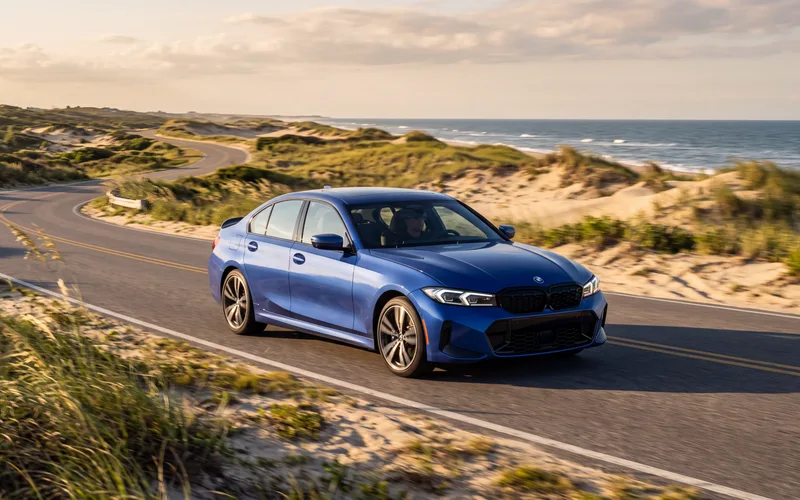 BMW 3 SeriesCompact Luxury SedanBetter at: Space and pace
For about $3,000 more it fixes nearly every practical complaint about the IS — rear seat, trunk, fuel economy, screens, and pace — if you can accept higher running costs.
Compare 2.71B-
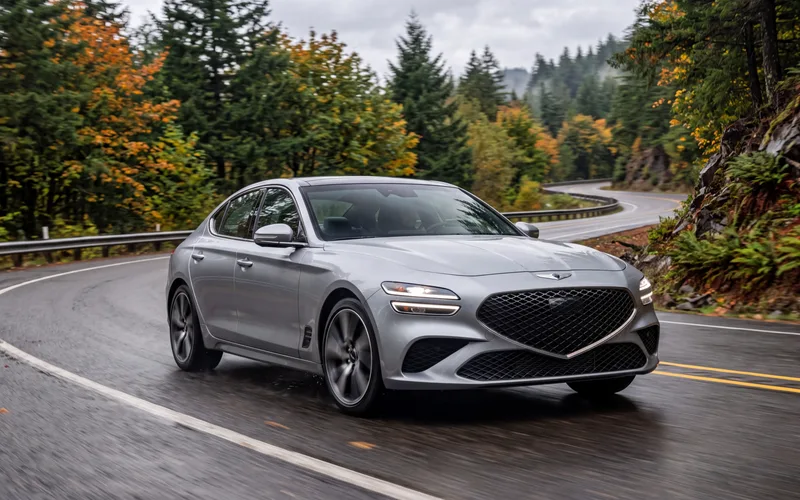 Genesis G70Compact Luxury SedanBetter at: Content per dollar
Delivers more standard equipment, a modern infotainment system, and a 10-year/100,000-mile powertrain warranty for similar money.
Compare 3.11B
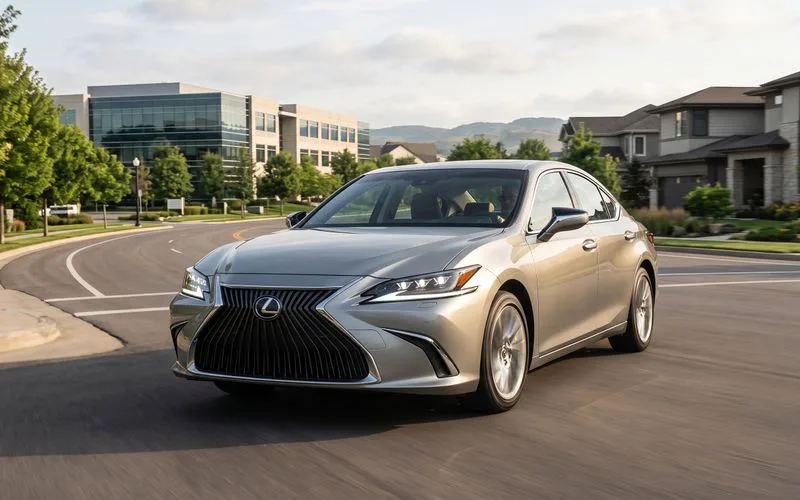 Lexus ESMid-Size Luxury SedanBetter at: Space and efficiency
The same Lexus reliability and service experience in a bigger, quieter, hybrid-available sedan for buyers who don't need rear-wheel drive.
CompareHow it's evolved
10 scored model years · 2017–2026
Subject scores by year
Hover or tap a score to see what moved it versus the year before. A corner mark flags a big swing.
| Year | Performance | Efficiency | Safety | Space | Cost | Reliability | Tech | Use-case | Driving | Value |
|---|---|---|---|---|---|---|---|---|---|---|
| 2026 | 50 | 32 | 67 | 57 | 55 | 86 | 62 | 45 | 80 | 63 |
| 2025 | 48 | 27 | 73 | 52 | 58 | 87 | 45 | 39 | 70 | 66 |
| 2024 | 46 | 27 | 74 | 56 | 60 | 87 | 46 | 43 | 73 | 67 |
| 2023 | 48 | 27 | 79 | 52 | 58 | 88 | 44 | 43 | 67 | 66 |
| 2022 | 48 | 27 | 78 | 55 | 59 | 85 | 46 | 43 | 72 | 65 |
| 2021 | 47 | 27 | 80 | 56 | 67 | 88 | 46 | 45 | 73 | 68 |
| 2020 | 45 | 23 | 64 | 55 | 63 | 87 | 31 | 41 | 65 | 57 |
| 2019 | 45 | 23 | 67 | 56 | 61 | 84 | 34 | 46 | 71 | 61 |
| 2018 | 44 | 30 | 70 | 54 | 59 | 86 | 33 | 46 | 69 | 70 |
| 2017 | 44 | 30 | 69 | 54 | 60 | 80 | 30 | 44 | 62 | 66 |
Compare two years
Best fit & conditions
Higher scores mean a better fit for that use case. Learn more about use-case fit →
Subject profile
Academic Probation · NHTSA safety recalls
No NHTSA safety recall is on record for the 2024 Lexus IS. Other model years of the IS have 3 — listed below.
3 recalls on other model years of the IS (2017–2019, 2022)
Apr 8, 2026Fuel system, gasoline: delivery: fuel pumpThe low-pressure fuel pump inside the fuel tank may fail.
Defect
Toyota Motor Engineering & Manufacturing (Toyota) is recalling certain 2015-2022 Lexus RC, 2016-2020 GS, and 2022 IS vehicles. The low-pressure fuel pump inside the fuel tank may fail.
Risk
Fuel pump failure can cause an engine stall, increasing the risk of a crash.
Remedy
Dealers will replace the fuel pump assembly, free of charge. Owner letters were mailed October 15, 2026. Owners may contact Toyota's customer service at 1-800-331-4331. Toyota's numbers for this recall are 26LB05 and 26LA05.
NHTSA campaign 26V222000 ↗Manufacturer no. 26LB05/26LA059,139 vehicles potentially affected (all models in the campaign)Owners notified Oct 14, 2026Filed by Toyota Motor Engineering & ManufacturingFiled as ISNov 4, 2020Fuel system, gasoline: delivery: fuel pumpThe low-pressure fuel pump inside the fuel tank may fail.
Defect
Toyota Motor Engineering & Manufacturing (Toyota) is recalling certain 2018-2019 4Runner, 2019-2020 Avalon, 2019 Corolla Hatchback, 2017-2019 Highlander, 2018-2020 Camry, 2020 Corolla, 2018-2019 Land Cruiser, 2017-2020 Tacoma, 2019-2020 RAV4, 2019-2020 Sequoia, 2017-2020 Sienna, 2019-2020 Tundra, 2018-2020 Lexus ES350, 2017 Lexus GS200t, 2017-2019 Lexus GS350, 2019 Lexus GS300, 2018-2020 Lexus LC500h, 2019-2020 Lexus LS500, 2018-2019 Lexus GX460, 2017 Lexus IS200t, 2019 Lexus IS300, 2019 Lexus IS350, 2018-2020 Lexus LC500, 2018 Lexus LS500, 2019 Lexus LS500h, 2018-2019 Lexus LX570, 2017 Lexus RC200t, 2019 Lexus RC300, RC350, 2017 and 2019-2020 Lexus RX350, 2018-2020 RX350L, 2019 Lexus UX200, 2018-2019 Lexus NX300 vehicles. The low-pressure fuel pump inside the fuel tank may fail.
Risk
If the fuel pump fails, the engine can stall while driving, increasing the risk of a crash.
Remedy
Toyota will notify owners, and dealers will replace the fuel pump assembly with an improved one, free of charge. Owners of specific models were notified that remedy parts were available starting January 21, 2021. Owners of other models will be notified as remedy parts become available. Remedy parts should be available for all affected vehicles by late March 2021. Owners may contact Toyota customer service at 1-888-270-9371 or Lexus customer service at 1-800-255-3987. Note: This recall is an expansion of recall 20V-012. Toyota's number for this recall is 20TA02. Lexus' number for this recall is 20LA01.
NHTSA campaign 20V682000 ↗Manufacturer no. 20TA02, 20LA011,525,742 vehicles potentially affected (all models in the campaign)Owners notified Jan 21, 2021Filed by Toyota Motor Engineering & ManufacturingFiled as IS 300, IS 350, IS200TJan 13, 2020Fuel system, gasoline: delivery: fuel pumpToyota Motor Engineering & Manufacturing (Toyota) recalled certain 2018-2019 4Runner, Highlander, Camry, Land Cruiser, Sequoia, Sienna, Tacoma and Tundra, and Lexus RC 300, RC 350, GS 350, GX 460, IS 300, LC 500, LS 500, LX 570, RX 350L, and 2019 Toyota Avalon and Corolla, and certain Lexus NX 300, and ES 350 vehicles on January 13, 2020. On March 4, 2020, Toyota expanded the recall to include certain 2014-2015 Toyota 4Runner and Land Cruiser, 2018 Avalon, Corolla, 2014 FJ Cruiser, 2017 Sienna and Lexus 2018 ES 350, 2018-2019 GS 300, 2013-2014 GS350, 2014-2015 GX 460, IS 350 and LX 570, 2014 IS F, 2018-2019 IS 350, LC 500H and LS 500H, 2013-2015 LS 460, 2015 NX 200T and RC350, 2017 RC 200T and RX 350. Toyota also removed the 2018-2019 Toyota 4Runner and Land Cruiser and 2018-2019 Lexus GX 460 and LX 570 and 2019 NX300 from inclusion in this recall. On March 19, 2020, Toyota expanded the recall to include 2015 Lexus GS350 vehicles. The low-pressure fuel pump inside the fuel tank may fail.
Defect
Toyota Motor Engineering & Manufacturing (Toyota) recalled certain 2018-2019 4Runner, Highlander, Camry, Land Cruiser, Sequoia, Sienna, Tacoma and Tundra, and Lexus RC 300, RC 350, GS 350, GX 460, IS 300, LC 500, LS 500, LX 570, RX 350L, and 2019 Toyota Avalon and Corolla, and certain Lexus NX 300, and ES 350 vehicles on January 13, 2020. On March 4, 2020, Toyota expanded the recall to include certain 2014-2015 Toyota 4Runner and Land Cruiser, 2018 Avalon, Corolla, 2014 FJ Cruiser, 2017 Sienna and Lexus 2018 ES 350, 2018-2019 GS 300, 2013-2014 GS350, 2014-2015 GX 460, IS 350 and LX 570, 2014 IS F, 2018-2019 IS 350, LC 500H and LS 500H, 2013-2015 LS 460, 2015 NX 200T and RC350, 2017 RC 200T and RX 350. Toyota also removed the 2018-2019 Toyota 4Runner and Land Cruiser and 2018-2019 Lexus GX 460 and LX 570 and 2019 NX300 from inclusion in this recall. On March 19, 2020, Toyota expanded the recall to include 2015 Lexus GS350 vehicles. The low-pressure fuel pump inside the fuel tank may fail.
Risk
If the fuel pump fails, the engine can stall while driving, increasing the risk of a crash.
Remedy
Toyota will notify owners, and dealers will replace the fuel pump, free of charge. The recall began May 4, 2020. Owners may contact Toyota customer service at 1-888-270-9371 or Lexus customer service at 1-800-255-3987. Toyota's numbers for this recall are 20TB02 and 20TA02 for Toyota vehicles and 20LB01 and 20LA01 for Lexus vehicles.
NHTSA campaign 20V012000 ↗Manufacturer no. 20TB02/20TA02/20LB011,830,752 vehicles potentially affected (all models in the campaign)Owners notified May 1, 2020Filed by Toyota Motor Engineering & ManufacturingFiled as IS 300, IS 350, IS200T
Source: NHTSA Office of Defects Investigation recall database, model years 2017–2026. Recalls are listed by model year as the manufacturer filed them; whether a specific car is affected depends on its VIN — check a VIN at nhtsa.gov ↗. NHTSA model names matched to this page: IS, IS 300, IS 350, IS200T.
Detailed scoring by subject
1Performance & PowertrainGrades below the middle of the scale.1.10D
The volume IS 300 RWD carries the 2.0L turbocharged inline-four at 241 hp, modest output for a compact luxury sedan even though the lineup tops out at 472 hp with the IS 500's naturally aspirated 5.0L V8.
Turbocharging gives the base IS 300 more torque than either V6 below it in the range on paper, and it arrives low in the rev band, which flatters around-town response more than the horsepower figure suggests.
At 6.9 seconds the volume IS 300 is a full second-plus behind the segment benchmark — reviewers measure a BMW 330i at roughly 1.3 seconds quicker with the same displacement.
Typical Lexus isolation keeps the 2.0T quiet and vibration-free at cruise, but the engine is widely described as stale and flat-footed under demand, with the turbo four never feeling as eager or as sweet as the segment's best small turbos.
The RWD IS 300's 8-speed Sport Direct Shift automatic shifts smoothly and reasonably quickly without hunting, but it trails the ZF 8-speed benchmark for decisiveness, and the AWD cars fall back to an aging 6-speed that costs both ratios and response.
AWD is offered on both the IS 300 and IS 350 across most grades, but only in a V6-plus-6-speed combination that forfeits the 8-speed, it is unavailable on the IS 500, and the system is a straightforward on-demand torque-split setup with no low range, terrain modes or torque vectoring.
Three genuinely distinct gas engines — a 2.0L turbo four, a 3.5L V6 in two states of tune and a 5.0L V8 — is unusually broad for the class on the combustion side, but the 2024 IS offers no hybrid, plug-in or electric variant at all while rivals field electrified options throughout.
2Efficiency & RangeThe IS's lowest-graded category.0.00F
The volume IS 300 RWD's 25 MPG combined is well behind the compact luxury benchmark — a BMW 330i is rated roughly 4 MPG better on the same test cycle — and every other IS variant is worse still.
21 MPG in town is unremarkable for a 2.0-liter turbo four in 2024, with no hybrid assistance or engine stop-start-driven advantage to lift the city figure.
The highway figure is the IS 300's strongest efficiency number, helped by the 8-speed's tall top gears, but 31 MPG still only reaches the middle of the gas-sedan band.
A 17.4-gallon tank and 25 MPG combined give the IS 300 RWD an EPA total range of 435 miles — adequate for a compact sedan but unexceptional, and the AWD V6 cars drop to roughly 383 miles on the same tank.
The combination of middling economy and a premium-fuel requirement pushes the EPA annual energy cost to $3,100 — near the top of the sedan band, since the band's high end assumes a thirstier or costlier-to-fuel car than this one's displacement implies.
Every 2024 IS powertrain requires premium 91-octane unleaded rather than merely recommending it, so there is no option to trade a little power for cheaper fuel — a standing cost penalty of roughly 50-70 cents per gallon over regular.
3SafetyOne of the IS's strongest categories.3.04B
NHTSA's own database returns a 5-star overall rating for the 2024 IS 300 in both drive configurations, held back only by a 4-star frontal result for driver and passenger.
Everything IIHS has tested on this car is rated Good, but the XE30 platform has never been run through the updated moderate overlap (rear-passenger) or either side test, and the IS is absent from the 2024 Top Safety Pick list — so the all-Good record covers an increasingly incomplete slice of the current protocol.
Lexus Safety System+ 2.5 is standard on every 2024 IS trim and includes the full core set — pre-collision braking with pedestrian and cyclist detection, all-speed adaptive cruise, lane tracing and lane departure with steering assist, road sign assist and auto high beams — with blind-spot monitoring and rear cross-traffic alert also standard rather than packaged.
The standard system earns IIHS's top Superior rating in the daytime pedestrian test, avoiding contact in five of six runs, but the IS has no rating under the current nighttime-inclusive pedestrian protocol and no result in the updated vehicle-to-vehicle test, so the top band isn't earned.
Blind Spot Monitor with Rear Cross-Traffic Alert is standard across the range rather than locked to upper trims, but coverage is alert-only at that level — rear cross-traffic braking and rear automatic braking are optional, and there is no safe-exit warning for rear occupants.
Lane Departure Alert with Steering Assist and Lane Tracing Assist are both standard, and Lexus revised lane and road-edge recognition for this generation, but LTA only centers while radar cruise is engaged and is a competent assistant rather than the confident, set-and-forget centering the German rivals' systems provide.
All-Speed Dynamic Radar Cruise Control is standard and genuinely full-range — it follows to a complete stop and resumes — and its turn-signal-triggered overtake assist and three selectable gaps make it one of the more polished radar cruise systems in the class; it stops short of the top of the band only because the paired lane centering is the weaker half of the highway-assist pairing.
No hands-free highway driving is offered on the IS at any trim or option level — Lexus Teammate Advanced Drive has stayed confined to the LS flagship and has never been extended to this platform.
The volume IS 300's standard LED projectors with high-beam assist rate Good from IIHS with no glare penalties — notably, the optional Premium Triple-Beam LED upgrade is the configuration that drops to Acceptable, so the buyer who spends nothing gets the better-rated lamps.
The IS's low coupe-like roofline, high beltline and heavy C-pillars leave a small rear window and real over-the-shoulder blind zones, and the camera compensation that would offset them — the Panoramic View Monitor — is optional rather than standard, leaving the volume trim with only a rear-view camera.
IIHS rates the anchor hardware itself Good — both outboard positions have visible, zero-force lower anchors with clear tether labeling — but only two of three rear positions carry complete LATCH hardware and the class-trailing rear legroom makes fitting a rear-facing seat behind a tall front occupant a genuine squeeze.
4Space & ComfortMid-pack among this car's ten categories.1.74C-
Every 2024 IS grade — IS 300, IS 350 and IS 500 — is a five-seat four-door sedan with a three-across rear bench, the maximum the sedan band recognizes.
38.2 inches is mid-pack for a sedan and adequate up front, though the IS's low, coupe-like roofline means the optional moonroof eats into it noticeably.
At 44.8 inches the IS clears the top of the sedan band — the front cabin is genuinely roomy for legs even though the car is compact overall, which is why reviewers call it comfortable as long as you sit up front.
36.9 inches sits just below the middle of the sedan band, and the fast rear roofline means the number understates how enclosed the back seat feels on the way in and out.
32.2 inches sits at the very bottom of the sedan band and is the IS's defining packaging weakness: reviewers treat the back seat as emergency-use space, with anyone near six feet cramped behind a normally-positioned front seat.
10.8 cubic feet is near the bottom of the sedan band — a BMW 3 Series carries about 17 — so a weekend's luggage for four is a genuine packing exercise.
Cabin stowage is basic and dated: a modest covered console bin, shallow door pockets and a narrow tray ahead of the shifter, with no wireless charging pad, no underfloor or hidden storage and no clever fold-flat or power-outlet provisions — and the high, closed-in console design makes what is there feel smaller than the class norm.
The front seats are a genuine strength — eight-way power on the base car, high-grade NuLuxe, and well-bolstered ten-way F SPORT buckets that reviewers praise over long stints — but the rear bench is treated as emergency seating by every outlet that measures it, and the item covers both rows.
The IS rides taut but well-damped for a sport sedan — firm without punishing over broken pavement, and notably better controlled with the F SPORT-tuned Adaptive Variable Suspension — but the 19-inch F SPORT wheels and staggered summer rubber on the sportier grades do add sharpness over expansion joints.
Sound isolation is classic Lexus — reviewers describe the cabin as well insulated from road and wind noise at highway speed — with the only caveat being the extra tire roar from the F SPORT grades' summer rubber, which is louder than buyers expect from the brand.
Dual-zone automatic climate control and heated mirrors are standard and heated front seats arrive on the F SPORT Design grade, but ventilated seats and a heated steering wheel require the Comfort Package or an F SPORT grade, the moonroof and power rear sunshade are extra-cost, and there is no rear climate zone or rear-seat amenity of any kind.
5Cost of OwnershipMid-pack among this car's ten categories.2.03C
The entry IS 300 RWD opens at $41,235 with destination, which undercuts every established German compact luxury sedan — a 2024 BMW 330i starts at $45,295 and an Audi A4 at $42,295.
The volume configuration is the IS 300 RWD wearing the F SPORT Design appearance grade that Lexus newly extended to the base car for 2024 — about $1,820 over the plain IS 300, or roughly $43,055 delivered.
Published estimates for the IS are among the lowest in the compact luxury class — a mature Toyota-derived 2.0T/V6 driveline and Lexus's low unscheduled-repair severity — but they cover scheduled service and typical repairs rather than the tires, brakes and premium-fuel-era wear a 5-year/67k-mile owner actually pays at Lexus dealer rates, so the figure is set above them and modestly above the ES 300h, which gains brake life from regenerative braking the IS does not have.
Residuals are the IS's strongest ownership argument — it took a J.D. Power 2024 ALG Residual Value Award in its segment and both transaction-based trackers put it well ahead of the luxury compact average — but sticker-based estimates are far more conservative, so this sits toward the upper middle of the published range and just above the ES.
Lexus's 4-year/50,000-mile bumper-to-bumper term matches BMW, Audi, Mercedes, Volvo and Infiniti in this class and trails only Genesis's 5-year/60,000-mile coverage.
Six years/70,000 miles on the engine, transmission and rear-drive system is a year longer than the German norm but half of Genesis's and Hyundai-group 10-year/100,000-mile coverage, which is what the band's top anchor represents.
A mixed package: LexusCare covers only the first two scheduled visits at 6 mo/5,000 mi and 12 mo/10,000 mi — shorter than parent-brand ToyotaCare's 2 yr/25,000 mi and far behind Genesis's three years of included service — but roadside assistance runs a class-leading 4 years with no mileage cap and Lexus adds connected-service trials plus loaner and concierge treatment at the dealer.
$43,055 volume-trim price minus its estimated resale value after 5 years (57% retained, or about $24,541) leaves about $18,514 in depreciation. Add the projected $5,300 in 5-year maintenance and repairs, and owning this vehicle for 5 years costs about $23,814 in total.
6Reliability & QualityThe IS's best-graded category.3.92A+
The 2024 IS is the dependability benchmark of the compact luxury class: Consumer Reports rates it well above the model-year average and ranks it first among compact luxury sedans, and the IS was one of nine Toyota Motor Corporation nameplates to take a model-level award in the J.D. Power 2024 U.S. Vehicle Dependability Study. 2024 is a fully debugged carry-over of the XE30 generation in production since 2014, with no new platform, powertrain or electrical architecture to introduce first-year faults. Held short of the 95+ band because the volume trim's 8AR-FTS 2.0L turbo four is a slightly less bulletproof unit than the naturally aspirated V6 trims above it.
Lexus is the strongest dependability brand in the US market on the studies that matter around the 2024 model year — first overall in the J.D. Power 2024 VDS at 135 PP100 for a second consecutive year, well clear of Porsche (175) and BMW (190), and second in Consumer Reports' 2024 brand report card at 65 points behind only Subaru (68). Scored at 90 rather than higher because CR no longer places Lexus outright first, so the brand leads one major study rather than sweeping both.
The 2024 IS carries zero NHTSA safety recall campaigns more than two years after launch — no powertrain, fire or ADAS actions of the kind that have repeatedly hit German rivals in this class — and Lexus TSB volume is low by segment standards. Held below the top of the band rather than at it because the XE30 generation is not spotless: 2017-2019 model years were swept into the industry-wide Denso low-pressure fuel-pump campaigns, and NHTSA 26V222000 (April 2026) shows that fuel-pump family reaching as recently as the 2022 IS, so the generation's clean recent record is not proof the 2024 car is permanently clear.
Every driveline in the 2024 IS is a long-serving Toyota unit with a high-mileage field record, and all are conventional torque-converter automatics rather than dual-clutch or CVT designs. The volume IS 300 RWD's 8AR-FTS 2.0L turbo four is the weakest member of the set — sound in service but a direct-injected turbo with more carbon-buildup, turbocharger and water-pump exposure than the naturally aspirated alternatives — which is what holds this below the low-90s the V6 trims would earn on their own.
The materials themselves are genuinely good for the price — NuLuxe synthetic leather standard across the range, soft-touch upper surfaces, stitched trim and Lexus's characteristically damped switchgear — but the dashboard architecture dates to 2014 and by 2024 the same money buys a markedly more modern and more visually ambitious cabin from the BMW 3 Series or Genesis G70. Reviewer criticism is aimed at how dated and tight the interior looks rather than at cheap plastics, which is why it sits comfortably above the class's genuine material offenders.
Assembly quality is the IS's strongest quality attribute: it is built at Toyota's Tahara plant in Japan on a body and line that have had a decade to converge, and reviewers single out the tight, consistent build and low NVH. Scored in the high-80s rather than the low-90s because Lexus placed second rather than first among premium brands in the 2024 Initial Quality Study, and scattered owner reports of panel misalignment and wind noise do exist — isolated rather than a pattern, but real.
Lexus is the reference point for luxury dealer service — highest among premium brands in the J.D. Power 2024 Customer Service Index for a third consecutive year, with loaners and pickup-and-delivery normal practice. The network is thinner than BMW's or Mercedes-Benz's at roughly 244 US stores, and in the premium-car segment specifically Lexus placed third on service satisfaction rather than first, which is what keeps this short of the top of the band.
A generation eleven model years deep that shares its engines and driveline hardware with high-volume Toyotas is close to the best case for a luxury sedan: OEM mechanical parts are abundant and cheap by class standards, the used and salvage supply is deep, an enthusiast aftermarket serves the IS/RC/GS family, and independent shops will take the work. Scored well above the dealer-dependent Germans but short of the top band because luxury-specific trim, glass, lighting and body panels still price at a premium and the F SPORT and IS 500 hardware is model-specific.
7Technology & InfotainmentOne of the IS's weakest categories.1.07D
The volume IS 300 ships with an 8.0-inch display — small for a 2024 luxury sedan against 12-inch-plus rivals — and the larger 10.3-inch screen is locked behind a navigation package rather than being standard equipment.
The 2021 repackaging moved the display forward so it can finally be touched, and physical climate and volume controls survive, but the underlying Lexus Multimedia software is the pre-Lexus Interface generation — dated graphics, deep menus and the console touchpad that reviewers have criticized for years still in place alongside the touchscreen.
Apple CarPlay and Android Auto are standard on every 2024 IS grade including the base IS 300, which keeps this out of the bottom band, but both are wired-only — no trim, package or option adds wireless projection.
Native navigation is not standard at all — it comes only with the Navigation or Navigation/Mark Levinson package — and the voice system is the older command-word Lexus assistant with Dynamic Voice Command and Destination Assist gated behind a post-trial subscription, so most owners default to CarPlay's maps and Siri.
The available Mark Levinson system is a genuine class benchmark — 17 speakers, 1,800 watts and 7.1-channel QuantumLogic surround — and while the standard Lexus Premium Audio is merely adequate, the upgrade is one of the best systems any compact luxury sedan offers.
The volume IS 300 and F SPORT Design keep a conventional analog-style gauge pack with a small multi-information display; the configurable digital cluster with the LFA-style sliding bezel is reserved for the F SPORT and IS 500 grades, so the buyer of the car most people buy does not get one.
There is no whole-vehicle over-the-air software update capability on this generation of IS — the only over-the-air content is subscription Dynamic Navigation map and search data on cars equipped with the navigation package, which most IS 300s are not.
The Lexus app covers the core set — remote engine start with climate, lock/unlock, vehicle locate, service scheduling and vehicle health — and the 3-year Enform Remote trial is generous, but it becomes a paid subscription afterwards and there is no digital/phone key on the IS.
Device power is the car's weakest technology area: a pair of front USB-A ports and a 12V socket, with no USB-C anywhere, no wireless charging pad on any trim or package, and nothing at all for rear passengers.
Proximity keyless entry, push-button start and remote engine start are all standard on the base IS 300, which covers the everyday convenience set well; it falls short of the top band only because there is no phone-as-key and, as a sedan, no hands-free trunk release.
The volume car gets only the federally-mandated backup camera with dynamic gridlines — the Panoramic View Monitor and Intuitive Parking Assist with Auto Braking are both extra-cost options, standard only on the IS 500 Performance Premium — and no automated parking function is offered at any price.
No head-up display is offered on the 2024 IS in any grade, package or standalone option — a notable omission when the ES, LS, LC, NX and RX all offer one and every German rival in the segment does too.
8Use-Case FitOne of the IS's weakest categories.0.85F
The anchor hardware itself is rated Good by IIHS, but everything around it works against family logistics: 32.2 inches of rear legroom makes a rear-facing seat behind a normally-positioned front occupant a real squeeze, only two of three rear positions carry complete LATCH hardware, the low roofline and narrow door aperture make lifting a child into a seat awkward, and a 10.8 cu ft trunk swallows a stroller and little else.
Every 2024 IS — including the cheapest one — carries Lexus Safety System+ 2.5 plus standard blind-spot monitoring and ten airbags, and NHTSA awards five stars overall, so families are not asked to pay up for safety; the score stops short of the top band because the IS is absent from the 2024 IIHS Top Safety Pick list, has no rating under the updated moderate-overlap rear-passenger test, and offers no rear-occupant reminder.
With four aboard the IS runs out of car quickly: rear passengers get 32.2 inches of legroom, no rear vents, no rear climate controls, no rear USB ports and no rear entertainment provision of any kind, and the 10.8 cu ft trunk cannot hold four people's luggage without folding the seat they are sitting on.
This is where the IS is genuinely good: a quiet, well-isolated cabin, a smooth 8-speed automatic with unobtrusive low-speed manners, comfortable power front seats, and standard all-speed radar cruise with lane tracing that follows traffic to a stop — the only real daily irritants are the enclosed sightlines and the aging infotainment.
25 MPG combined from the volume IS 300 RWD is mediocre for a 241-hp compact sedan in 2024 — rivals with comparable output do better, and the AWD V6 drops to 22 — and because the IS requires premium fuel the per-mile penalty compounds to roughly $3,100 a year at EPA's 15,000-mile assumption.
The physical car is easy to place — 185 inches long, 72 wide, and a tight 34.2-foot curb-to-curb turning circle that sits at the good end of the sedan range — but the compensating tech is optional, so the volume IS leaves the dealer with a backup camera and rear sensors against a high beltline and small rear glass.
The IS is a rear-drive luxury sport sedan with no towing rating published for the US market, no hitch offered through Lexus, a 10.8 cu ft trunk and no load-carrying provisions — it is not a work vehicle in any sense the item measures.
The mechanical package is unusually proven — the XE30 platform and the 2GR V6/8AR-FTS turbo four have been in service for a decade with a strong Lexus reliability record — but everything above the chassis is luxury-oriented: NuLuxe and leather surfaces, carpeted trunk, low ground clearance and summer tires on the sportier grades, with no wear-friendly interior or fleet presence.
There is essentially nothing here: no onboard AC power, no bed or open load area, no roof rails or rack provision, no tie-down system beyond a trunk cargo net, and no upfit ecosystem of any kind.
For two people the IS is a capable tourer — quiet at speed, supportive power front seats, a composed if firm ride, and roughly 435 miles between fills from the 17.4-gallon tank — and standard all-speed radar cruise with lane tracing takes real load off the driver; it is held back only by the thin luggage allowance and the rear seat that rules out a four-up trip.
The IS is emphatically pavement-bound: sedan ride height, no drive modes for loose surfaces, no roof rails or published roof load, no tow rating for toys, and the volume RWD grade is not even all-wheel drive — AWD exists only in the V6/6-speed combination and does nothing for clearance.
A 10.8 cu ft trunk is among the smallest in the class and there is no underfloor storage, no roof-rail option and no hitch, so bulky gear has to go through the one saving grace — the 60/40 split-folding rear seatbacks, which help with long items but only by giving up the seats.
9Driving ExperienceOne of the IS's strongest categories.2.92B-
The rear-drive IS chassis is genuinely well-sorted — reviewers praise its balance and it holds about 0.88 g on the skidpad, ahead of an Alfa Giulia and close to a 3 Series — but the volume IS 300 on 18-inch all-seasons without the Adaptive Variable Suspension or Torsen differential is the least sharp version of it, and the aging XE30 platform carries more mass than the class benchmarks.
Weighting is well judged and reviewers specifically credit the IS with road feel coming through the wheel — better than most electrically-assisted rivals — but it is still a variable-assist EPS setup that goes quiet on-center, and Lexus itself considered it worth redesigning with a variable gear ratio at the 2025 facelift.
Pedal feel is firm and linear with no regen blending to muddy it, and testers found the brakes fade-free through repeated hard canyon work; the very top of the band belongs to the IS 500's two-piece aluminum 14.0-inch front rotors rather than the volume IS 300's conventional setup.
The volume IS 300's 2.0T and 8-speed Sport Direct Shift pair smoothly — clean tip-in, no hunting, unobtrusive stop/start and typical Lexus vibration isolation — but the calibration is tuned for serenity over urgency and the engine feels flat when asked for a quick response, and the AWD grades fall back to a slower-witted 6-speed.
Isolation is good and the turbo four never intrudes at cruise, but its voice under load is the uninspiring part of the car — a flat, synthetic-sounding thrash that stands out precisely because the rest of the cabin is so quiet, and it is what makes reviewers steer buyers toward the V6 and V8.
34.2 feet sits essentially at the tight end of the sedan range and is a real everyday asset — the IS turns in a noticeably smaller circle than most compact luxury rivals, which offsets some of its poor rearward visibility in tight parking.
The IS gets the fundamentals right — a low, properly sporting seating position, 44.8 inches of front legroom, eight-way power seats and physical climate and audio controls — but the power tilt-and-telescopic column is a package extra on the IS 300, the console touchpad is an awkward reach on the move, and the high beltline and thick C-pillars compromise sightlines.
The chassis has the right bones and the IS 500 is a genuinely beloved enthusiast car, but the volume IS 300 dilutes the recipe: 6.9 seconds to 60, a charmless four-cylinder soundtrack and no limited-slip differential or adaptive damping leave it pleasant and competent rather than something you take the long way home in.
10Value & Market PositionMid-pack among this car's ten categories.2.52C+
At $41,235 the base IS 300 undercuts a 330i by $4,060 while making Lexus Safety System+ 2.5 and blind-spot monitoring standard — items BMW and Audi still bundle into option packages — plus NuLuxe trim, a 10-way power driver's seat, dual-zone climate and a 10-speaker system. What holds it out of the top band is screen and seat content: the base car gets the small 8-inch display rather than the 10.3-inch unit, analog gauges, and no heated seats until you move up a grade.
The IS's value case is almost entirely ownership rather than spec sheet: cheapest entry among the established luxury compacts, class-leading residuals and the lowest projected repair bill in the segment. Measured purely as content and capability per dollar it is only fair — 241 hp and 25 MPG combined from the volume 2.0T, a 10.8 cu-ft trunk and a rear seat reviewers call emergency-use trail what the same money buys from newer rivals.
Unusually wide for a compact sedan in 2024: three engines from a 241-hp turbo four to a 472-hp naturally aspirated V8, rear- or all-wheel drive on the two lower cars, and a $23,000 spread from the base IS 300 to the IS 500 F SPORT Performance Premium — with 2024 adding F SPORT and F SPORT Design grades to the entry IS 300 for the first time, filling the gap that used to sit between base and IS 350.
18,946 US deliveries in 2024 keeps the IS a real mid-pack player in a shrinking segment — comfortably ahead of the Q50, A4 and S60 — but the year was a 15.9% drop from 2023 and the nameplate has slid from the low 22,000s where the generation had settled, which is a decline rather than a plateau.
Lexus carries one of the strongest ownership reputations in the industry — top premium brand for residual value four years running and consistently at or near the top of dependability studies — and the F badge gives the IS enthusiast credibility the ES lacks, though the nameplate's own image is softened by a body shell buyers know is a decade old.
Lexus runs the IS on subvented lease and finance rates rather than cash on the hood, and published rebate trackers usually show nothing at all on the model — so the buyer benefit is real but modest, and a car selling around 19,000 units a year leaves dealers some room without the desperation discounting that props up the Q50 or A4.
2024 is the eleventh model year of the XE30 platform launched for 2014, three years past its 2021 restyle and one year before the far more thorough September 2025 facelift that finally brought a 12.3-inch display and digital cluster — so a 2024 buyer is buying the oldest architecture in the segment right ahead of a visible update.
Reviewers rate the IS well without ever picking it: praise concentrates on build quality, chassis feel and the ownership case, while every major outlet flags the cramped rear seat, small trunk, dated infotainment and an underpowered volume engine. Its award record is real but narrow — a J.D. Power ALG residual-value win and a 5-star NHTSA result rather than comparison-test victories, and it missed IIHS Top Safety Pick under the tougher 2024 criteria.