
The verdict
A mixed-report compact luxury sedan, strong on reliability and held back by efficiency.
The 2019 Lexus IS is a dependability-first compact luxury sedan that was already six years old when it was new — and that split runs through the whole scorecard. It builds beautifully, holds its value (about 58% retained at five years) and will almost certainly outlast its German rivals, but it asks you to live with a 7-inch screen and a trackpad controller with no Apple CarPlay or Android Auto at all, 32.2 inches of rear legroom, a 10.8 cu ft trunk and 24 MPG combined on premium fuel. Buy one used as a quiet, durable, rear-drive commuter you plan to keep for a decade. Skip it if you carry adults in back, need modern tech, or want the 6.9-second IS 300 to feel like a sport sedan.
Jump to scoresStrengths
- Lexus dependability, and the 2019 car earns the reputation
- Built like a Lexus should be, inside and out
- It holds its money, and it is cheap to keep
What holds it back
- No Apple CarPlay or Android Auto — at any price
- The back seat and trunk are the smallest compromises in the class
- Premium fuel for mediocre mileage
Top alternatives
Cars shoppers cross-shop with the Lexus IS 3.07B
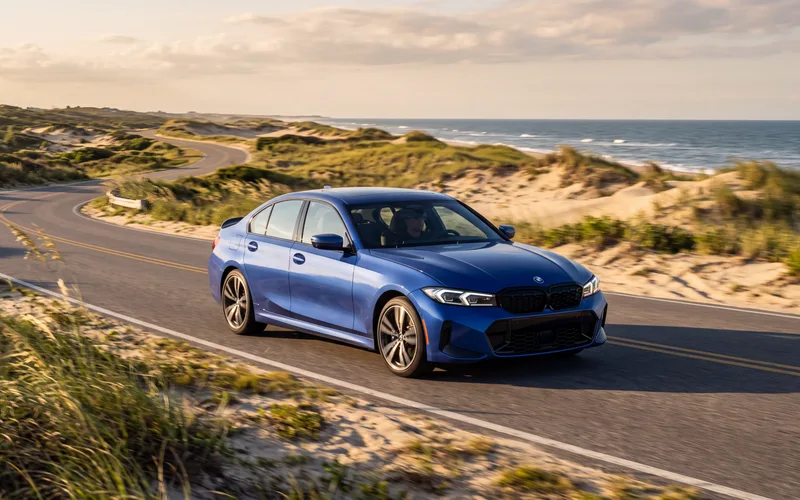 BMW 3 SeriesCompact Luxury SedanBetter at: Space and pace
For about $3,000 more it fixes nearly every practical complaint about the IS — rear seat, trunk, fuel economy, screens, and pace — if you can accept higher running costs.
Compare 2.71B-
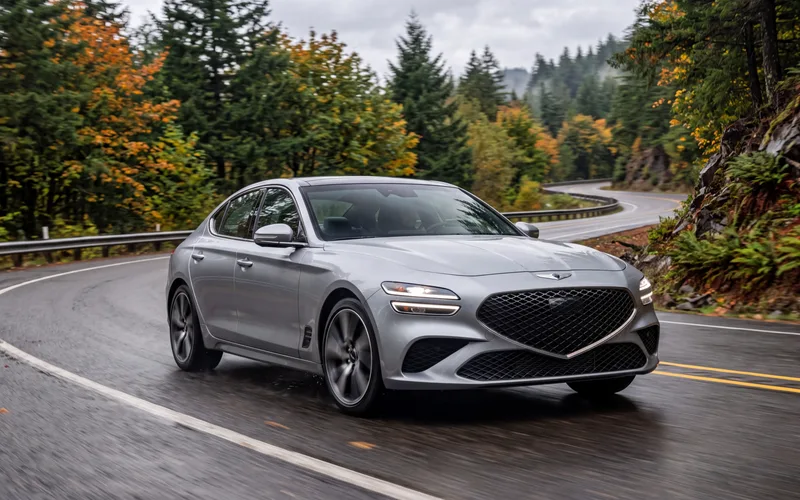 Genesis G70Compact Luxury SedanBetter at: Content per dollar
Delivers more standard equipment, a modern infotainment system, and a 10-year/100,000-mile powertrain warranty for similar money.
Compare 3.11B
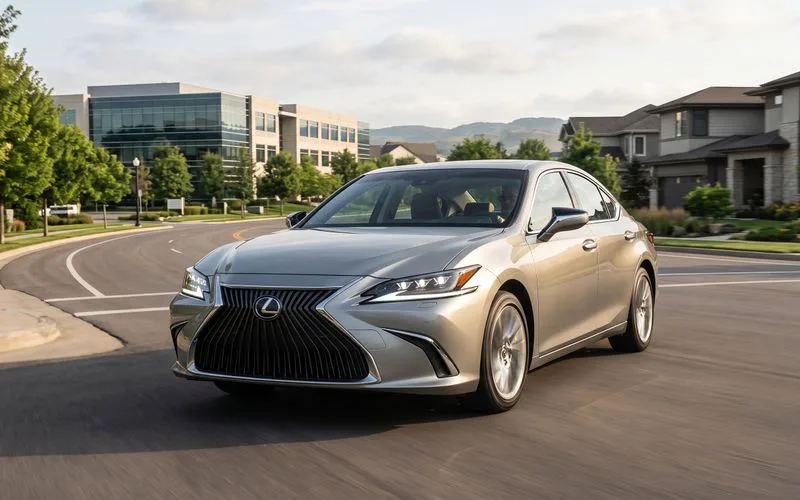 Lexus ESMid-Size Luxury SedanBetter at: Space and efficiency
The same Lexus reliability and service experience in a bigger, quieter, hybrid-available sedan for buyers who don't need rear-wheel drive.
CompareHow it's evolved
10 scored model years · 2017–2026
Subject scores by year
Hover or tap a score to see what moved it versus the year before. A corner mark flags a big swing.
| Year | Performance | Efficiency | Safety | Space | Cost | Reliability | Tech | Use-case | Driving | Value |
|---|---|---|---|---|---|---|---|---|---|---|
| 2026 | 50 | 32 | 67 | 57 | 55 | 86 | 62 | 45 | 80 | 63 |
| 2025 | 48 | 27 | 73 | 52 | 58 | 87 | 45 | 39 | 70 | 66 |
| 2024 | 46 | 27 | 74 | 56 | 60 | 87 | 46 | 43 | 73 | 67 |
| 2023 | 48 | 27 | 79 | 52 | 58 | 88 | 44 | 43 | 67 | 66 |
| 2022 | 48 | 27 | 78 | 55 | 59 | 85 | 46 | 43 | 72 | 65 |
| 2021 | 47 | 27 | 80 | 56 | 67 | 88 | 46 | 45 | 73 | 68 |
| 2020 | 45 | 23 | 64 | 55 | 63 | 87 | 31 | 41 | 65 | 57 |
| 2019 | 45 | 23 | 67 | 56 | 61 | 84 | 34 | 46 | 71 | 61 |
| 2018 | 44 | 30 | 70 | 54 | 59 | 86 | 33 | 46 | 69 | 70 |
| 2017 | 44 | 30 | 69 | 54 | 60 | 80 | 30 | 44 | 62 | 66 |
Compare two years
Best fit & conditions
Higher scores mean a better fit for that use case. Learn more about use-case fit →
Subject profile
Academic Probation · NHTSA safety recalls
Nov 4, 2020Fuel system, gasoline: delivery: fuel pumpThe low-pressure fuel pump inside the fuel tank may fail.
Defect
Toyota Motor Engineering & Manufacturing (Toyota) is recalling certain 2018-2019 4Runner, 2019-2020 Avalon, 2019 Corolla Hatchback, 2017-2019 Highlander, 2018-2020 Camry, 2020 Corolla, 2018-2019 Land Cruiser, 2017-2020 Tacoma, 2019-2020 RAV4, 2019-2020 Sequoia, 2017-2020 Sienna, 2019-2020 Tundra, 2018-2020 Lexus ES350, 2017 Lexus GS200t, 2017-2019 Lexus GS350, 2019 Lexus GS300, 2018-2020 Lexus LC500h, 2019-2020 Lexus LS500, 2018-2019 Lexus GX460, 2017 Lexus IS200t, 2019 Lexus IS300, 2019 Lexus IS350, 2018-2020 Lexus LC500, 2018 Lexus LS500, 2019 Lexus LS500h, 2018-2019 Lexus LX570, 2017 Lexus RC200t, 2019 Lexus RC300, RC350, 2017 and 2019-2020 Lexus RX350, 2018-2020 RX350L, 2019 Lexus UX200, 2018-2019 Lexus NX300 vehicles. The low-pressure fuel pump inside the fuel tank may fail.
Risk
If the fuel pump fails, the engine can stall while driving, increasing the risk of a crash.
Remedy
Toyota will notify owners, and dealers will replace the fuel pump assembly with an improved one, free of charge. Owners of specific models were notified that remedy parts were available starting January 21, 2021. Owners of other models will be notified as remedy parts become available. Remedy parts should be available for all affected vehicles by late March 2021. Owners may contact Toyota customer service at 1-888-270-9371 or Lexus customer service at 1-800-255-3987. Note: This recall is an expansion of recall 20V-012. Toyota's number for this recall is 20TA02. Lexus' number for this recall is 20LA01.
NHTSA campaign 20V682000 ↗Manufacturer no. 20TA02, 20LA011,525,742 vehicles potentially affected (all models in the campaign)Owners notified Jan 21, 2021Filed by Toyota Motor Engineering & ManufacturingFiled as IS 300, IS 350, IS200TJan 13, 2020Fuel system, gasoline: delivery: fuel pumpToyota Motor Engineering & Manufacturing (Toyota) recalled certain 2018-2019 4Runner, Highlander, Camry, Land Cruiser, Sequoia, Sienna, Tacoma and Tundra, and Lexus RC 300, RC 350, GS 350, GX 460, IS 300, LC 500, LS 500, LX 570, RX 350L, and 2019 Toyota Avalon and Corolla, and certain Lexus NX 300, and ES 350 vehicles on January 13, 2020. On March 4, 2020, Toyota expanded the recall to include certain 2014-2015 Toyota 4Runner and Land Cruiser, 2018 Avalon, Corolla, 2014 FJ Cruiser, 2017 Sienna and Lexus 2018 ES 350, 2018-2019 GS 300, 2013-2014 GS350, 2014-2015 GX 460, IS 350 and LX 570, 2014 IS F, 2018-2019 IS 350, LC 500H and LS 500H, 2013-2015 LS 460, 2015 NX 200T and RC350, 2017 RC 200T and RX 350. Toyota also removed the 2018-2019 Toyota 4Runner and Land Cruiser and 2018-2019 Lexus GX 460 and LX 570 and 2019 NX300 from inclusion in this recall. On March 19, 2020, Toyota expanded the recall to include 2015 Lexus GS350 vehicles. The low-pressure fuel pump inside the fuel tank may fail.
Defect
Toyota Motor Engineering & Manufacturing (Toyota) recalled certain 2018-2019 4Runner, Highlander, Camry, Land Cruiser, Sequoia, Sienna, Tacoma and Tundra, and Lexus RC 300, RC 350, GS 350, GX 460, IS 300, LC 500, LS 500, LX 570, RX 350L, and 2019 Toyota Avalon and Corolla, and certain Lexus NX 300, and ES 350 vehicles on January 13, 2020. On March 4, 2020, Toyota expanded the recall to include certain 2014-2015 Toyota 4Runner and Land Cruiser, 2018 Avalon, Corolla, 2014 FJ Cruiser, 2017 Sienna and Lexus 2018 ES 350, 2018-2019 GS 300, 2013-2014 GS350, 2014-2015 GX 460, IS 350 and LX 570, 2014 IS F, 2018-2019 IS 350, LC 500H and LS 500H, 2013-2015 LS 460, 2015 NX 200T and RC350, 2017 RC 200T and RX 350. Toyota also removed the 2018-2019 Toyota 4Runner and Land Cruiser and 2018-2019 Lexus GX 460 and LX 570 and 2019 NX300 from inclusion in this recall. On March 19, 2020, Toyota expanded the recall to include 2015 Lexus GS350 vehicles. The low-pressure fuel pump inside the fuel tank may fail.
Risk
If the fuel pump fails, the engine can stall while driving, increasing the risk of a crash.
Remedy
Toyota will notify owners, and dealers will replace the fuel pump, free of charge. The recall began May 4, 2020. Owners may contact Toyota customer service at 1-888-270-9371 or Lexus customer service at 1-800-255-3987. Toyota's numbers for this recall are 20TB02 and 20TA02 for Toyota vehicles and 20LB01 and 20LA01 for Lexus vehicles.
NHTSA campaign 20V012000 ↗Manufacturer no. 20TB02/20TA02/20LB011,830,752 vehicles potentially affected (all models in the campaign)Owners notified May 1, 2020Filed by Toyota Motor Engineering & ManufacturingFiled as IS 300, IS 350, IS200T
1 recall on other model years of the IS (2022)
Apr 8, 2026Fuel system, gasoline: delivery: fuel pumpThe low-pressure fuel pump inside the fuel tank may fail.
Defect
Toyota Motor Engineering & Manufacturing (Toyota) is recalling certain 2015-2022 Lexus RC, 2016-2020 GS, and 2022 IS vehicles. The low-pressure fuel pump inside the fuel tank may fail.
Risk
Fuel pump failure can cause an engine stall, increasing the risk of a crash.
Remedy
Dealers will replace the fuel pump assembly, free of charge. Owner letters were mailed October 15, 2026. Owners may contact Toyota's customer service at 1-800-331-4331. Toyota's numbers for this recall are 26LB05 and 26LA05.
NHTSA campaign 26V222000 ↗Manufacturer no. 26LB05/26LA059,139 vehicles potentially affected (all models in the campaign)Owners notified Oct 14, 2026Filed by Toyota Motor Engineering & ManufacturingFiled as IS
Source: NHTSA Office of Defects Investigation recall database, model years 2017–2026. Recalls are listed by model year as the manufacturer filed them; whether a specific car is affected depends on its VIN — check a VIN at nhtsa.gov ↗. NHTSA model names matched to this page: IS, IS 300, IS 350, IS200T.
Detailed scoring by subject
1Performance & PowertrainOne of the IS's weakest categories.0.97F
The volume 2019 IS 300 RWD carries the 8AR-FTS 2.0L twin-scroll turbo four at 241 hp — modest for a compact luxury sedan, and with no V8 or hybrid in the 2019 XE30 lineup the range tops out at the 311 hp V6.
The turbo four's 258 lb-ft plateau opens at 1,650 rpm, so the rear-drive IS 300 actually out-pulls the naturally aspirated 3.5L V6 fitted to the AWD car at low revs despite giving away 1.5 litres.
6.9 seconds to 60 mph is mid-pack at best for a rear-drive compact luxury sedan — the V6 IS 350 is more than a second quicker, and turbocharged German rivals of the era were quicker still from smaller-displacement engines.
Lexus specifically retuned the RWD IS 300's ECU for 2019 to sharpen throttle response and turbo response, and the car is quiet and well isolated at a cruise, but reviewers still describe the 2.0T as making adequate power without the eager thrust rivals deliver.
The RWD IS 300 gets the better of the two 2019 gearboxes — the 8-speed Sport Direct-Shift with paddles, where every AWD car is stuck with an older 6-speed — and 2019 brought optimized shift programming, but reviewers still fault its downshift logic as efficiency-biased rather than sporting.
All-wheel drive is offered on both IS 300 and IS 350 for 2019, but never with the volume 2.0T engine — ticking AWD forces the 3.5L V6 and the older 6-speed automatic — and the system is conventional full-time AWD with no terrain modes or low range.
Two gasoline engines only for 2019 — the 2.0L turbo four and the 3.5L V6 in two states of tune — with no hybrid, plug-in or electric option in the US lineup. The IS 300h sold overseas was never offered here, and the 5.0L V8 IS 500 does not arrive until 2022.
2Efficiency & RangeThe IS's lowest-graded category.0.00F
At 24 MPG combined the volume IS 300 RWD is the most efficient 2019 IS, but that is an unremarkable figure in a compact sedan band whose upper end is set by hybrids, and it comes with a premium-fuel requirement.
21 MPG in town is the weakest part of the IS 300's economy picture — there is no electrification anywhere in the 2019 US lineup to help the city cycle, and the V6 AWD cars drop to 19 MPG.
The tall 8-speed automatic and small frontal area give the RWD turbo four a 30 MPG highway rating — its strongest EPA figure and the clearest efficiency argument for taking it over the V6 cars.
A 17.4-gallon tank at the EPA's 24 MPG combined works out to roughly 418 miles between fills — workable for road trips but short of the 500-mile figures more efficient sedans manage, and every fill is at premium prices.
EPA puts the IS 300 at $3,250 a year at standard assumptions — a figure driven as much by the mandatory premium grade as by the 24 MPG rating, and above the top of the compact sedan cost band.
Every 2019 IS engine, the volume 2.0T included, calls for 91-octane premium unleaded, which carries a real per-gallon penalty over regular and is the main reason the annual fuel cost lands where it does. No flex-fuel, hybrid or plug-in alternative exists in the US lineup.
3SafetyOne of the IS's strongest categories.2.52C+
NHTSA rated the 2019 IS 5 stars overall on every tested configuration; the 4-star frontal result is the weak leg behind a 5-star side and 5-star rollover (9.5% rollover risk, no tip).
Every IIHS test the 2019 IS took came back Good — driver-side small overlap, moderate overlap, side (original), roof strength and head restraints — but the passenger-side small overlap test was never run on this generation and the headlights rate only Acceptable, so the car carries no Top Safety Pick award.
Lexus Safety System+ is standard on every 2019 IS — AEB with pedestrian detection and forward collision warning, Lane Departure Alert with Steering Assist, Intelligent High Beam and High-Speed Dynamic Radar Cruise Control — which covers AEB and ACC on the base car, but Blind Spot Monitor with Rear Cross-Traffic Alert stays a paid option and there is no lane centering at any price.
The standard Pre-Collision System earns IIHS Superior for vehicle-to-vehicle, avoiding a collision outright in both the 12 mph and 25 mph runs. Pedestrian detection is fitted but IIHS never ran the 2019 IS through the pedestrian front-crash-prevention test, day or night, so there is no verified night/pedestrian result to reward.
Blind Spot Monitor with Rear Cross-Traffic Alert is alert-only and optional — bundled into the Premium and Luxury packages or added as a standalone option — so a base 2019 IS leaves the dealer without it, and there is no active steering/braking intervention or safe-exit warning.
Lane Departure Alert with Steering Assist is a warning plus a brief corrective nudge at the lane line; the XE30 IS never received Lane Tracing Assist, so there is no lane centering of any kind — that arrived on the IS only with Lexus Safety System+ 2.5 on the 2021 redesign.
The IS carries High-Speed Dynamic Radar Cruise Control, not the All-Speed version — it operates from roughly 25 mph upward and needs about 28 mph to engage, so it drops out in the stop-and-go traffic where ACC earns its keep, and with no lane centering there is no combined highway-assist mode.
No hands-free highway system is offered on the 2019 IS at any trim or option level; Lexus had nothing comparable to Super Cruise or ProPILOT in the US lineup at the time, and the IS lacks even the lane centering such a system would be built on.
IIHS rates the IS 300 and IS 350 headlights Acceptable — LED projector low and high beams with high-beam assist but no curve-adaptive function — and while 2019 added optional triple-beam LED headlamps and an Adaptive Front Lighting System, neither was rated and neither is on the volume car.
Forward sightlines are clear, but the IS's low roofline, heavy rear pillars and rising beltline cut the over-shoulder and rearward view badly, and the compensation is thin: a standard rearview camera with optional parking sensors, no surround-view camera offered, and blind-spot monitoring costs extra.
IIHS rates the anchor hardware itself Good — two outboard positions with full LATCH, a third tether anchor on the rear deck, clear labels and easy clearance angles — but the compact-sport-sedan rear cabin is the limit: narrow doors, 32.2 inches of rear legroom and no chance of three seats across.
4Space & ComfortMid-pack among this car's ten categories.1.79C-
The 2019 IS is a conventional five-seat compact sedan across every trim (IS 300 RWD/AWD, IS 350 RWD/AWD, F SPORT).
Published front headroom for the XE30 IS; the power moonroof is standard equipment on US cars, so this is the as-delivered figure for the volume IS 300.
Front-row legroom is generous for the class and is one of the few interior dimensions where the IS beats its German rivals outright.
Mid-pack rear headroom — the fastback roofline costs some, but it is the rear legroom rather than headroom that defines the IS back seat.
At 32.2 in the IS has among the tightest rear quarters of any compact luxury sedan — it sits essentially at the floor of the segment band and reviewers single it out.
A 10.8 cu ft trunk is small even for a compact sedan, and the high liftover with a narrow aperture limits what fits.
Storage is the weak point of an otherwise well-finished cabin: a shallow center console bin, small door pockets and a narrow glovebox, with the 60/40 folding rear seat the only real flexibility. No underfloor tray, no onboard power beyond 12V outlets.
The 10-way power front sport seats are well bolstered and praised for day-long comfort, but the rear bench is short on cushion and legroom, which caps a category judged front and rear.
Ride comfort is the IS's strongest comfort trait — compliant over broken pavement while staying composed, with F SPORT Adaptive Variable Suspension (IS 350) available for more body control.
Isolation is a segment strength: reviewers repeatedly describe the cabin as hushed at highway speed, with solid body integrity and little wind or road intrusion.
Dual-zone automatic climate with touch-sensitive controls and a power moonroof are standard, and Enform Remote can pre-condition the car from a phone, smartwatch or Alexa — but heated front seats are standard only on AWD, ventilation is an F SPORT/package item, the heated wheel is optional, and there is no rear climate control.
5Cost of OwnershipMid-pack among this car's ten categories.2.13C
Entry price of the rear-drive IS 300 2.0T, the configuration this scorecard describes. It undercuts the all-new 2019 BMW 330i ($41,245 delivered) and sits close to the Audi A4 while being well above the Genesis G70's $35,895 opening price.
The rear-drive IS 300 is the volume car, but it is rarely retailed stripped: blind-spot monitoring and rear cross-traffic alert sit in the Comfort package, heated and ventilated seats in the Premium package, and the 10.3-inch screen only arrives with Navigation, so a typical 2019 transaction lands near the F SPORT's $42,780 delivered rather than the $39,585 base. Loaded AWD F SPORT cars ran into the mid-$46,000s.
Projected on the dealer-rate basis this catalog applies across vehicles — scheduled service plus wear items and unscheduled repairs — so owner-facing trackers land well below it and the figure should be read as a conservative ceiling. The IS is cheap to keep by luxury-sedan standards but carries slightly more exposure than a Lexus hybrid: a turbocharged four (or a V6) with a conventional 8-speed automatic and a rear-drive driveline to service, and F SPORT cars on 18-inch performance rubber.
Resale is the IS's strongest ownership attribute and the main reason it is cheap to own despite a luxury sticker — Lexus's dependability reputation and the model's low production volume both support used values. The 2019 cohort also rode the 2021–2023 used-price spike through its middle years, so this sits at the upper end of the model's long-run average rather than being a neutral projection.
Standard Lexus basic coverage — a year longer than mainstream 3/36 terms and level with BMW, Mercedes-Benz, Audi and Cadillac in 2019, but short of the 5 yr / 60,000 mi that Genesis and Jaguar were using to buy their way into this segment.
The 72-month/70,000-mile powertrain term is unremarkable and far behind Hyundai/Kia and Genesis's 10 yr / 100,000 mi, though it is real separate coverage — BMW gives the 2019 3 Series no extended powertrain term at all, leaving it coincident with the 4/50 basic warranty. The 2019 IS is gas-only, with no hybrid variant in the US lineup.
Included maintenance is short — the first two scheduled visits inside the first year — but the connected-services entitlement is unusually long-dated for 2019: Lexus Enform Safety Connect and Service Connect are complimentary for ten years on model year 2018-and-newer cars, where rivals were selling one-year trials, and roadside assistance runs four years with no mileage cap. That lands it above Audi and Mercedes-Benz, whose 2019 programs included no scheduled maintenance at all, and below BMW's 3 yr / 36,000 mi Ultimate Care and the multi-year programs at Genesis, Jaguar and Volvo.
$42,500 volume-trim price minus its estimated resale value after 5 years (58% retained, or about $24,650) leaves about $17,850 in depreciation. Add the projected $5,000 in 5-year maintenance and repairs, and owning this vehicle for 5 years costs about $22,850 in total.
6Reliability & QualityThe IS's best-graded category.3.73A
The 2019 IS is the sixth model year of the XE30 generation and a package-level carry-over — a retuned ECU on RWD IS 300 models, optional triple-beam LED headlights and an F SPORT Black Line Special Edition limited to 900 cars, nothing touching the platform, powertrain or electrical architecture. Seven years of field exposure have produced only ten NHTSA complaints across all three model strings and no investigation, and RepairPal rates this exact model year 4.5/5.0, fifth of 68 luxury midsize cars. Scored three points below the 2020 IS (89) for two specific reasons rather than a general impression: the dependability study covering this cohort placed Lexus second rather than first, and this model year — unlike 2020 — actually suffered a field failure serious enough to be recalled twice. Still far clear of the sedan peer median (71.5) and of the German compact-luxury field.
Judged on the studies contemporary with this model year, 2019 is close to Lexus's high-water mark: the brand finished outright first in both major dependability tables published while this car was on sale — J.D. Power's Vehicle Dependability Study for an eighth consecutive year, and Consumer Reports' annual brand reliability rankings. That is comfortably inside the 'consistently top-5' band and the strongest contemporary evidence of any IS year in this dataset except 2025. Held at 93 rather than higher because initial quality was the weak leg that year: Lexus placed only ninth overall in the Initial Quality Study, above the industry average but behind three Korean brands and four domestics, and Porsche ended Lexus's long run at the top of dealer-service satisfaction. Well above the German rivals in this dataset (BMW 3 Series cat6 72.9, Mercedes-Benz C-Class 69.4, Alfa Romeo Giulia 49.2).
This is the weak item of the scorecard and the clearest separation between the 2019 IS and its neighbours: the Denso low-pressure fuel-pump defect that the 2020 car sits in the gap of reached this model year twice. Both the January 2020 campaign (via the March 2020 expansion, which added the 2018-2019 IS 350) and the November 2020 campaign name the 2019 IS 300 and IS 350, and the failure mode is an engine stall while driving, not a nuisance. The root cause is a supplier-wide one — a low-density resin impeller that absorbs fuel, swells and seizes against the pump body, across roughly 3.3 million Toyota and Lexus vehicles — rather than an IS design flaw, remedy parts have been available since 2020 and January 2021 respectively, and NHTSA carries no investigation and only ten complaints against this model year in seven years. Scored two points below the 2022 IS (72): that year carries a single still-open campaign, this one carries two closed ones against the same safety-critical part, and repeated campaign activity on one component is the worse record even when the fix is in hand. Squarely in the 'typical recall activity, nothing systemic' band and far below the campaign-free 2020 car (90).
The engines and gearboxes themselves are long-serving, high-mileage-proven Toyota units, and none of them is implicated in this year's trouble: the 8AR-FTS 2.0-liter turbo four in the volume IS 300 RWD is shared with the NX 200t/RX 300 and GS 200t, the 2GR-FKS V6 in the AWD and IS 350 cars with the Highlander, Tacoma and Camry V6, and both automatics are conventional Aisin torque-converter designs. What holds this two points below the 2020 IS (88) is the same distinction that puts the 2022 car at 86 — a fuel-delivery component in this model year's propulsion system was defective enough to be recalled, so there is a known weak part in the system rather than none, even though it is a supplier in-tank pump and not the engine or transmission. The direct-injected turbo four's ordinary carbon-buildup and turbo exposure keeps it short of a clean-sheet score independently of that.
This is the pre-facelift XE30 cabin in its sixth model year, and reviewers of the 2019 car separate the materials from the design exactly as they do for 2020: every contact surface is padded, panels fit tightly, door seals feel solid, and standard NuLuxe upholstery with optional wood or aluminum trim reads as genuinely luxurious rather than cost-engineered — the criticism lands on dated switchgear and technology, not on material grade, with the wrinkled leather around the steering wheel's thumb rests the one specific material complaint. Scored a point above the 2020 IS (74) on the same cabin: a year earlier it was measured against a field the redesigned G20 3 Series had only just entered, so the age penalty is slightly smaller. Below the 3 Series (80), above the similarly aged Cadillac CT4 (68). Scored for the volume IS 300 rather than an F SPORT with the premium seats.
Assembly remains the IS's strongest quality attribute even in its oldest pre-facelift form: built at Toyota's Tahara plant on a body and line that had five years to converge by this model year, with the contemporary Edmunds review singling out tight-fitting panels and solid door seals and no squeak-and-rattle thread in owner reports. Seven years of field exposure have produced ten NHTSA complaints in total, one of them structural and none forming an assembly-defect pattern, and no investigation. Scored level with the 2020 IS (90) — the same car off the same line, with Lexus's contemporary Initial Quality Study standing marginally better in 2019 (ninth overall) than in 2020 (twelfth), but with no IS model-level segment award in either year to lift it to the 92 the 2022 and 2023 cars earn. Above the 3 Series (86).
Coverage is thinner than BMW's or Mercedes-Benz's at roughly 245 US stores, but service satisfaction is near the top of the luxury field, with loaners and pickup-and-delivery standard practice. Scored three points below the 2020 IS (90) on a year-specific result rather than a general impression: in the Customer Service Index study contemporary with this model year Lexus finished second to Porsche, which took the luxury lead for the first time in the study's 38-year history, where the 2020 study put Lexus first outright. Still above the 2024 IS (87 — level) and the German rivals (BMW 85, Cadillac 78). This is a brand-wide attribute with no model-year component beyond the study result.
A seven-year-old luxury sedan from a generation that ran a decade sharing engines, transmissions and driveline hardware with high-volume Toyotas is close to the best case this item measures: OEM mechanical parts are abundant and cheap by class standards, used and salvage supply is now deep, an enthusiast aftermarket serves the IS/RC/GS family, and independent shops will take the work without dealer-only tooling. Scored a point above the 2020 IS (85) on two grounds — one more year of secondhand supply behind it, and a model-level RepairPal rating that the 2020 car could not produce for want of data. The two fuel-pump campaigns do not weigh here: remedy parts have been available free of charge since 2020 and January 2021, unlike the 2022 IS's open campaign. Far above the dealer-dependent Germans (3 Series 55) and the low-volume Lexus LS flagship (68), but short of Toyota-badged cars because luxury-specific trim, glass, lighting and body panels still price at a premium.
7Technology & InfotainmentOne of the IS's weakest categories.0.25F
The volume IS 300 ships with a 7-inch VGA display; the 10.3-inch split-screen unit arrives only with the optional navigation package. Neither is a touchscreen — both are driven by the Remote Touch trackpad.
The Remote Touch trackpad is the most criticized part of the car — jumpy on the move and slow to hit targets — and the menu structure is dated even by 2019 standards. Physical climate and volume controls are the saving grace.
The 2019 IS offers no phone projection at all — not wireless, not even wired. Lexus added Apple CarPlay to the ES and UX for 2019 but the IS was left out; only Siri Eyes Free and Bluetooth audio are available.
Command-word voice recognition is functional but rigid, and native navigation is a cost option — the standard car makes do with Scout GPS Link mirroring a phone. The optional embedded nav does add predictive traffic and speed-limit display.
The standard eight-speaker, 293-watt system is a solid base, and the optional Mark Levinson 15-speaker 835-watt 5.1 surround setup is one of the better factory systems at this price.
The volume IS 300 uses conventional analog dials with a small multi-information display; the LFA-inspired single-ring moving-bezel digital meter — genuinely excellent — is restricted to F SPORT models.
No over-the-air vehicle software updates. Map updates for the optional navigation are a dealer or USB/SD operation, and no feature has ever been added to this car after delivery.
Lexus Enform Remote covers the core set — remote engine start, climate, lock/unlock, vehicle locate and fuel level — and was expanded for 2019 with smartwatch and Amazon Alexa control. It is subscription-gated after the trial and there is no digital key.
Device power is thin and dated: a single front USB-A with an aux jack plus 12-volt outlets, no USB-C anywhere, no rear-seat ports and no Qi wireless charging pad — a feature the 2019 ES and UX offered but the IS did not.
SmartAccess proximity entry with push-button start is standard on every trim, and remote start comes through the Enform app rather than the key fob. No phone-as-key and no hands-free trunk release.
A rear camera is standard and Intuitive Parking Assist adds front and rear sonar with an automated parking function, but there is no surround-view camera at any price and the rear camera image is low-resolution by 2019 standards.
No head-up display is offered on the XE30 IS at any trim or option level, including F SPORT — a notable gap against the 3 Series, C-Class and A4, all of which offered one in 2019.
8Use-Case FitGrades below the middle of the scale.1.05D
IIHS rates the LATCH hardware Good and there are two complete sets, but 32.2 in of rear legroom means a rear-facing seat forces the front passenger forward, the rear door aperture is small, and a 10.8 cu ft trunk swallows one stroller and little else.
Lexus Safety System+ is standard on every trim — no need to climb a price ladder for it — and IIHS rates the IS Good in all crashworthiness tests with Superior front crash prevention. Headlights are only Acceptable, Blind Spot Monitor costs extra, and there is no rear-occupant alert.
Up front it is a quiet, comfortable long-hauler, but the back seat is the compromise: tight legroom, no rear climate controls, no rear USB ports or entertainment, and a trunk too small for four people's luggage.
This is what the IS is best at — a hushed cabin, a smooth eight-speed automatic, compliant damping and standard radar cruise make it a low-effort commuter. The 2019 ECU retune sharpened tip-in response and cut turbo lag on the RWD IS 300.
EPA 24 MPG combined from the 2.0-liter turbo is only average for a compact sedan and premium fuel is recommended, though Lexus dealer service and the car's proven mechanicals keep consumables predictable.
A 184-inch footprint and roughly 34-foot turning circle make it easy to place in city traffic, and a rear camera is standard — but the high beltline and thick rear pillars hurt over-shoulder visibility, and parking sensors and automated parking are options rather than standard.
A compact luxury sedan with no US tow rating, no payload provision beyond passengers and luggage, and a 10.8 cu ft trunk — it is not a work vehicle in any sense the framework measures.
The Toyota-derived mechanicals and Lexus build quality are as durable as anything in the class, but NuLuxe/leather trim, low ground clearance and a sealed trunk make it a poor candidate for abuse, and no fleet-work versions exist.
There is no onboard power beyond 12-volt outlets, no tie-down system, no roof rails or factory rack provision, and no upfit ecosystem of any kind.
A quiet, well-damped cabin with supportive front seats and standard high-speed dynamic radar cruise makes it a genuinely restful highway car, and about 400 miles of cruising range between fills. Rear-seat occupants and luggage capacity are the limiting factors, not the driver's comfort.
All-wheel drive is available but only bundled with the V6, ground clearance is sedan-low, there are no roof rails or factory hitch, and no tow rating for bikes or a small trailer. Gravel roads are the practical limit.
The standard 60/40 split-folding rear seat is the only flexibility on offer, and it opens into a 10.8 cu ft trunk through a narrow pass-through — bulky gear such as skis or a bike simply does not fit without a hitch rack the car cannot take.
9Driving ExperienceOne of the IS's strongest categories.2.78B-
The rear-drive XE30 chassis is well balanced and stays composed when pushed, with double-wishbone front and multi-link rear suspension, but it is tuned for comfort first and reviewers consistently find it secure rather than exciting next to a 3 Series or Giulia. F SPORT adds retuned dampers, 18s and — on the IS 350 RWD — a TORSEN limited-slip differential.
Weighting is natural and the rack is accurate off-center, which is more than several rivals manage, but feedback through the rim is muted — precise without telling you much about the front tires.
Four-wheel ventilated discs give consistent, progressive pedal feel and stops are secure in road testing; there is no complaint of fade or grabbiness, but nothing about the setup stands out against the segment's best either.
The eight-speed Sport Direct Shift automatic is smooth and well matched to the 241-hp 2.0-liter turbo, and the 2019 ECU retune specifically targeted tip-in response and turbo lag. Some lag off the line remains, and acceleration at about 7 seconds to 60 mph is mid-pack.
Isolation is good and the four is inoffensive at cruise, but under load the 2.0-liter turbo sounds ordinary and lacks the tuneful edge of the 3.5-liter V6 — the engine note is the one place the four-cylinder IS feels less than luxury-grade.
A tight curb-to-curb circle for a rear-drive sedan, helped by the compact 110-inch wheelbase — it makes U-turns and parking-garage ramps easy.
The low-slung seating position with 10-way power adjustment and a tilt/telescoping wheel suits a wide range of drivers, and the climate and audio controls stay physical — but the low roofline makes ingress awkward and the Remote Touch pad sits at an uncomfortable reach on the move.
There is real enjoyment in the rear-drive balance and the crisp eight-speed, and Autoweb calls the package fun to drive — but with 241 hp and a comfort-first tune, the volume IS 300 is more pleasant than thrilling; enthusiasts step up to the 311-hp IS 350 F SPORT.
10Value & Market PositionMid-pack among this car's ten categories.2.12C
The 2019 IS makes Lexus Safety System+ standard on every car — pre-collision with pedestrian detection, lane departure alert with steering assist, auto high beams and full-speed adaptive cruise — at a moment when BMW, Audi and Mercedes-Benz still charged four figures for adaptive cruise on a compact luxury sedan, and it adds a standard sunroof, keyless entry/start and dual-zone climate. What holds it to the middle of the band is what is still optional: blind-spot monitoring and rear cross-traffic alert live in the Comfort package, heated and ventilated seats in the Premium package, upholstery is NuLuxe rather than leather, and the standard screen is a 7-inch unit with no Apple CarPlay or Android Auto at all.
At $39,585 delivered the IS 300 undercuts the 2019 BMW 330i by about $1,700 while including active safety the BMW charged for, and it brings Lexus build quality, class-leading resale and the brand's dependability record — reviewers explicitly told value-oriented sports-sedan shoppers to walk past the BMW and Audi showrooms. Against that, the money buys a 241 hp turbo four that needs 6.9 seconds to 60 mph, a 10.8 cu ft trunk that is small even for a compact sedan, mediocre EPA figures and a six-year-old infotainment system — and the Genesis G70 arrived offering more power and more content for thousands less.
Three distinct powertrains across four drivetrain combinations — IS 300 RWD with the 2.0T, IS 300 AWD with the 260 hp V6, and IS 350 RWD/AWD with the 311 hp V6 — with the F SPORT package available on every one of them and Comfort, Premium and Navigation packages layered on top, spanning $39,585 to $45,370 delivered. That is wider than the 2019 BMW 3 Series, which launched with the 330i alone. It stops short of the top band because the choice is expressed through packages rather than genuinely distinct trims, and because there is no manual, no hybrid and no high-performance F variant above the IS 350.
2019 was the IS's worst year of the XE30 generation to that point: 14,920 US sales, down 34.9% year over year and down 60% from 2016, in a segment where the BMW 3 Series and Mercedes-Benz C-Class were still moving three times the volume. It is simultaneously a slow seller and a sharply declining one, which is the bottom band on both counts — the nameplate only stabilised when the reworked 2021 car arrived.
Lexus was the strongest ownership brand in the US in 2019 — top of the J.D. Power Vehicle Dependability Study for the seventh consecutive year — and that reputation translates directly into the loyalty and resale strength the IS enjoys. It falls short of the top band only because the IS specifically does not carry the aspirational sport-sedan cachet that sells 3 Series and C-Class cars; buyers come to it for dependability rather than for badge desire.
Scored as buyer benefit, and this is where the IS's weak market position pays the shopper back: an aging, slow-selling car in a shrinking segment was discounted hard, with Lexus Financial Services putting thousands in lease cash on the hood and dealers negotiating freely. It is well clear of the German rivals, which were holding closer to sticker on newer metal, and short of the top only because these were subvented lease programs on a specific configuration rather than uniform cash on every car.
The third-generation XE30 IS entered production in April 2013 for the 2014 model year, so 2019 is year six on a platform whose only significant update — the 2017 facelift — was already two years old. Changes for 2019 amount to revised ECU programming on the rear-drive IS 300, an optional triple-beam headlamp, Alexa integration for Enform Remote and a colour swap. It was the oldest car in the compact luxury sedan class in 2019, facing a brand-new BMW 3 Series and a one-year-old Genesis G70, with the heavily reworked 2021 IS two model years out.
Reviewers consistently placed the 2019 IS in the bottom half of its class and it won no major award for the model year — praised for ride quality, handling, cabin materials and expected dependability, but marked down for a tiny trunk, the Remote Touch controller, the absence of CarPlay and Android Auto, and poor fuel economy. It sits at the lower edge of the 'well-reviewed but rarely the pick' band rather than in the bottom band, because it was still recommended over the Germans on value and never finished as an outright loser in comparison tests.