
The verdict
A mixed-report compact luxury sedan, strong on reliability and held back by efficiency.
The 2022 Lexus IS is the compact luxury sedan you buy for peace of mind rather than for its spec sheet. It is an IIHS Top Safety Pick+ with a 5-star NHTSA rating, it finished first in its segment in J.D. Power's 2022 Initial Quality Study, and it gives up only 41.3% of its value over five years against 51.3% for the class — so the roughly $39,700 you spend is unusually well protected. What you give up is space and gadgetry: 32.2 inches of rear legroom is the worst in the segment, the 10.8 cu ft trunk holds four fewer carry-ons than a BMW 330i, the standard screen is 8.0 inches with a widely disliked touchpad, and the volume 241-hp turbo four needs premium fuel for 25 MPG combined. Take it if you drive mostly with one or two people aboard and plan to keep the car a long time; look elsewhere if the back seat gets used.
Jump to scoresStrengths
- Top-tier reliability and build quality
- Safety comes fully loaded, not as an option
- It holds its value better than anything else in the class
What holds it back
- The back seat and trunk are the worst in the class
- Dated technology, and premium fuel to run it
- Expensive to fuel for what it delivers
Top alternatives
Cars shoppers cross-shop with the Lexus IS 3.07B
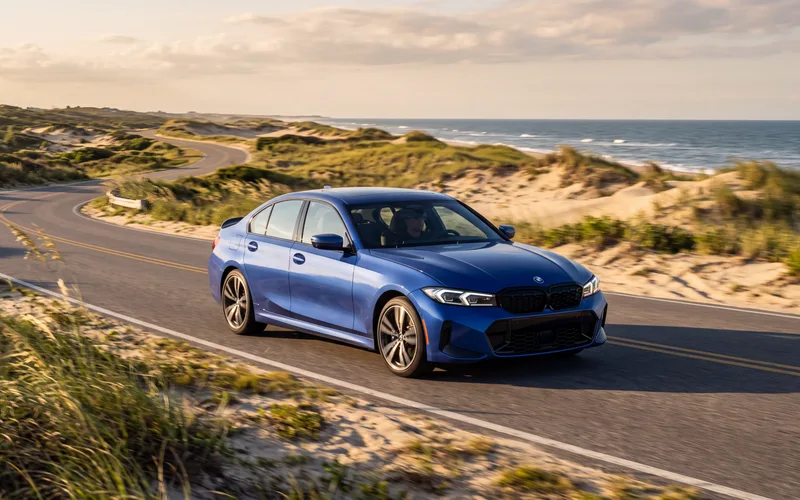 BMW 3 SeriesCompact Luxury SedanBetter at: Space and pace
For about $3,000 more it fixes nearly every practical complaint about the IS — rear seat, trunk, fuel economy, screens, and pace — if you can accept higher running costs.
Compare 2.71B-
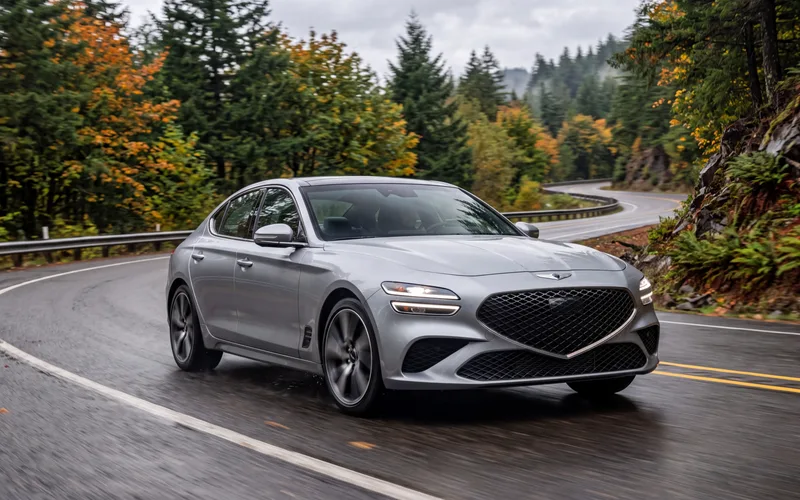 Genesis G70Compact Luxury SedanBetter at: Content per dollar
Delivers more standard equipment, a modern infotainment system, and a 10-year/100,000-mile powertrain warranty for similar money.
Compare 3.11B
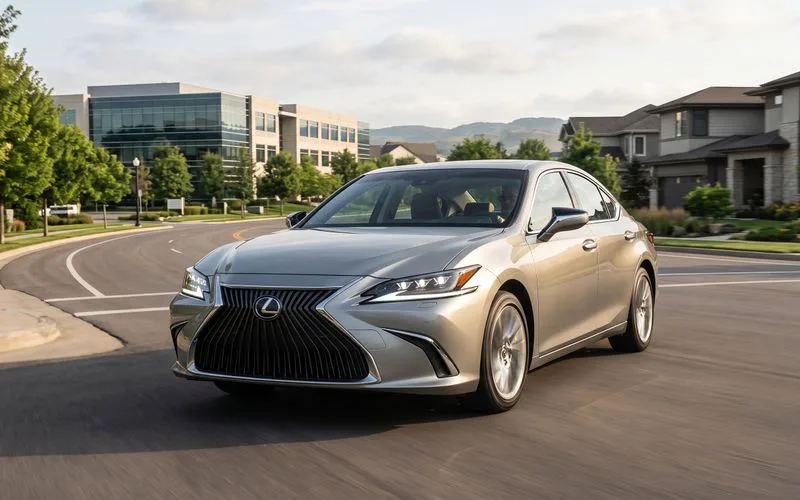 Lexus ESMid-Size Luxury SedanBetter at: Space and efficiency
The same Lexus reliability and service experience in a bigger, quieter, hybrid-available sedan for buyers who don't need rear-wheel drive.
CompareHow it's evolved
10 scored model years · 2017–2026
Subject scores by year
Hover or tap a score to see what moved it versus the year before. A corner mark flags a big swing.
| Year | Performance | Efficiency | Safety | Space | Cost | Reliability | Tech | Use-case | Driving | Value |
|---|---|---|---|---|---|---|---|---|---|---|
| 2026 | 50 | 32 | 67 | 57 | 55 | 86 | 62 | 45 | 80 | 63 |
| 2025 | 48 | 27 | 73 | 52 | 58 | 87 | 45 | 39 | 70 | 66 |
| 2024 | 46 | 27 | 74 | 56 | 60 | 87 | 46 | 43 | 73 | 67 |
| 2023 | 48 | 27 | 79 | 52 | 58 | 88 | 44 | 43 | 67 | 66 |
| 2022 | 48 | 27 | 78 | 55 | 59 | 85 | 46 | 43 | 72 | 65 |
| 2021 | 47 | 27 | 80 | 56 | 67 | 88 | 46 | 45 | 73 | 68 |
| 2020 | 45 | 23 | 64 | 55 | 63 | 87 | 31 | 41 | 65 | 57 |
| 2019 | 45 | 23 | 67 | 56 | 61 | 84 | 34 | 46 | 71 | 61 |
| 2018 | 44 | 30 | 70 | 54 | 59 | 86 | 33 | 46 | 69 | 70 |
| 2017 | 44 | 30 | 69 | 54 | 60 | 80 | 30 | 44 | 62 | 66 |
Compare two years
Best fit & conditions
Higher scores mean a better fit for that use case. Learn more about use-case fit →
Subject profile
Academic Probation · NHTSA safety recalls
Apr 8, 2026Fuel system, gasoline: delivery: fuel pumpThe low-pressure fuel pump inside the fuel tank may fail.
Defect
Toyota Motor Engineering & Manufacturing (Toyota) is recalling certain 2015-2022 Lexus RC, 2016-2020 GS, and 2022 IS vehicles. The low-pressure fuel pump inside the fuel tank may fail.
Risk
Fuel pump failure can cause an engine stall, increasing the risk of a crash.
Remedy
Dealers will replace the fuel pump assembly, free of charge. Owner letters were mailed October 15, 2026. Owners may contact Toyota's customer service at 1-800-331-4331. Toyota's numbers for this recall are 26LB05 and 26LA05.
NHTSA campaign 26V222000 ↗Manufacturer no. 26LB05/26LA059,139 vehicles potentially affected (all models in the campaign)Owners notified Oct 14, 2026Filed by Toyota Motor Engineering & ManufacturingFiled as IS
2 recalls on other model years of the IS (2017–2019)
Nov 4, 2020Fuel system, gasoline: delivery: fuel pumpThe low-pressure fuel pump inside the fuel tank may fail.
Defect
Toyota Motor Engineering & Manufacturing (Toyota) is recalling certain 2018-2019 4Runner, 2019-2020 Avalon, 2019 Corolla Hatchback, 2017-2019 Highlander, 2018-2020 Camry, 2020 Corolla, 2018-2019 Land Cruiser, 2017-2020 Tacoma, 2019-2020 RAV4, 2019-2020 Sequoia, 2017-2020 Sienna, 2019-2020 Tundra, 2018-2020 Lexus ES350, 2017 Lexus GS200t, 2017-2019 Lexus GS350, 2019 Lexus GS300, 2018-2020 Lexus LC500h, 2019-2020 Lexus LS500, 2018-2019 Lexus GX460, 2017 Lexus IS200t, 2019 Lexus IS300, 2019 Lexus IS350, 2018-2020 Lexus LC500, 2018 Lexus LS500, 2019 Lexus LS500h, 2018-2019 Lexus LX570, 2017 Lexus RC200t, 2019 Lexus RC300, RC350, 2017 and 2019-2020 Lexus RX350, 2018-2020 RX350L, 2019 Lexus UX200, 2018-2019 Lexus NX300 vehicles. The low-pressure fuel pump inside the fuel tank may fail.
Risk
If the fuel pump fails, the engine can stall while driving, increasing the risk of a crash.
Remedy
Toyota will notify owners, and dealers will replace the fuel pump assembly with an improved one, free of charge. Owners of specific models were notified that remedy parts were available starting January 21, 2021. Owners of other models will be notified as remedy parts become available. Remedy parts should be available for all affected vehicles by late March 2021. Owners may contact Toyota customer service at 1-888-270-9371 or Lexus customer service at 1-800-255-3987. Note: This recall is an expansion of recall 20V-012. Toyota's number for this recall is 20TA02. Lexus' number for this recall is 20LA01.
NHTSA campaign 20V682000 ↗Manufacturer no. 20TA02, 20LA011,525,742 vehicles potentially affected (all models in the campaign)Owners notified Jan 21, 2021Filed by Toyota Motor Engineering & ManufacturingFiled as IS 300, IS 350, IS200TJan 13, 2020Fuel system, gasoline: delivery: fuel pumpToyota Motor Engineering & Manufacturing (Toyota) recalled certain 2018-2019 4Runner, Highlander, Camry, Land Cruiser, Sequoia, Sienna, Tacoma and Tundra, and Lexus RC 300, RC 350, GS 350, GX 460, IS 300, LC 500, LS 500, LX 570, RX 350L, and 2019 Toyota Avalon and Corolla, and certain Lexus NX 300, and ES 350 vehicles on January 13, 2020. On March 4, 2020, Toyota expanded the recall to include certain 2014-2015 Toyota 4Runner and Land Cruiser, 2018 Avalon, Corolla, 2014 FJ Cruiser, 2017 Sienna and Lexus 2018 ES 350, 2018-2019 GS 300, 2013-2014 GS350, 2014-2015 GX 460, IS 350 and LX 570, 2014 IS F, 2018-2019 IS 350, LC 500H and LS 500H, 2013-2015 LS 460, 2015 NX 200T and RC350, 2017 RC 200T and RX 350. Toyota also removed the 2018-2019 Toyota 4Runner and Land Cruiser and 2018-2019 Lexus GX 460 and LX 570 and 2019 NX300 from inclusion in this recall. On March 19, 2020, Toyota expanded the recall to include 2015 Lexus GS350 vehicles. The low-pressure fuel pump inside the fuel tank may fail.
Defect
Toyota Motor Engineering & Manufacturing (Toyota) recalled certain 2018-2019 4Runner, Highlander, Camry, Land Cruiser, Sequoia, Sienna, Tacoma and Tundra, and Lexus RC 300, RC 350, GS 350, GX 460, IS 300, LC 500, LS 500, LX 570, RX 350L, and 2019 Toyota Avalon and Corolla, and certain Lexus NX 300, and ES 350 vehicles on January 13, 2020. On March 4, 2020, Toyota expanded the recall to include certain 2014-2015 Toyota 4Runner and Land Cruiser, 2018 Avalon, Corolla, 2014 FJ Cruiser, 2017 Sienna and Lexus 2018 ES 350, 2018-2019 GS 300, 2013-2014 GS350, 2014-2015 GX 460, IS 350 and LX 570, 2014 IS F, 2018-2019 IS 350, LC 500H and LS 500H, 2013-2015 LS 460, 2015 NX 200T and RC350, 2017 RC 200T and RX 350. Toyota also removed the 2018-2019 Toyota 4Runner and Land Cruiser and 2018-2019 Lexus GX 460 and LX 570 and 2019 NX300 from inclusion in this recall. On March 19, 2020, Toyota expanded the recall to include 2015 Lexus GS350 vehicles. The low-pressure fuel pump inside the fuel tank may fail.
Risk
If the fuel pump fails, the engine can stall while driving, increasing the risk of a crash.
Remedy
Toyota will notify owners, and dealers will replace the fuel pump, free of charge. The recall began May 4, 2020. Owners may contact Toyota customer service at 1-888-270-9371 or Lexus customer service at 1-800-255-3987. Toyota's numbers for this recall are 20TB02 and 20TA02 for Toyota vehicles and 20LB01 and 20LA01 for Lexus vehicles.
NHTSA campaign 20V012000 ↗Manufacturer no. 20TB02/20TA02/20LB011,830,752 vehicles potentially affected (all models in the campaign)Owners notified May 1, 2020Filed by Toyota Motor Engineering & ManufacturingFiled as IS 300, IS 350, IS200T
Source: NHTSA Office of Defects Investigation recall database, model years 2017–2026. Recalls are listed by model year as the manufacturer filed them; whether a specific car is affected depends on its VIN — check a VIN at nhtsa.gov ↗. NHTSA model names matched to this page: IS, IS 300, IS 350, IS200T.
Detailed scoring by subject
1Performance & PowertrainGrades below the middle of the scale.1.22D
The volume IS 300 RWD carries the 2.0L turbocharged inline-four rated 241 hp — modest output for a compact luxury sedan, though 2022 is the year the range gained its 472 hp V8 halo in the new IS 500.
The turbo four holds its 258 lb-ft flat from 1,650 to 4,400 rpm, giving the IS 300 RWD more usable low-end pull than the naturally aspirated V6 fitted to the AWD car despite the smaller displacement.
6.9 seconds to 60 mph for the volume IS 300 RWD is mid-pack for a compact luxury sedan and well off the quicker turbocharged German rivals; the V6 and V8 grades above it are substantially faster.
The 8AR-FTS turbo four is the least polished element of an otherwise refined car — quiet and well isolated at a cruise in typical Lexus fashion, but reviewers and owners consistently report off-boost lag and a coarse, characterless note under hard throttle compared with the V6 and the new V8.
The volume RWD IS 300 gets the 8-speed Sport Direct-Shift automatic with paddle shifters, widely described as smooth and decisive with well-timed downshifts and no hunting; opting for AWD drops the car to an older 6-speed, so the representative configuration has the better unit.
All-wheel drive is offered across most of the 2022 range (IS 300 AWD and IS 350 AWD) but never with the volume 2.0T engine — choosing AWD forces the 3.5L V6 and the older 6-speed automatic — and the new IS 500 is RWD only. The system is conventional full-time AWD with electronically controlled torque distribution, no terrain modes or low range.
2022 is the broadest the IS lineup gets, with three genuinely distinct gasoline engines — 2.0L turbo four, 3.5L V6 and the newly added naturally aspirated 5.0L V8 — which is unusual for the class, but there is no hybrid, plug-in or electric option anywhere in the range while key rivals offer electrified variants.
2Efficiency & RangeThe IS's lowest-graded category.0.00F
The volume IS 300 RWD turbo four is the most efficient 2022 IS at 25 MPG combined — respectable for a rear-drive compact luxury sedan but unremarkable against a gas sedan field that includes far thriftier small cars.
21 MPG in town is the weakest part of the IS 300's economy picture — with no hybrid assistance and a rear-drive layout, the turbo four gets no city-cycle advantage over larger-engined rivals.
The tall-geared 8-speed automatic and modest frontal area give the IS 300 RWD a 31 MPG highway rating, its strongest EPA figure and the clearest reason to take the four over the V6 for commuting.
A 17.4-gallon tank at the EPA's 25 MPG combined gives roughly 435 miles between fills — enough for a long day's drive but short of the 500-mile-plus figures more efficient sedans manage.
EPA estimates $3,100 a year to fuel the IS 300 at standard assumptions — driven as much by the mandatory premium grade as by the 25 MPG rating, and near the expensive end of the sedan band.
Every 2022 IS engine — including the volume 2.0T — calls for 91-octane premium unleaded, a standing per-gallon penalty over regular and the main reason the annual fuel cost lands where it does. There is no flex-fuel, hybrid or plug-in alternative anywhere in the lineup.
3SafetyOne of the IS's strongest categories.3.30B+
NHTSA rated the 2022 IS 300 in both RWD and AWD form at 5 stars overall, with the frontal-crash sub-rating the only 4-star result.
The 2022 IS is an IIHS Top Safety Pick+ with Good in all six crashworthiness tests including both small-overlap sides, earned without a headlight-trim qualifier — a clean sweep that puts it at the top of the compact luxury sedan field.
Every 2022 IS, including the base IS 300 RWD, carries Lexus Safety System+ 2.5 plus Blind Spot Monitor with Rear Cross-Traffic Alert as standard, so AEB, full-range adaptive cruise, lane keeping/centering, BSM and RCTA all come on the volume trim with nothing locked behind a package.
IIHS rates the IS Superior in both vehicle-to-vehicle and daytime pedestrian front crash prevention, the best available marks in the tests applied to this model; the nighttime pedestrian evaluation had not been run on the IS, so night performance is unverified rather than proven.
Blind Spot Monitor with Rear Cross-Traffic Alert is standard on both IS 300 trims, but it is alert-only in base form — rear automatic braking is an option and there is no safe-exit assist — so it lands at the top of the 'available on most trims, alert-only' band rather than the intervention band.
Lane Departure Alert with Steering Assist and Lane Tracing Assist are standard, and LTA holds a lane competently on marked highway, but Toyota/Lexus centering of this era only operates with radar cruise engaged and is notably conservative — it gives up on faint markings and nudges rather than steers.
All-Speed Dynamic Radar Cruise Control is standard and works down to a stop, pairing with Lane Tracing Assist for a genuine highway-assist mode, but reviewers of the 2022 IS describe it as slow to respond and prone to leaving large gaps — capable with rough edges rather than best-in-class.
No hands-free highway system is offered on the 2022 IS at any trim. Lexus Teammate Advanced Drive was a US-market LS 500h exclusive at the time and was never extended to the IS.
IIHS rates two headlight variants on the 2022 IS, at Good and Acceptable, and awarded Top Safety Pick+ with no headlight qualifier — meaning every trim's lights clear the bar. Intelligent High Beams are standard. It falls just into the top band rather than above it because the optional upgrade lights rate a step below the standard ones.
The XE30 IS is styled as a low, wide coupe-like sedan with a high beltline, heavily raked rear glass and thick rear-quarter pillars, so over-the-shoulder and rearward sightlines are among the tighter ones in the compact luxury class; standard blind-spot monitoring covers the lane-change case but the surround-view camera that would compensate at low speed is optional.
IIHS gives the IS its top Good rating for LATCH ease of use, so the hardware itself is easy to find and work with — but the sedan's short 32.2-inch rear legroom and narrow bench make rear-facing seats and any three-across attempt a genuine compromise, which keeps it in the workable-with-space-penalties band.
4Space & ComfortMid-pack among this car's ten categories.1.73C-
Every 2022 IS grade — IS 300 RWD/AWD, IS 350 RWD/AWD and the new IS 500 — seats five on a three-across rear bench, the maximum for the compact luxury sedan class.
38.2 inches of front headroom is mid-pack for a low-roofed compact sport sedan; the 56.5-inch overall height limits what is available, and the optional moonroof eats into it further.
44.8 inches is generous front legroom that tops the sedan normalization band — the IS gives its driver and front passenger the room it denies the back seat.
36.9 inches of second-row headroom is below the sedan midpoint, a consequence of the fastback-influenced roofline the 2021 refresh carried over into 2022.
At 32.2 inches the IS sits at the very bottom of the sedan band and roughly three inches behind a BMW 3 Series; adults behind a tall front occupant are genuinely short of room, and this is the car's single largest packaging deficit.
10.8 cubic feet is near the floor of the sedan band and among the smallest trunks in the segment — the space is wide but shallow, and the lid opening is inset relative to the floor so larger items need angling in.
Small-item storage is a documented weak point: the Remote Touch Interface pad and drive-mode selector consume most of the console top, the bin beneath holds only a 12V outlet, an AUX jack and two USB-A ports, and there is no wireless charging pad anywhere in the range. A rear armrest with cupholders is an option package item rather than standard on the volume IS 300.
Front seats are a genuine strength — reviewers call them supremely comfortable, with a 10-way power driver's seat and 8-way passenger seat standard and well-bolstered heated/ventilated F SPORT buckets above — but the rear bench is compromised by the 32.2-inch legroom rather than by its cushioning, which pulls the item down from where the fronts alone would place it.
The 2021 structural and suspension rework the 2022 car carries over — higher-strength steel, added spot welds, retuned double-wishbone front and multi-link rear — gives a taut but absorbent ride that soaks up broken pavement without float; the 18-inch wheels on the volume IS 300 help, and only the 19-inch F SPORT setups turn firm.
Isolation is the most consistently praised aspect of the IS cabin — reviewers describe it as hushed at speed, with little wind or road intrusion, and the 0.28 coefficient of drag on the IS 300 helps at highway pace. The turbo four is the only real noise source, and only under hard throttle.
Dual-zone automatic climate control with a deodorizing clean-air filter is standard, but on the volume IS 300 RWD heated front seats are not — they are standard only on AWD, and heated/ventilated seats plus a heated steering wheel require the Comfort or Premium package. A power rear sunshade is restricted to IS 350 and IS 500 Premium, and there are no rear climate controls.
5Cost of OwnershipMid-pack among this car's ten categories.1.97C-
Lexus announced the 2022 IS 300 rear-drive at $38,625 plus the $1,075 delivery/processing/handling fee — just under $40,000, several thousand below a 2022 BMW 330i — though like most 2022 cars it took in-year price rises, and later-published figures show the entry price closer to $40,300–$40,800.
The 2.0T IS 300 is the volume engine, and 2022 gave it an all-new Premium Package (heated/ventilated seats, moonroof, larger display) that most retail cars carry, so a typical transaction lands around $42,500 — still below the $44,125 IS 350 F SPORT RWD with destination.
Published estimates for this car sit far apart, so the figure is bracketed rather than lifted from one source: CarEdge's owner-basis $385/yr (~$1,925 over five years) is scheduled maintenance only, KBB's dealer-basis IS 300 projection runs near $10,000, and the like-for-like Edmunds True Cost to Own basis used elsewhere in this catalog put a comparable Lexus sedan at $6,858. A rear-drive IS 300 on 18-inch tires should cost a little more than that and clearly less than the BMW 3 Series' ~$7,600.
Residual value is the IS's strongest ownership argument — it gives up 41.3% over five years against 51.3% for the luxury compact class, a ten-point advantage worth roughly $4,200 on a $42,500 car, and Lexus took Kelley Blue Book's luxury-brand resale award for 2022 for the seventh time.
Standard Lexus basic coverage — a year longer than mainstream 3/36 terms and level with BMW, Mercedes and Cadillac in this segment, but short of Genesis's 5/60.
Six years / 70,000 miles is mid-pack — two years better than BMW's 4/50 on the 3 Series but far behind Genesis and the Korean brands' 10/100 — and the 2022 IS is gas-only across IS 300, IS 350 and the new IS 500, so none of the longer hybrid or battery terms apply.
The included-maintenance window is short — two scheduled visits inside the first year — but the rest of the ownership package is better than that implies: four full years of roadside assistance with no mileage cap, plus Lexus connected-services and app trials. That puts it ahead of the BMW 3 Series, which has offered no complimentary scheduled maintenance since MY2020, and behind Genesis and Volvo's multi-year programs.
$42,500 volume-trim price minus its estimated resale value after 5 years (58.7% retained, or about $24,948) leaves about $17,552 in depreciation. Add the projected $6,900 in 5-year maintenance and repairs, and owning this vehicle for 5 years costs about $24,452 in total.
6Reliability & QualityThe IS's best-graded category.3.78A
The 2022 IS is the ninth model year of the XE30 generation and the second year after the 2021 facelift — a carry-over year whose only changes were an all-new Premium Package on the IS 300, a Memory Package and optional power rear sunshade on the IS 350 F SPORT, and the addition of the IS 500, none of which touch the platform or the volume car's powertrain. Consumer Reports rates it well above average and four years of field data have since produced only a handful of NHTSA complaints. Scored two points below the 2023 IS (90) for two reasons specific to this year: CR's trouble-spot grid for the 2022 IS is entirely 'NA' — the top-line verdict rests on brand and generation history rather than owner data for this model year — and 2022 is the single IS model year swept into the low-pressure fuel-pump recall. Still at the top of this dataset's sedan field (peer median 71.5, peer max 84.8 on the Lexus LS).
Lexus was first or second in every study this criterion names for the 2022 cycle, which is a slightly weaker showing than the 2023 model year when it topped both outright — it led Consumer Reports' brand table but placed second to Genesis in the J.D. Power Vehicle Dependability Study and second among premium brands in Initial Quality. Scored below the 2023 IS (93) for that reason and level with the 2024 car (90), and well clear of the German compact-luxury field in this dataset (BMW 3 Series cat6 72.9, Mercedes-Benz C-Class 69.4, Alfa Romeo Giulia 49.2).
This is the weakest item on the 2022 IS and the one place it is materially worse than its neighbouring model years: it is the only IS model year carrying an open safety recall. NHTSA campaign 26V222000 (April 2026) covers the 2022 IS for a low-pressure fuel pump that can fail and stall the engine, and as of this scoring the remedy is not yet complete — owners received interim letters in June 2026 with final letters to follow once replacement parts exist, so affected cars are driving on an unrepaired stall risk. That is one campaign rather than a pattern, it is not a fire or Do-Not-Drive advisory, and the fix is free, so it sits in the 'typical recall activity, nothing systemic' band rather than lower. The 11 service bulletins on file are mostly infotainment and telematics software (Enform 2.0 navigation updates, telematics faults) plus a body water-intrusion/musty-odor bulletin and a check-engine-light bulletin specific to the IS 500's V8 — ordinary volume for a luxury sedan, nothing structural. Scored ten points below the campaign-free 2023 IS (88) and below the 2026 car (82).
Every engine and gearbox in the 2022 IS is a long-serving Toyota unit carried over from 2021. The volume IS 300 RWD's 8AR-FTS 2.0-liter turbo four is the weakest of them — sound in service, but a direct-injected turbo carries more carbon-buildup, turbo and water-pump exposure than the naturally aspirated alternatives — and that is what holds this below the V6 and V8 trims rather than any model-specific failure mode. The Aisin 8-speed (RWD) and 6-speed (AWD) automatics are conventional torque-converter designs with excellent field records, and the 2UR-GSE V8 new to this chassis for 2022 is itself a 2008-vintage naturally aspirated design from the IS F / RC F / GS F family. Scored two points below the 2023 IS (88) because the in-tank fuel pump that failed in service is a fuel-delivery component of this year's cars specifically, not a generation-wide issue.
Reviewers of the 2022 car separate the materials from the design: well-assembled, premium, soft-touch surfaces with standard NuLuxe upholstery, wood or aluminum trim and ambient lighting, let down by a dashboard architecture dating to 2014. The new-for-2022 Premium Package on the IS 300 adds interior content the volume car previously had to reach for. Scored a point above the 2023 IS (76) and three above the 2026 car (74) because the design gap to the segment was at its narrowest here — this is the model year closest to the 2021 facelift — and clearly above the similarly aged Cadillac CT4 (68), but below the 3 Series (80), which buys a more visually ambitious cabin for the same money.
The IS's strongest quality attribute, and 2022 is the year with the hardest year-specific evidence behind it anywhere in this model's window: J.D. Power's 2022 Initial Quality Study ranked the IS first in its segment, ahead of the BMW 3 Series and Genesis G70. It is built at Toyota's Tahara plant on a body and line that had eight years to converge — tight, repeatable panel gaps and essentially no squeak-and-rattle thread in owner reports. The only assembly-adjacent bulletin on file is a body water-intrusion/musty-odor advisory, which is a sealing service item rather than a misalignment complaint. Scored level with the 2023 IS (92) and above the 3 Series (86).
Coverage is thinner than BMW's or Mercedes-Benz's at roughly 245 US stores, but Lexus was the outright leader in luxury service satisfaction in the relevant year, with loaners and pickup-and-delivery standard practice. Scored two points above the 2023 IS (88) because the 2022 Customer Service Index result is a year-specific first place with a published margin rather than a brand-level recollection, and above BMW (85) and Cadillac (78). This is a brand-wide attribute with no model-year component beyond that.
Nine model years of a single generation sharing engines and driveline hardware with high-volume Toyotas is close to the best case for a luxury sedan: OEM mechanical parts are abundant and cheap by class standards, a deep used and salvage supply exists, an enthusiast aftermarket serves the IS/RC/GS family, and independent shops will take the work. Scored far above the dealer-dependent Germans (3 Series 55) and the low-volume Lexus LS flagship (68), but short of the Toyota-badged cars because luxury-specific trim, glass, lighting and body panels still price at a premium. Matched to the 2023 and 2026 IS (84) — same generation, same parts commonality. The one live caveat is campaign-specific rather than structural: replacement fuel pumps for 26V222000 were not yet available when the recall was filed.
7Technology & InfotainmentOne of the IS's weakest categories.1.08D
The volume IS 300 ships with an 8.0-inch display — near the bottom of the sedan band and small for a 2022 luxury sedan; the 10.3-inch high-resolution screen is bundled into option packages rather than standard.
The 2021 refresh moved the display forward so it can finally be touched directly and retained real knobs for volume and climate, but the underlying Lexus Enform software is an older architecture with thick bezels and dated graphics, and the Remote Touch Interface trackpad it is still built around is consistently criticized as unintuitive and distracting to use on the move.
Apple CarPlay and Android Auto are standard on every 2022 IS grade, which is the right answer given how dated the native software is — but both are wired only. Lexus's wireless CarPlay arrived with the new Lexus Interface system on the 2022 NX and never reached the IS in this model year.
Native navigation is not standard on the volume IS 300 — it requires the Navigation Package, which is also what unlocks Dynamic Voice Command and Destination Assist. The base car's embedded voice control is a dated command-grammar system that most owners bypass for phone projection or the standard Alexa integration.
The standard 10-speaker Pioneer system with HD Radio is a solid base offering, and the optional Mark Levinson 17-speaker, 1,800-watt surround system is one of the better premium setups in the segment — though on the IS 300 it is bundled with navigation rather than available on its own.
The volume IS 300 keeps analog gauges with only a 4.2-inch multi-information display between them. The full LFA-inspired 8-inch TFT instrumentation with the sliding bezel — genuinely one of the better cluster displays in the class — is an F SPORT grade feature, so the representative configuration gets the partial-digital answer.
The only over-the-air capability in the 2022 IS is Lexus Enform Dynamic Navigation map and POI refresh, and that exists only on cars fitted with the Navigation Package. There is no whole-vehicle software updating and no mechanism for adding features after delivery.
Lexus Enform Remote through the Lexus app covers the core set — remote start and climate, lock/unlock, vehicle locate, alarm and guest-driver alerts, with Alexa and Google Assistant voice hooks — but it is a three-year trial that becomes a paid subscription, and there is no phone-as-key digital key at any grade.
Device power is the weakest technology item on the car: two USB-A jacks, an AUX input and a single 12V DC outlet, all buried in the console box, with nothing at all for rear passengers, no USB-C anywhere in the range and no wireless charging pad offered on any 2022 IS grade.
SmartAccess proximity entry with push-button start is standard across the range and remote start comes through the Enform Remote app rather than the key fob, which covers the everyday convenience case. What is missing is any phone-as-key option — the only alternative credential is the physical Smart Access card key on one F SPORT package.
A backup camera with dynamic grid lines is standard, but parking sensors are not — Intuitive Parking Assist with Auto Braking is a factory option, and the four-camera Panoramic View Monitor is a further option above it (standard only on the IS 500 Premium). On the volume IS 300 as commonly ordered, a rear camera is all you get.
No head-up display is offered on the 2022 IS at any grade or in any option package — a conspicuous omission in a segment where the BMW 3 Series, Genesis G70 and Mercedes C-Class all make one available, and where Lexus fits HUDs to the ES, LS and RC.
8Use-Case FitOne of the IS's weakest categories.0.86F
The hardware is fine — IIHS rates the IS LATCH system Good for ease of use — but the packaging is not: 32.2 inches of rear legroom leaves very little margin for a rear-facing seat behind a normally positioned front occupant, the low roof and small rear door aperture make loading a child awkward, and a 10.8 cu ft trunk swallows a stroller only grudgingly.
This is the strongest family argument for the car: five-star NHTSA overall, an IIHS Top Safety Pick+ with no headlight restriction, and Lexus Safety System+ 2.5 plus blind-spot monitoring with rear cross-traffic alert standard on the entry IS 300 rather than bundled into a package. Rear automatic braking and the surround-view camera are the only notable extra-cost items.
Two adults up front travel very well, but the back seat is where a family trip falls apart: class-worst legroom, 36.9 inches of headroom, no rear climate controls or rear USB ports, no rear-seat entertainment, and a trunk that Cars.com found holds four fewer carry-ons than a 330i or A4 even with the seats down.
A quiet cabin, light and consistent steering, a smooth eight-speed automatic and all-speed Dynamic Radar Cruise Control with Lane Tracing Assist standard make the IS 300 an easy commuter. The 2.0-liter's off-boost lag from a standstill and an adaptive cruise that reviewers find slow to close gaps are the annoyances that keep it out of the top band.
25 MPG combined is respectable for a rear-drive turbo four, but the engine requires 91-octane premium and there is no hybrid anywhere in the 2022 IS range, so the EPA puts annual fuel at about $3,100 — expensive per commuting mile against hybrid-equipped rivals and against the ES that sits beside it in the showroom.
A compact 185.4-inch footprint and a tight 34.2-foot curb-to-curb turning circle on the RWD car make the IS genuinely easy to thread and park. What holds it back is visibility and aids rather than size: thick rear pillars from the 2021 restyle, and neither parking sensors nor the surround-view camera standard on the volume trim.
Lexus publishes no tow rating for the US-market IS and the car has no payload provision beyond its five seats and a 10.8 cu ft trunk. It is a compact luxury sport sedan with no meaningful work capability of any kind.
The mechanicals are the credible part — the 8AR-FTS four, the 2GR-FKS V6 and the Aisin automatics are long-serving Toyota units with a strong durability record, and the IS body dates to a platform in production since 2013. But nothing about the car is built for abuse: Nuluxe and carpet interior surfaces, low-profile summer or all-season tires, 5.51 inches of ground clearance and no fleet or work role anywhere in its history.
There are essentially no work provisions: a single 12V outlet in the console is the only onboard power, there is no bed or load floor, no roof rails or factory rack system, no factory hitch and no washable or wear-friendly interior option.
For two people the IS is a good mile-eater: a hushed cabin at speed, front seats reviewers call supremely comfortable, a 0.28 drag coefficient, roughly 435 miles between fills from the 17.4-gallon tank at 25 MPG combined, and all-speed radar cruise with lane tracing standard. Rear-seat endurance and luggage capacity are what stop it short of the top band.
The volume configuration is the least adventure-ready in the range: all-wheel drive is offered on the IS 300 only with the V6 and the older six-speed, never with the 2.0T, so the representative car is rear-drive. Add 5.51 inches of ground clearance, no tow rating, no roof rails and 18- or 19-inch low-profile tires and the IS is firmly pavement-bound.
The IS does at least have a 60/40 split-folding rear seatback, which several other Lexus sedans lack, but it does not fold flat and it opens into a 10.8 cu ft trunk that is wide, shallow and inset at the lip. With no roof rails, no factory hitch and no underfloor storage, bulky gear is a real problem.
9Driving ExperienceOne of the IS's strongest categories.2.85B-
The 2021 chassis rework the 2022 car carries over — higher-strength steel, added spot welds, a widened rear track and retuned double-wishbone front / multi-link rear suspension — produces measured grip that beats the segment benchmarks: 0.88 g on the skidpad and a figure-eight lap quicker than both a BMW 330i xDrive and an Alfa Romeo Giulia Q4. It is composed and tidy rather than playful, and the volume IS 300 RWD lacks the adaptive dampers and Torsen differential available higher up.
The rack-and-pinion EPS is accurate and consistently weighted with a quick 2.84 turns lock to lock on the RWD car, so it places the nose precisely, but reviewers describe it as light and short on genuine road feedback — competent for the commute, a step behind the class's best for a driver's car.
Stopping power is strong — MotorTrend recorded a 117-foot 60-0 mph best, a good result for all-season tires — from 13.2-inch ventilated front and 11.7-inch rear discs managed by VDIM. The deduction is for pedal tuning rather than capability: testers found the brakes short on responsiveness and tactile feedback in the wet.
The eight-speed Sport Direct-Shift automatic fitted to the volume RWD IS 300 is a genuinely good unit — smooth, decisive, no hunting, well-timed downshifts on the paddles — and the 258 lb-ft plateau from 1,650 rpm masks a lot. Off-boost lag from a standstill is the recurring complaint and is what keeps it out of the top band.
Isolation at a cruise is typically Lexus — the 2.0-liter is barely present — but worked hard the 8AR-FTS is coarse and characterless, the least appealing-sounding engine in a 2022 range that also contains a 2GR-FKS V6 and the new 5.0-liter V8. No active sound enhancement disguises it on the IS 300.
34.2 feet curb-to-curb on the rear-drive volume trim is at the tight end of the sedan band and a real everyday asset in parking structures and U-turns; the AWD models give up 1.2 feet.
The low-slung sport-sedan seating position, 10-way power driver's seat and forward sightlines draw praise, and the 2021 refresh pulled the display three inches closer to hand. Against that, the power tilt-and-telescoping steering column is an option-package item on the IS 300 rather than standard, the console-mounted touchpad is an awkward reach-and-aim control on the move, and the low roof makes ingress and egress less easy than in the class's taller rivals.
The rear-drive layout, 55/45 weight distribution and stiffened 2021 chassis make the IS 300 entertaining on a good road — reviewers call it a traditional sport sedan and note it holds its own against a 330i on the numbers — but the 241-hp turbo four is the range's least characterful engine, and the enthusiast recommendation in 2022 points to the IS 350 F SPORT or the new 472-hp IS 500.
10Value & Market PositionMid-pack among this car's ten categories.2.39C+
Every 2022 IS ships with the full Lexus Safety System+ 2.5 suite plus Blind Spot Monitor with Rear Cross-Traffic Alert — content BMW and Audi still charged for on cars starting higher — alongside 18-inch alloys, NuLuxe upholstery, 10-way power driver and 8-way power passenger seats, dual-zone climate and an 8-inch touchscreen with wireless Apple CarPlay. What keeps it out of the top band is that the 10.3-inch navigation display, heated and ventilated seats, the moonroof and the Panoramic View Monitor all sit behind packages — including the Premium Package that was new for 2022.
At $39,700 with destination the IS 300 undercut a 2022 BMW 330i by roughly $2,500 while bringing class-leading dependability and the segment's best residuals, so the money spent is unusually well protected. The content itself is where it gives ground: 241 hp and high-six-second acceleration, subpar economy for the class, a tight rear seat and a cabin reviewers openly call dated mean you pay luxury-compact money for mainstream capability — the value sits in the ownership experience, not the spec sheet.
2022 is the year the lineup reached its widest: three genuinely different engines — 241-hp 2.0T, 260/311-hp 3.5 V6 and the new 472-hp 5.0 V8 — rear- or all-wheel drive on IS 300 and IS 350, and a walk from under $40,000 to the $68,475 IS 500 Launch Edition, with a new Premium Package on the IS 300 and a Memory Package and power rear sunshade added to the IS 350 F SPORT. The gaps are electrification and body style: no hybrid at any price, and sedan only.
US volume held at 21,386 in 2022, essentially flat against the 21,998 the 2021 facelift produced and well above the 13,600 of 2020 — a creditable plateau for a sedan on a decade-old platform in a supply-constrained year, but roughly half the Lexus ES's volume and far behind the BMW 3 Series.
Lexus equity is the quiet kind that shows up in resale and repair bills rather than in showroom glamour — it took KBB's luxury resale-value brand award for the seventh time in 2022 and sat near the top of J.D. Power's dependability study, though that year the redesigned study put Kia first overall and Genesis as the leading premium brand. In this segment Lexus reads as the sensible choice rather than the aspirational one, with the new IS 500's naturally aspirated V8 supplying a halo the brand's sedans had lacked.
2022 was the worst year in a decade to negotiate. The chip shortage left luxury inventory thin, manufacturer incentives collapsed to a ten-year low, and the great majority of buyers transacted at or above sticker — Lexus dealers were among the more restrained on market adjustments, but an IS buyer in 2022 could expect to pay MSRP and had essentially no cash on the hood. The buyer benefit this item measures was close to absent.
2022 is the ninth model year of the XE30 generation that launched for 2014, but it is the freshest point in that generation's late life: the heavy 2021 update brought new sheetmetal, a wider track, a revised chassis and touchscreen infotainment, and 2022 added a genuinely new variant in the V8 IS 500 plus new packages. The platform, cabin packaging and six-speed AWD automatic still date the car, but no replacement was imminent — Lexus went on selling the XE30 IS through 2026.
Reviewers rate the IS solidly without ever making it the pick of the class — mid-table at U.S. News, with a clean sweep of IIHS Good crashworthiness ratings and a Top Safety Pick+ award to back it — and the criticisms recur consistently: an aging, tight cabin, slow-shifting transmissions and unremarkable economy. The IS 500 is the exception, drawing real enthusiast praise for its V8 character, but that is a $57,000-plus halo rather than the car most buyers get.