
The verdict
A struggling mid-size luxury suv, strong on safety and held back by efficiency.
The 2019 Nautilus is the year Lincoln renamed the MKX, gave it a new grille, standard Co-Pilot360 safety gear and an eight-speed automatic — and it is also the year of this generation you should be most careful about buying used. The cabin is genuinely lovely and startlingly quiet, the back seat has 39.6 inches of legroom, and NHTSA gave it five stars overall. But it is a first-year car with a first-year record: Consumer Reports put it on its used-luxury-SUV avoid list two years running, there are eight NHTSA recalls against it (two of them re-recalls because the original fix wasn't done right), and the 2.0-liter EcoBoost in a 2019 build predates the redesigned engine block that fixed a known coolant-into-the-cylinders head-gasket problem. If you want this car, the 2020 or later versions of it are the safer buy.
Jump to scoresStrengths
- One of the quietest cabins you can buy at this price
- Big, comfortable seats and a genuinely adult back row
- Five-star crash results and safety gear standard on every trim
What holds it back
- This is the first-year car, and its reliability record shows it
- Eight recalls, including two issued because the first fix wasn't done right
- Poor headlights on every version — no IIHS award at all
Top alternatives
Cars shoppers cross-shop with the Lincoln Nautilus 2.65C+
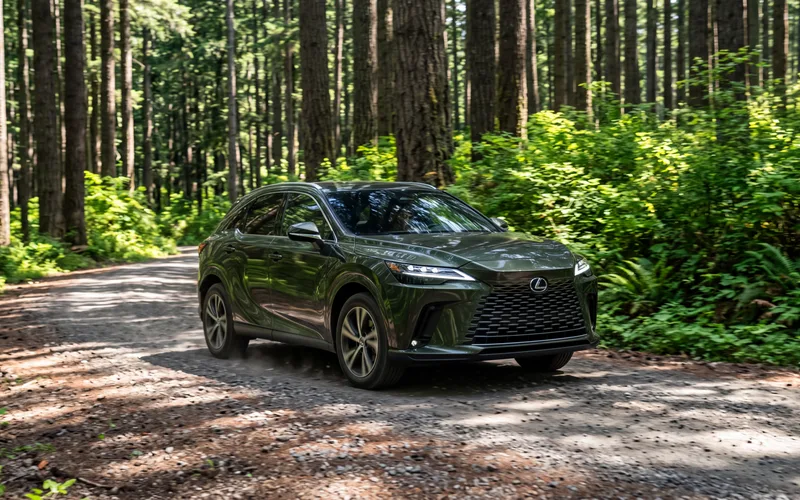 Lexus RXMid-Size Luxury SUVBetter at: Resale value
Same two-row luxury mission with far better projected resale and reliability, and it runs on regular fuel instead of premium-recommended.
Compare 2.90B-
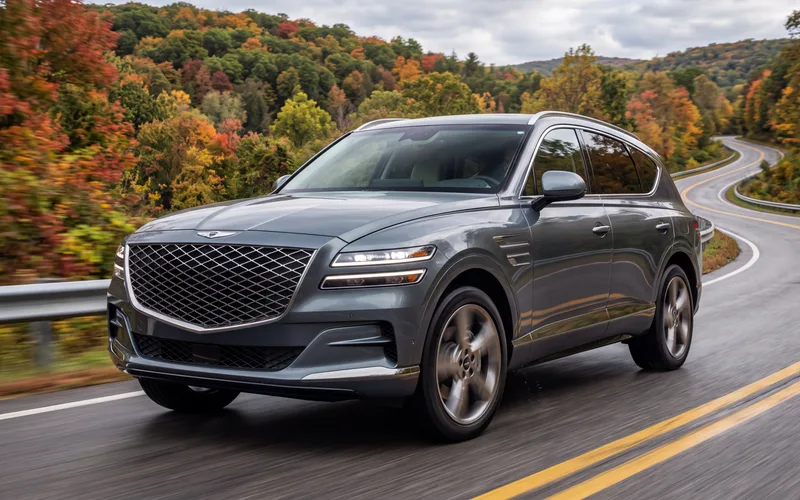 Genesis GV80Mid-Size Luxury SUVBetter at: Power
Another value-priced luxury alternative to the Germans, but with a real turbo-six and sharper dynamics instead of a 250-hp four.
Compare 2.94B-
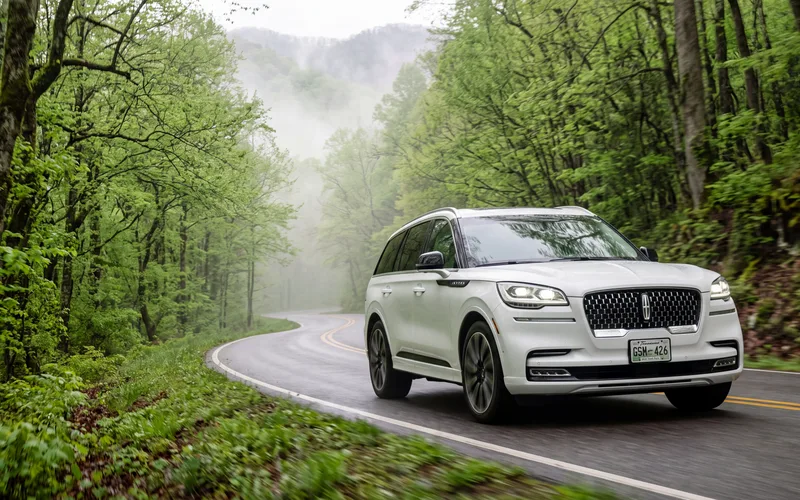 Lincoln AviatorMid-Size Luxury SUVBetter at: Space and towing
The Lincoln to pick if you need a third row and more than 3,000 lbs of towing — 77 cu ft behind row two and a much stronger V6.
CompareHow it's evolved
8 scored model years · 2019–2026
Subject scores by year
Hover or tap a score to see what moved it versus the year before. A corner mark flags a big swing.
| Year | Performance | Efficiency | Safety | Space | Cost | Reliability | Tech | Use-case | Driving | Value |
|---|---|---|---|---|---|---|---|---|---|---|
| 2026 | 46 | 54 | 90 | 63 | 26 | 65 | 85 | 74 | 64 | 77 |
| 2025 | 42 | 55 | 89 | 62 | 31 | 57 | 80 | 61 | 60 | 74 |
| 2024 | 39 | 55 | 88 | 61 | 37 | 51 | 78 | 58 | 55 | 73 |
| 2023 | 44 | 39 | 76 | 58 | 38 | 71 | 76 | 60 | 63 | 63 |
| 2022 | 44 | 39 | 74 | 59 | 42 | 70 | 75 | 58 | 62 | 62 |
| 2021 | 44 | 39 | 73 | 58 | 40 | 64 | 75 | 59 | 64 | 63 |
| 2020 | 44 | 41 | 71 | 58 | 41 | 57 | 57 | 59 | 61 | 61 |
| 2019 | 44 | 39 | 70 | 59 | 42 | 53 | 56 | 59 | 62 | 63 |
Compare two years
Best fit & conditions
Higher scores mean a better fit for that use case. Learn more about use-case fit →
Subject profile
Detailed scoring by subject
1Performance & PowertrainOne of the Nautilus's weakest categories.0.92F
2019 is the launch year of the Nautilus nameplate — the midcycle revision of the MKX — and the volume Reserve trim carries the standard 2.0L turbocharged four rated at 250 hp @ 5,500 rpm, with the 335-hp 2.7L twin-turbo V6 optional on Select and Reserve. Modest output for a 4,140–4,300 lb luxury crossover.
Peak torque of the standard 2.0L EcoBoost is 280 lb-ft @ 3,000 rpm — enough to move the car without strain but well short of the 380 lb-ft the optional V6 delivers, which is the difference reviewers keep pointing at.
Recorded tests of the 2019 Reserve 2.0T average 7.05 seconds (6.8–7.3 s spread); the 2.7L V6 cuts roughly a full second off that. Ordinary pace for a mid-size luxury crossover, and the reason the V6 is the enthusiast's pick.
Quiet and linear once moving, but reviewers of the launch-year car consistently flag a momentary turbo lag off the line from both EcoBoost engines, and describe the result as satisfying rather than thrilling — a mid-band performance in a class where German and Japanese rivals feel more immediate.
2019 is the year the Nautilus replaced the MKX's six-speed with an eight-speed automatic, and reviewers rated the new box well — crisp shifts, sensible gear choice — while Lincoln's push-button selector rather than a lever remains a recurring ergonomic complaint.
Maximum conventional rating is 3,500 lbs with the factory Class II Trailer Tow Package; without it the Nautilus is rated at 2,000 lbs. That covers a small boat, a pair of jet skis or a utility trailer and nothing heavier.
Front-wheel drive is standard and Intelligent All-Wheel Drive is optional across the trim range with both engines — reachable rather than restricted — but it is a conventional on-demand transverse system with no low range, locking differential or terrain-mode hardware, which holds it mid-band.
A unibody, pavement-focused luxury crossover: roughly 7.9–8.0 inches of ground clearance, no skid plates, no low range, no locking differential and no off-road trim anywhere in the 2019 Standard / Select / Reserve / Black Label lineup.
Two distinct gas turbo powertrains — the 2.0L EcoBoost I4 and the 2.7L EcoBoost V6, both with auto stop-start, the eight-speed automatic and available AWD — but no hybrid, PHEV or EV in 2019; electrification does not reach the Nautilus until the second-generation 2024 car.
2Efficiency & RangeThe Nautilus's lowest-graded category.0.61F
EPA rates the volume 2.0L EcoBoost AWD configuration at 22 MPG combined — mid-pack among gas mid-size crossovers, reflecting a heavy body on the aging CD4 platform with no electrified option offered in the launch year.
EPA city rating for the volume 2.0L AWD configuration. The turbocharged four with standard auto stop-start manages 20 MPG in town — ordinary for a gas luxury crossover of this size and weight, and where most of its advantage over the V6 lives.
EPA highway rating of 25 MPG for the volume 2.0L AWD — the weakest highway figure of the four 2019 configurations. Both V6 versions actually beat it on the highway cycle, so the four-cylinder's efficiency edge is a city-cycle one only.
The 18.0-gallon tank at the EPA 22 MPG combined rating gives roughly 396 miles for the volume 2.0L AWD. The modest tank, not the economy, is what caps it below the class leaders — a segment-average cruising range rather than a road-trip strength.
EPA's estimated annual fuel cost at 15,000 mi/yr for the volume 2.0L AWD. Running on regular unleaded keeps the bill materially lower than the mediocre economy alone would suggest — the V6 costs only about $150/yr more.
Both EcoBoost engines are EPA-rated on regular unleaded — unusual for a luxury-badged SUV and a genuine running-cost edge over German rivals that require premium. Premium is optional for peak output only, which is the one thing keeping this short of the top of the band.
3SafetyThe Nautilus's best-graded category.2.77B-
NHTSA gave the 2019 Nautilus a 5-star overall rating with 5 stars in every frontal and side test; only the 4-star rollover result falls short, which is normal for a mid-size crossover with a 15.5% rollover probability.
The crash structure is a clean sweep — Good in all six IIHS crashworthiness tests including both driver- and passenger-side small overlap — but the 2019 Nautilus earned no award of any kind because every headlight variant tested rated Poor, which is what keeps it in the no-award band despite flawless crash results.
2019 is the year Lincoln made Co-Pilot360 standard on every Nautilus trim — AEB with pedestrian detection, BLIS with rear cross-traffic alert, lane-keeping, auto high-beams and a rear camera, features that had been separate options on the outgoing MKX. Adaptive cruise is the conspicuous hole: it is a paid option restricted to Reserve and Black Label, which costs a luxury entrant the top band.
IIHS rated front crash prevention Superior for vehicle-to-vehicle and Advanced for daytime pedestrian detection, on both the standard and the optional system — strong results for 2019. Nighttime pedestrian testing did not exist for this model year, so the evidence for the top band simply is not there.
BLIS with rear cross-traffic alert is standard on every trim rather than an upsell, which is better than several rivals charged for in 2019, but the coverage is alert-only — no blind-spot steering intervention, no cross-traffic braking and no safe-exit warning for rear occupants.
The standard Lane-Keeping System covers departure warning plus a nudge-back assist, but sustained lane centering is bundled into the optional Reserve-and-above package, and reviewers who drove the centering system found it too easily confused by broken lane markings and insistent about hands-on-wheel.
Optioned up, the full-speed-range adaptive cruise with stop-and-go and lane centering is a competent highway assist for 2019. The problem is access: it is a paid package unavailable on the Standard and Select trims, so a volume-equipped Nautilus may well have plain cruise control in a segment where rivals included ACC as standard.
No hands-free highway system was offered on the 2019 Nautilus at any price — every driver-assist mode is hands-on, and the lane-centering system actively nags for wheel contact.
Every headlight configuration offered on the 2019 Nautilus rated Poor by the IIHS — inadequate illumination on curves plus excessive glare — and that single failing is what denied an otherwise clean-sweeping SUV a Top Safety Pick. Standard auto high-beams are the only mitigating factor.
Reviewers consistently flag thick windshield and roof pillars that cut into forward-quarter and rearward sightlines; the hood shape makes the nose easy to place, and the surround-view camera compensates well — but that camera is bundled into a Reserve-and-above option package rather than standard, so the volume car relies on the plain rear camera.
Generous rear legroom and wide door openings take bulky rear-facing seats without a fight, but the anchor hardware itself rates poorly — Acceptable on Select and only Marginal on the volume Reserve, where the lower anchors take real force to clip onto. With two outboard anchor sets and a narrow middle seat, three-across is not realistic.
4Space & ComfortMid-pack among this car's ten categories.1.94C-
2019 is the launch year of the Nautilus nameplate — the midcycle revision of the MKX — and it is a strictly two-row, five-passenger mid-size luxury SUV across Standard, Select, Reserve and Black Label.
Lincoln's published first-row headroom for the U540 Nautilus is 39.9 in; the optional panoramic Vista Roof — standard from Reserve up — costs about two inches, which is the 37.8 in figure Cars.com lists.
42.8 in of first-row legroom is generous and identical across trims — the 22-way Ultra Comfort seats available above the base 10-way chairs add adjustment axes, not travel.
39.2 in of second-row headroom sits near the top of the mid-size SUV band; the Nautilus's tall, flat roofline pays off behind the front seats even though the 190-in body is not especially long.
39.6 in of second-row legroom paired with a reclining seatback makes the back seat genuinely adult-friendly — the strongest passenger-space number on the car.
There is no third row on the 2019 Nautilus at any trim level or option — buyers needing seven seats were pointed at the Aviator, which arrived a model year later, or the Navigator.
37.2 cu ft behind the rear seats is competitive against two-row luxury rivals but modest measured against the whole SUV field, which the normalization band spans up to three-row haulers.
68.8 cu ft with the second row down is usable for a two-row crossover but trails the Ford Edge it shares a platform with and sits well behind three-row SUVs measured on the same band.
The piano-key push-button shifter clears the console for a deep bin with an open shelf beneath it, and unusually for the class there is a three-prong 110V household outlet at the base of that bin plus underfloor cargo management; nothing here is genuinely inventive, and rear-seat provisions are thin.
The available 22-way Ultra Comfort front seats with heat, ventilation and Active Motion massage are a segment high point and are what Reserve and Black Label cars normally carry (base trims get 10-way chairs); the rear bench is well padded and reclines but has no comparable adjustment, and one reviewer found the seat-height range short for tall drivers.
Ride comfort is the Nautilus's defining trait and 2019 makes the adaptive damping standard from Reserve upward, which reviewers credited with keeping big-wheel body motions in check without turning brittle; the trade-off is a comfort bias that shows up as lean in corners.
Isolation is the single strongest comfort attribute and 2019 is the year it improved: Lincoln added acoustic laminated glass to the rear doors on top of the existing front acoustic glass, with Active Noise Control standard on every trim.
Dual-zone automatic climate control, heated front seats and remote start are standard, and the Reserve bundles ventilated front seats, heated rear outboard seats, a heated steering wheel and the panoramic Vista Roof with power sunshade as standard rather than as options; there is no separate rear climate zone.
5Cost of OwnershipOne of the Nautilus's weakest categories.0.80F
The 2019 Nautilus — the launch year of the renamed, midcycle-revised U540 — opens at $40,340 for the front-drive Standard with the 245 hp 2.0L EcoBoost, or $41,335 delivered, a genuinely low entry point for a large mid-size luxury SUV that undercuts a Lexus RX 350 or Acura MDX and sits about $700 below the equivalent 2020 car.
Reserve is the volume trim and most Nautilus buyers take all-wheel drive: $48,875 + $2,495 AWD + $995 destination = $52,365, and a typical build adds an equipment group, putting real transactions near $52,900. The 2019 lineup uniquely offered the Select trim beneath Reserve at $48,035 delivered with AWD, which pulled some of the mix down; the optional 335 hp 2.7L V6 adds roughly $2,500 on top of Reserve, and a Black Label AWD runs to $60,385 delivered.
Published estimates for this nameplate straddle a wide range — CarEdge projects $3,912 across the first five years (about $782/yr) while Edmunds True Cost to Own puts a Nautilus of this era nearer $7,000 in combined maintenance and repairs at 15,000 mi/yr — so a figure between them is the fair read, nudged slightly above the 2020 car's because the 2019's five-year window (2019–2024) has fully elapsed and the oldest examples of the CD4 hardware accrue the most out-of-warranty repair. The Nautilus shares Ford Edge mechanicals, so parts are cheap and widely stocked, but it is serviced at Lincoln labor rates.
Published estimates for the nameplate span roughly 45–47 percent retained at five years, and the 2019 car sits at the top of that range because its 2019–2024 ownership window put the car at two and three years old during the pandemic used-vehicle price spike, and its five-year mark landed in 2024 while values were still above the pre-2020 trend. Even so it is weak for the class — iSeeCars puts the luxury mid-size SUV average at 50.2 percent lost, and the Nautilus loses more.
Lincoln's New Vehicle Limited Warranty runs 4 years/50,000 miles for 2019 — the luxury-brand standard, matching Acura, Lexus, BMW and Audi, and a year longer than the mainstream Ford coverage the Nautilus's Edge platform-mate receives.
Six years/70,000 miles matches Acura and Lexus and beats BMW and Audi, whose powertrain terms simply run concurrent with the four-year basic warranty — but it is far short of the 10-year coverage that anchors the top of this band, and short of what a Genesis or Kia buyer got for less money in 2019.
No complimentary scheduled maintenance comes with the volume Reserve trim — Lincoln reserves its Premium Maintenance plan (4 yr/50,000 mi, covering scheduled service plus wear items, along with annual detailing and anytime car washes) for Black Label members, so a Reserve buyer pays for oil changes from day one, unlike an RDX (2 yr/24k), X3 (3 yr/36k) or Volvo XC60 owner. What Lincoln gives instead is service convenience: complimentary Lincoln Pickup & Delivery with a Lincoln loaner for the whole 4-year/50,000-mile warranty period, 24/7 roadside assistance for 6 years/70,000 miles, and a connected-services trial through the Lincoln Way app. Rated marginally below the later cars because 2019 predates the SYNC 4 connected-services package.
$52,900 volume-trim price minus its estimated resale value after 5 years (47% retained, or about $24,863) leaves about $28,037 in depreciation. Add the projected $6,400 in 5-year maintenance and repairs, and owning this vehicle for 5 years costs about $34,437 in total.
6Reliability & QualityGrades below the middle of the scale.1.54D
2019 is the launch year of the U540 Nautilus — the midcycle revision that renamed the MKX, adopted the new grille and, critically, replaced the six-speed automatic with an eight-speed — and it carries the launch-year penalty in full. Consumer Reports rates it less reliable than other cars of its model year and named it a used luxury SUV to avoid in two separate years (March 2023 and again April 2024), with transmission the leading trouble spot: jerky shifting, stalling and in severe cases complete failure. The owner record is the noisiest of the entire generation by a wide margin — 145 complaints on file at CarComplaints for 2019 against 22 for 2020, 9 for 2023 and 1 for 2022 — and the complaint mix is defect-shaped rather than wear-shaped, led by harsh shifting at ~5,000 miles, navigation failure at ~10,000 and safety-system failure at ~11,000. CR's own reviewers liked the car (quiet cabin, comfortable ride, effortless acceleration) and noted the 2020 offers far better reliability, which is precisely the point: this is the year to avoid within the generation. Below-average predicted reliability from the most authoritative source, corroborated by complaint volume, sits this in the low band.
This item is measured against the brand's standing for this specific model year, and 2019 is a genuinely better vintage for Lincoln than 2020 — the two years are not interchangeable. The J.D. Power 2022 U.S. Vehicle Dependability Study surveys original owners of 2019 model-year vehicles at three years: Lincoln scored 180 PP100 and ranked fifth among premium brands, behind only Genesis (155), Lexus (159), Porsche (162) and Cadillac (168). That is an upper-mid-pack premium result, and it stands in sharp contrast to the following year's cohort, where the 2023 VDS put Lincoln at 259 PP100, second-to-last of all brands. Initial quality for this model year was a genuine high point: Lincoln posted 84 PP100 in the 2019 IQS against a 93 industry average, ranking fifth overall and highest of any luxury brand. Pulling the other way, Consumer Reports' November 2019 annual reliability report dropped Lincoln four places to 15th among brands, and cited the Nautilus's own below-average reliability as part of the reason — so the vehicle in question was actively dragging its brand down. Two strong J.D. Power results against one mid-pack CR ranking is comfortably mid-pack overall, in the upper half of the average band.
Eight NHTSA campaigns stand against the 2019 Nautilus — the highest count of any model year in this generation, against five for 2020 and two for 2022 — and the severity mix is bad rather than administrative. Two are airbag campaigns: 18V806, in which the driver airbag module's plastic cover can detach during deployment, and 20V414, in which the 16-way electric tilt seat frame chafes the wiring harness and can cause inadvertent deployment or non-deployment. 20V550 puts a transmission-fluid leak with an explicit fire consequence on the start/stop accumulator hardware. What pushes this into the bottom of the low band is that two of the eight are repeat campaigns issued because the original remedy was performed incorrectly: 26V372 re-recalls cars botched under 19V076 (instrument cluster blank at startup, an FMVSS 101 non-compliance that hides speed, fuel and temperature), and 26V377 re-recalls cars botched under 19V031 (Lane Center Assist failing to warn a hands-off driver). A defect that had to be recalled twice because the fix did not take is a materially worse ownership outcome than a single clean campaign. Running rework is heavy on top of it — 195 TSBs on file for the model year — including the 8F35 harsh-shift reprogramming that generated the year's leading complaint. Repeated safety-system, airbag and fire campaigns is the item's own definition of the low band.
The volume 2019 Nautilus runs the 245 hp 2.0L EcoBoost I4 through the 8F35 eight-speed, with the 335 hp 2.7L twin-turbo V6 optional on Reserve and standard on Black Label using the 8F57. Both halves of that combination are at their weakest point in this exact model year. The 2.0L EcoBoost's coolant-intrusion failure is a block-design problem: the original open-deck block's narrow inter-cylinder coolant slot leaves too little sealing surface for the head gasket, which lets coolant seep into cylinders 2 and 3 — and the fault is specific to blocks built before mid-2019, with the redesigned block fitted from the 2020 model year. A 2019 car is squarely on the unfixed hardware, where a 2020 is a boundary case and a 2022 is clear of it entirely. The transmission is also brand-new to this application for 2019, replacing the previous six-speed, and it arrived with defects: Ford's own bulletin covers 2019 Edge/Nautilus 8F35 units built on or before 10-Sep-2019 for harsh upshifts, harsh downshifts and harsh P-R, P-D and R-D engagements requiring PCM reprogramming, and harsh shifting is the single most-reported complaint for the model year at around 5,000 miles, with 20 transmission complaints logged and owner reports running through to complete failure. Recall 20V550 adds a transmission-fluid-leak and fire consequence on the start/stop accumulator. A pre-fix engine block with a known head-gasket failure mode plus a first-year transmission with a factory shift-quality bulletin is a known-problem powertrain, not merely an unproven one.
The cabin is the Nautilus's strongest suit and is unchanged in substance from the 2020 car, since the Navigator-style interior and 13.2-inch SYNC 4 screen did not arrive until the 2021 refresh. Reviewers consistently rate the materials high-quality — genuine open-pore wood trim, a soft suede-like headliner, leather throughout, and a Black Label treatment that adds a suede headliner — and the acoustic glass and active noise cancellation give it a properly luxury hush. What keeps it out of the top band is a specific and repeatedly cited inconsistency: right next to the open-pore wood on the center console sit swaths of cheap plastic that reviewers say look like they came straight from a Ford Edge, the controls feel Edge-grade even on the range-topping Black Label, the front storage bin door housing the wireless charging pad is called out as especially flimsy, and the lower door panels are hard plastic. The 8-inch SYNC 3 screen is praised on its merits — fast, clean graphics, simple menus, standard CarPlay and Android Auto — but is undersized for a luxury mid-sizer. Competitive and genuinely rich in the touchpoints that matter, undercut by donor-car switchgear.
The two available lines of evidence point in opposite directions and the score splits them. On the positive side, this model year caught Lincoln's initial quality at its peak — 84 PP100 in the 2019 J.D. Power IQS against a 93 industry average, fifth overall and the highest-ranked luxury brand — and reviewers examining the cars directly called overall fit and finish very good. Against that, the owner-side record is the worst of the generation by a factor of six: 145 complaints on file for the model year versus 22 for 2020 and 1 for 2022, alongside 195 TSBs, and the complaints spread across exactly the assembly-and-trim categories this item measures — interior accessories, lights, windows/windshield, wheels/hubs — on top of the electrical and powertrain clusters. Ford's bulletin covering 2019-2022 Nautilus for seat pan looseness, lateral movement and a clunk or thump on turns is the archetypal defect an owner reads as poor assembly, and it starts with this model year. Oakville was in its first year building the revised car. Generally solid construction with a documented, high-volume pattern of scattered complaints puts this in the lower half of the average band, below the 2020 car.
Coverage was at its widest for a 2019 buyer, which is the main reason this scores above the segment median. Lincoln still ran roughly 685 US stores as late as 2021 — before the deliberate consolidation that cut the network to about 500 by the end of 2023 and 438 locations by 2026 — so small-market and rural access for a 2019 car was materially better than anything later in the generation, and the network remains substantially larger than Cadillac's. Service satisfaction is the softer half: Lincoln did not place in the top five premium brands in the 2019 J.D. Power Customer Service Index (Porsche 893, Lexus 881, Cadillac 880, Infiniti 878, Mercedes-Benz 870), though the brand moved up quickly right after, taking fifth premium at 872 in the 2020 CSI and ranking highest of all premium brands in the 2020 Sales Satisfaction Index. Held out of the top band because service quality is dealer-dependent — many Lincoln stores share a roof with Ford — and because the 2019-specific CSI result is unremarkable rather than award-level. Scored level with the 2020 car: wider network, weaker contemporaneous service scores.
The Nautilus is the Ford Edge's twin on the CD4 platform, built alongside it at Oakville and sharing the 2.0L and 2.7L EcoBoost engines and the 8F35/8F57 transmissions with high-volume Ford products, so parts commonality, supply depth and independent-shop familiarity are far better than for a low-volume European luxury mid-sizer. The cost data agrees: CarEdge projects roughly $12,239 in maintenance and repairs over ten years, about $2,116 below the luxury SUV average, with a 34.45% chance of a major repair, some 6.6 points better than segment peers, and around $203 a year in routine maintenance. Scored a point below the 2020 car for one reason specific to this model year: a 2019 Nautilus is the furthest out of warranty of any year in the generation — Lincoln's 4-year/50,000-mile bumper-to-bumper and 6-year/70,000-mile powertrain coverage are both long expired — so the coolant-intrusion and transmission failures this exact model year is known for land entirely on the owner, and a head-gasket or 8F35 replacement is a four-figure bill against a car with modest residual value. Working the other way, Lincoln-specific trim, Revel audio hardware and SYNC modules stay dealer-priced with thin aftermarket support, and RepairPal puts Lincoln brand-average annual repair cost at $879 against a $652 industry average.
7Technology & InfotainmentMid-pack among this car's ten categories.1.77C-
Every 2019 Nautilus from the base Standard to Black Label uses the same 8-inch SYNC 3 touchscreen; the 13.2-inch SYNC 4 display did not arrive until the 2021 refresh, so this is the low point of the U540's screen history.
2019 is the year the Nautilus moved to SYNC 3 with real buttons and dials in place of the MKX's capacitive swipe panel, which reviewers welcomed — the system is quick and logically tiled — but the 8-inch panel and its graphics already looked small against 2019 luxury rivals.
Wired Apple CarPlay and Android Auto are standard on every 2019 trim, which was not universal in the segment that year, but SYNC 3 offers no wireless projection — that arrived with SYNC 4 on the 2021 refresh.
SYNC 3's command-word voice control handles destination and audio requests reliably but is not conversational, and embedded voice-activated navigation is an extra — it becomes standard only from the Select trim up, leaving the base car on phone projection.
Two well-regarded Revel by Harman systems sit above the base setup — a 13-speaker Revel and a 19-speaker Revel Ultima — giving the Nautilus a genuine audiophile option that reviewers singled out.
A full 12.3-inch reconfigurable LCD instrument cluster is fitted to every trim including the base Standard, which was still uncommon at this price in 2019 and is the strongest single tech element on the car.
SYNC 3 pulls its own infotainment software and map updates automatically over the owner's home Wi-Fi, but there is no whole-vehicle over-the-air update path on the 2019 car — any other module needs a dealer visit.
The embedded modem and the Lincoln Way app cover remote start with climate, lock/unlock, vehicle locate and status, and key-fob-linked driver profiles recall seat, mirror, climate and audio settings; Phone As A Key was not offered on the Nautilus in 2019 and never reached this generation until the SYNC 4 refresh.
Device power is the weakest tech area: just two USB ports for the entire cabin, both up front, with rear passengers left on a 12V socket. The three-prong 110V household outlet at the base of the console bin partly redeems it, and wireless charging arrives from the Select trim up.
Proximity entry, push-button start, remote start and Lincoln's exterior SecuriCode keypad are standard, with a hands-free power liftgate available; the absence of any phone-as-key function on this model year keeps it out of the top band.
A rear camera with front and rear parking sensors is standard through Lincoln Co-Pilot360, but the 360-degree camera and Enhanced Active Park Assist come only via Co-Pilot360 Plus or the Driver Assistance Package, both restricted to Reserve and Black Label — so the volume car often has the plain rear view.
No head-up display was offered on the 2019 Nautilus at any trim level, Black Label included — a conspicuous omission when the Continental and several German rivals had one.
8Use-Case FitMid-pack among this car's ten categories.1.98C-
Wide rear door openings, 39.6 in of second-row legroom and 37.2 cu ft of cargo make daily kid logistics easy, but the LATCH hardware itself rates poorly — Acceptable on Select and only Marginal on the volume Reserve, where the lower anchors are buried deep and take real force to clip.
Crash performance is excellent — NHTSA five stars overall, IIHS Good in all six crashworthiness tests — and 2019 is the year Lincoln Co-Pilot360 made AEB, blind-spot monitoring and lane-keeping standard on the cheapest trim; Poor headlights across every variant denied it any IIHS award, and there is no rear-occupant alert.
An exceptionally quiet cabin, a reclining rear bench, heated rear outboard seats and a panoramic Vista Roof standard from Reserve, and an available rear-seat entertainment system suit long family drives; against that there is no rear climate zone and not a single rear USB port to keep devices alive.
Light steering, a smooth 2.0L EcoBoost paired to the new-for-2019 eight-speed automatic, standard Active Noise Control and a commanding seating position make this a genuinely low-effort commuter; the auto stop-start restart is the coarsest moment in the drive.
EPA rates the volume 2.0L at 23 MPG combined front-drive and 22 MPG combined with AWD, around $2,650–$2,800 a year in fuel — mediocre per-mile cost for a mid-size crossover, though it at least runs on regular gasoline rather than premium, and luxury-brand tyres and service add to the bill.
At 190 in long with a roughly 38.6 ft curb-to-curb circle it is an average-footprint mid-size SUV; very light low-speed steering and standard parking sensors do most of the work, but the 360-degree camera and Enhanced Active Park Assist that really help are locked to Reserve and above, and reviewers flag thick pillars.
Maximum tow is 3,500 lbs and only with the Class II Trailer Tow Package plus the required Cargo Utility Package — as delivered it is rated 2,000 lbs — and there is no bed, so work duty means a small utility trailer and a cargo area at most.
The CD4 platform and the 2.0L EcoBoost/eight-speed combination are high-volume Ford hardware with a long service record, but the leather-and-wood cabin, low-profile tyres and unibody packaging are aimed squarely at luxury use; no fleet or commercial variant was ever offered.
Provisions amount to cargo tie-downs, the Cargo Utility Package's underfloor management tray, available roof rails and the 110V household outlet in the console; there is no upfit ecosystem, no washable interior and no meaningful onboard power for tools.
This is the Nautilus's best mission — 2019's added rear-door acoustic glass on top of standard Active Noise Control, 22-way massaging front seats, adaptive damping from Reserve, roughly 400 miles from the 18-gallon tank, and available adaptive cruise with stop-and-go and lane centering.
Optional Intelligent AWD on either engine, 8.0 in of ground clearance, available roof rails and the 3,500 lb tow rating cover gravel roads, bike racks and a small trailer; there are no terrain modes, no low range, no locking differential and no underbody protection.
A 60/40 fold-flat second row opening to 68.8 cu ft, underfloor storage, available roof rails and an available hitch cover most gear runs, but the maximum volume trails the mechanically related Ford Edge and there is no clever seat-fold or frunk trickery.
9Driving ExperienceOne of the Nautilus's strongest categories.2.15C
Secure and predictable, and better resolved than the MKX it replaced thanks to the adaptive damping that becomes standard from Reserve for 2019 — reviewers found it tracked well on mountain roads without excessive roll — but it is tuned entirely for comfort and has none of the tied-down feel of the German mid-size luxury SUVs it is priced against.
Steering is the weakest dynamic element: accurate and pleasantly quick off-centre by reviewers' accounts, but very light and short on feedback, and the Black Label's hub-motor adaptive steering varies effort rather than adding communication.
Brakes are progressive and adequate in normal use with no recurring criticism in launch-year reviews, but there is a lot of mass to stop — roughly 4,170 lbs in FWD form and more with AWD — and no published instrumented stopping distance exists for the 2019 car to corroborate either way.
2019 is the year the Nautilus swapped the MKX's six-speed for an eight-speed automatic, and the 250-hp 2.0L EcoBoost pulls smoothly and torque-rich at part throttle through it; both EcoBoost engines show a momentary turbo lag off the line, and the standard auto stop-start restart is the roughest moment in the drivetrain.
Standard Active Noise Control plus the acoustic laminated glass Lincoln extended to the rear doors for 2019 keep the four-cylinder well suppressed at cruise; it still turns audibly coarse when worked hard, and the optional 2.7L V6 sounds considerably better under load.
A 38.6 ft curb-to-curb circle is mid-pack for a 190-inch mid-size SUV; the very light low-speed steering makes it feel tighter than the number suggests.
A commanding seat height, deep power adjustment (10-way standard, 22-way Ultra Comfort available), the standard 12.3-inch digital cluster and SYNC 3's return to physical buttons and dials make the cockpit easy to settle into; the piano-key shifter takes acclimation and one reviewer found the seat-height range short for tall drivers.
The Nautilus makes no attempt at engagement — Lincoln's stated brief for this car was effortless calm rather than sportiness, and it delivers exactly that; the 2.7L V6 adds real pace but not character.
10Value & Market PositionOne of the Nautilus's strongest categories.2.28C
2019 is the year Lincoln made Co-Pilot360 standard across the Nautilus range — automatic emergency braking with pedestrian detection, blind-spot warning with cross-traffic alert, lane-departure warning and lane-keeping assist, auto high beams, rearview camera — bundling driver aids that had previously been separate options and that a base X3 or GLC still charged for in 2019. The $41,335 Standard also includes an 8-inch SYNC 3 touchscreen with Apple CarPlay and Android Auto and power heated front seats. It stays mid-band because the screen was already small for the class and money, and leather, navigation, the wireless charge pad, ventilated seats, the panoramic roof and adaptive cruise all wait for Select, Reserve or the options sheet.
At $52,365 delivered a Reserve AWD buys a notably large, quiet five-seat cabin, Revel audio and — with the optional 335 hp 2.7L V6 — considerably more thrust than a similarly priced X3 xDrive30i or Lexus RX 350, and the 2019 refresh added a new eight-speed automatic in place of the MKX's six-speed. Against that, the money buys 2013-era CD4 Ford Edge underpinnings and a carried-over 2016 MKX cabin architecture, and reviewers consistently flag a weak base engine, lethargic handling and less cargo space than rivals — fair value rather than a bargain, and a shade better than the 2020 car only because prices were lower and the Select trim existed.
2019 is the broadest the first-generation lineup ever got: four trims — Standard, Select, Reserve and Black Label — spanning $41,335 to $60,385 delivered, with a free choice of front- or all-wheel drive on every one and two genuinely different engines (245 hp turbo four, 335 hp twin-turbo V6) rather than one drivetrain in four states of dress. The Select rung, deleted for 2020, closes the gap that later years left between Standard and Reserve. It is held out of the top band because the V6 is gated to the upper trims and there is no hybrid or plug-in option anywhere in the range.
Calendar 2019 was the nameplate's best year on record: 31,711 US deliveries, up about 11 percent on the MKX's 28,573 in 2018 and never matched again until 2025. The rename and refresh clearly landed, and the Nautilus was Lincoln's volume SUV — but the Lexus RX still sold roughly three and a half times as many, so this is a strong riser within a second-tier brand rather than a segment leader.
Lincoln sits in the second tier of US luxury brands without the cross-shopping gravity of BMW, Mercedes-Benz, Lexus or Genesis, and in 2019 the Nautilus's Ford Edge relationship was at its most visible — the car was a renamed, regrilled MKX sharing the Edge's CD4 platform and Oakville assembly line, with an interior that would not be redesigned until 2021. Residuals are the clearest evidence of the drag: roughly 45–47 percent retained at five years against a 50 percent class average.
Lincoln put interest-free money on the Nautilus during its launch year — the August 2019 Lincoln Sales Event carried 0 percent APR for 48 months through Lincoln AFS — and the car transacted below sticker at Ford-family negotiability throughout. Scored on buyer benefit that is a solid, real discount, but it falls short of the pandemic-era 2020 offers (0 percent for 72 months plus $1,000 cash and 120-day deferrals) because a freshly launched nameplate selling at record volume did not need heavy cash on the hood.
2019 is the launch year of the U540 — the new rectangular grille and Lincoln star, the Nautilus name, standard Co-Pilot360, a new eight-speed automatic and a revised 245 hp 2.0L EcoBoost, revealed in November 2017. That is genuine showroom freshness and the best point in this generation's life to buy. It lands in the upper-middle band rather than the top because the change was a midcycle revision of the 2016 MKX, not a redesign: the CD4 platform dates to 2013 and the interior architecture was untouched, and Lincoln would replace that cabin wholesale for 2021 with a 13.2-inch screen and SYNC 4.
Reviewers liked the 2019 Nautilus without ever choosing it — U.S. News scored it 7.8/10 and ranked it ninth in 2019 luxury midsize SUVs, praising the roomy, quiet, upscale cabin while marking it down for a weak base engine, lethargic handling, cargo space and predicted reliability. On awards it came up empty: NHTSA gave it five stars overall and IIHS rated it Good in all six crashworthiness tests with Superior vehicle-to-vehicle front crash prevention, but every headlight variant rated Poor for glare, which cost it a Top Safety Pick — the award the mechanically similar 2021 car earned the moment the headlights were fixed. No 10Best, Top Pick or NACTOY recognition.