
The verdict
A mixed-report mid-size luxury suv, strong on safety and held back by ownership.
The all-new 2024 Nautilus is a lounge on wheels: a hushed, superbly seated two-row luxury SUV with the most rear legroom in its class (43.1 inches), a dash-spanning 48-inch display, and an IIHS Top Safety Pick+ record — all from about $50,415 with all-wheel drive standard. What it is not is quick, engaging, or cheap to own: the 250-hp turbo four needs 7.4 seconds to reach 60 mph, it tows just 1,750 pounds, and projected 47% five-year resale plus a first-year generation launch with seven recall campaigns make it a riskier long-term hold than a Lexus RX. Buy it if you value quiet, comfort and screen tech over driving feel and resale, and strongly consider the $1,500 hybrid, which lifts EPA combined from 24 to 30 MPG. Lease it or buy it with a long warranty rather than plan to keep it to 100,000 miles.
Jump to scoresStrengths
- Genuinely class-leading rear-seat room and seats
- Top-tier crash protection with nothing paywalled
- The best cabin tech in the segment for 2024
What holds it back
- It can barely tow anything
- Steep depreciation and no free maintenance
- First-year electronics gremlins and a heavy recall list
Top alternatives
Cars shoppers cross-shop with the Lincoln Nautilus 2.65C+
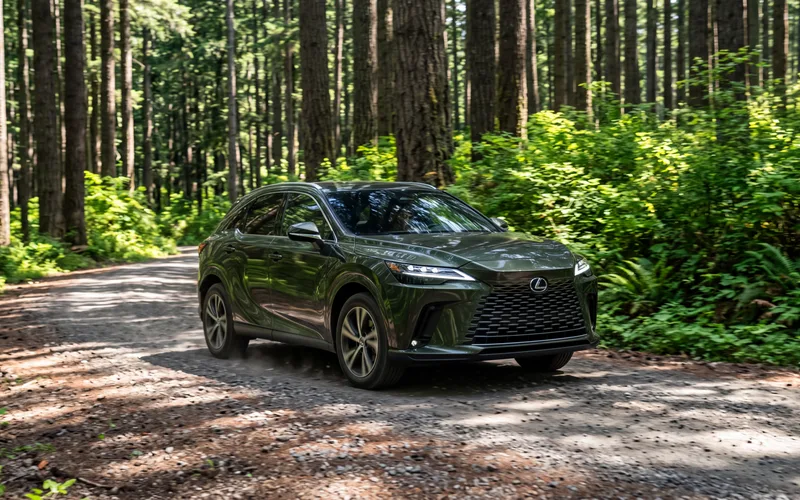 Lexus RXMid-Size Luxury SUVBetter at: Resale value
Same two-row luxury mission with far better projected resale and reliability, and it runs on regular fuel instead of premium-recommended.
Compare 2.90B-
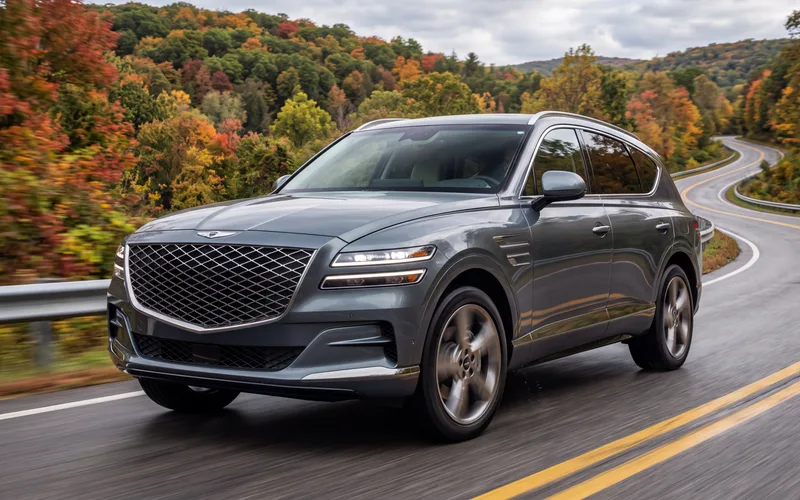 Genesis GV80Mid-Size Luxury SUVBetter at: Power
Another value-priced luxury alternative to the Germans, but with a real turbo-six and sharper dynamics instead of a 250-hp four.
Compare 2.94B-
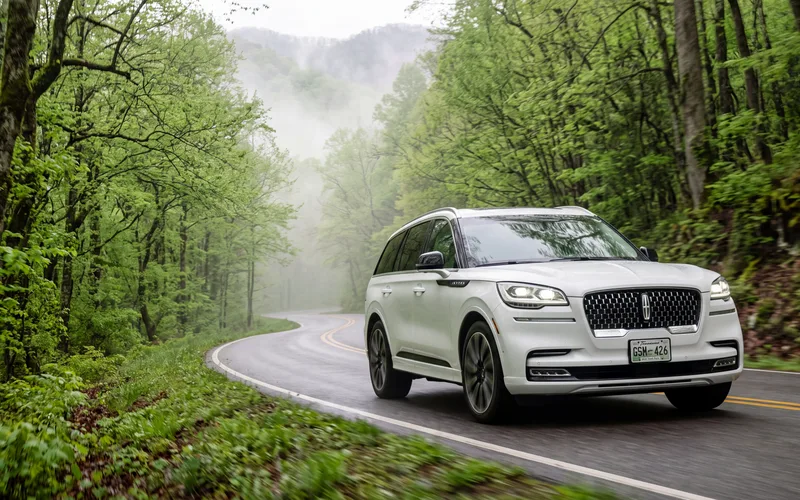 Lincoln AviatorMid-Size Luxury SUVBetter at: Space and towing
The Lincoln to pick if you need a third row and more than 3,000 lbs of towing — 77 cu ft behind row two and a much stronger V6.
CompareHow it's evolved
8 scored model years · 2019–2026
Subject scores by year
Hover or tap a score to see what moved it versus the year before. A corner mark flags a big swing.
| Year | Performance | Efficiency | Safety | Space | Cost | Reliability | Tech | Use-case | Driving | Value |
|---|---|---|---|---|---|---|---|---|---|---|
| 2026 | 46 | 54 | 90 | 63 | 26 | 65 | 85 | 74 | 64 | 77 |
| 2025 | 42 | 55 | 89 | 62 | 31 | 57 | 80 | 61 | 60 | 74 |
| 2024 | 39 | 55 | 88 | 61 | 37 | 51 | 78 | 58 | 55 | 73 |
| 2023 | 44 | 39 | 76 | 58 | 38 | 71 | 76 | 60 | 63 | 63 |
| 2022 | 44 | 39 | 74 | 59 | 42 | 70 | 75 | 58 | 62 | 62 |
| 2021 | 44 | 39 | 73 | 58 | 40 | 64 | 75 | 59 | 64 | 63 |
| 2020 | 44 | 41 | 71 | 58 | 41 | 57 | 57 | 59 | 61 | 61 |
| 2019 | 44 | 39 | 70 | 59 | 42 | 53 | 56 | 59 | 62 | 63 |
Compare two years
Best fit & conditions
Higher scores mean a better fit for that use case. Learn more about use-case fit →
Subject profile
Detailed scoring by subject
1Performance & PowertrainOne of the Nautilus's weakest categories.0.59F
The all-new second-generation 2024 Nautilus carries a 2.0L turbo four rated 250 hp @ 5,500 rpm as the standard, volume powertrain across Premiere, Reserve and Black Label — modest output for a mid-size luxury SUV, where rivals commonly field 290–400 hp.
Peak torque of 280 lb-ft arrives low at 3,000 rpm, which is what makes the gas Nautilus feel adequate around town despite its modest horsepower.
Instrumented tests of the 2.0L gas AWD returned 7.3–7.5 seconds; 7.4 s is the midpoint. Reviewers describe the gas engine's thrust as adequate rather than strong, with merging requiring conscious planning.
The turbo four is quiet and delivers power gradually and smoothly with no coarse edges, but it is short on reserve thrust and shows the small-displacement turbo's off-boost softness — reviewers consistently rate the hybrid as the more refined of the two.
The 8F35 eight-speed automatic shifts smoothly and unobtrusively in normal driving, suiting the car's relaxed luxury brief, but it can be deliberate about kicking down when the modest engine needs a lower gear for passing.
Rated at just 1,750 lbs even when properly equipped — very low for a mid-size SUV, where 3,500–5,000 lbs is typical, and Lincoln offers only a dealer-installed Class I hitch rather than a factory tow package.
All-wheel drive is standard on every 2024 Nautilus trim with no FWD variant offered, and selectable drive modes include Slippery and Deep Conditions — but it is a transverse, road-biased system with no low range, locker or torque-vectoring hardware.
A unibody, pavement-oriented luxury crossover: roughly 8 inches of ground clearance, no skid plates, lockers or crawl control, no off-road trim, and large-diameter low-profile tires on the upper trims. Slippery/Deep Conditions modes cover snow and wet grass, not trails.
Two powertrains for 2024 — the 250 hp 2.0L turbo with the eight-speed and a 310 hp hybrid with an eCVT — so an electrified option exists, but there is no V6, no PHEV and no EV, and the outgoing generation's 335 hp 2.7L V6 was dropped in the redesign.
2Efficiency & RangeGrades below the middle of the scale.1.66D
EPA rates the 2024 Nautilus AWD with the 2.0L EcoBoost at 24 MPG combined — respectable for an AWD mid-size luxury SUV, and a direct benefit of the redesign dropping the thirsty 2.7L V6.
21 MPG in the city is average for the class — the turbo four's stop-start helps, but there is no electric assist in the gas model to cover low-speed running, which is where the hybrid's 30-plus city rating pulls well clear.
29 MPG highway is the gas Nautilus's strongest economy figure and essentially matches the hybrid's 31 — the small-displacement turbo is at its most efficient at a steady cruise, making this a genuinely economical highway SUV.
A 20.0-gallon tank paired with the 24 MPG combined rating yields roughly 480 miles between fills, and closer to 580 at the highway rating — comfortably above average for the segment and a real road-trip strength.
EPA estimates $2,550 a year to fuel the gas Nautilus at 15,000 miles — mid-pack for a mid-size AWD SUV, and about $500 a year more than the hybrid's $2,050.
The 2.0L EcoBoost runs on regular 87-octane unleaded — EPA rates and costs it as a regular-gas vehicle — which is a meaningful running-cost advantage over German rivals in this segment that require premium. Premium may be used for maximum output but is not required.
3SafetyThe Nautilus's best-graded category.3.99A+
NHTSA published no NCAP result for the 2024 model year itself; the first test of this second-generation (U554) body is the mechanically identical 2025 Nautilus AWD, which earned 5 stars overall, so the generation's rating is 5 stars per the item's 'latest tested year of this generation' rule.
The redesigned 2024 Nautilus is an IIHS TOP SAFETY PICK+ with a clean sheet of Good results — driver- and passenger-side small overlap front, both the original and the updated (rear-occupant) moderate overlap front, and the updated side test — with no Acceptable rating anywhere in the crashworthiness set.
Lincoln Co-Pilot360 Vision 2.2 is standard on the entry Premiere volume trim of the all-new 2024 car: AEB with pedestrian detection and forward collision warning, blind-spot detection, rear cross-traffic detection with braking, reverse emergency braking, lane-keeping assist, adaptive cruise with stop-and-go, intersection assist, evasive steering assist, a 360-degree camera and front/rear parking sensors — nothing core is locked to an upper trim.
IIHS rates the standard front crash prevention system Good in the pedestrian evaluation — the top tier of the current test, which includes nighttime scenarios. IIHS published no updated vehicle-to-vehicle front crash prevention rating for this generation, so that half of the system is unconfirmed rather than shown to be weak, which keeps it out of the very top of the band.
Blind Spot Information System and rear cross-traffic detection with active braking are standard on every 2024 trim, backed by standard reverse emergency braking and a 360-degree camera; the blind-spot function itself is alert-only with no steering intervention into the blind zone, which holds it just under the top band.
Lane-keeping assist and lane-centering are standard rather than optional and share hardware and tuning with the BlueCruise 1.2 stack, so hands-on centering holds a line cleanly without the ping-ponging of cheaper systems; reviewers describe it as competent and well-sorted rather than remarkable in its hands-on mode.
Adaptive cruise with stop-and-go is standard on the volume trim and is integrated with lane centering into a single highway-assist experience that escalates into hands-free BlueCruise on mapped roads; first-drive testing reports it holding speed and gap confidently rather than braking late or resuming slowly.
BlueCruise 1.2 hardware is fitted to every 2024 trim, which is more than most mid-size luxury rivals offer, but for 2024 the volume Premiere and Reserve trims carry only a 90-day trial before a $800/year or $75/month subscription (Black Label includes four years) — the standard-with-four-years arrangement arrived for 2025. Coverage is also confined to pre-mapped divided-highway Blue Zones.
IIHS rates the 2024 Nautilus headlights Good on both tested trim variants, so the volume-trim buyer gets the same rated lighting as the flagship — the condition the top band asks for — and automatic high beams are standard.
Sightlines are ordinary for the class and the forward view is compromised by the long hood and the 48-inch panoramic display standing across the top of the dash; the standard 360-degree camera compensates well at parking speeds but does nothing for the driving-position issue.
IIHS rates the child-seat anchor hardware Good for ease of use, with two rear outboard positions carrying complete LATCH hardware plus a tether anchor for the centre seat, and the two-row body gives wide rear door openings; three-across stays a squeeze because only two positions have full hardware.
4Space & ComfortMid-pack among this car's ten categories.2.09C
The second-generation 2024 Nautilus is a strictly two-row, five-passenger crossover across Premiere, Reserve and Black Label — buyers needing a third row are pushed up to the Aviator.
39.6 inches of first-row headroom is mid-pack for a mid-size SUV — adequate but not generous, with the standard panoramic roof on upper trims eating into it slightly.
43.5 inches of front legroom is near the top of the mid-size SUV band and pairs with a 24-way-adjustable driver's seat on Reserve and above, so tall drivers fit easily.
At 39.8 inches the second row actually has marginally more headroom than the front, an unusually airy rear compartment for the segment; the Black Label's roof treatment costs about 1.4 inches.
43.1 inches of rear legroom is the standout dimension of the whole car, exceeding the 30–42 inch SUV normalization band outright and beating every direct mid-size luxury rival.
There is no third row on any 2024 Nautilus trim — it is a two-row, five-seat crossover by design, so this criterion scores in the bottom band. Lincoln's three-row answer is the separate Aviator.
36.4 cubic feet behind the rear seat is only average for a mid-size SUV and is the price paid for that class-leading rear legroom — the long wheelbase goes to passengers, not luggage.
71.3 cubic feet maximum sits in the lower-middle of the mid-size SUV band; the load floor is long and wide with a near-flat fold, but total volume trails boxier rivals.
Competitive but unremarkable: a covered console bin, wireless charging pad, door pockets and assorted trays cover daily needs, but there is no standout innovation — no underfloor cargo well of note, no household outlet, no giga-console.
The Perfect Position 24-way front seats with heating, ventilation and massage are repeatedly singled out as best-in-class, and the enormous rear legroom means second-row passengers are genuinely comfortable on long stints too.
Isolation over broken pavement is good and the car settles nicely at highway speed, but the soft default tune produces float and secondary body motions that several testers actively disliked in town — Excite mode firms the adaptive dampers but at a comfort and efficiency cost.
Acoustic laminated glass and active noise cancellation are standard and reviewers consistently describe the cabin as exceptionally hushed at highway speed — the clearest area where the Nautilus delivers on the luxury brief.
Heated and ventilated front seats and a heated steering wheel are standard on the base Premiere, with heated rear outboard seats, massage and even a digital scent diffuser above that — but climate lives inside the 11.1-inch touchscreen, and there is no tri-zone system, no rear climate controls and no rear window shades.
5Cost of OwnershipThe Nautilus's lowest-graded category.0.45F
2024 is the first year of the all-new second-generation Nautilus, and the entry Premiere opens at $48,820 plus $1,595 destination with all-wheel drive standard — mid-pack for a mid-size luxury SUV, undercutting an X5 or GLE by a wide margin but priced well above the Corsair and above the outgoing first-generation car.
Reserve is the volume trim at $54,750 including destination, and most transacted cars add a Reserve equipment package — panoramic roof, 28-speaker Revel audio, 21- or 22-inch wheels, adaptive suspension content — putting typical stickers near $58,000. Black Label at $74,250 is a low-volume halo, so the mid-trim figure is the honest representative price.
Sources diverge sharply — CarEdge projects only $3,912 over five years (~$782/yr) while Edmunds True Cost to Own runs materially higher for the class — so a mid-band figure is the fair read. The 2.0L EcoBoost and 8-speed automatic are high-volume Ford hardware with cheap parts, but the car is serviced at Lincoln labor rates and the new generation's 48-inch display, air-suspension-adjacent adaptive dampers and 22-inch tires are all expensive out of warranty.
Nautilus residuals sit in the bottom half of the luxury class — industry projections cluster around 45–47% retention, below the Lexus RX and well below the segment's Japanese benchmarks. The redesigned 2024 car's strong retail demand argues for the upper end of that range, but the badge, the heavy incentive history and the Hangzhou build origin all weigh on forecast values.
Lincoln's New Vehicle Limited Warranty runs 4 years/50,000 miles — the luxury-brand standard, matching Acura, Lexus, BMW and Audi, and a year longer than the Ford coverage on the mechanically related hardware underneath.
Six years/70,000 miles covers engine, transmission and the standard all-wheel-drive system — level with Acura and Lexus and better than BMW or Audi, which run powertrain coverage concurrent with the basic warranty, but far short of the 10-year coverage that anchors the top of the band.
No complimentary scheduled maintenance on the volume Reserve — the 4-year/50,000-mile free maintenance, complimentary car washes and dedicated concierge are Black Label exclusives at $74,250, so a Reserve buyer pays for oil changes from day one while an X3, RDX or Q5 owner does not. What every Nautilus does get is genuinely useful service convenience: complimentary Lincoln Pickup & Delivery with a Lincoln loaner through the 4-year/50,000-mile warranty, and 24/7 roadside for 6 years/70,000 miles. The 2024 car's BlueCruise allowance is a weak spot — a 90-day trial, after which it is $800/yr or $75/month, where the 2024 Corsair included four years.
$58,000 volume-trim price minus its estimated resale value after 5 years (47% retained, or about $27,260) leaves about $30,740 in depreciation. Add the projected $6,800 in 5-year maintenance and repairs, and owning this vehicle for 5 years costs about $37,540 in total.
6Reliability & QualityOne of the Nautilus's weakest categories.1.38D
2024 is the launch year of an all-new second generation on a new platform with a new 48-inch panoramic display and Phoenix IVI software, and Consumer Reports rates it less reliable than the average 2024 model year vehicle. Owner-reported failures cluster on electronics — blank screens, 12V battery drain, repeated software updates — exactly the first-year pattern the redesign invited.
Lincoln sat in the bottom five brands of the 2024 J.D. Power Vehicle Dependability Study at 251 PP100 — well worse than the industry average and far off luxury leaders Lexus (135), Porsche and BMW. The brand improved six places to 19th in the 2025 study, so the trend is upward, but a buyer of a 2024 car is buying into a recent bottom-third dependability record.
Seven NHTSA recall campaigns touch the 2024 Nautilus, and the pattern is worse than the count alone: the power-window auto-reversal defect was recalled four separate times because two remedies were performed incorrectly or did not fix it, and the remainder hit safety-relevant systems — instrument cluster and center display blanking while driving, rearview camera and ADAS dropout from image-module resets, and a block heater that can overheat and start a fire.
The scored gas configuration pairs the 2.0L EcoBoost turbo four (250 hp / 275 lb-ft) with an eight-speed automatic. Post-2018 versions of that engine addressed the coolant-intrusion and turbo failures that plagued the early ones, so the engine family itself is a known, middle-of-the-road quantity rather than a red flag; the eight-speed carries a reputation for abnormal shift behavior more than outright failure. Nothing here is unproven, but nothing here is a high-mileage benchmark either, and this is its first year in a China-built application.
The cabin is the redesign's headline — a pillar-to-pillar 48-inch panoramic display in a room, quiet, genuinely luxurious space that reviewers rate as a real showpiece. Against that, several reviewers flagged a step down in tactile materials versus the outgoing car: thinner, rougher leather, more vinyl and more plastic in the touch zones. Good for the segment, not class-leading against German and Lexus rivals at the price.
Physical assembly is a strength — one road test called it the best-built Lincoln yet, and there is no pattern of panel-gap or rattle complaints from the Hangzhou plant. Initial quality as owners actually experience it is dragged down by electrical and software defects instead: displays blanking, modules resetting, and 12V battery drain requiring dealer software updates, which is what more than a thousand multimedia warranty claims in the first two years represent.
Lincoln's roughly 600 US stores are thinner on the ground than a mainstream brand's but dense by luxury standards, and most sit alongside Ford dealers with the parts and technician depth that implies. Service satisfaction is a genuine brand strength: Lincoln ranks near the top of the premium field in J.D. Power's Customer Service Index, and complimentary Pickup & Delivery loaner service is standard on this car.
The 2.0L EcoBoost and Ford-family mechanicals mean routine wear parts are widely stocked and reasonably priced for a luxury SUV, and RepairPal puts Lincoln at roughly average ownership cost. The second-generation car works against that: it is built in China on a platform not shared with any US-market Ford, so its body, trim and the panoramic-display electronics are dealer-only with no aftermarket, and the big-ticket items are display and module replacements rather than cheap mechanical parts.
7Technology & InfotainmentOne of the Nautilus's strongest categories.3.31B+
The center touchscreen measures 11.1 inches on all three trims — mid-pack by itself, but it is only half the story here, since the Nautilus adds a 48-inch panoramic display at the base of the windshield that no rival matched in 2024.
The Ford/Lincoln Digital Experience on Android Automotive is quick and logically laid out, and the panoramic display is genuinely useful rather than a gimmick — but climate and drive-mode functions are buried in the touchscreen, the unmarked haptic panel controls draw criticism, and early cars had software stability problems.
Wireless Apple CarPlay and wireless Android Auto are both standard on every 2024 trim including the base Premiere, with no wired-only tier — the best available answer to this criterion.
Google built-in means the native system IS Google Maps and Google Assistant rather than a proprietary alternative most owners bypass, with Alexa Built-in alongside it — natural-language voice and best-in-class maps without needing to plug in a phone.
A 10-speaker system is standard on the base trim, with a 14-speaker Revel and a 28-speaker Revel Ultima 3D above it; the flagship system is among the better factory setups in the segment.
The 48-inch panoramic display — standard on all trims, not an upgrade — serves as the instrument cluster and is the most configurable, highest-real-estate driver display in the segment for 2024.
Ford Power-Up over-the-air updates cover more than maps and infotainment — owners have received module-level updates including powertrain control software — though the rollout has been bumpy and owners report interrupted installs.
The Lincoln Way app covers remote start, lock/unlock, vehicle locate and status over the standard Lincoln Connect embedded modem, and Phone As A Key is standard — but software configuration still has to be done in the car, and owner reports of connectivity flakiness are common.
Wireless charging and four USB ports are standard, with quad USB-C ports serving the second row so rear passengers are not an afterthought — but there is no household AC outlet or onboard power feature to lift it into the top band.
Proximity entry, push-button start, remote start and a hands-free power liftgate are standard, and Phone As A Key gives phone-as-key functionality on every trim — the full keyless suite with nothing paywalled to the top trim.
A 360-degree surround-view camera and Active Park Assist Pro automated parking are part of the Nautilus's camera and parking suite, with front and rear sensors — strong coverage, though the surround view is bundled rather than standard on the base trim.
No conventional head-up display is offered on any 2024 Nautilus trim. Lincoln's position is that the 48-inch panoramic display, mounted at the base of the windshield in the driver's sightline, makes one redundant — a defensible substitute, but it is not a windshield-projected HUD and does not overlay the road.
8Use-Case FitMid-pack among this car's ten categories.1.91C-
Class-leading 43.1-inch rear legroom and 39.8-inch rear headroom make rear-facing seats and bulky boosters easy to fit behind tall adults, and the hands-free power liftgate helps with a stroller in hand — but it is a two-row car with only average cargo behind the second row, so the third car seat and the stroller compete for the same space.
IIHS Top Safety Pick+ for 2024 plus a 5-star NHTSA result, with the full Lincoln Co-Pilot360 suite — AEB, blind-spot monitoring, lane centering, evasive steering assist — standard from the base Premiere rather than optioned in, which is exactly the trim families would buy.
A quiet cabin, excellent seats, huge rear legroom and heated rear outboard seats on Reserve make the second row a good place to spend hours — but the rear amenity list stops there: no tri-zone climate with rear controls, no rear window shades, no rear entertainment, and 36.4 cubic feet of luggage space with everyone aboard is only adequate.
Low-effort by design: a smooth eight-speed, a hushed cabin, superb seats and standard BlueCruise hands-free assist for the commute. Working against it are the soft Normal-mode suspension that adds float in town, the unmarked haptic controls, and brake modulation testers found inconsistent in stop-and-go.
24 MPG combined and roughly $2,550 a year in fuel is unexceptional for a mid-size crossover in 2024, though the 2.0L runs on regular gasoline rather than premium — unusual for the luxury class and worth real money over a commute. The hybrid at 30 MPG combined is the better commuter, but this scorecard describes the gas volume trim.
A 37.5-foot turning circle is genuinely tight for a 193-inch vehicle and the 360-degree camera plus Active Park Assist Pro do most of the work in a garage — but it is still a wide, tall crossover, and one tester found the small-diameter steering wheel made U-turns and parking harder rather than easier.
A 1,750-pound maximum tow rating is barely half what most mid-size SUVs manage and rules out any trailer beyond a small utility box; there is no bed, no meaningful payload headroom, and the 250 hp turbo four is soft under load. This is not a work vehicle in any sense.
A first-model-year China-built luxury crossover with soft leather, a 48-inch screen and no wear-friendly interior option — there is no fleet or commercial version, and early predicted-reliability data for the new generation is weak, which is the opposite of what hard-use duty needs.
Roof rack rails on Reserve and up plus cargo tie-downs and a flat-folding second row are the extent of it: no onboard AC power or generator function, no washable interior surfaces, no work-oriented accessory ecosystem, and only a dealer-installed Class I hitch.
This is the Nautilus's strongest mission: 24-way massaging front seats, acoustic glass and active noise cancellation, a settled highway ride, roughly 480 miles of range on a tank, and BlueCruise hands-free assist to take the strain out of interstate stints.
Standard AWD on every trim with Slippery and Deep Conditions drive modes covers gravel, snow and a wet campsite, but 8.0 inches of clearance, no skid plates or low range, no off-road trim, and a 1,750-pound tow limit that excludes almost any trailered toy keep it firmly in the light-duty column.
The cargo hold is long, wide and nearly flat with the 60/40 second row folded, and roof rails are available for a box or bikes — but 36.4 cubic feet behind the seats and 71.3 maximum is mid-pack, and the Class I hitch limits what can go on the back.
9Driving ExperienceGrades below the middle of the scale.1.69D
Secure and predictable but distinctly unathletic: the soft default damping lets body roll build early in a corner, and testers found the tires giving up grip sooner than expected even on the 21- and 22-inch wheels. Excite mode tightens the adaptive dampers without making it agile.
The most consistently criticized part of the car — slow, light and entirely numb, with no meaningful information about front-tire grip reaching the driver's hands. Accurate enough to place the car, but disconnected.
Stopping distances are around average for the class at best — Edmunds measured longer 60-0 than rivals — and the pedal is the real problem: soft and vague at first travel yet grabby further in, which makes smooth stops hard to repeat.
The 250 hp 2.0L turbo and 8F35 eight-speed are well matched and deliver power without shunt or coarseness, suiting the relaxed brief — but there is off-boost softness and a clear shortage of reserve thrust, so passing needs planning and a downshift.
Well isolated at a cruise — active noise cancellation and acoustic glass keep the four-cylinder essentially inaudible at steady throttle — but it is still a small-displacement turbo four in a luxury SUV, and it sounds ordinary rather than pleasant when worked hard.
A 37.5-foot curb-to-curb circle is respectably tight for a 193-inch, 114.2-inch-wheelbase crossover and makes three-point turns and parking garages less of a chore than the car's footprint suggests.
Seating adjustability is outstanding — up to 24 ways with power tilt/telescope — and the high sightlines and panoramic display keep information in view without looking down. Against that: the small-diameter wheel complicates parking, the unmarked touch-sensing panel controls are hard to use by feel, and climate functions live in the touchscreen.
Nobody takes the long way home in a Nautilus. Numb steering, early body roll, an inconsistent brake pedal and a merely adequate turbo four add up to a competent, comfortable appliance — the car is enjoyable to sit in rather than to drive.
10Value & Market PositionOne of the Nautilus's strongest categories.2.95B-
The $50,415 Premiere is unusually complete for the money: standard all-wheel drive, the full-width 48-inch panoramic display with an 11.1-inch center touchscreen, heated AND ventilated front seats, heated steering wheel, wireless charging, Phone As A Key, 10-speaker audio with subwoofer, 19-inch wheels and Lincoln Co-Pilot360 Vision 2.2 with BlueCruise hardware fitted. A BMW X3, Audi Q5 or Mercedes GLC at that price has fewer screens, charges for ventilated seats and in some cases for all-wheel drive. It falls short of a perfect score because the BlueCruise software is only a 90-day trial and the adaptive suspension, Revel audio and 24-way seats are Reserve/Black Label items.
Content-for-price is a real strength — the screen tech, seat comfort, standard AWD and hands-free-capable hardware would cost several thousand more from the German brands, and the hybrid is a $1,500 option that lifts EPA combined from 24 to 30 mpg, one of the cheapest efficiency upgrades in the class. Two things hold it below the segment's value benchmark: the 250-hp 2.0T is only adequate motivation for a 4,500-lb luxury SUV, and projected residuals in the mid-40s mean a chunk of that upfront saving comes back out at trade-in.
Three well-separated trims spanning roughly $50k to $74k, each available with either the 2.0T or the hybrid, plus layered equipment packages — enough choice to reach both a $52,000 and an $80,000 buyer. The gaps are genuine, though: all-wheel drive is the only drivetrain (no cheaper front-drive entry point), there is no performance variant, and the $19,500 jump from Reserve to Black Label leaves a wide unserved middle where rivals field an extra trim.
The redesign was commercially validated immediately: US Nautilus sales rose roughly 50% in calendar 2024 to about 36,500 units, every quarter was up year over year, and it finished as Lincoln's best-selling vehicle by a wide margin while the brand posted its strongest retail year in 17. A fast riser gaining share, though still a mid-pack finisher in the mid-size luxury SUV class rather than its leader.
Lincoln reads as credible mid-tier American luxury and the comfort-first "Quiet Flight" positioning genuinely lands on this car, but it has none of the aspirational pull of BMW, Mercedes, Porsche or even Genesis, and residual forecasts in the mid-40s reflect that. The second-generation Nautilus also carries a specific image complication no rival has: it is built in Hangzhou, China, and its import status was a recurring theme in 2024 coverage. Neutral brand perception on balance.
A genuinely mixed year for buyers. Early in the launch the all-new Nautilus was in short supply and lease support was thin — Edmunds forum trackers report no lease incentives for much of the model year — but factory support arrived as volume built, with low-interest financing plus cash back on remaining 2024 stock through December 2024 and January 2025, and Lincoln's 0% APR / $0 down / no-payments-for-90-days program covering the Nautilus. Real buyer benefit by the back half of the year, without the desperation discounting that flags an unwanted car.
This is year one of an all-new generation — not a facelift of the 2019–2023 car but the first Nautilus designed from scratch, with a new platform, a new hybrid option and the segment's newest interior tech. Zero redesign risk for a 2024 buyer and the freshest thing in Lincoln's showroom that year.
Warmly received for what Lincoln aimed at — the screen, the material step up, seat comfort, cabin quiet and BlueCruise all drew praise, and it earned IIHS Top Safety Pick+ — but reviewers were pointed about the rest. Consumer Reports faulted the fussy push-button gear selector, climate vents buried in the touchscreen, a ride that gets unsettled on broken pavement and mushy, ungainly handling. Well reviewed and award-decorated on safety, but not a comparison-test winner against the RX, GV80 or X3.