
The verdict
A mixed-report mid-size luxury suv, strong on safety and held back by ownership.
The 2023 Nautilus is the last of the old Lincoln — a quiet, beautifully trimmed two-row luxury SUV riding on Ford Edge mechanicals that date to 2013, sold the same year Lincoln unveiled its replacement. What it does well it does genuinely well: a 5-star NHTSA rating and IIHS Top Safety Pick, a 13.2-inch SYNC 4 screen with wireless CarPlay standard on every trim, massaging seats, and a hushed highway ride on regular gas. What it costs you is money: 22 MPG combined, roughly 45% of sticker left after five years, and about $37,000 in depreciation and upkeep over that span from a ~$56,500 Reserve AWD. Bought new it was a hard sell; bought used at 2023-model prices, that brutal depreciation is exactly what makes it interesting.
Jump to scoresStrengths
- Cabin quality and quietness that justify the badge
- Infotainment that's standard, not up-sold
- Strong, well-documented crash safety
What holds it back
- Depreciation is the headline cost
- Thirsty, with no hybrid to escape to
- Two headline features simply aren't offered
Top alternatives
Cars shoppers cross-shop with the Lincoln Nautilus 2.65C+
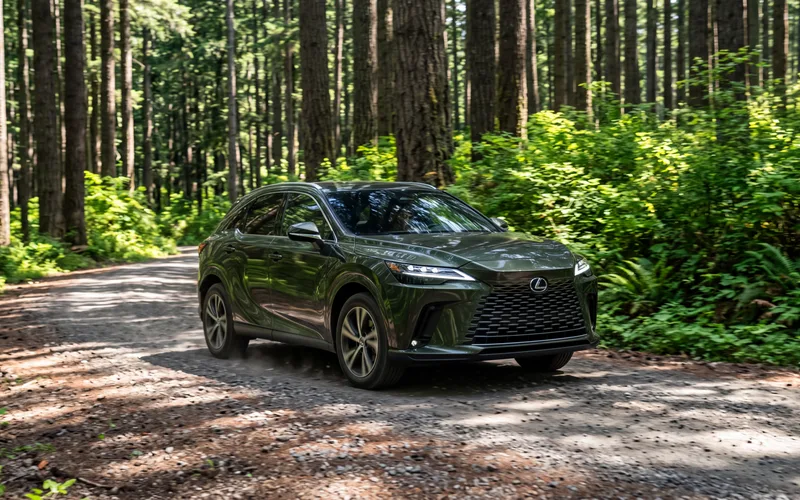 Lexus RXMid-Size Luxury SUVBetter at: Resale value
Same two-row luxury mission with far better projected resale and reliability, and it runs on regular fuel instead of premium-recommended.
Compare 2.90B-
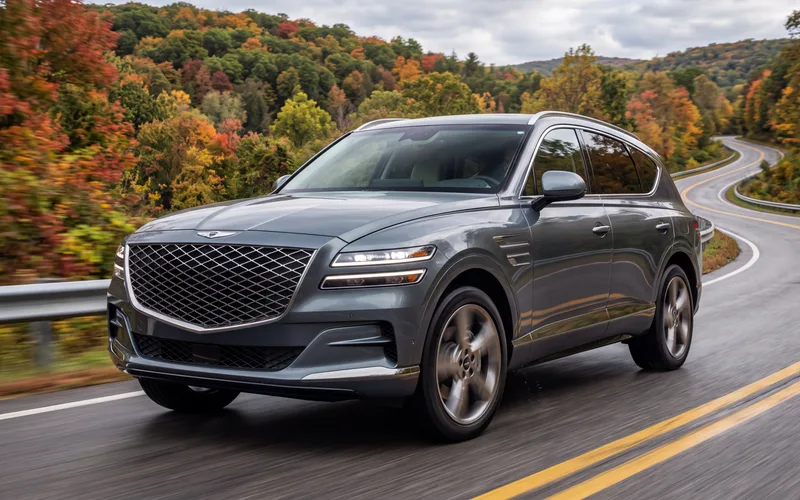 Genesis GV80Mid-Size Luxury SUVBetter at: Power
Another value-priced luxury alternative to the Germans, but with a real turbo-six and sharper dynamics instead of a 250-hp four.
Compare 2.94B-
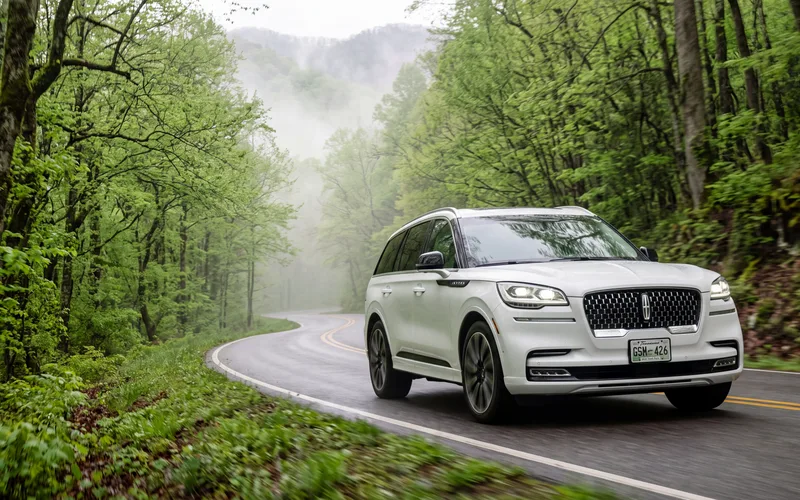 Lincoln AviatorMid-Size Luxury SUVBetter at: Space and towing
The Lincoln to pick if you need a third row and more than 3,000 lbs of towing — 77 cu ft behind row two and a much stronger V6.
CompareHow it's evolved
8 scored model years · 2019–2026
Subject scores by year
Hover or tap a score to see what moved it versus the year before. A corner mark flags a big swing.
| Year | Performance | Efficiency | Safety | Space | Cost | Reliability | Tech | Use-case | Driving | Value |
|---|---|---|---|---|---|---|---|---|---|---|
| 2026 | 46 | 54 | 90 | 63 | 26 | 65 | 85 | 74 | 64 | 77 |
| 2025 | 42 | 55 | 89 | 62 | 31 | 57 | 80 | 61 | 60 | 74 |
| 2024 | 39 | 55 | 88 | 61 | 37 | 51 | 78 | 58 | 55 | 73 |
| 2023 | 44 | 39 | 76 | 58 | 38 | 71 | 76 | 60 | 63 | 63 |
| 2022 | 44 | 39 | 74 | 59 | 42 | 70 | 75 | 58 | 62 | 62 |
| 2021 | 44 | 39 | 73 | 58 | 40 | 64 | 75 | 59 | 64 | 63 |
| 2020 | 44 | 41 | 71 | 58 | 41 | 57 | 57 | 59 | 61 | 61 |
| 2019 | 44 | 39 | 70 | 59 | 42 | 53 | 56 | 59 | 62 | 63 |
Compare two years
Best fit & conditions
Higher scores mean a better fit for that use case. Learn more about use-case fit →
Subject profile
Detailed scoring by subject
1Performance & PowertrainOne of the Nautilus's weakest categories.0.95F
The volume Reserve trim carries the standard 2.0L turbo four rated at 250 hp @ 5,500 rpm; the 335-hp 2.7L twin-turbo V6 is an option on Reserve and standard on Black Label.
Peak torque of the standard 2.0L EcoBoost is 280 lb-ft @ 3,000 rpm, mid-pack for a mid-size luxury crossover.
Independent tests of the 2.0T Reserve cluster around 6.8–7.1 seconds; the optional 2.7L V6 cuts that to roughly 5.9 seconds.
Reviewers consistently call the 2.0L EcoBoost smooth, quiet and adequate for the car, but it is working hard in a ~4,300-lb luxury crossover and shows the usual small-turbo lag off idle — the effortless delivery praise attaches to the optional V6, not the volume engine.
The 8-speed automatic is well regarded — decisive, well-timed shifts with paddle control — but a low-speed shudder is a recurring complaint on this generation, which keeps it out of the top band.
Maximum conventional rating for the 2019–2023 Nautilus is 3,500 lbs with the factory Class II Trailer Tow Package plus the required Cargo Utility Package; unequipped cars are rated 2,000 lbs. Modest for the segment.
Intelligent AWD is optional across Standard and Reserve and standard on Black Label, so it is widely available — but it is a conventional on-demand transverse system with no low range, locker or terrain-mode hardware, which caps it in the middle band.
A unibody, pavement-focused luxury crossover: about 8 inches of ground clearance, no skid plates, no low range, no locking differential and no off-road trim anywhere in the 2023 range.
Two distinct gas turbo powertrains — 2.0L EcoBoost I4 and 2.7L EcoBoost V6, both with the 8-speed automatic and optional AWD — but no hybrid, PHEV or EV in 2023; electrification only arrives with the second-generation 2024 car.
2Efficiency & RangeOne of the Nautilus's weakest categories.0.61F
EPA rates the volume 2.0L EcoBoost AWD configuration at 22 MPG combined — unremarkable for a gas mid-size crossover, reflecting a ~4,300-lb body on an aging CD4 platform with no electrification.
EPA city rating for the 2.0L AWD volume configuration; the turbo four with stop-start holds 20 MPG in town, average for a gas luxury crossover of this size.
EPA highway rating of 25 MPG for the 2.0L AWD; notably the 2.7L V6 matches it on the highway, so the four-cylinder's advantage is almost entirely in city driving.
The 18.0-gallon tank paired with the EPA 22 MPG combined rating yields roughly 396 miles for the volume 2.0L AWD — modest, since the small tank offsets otherwise ordinary economy.
EPA's estimated annual fuel cost at 15,000 mi/yr for the 2.0L AWD configuration; running on regular unleaded keeps it from being worse than the economy alone would suggest.
Both EcoBoost engines are rated on regular unleaded, unusual for a luxury-badged SUV and a real running-cost advantage over German rivals that require premium; premium is optional for peak output only.
3SafetyThe Nautilus's best-graded category.3.16B
NHTSA tested both 2023 Nautilus drivetrains and rated each 5 stars overall, with 5 stars in every frontal and side sub-test; only rollover falls to 4 stars (15.5% rollover probability, no tip in the dynamic test), which is typical for a mid-size crossover.
The 2023 Nautilus is a 2023 IIHS Top Safety Pick with Good in every crashworthiness test, including the tougher updated side test that eliminated most of the field that year — but it misses TSP+ because headlights are only Acceptable on the volume LED-reflector setup rather than Good across the range.
Lincoln Co-Pilot360 is standard on every 2023 trim — pre-collision assist with AEB and pedestrian detection, forward collision warning, lane-departure warning, lane-keeping assist, blind-spot monitoring with rear cross-traffic alert, auto high beams and a rearview camera — but adaptive cruise control, lane centering, evasive steering assist and the 360-degree camera all sit inside the Co-Pilot360 Plus / Reserve I equipment group, so the volume configuration lacks ACC that rivals like the X3 and XC60 include.
IIHS rates the Nautilus Superior for vehicle-to-vehicle front crash prevention and Advanced for daytime pedestrian detection, on both the standard and optional systems — strong daytime results, but IIHS never ran the nighttime pedestrian evaluation on this vehicle, so the hardest AEB scenario is unproven.
BLIS with cross-traffic alert is standard on all three trims via Co-Pilot360, which is better than the segment norm of locking it to an option, but coverage is alert-only — no active braking or steering intervention for cross traffic, no safe-exit warning, and no trailer-aware mode.
Lane-departure warning and the lane-keeping system are standard, and reviewers find the lane centering that comes with the Co-Pilot360 Plus package works well on clearly marked highways with a hand on the wheel — but centering is package-locked, so the volume car gets only the nudge-back lane-keeping system.
The available adaptive cruise is a full-speed-range radar-and-camera system with stop-and-go and speed sign recognition that reviewers describe as relaxed and undemanding on long highway stints, paired with lane centering — but it is an extra-cost package rather than standard, and there is no true hands-off highway assist layered on top.
The first-generation Nautilus was never offered with hands-free highway driving. ActiveGlide launched on the 2022 Navigator and reached the 2023 Corsair, but the 2023 Nautilus is a pure carry-over of the 2022 car on the older CD4 architecture and lacks the driver-facing camera hardware; hands-free (rebranded BlueCruise) arrived only with the 2024 redesign.
Exactly the pattern the middle band describes: IIHS rates the premium full-LED multi-projector headlamps Good, but the standard LED reflector units most buyers get are only Acceptable — the single reason the Nautilus took Top Safety Pick instead of TSP+ in 2023. Auto high beams are standard with Co-Pilot360.
Sightlines are ordinary for a two-row luxury crossover — decent glass area and a fairly upright rear window, but the long hood and the tall 13.2-inch centre display cut into the forward view and the driver's mirror placement leaves a blind spot. Standard BSM covers the sides, though the 360-degree camera that would compensate at low speed is package-only.
Workable but not easy: IIHS rates LATCH ease of use only Acceptable at best and Marginal on the higher trim, because the two lower anchors hide under leather flaps and the tether anchors sit high on the seatback where they are easy to confuse with cargo hooks. Wide-opening rear doors and generous second-row space in this two-row SUV make the actual install less of a fight than the anchor ratings suggest.
4Space & ComfortMid-pack among this car's ten categories.1.90C-
The first-generation Nautilus is a strictly two-row, five-passenger mid-size luxury SUV with no three-row option on any 2023 trim.
Front headroom is unchanged across the 2023 range; the panoramic Vista Roof option trims it slightly but Lincoln publishes the single figure.
Generous front legroom for the CD4-platform Nautilus, mid-pack among mid-size luxury SUVs.
Near the top of the SUV band — the tall, square roofline of the first-gen Nautilus leaves plenty of second-row head clearance.
39.6 in of second-row legroom on a 112.2-in wheelbase is competitive for a two-row mid-size luxury SUV and seats adults comfortably.
The Nautilus has no third row in any 2023 configuration — buyers needing seven seats are pushed up to the Aviator. Scored in the low band per the framework rather than omitted.
37.2 cu ft is respectable in absolute terms but sits low against a band calibrated across all SUVs including three-row and full-size models.
Maximum hold is modest for the segment — the mechanically related Ford Edge posts a similar figure, and three-row rivals clear 80 cu ft.
Competent everyday storage — a deep center console, a front media bin with the wireless charging pad, and eight USB outlets — but nothing innovative; the console is fixed and there is no underfloor or frunk-style bonus space.
A genuine Lincoln strength: 22-way Ultra Comfort front seats with Active Motion massage and heating/ventilation are available on Reserve and standard on Black Label, and reviewers consistently praise long-haul comfort front and rear.
Composed and well-isolated with adaptive dampers on upper trims — bumps are muted and the body stays settled — though testers note an underlying firmness, more pronounced on Black Label's 21-inch wheels.
Acoustic glass and active noise control keep road and wind noise low at highway speed; the only intrusion noted is a muted engine roar when the 2.0-liter lugs at low rpm.
Heated front seats, heated wheel, ventilated fronts, heated rear seats and remote start via the Lincoln Way app are all available and mostly standard from Reserve up; held back from the top band by dual-zone-only climate with no separate rear zone.
5Cost of OwnershipThe Nautilus's lowest-graded category.0.50F
2023 is the final year of the first-generation U540 Nautilus and Lincoln held pricing essentially flat, opening at $44,825 for the front-drive Standard with the 250 hp 2.0L EcoBoost, or $46,220 delivered. That undercuts a 2023 Lexus RX 350 and lands near a BMW X3, but it is a large mid-size luxury SUV price rather than a compact one, so it sits mid-band.
Reserve is the volume trim and most Nautilus buyers take all-wheel drive: $51,040 + $2,495 AWD = $53,535, or $54,930 with destination. A typical build then adds a Reserve equipment group — the panoramic roof, Revel audio, 24-way Perfect Position seats or the 335 hp 2.7L V6 — putting real transactions near $56,500; a loaded Reserve or a Black Label runs to $69,000 delivered.
The two published estimates for this exact model year differ by nearly two to one — Edmunds True Cost to Own projects $4,926 maintenance plus $2,125 repairs ($7,051) over five years at 15,000 mi/yr, while CarEdge projects $3,912 — so a figure between them, leaning toward the year-specific Edmunds data, is the fair read. The Nautilus shares Ford Edge/CD4 mechanicals so parts are cheap and widely stocked, but it is serviced at Lincoln labor rates.
Three years of real market data now exist and they track the projection: KBB puts the 2023 Nautilus down 41 percent at three years to about $27,100, consistent with the roughly 45 percent five-year retention CarEdge and resale trackers publish for the nameplate. That is weak even by luxury-SUV standards, and being the last year of the outgoing generation — with the far more modern 2024 redesign arriving immediately behind it — is a headwind these forecasts only partly capture.
Lincoln's New Vehicle Limited Warranty runs 4 years/50,000 miles for 2023 — the luxury-brand standard, matching Acura, Lexus, BMW and Audi, and a year longer than the mainstream Ford coverage the Nautilus's Edge platform-mate receives.
Six years/70,000 miles matches Acura and Lexus and beats BMW and Audi, whose powertrain terms simply run concurrent with the four-year basic warranty — but it is far short of the 10-year coverage that anchors the top of this band.
No complimentary scheduled maintenance comes with the volume Reserve trim — Lincoln reserves its 4-year/50,000-mile Premium Maintenance plan (plus anytime car washes and annual detailing) for Black Label members, so a Reserve buyer pays for oil changes from day one, unlike an RDX (2 yr/24k), X3 (3 yr/36k) or Volvo XC60. What Lincoln gives instead is service convenience: complimentary Lincoln Pickup & Delivery with a Lincoln loaner for the whole warranty period, 24/7 roadside for 6 years/70,000 miles, and connected-services trials. Rated a notch below the same year's Corsair because the outgoing Nautilus had no ActiveGlide/BlueCruise subscription to include — hands-free driving only arrived with the 2024 redesign.
$56,500 volume-trim price minus its estimated resale value after 5 years (45% retained, or about $25,425) leaves about $31,075 in depreciation. Add the projected $6,000 in 5-year maintenance and repairs, and owning this vehicle for 5 years costs about $37,075 in total.
6Reliability & QualityOne of the Nautilus's strongest categories.2.81B-
2023 is the final year of the U540 generation, a design in production since the 2015 Edge and refreshed twice, and the maturity shows in the owner record — only 9 owner complaints logged for the model year. Consumer Reports rates predicted reliability as about average for the model year, but its owner data flags in-car electronics (infotainment, CarPlay connectivity, missing modems), body hardware (doors sticking, window frames not sealing), electrical accessories and the power tailgate as worse-than-average trouble spots, while J.D. Power scores the 2023 Nautilus around 87/100 for quality & reliability, inside its 'Great' band. Genuinely mixed signals between a strong J.D. Power figure and CR's specific defect clusters put it in the upper half of the average band, ahead of the same-year Corsair but short of the Lexus/Acura tier.
Lincoln lands squarely mid-pack. The J.D. Power 2026 Vehicle Dependability Study — which surveys original owners of 2023 model-year vehicles at three years, i.e. exactly this model year — puts Lincoln at 217 PP100: an improvement on the prior year's 221 and level with the premium-segment average of 217, but worse than the 204 industry average and well behind Lexus (151), Cadillac (175) and Porsche (182). Consumer Reports' 2026 brand report card is the brighter signal, with Lincoln climbing 17 places to #7 overall and top domestic brand, though that figure blends road test, satisfaction and safety rather than dependability alone.
A notably clean campaign record for a Ford product and far better than the same-year Corsair's eight: NHTSA lists three recalls against the 2023 Nautilus, none of them powertrain or fire related. 23V198 covers insufficient child-seat tether wire welds on the second-row left seat back (shared with the 2023 Edge), 23V439 covers incorrectly manufactured rear shock absorbers that can damage the rear brake hose, half shaft, wheel-speed sensor or stabilizer end links, and 25V315 is the fleet-wide rearview-camera software freeze fixed by an APIM update. Twenty-five TSBs on file is moderate running rework for a sixth-year design. Held out of the top band because two of the three are real crash-consequence items rather than software housekeeping.
The volume 2023 Nautilus (Standard and Reserve) runs the 250 hp 2.0L EcoBoost I4 through the 8F35 eight-speed automatic; the 335 hp 2.7L EcoBoost V6 is optional on Reserve and standard on Black Label. The engine's headline defect — coolant intrusion into the cylinders from the open-deck block, which generated over 100,000 owner reports across 2015-2019 Edge/Escape/MKC/MKZ applications — was addressed by a redesigned block from roughly the 2020 model year, so a 2023 car sits on the fixed hardware. The 8F35 is the remaining question mark: Ford issued TSBs naming the Edge and Nautilus specifically for low-speed shudder/buck up to 35 mph and harsh Park-Reverse-Drive engagements, mostly resolved by PCM reflashes, and the family has documented torque-converter shudder and planetary/clutch failures at high mileage. Six years of calibration work and a clean MY2023 owner record with no transmission complaints make this mixed-but-improving rather than a red flag.
Cabin quality is the Nautilus's clearest strength and reviewers are unusually consistent about it: real wood, metal and leather across the range, nearly everything in Reserve and Black Label test cars wrapped in soft leather, a faux-suede headliner on Black Label, and the 2021 refresh's 13.2-inch Sync 4 screen and reworked console lifting the presentation close to Navigator territory. The criticisms that reviewers do raise are ergonomic — most functions including vent adjustment routed through the touchscreen — not material. It stops short of class-leading because the underlying CD4 architecture dates to 2015 and hard plastics persist in lower-cabin zones where German rivals use padded surfaces.
Six model years into the generation, assembly at Oakville is mature and the volume of complaints is low — nine owner complaints for the entire model year, and reviewers single out the cabin's quietness and isolation. What appears is nonetheless the fit-and-finish species of defect rather than mechanical failure: CR's owner data rates body hardware worse than average with doors sticking and window frames that will not close properly, plus exterior light failures including a tailgate lamp that filled with water, and the top CarComplaints categories for the year are AC/heater and interior accessories. Solid with scattered, repeatable complaints — the middle of the average band, above the same-year Corsair's unlocatable squeaks and rattles.
Service satisfaction is a genuine Lincoln strength: the brand placed fifth among premium marques in the 2026 J.D. Power Customer Service Index at 891 points, above the 886 premium average and tied with Cadillac, behind only Porsche, Infiniti, Lexus and Jaguar, and it has ranked well in this study for years. Coverage is also better than most premium rivals in absolute terms — Lincoln's network remains substantially larger than Cadillac's. The reservation is direction of travel: the network has been deliberately shrunk from roughly 685 stores in 2021 to about 500 at the end of 2023 and around 438 by 2026, thinning coverage in smaller markets even as per-store experience improves.
The Nautilus is the Ford Edge's twin on the CD4 platform, built alongside it at Oakville Assembly and sharing the 2.0L EcoBoost, the 2.7L EcoBoost and the 8F35 transmission with high-volume Ford products, so parts commonality and supply are far better than for a low-volume European luxury mid-sizer and Ford's US parts distribution is among the deepest there is. The cost data agrees: CarEdge projects about $12,239 in maintenance and repairs over ten years, roughly $2,116 cheaper than the luxury SUV average, with a 34.45% chance of a major repair — about 6.6 points better than segment peers. Held below the top band because Lincoln-specific trim, the Revel audio hardware and the 13.2-inch Sync 4 unit are dealer-priced, Lincoln's brand-wide annual repair figure runs well above the industry average, and aftermarket support is thin next to a mainstream nameplate.
7Technology & InfotainmentOne of the Nautilus's strongest categories.3.13B
The 2021 midcycle refresh replaced the old 8-inch unit with a 13.2-inch SYNC 4 touchscreen, and 2023 carries it over as standard equipment rather than a top-trim upgrade.
SYNC 4 is quick, logically laid out and one of the better mainstream systems, and Lincoln kept physical volume and climate controls below the screen rather than burying them — a notable advantage over touch-only luxury rivals.
Wireless Apple CarPlay and wireless Android Auto are standard on all three 2023 trims, including the base Standard — the top-band outcome.
SYNC 4's conversational voice recognition and cloud-connected navigation with real-time traffic are a clear step up from SYNC 3, but most owners still default to phone projection and native nav is not standard on the base trim.
A three-tier ladder — 10-speaker base with powered subwoofer, 13-speaker Revel, and the 19-speaker Revel Ultima with Stereo/Audience/Onstage modes — gives a strong premium ceiling and a competent starting point.
A 12.3-inch fully digital, configurable cluster is standard across the 2023 range, with graphics that change by drive mode.
SYNC 4 brings Ford Power-Up over-the-air updates to the Nautilus for infotainment, maps and some vehicle modules, but this is not the whole-vehicle, feature-adding OTA cadence of a Tesla or Rivian.
The Lincoln Way app covers remote start and climate, lock/unlock, vehicle locate and status, and supports Phone As A Key so a smartphone can unlock and drive the vehicle — a rich set, though connected services eventually require a subscription.
Eight USB outlets including USB-C in the front media bin plus seat-back ports for second-row passengers, and a wireless charging pad in the center media bin; short of the top band because not every port is fast USB-C and household AC power is not a headline feature.
Intelligent Access with push-button start is standard, a hands-free foot-activated liftgate and remote start are available, and Phone As A Key delivers the phone-as-key capability the top band asks for.
Rear camera with front and rear parking sensors are standard, and a 360-degree camera with split-view plus Active Park Assist is available — but the surround view sits behind the Co-Pilot360 Plus/premium packages rather than being widely standard.
No factory head-up display was offered on the first-generation Nautilus in 2023 at any trim level — an unusual omission given HUDs were available on the Aviator and Navigator, and only a thriving aftermarket fills the gap.
8Use-Case FitMid-pack among this car's ten categories.2.02C
Wide rear door openings, a low-ish step-in for an SUV and 39.6 in of second-row legroom make daily kid duty easy, but IIHS rates the LATCH hardware only acceptable-to-marginal for ease of use and the two-row layout means no third-row escape hatch.
The 2023 Nautilus is an IIHS Top Safety Pick with Lincoln Co-Pilot360 — AEB with pedestrian detection, blind-spot monitoring, cross-traffic alert, lane keeping — standard on every trim; adaptive cruise with stop-and-go and lane centering, however, require the Co-Pilot360 Plus upgrade.
Quiet, plush and roomy for four with heated rear seats and seat-back USB ports available, and 37.2 cu ft of cargo swallows a family's luggage with everyone aboard; rear amenities stay thin, though — dual-zone climate only, no rear entertainment system and no rear sunshades on lower trims.
A relaxing commuter: the 250-hp 2.0-liter EcoBoost and 8-speed automatic are smooth in traffic, steering is light, outward visibility is good and the cabin is hushed — low-fatigue driving is exactly what this vehicle is tuned for.
22 MPG combined for the volume 2.0-liter AWD configuration is unremarkable for 2023 with no hybrid option on the first-generation car, and luxury-brand consumables, 20-inch tires and insurance push the per-mile cost well above a mainstream mid-size SUV.
At 190 in long with a 38.6-ft curb-to-curb turning circle it threads urban streets acceptably and light steering makes low-speed work easy, but it is a wide mid-size SUV and the surround-view camera that would make tight spots trivial is an option, not standard.
A unibody luxury crossover with no bed and only 2,000 lb of towing on the volume 2.0-liter — 3,500 lb with the 2.7-liter V6 and the Class II tow package — which covers a small utility trailer and nothing more.
The CD4 platform and EcoBoost/8-speed drivetrain are shared with the high-volume Ford Edge and are well proven, but every interior surface is leather and soft-touch with no wear-friendly trim option, and the Nautilus has no fleet or work presence.
Essentially no work provisions: roof side rails ship without crossbars, there is no onboard AC power system, no washable cargo surface and no upfit ecosystem — a carpeted luxury cargo hold with a handful of tie-down hooks.
This is the Nautilus's strongest mission — hushed cabin, available 22-way massaging front seats, composed highway ride and roughly 400+ miles between fills on the 18.5-gallon tank; only the optional-rather-than-standard adaptive cruise keeps it out of the top band.
Available AWD and 7.9 in of ground clearance handle gravel roads, trailheads and snow, and the V6 will pull a small boat or camper — but there is no low range, no locking differential, no off-road drive mode and no skid plating, so it stops at maintained dirt.
A 60/40 folding second row opening to 68.8 cu ft, a hands-free liftgate and factory roof rails cover normal luggage and a bike rack; bulky gear is a squeeze against three-row rivals, and the rails need crossbars added before a roof box will fit.
9Driving ExperienceMid-pack among this car's ten categories.2.27C
Secure and composed with reasonable body control — testers found it planted and confidence-inspiring through corners — but it is tuned for isolation rather than agility and is never sporty at roughly two tons on comfort-biased tires.
Accurate enough for placing the car but deliberately light and short on feedback; the low effort helps in parking lots and hurts on a good road, and reviewers repeatedly call it dull.
Stopping power and fade resistance are adequate for a 4,200-lb crossover with a firm, progressive pedal, but stopping distances are mid-pack for the segment and the brakes are not a standout.
The 250-hp 2.0-liter EcoBoost and 8-speed automatic are well matched and shift smoothly with 280 lb-ft available from 3,000 rpm, though there is modest turbo lag on tip-in and the standard auto stop/start restarts less seamlessly than a hybrid system.
Near-silent at cruise, but the four-cylinder is the weak link in an otherwise luxury-quiet cabin — it sounds coarse when worked hard, and the optional 2.7-liter V6 is the noticeably more refined choice.
A 38.6-ft curb-to-curb circle on a 112.2-in wheelbase is mid-pack for a mid-size SUV — workable in a parking garage but not tight.
A commanding seating position with an exceptionally wide adjustment range from the available 22-way Ultra Comfort seat, good sightlines, easy ingress, and physical climate and volume controls retained below the 13.2-inch screen; the piano-key gear selector takes acclimatization.
Pleasant and effortless but forgettable — the Nautilus is engineered for serenity, and with numb steering and a muted four-cylinder soundtrack nobody buys one to take the long way home; the 335-hp 2.7-liter adds thrust without changing the character.
10Value & Market PositionMid-pack among this car's ten categories.2.23C
The $46,220 Standard trim carries the 13.2-inch SYNC 4 touchscreen with wireless CarPlay/Android Auto and a Wi-Fi hotspot, LED signature headlamps, power liftgate, dual-zone climate, power lumbar and the full Lincoln Co-Pilot360 driver-aid suite — a bigger screen than a 2023 X3 or GLC offered at any price. It falls to the middle band because genuine leather, heated and ventilated front seats, heated rear seats, the panoramic roof and even navigation all wait for the Reserve trim (navigation only reached the Standard via the new-for-2023 Premium Package), and heated seats standard is table stakes at a Lexus RX or Genesis GV70 price.
At roughly $54,930 delivered a Reserve AWD buys more cabin space, more quiet and — with the optional 335 hp 2.7L V6 — considerably more thrust than a similarly priced X3 xDrive30i or Lexus RX 350, and the 24-way Perfect Position seats and Revel audio are genuine luxury content. Against that, the money buys 2013-era CD4 Ford Edge underpinnings with an eight-speed automatic and a 2019-vintage body, so engineering substance per dollar trails the segment even where equipment does not; Edmunds' verdict is a worthy contender that never topped its rankings.
Three well-spaced trims — Standard, Reserve and Black Label — span $46,220 to $68,640 delivered, with a real choice of front- or all-wheel drive and two genuinely different engines (250 hp turbo four, 335 hp twin-turbo V6) rather than one drivetrain in three states of dress. It is short of the top band only because the V6 and AWD are gated to Reserve and above and there is no hybrid or plug-in option in the lineup.
The Nautilus grew about 18 percent to 24,334 US deliveries in 2023 — a strong trajectory in a year when the Lincoln brand itself slipped 2 percent, finishing within 50 units of the Corsair as the brand's best-seller and outselling the Cadillac XT5 in Q2. Solid mid-pack acceptance rather than segment leadership, since the Lexus RX and BMW X5 sell multiples of that volume.
Lincoln sits in the second tier of US luxury brands without the cross-shopping gravity of BMW, Mercedes-Benz, Lexus or Genesis, and the Nautilus's visible Ford Edge relationship works against its premium positioning. The clearest evidence is residuals: about 45 percent retained at five years and 41 percent already lost at three, which is below the luxury mid-size norm — a mild drag on the model rather than a fatal one.
2023 was the run-out year: Lincoln revealed the fully redesigned 2024 Nautilus in May 2023, and the outgoing car was supported with subvented financing through the year and with cash plus trade assistance on remaining 2023 stock into March 2024. Scored on buyer benefit that is close to the best case in this segment — real, sustained discounts on a car that transacted well below sticker without the fire-sale signal of a discontinued nameplate.
This is the last model year of the first-generation U540, itself a 2018 midcycle rename of the second-generation MKX on a CD4 platform dating to 2013, and Lincoln had already revealed its replacement before the 2023 selling year was out — maximum redesign risk for anyone buying one new. The 2021 refresh (SYNC 4 on a 13.2-inch screen, revised front bumper) keeps the cabin tech from being genuinely dated, and 2023 itself added only a Standard-trim Premium Package and a new paint colour.
The 2023 Nautilus earned a genuine safety award — IIHS Top Safety Pick with Good in all six crashworthiness tests, plus a five-star NHTSA overall rating — and reviewers consistently praise the quiet, richly trimmed cabin and composed ride, with U.S. News scoring it 8.1/10 and J.D. Power quality/reliability near 87/100. It sits in the middle band rather than higher because it is not a comparison-test winner: Edmunds says it never topped its luxury SUV rankings and Car and Driver marks it down for dynamics and brand cachet against the GV70, RX and GLC. No 10Best, Top Pick or NACTOY recognition — MotorTrend's SUV of the Year went to the redesigned car two generations of news later, in 2025.