
The verdict
A mixed-report mid-size luxury suv, strong on safety and held back by ownership.
The 2025 Nautilus is a rolling quiet room — an IIHS Top Safety Pick+ with standard hands-free BlueCruise, class-best 43.1 inches of rear legroom and 24-way massaging front seats, all for a $55,535 entry price that undercuts a comparably equipped German rival. What it isn't is a driver's car or a cheap one to own: 250 horsepower moves 4,349 pounds to 60 mph in about 7.3 seconds, the steering is numb, and roughly 45% resale after five years means about $41,250 gone over that stretch. Buy it for the cabin, the tech and the commute, and go in knowing the 1,750-pound tow rating rules out almost any trailer. If you drive more miles than you enjoy driving, this is one of the most pleasant ways to do it.
Jump to scoresStrengths
- Safety credentials with nothing locked behind a pricier trim
- Standard hands-free highway driving — four years included
- A genuinely serene, spacious cabin
What holds it back
- Expensive to own, and it doesn't hold its value
- Underpowered for the segment and the price
- It cannot tow, and it isn't built for work
Top alternatives
Cars shoppers cross-shop with the Lincoln Nautilus 2.65C+
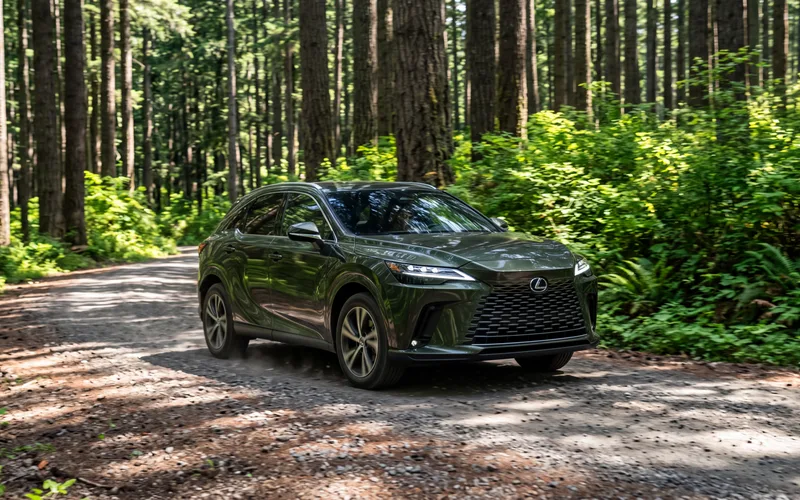 Lexus RXMid-Size Luxury SUVBetter at: Resale value
Same two-row luxury mission with far better projected resale and reliability, and it runs on regular fuel instead of premium-recommended.
Compare 2.90B-
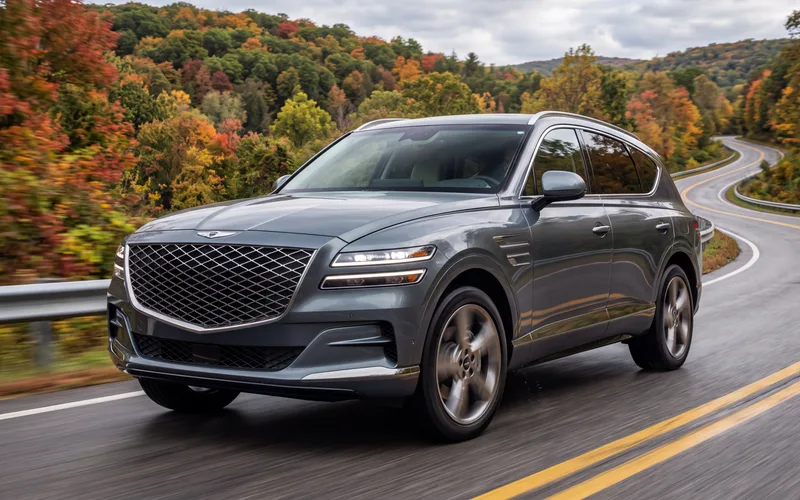 Genesis GV80Mid-Size Luxury SUVBetter at: Power
Another value-priced luxury alternative to the Germans, but with a real turbo-six and sharper dynamics instead of a 250-hp four.
Compare 2.94B-
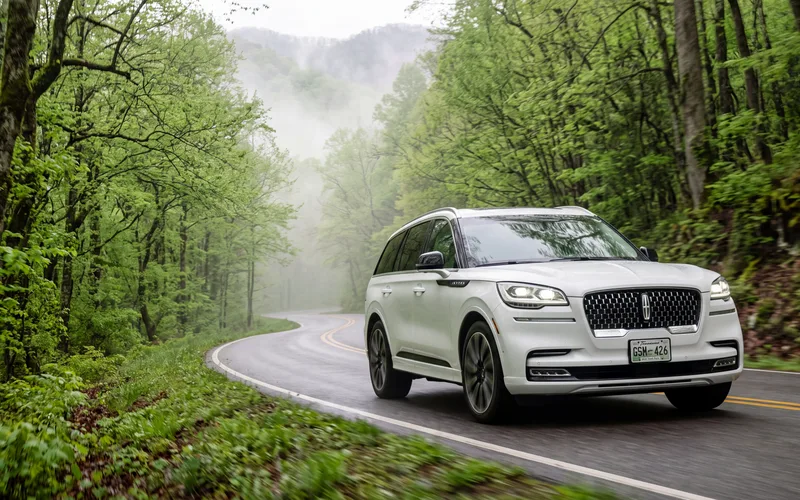 Lincoln AviatorMid-Size Luxury SUVBetter at: Space and towing
The Lincoln to pick if you need a third row and more than 3,000 lbs of towing — 77 cu ft behind row two and a much stronger V6.
CompareHow it's evolved
8 scored model years · 2019–2026
Subject scores by year
Hover or tap a score to see what moved it versus the year before. A corner mark flags a big swing.
| Year | Performance | Efficiency | Safety | Space | Cost | Reliability | Tech | Use-case | Driving | Value |
|---|---|---|---|---|---|---|---|---|---|---|
| 2026 | 46 | 54 | 90 | 63 | 26 | 65 | 85 | 74 | 64 | 77 |
| 2025 | 42 | 55 | 89 | 62 | 31 | 57 | 80 | 61 | 60 | 74 |
| 2024 | 39 | 55 | 88 | 61 | 37 | 51 | 78 | 58 | 55 | 73 |
| 2023 | 44 | 39 | 76 | 58 | 38 | 71 | 76 | 60 | 63 | 63 |
| 2022 | 44 | 39 | 74 | 59 | 42 | 70 | 75 | 58 | 62 | 62 |
| 2021 | 44 | 39 | 73 | 58 | 40 | 64 | 75 | 59 | 64 | 63 |
| 2020 | 44 | 41 | 71 | 58 | 41 | 57 | 57 | 59 | 61 | 61 |
| 2019 | 44 | 39 | 70 | 59 | 42 | 53 | 56 | 59 | 62 | 63 |
Compare two years
Best fit & conditions
Higher scores mean a better fit for that use case. Learn more about use-case fit →
Subject profile
Detailed scoring by subject
1Performance & PowertrainOne of the Nautilus's weakest categories.0.78F
The volume gas Nautilus (Premiere/Reserve) uses the standard turbocharged 2.0L EcoBoost I-4 rated at 250 hp @ 5,500 rpm — modest output for a mid-size luxury SUV, where 300+ hp is common.
The 2.0L EcoBoost delivers 280 lb-ft at a low 3,000 rpm, which gives the Nautilus adequate mid-range pull despite its modest horsepower figure.
Independent tests of the second-generation 2.0T AWD Nautilus cluster around 7.0–7.4 seconds to 60 mph — unhurried but sufficient, and clearly slower than the 300+ hp turbo sixes and hybrids in the segment.
Reviewers describe the 2.0T as smooth and quiet in normal driving and well suited to the Nautilus's luxury brief, but consistently note a hint of turbo lag away from a stop — the hybrid is the more seamless of the two powertrains.
The eight-speed automatic is a repeated highlight — smooth, well-timed shifts that rarely hunt for a gear, tuned for refinement over sportiness, with Excite mode holding gears longer.
Lincoln rates the Nautilus at just 1,750 lbs — a light-duty figure well below the 3,500–5,000 lbs typical of mid-size luxury SUVs, and towing requires a dealer-installed Class I hitch rather than a factory package.
All-wheel drive is standard on every 2025 Nautilus trim and every powertrain — no FWD version is sold — and it is backed by selectable drive modes (Normal, Conserve, Excite, Slippery, Deep Conditions). It is a road-biased on-demand system with no low range or locking differential.
A unibody, pavement-oriented luxury crossover: about 7.9 in of ground clearance, no skid plates, no low range, no locking differentials and no off-road trim. Slippery and Deep Conditions drive modes cover snow and unpaved roads, which is the extent of it.
Two distinct powertrains — the 250 hp 2.0L EcoBoost with an eight-speed automatic and a 310 hp hybrid with a CVT — and the hybrid is offered on all three trims, so electrification is genuinely accessible. There is no PHEV or EV variant, and no six-cylinder option since the first generation's 2.7L V6 was dropped.
2Efficiency & RangeOne of the Nautilus's weakest categories.1.68D
EPA rates the gas 2.0T AWD Nautilus at 24 MPG combined — respectable for a mid-size luxury SUV thanks to the small-displacement turbo four, though the available hybrid is substantially better at 30 MPG.
21 MPG city is mid-pack for the segment — the turbo four's stop-start helps, but a two-ton AWD luxury SUV with no electric assist gives back most of the displacement advantage in traffic.
29 MPG highway is the gas Nautilus's strongest economy figure and nearly matches the hybrid's 31 MPG, reflecting a tall-geared eight-speed automatic at cruise.
EPA's total-range estimate of about 480 miles gives the gas Nautilus comfortable long-haul legs — a good figure for a mid-size SUV, if well short of the hybrid's roughly 600 miles.
EPA's $2,550 annual fuel estimate is ordinary for a mid-size AWD luxury SUV; running on regular unleaded keeps it from being worse, and the hybrid saves about $500 a year.
The 2.0L EcoBoost runs on regular 87-octane unleaded — EPA lists the Nautilus as a regular-gasoline vehicle — which is a real running-cost advantage over German rivals in this segment that require or strongly recommend premium. Higher-octane fuel is optional for maximum output, not required.
3SafetyThe Nautilus's best-graded category.4.00A+
NHTSA awarded the 2025 Nautilus AWD a 5-star overall rating, with 5 stars in the frontal barrier test and 4 stars for rollover — the 4-star rollover result did not pull the overall score below five stars.
The 2025 Nautilus is an IIHS TOP SAFETY PICK+ with Good ratings in driver- and passenger-side small overlap front, the updated moderate overlap front (the rear-occupant-focused version), and the updated side test — a clean sheet, no Acceptable results in the crashworthiness set.
Lincoln Co-Pilot360 2.2 Vision is standard on every 2025 trim including the $53,485 Premiere volume trim: AEB with pedestrian and cyclist detection, blind-spot warning, rear cross-traffic warning, reverse AEB, lane-centering assist, full-range adaptive cruise and a 360-degree camera — nothing core is trim-locked, and for 2025 even BlueCruise joined the standard list.
IIHS rates the standard front crash prevention system Good in the pedestrian evaluation — the top tier of the current test, which includes nighttime scenarios. IIHS has not published an updated vehicle-to-vehicle front crash prevention rating for this generation, so the v2v side of the system is unconfirmed rather than proven weak.
Blind Spot Information System with cross-traffic alert is standard on all trims and is backed by active reverse braking plus a standard 360-degree camera, but the blind-spot side remains alert-only (no active steering intervention into the blind zone), which keeps it just below the top band.
Lane-centering steering is standard rather than optional, and it shares hardware and tuning with the BlueCruise stack, so hands-on centering is smooth and holds a line without the ping-ponging that afflicts cheaper systems; reviewers treat it as competent rather than remarkable in its hands-on mode.
Standard adaptive cruise with stop-and-go and speed sign recognition is integrated with lane centering into a single highway-assist experience that escalates directly into hands-free BlueCruise on mapped roads; reviewers report it takes over confidently in traffic rather than braking late or resuming slowly.
BlueCruise became standard equipment on the base Premiere trim for 2025 — with four years of service included rather than sold as a subscription add-on — making the Nautilus one of the few mid-size luxury SUVs where hands-free highway driving is not an upsell. Coverage is limited to pre-mapped divided-highway Blue Zones, which is why it sits just below a perfect score.
IIHS rates the headlights Good on every trim — Premiere, Reserve and Black Label alike — so the volume trim buyer gets the same rated lighting as the flagship, which is the condition the top band asks for.
Sightlines are ordinary for the class and the forward view is actively compromised by the long hood and the tall 48-inch panoramic display standing above the dash; the standard 360-degree camera compensates well at parking speeds but does nothing for the driving-position issue.
IIHS rates the child-seat anchor hardware Good for ease of use, with two rear positions carrying complete LATCH hardware and wide rear door openings on a roomy two-row body; three-across remains a squeeze because only two positions have full hardware.
4Space & ComfortMid-pack among this car's ten categories.2.21C
The second-generation Nautilus is a strictly two-row, five-passenger SUV across Premiere, Reserve and Black Label — Lincoln positions the three-row Aviator above it.
Published US front headroom for the 2025 Nautilus is 39.6 in without the panoramic roof; the roof costs about 1.2 in, so upper trims sit near 38.4 in.
Front legroom of 43.5 in is generous for a mid-size two-row, helped by the flat-floor dash architecture the second generation adopted.
Second-row headroom of 39.8 in is at the very top of the mid-size SUV band; the panoramic roof trims it to roughly 38.4 in on Black Label.
43.1 in of second-row legroom exceeds the top of the SUV normalization band and beats the BMW X5 and Mercedes GLE; the bench also slides and reclines.
The Nautilus has no third row in any trim or configuration — buyers needing seven seats are steered to the Aviator, so this item scores in the low band by definition.
36.4 cu ft behind the rear seats is competitive against two-row luxury rivals but modest measured against the whole SUV field, where three-row entries set the top of the band.
Folding the 60/40 split bench opens 71.3 cu ft — a usable van-load for two-row duty, though short of three-row SUVs that clear 85 cu ft.
Everyday storage is competent — a deep floating console with a wireless-charging media bin, large door bins, a covered cargo underfloor tray — but there is no standout innovation, and reviewers single out the manually folding rear seats as a miss at this price.
Lincoln's 24-way Perfect Position front seats with lumbar, thigh extension, massage and memory are repeatedly named the vehicle's best feature, and the second row reclines and slides with genuinely supportive cushioning.
Serene on good pavement and clearly tuned for comfort, but two independent testers found the soft springing gets unsettled over broken surfaces and lets the body roll early — composed rather than segment-leading.
Isolation is the Nautilus's signature: acoustic glass and active noise control keep wind and road noise unusually low, and testers describe the cabin as among the quietest at the price.
Heated front seats and dual-zone automatic climate are standard, with ventilated and massaging fronts, a heated wheel, heated rear outboard seats and rear climate controls available; the Rejuvenate wellness program becomes standard on upper 2025 trims.
5Cost of OwnershipThe Nautilus's lowest-graded category.0.02F
2025 is year two of the second generation and mostly a carry-over, but pricing is not: Lincoln raised the Premiere $2,050 effective May 2, 2025, taking the delivered entry price from $53,485 to $55,535. All-wheel drive is standard, so there is no cheaper front-drive way in.
Reserve AWD on the 250 hp 2.0L gas turbo is the representative volume configuration — it adds the Revel audio, panoramic Vista Roof, ventilated seats and 21-inch wheels most buyers of this car want — and lists at $64,775 delivered after the May 2025 price rise. Typical builds add premium paint or part of the $4,455 Reserve III equipment group, putting the common transaction near $66,000; the hybrid adds roughly $2,000 on top.
The two mainstream estimators disagree by about $2,000, so the midpoint is the honest figure: CarEdge projects $3,912 in maintenance and repairs over five years (~$782/yr) while Edmunds True Cost to Own for the 2025 car projects $5,049 maintenance plus $917 repairs at 15,000 mi/yr. Either way it undercuts the German mid-size luxury set — the 2.0L EcoBoost and 8-speed are shared Ford hardware — but Lincoln dealer labor rates and the 4-yr/50,000-mi warranty cutoff mean out-of-pocket service starts partway through year four for an average-mileage owner.
Three estimates bracket the mid-40s and CarEdge sits exactly in the middle at 45% retained. That is slightly worse than the luxury mid-size SUV norm — iSeeCars puts Nautilus depreciation at 52.8% against a 50.2% category average — and applied to a $66,000 volume trim it means a large absolute dollar loss. The second-generation car has no completed five-year residual history of its own, and its Chinese assembly under an unsettled tariff regime is a real unknown in either direction.
Lincoln's New Vehicle Limited Warranty runs 4 years or 50,000 miles, unchanged brand-wide for 2025. That matches BMW, Audi and Mercedes but trails Genesis's 5 yr / 60,000 mi, and the 50,000-mile cap expires before four years for anyone driving average annual miles.
Powertrain coverage is 6 years or 70,000 miles, the figure Lincoln has carried for years. It beats the flat 4-year terms at BMW, Audi and Mercedes but is far short of Genesis's 10 yr / 100,000 mi, and the low mileage cap is what binds first in practice.
No factory complimentary scheduled maintenance outside Black Label — the gap that keeps Lincoln below Acura, BMW, Audi and Volvo, all of which include free scheduled service. What the 2025 Nautilus adds this year is genuinely valuable: BlueCruise hands-free driving is standard on every trim including the base Premiere, with four years of Connected Services included, at a time when rivals charge a subscription for less capable systems. Alongside it are complimentary Lincoln Pickup & Delivery with a loaner Lincoln through the 4-yr/50,000-mi warranty, 24/7 roadside assistance and Lincoln Concierge — well beyond 'basic roadside only', so it lands in the upper half of the 50–79 band.
$66,000 volume-trim price minus its estimated resale value after 5 years (45% retained, or about $29,700) leaves about $36,300 in depreciation. Add the projected $4,950 in 5-year maintenance and repairs, and owning this vehicle for 5 years costs about $41,250 in total.
6Reliability & QualityMid-pack among this car's ten categories.1.80C-
Consumer Reports calls the 2025 Nautilus "about average" for its model year but scores it 43/100 in the 2025 reliability survey — below average in absolute terms — with in-car electronics, climate controls, exhaust and brakes flagged as trouble spots. The second generation is only in its second model year from an all-new plant, so there is little settled data and six recalls already on the books.
Lincoln sat below the industry average in the 2025 Consumer Reports reliability survey (40 points, ahead of only six brands) while placing 19th in the 2025 J.D. Power VDS — mid-pack, but up six positions for the second-best year-over-year gain of any brand. The trajectory is genuinely improving; the multi-year standing it is improving from is not good.
Six NHTSA campaigns against the 2025 model year, and they are not all trivial: an EGR valve that can fail and cause unexpected loss of drive power, an engine block heater with fire risk, and LED driver modules that can kill both headlights and tail lights. The power-window reversal recall was issued twice because the first remedy was performed incorrectly, which is a process failure on top of the original defect.
The gas Nautilus runs Ford's 2.0L EcoBoost I4 (250 hp / 280 lb-ft) with the eight-speed automatic — a very high-volume, well-understood family rather than an experiment, which is worth real credit. Against that, the 2.0L EcoBoost has a documented coolant-intrusion history across the Ford lineup, the eight-speed draws harsh-shift and shudder complaints, and the 2025 EGR recall lands on this same engine.
Reviewers consistently rate the cabin at or near the top of the mid-size luxury class — broad soft-touch coverage, visible stitching, stainless speaker grilles, real walnut, damped switchgear and a fully lined glovebox, anchored by the 48-inch panoramic display. Consumer Reports docks it for rough edges on the hard plastic door pockets and a few trim panels that don't match the rest.
Assembly quality out of the new Changan Ford Hangzhou plant has drawn explicit praise — reviewers call the car well-finished and unusually quiet, and several go out of their way to say the build answers the skepticism about Chinese production. The offset is Lincoln's below-average standing in owner-reported quality surveys and a cluster of electronics and climate-control complaints in the first two years of the generation.
Roughly 400 US Lincoln stores is thin for a national brand and about 40% fewer than in 2021, so coverage outside metro areas can mean a long drive. Most are Ford-Lincoln dual points with Ford's parts and technician depth behind them, and Lincoln's pickup-and-delivery concierge service partly substitutes for physical density.
Sharing the 2.0L EcoBoost and eight-speed with millions of Ford products means mechanical parts are cheap, plentiful and familiar to independent shops — a real cost advantage over the German rivals in this segment. Lincoln-specific trim, the 48-inch display assembly and China-sourced body electronics are dealer-channel items, and projected five-year upkeep is mid-luxury rather than cheap.
7Technology & InfotainmentOne of the Nautilus's strongest categories.3.45B+
The center touchscreen measures 11.1 in on every trim; the far larger 48 in panoramic display at the base of the windshield is a separate non-touch information screen, not the center touchscreen this item measures.
The Google-based Lincoln Digital Experience is quick and logically laid out, and reviewers who expected the 48 in screen to be a gimmick came away calling it genuinely useful — but Lincoln moved the air-vent direction controls into the touchscreen, a real ergonomic cost.
Wireless Apple CarPlay and Android Auto are standard from the base Premiere upward, with no wired-only trim in the lineup.
Google built-in supplies Google Maps as the native navigation and Google Assistant for natural-language voice — the same stack owners would otherwise reach for on their phone, embedded with live traffic and 5G connectivity.
A 10-speaker system is standard, a 14-speaker Revel is available mid-range, and the 28-speaker Revel Ultima 3D on Black Label is one of the more ambitious systems at the price.
The 48 in panoramic display is standard on every trim and serves as a fully configurable, crisp instrument display spanning the windshield base — no analog fallback and no upper-trim gating.
Ford/Lincoln Power-Up delivers whole-vehicle over-the-air updates rather than maps-only refreshes, and the Nautilus's 5G modem is the delivery path — though Lincoln ships fewer feature-adding updates than the segment's software leaders.
The Lincoln Way app covers remote start, lock/unlock, vehicle locate and status, and adds Phone As A Key so a phone can unlock and start the car — a full remote suite with complimentary connected service at delivery.
A wireless charging pad is standard in the front media bin and rear passengers get two USB-C ports in the front seatbacks, but there is no household AC outlet or onboard power feature to lift it into the top band.
Proximity entry, push-button start, remote start and a hands-free power liftgate are standard, and Phone As A Key is available through the Lincoln Way app across the range.
A 360-degree bird's-eye camera is standard on every trim rather than a top-trim upgrade, backed by front and rear parking sensors and Active Park Assist — unusually generous even for the luxury class.
Lincoln does not list a projected head-up display on any 2025 Nautilus trim — the 48 in panoramic display at the base of the windshield is the eyes-up solution, which keeps information high in the field of view but is a dashboard screen, not a HUD.
8Use-Case FitMid-pack among this car's ten categories.2.12C
Class-leading 43.1 in of rear legroom, wide rear door openings and a sliding, reclining bench make car seats and daily loading easy, and 36.4 cu ft swallows a stroller — but the manually folding rear seats and a fairly high load lip cost it the top band.
Top credentials from both agencies plus Lincoln Co-Pilot360 and hands-free BlueCruise standard from the base trim up — the safety content is not paywalled behind an expensive trim, though the entry price itself is a luxury one.
A very quiet cabin, reclining and sliding rear seats with heated outboard positions, rear climate controls and two rear USB-C ports make multi-hour trips easy for four; only the absence of rear-screen entertainment holds it back.
Light low-speed steering, a smooth 8-speed and standard hands-free BlueCruise make it a genuinely low-fatigue commuter; the screen-buried air-vent controls are the recurring daily annoyance.
24 MPG combined on regular gasoline is respectable for a 4,349 lb luxury AWD SUV, but luxury-brand service intervals, 21-inch tire options and insurance make the per-mile cost average-at-best in absolute terms.
At 193 in long and 80 in wide with a roughly 38 ft turning circle it is a substantial thing to thread through a city, but a standard 360-degree camera, parking sensors and Active Park Assist do most of the work.
A maximum tow rating of 1,750 lb is barely enough for a small utility trailer and is well below what mid-size SUV rivals manage, and there is no bed, no low range and no payload headroom for real work.
A unibody luxury crossover with leather or leatherette trim, carpeted cargo floor and no wear-friendly interior option; the CD6-derived platform and 2.0L EcoBoost are proven in passenger use but the vehicle has no fleet or work reputation.
There is no onboard AC outlet or exportable power, no upfit ecosystem, and only basic cargo tie-downs behind a carpeted load floor — the 1,750 lb hitch rating also rules out most jobsite trailers.
This is the Nautilus's strongest mission: 24-way massaging seats, an exceptionally quiet cabin, roughly 460 miles of highway range from 29 MPG, and standard hands-free BlueCruise for four years of included service.
Standard all-wheel drive and about 7.9 in of ground clearance handle gravel, snow and trailheads fine, and roof rails are available — but the 1,750 lb tow rating rules out most toys and there is no off-road hardware or drive mode beyond the adaptive-suspension settings.
36.4 cu ft behind the seats expanding to 71.3 cu ft is enough for a family's road-trip load, and roof rails plus an underfloor tray help — but the 60/40 bench folds manually, the hitch rating limits carriers, and there is no third folding position or front-passenger fold-flat.
9Driving ExperienceMid-pack among this car's ten categories.2.05C
Two independent testers reach the same verdict: the soft springing that buys the ride its serenity lets body roll build early and gets upset by mid-corner bumps. Secure and predictable, but well off the segment's dynamic benchmarks.
Light and quick at parking speeds and acceptably natural on the highway, but testers consistently describe it as slow and numb with no feedback reaching the driver — the weakest single element of the driving experience.
The gas Nautilus uses conventional hydraulic brakes with no regen blending to muddy the pedal, and no reviewer flags fade or long stops — but nothing in the published testing singles the brakes out as a strength either.
The 250 hp 2.0L EcoBoost and 8-speed automatic are well calibrated for the car's relaxed brief — acceleration is adequate and shifts unobtrusive — though a turbo four in a 4,349 lb luxury SUV shows some low-speed lag and audible stop/start compared with the smoother hybrid alternative.
Extensive sound deadening keeps the four-cylinder almost inaudible at cruise, but under hard acceleration the EcoBoost sounds coarse and ordinary in a cabin this luxurious — the hybrid's electric assist masks it better.
A 38 ft curb-to-curb circle is mid-pack for a 193-inch mid-size SUV on a 114-inch wheelbase — manageable but not nimble in tight parking.
The 24-way Perfect Position seat and commanding sightlines suit nearly any driver, and the 48-inch panoramic display keeps key information high in the field of view — but relocating air-vent direction into the touchscreen is a genuine ergonomic regression.
The Nautilus is deliberately engineered as a serene isolation chamber rather than a driver's car; with numb steering, early body roll and an ordinary turbo four, nothing about it invites the long way home.
10Value & Market PositionOne of the Nautilus's strongest categories.3.01B
The 2025 change that matters is that BlueCruise hands-free highway driving became standard on the base Premiere with four years of Connected Services included — no rival in the class includes hands-free driving at any price, let alone at the entry trim. Premiere also carries standard AWD, the 48-inch panoramic display plus an 11.1-inch center touchscreen on Android Automotive with Google built-in, a 360-degree camera, adaptive cruise with lane centering, forward collision warning with AEB, heated front seats and steering wheel, wireless charging, wireless CarPlay/Android Auto, a 10-speaker system and over-the-air updates. What it does not include is what keeps this short of the 80s outright: synthetic leather, 18-inch wheels, no panoramic roof and no ventilated seats until Reserve.
Content-for-dollar is strong — hands-free driving, the class's most ambitious screen, a genuinely hushed cabin and standard AWD — but the powertrain is the weakest case in the segment at 250 hp and 275 lb-ft, where a Genesis GV70 3.5T brings 375 hp and a BMW X3 or Audi Q5 comfortably outruns it. The May 2025 tariff-driven increase took roughly $2,070 out of the value argument mid-year, and a Reserve at $64,775 delivered lands in loaded-GV70 and well-equipped-X3 territory without matching them on performance or resale.
Three trims spanning $55,535 to $78,725 delivered, each available with either the gas 2.0T or the hybrid for about $2,000 more, and layered equipment groups (Premiere I/II, Reserve I/II/III, plus the Jet appearance package) that let a buyer step up in increments. The gaps are real: AWD only with no cheaper front-drive entry, a single engine displacement with no performance variant, and a $9,240 jump from Premiere to Reserve with nothing in between.
The Nautilus is Lincoln's best-seller by a wide margin and held its ground through a difficult year: 33,744 US units in calendar 2025, up 1.4% year over year, after the second generation's launch year lifted the nameplate sharply. Holding flat while a 125% tariff hung over an import that Lincoln kept shipping is a real result. Against that it is a steady mid-pack seller rather than a segment leader — the Lexus RX and BMW X5 move roughly twice the volume — and Q3 2025 came in soft at 7,704 units after a strong Q2.
Lincoln's 'Quiet Flight' identity — the Sanctuary cabin ethos, Perfect Position seating, concierge Pickup & Delivery, Black Label membership — has done real work rehabilitating a brand that spent the 2000s rebadging Fords, and 2025 was its best image year in nearly two decades with this very car as the halo. It still lacks the aspirational pull of BMW, Mercedes or Genesis, which shows up directly in the mid-40s residual, and the Chinese assembly is a live objection for some US luxury buyers in a way it is not for Volvo or Polestar shoppers.
Scored as buyer benefit, this is the weakest incentive picture in the Lincoln SUV lineup. Where the Corsair and Aviator saw 0% APR and stacked bonus cash nationwide through 2025, the tariff-constrained Nautilus mostly drew 4.9% APR for 84 months with interest-free money limited to select markets, plus first-responder cash, 90-day deferred payments during the Wish List event and regional lease specials. Lincoln's response to the tariff was to raise the price $2,070 in May rather than discount an import it was already losing margin on, and there is no desperation pricing to exploit.
2025 is the second model year of a generation that arrived for 2024 — an all-new car on Ford's C2 platform with the 48-inch panoramic display, an 11.1-inch touchscreen running the Android Automotive-based Lincoln Digital Experience, and a hybrid option. Nothing in the class carries newer cabin tech, 2025 added standard BlueCruise on top, and a buyer faces no redesign risk for years.
This is the Nautilus's strongest card: MotorTrend named it 2025 SUV of the Year over the Rivian R1S, Toyota Land Cruiser, Lexus GX 550, Hyundai Santa Fe and Mercedes G-Class, and Consumer Reports ranked it first for owner satisfaction among mid-size luxury SUVs, alongside an IIHS Top Safety Pick+ and NHTSA five-star overall. It is not a clean sweep — Car and Driver places it low in the class, faulting a confounding control layout, an odd driving position and the price, and Cars.com consumer ratings sit at 2.7/5 with only a third of owners recommending it — so it is an award winner reviewers still argue about rather than a consensus comparison-test champion.