
The verdict
A mixed-report mid-size luxury suv, strong on technology and held back by efficiency.
The 2022 Nautilus is the sweet spot of the old Lincoln: it has the big 13.2-inch SYNC 4 screen from the 2021 overhaul, Lincoln actually cut the entry price to $44,225, and it was the year the car won its awards — J.D. Power's highest-quality midsize premium SUV and an IIHS Top Safety Pick on top of five NHTSA stars. It is a hushed, plushly-seated two-row cruiser rather than a fast or efficient one: the volume 250-hp turbo four needs about 7.0 seconds to 60 and returns 22 MPG combined, and the whole thing rides on Ford Edge bones from 2013. Two things should shape a used purchase — most 2022 build carries LED reflector headlights that IIHS rates Poor for glare, and Ford opened a field service action on the 8F35 automatic covering essentially every 2022 unit. At about 47% of sticker retained after five years, the depreciation that hurt the original owner is the reason a second owner should look.
Jump to scoresStrengths
- One of the best-credentialed safety records of its year
- Infotainment that still holds up, standard on every trim
- Front seats and cabin hush that beat the price tag
What holds it back
- It gives back more than half its value in five years
- Thirsty, with no hybrid to escape to
- Two rows and a small hold for a big SUV
Top alternatives
Cars shoppers cross-shop with the Lincoln Nautilus 2.65C+
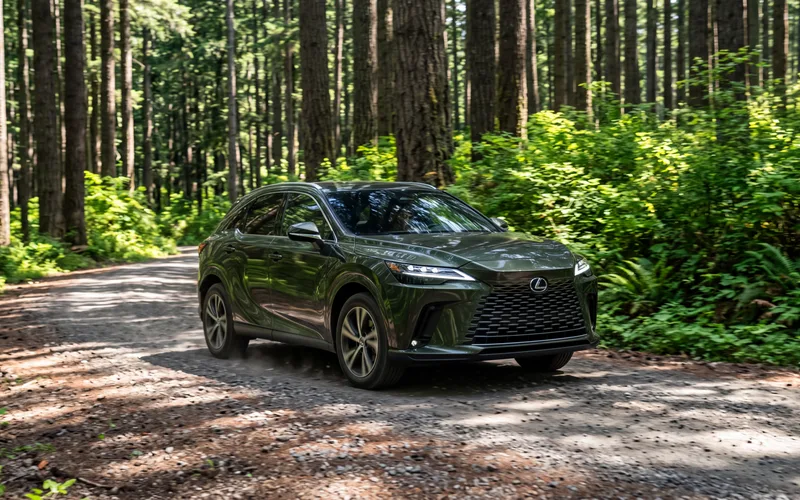 Lexus RXMid-Size Luxury SUVBetter at: Resale value
Same two-row luxury mission with far better projected resale and reliability, and it runs on regular fuel instead of premium-recommended.
Compare 2.90B-
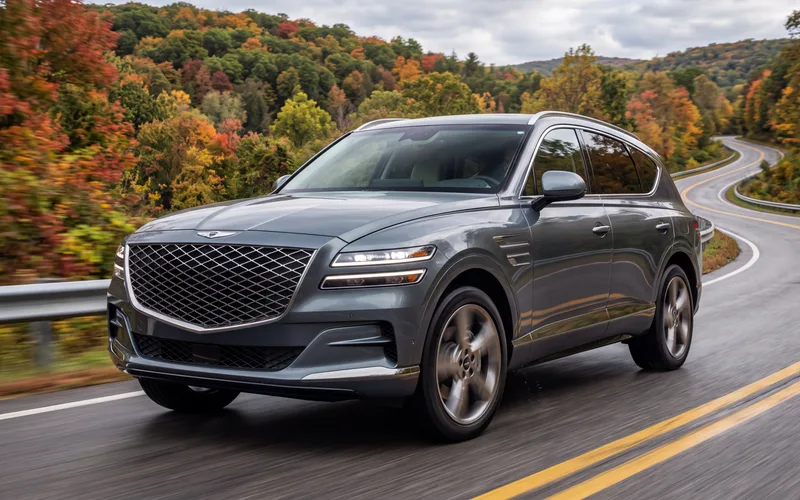 Genesis GV80Mid-Size Luxury SUVBetter at: Power
Another value-priced luxury alternative to the Germans, but with a real turbo-six and sharper dynamics instead of a 250-hp four.
Compare 2.94B-
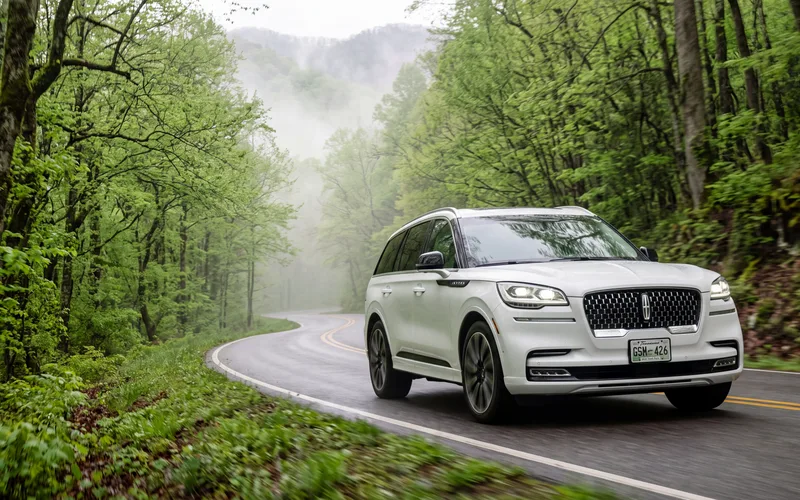 Lincoln AviatorMid-Size Luxury SUVBetter at: Space and towing
The Lincoln to pick if you need a third row and more than 3,000 lbs of towing — 77 cu ft behind row two and a much stronger V6.
CompareHow it's evolved
8 scored model years · 2019–2026
Subject scores by year
Hover or tap a score to see what moved it versus the year before. A corner mark flags a big swing.
| Year | Performance | Efficiency | Safety | Space | Cost | Reliability | Tech | Use-case | Driving | Value |
|---|---|---|---|---|---|---|---|---|---|---|
| 2026 | 46 | 54 | 90 | 63 | 26 | 65 | 85 | 74 | 64 | 77 |
| 2025 | 42 | 55 | 89 | 62 | 31 | 57 | 80 | 61 | 60 | 74 |
| 2024 | 39 | 55 | 88 | 61 | 37 | 51 | 78 | 58 | 55 | 73 |
| 2023 | 44 | 39 | 76 | 58 | 38 | 71 | 76 | 60 | 63 | 63 |
| 2022 | 44 | 39 | 74 | 59 | 42 | 70 | 75 | 58 | 62 | 62 |
| 2021 | 44 | 39 | 73 | 58 | 40 | 64 | 75 | 59 | 64 | 63 |
| 2020 | 44 | 41 | 71 | 58 | 41 | 57 | 57 | 59 | 61 | 61 |
| 2019 | 44 | 39 | 70 | 59 | 42 | 53 | 56 | 59 | 62 | 63 |
Compare two years
Best fit & conditions
Higher scores mean a better fit for that use case. Learn more about use-case fit →
Subject profile
Detailed scoring by subject
1Performance & PowertrainOne of the Nautilus's weakest categories.0.94F
The volume Reserve trim carries the standard 2.0L turbocharged four rated at 250 hp @ 5,500 rpm; the 335-hp 2.7L twin-turbo V6 is optional on Reserve and standard on Black Label. 2022 is a carry-over year — no powertrain change from 2021.
Peak torque of the standard 2.0L EcoBoost is 280 lb-ft @ 3,000 rpm — mid-pack for a mid-size luxury crossover carrying roughly 4,300–4,500 lbs.
Published tests of the 2.0T cluster around 6.8–7.3 seconds; the optional 2.7L V6 drops it to the high fives. Unchanged powertrain means the 2021/2023 test results carry directly to 2022.
The 2.0L EcoBoost is described as smooth and quiet and adequate for the car, but it is hauling a heavy luxury crossover and shows the usual small-turbo lag off idle — the 'effortless' praise in reviews attaches to the optional V6, not the volume engine.
The 8-speed automatic is well regarded — quick, well-timed shifts with paddle control — but reviewers repeatedly flag low-speed manners: finicky part-throttle behavior, uneven upshift quality and a clunk rolling to a stop, plus a fussy push-button gear selector.
Maximum conventional rating for the first-generation Nautilus is 3,500 lbs with the factory Class II Trailer Tow Package; without it the rating is 2,000 lbs. Modest capability for a mid-size SUV, adequate for a small boat or utility trailer.
Intelligent AWD is optional on Standard and Reserve and comes with the V6-equipped Black Label, so it is available across the range — but it is a conventional on-demand transverse system with no low range, locking differential or terrain-mode hardware, which caps it mid-band.
A unibody, pavement-focused luxury crossover: roughly 8 inches of ground clearance, no skid plates, no low range, no locking differential and no off-road trim anywhere in the 2022 lineup.
Two distinct gas turbo powertrains — the 2.0L EcoBoost I4 and the 2.7L EcoBoost V6, both with the 8-speed automatic and available AWD — but no hybrid, PHEV or EV for 2022; electrification arrives only with the second-generation 2024 car.
2Efficiency & RangeThe Nautilus's lowest-graded category.0.61F
EPA rates the volume 2.0L EcoBoost AWD configuration at 22 MPG combined — unremarkable among gas mid-size crossovers, reflecting a heavy body on the aging CD4 platform with no electrified option for 2022.
EPA city rating for the volume 2.0L AWD configuration; the turbo four with auto stop-start manages 20 MPG in town, ordinary for a gas luxury crossover of this size.
EPA highway rating of 25 MPG for the 2.0L AWD. The 2.7L V6 matches it on the highway, so the four-cylinder's efficiency advantage is almost entirely a city-cycle one.
The 18.0-gallon tank at the EPA 22 MPG combined rating gives roughly 396 miles for the volume 2.0L AWD — the modest tank, not the economy, is what holds range down here.
EPA's estimated annual fuel cost at 15,000 mi/yr for the volume 2.0L AWD; running on regular unleaded keeps the bill lower than the mediocre economy alone would suggest.
Both EcoBoost engines are rated on regular unleaded — unusual for a luxury-badged SUV and a genuine running-cost edge over German rivals that require premium; premium is optional for peak output only.
3SafetyOne of the Nautilus's strongest categories.3.02B
NHTSA tested both 2022 Nautilus drivetrains and rated each 5 stars overall, with 5 stars in every frontal and side sub-test including the side pole; only rollover drops to 4 stars (15.5% rollover probability, no tip in the dynamic test), which is normal for a mid-size crossover.
Crashworthiness is a clean sweep of Good, including the tougher updated side test that most of the 2022 field had not yet passed, and the Nautilus is a 2022 Top Safety Pick — but the award is explicitly headlight-restricted, applying only to the trims fitted with the Good-rated LED projector units, which keeps it short of TSP+ and short of a whole-lineup endorsement.
Lincoln Co-Pilot360 is standard on all three 2022 trims — pre-collision assist with AEB and pedestrian detection, forward collision warning, lane-departure warning, lane-keeping assist, blind-spot monitoring with rear cross-traffic alert, auto high beams, rear camera and rear parking sensors — but adaptive cruise, lane centering, evasive steering assist and the 360-degree camera are all inside the Co-Pilot360 Plus content that arrives with the Reserve I/II equipment groups, so the volume configuration lacks the ACC that X3 and XC60 rivals include.
IIHS rates the 2022 Nautilus Superior for vehicle-to-vehicle front crash prevention and Advanced for daytime pedestrian detection, on both the standard and the optional system — strong daytime results across the lineup, but IIHS never ran the nighttime pedestrian evaluation on this vehicle, leaving the hardest AEB scenario unproven.
BLIS with cross-traffic alert is standard on Standard, Reserve and Black Label via Co-Pilot360, which beats the segment habit of locking it behind an option group — but coverage is alert-only, with no active braking or steering intervention for cross traffic, no safe-exit warning, and no trailer-aware mode on this generation.
Lane-departure warning and the nudge-back lane-keeping system are standard on every trim, and the true lane centering that arrives with Co-Pilot360 Plus tracks well on clearly marked highways with a hand on the wheel — but centering is package-locked, so the volume Standard-trim car gets only the corrective lane-keeping system.
The available adaptive cruise is a full-speed-range camera-and-radar system with stop-and-go and speed sign recognition, paired with lane centering, and reviewers describe the driver aids as effective without irritating the driver on long highway stints — but it is extra-cost rather than standard and there is no hands-off highway assist layered on top.
No hands-free option at any price. 2022 is the year Lincoln launched ActiveGlide, but exclusively on the Navigator; the Nautilus was carrying over the 2021 refresh on the older CD4 architecture without the driver-facing camera hardware the system requires, and hands-free only reached this nameplate with the 2024 redesign.
The weakest point of the 2022 car and a genuine 2022-specific problem: IIHS rates the standard LED reflector headlamps fitted to most of the model year — every unit built before September 2022 — Poor for excessive glare. A running change part-way through the year lifted them to Acceptable, and the LED projector units on Reserve Ultimate/Black Label rate Good, but the majority of 2022 build carries the Poor-rated lamps, which is why the Top Safety Pick award is headlight-restricted.
Ordinary sightlines for a two-row luxury crossover — reasonable glass area and a fairly upright rear window, but the long hood and the tall 13.2-inch centre display added in the 2021 refresh cut into the forward view, and mirror placement leaves a driver's-side blind spot. Standard BSM covers the flanks; the 360-degree camera that would compensate at parking speeds is package-only.
Workable rather than easy: IIHS rates LATCH ease of use only Acceptable on the lower trim and Marginal on Reserve, because the lower anchors hide beneath leather flaps and the tether anchors sit high on the seatback where they are easy to confuse with cargo hooks. Wide-opening rear doors and generous second-row space in this two-row SUV make the physical install less of a fight than the anchor ratings imply.
4Space & ComfortMid-pack among this car's ten categories.1.94C-
The first-generation Nautilus is a strictly two-row, five-passenger mid-size crossover across Standard, Reserve and Black Label; buyers needing a third row are pushed up to the Aviator.
Nearly 40 inches of front headroom is comfortably above the mid-size SUV midpoint, and reviewers single out first-row head- and legroom as a strength of this cabin.
42.8 inches gives the front seats generous stretch-out room for the class, matching the reviewer consensus that the first row is the roomier of the two.
39.2 inches of second-row headroom is near the top of the SUV band — the boxy roofline of this generation pays off for rear passengers even with the panoramic roof fitted to most Reserve cars.
39.6 inches is a strong figure on paper for a two-row mid-size crossover, though at least one reviewer still describes the back seat as feeling tighter than the number implies because of the high floor and long front seat travel.
There is no third row anywhere in the 2022 Nautilus lineup — it is a dedicated five-seat, two-row SUV, so this criterion scores in the bottom band by absence rather than by poor execution.
37.2 cubic feet behind the rear seat is modest for the SUV band — enough for a family's weekly load or a stroller plus groceries, but noticeably short of the mid-size three-row crossovers this band is normalized against.
68.8 cubic feet maximum is low-mid for the segment band, a direct consequence of the two-row footprint; the load floor is flat and wide, but total volume trails larger mid-size utilities.
Competent rather than clever: the piano-key gear selector frees up a deep console bin and open shelf beneath the floating centre stack, and there is an available cargo management system with a net and a 110V/150W outlet — but nothing here rises to the frunk/underfloor/giga-console innovation the top band describes.
Front seat comfort is the Nautilus's signature strength — the available Ultra Comfort 22-way power seats with adjustable thigh extensions, individually adjustable head restraints and Active Motion massage are repeatedly called class-leading; the rear bench is comfortable but ordinary by comparison.
The comfort-first tune with the available adaptive dampers absorbs broken pavement very well and is a clear strength, but it is not flawless: reviewers report Comfort mode feeling 'woozy' with excess float, and cars on the larger wheel packages transmit shivers through the structure over sharp edges.
Isolation is a deliberate priority and it lands — wind and road noise at highway speed are low and reviewers credit Lincoln with keeping unwanted noise out; the one flaw is the four-cylinder itself, which is audible when lugging or worked hard.
Rich for the segment on the volume Reserve trim: heated and ventilated front seats, a panoramic roof with power shade, wireless charging, dual-zone automatic climate with rear vents and complimentary remote start/pre-conditioning through the Lincoln Way app — but heated rear seats, the heated wheel and the 22-way Ultra Comfort seats are all package or upper-trim content rather than standard.
5Cost of OwnershipOne of the Nautilus's weakest categories.0.79F
For 2022 Lincoln actually trimmed the Nautilus's entry price: the front-drive Standard with the 250 hp 2.0L EcoBoost opens at $43,030, or $44,225 delivered — about $2,000 less than the 2023 car would ask. That undercuts a Lexus RX 350 and a BMW X3 of the same year, but it is still a large mid-size luxury SUV price, so it lands mid-band.
Reserve is the volume trim and most Nautilus buyers take all-wheel drive: $49,310 Reserve FWD plus the $2,495 AWD system and $1,195 destination is $53,000 out the door. A typical 2022 build then adds the 335 hp 2.7L V6, 24-way Perfect Position seats or the Elements package, putting real transactions near $54,500 — roughly $2,000 below the equivalent 2023 car.
The two published estimates for this model year disagree by nearly two to one — Edmunds True Cost to Own projects roughly $6,300 in combined maintenance and repairs over five years at 15,000 mi/yr, while CarEdge projects $3,912 — so a figure between them, leaning toward the year-specific Edmunds data, is the fair read. The Nautilus shares Ford Edge/CD4 mechanicals so parts are cheap and widely stocked, but it is serviced at Lincoln labor rates.
Four years of real market data now exist for this exact model year and they run a shade ahead of the nameplate's long-run average: KBB values a 2022 Reserve at about $27,000 as of August 2026, roughly half of its $53,000 delivered price at four-and-a-half years, which projects to the high-40s at five. iSeeCars puts Nautilus five-year depreciation at 52.8 percent (47.2 percent retained) against a 50.2 percent luxury-midsize-SUV class average, so the car still gives back more than its peers — weak retention in absolute terms even though 2022 cars benefited from entering an inflated used market.
Lincoln's New Vehicle Limited Warranty runs 4 years/50,000 miles for 2022 — the luxury-brand standard, matching Acura, Lexus, BMW and Audi, and a year longer than the mainstream Ford coverage the Nautilus's Edge platform-mate receives.
Six years/70,000 miles matches Acura and Lexus and beats BMW and Audi, whose powertrain terms simply run concurrent with the four-year basic warranty — but it is far short of the 10-year coverage that anchors the top of this band.
No complimentary scheduled maintenance comes with the volume Reserve trim — Lincoln reserves its 4-year/50,000-mile Premium Maintenance plan (plus anytime car washes and annual detailing) for Black Label members, so a Reserve buyer pays for oil changes from day one, unlike an RDX (2 yr/24k), X3 (3 yr/36k) or Volvo XC60. What Lincoln gives instead is service convenience: complimentary Lincoln Pickup & Delivery with a Lincoln loaner for the whole warranty period, 24/7 roadside for 6 years/70,000 miles, and connected-services trials. The first-generation Nautilus had no hands-free-driving subscription to bundle in — ActiveGlide only arrived with the 2024 redesign.
$54,500 volume-trim price minus its estimated resale value after 5 years (47% retained, or about $25,615) leaves about $28,885 in depreciation. Add the projected $5,900 in 5-year maintenance and repairs, and owning this vehicle for 5 years costs about $34,785 in total.
6Reliability & QualityOne of the Nautilus's strongest categories.2.71B-
2022 is a carry-over year in the U540 generation, one year after the 2021 interior/SYNC 4 refresh, and both major predictors are favorable: Consumer Reports rates the 2022 Nautilus as MORE reliable than other cars of the same model year — a step up from the 'about average' it gives the 2023 car — and J.D. Power scores it 88/100 for quality & reliability, inside its 'Great' band and its best figure for the generation. The owner record is also unusually quiet, with a single complaint logged at CarComplaints for the entire model year. What keeps it out of the top band is the species of defect CR's owner data predicts: transmission rebuild/replacement, torque converter and premature clutch replacement, plus shocks/struts and steering-linkage wear — powertrain and chassis internals rather than the infotainment and body-hardware annoyances that dominate the 2023 car's trouble spots.
The dependability study that surveys this exact model year is the J.D. Power 2025 U.S. VDS, which polls original owners of 2022 vehicles at three years: Lincoln scored 221 PP100 and ranked 19th of the brands studied. That is a genuine improvement — up six places from 25th and down from 251 PP100 the prior year — but it still sits below the industry average and well behind the premium leaders, with Lexus again highest-ranked. Mid-pack at best, and a notch below where the marque lands for the 2023 model year (217 PP100 in the 2026 study). Consumer Reports' brand report card is the more flattering read, where Lincoln has climbed into the top ten and is the highest-ranked domestic brand, but that blends road test and satisfaction with dependability rather than measuring dependability alone.
Only two NHTSA campaigns stand against the 2022 Nautilus — fewer than the 2023 car's three — but one of them is materially more serious than anything on that year's list. 24V635 (Ford 24S55) covers intake valves in the 2.7L and 3.0L Nano EcoBoost V6 that may break while driving and cause engine failure and loss of drive power, with the remedy being an engine cycle test and engine replacement as necessary; it reaches 2022 Nautilus built before the valve material changed to Silchrome 1 on 31 October 2021, so it touches early-build V6 cars only and not the volume 2.0L. The other, 25V315, is the fleet-wide rearview-camera software freeze fixed by an APIM update. Against that, running rework is heavy: 64 TSBs on file for the model year versus 25 for 2023, covering AWD fault codes and low-speed AWD chatter, return-to-park on shifting into drive or reverse, and cold-start engine front-cover ticking. An engine-failure recall plus a thick TSB file puts this in the middle of the average band rather than the top of it.
The volume 2022 Nautilus (Standard and Reserve) runs the 250 hp 2.0L EcoBoost I4 through the 8F35 eight-speed; the 335 hp 2.7L twin-turbo V6 is optional on Reserve and mandatory on Black Label. The good news for the volume car is that the 2.0L's signature failure — coolant intrusion into the cylinders from the open-deck block, which produced tens of thousands of owner reports across 2015-2019 Edge/Escape/MKC/MKZ applications — was engineered out by a redesigned block from roughly MY2020, so a 2022 sits on the fixed hardware. The transmission is the problem. Ford issued TSBs naming the Edge and Nautilus for 8F35 shudder/buck/jerk up to 35 mph and harsh engagements, and TSB 25-2154 opened a field service action specifically for 2019-2022 Edge/Nautilus 8F35 units built on or before 30 June 2022 — that is, essentially the whole 2022 run — aimed at reducing vehicles needing repeat transmission replacements. Consumer Reports' own predicted trouble spots for this model year lead with transmission rebuild or replacement, torque converter and premature clutch replacement, corroborating it from the owner side. Add the intake-valve recall hanging over early-build V6 cars and this scores below the average band, and below the 2023 car, which sits outside the field-service-action build window.
The cabin is the Nautilus's most consistently praised attribute and 2022 gets the full benefit of the prior year's overhaul: the Navigator-derived interior, the 13.2-inch SYNC 4 touchscreen and a mix of soft leather, real wood and metal trim across the range, with 22-way Ultra Comfort seats and Active Motion massage available. Reviewers describe it as elegant and brimming with quality materials. The complaints that do land are ergonomic rather than material — nearly every function including air-vent adjustment is routed through the touchscreen — which is a cat7 problem, not a build-quality one. It stops short of class-leading because the underlying CD4 architecture dates to 2015 and hard plastics persist in lower-cabin zones where German rivals pad the surfaces.
Assembly at Oakville was four years into the generation and one year past the refresh by 2022, and the owner-side evidence is the quietest of any Nautilus model year: a single complaint on file at CarComplaints for the whole year, against nine for 2023, and that one is a cracked door check-strap mount plate at 62,000 miles rather than a new-car defect. Reviewers who drove Reserve cars called the interior tightly assembled, and the cabin's quietness and isolation are recurring praise. Rated in the upper half of the average band rather than the top because CR's owner data for this generation still flags body hardware and electrical accessories as recurring soft spots, and the thick 2022 TSB file includes noise complaints (cold-start front-cover ticking, low-speed AWD chatter) that owners experience as assembly quality even when the root cause is mechanical.
Dealer service is a real Lincoln strength and 2022 caught the network near its recent peak size. The brand consistently places in the upper half of premium marques in the J.D. Power Customer Service Index — 891 points and fifth among premium brands in the most recent study, above the premium average and tied with Cadillac — and its US footprint remained materially larger than Cadillac's or any European rival's. A 2022 buyer was also shopping before the bulk of the network consolidation: Lincoln ran roughly 685 US stores in 2021 and was still well above 600 through 2022, against about 500 by the end of 2023 and 438 by 2026, so coverage in smaller markets was denser for this model year than for later ones. Scored a point above the 2023 car for that reason.
The Nautilus is the Ford Edge's twin on the CD4 platform, built beside it at Oakville and sharing the 2.0L EcoBoost, the 2.7L EcoBoost and the 8F35 transmission with high-volume Ford products, so parts commonality and supply are far better than for a low-volume European luxury mid-sizer, and Ford's US parts distribution is among the deepest in the industry. The cost data agrees: CarEdge projects roughly $12,239 in maintenance and repairs over ten years, about $2,116 cheaper than the luxury SUV average, with a 34.45% chance of a major repair — around 6.6 points better than segment peers. Held below the top band because Lincoln-specific trim, the Revel audio hardware and the 13.2-inch SYNC 4 unit are dealer-priced, Lincoln's brand-wide annual repair figure runs well above the industry average, and aftermarket support is thin next to a mainstream nameplate. An 8F35 replacement is also an expensive job when it comes, though the field service action and powertrain warranty cover it for most in-period owners.
7Technology & InfotainmentThe Nautilus's best-graded category.3.06B
The 13.2-inch landscape display introduced with the 2021 refresh is standard equipment across Standard, Reserve and Black Label for 2022, so the volume trim gets the largest screen offered — a big number for a 2022 mid-size luxury SUV.
SYNC 4 on the wide 13.2-inch screen is quick, cleanly laid out with a persistent card structure, and — importantly for daily use — Lincoln kept physical climate and volume controls below the display instead of burying them in menus.
Both wireless Apple CarPlay and wireless Android Auto are standard on all three 2022 trims — no dongle, no cable, no upper-trim paywall, which is still ahead of several German rivals in this model year.
SYNC 4's conversational voice recognition is a real improvement over the old command-tree system and connected navigation with cloud-updated maps and traffic is included on Reserve and Black Label — but it is not the natural-language standard-setter of the top band, and most owners still default to CarPlay for routing.
A genuine three-tier audio ladder with a strong ceiling: a 10-speaker base system, the 13-speaker Revel available on Reserve through the Luxury package, and the 19-speaker Revel Ultima 3D on Black Label — the Revel systems are consistently rated among the better factory setups in the class.
A 12.3-inch reconfigurable digital cluster is standard on every 2022 trim including the base Standard car, with drive-mode-linked graphics and clear, legible rendering — full-digital as standard was not yet a given in this segment for 2022.
SYNC 4 brought real over-the-air updating to the Nautilus — infotainment software and map updates arrive without a dealer visit, and Ford has since pushed module-level fixes this way (the 2025 rearview-camera recall on 2021–2023 Nautilus is remediable by OTA) — but it is not the regular feature-adding whole-vehicle cadence of the top band.
The Lincoln Way app covers the full core set — remote start/stop, scheduled start, lock/unlock, vehicle locator, service scheduling and roadside — complimentary on connected 2022 vehicles, and Phone As A Key turns the handset into a full key; the catch is that Phone As A Key rides in the Reserve Luxury package rather than being standard.
Well equipped without being lavish: four USB ports split two USB-A and two USB-C, a 110V/150W household outlet, and a wireless charging pad — but the pad arrives with the Reserve trim rather than on the base car, and second-row port provision is basic.
Intelligent Access proximity entry, push-button start and remote start are standard across the range and phone-as-key is genuinely offered — but on the volume Reserve trim both Phone As A Key and the hands-free foot-activated liftgate sit inside the extra-cost Luxury package rather than being included.
The rear camera and rear parking sensors are standard, and the 360-degree camera with front sensors and semi-automated Active Park Assist is genuinely good when fitted — but on the volume Reserve trim it is locked behind the Co-Pilot360 Plus / Reserve equipment groups, and the base Standard car makes do with the rear view alone.
No factory head-up display is offered on the 2022 Nautilus at any trim or price — the HUD that appears in 2022 Lincoln Luxury-package coverage belongs to the Corsair, not this nameplate; the Nautilus leans on its 12.3-inch digital cluster instead, and a HUD only arrives with the 2024 redesign.
8Use-Case FitMid-pack among this car's ten categories.1.91C-
The physical install is easy — wide-opening rear doors, 39.6 in of second-row legroom and 39.2 in of headroom, and a low-effort power liftgate — but IIHS marks the hardware down because the lower anchors hide under leather flaps and the tether anchors sit high on the seatback where they read as cargo hooks, and 37.2 cu ft behind the seat is only adequate for stroller-plus-gear duty.
The crash credentials are excellent — 5-star NHTSA overall and an IIHS Top Safety Pick with Good in every crashworthiness test including the updated side impact — and Co-Pilot360 with AEB, blind-spot and lane-keeping is standard on every trim, but two year-specific gaps hold it back: adaptive cruise is package-locked, and the LED reflector headlights fitted to most of the 2022 build rate Poor for glare, which is why the TSP award is headlight-restricted.
A quiet, plush cabin with excellent front seats, rear vents, available heated rear seats and a panoramic roof makes multi-hour trips genuinely pleasant for four — but there is no rear-seat entertainment, no rear climate zone of its own, and only 37.2 cu ft of luggage space with all five seats occupied.
Exactly what this car is engineered for: light steering, a comfort-tuned ride with adaptive dampers, a quiet cabin and an elevated seating position make it low-effort in traffic, and the 250-hp 2.0T has ample low-speed muscle — held short of the top band by the 8-speed's documented low-speed manners, which reviewers describe as finicky with an occasional clunk rolling to a stop.
Expensive per mile for a commuter: 22 MPG combined in the volume 2.0T AWD configuration and roughly $2,800 a year in fuel by EPA's estimate, with no hybrid option anywhere in the 2022 range. The one mitigating factor is that all three engines run on regular unleaded rather than premium, unusual for the luxury segment.
Manageable but not nimble: 190 inches long on a 112.2-inch wheelbase with a 39.3 ft turning circle, and the tall 13.2-inch display plus long hood compromise the forward view. Light steering and standard rear sensors help; the 360-degree camera and Active Park Assist that would make it easy are extra-cost on the volume trim.
Not a work tool. Maximum tow rating is 3,500 lbs and only with the factory Class II package — 2,000 lbs as delivered — there is no bed, no meaningful payload headroom, and the unibody CD4 crossover platform is tuned for isolation rather than load-carrying.
A luxury-trimmed crossover with leather surfaces and no wear-friendly interior option, on a platform with no fleet or commercial presence. The mechanical basics are proven Ford volume hardware, but the 2.7L Nano EcoBoost in this model year carries a broken-intake-valve recall — a mark against hard-use confidence even though the volume engine is the 2.0L.
Almost nothing work-oriented: a 110V/150W household outlet and an available cargo management system with a net and roof side rails are the entire provision. There are no washable surfaces, no rubber flooring option, no upfitter switches and no meaningful accessory ecosystem beyond racks and cargo trays.
A strong mile-eater: class-leading front seats with 22-way adjustment and massage, low wind and road noise, a compliant adaptive-damper ride and roughly 400 miles between fills. It stops short of the top band because the adaptive cruise with stop-and-go and lane centering that would cut highway fatigue is package-locked on the volume trim.
Fine on gravel and up to a bike rack or a small trailer — Intelligent AWD is available across the range, roof side rails are fitted and there is a 110V outlet for camp duty — but with roughly 8 inches of clearance, no low range, no locking differential, no skid plates and no off-road trim, it is a pavement-and-forest-road vehicle, not an adventure enabler.
Flexible enough for normal gear — 60/40 split-folding rear seats open a flat 68.8 cu ft load bay, roof side rails take a box or bike carrier, and a hitch is available with the tow package — but the two-row footprint means bulky items are a squeeze, and there is no underfloor storage of consequence.
9Driving ExperienceMid-pack among this car's ten categories.2.15C
Composed and secure with responsive turn-in, but comfort-first damping means noticeable body lean in fast corners on a roughly 4,200-lb crossover — reviewers are consistent that it is competent and never sporty.
Light and accurate enough to place the car, and it builds weight sensibly with speed, but there is little genuine feedback and reviewers flag an oddly aggressive response just off-centre — plus a Sport mode that adds artificial heft rather than information.
Stopping power itself is strong for the weight and the long-travel pedal makes smooth, unobtrusive stops easy in traffic — but the pedal is soft rather than firm, so it gives up the crisp, confidence-building feel the top band describes.
The 250-hp 2.0L EcoBoost and 8-speed automatic are well matched at a cruise with 280 lb-ft on tap from 3,000 rpm, but low-speed calibration is the persistent complaint of this model year — irregular upshift quality, a finicky part-throttle response and a clunk rolling to a stop, on top of the usual small-turbo lag and a stop/start system that restarts less than seamlessly.
Near-silent at a steady cruise, but the four-cylinder is the weak link in a cabin otherwise engineered for hush — it turns coarse and boomy when lugging or worked hard, and the optional 2.7L V6 is the audibly more refined choice.
A 39.3 ft curb-to-curb circle on the 112.2-in wheelbase is mid-to-wide for a mid-size SUV — fine on the street, awkward in a tight parking structure or a three-point turn.
A commanding, easy-entry seating position with an exceptionally wide adjustment range from the available 22-way Ultra Comfort seat and adjustable thigh extensions, and Lincoln kept physical climate and volume controls beneath the 13.2-inch screen — offset by a forward view compromised by the tall display and long hood, and a piano-key gear selector that takes acclimatization.
Engineered for serenity rather than entertainment — numb steering, body lean, a muted four-cylinder soundtrack and a comfort-first chassis add up to a car nobody takes the long way home in; the 335-hp 2.7L V6 adds thrust without changing that character.
10Value & Market PositionMid-pack among this car's ten categories.2.15C
The $44,225 Standard trim carries the 13.2-inch SYNC 4 touchscreen with wireless CarPlay/Android Auto and a Wi-Fi hotspot, LED signature headlamps, power liftgate, dual-zone climate and the full Lincoln Co-Pilot360 driver-aid suite — a bigger screen than a 2022 X3 or GLC offered at any price, and about $2,000 cheaper than the same content in the 2023 car. It falls to the middle band because genuine leather, heated and ventilated front seats, the panoramic roof and the adaptive suspension all wait for Reserve, and heated seats standard is table stakes at Lexus RX or Genesis GV70 money.
At $53,000 delivered a 2022 Reserve AWD buys more cabin space, more quiet and — with the optional 335 hp 2.7L V6 — considerably more thrust than a similarly priced X3 xDrive30i or Lexus RX 350, and Lincoln cut rather than raised the entry price for this model year. Against that, the money buys 2013-era CD4 Ford Edge underpinnings with an eight-speed automatic, so engineering substance per dollar trails the segment even where equipment does not.
Three well-spaced trims — Standard, Reserve and Black Label — span $44,225 to $66,710 delivered, with a real choice of front- or all-wheel drive on the two lower trims and two genuinely different engines (250 hp turbo four, 335 hp twin-turbo V6) rather than one drivetrain in three states of dress. It is short of the top band only because the V6 is gated to Reserve and above and there is no hybrid or plug-in option in the lineup.
2022 was the Nautilus's weakest year of the generation — 20,677 US deliveries, down about 15 percent from 24,443 in 2021 and well off the 31,711 of 2019 — as chip-constrained production capped output across the Lincoln range. It remained one of the brand's two core-volume models and gained segment share in Q1 and Q2, so this is supply-limited softness rather than rejection, but the trajectory over the model year was down.
Lincoln sits in the second tier of US luxury brands without the cross-shopping gravity of BMW, Mercedes-Benz, Lexus or Genesis, and the Nautilus's visible Ford Edge relationship works against its premium positioning. Residuals are the clearest evidence: about 47 percent retained at five years against a 50 percent luxury-midsize-SUV class average. Scored a point above the run-out 2023 car because the J.D. Power segment quality win landed in this model year and gave the badge a genuine, citable credential.
2022 was the worst buyer's market of the generation: semiconductor-constrained inventory meant Nautilus stock transacted at or near sticker with essentially no cash on the hood, and what Lincoln did offer was subvented financing that got steadily worse as rates rose — 1.9 percent for 72 months in March, 5.9 percent by September — plus a $2,000 renewal certificate aimed only at existing lessees. Scored on buyer benefit, which was thin, and it sits far below the same car's run-out 2023 season when real discounts finally appeared.
2022 is the year immediately after the substantial 2021 refresh, so the cabin was genuinely current — a 13.2-inch SYNC 4 screen no German rival matched at the price — and no replacement had been shown yet (the redesigned second generation was not revealed until May 2023). What holds it to the middle-low band is the hardware underneath: the U540 is a 2018 midcycle rename of the second-generation MKX on a CD4 platform dating to 2013, and 2022 itself added only a Premium package, three paint colours and a Black Label interior theme.
2022 is the strongest award year of this generation: the Nautilus ranked highest among Midsize Premium SUVs in the J.D. Power 2022 Initial Quality Study, earned an IIHS Top Safety Pick with the specific headlights, took five stars overall from NHTSA, and U.S. News scored it 8.0/10 and ranked it first in 2022 Luxury Midsize SUVs. It stops short of the top band because none of that is a comparison-test win — Edmunds still judges the X5, GV80 and GLE more polished, and the car collected no 10Best, IIHS Top Safety Pick+ or NACTOY recognition.