
The verdict
A struggling mid-size luxury suv, strong on safety and held back by efficiency.
The 2020 Nautilus is a quiet, plush, big-back-seat luxury SUV that was never trying to be exciting — and as a six-year-old used buy at roughly $17,500 trade-in to $31,000 retail, that hushed cabin and 22-way massaging seat are the cheapest luxury-grade comfort in the class. It earned a five-star NHTSA rating and Good scores in all six IIHS crash tests, and both EcoBoost engines run on regular gas, which is real money against a German rival. The catch list is long, though: Poor-rated headlights on every 2020 trim (fixed for 2021), an 8-inch SYNC 3 screen a year before the 13.2-inch redesign, 22 MPG combined, and a documented cluster of transmission and rear-drive-unit problems on a car now well past its 6-year/70,000-mile powertrain warranty. Buy one only with a pre-purchase inspection and the recall work confirmed complete.
Jump to scoresStrengths
- Genuinely quiet and comfortable — the reason to buy one
- Crash protection and standard driver aids are excellent
- One of the roomiest back seats in the segment
What holds it back
- Poor headlights — the one flaw that cost it a safety award
- Bought one model year too early on tech
- Depreciation has been brutal
Top alternatives
Cars shoppers cross-shop with the Lincoln Nautilus 2.65C+
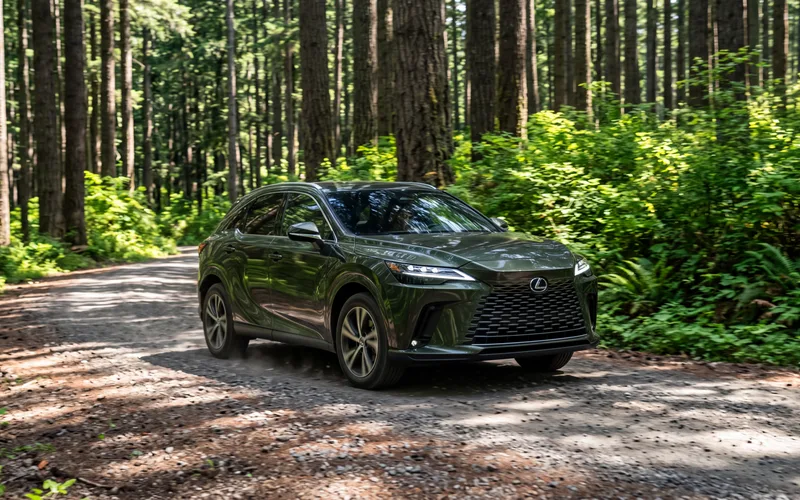 Lexus RXMid-Size Luxury SUVBetter at: Resale value
Same two-row luxury mission with far better projected resale and reliability, and it runs on regular fuel instead of premium-recommended.
Compare 2.90B-
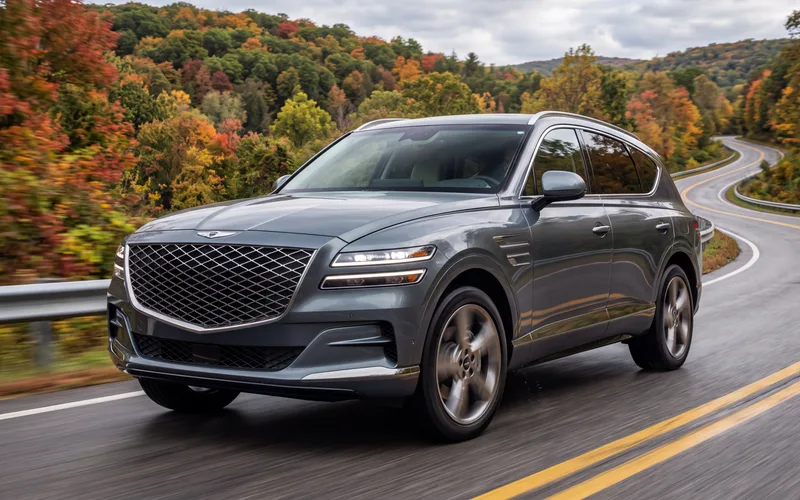 Genesis GV80Mid-Size Luxury SUVBetter at: Power
Another value-priced luxury alternative to the Germans, but with a real turbo-six and sharper dynamics instead of a 250-hp four.
Compare 2.94B-
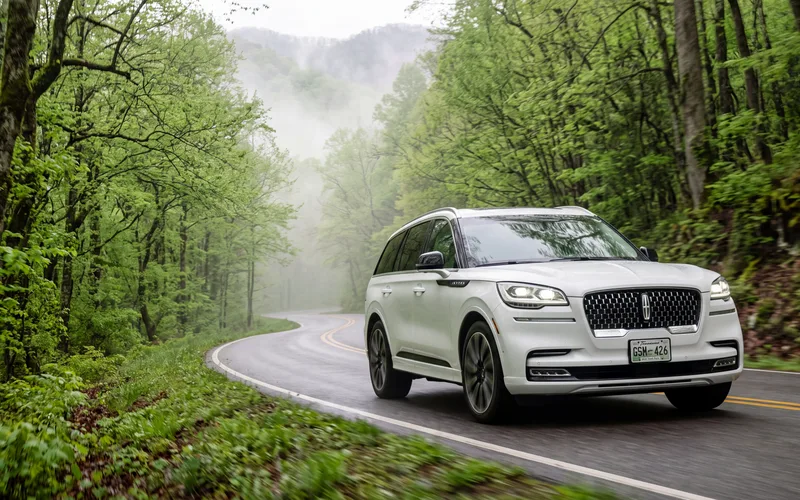 Lincoln AviatorMid-Size Luxury SUVBetter at: Space and towing
The Lincoln to pick if you need a third row and more than 3,000 lbs of towing — 77 cu ft behind row two and a much stronger V6.
CompareHow it's evolved
8 scored model years · 2019–2026
Subject scores by year
Hover or tap a score to see what moved it versus the year before. A corner mark flags a big swing.
| Year | Performance | Efficiency | Safety | Space | Cost | Reliability | Tech | Use-case | Driving | Value |
|---|---|---|---|---|---|---|---|---|---|---|
| 2026 | 46 | 54 | 90 | 63 | 26 | 65 | 85 | 74 | 64 | 77 |
| 2025 | 42 | 55 | 89 | 62 | 31 | 57 | 80 | 61 | 60 | 74 |
| 2024 | 39 | 55 | 88 | 61 | 37 | 51 | 78 | 58 | 55 | 73 |
| 2023 | 44 | 39 | 76 | 58 | 38 | 71 | 76 | 60 | 63 | 63 |
| 2022 | 44 | 39 | 74 | 59 | 42 | 70 | 75 | 58 | 62 | 62 |
| 2021 | 44 | 39 | 73 | 58 | 40 | 64 | 75 | 59 | 64 | 63 |
| 2020 | 44 | 41 | 71 | 58 | 41 | 57 | 57 | 59 | 61 | 61 |
| 2019 | 44 | 39 | 70 | 59 | 42 | 53 | 56 | 59 | 62 | 63 |
Compare two years
Best fit & conditions
Higher scores mean a better fit for that use case. Learn more about use-case fit →
Subject profile
Detailed scoring by subject
1Performance & PowertrainOne of the Nautilus's weakest categories.0.94F
The volume Reserve trim runs the standard 2.0L turbocharged four rated at 250 hp @ 5,500 rpm; the 335-hp 2.7L twin-turbo V6 is the option on Reserve and Black Label. 2020 is a powertrain carry-over year within the first-generation (U540) run — no change from 2019.
Peak torque of the standard 2.0L EcoBoost is 280 lb-ft @ 3,000 rpm — mid-pack for a mid-size luxury crossover of roughly 4,300–4,500 lbs, and the reason the four-cylinder feels adequate rather than effortless.
Published tests of the 2020 Reserve 2.0T average about 7.0 seconds with a best of 6.8; the optional 2.7L V6 pulls it into the high fives. Ordinary pace for the mid-size luxury SUV class.
The 2.0L EcoBoost is quiet and smooth at cruise and adequate for the car, but it is moving a heavy luxury crossover and shows the usual small-turbo softness off idle — reviewers reserve the 'effortless' verdict for the optional V6, not the volume engine.
The 8-speed automatic (which replaced the MKX's 6-speed at the 2019 Nautilus changeover) shifts quickly and holds sensible gears with paddle control, but reviewers consistently flag fussy low-speed manners and Lincoln's push-button gear selector rather than a lever.
Maximum conventional rating is 3,500 lbs with the factory Class II Trailer Tow Package (53G) plus the required Cargo Utility Package; without them the Nautilus is rated at 2,000 lbs. Enough for a small boat or utility trailer, no more.
Intelligent All-Wheel Drive is optional on Standard and Reserve and comes with the 2.7L V6, so it is reachable across the range — but it is a conventional on-demand transverse system with no low range, locking differential or terrain-mode hardware, which caps it mid-band.
A unibody, pavement-focused luxury crossover: roughly 7.9–8.0 inches of ground clearance, no skid plates, no low range, no locking differential and no off-road trim anywhere in the 2020 Standard / Reserve / Black Label lineup.
Two distinct gas turbo powertrains — the 2.0L EcoBoost I4 and the 2.7L EcoBoost V6, both on the 8-speed automatic with available AWD — but no hybrid, PHEV or EV for 2020; electrification does not reach the Nautilus until the second-generation 2024 car.
2Efficiency & RangeThe Nautilus's lowest-graded category.0.69F
EPA rates the volume 2.0L EcoBoost AWD configuration at 22 MPG combined — unremarkable among gas mid-size crossovers, reflecting a heavy body on the aging CD4 platform with no electrified option offered for 2020.
EPA city rating for the volume 2.0L AWD configuration; the turbocharged four with auto stop-start manages 20 MPG in town, ordinary for a gas luxury crossover of this size and weight.
EPA highway rating of 25 MPG for the 2.0L AWD. The 2.7L V6 actually edges it by 1 MPG on the highway cycle, so the four-cylinder's efficiency advantage is entirely a city-cycle one.
The 18.5-gallon tank at the EPA 22 MPG combined rating gives roughly 407 miles for the volume 2.0L AWD — a mid-pack cruising range where the modest tank, not the economy, is the limiting factor.
EPA's estimated annual fuel cost at 15,000 mi/yr for the volume 2.0L AWD; running on regular unleaded keeps the bill lower than the mediocre economy alone would suggest.
Both EcoBoost engines are rated on regular unleaded — unusual for a luxury-badged SUV and a real running-cost edge over German rivals that require premium; premium is optional for peak output only.
3SafetyThe Nautilus's best-graded category.2.78B-
NHTSA awarded the 2020 Nautilus a 5-star overall rating, with 5 stars in every frontal and side test and 4 stars for rollover — the rollover result is typical for a mid-size crossover.
Clean sweep of Good in all six IIHS crashworthiness tests including both driver- and passenger-side small overlap, but the 2020 Nautilus earned no award at all because every headlight variant rated Poor; the 2021 car took Top Safety Pick once the headlights were fixed.
Lincoln Co-Pilot360 is standard on every 2020 trim — AEB with pedestrian detection, blind-spot monitoring with rear cross-traffic alert, lane-keeping, auto high-beams and rear camera — which was ahead of several luxury rivals, but adaptive cruise is the notable omission: it is optional and offered only on Reserve and above.
IIHS rated the system Superior for vehicle-to-vehicle front crash prevention and Advanced for daytime pedestrian detection, on both the standard and optional configurations; nighttime pedestrian testing did not yet exist for this model year, so the top band is out of reach.
BLIS with rear cross-traffic alert is standard on all trims rather than an upsell, but coverage is alert-only — no blind-spot steering intervention, no cross-traffic braking, and no safe-exit warning for rear occupants.
The standard Lane-Keeping System covers departure warning plus a nudge-back assist with a vibrating-wheel alert, but true lane centering is bundled into the optional Reserve-and-above package, so a volume-equipped car gets corrective steering rather than sustained centering.
When optioned, the full-speed-range adaptive cruise with stop-and-go, lane centering and distance indication is a competent highway assist, but it is a paid option unavailable on the base Standard trim — a meaningful gap in a luxury segment where rivals include ACC as standard.
No hands-free highway system was offered on the 2020 Nautilus at any price; Ford/Lincoln's BlueCruise did not launch until later and only reached the Nautilus with the 2024 second-generation redesign.
Every 2020 headlight variant rated Poor by the IIHS — the single failing that cost this otherwise clean-sweeping SUV its Top Safety Pick award. Auto high-beams are standard, which is the only mitigating factor.
An upright greenhouse and large glass area give ordinary-to-decent sightlines, but reviewers still advise buying the surround-view camera for confidence — and that camera is bundled into an option package on Reserve and above rather than being standard compensation.
Class-leading rear legroom and wide door openings swallow bulky rear-facing seats easily, but the IILS-rated hardware is mediocre — Acceptable on Select and only Marginal on the volume Reserve trim — and with just two sets of lower anchors and a narrow middle seat, three-across is not realistic.
4Space & ComfortMid-pack among this car's ten categories.1.93C-
The 2020 Nautilus is a strictly two-row, five-passenger mid-size luxury SUV across every trim — Standard, Select, Reserve and Black Label.
Published first-row headroom for the 2019–2020 (U540) Nautilus is 39.9 in; the optional panoramic roof trims this slightly.
First-row legroom of 42.8 in is generous and identical across trims; the Reserve's power seats add adjustment range rather than travel.
Second-row headroom of 39.2 in is near the top of the mid-size SUV band — the Nautilus's tall, flat roofline pays off in the back seat.
39.6 in of second-row legroom, combined with a reclining seatback, makes the back seat genuinely adult-friendly for a two-row crossover.
The Nautilus has no third row at any trim level — buyers needing seven seats were pointed at the Aviator, which launched a model year earlier.
37.2 cu ft behind the rear seats is competitive against two-row luxury rivals but modest measured against the whole SUV field, which includes three-row haulers.
68.8 cu ft with the second row down is roughly 5 cu ft short of the mechanically related Ford Edge and well behind three-row SUVs in the same band.
The piano-key push-button shifter clears the console for a deep bin and an open shelf beneath it, and the Cargo Utility Package adds under-floor cargo storage; there is nothing genuinely inventive, and rear-seat provisions are thin.
The available 22-way Ultra Comfort front seats with heat, ventilation and Active Motion massage are a segment high point and are the seats most Reserve and Black Label cars carry; the rear bench is well-padded and reclines but has no such adjustment.
Reviewers single out the Nautilus's compliant, quickly-settling ride as its defining trait, with the available adaptive suspension (Continuously Controlled Damping) sharpening body control; the trade-off is noticeable lean in corners.
Standard Active Noise Control plus acoustic laminated glass make isolation the Nautilus's strongest comfort attribute, repeatedly called out by owners and reviewers alike.
Dual-zone automatic climate control, heated front seats and remote start are standard, with ventilated front seats, a heated steering wheel, heated rear seats and a panoramic Vista Roof available from Reserve upward; there is no separate rear climate zone.
5Cost of OwnershipOne of the Nautilus's weakest categories.0.72F
The 2020 Nautilus opens at $41,040 for the front-drive Standard with the 250 hp 2.0L EcoBoost, or $42,035 delivered — roughly $2,800 less than the same trim would cost by 2023, and a genuine entry point for a large mid-size luxury SUV that undercuts a Lexus RX 350 or Acura MDX.
Reserve is the volume trim and most Nautilus buyers take all-wheel drive: $48,500 + $2,495 AWD = $50,995, or $51,990 with destination. A typical build then adds an equipment group — panoramic roof, 22-way Perfect Position seats, Co-Pilot360 Plus — putting real transactions near $53,500; the optional 335 hp 2.7L V6 adds $2,500 on top, and a Black Label runs to $64,795 delivered.
Published estimates for this nameplate straddle a wide range — CarEdge projects $3,912 across the first five years (about $782/yr) while Edmunds True Cost to Own puts a Nautilus of this era near $7,000 in combined maintenance and repairs at 15,000 mi/yr — so a figure between them is the fair read, nudged slightly above the 2023 car's because the 2020's five-year window has fully elapsed and the older CD4 hardware accrues more out-of-warranty repair. The Nautilus shares Ford Edge mechanicals, so parts are cheap and widely stocked, but it is serviced at Lincoln labor rates.
The published estimates for the nameplate span 39–47 percent retained at five years, and the 2020 car sits toward the upper half of that range because its 2020–2025 ownership window overlapped the pandemic used-vehicle price spike, which propped values up through 2022. Even so it is weak for the class — iSeeCars puts the luxury mid-size SUV average at 50.2 percent lost, and the Nautilus loses more.
Lincoln's New Vehicle Limited Warranty runs 4 years/50,000 miles for 2020 — the luxury-brand standard, matching Acura, Lexus, BMW and Audi, and a year longer than the mainstream Ford coverage the Nautilus's Edge platform-mate receives.
Six years/70,000 miles matches Acura and Lexus and beats BMW and Audi, whose powertrain terms simply run concurrent with the four-year basic warranty — but it is far short of the 10-year coverage that anchors the top of this band, and short of what a Genesis or Kia buyer gets for less money.
No complimentary scheduled maintenance comes with the volume Reserve trim — Lincoln reserves its Premium Maintenance plan (4 yr/50,000 mi or four visits, covering scheduled service plus wear items like brake pads, belts, wiper blades and spark plugs, along with anytime car washes) for Black Label members, so a Reserve buyer pays for oil changes from day one, unlike an RDX (2 yr/24k), X3 (3 yr/36k) or Volvo XC60 owner. What Lincoln gives instead is service convenience: complimentary Lincoln Pickup & Delivery with a Lincoln loaner for the whole 4-year/50,000-mile warranty period, 24/7 roadside assistance for 6 years/70,000 miles, Lincoln Access Rewards points on service visits, and a connected-services trial through the Lincoln Way app. Rated a shade below the later cars because the 2020 predates the SYNC 4 connected-services package and had no hands-free-driving subscription to include.
$53,500 volume-trim price minus its estimated resale value after 5 years (46% retained, or about $24,610) leaves about $28,890 in depreciation. Add the projected $6,200 in 5-year maintenance and repairs, and owning this vehicle for 5 years costs about $35,090 in total.
6Reliability & QualityMid-pack among this car's ten categories.1.85C-
2020 is the second year of the U540 generation — one year past the 2019 MKX-to-Nautilus midcycle revision and one year before the 2021 interior/SYNC 4 refresh — and the signals genuinely conflict. Consumer Reports' model-year reliability page rates it LESS reliable than other cars from the same model year, with worse-than-average trouble spots in transmission major, suspension/steering, drive system, fuel system/emissions, exhaust and engine electrical, and CR's own owner reports include a catastrophic transmission and torque-converter failure billed at $10,377.97 at 70,000 miles. Against that, J.D. Power scores the 2020 Nautilus 85/100 for quality and reliability — inside its 'Great' band — and CR's used-car survey in late 2024 placed the 2020 among its most reliable five-year-old SUVs, a sharp reversal from the 2019 car CR named a vehicle 'to avoid' two years running. The owner record is also far noisier than later years in this generation: 22 complaints on file at CarComplaints for 2020 against 9 for 2023 and 1 for 2022. Mixed signals between reputable sources with concrete powertrain defect clusters on one side puts this in the lower half of the average band, clearly better than the 2019 launch year but below the mature 2022-2023 cars.
This is the weakest point in the whole category, and it is measured against this exact model year rather than inferred. The J.D. Power 2023 U.S. Vehicle Dependability Study surveys original owners of 2020 model-year vehicles at three years: Lincoln scored 259 PP100 and finished second-to-last of all brands studied, ahead of only Land Rover at 273, against an industry average of 186. Two independent sources agree from different directions — Consumer Reports' November 2020 annual reliability report ranked Lincoln dead last among all brands, and J.D. Power's 2020 Initial Quality Study put Lincoln at 182 PP100, below the 166 industry average and well behind premium leader Genesis at 142. A brand sitting bottom-three in the dependability study for its own model year, last in CR's brand ranking that same year, and below average on initial quality is bottom-third by the item's own definition. Note that this is an era-specific verdict, not Lincoln's standing today: the marque has climbed to 217 PP100 and the premium average by the 2026 VDS, which is why later Nautilus model years score far higher on this item.
Five NHTSA campaigns stand against the 2020 Nautilus — more than double the 2022 car's two — and three of them carry real crash or fire consequences rather than software housekeeping. 20V414 covers 2019-2020 Nautilus with 16-way electric tilt seats whose cushion frame can chafe the wiring harness, causing inadvertent airbag deployment OR non-deployment in a crash. 20V550 covers a start/stop accumulator endcap with missing or loose bolts that can leak transmission fluid, progressing to loss of transmission function and, near an ignition source, an increased fire risk. 21V011 covers inadequate lubricant in the rear drive unit that can seize the rear drive axle, causing loss of drive or loss of vehicle control. The remaining two are both rearview-camera fixes (20V575, a poor electrical connection producing a blank or distorted image and an FMVSS non-compliance; 25V442, the fleet-wide software error). Running rework is heavy on top of that — 211 TSBs on file for the model year against 64 for 2022 and 25 for 2023, spanning false traction/yaw control events from ABS module software, 2.0L EcoBoost idle ticking, seat pan looseness and AWD rear noise. Airbag, fire and driveline-seizure campaigns in one model year is the item's own definition of the low band.
The volume 2020 Nautilus (Standard, Select and Reserve) runs the 250 hp / 280 lb-ft 2.0L EcoBoost I4 through the 8F35 eight-speed; the 335 hp / 380 lb-ft 2.7L twin-turbo V6, optional on Reserve and standard on Black Label, uses the beefier 8F57. Two things hold this below the average band. First, 2020 sits on the boundary of the 2.0L EcoBoost's coolant-intrusion fix rather than clearly past it: the open-deck block's inter-cylinder coolant slot was redesigned for roughly MY2020, but Ford's SSM 48345 (issued 22 Nov 2019) names 2019-2020 Edge/Escape/Nautilus/Corsair with the 2.0L for low coolant, white smoke from the tailpipe, over-temperature warnings and external coolant leaks — so an early-build 2020 is not reliably on the fixed hardware, which a 2022 or 2023 car is. Second, the transmission evidence is the worst of any year in this generation: CR rates transmission major a worse-than-average trouble spot for 2020 specifically, with owner reports of catastrophic failure and torque-converter replacement, SSM 51011 covers 2018-2022 8F35 units for slip when accelerating from a stop, SSM 50617 covers 2020-2022 Edge ST and Nautilus 8F57 units for return-to-park faults, and recall 20V550 puts a transmission-fluid-leak and fire consequence on the start/stop hardware. Add the 21V011 rear drive unit seizure on AWD cars and this is a powertrain with documented failure modes at three separate points, not merely an unproven one.
Materials are the Nautilus's strength even in pre-refresh form: reviewers describe a cabin lined with leather, maple and suede, with Black Label's themed packages adding faux suede and plaid-patterned metal trim, and the acoustic glass and active noise cancellation give it a genuinely premium hush. What separates 2020 from the 2022-2023 cars scored at 83 is that this is the MKX-derived cabin before the 2021 overhaul brought the Navigator-style interior and the 13.2-inch SYNC 4 screen. The 8-inch SYNC 3 touchscreen is undersized for a luxury mid-sizer and set far enough forward to be a reach from the driver's seat, and reviewers single out specific cheap touchpoints a rival at this price does not have — a notably flimsy front storage bin door and plastic rather than metal climate buttons. Comfortably competitive rather than class-leading.
Oakville assembly was only in its second year on the revised car and the owner-side record is markedly noisier than the mature end of the generation: 22 complaints on file for the model year against 9 for 2023 and 1 for 2022, and 211 TSBs against 25 and 64. The complaints are the fit-and-finish species rather than wear items — the two worst are a driver's seat that moves on its own while driving and Sirius song titles failing to display, with the rest scattered across lights, windows/windshield, body/paint and interior accessories — and Ford issued a bulletin covering 2019-2022 Nautilus for seat pan looseness, lateral movement and a clunk or thump noise on turns, which is exactly the sort of defect an owner reads as poor assembly. J.D. Power's contemporaneous initial-quality data agrees: Lincoln posted 182 PP100 in the 2020 IQS, below the 166 industry average. Offsetting that, the cabin's isolation is consistently praised and none of this rises to systemic misalignment. Solid with repeatable, documented complaints — the lower half of the average band.
A 2020 buyer caught Lincoln's ownership experience at close to its best on both measures. The brand placed fifth among premium marques in the 2020 J.D. Power Customer Service Index at 872 points, behind only Lexus, Cadillac, Porsche and Infiniti, and it ranked highest of all premium brands in J.D. Power's 2020 Sales Satisfaction Index — a genuine, award-level strength rather than a mid-pack result, and the pattern has held since (fifth premium again at 891 in the 2026 CSI). Coverage was also at its widest for this model year: the network ran roughly 685 US stores as late as 2021, before consolidation cut it to about 500 by the end of 2023 and 438 by 2026, so small-market coverage was denser for a 2020 car than for anything later in the generation. Scored a point above the 2022 car for that reason. Held out of the top band because the network is still smaller than a mainstream brand's and Lincoln service quality is dealer-dependent, many stores sharing a roof with Ford.
The Nautilus is the Ford Edge's twin on the CD4 platform, built beside it at Oakville Assembly and sharing the 2.0L EcoBoost, the 2.7L EcoBoost and the 8F35/8F57 transmissions with high-volume Ford products, so parts commonality and supply are far better than for a low-volume European luxury mid-sizer, and Ford's US parts distribution is among the deepest in the industry. The cost data agrees: CarEdge projects roughly $12,239 in maintenance and repairs over ten years, about $2,116 cheaper than the luxury SUV average, with a 34.45% chance of a major repair, some 6.6 points better than segment peers. Held a point below the later model years because a 2020 car is now past both Lincoln's 4-year/50,000-mile bumper-to-bumper and 6-year/70,000-mile powertrain coverage, so the transmission and rear-drive-unit failures this generation is known for land on the owner's account rather than a warranty claim — and against that, Lincoln-specific trim, Revel audio hardware and SYNC modules stay dealer-priced with thin aftermarket support.
7Technology & InfotainmentMid-pack among this car's ten categories.1.80C-
Every 2020 Nautilus uses the same 8-inch SYNC 3 touchscreen; the 13.2-inch SYNC 4 display did not arrive until the 2021 refresh, so this is the pre-refresh low point.
SYNC 3 is quick, logically tiled and backed by real knobs and buttons, which makes it easy to live with; the 8-inch panel and dated graphics look small against 2020 luxury rivals.
Wired Apple CarPlay and Android Auto are standard on every trim, but SYNC 3 has no wireless projection — that arrived with SYNC 4 on the 2021 refresh.
SYNC 3's command-word voice control handles destination and audio requests reliably but is not conversational; embedded navigation with Waze and SiriusXM Traffic is available and standard from Reserve, though most owners default to phone projection.
Two well-regarded Revel by Harman systems are offered above the 10-speaker base setup — a 13-speaker Revel and a 19-speaker Revel Ultima — giving the Nautilus a genuine audiophile option.
A full 12.3-inch reconfigurable LCD instrument cluster is fitted across the range, which was still uncommon at this price point in 2020 and is the strongest single tech element on the pre-refresh car.
SYNC 3 pulls infotainment software and map updates automatically over the owner's home Wi-Fi, but there is no whole-vehicle over-the-air update path — module updates require a dealer visit.
The Lincoln Way app covers remote start with climate, lock/unlock, vehicle locate and status through the embedded modem, but Phone As A Key — launched for 2020 on the Navigator, Aviator and Corsair — was not offered on the Nautilus until the SYNC 4 refresh.
Device power is the weakest tech area: just two smart-charging USB ports, both up front, with nothing but a 12V socket for rear passengers unless the Cargo Utility Package's household outlet is ordered.
Proximity entry, push-button start, remote start and Lincoln's exterior SecuriCode keypad are standard, and a hands-free power liftgate is available; the absence of phone-as-key on this model year keeps it out of the top band.
A rear camera plus front and rear parking sensors are standard, with a 360-degree camera and Active Park Assist arriving via Co-Pilot360 Plus — standard on Black Label, optional below it.
No head-up display was offered on the 2020 Nautilus at any trim level, including Black Label — a notable omission when the Continental and several rivals had one.
8Use-Case FitMid-pack among this car's ten categories.1.95C-
Wide rear door openings, 39.6 in of second-row legroom and 37.2 cu ft of cargo make daily kid logistics easy, but the IIHS rated the LATCH hardware only Marginal on the Reserve trim — anchors set too deep and needing excessive force.
Crash performance is excellent — NHTSA five stars overall and IIHS Good in every crashworthiness test — and Lincoln Co-Pilot360 puts AEB, blind-spot monitoring and lane keeping on the cheapest trim; Poor headlight ratings cost it a Top Safety Pick and there is no rear-occupant alert.
A quiet, plush cabin with a reclining rear bench, available heated rear seats and a panoramic roof suits long family drives, but there is no rear entertainment, no rear climate zone and no rear USB port to keep devices alive.
Light steering, a smooth 2.0L EcoBoost and eight-speed automatic, standard active noise cancellation and a commanding seating position make this a genuinely low-effort commuter; the auto stop-start restart is the main coarse note.
EPA rates the volume 2.0L AWD at 22 MPG combined and about $2,800 a year in fuel — mediocre per-mile running cost, and luxury-brand consumables and tyres add to it.
At 190 in long with a roughly 38.6 ft turning circle it is an average-footprint mid-size SUV; very light low-speed steering, standard parking sensors and the available 360-degree camera with Active Park Assist do most of the work in tight spots.
Maximum tow is 3,500 lbs and only with the Class II Trailer Tow and Cargo Utility packages — base ratings are 1,500 lbs (2.0L) and 2,000 lbs (2.7L) — and there is no bed, so work duty means a small utility trailer at most.
The CD4 platform and 2.0L EcoBoost/eight-speed combination are high-volume Ford hardware with a long service record, but the leather-and-wood cabin, low-profile tyres and unibody packaging are aimed squarely at luxury use, not abuse.
Provisions amount to cargo tie-downs, an underfloor cargo management tray, available roof rails and an optional 110V household outlet; there is no upfit ecosystem, no washable interior and no meaningful onboard power.
This is the Nautilus's best mission — an exceptionally quiet cabin, 22-way massaging front seats, a compliant ride, roughly 400 miles of range from the 18-gallon tank and available adaptive cruise with stop-and-go and lane centering.
Available all-wheel drive, 8.0 in of ground clearance, roof rails and a 3,500 lb tow rating cover gravel roads, bike racks and a small trailer; there are no terrain modes, no low range and no underbody protection.
A 60/40 fold-flat second row opening to 68.8 cu ft, underfloor storage, available roof rails and a hitch cover most gear runs, but the maximum volume trails the mechanically related Ford Edge and most three-row rivals.
9Driving ExperienceOne of the Nautilus's strongest categories.2.12C
Secure and predictable but tuned entirely for comfort — reviewers report noticeable body lean on winding roads and none of the tied-down feel of the German mid-size luxury SUVs it is priced against.
The steering is the weakest dynamic element: very light and essentially devoid of feedback, and the Black Label's hub-motor adaptive steering changes effort rather than adding communication.
Brakes are adequate and progressive in normal use with no recurring criticism in reviews, but there is a lot of mass to stop — roughly 4,150 lbs in FWD form and more with AWD — and no published instrumented stopping distance to corroborate.
The 250 hp 2.0L EcoBoost and eight-speed automatic — which replaced the old six-speed when the Nautilus arrived — deliver smooth, torque-rich part-throttle response; the standard auto stop-start restart is the roughest moment in the drivetrain.
Standard Active Noise Control keeps the four-cylinder well suppressed at cruise, but it turns audibly coarse when worked hard — the optional 2.7L V6 sounds considerably better under load.
A 38.6 ft curb-to-curb circle is mid-pack for a 190-inch mid-size SUV; the very light steering makes it feel tighter than the number suggests.
A commanding seat height, deep power adjustment (up to 22 ways with the Ultra Comfort seats), a full digital cluster and retained physical climate and audio controls make the cockpit easy to settle into; the piano-key shifter frees up the console but takes acclimation.
The Nautilus makes no attempt at engagement — it is a deliberately serene cruiser, and reviewers say so plainly; the 2.7L V6 adds real pace but not character.
10Value & Market PositionOne of the Nautilus's strongest categories.2.12C
For $42,035 the Standard trim includes heated power front seats with driver memory, leatherette upholstery, a 10-speaker audio system, an 8-inch SYNC 3 touchscreen with Apple CarPlay and Android Auto, and the full Lincoln Co-Pilot360 driver-aid suite — automatic emergency braking with pedestrian detection, blind-spot monitoring with rear cross-traffic alert and lane-keeping — as standard equipment across the range, which is more than a base X3 or GLC included in 2020. It stays mid-band because the 8-inch screen was already small for the class and money, and navigation, genuine leather, ventilated seats, the panoramic roof and adaptive cruise (Co-Pilot360 Plus) all wait for Reserve or the options sheet.
At roughly $51,990 delivered a Reserve AWD buys a notably large, quiet five-seat cabin, Revel audio and — with the optional 335 hp 2.7L V6 — considerably more thrust than a similarly priced X3 xDrive30i or Lexus RX 350, and reviewers consistently rate the ride and hush as genuinely luxury-grade. Against that, the money buys 2013-era CD4 Ford Edge underpinnings with a 2016 MKX cabin architecture and an 8-inch screen, and critics repeatedly note the price climbs faster than the interior quality justifies — fair value rather than a bargain.
Three trims — Standard, Reserve and Black Label — span $42,035 to $64,795 delivered, with a free choice of front- or all-wheel drive and two genuinely different engines (250 hp turbo four, 335 hp twin-turbo V6) rather than one drivetrain in three states of dress. It is held out of the top band because 2020 deleted the Select trim that had bridged the range in 2019, leaving a $7,500 step from Standard to Reserve, and because the V6 is gated to Reserve and above with no hybrid or plug-in option anywhere in the lineup.
The Nautilus sold 22,742 units in the US in calendar 2020, down about 28 percent year over year, and Q4 deliveries fell about 13 percent — a decline steeper than the segment average even allowing for the pandemic-shortened selling year. It remained one of Lincoln's two best-selling nameplates, so this is a steady mid-pack seller losing ground rather than a failure, but the Lexus RX and BMW X5 sell multiples of that volume.
Lincoln sits in the second tier of US luxury brands without the cross-shopping gravity of BMW, Mercedes-Benz, Lexus or Genesis, and in 2020 the Nautilus's Ford Edge relationship was at its most visible — the shared 8-inch SYNC 3 cabin architecture predates the 2021 interior overhaul that gave the car its own identity. Residuals are the clearest evidence of the drag: roughly 45–47 percent retained at five years against a 50 percent class average.
2020 was close to the best buyer's market this segment has seen: Lincoln's pandemic-relief program put 0 percent APR for up to 72 months on the table alongside payment deferrals of up to 120 days on 2019 and 2020 models, and by September the Nautilus specifically carried $1,000 cash or special financing. Scored on buyer benefit, that is genuinely meaningful money on a car that was already transacting below sticker — real discounts without the fire-sale signal of a discontinued nameplate.
2020 is the second year of the first-generation U540 and a pure carry-over — the Nautilus name and the new grille arrived for 2019 as a midcycle revision of the second-generation MKX, itself on a CD4 platform dating to 2013, and 2020 changed nothing but the deletion of the Select trim. It sits at the bottom of the mid-cycle band rather than lower because the replacement was a refresh, not a redesign; still, Lincoln revealed the 2021 car during 2020 with a completely new interior, a 13.2-inch screen and SYNC 4, which dates a 2020 purchase almost immediately.
Reviewers liked the 2020 Nautilus without ever choosing it — U.S. News scored it 7.8/10 and ranked it ninth of twenty 2020 luxury midsize SUVs, praising the tranquil ride, quiet upscale cabin and roomy back seat while marking it down for the small touchscreen, dated interior and unexciting handling. On awards it came up empty for the year: NHTSA gave it five stars overall and IIHS rated it Good in all six crashworthiness tests, but Poor headlights on both LED variants cost it a Top Safety Pick — an award the mechanically similar 2021 car earned the moment the headlights were improved. No 10Best, Top Pick or NACTOY recognition.