
The verdict
A mixed-report mid-size luxury suv, strong on technology and held back by efficiency.
The 2021 Nautilus is the year Lincoln finally gave this SUV the cabin its price tag deserved — a Navigator-style interior, a 13.2-inch SYNC 4 touchscreen standard on every trim, wireless CarPlay and Android Auto, and a hush at highway speed that few rivals match. It is a two-row luxury cruiser first and foremost: five seats, 250 hp, 22 MPG combined and 3,500 lbs of towing, all of it competent rather than quick or thrifty. The catches are real, though — the LED headlights fitted to most 2021 builds are rated Poor by IIHS, adaptive cruise costs extra on the trims people actually bought, and five years on the car has given back more than half its sticker. As a used buy in 2026 that depreciation is the whole argument in its favor; as a new purchase in 2021 it was the argument against.
Jump to scoresStrengths
- Crash-test credentials at the top of the class
- A big-screen tech package that came standard
- Genuinely quiet, genuinely comfortable
What holds it back
- Poor-rated headlights on most 2021 cars
- Fuel economy with no hybrid escape hatch
- Depreciation is brutal
Top alternatives
Cars shoppers cross-shop with the Lincoln Nautilus 2.65C+
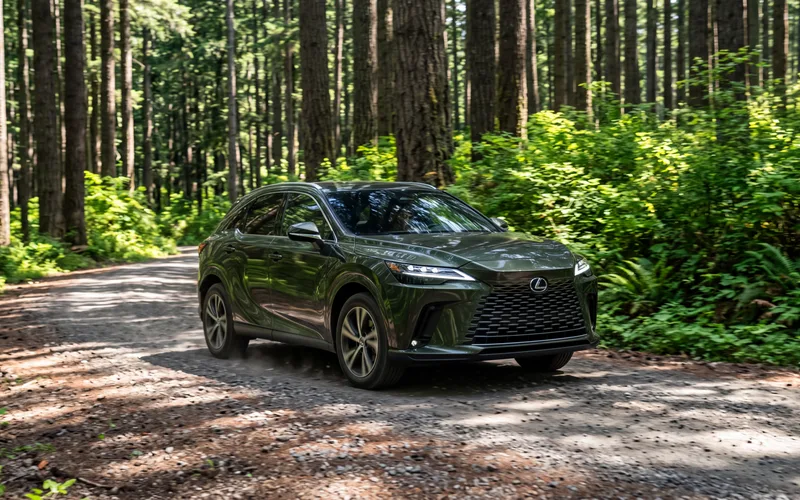 Lexus RXMid-Size Luxury SUVBetter at: Resale value
Same two-row luxury mission with far better projected resale and reliability, and it runs on regular fuel instead of premium-recommended.
Compare 2.90B-
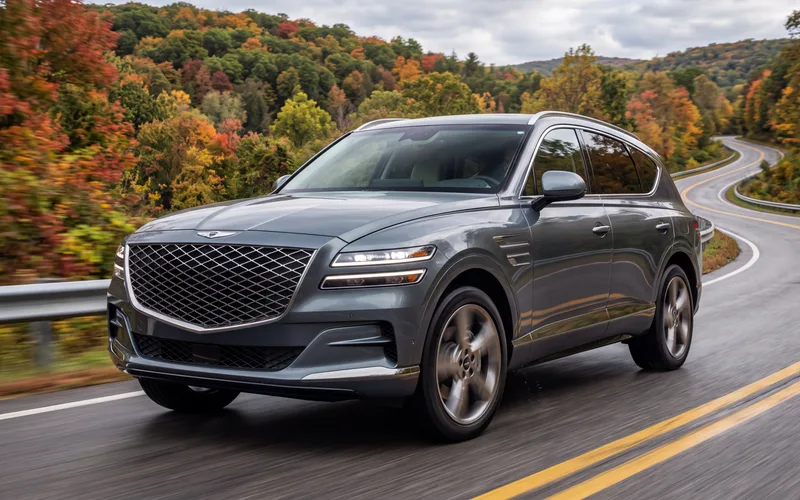 Genesis GV80Mid-Size Luxury SUVBetter at: Power
Another value-priced luxury alternative to the Germans, but with a real turbo-six and sharper dynamics instead of a 250-hp four.
Compare 2.94B-
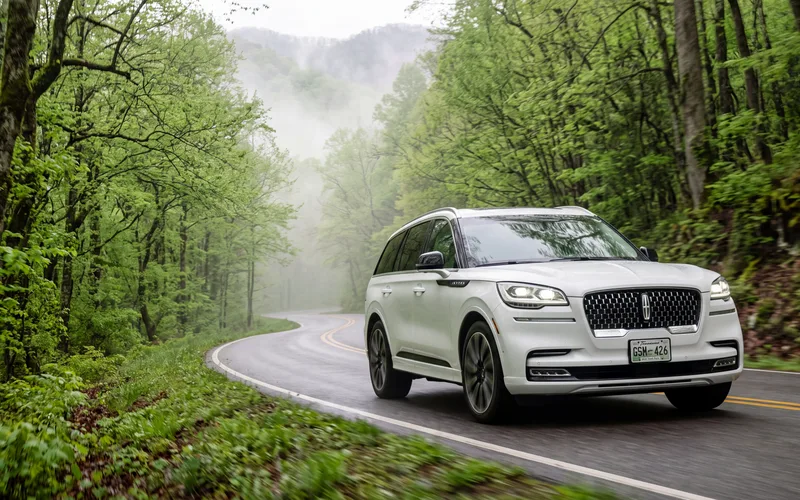 Lincoln AviatorMid-Size Luxury SUVBetter at: Space and towing
The Lincoln to pick if you need a third row and more than 3,000 lbs of towing — 77 cu ft behind row two and a much stronger V6.
CompareHow it's evolved
8 scored model years · 2019–2026
Subject scores by year
Hover or tap a score to see what moved it versus the year before. A corner mark flags a big swing.
| Year | Performance | Efficiency | Safety | Space | Cost | Reliability | Tech | Use-case | Driving | Value |
|---|---|---|---|---|---|---|---|---|---|---|
| 2026 | 46 | 54 | 90 | 63 | 26 | 65 | 85 | 74 | 64 | 77 |
| 2025 | 42 | 55 | 89 | 62 | 31 | 57 | 80 | 61 | 60 | 74 |
| 2024 | 39 | 55 | 88 | 61 | 37 | 51 | 78 | 58 | 55 | 73 |
| 2023 | 44 | 39 | 76 | 58 | 38 | 71 | 76 | 60 | 63 | 63 |
| 2022 | 44 | 39 | 74 | 59 | 42 | 70 | 75 | 58 | 62 | 62 |
| 2021 | 44 | 39 | 73 | 58 | 40 | 64 | 75 | 59 | 64 | 63 |
| 2020 | 44 | 41 | 71 | 58 | 41 | 57 | 57 | 59 | 61 | 61 |
| 2019 | 44 | 39 | 70 | 59 | 42 | 53 | 56 | 59 | 62 | 63 |
Compare two years
Best fit & conditions
Higher scores mean a better fit for that use case. Learn more about use-case fit →
Subject profile
Academic Probation · NHTSA safety recalls
May 9, 2025Back over prevention: softwareA software error may cause the rearview camera image to delay, freeze, or not display when the vehicle is in reverse.
Defect
Ford Motor Company (Ford) is recalling certain 2021-2024 Bronco, F-150, 2021-2024 Edge, 2022-2025 Escape, F-250, F-350, F-450, F-550, F-600, 2022-2024 Expedition, 2022-2025 Transit, 2021-2023 Mach-E, 2024 Ranger, Mustang, 2021-2023 Lincoln Nautilus, 2022-2024 Navigator, and 2023-2024 Corsair vehicles. A software error may cause the rearview camera image to delay, freeze, or not display when the vehicle is in reverse.
Risk
A frozen or missing rearview camera image can reduce the driver's view behind the vehicle, increasing the risk of a crash.
Remedy
The accessory protocol interface module (APIM) software will be updated by a dealer or through an over-the-air update, free of charge. This will be a phased campaign, with the remedy becoming available in different phases based on model and model years. Interim letters notifying owners of the safety risk were mailed on June 26, 2025. Additional letters will be mailed once the final remedy is available on each phase. Owner notification letters were sent on October 8, 2025. Owners may contact Ford customer service at 1-866-436-7332. Ford's number for this recall is 25S49.
NHTSA campaign 25V315000 ↗Manufacturer no. 25S491,076,138 vehicles potentially affected (all models in the campaign)Owners notified Oct 8, 2025Filed by Ford Motor CompanyFiled as NAUTILUSAug 23, 2024Engine and engine cooling: engine: hard parts internal/mechanicalThe engine intake valves may break while driving, which can result in engine failure and a loss of drive power.
Defect
Ford Motor Company (Ford) is recalling certain 2021-2022 Bronco, F-150, Edge, Explorer, Lincoln Nautilus, and Lincoln Aviator vehicles equipped with either a 2.7L or 3.0L Nano EcoBoost engine. The engine intake valves may break while driving, which can result in engine failure and a loss of drive power.
Risk
A loss of drive power increases the risk of a crash.
Remedy
Dealers will perform an engine cycle test and replace the engine as necessary, free of charge. Owner notification letters were mailed July 3, 2025. Owners may contact Ford customer service at 1-866-436-7332. Ford's number for this recall is 24S55.
NHTSA campaign 24V635000 ↗Manufacturer no. 24S5590,736 vehicles potentially affected (all models in the campaign)Owners notified Jul 3, 2025Filed by Ford Motor CompanyFiled as NAUTILUS
23 recalls on other model years of the Nautilus (2019–2020, 2023–2026)
Jun 30, 2026Back over prevention: warnings: external/pedestrian alert · Forward collision avoidance: warnings: external/pedestrian alertA software error may prevent the vehicle from making the pedestrian warning sound at certain speeds.
Defect
Ford Motor Company (Ford) is recalling certain 2024-2027 Lincoln Nautilus Hybrid and 2025-2027 Explorer Hybrid vehicles. A software error may prevent the vehicle from making the pedestrian warning sound at certain speeds.
Risk
A vehicle that does not produce a warning sound may fail to alert pedestrians of an approaching vehicle, increasing the risk of injury.
Remedy
Note: This is an expansion of Recall 25V691. Any vehicles previously repaired under 25V691 must have the new remedy completed. Ford will release an over-the-air (OTA) update or dealers will update the APIM software, free of charge. Additionally, dealers will replace the digital signal processing module in Nautilus Hybrid vehicles equipped with 28 speakers, free of charge. This will be a phased campaign, with the remedy becoming available in different phases based on model and model years. Owner notification letters were mailed August 7, 2026. Owners may contact Ford customer service at 1-866-436-7332. Ford's number for this recall is 26S51. Vehicle Identification Numbers (VINs) involved in this recall will be searchable on NHTSA.gov beginning July 7, 2026.
NHTSA campaign 26V415000 ↗Manufacturer no. 26S5166,383 vehicles potentially affected (all models in the campaign)Owners notified Aug 7, 2026Filed by Ford Motor CompanyFiled as NAUTILUS HYBRIDJun 9, 2026Lane departure: lane keep: steering assistThe lane center assist system may not adequately detect if a driver has their hands off the steering wheel for a prolonged period of time.
Defect
Ford Motor Company (Ford) is recalling certain 2019 Lincoln Nautilus vehicles previously repaired incorrectly under recall number 19V031. The lane center assist system may not adequately detect if a driver has their hands off the steering wheel for a prolonged period of time.
Risk
Failure to alert the driver with the intended hands-off the wheel warnings may increase the risk of a crash.
Remedy
Dealers will update the power steering control module software, free of charge. Owner notification letters were mailed July 8. 2026. Owners may contact customer service at 1-866-436-7332. Ford's number for this recall is 26S44. Vehicle Identification Numbers (VINs) involved in this recall will become searchable on NHTSA.gov on July 6, 2026.
NHTSA campaign 26V377000 ↗Manufacturer no. 26S441,013 vehicles potentially affected (all models in the campaign)Owners notified Jul 8, 2026Filed by Ford Motor CompanyFiled as NAUTILUSJun 9, 2026Electrical system: instrument cluster/panelAt vehicle start-up, the Instrument Panel Cluster Assembly (IPC) may not function, showing a blank display. As a result, these vehicles fail to comply with Federal Motor Vehicle Safety Standard (FMVSS) number 101, "Controls and Displays."
Defect
Ford Motor Company (Ford) is recalling certain 2019 Ford Mustang, Lincoln Nautilus, and Lincoln Navigator vehicles previously repaired incorrectly under recall number 19V076. At vehicle start-up, the Instrument Panel Cluster Assembly (IPC) may not function, showing a blank display. As a result, these vehicles fail to comply with Federal Motor Vehicle Safety Standard (FMVSS) number 101, "Controls and Displays."
Risk
A blank instrument cluster that fails to display critical safety information, such as vehicle speed or safety system warnings, increases the risk of a crash.
Remedy
Dealers will reprogram the Instrument Panel Cluster Assembly (IPC) software, free of charge. Owner notification letters were mailed July 13, 2026. Owners may contact customer service at 1-866-436-7332. Ford's number for this recall is 26C27. Vehicle Identification Numbers (VINs) involved in this recall will become searchable on NHTSA.gov on July 6, 2026.
NHTSA campaign 26V372000 ↗Manufacturer no. 26C272,349 vehicles potentially affected (all models in the campaign)Owners notified Jul 13, 2026Filed by Ford Motor CompanyFiled as NAUTILUSMar 18, 2026Back over prevention: software · Electrical system: adasThe Image Processing Module A (IPMA) may experience multiple unexpected resets, resulting in loss of the rearview camera image and advanced driver assistance (ADAS) features, including pre-collision assist, lane-keeping assist, and blind-spot monitoring.
Defect
Ford Motor Company (Ford) is recalling certain 2022-2025 Lincoln Navigator, 2024-2025 Lincoln Nautilus, 2025 Lincoln Aviator and Explorer vehicles. The Image Processing Module A (IPMA) may experience multiple unexpected resets, resulting in loss of the rearview camera image and advanced driver assistance (ADAS) features, including pre-collision assist, lane-keeping assist, and blind-spot monitoring.
Risk
Loss of the rearview camera image and certain driver assistance features, can reduce the driverâs ability to detect hazards, increasing the risk of a crash.
Remedy
The Image Processing Module A software will be updated by a dealer, or through an over-the-air (OTA) update, free of charge. This is a Phased campaign. Phase 1 will include 2025 Aviator, 2025 Explorer, 2025 Nautilus notified owners on 4/13/2026. Phase 2 will include 2025 Navigator will notify owners on or about 4/20/2026. Phase 3 will include 2022-2024 Navigator will notify owners on or about 6/8/2026. Phase 4 will include 2024 Nautilus will notify owners on or about 6/22/2026. Owner notification letters were mailed April 13, 2026. Owners may contact Ford customer service at 1-866-436-7332. Ford's number for this recall is 26S21. Vehicle Identification Numbers (VINs) involved in this recall will be searchable on NHTSA.gov beginning March 25, 2026.
NHTSA campaign 26V165000 ↗Manufacturer no. 26S21254,640 vehicles potentially affected (all models in the campaign)Owners notified Apr 13, 2026Filed by Ford Motor CompanyFiled as NAUTILUSMar 3, 2026Engine and engine cooling: exhaust system: emission control: gas recirculation valve (egr valve)The exhaust gas recirculation (EGR) valve may fail, resulting in an unexpected loss of drive power.
Defect
Ford Motor Company (Ford) is recalling certain 2025 Ranger, Lincoln Nautilus, Mustang, Maverick, Explorer, Escape, Lincoln Corsair, Bronco Sport, and Bronco vehicles. The exhaust gas recirculation (EGR) valve may fail, resulting in an unexpected loss of drive power.
Risk
An unexpected loss of drive power increases the risk of a crash.
Remedy
Dealers will replace the EGR valves, free of charge. Owner notification letters were mailed July 31, 2026. Owners may contact Ford customer service at 1-866-436-7332. Ford's number for this recall is 26S10. Vehicle Identification Numbers (VINs) involved in this recall became searchable on NHTSA.gov on March 4, 2026.
NHTSA campaign 26V122000 ↗Manufacturer no. 26S1047,804 vehicles potentially affected (all models in the campaign)Owners notified Jul 31, 2026Filed by Ford Motor CompanyFiled as NAUTILUSOct 10, 2025Back over prevention: warnings: external/pedestrian alert · Forward collision avoidance: warnings: external/pedestrian alertA software error may prevent the vehicle from emitting the pedestrian warning sound at certain speeds.
Defect
Ford Motor Company (Ford) is recalling certain 2024-2026 Lincoln Nautilus Hybrid and 2025 Explorer hybrid police vehicles. A software error may prevent the vehicle from emitting the pedestrian warning sound at certain speeds.
Risk
A vehicle that does not produce a warning sound may fail to alert pedestrians of an approaching vehicle, increasing the risk of injury.
Remedy
The audio control module and digital signal processing module software will be updated by a dealer, or through an over-the-air (OTA) update, free of charge. Owner notification letters were mailed November 5, 2025. Owners may contact Ford customer service at 1-866-436-7332. Ford's number for this recall is 25SA2. Vehicle Identification Numbers (VINs) involved in this recall became searchable on NHTSA.gov on October 10, 2025.
NHTSA campaign 25V691000 ↗Manufacturer no. 25SA243,438 vehicles potentially affected (all models in the campaign)Owners notified Nov 5, 2025Filed by Ford Motor CompanyFiled as NAUTILUS HYBRIDAug 8, 2025Exterior lighting: lighting control moduleThe LED Driver Modules may contain a burnt diode, which can cause the low-beam and high-beam headlights, daytime running lights, front position lights, and front turn signals to fail in the affected headlight. On Nautilus vehicles only, this condition may also cause the rear tail light, rear turn signal, and rear position light to fail. As such, these vehicles fail to comply with the requirements of Federal Motor Vehicle Safety Standard number 108, "Lamps, Reflective Devices, and Associated Equipment."
Defect
Ford Motor Company (Ford) is recalling certain 2025 Lincoln Nautilus, Mustang Mach E, and Mustang vehicles. The LED Driver Modules may contain a burnt diode, which can cause the low-beam and high-beam headlights, daytime running lights, front position lights, and front turn signals to fail in the affected headlight. On Nautilus vehicles only, this condition may also cause the rear tail light, rear turn signal, and rear position light to fail. As such, these vehicles fail to comply with the requirements of Federal Motor Vehicle Safety Standard number 108, "Lamps, Reflective Devices, and Associated Equipment."
Risk
Exterior lighting failure can reduce visibility for the driver and other road users, increasing the risk of a crash.
Remedy
Dealers will inspect and replace the LED Driver Modules, as necessary, free of charge. Owner notification letters were mailed September 22, 2025. Owners may contact Ford customer service at 1-866-436-7332. Ford's number for this recall is 25C39.
NHTSA campaign 25V519000 ↗Manufacturer no. 25C393,270 vehicles potentially affected (all models in the campaign)Owners notified Sep 22, 2025Filed by Ford Motor CompanyFiled as NAUTILUSAug 8, 2025Visibility: power window devices and controlsThe window automatic reversal system may not react correctly after detecting an obstruction. As such, these vehicles fail to comply with the requirements of Federal Motor Vehicle Safety Standard (FMVSS) number 118, "Power-Operated Window Systems."
Defect
Ford Motor Company (Ford) is recalling certain 2024-2025 Lincoln Nautilus vehicles that were repaired incorrectly under recall 24V953. The window automatic reversal system may not react correctly after detecting an obstruction. As such, these vehicles fail to comply with the requirements of Federal Motor Vehicle Safety Standard (FMVSS) number 118, "Power-Operated Window Systems."
Risk
A closing window may exert excessive force by pinching a driver or passenger before retracting, increasing the risk of injury.
Remedy
Dealers will update the driver door module (DDM) and the passenger door module (PDM) software, free of charge. Owner notification letters were mailed on September 23, 2025. Owners may contact Ford customer service at 1-866-436-7332. Ford's number for this recall is 25C36.
NHTSA campaign 25V518000 ↗Manufacturer no. 25C36482 vehicles potentially affected (all models in the campaign)Owners notified Sep 23, 2025Filed by Ford Motor CompanyFiled as NAUTILUSJun 27, 2025Back over prevention: softwareA software error may cause the rearview camera to display a blank image, or the image may remain on the display after the backing event has ended.
Defect
Ford Motor Company (Ford) is recalling certain 2018-2022 Transit Connect, 2019-2020 MKZ, MKX, Edge, Continental, F-150, Nautilus, Fusion, 2019-2023 Ranger, Mustang, 2020-2021 EcoSport, Expedition, Navigator, 2020-2022 Escape, F-250 SD, Corsair, 2020-2023 Aviator, Transit, 2020-2024 Explorer, 2021-2024 Bronco Sport, and 2022-2024 Maverick vehicles. A software error may cause the rearview camera to display a blank image, or the image may remain on the display after the backing event has ended.
Risk
A rearview camera that displays a blank image can reduce the driver's view behind the vehicle. A rearview image that continues to be displayed after the vehicle is shifted out of reverse may distract the driver. Both of these situations can increase the risk of a crash.
Remedy
Dealers will update the rearview camera software, free of charge. Owner notification letters were mailed September 4, 2025. Owners may contact Ford customer service at 1-866-436-7332. Ford's number for this recall is 25S72.
NHTSA campaign 25V442000 ↗Manufacturer no. 25S72200,237 vehicles potentially affected (all models in the campaign)Owners notified Sep 4, 2025Filed by Ford Motor CompanyFiled as NAUTILUSMay 23, 2025Electrical system · Equipment: electrical: engine block heaterThe engine block heater may overheat when the vehicle is parked with the block heater plugged in.
Defect
Ford Motor Company (Ford) is recalling certain 2024-2025 Lincoln Nautilus, 2023-2025 Escape, 2023 Lincoln Corsair, 2025 Lincoln Corsair, Maverick, and Bronco Sport vehicles equipped with a 1.5L or 2.0L MPC engine and an engine block heater. The engine block heater may overheat when the vehicle is parked with the block heater plugged in.
Risk
An overheated engine block heater can increase the risk of a fire.
Remedy
Dealers will replace the block heater element and inspect the electrical cord, replacing it if necessary, free of charge. Owners will also have a alternative option to replace engine block heater element with a threaded blanking plug coupled, and remove the block heater electrical cord. Owner notification letters were mailed June 9, 2026. Owners may contact Ford customer service at 1-866-436-7332. Ford's number for this recall is 25S52.
NHTSA campaign 25V343000 ↗Manufacturer no. 25S526,781 vehicles potentially affected (all models in the campaign)Owners notified Jun 9, 2026Filed by Ford Motor CompanyFiled as NAUTILUSMay 23, 2025Electrical system: instrument cluster/panel · Equipment: electrical: infotainment: softwareThe multimedia module software may cause the panoramic and center displays to reboot, resulting in a blank screen. As such, these vehicles fail to comply with the requirements of Federal Motor Vehicle Safety Standard (FMVSS) numbers 111, "Rear Visibility," and 102, "Transmission shift lever sequence, starter interlock, and transmission braking effect," as well as FMVSS numbers 126, 108, 135, 138, 208, 101, and 305.
Defect
Ford Motor Company (Ford) is recalling certain 2024 Nautilus vehicles. The multimedia module software may cause the panoramic and center displays to reboot, resulting in a blank screen. As such, these vehicles fail to comply with the requirements of Federal Motor Vehicle Safety Standard (FMVSS) numbers 111, "Rear Visibility," and 102, "Transmission shift lever sequence, starter interlock, and transmission braking effect," as well as FMVSS numbers 126, 108, 135, 138, 208, 101, and 305.
Risk
A blank instrument display can result in a loss of critical safety information, such as the speedometer and warning lights, increasing the risk of a crash. In addition, a missing rearview camera display image can reduce visibility of what is behind the vehicle, increasing the risk of a crash.
Remedy
The multimedia module system software will be updated by a dealer, or through an over-the-air (OTA) update, free of charge. Owner notification letters were mailed July 24, 2025. Owners may contact Ford customer service at 1-866-436-7332. Ford's number for this recall is 25C21.
NHTSA campaign 25V337000 ↗Manufacturer no. 25C2130,679 vehicles potentially affected (all models in the campaign)Owners notified Jul 24, 2025Filed by Ford Motor CompanyFiled as NAUTILUSApr 11, 2025Visibility: power window devices and controlsWhen closing the windows with the global closing feature, the windows may not automatically reverse after detecting an object. As such, these vehicles fail to comply with the requirements of Federal Motor Vehicle Safety Standard number 118, "Power-Operated Window Systems."
Defect
Ford Motor Company (Ford) is recalling certain 2024 Ranger and 2024 Lincoln Nautilus vehicles previously repaired incorrectly under recall number 24V-597. When closing the windows with the global closing feature, the windows may not automatically reverse after detecting an object. As such, these vehicles fail to comply with the requirements of Federal Motor Vehicle Safety Standard number 118, "Power-Operated Window Systems."
Risk
A closing window may exert excessive force and pinch a driver or passenger before retracting, increasing the risk of injury.
Remedy
Dealers will update the driver door module (DDM) and the passenger door module (PDM) software, free of charge. Owner notification letters were mailed May 15, 2025. Owners may contact Ford customer service at 1-866-436-7332. Ford's number for this recall is 25C10.
NHTSA campaign 25V237000 ↗Manufacturer no. 25C101,177 vehicles potentially affected (all models in the campaign)Owners notified May 15, 2025Filed by Ford Motor CompanyFiled as NAUTILUSDec 20, 2024Visibility: power window devices and controlsThe window automatic reversal system may not react correctly after detecting an obstruction, and the window reversal distance does not meet the minimum requirement. As such, these vehicles fail to comply with the requirements of Federal Motor Vehicle Safety Standard (FMVSS) number 118, "Power-Operated Window Systems."
Defect
Ford Motor Company (Ford) is recalling certain 2024-2025 Lincoln Nautilus vehicles. The window automatic reversal system may not react correctly after detecting an obstruction, and the window reversal distance does not meet the minimum requirement. As such, these vehicles fail to comply with the requirements of Federal Motor Vehicle Safety Standard (FMVSS) number 118, "Power-Operated Window Systems."
Risk
A closing window may exert excessive force by pinching a driver or passenger before retracting, increasing the risk of injury.
Remedy
Dealers will recalibrate the driver door module (DDM) and the passenger door module (PDM), free of charge. Owner notification letters were mailed on February 28, 2025. Owners may contact Ford customer service at 1-866-436-7332. Ford's number for this recall is 24C43.
NHTSA campaign 24V953000 ↗Manufacturer no. 24C4347,818 vehicles potentially affected (all models in the campaign)Owners notified Feb 28, 2025Filed by Ford Motor CompanyFiled as NAUTILUSAug 9, 2024Visibility: power window devices and controlsWhen closing the windows with the global closing feature, the windows may not automatically reverse after detecting an object. As such, these vehicles fail to comply with the requirements of Federal Motor Vehicle Safety Standard number 118, "Power-Operated Window Systems."
Defect
Ford Motor Company (Ford) is recalling certain 2024 Ranger and 2024 Lincoln Nautilus vehicles. When closing the windows with the global closing feature, the windows may not automatically reverse after detecting an object. As such, these vehicles fail to comply with the requirements of Federal Motor Vehicle Safety Standard number 118, "Power-Operated Window Systems."
Risk
A closing window may exert excessive force by pinching a driver or passenger before retracting, increasing the risk of injury.
Remedy
Dealers will update the driver door module (DDM) and the passenger door module (PDM) software, free of charge. Owner notification letters were mailed September 13, 2024. Owners may contact Ford customer service at 1-866-436-7332. Ford's number for this recall is 24C24.
NHTSA campaign 24V597000 ↗Manufacturer no. 24C2470,483 vehicles potentially affected (all models in the campaign)Owners notified Sep 13, 2024Filed by Ford Motor CompanyFiled as NAUTILUSJun 23, 2023Suspension: rear: shock absorberThe rear shock absorbers may have been manufactured incorrectly, which can result in damage to the rear brake hose, rear axle half shaft, wheel speed sensor, and/or stabilizer bar end links.
Defect
Ford Motor Company (Ford) is recalling certain 2023 Lincoln Nautilus vehicles. The rear shock absorbers may have been manufactured incorrectly, which can result in damage to the rear brake hose, rear axle half shaft, wheel speed sensor, and/or stabilizer bar end links.
Risk
A damaged brake hose can extend the distance required to stop the vehicle, increasing the risk of a crash.
Remedy
Dealers will inspect and replace the rear shocks, rear brake hoses, rear wheel speed sensor, and rear half shafts as necessary, free of charge. Owner notification letters were mailed August 17, 2023. Owners may contact Ford customer service at 1-866-436-7332. Ford's number for this recall is 23S32.
NHTSA campaign 23V439000 ↗Manufacturer no. 23S32366 vehicles potentially affected (all models in the campaign)Owners notified Aug 17, 2023Filed by Ford Motor CompanyFiled as NAUTILUSMar 24, 2023Child seat: vehicle tether anchorThe child seat tether wire welds on the second-row left-side seat back frame may be insufficient, which can reduce the seat's ability to properly restrain a child during a crash. As such, these vehicles fail to comply with the requirements of Federal Motor Vehicle Safety Standard number 225, "Child Restraint Anchorage Systems."
Defect
Ford Motor Company (Ford) is recalling certain 2023 Edge and Lincoln Nautilus vehicles. The child seat tether wire welds on the second-row left-side seat back frame may be insufficient, which can reduce the seat's ability to properly restrain a child during a crash. As such, these vehicles fail to comply with the requirements of Federal Motor Vehicle Safety Standard number 225, "Child Restraint Anchorage Systems."
Risk
A child that is not properly restrained during a crash can have an increased risk of injury.
Remedy
Dealers will replace the left-side second-row seat back frame, free of charge. Owner notification letters were mailed May 11, 2023. Owners may contact Ford customer service at 1-866-436-7332. Ford's number for this recall is 23C09.
NHTSA campaign 23V198000 ↗Manufacturer no. 23C0919 vehicles potentially affected (all models in the campaign)Owners notified May 11, 2023Filed by Ford Motor CompanyFiled as NAUTILUSJan 15, 2021Power train: driveline: driveshaftAn inadequate amount of lubricant in the rear drive unit may cause seizure of the rear drive axle.
Defect
Ford Motor Company (Ford) is recalling certain 2020-2021 Edge, 2020 Lincoln Nautilus and Ford Escape and 2021 Lincoln Corsair and Ford Bronco Sport vehicles. An inadequate amount of lubricant in the rear drive unit may cause seizure of the rear drive axle.
Risk
If the rear drive unit seizes, there may be a loss of drive and/or a loss of vehicle control, increasing the risk of a crash.
Remedy
Ford will notify owners, and dealers will check the rear drive unit lubricant level. Axles found to have lubricant at the minimum level will be filled to the full level. Axles found to be below the minimum lubricant fill level will be replaced, free of charge. This recall began March 12, 2021. Owners may contact Ford customer service at 1-866-436-7332. Ford's number for this recall is 21S02.
NHTSA campaign 21V011000 ↗Manufacturer no. 21S02147 vehicles potentially affected (all models in the campaign)Owners notified Mar 12, 2021Filed by Ford Motor CompanyFiled as NAUTILUSSep 23, 2020Back over prevention: sensing system: cameraDue to a poor electrical connection, the rearview camera may intermittently display a blank or distorted image. As such, these vehicles fail to comply with the requirements of Federal Motor Vehicle Safety Standard (FMVSS) number 111, "Rear Visibility."
Defect
Ford Motor Company (Ford) is recalling certain 2020 Ford F-150, F-250, F-350, F-450, F-550, Explorer, Mustang, Transit, Expedition, Escape, Ranger and Edge, and Lincoln Nautilus and Corsair vehicles. Due to a poor electrical connection, the rearview camera may intermittently display a blank or distorted image. As such, these vehicles fail to comply with the requirements of Federal Motor Vehicle Safety Standard (FMVSS) number 111, "Rear Visibility."
Risk
Reduced rearward visibility can increase the risk of a crash.
Remedy
Ford will notify owners, and dealers will replace the rearview camera, free of charge. The recall began November 17, 2020. Remedy became available on February 1, 2021. Owner notification letters were mailed on February 1, 2021. Owners may contact Ford customer service at 1-866-436-7332. Ford's number for this recall is 20C19.
NHTSA campaign 20V575000 ↗Manufacturer no. 20C19620,246 vehicles potentially affected (all models in the campaign)Owners notified Feb 1, 2021Filed by Ford Motor CompanyFiled as NAUTILUSSep 10, 2020Power train: automatic transmissionThe start/stop accumulator endcap may have missing or loose bolts.
Defect
Ford Motor Company (Ford) is recalling certain 2019-2020 Edge, Transit Connect and Lincoln MKX and 2020 Escape and Lincoln Corsair vehicles. The start/stop accumulator endcap may have missing or loose bolts.
Risk
Missing or loose bolts on the start stop accumulator endcap could result in a transmission fluid leak and may progress to a loss of transmission function. A transmission fluid leak in the presence of an ignition source may increase the risk of fire.
Remedy
Ford will notify owners, and dealers will replace the start/stop accumulator, free of charge. The recall began September 23, 2020. Owners may contact Ford customer service at 1-866-436-7332. Ford's number for this recall is 20S49.
NHTSA campaign 20V550000 ↗Manufacturer no. 20S4997 vehicles potentially affected (all models in the campaign)Owners notified Sep 23, 2020Filed by Ford Motor CompanyFiled as NAUTILUSJul 17, 2020Air bags · Electrical system: wiring: interior/under dash · Seats: front assembly: power adjustThe seat cushion frame edge may contact the wire harness when the seat occupant uses the tilt function of the seat, potentially damaging one or more wires within the harness, which can result in either inadvertent deployment of the air bag or nondeployment of the air bag in the event of a crash.
Defect
Ford Motor Company, Inc. (Ford) is recalling certain 2016-2018 Lincoln MKX and 2019-2020 Nautilus vehicles equipped with 16-way electric tilt seats. The seat cushion frame edge may contact the wire harness when the seat occupant uses the tilt function of the seat, potentially damaging one or more wires within the harness, which can result in either inadvertent deployment of the air bag or nondeployment of the air bag in the event of a crash.
Risk
An air bag that deploys inadvertently increases the risk of a crash. An air bag that does not deploy in the event of a crash increases the risk of injury.
Remedy
Ford will notify owners, and dealers will install protective flocking tape onto the exposed edge of the 16-way seat cushion frames, and inspect the wire harness for damage, and repair or replace it as needed, free of charge. This recall began August 12, 2020. Owners may contact Ford/Lincoln customer service at 1-866-436-7332. Ford's number for this recall is 20S37.
NHTSA campaign 20V414000 ↗Manufacturer no. 20S3719,299 vehicles potentially affected (all models in the campaign)Owners notified Aug 12, 2020Filed by Ford Motor CompanyFiled as NAUTILUSFeb 11, 2019Electrical system: instrument cluster/panelAt vehicle start-up, the Instrument Panel Cluster Assembly (IPC) may not function, showing a blank display. As a result, these vehicles fail to comply with Federal Motor Vehicle Safety Standard (FMVSS) number 101, "Controls and Displays."
Defect
Ford Motor Company (Ford) is recalling certain 2019 Ford Mustang, Lincoln Nautilus, and Lincoln Navigator vehicles. At vehicle start-up, the Instrument Panel Cluster Assembly (IPC) may not function, showing a blank display. As a result, these vehicles fail to comply with Federal Motor Vehicle Safety Standard (FMVSS) number 101, "Controls and Displays."
Risk
A blank instrument cluster will not show important information like vehicle speed, fuel or temperature level, or safety system warnings. Driving with an inoperative cluster can increase the risk of a crash.
Remedy
Ford has notified owners, and dealers will reprogram the Instrument Panel Cluster Assembly (IPC), free of charge. The recall began March 8, 2019. Owners may contact customer service at 1-866-436-7332. Ford's number for this recall is 19C03.
NHTSA campaign 19V076000 ↗Manufacturer no. 19C034,212 vehicles potentially affected (all models in the campaign)Owners notified Mar 8, 2019Filed by Ford Motor CompanyFiled as NAUTILUSJan 14, 2019Lane departure: lane keep: steering assistThe Lane Center Assist system may not adequately detect if a driver has their hands off the steering wheel for a prolonged period of time.
Defect
Ford Motor Company (Ford) is recalling certain 2019 Lincoln Nautilus vehicles. The Lane Center Assist system may not adequately detect if a driver has their hands off the steering wheel for a prolonged period of time.
Risk
If the system remains active despite the driver not having their hands on the wheel, the driver's inattention may increase the risk of crash.
Remedy
Ford has notified owners, and dealers will update the Power Steering Control Module software, free of charge. The recall began on January 25, 2019. Owners may contact Ford customer service at 1-866-436-7332. Ford's number for this recall is 19S02.
NHTSA campaign 19V031000 ↗Manufacturer no. 19S022,276 vehicles potentially affected (all models in the campaign)Owners notified Jan 25, 2019Filed by Ford Motor CompanyFiled as NAUTILUSNov 14, 2018Air bags: frontalThe plastic cover on the driver frontal air bag module may detach during air bag deployment.
Defect
Ford Motor Company (Ford) is recalling certain 2019 Lincoln Nautilus vehicles that are not equipped with Adaptive Front Steering. The plastic cover on the driver frontal air bag module may detach during air bag deployment.
Risk
If the air bag cover separates during deployment, it can increase the risk of injury in the event of a crash.
Remedy
Ford will notify owners, and dealers will replace the driver air bag module, free of charge. The recall began December 7, 2018. Owners may contact Ford customer service at 1-866-436-7332. Ford's number for this recall is 18S38.
NHTSA campaign 18V806000 ↗Manufacturer no. 18S38268 vehicles potentially affected (all models in the campaign)Owners notified Dec 7, 2018Filed by Ford Motor CompanyFiled as NAUTILUS
Source: NHTSA Office of Defects Investigation recall database, model years 2019–2026. Recalls are listed by model year as the manufacturer filed them; whether a specific car is affected depends on its VIN — check a VIN at nhtsa.gov ↗. NHTSA model names matched to this page: NAUTILUS, NAUTILUS HYBRID.
Detailed scoring by subject
1Performance & PowertrainOne of the Nautilus's weakest categories.0.94F
2021 is the second refresh of the first-generation (U540) Nautilus — new interior, SYNC 4 and a 13.2-inch screen — but the powertrains carry over unchanged, so the volume Standard/Reserve trims keep the 250-hp 2.0L turbo four. The 335-hp 2.7L twin-turbo V6 is optional on Reserve and standard on Black Label.
Peak torque of the standard 2.0L EcoBoost is 280 lb-ft — mid-pack for a mid-size luxury crossover with a roughly 4,300–4,570 lb curb weight.
Published 2021 results for the volume 2.0T AWD cluster around 6.8–7.1 seconds; the optional V6 cuts nearly a second and a half off that. Adequate rather than quick for a luxury mid-sizer.
The 2.0L EcoBoost is quiet and smooth enough in normal driving but is moving a heavy luxury crossover and shows the usual small-turbo softness off idle; reviewers of the optional V6 fault it for going harsh and droning at higher revs, so neither engine is a refinement standout in this segment.
The carry-over 8-speed automatic shifts smoothly and without hesitation, but it is calibrated for comfort rather than response — reviewers note it is a step behind rivals such as the Genesis GV80 and Mercedes GLE on shift speed, and the push-button selector is an acquired taste.
Maximum conventional rating with the factory Class II Trailer Tow Package is 3,500 lbs; without it the 2021 Nautilus is rated 2,000 lbs. Enough for a small boat or utility trailer, well short of a body-on-frame mid-sizer.
Intelligent AWD is optional on Standard and Reserve and standard on the V6-equipped Black Label, so it is available right across the 2021 range — but it is a conventional on-demand transverse system with no low range, locking differential or terrain-mode hardware, which caps it mid-band.
A unibody, pavement-focused luxury crossover on the CD4 platform: roughly 8 inches of ground clearance, no skid plates, no low range, no locking differential and no off-road trim anywhere in the 2021 lineup.
Two distinct gas turbo powertrains — the 2.0L EcoBoost I4 and the 2.7L EcoBoost V6, both on the 8-speed automatic with available AWD — but no hybrid, PHEV or EV for 2021; electrification arrives only with the second-generation 2024 car.
2Efficiency & RangeThe Nautilus's lowest-graded category.0.61F
EPA rates the volume 2.0L EcoBoost AWD configuration at 22 MPG combined — unremarkable among gas mid-size crossovers, reflecting a heavy body on the aging CD4 platform with no electrified option for 2021.
EPA city rating for the volume 2.0L AWD configuration; the turbo four with auto stop-start manages 20 MPG in town, ordinary for a gas luxury crossover of this size and with no hybrid assist available.
EPA highway rating of 25 MPG for the 2.0L AWD. The 2.7L V6 matches it on the highway, so the four-cylinder's efficiency advantage over the V6 is almost entirely a city-cycle one.
EPA total range for the volume 2.0L AWD, from an 18.0-gallon tank at 22 MPG combined. The modest tank rather than the economy is what holds range down — a larger tank at the same MPG would clear 430 miles.
EPA's estimated annual fuel cost at 15,000 mi/yr for the volume 2.0L AWD; running on regular unleaded keeps the bill lower than the mediocre economy alone would suggest.
Both EcoBoost engines are rated on regular unleaded — unusual for a luxury-badged SUV and a genuine running-cost edge over German rivals that require premium; premium is optional for peak output only.
3SafetyOne of the Nautilus's strongest categories.2.97B-
NHTSA tested both 2021 Nautilus drivetrains and rated each 5 stars overall, with 5 stars in every frontal and side sub-test including the side pole; only rollover drops to 4 stars (15.5% rollover probability, no tip in the dynamic test), which is normal for a mid-size crossover.
Every crashworthiness test IIHS ran on the 2021 Nautilus came back Good — both small overlap tests, moderate overlap, the original side test, roof strength and head restraints — and it carries a 2021 Top Safety Pick. Two things hold it under a TSP+: the award is headlight-restricted to a narrow slice of the model year, and IIHS never ran the tougher updated side test on the 2021 car (the 2022 Nautilus later passed it Good).
Lincoln Co-Pilot360 is standard on all three 2021 trims — pre-collision assist with AEB and pedestrian detection, forward collision warning, lane-departure warning, lane-keeping assist, blind-spot monitoring with cross-traffic alert, auto high beams and a rear camera — but adaptive cruise, lane centering, evasive steering assist and the 360-degree camera sit in Co-Pilot360 Plus, standard only on Black Label and optional on the volume Standard and Reserve trims. That leaves the configuration most buyers take without the ACC that X3 and XC60 rivals include.
IIHS rates the 2021 Nautilus Superior for vehicle-to-vehicle front crash prevention and Advanced for daytime pedestrian detection, on the standard system as well as the optional one — strong daytime results across the lineup, but IIHS never ran the nighttime pedestrian evaluation on this vehicle, leaving the hardest AEB scenario unproven.
BLIS with cross-traffic alert is standard on Standard, Reserve and Black Label via Co-Pilot360, which beats the segment habit of locking it behind an option group — but coverage is alert-only, with no active braking or steering intervention for cross traffic, no safe-exit warning, and no trailer-aware mode on this generation.
Lane-departure warning and the nudge-back lane-keeping system are standard on every 2021 trim, and the true lane centering bundled into Co-Pilot360 Plus tracks well on clearly marked highways with a hand on the wheel — but centering is package-locked (standard only on Black Label), so the volume car gets corrective lane-keeping alone.
The available adaptive cruise is a full-speed-range camera-and-radar system with stop-and-go that will halt and resume in traffic, paired with lane centering and distance alert for a coherent highway-assist package — but it is extra-cost on the two volume trims rather than standard, and no hands-off mode is layered on top.
No hands-free option at any price. 2021 is the year Ford announced BlueCruise, but it launched on the Mustang Mach-E and F-150; Lincoln's ActiveGlide version did not arrive until the 2022 Navigator, and the Nautilus — still on the older CD4 architecture without the driver-facing camera the system requires — only got hands-free with the 2024 redesign.
The worst part of the 2021 car, and worse than the years either side of it: IIHS rates the LED reflector lamps fitted to the base/Select/Reserve trims Poor for excessive glare, and the LED projector units on Reserve Ultimate/Black Label were also Poor until a running change in spring 2021. Only Reserve Ultimate/Black Label cars built after March 2021 earn Good, so most of the model year — and effectively every volume-trim example — leaves the showroom with Poor-rated headlights, which is exactly why the Top Safety Pick is headlight-restricted.
Better than the segment average by natural sightlines: reviewers of the 2021 car single out relatively thin windshield pillars, front quarter windows and large door-mounted mirrors that keep blind spots small in all three directions. The long hood and the new 13.2-inch display added in the 2021 refresh intrude on the forward view, and the camera compensation is uneven — the surround-view system is package-only and its resolution looks grainy stretched across the big screen.
Workable rather than easy: IIHS rates LATCH ease of use Acceptable on the lower trim and Marginal on Reserve, marking down the anchors hidden under trim covers and tether hardware that is easy to confuse with other hardware on the seatback. In its favour, the lower anchors are not buried in the seat bight, the rear doors open wide, and this two-row SUV has generous second-row space, so the physical install is less of a fight than the ratings suggest.
4Space & ComfortMid-pack among this car's ten categories.1.90C-
The first-generation (U540) Nautilus is a strictly two-row, five-passenger mid-size luxury SUV; the 2021 refresh reworked the interior but did not add a third row on any of the three trims.
Front headroom is unchanged across the 2021 range and Lincoln publishes a single figure, but reviewers of the sunroof-equipped cars note taller occupants losing clearance.
A generous front footwell for the CD4-platform Nautilus, mid-pack among mid-size luxury SUVs and unchanged by the 2021 interior redesign.
Near the top of the SUV band — the tall, square roofline the Nautilus inherits from the MKX leaves plenty of second-row head clearance.
39.6 in on a 112.2-in wheelbase is competitive for a two-row mid-size luxury SUV and seats adults comfortably; the second row reclines, which helps on longer stints.
There is no third row in any 2021 Nautilus configuration — buyers needing seven seats are pushed up to the Aviator. Scored in the low band per the framework rather than omitted.
37.2 cu ft is respectable in absolute terms and enough for a family's luggage with everyone aboard, but it sits low against a band calibrated across all SUVs including three-row and full-size models.
Maximum hold is modest for the segment — the mechanically related Ford Edge posts a similar number, and three-row rivals clear 80 cu ft.
The 2021 redesign helped here — the piano-key shifter frees the console, and a covered sliding cubby bin holds the USB/USB-C ports and the wireless charging pad — and Reserve adds a 110V/150W household outlet, but there is no underfloor or frunk-style bonus space and the console is fixed.
A genuine Lincoln strength: heated front seats are standard, Reserve adds heated/ventilated leather and heated rear seats, and the Ultra Comfort 22-way front seats with power thigh extenders, power headrests, 11 air cushions and Active Motion massage are a $1,500 option on Reserve and standard on Black Label.
Well isolated and composed — bumps and ruts are muted, and the adaptive dampers bundled with the 201A package (with the V6 or the 21-inch wheels) add pothole detection that stiffens the damper before the wheel drops in — but there is an underlying firmness on the larger wheels and the soft calibration allows noticeable nose dive under braking.
Lincoln's 'Quiet Flight' isolation is the car's signature and reviewers of the volume 2.0-liter call wind and tire noise exceptionally well controlled; it falls short of the top band only because the powertrain is the weak link — the optional 2.7-liter V6 drones under load.
Rich once past the base trim: heated front seats and dual-zone automatic climate are standard, and Reserve adds heated and ventilated front seats, heated rear seats, a heated steering wheel and a panoramic roof, with remote start and remote climate through the Lincoln Way app. Held out of the top band by dual-zone-only climate with no separate rear zone.
5Cost of OwnershipOne of the Nautilus's weakest categories.0.68F
The 2021 refresh brought a much richer interior and the 13.2-inch SYNC 4 screen, and Lincoln charged for it: the front-drive Standard with the 250 hp 2.0L EcoBoost opens at $42,500, or $43,595 delivered — about $1,560 more than the 2020 car. It still undercuts a 2021 Lexus RX 350 or BMW X3 on delivered price, but it is a large mid-size luxury SUV number, so it lands just above mid-band.
Reserve is the volume trim and most Nautilus buyers take all-wheel drive: $49,550 Reserve FWD plus the $2,495 AWD system and $1,095 destination is $53,140 out the door. A typical 2021 build then adds the Reserve I equipment package (Co-Pilot360 Plus, panoramic roof) or the 335 hp 2.7L V6, putting real transactions near $54,600 — the priciest Reserve of this generation, since Lincoln trimmed Reserve pricing again for 2022.
Published estimates for this nameplate disagree by nearly two to one — CarEdge projects $3,912 in combined maintenance and repairs across the first five years while Edmunds True Cost to Own puts a Nautilus of this era near $6,000–$7,000 at 15,000 mi/yr — so a figure between them is the fair read, landing between the 2020 and 2022 cars because the 2021's five-year window has just elapsed. The Nautilus shares Ford Edge/CD4 mechanicals so parts are cheap and widely stocked, but it is serviced at Lincoln labor rates.
The 2021 car's five-year window has now closed and the market has priced it: KBB values a 2021 Reserve at about $24,500 private-party as of August 2026, roughly 46 percent of its $53,140 delivered price. That is a shade behind the 2022 car, because a 2021 buyer paid full sticker into a chip-shortage market and is selling into a normalised one — and it is weak in absolute terms, with iSeeCars putting Nautilus five-year depreciation at 52.8 percent against a 50.2 percent luxury-midsize-SUV class average.
Lincoln's New Vehicle Limited Warranty runs 4 years/50,000 miles for 2021 — the luxury-brand standard, matching Acura, Lexus, BMW and Audi, and a year longer than the mainstream Ford coverage the Nautilus's Edge platform-mate receives.
Six years/70,000 miles matches Acura and Lexus and beats BMW and Audi, whose powertrain terms simply run concurrent with the four-year basic warranty — but it is far short of the 10-year coverage that anchors the top of this band, and short of what a Genesis or Kia buyer gets for less money.
No complimentary scheduled maintenance comes with the volume Reserve trim — Lincoln reserves its 4-year/50,000-mile Premium Maintenance plan (plus anytime car washes and annual detailing) for Black Label members, so a Reserve buyer pays for oil changes from day one, unlike an RDX (2 yr/24k), X3 (3 yr/36k) or Volvo XC60 owner. What Lincoln gives instead is service convenience: complimentary Lincoln Pickup & Delivery with a Lincoln loaner for the whole warranty period, 24/7 roadside for 6 years/70,000 miles, and Lincoln Access Rewards points on service visits. Rated a point above the 2020 car because the 2021 refresh added the SYNC 4 connected-services package and made the Nautilus the first Lincoln with over-the-air updates, which removes some dealer trips outright.
$54,600 volume-trim price minus its estimated resale value after 5 years (46% retained, or about $25,116) leaves about $29,484 in depreciation. Add the projected $6,050 in 5-year maintenance and repairs, and owning this vehicle for 5 years costs about $35,534 in total.
6Reliability & QualityMid-pack among this car's ten categories.2.33C+
2021 is a change year inside the U540 generation — the second refresh, bringing the Navigator-style interior, the 13.2-inch touchscreen and SYNC 4 — and that shows in the trouble-spot mix. Consumer Reports still rates the 2021 Nautilus 'more reliable than other cars from the same model year', the same verdict it gives the carry-over 2022 car, and NHTSA owner traffic is materially quieter than the pre-refresh years (19 complaints for 2021 against 32 for 2020 and 98 for 2019). But it is noisier than the 2022 car (11) and the defects CR lists for 2021 span four systems rather than one: major engine work tied to the intake-valve recall, front rotors, rear seat-belt buckles that will not latch, and SYNC Bluetooth failures — the last being the classic first-year cost of new infotainment hardware. Better than the average band's midpoint, short of the 2022 car's settled record.
This is the weakest item in the category and it is measured against this exact model year. The J.D. Power 2024 U.S. Vehicle Dependability Study surveys original owners of 2021 model-year vehicles at three years: Lincoln scored 251 PP100 and ranked 25th, far adrift of the 190 PP100 industry average and of premium leader Lexus at 135. Consumer Reports agrees from the other direction — its November 2021 annual reliability survey placed Lincoln dead last of 28 brands with a score of 18 on a 100-point scale, against an industry mid-band of 41-60, a 15-place fall driven by the redesigned Aviator and Corsair. Bottom-third by the item's own definition. Two things keep it just above where the 2020 car lands: the VDS result is a genuine step off 2020's 259 PP100 second-to-last finish, and J.D. Power's 2021 Initial Quality Study put Lincoln at 163 PP100 and 15th — effectively level with the 162 industry average and a 19-point improvement on 2020's 182. Note this is an era verdict, not the marque's standing today; Lincoln reaches 221 PP100 by the 2025 VDS and 217 by 2026.
Only two NHTSA campaigns stand against the 2021 Nautilus — the lightest recall load of the generation so far (2019 carries eight, 2020 five) — but one is serious and its 2021 exposure is total. Recall 24V635 (Ford 24S55) covers 2.7L and 3.0L Nano EcoBoost intake valves that may break while driving, causing engine failure and loss of drive power, with engine replacement as the remedy; the fix was a valve-material change to Silchrome 1 on 31 October 2021, so where the 2022 car has only early-build V6s in scope, effectively the entire 2021 V6 run is. The other, 25V315, is the fleet-wide rearview-camera freeze cured by an APIM software update. Two aggravating factors hold this at the middle of the average band rather than the top: owners logged complaints about waiting past a reasonable time for remedy parts on both campaigns, and running rework is real — 13 TSBs on file covering 8F35 shudder/buck/jerk below 35 mph, transmission return-to-park, AWD chatter, SYNC 4 navigation and connectivity, and an EcoBoost engine-power bulletin. Mitigating it: the volume 2.0L four-cylinder trims are outside the valve recall entirely.
The volume 2021 Nautilus (Standard, Select, Reserve) runs the 250 hp 2.0L EcoBoost I4 through the 8F35 eight-speed, with the 335 hp 2.7L twin-turbo V6 optional on Reserve and standard on Black Label. 2021 is a clear step past the 2020 car on the engine side — it is comfortably beyond the inter-cylinder coolant-slot redesign that ended the 2.0L EcoBoost coolant-intrusion era, and Ford's SSM 48345 covering that failure names 2019-2020 vehicles only. The transmission is what keeps this below the average band. TSB 21-2389 names 2019-2021 Edge/Nautilus 8F35 units built on or before 11 March 2021 for shudder, buck and jerk under 35 mph, SSM 51011 covers 2018-2022 8F35 units for slip when accelerating from a stop due to damaged internal case-half pump seals, and NHTSA owner reports for this exact year include a transmission that died outright at 51,600 miles, jerking between second and third, hesitation then a sudden jerk into reverse, and repeat PCM replacements for a no-start/no-gear condition. On the optional V6, the whole 2021 run sits inside the intake-valve recall population and an owner reports coolant intrusion from a blown number-six head gasket. Documented failure modes at two points, not merely an unproven design.
This is the year the Nautilus cabin becomes genuinely competitive with the German and Japanese mid-size luxury set, and it is the single strongest item in the category. The 2021 refresh replaced the carried-over MKX interior with a Navigator-derived one: a layered horizontal dash in higher-grade leather, open-pore wood and metallic trim, the 13.2-inch centre screen, and Lincoln's piano-key shifter. Car and Driver described the mid-level Reserve's cabin as finished in 'handsome, upscale, and tightly assembled materials' and 'a comfortable and luxurious command post', and the material mix — soft leather, chrome and real wood — reads as class-appropriate rather than as a dressed-up Ford Edge, which was the fair criticism of the pre-refresh car. It stops short of the top band only because rivals from Genesis and Volvo were doing the same thing at the same price with more distinctive design.
Initial quality for this model year is roughly par and much improved on the year before: J.D. Power's 2021 IQS put Lincoln at 163 PP100 and 15th, essentially level with the 162 industry average and 19 points better than 2020's 182. Reviewers back that up on the showroom floor, Car and Driver calling the Reserve's cabin 'tightly assembled'. What holds this out of the strong band is a specific assembly defect cluster peculiar to this year rather than a general impression: four of the nineteen NHTSA complaints for the 2021 Nautilus describe the front driver's door check arm stop bracket and its spot welds cracking or tearing away from the door — one at under 20,000 miles, another found at trade-in — which is a body-shop weld problem, not wear. CR's owner data adds body-hardware complaints about rear seat belt buckles. Solid assembly with a real, repeated, structural blemish.
Service is where Lincoln consistently outperforms its dependability standing, and the study that covers this era is unambiguous: J.D. Power's 2021 U.S. Customer Service Index placed Lincoln fifth among premium brands at 872, behind only Porsche, Lexus, Infiniti and Cadillac and above the rest of the luxury field. The network itself is roughly 600 US dealers — thinner on the ground than Lexus or BMW in dense metros, but backed by Lincoln Pickup & Delivery, which collects the car for service and leaves a loaner, and the Lincoln Concierge line, both of which were in force for 2021 owners and which several NHTSA complainants reference by name while describing dealer follow-up. Strong satisfaction on a merely adequate footprint, which is the top of the middle band rather than the bottom of the strong one.
The Nautilus's mechanical commonality with the high-volume Ford Edge is the whole story here: the CD4 platform, the 2.0L and 2.7L EcoBoost engines and the 8F35/8F57 transmissions are all shared with vehicles Ford builds in far larger numbers, so service parts are stocked broadly and priced closer to mainstream than to European luxury. RepairPal projects roughly $12,239 in maintenance and repair over the first ten years, about $2,116 better than the luxury-SUV average, even though Lincoln as a brand averages $879 a year against a $652 industry figure and its own reliability rating sits 24th of 32 brands. Two drags keep this in the ordinary band rather than higher: Lincoln-specific trim, the 13.2-inch SYNC 4 head unit and the adaptive dampers are dealer-only items with luxury pricing and negligible aftermarket, and this model year in particular has a documented recall-parts backlog, with owners reporting waits past a reasonable time for both the intake-valve and rearview-camera remedies.
7Technology & InfotainmentThe Nautilus's best-graded category.3.09B
2021 is the change year for this item: the midcycle refresh replaced the old 8-inch unit with a 13.2-inch tablet-style SYNC 4 display, and Lincoln made it standard on Standard, Reserve and Black Label rather than a top-trim upgrade.
The Nautilus was the first Lincoln to get SYNC 4, and reviewers rate it quick and easy to learn — a dual-pane layout that keeps navigation and media visible at once, with physical volume and climate controls retained below the screen instead of buried in menus.
Wireless Apple CarPlay and wireless Android Auto arrive with SYNC 4 for 2021 and are standard on all three trims including the base Standard — the top-band outcome, and a clear year-over-year gain since the SYNC 3 car was wired-only.
SYNC 4's conversational voice recognition and cloud-connected navigation with real-time traffic are a clear step up from the SYNC 3 system they replace, but most owners still default to phone projection and connected nav is not part of the base trim's content.
A three-tier ladder gives both a competent starting point and a strong premium ceiling: a 10-speaker base system, the 13-speaker Revel on Reserve, and the 19-speaker Revel Ultima standard on Black Label.
A 12.3-inch fully digital cluster is standard across the 2021 range with graphics that change by drive mode; the only reviewer complaint is that it is less reconfigurable than German rivals' and will not show a map.
2021 is the year over-the-air updates reach the Nautilus, arriving with SYNC 4 — infotainment, maps and some vehicle modules via Ford Power-Up — but it is a first-year capability on this car, not the whole-vehicle, feature-adding OTA cadence of a Tesla or Rivian.
The Lincoln Way app covers remote start and climate, lock/unlock, vehicle locate and status, and 2021 is the year Phone As A Key becomes available on the Nautilus so a smartphone can unlock and drive the car — a rich set, though connected services eventually require a subscription.
Four USB outlets including USB-C are standard, a wireless charging pad sits in the covered front media bin from Reserve up, and Reserve also brings a 110V/150W household outlet — better than the segment norm for device power, but the pad is not standard on the base trim and not every port is fast USB-C.
Intelligent Access with push-button start is standard, Reserve and Black Label add a hands-free foot-activated liftgate, remote start comes through the Lincoln Way app, and the newly available Phone As A Key delivers the phone-as-key capability the top band asks for.
A rear camera with front and rear parking sensors is standard, and a 360-degree camera with front sensing plus Enhanced Active Park Assist is available — but the surround view sits inside Co-Pilot360 Plus (standard only on Black Label), and reviewers found its resolution grainy stretched across the new 13.2-inch screen.
No factory head-up display was offered on the 2021 Nautilus at any trim or in any package — a conspicuous omission given HUDs were available on the Aviator and Navigator, and one that only the aftermarket fills.
8Use-Case FitMid-pack among this car's ten categories.1.99C-
Wide-opening rear doors, a moderate step-in height and 39.6 in of second-row legroom make daily kid duty easy, and the lower anchors are not buried in the seat bight — but IIHS marks the LATCH hardware down to Acceptable/Marginal for anchors hidden under trim covers, and the two-row layout leaves no third-row escape hatch for a third child.
Strong crash credentials — NHTSA 5 stars overall and Good in every IIHS crashworthiness test with Co-Pilot360 standard on all trims — but two things bite specifically in 2021: the Top Safety Pick is restricted to cars built after March 2021 with the right headlights, because the lamps on the volume trims rate Poor, and adaptive cruise with stop-and-go is a paid upgrade on the trims families actually buy.
Quiet, plush and roomy for four, with reclining rear seatbacks, available heated rear seats and 37.2 cu ft of cargo that swallows a family's luggage with everyone aboard; rear amenities stay thin, though — dual-zone climate only with no separate rear zone, and no rear-seat entertainment system offered.
A relaxing commuter and exactly what the Nautilus is tuned for: the 250-hp 2.0-liter EcoBoost and 8-speed automatic are smooth in traffic, the steering is light, outward visibility is good and the cabin is hushed, so fatigue is low.
22 MPG combined for the volume 2.0-liter AWD is unremarkable with no hybrid available anywhere in the 2021 range, and luxury-brand consumables, 20-inch tires and insurance push the per-mile cost above a mainstream mid-size SUV; regular unleaded is the one saving grace.
At 190 in long with a 38.6-ft curb-to-curb circle it threads urban streets acceptably, and the very light steering makes low-speed work easy — but it is a wide mid-size SUV, and the surround-view camera and Enhanced Active Park Assist that would make tight spots trivial are package options on the volume trims.
A unibody luxury crossover with no bed and only 2,000 lb of towing as delivered — 3,500 lb with the Class II Trailer Tow Package — which covers a small utility trailer or jet ski and nothing that counts as work.
The CD4 platform and the EcoBoost/8-speed drivetrain are shared with the high-volume Ford Edge and are well proven mechanically, but every interior surface is leather and soft-touch with no wear-friendly trim option, and the Nautilus has no fleet or work presence at all.
Essentially no work provisions: the satin roof side rails ship without crossbars, there is no Pro Power-style onboard generator, no washable cargo surface and no upfit ecosystem — a carpeted luxury cargo hold with a handful of tie-down hooks. The one nod to onboard power is a 110V/150W household outlet on Reserve, which will run a laptop and not much else.
The Nautilus's strongest mission — an exceptionally hushed cabin, available 22-way Ultra Comfort massaging front seats, a composed and well-damped highway ride, and roughly 400 miles between fills. What keeps it out of the top band is range held down by an 18.0-gallon tank and adaptive cruise being optional rather than standard on the volume trims.
Intelligent AWD is available on every trim and standard on Black Label, 7.9 in of ground clearance and the Slippery and Deep Conditions drive modes added for 2021 handle gravel roads, trailheads and snow, and the V6 will pull a small boat — but there is no low range, no locking differential, no skid plating and no off-road trim, so it stops at maintained dirt.
A 60/40 folding second row opening to 68.8 cu ft, a hands-free liftgate from Reserve up and factory roof side rails cover normal luggage and a bike rack; bulky gear is a squeeze against three-row rivals, and the rails need crossbars added before a roof box will fit.
9Driving ExperienceOne of the Nautilus's strongest categories.2.35C+
Secure and composed rather than agile: MotorWeek found generous body roll and light steering unpromising on turn-in but only minor understeer once loaded up, and reviewers describe it as taut and confidence-inspiring on a mountain road — it is tuned for isolation, not for pace, at roughly two tons on comfort-biased tires.
Accurate enough to place the car but deliberately light and short on feedback — the low effort helps in parking lots and hurts on a good road, and reviewers of the 2021 car consistently call it uncommunicative.
Genuinely strong stopping power — MotorWeek measured 112 ft from 60 mph, well inside the norm for a 4,200–4,570 lb crossover — and stability under braking was good; the soft comfort-biased suspension does allow significant nose dive, which costs it the top band on pedal-and-body composure rather than on distance.
The 250-hp 2.0-liter EcoBoost and the carry-over 8-speed automatic are well matched and shift smoothly with no hesitation off the line, but there is modest turbo lag on tip-in, the shift calibration is a step behind GV80/GLE rivals, and the standard auto stop/start restarts less seamlessly than a hybrid system.
Near-silent at cruise, and the powertrain is the one weak link in an otherwise luxury-quiet cabin: the four is coarse when worked hard, and even the optional 2.7-liter V6 — normally the refinement upgrade — is faulted for droning at higher revs in a cabin that struggles to filter it out.
A 38.6-ft curb-to-curb circle on a 112.2-in wheelbase is mid-pack for a mid-size SUV — workable in a parking garage but not tight, and unchanged by the 2021 refresh.
A commanding seating position with an exceptionally wide adjustment range from the available 22-way Ultra Comfort seat, excellent sightlines, and — importantly for 2021 — physical climate and volume controls kept below the new 13.2-inch screen rather than absorbed into it; the piano-key gear selector takes acclimatization and some cabin knobs feel flimsy.
Pleasant and effortless but forgettable — the Nautilus is engineered for serenity, and with light numb steering, generous body roll and a coarse four-cylinder soundtrack nobody buys one to take the long way home; the 335-hp 2.7-liter adds thrust without changing the character.
10Value & Market PositionMid-pack among this car's ten categories.2.25C
2021 is the year the content arrived: the $43,595 Standard trim gained the 13.2-inch SYNC 4 touchscreen — the largest screen in the Lincoln range and bigger than anything a 2021 X3, GLC or RX offered at any price — alongside over-the-air updates, available Phone As A Key, 10-way power front seats, remote start, full LED lighting, a power liftgate and the whole Lincoln Co-Pilot360 driver-aid suite as standard. It stays in the middle band because the base car still rides on 18-inch wheels with faux-leather upholstery, and genuine leather, ventilated seats, navigation, wireless charging, the panoramic roof and Revel audio all wait for Reserve or its $3,420 package.
At $53,140 delivered a 2021 Reserve AWD buys more cabin space, more quiet, a far bigger screen and — with the optional 335 hp 2.7L V6 — considerably more thrust than a similarly priced X3 xDrive30i or RX 350, and the newly re-trimmed interior finally matched the price tag. Against that, the money still buys 2013-era CD4 Ford Edge underpinnings with an eight-speed automatic, and Lincoln raised prices roughly $1,500 for the refresh, so engineering substance per dollar trails the segment even where equipment does not.
Three well-spaced trims — Standard, Reserve and Black Label — span $43,595 to $66,185 delivered, with a real choice of front- or all-wheel drive on the two lower trims and two genuinely different engines (250 hp turbo four, 335 hp twin-turbo V6) rather than one drivetrain in three states of dress. It falls short of the top band only because the V6 is gated to Reserve and above, and there is no hybrid or plug-in option anywhere in the lineup.
2021 was the Nautilus's best year since its 2019 launch peak — 24,443 US deliveries, up about 7.5 percent on 2020's 22,742 and ahead of the 20,677 it would manage in 2022 — with first-half purchases up 11 percent as the refreshed car reached showrooms. That is a genuinely rising trajectory rather than a flat one, but it is still a mid-pack result in a crowded luxury mid-size field (the Nautilus placed ninth of ten rivals in Q1 2021), and Oakville Assembly shutdowns from the chip shortage capped the second half.
Lincoln sits in the second tier of US luxury brands without the cross-shopping gravity of BMW, Mercedes-Benz, Lexus or Genesis, and the Nautilus's visible Ford Edge relationship works against its premium positioning. Residuals are the clearest evidence: about 46 percent retained at five years against a roughly 50 percent luxury-midsize-SUV class average. Scored a shade below the 2022 car, whose J.D. Power segment quality win gave the badge a citable credential the 2021 model year never earned.
2021 was a year of two halves for a Nautilus shopper: through the spring Lincoln was still stacking $2,500 in cash on the hood with 0 percent for 60 months, and the brand kept transacting below sticker even after inventories collapsed — but those headline offers were aimed at run-out 2020 stock, and by the second half the refreshed 2021 car was supply-constrained with far less on it. Scored on buyer benefit, that is well short of the 2020 and 2023 run-out seasons but clearly better than 2022, when Nautilus deals bottomed out.
2021 is the freshest the first-generation Nautilus ever gets: it is the refresh model year itself, with a wholly re-imagined interior, the 13.2-inch SYNC 4 screen, over-the-air updates and Phone As A Key, and no replacement had even been hinted at (the second generation arrived for 2024). What keeps it out of the top band is what did not change — the U540 is a 2018 midcycle rename of the second-generation MKX on a CD4 platform dating to 2013, the exterior was left alone apart from minor front-bumper tweaks, and the powertrains carried straight over.
The refreshed cabin lifted the 2021 car's reviews above the 2020 model's — U.S. News scored it 7.6/10 and ranked it third in Luxury Midsize SUVs, and it collected an IIHS Top Safety Pick in August 2021 on the strength of improved LED projector headlights, backed by five NHTSA stars overall. It stops well short of the top band: the award needed the specific headlights fitted to Black Label or a Reserve with the Ultimate Package, there was no Top Safety Pick+, no J.D. Power segment win (that came a year later), and no comparison-test victory over the X5, GV80 or GLE.