

The verdict
A mixed-report compact sedan, strong on value and held back by performance.
Overall 2.14 (C) across 10 graded subjects. Its strongest is value & market position at 3.78 (A), its weakest performance & powertrain at 0.00 (F). 8 of 10 subjects grade at C− or better.
Jump to scoresStrengths
- Value & Market Position
- Driving Experience
- Cost of Ownership
What holds it back
- Performance & Powertrain
- Technology & Infotainment
- Use-Case Fit
Top alternatives
Cars shoppers cross-shop with the Honda Civic 2.40C+
 Toyota CorollaCompact Sedan
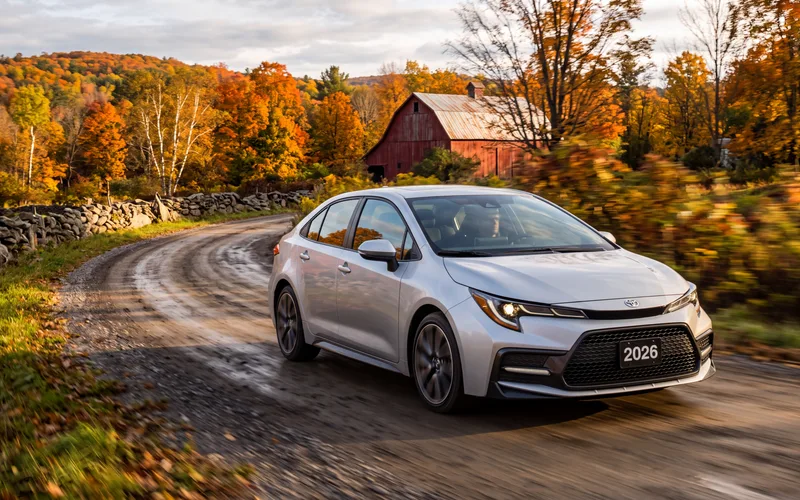
The Civic outguns the Corolla on driving fun, interior quality, and rear-seat space, and the Civic Hybrid at 49 MPG is only 3 MPG behind the Corolla Hybrid while feeling meaningfully quicker and better resolved.
Compare 2.13C
2.13C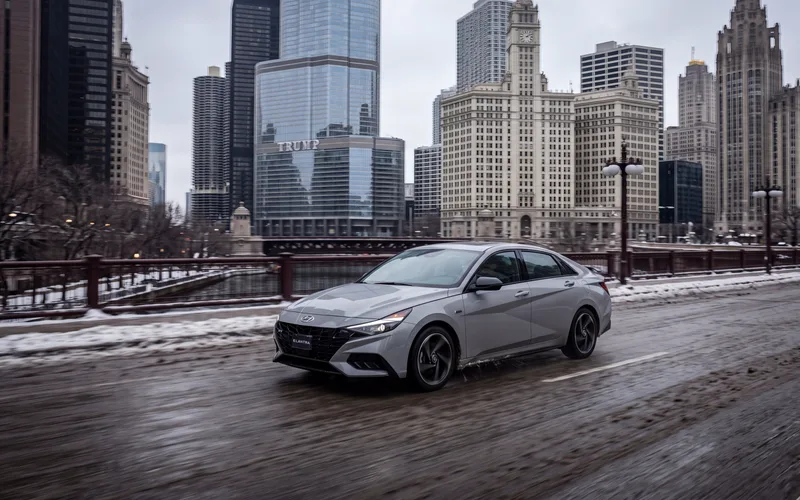 Hyundai ElantraCompact Sedan
The Elantra undercuts the Civic on price and packs more standard tech — bigger screens, wireless CarPlay, heated seats — into cheaper trims, plus a 10-year/100,000-mile powertrain warranty that dwarfs Honda's 5/60.
Compare 2.19C
2.19C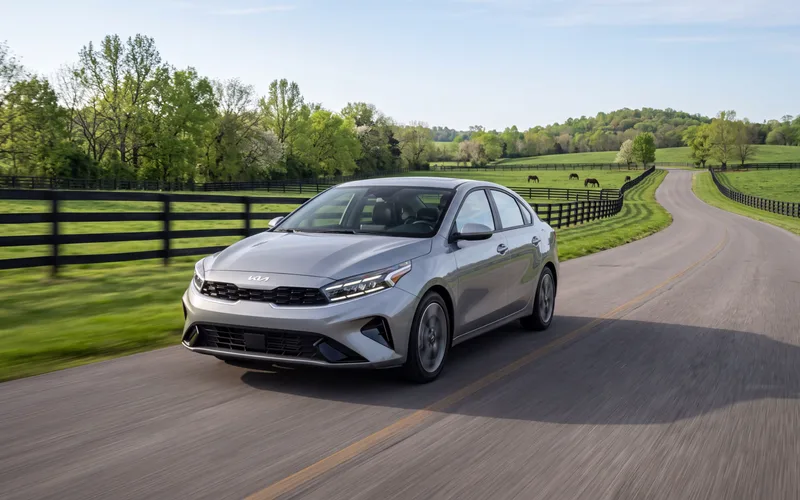 Kia K4Compact Sedan
The all-new K4 is the freshest, boldest-styled compact in the class with class-leading standard tech and the same 10/100 powertrain warranty as its Hyundai cousin, and it undercuts the Civic on sticker.
CompareHow it's evolved
8 scored model years · 2017–2026
Subject scores by year
Hover or tap a score to see what moved it versus the year before. A corner mark flags a big swing.
| Year | Performance | Efficiency | Safety | Space | Cost | Reliability | Tech | Use-case | Driving | Value |
|---|---|---|---|---|---|---|---|---|---|---|
| 2026 | 32 | 66 | 76 | 64 | 67 | 80 | 51 | 59 | 72 | 76 |
| 2023 | 27 | 56 | 78 | 64 | 79 | 78 | 50 | 61 | 74 | 84 |
| 2022 | 26 | 57 | 81 | 66 | 65 | 78 | 50 | 60 | 76 | 81 |
| 2021 | 29 | 57 | 72 | 69 | 78 | 78 | 37 | 59 | 77 | 77 |
| 2020 | 32 | 57 | 69 | 72 | 67 | 76 | 34 | 61 | 79 | 85 |
| 2019 | 29 | 67 | 68 | 73 | 78 | 74 | 35 | 61 | 80 | 88 |
| 2018 | 29 | 61 | 64 | 74 | 78 | 67 | 26 | 58 | 80 | 84 |
| 2017 | 30 | 61 | 64 | 73 | 78 | 68 | 32 | 56 | 80 | 85 |
Compare two years
Best fit & conditions
Higher scores mean a better fit for that use case. Learn more about use-case fit →
Subject profile
Trims & configurations
5 trimsScores above reflect the volume trim. Per-trim specs and scores are rolling out — the full lineup:
Detailed scoring by subject
1Performance & PowertrainThe Civic's lowest-graded category.0.00F
The volume-oriented LX sedan's standard naturally aspirated 2.0-liter four-cylinder makes 158 hp. Turbo sedans raise output to 174 hp, and the new-for-2017 Si sedan is the range maximum at 205 hp.
The representative LX 2.0-liter produces 138 lb-ft, modest even for a compact sedan. Turbo CVT trims provide a useful 162 lb-ft and the Si reaches 192 lb-ft.
The volume 2.0-liter/CVT sedan is adequate rather than quick at 8.2 seconds to 60 mph. The 174-hp turbo substantially improves acceleration, with reputable tests clustered near seven seconds.
Both fours are generally smooth and the turbo delivers broad, responsive midrange torque with little disruptive lag. The naturally aspirated engine becomes noisy when worked hard, preventing an elite refinement score.
Honda's CVT is smoother and better calibrated than many period rivals, especially with the turbo engine's broad torque band, but sustained acceleration still produces noticeable engine drone. A six-speed manual was available on LX, EX-T, and Si sedans for drivers wanting direct control.
Every 2017 U.S. Civic sedan is front-wheel drive; neither AWD nor 4WD was offered on any trim. The small nonzero score reflects competent conventional FWD traction, not drivetrain choice.
The sedan offered a naturally aspirated 2.0-liter, an efficient 1.5-liter turbo, and a higher-output 1.5-liter turbo Si, plus manual and CVT choices on parts of the range. That is unusually broad for a 2017 mainstream compact, though this tenth-generation U.S. sedan offered no hybrid, PHEV, EV, or AWD powertrain.
2Efficiency & RangeMid-pack among this car's ten categories.2.10C
The volume-oriented LX sedan with CVT is the representative configuration. Turbocharged EX-T and EX-L sedans are more efficient, but they are higher trims rather than the baseline volume configuration.
The EPA city rating for the representative LX CVT is 31 MPG, competitive for a non-hybrid 2017 compact sedan.
The LX CVT earns 40 MPG highway; the 1.5-liter turbo sedans reach 42 MPG depending on trim and transmission.
Honda's 12.39-gallon tank multiplied by the EPA 34 MPG combined rating yields approximately 421 miles per fill for the LX CVT.
The EPA's dynamically updated estimate for the 2.0-liter CVT configuration is $1,800 per year under its standard annual-mileage and fuel-price assumptions.
The LX CVT and all mainstream 2017 Civic sedan trims run on regular unleaded, avoiding a premium-fuel penalty. Premium is only recommended, not required, for the performance-oriented Si.
3SafetyMid-pack among this car's ten categories.2.30C+
The 2017 Civic sedan earned NHTSA's maximum Overall Vehicle Score.
It was a 2017 Top Safety Pick when equipped with optional front crash prevention and earned Good ratings in every listed crashworthiness test. Poor headlights prevented a Top Safety Pick+ award.
Honda Sensing bundled AEB, adaptive cruise, lane-departure warning, road-departure mitigation, and lane keeping, but it was optional on mainstream CVT trims and standard only on Touring. True blind-spot monitoring and rear cross-traffic alert were absent; EX and higher instead used a passenger-side LaneWatch camera.
The optional CMBS achieved IIHS Superior vehicle-to-vehicle prevention, avoiding impacts at both tested speeds. The period test did not establish modern daytime/nighttime pedestrian performance, keeping it below today's top band.
The available LaneWatch camera covered only the passenger-side blind zone and was not an active blind-spot warning system. Rear cross-traffic alert, rear automatic braking, and safe-exit assistance were not offered.
Optional Honda Sensing supplied lane-departure warning, lane-keeping steering assistance, and road-departure mitigation. It provided useful mild centering assistance on marked roads but remained a hands-on, limited-torque system rather than robust modern lane centering.
Honda Sensing provided adaptive cruise with low-speed follow on applicable CVT cars, pairing effectively with LKAS for basic highway assistance. After a stop the driver had to tap the accelerator to resume, and the system was optional below Touring.
No hands-free highway-driving system was offered for the 2017 Civic; LKAS explicitly required the driver's hands on the steering wheel.
IIHS rated both available headlight systems Poor. Mainstream halogens had inadequate curve visibility, while Touring LEDs produced excessive low-beam glare despite better straightaway reach; neither had high-beam assist.
Forward visibility was strong and large mirrors plus the standard multi-angle rear camera helped, but the fastback-like roofline reduced rear-quarter sightlines. LaneWatch partly compensated on equipped trims, only on the passenger side.
IIHS rated LATCH ease Acceptable: both outboard positions had complete hardware and the center had a tether, but lower anchors sat 2-4 cm deep. Wide-opening rear doors and a roomy back seat make installation easier, though only two child seats fit in the Cars.com check.
4Space & ComfortGrades above the middle of the scale.2.94B-
Every regular 2017 Civic sedan trim seats five.
The representative LX without a moonroof has generous front headroom; the standard moonroof on EX and higher trims reduces it by 1.8 inches.
All regular 2017 Civic sedan trims provide the same competitive front legroom.
The LX has adequate rear headroom despite the fastback-like roofline, while moonroof-equipped trims lose 0.3 inch.
Rear legroom is unusually useful for a compact sedan and is unchanged across regular trims.
The representative LX has a large compact-sedan trunk; Touring loses 0.4 cubic foot to added equipment.
The huge, multilevel, configurable center console with movable cupholders and a dedicated phone area is a genuine class standout, supplemented by large pockets in all four doors.
The supportive seats suit long trips and the roomy rear bench accommodates adults, although cushions are firm and another major review found the seating surfaces underwhelming. Eight-way power adjustment is limited to EX-L and Touring.
The Civic combines excellent impact damping with disciplined body control and little float, giving it one of the best comfort/handling balances among 2017 compact sedans.
Wind and road noise are substantially better controlled than in earlier Civics and competitive for the class, but turbo/CVT acceleration introduces a noticeable growl and light drone.
Automatic climate control is standard and EX-T adds dual-zone control, heated front seats, and remote pre-conditioning through remote start; Touring adds heated rear outboard seats. Ventilated seats and a heated steering wheel are absent, and the richer equipment is confined to upper trims.
5Cost of OwnershipOne of the Civic's strongest categories.3.32B+
The entry 2017 Civic sedan was the LX with a six-speed manual at $18,740 before destination. Including the mandatory $875 destination charge yields $19,615, below the sedan normalization floor.
The mainstream representative configuration is the LX sedan with CVT, priced $800 above the manual. It captures the high-volume base-trim equipment with the automatic transmission most US buyers selected.
Civic maintenance and repair projections are exceptionally low for the segment. Exact-year annual evidence is consistent with the model-level five-year projection: RepairPal estimates $290 annually for a 2017 Civic, while Edmunds reports $335 annually using RepairPal data.
The tenth-generation Civic has unusually strong residual value. The estimate uses a current Civic five-year projection because an archived trim-specific 2017 five-year residual table was unavailable, supported by contemporary recognition of the 2017 Civic's resale strength.
Honda's new-vehicle limited warranty was the conventional three-year term, at the bottom of the scoring band and shorter than the five-year coverage offered by some mainstream rivals.
The five-year powertrain term matches the mainstream industry baseline but sits at the bottom of the scoring band. The US 2017 tenth-generation sedan used gasoline engines and did not offer a Civic Hybrid powertrain.
There was no complimentary scheduled-maintenance plan, but Honda included meaningful 24-hour roadside assistance for the full basic-warranty term. That earns the lower end of the basic-roadside-only band.
$20,415 volume-trim price minus its estimated resale value after 5 years (71% retained, or about $14,495) leaves about $5,920 in depreciation. Add the projected $1,786 in 5-year maintenance and repairs, and owning this vehicle for 5 years costs about $7,706 in total.
6Reliability & QualityMid-pack among this car's ten categories.2.62C+
Long-term owner evidence is average rather than class-leading: J.D. Power's result is in its Average band, and Consumer Reports likewise places the 2017 Civic about average among vehicles of the same model year. Climate-system failures are the clearest recurring trouble spot.
Honda had an above-average reputation but was not consistently top-five around this period. Contemporary Consumer Reports results put Honda ninth or tenth, while the 2017 J.D. Power VDS result was respectable but not elite.
Five recalls are heavier than typical, including safety-relevant driveshaft and steering-gearbox defects. The generation also accumulated substantial service activity for A/C leakage and, on 1.5-liter turbo cars, oil dilution, so the history falls below the rubric's typical-activity band.
The volume LX sedan's naturally aspirated 2.0-liter four is the simpler and more reassuring choice, and Honda's CVT has a generally sound record. The optional 1.5-liter turbo materially lowers the range-wide assessment because Honda documented fuel dilution and issued software updates plus a warranty extension.
The Civic's touch-point materials and perceived richness were standout qualities for a mainstream compact, even though base trims retain ordinary cloth and hard plastic in low-touch areas. Contemporary comparison testing specifically separated its cabin from the class on quality and style.
Contemporary reviewers found the Civic solid and well built, supporting an above-average assembly score. Recurring owner-survey climate-system issues and scattered aging noise complaints keep it out of the top band.
Honda's roughly one-thousand-dealer U.S. footprint gives Civic owners dense nationwide access to warranty, recall, and routine service. Franchise-level satisfaction varies, so the network's breadth does not warrant a near-perfect result.
The mass-market Civic has exceptionally broad OEM and aftermarket support, and measured annual maintenance expense is very low. Costly A/C work outside the warranty extensions is the principal caveat.
7Technology & InfotainmentOne of the Civic's weakest categories.0.12F
The EX is the representative volume trim and uses Honda's 7-inch Display Audio touchscreen. The 2017 sedan was a largely carry-over second year of the tenth generation; the new hatchback and Si expanded the range without replacing the regular sedan's system.
The interface is usable but dated and frustrating in daily use because nearly all shortcuts and volume adjustment are touch-sensitive. Multiple contemporary reviewers also reported awkward menus, unreliable HondaLink behavior, and no physical volume or tuning knob.
Apple CarPlay and Android Auto are standard from EX upward, but both require a cable; neither wireless system was offered. The LX lacks phone projection entirely.
Honda's voice-recognition navigation is functional but limited to EX-L as an option and standard Touring, while EX owners can use phone-based maps through wired projection. It is conventional command-based technology rather than a natural-language assistant.
The volume EX's 180-watt eight-speaker system is respectable for an affordable compact, and Touring offers a substantial 450-watt 10-speaker upgrade with a subwoofer. It is not a branded audiophile system, while LX has only four speakers.
EX and above receive a crisp, configurable 7-inch color Driver Information Interface with digital speedometer and infotainment displays. Availability on the volume trim was advanced for 2017, although it is not a modern full-width digital cockpit and LX retains simpler instrumentation.
The 2017 Civic has no meaningful owner-facing over-the-air update program for infotainment or vehicle systems. Its Wi-Fi tethering and HondaLink connectivity do not amount to feature-adding OTA support.
Period HondaLink mainly provided smartphone content integration, service information, and emergency-assistance features. This Civic lacks the embedded telematics needed for modern app-based remote start, remote locks, vehicle location, or a digital key; remote start instead uses the key fob.
EX has two low-power USB-A ports, but there are no rear-seat USB ports, USB-C ports, wireless charging, or household outlet in the U.S. sedan. LX is more limited with a single USB port.
The volume EX includes proximity Smart Entry, push-button start, and key-fob remote engine start, a strong convenience package for 2017. LX uses conventional remote entry, and no trim offers phone-as-key or hands-free trunk access.
Every sedan has a multi-angle rear camera, with dynamic guidelines and the useful passenger-side LaneWatch camera on EX and above. There is no surround-view camera, factory parking-sensor system, or automated parking capability.
No head-up display was offered on any 2017 Civic sedan trim, including Touring.
8Use-Case FitOne of the Civic's weakest categories.1.73C-
Wide-opening rear doors and a roomy compact-car back seat make loading children easier than the low roofline suggests, while the 15.1-cu-ft trunk is stroller-friendly. Two complete outboard LATCH positions are provided, but IIHS rated their ease of use only Acceptable because the lower anchors sit 2-4 cm deep.
Crash protection was excellent for its era, with Good results in every IIHS crashworthiness test and a 2017 Top Safety Pick. Honda Sensing could add effective AEB, adaptive cruise and lane support, but it was optional on affordable trims, the volume headlights rated Poor, and there was no rear-occupant alert.
The spacious rear seat, balanced ride and unusually large 15.1-cu-ft trunk suit four-person trips, but the low seating position and sloping roof are less friendly to taller occupants. Rear passengers get no USB port or 12-volt outlet, and the sedan has no rear climate vents or separate rear zone.
A smooth CVT, supportive driving position, well-judged ride and light, accurate controls make the volume 2.0-liter sedan easy in traffic. Available adaptive cruise with low-speed follow reduces congestion fatigue, though it costs extra and the touchscreen interface and sloping rear visibility can annoy.
The volume LX/EX 2.0-liter CVT returns an excellent 31/40/34 mpg on regular gasoline, while small tires and mass-market parts keep routine consumables inexpensive. This is near the top of non-hybrid 2017 compact sedans, though it cannot match a true hybrid's urban fuel cost.
Compact width, a roughly 35.7-ft curb-to-curb turning diameter and a standard multi-angle reversing camera make tight parking straightforward. The fastback-like roof and thick rear pillars reduce over-shoulder visibility, preventing a benchmark score.
The Civic sedan can carry commuters and modest trunk loads but has no bed, meaningful payload headroom or US trailer rating. Honda explicitly says the vehicle is not designed to tow a trailer.
The naturally aspirated 2.0-liter volume powertrain is simple and the Civic has a strong fleet and high-mileage reputation, but this low sedan was not engineered for repeated heavy work. Model-year evidence is mixed: Consumer Reports rates 2017 reliability about average and records notable climate-system trouble, while some turbo cars also received an oil-dilution update.
There is no onboard AC power, cargo bed, work tie-down system, washable cabin or commercial upfit program. A trunk tray, cargo net and roof attachments can be accessorized, but these are ordinary passenger-car add-ons rather than jobsite provisions.
Supportive seats, a composed ride and about 421 miles of nominal combined range make it a capable highway car, and optional Honda Sensing reduces driver workload. Road noise, sparse rear amenities, low seating and the absence of standard adaptive cruise on volume trims limit its long-haul polish.
Front-wheel drive, low ground clearance and Honda's no-towing instruction make this principally a pavement car. It can reach maintained gravel trailheads and carry bikes on an accessory rack, but offers no AWD, factory adventure hardware, camper-friendly outlet or meaningful rough-road margin.
A class-large 15.1-cu-ft trunk and folding rear seat handle ordinary luggage and longer items well. The fixed trunk opening, lack of a hatch, no useful underfloor gear bay and a one-piece folding seatback on LX materially constrain bulky loads compared with the Civic hatchback.
9Driving ExperienceOne of the Civic's strongest categories.3.41B+
The volume 2017 sedan is unusually agile and composed for a mainstream compact, with tightly controlled body motions and a stable, confidence-inspiring chassis. The new-for-2017 Si raises the sedan's performance ceiling, but this score represents the regular high-volume trims.
The variable-ratio electric steering is accurate, naturally weighted, and more communicative than most contemporary economy-car systems. Feedback is good by class standards rather than sports-car rich.
The regular sedan has a firm, progressive pedal and delivers short, confident emergency stops. Its strong 60-mph result is tempered by a merely average 70-mph result from another instrumented test of the same-generation turbo sedan.
The volume CVT is smooth and responsive, while the available 1.5-liter turbo delivers strong, seamless midrange pull; the base 2.0-liter is less urgent. The 2017 EX-T also gained a standard six-speed manual, broadening the sedan's responsive powertrain choices.
The engine is smooth and unobtrusive in normal use, but the volume CVT produces a light drone under acceleration. The powertrain is refined for an affordable compact, though neither near-silent nor especially characterful.
The volume LX/EX-family sedan's 35.7-ft turning diameter is compact and convenient in parking lots and urban streets. The performance-oriented Si needs more room but is not the representative volume configuration.
A broad seat-adjustment range and well-placed primary controls accommodate many drivers, and front access is easy. The low hip point, modest steering-wheel telescope, and frustrating touch-sensitive infotainment controls keep it below the excellent band.
Responsive steering, excellent chassis control, strong available turbo torque, and a manual option make the regular Civic notably engaging for an economy sedan. The new-for-2017 Si is substantially sharper, but even the volume CVT car rewards taking the longer route.
10Value & Market PositionThe Civic's best-graded category.3.78A
The LX was unusually complete for an entry compact, with alloy wheels, automatic climate control, automatic headlights, cruise control, a 60/40 rear seat, Bluetooth and a multi-angle rearview camera. The main limitation was that Honda Sensing and smartphone integration were not standard at the base price.
The volume-oriented EX delivered exceptional space, refinement and technology for about $23,000, while the EX-T added a strong, efficient 174-hp turbo engine without leaving the mainstream price band. Its combination of performance, 36-mpg combined EPA rating on turbo CVT sedans and upscale available equipment made it a segment bang-for-buck benchmark.
Six sedan trims—LX, EX, EX-T, EX-L, Touring and the new Si—covered economy, comfort, luxury and performance buyers, with two regular engines and manual or CVT availability. Choice was broad for a compact sedan, although every version was front-wheel drive and the tenth-generation 2017 U.S. sedan had no hybrid.
The Civic was the best-selling compact car in the United States for calendar 2017, reaching the generation's sales peak and comfortably outselling the Corolla. That is near-maximum evidence of broad market acceptance.
Honda was not an aspirational luxury badge, but the Civic carried unusually strong loyalty, reliability and resale associations plus real enthusiast credibility from the Si and Type R halo. That made the nameplate more desirable than the typical mainstream compact.
Its class-leading demand limited the need for large factory cash offers or deep discounting, though ordinary dealer negotiation and occasional promotional financing were available. Buyer benefit was therefore modest rather than absent.
The 2017 sedan was only the second model year of the all-new tenth generation, so its platform, turbo powertrain and cabin technology were still very fresh. It was mostly a sedan carry-over from the 2016 redesign, with the meaningful 2017 sedan change being manual-transmission availability for the turbo EX-T and the arrival of the Si.
The 2017 Civic was a consistent class winner rather than merely well reviewed: it won a major eight-car compact-sedan comparison and KBB's overall Best Buy award, while reviewers repeatedly called it a benchmark or one of the class's best. Minor infotainment frustrations were the principal recurring criticism.