

The verdict
A mixed-report compact sedan, strong on ownership and held back by performance.
Overall 2.31 (C+) across 10 graded subjects. Its strongest is cost of ownership at 3.32 (B+), its weakest performance & powertrain at 0.00 (F). 8 of 10 subjects grade at C− or better.
Jump to scoresStrengths
- Cost of Ownership
- Reliability & Quality
- Driving Experience
What holds it back
- Performance & Powertrain
- Technology & Infotainment
- Efficiency & Range
Top alternatives
Cars shoppers cross-shop with the Honda Civic 2.40C+
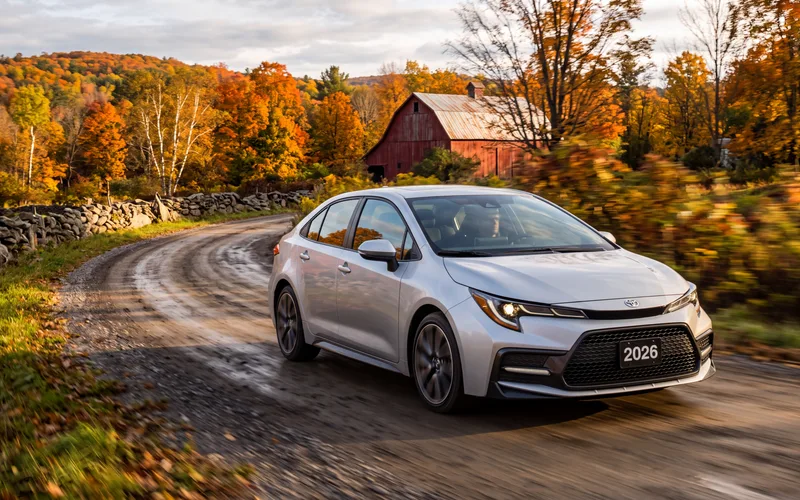 Toyota CorollaCompact Sedan
The Civic outguns the Corolla on driving fun, interior quality, and rear-seat space, and the Civic Hybrid at 49 MPG is only 3 MPG behind the Corolla Hybrid while feeling meaningfully quicker and better resolved.
Compare 2.13C
2.13C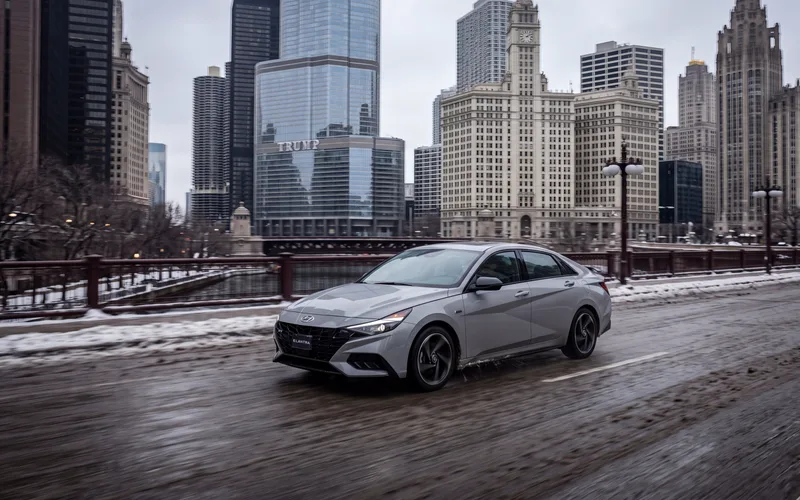 Hyundai ElantraCompact Sedan
The Elantra undercuts the Civic on price and packs more standard tech — bigger screens, wireless CarPlay, heated seats — into cheaper trims, plus a 10-year/100,000-mile powertrain warranty that dwarfs Honda's 5/60.
Compare 2.19C
2.19C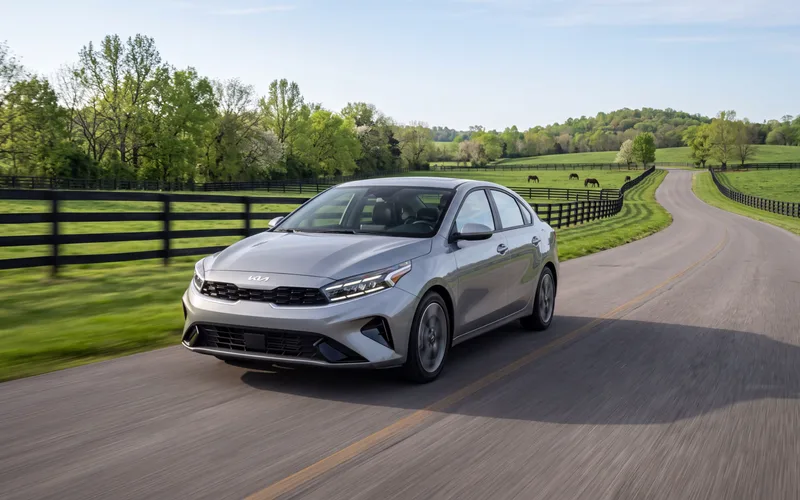 Kia K4Compact Sedan
The all-new K4 is the freshest, boldest-styled compact in the class with class-leading standard tech and the same 10/100 powertrain warranty as its Hyundai cousin, and it undercuts the Civic on sticker.
CompareHow it's evolved
8 scored model years · 2017–2026
Subject scores by year
Hover or tap a score to see what moved it versus the year before. A corner mark flags a big swing.
| Year | Performance | Efficiency | Safety | Space | Cost | Reliability | Tech | Use-case | Driving | Value |
|---|---|---|---|---|---|---|---|---|---|---|
| 2026 | 32 | 66 | 76 | 64 | 67 | 80 | 51 | 59 | 72 | 76 |
| 2023 | 27 | 56 | 78 | 64 | 79 | 78 | 50 | 61 | 74 | 84 |
| 2022 | 26 | 57 | 81 | 66 | 65 | 78 | 50 | 60 | 76 | 81 |
| 2021 | 29 | 57 | 72 | 69 | 78 | 78 | 37 | 59 | 77 | 77 |
| 2020 | 32 | 57 | 69 | 72 | 67 | 76 | 34 | 61 | 79 | 85 |
| 2019 | 29 | 67 | 68 | 73 | 78 | 74 | 35 | 61 | 80 | 88 |
| 2018 | 29 | 61 | 64 | 74 | 78 | 67 | 26 | 58 | 80 | 84 |
| 2017 | 30 | 61 | 64 | 73 | 78 | 68 | 32 | 56 | 80 | 85 |
Compare two years
Best fit & conditions
Higher scores mean a better fit for that use case. Learn more about use-case fit →
Subject profile
Trims & configurations
5 trimsScores above reflect the volume trim. Per-trim specs and scores are rolling out — the full lineup:
Detailed scoring by subject
1Performance & PowertrainThe Civic's lowest-graded category.0.00F
The volume Sport sedan uses the naturally aspirated 2.0-liter four-cylinder; the upper three trims receive the stronger 1.5-liter turbo. This is modest output for a compact sedan, though the turbo broadens the range.
The Sport's 2.0-liter makes its relatively modest peak torque high in the rev range. Turbo trims add both torque and a much broader 1,700-5,500-rpm plateau.
The naturally aspirated volume powertrain is adequate rather than quick. The optional turbo transforms acceleration, but it is not the representative Sport configuration used for the raw value.
Both four-cylinders are smooth and responsive in ordinary driving, and the turbo has notably strong midrange response. The 2.0-liter needs revs for meaningful acceleration, where engine noise becomes more apparent.
Honda's CVT is smooth and responsive in normal use and better calibrated than many rivals, with paddle control on Sport and Touring. Sustained acceleration still produces characteristic high-rpm drone and rubber-band behavior.
Every 2021 Civic sedan is front-wheel drive, with no AWD option on any trim. That places it low in the FWD-only band despite predictable pavement traction.
Two distinct gasoline engines cover value-focused and stronger turbocharged needs across five trims. There is no 2021 Civic sedan hybrid, PHEV, EV or AWD powertrain, and the Si was dropped for this model year.
2Efficiency & RangeOne of the Civic's weakest categories.1.86C-
The representative LX CVT is EPA-rated at 33 mpg combined. The 2021 sedan was the final model year of the tenth generation, and Honda dropped the LX/Sport manual transmission while retaining the established gasoline engines.
The volume LX CVT earns an EPA city rating of 30 mpg, midway between the Sport's 29 mpg and the turbo EX/EX-L's 32 mpg.
The LX CVT is EPA-rated at 38 mpg highway; the turbo EX and EX-L lead the 2021 sedan range at 42 mpg.
Honda's 12.4-gallon tank and the EPA 33-mpg combined rating yield about 409 miles for the LX CVT. The EPA API does not populate its gasoline range field, so this is the standard full-tank calculation from two official figures.
The official EPA record estimates $1,850 per year for the 2.0-liter Civic 4Dr CVT using its standard fuel-cost assumptions.
Every 2021 Civic sedan trim runs on widely available regular unleaded, avoiding the added cost and inconvenience of a premium-fuel requirement.
3SafetyGrades above the middle of the scale.2.88B-
The 2021 Civic four-door earned NHTSA's maximum overall rating.
The sedan was a 2021 Top Safety Pick when equipped with its specific good-rated headlights, and it earned Good in all six applicable crashworthiness evaluations. It misses TSP+ because acceptable-or-better headlights were not standard across the range.
Honda Sensing made AEB, adaptive cruise, lane-departure warning, and lane keeping standard on every sedan trim, a strong core suite for 2021. Conventional blind-spot monitoring and rear cross-traffic alert were unavailable; EX and above instead received the passenger-side-only LaneWatch camera.
The standard Collision Mitigation Braking System earned Superior ratings in both vehicle-to-vehicle and daytime pedestrian testing. No IIHS nighttime pedestrian result was published for this generation, preventing a top-band maximum.
The sedan offered Honda LaneWatch on EX and higher, but it only displays the passenger-side blind area when signaled. There is no radar-based two-sided blind-spot warning, rear cross-traffic alert, active intervention, or safe-exit assist.
Lane-departure warning, road-departure mitigation, and LKAS are standard throughout the range. This is functional lane support rather than a newer, tightly integrated lane-centering/highway-assist system.
Standard ACC with Low-Speed Follow can brake the Civic to a stop in traffic and resume with a button press or accelerator input. Its integration with LKAS is capable for the era, though it is not a modern mapped-road or hands-free highway system.
No hands-free driving system was offered on the 2021 Civic sedan; Honda Sensing requires continuous driver steering supervision.
The Touring's LED reflectors are Good-rated, but the LX, Sport, EX, and EX-L halogen headlights—including the volume trims—are Poor. Automatic high beams are standard and partially compensate, but most buyers receive weak low-beam illumination.
Natural outward visibility is generally good for the low-slung fastback-styled sedan, aided by a standard multi-angle rearview camera. The sloping roof and rear pillars still create ordinary rear-quarter blind zones, and no 360-degree camera is offered.
IIHS rates both tested sedan anchor configurations Acceptable. Two outboard positions have full LATCH hardware, but their lower anchors sit too deep in the seat; the center position supplies only a tether anchor.
4Space & ComfortMid-pack among this car's ten categories.2.65C+
Every 2021 Civic Sedan trim has seating for five.
The volume-oriented LX and Sport lack a moonroof and provide generous front headroom; moonroof-equipped EX, EX-L, and Touring trims lose 1.8 inches.
Front legroom is identical across the five sedan trims and is competitive for a compact sedan.
The non-moonroof volume trims have adequate rear headroom despite the sloping roofline; upper trims are slightly tighter.
The Civic offers notably roomy second-row legroom for a compact sedan, although the low rear cushion slightly reduces real-world comfort.
The broad 15.1-cu-ft trunk is strong for the compact-sedan class; only the Touring's added equipment reduces it slightly.
A deep, configurable center console with a sliding armrest, useful lower-console space, and front/rear door bins make small-item storage unusually flexible, though there is no major power or underfloor innovation.
Supportive, comfortable front seats and generous rear space suit longer drives, but base trims offer only manual adjustment and the low rear cushion compromises thigh support.
The compliant, well-controlled suspension is a segment strength, balancing comfort with athletic handling; Sport and Touring trims on 18-inch wheels transmit more sharp-edge impact than LX models.
The sedan is reasonably quiet on smooth roads, but tire noise on coarse pavement and CVT-amplified engine noise keep it near the lower end of average for the segment.
Automatic climate control is standard and EX adds dual-zone climate, heated front seats, remote start, and a moonroof, but only Touring heats the rear outboard seats and no trim offers ventilated seats or a heated steering wheel.
5Cost of OwnershipThe Civic's best-graded category.3.32B+
The CVT-only LX was the least-expensive 2021 Civic sedan. This was the final model year of the tenth-generation U.S. sedan, not the eleventh-generation Civic that arrived during calendar 2021 as a 2022 model.
Sport is used as the representative volume configuration because it was the broadly marketed step-up trim between LX and EX, pairing the mainstream 2.0-liter engine and standard CVT with popular appearance and equipment upgrades.
The model-level industry projection indicates exceptionally low scheduled-maintenance and expected-repair expense over the first five years. Actual cost varies with mileage, labor rates, and service choices.
The Civic's projected five-year retention exceeds the top of the sedan normalization band, reflecting unusually strong residual value for a mainstream compact sedan.
Honda's new-vehicle limited warranty is at the minimum of the sedan scoring band.
The powertrain warranty is at the minimum of the sedan scoring band. The 2021 U.S. Civic sedan was gasoline-only, so no hybrid-battery warranty applies.
The 2021 Civic did not include complimentary scheduled maintenance, but it did include 24-hour roadside assistance during the 3-year/36,000-mile new-vehicle warranty term. That merits the lower end of the basic-roadside-only band.
$24,045 volume-trim price minus its estimated resale value after 5 years (71% retained, or about $17,072) leaves about $6,973 in depreciation. Add the projected $1,786 in 5-year maintenance and repairs, and owning this vehicle for 5 years costs about $8,759 in total.
6Reliability & QualityOne of the Civic's strongest categories.3.32B+
The 2021 Civic has a strong owner-quality result but only average survey reliability, so it falls just short of the top tier. As the final model year of the tenth-generation U.S. sedan rather than the redesigned 2022 car, it also benefits from six years of production maturity.
Honda has a consistently strong, though not uniformly top-five, multi-year dependability record. Its sixth-place finish in Consumer Reports' 2021 reliability ranking and return to the top five in the latest reporting justify a low-80s score rather than Toyota/Lexus-level marks.
Three recalls are typical-to-elevated rather than disastrous, but the passenger-detection fault is safety-critical and the generation has a meaningful A/C service history. The record is therefore mid-pack, not clean enough for the upper band.
The volume 2.0-liter naturally aspirated four and CVT are proven and comparatively low-risk, while upper trims' 1.5-liter turbo add complexity and have a more mixed history. Neither engine/transmission combination shows a 2021-specific systemic failure pattern, but the turbo prevents a uniformly top-tier rating across the sedan range.
The Civic's cabin materials are a clear compact-car strength, with reviewers describing them as upscale and the overall interior as mature and substantial. Some rough cloth, hard lower plastics, and dated infotainment keep it below luxury-grade territory.
Six model years of assembly maturity and reviewers' favorable comments support above-average fit and finish. Scattered infotainment, trim, and A/C complaints keep it in the upper-70s rather than the class-leading band.
Honda has broad nationwide dealer coverage and the high-volume Civic is familiar to virtually every franchised and independent shop. Service satisfaction is strong today, though Honda was not among the top three mass-market brands in the contemporary 2021 J.D. Power CSI ranking.
Civic parts are abundant through dealers and a huge independent aftermarket, and repair costs are substantially below compact-car norms. Its enormous installed base and long-running tenth-generation hardware make this one of the strongest ownership-support propositions in the segment.
7Technology & InfotainmentOne of the Civic's weakest categories.0.46F
The representative Sport trim uses Honda's 7-inch Display Audio touchscreen, which is also the largest screen offered in the 2021 sedan range.
The mature interface is straightforward and has a physical volume knob, but its small screen, dated graphics and sluggish responses trail newer compact sedans.
Wired Apple CarPlay and Android Auto are included on the volume Sport and all higher trims, but LX lacks phone projection and no trim offers a wireless connection.
Factory navigation with conventional command-based voice recognition is standard only on Touring and optional on EX-L. Most trims depend on wired phone projection for maps and modern voice assistance.
Sport and the mainstream upper trims receive an adequate 180-watt eight-speaker system, while Touring offers a meaningful but unbranded 450-watt 10-speaker upgrade with a subwoofer.
The Civic provides useful digital speed and driver-information displays, but the cluster is a hybrid arrangement built around a physical analog tachometer rather than a fully digital, freely configurable panel.
This pre-connected-car infotainment platform has no advertised whole-vehicle, infotainment-software or map OTA update program; updates are performed through conventional dealer or media-based processes.
HondaLink supplies basic vehicle information and service-related functions, but this Civic does not support the rich Remote subscription features, digital key or app-controlled climate expected of modern connected cars. Remote engine start is instead provided through the key fob on Sport and above.
Sport adds a second front USB connection, but the car relies on low-output USB-A ports and provides no factory rear USB-C ports, wireless charging pad or household outlet.
The representative Sport trim and every trim above it include proximity Smart Entry, push-button start and key-fob remote engine start. LX has conventional remote entry, and no trim offers phone-as-key or a hands-free trunk.
All trims have a multi-angle rear camera, and EX and above add the passenger-side LaneWatch camera, but factory parking sensors, surround view and automated parking are absent.
A head-up display was not offered on any 2021 Civic Sedan trim.
8Use-Case FitMid-pack among this car's ten categories.1.96C-
Wide-opening rear doors, generous compact-sedan rear legroom, straightforward outboard LATCH positions and a large, low-liftover trunk make two-child duty unusually easy for the class. The low roof still requires some ducking, three-across is unrealistic, and the LX lacks the useful 60/40 split rear seat fitted from Sport upward.
Every affordable trim includes a genuinely broad Honda Sensing suite, and the structure earned Good ratings throughout the applicable IIHS crashworthiness tests. The score stops short of the very top because the Top Safety Pick award requires specific headlights, LATCH ease is only Acceptable, and the car lacks a rear-occupant reminder and conventional blind-spot monitoring.
Four adults fit comfortably and the 15.1-cu-ft trunk is excellent for a compact sedan, but the rear seat has few amenities and the sloping roof trims headroom. Road noise on coarse pavement and the absence of rear climate vents keep it better suited to medium trips than luxury-level family touring.
A well-tuned CVT, compliant ride, clear controls and standard adaptive cruise with low-speed follow make the Civic relaxed in traffic while retaining responsive steering. The base engine is merely adequate, the low seating position will not suit everyone, and Honda Sensing can issue intrusive false warnings.
The volume EX is exceptionally frugal for a non-hybrid sedan at 36 mpg combined, uses regular fuel and pairs that economy with inexpensive compact-car tires and consumables. It cannot match a contemporary hybrid in urban fuel cost, and the 2021 U.S. Civic sedan itself offered no hybrid powertrain.
Its compact width, responsive steering and standard multi-angle reversing camera make the Civic easy to place in town. The long fastback-like tail and thick rear pillars constrain rearward visibility, while parking sensors and a surround-view camera are unavailable and true blind-spot coverage is absent.
This front-drive passenger sedan has no factory tow rating, bed or work payload proposition. Its roomy trunk can carry ordinary sales or service gear, but that does not make it meaningfully capable under load.
The mature final-year tenth-generation platform and Honda's extensive compact-car fleet history support high-mileage service use, especially with the simple 2.0-liter engine. Yet cloth/leather cabins, low-profile tires on Sport and Touring, low clearance and a carpeted trunk are passenger-car hardware rather than abuse-ready work equipment.
There are virtually no jobsite provisions beyond a 12-volt socket, USB charging and a folding rear seat on most trims. Honda offered no onboard AC power, factory hitch, cargo tie-down system, washable cabin or commercial upfit ecosystem for the sedan.
The EX combines an estimated 446-mile EPA range with supportive seating, a compliant ride, ample adult space and standard lane centering/adaptive cruise, making it a strong compact highway car. Noticeable coarse-surface road noise, limited lumbar adjustment and thin rear amenities impose real endurance limits.
FWD only, low sedan clearance, no tow rating and no factory adventure hardware leave the Civic pavement-bound. It can reach an ordinary gravel trailhead and accept aftermarket bike or roof carriers, but those are modest adaptations rather than inherent capability.
A class-leading-size trunk with a wide, low opening and 60/40 folding seatbacks on Sport and higher trims handles normal luggage and long items well. Bulky gear still must pass through a sedan trunk opening, the base LX rear seat folds as one piece, and there is no factory hitch, roof-rail system or useful underfloor cargo bay.
9Driving ExperienceOne of the Civic's strongest categories.3.26B+
The tenth-generation Civic sedan combines flat cornering, disciplined body control, and balanced responses that place it near the top of the mainstream compact class. Its all-season tires and comfort-oriented volume trims keep it short of true sport-sedan capability.
Quick, accurate steering has well-judged effort and unusually useful feedback for an economy sedan. Sport and Touring have an even quicker ratio, but the EX remains precise and communicative.
The firm, progressive pedal is easy to modulate and inspires confidence in normal driving, though published stopping performance is competitive rather than exceptional. This merits the upper adequate band, not the excellent band.
The representative EX's 1.5-liter turbo and CVT deliver strong low-speed pull and one of the segment's better automatic calibrations. Some initial lag before the turbo powertrain gets moving prevents an impeccable score; the LX and Sport use a slower naturally aspirated 2.0-liter.
The gas powertrain is generally smooth and unobtrusive at a cruise, but the CVT can hold the four-cylinder at audible revs under load. Coarse-road noise also erodes the otherwise respectable isolation.
The representative EX has a compact 35.4-foot curb-to-curb turning diameter. The 18-inch-wheel Sport and Touring require 37.4 feet.
A broad adjustment range, straightforward primary controls, large door openings, and a spacious front compartment make the Civic easy to fit and operate. The low seat and lack of adjustable lumbar support are the main compromises.
The responsive steering, balanced chassis, and eager turbo engine make the ordinary Civic more rewarding than most compact sedans. Its CVT and modest straight-line performance hold the volume EX just below the genuinely sporting 80-plus band.
10Value & Market PositionGrades above the middle of the scale.3.20B+
Every sedan included Honda Sensing with adaptive cruise control, collision-mitigation braking, lane-keeping assist and road-departure mitigation, unusually strong standard active-safety content for a 2021 compact. The volume-oriented Sport added a 7-inch touchscreen, Apple CarPlay/Android Auto, remote start and 18-inch alloys at $23,050, but the $21,250 LX had only a 5-inch screen, four-speaker audio, steel wheels with covers and no phone projection.
The Civic delivered standout fundamentals for roughly $21,000-$28,000: a roomy, refined chassis, standard driver assistance, up to 42-mpg highway economy and an available 174-hp turbo engine. The $24,400 EX was the value sweet spot with the turbo, heated seats, moonroof and dual-zone climate, though the sparse LX interface and lack of a hybrid kept the range from being an unqualified bargain leader.
Five well-spaced sedan trims (LX, Sport, EX, EX-L and Touring) and two engines covered basic through near-luxury buyers. Breadth was only moderate because every 2021 sedan was front-wheel drive with a CVT: the sedan manual was dropped, the Si took the year off, there was no U.S. Civic hybrid, and the coupe was discontinued.
The outgoing Civic remained one of America's two dominant compact cars rather than fading at the end of its cycle. U.S. nameplate sales rose slightly from 261,225 in 2020 to 263,787 in 2021 despite pandemic disruption and the midyear transition to the redesigned 2022 model.
Honda and the Civic carried unusually strong mainstream equity in 2021, combining a reliability and resale reputation with genuine enthusiast credibility from the broader Si and Type R family. The appeal was beloved and trusted rather than luxury-aspirational, which keeps it below the very top of the scale.
Honda offered useful subsidized financing on remaining 2021 sedans, including 1.9% APR for as long as 60 months late in 2021, a meaningful buyer benefit without fire-sale pricing. Cash rebates and deep negotiation were limited by the Civic's strong demand and the 2021 inventory shortage, so availability was good rather than exceptional.
The 2021 sedan was a carry-over final-year version of the tenth generation introduced for 2016 and refreshed for 2019. Replacement risk was immediate: Honda revealed the eleventh-generation prototype in November 2020 and launched the redesigned North American sedan in June 2021 as a 2022 model.
Even in its last year, the Civic remained the critical benchmark: Car and Driver scored it 9.5/10, ranked it first among 2021 compact cars and included the Civic family on its 2021 10Best list. KBB ranked it second among 2021 compact cars and praised it as one of the most recommendable small cars, so the consensus was consistently class-leading rather than merely favorable.