

The verdict
A mixed-report compact sedan, strong on safety and held back by performance.
The 2022 Civic opened the eleventh generation and was the compact sedan to beat: a Top Safety Pick+, a North American Car of the Year, and a car that handles and steers better than almost anything at its price. It holds its value well, with about 63.5% projected to remain after five years, and Honda parts are cheap and everywhere. The trade-offs are on the volume Sport trim: its 158-hp engine needs 8.8 seconds to reach 60 mph and gets loud when you push it, the tech is basic below the Touring, and the warranty is only the 3-year/36,000-mile minimum. No hybrid was sold in the US for 2022, so the Sport's 33 mpg combined is good but not class-leading.
Jump to scoresStrengths
- Top-tier crash protection and active safety
- Best-handling car in its class
- Strong resale and low running costs
What holds it back
- Slow with the volume engine
- Basic warranty and costly scheduled upkeep
- Thin tech below the Touring
Top alternatives
Cars shoppers cross-shop with the Honda Civic 2.40C+
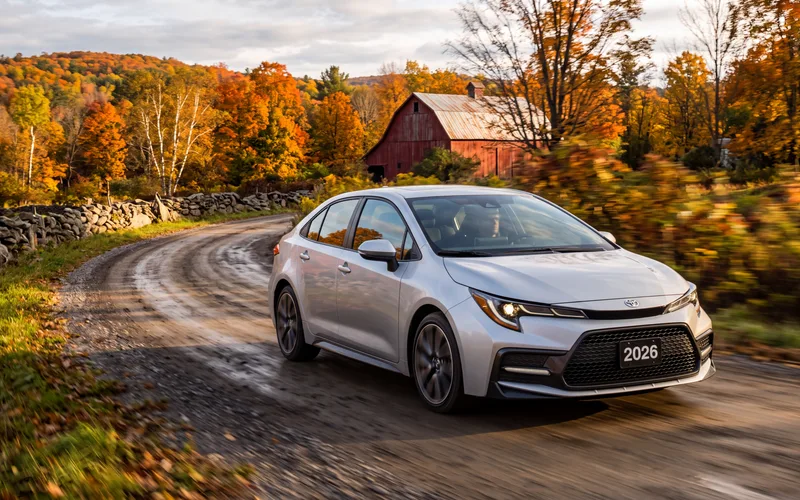 Toyota CorollaCompact Sedan
The Civic outguns the Corolla on driving fun, interior quality, and rear-seat space, and the Civic Hybrid at 49 MPG is only 3 MPG behind the Corolla Hybrid while feeling meaningfully quicker and better resolved.
Compare 2.13C
2.13C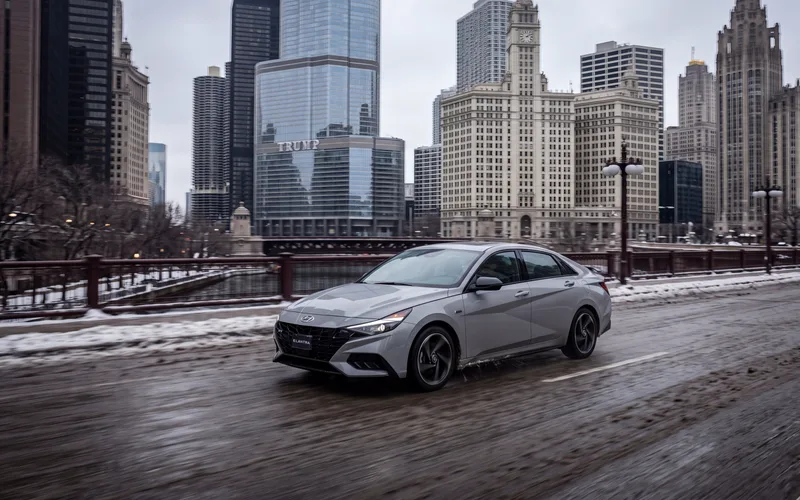 Hyundai ElantraCompact Sedan
The Elantra undercuts the Civic on price and packs more standard tech — bigger screens, wireless CarPlay, heated seats — into cheaper trims, plus a 10-year/100,000-mile powertrain warranty that dwarfs Honda's 5/60.
Compare 2.19C
2.19C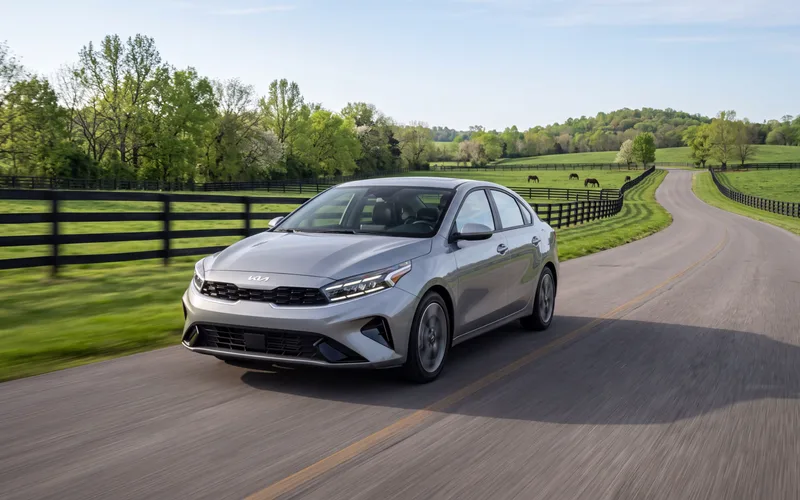 Kia K4Compact Sedan
The all-new K4 is the freshest, boldest-styled compact in the class with class-leading standard tech and the same 10/100 powertrain warranty as its Hyundai cousin, and it undercuts the Civic on sticker.
CompareHow it's evolved
10 scored model years · 2017–2026
Subject scores by year
Hover or tap a score to see what moved it versus the year before. A corner mark flags a big swing.
| Year | Performance | Efficiency | Safety | Space | Cost | Reliability | Tech | Use-case | Driving | Value |
|---|---|---|---|---|---|---|---|---|---|---|
| 2026 | 32 | 66 | 76 | 64 | 67 | 80 | 51 | 59 | 72 | 76 |
| 2025 | 31 | 59 | 75 | 65 | 64 | 81 | 47 | 54 | 66 | 77 |
| 2024 | 29 | 55 | 71 | 63 | 64 | 78 | 47 | 55 | 72 | 74 |
| 2023 | 27 | 56 | 78 | 64 | 79 | 78 | 50 | 61 | 74 | 84 |
| 2022 | 26 | 57 | 81 | 66 | 65 | 78 | 50 | 60 | 76 | 81 |
| 2021 | 29 | 57 | 72 | 69 | 78 | 78 | 37 | 59 | 77 | 77 |
| 2020 | 32 | 57 | 69 | 72 | 67 | 76 | 34 | 61 | 79 | 85 |
| 2019 | 29 | 67 | 68 | 73 | 78 | 74 | 35 | 61 | 80 | 88 |
| 2018 | 29 | 61 | 64 | 74 | 78 | 67 | 26 | 58 | 80 | 84 |
| 2017 | 30 | 61 | 64 | 73 | 78 | 68 | 32 | 56 | 80 | 85 |
Compare two years
Best fit & conditions
Higher scores mean a better fit for that use case. Learn more about use-case fit →
Subject profile
Trims & configurations
5 trimsScores above reflect the volume trim. Per-trim specs and scores are rolling out — the full lineup:
Academic Probation · NHTSA safety recalls
May 21, 2026Air bags: sensor: occupant classification: front passengerThe front passenger seat weight sensor may crack and short circuit, which can cause the air bags to deploy unintentionally during a crash.
Defect
Honda (American Honda Motor Co.) is recalling certain 2018-2021, 2023 Acura TLX, 2019-2024 RDX, 2017-2020, 2022-2026 MDX, 2017-2021, 2023, 2025 Honda Ridgeline, 2017-2022 Pilot, 2019-2021 Passport, 2018-2026 Odyssey, 2019-2022 Insight, 2019-2021 HR-V, 2018-2020 Fit, 2020-2022 CR-V Hybrid, 2017-2022 CR-V, 2017-2018, 2021 Civic Type R, 2017-2021 Civic hatchback, 2016-2020 Civic coupe, 2016-2022 Civic, 2017-2022 Accord Hybrid, and 2016-2022 Accord vehicles. The front passenger seat weight sensor may crack and short circuit, which can cause the air bags to deploy unintentionally during a crash.
Risk
Air bags that deploy unintentionally during a crash increase the risk of injury.
Remedy
Dealers will replace the seat weight sensors, free of charge. Owner notification letters were mailed July 7, 2026. Owners may contact Honda's customer service at 1-888-234-2138. Honda's numbers for this recall are BOL, WO9, OOA, WOM, XOH, NOC, POD, BOE, UOF, POB, EOG, AOI, QO8, TOJ, DO7, and SOK. This recall expands previous NHTSA recall number 24V064. Vehicle Identification Numbers (VINs) involved in this recall will be searchable on NHTSA.gov beginning May 29, 2026.
NHTSA campaign 26V332000 ↗Manufacturer no. Refer to Comments98,892 vehicles potentially affected (all models in the campaign)Owners notified Jul 6, 2026Filed by Honda (American Honda Motor Co.)Filed as CIVICOct 3, 2024SteeringThe steering gearbox assembly may have been manufactured incorrectly, which can cause excessive internal friction and lead to difficulty steering the vehicle.
Defect
Honda (American Honda Motor Co.) is recalling certain 2023-2025 Acura Integra, Civic Type R, CR-V Hybrid, CR-V, HR-V, 2022-2025 Civic, Civic Hatchback, 2024-2025 Acura Integra Type S, 2025 CR-V Fuel Cell EV, Civic Hybrid, and Civic Hatchback Hybrid vehicles. The steering gearbox assembly may have been manufactured incorrectly, which can cause excessive internal friction and lead to difficulty steering the vehicle.
Risk
Difficulty steering can increase the risk of a crash.
Remedy
Dealers will replace the worm gear spring and redistribute or add grease as necessary, free of charge. Owner notification letters were mailed November 18, 2024. Owners may contact Honda Customer Service at 1-888-234-2138. Honda's numbers for this recall are SJS, MJU, QJT and VJV.
NHTSA campaign 24V744000 ↗Manufacturer no. SJS, MJU, QJT, VJV1,693,199 vehicles potentially affected (all models in the campaign)Owners notified Nov 18, 2024Filed by Honda (American Honda Motor Co.)Filed as CIVIC, CIVIC HYBRIDFeb 1, 2024Air bags: sensor: occupant classification: front passengerThe front passenger seat weight sensor may crack and short circuit, failing to suppress the air bag as intended.
Defect
Honda (American Honda Motor Co.) is recalling certain 2020-2022 Pilot, Accord, Civic sedan, HR-V, Odyssey, 2020 Civic coupe, Fit, 2021-2022 Civic hatchback, 2021 Civic Type R, Insight, 2020-2021 CR-V, CR-V Hybrid, Passport, Ridgeline, Accord Hybrid, 2020 Acura MDX, 2022 Acura MDX, 2020-2022 Acura RDX, and 2020-2021 Acura TLX vehicles. The front passenger seat weight sensor may crack and short circuit, failing to suppress the air bag as intended.
Risk
An air bag that deploys unintentionally during a crash can increase the risk of injury.
Remedy
Dealers will replace the seat weight sensors, free of charge. Owner notification letters were mailed March 28, 2024. This is a phased recall. Owners may contact Honda customer service at 1-888-234-2138. Honda's numbers for these recalls are XHP and VHQ.
NHTSA campaign 24V064000 ↗Manufacturer no. XHP, VHQ750,114 vehicles potentially affected (all models in the campaign)Owners notified Mar 28, 2024Filed by Honda (American Honda Motor Co.)Filed as CIVICOct 19, 2023Steering: rack and pinionThe steering rack may have been incorrectly assembled, which can allow the tire to chafe against the lower suspension or tie rod end, possibly resulting in tire damage.
Defect
Honda (American Honda Motor Co.) is recalling certain 2022-2024 Civic 4-door and Civic 5-door vehicles that received a replacement power steering rack as part of a service repair. The steering rack may have been incorrectly assembled, which can allow the tire to chafe against the lower suspension or tie rod end, possibly resulting in tire damage.
Risk
A damaged tire can fail and increase the risk of a crash or injury.
Remedy
Dealers will inspect and replace the electric power steering rack, as necessary, free of charge. Owner letters were mailed January 16, 2024. Owners may contact Honda customer service at 1-888-234-2138. Honda's number for this recall is YFW.
NHTSA campaign 23V704000 ↗Manufacturer no. YFW264,567 vehicles potentially affected (all models in the campaign)Owners notified Dec 4, 2023Filed by Honda (American Honda Motor Co.)Filed as CIVIC
12 recalls on other model years of the Civic (2017–2021, 2023–2025)
Nov 14, 2024Seats: critical fastenersThe driver's seat cushion frame may not have been tightened properly, which can result in an unsecured seat. As such, these vehicles fail to comply with the requirements of Federal Motor Vehicle Safety Standard number 207, "Seating Systems."
Defect
Honda (American Honda Motor Co.) is recalling certain 2023-2024 Honda Accord, Accord Hybrid, Civic Sedan, Civic Hatchback, Pilot, and 2024 HR-V, Acura Integra and Acura Integra Type S vehicles. The driver's seat cushion frame may not have been tightened properly, which can result in an unsecured seat. As such, these vehicles fail to comply with the requirements of Federal Motor Vehicle Safety Standard number 207, "Seating Systems."
Risk
An unsecured driver's seat may not adequately restrain the driver during a crash, increasing the risk of injury.
Remedy
Dealers will replace the driver's seat cushion frame, free of charge. Owner notification letters were mailed January 6, 2025. Owners may contact Honda customer service at 1-888-234-2138.
NHTSA campaign 24V859000 ↗121 vehicles potentially affected (all models in the campaign)Owners notified Jan 6, 2025Filed by Honda (American Honda Motor Co.)Filed as CIVICOct 14, 2024Fuel system, gasoline: delivery: fuel pumpThe high-pressure fuel pump may crack and leak fuel.
Defect
Honda (American Honda Motor Co.) is recalling certain 2023-2024 Honda Accord, Accord Hybrid, 2023-2025 Honda CR-V Hybrid, and 2025 Honda Civic and Civic Hybrid vehicles. The high-pressure fuel pump may crack and leak fuel.
Risk
A fuel leak in the presence of an ignition source can increase the risk of a fire.
Remedy
Dealers will inspect and replace the high-pressure fuel pump as necessary, free of charge. Owner letters were mailed February 20, 2025. Owners may contact Honda customer service at 1-888-234-2138. Honda's number for this recall is PJW.
NHTSA campaign 24V763000 ↗Manufacturer no. PJW720,810 vehicles potentially affected (all models in the campaign)Owners notified Feb 20, 2025Filed by Honda (American Honda Motor Co.)Filed as CIVIC, CIVIC HYBRIDDec 18, 2023Fuel system, gasoline: delivery: fuel pumpThe fuel pump inside the fuel tank may fail.
Defect
Honda (American Honda Motor Co.) is recalling certain 2013-2023 Honda Accord, Civic Coupe, Civic Sedan, Civic Hatchback, Civic Type R, CR-V, HR-V, Ridgeline, Odyssey, Acura ILX, MDX, MDX Hybrid, RDX, RLX, TLX, 2019-2022 Honda Insight, Passport, 2020 Honda CR-V Hybrid, 2018-2019 Honda Clarity PHEV, Fit, and 2015-2020 Honda Accord Hybrid, Pilot, Acura NSX vehicles. The fuel pump inside the fuel tank may fail.
Risk
Fuel pump failure can cause an engine stall while driving, increasing the risk of a crash.
Remedy
Dealers will replace the fuel pump module, free of charge. Owner letters were mailed September 6, 2024. Owners may contact Honda customer service at 1-888-234-2138. Honda's numbers for this recall are KGC and KGD. This recall is an expansion of NHTSA recall numbers 21V-215 and 20V-314.
NHTSA campaign 23V858000 ↗Manufacturer no. KGC, KGD2,490,460 vehicles potentially affected (all models in the campaign)Owners notified Mar 29, 2024Filed by Honda (American Honda Motor Co.)Filed as CIVICJun 29, 2023Service brakes, hydraulic: foundation components: master cylinderThe tie rod fastener that connects the brake booster and the brake master cylinder may have been improperly assembled during manufacturing, which can cause the brake master cylinder to separate from the booster assembly.
Defect
Honda (American Honda Motor Co.) is recalling certain 2020-2021 Civic, 2020-2023 Ridgeline, 2021-2023 Passport, 2021-2022 Pilot, and 2020 Acura MDX vehicles. The tie rod fastener that connects the brake booster and the brake master cylinder may have been improperly assembled during manufacturing, which can cause the brake master cylinder to separate from the booster assembly.
Risk
Brake master cylinder separation can cause a loss of brake function and increase the risk of a crash.
Remedy
Dealers will inspect and repair the brake booster assembly as necessary, free of charge. Owner notification letters were mailed August 7, 2023. Owners may contact Honda customer service at 1-888-234-2138. Honda's numbers for this recall are VEU, AEV, and ZET.
NHTSA campaign 23V458000 ↗Manufacturer no. VEU, AEV, ZET124,077 vehicles potentially affected (all models in the campaign)Owners notified Aug 7, 2023Filed by Honda (American Honda Motor Co.)Filed as CIVICJun 15, 2023Service brakes, hydraulic: antilock/traction control/electronic limited slip: control unit/moduleA ball valve in the vehicle stability assist (VSA) modulator may leak brake fluid, which can result in unintended vehicle movement when the brake hold feature is engaged or an unexpected increase in brake pedal travel.
Defect
Honda (America Honda Motor Co.) is recalling certain 2023 Civic, Acura RDX, Acura Integra, and 2022 Honda Accord vehicles. A ball valve in the vehicle stability assist (VSA) modulator may leak brake fluid, which can result in unintended vehicle movement when the brake hold feature is engaged or an unexpected increase in brake pedal travel.
Risk
Unintended vehicle movement or an unexpected increase in brake pedal travel can increase the risk of a crash or injury.
Remedy
Dealers will replace the VSA modulator, free of charge. Owner notification letters were mailed July 24, 2023. Owners may contact Honda customer service at 1-888-234-2138. Honda's numbers for this recall are OEJ, XEK, AEY, XEX and OEW.
NHTSA campaign 23V430000 ↗Manufacturer no. OEJ,XEK,AEY,XEX,OEW386 vehicles potentially affected (all models in the campaign)Owners notified Jul 24, 2023Filed by Honda (American Honda Motor Co.)Filed as CIVICMar 25, 2021Fuel system, gasoline: delivery: fuel pumpThe low-pressure fuel pump inside the fuel tank may fail.
Defect
Honda (American Honda Motor Co.) is recalling certain 2019-2020 Acura MDX, MDX Sport Hybrid, RDX, TLX, Honda Accord, Civic Hatchback, Insight, 2019 Acura ILX, Honda Accord Hybrid, Civic Coupe, Civic Coupe Si, Civic Sedan, Civic Sedan Si, Civic Type R, Fit, HR-V, Odyssey, Passport, Pilot and Ridgeline, and 2018-2019 CR-V vehicles. The low-pressure fuel pump inside the fuel tank may fail.
Risk
Fuel pump failure can cause an engine stall while driving, increasing the risk of a crash.
Remedy
Honda will notify owners, and dealers will replace the fuel pump assembly, free of charge. Owner letters were mailed May 18, 2021. Owners may contact Honda customer service at 1-888-234-2138. Note: This recall is an expansion of recall 20V-314.
NHTSA campaign 21V215000 ↗Manufacturer no. Multiple Codes624,552 vehicles potentially affected (all models in the campaign)Owners notified May 18, 2021Filed by Honda (American Honda Motor Co.)Filed as CIVICMay 28, 2020Fuel system, gasoline: delivery: fuel pumpThe low-pressure fuel pump inside the fuel tank may fail.
Defect
Honda (American Honda Motor Co.) is recalling certain 2018-2019 Acura NSX, 2019 Acura RDX, RLX and RLX Sport Hybrid, 2018-2019 Honda Accord, Civic Hatchback, Civic Type R and HR-V, 2019-2020 Insight and 2019 Fit vehicles. The low-pressure fuel pump inside the fuel tank may fail.
Risk
If the fuel pump fails, the engine can stall while driving, increasing the risk of a crash.
Remedy
Honda will notify owners and dealers will replace the fuel pump assembly, free of charge. The recall began July 22, 2020. Owners may contact Honda customer service at 1-888-234-2138.
NHTSA campaign 20V314000 ↗135,995 vehicles potentially affected (all models in the campaign)Owners notified Jul 22, 2020Filed by Honda (American Honda Motor Co.)Filed as CIVICNov 16, 2018Equipment: other: owners/service/other manualThe owners guide in these vehicles may not have been included or if included, the owner's guide may not have been properly provided required information. As such, these vehicles fail to comply with the requirements of Federal Motor Vehicle Safety Standard (FMVSS) number 225, "Child Restraint Anchorage Systems."
Defect
Honda (American Honda Motor Co.) is recalling certain 2017-2018 Honda Civic Hatchback and Civic Type R vehicles. The owners guide in these vehicles may not have been included or if included, the owner's guide may not have been properly provided required information. As such, these vehicles fail to comply with the requirements of Federal Motor Vehicle Safety Standard (FMVSS) number 225, "Child Restraint Anchorage Systems."
Risk
If the information is missing or improper, it can increase the risk of injury or a crash.
Remedy
Honda will notify owners, and dealers will replace the owners information kit, free of charge. The recall began January 9, 2019. Owners may contact Honda customer service at 1-888-234-2138. Honda's number for this recall is O3A.
NHTSA campaign 18V817000 ↗Manufacturer no. O3A7,016 vehicles potentially affected (all models in the campaign)Owners notified Jan 9, 2019Filed by Honda (American Honda Motor Co.)Filed as CIVICSep 27, 2018Steering: electric power assist systemThe magnet that controls the torque sensor output signal for the electronic power steering system may not be properly secured, allowing the magnet to become dislodged. During a full lock turn, the dislodged magnet may cause steering assist to be applied in the opposite direction.
Defect
Honda (American Honda Motor Co.) is recalling certain 2017-2018 Honda Civic and CR-V vehicles. The magnet that controls the torque sensor output signal for the electronic power steering system may not be properly secured, allowing the magnet to become dislodged. During a full lock turn, the dislodged magnet may cause steering assist to be applied in the opposite direction.
Risk
The unintended steering input reduces vehicle maneuverability and increases the risk of a crash.
Remedy
Honda will notify owners, and dealers will replace the steering gearbox assembly, free of charge. The recall began November 9, 2018. Owners may contact Honda customer service at 1-888-234-2138. Honda's numbers for this recall are C2N, P2O.
NHTSA campaign 18V663000 ↗Manufacturer no. C2N, P2O54 vehicles potentially affected (all models in the campaign)Owners notified Nov 9, 2018Filed by Honda (American Honda Motor Co.)Filed as CIVICJun 20, 2018Equipment: other: labelsThe manufacturing date area of the certification labels may have random characters which can affect the owner's ability to determine if a safety recall includes their vehicle.
Defect
Honda (American Honda Motor Co.) is recalling certain 2018 Honda Civic vehicles. The manufacturing date area of the certification labels may have random characters which can affect the owner's ability to determine if a safety recall includes their vehicle.
Risk
If the owner is not able to verify if their vehicle is involved in safety recall, it can increase the risk of injury or crash.
Remedy
Honda will notify owners, and dealers will replace the certification label, free of charge. The recall began August 7, 2018. Owners may contact Honda customer service at 1-888-234-2138. Honda's number for this recall is U23.
NHTSA campaign 18V421000 ↗Manufacturer no. U2313 vehicles potentially affected (all models in the campaign)Owners notified Aug 7, 2018Filed by Honda (American Honda Motor Co.)Filed as CIVICApr 26, 2018Air bags · SeatsDriver and front passenger seatback pads sold as replacement service parts were made without slit openings for the seat-mounted side air bags. In the event of a crash necessitating air bag deployment, the seatback pad would interfere and adversely affect air bag performance. As such, these vehicles fail to comply with the requirements of Federal Motor Vehicle Safety Standard (FMVSS) number 214, "Side Impact Protection."
Defect
Honda (American Honda Motor Co.) is recalling certain 2017 Honda Civic Hatchback and Civic Type R vehicles. Driver and front passenger seatback pads sold as replacement service parts were made without slit openings for the seat-mounted side air bags. In the event of a crash necessitating air bag deployment, the seatback pad would interfere and adversely affect air bag performance. As such, these vehicles fail to comply with the requirements of Federal Motor Vehicle Safety Standard (FMVSS) number 214, "Side Impact Protection."
Risk
If the seat-mounted air bags cannot not deploy correctly in the event of a crash, there would be an increased risk of injury.
Remedy
Honda will notify owners, and dealers will replace the front seatback pads, free of charge. The recall began June 15, 2018. Owners may contact Honda customer service at 1-888-234-2138. Honda's number for this recall is E1D, U1B, and X1C.
NHTSA campaign 18V266000 ↗Manufacturer no. E1D, U1B, X1C69 vehicles potentially affected (all models in the campaign)Owners notified Jun 15, 2018Filed by Honda (American Honda Motor Co.)Filed as CIVICNov 9, 2017Power train: driveline: driveshaftThe right halfshaft may have been improperly heat treated, reducing its strength.
Defect
Honda (American Honda Motor Co.) is recalling certain 2017 Honda Civic Sedan and Coupe vehicles. The right halfshaft may have been improperly heat treated, reducing its strength.
Risk
The improper heat treatment can result in the halfshaft breaking, preventing the engine from moving the vehicle, and can allow a possible roll away situation if the parking brake is not engaged. This can increase the risk of a crash.
Remedy
Honda will notify owners, and dealers will inspect the halfshaft's serial number, replacing it as necessary and aligning the front wheels, free of charge. The recall began December 8, 2017. Owners may contact Honda customer service at 1-888-234-2138. Honda's number for this recall is K0E.
NHTSA campaign 17V706000 ↗Manufacturer no. K0E5,404 vehicles potentially affected (all models in the campaign)Owners notified Dec 8, 2017Filed by Honda (American Honda Motor Co.)Filed as CIVIC
Source: NHTSA Office of Defects Investigation recall database, model years 2017–2026. Recalls are listed by model year as the manufacturer filed them; whether a specific car is affected depends on its VIN — check a VIN at nhtsa.gov ↗. NHTSA model names matched to this page: CIVIC, CIVIC HYBRID.
Detailed scoring by subject
1Performance & PowertrainThe Civic's lowest-graded category.0.00F
The volume Sport trim uses the naturally aspirated 2.0-liter four-cylinder with 158 hp. EX and Touring upgrade to a 180-hp turbocharged 1.5-liter, but those are not the representative volume powertrain.
The volume Sport's 2.0-liter makes a modest 138 lb-ft at 4,200 rpm. The turbo engine available in EX and Touring provides substantially stronger low-rpm pull with 177 lb-ft from 1,700 to 4,500 rpm.
Car and Driver's instrumented test of the representative 2022 Civic Sport reached 60 mph in 8.8 seconds. This is slow even among mainstream compact sedans, though the turbo Touring is meaningfully quicker.
Power delivery is predictable and the redesigned car improved general refinement, but the volume 2.0-liter is weak after its initial response and becomes conspicuously buzzy at high rpm. The quieter, torquier 1.5-liter turbo is the more refined choice.
Honda's revised CVT is smooth in ordinary driving and its simulated shifts reduce sustained drone, with Sport mode and paddles on the Sport trim. Under full throttle it still produces noticeable rev flare and a rubber-band sensation, keeping it below a good conventional automatic.
Every 2022 Civic sedan trim is front-wheel drive; Honda offered no AWD or 4WD configuration. It therefore earns a low-band score under the rubric.
The regular 2022 sedan offered two distinct gasoline engines: a durable naturally aspirated 2.0-liter and a stronger 1.5-liter turbo, both with CVTs. That covers basic and upgraded performance needs, but there was no hybrid, PHEV, EV, AWD, or manual option in the regular U.S. sedan lineup for this model year.
2Efficiency & RangeOne of the Civic's weakest categories.1.87C-
The Sport was the volume trim at roughly 40% of the mix and is EPA-rated at 33 mpg combined. The all-new 2022 sedan's other mainstream trims range from 34 to 36 mpg combined.
The volume Sport trim is EPA-rated at 30 mpg city. LX, EX, and Touring are rated at 31, 33, and 31 mpg city, respectively.
The volume Sport trim is EPA-rated at 37 mpg highway. Its larger 18-inch wheels trail the 38–42 mpg ratings of the other sedan trims.
The Sport's 12.4-gallon tank and 33 mpg EPA combined rating yield about 409 miles of total range. This uses the representative combined-cycle rating rather than the more optimistic highway-only range.
EPA data for the 33-mpg 2.0-liter sedan configuration corresponding to the Sport estimates $1,800 per year at 15,000 miles. Regular fuel keeps operating cost competitive despite the Sport being the least efficient mainstream sedan trim.
Every regular 2022 Civic sedan trim runs on widely available 87-octane regular unleaded, avoiding a premium-fuel cost penalty. Honda also permits gasoline containing up to 15% ethanol, though it is not an E85 flex-fuel vehicle.
3SafetyThe Civic's best-graded category.3.53A-
The redesigned 2022 Civic four-door sedan earned NHTSA's maximum five-star overall vehicle score.
The all-new 2022 sedan earned Top Safety Pick+ and Good ratings in every crashworthiness test used for that award. Later, tougher updated moderate-overlap and side tests both returned Acceptable, keeping it just below a perfect score.
Every trim has the important Honda Sensing core—AEB, lane departure mitigation, lane keeping, Traffic Jam Assist, and full-speed adaptive cruise—but the volume Sport lacks blind-spot and rear cross-traffic alerts. Blind-spot information begins with EX, and cross-traffic monitoring is Touring-only.
The standard camera-based CMBS delivered top-tier vehicle and daytime-pedestrian avoidance, including avoiding both IIHS vehicle tests. Night pedestrian performance was still Advanced rather than Superior.
The volume Sport and base LX have neither feature; EX and Touring add alert-only blind-spot monitoring, but rear cross-traffic monitoring is restricted to Touring. No active blind-spot steering intervention, rear cross-traffic braking, or safe-exit alert is offered.
Standard LKAS and Traffic Jam Assist provide useful centering at highway and low speeds, and contemporary testing found the redesigned system stayed centered with little edge drift. It remains a hands-on assist and is less capable on poorly marked or sharply curving roads.
Full-speed ACC with Low-Speed Follow is standard even on LX and can brake to a complete stop, then resume by switch or accelerator. Its effective integration with LKAS makes it a strong mainstream highway assist, though it requires driver supervision and a manual input after a stop.
No factory hands-free driving system was offered on any 2022 Civic trim. Honda Sensing is a hands-on driver-assistance suite rather than a BlueCruise- or Super Cruise-style system.
Good-rated LED reflector headlights and automatic high beams are standard across the entire range. They are not curve-adaptive and produced a small amount of low-beam glare, which prevents a perfect score.
The redesign's low cowl, narrow and rearward-shifted A-pillars, and door-mounted mirrors create excellent forward and side sightlines. A standard multi-angle rear camera helps when reversing, though there is no surround-view camera.
IIHS gave the Civic its Good+ rating: both outboard lower-anchor pairs are visible, need almost no attachment force, and are easy to maneuver around, with a tether at every rear position. Two seats install easily, but three across did not fit in Cars.com's check and fixed head restraints/floppy buckles complicate booster use.
4Space & ComfortMid-pack among this car's ten categories.2.47C+
The 2022 Civic sedan has two front seats and a three-person rear bench across the mainstream lineup.
The volume Sport trim has no moonroof and therefore uses the roomier 39.3-inch figure; moonroof-equipped EX and Touring trims lose 1.7 inches.
All four 2022 Civic sedan trims provide the same, competitive front legroom.
Rear headroom is unchanged across the 2022 sedan trim range and is adequate for a compact sedan.
The Civic's 37.4 inches gives adults useful second-row knee room and is competitive in the compact-sedan segment.
The volume Sport trim has the larger 14.8-cu-ft trunk; Touring hardware trims capacity slightly to 14.4 cu ft.
A broad, deep phone tray, center-console bin, door pockets, cupholders, and a fold-down rear seat make everyday storage competitive, though the Sport lacks the EX's split-fold rear seat and there is no standout storage innovation.
The redesigned front seats are supportive and the rear bench is spacious enough for adults, but lower trims offer only manual adjustment and published opinions on long-stint cushioning are mixed.
The new chassis delivers disciplined body control and a generally balanced ride, but the Sport's low-profile 18-inch tires can make broken pavement feel firm and some tests found the ride uncomfortable.
Isolation improved with the redesign, but tire roar on coarse pavement and engine noise under load remain conspicuous, especially at highway speed.
Automatic climate control and rear heater ducts are standard, while EX adds dual-zone control and heated front seats. The volume Sport lacks heated seats, dual-zone climate, rear vents with separate controls, and power-seat adjustment, and no trim offers ventilation or a heated wheel.
5Cost of OwnershipMid-pack among this car's ten categories.2.40C+
The 2022 Civic sedan was the first model year of the eleventh generation, and Honda launched the redesigned entry LX at $22,695 delivered.
The Sport was the volume trim, accounting for about 40% of the mix in contemporaneous reporting, and requires no option package to represent a typical configuration.
Edmunds' model-year- and trim-specific projection includes scheduled and unscheduled maintenance plus repairs for the volume Sport sedan over 75,000 miles.
Applying Edmunds' projected five-year depreciation to the Sport's original delivered MSRP leaves roughly 63.5% retained, near the top of the sedan normalization band.
Honda's standard bumper-to-bumper coverage matches the mainstream minimum of three years and 36,000 miles.
The 2022 Civic carries Honda's standard five-year/60,000-mile powertrain coverage, the floor of this category's scoring band.
The 2022 Civic did not include scheduled maintenance (Honda Service Pass began with eligible 2023 models), but it did include useful 24/7 roadside assistance for 3 years/36,000 miles, including towing, jump-start, lockout, fuel delivery, and trip interruption benefits.
$24,095 volume-trim price minus its estimated resale value after 5 years (63.5% retained, or about $15,300) leaves about $8,795 in depreciation. Add the projected $8,459 in 5-year maintenance and repairs, and owning this vehicle for 5 years costs about $17,254 in total.
6Reliability & QualityOne of the Civic's strongest categories.3.27B+
Owner-survey evidence now places the 2022 Civic above average, but this was the first model year of the eleventh-generation redesign and therefore carries more launch-year risk than a mature Corolla. Consumer Reports' later buying-guide prediction was 4/5, while J.D. Power owner feedback identifies refinement complaints rather than a major mechanical defect pattern.
Honda had a strong multi-year reliability position around this model year, although it was not as consistently dominant as Toyota/Lexus. Its fifth-place finish in Consumer Reports' 2022 reliability survey supports a score in the low top-tier band.
Recall activity is worse than typical for a compact sedan: the 2022 Civic has accumulated multiple campaigns, including safety-significant steering and passenger-airbag occupant-sensor actions. The absence of a widespread engine or transmission failure keeps it above the bottom band, but the repeated safety campaigns materially reduce confidence.
Although the body and cabin were redesigned, the volume Sport trim retained Honda's naturally aspirated 2.0-liter four-cylinder and CVT, a comparatively simple and well-established combination. The optional 1.5-liter turbo has a more mixed early-family history, so the trim range does not merit an elite-90s score.
The redesigned cabin was a class benchmark for its price, combining convincing soft-touch surfaces and unusually polished controls with some expected hard plastics below the touch line. Multiple comparison reviews rated it materially nicer than mainstream compact-sedan norms.
Press cars showed tight, refined assembly and a cabin that remained largely undisturbed over broken pavement, but scattered owner reports of rattles and the model's pandemic-era first production year temper the result. It is solidly above average without being uniformly faultless.
Honda provides a dense, mature nationwide dealer network with broad urban and rural coverage and technicians deeply familiar with the Civic. Service experience varies by franchise, and the ordinary 3-year/36,000-mile warranty prevents a higher score.
The Civic has exceptionally abundant OEM, independent, used, and aftermarket parts support, while its volume and familiar powertrains keep routine repair prices low. RepairPal's cost data is far below the compact-car average, supporting a top-tier score.
7Technology & InfotainmentOne of the Civic's weakest categories.1.37D
The volume-trim 2022 Civic Sedan uses Honda's 7-inch color touchscreen; only the top Touring trim upgrades to 9 inches.
The redesigned interface is quick, logically arranged and retains useful physical volume/tuning controls and separate climate knobs. Occasional reviewer-reported boot and wireless-connection glitches keep it just below the top band.
Apple CarPlay and Android Auto are standard throughout the range, but LX, Sport and EX require a cable. Both connections are wireless only on Touring.
Touring has functional Honda satellite navigation with conventional voice recognition and real-time traffic, but lower trims have no native navigation and rely on phone projection. The assistant is command-based rather than a modern natural-language system.
The volume Sport and EX trims have a respectable 180-watt eight-speaker system, while Touring offers the first Bose-branded Honda system with 12 speakers and a subwoofer. The weak four-speaker LX base system limits the range-wide result.
LX, Sport and EX receive a useful 7-inch Driver Information Interface paired with a physical speedometer, while Touring alone gets the crisp, configurable 10.2-inch full-digital cluster. That is competitive functionality but not full-digital availability on the volume trims.
The audio-system firmware can download and install updates over Wi-Fi, including automatic downloads on supported configurations. Honda makes no claim of whole-vehicle, feature-adding OTA updates, so this is infotainment-level capability only.
HondaLink connectivity is standard, but the 2022 Civic's app implementation is primarily basic vehicle/service information rather than rich remote control. Remote engine start is supplied through the key fob on Sport and above, with no digital key and no well-supported Civic app-based remote suite.
LX, Sport and EX provide only one 2.5-amp front USB-A data/charging port and a 12-volt outlet. Touring adds wireless charging, a second front charging port and two rear USB ports, but there is no USB-C or household outlet anywhere in the range.
Push-button start is standard, and the volume Sport trim adds proximity Smart Entry, walk-away locking and key-fob remote start. LX is limited to conventional remote entry, while no trim offers phone-as-key or hands-free trunk access.
Every trim has a multi-angle rear camera with dynamic guidelines, but the volume trims have no parking sensors. Front/rear sensors, rear cross-traffic monitoring and low-speed braking are Touring-only, and no 360-degree camera or automated parking system is offered.
No head-up display was offered on any 2022 Civic Sedan trim.
8Use-Case FitMid-pack among this car's ten categories.2.02C
A spacious rear bench, wide-opening rear doors, unusually accessible anchors, and a 14.8-cu-ft trunk make two-child duty easy by compact-sedan standards. The low roof, sedan trunk opening, and volume Sport trim's one-piece folding rear seatback still impose compromises versus a hatchback or crossover.
This is a segment-leading family safety proposition because excellent crash results, Good headlights, strong automatic emergency braking, adaptive cruise, lane keeping, rear-seat reminder, and all-position belt reminders are standard even on the LX. Blind-spot monitoring is not standard on LX/Sport, and later tougher IIHS tests found Acceptable rather than Good performance, keeping it short of the very top.
Four people get adult-usable rear space and one of the class's larger trunks, while the redesigned chassis delivers a composed ride. Rear amenities are sparse, with no rear climate vents and limited rear charging, and Sport-trim highway noise prevents it from being an effortless four-up tourer.
Smooth CVT behavior, excellent controls and visibility, supportive seating, and standard low-speed-follow adaptive cruise plus Traffic Jam Assist make the Civic unusually low-effort in traffic. The Sport's firm impacts and merely adequate 158-hp acceleration are minor daily compromises.
The volume Sport's 33-mpg combined rating on regular fuel is inexpensive for a gas compact, while LX reaches 35 and EX reaches 36 combined. Cheap mainstream consumables and Honda's broad service network help, though the U.S. 2022 Civic offered no hybrid and therefore cannot match hybrid compact sedans.
The narrow compact footprint, low cowl, accurate steering, standard backup camera, and strong outward visibility make urban placement easy. Its 183.3-inch length is not tiny, and the volume Sport lacks blind-spot monitoring, parking sensors, and a surround-view camera.
The Civic sedan has no U.S. tow rating, cargo bed, or work payload provision, and its useful 14.8-cu-ft trunk is still passenger-car cargo space. It can carry sales samples or small tool bags but is not meaningfully work-capable.
The naturally aspirated 2.0-liter volume powertrain and inexpensive cloth cabin are sensible for high-mileage commuting and delivery use, backed by the Civic's long fleet reputation. However, 2022 was the first year of a redesign, owner-survey evidence includes infotainment and rattle complaints, and nothing about the low-slung chassis or carpeted interior is designed for work abuse.
There is no onboard AC power, factory hitch, bed access system, washable cargo surface, or commercial upfit ecosystem. A 12-volt outlet and folding rear seat are ordinary passenger-car conveniences rather than jobsite provisions.
A balanced ride, adult-friendly cabin, excellent fuel economy, roughly 400-plus miles between fills, Good-rated LED headlights, and standard adaptive cruise/lane keeping make it a strong compact long-distance car. Road noise on the volume Sport and the lack of rear vents or hands-free driving keep it below true mile-eater territory.
Front-wheel drive only, low passenger-car clearance, no tow rating, and no factory roof-rail system make the sedan fundamentally pavement-bound. It will reach a maintained gravel trailhead, but carrying bikes, boats, or camping equipment requires aftermarket solutions.
A class-competitive 14.8-cu-ft trunk and folding seatback handle normal luggage and long items, with a 60/40 split on select trims. The volume Sport's one-piece seatback, narrow sedan aperture, lack of underfloor storage, factory rails, or hitch make bulky gear much harder than in the Civic hatchback.
9Driving ExperienceGrades above the middle of the scale.3.16B
The redesigned Civic is unusually composed and agile for a mainstream compact sedan, with neutral behavior, controlled body motions, and class-leading reflexes. The volume Sport's firm setup remains capable even though stability control intervention and all-season tires limit ultimate grip.
Steering is light but quick, accurate, and naturally weighted, with more useful feedback and stronger straight-ahead definition than most mainstream compact sedans.
Responsive pedal action and excellent modulation inspire confidence, and the Sport performs strongly in instrumented stopping despite merely average results in one 60-mph test.
The gas/CVT drivetrains are well calibrated and easy to drive, while the available 1.5-liter turbo delivers linear power and the revised CVT responds intelligently. The volume Sport's naturally aspirated 2.0-liter is smooth but modest in response, keeping this below the exceptional band.
Vibration isolation is acceptable, but the 2.0-liter engine and CVT become loud and droning under acceleration. The turbo trims are quieter, yet the Civic remains conspicuously noisy when worked hard.
The representative volume Sport trim uses the wider 38.1-foot curb-to-curb diameter; smaller-wheel LX and EX versions turn in 36.1 feet.
A simple control layout, broad adjustment range, supportive seating, and unusually clear forward sightlines make the Civic exceptionally easy to place and operate. Its low sedan seating position may make ingress less convenient for some drivers, but there are few ergonomic compromises.
Sharp controls and a beautifully balanced chassis make even the ordinary Civic satisfying on a winding road. The volume Sport is held back by its slow, noisy 2.0-liter/CVT combination, but its underlying dynamics still clear the genuinely-fun threshold.
10Value & Market PositionOne of the Civic's strongest categories.3.53A-
The LX included unusually comprehensive active-safety equipment, adaptive cruise with low-speed follow, lane centering, traffic-jam assist, traffic-sign recognition, LED headlights, automatic climate control, and smartphone integration. Its steel wheels, four-speaker audio, single-piece folding rear seat, and lack of blind-spot monitoring keep it from the loaded-at-base tier.
The Civic cost somewhat more than several compact-sedan rivals, but returned substantial value through a roomy, refined cabin, excellent economy, strong safety content, sophisticated chassis tuning, and an available 180-hp turbo engine. The EX and Touring concentrate the most desirable comfort and technology features, tempering the otherwise standout value proposition.
Four sedan trims provide sensible steps from affordable LX through sporty-looking Sport, turbocharged EX, and near-luxury Touring, with two engines. Choice is only moderate because every 2022 U.S. sedan is front-wheel drive with a CVT, and there is no sedan manual, AWD, or hybrid configuration.
The redesigned Civic remained a very high-volume, widely accepted compact with 133,932 U.S. sales in 2022. Deliveries fell sharply from 263,787 in 2021 amid industry supply constraints, so its launch-year trajectory was weaker than its underlying nameplate popularity.
Honda is one of the strongest mainstream brands, and the Civic combines broad recognition, efficiency and durability associations with genuine enthusiast credibility. It is beloved and resale-friendly rather than aspirational in the luxury-brand sense.
The newly redesigned, highly demanded Civic arrived in an inventory-starved market with little negotiating room, so buyers generally received minimal incentive benefit and could face markups. This is a clear value weakness despite reflecting supply conditions rather than product failure.
The 2022 sedan inaugurated the 11th-generation Civic in North America, bringing a redesigned body and cabin plus updated technology and safety systems. As the first model year of the generation, it had essentially no redesign-obsolescence risk when new.
The 2022 Civic was both a major-award sweep and a repeatable comparison-test winner, taking North American Car of the Year and top honors from Edmunds, KBB, and U.S. News. Car and Driver and MotorTrend each placed it first in broad compact-sedan comparisons, making its reception nearly unanimous.