

The verdict
A mixed-report compact sedan, strong on value and held back by performance.
The 2019 Civic sedan is one of the best-rounded used compacts you can buy. It drives with real polish, the turbo EX gets 36 MPG combined, the trunk holds 15.1 cu ft, and it has held 64% of its value after five years. Honda Sensing (automatic emergency braking, adaptive cruise and lane keeping) was standard on every trim from the $20,345 LX up. What you give up: the base 158-hp engine is slow, every headlight IIHS tested was rated Poor, no trim had blind-spot monitoring, and the small 7-inch screen and USB-A ports already look dated.
Jump to scoresStrengths
- A lot of car for the money
- Very cheap to own over time
- Fun to drive, and it rides well
What holds it back
- The base engine is slow
- Dated tech and charging
- Poor headlights on every trim
Top alternatives
Cars shoppers cross-shop with the Honda Civic 2.40C+
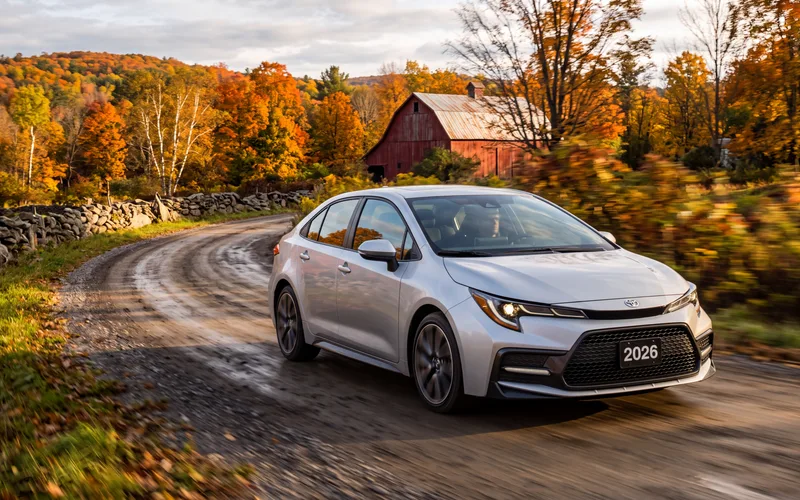 Toyota CorollaCompact Sedan
The Civic outguns the Corolla on driving fun, interior quality, and rear-seat space, and the Civic Hybrid at 49 MPG is only 3 MPG behind the Corolla Hybrid while feeling meaningfully quicker and better resolved.
Compare 2.13C
2.13C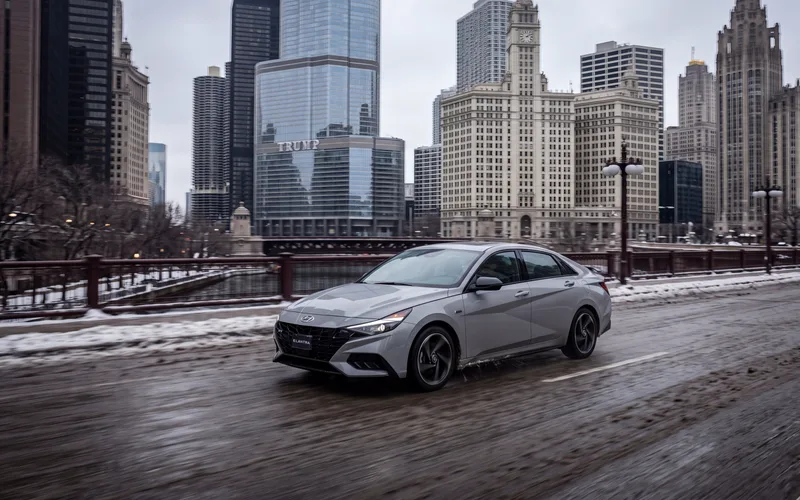 Hyundai ElantraCompact Sedan
The Elantra undercuts the Civic on price and packs more standard tech — bigger screens, wireless CarPlay, heated seats — into cheaper trims, plus a 10-year/100,000-mile powertrain warranty that dwarfs Honda's 5/60.
Compare 2.19C
2.19C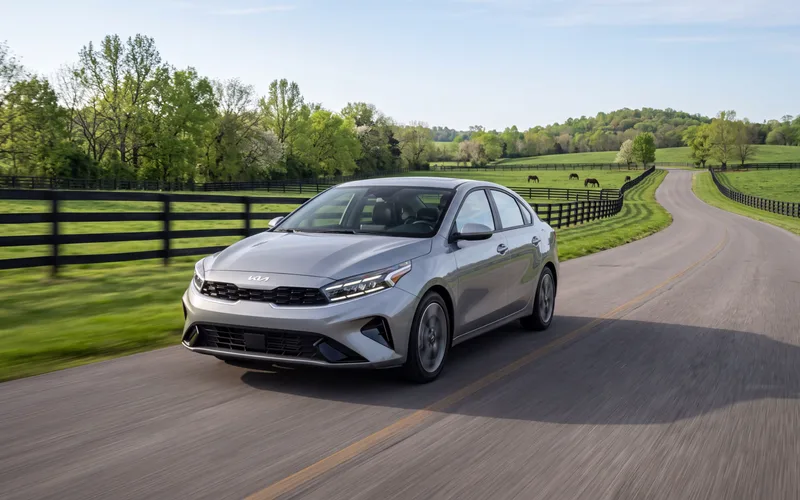 Kia K4Compact Sedan
The all-new K4 is the freshest, boldest-styled compact in the class with class-leading standard tech and the same 10/100 powertrain warranty as its Hyundai cousin, and it undercuts the Civic on sticker.
CompareHow it's evolved
10 scored model years · 2017–2026
Subject scores by year
Hover or tap a score to see what moved it versus the year before. A corner mark flags a big swing.
| Year | Performance | Efficiency | Safety | Space | Cost | Reliability | Tech | Use-case | Driving | Value |
|---|---|---|---|---|---|---|---|---|---|---|
| 2026 | 32 | 66 | 76 | 64 | 67 | 80 | 51 | 59 | 72 | 76 |
| 2025 | 31 | 59 | 75 | 65 | 64 | 81 | 47 | 54 | 66 | 77 |
| 2024 | 29 | 55 | 71 | 63 | 64 | 78 | 47 | 55 | 72 | 74 |
| 2023 | 27 | 56 | 78 | 64 | 79 | 78 | 50 | 61 | 74 | 84 |
| 2022 | 26 | 57 | 81 | 66 | 65 | 78 | 50 | 60 | 76 | 81 |
| 2021 | 29 | 57 | 72 | 69 | 78 | 78 | 37 | 59 | 77 | 77 |
| 2020 | 32 | 57 | 69 | 72 | 67 | 76 | 34 | 61 | 79 | 85 |
| 2019 | 29 | 67 | 68 | 73 | 78 | 74 | 35 | 61 | 80 | 88 |
| 2018 | 29 | 61 | 64 | 74 | 78 | 67 | 26 | 58 | 80 | 84 |
| 2017 | 30 | 61 | 64 | 73 | 78 | 68 | 32 | 56 | 80 | 85 |
Compare two years
Best fit & conditions
Higher scores mean a better fit for that use case. Learn more about use-case fit →
Subject profile
Trims & configurations
5 trimsScores above reflect the volume trim. Per-trim specs and scores are rolling out — the full lineup:
Academic Probation · NHTSA safety recalls
May 21, 2026Air bags: sensor: occupant classification: front passengerThe front passenger seat weight sensor may crack and short circuit, which can cause the air bags to deploy unintentionally during a crash.
Defect
Honda (American Honda Motor Co.) is recalling certain 2018-2021, 2023 Acura TLX, 2019-2024 RDX, 2017-2020, 2022-2026 MDX, 2017-2021, 2023, 2025 Honda Ridgeline, 2017-2022 Pilot, 2019-2021 Passport, 2018-2026 Odyssey, 2019-2022 Insight, 2019-2021 HR-V, 2018-2020 Fit, 2020-2022 CR-V Hybrid, 2017-2022 CR-V, 2017-2018, 2021 Civic Type R, 2017-2021 Civic hatchback, 2016-2020 Civic coupe, 2016-2022 Civic, 2017-2022 Accord Hybrid, and 2016-2022 Accord vehicles. The front passenger seat weight sensor may crack and short circuit, which can cause the air bags to deploy unintentionally during a crash.
Risk
Air bags that deploy unintentionally during a crash increase the risk of injury.
Remedy
Dealers will replace the seat weight sensors, free of charge. Owner notification letters were mailed July 7, 2026. Owners may contact Honda's customer service at 1-888-234-2138. Honda's numbers for this recall are BOL, WO9, OOA, WOM, XOH, NOC, POD, BOE, UOF, POB, EOG, AOI, QO8, TOJ, DO7, and SOK. This recall expands previous NHTSA recall number 24V064. Vehicle Identification Numbers (VINs) involved in this recall will be searchable on NHTSA.gov beginning May 29, 2026.
NHTSA campaign 26V332000 ↗Manufacturer no. Refer to Comments98,892 vehicles potentially affected (all models in the campaign)Owners notified Jul 6, 2026Filed by Honda (American Honda Motor Co.)Filed as CIVICDec 18, 2023Fuel system, gasoline: delivery: fuel pumpThe fuel pump inside the fuel tank may fail.
Defect
Honda (American Honda Motor Co.) is recalling certain 2013-2023 Honda Accord, Civic Coupe, Civic Sedan, Civic Hatchback, Civic Type R, CR-V, HR-V, Ridgeline, Odyssey, Acura ILX, MDX, MDX Hybrid, RDX, RLX, TLX, 2019-2022 Honda Insight, Passport, 2020 Honda CR-V Hybrid, 2018-2019 Honda Clarity PHEV, Fit, and 2015-2020 Honda Accord Hybrid, Pilot, Acura NSX vehicles. The fuel pump inside the fuel tank may fail.
Risk
Fuel pump failure can cause an engine stall while driving, increasing the risk of a crash.
Remedy
Dealers will replace the fuel pump module, free of charge. Owner letters were mailed September 6, 2024. Owners may contact Honda customer service at 1-888-234-2138. Honda's numbers for this recall are KGC and KGD. This recall is an expansion of NHTSA recall numbers 21V-215 and 20V-314.
NHTSA campaign 23V858000 ↗Manufacturer no. KGC, KGD2,490,460 vehicles potentially affected (all models in the campaign)Owners notified Mar 29, 2024Filed by Honda (American Honda Motor Co.)Filed as CIVICMar 25, 2021Fuel system, gasoline: delivery: fuel pumpThe low-pressure fuel pump inside the fuel tank may fail.
Defect
Honda (American Honda Motor Co.) is recalling certain 2019-2020 Acura MDX, MDX Sport Hybrid, RDX, TLX, Honda Accord, Civic Hatchback, Insight, 2019 Acura ILX, Honda Accord Hybrid, Civic Coupe, Civic Coupe Si, Civic Sedan, Civic Sedan Si, Civic Type R, Fit, HR-V, Odyssey, Passport, Pilot and Ridgeline, and 2018-2019 CR-V vehicles. The low-pressure fuel pump inside the fuel tank may fail.
Risk
Fuel pump failure can cause an engine stall while driving, increasing the risk of a crash.
Remedy
Honda will notify owners, and dealers will replace the fuel pump assembly, free of charge. Owner letters were mailed May 18, 2021. Owners may contact Honda customer service at 1-888-234-2138. Note: This recall is an expansion of recall 20V-314.
NHTSA campaign 21V215000 ↗Manufacturer no. Multiple Codes624,552 vehicles potentially affected (all models in the campaign)Owners notified May 18, 2021Filed by Honda (American Honda Motor Co.)Filed as CIVICMay 28, 2020Fuel system, gasoline: delivery: fuel pumpThe low-pressure fuel pump inside the fuel tank may fail.
Defect
Honda (American Honda Motor Co.) is recalling certain 2018-2019 Acura NSX, 2019 Acura RDX, RLX and RLX Sport Hybrid, 2018-2019 Honda Accord, Civic Hatchback, Civic Type R and HR-V, 2019-2020 Insight and 2019 Fit vehicles. The low-pressure fuel pump inside the fuel tank may fail.
Risk
If the fuel pump fails, the engine can stall while driving, increasing the risk of a crash.
Remedy
Honda will notify owners and dealers will replace the fuel pump assembly, free of charge. The recall began July 22, 2020. Owners may contact Honda customer service at 1-888-234-2138.
NHTSA campaign 20V314000 ↗135,995 vehicles potentially affected (all models in the campaign)Owners notified Jul 22, 2020Filed by Honda (American Honda Motor Co.)Filed as CIVIC
12 recalls on other model years of the Civic (2017–2018, 2020–2025)
Nov 14, 2024Seats: critical fastenersThe driver's seat cushion frame may not have been tightened properly, which can result in an unsecured seat. As such, these vehicles fail to comply with the requirements of Federal Motor Vehicle Safety Standard number 207, "Seating Systems."
Defect
Honda (American Honda Motor Co.) is recalling certain 2023-2024 Honda Accord, Accord Hybrid, Civic Sedan, Civic Hatchback, Pilot, and 2024 HR-V, Acura Integra and Acura Integra Type S vehicles. The driver's seat cushion frame may not have been tightened properly, which can result in an unsecured seat. As such, these vehicles fail to comply with the requirements of Federal Motor Vehicle Safety Standard number 207, "Seating Systems."
Risk
An unsecured driver's seat may not adequately restrain the driver during a crash, increasing the risk of injury.
Remedy
Dealers will replace the driver's seat cushion frame, free of charge. Owner notification letters were mailed January 6, 2025. Owners may contact Honda customer service at 1-888-234-2138.
NHTSA campaign 24V859000 ↗121 vehicles potentially affected (all models in the campaign)Owners notified Jan 6, 2025Filed by Honda (American Honda Motor Co.)Filed as CIVICOct 14, 2024Fuel system, gasoline: delivery: fuel pumpThe high-pressure fuel pump may crack and leak fuel.
Defect
Honda (American Honda Motor Co.) is recalling certain 2023-2024 Honda Accord, Accord Hybrid, 2023-2025 Honda CR-V Hybrid, and 2025 Honda Civic and Civic Hybrid vehicles. The high-pressure fuel pump may crack and leak fuel.
Risk
A fuel leak in the presence of an ignition source can increase the risk of a fire.
Remedy
Dealers will inspect and replace the high-pressure fuel pump as necessary, free of charge. Owner letters were mailed February 20, 2025. Owners may contact Honda customer service at 1-888-234-2138. Honda's number for this recall is PJW.
NHTSA campaign 24V763000 ↗Manufacturer no. PJW720,810 vehicles potentially affected (all models in the campaign)Owners notified Feb 20, 2025Filed by Honda (American Honda Motor Co.)Filed as CIVIC, CIVIC HYBRIDOct 3, 2024SteeringThe steering gearbox assembly may have been manufactured incorrectly, which can cause excessive internal friction and lead to difficulty steering the vehicle.
Defect
Honda (American Honda Motor Co.) is recalling certain 2023-2025 Acura Integra, Civic Type R, CR-V Hybrid, CR-V, HR-V, 2022-2025 Civic, Civic Hatchback, 2024-2025 Acura Integra Type S, 2025 CR-V Fuel Cell EV, Civic Hybrid, and Civic Hatchback Hybrid vehicles. The steering gearbox assembly may have been manufactured incorrectly, which can cause excessive internal friction and lead to difficulty steering the vehicle.
Risk
Difficulty steering can increase the risk of a crash.
Remedy
Dealers will replace the worm gear spring and redistribute or add grease as necessary, free of charge. Owner notification letters were mailed November 18, 2024. Owners may contact Honda Customer Service at 1-888-234-2138. Honda's numbers for this recall are SJS, MJU, QJT and VJV.
NHTSA campaign 24V744000 ↗Manufacturer no. SJS, MJU, QJT, VJV1,693,199 vehicles potentially affected (all models in the campaign)Owners notified Nov 18, 2024Filed by Honda (American Honda Motor Co.)Filed as CIVIC, CIVIC HYBRIDFeb 1, 2024Air bags: sensor: occupant classification: front passengerThe front passenger seat weight sensor may crack and short circuit, failing to suppress the air bag as intended.
Defect
Honda (American Honda Motor Co.) is recalling certain 2020-2022 Pilot, Accord, Civic sedan, HR-V, Odyssey, 2020 Civic coupe, Fit, 2021-2022 Civic hatchback, 2021 Civic Type R, Insight, 2020-2021 CR-V, CR-V Hybrid, Passport, Ridgeline, Accord Hybrid, 2020 Acura MDX, 2022 Acura MDX, 2020-2022 Acura RDX, and 2020-2021 Acura TLX vehicles. The front passenger seat weight sensor may crack and short circuit, failing to suppress the air bag as intended.
Risk
An air bag that deploys unintentionally during a crash can increase the risk of injury.
Remedy
Dealers will replace the seat weight sensors, free of charge. Owner notification letters were mailed March 28, 2024. This is a phased recall. Owners may contact Honda customer service at 1-888-234-2138. Honda's numbers for these recalls are XHP and VHQ.
NHTSA campaign 24V064000 ↗Manufacturer no. XHP, VHQ750,114 vehicles potentially affected (all models in the campaign)Owners notified Mar 28, 2024Filed by Honda (American Honda Motor Co.)Filed as CIVICOct 19, 2023Steering: rack and pinionThe steering rack may have been incorrectly assembled, which can allow the tire to chafe against the lower suspension or tie rod end, possibly resulting in tire damage.
Defect
Honda (American Honda Motor Co.) is recalling certain 2022-2024 Civic 4-door and Civic 5-door vehicles that received a replacement power steering rack as part of a service repair. The steering rack may have been incorrectly assembled, which can allow the tire to chafe against the lower suspension or tie rod end, possibly resulting in tire damage.
Risk
A damaged tire can fail and increase the risk of a crash or injury.
Remedy
Dealers will inspect and replace the electric power steering rack, as necessary, free of charge. Owner letters were mailed January 16, 2024. Owners may contact Honda customer service at 1-888-234-2138. Honda's number for this recall is YFW.
NHTSA campaign 23V704000 ↗Manufacturer no. YFW264,567 vehicles potentially affected (all models in the campaign)Owners notified Dec 4, 2023Filed by Honda (American Honda Motor Co.)Filed as CIVICJun 29, 2023Service brakes, hydraulic: foundation components: master cylinderThe tie rod fastener that connects the brake booster and the brake master cylinder may have been improperly assembled during manufacturing, which can cause the brake master cylinder to separate from the booster assembly.
Defect
Honda (American Honda Motor Co.) is recalling certain 2020-2021 Civic, 2020-2023 Ridgeline, 2021-2023 Passport, 2021-2022 Pilot, and 2020 Acura MDX vehicles. The tie rod fastener that connects the brake booster and the brake master cylinder may have been improperly assembled during manufacturing, which can cause the brake master cylinder to separate from the booster assembly.
Risk
Brake master cylinder separation can cause a loss of brake function and increase the risk of a crash.
Remedy
Dealers will inspect and repair the brake booster assembly as necessary, free of charge. Owner notification letters were mailed August 7, 2023. Owners may contact Honda customer service at 1-888-234-2138. Honda's numbers for this recall are VEU, AEV, and ZET.
NHTSA campaign 23V458000 ↗Manufacturer no. VEU, AEV, ZET124,077 vehicles potentially affected (all models in the campaign)Owners notified Aug 7, 2023Filed by Honda (American Honda Motor Co.)Filed as CIVICJun 15, 2023Service brakes, hydraulic: antilock/traction control/electronic limited slip: control unit/moduleA ball valve in the vehicle stability assist (VSA) modulator may leak brake fluid, which can result in unintended vehicle movement when the brake hold feature is engaged or an unexpected increase in brake pedal travel.
Defect
Honda (America Honda Motor Co.) is recalling certain 2023 Civic, Acura RDX, Acura Integra, and 2022 Honda Accord vehicles. A ball valve in the vehicle stability assist (VSA) modulator may leak brake fluid, which can result in unintended vehicle movement when the brake hold feature is engaged or an unexpected increase in brake pedal travel.
Risk
Unintended vehicle movement or an unexpected increase in brake pedal travel can increase the risk of a crash or injury.
Remedy
Dealers will replace the VSA modulator, free of charge. Owner notification letters were mailed July 24, 2023. Owners may contact Honda customer service at 1-888-234-2138. Honda's numbers for this recall are OEJ, XEK, AEY, XEX and OEW.
NHTSA campaign 23V430000 ↗Manufacturer no. OEJ,XEK,AEY,XEX,OEW386 vehicles potentially affected (all models in the campaign)Owners notified Jul 24, 2023Filed by Honda (American Honda Motor Co.)Filed as CIVICNov 16, 2018Equipment: other: owners/service/other manualThe owners guide in these vehicles may not have been included or if included, the owner's guide may not have been properly provided required information. As such, these vehicles fail to comply with the requirements of Federal Motor Vehicle Safety Standard (FMVSS) number 225, "Child Restraint Anchorage Systems."
Defect
Honda (American Honda Motor Co.) is recalling certain 2017-2018 Honda Civic Hatchback and Civic Type R vehicles. The owners guide in these vehicles may not have been included or if included, the owner's guide may not have been properly provided required information. As such, these vehicles fail to comply with the requirements of Federal Motor Vehicle Safety Standard (FMVSS) number 225, "Child Restraint Anchorage Systems."
Risk
If the information is missing or improper, it can increase the risk of injury or a crash.
Remedy
Honda will notify owners, and dealers will replace the owners information kit, free of charge. The recall began January 9, 2019. Owners may contact Honda customer service at 1-888-234-2138. Honda's number for this recall is O3A.
NHTSA campaign 18V817000 ↗Manufacturer no. O3A7,016 vehicles potentially affected (all models in the campaign)Owners notified Jan 9, 2019Filed by Honda (American Honda Motor Co.)Filed as CIVICSep 27, 2018Steering: electric power assist systemThe magnet that controls the torque sensor output signal for the electronic power steering system may not be properly secured, allowing the magnet to become dislodged. During a full lock turn, the dislodged magnet may cause steering assist to be applied in the opposite direction.
Defect
Honda (American Honda Motor Co.) is recalling certain 2017-2018 Honda Civic and CR-V vehicles. The magnet that controls the torque sensor output signal for the electronic power steering system may not be properly secured, allowing the magnet to become dislodged. During a full lock turn, the dislodged magnet may cause steering assist to be applied in the opposite direction.
Risk
The unintended steering input reduces vehicle maneuverability and increases the risk of a crash.
Remedy
Honda will notify owners, and dealers will replace the steering gearbox assembly, free of charge. The recall began November 9, 2018. Owners may contact Honda customer service at 1-888-234-2138. Honda's numbers for this recall are C2N, P2O.
NHTSA campaign 18V663000 ↗Manufacturer no. C2N, P2O54 vehicles potentially affected (all models in the campaign)Owners notified Nov 9, 2018Filed by Honda (American Honda Motor Co.)Filed as CIVICJun 20, 2018Equipment: other: labelsThe manufacturing date area of the certification labels may have random characters which can affect the owner's ability to determine if a safety recall includes their vehicle.
Defect
Honda (American Honda Motor Co.) is recalling certain 2018 Honda Civic vehicles. The manufacturing date area of the certification labels may have random characters which can affect the owner's ability to determine if a safety recall includes their vehicle.
Risk
If the owner is not able to verify if their vehicle is involved in safety recall, it can increase the risk of injury or crash.
Remedy
Honda will notify owners, and dealers will replace the certification label, free of charge. The recall began August 7, 2018. Owners may contact Honda customer service at 1-888-234-2138. Honda's number for this recall is U23.
NHTSA campaign 18V421000 ↗Manufacturer no. U2313 vehicles potentially affected (all models in the campaign)Owners notified Aug 7, 2018Filed by Honda (American Honda Motor Co.)Filed as CIVICApr 26, 2018Air bags · SeatsDriver and front passenger seatback pads sold as replacement service parts were made without slit openings for the seat-mounted side air bags. In the event of a crash necessitating air bag deployment, the seatback pad would interfere and adversely affect air bag performance. As such, these vehicles fail to comply with the requirements of Federal Motor Vehicle Safety Standard (FMVSS) number 214, "Side Impact Protection."
Defect
Honda (American Honda Motor Co.) is recalling certain 2017 Honda Civic Hatchback and Civic Type R vehicles. Driver and front passenger seatback pads sold as replacement service parts were made without slit openings for the seat-mounted side air bags. In the event of a crash necessitating air bag deployment, the seatback pad would interfere and adversely affect air bag performance. As such, these vehicles fail to comply with the requirements of Federal Motor Vehicle Safety Standard (FMVSS) number 214, "Side Impact Protection."
Risk
If the seat-mounted air bags cannot not deploy correctly in the event of a crash, there would be an increased risk of injury.
Remedy
Honda will notify owners, and dealers will replace the front seatback pads, free of charge. The recall began June 15, 2018. Owners may contact Honda customer service at 1-888-234-2138. Honda's number for this recall is E1D, U1B, and X1C.
NHTSA campaign 18V266000 ↗Manufacturer no. E1D, U1B, X1C69 vehicles potentially affected (all models in the campaign)Owners notified Jun 15, 2018Filed by Honda (American Honda Motor Co.)Filed as CIVICNov 9, 2017Power train: driveline: driveshaftThe right halfshaft may have been improperly heat treated, reducing its strength.
Defect
Honda (American Honda Motor Co.) is recalling certain 2017 Honda Civic Sedan and Coupe vehicles. The right halfshaft may have been improperly heat treated, reducing its strength.
Risk
The improper heat treatment can result in the halfshaft breaking, preventing the engine from moving the vehicle, and can allow a possible roll away situation if the parking brake is not engaged. This can increase the risk of a crash.
Remedy
Honda will notify owners, and dealers will inspect the halfshaft's serial number, replacing it as necessary and aligning the front wheels, free of charge. The recall began December 8, 2017. Owners may contact Honda customer service at 1-888-234-2138. Honda's number for this recall is K0E.
NHTSA campaign 17V706000 ↗Manufacturer no. K0E5,404 vehicles potentially affected (all models in the campaign)Owners notified Dec 8, 2017Filed by Honda (American Honda Motor Co.)Filed as CIVIC
Source: NHTSA Office of Defects Investigation recall database, model years 2017–2026. Recalls are listed by model year as the manufacturer filed them; whether a specific car is affected depends on its VIN — check a VIN at nhtsa.gov ↗. NHTSA model names matched to this page: CIVIC, CIVIC HYBRID.
Detailed scoring by subject
1Performance & PowertrainThe Civic's lowest-graded category.0.00F
The volume LX sedan uses the carry-over naturally aspirated 2.0-liter four-cylinder at 158 hp. The refreshed 2019 sedan also offered a 174-hp 1.5-liter turbo on EX and above and a 205-hp turbo in the Si.
The representative LX's 2.0-liter engine makes a modest 138 lb-ft at 4,200 rpm. Turbo sedans provide substantially more low- and midrange torque, but they are not the volume configuration used for the raw value.
Consumer Reports' instrumented base-engine result is representative of the volume LX/CVT. The turbo CVT and manual-only Si are meaningfully quicker but belong to higher or specialized trims.
The base 2.0-liter is smooth and predictable in ordinary driving, while the available turbo delivers strong, largely seamless midrange pull. Both become vocal under heavy load, and the base engine lacks urgency, keeping refinement short of the top band.
Honda's CVT is unobtrusive and smooth at normal throttle and avoids gear hunting, but hard acceleration produces delayed response, sustained revs, and noticeable drone. A well-regarded six-speed manual was available on LX, Sport, and the Si, though the volume LX was commonly CVT-equipped.
Every 2019 U.S. Civic sedan was front-wheel drive; Honda offered no AWD system on any trim. That is simple and efficient but provides no added-traction choice.
The sedan covered economy, stronger mainstream, and performance buyers with 2.0-liter naturally aspirated, 1.5-liter turbo, and higher-output Si turbo calibrations, plus manual and CVT choices. The U.S. 2019 tenth-generation sedan offered no hybrid, PHEV, or EV, limiting breadth below the top band.
2Efficiency & RangeMid-pack among this car's ten categories.2.53C+
The volume-oriented EX CVT is the representative configuration and earns an EPA 36 MPG combined. The refreshed 2019 sedan ranged from 32 MPG combined for the Sport CVT to 36 MPG for EX and EX-L.
The turbocharged EX CVT's 32 MPG city is strong for a non-hybrid 2019 compact sedan, though it lacks electric assistance for stop-and-go driving.
The EX CVT's 42 MPG highway is the 2019 sedan lineup's efficiency peak and a notably good result for a gasoline-only compact sedan.
Honda specifies a 12.4-gallon tank and EPA rates the representative trim at 36 MPG combined, yielding about 446 miles of combined-cycle range. That is useful road-trip range despite the Civic's compact dimensions.
EPA's current standardized estimate is $1,700 per year for the 36-MPG representative configuration. Its high gasoline efficiency keeps annual energy cost competitive even without a hybrid system.
All regular Civic sedan trims run on inexpensive, widely available regular unleaded, with no charging or specialty-fuel needs. This is nearly the simplest and least costly fueling arrangement possible.
3SafetyMid-pack among this car's ten categories.2.58C+
The exact 2019 Civic four-door FWD earned NHTSA's maximum five-star overall rating, with five stars in the overall frontal, side, and rollover categories.
IIHS rates the 2019 sedan Good in every listed crashworthiness test, including both driver- and passenger-side small overlap. It received no Top Safety Pick award because all available headlights were Poor, so it falls short of the highest safety tier despite excellent occupant protection.
The 2019 refresh made Honda Sensing standard on every sedan trim, bringing AEB, adaptive cruise, lane keeping, lane-departure warning, and road-departure mitigation even to LX. The suite is incomplete by current standards because conventional blind-spot monitoring and rear cross-traffic alert were unavailable; EX and above used a passenger-side LaneWatch camera instead.
The standard Collision Mitigation Braking System earned IIHS Superior ratings for both vehicle-to-vehicle and daytime pedestrian prevention. IIHS did not publish a nighttime pedestrian result for this model, keeping it just below the top band.
No 2019 Civic sedan trim offered bilateral blind-spot monitoring, rear cross-traffic alert, active intervention, or safe-exit assistance. EX and higher trims provided Honda LaneWatch, but that is only a passenger-side camera and is absent from LX and Sport.
Standard LKAS, lane-departure warning, and road-departure mitigation provide useful hands-on steering support. This early Honda Sensing implementation applies mild corrective torque rather than the smooth, continuous centering delivered by newer highway-assist systems.
Adaptive cruise is standard, and the volume CVT configuration includes Low-Speed Follow for stop-and-go use while working with LKAS on highways. Manual-transmission cars lack Low-Speed Follow, and the system has none of the lane-change or traffic-jam refinements of newer integrated assists.
No hands-free driving system was offered on any 2019 Civic sedan trim. Honda Sensing's ACC and LKAS require continuous driver supervision and hands on the wheel.
IIHS rated every one of the four available 2019 headlight variations Poor, including the halogen systems on volume trims and LED systems on upper trims. Some variants include high-beam assist, but none is curve-adaptive and the measured illumination remains a major weakness.
The Civic's manageable footprint and broad glass area make general sightlines workable, though its low seating position and fastback-like roof create rear-quarter blind zones. A multi-angle rearview camera is standard and LaneWatch helps on the passenger side from EX upward, but no surround-view camera is offered.
The sedan has two complete outboard LATCH positions and a center tether, but IIHS rates ease of use only Acceptable because the lower anchors are recessed too deeply in the seat. The rear bench works for two child seats, while three-across is constrained by compact-sedan width.
4Space & ComfortGrades above the middle of the scale.2.94B-
The volume Civic sedan has two front seats and a three-place rear bench.
The volume non-moonroof LX supplies excellent front headroom for a compact sedan; the moonroof reduces it substantially on EX and above.
Front legroom is comfortably within compact-sedan norms and is unchanged across mainstream sedan trims.
Rear headroom is adequate for most adults, though the fast roofline and moonroof make upper trims slightly tighter.
The Civic offers generous adult-usable rear legroom for the compact class.
The mainstream sedan's 15.1-cu-ft trunk is among the largest in the compact class, though Touring audio hardware and Si packaging reduce capacity.
A large configurable center console, two-tier phone cubby with cable pass-through, useful armrest bin, and sizable cupholders make storage a genuine class strength, despite narrow door pockets.
Supportive, compliant front seats remain comfortable on long drives, the power driver's seat has broad adjustment, and the rear bench is also comfortable; the low seating position is the main compromise.
The Civic delivers a segment-leading blend of impact absorption and disciplined body control; Sport trim is firmer but remains comfortable.
Additional 2019 sound insulation improved refinement, but coarse-road noise and some CVT/engine drone keep it from being a class leader.
Automatic climate control is standard, while EX adds dual-zone control, heated front seats, remote start and a power driver's seat; Touring adds leather, a power passenger seat and heated rear outboard seats, but ventilation and a heated wheel are unavailable.
5Cost of OwnershipOne of the Civic's strongest categories.3.29B+
The refreshed 2019 Civic sedan's entry price was exceptionally low for a compact sedan, even after including destination.
The automatic LX was the mainstream volume configuration; Edmunds also identifies the LX 2.0L CVT sedan as the model's most popular trim.
CarEdge's Civic model estimate includes scheduled service, wear items, and expected repairs; its low total is consistent with RepairPal's $368 average annual repair cost for the 2019 Civic.
The value uses KBB's observed 2024 resale figure for the 2019 LX sedan divided by its original MSRP. KBB also named the Civic its 2019 compact-car Best Resale Value winner, supporting the unusually strong retention.
Honda's standard new-vehicle coverage sits at the bottom of the category's 3-to-5-year scoring band.
The conventional Honda powertrain warranty is adequate but sits at the bottom of the category's 5-to-10-year band.
Honda included useful 24-hour roadside assistance for the full 3-year/36,000-mile basic-warranty term, but no complimentary scheduled maintenance. That earns the bottom of the basic-roadside-only band.
$21,145 volume-trim price minus its estimated resale value after 5 years (64.1% retained, or about $13,554) leaves about $7,591 in depreciation. Add the projected $1,786 in 5-year maintenance and repairs, and owning this vehicle for 5 years costs about $9,377 in total.
6Reliability & QualityGrades above the middle of the scale.3.00B
Owner-derived evidence is respectable but not top-tier: J.D. Power is favorable, while Consumer Reports places the 2019 Civic near the middle of its model-year peers. This mixed result supports an above-average but restrained score.
Honda has a strong long-run reputation, but period dependability data did not place it among the elite brands. Its 2019 J.D. Power result was worse than the industry average, making a mid-to-upper-pack score more defensible than a top-five score.
Three NHTSA recalls are more than a clean record, and the fuel-pump defect is safety-relevant because it can stall the engine while driving. Owner-survey evidence also identifies climate-system trouble, so this generation does not merit the rubric's typical-or-clean band.
The volume LX sedan's naturally aspirated 2.0-liter/CVT combination has the simpler and stronger durability reputation. The available 1.5-liter turbo prevents a higher range-wide score because earlier tenth-generation examples had fuel-in-oil concerns and received a warranty extension, although the cited campaign applied to 2016-2018 Civics rather than the scored 2019 year.
The cabin uses visible plastic but provides unusually good touch-point materials and perceived quality for a mainstream compact. Multiple contemporary reviews characterize it as roomy, modern, and better than an economy-car penalty box.
Contemporary testing found notably tight, solid construction inside and out. Scattered owner reports of aging squeaks and rattles keep it short of an exceptional score.
Honda's roughly one-thousand-dealer U.S. footprint gives Civic owners dense nationwide access to warranty and routine service. Service experience varies by franchise, so network breadth earns more credit than implied satisfaction.
The mass-market Civic has abundant OEM and aftermarket support, while measured repair spending is substantially below the compact-car average. That combination fits the rubric's top band.
7Technology & InfotainmentOne of the Civic's weakest categories.0.29F
The representative volume trims use Honda's sole 7-inch Display Audio touchscreen. The entry LX is a meaningful exception because it has no center touchscreen at all, while no larger factory screen was offered.
The 2019 refresh materially improved daily use by restoring a volume knob and hard shortcut buttons, but the small, low-resolution interface remained slow and somewhat confusing. Physical climate controls and wired phone projection keep it usable rather than poor.
Wireless projection was not offered. Apple CarPlay and Android Auto are wired and begin with Sport, leaving the LX without either system.
Touring alone has Honda's embedded satellite navigation, voice recognition and live traffic; the system is functional but dated, and other touchscreen trims rely primarily on Siri or Google voice through wired projection. That makes native capability useful but narrowly available.
Sport and EX-family cars have an adequate 180-watt eight-speaker setup, and Si/Touring offer a credible 450-watt ten-speaker system with a subwoofer. It is a substantial factory upgrade, though unbranded and short of a premium-audio benchmark.
Every refreshed 2019 sedan gained the Driver Information Interface, a crisp central digital gauge/readout controlled from the steering wheel and customizable for trip, phone, audio and driver-assistance information. It is useful and relatively advanced for its year, but not a modern full-width, freely configurable cluster.
The 2019 Civic lacks the embedded connected architecture for recurring whole-vehicle OTA feature updates. Honda's year-specific documentation describes dealer/USB-style system support and connected phone content, not remote firmware or feature delivery.
HondaLink provides basic phone-connected vehicle information and service conveniences, but this Civic does not support the rich subscription telematics functions found on newer Hondas—no app-based remote start, lock/unlock, live location or digital key. Remote start, where fitted, works from the key fob.
Device power is sparse and dated: USB-A only, low 1.0/1.5-amp output, and all connections are in the front console. There are no rear USB ports, USB-C ports, wireless charging pad or household outlet.
Smart Entry and push-button start are standard from Sport upward, and remote engine start is included on CVT Sport and EX-family/Touring cars. LX retains conventional remote entry, and the range has neither phone-as-key nor hands-free trunk access.
All trims have a multi-angle rear camera, and EX upward add the passenger-side LaneWatch camera, but neither substitutes for modern parking assistance. The factory range offers no surround-view camera, parking sensors or automated parking.
No head-up display was offered on any 2019 Civic Sedan trim or option package.
8Use-Case FitOne of the Civic's weakest categories.2.14C
Adult-usable rear legroom, two complete LATCH positions, a folding rear seat and a large trunk make family logistics unusually easy for a compact sedan. The low roof, wide sills and sedan trunk opening remain compromises when loading children, rear-facing seats and bulky strollers.
For the 2019 refresh, Honda made Honda Sensing standard across the regular sedan range, putting collision mitigation braking, lane keeping and adaptive cruise on affordable trims, while crashworthiness is excellent. Poor base headlights, no blind-spot monitoring or rear-occupant alert, and only Acceptable LATCH usability keep it below the very top band.
The roomy rear bench, composed ride and 15.1-cu-ft trunk support four-person trips better than most compact sedans. Rear passengers lack dedicated vents, charging ports and entertainment, while the low seating position and road noise become more noticeable on long days.
The smooth volume-trim CVT, light controls, balanced ride and standard adaptive cruise with low-speed follow make the Civic exceptionally low-effort in traffic. A low seating position, road noise and occasionally over-eager collision warnings are the main daily irritants.
The gas sedan is exceptionally frugal on regular fuel, with the volume LX CVT rated at 33 mpg combined and the turbo EX/EX-L reaching 36 mpg combined, plus inexpensive compact-car consumables. Despite the run metadata listing hybrid availability for the nameplate, Honda offered no U.S. Civic Hybrid for model year 2019, so this score uses the actual gasoline sedan lineup.
Compact width, a tight turning circle, light steering and a standard multi-angle rear camera make the Civic easy to place in urban spaces. Its fastback-like rear pillars restrict over-shoulder visibility, and it offers neither factory parking sensors nor a surround-view camera.
The Civic can carry sales samples or small tools in its generous trunk, but it has no bed, meaningful payload headroom, factory tow package or published U.S. tow rating. It is a passenger car rather than a work vehicle.
The mature tenth-generation platform and Civic's strong reliability record support light fleet use, particularly with the naturally aspirated 2.0-liter engine. Low clearance, carpeted passenger-car trim and no heavy-duty cooling, suspension or interior package make sustained abuse inappropriate.
There are almost no jobsite provisions: no household outlet, factory hitch, roof rails, external tie-downs, washable floor or work-upfit catalog. Available cargo accessories provide ordinary organization rather than commercial utility.
Supportive seats, a settled ride, strong fuel economy and standard adaptive cruise with low-speed follow make the Civic a capable compact-class highway car with roughly 400-plus miles of nominal range. Road noise, limited rear amenities and imperfect adaptive-cruise responses cap its endurance score.
It can manage maintained gravel roads and carry bikes on an aftermarket rack, but every regular sedan is front-wheel drive with passenger-car clearance. No AWD, factory roof rails, tow rating, camping outlet or underbody protection is offered.
A 15.1-cu-ft trunk is excellent for a compact sedan, and most trims' 60/40 folding rear seat accommodates skis and long boxes. The fixed parcel shelf, sedan aperture, lack of roof rails or factory hitch, and LX's one-piece folding seat limit bulky-gear flexibility.
9Driving ExperienceOne of the Civic's strongest categories.3.41B+
The tenth-generation Civic sedan is unusually composed and engaging for a mainstream compact, combining strong body control with a compliant ride. The 2019 refresh did not alter that fundamentally excellent chassis.
Steering is quick, accurate, and well matched to the agile chassis, though its light weighting keeps it just short of truly rich enthusiast feedback.
The firm, progressive pedal inspires confidence in normal and hard use, but instrumented-performance commentary indicates that ultimate stopping ability trails the best competitors.
The volume 1.5-liter turbo/CVT combination is responsive and flexible, with convincing everyday acceleration and well-integrated operation. CVT behavior under sustained acceleration prevents a higher score; the naturally aspirated 2.0-liter in LX/Sport is slower.
Honda added sound insulation for 2019, but the turbo engine's coarse growl and CVT-induced drone remain evident under load. Noise is noticeable rather than genuinely disruptive.
The representative EX sedan has the smaller 35.4-foot turning diameter, which is maneuverable for the class; trims with 18-inch wheels require 37.4 feet.
A broad seat-adjustment range, generous telescoping wheel travel, and sensible primary controls suit drivers of varied sizes. The low seating position and fastback-like rear roofline modestly limit outward visibility, while the restored volume knob improves 2019 usability.
Immediate steering, an athletic chassis, and responsive available turbo power make the ordinary Civic sedan one of the rare mainstream compacts that is enjoyable even outside its Si variant.
10Value & Market PositionThe Civic's best-graded category.4.00A+
The refreshed 2019 sedan made the full Honda Sensing driver-assistance suite standard from the base LX upward, unusually generous safety content at a $20,345 delivered starting price. The volume-oriented EX also included the 1.5-liter turbo, moonroof, heated front seats, dual-zone climate control, smartphone integration, and LaneWatch.
The Civic paired near-segment-entry pricing with standard active safety, excellent space and economy, and a strong 174-hp turbo option; KBB specifically judged its competitive price, low running costs, and retained value best in class. Even the enthusiast-oriented Si sedan delivered 205 hp and a limited-slip differential for roughly $25,000.
The sedan alone offered five well-spaced mainstream trims from LX through Touring, two engines, manual and CVT choices on lower trims, plus the separate manual-only Si performance sedan. It was front-wheel-drive only and, importantly for this exact year, there was no U.S. Civic Hybrid, so drivetrain breadth was not absolute.
Civic was the U.S. compact-car sales leader in 2019 and the country's second-best-selling passenger car after Camry. Its 325,650 sales narrowly beat Corolla and were nearly twice Elantra volume, demonstrating exceptional acceptance despite the market's migration toward crossovers.
Honda's reliability and resale reputation gave the mainstream Civic unusually strong buyer pull, while the Si and Type R supplied a credible enthusiast halo. KBB called Civic the segment's resale champion and ranked it the second most-awarded vehicle of 2019.
The exceptionally popular Civic generally relied on ordinary dealer negotiation rather than large factory cash or subsidized-rate offers. Contemporary buyer reporting indicated no Civic promotional APR and roughly 4.9% standard Honda financing, so buyer benefit existed mainly through below-MSRP negotiation rather than meaningful incentives.
The 2019 sedan was year four of the tenth generation, but a substantive mid-cycle refresh kept it fresh: revised styling, a new Sport trim, standard Honda Sensing, and improved touchscreen controls. With the eleventh generation not arriving until the 2022 U.S. model year, redesign risk was not imminent at purchase.
Reception was class-leading: KBB awarded Civic its fifth consecutive Compact Car Best Buy, while Car and Driver gave the range 9/10, Editors' Choice recognition, and included Civic variants in 10Best. Reviewers consistently treated the Civic as the compact benchmark, with only minor infotainment and styling complaints.