

The verdict
A mixed-report compact sedan, strong on value and held back by performance.
Overall 2.35 (C+) across 10 graded subjects. Its strongest is value & market position at 3.81 (A), its weakest performance & powertrain at 0.11 (F). 8 of 10 subjects grade at C− or better.
Jump to scoresStrengths
- Value & Market Position
- Driving Experience
- Reliability & Quality
What holds it back
- Performance & Powertrain
- Technology & Infotainment
- Efficiency & Range
Top alternatives
Cars shoppers cross-shop with the Honda Civic 2.40C+
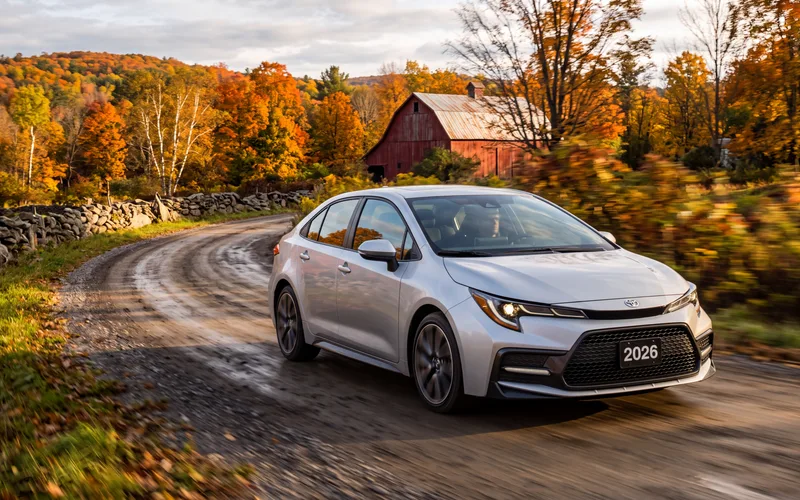 Toyota CorollaCompact Sedan
The Civic outguns the Corolla on driving fun, interior quality, and rear-seat space, and the Civic Hybrid at 49 MPG is only 3 MPG behind the Corolla Hybrid while feeling meaningfully quicker and better resolved.
Compare 2.13C
2.13C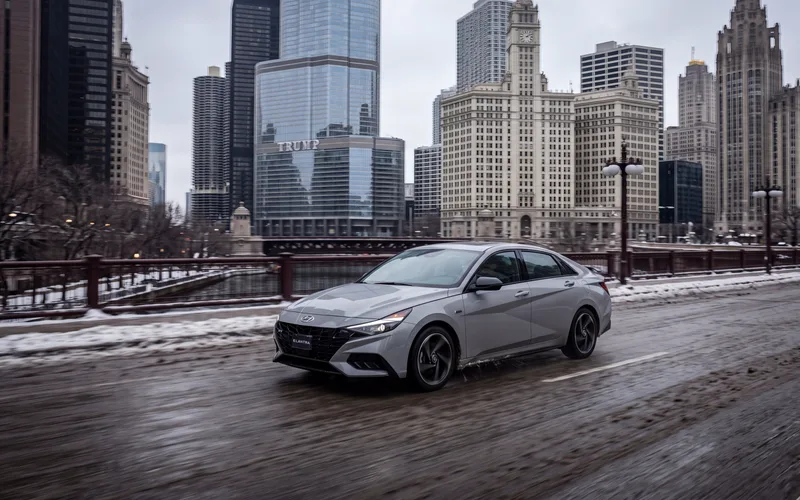 Hyundai ElantraCompact Sedan
The Elantra undercuts the Civic on price and packs more standard tech — bigger screens, wireless CarPlay, heated seats — into cheaper trims, plus a 10-year/100,000-mile powertrain warranty that dwarfs Honda's 5/60.
Compare 2.19C
2.19C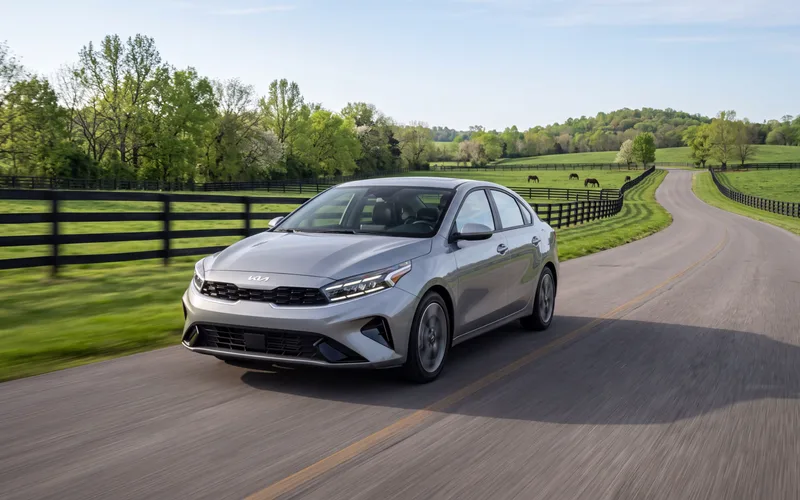 Kia K4Compact Sedan
The all-new K4 is the freshest, boldest-styled compact in the class with class-leading standard tech and the same 10/100 powertrain warranty as its Hyundai cousin, and it undercuts the Civic on sticker.
CompareHow it's evolved
8 scored model years · 2017–2026
Subject scores by year
Hover or tap a score to see what moved it versus the year before. A corner mark flags a big swing.
| Year | Performance | Efficiency | Safety | Space | Cost | Reliability | Tech | Use-case | Driving | Value |
|---|---|---|---|---|---|---|---|---|---|---|
| 2026 | 32 | 66 | 76 | 64 | 67 | 80 | 51 | 59 | 72 | 76 |
| 2023 | 27 | 56 | 78 | 64 | 79 | 78 | 50 | 61 | 74 | 84 |
| 2022 | 26 | 57 | 81 | 66 | 65 | 78 | 50 | 60 | 76 | 81 |
| 2021 | 29 | 57 | 72 | 69 | 78 | 78 | 37 | 59 | 77 | 77 |
| 2020 | 32 | 57 | 69 | 72 | 67 | 76 | 34 | 61 | 79 | 85 |
| 2019 | 29 | 67 | 68 | 73 | 78 | 74 | 35 | 61 | 80 | 88 |
| 2018 | 29 | 61 | 64 | 74 | 78 | 67 | 26 | 58 | 80 | 84 |
| 2017 | 30 | 61 | 64 | 73 | 78 | 68 | 32 | 56 | 80 | 85 |
Compare two years
Best fit & conditions
Higher scores mean a better fit for that use case. Learn more about use-case fit →
Subject profile
Trims & configurations
5 trimsScores above reflect the volume trim. Per-trim specs and scores are rolling out — the full lineup:
Detailed scoring by subject
1Performance & PowertrainThe Civic's lowest-graded category.0.11F
The volume LX CVT uses Honda's naturally aspirated 2.0-liter four-cylinder with 158 hp. Turbocharged upper trims broaden the range to 174 hp, while the performance-focused Si reaches 205 hp.
The volume LX CVT's 2.0-liter engine makes a modest 138 lb-ft at a relatively high 4,200 rpm. The 1.5-liter turbo engines deliver substantially more low- and midrange torque on costlier trims.
The representative 2.0-liter/CVT sedan is adequate rather than quick, with the closely matched facelifted Sport sedan estimated at 7.9-8.3 seconds. The optional 174-hp turbo/CVT is materially quicker, recording 6.7 seconds in Edmunds testing.
Both four-cylinders deliver smooth, responsive everyday performance, and reviewers particularly praise the eager 1.5-liter turbo. The base 2.0-liter needs revs and the turbo can show mild hesitation, keeping the Civic below the seamless top band.
Honda's G-Design Shift CVT is unusually linear and well matched to both engines, minimizing the sustained rev flare common to CVTs. It still saps some engagement under hard acceleration, while the available six-speed manual is praised for its light, crisp action.
Every 2020 Civic sedan is front-wheel drive; Honda offered no AWD system on any trim. The small residual score reflects competent traction control, not drivetrain choice or added capability.
The sedan offers three meaningful gas-engine tunes plus CVT and manual choices, spanning economy, mainstream turbo performance, and the Si. Breadth is good for a 2020 compact sedan but capped because there is no hybrid, PHEV, EV, diesel, or AWD Civic sedan in the U.S. lineup for this model year.
2Efficiency & RangeOne of the Civic's weakest categories.1.87C-
The volume LX with CVT is rated at 33 MPG combined. Honda's unchanged 2020 sedan range spans 29 MPG for the Sport manual to 36 MPG for EX and EX-L CVT models.
The representative LX CVT returns 30 MPG city, respectable for a gasoline compact of its model year but without hybrid assistance. EX and EX-L reach 32 MPG city, while the Sport manual falls to 25 MPG.
The LX CVT's 38-MPG highway rating is strong for a naturally aspirated gasoline compact. Turbocharged EX and EX-L versions peak at 42 MPG highway.
EPA combined fuel economy multiplied by Honda's 12.39-gallon tank gives 408.9 miles for the volume LX CVT, rounded to 409 miles. The same calculation yields roughly 359-446 miles across the 29-36 MPG sedan range.
The EPA-derived current estimate is $1,800 per year for the 33-MPG LX CVT on regular gasoline. This is economical in absolute terms but only mid-low within the broad sedan normalization band.
The volume LX and Honda's entire standard 2020 Civic Sedan trim table specify regular unleaded, avoiding a premium-fuel cost penalty. There is no charging or alternative-fuel complexity.
3SafetyMid-pack among this car's ten categories.2.67C+
The 2020 Civic sedan earned NHTSA's maximum five-star overall vehicle score.
The sedan was a 2020 Top Safety Pick with specific headlights and earned Good ratings in every IIHS crashworthiness category. It misses the very top because the award was not Top Safety Pick+ and only certain late-build upper-trim headlights qualified.
Honda Sensing puts AEB, adaptive cruise, lane keeping, road-departure mitigation, and automatic high beams on the base LX. However, no trim has conventional blind-spot monitoring or rear cross-traffic alert; EX and above substitute a passenger-side LaneWatch camera only.
The standard Collision Mitigation Braking System earned IIHS Superior ratings in both vehicle-to-vehicle and daytime pedestrian testing. This predates IIHS nighttime pedestrian testing, so nighttime performance is unverified and keeps it just below the top band.
The Civic lacks true blind-spot monitoring, rear cross-traffic alert, intervention, and safe-exit assistance. EX and higher trims offer LaneWatch, but it is a passenger-side camera display rather than bilateral blind-spot coverage and is absent from LX and Sport.
Standard LKAS supplies useful steering assistance on marked roads, backed by lane-departure warning and road-departure mitigation. It is an older hands-on system applying only mild torque and is not the smooth, continuous lane centering of newer highway-assist systems.
The volume LX CVT has adaptive cruise with Low-Speed Follow, and it combines with LKAS for useful hands-on highway assistance. Manual-transmission cars get ACC without Low-Speed Follow, and the system lacks lane-change assistance or the refinement of newer integrated highway systems.
No hands-free driving system was offered on any 2020 Civic sedan trim. Honda Sensing's LKAS and ACC are hands-on driver aids only.
IIHS rates the halogen headlights on the volume LX and on Sport, EX, and EX-L Poor. Touring and Si LEDs are also Poor before December 2019 production, improving to Good only on later builds; automatic high beams are standard but do not overcome the broad low-beam weakness.
The low seating position and sloping roof create some rear-quarter obstruction, but the Civic's glass area and manageable footprint make general sightlines workable. A standard multi-angle rearview camera helps when reversing, while LaneWatch partially compensates on the passenger side only on EX and above; there is no surround-view camera.
The sedan provides two complete outboard LATCH positions and a tether for the center seat, but IIHS rates ease of use only Acceptable because the lower anchors are too deep in the seat. Rear space is usable for two child seats, though it is not an easy three-across setup.
4Space & ComfortGrades above the middle of the scale.2.89B-
Every 2020 Civic Sedan trim seats five, the maximum of the sedan normalization band.
Per the rubric, the non-moonroof figure is used; LX and Sport provide generous front headroom, while the standard moonroof lowers it on EX and above.
Front legroom is identical across the 2020 sedan range and comfortably competitive for a compact sedan.
The LX/Sport measurement is mid-pack by the sedan band; moonroof trims lose another 0.3 inch, consistent with reviews noting the sloping roof's effect on tall rear passengers.
The same 37.4-inch figure applies throughout the range and gives the Civic a genuinely adult-usable rear seat for a compact sedan.
The representative non-Touring trunk is large and usefully shaped for the class; only the Touring's premium-audio hardware trims capacity slightly.
This is standout compact-car storage: a dual-deck phone area, pass-through cable routing, a configurable 7.2-liter console with removable divider, tray and cupholders, plus large door pockets.
Pleasant front seats, generous driving-position adjustment, and a well-cushioned rear bench make the Civic unusually suitable for long trips, though tall rear passengers contend with the low roof.
The Civic delivers a segment-leading blend of compliance and body control, absorbing rough-road impacts well without becoming floaty.
The sedan is fairly quiet overall and 2020 added no year-specific changes, but coarse pavement produces enough road-noise intrusion to keep it below the segment's quietest cars.
Automatic climate control is standard, while EX and above gain dual-zone climate, heated front seats, remote start and a power driver's seat; only Touring adds heated rear outboard seats, and ventilation or a heated wheel is unavailable.
5Cost of OwnershipMid-pack among this car's ten categories.2.54C+
The entry 2020 Civic sedan was the LX with a six-speed manual. This was a tenth-generation, largely carry-over sedan following the prior year's refresh.
The automatic LX is the representative high-volume configuration; its CVT added $1,075 to the manual LX's destination-inclusive price.
Edmunds' configuration-specific projection for the LX CVT totals $4,475 in maintenance and $2,491 in repairs over five years.
A contemporaneous five-year depreciation estimate put the Civic's loss at 43.17%, implying strong 56.83% retention and aligning with KBB's assessment that Civic resale consistently led its field.
Honda's new-vehicle limited warranty is the mainstream minimum represented by the bottom of the scoring band.
The standard powertrain warranty sits at the minimum of the category's five-to-ten-year normalization band.
The 2020 Civic included no complimentary scheduled maintenance, but Honda supplied useful 24-hour roadside assistance for the full 3-year/36,000-mile basic-warranty term. That earns the lower end of the basic-roadside-only band.
$21,755 volume-trim price minus its estimated resale value after 5 years (56.83% retained, or about $12,363) leaves about $9,392 in depreciation. Add the projected $6,966 in 5-year maintenance and repairs, and owning this vehicle for 5 years costs about $16,358 in total.
6Reliability & QualityOne of the Civic's strongest categories.3.16B
Owner-survey reliability is now about average for the 2020 Civic, while J.D. Power's quality result is substantially stronger. This mature fifth model year of the tenth generation earns an above-average but not top-tier score because the two major sources do not agree.
Honda's multi-year record is strong but not consistently top-five across methodologies. Consumer Reports showed a major improvement into its 2020 top five and Honda has recently returned to fourth, while J.D. Power's 2023 VDS placed Honda below the industry average.
Four recalls are elevated for a mature compact, and two later campaigns address consequential fuel-pump stalling and passenger-airbag suppression risks. Honda's separate 10-year, unlimited-mile A/C condenser and compressor-seal warranty extensions also point to a meaningful generation-wide service pattern, though remedies are available.
The volume LX/Sport 2.0-liter naturally aspirated four and CVT are proven, relatively simple hardware with a strong durability reputation. EX and higher sedans use the more complex 1.5-liter turbo, whose earlier oil-dilution history keeps the range from a top-tier score even though Honda's documented North American update targeted 2016-2018 cars rather than this 2020 model.
The Civic's cabin materials were a class strength at its mainstream price, with convincing soft-touch surfaces and a substantial presentation. Expected hard plastics in lower-touch areas and merely serviceable base-trim cloth prevent a higher score.
Five years into the generation, the sedan exhibited generally tight construction and strong perceived build quality. Recurring owner complaints about infotainment behavior and the A/C system keep assembly quality below the class-leading band.
Honda's dense nationwide dealer presence and the Civic's enormous U.S. installed base make routine and recall service easy to source. Service satisfaction is strong but not consistently the mass-market benchmark.
The high-volume Civic has abundant dealer, independent and aftermarket parts, and its repair spending is far below compact-car norms. Shared tenth-generation components and exceptional aftermarket depth make this one of the segment's strongest ownership-support propositions.
7Technology & InfotainmentOne of the Civic's weakest categories.0.23F
The volume-oriented Sport and EX trims use Honda's 7-inch Display Audio touchscreen, which is also the largest factory screen offered in the 2020 Civic sedan.
The 2019 update restored a volume knob and useful hard keys, making the interface reasonably straightforward, but its low-resolution graphics and sluggish responses were already dated in 2020.
Apple CarPlay and Android Auto are wired and standard from Sport upward, while the base LX offers neither; wireless projection was not available on any sedan trim.
Touring alone receives Garmin-based native navigation and rigid command-based voice recognition. The navigation is easy to learn, but most trims depend on wired phone projection for mapping and modern voice functionality.
Sport through EX-L receive an adequate 180-watt eight-speaker system, while Touring's 450-watt ten-speaker system with subwoofer is a worthwhile, crisp-sounding upgrade, though it is not a branded premium setup.
Every sedan has a clear, customizable Driver Information Interface integrated into the gauge cluster, with phone and turn-by-turn content on equipped trims, but it is a partial digital display rather than a modern full-width reconfigurable cluster.
The 2020 Civic lacks a cellular telematics platform for whole-vehicle or feature-adding OTA updates. Honda documents dealer/USB-based updating rather than a meaningful owner-facing OTA program for this model.
HondaLink connectivity is available from Sport upward, but on this Civic generation it is primarily a basic information/service companion and does not provide the rich app-based remote start, lock/unlock, locator or digital-key experience expected today.
Volume trims provide two low-power USB-A ports and one front 12-volt outlet, with no USB-C, rear-seat power, wireless charging or household outlet. Provisioning is sparse and dated even by 2020 standards.
Sport and higher trims include proximity Smart Entry, walk-away locking and push-button start; remote engine start is standard on EX and above and available on the Sport CVT. The base LX has conventional remote entry, and there is no phone-as-key or hands-free trunk.
A multi-angle rear camera is standard and dynamic guidelines come from Sport upward, while EX and higher add the passenger-side LaneWatch camera. No factory surround-view camera, parking sensors or automated parking system is offered.
No head-up display was offered on any 2020 Civic sedan trim.
8Use-Case FitMid-pack among this car's ten categories.2.14C
Wide-opening rear doors, adult-usable rear legroom, two complete LATCH positions, a split-folding rear seat and a large trunk make daily family logistics unusually easy for a compact sedan. The low roof and sedan trunk opening are the main stroller and rear-facing-seat compromises.
Every affordable Civic sedan includes Honda Sensing, including collision mitigation braking, lane keeping and adaptive cruise, and crash performance is excellent. Headlight performance varies by trim, blind-spot monitoring is not offered, and there is no rear-occupant alert, keeping it short of the benchmark band’s top.
The spacious rear bench and 15.1-cu-ft trunk comfortably support four-person trips, while the ride is composed for the class. Rear passengers get no dedicated climate zone or entertainment, rear vents are absent, and road noise plus the low seating position become noticeable over long days.
A smooth CVT, light controls, supportive driving position and standard adaptive cruise make the volume Civic exceptionally low-effort in traffic. The low-slung cabin and some tire noise are minor daily annoyances, and its adaptive cruise does not provide modern full-speed stop-and-go operation.
The volume gas sedan is exceptionally frugal on regular gasoline, with inexpensive compact-car tires and service needs. The turbo EX is rated as high as 36 mpg combined, while even the common LX CVT reaches 33 mpg combined; there was no U.S. 2020 Civic Hybrid.
Compact width, a tight turning circle, light steering and a standard multi-angle rear camera make the Civic easy to place in city spaces. Its fastback-like rear pillars restrict over-shoulder visibility, and it offers neither parking sensors nor a surround-view camera.
The Civic can transport sales samples or small tools in its generous trunk, but it has no bed, meaningful payload headroom, factory tow package or U.S. tow rating. It is a passenger car, not a work vehicle.
The mature tenth-generation platform and Civic’s long-running high-mileage reputation support light fleet use, particularly with the naturally aspirated 2.0-liter engine. Low clearance, carpeted passenger-car trim and no heavy-duty cooling, suspension or interior package make sustained abuse inappropriate.
There are almost no jobsite provisions: no household outlet, factory hitch, roof rails, external tie-downs, washable floor or work-upfit catalog. Genuine accessories add only ordinary trunk organization and cabin protection.
Supportive front seats, a settled ride, excellent fuel economy and standard adaptive cruise make the Civic a strong compact-class highway car with roughly 400-plus miles of nominal range. Road and tire noise, limited rear amenities and adaptive cruise that lacks full stop-and-go capability cap its endurance score.
It can handle maintained gravel roads and an aftermarket trunk- or hitch-mounted bike rack, but every sedan is front-wheel drive with passenger-car clearance. No factory roof rails, tow rating, camping outlet or underbody protection is offered.
A 15.1-cu-ft trunk is excellent for a compact sedan, and most trims’ 60/40 folding rear seat handles skis and long boxes. The fixed parcel shelf, relatively small trunk aperture, lack of roof rails or factory hitch, and LX’s one-piece folding seat limit bulky-gear flexibility.
9Driving ExperienceOne of the Civic's strongest categories.3.34B+
The tenth-generation Civic sedan combines disciplined body control, a composed ride and unusually eager responses for a mainstream compact. The regular sedan is less grippy than the Si, but its chassis remains one of the class benchmarks; 2020 was a carry-over year for the standard sedan after its 2019 refresh.
Accurate response, natural weighting and meaningful feedback put the Civic's steering near the top of the compact-sedan class. Sport versions are quicker still, but even the volume sedan avoids the remote feel common among economy cars.
A firm, communicative pedal inspires confidence in normal driving, but outright stopping performance trails the best rivals. This is good rather than exceptional braking for the segment.
The volume 1.5-liter turbo/CVT combination responds eagerly from a stop and is exceptionally well calibrated for a continuously variable transmission. The U.S. 2020 Civic sedan was gasoline-only, so there are no hybrid transitions or regenerative-braking behaviors to assess.
The turbo four is smooth and unobtrusive in routine use, but the CVT can hold elevated revs and make the engine sound busy under hard acceleration. Extra sound insulation added with the 2019 sedan refresh helps, though this is not a near-silent powertrain.
The volume Civic sedan's 35.4-ft curb-to-curb diameter is compact and easy to manage in parking lots. Some sources label the corresponding 17.7-ft measurement as turning radius; doubling it yields the required diameter.
The seat, wheel and pedals align naturally, the controls are sensibly grouped, and the broad adjustment range accommodates most drivers. Its low hip point and sloping roof make entry and outward visibility less effortless than in a more upright sedan, preventing a top-band score.
Responsive steering, an alert turbo engine and a poised chassis give even the ordinary sedan genuine personality and encourage enthusiastic driving. The CVT dulls involvement versus the manual and the Si is the true enthusiast version, but the volume Civic remains unusually enjoyable for an economy sedan.
10Value & Market PositionThe Civic's best-graded category.3.81A
Every sedan included the full Honda Sensing suite, a multi-angle rearview camera, automatic climate control, Bluetooth, power accessories, and cruise control at a base price near $21,000 including destination. The base LX's small 5-inch audio screen, four-speaker stereo, one-piece folding rear seat, and lack of Apple CarPlay/Android Auto keep it from the very top of the band, while Sport and above correct most of those omissions.
The Civic paired class-leading space and driving dynamics with excellent economy, comprehensive active safety, and competitive prices; the volume-oriented EX added a 174-hp turbo engine, moonroof, heated seats, power driver's seat, smartphone integration, and LaneWatch without pushing into luxury-car pricing. A short warranty and some missing convenience features at the bottom of the range are the few meaningful value drawbacks.
Five mainstream sedan grades—LX, Sport, EX, EX-L and Touring—covered budget, sporty, turbocharged, leather and near-luxury priorities, while the separate 205-hp Si sedan added a genuine manual performance path. Buyers could choose two engines and, on lower mainstream grades, manual or CVT transmissions, though all sedans were front-wheel drive and the 2020 U.S. Civic offered no hybrid.
The Civic was the clear U.S. compact-car sales leader in calendar 2020 despite pandemic disruption, outselling the Corolla sedan and holding more than one-fifth of the compact-car market. Volume declined from 2019, but less than the overall compact segment, so the result signals exceptional acceptance rather than nameplate weakness.
Honda's durability and resale reputation gave the Civic unusually strong desirability for a mainstream compact, while the Si and Type R supplied an enthusiast halo that appliance-like rivals lacked. It remains a mass-market badge rather than an aspirational luxury brand, which limits the score despite unusually deep owner loyalty and nameplate recognition.
The high-volume Civic normally carried modest margins and did not require large cash rebates, but 2020 buyers could access meaningful subsidized financing and targeted graduate or military offers; late in the year, 0% APR for up to 60 months was advertised on remaining 2020 Civics. That was strong buyer help on a healthy segment leader, although eligibility, timing, and regional variation prevent a higher score.
The 2020 sedan was an unchanged carry-over in the fifth model year of the tenth generation, following a useful 2019 refresh that added the Sport trim and made Honda Sensing standard. Its platform and technology remained competitive, but an all-new eleventh-generation sedan arrived for 2021, creating immediate redesign risk for a 2020 buyer.
Contemporary consensus treated the Civic as the compact-class benchmark: it topped a major outlet's class ranking, earned an Editors' Choice designation, and won KBB's Compact Car Best Buy for a sixth consecutive year. The regular Civic was not itself a 2020 Car and Driver 10Best winner, so the acclaim was overwhelming but not literally unanimous across every major award.