

The verdict
A mixed-report compact sedan, strong on reliability and held back by performance.
The 2026 Honda Civic remains the benchmark compact sedan — a Car and Driver 10Best winner and IIHS Top Safety Pick+ that pairs class-leading resale (~62% after five years) with legendary Honda reliability. The reborn Sport Hybrid returns 49 MPG combined and roughly 500 miles of range for about $30K, and the whole lineup is genuinely fun to drive. The catches are a slow 150-hp base engine, no AWD option, a Honda-standard 3/36 warranty that trails Hyundai/Kia by years, and the fact that the nicest tech — 9-inch screen, wireless CarPlay, digital cluster, Bose audio — is trapped on the $32K Sport Touring Hybrid.
Jump to scoresStrengths
- Elite safety credentials at a mainstream price
- Best-in-class ownership economics
- Bulletproof reliability and cheap upkeep
What holds it back
- Base 2.0L engine is genuinely slow
- No AWD, no rugged capability
- Nice tech is locked behind the $32K top trim
Top alternatives
Cars shoppers cross-shop with the Honda Civic 2.40C+
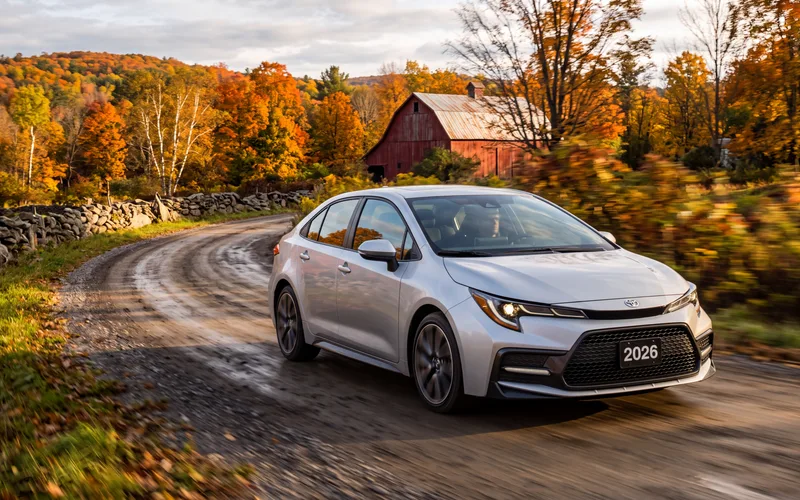 Toyota CorollaCompact Sedan
The Civic outguns the Corolla on driving fun, interior quality, and rear-seat space, and the Civic Hybrid at 49 MPG is only 3 MPG behind the Corolla Hybrid while feeling meaningfully quicker and better resolved.
Compare 2.13C
2.13C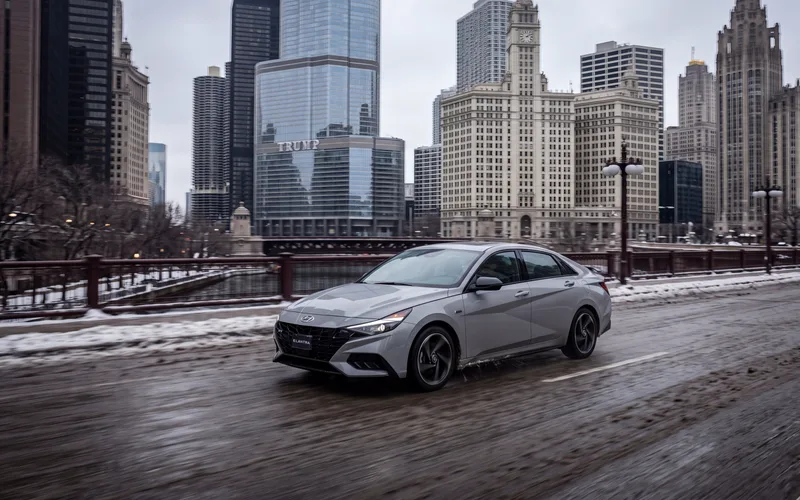 Hyundai ElantraCompact Sedan
The Elantra undercuts the Civic on price and packs more standard tech — bigger screens, wireless CarPlay, heated seats — into cheaper trims, plus a 10-year/100,000-mile powertrain warranty that dwarfs Honda's 5/60.
Compare 2.19C
2.19C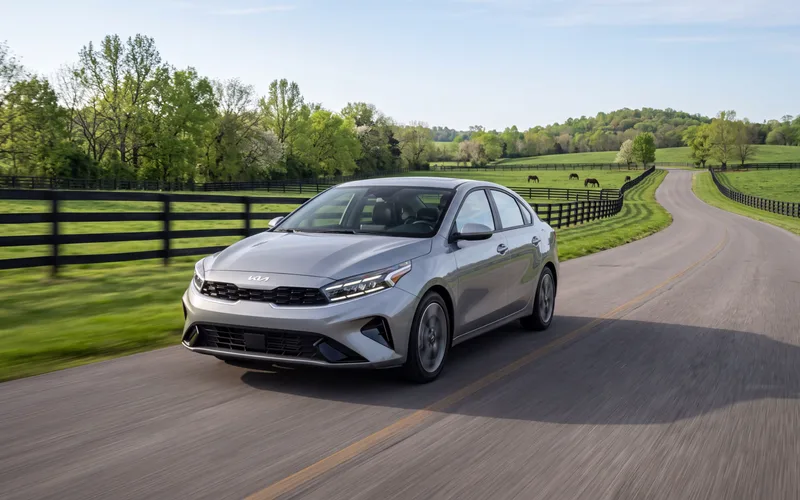 Kia K4Compact Sedan
The all-new K4 is the freshest, boldest-styled compact in the class with class-leading standard tech and the same 10/100 powertrain warranty as its Hyundai cousin, and it undercuts the Civic on sticker.
CompareHow it's evolved
10 scored model years · 2017–2026
Subject scores by year
Hover or tap a score to see what moved it versus the year before. A corner mark flags a big swing.
| Year | Performance | Efficiency | Safety | Space | Cost | Reliability | Tech | Use-case | Driving | Value |
|---|---|---|---|---|---|---|---|---|---|---|
| 2026 | 32 | 66 | 76 | 64 | 67 | 80 | 51 | 59 | 72 | 76 |
| 2025 | 31 | 59 | 75 | 65 | 64 | 81 | 47 | 54 | 66 | 77 |
| 2024 | 29 | 55 | 71 | 63 | 64 | 78 | 47 | 55 | 72 | 74 |
| 2023 | 27 | 56 | 78 | 64 | 79 | 78 | 50 | 61 | 74 | 84 |
| 2022 | 26 | 57 | 81 | 66 | 65 | 78 | 50 | 60 | 76 | 81 |
| 2021 | 29 | 57 | 72 | 69 | 78 | 78 | 37 | 59 | 77 | 77 |
| 2020 | 32 | 57 | 69 | 72 | 67 | 76 | 34 | 61 | 79 | 85 |
| 2019 | 29 | 67 | 68 | 73 | 78 | 74 | 35 | 61 | 80 | 88 |
| 2018 | 29 | 61 | 64 | 74 | 78 | 67 | 26 | 58 | 80 | 84 |
| 2017 | 30 | 61 | 64 | 73 | 78 | 68 | 32 | 56 | 80 | 85 |
Compare two years
Best fit & conditions
Higher scores mean a better fit for that use case. Learn more about use-case fit →
Subject profile
Trims & configurations
5 trimsScores above reflect the volume trim. Per-trim specs and scores are rolling out — the full lineup:
Academic Probation · NHTSA safety recalls
No NHTSA safety recall is on record for the 2026 Honda Civic. Other model years of the Civic have 16 — listed below.
16 recalls on other model years of the Civic (2017–2025)
May 21, 2026Air bags: sensor: occupant classification: front passengerThe front passenger seat weight sensor may crack and short circuit, which can cause the air bags to deploy unintentionally during a crash.
Defect
Honda (American Honda Motor Co.) is recalling certain 2018-2021, 2023 Acura TLX, 2019-2024 RDX, 2017-2020, 2022-2026 MDX, 2017-2021, 2023, 2025 Honda Ridgeline, 2017-2022 Pilot, 2019-2021 Passport, 2018-2026 Odyssey, 2019-2022 Insight, 2019-2021 HR-V, 2018-2020 Fit, 2020-2022 CR-V Hybrid, 2017-2022 CR-V, 2017-2018, 2021 Civic Type R, 2017-2021 Civic hatchback, 2016-2020 Civic coupe, 2016-2022 Civic, 2017-2022 Accord Hybrid, and 2016-2022 Accord vehicles. The front passenger seat weight sensor may crack and short circuit, which can cause the air bags to deploy unintentionally during a crash.
Risk
Air bags that deploy unintentionally during a crash increase the risk of injury.
Remedy
Dealers will replace the seat weight sensors, free of charge. Owner notification letters were mailed July 7, 2026. Owners may contact Honda's customer service at 1-888-234-2138. Honda's numbers for this recall are BOL, WO9, OOA, WOM, XOH, NOC, POD, BOE, UOF, POB, EOG, AOI, QO8, TOJ, DO7, and SOK. This recall expands previous NHTSA recall number 24V064. Vehicle Identification Numbers (VINs) involved in this recall will be searchable on NHTSA.gov beginning May 29, 2026.
NHTSA campaign 26V332000 ↗Manufacturer no. Refer to Comments98,892 vehicles potentially affected (all models in the campaign)Owners notified Jul 6, 2026Filed by Honda (American Honda Motor Co.)Filed as CIVICNov 14, 2024Seats: critical fastenersThe driver's seat cushion frame may not have been tightened properly, which can result in an unsecured seat. As such, these vehicles fail to comply with the requirements of Federal Motor Vehicle Safety Standard number 207, "Seating Systems."
Defect
Honda (American Honda Motor Co.) is recalling certain 2023-2024 Honda Accord, Accord Hybrid, Civic Sedan, Civic Hatchback, Pilot, and 2024 HR-V, Acura Integra and Acura Integra Type S vehicles. The driver's seat cushion frame may not have been tightened properly, which can result in an unsecured seat. As such, these vehicles fail to comply with the requirements of Federal Motor Vehicle Safety Standard number 207, "Seating Systems."
Risk
An unsecured driver's seat may not adequately restrain the driver during a crash, increasing the risk of injury.
Remedy
Dealers will replace the driver's seat cushion frame, free of charge. Owner notification letters were mailed January 6, 2025. Owners may contact Honda customer service at 1-888-234-2138.
NHTSA campaign 24V859000 ↗121 vehicles potentially affected (all models in the campaign)Owners notified Jan 6, 2025Filed by Honda (American Honda Motor Co.)Filed as CIVICOct 14, 2024Fuel system, gasoline: delivery: fuel pumpThe high-pressure fuel pump may crack and leak fuel.
Defect
Honda (American Honda Motor Co.) is recalling certain 2023-2024 Honda Accord, Accord Hybrid, 2023-2025 Honda CR-V Hybrid, and 2025 Honda Civic and Civic Hybrid vehicles. The high-pressure fuel pump may crack and leak fuel.
Risk
A fuel leak in the presence of an ignition source can increase the risk of a fire.
Remedy
Dealers will inspect and replace the high-pressure fuel pump as necessary, free of charge. Owner letters were mailed February 20, 2025. Owners may contact Honda customer service at 1-888-234-2138. Honda's number for this recall is PJW.
NHTSA campaign 24V763000 ↗Manufacturer no. PJW720,810 vehicles potentially affected (all models in the campaign)Owners notified Feb 20, 2025Filed by Honda (American Honda Motor Co.)Filed as CIVIC, CIVIC HYBRIDOct 3, 2024SteeringThe steering gearbox assembly may have been manufactured incorrectly, which can cause excessive internal friction and lead to difficulty steering the vehicle.
Defect
Honda (American Honda Motor Co.) is recalling certain 2023-2025 Acura Integra, Civic Type R, CR-V Hybrid, CR-V, HR-V, 2022-2025 Civic, Civic Hatchback, 2024-2025 Acura Integra Type S, 2025 CR-V Fuel Cell EV, Civic Hybrid, and Civic Hatchback Hybrid vehicles. The steering gearbox assembly may have been manufactured incorrectly, which can cause excessive internal friction and lead to difficulty steering the vehicle.
Risk
Difficulty steering can increase the risk of a crash.
Remedy
Dealers will replace the worm gear spring and redistribute or add grease as necessary, free of charge. Owner notification letters were mailed November 18, 2024. Owners may contact Honda Customer Service at 1-888-234-2138. Honda's numbers for this recall are SJS, MJU, QJT and VJV.
NHTSA campaign 24V744000 ↗Manufacturer no. SJS, MJU, QJT, VJV1,693,199 vehicles potentially affected (all models in the campaign)Owners notified Nov 18, 2024Filed by Honda (American Honda Motor Co.)Filed as CIVIC, CIVIC HYBRIDFeb 1, 2024Air bags: sensor: occupant classification: front passengerThe front passenger seat weight sensor may crack and short circuit, failing to suppress the air bag as intended.
Defect
Honda (American Honda Motor Co.) is recalling certain 2020-2022 Pilot, Accord, Civic sedan, HR-V, Odyssey, 2020 Civic coupe, Fit, 2021-2022 Civic hatchback, 2021 Civic Type R, Insight, 2020-2021 CR-V, CR-V Hybrid, Passport, Ridgeline, Accord Hybrid, 2020 Acura MDX, 2022 Acura MDX, 2020-2022 Acura RDX, and 2020-2021 Acura TLX vehicles. The front passenger seat weight sensor may crack and short circuit, failing to suppress the air bag as intended.
Risk
An air bag that deploys unintentionally during a crash can increase the risk of injury.
Remedy
Dealers will replace the seat weight sensors, free of charge. Owner notification letters were mailed March 28, 2024. This is a phased recall. Owners may contact Honda customer service at 1-888-234-2138. Honda's numbers for these recalls are XHP and VHQ.
NHTSA campaign 24V064000 ↗Manufacturer no. XHP, VHQ750,114 vehicles potentially affected (all models in the campaign)Owners notified Mar 28, 2024Filed by Honda (American Honda Motor Co.)Filed as CIVICDec 18, 2023Fuel system, gasoline: delivery: fuel pumpThe fuel pump inside the fuel tank may fail.
Defect
Honda (American Honda Motor Co.) is recalling certain 2013-2023 Honda Accord, Civic Coupe, Civic Sedan, Civic Hatchback, Civic Type R, CR-V, HR-V, Ridgeline, Odyssey, Acura ILX, MDX, MDX Hybrid, RDX, RLX, TLX, 2019-2022 Honda Insight, Passport, 2020 Honda CR-V Hybrid, 2018-2019 Honda Clarity PHEV, Fit, and 2015-2020 Honda Accord Hybrid, Pilot, Acura NSX vehicles. The fuel pump inside the fuel tank may fail.
Risk
Fuel pump failure can cause an engine stall while driving, increasing the risk of a crash.
Remedy
Dealers will replace the fuel pump module, free of charge. Owner letters were mailed September 6, 2024. Owners may contact Honda customer service at 1-888-234-2138. Honda's numbers for this recall are KGC and KGD. This recall is an expansion of NHTSA recall numbers 21V-215 and 20V-314.
NHTSA campaign 23V858000 ↗Manufacturer no. KGC, KGD2,490,460 vehicles potentially affected (all models in the campaign)Owners notified Mar 29, 2024Filed by Honda (American Honda Motor Co.)Filed as CIVICOct 19, 2023Steering: rack and pinionThe steering rack may have been incorrectly assembled, which can allow the tire to chafe against the lower suspension or tie rod end, possibly resulting in tire damage.
Defect
Honda (American Honda Motor Co.) is recalling certain 2022-2024 Civic 4-door and Civic 5-door vehicles that received a replacement power steering rack as part of a service repair. The steering rack may have been incorrectly assembled, which can allow the tire to chafe against the lower suspension or tie rod end, possibly resulting in tire damage.
Risk
A damaged tire can fail and increase the risk of a crash or injury.
Remedy
Dealers will inspect and replace the electric power steering rack, as necessary, free of charge. Owner letters were mailed January 16, 2024. Owners may contact Honda customer service at 1-888-234-2138. Honda's number for this recall is YFW.
NHTSA campaign 23V704000 ↗Manufacturer no. YFW264,567 vehicles potentially affected (all models in the campaign)Owners notified Dec 4, 2023Filed by Honda (American Honda Motor Co.)Filed as CIVICJun 29, 2023Service brakes, hydraulic: foundation components: master cylinderThe tie rod fastener that connects the brake booster and the brake master cylinder may have been improperly assembled during manufacturing, which can cause the brake master cylinder to separate from the booster assembly.
Defect
Honda (American Honda Motor Co.) is recalling certain 2020-2021 Civic, 2020-2023 Ridgeline, 2021-2023 Passport, 2021-2022 Pilot, and 2020 Acura MDX vehicles. The tie rod fastener that connects the brake booster and the brake master cylinder may have been improperly assembled during manufacturing, which can cause the brake master cylinder to separate from the booster assembly.
Risk
Brake master cylinder separation can cause a loss of brake function and increase the risk of a crash.
Remedy
Dealers will inspect and repair the brake booster assembly as necessary, free of charge. Owner notification letters were mailed August 7, 2023. Owners may contact Honda customer service at 1-888-234-2138. Honda's numbers for this recall are VEU, AEV, and ZET.
NHTSA campaign 23V458000 ↗Manufacturer no. VEU, AEV, ZET124,077 vehicles potentially affected (all models in the campaign)Owners notified Aug 7, 2023Filed by Honda (American Honda Motor Co.)Filed as CIVICJun 15, 2023Service brakes, hydraulic: antilock/traction control/electronic limited slip: control unit/moduleA ball valve in the vehicle stability assist (VSA) modulator may leak brake fluid, which can result in unintended vehicle movement when the brake hold feature is engaged or an unexpected increase in brake pedal travel.
Defect
Honda (America Honda Motor Co.) is recalling certain 2023 Civic, Acura RDX, Acura Integra, and 2022 Honda Accord vehicles. A ball valve in the vehicle stability assist (VSA) modulator may leak brake fluid, which can result in unintended vehicle movement when the brake hold feature is engaged or an unexpected increase in brake pedal travel.
Risk
Unintended vehicle movement or an unexpected increase in brake pedal travel can increase the risk of a crash or injury.
Remedy
Dealers will replace the VSA modulator, free of charge. Owner notification letters were mailed July 24, 2023. Owners may contact Honda customer service at 1-888-234-2138. Honda's numbers for this recall are OEJ, XEK, AEY, XEX and OEW.
NHTSA campaign 23V430000 ↗Manufacturer no. OEJ,XEK,AEY,XEX,OEW386 vehicles potentially affected (all models in the campaign)Owners notified Jul 24, 2023Filed by Honda (American Honda Motor Co.)Filed as CIVICMar 25, 2021Fuel system, gasoline: delivery: fuel pumpThe low-pressure fuel pump inside the fuel tank may fail.
Defect
Honda (American Honda Motor Co.) is recalling certain 2019-2020 Acura MDX, MDX Sport Hybrid, RDX, TLX, Honda Accord, Civic Hatchback, Insight, 2019 Acura ILX, Honda Accord Hybrid, Civic Coupe, Civic Coupe Si, Civic Sedan, Civic Sedan Si, Civic Type R, Fit, HR-V, Odyssey, Passport, Pilot and Ridgeline, and 2018-2019 CR-V vehicles. The low-pressure fuel pump inside the fuel tank may fail.
Risk
Fuel pump failure can cause an engine stall while driving, increasing the risk of a crash.
Remedy
Honda will notify owners, and dealers will replace the fuel pump assembly, free of charge. Owner letters were mailed May 18, 2021. Owners may contact Honda customer service at 1-888-234-2138. Note: This recall is an expansion of recall 20V-314.
NHTSA campaign 21V215000 ↗Manufacturer no. Multiple Codes624,552 vehicles potentially affected (all models in the campaign)Owners notified May 18, 2021Filed by Honda (American Honda Motor Co.)Filed as CIVICMay 28, 2020Fuel system, gasoline: delivery: fuel pumpThe low-pressure fuel pump inside the fuel tank may fail.
Defect
Honda (American Honda Motor Co.) is recalling certain 2018-2019 Acura NSX, 2019 Acura RDX, RLX and RLX Sport Hybrid, 2018-2019 Honda Accord, Civic Hatchback, Civic Type R and HR-V, 2019-2020 Insight and 2019 Fit vehicles. The low-pressure fuel pump inside the fuel tank may fail.
Risk
If the fuel pump fails, the engine can stall while driving, increasing the risk of a crash.
Remedy
Honda will notify owners and dealers will replace the fuel pump assembly, free of charge. The recall began July 22, 2020. Owners may contact Honda customer service at 1-888-234-2138.
NHTSA campaign 20V314000 ↗135,995 vehicles potentially affected (all models in the campaign)Owners notified Jul 22, 2020Filed by Honda (American Honda Motor Co.)Filed as CIVICNov 16, 2018Equipment: other: owners/service/other manualThe owners guide in these vehicles may not have been included or if included, the owner's guide may not have been properly provided required information. As such, these vehicles fail to comply with the requirements of Federal Motor Vehicle Safety Standard (FMVSS) number 225, "Child Restraint Anchorage Systems."
Defect
Honda (American Honda Motor Co.) is recalling certain 2017-2018 Honda Civic Hatchback and Civic Type R vehicles. The owners guide in these vehicles may not have been included or if included, the owner's guide may not have been properly provided required information. As such, these vehicles fail to comply with the requirements of Federal Motor Vehicle Safety Standard (FMVSS) number 225, "Child Restraint Anchorage Systems."
Risk
If the information is missing or improper, it can increase the risk of injury or a crash.
Remedy
Honda will notify owners, and dealers will replace the owners information kit, free of charge. The recall began January 9, 2019. Owners may contact Honda customer service at 1-888-234-2138. Honda's number for this recall is O3A.
NHTSA campaign 18V817000 ↗Manufacturer no. O3A7,016 vehicles potentially affected (all models in the campaign)Owners notified Jan 9, 2019Filed by Honda (American Honda Motor Co.)Filed as CIVICSep 27, 2018Steering: electric power assist systemThe magnet that controls the torque sensor output signal for the electronic power steering system may not be properly secured, allowing the magnet to become dislodged. During a full lock turn, the dislodged magnet may cause steering assist to be applied in the opposite direction.
Defect
Honda (American Honda Motor Co.) is recalling certain 2017-2018 Honda Civic and CR-V vehicles. The magnet that controls the torque sensor output signal for the electronic power steering system may not be properly secured, allowing the magnet to become dislodged. During a full lock turn, the dislodged magnet may cause steering assist to be applied in the opposite direction.
Risk
The unintended steering input reduces vehicle maneuverability and increases the risk of a crash.
Remedy
Honda will notify owners, and dealers will replace the steering gearbox assembly, free of charge. The recall began November 9, 2018. Owners may contact Honda customer service at 1-888-234-2138. Honda's numbers for this recall are C2N, P2O.
NHTSA campaign 18V663000 ↗Manufacturer no. C2N, P2O54 vehicles potentially affected (all models in the campaign)Owners notified Nov 9, 2018Filed by Honda (American Honda Motor Co.)Filed as CIVICJun 20, 2018Equipment: other: labelsThe manufacturing date area of the certification labels may have random characters which can affect the owner's ability to determine if a safety recall includes their vehicle.
Defect
Honda (American Honda Motor Co.) is recalling certain 2018 Honda Civic vehicles. The manufacturing date area of the certification labels may have random characters which can affect the owner's ability to determine if a safety recall includes their vehicle.
Risk
If the owner is not able to verify if their vehicle is involved in safety recall, it can increase the risk of injury or crash.
Remedy
Honda will notify owners, and dealers will replace the certification label, free of charge. The recall began August 7, 2018. Owners may contact Honda customer service at 1-888-234-2138. Honda's number for this recall is U23.
NHTSA campaign 18V421000 ↗Manufacturer no. U2313 vehicles potentially affected (all models in the campaign)Owners notified Aug 7, 2018Filed by Honda (American Honda Motor Co.)Filed as CIVICApr 26, 2018Air bags · SeatsDriver and front passenger seatback pads sold as replacement service parts were made without slit openings for the seat-mounted side air bags. In the event of a crash necessitating air bag deployment, the seatback pad would interfere and adversely affect air bag performance. As such, these vehicles fail to comply with the requirements of Federal Motor Vehicle Safety Standard (FMVSS) number 214, "Side Impact Protection."
Defect
Honda (American Honda Motor Co.) is recalling certain 2017 Honda Civic Hatchback and Civic Type R vehicles. Driver and front passenger seatback pads sold as replacement service parts were made without slit openings for the seat-mounted side air bags. In the event of a crash necessitating air bag deployment, the seatback pad would interfere and adversely affect air bag performance. As such, these vehicles fail to comply with the requirements of Federal Motor Vehicle Safety Standard (FMVSS) number 214, "Side Impact Protection."
Risk
If the seat-mounted air bags cannot not deploy correctly in the event of a crash, there would be an increased risk of injury.
Remedy
Honda will notify owners, and dealers will replace the front seatback pads, free of charge. The recall began June 15, 2018. Owners may contact Honda customer service at 1-888-234-2138. Honda's number for this recall is E1D, U1B, and X1C.
NHTSA campaign 18V266000 ↗Manufacturer no. E1D, U1B, X1C69 vehicles potentially affected (all models in the campaign)Owners notified Jun 15, 2018Filed by Honda (American Honda Motor Co.)Filed as CIVICNov 9, 2017Power train: driveline: driveshaftThe right halfshaft may have been improperly heat treated, reducing its strength.
Defect
Honda (American Honda Motor Co.) is recalling certain 2017 Honda Civic Sedan and Coupe vehicles. The right halfshaft may have been improperly heat treated, reducing its strength.
Risk
The improper heat treatment can result in the halfshaft breaking, preventing the engine from moving the vehicle, and can allow a possible roll away situation if the parking brake is not engaged. This can increase the risk of a crash.
Remedy
Honda will notify owners, and dealers will inspect the halfshaft's serial number, replacing it as necessary and aligning the front wheels, free of charge. The recall began December 8, 2017. Owners may contact Honda customer service at 1-888-234-2138. Honda's number for this recall is K0E.
NHTSA campaign 17V706000 ↗Manufacturer no. K0E5,404 vehicles potentially affected (all models in the campaign)Owners notified Dec 8, 2017Filed by Honda (American Honda Motor Co.)Filed as CIVIC
Source: NHTSA Office of Defects Investigation recall database, model years 2017–2026. Recalls are listed by model year as the manufacturer filed them; whether a specific car is affected depends on its VIN — check a VIN at nhtsa.gov ↗. NHTSA model names matched to this page: CIVIC, CIVIC HYBRID.
Detailed scoring by subject
1Performance & PowertrainThe Civic's lowest-graded category.0.08F
Volume gas trim is the Sport (2.0L naturally aspirated I-4) at 150 hp; the hybrid trims deliver 200 hp combined and the enthusiast Si makes 200 hp from a 1.5L turbo. All figures are manufacturer-published.
The volume Sport gas 2.0L delivers 133 lb-ft; the hybrid's traction motor puts down a much stronger 232 lb-ft available from a standstill, which is the figure that defines how the hybrid actually feels off the line.
Instrumented tests place the volume Sport gas sedan around 8.2 s to 60 mph; the hybrid drops to roughly 6.2 s thanks to strong low-end motor torque, and the Si sits between them at about 6.6 s.
The 2.0L Sport is adequate but coarse and buzzy near redline; the two-motor hybrid, in contrast, is widely praised for near-EV smoothness and immediate throttle response, and it lifts the lineup average meaningfully now that hybrids are ~30% of Civic sales.
Honda's CVT in the LX/Sport is class-leading among CVTs — well-timed simulated steps under throttle and minimal drone in normal driving — the hybrid's direct-drive setup is effectively single-speed EV-like, and the Si's 6-speed manual is widely regarded as one of the best remaining manuals in the segment. The lineup average deserves a bump above 72.
The Civic sedan is FWD-only across every trim and powertrain — Honda has never offered AWD on this platform, a clear disadvantage versus AWD-optional rivals like the Mazda3 and the AWD-standard 2025+ Camry.
The Civic sedan offers three genuinely distinct powertrains — 2.0L naturally aspirated gas, a two-motor hybrid, and the enthusiast 1.5L turbo Si with 6-speed manual — spanning economy, electrification, and performance-manual buyers. Only a full PHEV/EV is absent, which keeps this below the 80+ tier.
2Efficiency & RangeMid-pack among this car's ten categories.2.47C+
EPA-rated 36 combined MPG on the volume gas LX (2.0L I4 + CVT). Hybrid trims jump to 49 combined MPG.
EPA 32 city MPG on the LX. Sport is 31; hybrids leap to 50 MPG city thanks to regenerative braking and low-speed EV operation.
EPA 41 highway MPG on the LX — near the top of non-hybrid compact sedans. Hybrids trail slightly at 47 because the electric motor contributes less at steady cruise.
12.4-gal tank × 36 MPG combined = ~446 mi on the LX; hybrid trims stretch to ~519 mi despite the smaller 10.6-gal tank thanks to 49 MPG efficiency.
EPA methodology (15k mi/yr, 55/45 city/hwy split, ~$4.15/gal regular) on the 36-MPG LX. Hybrid trims cut roughly $500/yr.
Regular unleaded (87 octane) across the entire lineup — no premium requirement, no diesel, no charging infrastructure needed. Simple, cheap, and flexible.
3SafetyOne of the Civic's strongest categories.3.18B
NHTSA awarded the 2026 Civic sedan a 5-star overall vehicle score.
The 2026 Civic 4-door sedan is a 2026 IIHS TOP SAFETY PICK+ with Good ratings in the small overlap front, updated moderate overlap front, and updated side crash tests.
Honda Sensing is standard on every 2026 Civic trim — CMBS (AEB with pedestrian detection), FCW, LDW, LKAS, Road Departure Mitigation, ACC with Low-Speed Follow, Traffic Sign Recognition, and auto high-beams. Blind Spot Information and Cross Traffic Monitor, however, are not standard on the base LX and only appear from Sport and above.
CMBS with pedestrian detection contributed to the sedan's TSP+ award, which under 2026 IIHS criteria requires at least Acceptable on updated vehicle-to-vehicle and pedestrian front crash prevention. Real-world night-pedestrian performance is a step behind class-leading systems but solid daytime capability.
Blind Spot Information and Cross Traffic Monitor are alert-only and are not standard on the volume LX trim — they arrive on Sport and above. That trim gating on a compact sedan pulls the score below competitors that make BSM standard fleet-wide.
Reviewers report LKAS on the current Civic centers confidently, with one review calling it 'close to the performance of GM's Super Cruise and Ford BlueCruise' minus the hands-off capability. Occasional intervention on tight bends but rarely ping-pongs.
ACC with Low-Speed Follow (full stop-and-go) is standard and paired with LKAS for a competent traffic-jam assist. Reviewers find it refined for the class though not as seamless as premium-brand systems; can be slightly abrupt on cut-ins.
The 2026 Civic offers no hands-free highway driving system — Honda Sensing requires hands on the wheel at all times, unlike BlueCruise, Super Cruise, or FSD-supervised.
IIHS rated the 2026 Civic sedan's headlights Good across the range — a prerequisite for the TSP+ award. Auto high-beam is standard as part of Honda Sensing.
The sedan's low cowl, narrow front pillars, and door-mounted mirrors give a good forward view, but the fastback-style rear roofline and short back window compromise over-the-shoulder sightlines. Multi-angle rearview camera is standard; 360-degree camera is not offered.
Two full LATCH sets in the outboard rear seats plus a tether anchor for the middle seat; anchors are accessible without deep digging. Compact-sedan rear width limits 3-across seat fitment and rear-door opening is narrow versus midsize peers.
4Space & ComfortMid-pack among this car's ten categories.2.33C+
Standard 5-passenger seating across all sedan trims — top of the sedan normalization band.
39.3 in on non-moonroof trims lands near the top of the sedan headroom band; drops modestly on moonroof-equipped trims.
42.3 in is mid-pack for the compact sedan segment.
37.1 in rear headroom sits in the middle of the sedan band; adequate for average-height passengers.
37.4 in of rear legroom is competitive for a compact sedan; Edmunds notes the back seat can be as comfortable as the front for taller occupants.
14.8 cu ft is class-leading for a compact sedan (U.S. News: 'more than any other compact sedan') and is preserved on hybrid trims.
Competitive but not standout: reasonably sized center console, door bins, and cupholders, plus wireless charging on higher trims, but no signature clever-storage feature (no frunk, no bespoke innovations).
Front seats draw mixed reviews — Edmunds and J.D. Power cite limited thigh support and short seat-track travel for taller drivers, though sculpting is decent and the rear cushions are longer and more supportive than typical for the class.
Well-controlled ride with compliant primary motion; the suspension soaks up road imperfections while preserving sporty body control. Edmunds named the 2026 Civic Hybrid its Top Rated Car of 2026, calling the ride-handling balance a segment strength.
Wind noise is well suppressed thanks to the aerodynamic body, but road noise is noticeable at almost any speed and intrusive on coarse pavement per multiple reviews. Refinement is 'a cut above other small hybrids' but does not lead the broader class.
Base Sport gas trim lacks heated seats and dual-zone climate; heated front seats and dual-zone auto climate become standard only from Sport Hybrid up. No heated steering wheel or ventilated seats offered at any trim, trailing key rivals (Elantra, Corolla Hybrid, Camry, K5).
5Cost of OwnershipMid-pack among this car's ten categories.2.54C+
LX sedan is the entry trim; MSRP still well below the sedan segment mid-band, though 2026 pricing rose ~$1,100 over the prior year, trimming the value edge slightly.
Sport gas trim remains the volume seller for the Civic sedan given its price gap under the hybrid trims; Sport Hybrid ($30,490) and Sport Touring Hybrid ($33,490) sit above it.
Consistently below compact-sedan norms thanks to Honda's low parts costs, simple 2.0L NA / e:HEV powertrains, and long service intervals.
Best-in-class residuals in the compact-sedan segment; Honda's used-car demand plus the fresh 11th-gen styling keep depreciation shallow relative to rivals.
Standard Honda bumper-to-bumper coverage; trails Hyundai/Kia (5/60k) and Genesis (5/60k), sits at the segment floor.
Standard 5/60k powertrain — matches Toyota/Mazda/VW but well behind Hyundai/Kia's 10/100k. Hybrid battery coverage extends to 8/100k per federal emissions requirements.
Honda offers no included scheduled-maintenance program on the 2026 Civic — a gap versus Toyota (ToyotaCare 2 yr / 25k), Hyundai (3 yr / 36k), and most luxury brands. HondaLink connected-services trial is short and there is no complimentary roadside assistance beyond the standard warranty period.
$27,790 volume-trim price minus its estimated resale value after 5 years (62% retained, or about $17,230) leaves about $10,560 in depreciation. Add the projected $4,050 in 5-year maintenance and repairs, and owning this vehicle for 5 years costs about $14,610 in total.
6Reliability & QualityThe Civic's best-graded category.3.46B+
Consumer Reports has consistently given the 11th-gen Civic above-average predicted reliability and Recommended status; J.D. Power Quality & Reliability scores hover in the high-70s to low-80s. Solidly above the compact-sedan average but not quite at Corolla's top-tier level.
Honda ranks in the upper tier of mainstream brands for long-term dependability — typically top-6 to top-8 across recent CR brand rankings and better than industry average in J.D. Power VDS, behind Toyota/Lexus but ahead of most Detroit and Korean rivals.
The 11th-gen Civic (2022+) has seen a handful of recalls — backup-camera software, Denso fuel-pump replacement, and a driveshaft campaign on early hybrid units — but nothing systemic in engine or transmission. TSB volume is normal for a new generation.
The 2.0L K20C-family naturally-aspirated four has a stellar high-mileage reputation, and the 2.0L Atkinson + two-motor hybrid system (shared with CR-V and Accord Hybrid) has proven exceptionally durable. Earlier L15 turbo oil-dilution concerns were resolved several model years ago.
Reviewers consistently praise the 11th-gen Civic interior as class-leading for a mainstream compact — soft-touch upper dash, distinctive honeycomb mesh vent trim, and premium switchgear feel in Sport/Touring trims. Base LX has more hard plastics but is still competitive.
Assembly at Honda's Alliston (Ontario) and Greensburg (Indiana) plants is consistently tight; panel gaps and switch alignment are strong. Initial-quality scores are above segment average with few widespread rattle or squeak complaints.
Honda operates one of the densest dealer networks in the US (~1,050 dealers), providing broad coverage in urban and rural areas. Service satisfaction runs above industry average in J.D. Power CSI, though behind luxury leaders and Toyota/Lexus.
As one of America's best-selling nameplates, the Civic has extraordinary OEM parts availability, an enormous aftermarket ecosystem, and consistently ranks near the bottom of the industry for average annual repair cost — cheap, plentiful, and quickly sourced.
7Technology & InfotainmentOne of the Civic's weakest categories.1.40D
Volume Sport Hybrid trim uses a 7-inch center touchscreen; only the top Sport Touring Hybrid steps up to 9 inches. The 7-inch baseline sits at the bottom of the sedan normalization band.
Honda's system is logical with a welcome physical volume knob and dedicated climate controls, but the base 7-inch screen looks and feels dated compared with segment leaders. The Google Built-In experience on Sport Touring Hybrid lifts the ceiling but not the volume-trim baseline.
Wireless Apple CarPlay and Android Auto are limited to the top Sport Touring Hybrid; LX, Sport, and Sport Hybrid still require a USB cable. This is a meaningful gap vs Corolla, Elantra, and K4, which offer wireless projection more broadly.
Google Built-In (Assistant, Google Maps, Play) is excellent but only on the Sport Touring Hybrid; the volume Sport Hybrid trim leans on phone projection for real voice/nav quality. Honda has also announced Gemini AI upgrades for Google Built-In cars.
Base LX runs a weak 4-speaker system; Sport and Sport Hybrid step up to 8 speakers; the top Sport Touring Hybrid gets a well-regarded 12-speaker Bose Premium Sound System with Centerpoint. Ceiling is strong, floor is thin.
A full 10.2-inch digital instrument cluster is limited to the Sport Touring Hybrid; lower trims retain a partial-digital cluster with analog speedometer. The top-trim display is crisp and configurable, but the volume trim is behind competitors like Elantra and K4.
Honda's OTA scope is limited: map and infotainment updates on Google Built-In (top trim) plus over-the-air improvements to some HondaLink services, but no true whole-vehicle software updates that add features across the lineup. Below OTA-forward rivals like Hyundai/Kia and Tesla.
HondaLink offers the usual remote start, lock/unlock, geofence and speed alerts, and vehicle locator, but many features are subscription-gated (Remote Package) after the trial, and there is no digital-key/phone-as-key on Civic. Functional, not class-leading.
Two front USB-C ports are standard, and wireless phone charging is available on the Sport Touring Hybrid. No AC outlet and no rear USB on the volume trim, so it's adequate rather than generous.
Smart Entry with push-button start and Walk Away Auto Lock is standard on Sport and above, so the volume Sport Hybrid gets it; LX still uses a traditional key. No phone-as-key or digital key offered on Civic.
Multi-angle rearview camera with dynamic guidelines is standard, and Honda Sensing adds front/rear parking sensors on upper trims, but there is no 360-degree surround-view camera or automated parking anywhere in the Civic lineup — a clear gap vs Elantra, K4, and Corolla top trims.
The 2026 Civic Sedan does not offer a head-up display on any trim; Honda's HUD in this segment lineup is reserved for the larger Accord. A clear miss vs Mazda3 and Sonata, which offer HUDs on upper trims.
8Use-Case FitOne of the Civic's weakest categories.2.00C
Class-leading 37.4-in rear legroom for a compact sedan makes rear-facing car seats workable, and 60/40 split-folding rear seatback (Sport and above) helps with strollers. Sedan geometry still requires more of a lean-in than an SUV.
Honda Sensing (AEB, ACC, LKAS, RDM, LDW) is standard on every trim including the base LX, the 2026 Civic is an IIHS Top Safety Pick, and Honda models broadly earn NHTSA 5-star ratings — best-in-class safety at family-friendly price points.
Roomy rear seat and 14.8 cu ft trunk cover a family of four for a long weekend; rear vents and USB-C are available on upper trims, and reviewers describe the ride as comfortably compliant. Rear amenities remain thin vs. mid-size rivals and tall cargo is squeezed by the sedan trunk opening.
Reviewers universally praise the Civic's low-effort daily driving character — light steering, clean visibility, smooth two-motor hybrid low-speed behavior with linear brake feel, and Honda Sensing ACC/LKAS standard. Firm-but-refined ride keeps it relaxed in traffic.
The volume Sport Hybrid returns 50/47/49 MPG EPA — top-tier for a non-plug-in compact sedan — and the gas Sport still lands in the mid-30s combined. Regular unleaded, cheap consumables, strong Honda reliability, and average insurance keep cost-per-mile among the lowest in the class.
Compact 184.8-in length, low nose, big glass area, and standard multi-angle rear camera make it easy to thread and park in tight urban spaces; a low seating position slightly hurts sightlines over some crossovers.
The Civic sedan has no factory tow rating, no bed, and a 14.8 cu ft trunk — it is not meaningfully work-capable. Powertrain is tuned for economy, not load-hauling.
Honda drivetrain reliability is excellent for taxi/rideshare duty, but the Civic's soft-touch interior, low ground clearance, and passenger-car chassis are not built for jobsite abuse. Fleet reputation is service/livery, not construction.
No bed, no factory tie-downs beyond trunk hooks, no onboard AC power outlet, no washable interior surfaces, and effectively no upfit ecosystem — the Civic offers virtually nothing work-focused.
Hybrid delivers roughly 500-600 mi of range on a tank, ADAS (ACC + LKAS) is standard for fatigue reduction, and reviewers rate the seats and highway refinement as strong for the class. Cabin noise and seat endurance still trail mid-size and luxury tourers.
Front-wheel drive only (no AWD offered on Civic sedan), low ground clearance, and no roof rails make it strictly a pavement car. Fine for a paved trailhead lot, but that's about it.
60/40 split-folding rear seatback (Sport and up) and 14.8 cu ft trunk handle normal luggage and modest gear, but no roof rails, no factory hitch, and a sedan trunk opening restrict bulky items like bikes and long boards.
9Driving ExperienceGrades above the middle of the scale.2.87B-
Reviewers consistently call the 2026 Civic sedan composed, nimble, and engaging on twisty roads — one of the best-driving mainstream compacts. Strong body control and grip without harshness put it near the top of the segment, above Corolla (67.6) and Elantra (70.4).
Steering is precise and well-weighted with above-average feedback for a mainstream compact — not as communicative as Mazda3's rack, but sharper and more natural than Corolla, Elantra, or Sentra.
Instrumented tests report short, consistent stops on wet and dry surfaces with a firm, easily modulated pedal. Regen blending on the hybrid is well-managed with driver-selectable paddle levels.
Hybrid eCVT delivers smooth, seamless acceleration with instant electric-motor response and near-imperceptible engine engagement — the volume Sport Hybrid trim is the reference. The 2.0L gas + CVT combo is smooth but softer on tip-in and slower to build speed, pulling the blended score down slightly.
Honda added sound deadening on the hybrid and the cabin is notably quieter than prior generations at highway cruise, but the CVT/eCVT still lets the four-cylinder drone under hard acceleration — audible but inoffensive rather than pleasant.
Volume Sport gas trim rings the curb at 37.4 ft; hybrid trims range from 36.1 to 38.1 ft depending on wheel size. Mid-pack for a compact sedan.
Wide seat/wheel adjustment range, low cowl with thin A-pillars for good outward visibility, and Honda's traditionally clean control layout with real climate knobs and a volume knob. A standout in the compact class.
Reviewers routinely name it the most engaging mainstream compact sedan short of the Si — precise chassis, satisfying steering, and (on the hybrid) genuinely quick acceleration make it the enthusiast pick outside luxury. Base gas trim caps the ceiling.
10Value & Market PositionOne of the Civic's strongest categories.3.19B
Base LX includes the full Honda Sensing suite (adaptive cruise, lane-keep, AEB, blind-spot added in the 2025 refresh) and a 7-inch touchscreen with wired Apple CarPlay/Android Auto, but wireless phone mirroring, sunroof, heated seats, and the larger 9-inch screen are reserved for EX-L and above — Hyundai Elantra SEL and Kia K4 GT-Line pack more visible content at similar price.
Sport Hybrid delivers ~200 hp combined and 48/47 MPG in the low-$30K range — one of the strongest content/efficiency-per-dollar propositions in the segment. Gas LX/Sport are fairly priced but undercut on sticker by Elantra and Sentra.
Six-plus-trim ladder — LX, Sport, Sport Hybrid, EX-L, Sport Touring Hybrid, plus the Si performance variant — with two body styles (sedan and hatchback) and both gas and hybrid powertrains. AWD is not offered, which caps the range versus Impreza and Legacy.
Civic is a top-two US compact seller (behind Corolla), and 2025 volumes climbed sharply after the hybrid's return — a rare growth story in a shrinking sedan market.
Honda enjoys strong mainstream brand equity anchored in reliability and resale, and the Civic nameplate carries genuine enthusiast credibility via the Si and Type R halo — well above the segment mean for a non-luxury compact.
High demand — especially for the Hybrid — means Civics routinely transact at or above MSRP with thin manufacturer incentives; buyers get less discount headroom than on Sentra, Jetta, or K4.
11th-gen platform launched for 2022 and received a substantial 2025 refresh (styling, tech, and the reintroduced two-motor hybrid); 2026 is year two of that update, so the design is current and a redesign is not imminent.
One of the most decorated compact cars in the market — Car and Driver 10Best across multiple consecutive years including 2025, IIHS Top Safety Pick+, and consistent wins or podiums in every major compact-sedan comparison test. Regularly cited as the benchmark of the class.