

The verdict
A mixed-report full-size luxury suv, strong on space and held back by ownership.
The 2019 Navigator is the second year of Lincoln's aluminum-bodied redesign, and it is still the best-riding argument for buying American luxury by the yard: 450 hp and 510 lb-ft, up to 8,700 lbs of towing, a third row with 40.9 in of legroom that adults genuinely fit in, and a cabin measured at 66 dBA at 70 mph that won its class in J.D. Power's appeal study two years running. The bill is brutal — 18 MPG combined and about $3,400 a year in fuel, an $86,500 volume Reserve that has already surrendered roughly 56% of its value, and ten NHTSA recalls plus 204 service bulletins led by ten-speed shift complaints. It also predates hands-free driving, wireless phone projection and standard automatic emergency braking on the lower trims. As a used buy it is enormous value per dollar of comfort; as a cost proposition it is one of the most expensive vehicles in this catalog to own.
Jump to scoresStrengths
- A third row adults actually fit in — with cargo space to match
- One of the quietest, best-furnished cabins in the class
- 450 hp, 510 lb-ft and up to 8,700 lbs of towing
What holds it back
- Depreciation and purchase price make this the catalog's costliest ownership case
- 18 MPG combined and $3,400 a year in fuel
- It is 210 inches long and needs 41 feet to turn around
Top alternatives
Cars shoppers cross-shop with the Lincoln Navigator 3.16B
3.16B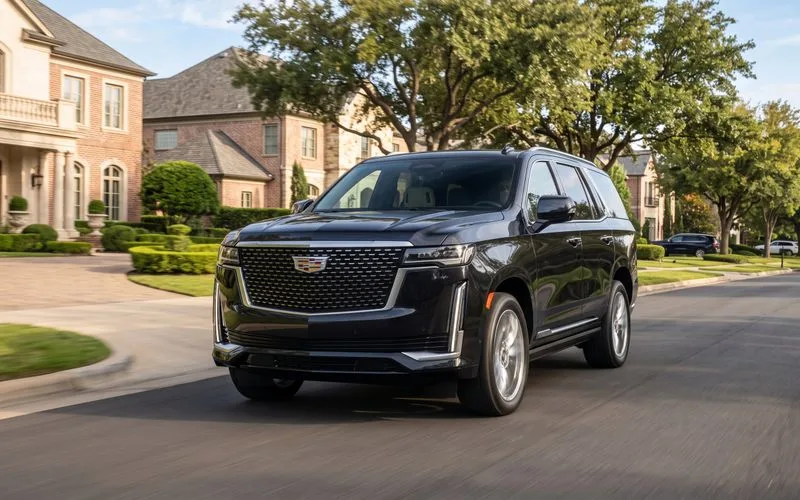 Cadillac EscaladeFull-Size Luxury SUVBetter at: Resale value
The direct rival holds its value far better and offers a much broader lineup, including a V8 and the supercharged Escalade-V.
Compare 2.92B-
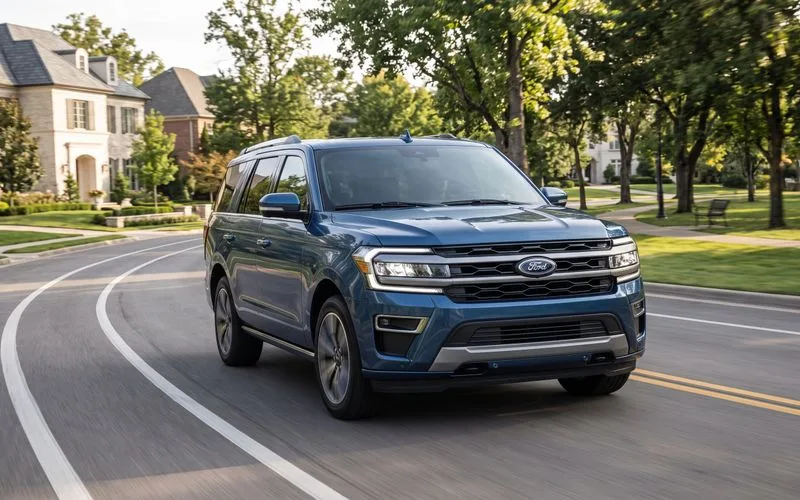 Ford ExpeditionFull-Size SUVBetter at: Value per dollar
Same platform, engine and third-row space for tens of thousands less, if you can live without the Lincoln materials and massage seats.
Compare 2.72B-
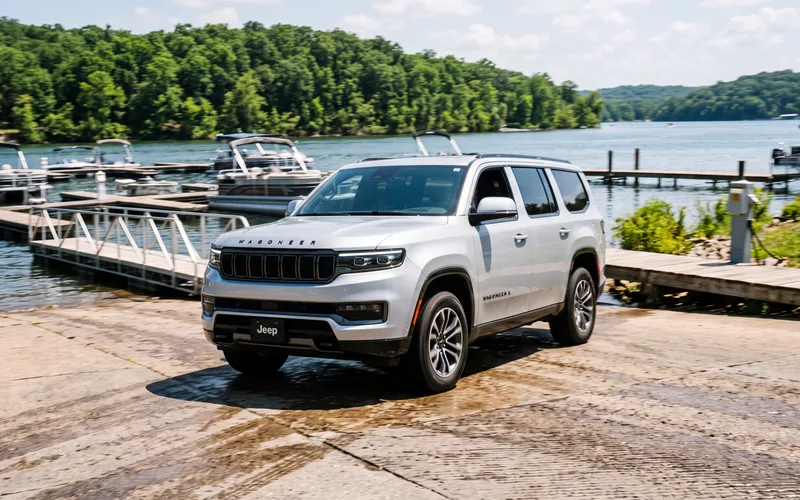 Jeep WagoneerFull-Size SUVBetter at: Price
Comparable size, seating and towing at a lower price, with a more rugged character than the Navigator's plush cruiser brief.
CompareHow it's evolved
10 scored model years · 2017–2026
Subject scores by year
Hover or tap a score to see what moved it versus the year before. A corner mark flags a big swing.
| Year | Performance | Efficiency | Safety | Space | Cost | Reliability | Tech | Use-case | Driving | Value |
|---|---|---|---|---|---|---|---|---|---|---|
| 2026 | 76 | 20 | 85 | 70 | 14 | 69 | 86 | 72 | 70 | 73 |
| 2025 | 74 | 20 | 79 | 82 | 16 | 60 | 82 | 71 | 65 | 73 |
| 2024 | 73 | 25 | 76 | 83 | 15 | 58 | 85 | 68 | 63 | 72 |
| 2023 | 74 | 25 | 75 | 84 | 15 | 60 | 85 | 69 | 65 | 74 |
| 2022 | 73 | 25 | 73 | 84 | 15 | 57 | 83 | 66 | 62 | 73 |
| 2021 | 73 | 19 | 66 | 82 | 15 | 54 | 70 | 65 | 60 | 70 |
| 2020 | 72 | 24 | 65 | 82 | 15 | 53 | 70 | 65 | 60 | 75 |
| 2019 | 73 | 24 | 61 | 84 | 15 | 60 | 68 | 64 | 60 | 74 |
| 2018 | 73 | 24 | 56 | 84 | 15 | 56 | 67 | 63 | 60 | 75 |
| 2017 | 63 | 25 | 42 | 74 | 14 | 54 | 45 | 58 | 53 | 58 |
Compare two years
Best fit & conditions
Higher scores mean a better fit for that use case. Learn more about use-case fit →
Subject profile
Academic Probation · NHTSA safety recalls
Jun 24, 2026Power train: automatic transmissionThe transmission park pawl may engage while the vehicle is in motion, resulting in park system damage.
Defect
Ford Motor Company (Ford) is recalling certain 2018-2021 Navigator, Expedition, 2020-2021 Explorer, Lincoln Aviator, and 2021 F-150 vehicles. The transmission park pawl may engage while the vehicle is in motion, resulting in park system damage.
Risk
Park system damage may result in a vehicle rollaway, increasing the risk of a crash.
Remedy
Dealers will update the powertrain control module software, and inspect and replace any damaged transmission components as necessary, free of charge. Interim letters, notifying owners of the safety risk, were mailed July 10, 2026. Additional letters will be sent once the remedy is available, anticipated in April 2027. Owners may contact Ford customer service at 1-866-436-7332. Ford's number for this recall is 26S48. Vehicle Identification Numbers (VINs) involved in this recall became searchable on NHTSA.gov on June 26, 2026.
NHTSA campaign 26V402000 ↗Manufacturer no. 26S48741,195 vehicles potentially affected (all models in the campaign)Filed by Ford Motor CompanyFiled as NAVIGATORJun 9, 2026Electrical system: instrument cluster/panelAt vehicle start-up, the Instrument Panel Cluster Assembly (IPC) may not function, showing a blank display. As a result, these vehicles fail to comply with Federal Motor Vehicle Safety Standard (FMVSS) number 101, "Controls and Displays."
Defect
Ford Motor Company (Ford) is recalling certain 2019 Ford Mustang, Lincoln Nautilus, and Lincoln Navigator vehicles previously repaired incorrectly under recall number 19V076. At vehicle start-up, the Instrument Panel Cluster Assembly (IPC) may not function, showing a blank display. As a result, these vehicles fail to comply with Federal Motor Vehicle Safety Standard (FMVSS) number 101, "Controls and Displays."
Risk
A blank instrument cluster that fails to display critical safety information, such as vehicle speed or safety system warnings, increases the risk of a crash.
Remedy
Dealers will reprogram the Instrument Panel Cluster Assembly (IPC) software, free of charge. Owner notification letters were mailed July 13, 2026. Owners may contact customer service at 1-866-436-7332. Ford's number for this recall is 26C27. Vehicle Identification Numbers (VINs) involved in this recall will become searchable on NHTSA.gov on July 6, 2026.
NHTSA campaign 26V372000 ↗Manufacturer no. 26C272,349 vehicles potentially affected (all models in the campaign)Owners notified Jul 13, 2026Filed by Ford Motor CompanyFiled as NAVIGATORMay 27, 2026Seat belts: pretensionerThe seat belt pretensioner in the driver and/or front passenger seat may inadvertently lock the seat belt, which will not allow the belt to retract or extend.
Defect
Ford Motor Company (Ford) is recalling certain 2018-2022 Expedition and Lincoln Navigator vehicles. The seat belt pretensioner in the driver and/or front passenger seat may inadvertently lock the seat belt, which will not allow the belt to retract or extend.
Risk
Seat belts that do not retract or extend can fail to restrain an occupant as intended, increasing the risk of injury in a crash.
Remedy
Dealers will inspect and replace the seat belt retractors as necessary, free of charge. Interim letters, notifying owners of the safety risk, were mailed June 8, 2026. Additional letters will be sent once the remedy is available, anticipated in August 2026. Owners may contact Ford customer service at 1-866-436-7332. Ford's number for this recall is 26S34. This recall replaces and expands previous NHTSA recalls 24V099 and 25V197. Vehicles previously inspected or repaired under the prior recalls will need the new repair completed.
NHTSA campaign 26V344000 ↗Manufacturer no. 26S34419,967 vehicles potentially affected (all models in the campaign)Filed by Ford Motor CompanyFiled as NAVIGATORMay 23, 2025Seat belts: pretensionerThe seat belt pretensioner in the driver and/or front passenger seat may inadvertently lock the seat belt, which will not allow the belt to retract or extend.
Defect
Ford Motor Company (Ford) is recalling certain 2018-2020 Expedition and Lincoln Navigator vehicles. The seat belt pretensioner in the driver and/or front passenger seat may inadvertently lock the seat belt, which will not allow the belt to retract or extend.
Risk
Seat belts that do not retract or extend can fail to restrain an occupant as intended, increasing the risk of injury in a crash.
Remedy
Dealers will replace the seat belt retractors as necessary, free of charge. Owner notification letters were mailed October 22, 2025. Owners may contact Ford customer service at 1-866-436-7332. Ford's number for this recall is 25S31. Some vehicles in this recall that were previously inspected under recall 24V-099 and did not have parts replaced will need to have this new recall remedy completed.
NHTSA campaign 25V197000 ↗Manufacturer no. 25S31112,951 vehicles potentially affected (all models in the campaign)Owners notified Oct 22, 2025Filed by Ford Motor CompanyFiled as NAVIGATORNov 8, 2024Equipment: other: labelsThe air bag warning label may be missing from the dashboard. As such, these vehicles fail to comply with the requirement Federal Motor Vehicle Safety Standard number 208, "Occupant Crash Protection."
Defect
Ford Motor Company (Ford) is recalling certain 2020-2025 Explorer, Lincoln Aviator, 2020-2024 Escape, Lincoln Corsair, 2018-2024 F-150, Expedition and Lincoln Navigator vehicles. The air bag warning label may be missing from the dashboard. As such, these vehicles fail to comply with the requirement Federal Motor Vehicle Safety Standard number 208, "Occupant Crash Protection."
Risk
Without a label that shows the proper restraint usage guidelines, the occupants may have an increased risk of injury in the event of a crash.
Remedy
Ford will mail owners the warning labels, free of charge. Owner notification letters were mailed December 19, 2024. Owners may call Ford customer service at 1-866-436-7332. Ford's number for this recall is 24C39.
NHTSA campaign 24V852000 ↗Manufacturer no. 24C3927,678 vehicles potentially affected (all models in the campaign)Owners notified Dec 19, 2024Filed by Ford Motor CompanyFiled as NAVIGATORFeb 9, 2024Seat belts: pretensionerThe seat belt pretensioner in the driver and/or front passenger seat may inadvertently deploy and lock the seat belt, which will not allow the belt to retract or extend.
Defect
Ford Motor Company (Ford) is recalling certain 2018-2020 Expedition and Lincoln Navigator vehicles. The seat belt pretensioner in the driver and/or front passenger seat may inadvertently deploy and lock the seat belt, which will not allow the belt to retract or extend.
Risk
Seat belts that do not retract or extend may fail to restrain an occupant as intended, increasing the risk of injury in a crash.
Remedy
Dealers will replace the seat belt retractors, as necessary. Additionally, dealers will install an HVAC drain tube elbow if it is missing. Repairs will be performed free of charge. Owner notification letters were mailed on July 8, 2024. Owners may contact Ford customer service at 1-866-436-7332. Ford's number for this recall is 24S06.
NHTSA campaign 24V099000 ↗Manufacturer no. 24S0677,574 vehicles potentially affected (all models in the campaign)Owners notified Jul 8, 2024Filed by Ford Motor CompanyFiled as NAVIGATORAug 25, 2023Back over prevention: sensing system: cameraThe rearview camera, or 360-degree view camera if equipped, may not display a rearview image when the vehicle is placed in reverse.
Defect
Ford Motor Company (Ford) is recalling certain 2020-2023 Lincoln Aviator, 2018-2021 Lincoln Navigator, 2022-2023 Ford Transit, and 2021 Ford Bronco vehicles. The rearview camera, or 360-degree view camera if equipped, may not display a rearview image when the vehicle is placed in reverse.
Risk
Loss of the rearview camera image can reduce the driver's rear visibility, increasing the risk of a crash.
Remedy
Dealers will replace the rearview camera, and update the software and wiring as necessary, free of charge. Owner notification letters were mailed November 20, 2023 to Lincoln owners. Ford vehicle owners notification letters were mailed March 4, 2024. Ford remedy parts are anticipated 2nd Quarter 2024. Ford's number for this recall is 23S48.
NHTSA campaign 23V598000 ↗Manufacturer no. 23S48177,402 vehicles potentially affected (all models in the campaign)Owners notified Nov 20, 2023Filed by Ford Motor CompanyFiled as NAVIGATORJun 9, 2023Equipment: other: owners/service/other manualThe owner's manual does not include instructions for adjusting or removing certain head restraints. As such, these vehicles fail to comply with the requirements of Federal Motor Vehicle Safety Standard number 202, "Head Restraints."
Defect
Ford Motor Company (Ford) is recalling certain 2018-2023 Expedition and Lincoln Navigator vehicles equipped with third-row seating; and 2019-2023 F-Super Duty F-250, F-350, F-450, and F-550 SuperCab vehicles. The owner's manual does not include instructions for adjusting or removing certain head restraints. As such, these vehicles fail to comply with the requirements of Federal Motor Vehicle Safety Standard number 202, "Head Restraints."
Risk
Without instructions, the head restraints may be improperly adjusted, increasing the risk of injury in the event of a crash.
Remedy
Ford will mail the Owner's Manual addendums that describe how to adjust and remove the head restraints for the center seating positions, free of charge. Owner notification letters were mailed July 21, 2023. Owners may contact Ford customer service at 1-866-436-7332. Ford's number for this recall is 23C20.
NHTSA campaign 23V420000 ↗Manufacturer no. 23C20691,133 vehicles potentially affected (all models in the campaign)Owners notified Jul 21, 2023Filed by Ford Motor CompanyFiled as NAVIGATOROct 28, 2019Suspension: rearThe rear suspension toe link fasteners may not have been properly tightened to the frame, possibly allowing separation from the frame.
Defect
Ford Motor Company (Ford) is recalling certain 2019 Expedition and Lincoln Navigator vehicles. The rear suspension toe link fasteners may not have been properly tightened to the frame, possibly allowing separation from the frame.
Risk
A disconnected toe link can cause a sudden change to vehicle handling, increasing the risk of a crash.
Remedy
Ford has notified owners, and dealers will inspect and tighten the rear toe link fasteners, check and adjust the rear toe alignment, and inspect the rear tires for abnormal tire wear, replacing them if necessary. Repairs will be performed free of charge. The recall began November 14, 2019. Owners may contact Ford customer service at 1-866-436-7332. Ford's number for this recall is 19S36.
NHTSA campaign 19V773000 ↗Manufacturer no. 19S3618 vehicles potentially affected (all models in the campaign)Owners notified Nov 14, 2019Filed by Ford Motor CompanyFiled as NAVIGATORFeb 11, 2019Electrical system: instrument cluster/panelAt vehicle start-up, the Instrument Panel Cluster Assembly (IPC) may not function, showing a blank display. As a result, these vehicles fail to comply with Federal Motor Vehicle Safety Standard (FMVSS) number 101, "Controls and Displays."
Defect
Ford Motor Company (Ford) is recalling certain 2019 Ford Mustang, Lincoln Nautilus, and Lincoln Navigator vehicles. At vehicle start-up, the Instrument Panel Cluster Assembly (IPC) may not function, showing a blank display. As a result, these vehicles fail to comply with Federal Motor Vehicle Safety Standard (FMVSS) number 101, "Controls and Displays."
Risk
A blank instrument cluster will not show important information like vehicle speed, fuel or temperature level, or safety system warnings. Driving with an inoperative cluster can increase the risk of a crash.
Remedy
Ford has notified owners, and dealers will reprogram the Instrument Panel Cluster Assembly (IPC), free of charge. The recall began March 8, 2019. Owners may contact customer service at 1-866-436-7332. Ford's number for this recall is 19C03.
NHTSA campaign 19V076000 ↗Manufacturer no. 19C034,212 vehicles potentially affected (all models in the campaign)Owners notified Mar 8, 2019Filed by Ford Motor CompanyFiled as NAVIGATOR
36 recalls on other model years of the Navigator (2017–2018, 2020–2026)
Mar 31, 2026Visibility: windshield wiper/washer: linkagesThe windshield wiper arms may break, causing the wipers to fail.
Defect
Ford Motor Company (Ford) is recalling certain 2021-2023 Lincoln Navigator, Expedition, and 2022-2023 F-250 SD, F-350 SD, F-450 SD, F-550 SD, and F-600 SD vehicles. The windshield wiper arms may break, causing the wipers to fail.
Risk
Windshield wiper failure can reduce visibility, increasing the risk of a crash.
Remedy
Dealers will inspect and replace the wiper arms, as necessary, free of charge. Owner notification letters were mailed August 5, 2026. Owners may contact Ford customer service at 1-866-436-7332. Ford's number for this recall is 26S24.Vehicle Identification Numbers (VINs) involved in this recall became searchable on NHTSA.gov on April 1, 2026.
NHTSA campaign 26V204000 ↗Manufacturer no. 26S24422,613 vehicles potentially affected (all models in the campaign)Owners notified Aug 5, 2026Filed by Ford Motor CompanyFiled as NAVIGATORMar 18, 2026Back over prevention: software · Electrical system: adasThe Image Processing Module A (IPMA) may experience multiple unexpected resets, resulting in loss of the rearview camera image and advanced driver assistance (ADAS) features, including pre-collision assist, lane-keeping assist, and blind-spot monitoring.
Defect
Ford Motor Company (Ford) is recalling certain 2022-2025 Lincoln Navigator, 2024-2025 Lincoln Nautilus, 2025 Lincoln Aviator and Explorer vehicles. The Image Processing Module A (IPMA) may experience multiple unexpected resets, resulting in loss of the rearview camera image and advanced driver assistance (ADAS) features, including pre-collision assist, lane-keeping assist, and blind-spot monitoring.
Risk
Loss of the rearview camera image and certain driver assistance features, can reduce the driverâs ability to detect hazards, increasing the risk of a crash.
Remedy
The Image Processing Module A software will be updated by a dealer, or through an over-the-air (OTA) update, free of charge. This is a Phased campaign. Phase 1 will include 2025 Aviator, 2025 Explorer, 2025 Nautilus notified owners on 4/13/2026. Phase 2 will include 2025 Navigator will notify owners on or about 4/20/2026. Phase 3 will include 2022-2024 Navigator will notify owners on or about 6/8/2026. Phase 4 will include 2024 Nautilus will notify owners on or about 6/22/2026. Owner notification letters were mailed April 13, 2026. Owners may contact Ford customer service at 1-866-436-7332. Ford's number for this recall is 26S21. Vehicle Identification Numbers (VINs) involved in this recall will be searchable on NHTSA.gov beginning March 25, 2026.
NHTSA campaign 26V165000 ↗Manufacturer no. 26S21254,640 vehicles potentially affected (all models in the campaign)Owners notified Apr 13, 2026Filed by Ford Motor CompanyFiled as NAVIGATORMar 3, 2026Seats: front assembly: power adjustThe obstacle detection software for the driver seat may malfunction at low speeds, resulting in the seat reversing unexpectedly while driving.
Defect
Ford Motor Company (Ford) is recalling certain 2026 Lincoln Navigator vehicles. The obstacle detection software for the driver seat may malfunction at low speeds, resulting in the seat reversing unexpectedly while driving.
Risk
Unexpected movement of the driverâs seat may affect the driverâs ability to control the vehicle, increasing the risk of a crash.
Remedy
The seat control module software will be updated by a dealer, or through an over-the-air (OTA) update, free of charge. Owner notification letters were mailed March 13, 2026. Owners may contact Ford customer service at 1-866-436-7332. Ford's number for this recall is 26S11. Vehicle Identification Numbers (VINs) involved in this recall became searchable on NHTSA.gov on March 5, 2026.
NHTSA campaign 26V120000 ↗Manufacturer no. 26S111,189 vehicles potentially affected (all models in the campaign)Owners notified Mar 13, 2026Filed by Ford Motor CompanyFiled as NAVIGATORFeb 20, 2026Electrical system: integrated trailer brake control · Exterior lighting: tail lightsWhen towing a trailer, the integrated trailer module (ITRM) may lose communication with the vehicle, possibly causing a loss of brake and turn signal lights, or a loss of brake function. As such, these vehicles fail to comply with the requirements of Federal Motor Vehicle Safety Standard number 108, " Lamps, Reflective Devices, and Associated Equipment."
Defect
Ford Motor Company (Ford) is recalling certain 2021-2026 F-150, 2022-2026 F-250 SD, F-350 SD, F-450 SD, F-550 SD, Maverick, 2024-2026 Ranger, 2023-2026 F-600 SD, 2022-2027 Lincoln Navigator, Expedition, and 2026 E-Transit vehicles. When towing a trailer, the integrated trailer module (ITRM) may lose communication with the vehicle, possibly causing a loss of brake and turn signal lights, or a loss of brake function. As such, these vehicles fail to comply with the requirements of Federal Motor Vehicle Safety Standard number 108, " Lamps, Reflective Devices, and Associated Equipment."
Risk
Trailer lights or brakes that do not function can reduce the driverâs ability to control the trailer and decrease the trailers visibility to other road users, increasing the risk of a crash.
Remedy
The integrated trailer module software will be updated by a dealer, or through an over-the-air (OTA) update, free of charge. Owner notification letters were mailed March 25, 2026. Owners may contact Ford customer service at 1-866-436-7332. Ford's number for this recall is 26C10. Vehicle Identification Numbers (VINs) involved in this recall will be searchable on NHTSA.gov beginning March 17, 2026.
NHTSA campaign 26V104000 ↗Manufacturer no. 26C104,381,878 vehicles potentially affected (all models in the campaign)Owners notified Mar 25, 2026Filed by Ford Motor CompanyFiled as NAVIGATORDec 1, 2025Exterior lightingThe rear lightbar may have cracks in the outer lens or weld track that allow moisture to accumulate, which can result in inoperative or flickering reverse lights. As such, these vehicles fail to comply with the requirements of Federal Motor Vehicle Safety Standard number 108, "Lamps, Reflective Devices, and Associated Equipment."
Defect
Ford Motor Company (Ford) is recalling certain 2025 Lincoln Navigator vehicles. The rear lightbar may have cracks in the outer lens or weld track that allow moisture to accumulate, which can result in inoperative or flickering reverse lights. As such, these vehicles fail to comply with the requirements of Federal Motor Vehicle Safety Standard number 108, "Lamps, Reflective Devices, and Associated Equipment."
Risk
Inoperative or flickering reverse lights may not alert other drivers that the vehicle is reversing, increasing the risk of injury or crash.
Remedy
Dealers will replace the rear lightbar, free of charge. Owner notification letters were mailed January 14, 2026. Owners may contact Ford customer service at 1-866-436-7332. Ford's number for this recall is 25C66. Vehicle Identification Numbers (VINs) involved in this recall became searchable on NHTSA.gov on December 3, 2025.
NHTSA campaign 25V831000 ↗Manufacturer no. 25C661,195 vehicles potentially affected (all models in the campaign)Owners notified Jan 14, 2026Filed by Ford Motor CompanyFiled as NAVIGATORDec 1, 2025Service brakes, hydraulic: power assist: electric: control moduleThe Electronic Brake Booster (EBB) module may malfunction while driving or when the driver is utilizing an Advanced Driver Assistance System (ADAS) feature, resulting in a loss of power brake assist.
Defect
Ford Motor Company (Ford) is recalling certain 2025 Lincoln Navigator, F-150, Expedition, Bronco, and Ranger vehicles. The Electronic Brake Booster (EBB) module may malfunction while driving or when the driver is utilizing an Advanced Driver Assistance System (ADAS) feature, resulting in a loss of power brake assist.
Risk
An unexpected loss of power brake assist while driving can extend stopping distance and increase the risk of a crash. Additionally, a loss of power brake assist while ADAS features are engaged can result in the vehicle not braking as expected, increasing the risk of a crash.
Remedy
Dealers will replace the electronic brake booster, free of charge. Owner notification letters were mailed February 26, 2026. Owners may contact Ford customer service at 1-866-436-7332. Ford's number for this recall is 25SD4. Vehicle Identification Numbers (VINs) involved in this recall became searchable on NHTSA.gov on December 3, 2025.
NHTSA campaign 25V823000 ↗Manufacturer no. 25SD4679 vehicles potentially affected (all models in the campaign)Owners notified Feb 26, 2026Filed by Ford Motor CompanyFiled as NAVIGATOROct 24, 2025Visibility: sun/moon roof assemblyThe moonroof wind deflector clips may be inadequately attached to the moonroof frame, which can result in the wind deflector detaching from the vehicle.
Defect
Ford Motor Company (Ford) is recalling certain 2021-2022 Expedition, Lincoln Navigator, 2021-2023 F-150, 2022 F-250 SD, F-350 SD, and F-450 SD vehicles. The moonroof wind deflector clips may be inadequately attached to the moonroof frame, which can result in the wind deflector detaching from the vehicle.
Risk
A detached wind deflector can become a road hazard and increase the risk of a crash.
Remedy
Dealers will inspect and repair the moonroof wind deflector as necessary, free of charge. Owner notification letters were mailed November 10, 2025. Owners may contact Ford customer service at 1-866-436-7332. Ford's number for this recall is 25SB7. Vehicle Identification Numbers (VINs) involved in this recall will be searchable on NHTSA.gov beginning October 30, 2025.
NHTSA campaign 25V729000 ↗Manufacturer no. 25SB7174,853 vehicles potentially affected (all models in the campaign)Owners notified Nov 10, 2025Filed by Ford Motor CompanyFiled as NAVIGATORSep 19, 2025EngineA short circuit within the battery junction box can cause an engine fire while driving or parked.
Defect
Ford Motor Company (Ford) is recalling certain 2020 Expedition and Lincoln Navigator vehicles. A short circuit within the battery junction box can cause an engine fire while driving or parked.
Risk
A vehicle fire increases the risk of injury.
Remedy
Owners are advised to park their vehicles outside and away from structures and other vehicles, until the remedy is performed. Dealers will inspect and replace the battery junction box, as necessary, and remove a ground wire. On models equipped with standard-duty radiator fan motors, dealers will also install an auxiliary electrical box with a wire jumper. Repairs will be performed free of charge. Owner notification letters were mailed October 3, 2025. Owners may contact Ford customer service at 1-866-436-7332. Ford's numbers for this recall are 22S36 and 22S48. Vehicle Identification Numbers (VINs) involved in this recall became searchable on NHTSA.gov on September 23, 2025.
NHTSA campaign 25V628000 ↗Manufacturer no. 22S36/22S484,632 vehicles potentially affected (all models in the campaign)Owners notified Oct 3, 2025Filed by Ford Motor CompanyFiled as NAVIGATORSep 3, 2025Back over prevention: sensing system: cameraThe rearview camera may display a distorted, inverted, or blank image when the vehicle is in reverse.
Defect
Ford Motor Company (Ford) is recalling certain 2015-2019 Lincoln MKC, Mustang, F-350 SD, F-250 SD, F-450 SD, 2015-2017 Lincoln Navigator, Expedition, 2015-2018 Edge, Transit Connect, 2016-2019 F-550 SD, Transit, 2017-2019 Econoline, and 2019 Ranger vehicles. The rearview camera may display a distorted, inverted, or blank image when the vehicle is in reverse.
Risk
A rearview camera that displays an inverted, distorted, or blank image can reduce the driverâs view behind the vehicle, increasing the risk of a crash.
Remedy
Dealers will inspect and replace the rearview camera as necessary, free of charge. Owner notification letters were mailed January 13, 2026. Ford owners will receive letters in phases, beginning January 2026 and June 2026. Owners may contact Ford customer service at 1-866-436-7332. Ford's number for this recall is 25S89. This recall expands previous NHTSA recall number 25V270. Vehicle Identification Numbers (VINs) involved in this recall will be searchable on NHTSA.gov beginning September 8, 2025.
NHTSA campaign 25V572000 ↗Manufacturer no. 25S891,456,417 vehicles potentially affected (all models in the campaign)Owners notified Jan 13, 2026Filed by Ford Motor CompanyFiled as NAVIGATORJul 25, 2025Service brakes, hydraulic: power assist: electric: control module: softwareThe Electronic Brake Booster (EBB) module may malfunction while driving or when the driver is utilizing an Advanced Driver Assistance System (ADAS) feature, resulting in a loss of power brake assist.
Defect
Ford Motor Company (Ford) is recalling certain 2025 Lincoln Navigator, F-150, Expedition, Bronco, and Ranger vehicles. The Electronic Brake Booster (EBB) module may malfunction while driving or when the driver is utilizing an Advanced Driver Assistance System (ADAS) feature, resulting in a loss of power brake assist.
Risk
An unexpected loss of power brake assist while driving can extend stopping distance and increase the risk of a crash. Additionally, a loss of power brake assist while ADAS features are engaged can result in the vehicle not braking as expected, increasing the risk of a crash.
Remedy
The EBB module software will be updated over-the-air (OTA) or by a dealer, free of charge. Owner notification letters were mailed on August 22, 2025. Owners may contact Ford customer service at 1-866-436-7332. Ford's number for this recall is 25S77.
NHTSA campaign 25V488000 ↗Manufacturer no. 25S77312,120 vehicles potentially affected (all models in the campaign)Owners notified Aug 22, 2025Filed by Ford Motor CompanyFiled as NAVIGATORJul 7, 2025Fuel system, gasoline: delivery: fuel pumpThe low-pressure fuel pump may fail, which can result in an engine stall while driving.
Defect
Ford Motor Company (Ford) is recalling certain 2021-2023 Bronco, Explorer, Lincoln Aviator, F-250 SD, F-350 SD, F-450 SD, F-550 SD, 2021-2022 Lincoln Navigator, Mustang, F-150, and 2022 Expedition vehicles. The low-pressure fuel pump may fail, which can result in an engine stall while driving.
Risk
An engine stall increases the risk of a crash.
Remedy
Dealers will replace the low pressure fuel pump on super duty vehicles and update the powertrain control module (PCM) software on all other affected vehicles, free of charge. Owner notification letters were mailed July 27, 2026. Owners may contact Ford customer service at 1-866-436-7332. Ford's number for this recall is 25S75.
NHTSA campaign 25V455000 ↗Manufacturer no. 25S75850,318 vehicles potentially affected (all models in the campaign)Owners notified Jul 27, 2026Filed by Ford Motor CompanyFiled as NAVIGATORJun 27, 2025Back over prevention: softwareA software error may cause the rearview camera to display a blank image, or the image may remain on the display after the backing event has ended.
Defect
Ford Motor Company (Ford) is recalling certain 2018-2022 Transit Connect, 2019-2020 MKZ, MKX, Edge, Continental, F-150, Nautilus, Fusion, 2019-2023 Ranger, Mustang, 2020-2021 EcoSport, Expedition, Navigator, 2020-2022 Escape, F-250 SD, Corsair, 2020-2023 Aviator, Transit, 2020-2024 Explorer, 2021-2024 Bronco Sport, and 2022-2024 Maverick vehicles. A software error may cause the rearview camera to display a blank image, or the image may remain on the display after the backing event has ended.
Risk
A rearview camera that displays a blank image can reduce the driver's view behind the vehicle. A rearview image that continues to be displayed after the vehicle is shifted out of reverse may distract the driver. Both of these situations can increase the risk of a crash.
Remedy
Dealers will update the rearview camera software, free of charge. Owner notification letters were mailed September 4, 2025. Owners may contact Ford customer service at 1-866-436-7332. Ford's number for this recall is 25S72.
NHTSA campaign 25V442000 ↗Manufacturer no. 25S72200,237 vehicles potentially affected (all models in the campaign)Owners notified Sep 4, 2025Filed by Ford Motor CompanyFiled as NAVIGATORJun 27, 2025Air bags: frontalThe passenger side air bag may have been manufactured incorrectly, which can cause the air bag to deploy with excessive force during a crash.
Defect
Ford Motor Company (Ford) is recalling certain 2025 Navigator and Expedition vehicles. The passenger side air bag may have been manufactured incorrectly, which can cause the air bag to deploy with excessive force during a crash.
Risk
An air bag that deploys with excessive force can increase the risk of injury during a crash.
Remedy
Dealers will replace the passenger side air bags, free of charge. Owner notification letters were mailed August 8, 2025. Owners may contact Ford Customer Service at 1-866-436-7332. Ford's number for this recall is 25S51.
NHTSA campaign 25V439000 ↗Manufacturer no. 25S51171 vehicles potentially affected (all models in the campaign)Owners notified Aug 8, 2025Filed by Ford Motor CompanyFiled as NAVIGATORJun 13, 2025Exterior lighting: lighting control module: softwareThe headlight control module software may cause the side marker and daytime running lights to fail. As such, these vehicles fail to comply with the requirements of Federal Motor Vehicle Safety Standard number 108, "Lamps, Reflective Devices, and Associated Equipment."
Defect
Ford Motor Company (Ford) is recalling certain 2022 Lincoln Navigator vehicles previously repaired under Recall 22V455 (22C14). The headlight control module software may cause the side marker and daytime running lights to fail. As such, these vehicles fail to comply with the requirements of Federal Motor Vehicle Safety Standard number 108, "Lamps, Reflective Devices, and Associated Equipment."
Risk
A loss of exterior lighting can reduce visibility and increase the risk of a crash.
Remedy
Dealers will update the headlight control module software, free of charge. Owner notification letters were mailed July 16, 2025. Owners may contact Ford customer service at 1-866-436-7332. Ford's number for this recall is 25C28.
NHTSA campaign 25V403000 ↗Manufacturer no. 25C2848 vehicles potentially affected (all models in the campaign)Owners notified Jul 16, 2025Filed by Ford Motor CompanyFiled as NAVIGATORMay 23, 2025Electrical system: body control module: softwareThe Pre-Collision Assist features, such as forward collision warning and automatic emergency braking, are not functional due to a software error.
Defect
Ford Motor Company (Ford) is recalling certain 2020 Expedition and Navigator vehicles that were repaired incorrectly under recall 20V262. The Pre-Collision Assist features, such as forward collision warning and automatic emergency braking, are not functional due to a software error.
Risk
Inoperative pre-collision assist features that fail to perform as expected can increase the risk of a crash or injury.
Remedy
Dealers will update the body control module software, free of charge. Owner notification letters were mailed June 25, 2025. Owners may contact Ford customer service at 1-866-436-7332. Ford's number for this recall is 25S56.
NHTSA campaign 25V346000 ↗Manufacturer no. 25S56556 vehicles potentially affected (all models in the campaign)Owners notified Jun 25, 2025Filed by Ford Motor CompanyFiled as NAVIGATORMay 9, 2025Back over prevention: softwareA software error may cause the rearview camera image to delay, freeze, or not display when the vehicle is in reverse.
Defect
Ford Motor Company (Ford) is recalling certain 2021-2024 Bronco, F-150, 2021-2024 Edge, 2022-2025 Escape, F-250, F-350, F-450, F-550, F-600, 2022-2024 Expedition, 2022-2025 Transit, 2021-2023 Mach-E, 2024 Ranger, Mustang, 2021-2023 Lincoln Nautilus, 2022-2024 Navigator, and 2023-2024 Corsair vehicles. A software error may cause the rearview camera image to delay, freeze, or not display when the vehicle is in reverse.
Risk
A frozen or missing rearview camera image can reduce the driver's view behind the vehicle, increasing the risk of a crash.
Remedy
The accessory protocol interface module (APIM) software will be updated by a dealer or through an over-the-air update, free of charge. This will be a phased campaign, with the remedy becoming available in different phases based on model and model years. Interim letters notifying owners of the safety risk were mailed on June 26, 2025. Additional letters will be mailed once the final remedy is available on each phase. Owner notification letters were sent on October 8, 2025. Owners may contact Ford customer service at 1-866-436-7332. Ford's number for this recall is 25S49.
NHTSA campaign 25V315000 ↗Manufacturer no. 25S491,076,138 vehicles potentially affected (all models in the campaign)Owners notified Oct 8, 2025Filed by Ford Motor CompanyFiled as NAVIGATORMay 9, 2025Service brakes, hydraulic: foundation components: hoses, lines/piping, and fittingsThe front brake lines may contact the engine air cleaner outlet pipe and become damaged, possibly resulting in a brake fluid leak and reduced brake function.
Defect
Ford Motor Company (Ford) is recalling certain 2022-2024 Navigator and Expedition vehicles. The front brake lines may contact the engine air cleaner outlet pipe and become damaged, possibly resulting in a brake fluid leak and reduced brake function.
Risk
A loss of brake function increases the risk of a crash.
Remedy
Dealers will inspect the front brake line and replace the brake line or air cleaner outlet pipe, as necessary, free of charge. Owner notification letters were mailed May 29, 2025. Owners may contact Ford customer service at 1-866-436-7332. Ford's number for this recall is 25S47.
NHTSA campaign 25V314000 ↗Manufacturer no. 25S47273,789 vehicles potentially affected (all models in the campaign)Owners notified May 30, 2025Filed by Ford Motor CompanyFiled as NAVIGATORApr 11, 2025Service brakes, hydraulic: foundation components: master cylinder · Service brakes, hydraulic: power assistThe brake master cylinder may allow brake fluid to leak from the front wheel circuit into the brake booster.
Defect
Ford Motor Company (Ford) is recalling certain 2017-2018 F-150, Expedition, and Lincoln Navigator vehicles. The brake master cylinder may allow brake fluid to leak from the front wheel circuit into the brake booster.
Risk
A brake fluid leak can cause reduced brake function and extend the distance required to stop, increasing the risk of a crash.
Remedy
Dealers will replace the brake master cylinder. If the master cylinder is leaking, the brake booster will also be replaced. Repairs will be performed free of charge. Owner notification letters were mailed September 25, 2025. Owners may contact Ford customer service at 1-866-436-7332. Ford's number for this recall is 25S37. This recall is an expansion of NHTSA recall number 22V-150.
NHTSA campaign 25V236000 ↗Manufacturer no. 25S37123,611 vehicles potentially affected (all models in the campaign)Owners notified Sep 25, 2025Filed by Ford Motor CompanyFiled as NAVIGATORMar 28, 2025Engine and engine cooling: engine: oil/lubricationThe engine may have a misaligned engine cup plug, which can result in a rapid oil leak.
Defect
Ford Motor Company (Ford) is recalling certain 2024-2025 F-150, Expedition, and 2024 Lincoln Navigator vehicles equipped with 3.5L GTDI engines. The engine may have a misaligned engine cup plug, which can result in a rapid oil leak.
Risk
A rapid oil leak can result in an engine stall, increasing the risk of a crash. In addition, an oil leak in the presence of an ignition source such as hot engine or exhaust components, can increase the risk of a fire.
Remedy
Dealers will inspect the engine cup plug alignment, and replace the plug if necessary, free of charge. Owner notification letters were mailed May 22, 2025. Owners may contact Ford customer service at 1-866-436-7332. Ford's number for this recall is 25S30.
NHTSA campaign 25V198000 ↗Manufacturer no. 25S304,356 vehicles potentially affected (all models in the campaign)Owners notified May 23, 2025Filed by Ford Motor CompanyFiled as NAVIGATORFeb 28, 2025Electrical system: integrated trailer brake controlDue to a software error, a towed trailer equipped with an electric or electric-over hydraulic brake system may not brake.
Defect
Ford Motor Company (Ford) is recalling certain 2021-2022 F-150, 2022 Maverick, Expedition, Lincoln Navigator, F-250, F-350, F-450, and F-550 vehicles previously repaired incorrectly under recall number 22V-193. Due to a software error, a towed trailer equipped with an electric or electric-over hydraulic brake system may not brake.
Risk
Loss of trailer brake functionality can extend the distance required to stop, increasing the risk of a crash.
Remedy
Dealers will update the integrated trailer brake control module software, free of charge. Owner notification letters were mailed April 11, 2025. Owners may contact Ford customer service at 1-866-436-7332. Ford's number for this recall is 25S18.
NHTSA campaign 25V132000 ↗Manufacturer no. 25S1510,952 vehicles potentially affected (all models in the campaign)Owners notified Apr 11, 2025Filed by Ford Motor CompanyFiled as NAVIGATORFeb 14, 2025Visibility: rearview mirrors/devices: exteriorThe LED logo lights on the exterior mirrors may short circuit.
Defect
Ford Motor Company (Ford) is recalling certain 2015-2017 Lincoln Navigator vehicles. The LED logo lights on the exterior mirrors may short circuit.
Risk
An electrical short circuit in the exterior mirror increases the risk of fire.
Remedy
Dealers will disconnect the LED light wires, free of charge. Owner notification letters were mailed March 27, 2025. Owners may contact Ford customer service at 866-436-7332. Ford's number for this recall is 25S08.
NHTSA campaign 25V091000 ↗Manufacturer no. 25S0835,328 vehicles potentially affected (all models in the campaign)Owners notified Mar 27, 2025Filed by Ford Motor CompanyFiled as NAVIGATORDec 20, 2024Engine and engine cooling: engine: oil/lubricationThe engines may have a misaligned engine cup plug, which can result in a rapid oil leak.
Defect
Ford Motor Company (Ford) is recalling certain 2024-2025 F-150, 2024 Expedition and 2024 Lincoln Navigator vehicles equipped with a 3.5L GTDI engine. The engines may have a misaligned engine cup plug, which can result in a rapid oil leak.
Risk
A rapid oil leak can result in an engine stall, increasing the risk of a crash. In addition, an oil leak in the presence of an ignition source such as hot engine or exhaust components, can increase the risk of a fire.
Remedy
Dealers will inspect the engine cup plug alignment, and replace the plug if necessary, free of charge. Owner notification letters were mailed on May 23, 2024. Owners may contact Ford customer service at 1-866-436-7332. Ford's number for this recall is 24S70.
NHTSA campaign 24V851000 ↗Manufacturer no. 24S702,490 vehicles potentially affected (all models in the campaign)Owners notified May 23, 2025Filed by Ford Motor CompanyFiled as NAVIGATORFeb 24, 2023Power train: axle assemblyThe front axle pinion may not have been heat-treated, which can cause it to fracture.
Defect
Ford Motor Company (Ford) is recalling certain 2023 F-150, Expedition, and Lincoln Navigator vehicles. The front axle pinion may not have been heat-treated, which can cause it to fracture.
Risk
A fractured pinion can result in a loss of 4-wheel drive and may cause the front wheels to lock up, increasng the risk of a crash.
Remedy
Dealers will replace the front axle pinion gear set. If there is a broken front axle pinion, the entire axle assembly will be replaced. Repairs will be performed free of charge. Owner notification letters were mailed April 21, 2023. Owners may contact Ford customer service at 1-866-436-7332. Ford's number for this recall is 23S07.
NHTSA campaign 23V128000 ↗Manufacturer no. 23S07240 vehicles potentially affected (all models in the campaign)Owners notified Apr 21, 2023Filed by Ford Motor CompanyFiled as NAVIGATORAug 26, 2022Electrical system: wiring: interior/under dash · Visibility: defroster/defogger/hvac system: fan/motorThe front blower motor located behind the glove box may fail.
Defect
Ford Motor Company (Ford) is recalling certain 2015-2017 Ford Expedition and Lincoln Navigator vehicles. The front blower motor located behind the glove box may fail.
Risk
Front blower motor failure can increase the risk of a vehicle interior fire.
Remedy
Dealers will replace the front blower motor assembly, free of charge. Owner notification letters were mailed August 4, 2023. Remedy parts are expected to become available in the second quarter of 2023. Owners may contact Ford customer service at 1-866-436-7332. Ford's number for this recall is 22S56.
NHTSA campaign 22V648000 ↗Manufacturer no. 22S56198,482 vehicles potentially affected (all models in the campaign)Owners notified Aug 4, 2023Filed by Ford Motor CompanyFiled as NAVIGATORJun 24, 2022Exterior lighting: lighting control module: softwareThe headlight control module software may cause the side marker and daytime running lights to fail. As such, these vehicles fail to comply with the requirements of Federal Motor Vehicle Safety Standard number 108, "Lamps, Reflective Devices, and Associated Equipment."
Defect
Ford Motor Company (Ford) is recalling certain 2022 Lincoln Navigator vehicles. The headlight control module software may cause the side marker and daytime running lights to fail. As such, these vehicles fail to comply with the requirements of Federal Motor Vehicle Safety Standard number 108, "Lamps, Reflective Devices, and Associated Equipment."
Risk
A loss of exterior lighting can reduce visibility and increase the risk of a crash.
Remedy
Dealers will update the headlight control module software and recalibrate the headlights, free of charge. Owner notification letters were mailed July 13, 2022. Owners may contact Ford customer service at 1-866-436-7332. Ford's number for this recall is 22C14.
NHTSA campaign 22V455000 ↗Manufacturer no. 22C14965 vehicles potentially affected (all models in the campaign)Owners notified Jul 13, 2022Filed by Ford Motor CompanyFiled as NAVIGATORMay 17, 2022EngineAn engine compartment fire may occur while driving or parked, even with the ignition in the "Off" position.
Defect
Ford Motor Company (Ford) is recalling certain 2021 Expedition and Lincoln Navigator vehicles. An engine compartment fire may occur while driving or parked, even with the ignition in the "Off" position.
Risk
A vehicle fire increases the risk of injury.
Remedy
Owners are advised to park their vehicles outside and away from structures and other vehicles, until the remedy is performed. Dealers will inspect and replace the battery junction box, as necessary, and remove a ground wire. On models equipped with standard-duty radiator fan motors, dealers will also install an auxiliary electrical box with a wire jumper. Repairs will be performed free of charge. Interim owner notification letters informing owners of the safety risk were mailed May 25, 2022. Owners will receive a second letter once the remedy is available. Currently the remedy is available for vehicles equipped with heavy-duty radiator fan motors, and those letters were mailed July 21, 2022. Owners may contact Ford customer service at 1-866-436-7332. Ford's number for this recall is 22S36.
NHTSA campaign 22V346000 ↗Manufacturer no. 22S3666,221 vehicles potentially affected (all models in the campaign)Owners notified Jul 21, 2022Filed by Ford Motor CompanyFiled as NAVIGATORApr 14, 2022Visibility: windshield wiper/washer: linkagesThe windshield wiper arms may break, causing the windshield wipers to fail.
Defect
Ford Motor Company (Ford) is recalling certain 2020-2021 F-150, Expedition, 2020-2022 Super Duty F-250, F-350, F-450, F-550, and 2020-2021 Lincoln Navigator vehicles. The windshield wiper arms may break, causing the windshield wipers to fail.
Risk
Inoperative windshield wipers can reduce visibility in certain driving conditions, increasing the risk of a crash.
Remedy
Dealers will replace both front windshield wiper arms, free of charge. Interim owner notification letters, informing owners of the safety risk, were mailed on May 24, 2022. Remedy parts are expected to be available 3rd Quarter 2022. Owner notification letters were mailed on October 21, 2022. Owners may contact Ford customer service at 1-866-436-7332. Ford's number for this recall is 22S26.
NHTSA campaign 22V250000 ↗Manufacturer no. 22S26652,996 vehicles potentially affected (all models in the campaign)Owners notified Oct 21, 2022Filed by Ford Motor CompanyFiled as NAVIGATORMar 25, 2022Electrical system: integrated trailer brake controlDue to a software error, a towed trailer equipped with an electric or electric-over hydraulic brake system may not brake.
Defect
Ford Motor Company (Ford) is recalling certain 2021-2022 F-150, 2022 Maverick, Expedition, Lincoln Navigator, F-250, F-350, F-450, and F-550 vehicles. Due to a software error, a towed trailer equipped with an electric or electric-over hydraulic brake system may not brake.
Risk
Loss of trailer brake functionality could result in extended stopping distance, increasing the risk of a crash.
Remedy
Dealers will update the integrated trailer brake control module software, free of charge. Owner notification letters were mailed April 22, 2022. Owners may contact Ford customer service at 1-866-436-7332. Ford's number for this recall is 22S17.
NHTSA campaign 22V193000 ↗Manufacturer no. 22S17391,836 vehicles potentially affected (all models in the campaign)Owners notified Apr 22, 2022Filed by Ford Motor CompanyFiled as NAVIGATORMar 11, 2022Service brakes, hydraulic: foundation components: master cylinder · Service brakes, hydraulic: power assistThe brake master cylinder may allow brake fluid to leak from the front wheel circuit into the brake booster.
Defect
Ford Motor Company (Ford) is recalling certain 2016-2017 Ford Expedition, Lincoln Navigator, and 2016-2018 F-150 vehicles equipped with 3.5L Ecoboost engines. The brake master cylinder may allow brake fluid to leak from the front wheel circuit into the brake booster.
Risk
A loss of brake fluid may result in a change in brake pedal travel, increased pedal effort and reduced front brake function, requiring greater effort and distance to stop the vehicle. These conditions can increase the risk of a crash.
Remedy
Dealers will replace the brake master cylinder. If the master cylinder is leaking, the brake booster will also be replaced. Repairs will be performed free of charge. An interim owner notification letter notifying customers of the safety defect were mailed on April 29, 2022. Owner notification letters were mailed April 29, 2022. This recall is an expansion of NHTSA recall number 20V-332. Owners may contact Ford customer service at 1-866-436-7332. Ford's number for this recall is 22S11.
NHTSA campaign 22V150000 ↗Manufacturer no. 22S11195,864 vehicles potentially affected (all models in the campaign)Owners notified Apr 29, 2022Filed by Ford Motor CompanyFiled as NAVIGATOROct 15, 2021Air bags: sensor: side impact · Air bags: side/windowThe front-door side impact pressure sensor modules may have been damaged during supplier assembly, which can cause the side impact air bags to not deploy properly in a crash. As such, these vehicles fail to comply with the requirements of Federal Motor Vehicle Safety Standard number 214, "Side Impact Protection."
Defect
Ford Motor Company (Ford) is recalling certain 2022 Super Duty F-250, F-350, 2021 F-150, Expedition, and Lincoln Navigator vehicles. The front-door side impact pressure sensor modules may have been damaged during supplier assembly, which can cause the side impact air bags to not deploy properly in a crash. As such, these vehicles fail to comply with the requirements of Federal Motor Vehicle Safety Standard number 214, "Side Impact Protection."
Risk
An air bag that does not deploy properly during a crash increases the risk of injury.
Remedy
Dealers will replace the driver and passenger front door side impact sensors, free of charge. Owner notification letters were mailed November 3, 2021. Owners may contact Ford customer service at 1-866-436-7332. Ford's number for this recall is 21C26.
NHTSA campaign 21V805000 ↗Manufacturer no. 21C26777 vehicles potentially affected (all models in the campaign)Owners notified Nov 3, 2021Filed by Ford Motor CompanyFiled as NAVIGATORJun 23, 2020Seats: mid/rear assemblyThe attachment bracket for the driver's side second-row seat headrest may not have been sufficiently welded to the seat frame. As such, these vehicles fail to comply with Federal Motor Vehicle Safety Standard number 202, "Head Restraints."
Defect
Ford Motor Company (Ford) is recalling certain 2020 Ford Expedition and Lincoln Navigator vehicles. The attachment bracket for the driver's side second-row seat headrest may not have been sufficiently welded to the seat frame. As such, these vehicles fail to comply with Federal Motor Vehicle Safety Standard number 202, "Head Restraints."
Risk
An improperly welded headrest bracket may have reduced strength and may not adequately restrain an occupant in a crash, increasing the risk of injury.
Remedy
Ford will notify owners, and dealers will inspect the seat structure and replace it as needed, free of charge. This recall began July 8, 2020. Owners may contact Ford customer service at 1-866-436-7332. Ford's number for this recall is 20C12.
NHTSA campaign 20V366000 ↗Manufacturer no. 20C122,620 vehicles potentially affected (all models in the campaign)Owners notified Jul 8, 2020Filed by Ford Motor CompanyFiled as NAVIGATORMay 8, 2020Electrical system: instrument cluster/panel · Forward collision avoidance · Forward collision avoidance: automatic emergency brakingVehicles built with the optional radar-plus-camera Pre-Collision Assist system are not affected. Due to incorrect coding of interfacing modules, the Pre-Collision Assist feature is not enabled, and the driver cannot access the menu functions necessary to enable the Pre-Collision Assist feature.
Defect
Ford Motor Company (Ford) is recalling certain 2020 Ford Expedition and Lincoln Navigator vehicles equipped with camera-only Pre-Collision Assist feature. Vehicles built with the optional radar-plus-camera Pre-Collision Assist system are not affected. Due to incorrect coding of interfacing modules, the Pre-Collision Assist feature is not enabled, and the driver cannot access the menu functions necessary to enable the Pre-Collision Assist feature.
Risk
If the driver is unaware that the Pre-Collision Assist feature is not enabled, they may rely on a system that is not functional, increasing the risk of a crash or injury.
Remedy
Ford will notify owners, and dealers will reprogram software for the Body Control Module, Antilock Braking System, Instrument Panel Cluster and Headlamp Control Modules, and reset the Tire Pressure Monitor System, free of charge. The recall began May 26, 2020. Owners may contact Ford customer service at 1-866-436-7332. Ford's number for this recall is 20S20.
NHTSA campaign 20V262000 ↗Manufacturer no. 20S2025,081 vehicles potentially affected (all models in the campaign)Owners notified May 26, 2020Filed by Ford Motor CompanyFiled as NAVIGATORNov 14, 2018Seats: mid/rear assemblyThe second row center seat track assemblies may be missing one or both of the J-Channel reinforcement brackets, possibly allowing the seat to move in the event of a crash.
Defect
Ford Motor Company (Ford) is recalling certain 2018 Lincoln Navigator, and Ford Expedition vehicles. The second row center seat track assemblies may be missing one or both of the J-Channel reinforcement brackets, possibly allowing the seat to move in the event of a crash.
Risk
In the event of a crash, a seat that moves may not properly restrain the seat occupant, increasing their risk of injury.
Remedy
Ford will notify owners, and dealers will inspect the second row center seat for any missing J-channel reinforcement brackets, replacing the center seat frame assembly as necessary, free of charge. An interim owner notification was sent on December 21, 2018. A second letter will be mailed once the remedy is available. Owners may contact Ford customer service at 1-866-436-7332. Ford's number for this recall is 18S37
NHTSA campaign 18V805000 ↗Manufacturer no. 18S3734,946 vehicles potentially affected (all models in the campaign)Owners notified Feb 15, 2019Filed by Ford Motor CompanyFiled as NAVIGATORJun 12, 2018Fuel system, gasoline: delivery: fuel pumpThese vehicles have high pressure fuel pump assemblies with welds that can fracture, which may cause an oil or fuel leak.
Defect
Ford Motor Company (Ford) is recalling certain 2018 Ford Expedition, F-150, and Lincoln Navigator vehicles equipped with 3.5L GTDI V6 engines. These vehicles have high pressure fuel pump assemblies with welds that can fracture, which may cause an oil or fuel leak.
Risk
A fuel leak in the presence of an ignition source may increase the risk of a fire.
Remedy
Ford will notify owners, and dealers will replace the high pressure fuel pump and associated components, free of charge. The recall began July 17, 2018. Owners may contact Ford customer service at 1-866-436-7332. Ford's number for this recall is 18S17.
NHTSA campaign 18V392000 ↗Manufacturer no. 18S175,645 vehicles potentially affected (all models in the campaign)Owners notified Jul 17, 2018Filed by Ford Motor CompanyFiled as NAVIGATORApr 4, 2018Power train: automatic transmissionA roll pin may not have been installed in the transmission, potentially causing a loss of the "Park" function.
Defect
Ford Motor Company (Ford) is recalling certain 2017-2018 Ford F-150 and 2018 Ford Expedition and Mustang and Lincoln Navigator vehicles equipped with 10-speed automatic transmissions. A roll pin may not have been installed in the transmission, potentially causing a loss of the "Park" function.
Risk
Despite the transmission shift lever being placed in 'Park' and the instrument panel display indicating 'Park,' the vehicle may roll away after it has been exited if the parking brake has not been applied, increasing the risk of injury or a crash.
Remedy
Ford will notify owners, and dealers will inspect the transmission to make sure it has the roll pin, installing one if it is missing, free of charge. The recall began on April 13, 2018. Owners may contact Ford customer service at 1-866-436-7332. Ford's number for this recall is 18S09.
NHTSA campaign 18V213000 ↗Manufacturer no. 18S09142 vehicles potentially affected (all models in the campaign)Owners notified Apr 13, 2018Filed by Ford Motor CompanyFiled as NAVIGATORJan 16, 2018Visibility: power window devices and controlsThe second row window control modules may intermittently stop the movement of the power window. If something, such as a finger, is pinched by the window glass, the stopped window control module may prevent the window from automatically reversing. As such, these vehicles fail to comply with the requirements of Federal Motor Vehicle Safety Standard (FMVSS) number 118, "Power-Operated Window Systems."
Defect
Ford Motor Company (Ford) is recalling certain 2018 Ford Expedition and Lincoln Navigator vehicles. The second row window control modules may intermittently stop the movement of the power window. If something, such as a finger, is pinched by the window glass, the stopped window control module may prevent the window from automatically reversing. As such, these vehicles fail to comply with the requirements of Federal Motor Vehicle Safety Standard (FMVSS) number 118, "Power-Operated Window Systems."
Risk
If the window does not automatically reverse when an obstruction is found, it can increase the risk of injury.
Remedy
Ford will notify owners, and dealers will inspect the second row window electronic control modules, and replace them as necessary based on their build date codes, free of charge. The recall began on February 16, 2018. Owners may contact Ford customer service at 1-866-436-7332. Ford's number for this recall is 18C01.
NHTSA campaign 18V058000 ↗Manufacturer no. 18C01361 vehicles potentially affected (all models in the campaign)Owners notified Feb 16, 2018Filed by Ford Motor CompanyFiled as NAVIGATOR
Source: NHTSA Office of Defects Investigation recall database, model years 2017–2026. Recalls are listed by model year as the manufacturer filed them; whether a specific car is affected depends on its VIN — check a VIN at nhtsa.gov ↗. NHTSA model names matched to this page: NAVIGATOR.
Detailed scoring by subject
1Performance & PowertrainOne of the Navigator's strongest categories.2.94B-
2019 is a carry-over year in the fourth generation (2018–2024): every trim — Premiere, Select, Reserve and Black Label — uses the same twin-turbocharged 3.5L V6 rated 450 hp, with no optional engine. This was the highest-output engine Lincoln had ever sold at the time, and it sat 10 hp above the 440 hp the same engine was restated at after the 2022 refresh. Rating is on premium fuel.
510 lb-ft arriving at 3,000 rpm tops the full-size SUV field for 2019 and is what makes a roughly 6,000-lb vehicle feel effortless off idle. Some aggregator spec listings quote 500 lb-ft; Wikipedia and Lincoln's own figure are 510, and the manufacturer number wins.
The volume configuration is a 4x4 weighing around 6,000 lbs, and the two instrumented tests I could verify on that configuration bracket it at 5.9–6.2 seconds; the mid-5-second figures that circulate are either estimates or lighter/2WD cars. Quick for the class regardless — this was among the faster full-size luxury SUVs of 2019.
The twin-turbo V6 is quiet, essentially lag-free from a standstill and pulls hard through the midrange — reviewers of the 2019 car consistently describe abundant, easily accessed power in something this large. It gives up the effortless character and sound of the Escalade's 6.2L V8, which is what keeps it out of the top band.
The 10-speed automatic (10R80) is well matched to the engine and reviewers describe tight, precise shifts in normal driving, with paddle shifters and a tow/haul mode standard. Slight downshift lag and low-gear downshifts described as unrefined in this early calibration hold it a few points below the post-refresh cars.
Properly equipped with the Heavy-Duty Trailer Tow Package, the standard-wheelbase 4x2 is rated at 8,700 lbs and the 4x4 at 8,300 lbs — at the top of the full-size luxury SUV class for 2019. The longer Navigator L drops to 8,400 (4x2) / 8,100 lbs (4x4); without the package the rating falls to 6,200 lbs, which is the number most aggregator spec pages quote.
4x4 is optional on Premiere and Select and standard on the upper trims, and it is a genuine two-speed system: a BorgWarner 4417 transfer case with a 2.64:1 low range plus selectable drive modes. Rear-wheel drive remains the base configuration — where full-size luxury rivals of 2019 such as the QX80, GLS and Range Rover made all-wheel drive standard — which keeps it below the 80s.
9.7–10.0 in of ground clearance, a low-range transfer case and terrain-oriented drive modes give it real light-duty ability on snow, sand and unimproved roads. But there is no locking differential, no skid plating and no off-road trim, and the volume car rides on 22-inch wheels with street tires — a snow-and-gravel SUV, not a trail vehicle.
One engine, one transmission, no electrification: every 2019 Navigator is the 450 hp 3.5L twin-turbo V6 with the 10-speed automatic, and the only drivetrain choice is 4x2 versus 4x4. Full-size rivals of the era offered V8s or (Escalade) a diesel; the Navigator offered nothing else.
2Efficiency & RangeOne of the Navigator's weakest categories.0.00F
2019 is the second year of the fourth generation (2018–2024) and a straight carry-over: the 450-hp 3.5L twin-turbo V6 and 10-speed automatic are unchanged from launch, and so are the EPA ratings. Eighteen combined sits near the floor of the SUV band — the cost of a body-on-frame full-size luxury SUV even with aluminum bodywork.
City economy is 16 MPG across every 2019 configuration — auto stop-start and direct injection cannot do much for a ~5,900-lb SUV in stop-and-go traffic. It is unchanged from 2018 and from the 2020 car.
Twenty-one highway on the 4x4 is the Navigator's best case and still sits barely above the bottom of the SUV band; frontal area and gearing chosen for an 8,700-lb tow rating cap it. The 2019 rear-drive car is rated 23 MPG highway, a point better than the same configuration in 2020.
A 23-gallon tank turns class-worst economy into a merely mid-pack cruising range — below the mid-point of the SUV band but not a road-trip liability, and the long-wheelbase Navigator L's bigger tank stretches it further.
At EPA's standard 15,000 mi/yr the 4x4 burns roughly 830 gallons, putting annual fuel spend near the top of the SUV cost band — one of the most expensive vehicles in the catalog to feed, and that is on regular unleaded.
EPA classifies the 2019 Navigator as a regular-gasoline vehicle and the owner's manual permits 87 octane, so no trim requires premium — but Lincoln recommends 91+ for best overall performance, most noticeably in hot weather and when towing, so owners chasing the full 450 hp / 510 lb-ft pay a premium penalty on an already large fuel bill. That is squarely the "recommended but not required" band.
3SafetyMid-pack among this car's ten categories.2.08C
NHTSA rated the 2019 Navigator 5 stars overall in both 4x2 and 4x4 form, with 5 stars in every frontal and side subtest; only the rollover metric separates the drivetrains (4 stars 4x4, 3 stars 4x2, 19.3%/20.8% rollover risk, no tip in the dynamic test).
IIHS never crash-tested the fourth-generation Navigator (2018-2024), so no Top Safety Pick was ever possible — its database has no Navigator entry after the 2016-17 car, which itself carried only a Marginal LATCH evaluation. When IIHS finally tested the mechanically-related Ford Expedition for 2023 (same T3 platform, facelifted), it returned Marginal in driver-side small overlap, passenger-side small overlap and the updated moderate overlap, which makes 'untested' here closer to 'untested with reason for concern' than to a neutral gap.
The volume Reserve trim carries the Technology package as standard equipment, so a typical 2019 Navigator leaves the lot with AEB, adaptive cruise, lane-keeping, auto high beams and a head-up display — but the base Premiere and Select require the ~$2,640 Technology package for all of it, leaving automatic emergency braking itself optional in 2019, a year when much cheaper mainstream vehicles had already standardized it. Only blind-spot monitoring with cross-traffic alert and the rearview camera are standard across the range.
Pre-Collision Assist with Pedestrian Detection is Ford's competent late-2010s system — full-speed forward collision warning with automatic braking and daytime pedestrian recognition — but it has no nighttime pedestrian capability, was never given an IIHS front crash prevention rating on this vehicle, and is optional rather than standard on the two lower trims. The related 2023 Expedition's Marginal vehicle-to-vehicle result under the newer IIHS protocol argues against crediting it any higher.
The Blind Spot Information System with cross-traffic alert is standard on every 2019 Navigator trim and includes trailer coverage, which extends the monitored zone behind a trailer — genuinely useful on an 8,000-plus-pound-rated tow vehicle and rare in the segment at the time. It stops at alerts, though: there is no active steering or braking intervention and no safe-exit warning for rear passengers.
The 2019 Navigator offers only Ford's Lane-Keeping System — a departure warning with a steering-wheel vibration alert and a one-shot corrective nudge back toward the lane. There is no lane centering of any kind (that arrived on the Navigator with the later Co-Pilot360 2.0 / BlueCruise hardware), and even the basic system is inside the optional Technology package on Premiere and Select.
Adaptive cruise control with stop-and-go is standard on the volume Reserve and on Black Label and works down to a full halt in traffic, which is the right capability for a heavy highway cruiser and drew no significant complaints from reviewers. What it cannot do is combine with lane centering into a true highway-assist mode, so it remains a longitudinal-only system, and it is a cost option on the two lower trims.
No hands-free highway system was offered on the 2019 Navigator at any trim or price. Lincoln BlueCruise did not reach the Navigator until the 2022 model-year refresh, three years later.
Full LED headlamps are standard across the 2019 range and include speed-dependent adaptive beam shaping — a wider spread at low speed narrowing as speed rises — which is better hardware than most of the segment carried then. Two things hold the score down: auto high beams sit inside the optional Technology package on the lower trims rather than being standard, and no IIHS headlight rating exists to corroborate real-world output, with the related 2023 Expedition's LED units rated only Marginal.
The upright, glassy greenhouse and high seating position give a commanding forward and side view that reviewers consistently rate as one of the easier full-size SUVs to place, and the 360-degree camera with front washer plus front and rear parking sensors covers the low-speed blind zones a 210-inch body creates. The blacked-out D-pillars and the tall load floor still leave a substantial rear blind zone, and the surround-view camera is not standard on the base trim.
Few vehicles at any price offer as much child-seat capacity: two or three complete LATCH sets in the second row depending on bench or captain's-chair configuration, plus two more complete sets in the third-row outboard seats, behind unusually large rear doors with second-row seats that tilt and slide even with a seat installed. The lower anchors are recessed into the seat bight and take some digging, which is the one real friction point.
4Space & ComfortThe Navigator's best-graded category.3.70A
Every 2019 Navigator leaves the factory with second-row captain's chairs for seven; the three-place 40/20/40 second-row bench is the alternate configuration and takes it to eight. Scored on the seven-seat volume Reserve configuration.
First-row headroom of 41.8 in on the 2019 standard-wheelbase car — unchanged across the fourth generation (2018–2024) and near the top of the SUV band.
43.9 in of first-row legroom, high in the SUV band but short of the contemporary Escalade's 45.3 in. Carried unchanged from the 2018 redesign.
Second-row headroom of 40.0 in sits at the very top of the SUV normalization band, a benefit of the tall, square T3-platform roofline.
42.6 in in the second row clears the top of the SUV band outright — the sliding second row is one of the roomiest in the class and beats the 2019 Escalade's 39.0 in by a wide margin.
One of the very few three-row SUVs whose rearmost bench genuinely works for adults — 40.9 in of legroom and 37.3 in of headroom, reclining, PowerFold-operated, with its own vents and USB ports and a tilt/slide second row for access. Held below the 90s because the load floor is high enough to leave knees raised and the standard-wheelbase car surrenders most of its cargo hold to use it.
57.5 cu ft behind the second row with the third row folded — mid-pack, and the weakest measured dimension in this category. The standard-wheelbase car only offers 19.3 cu ft with all three rows up, which is why the long Navigator L exists.
103.3 cu ft with both rear rows folded clears the top of the SUV band; power-folding rear rows leave a near-flat floor.
Strong conventional storage plus a genuinely useful power suite — large floating center console with covered bin, deep door pockets, six USB ports, four 12V powerpoints and a 110V household outlet, with a wireless charging pad from the Select trim up and so standard on the volume Reserve. No in-floor bin, no split gate and no powered-console trick lifts it into the standout band.
Among the best long-haul seats in the class: 24-way Perfect Position multicontour front seats with power thigh extension and ventilation on the volume Reserve, the 30-way Perfect Position chairs with Active Motion massage optional there and standard on Black Label, and second-row chairs reviewers rate as adult-comfortable. Two points below the post-refresh cars because heated second-row seats are still an option here rather than standard.
The clear weak point of an otherwise excellent cabin. The adaptive dampers (standard from Select up, so fitted to the volume Reserve) absorb sharp single impacts well, but reviewers consistently report float and poor secondary control — body motion on undulating pavement and a shimmy over broken surfaces — which is why this sits below the segment's ride leaders despite the plush intent.
Raised three points and upgraded to HIGH confidence: the judgment now rests on an instrumented figure rather than reviewer consensus alone — Car and Driver measured 66 dBA at 70 mph in the same fourth-generation Navigator, a decibel quieter than the Cadillac Escalade it benchmarked against. Active Noise Control, acoustic glass and heavy sound deadening make this one of the quietest full-size SUVs of its era, with the twin-turbo V6 inaudible at cruise.
Comfort equipment is rich and mostly standard by the volume Reserve trim — tri-zone automatic climate on every trim, heated steering wheel and wireless charging from Select, heated and ventilated front seats and a panoramic Vista Roof on Reserve, and a 110V outlet fleet-wide. Held short of the top band because heated second-row seats and the rear-seat entertainment system remain options, and massage comes only with the 30-way seats.
5Cost of OwnershipThe Navigator's lowest-graded category.0.00F
The 2019 Navigator opens at $73,205 for the rear-drive Standard, and Lincoln's $1,295 destination charge brings the entry price to $74,500 — a $650 increase over 2018 and roughly $9,500 beyond the top of the $25,000–$65,000 SUV band, so this item bottoms out.
Reserve is the volume trim of the 2019 Navigator and is four-wheel drive only, listing at $85,205 plus $1,295 destination = $86,500 — about $18,500 past the top of the $27,000–$68,000 SUV band. It absorbed the largest 2019 increase ($3,500) because the previously optional $2,640 Technology package became standard.
Published estimates disagree by a factor of three, so this blends them at roughly $7,500 — a touch above the 2024 Navigator's $7,200 in this dataset, because the 2019 is an early build of the then-new fourth generation and carries the same air suspension, 22-inch rubber and twin-turbo V6 on Lincoln dealer labor rates without the later years' running quality fixes.
The Navigator depreciates faster than its own luxury-large-SUV class average, and iSeeCars' model-year-specific figure for the 2019 car — 56.1% lost, 43.9% retained — lands almost exactly on the nameplate average, so the year carries no premium or penalty of its own.
Lincoln's New Vehicle Limited Warranty ran 4 years or 50,000 miles for 2019, the same terms carried through 2024 — a year longer than mainstream Ford coverage and squarely mid-pack in the 3–5 year band among luxury rivals.
Powertrain coverage is 6 years or 70,000 miles — near the bottom of the 5–10 year band, and the 70,000-mile cap expires well before the sixth year for most full-size SUV owners.
Lincoln includes no complimentary scheduled maintenance on the Reserve volume trim — no free oil changes at any point — which caps this below the 80+ band, but Pickup & Delivery with a complimentary Lincoln loaner for the whole 4-year/50,000-mile warranty period plus 24/7 roadside assistance is substantive. Scored four points under the 2023/2024 Navigator (66) because 2019 predates the multi-year BlueCruise/ActiveGlide connected-service bundles those years include on Reserve, leaving only a SYNC Connect connected-services trial.
$86,500 volume-trim price minus its estimated resale value after 5 years (44% retained, or about $38,060) leaves about $48,440 in depreciation. Add the projected $7,500 in 5-year maintenance and repairs, and owning this vehicle for 5 years costs about $55,940 in total.
6Reliability & QualityOne of the Navigator's weakest categories.2.01C
The brand-level and model-level signals point opposite directions for this model year, and the model-level one is the bad half. The dependability study that actually surveys 2019 Navigators at three years put Lincoln above the industry average — the best result the brand posted in this generation — but the Navigator itself generated more owner complaints than any other fourth-generation year, concentrated in the transmission, and Consumer Reports rates it below average for its model year. Second year of the generation, so the 2018 launch bugs had not fully settled.
This model year catches Lincoln at its high-water mark rather than in the bottom-third position the brand occupies in later studies. Lincoln finished top-five overall on 90-day initial quality for 2019 and beat the industry average on three-year dependability for the same model year — the only fourth-generation Navigator year where both bracketing studies are favorable. It falls short of the top band because the standing was not durable: the very next study cycle dropped Lincoln to 21st, and Consumer Reports has never placed the brand in its top reliability tier.
The cleanest recall record of any fourth-generation Navigator year — ten campaigns against 12 to 14 for 2020 through 2022, and critically it is not covered by the battery-junction-box underhood fire recall that hit the 2020 and 2021 cars with a park-outside advisory. It still sits in the low band on pattern rather than count: three successive expanding seat-belt pretensioner campaigns, an instrument-cluster recall that had to be reissued seven years later because the original remedy was performed incorrectly, and a park-pawl rollaway campaign. TSB volume is heavy at 204, led by transmission shift bulletins and 3.5L EcoBoost oil consumption.
The 3.5L twin-turbo EcoBoost V6 and 10R80 ten-speed are Ford's highest-volume premium powertrain, shared with the F-150 and Expedition, so service familiarity and parts depth are genuinely deep. But 2019 is one of the worst-documented years of the pairing: the model year is named in the 10R80 harsh-shifting class action, is inside the TSB range for the valve-body and clutch-drum remedies, and additionally falls inside a 3.5L EcoBoost High-Output excessive-oil-consumption bulletin that later Navigator years escape. Powertrain is the largest owner-complaint category for the year.
The strongest cabin of the generation and the best-evidenced, since 2019 is the second of back-to-back J.D. Power APEAL wins in the Large Premium SUV segment — the closest thing to an objective read on perceived quality. Low-gloss open-pore wood, supple leather over Perfect Position seats with 24- and 30-way adjustment, padded door cards and console, and bespoke switchgear rather than parts-bin Ford pieces. The 2019 changes push material content further down the range: the Tech Package becomes standard on Reserve and 30-way front seats become standard on Black Label.
The best initial-quality evidence of any year in this generation — Lincoln finished fifth overall and well clear of the industry average on the study covering these exact cars at 90 days, and reviewers of the aluminum-bodied Kentucky Truck Plant build did not flag panel gaps or rattles. What holds it out of the top band is the owner-complaint file that accumulated afterward, the largest of the generation and led by interior and exterior accessory faults and electrical problems rather than by structural assembly defects.
A 2019 buyer caught the network at its widest, before the consolidation that eventually cut it by more than a third — roughly 700 U.S. retailers, the large majority co-located with high-volume Ford stores, which is genuinely dense nationwide coverage against Genesis, Alfa Romeo or Land Rover for an owner outside a major metro. Complimentary Pickup & Delivery with a Lincoln loaner removed the service trip entirely while the car was in warranty. Service satisfaction sits near the luxury average rather than at Lexus or Porsche level.
Mechanically this is an Expedition on the T3 platform, so hard parts, aftermarket support and independent-shop expertise are abundant and cheap by luxury standards, and measured annual spend lands just under the segment average. In absolute terms it is still expensive ownership, and at this age the Lincoln-specific content is what bites: load-leveling air suspension, power running boards, 30-way seats, 22-inch tires and aluminum body panels that require dealer-network body work rather than any-shop work — all now well outside the 4-year/50,000-mile warranty.
7Technology & InfotainmentMid-pack among this car's ten categories.2.61C+
The 10-inch SYNC 3 display is standard across Standard, Select, Reserve and Black Label, so the volume Reserve gets the full-size screen — but ten inches is a low-mid figure against a luxury segment already moving past twelve, and there is no larger option to buy.
SYNC 3 was one of the better mainstream systems of its generation — reviewers call it responsive and easy to navigate, and Lincoln keeps physical climate controls and the piano-key shifter alongside it rather than burying functions in menus. It falls short of the top band because the tile layout is visibly dated against a 2019 luxury field and the system is two generations behind the cloud-connected SYNC 4 the Navigator gets in 2022.
Apple CarPlay and Android Auto compatibility is standard on every 2019 trim with no upper-trim gate, but SYNC 3 is wired-only — projection needs a USB cable, and wireless phone projection does not reach the Navigator until SYNC 4 in 2022. Standard-but-wired lands squarely in the middle band.
Voice-activated touchscreen navigation with pinch-to-zoom plus a SiriusXM Traffic and Travel Link subscription is standard on every trim — better provisioned than rivals that gate native nav behind a package. But SYNC 3's Enhanced Voice Recognition is a command-and-response system rather than the natural-language assistant the top band describes, and most owners default to CarPlay or Waze, which Lincoln effectively concedes by building Waze and Lincoln+Alexa into AppLink.
The floor is a 14-speaker Revel system with HD Radio standard — a branded premium setup where most rivals start with a generic one — and the ceiling is the 20-speaker Revel Ultima with Audience and On Stage listening modes, optional on Reserve and standard on Black Label. Just short of the top band because Ultima is a paid upgrade on the trim most buyers order.
A 12-inch fully configurable LCD instrument cluster is standard on all four 2019 trims — not a trim-walk item — with drive-mode-specific themes and navigation and driver-assist repeats, plus Lincoln's 'field of stars' welcome animation. Crisp and standard rather than gated, which is what the top band asks for; held at 85 because the graphics are a generation behind the best luxury clusters of 2019.
The Navigator carries an embedded Lincoln Connect modem with 4G LTE, and SYNC 3 pulls its own software and map updates automatically over a paired Wi-Fi network — real over-the-air updating, but confined to the infotainment stack. Whole-vehicle Ford Power-Up updating that can change modules beyond the head unit does not reach the Navigator until the 2022 refresh, so this sits in the middle 'infotainment/maps only' band.
The Lincoln Way app covers remote start with climate pre-conditioning, lock/unlock, vehicle locate, status readouts and scheduling over the standard 4G LTE modem — the core remote set, and it works. But 2019 has no digital key: Phone As A Key is a 2020 Navigator addition, so the fob is still mandatory here, which keeps this out of the top band.
Six USB ports spread across all three rows — two smart-charging in the front console and four fast-charging for rows two and three — plus four 12V points, a 110V/150W household outlet and a hotspot for ten devices. Well provisioned for eight occupants; below the top band because the ports are a USB-A/USB-C mix rather than fast USB-C throughout, the AC outlet is only 150 W, and the wireless charging pad starts at Select rather than fleet-wide (it becomes standard on every trim for 2020).
Comprehensive by 2019 standards: proximity entry with push-button start, a remote start system, Lincoln's SecuriCode invisible door keypad, a hands-free power liftgate and a universal garage remote are standard on every trim, with power-deployable running boards and the Lincoln Approach Detection welcome lighting from Select up. It stops short of the top band only because there is no phone-as-key on this model year.
The volume Reserve is fully equipped — 360-degree camera with front camera wash (standard from Select up), forward and reverse sensing, and Enhanced Active Park Assist arriving with the Technology package that became standard on Reserve for 2019. Held below the top band because the base Standard trim gets only the rear camera and the surround-view resolution is ordinary by 2019 luxury standards.
A head-up display is standard equipment on the volume Reserve for 2019 — the year Lincoln folded the Technology package into that trim rather than selling it as an option — and standard on Black Label, with the package still optional on Standard and Select. Standard on the trim most buyers order is exactly what the top band describes; it sits at the band's floor because lower trims must buy the whole package to get it.
8Use-Case FitMid-pack among this car's ten categories.2.32C+
Family logistics are close to the segment benchmark: enormous door openings, a power tilt-and-slide second row that opens a real path to the third, power-folding second and third rows on every trim, and two or three complete LATCH sets in row two plus two more in row three. Two things keep it out of the 80s — the lower anchors sit tucked into the seat bight, and with all three rows up there is only 19.3 cu ft behind the third row, which a full-size stroller plus a week's gear will beat.
The crash result is excellent — five NHTSA stars overall with five in both frontal and side — but the driver-assistance story is trim-dependent in a way that costs a family points: BLIS with cross-traffic alert and the rear camera are fleet-wide, while automatic emergency braking, lane keeping, adaptive cruise and auto high beams sit in the Technology package, newly standard on Reserve for 2019 but still an extra cost on the Standard and Select trims. IIHS never published crashworthiness ratings for this Navigator, so a key third-party check is simply missing, and there is no rear-occupant reminder.
Very close to the best in the class for hauling a family a long way: 66 dBA at 70 mph, a genuinely adult third row (40.9 in of legroom), tri-zone climate with third-row vents, six USB ports spread across all three rows, a 110V outlet and optional dual rear-seat screens with wireless headphones. The one real limit is luggage — 19.3 cu ft behind an occupied third row means a seven-up trip needs the Navigator L or a roof box.
In traffic the Navigator is genuinely relaxing — 510 lb-ft from 3,000 rpm makes it effortless, the steering is feather-light, the cabin is quiet and the volume Reserve carries adaptive cruise with stop-and-go as standard. It misses the top band because the sheer footprint keeps you working in tight traffic and the brake pedal is soft and nonlinear enough that smooth stops take learning.
One of the most expensive vehicles in the catalog to commute in: 16 MPG city and 18 combined for the 4x4, $3,400 a year in fuel at EPA assumptions, and an instrumented real-world average of 13 MPG — five short of the EPA combined figure. Premium-grade tires in 22-inch sizes and luxury-brand consumables make the rest of the per-mile bill no cheaper.
This is a 210-inch, 80-inch-wide, three-ton vehicle that needs 41 feet to turn around — awkward in any urban setting, and the Navigator L is worse. The 360-degree camera and Enhanced Active Park Assist on the volume Reserve are what keep it from the bottom of the band; they make the job manageable rather than easy.
Real capability by SUV standards — 8,700 lbs of towing (4x2) or 8,300 (4x4) with the Heavy-Duty Trailer Tow Package, a body-on-frame chassis, an integrated trailer brake controller and Pro Trailer Backup Assist, and an engine that shrugs off a loaded trailer. It is capped well short of the work band by the ~1,700-lb payload, the absence of a bed, and the fact that without the tow package the rating collapses to 6,200 lbs.
The bones are fleet-proven — body-on-frame construction and the 3.5L EcoBoost/10R80 combination shared with the F-150 and Expedition — but this specific configuration is not a work tool: an aluminum body, a leather-and-veneer interior with nothing washable, 22-inch wheels on low-profile rubber, and a well-documented shift-quality service history on the 10-speed keep it mid-band.
Provisions exist but are consumer-grade: a 110V/150W household outlet, four 12V points, cargo-area tie-downs, standard raised roof rails that take crossbars and a factory hitch with the tow package. There is no bed, no washable interior surface, no meaningful onboard power for tools and no upfit ecosystem — a luxury SUV asked to do jobsite work is out of its element.
A superb mile-eater: 66 dBA at 70 mph, 24-way Perfect Position front seats reviewers single out for long-haul support, a genuinely adult third row, and adaptive cruise with stop-and-go standard on the volume Reserve. The 414-mile EPA range from the 23-gallon tank is fine but not exceptional, and real-world consumption drags it down — Car and Driver's 75-mph highway test showed 18 MPG and a 410-mile highway range.
The hardware is more serious than the chrome suggests — a two-speed BorgWarner transfer case with a 2.64:1 low range on 4x4 models, roughly 9.7–10.0 in of ground clearance, six drive modes including Slippery, Deep Conditions and Slow Climb, 8,300 lbs of towing for toys and a 110V outlet for camp. What holds it to the middle band is that everything above the driveline is tuned for pavement: 22-inch wheels on low-profile tires, a low front air dam, no off-road trim or skid plating, and no appetite for scraping a $90,000 aluminum body.
Very flexible once you stop carrying seven people: 103.3 cu ft with both rear rows power-folded into a near-flat floor, 57.5 cu ft with the third row down, standard raised roof rails for a box or bikes, and a factory hitch with the tow package. Short of the top band because the load floor is high, there is no underfloor bin, and the 19.3 cu ft behind an occupied third row is genuinely restrictive.
9Driving ExperienceMid-pack among this car's ten categories.2.05C
Better than the segment stereotype without ever being agile: the independent rear suspension and adaptive dampers pulled 0.81 g on the skidpad, comfortably ahead of the contemporary Escalade (0.73 g) and Expedition (0.79 g), and reviewers note the body stays tidier than three tons has any right to. It stays mid-band because the default Normal mode is soft and under-damped, with real body movement on undulating pavement, and Excite mode only partly reels it in.
The weakest dynamic element. The rack is accurate enough to place the vehicle and the on-center response is stable at highway speed, but the assist is so heavy-handed that there is effectively no feedback — a deliberate choice for the buyer, and one that lands this in the 'overly light' band.
The stopping distance is genuinely class-leading — 184 ft from 70 mph, 18 ft shorter than the Escalade and better than the Yukon, Expedition and GLS450 — but the pedal undercuts it. Both Car and Driver and Edmunds describe a soft, nonlinear action with noticeable nose-dive under hard braking, so the confidence does not match the numbers.
The 450-hp twin-turbo V6 is the star of the car — 510 lb-ft from 3,000 rpm gives immediate, lag-free thrust and a 5.4-second 0–60 that beat every V8 rival of the era. It is kept out of the top band by the 10-speed automatic, which reviewers repeatedly catch shuffling or hesitating on low-gear downshifts, a trait Ford addressed through service bulletins rather than a redesign.
Near-silent at cruise — 66 dBA at 70 mph with the engine effectively inaudible — and free of driveline vibration through the controls. Held below the top band because the EcoBoost's voice under full throttle is a functional turbo-V6 thrum rather than the V8 note the segment's buyers associate with the price, and it becomes obvious the moment you use the performance.
41.0 feet curb-to-curb on the 122.5-inch wheelbase — near the bottom of the SUV band, and a figure you feel every time a parking structure asks for a three-point turn.
Excellent for nearly any body: 24-way Perfect Position front seats (30-way optional) with power thigh extension, a power tilt-and-telescoping wheel with memory, a commanding sightline over a huge glass area, and physical climate and audio controls rather than menu-buried ones. The step-in height is the one demerit, largely answered by the power-deployable running boards fitted from the Select trim up; the chrome piano-key shifter takes a day to learn.
Fast is not the same as fun. The Navigator will out-accelerate every V8 rival in the class and its skidpad number is respectable, but the numb steering, soft default damping and imprecise brake pedal mean there is no reward in driving it hard — enthusiasts recommend it for the seats and the silence, not the road.
10Value & Market PositionOne of the Navigator's strongest categories.3.02B
The volume Reserve is well equipped for 2019 — the $2,640 Technology package became standard on it, bringing head-up display, adaptive cruise, forward-collision warning with AEB, lane-departure warning, auto high beams and active park assist, on top of the panoramic roof, ventilated seats, 22-inch wheels and 20-speaker Revel Ultima audio — and Lincoln made the 30-way multicontour front seats standard across the range. It is held out of the 80s by the base car: at $74,500 the Standard trim still leaves AEB and adaptive cruise inside a paid package, the gap 2020 closed by making Co-Pilot360, Phone As A Key, wireless charging, power running boards and heated/ventilated front seats standard fleet-wide.
For Escalade money the 2019 Navigator delivers 450 hp, 510 lb-ft, up to 8,700 lb of towing, seven or eight seats and a cabin reviewers repeatedly rated the best in the class, against a 2019 Escalade still on a platform dating to 2014 — which is why Edmunds gave it Best Luxury SUV that year. Scored two points under the 2020 car because the pre-2020 base trim withholds active safety behind a package, and because resale is the weak side of the ledger: 56.1% of value gone in five years versus 54.3% for the luxury large SUV class, so some of the sticker advantage comes back out at trade-in.
2019 is the broadest year of this generation's ladder — four trims from Standard to Black Label spanning $74,500 to $97,690, with rear- or four-wheel drive a free choice on the two lower trims, the standard/L wheelbase option at $3,200, and second-row captain's chairs or a bench to pick between seven and eight seats. The mid-tier Select that fills the $74.5k-to-$86.5k gap here would be deleted for 2020, which is why this outscores the 2020 car by eight points. Still one engine and one transmission with no diesel or V8 alternative, against an Escalade lineup offering roughly twice the trim permutations.
2019 was this generation's high-water mark for volume — 18,656 US deliveries, up about 5% on 2018 and finishing the year with a 15% Q4 gain while the Escalade fell 7% — a car clearly taking share rather than losing it. It is still a distant number two, though: roughly a quarter of the full-size luxury SUV segment against the Escalade's high-30s, which keeps a rising seller out of the 80+ 'segment leader' band.
The Navigator itself was the most appealing large premium SUV in J.D. Power's 2019 APEAL Study, and it carried the halo of the fourth generation's 2018 North American Truck of the Year win — but the badge behind it was mid-pack, Lincoln tying Land Rover for fifth among premium brands at 860 points, well behind Porsche's 891. Scored two points under the 2020 car, when Lincoln jumped to second among premium brands, and short of the 80s because the marque still does not command German or Escalade money used: five-year depreciation runs above its own class average.
Real money was on the table without the car looking distressed: Lincoln launched the 2019 model year with a $2,500 allowance on everything but Black Label, and closed it with 0.9% special financing on remaining 2019s stacked with a conquest cash allowance and a sign-and-drive lease. Below the 2020 car's score because 2020's pandemic-era 0% APR plus $1,000 cash was simply a better deal — 2019's offers were the ordinary end-of-model-year clearance a full-size luxury SUV normally attracts.
2019 is year two of the fourth generation — an aluminum-bodied, T3-platform redesign barely eighteen months into its life, still carrying the newest hardware in the class while the Escalade it was outselling on trajectory ran a platform from 2014. Redesign risk for a 2019 buyer was effectively nil: the mid-cycle refresh with the 13.2-inch screen and hands-free BlueCruise was three years out, and the fifth generation seven. It is not scored higher only because the year itself is a carry-over — the changes were content, not hardware.
A strong award year — Edmunds named it Best Large Luxury SUV, Good Housekeeping picked it as the best luxury large SUV in its 2019 Best New Car Awards, and J.D. Power's 2019 APEAL Study rated it the most appealing large premium SUV. Two points under the 2020 car because the aggregate rankings were a notch weaker (U.S. News had it 4th of 2019 luxury large SUVs at 7.9/10, versus 1st at 8.0 in 2020) and because Consumer Reports' road test faulted floaty, disconnected handling and 16 mpg overall — it is a class favourite, not a clean sweep.