

The verdict
A mixed-report full-size luxury suv, strong on space and held back by ownership.
The 2021 Navigator is the last of the pre-refresh cars, and it is still one of the most comfortable places to put seven people: a genuinely adult-sized third row, 24-way front seats, a hushed cabin and 103.4 cu ft of cargo space with the rows folded, plus 450 hp and up to 8,700 lbs of towing. What it asks in return is punishing — 17 MPG combined and $3,600 a year in fuel, an $86,460 volume trim that has already shed roughly $47,500 in five years, and twelve NHTSA recalls headlined by an underhood fire campaign unique to this model year. It also misses the 2022 refresh's 13.2-inch screen and ActiveGlide hands-free driving by a single year, which matters when the redesigned 2021 Escalade next door had Super Cruise. Buy it used for the cabin and the tow rating with the recall work verified in writing — not as a value play.
Jump to scoresStrengths
- A third row adults actually fit in — and a cargo hold to match
- The cabin is why this generation reset Lincoln
- 450 hp, 510 lb-ft and 8,700 lbs of towing
What holds it back
- The thirstiest year of the whole generation
- Depreciation that has already happened — and still costs you
- Twelve recalls, including a fire campaign specific to 2021
Top alternatives
Cars shoppers cross-shop with the Lincoln Navigator 3.16B
3.16B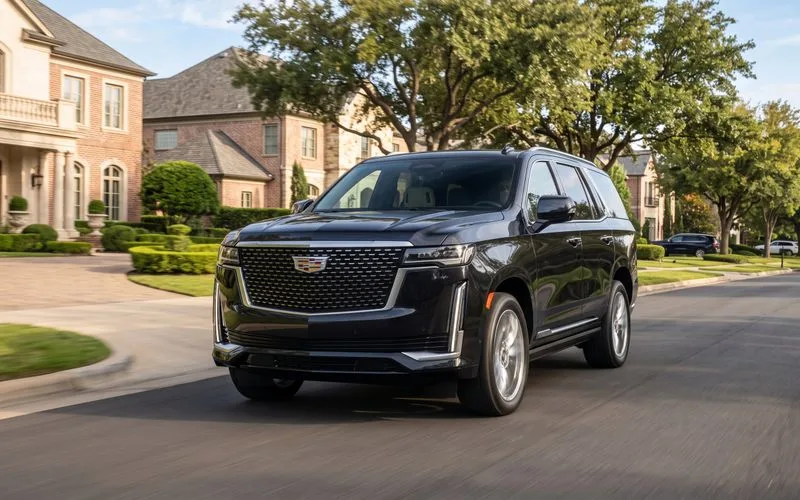 Cadillac EscaladeFull-Size Luxury SUVBetter at: Resale value
The direct rival holds its value far better and offers a much broader lineup, including a V8 and the supercharged Escalade-V.
Compare 2.92B-
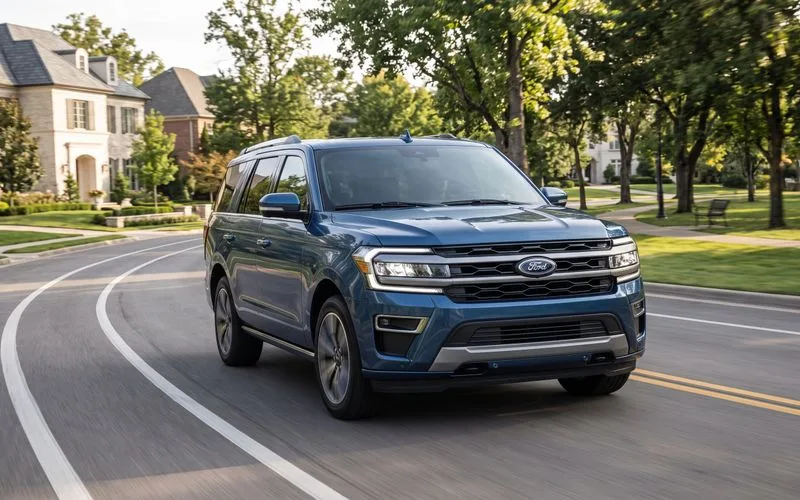 Ford ExpeditionFull-Size SUVBetter at: Value per dollar
Same platform, engine and third-row space for tens of thousands less, if you can live without the Lincoln materials and massage seats.
Compare 2.72B-
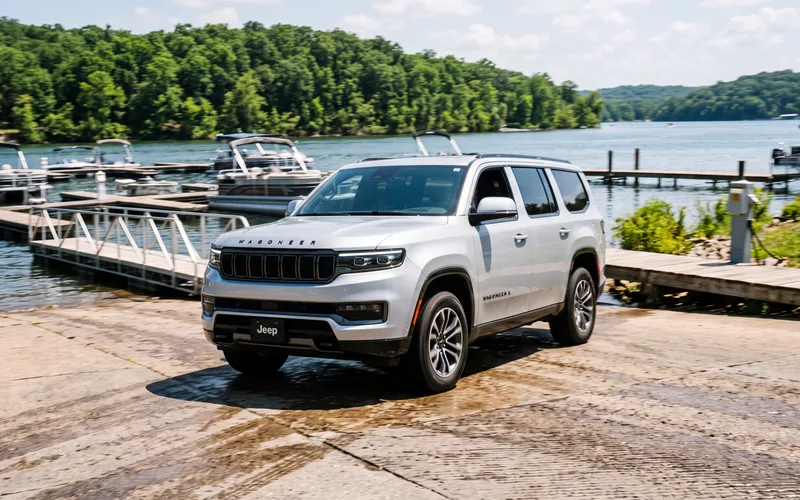 Jeep WagoneerFull-Size SUVBetter at: Price
Comparable size, seating and towing at a lower price, with a more rugged character than the Navigator's plush cruiser brief.
CompareHow it's evolved
10 scored model years · 2017–2026
Subject scores by year
Hover or tap a score to see what moved it versus the year before. A corner mark flags a big swing.
| Year | Performance | Efficiency | Safety | Space | Cost | Reliability | Tech | Use-case | Driving | Value |
|---|---|---|---|---|---|---|---|---|---|---|
| 2026 | 76 | 20 | 85 | 70 | 14 | 69 | 86 | 72 | 70 | 73 |
| 2025 | 74 | 20 | 79 | 82 | 16 | 60 | 82 | 71 | 65 | 73 |
| 2024 | 73 | 25 | 76 | 83 | 15 | 58 | 85 | 68 | 63 | 72 |
| 2023 | 74 | 25 | 75 | 84 | 15 | 60 | 85 | 69 | 65 | 74 |
| 2022 | 73 | 25 | 73 | 84 | 15 | 57 | 83 | 66 | 62 | 73 |
| 2021 | 73 | 19 | 66 | 82 | 15 | 54 | 70 | 65 | 60 | 70 |
| 2020 | 72 | 24 | 65 | 82 | 15 | 53 | 70 | 65 | 60 | 75 |
| 2019 | 73 | 24 | 61 | 84 | 15 | 60 | 68 | 64 | 60 | 74 |
| 2018 | 73 | 24 | 56 | 84 | 15 | 56 | 67 | 63 | 60 | 75 |
| 2017 | 63 | 25 | 42 | 74 | 14 | 54 | 45 | 58 | 53 | 58 |
Compare two years
Best fit & conditions
Higher scores mean a better fit for that use case. Learn more about use-case fit →
Subject profile
Detailed scoring by subject
1Performance & PowertrainOne of the Navigator's strongest categories.2.97B-
2021 is a carry-over powertrain year inside the fourth generation (2018–2024): Standard, Reserve and Black Label, standard or L wheelbase, all use the same twin-turbocharged 3.5L EcoBoost V6 rated 450 hp, with no optional engine. The 450 hp figure is the premium-fuel rating; the engine is certified on regular and gives up roughly 40 hp on it. Lincoln restated the same engine at 440 hp for the 2022 refresh, so 2021 is the last of the 450-hp cars.
510 lb-ft at just 3,000 rpm sits above the top of the SUV normalization band and is what makes a near-6,000-lb Navigator feel effortless from rest and while towing. Torque was unchanged across the whole fourth generation, including the 2022 refresh that trimmed horsepower.
Only one instrumented 2021 run is published — Car and Driver's 5.2 s for a Black Label 4x4 — and that is the quick end of the range for this powertrain. The mechanically identical 2020 car ran 5.9 s for both MotorTrend and MotorWeek and 6.1 s at Edmunds, and the 10-hp-lighter 2022 spanned 5.3–5.9 s. Averaging the 2021 C/D run with the two identical-spec 2020 runs gives ≈5.7 s, which is the representative figure used for the volume Reserve rather than any single optimistic test.
The twin-turbo V6 delivers a smooth, near-lag-free swell of torque and reviewers repeatedly note how quick the Navigator feels for its mass. Two things keep it out of the top band, and neither changed for 2021: a faint chugging note that never matches the Escalade V8's rumble, and a touch of lag when passing power is called for at highway speed.
The 10-speed automatic is the only gearbox, shifting quickly and largely seamlessly, with paddles available. Pre-refresh cars — 2021 included — were dinged for gear behavior more than the later ones: testers reported frequent, mildly intrusive downshifts and occasional clunky 2–1 changes, and the dash-button shifter offers no manual mode worth using.
Properly equipped with the Heavy-Duty Trailer Tow Package — enhanced cooling, an integrated trailer brake controller and trailer sway control — the standard-wheelbase Navigator is rated at 8,700 lbs, which Lincoln marketed as best-in-class for a full-size luxury SUV and which sits above the top of the SUV normalization band. The long-wheelbase L drops to 8,400/8,100 lbs and a car without the package to roughly 6,000 lbs, the figure most base spec sheets quote. Sources disagree on whether the 4x4 reaches the full 8,700 or is capped at 8,300; the item measures the maximum in any configuration, so the disagreement does not move the value.
4x4 is a straightforward option on Standard and Reserve and standard on Black Label, and it is real hardware — a two-speed BorgWarner 4417 transfer case with a 2.64:1 low range plus terrain-oriented Lincoln Drive Modes (Slippery, Deep Conditions, and Slow Climb when 4x4 is paired with the heavy-duty tow package). For 2021 Black Label also gained a standard limited-slip differential and trailer tow package. Rear-wheel drive remains the base configuration, where full-size luxury rivals of the era (X7, GLS, QX80, LX) made all-wheel drive standard — which caps this below the 80s.
Roughly 9.6 in of ground clearance, a low-range transfer case and a Deep Conditions terrain mode give the 4x4 genuine light-duty ability on snow, sand and unimproved roads. But there is no locking differential (the 2021 Black Label's new limited-slip diff is a towing-and-traction aid, not off-road hardware), no skid plating and no off-road trim anywhere in the 2021 range, and the volume car rides on 22-inch wheels with street tires — a snow-and-gravel SUV, not a trail vehicle.
One engine, one transmission, no electrification: every 2021 Navigator is the 450 hp 3.5L twin-turbo V6 with the 10-speed automatic, and the only drivetrain decision is 4x2 versus 4x4 (and standard versus L wheelbase). Full-size rivals of the year offered V8s and, in the Escalade's case, a new diesel.
2Efficiency & RangeOne of the Navigator's weakest categories.0.00F
EPA rates the 2021 Navigator 4x4 — the volume configuration and the one scored here, consistent with the other Navigator model years — at 17 MPG combined on regular gasoline. That is a point lower than both the 2020 (18) and post-refresh 2022 (18) 4WD ratings, so 2021 is a genuine one-year dip rather than a carry-forward figure. A near-6,000-lb body-on-frame luxury SUV with a 450 hp twin-turbo V6 is always going to sit at the bottom of the gas-SUV band.
Every 2021 Navigator configuration rates 16 MPG city, unchanged from 2020. Auto Start-Stop and cylinder-deactivation-style measures are listed as equipped but cannot do much for a 6,000-lb vehicle in stop-and-go traffic.
The 4x4's 20 MPG highway rating sits at the very floor of the gas-SUV highway band, and it is the weakest highway figure of any fourth-generation Navigator year — 2020 rated 21 and the 2022 refresh 22 on the same 4WD hardware. Rear-drive cars do noticeably better at 22 MPG.
EPA's own total-range figure for the 2021 Navigator 4x4 is 401 miles on its 23.6-gallon tank — respectable in absolute terms but mid-pack for an SUV, because the large tank only partly offsets 17 MPG combined. The long-wheelbase L carries a larger tank and stretches past 500 miles.
At EPA's standard 15,000 mi/yr assumptions the 4x4 costs $3,600 a year in fuel, at the ceiling of the SUV band and the worst figure of any fourth-generation Navigator year. EPA puts the five-year penalty against an average new vehicle at about $6,000. Regular gasoline is what keeps this from being worse still.
EPA certifies the Navigator on regular unleaded and it runs on it without complaint, so there is no mandatory fuel premium — but the advertised 450 hp is a premium-fuel rating and the engine gives up roughly 40 hp on 87 octane. That mixed requirement, plus a 23.6-gallon tank that costs a lot to fill at 17 MPG, places it in the middle band rather than the top one.
3SafetyMid-pack among this car's ten categories.2.44C+
2021 is one of the model years NHTSA fully tested on the fourth-generation U554 body, so the 5-star overall rating is the Navigator's own result rather than a carry-forward — frontal and side are both 5 stars on every configuration. Only the rollover figure separates drivetrains, and that is a physics-of-height result common to full-size SUVs.
IIHS has never rated the fourth-generation Navigator (2018–2024) — no ratings page exists for 2021 or any other year of it — and its structural twin the Ford Expedition, which shares the T3 platform, aluminum body, cabin and doors, posts Marginal in both small-overlap front tests and in the updated moderate-overlap test. Untested with well-documented structural concerns in the shared body lands in the bottom band, held a notch above the Expedition only because the Navigator's own results are unconfirmed rather than confirmed poor, and because NHTSA's frontal and side results on this exact year are 5 stars.
2021 is the last pre-refresh year, running Lincoln Co-Pilot360 rather than the Co-Pilot360 2.0 suite the 2022 facelift made standard fleet-wide. Every trim gets pre-collision assist with AEB and pedestrian detection, BLIS with cross-traffic alert and trailer coverage, lane-keeping, auto high beams and front/rear parking sensors — but adaptive cruise with stop-and-go, lane centering and the 360-degree camera are Reserve-and-up content, absent from the $78k base Standard. The volume Reserve trim is comprehensively equipped, which is what holds this in the upper half of the middle band; the trim walk on ACC is what keeps it out of the top one.
The Navigator has no IIHS front crash prevention rating for 2021 or any year of this generation; the mechanically identical Expedition, running the same Ford camera/radar AEB stack, rates only Marginal on the tougher vehicle-to-vehicle evaluation while rating Good for pedestrian detection. AEB with pedestrian detection is at least standard on every trim, but 2021 predates the intersection assist and evasive steering assist that arrived with Co-Pilot360 2.0, so this year's hardware does less than the refreshed car's.
BLIS with rear cross-traffic alert is standard on every 2021 trim including the base Standard, and it carries trailer coverage that extends the monitored zone behind a hitched trailer — genuinely useful on an 8,000+ lb tow rating and better than most luxury rivals of the year. It is alert-only rather than steering-intervening, and there is no safe-exit alert for rear passengers, which keeps it just below the top band.
Lane-keeping alert and assist with road-edge detection are standard on all trims, but true lane centering only comes bundled with the Reserve's adaptive cruise — the base Standard gets nudge-back keeping only. On the volume Reserve the centering is the pre-refresh Ford calibration without an HD GPS receiver, which reviewers of this vintage found workable on clear highway but prone to wandering and to dropping out in traffic and construction zones; later years fixed that behavior on the same hardware.
Adaptive cruise with stop-and-go and lane centering is standard on the volume Reserve and Black Label and reviewers rated the tuning well — Edmunds called it well tuned and specifically worth having in traffic. Two things cap it: it is not offered at all on the base Standard trim, and there is no integrated highway-assist layer above it in 2021, since ActiveGlide did not arrive until the 2022 refresh.
There is no hands-free highway driving option on the 2021 Navigator at any trim or price. ActiveGlide, Lincoln's badge for BlueCruise, arrived exactly one model year later with the 2022 facelift — so a 2021 buyer paying up to $100k had nothing comparable to Super Cruise, which Cadillac had already been shipping on the rival Escalade.
No IIHS headlight rating exists for any Navigator of this generation, so the equipment is unverified by anyone independent. On paper it is good — adaptive LED headlamps that swivel with the steering to light a curve, LED signature lighting and auto high beams standard from the base trim — and unlike the 2022 there is no headlight-module recall against this year. Mid-band on decent-but-unverified hardware, with the Expedition's Marginal lamp rating as the only same-body proxy available.
The tall seating position, deep side glass and big greenhouse give genuinely decent sightlines for a vehicle nearly 18 feet long, and the volume Reserve's standard 360-degree camera compensates well when parking. It scores below the refreshed 2022 for two 2021-specific reasons: the 360-degree camera is Reserve-and-up rather than standard across the range, and NHTSA recalled 2020–2021 Navigators for a software fault that could leave the rearview camera showing a blank image.
The cabin, seat frames and anchor layout are unchanged across the 2018–2024 generation, and independent car-seat checks of this body grade LATCH access A in both the second and third rows and third-row access A — anchors easy to find, captain's chairs that tilt and slide for a wide pathway, and power running boards that cut the step-in height for children. Two real limits hold it out of the top of the band: the captain's-chair second row cannot take three seats across, and fixed third-row head restraints fight a high-back booster.
4Space & ComfortThe Navigator's best-graded category.3.60A-
2021 is a pure carry-over interior year inside the fourth generation (2018–2024) — Lincoln made no substantial changes beyond paint and an appearance package — so the seating menu is unchanged: captain's chairs with a center console give seven seats on the volume Reserve, and the 40/20/40 bench takes it to eight.
41.8 in of first-row headroom sits near the top of the SUV normalization band — a product of the upright, boxy greenhouse the aluminum-bodied fourth generation carries, and unchanged for 2021.
43.9 in of first-row legroom sits high in the SUV band and is generous by any measure, though short of the 2021 Escalade's 45.2 in; power-adjustable pedals extend the usable range further for shorter drivers.
Second-row headroom of 40.0 in reaches the top of the SUV normalization band — even with the panoramic Vista Roof that is standard on the volume Reserve eating into the headliner.
Lincoln's own marketed second-row figure of 41.1 in sits high in the SUV band, and the power tilt-and-slide captain's chairs let occupants trade with the third row. Aggregator tables run 42.6 in for this car — that is the seat slid fully back rather than the manufacturer's SAE figure, and the manufacturer number is used here.
36.1 in of third-row legroom against 37.3 in of headroom is among the best third rows in the full-size luxury class — the 2021 Escalade's standard wheelbase manages 34.9 in — and it is genuinely usable by adults, helped by a standard power tilt-and-slide second row for access and standard PowerFold third-row recline. Held out of the top band because 36.1 in is medium-trip rather than all-day space for a six-footer, and the high load floor leaves knees raised.
57.5 cu ft behind the second row with the third row folded is the weakest measured dimension in this category — mid-band for an SUV and well behind the space the class-leading third row scored above consumes. Buyers who need more choose the L wheelbase.
103.4 cu ft with the PowerFold second and third rows dropped clears the top of the SUV band, and both rows fold electrically from console switches onto a near-flat floor.
Strong conventional storage with real onboard power — a large floating first-row console with a winged armrest and underfloor media bin, a standard wireless charging pad, six smart-charging USB ports across all three rows, a 110V/150W household outlet, deep door pockets, and an optional tiered cargo management system with a four-way configurable partition. Nothing here is genuinely inventive, though: the split gate and Cargo Tailgate Manager only arrive with the 2025 redesign.
The volume Reserve's 24-way heated and ventilated Perfect Position front seats with thigh extenders and memory are among the most adjustable in any vehicle at any price, and the $2,500 Luxury Package takes them to 30-way with massage; second-row captain's chairs are heated as standard. Docked because the base Standard trim's seats are a real step down and because finding a setting among that many axes takes patience.
Adaptive dampers with continuously controlled damping are standard on every 2021 trim and, with an independent rear end where the GM rivals of this year still used a live axle, the Navigator dispatches interstate seams and potholes with genuine calm. Two consistent faults keep it mid-band: reviewers describe float and low-speed rocking rather than tied-down body control, and the volume Reserve's standard 22-inch wheels turn the ride jittery over broken pavement.
Active Noise Control is standard on every 2021 trim alongside acoustic glass and heavy sound deadening, and reviewers consistently describe very little wind, road or engine intrusion at highway speed — one of the quieter cabins in the full-size class. Scored on reviewer consensus rather than instrumented dBA data, which is why it is not rated higher.
Comfort equipment is close to fully standard on the volume Reserve: heated and ventilated 24-way front seats, heated second-row captain's chairs, a heated steering wheel, tri-zone climate with second- and third-row vents, a standard Panoramic Vista Roof, power-deployable running boards and remote start from fob or phone. Held below the top band because massage remains a $2,500 package item and — unlike the 2022 refresh — there is no second-row screen for rear occupants to run their own climate and seat settings.
5Cost of OwnershipThe Navigator's lowest-graded category.0.00F
The 2021 Navigator Standard 4x2 lists at $76,705 before Lincoln's $1,295 destination charge, giving an entry price of $78,000 — $520 above the 2020 car and about $13,000 beyond the top of the $25,000–$65,000 SUV band, so this reference item bottoms out. 2021 is a carry-over year within the fourth generation: no powertrain or equipment change, just new paint colors and a Black Label Special Edition package.
Reserve is the volume trim and 4x4 the volume driveline in this segment; at $85,165 plus $1,295 destination it lands at $86,460, roughly $18,500 past the top of the $27,000–$68,000 SUV band. That is $765 above the equivalent 2020 Reserve 4x4 — an ordinary year-over-year walk, since 2021 added no content to the trim.
Published estimates disagree by a factor of three — CarEdge prices scheduled service only while Edmunds' True Cost to Own adds real repair spend — so this blends them at about $7,800, interpolating the same fourth-generation curve used across this nameplate's scorecards ($7,400 for 2020, $8,200 for 2022). Nothing in the 2021 car changes the cost drivers: the same 3.5L twin-turbo V6, 10-speed automatic, air-assisted adaptive suspension, 22-inch rubber and Lincoln dealer labor rates.
Unusually for this item, the 2021 cars have now actually reached five years, so this is measured rather than projected: a Reserve carrying an $86,460 delivered MSRP books around $38,900 in mid-2026, or 45% retained. That is a point or two above the 2020 and 2022 scorecards because 2021 build was cut short by the chip shortage and the resulting scarcity has propped used values — but it still trails the luxury-large-SUV class, which is the Navigator's long-standing pattern.
Lincoln's New Vehicle Limited Warranty runs 4 years or 50,000 miles for 2021, unchanged from 2020 and carried forward through 2024 — a year longer than mainstream Ford coverage and squarely mid-pack in the 3–5 year band among luxury rivals.
Powertrain coverage on the 450-hp 3.5L twin-turbo V6 and 10-speed automatic is 6 years or 70,000 miles — near the bottom of the 5–10 year band, and the 70,000-mile cap will expire well before the sixth year for most full-size SUV owners.
Lincoln includes no complimentary scheduled maintenance on the Standard or Reserve volume trims — no free oil changes at any point — which caps this below the 80+ band, but what is included is substantive: complimentary Lincoln Pickup & Delivery with a Lincoln loaner for the whole 4-year/50,000-mile warranty period, plus 24/7 roadside assistance. Scored level with the 2020 car, since the 2021 ownership package is unchanged and predates the multi-year connected-service bundles the 2022-and-later refreshed cars ship with.
$86,460 volume-trim price minus its estimated resale value after 5 years (45% retained, or about $38,907) leaves about $47,553 in depreciation. Add the projected $7,800 in 5-year maintenance and repairs, and owning this vehicle for 5 years costs about $55,353 in total.
6Reliability & QualityOne of the Navigator's weakest categories.1.59D
The two signals split, and the long-term one is the bad one. Lincoln was essentially at the industry average on 90-day initial quality for this exact model year, but the dependability study that surveys these same cars at three years put the brand 61 problems worse than average and fourth from the bottom. Fourth year of the generation, so launch bugs should have settled — instead 2021 generated more owner complaints than any later year of the run and picked up a fire recall unique to itself.
Lincoln sat in the bottom handful of brands on three-year dependability across the studies bracketing this model year, which is the measure that matters for a used Navigator. What keeps it out of the lowest band is that initial quality was genuinely improving at exactly this point — the brand closed a 20-point gap to land on the industry average for 2021 — and the trend continued afterward.
Twelve NHTSA recalls, ten of them substantive, headlined by an underhood fire campaign that exists only for the 2021 model year and came with a park-outside-away-from-structures advisory across 66,221 Expeditions and Navigators. Beyond it there is a park-pawl rollaway campaign, a seat-belt pretensioner that can lock, a fuel-pump engine-stall recall, and repeat campaigns in the same two systems — wiper arms recalled twice and the rearview camera twice. TSB volume is heavy and led by the transmission. This is bottom-band territory on severity, not merely on count.
The 3.5L twin-turbo EcoBoost V6 and 10R80 ten-speed are Ford's highest-volume premium powertrain, shared with the F-150 and Expedition, so service familiarity and parts depth are real advantages. But this is not a clean high-mileage record: the 10R80 in this exact application carries a documented shift-quality defect pattern with a class action attached, and the 2021 car later drew two powertrain-adjacent recalls of its own — a fuel pump that can stall the engine and a park pawl that can engage in motion.
The cabin is the reason this generation reset Lincoln's standing in the segment, and 2021 is a pure carry-over of it — low-gloss open-pore wood, supple leather over 30-way Perfect Position seats, padded door cards and console, and bespoke switchgear rather than parts-bin Ford pieces. Reviewers consistently place the material richness above the price point; only Range Rover reliably out-materials it here.
Physical assembly at Kentucky Truck Plant on the aluminum-bodied fourth generation is tight, and reviewers of this model year did not flag rattles or panel-gap problems. Initial-quality data for the exact model year is the moderating factor rather than the damning one: Lincoln landed on the industry average, a clear improvement over the prior year, but the electrical and module-level faults that dominate the 2021 complaint file are the kind IQS counts.
This model year caught the network at close to its widest before the consolidation that halved it — roughly 685 U.S. retailers, the large majority co-located with high-volume Ford stores, which is genuinely dense coverage compared with Genesis, Alfa Romeo or Land Rover for an owner outside a major metro. Complimentary Pickup & Delivery with a Lincoln loaner removes the trip entirely while the car is in warranty. Service satisfaction sits near the luxury average rather than at Lexus or Porsche level.
Mechanically this is an Expedition on the T3 platform, so hard parts, aftermarket support and independent-shop expertise are abundant and cheap by luxury standards, and measured annual spend comes in just under the segment average. In absolute terms it is still expensive ownership, and the Lincoln-specific content pulls it up: load-leveling air suspension, power running boards, 30-way seats, 22-inch tires and aluminum body panels that mean dealer-network body work rather than any-shop work.
7Technology & InfotainmentOne of the Navigator's strongest categories.2.72B-
The 10-inch SYNC 3 display is standard across Standard, Reserve and Black Label, so the volume trim gets the full-size screen and there is nothing to option up to. Ten inches is low in the SUV band by 2021, and this is the last model year before the 13.2-inch panel of the mid-cycle refresh.
SYNC 3 was one of the better mainstream systems of its generation — reviewers call the Lincoln re-skin bug-free, quick and simple, and Lincoln keeps hard controls for radio and climate beneath the screen rather than burying them. It sits mid-band because the graphics and card layout were visibly dated against 2021 luxury rivals, and the piano-key gear selector strip flanking the screen takes acclimatization.
Apple CarPlay and Android Auto compatibility is standard on every 2021 trim with no upper-trim gate, but SYNC 3 is wired-only — projection needs a USB cable, and the wireless projection that the segment had begun standardizing arrives on the Navigator only with SYNC 4 in the 2022 refresh. Standard-on-all-trims wired is exactly the middle band.
Voice-activated touchscreen navigation with pinch-and-zoom mapping and a bundled SiriusXM Traffic and Travel Link subscription is standard on every 2021 trim — generous provisioning where rivals charge for native nav. But SYNC 3's recognition is a fixed-command engine rather than natural language, map updates need a Wi-Fi or USB download, and most owners default to phone projection for routing.
The floor is a 14-speaker Revel system standard on every trim — a branded premium setup where most 2021 rivals start with a generic one — and the ceiling is the 20-speaker Revel Ultima with QuantumLogic surround, standard on Black Label and available on Reserve inside the Luxury Package. A strong base paired with a genuinely reference-grade upgrade is top-band territory.
A 12-inch fully configurable LCD instrument cluster is standard on all three 2021 trims rather than a trim-walk item, with drive-mode-specific themes and navigation and driver-assist repeats. Crisp and standard, but the graphics are a Lincoln re-skin of a Ford-corporate set rather than the bespoke displays of the German rivals.
The 2021 Navigator ships with an embedded Lincoln Connect modem and 4G LTE, and SYNC 3 will pull its own software and navigation-map updates over a paired external Wi-Fi network without a dealer visit — real but narrow. This is infotainment-and-maps updating only; Ford Power-Up whole-vehicle over-the-air updating reaches the Navigator with SYNC 4 in the 2022 refresh, so no module outside the head unit is updated remotely on this car.
The Lincoln Way app covers remote start with climate pre-conditioning, lock/unlock, vehicle locate, status readouts and scheduling, and Phone As A Key is standard equipment on every 2021 trim rather than a paid add-on — with the useful detail that it runs over Bluetooth LE, so it still opens the car in a parking structure with no cell signal. Docked for connected-services subscription renewal after the complimentary term and for the app-reliability complaints owners of this generation post.
Six smart-charging USB ports spread across all three rows, a wireless charging pad standard in the front console, a 110V/150W household outlet and multiple 12V points cover every passenger — genuinely strong provisioning for 2021, and better than several rivals that reserve wireless charging for upper trims. Short of the top band because the port mix is still substantially USB-A rather than fast USB-C, and 150W is a phone-and-laptop outlet rather than meaningful onboard power.
About as complete as keyless convenience got in 2021: Phone As A Key standard on every trim, proximity intelligent access with push-button start, remote start from fob and app, the SecuriCode door-edge keypad, a hands-free foot-activated power liftgate, and power-deployable running boards that greet on approach on the volume Reserve. Phone-as-key availability is precisely what the top band asks for.
Every 2021 trim gets a washer-equipped reverse camera plus forward and reverse sensing, and the volume Reserve adds the 360-degree camera with front, side and rear views and Active Park Assist — genuinely necessary equipment on a 210-inch vehicle and useful in practice. Held below the top band because the base Standard trim cannot get the surround view at all, and the image resolution is good rather than class-leading.
A head-up display is offered on the volume Reserve but only inside the $1,275 Reserve I package — reachable on the trim most buyers order, which is what separates it from a top-trim-only offering, yet not fitted to a car ordered plainly, and not available at all on the base Standard. It is also a conventional windshield unit; the redesigned HUD arrives with the 2022 refresh.
8Use-Case FitMid-pack among this car's ten categories.2.38C+
Lincoln fits LATCH to every second-row seating position plus both third-row outboard seats — unusually complete — and rear doors that open wide onto a flat, high aperture make buckling a child straightforward once they are up there. The power tilt-and-slide second row clears a genuine walkway to the third row without unfitting a seat. The counterweight is height: standard running boards deploy on approach precisely because small children cannot climb in unaided, and behind an occupied third row there is only about 21 cu ft for the stroller.
The crash and equipment sides are good: NHTSA gave the 2021 Navigator 5 stars overall with 5 stars in every frontal and side sub-test, and Lincoln Co-Pilot360 — AEB with pedestrian detection, BLIS with cross-traffic alert, lane-keeping with road-edge detection, reverse sensing — is standard from the base trim. Two real gaps hold it mid-band: IIHS has never rated any year of this generation, so its crashworthiness is independently unverified, and 2021 is the last pre-refresh year, running plain Co-Pilot360 rather than the Co-Pilot360 2.0 the 2022 facelift standardized fleet-wide.
Close to the best case in the catalog for moving a family a long way: 24-way heated and ventilated front seats, heated second-row captain's chairs, tri-zone climate with vents to all three rows, a panoramic Vista Roof, the standard 14-speaker Revel system, an optional dual-10-inch rear-seat entertainment system with wireless headphones, USB and 110V power in every row, and a very quiet cabin. Held below the top only because luggage room behind an occupied third row is modest for six or seven people, and the rear amenities are still passive — there is no second-row control screen until the 2022 refresh.
In its own lane the Navigator is restful: 510 lb-ft at 3,000 rpm means it never strains in traffic, the cabin is quiet, the seats are the best in the class, and adaptive cruise with stop-and-go is standard on the volume Reserve. What it is not is easy — the steering is feather-light but the mass behind it is not, Consumer Reports reports low-speed rocking, and every parking manoeuvre is a deliberate act in a 210-inch vehicle.
One of the most expensive vehicles in the catalog to commute in, and 2021 is the worst year of this generation for it: EPA rates the 4x4 most buyers order at 16/20/17 mpg, a mile per gallon down on the 2020 car, for $3,600 a year in fuel at EPA's 15,000-mile assumption. Consumables match the vehicle — 22-inch tires, near-three-ton brakes — and while it is certified on regular, the advertised 450 hp is a premium-fuel rating.
210.0 inches long on a 122.5-inch wheelbase, 93.8 in wide including mirrors, 76 in tall and near three tons, with a 41-foot curb-to-curb circle that all but fills a two-lane street — this is a vehicle that needs a three-point turn where most SUVs manage one arc, and it overhangs a standard parking bay. The 360-degree camera and Active Park Assist on the Reserve genuinely help and are the reason this is not scored lower, but they mitigate the footprint rather than shrink it. The L wheelbase is worse again.
Properly equipped, the standard-wheelbase 2021 Navigator pulls 8,700 lb — near the top of the full-size luxury field and enough for a substantial boat, a car trailer or a horse trailer — backed by a body-on-frame chassis, 510 lb-ft and an integrated trailer brake controller with Pro Trailer Backup Assist. It is capped at mid-band because towing is the only work it does: there is no bed, payload is passenger-car modest for the class, and a car ordered without the $690 Heavy-Duty Trailer Tow Package drops to roughly 6,200 lb.
The bones are fleet-proven — the body-on-frame T3 platform shared with the Ford Expedition, the 3.5L EcoBoost V6 and the 10R80 ten-speed that run in millions of F-150s — so hard parts and independent-shop expertise are abundant. Two things pull it down for work duty specifically: this model year carries an unusually heavy recall load including an underhood fire campaign unique to 2021, and the interior is the opposite of wear-friendly, with no rubber-floor or vinyl-seat option anywhere in the range.
Work-oriented provisions are thin and mostly optional: one 110V/150W household outlet and several 12V points, a hitch with Pro Trailer Backup Assist inside the tow package, cargo tie-downs, and a roof rack with crossbars that only arrives with the Cargo Convenience Package. There is no bed, no onboard generator, no washable surface and no upfit ecosystem — this is a luxury SUV that can pull a trailer, not a jobsite tool.
This is the mission the Navigator was built for: 24-way heated and ventilated Perfect Position front seats (30-way with massage in the Luxury Package), a cabin reviewers describe as almost free of wind and road noise, adaptive dampers that shrug off interstate seams, adaptive cruise with stop-and-go and lane centering standard on the volume Reserve, and roughly 400 miles between fills. Kept out of the very top by the 17-mpg thirst that makes those fills frequent and costly, and by the absence of hands-free driving, which arrives one year later.
Real light-duty ability rather than pretence: optional 4x4 with a two-speed BorgWarner transfer case and low range, roughly 9.6 in of ground clearance, Slippery and Deep Conditions terrain modes, 8,700 lb of towing for a boat or toy hauler, and 110V power for a campsite. But the volume Reserve's standard 22-inch wheels on street tires, the near-three-ton mass, the 210-inch length and a body far too expensive to scrape mean nobody takes one down a trail — gravel roads and snow are the honest ceiling.
103.4 cu ft with the PowerFold second and third rows dropped electrically onto a near-flat floor, 57.5 cu ft with just the third row down, a hands-free power liftgate, an optional roof rack with crossbars, a hitch on tow-package cars and an optional tiered cargo organizer with a four-way partition — this swallows bulky gear as well as anything short of a van. The one real limit is space behind an occupied third row, about 21 cu ft, which is where a full load of people and a full load of luggage stop coexisting.
9Driving ExperienceMid-pack among this car's ten categories.2.01C
Secure and predictable rather than capable. The independent rear suspension and standard adaptive dampers give the Navigator a real advantage over the live-axle GM rivals of this year, and body roll is contained better than the mass suggests — but Consumer Reports' road test found the handling outright floaty and disconnected in turns, and 0.75 g of grip on street tires is what a near-three-ton body-on-frame SUV manages. Composed, never agile.
The weakest element of the way this car drives. The electrically assisted rack is tuned so light that the Navigator's mass never reaches the driver's hands, and it returns essentially no feedback about grip or surface — effortless at parking speeds, which is the intent, and vague everywhere it matters. Directional stability on the highway is good, which is the one thing keeping this out of the bottom of the band.
Stopping power is genuinely adequate for the mass — 185 feet from 70 mph on a 6,100-lb SUV is a respectable instrumented result — and no reviewer of the 2021 car reported fade. The pedal is what holds it mid-band: this is the last year before the electronic brake booster the 2022 refresh added, and reviewers of the pre-refresh car describe modulation that takes learning to stop smoothly.
The 450 hp twin-turbo V6 is essentially lag-free off idle — 510 lb-ft arrives at 3,000 rpm — and hauls this much mass to 60 mph in the low-to-mid five-second range, which takes real drivability calibration to deliver smoothly. The 10-speed shifts quickly and largely seamlessly with sensible ratio choices. Held below the top band because pre-refresh cars were dinged more than the 2022 for gear-selection behaviour and stop/start abruptness in traffic.
Active Noise Control is standard on every trim and the EcoBoost stays distant and vibration-free at cruise with no droning — inoffensive is exactly the right word. What keeps it out of the top band is character rather than noise: under hard throttle a turbocharged V6 in a car this size sounds anonymous where the 2021 Escalade's 6.2L V8 sounds like the money the buyer spent.
A 41-foot curb-to-curb circle on a 122.5-inch wheelbase sits near the wrong end of the SUV band, where lower is better — this needs a three-point turn in places most SUVs clear in a single arc, and reviewers single it out as the car's daily-use penalty.
Adjustability is close to unmatched: 24-way heated and ventilated Perfect Position front seats with thigh extenders and memory on the volume Reserve, power-adjustable pedals, a power tilt/telescoping column and power-deployable running boards for ingress, all under a commanding sightline and a 12-inch digital cluster. Physical radio and climate controls sit below the screen where they belong. The piano-key transmission strip frees the console but takes acclimatization, and thick windshield pillars create a real forward blind zone.
The Navigator's appeal is serenity, not engagement, and it makes no pretence otherwise — the 510 lb-ft shove is genuinely satisfying in a straight line and 5.3 seconds to 60 mph in a three-ton land yacht raises a smile once, but numb light steering, float in corners and 0.75 g of grip mean nobody takes the long way home in one. Reviewers rate it for its cabin and its isolation, never for the drive.
10Value & Market PositionGrades above the middle of the scale.2.72B-
The 2021 car carries over the generous 2020 base spec — Lincoln Co-Pilot360, Phone As A Key, wireless charging, power running boards, heated and ventilated front seats, a 10-inch SYNC 3 touchscreen with navigation, 14-speaker Revel audio, leather, tri-zone climate, adaptive LED headlamps and a hands-free liftgate — at $78,000 against rivals that ask the same or more for less. Marked down four points from 2020 not because the Navigator lost anything but because the all-new 2021 Escalade arrived with a standard 38-inch curved OLED display array, resetting what 'well equipped at base' means in the segment, and full-speed adaptive cruise is still a Reserve item rather than base equipment on the Lincoln.
For Escalade money the 2021 Navigator still delivers 450 hp, 510 lb-ft, up to 8,700 lb of towing, eight seats and a cabin reviewers rank among the best in the class, and Edmunds' three-way test against the new Escalade and GLS concluded the Navigator was the smarter buy. Held below the 80s by fuel consumption, by resale that trails its own class (45% retained at five years for the Reserve, against a class that keeps more), and by the fact that the redesigned Escalade closed the technology gap the Navigator had been winning on since 2018.
Three trims — Standard, Reserve, Black Label — each in rear- or four-wheel drive and in standard or long (L) wheelbase, spanning $78,000 to about $99,950, with a new-for-2021 $6,695 Black Label Special Edition monochrome package at the top. Real choice, but the mid-tier Select deleted in 2020 leaves a wide gap between Standard and Reserve, and there is a single powertrain with no engine option against an Escalade lineup offering roughly twice the trims plus a diesel.
Calendar 2021 volume of roughly 15,600 units was essentially flat on 2020 and started strong — Q1 was up 26% — but the trajectory turned sharply against the Navigator as the year went on, with Q3 down 17% and Q4 down 33% as the chip shortage throttled production. More damaging for market position, the redesigned Escalade took the segment: Cadillac's share ran from 48% in Q1 to a dominant 64% by Q3 while the Navigator held a distant second at roughly a quarter of the class.
Lincoln remained a respectable premium badge in 2021 but slipped from the high-water mark 2020 represented: fourth among premium brands in J.D. Power's APEAL study rather than second, and below average in that year's Initial Quality Study. The Navigator itself still carries the halo of the fourth generation's North American Truck of the Year win, but the badge does not command German or Escalade money used — the nameplate depreciates faster than its own class average.
A worse year to be a buyer than 2020. Lincoln's national offers early in 2021 were deliberately conservative — $1,000 cash plus 1.9% APR for 60 months in March, with Ford Authority noting Lincoln was 'in no rush to incentivize its flagship' — and by the second half the chip shortage had gutted inventory to the point that Lincoln stopped stocking the Navigator on lots at all, moving it to custom order. Some incentives existed and the Navigator never reached the outright over-sticker market a few rivals did, but stackable cash-plus-zero-percent deals of the 2020 kind were gone.
2021 is the last and oldest year of the pre-refresh fourth generation — year four on a platform launched for 2018, with no changes beyond paint and an appearance package. Worse for a 2021 buyer, the refreshed 2022 car was unveiled in August 2021, mid-model-year, bringing a 13.2-inch touchscreen and hands-free BlueCruise/ActiveGlide, so the replacement was publicly known before the year was out — while the Escalade next door was brand new and the GLS and X7 were both recent.
Still very well received — U.S. News ranked it first among 2021 Luxury Large SUVs and Edmunds picked it over the new Escalade on value — but the aggregate softened from 2020: the U.S. News score fell from 8.0 to 7.4, Lincoln dropped to fourth in APEAL and below average in initial quality, and the Navigator began losing technology comparisons to the redesigned Escalade rather than winning them. Four points under the 2020 scorecard for that reason.