

The verdict
A struggling full-size luxury suv, strong on space and held back by ownership.
The 2017 Navigator is the last year of a generation that started in 2007, and it shows: Lincoln unveiled the all-new 2018 replacement in April 2017, before most of these cars were even delivered. What you get is a genuinely huge, quiet, comfortable seven- or eight-seater with 460 lb-ft of torque, a 9,000-lb tow rating, 103.3 cu ft of cargo space and a 5-star NHTSA result, sold new for about $10,000 under a comparable Escalade. What you give up is everything modern: no automatic emergency braking, no adaptive cruise, no lane keeping at any price, 17 MPG combined and roughly $3,600 a year in fuel, plus an Expedition-grade cabin behind the Lincoln badge. Today it is a lot of vehicle for around $18,000 used — as long as you accept that the safety tech simply is not there.
Jump to scoresStrengths
- 460 lb-ft and 9,000 lbs of towing from a V6
- Cargo space that beats most vans of its era
- Quiet, plush and built for the 500-mile day
What holds it back
- No automatic braking, no adaptive cruise, no lane keeping — at any price
- 17 MPG combined and about $3,600 a year in fuel
- Depreciation was brutal and repairs are not cheap
Top alternatives
Cars shoppers cross-shop with the Lincoln Navigator 3.16B
3.16B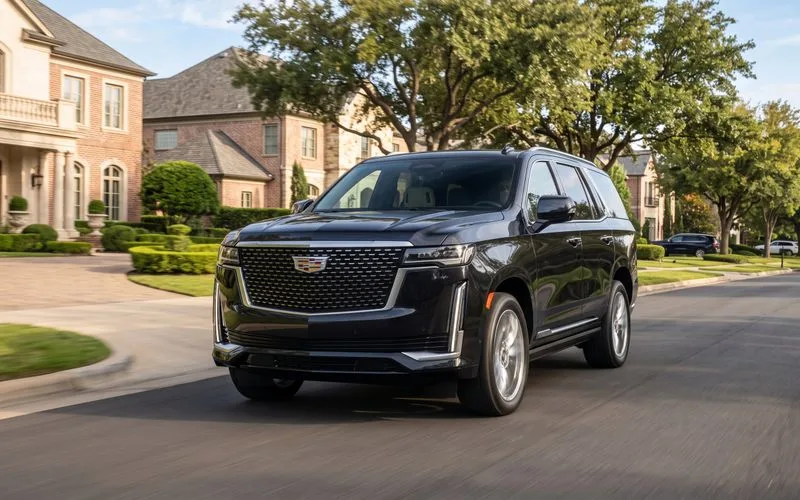 Cadillac EscaladeFull-Size Luxury SUVBetter at: Resale value
The direct rival holds its value far better and offers a much broader lineup, including a V8 and the supercharged Escalade-V.
Compare 2.92B-
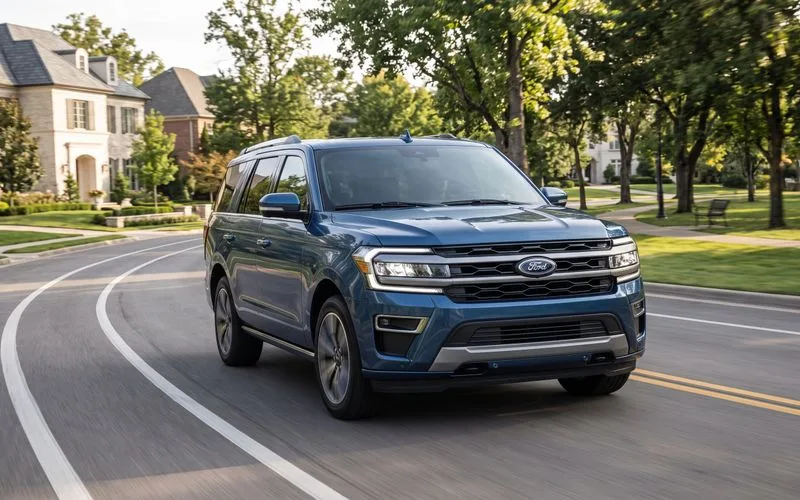 Ford ExpeditionFull-Size SUVBetter at: Value per dollar
Same platform, engine and third-row space for tens of thousands less, if you can live without the Lincoln materials and massage seats.
Compare 2.72B-
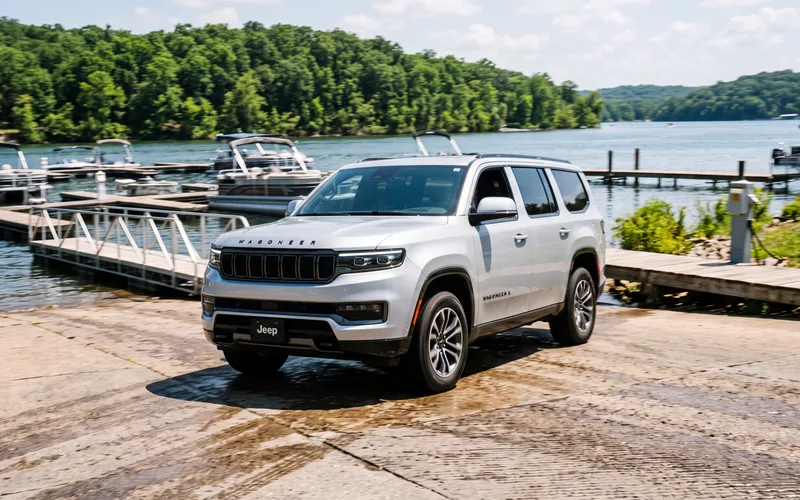 Jeep WagoneerFull-Size SUVBetter at: Price
Comparable size, seating and towing at a lower price, with a more rugged character than the Navigator's plush cruiser brief.
CompareHow it's evolved
10 scored model years · 2017–2026
Subject scores by year
Hover or tap a score to see what moved it versus the year before. A corner mark flags a big swing.
| Year | Performance | Efficiency | Safety | Space | Cost | Reliability | Tech | Use-case | Driving | Value |
|---|---|---|---|---|---|---|---|---|---|---|
| 2026 | 76 | 20 | 85 | 70 | 14 | 69 | 86 | 72 | 70 | 73 |
| 2025 | 74 | 20 | 79 | 82 | 16 | 60 | 82 | 71 | 65 | 73 |
| 2024 | 73 | 25 | 76 | 83 | 15 | 58 | 85 | 68 | 63 | 72 |
| 2023 | 74 | 25 | 75 | 84 | 15 | 60 | 85 | 69 | 65 | 74 |
| 2022 | 73 | 25 | 73 | 84 | 15 | 57 | 83 | 66 | 62 | 73 |
| 2021 | 73 | 19 | 66 | 82 | 15 | 54 | 70 | 65 | 60 | 70 |
| 2020 | 72 | 24 | 65 | 82 | 15 | 53 | 70 | 65 | 60 | 75 |
| 2019 | 73 | 24 | 61 | 84 | 15 | 60 | 68 | 64 | 60 | 74 |
| 2018 | 73 | 24 | 56 | 84 | 15 | 56 | 67 | 63 | 60 | 75 |
| 2017 | 63 | 25 | 42 | 74 | 14 | 54 | 45 | 58 | 53 | 58 |
Compare two years
Best fit & conditions
Higher scores mean a better fit for that use case. Learn more about use-case fit →
Subject profile
Detailed scoring by subject
1Performance & PowertrainOne of the Navigator's strongest categories.2.26C
2017 is the final carry-over year of the third generation, running the 3.5L EcoBoost V6 that replaced the 5.4L V8 in the 2015 refresh; 380 hp is a strong figure for a full-size SUV and well above the segment midpoint, though the rating is quoted on premium fuel.
460 lb-ft arriving at 2,750 rpm sits near the top of the SUV torque band and is the defining trait of this powertrain — it is what let the EcoBoost V6 replace a V8 in a 6,000-lb luxury SUV without losing pulling power.
The volume standard-wheelbase 4x4 runs to 60 mph in about 6.7 seconds — quick for a 6,000-lb body-on-frame SUV and a large gain over the 5.4L V8 it replaced, but mid-pack against the SUV acceleration band once lighter luxury crossovers are in the pool.
Reviewers consistently praised the EcoBoost V6 for effortless, quiet midrange delivery in this application — peak torque at 2,750 rpm means it rarely has to work hard — with the usual criticisms being a beat of turbo lag from a standstill and a V6 soundtrack some buyers found less befitting the segment than the outgoing V8.
The 6R80 six-speed automatic with SelectShift shifts smoothly and is well matched to the engine's fat torque curve, but by 2017 it was the clear weak link — rivals such as the Escalade had eight speeds and the 2018 replacement moved to ten, and the six-speed can be slow to pick a gear on part-throttle passes.
A 9,000-lb rating tops the SUV towing band outright — the EcoBoost's low-rpm torque and the body-on-frame platform make the Navigator one of the most capable tow vehicles in the luxury SUV class, though the figure drops by several hundred pounds with 4x4 or the long wheelbase.
Four-wheel drive is optional rather than standard, but it is offered on every trim and is a proper truck system — ControlTrac with a two-speed transfer case including low range, not a light-duty on-demand crossover setup.
The hardware underneath is genuinely capable — low range and 8.4 inches of clearance — but the Navigator is tuned and equipped strictly for pavement: no off-road trim, no lockers or terrain modes, an independent rear suspension, and 20- or 22-inch wheels on street tyres.
One engine, one transmission, no electrified option anywhere in the range — the 2015 refresh made the 3.5L EcoBoost the sole powertrain and the only choice a 2017 buyer makes is 4x2 versus 4x4 and standard versus long wheelbase.
2Efficiency & RangeOne of the Navigator's weakest categories.0.00F
Seventeen combined sits at the very bottom of the gas SUV band — the 3.5L EcoBoost recovered the performance the outgoing V8 gave up but delivered almost nothing in economy, and a six-speed automatic hauling 6,000 lbs of body-on-frame luxury SUV is the limiting factor.
City economy lands at the floor of the segment band and is the same 15 MPG in every configuration — twin turbochargers give no help in stop-and-go driving, where the mass and the six-speed's tall gearing dominate.
Twenty highway is exactly the bottom of the SUV highway band, scoring zero — the brick-shaped body and only six ratios leave the engine turning faster at cruise than the eight- and ten-speed rivals that had already arrived by 2017.
Range is the one bright spot in this category and it is bought entirely with tank size rather than efficiency — a 28-gallon tank drags a 17-MPG vehicle to a respectable 476 miles, comfortably above the middle of the SUV range band.
At the bottom of the cost band and scoring zero — running on regular unleaded is the only thing keeping this from being worse, because 15,000 miles at 17 MPG is roughly 880 gallons a year no matter what grade goes in.
The EPA rates the Navigator on regular gasoline and 87 octane is the everyday recommendation, but Lincoln quotes the 380 hp / 460 lb-ft peak on premium and calls for higher octane when towing, climbing or running in heat — so an owner who uses the truck as a tow vehicle pays the premium price in practice.
3SafetyOne of the Navigator's weakest categories.0.80F
NHTSA NCAP rated the 2017 Navigator 5 stars overall, with 5 stars in every frontal and side mode; only the rollover metric is weak at 3 stars, which is typical of a body-on-frame full-size SUV.
IIHS never crashworthiness-tested this generation of Navigator — no small overlap, moderate overlap, side, roof strength or head restraint ratings exist, so no Top Safety Pick was possible; the only IIHS entries on the vehicle are 'Not available' front crash prevention (nothing to test — no AEB was offered) and a Marginal LATCH ease-of-use rating.
Blind Spot Information System with Cross-Traffic Alert, a rearview camera and front/rear parking sensors are standard on every trim including the base Select, but three of the five suite pillars — AEB/forward collision warning, adaptive cruise and lane keeping — were not offered at any price on the final year of this generation.
The 2017 Navigator has no automatic emergency braking or forward collision warning at any trim level — there is no radar or camera forward-sensing hardware on the vehicle, so IIHS has no front crash prevention rating for it.
BLIS with Cross-Traffic Alert is standard across Select, Reserve and Black Label — genuinely useful on a 208-inch SUV — but it is alert-only, with no steering or braking intervention, no safe-exit warning, and no trailer-aware coverage despite an 8,700 lb tow rating.
No lane departure warning, lane keeping assist or lane centering was available on any 2017 Navigator trim; the third-generation platform carried no forward-facing camera.
Conventional fixed-speed cruise control only — no radar-based adaptive cruise, no stop-and-go, and no highway assist function of any kind, at a time when the Escalade, Mercedes GL/GLS and Range Rover all offered it.
No hands-free highway driving system exists for this vehicle; Lincoln's BlueCruise did not arrive on the Navigator until the 2022 model-year refresh of the fourth generation.
Automatic bi-xenon HID projector headlamps with directionally adaptive curve lighting and LED signature lighting are standard from the base Select up, which was strong hardware for 2017, but IIHS never rated them and there is no automatic high-beam function.
A high, commanding seating position, tall upright glass, large power-folding mirrors and standard BLIS plus front and rear parking sensors make it easier to place than its 208-inch length suggests, but there is no 360-degree camera option and the rearview camera plus thick D-pillars are the only compensation for a very large rear blind zone.
IIHS rates LATCH ease of use Marginal: with the volume second-row captain's chairs there are only two positions with complete lower-anchor hardware, anchors sit too deep in the seat bight and confusing extra hardware is present nearby. Wide rear doors and a genuinely roomy cabin make the installation itself easy once the anchors are found, and a third-row tether anchor is provided.
4Space & ComfortThe Navigator's best-graded category.3.00B
The volume configuration is a seven-seater: heated second-row bucket seats are standard on every trim from the base Select up, with a three-place 40/20/40 bench available to take it to eight.
Thirty-nine and a half inches lands mid-band for an SUV — plentiful in absolute terms, but the standard power moonroof eats into what a 78-inch-tall body-on-frame roofline could otherwise offer.
Forty-three inches is generous for the class and sits well up the SUV band; power-adjustable pedals plus a power tilt-and-telescoping column mean even short drivers can use all of it without giving up reach to the wheel.
Second-row headroom is near the top of the SUV band and is one of the clearest benefits of the tall, upright body-on-frame greenhouse — the second row actually has slightly more headroom than the front.
Thirty-nine inches is comfortably above mid-band and adequate for adults, but it is the one interior dimension where this generation shows its age — the 2018 redesign added three and a half inches of second-row legroom and a sliding second row that this car does not have.
The independent rear suspension lets the third-row floor sit low, so 37.7 inches of legroom translates into a genuinely adult-usable bench rather than a knees-up penalty box, and it power-folds 60/40 at the touch of a button. It is billed as a three-seater but is only 51.9 inches across the shoulders, so two is the realistic count, and access means folding a captain's chair rather than walking through.
Fifty-four cubic feet is mid-band — respectable but not commanding for a 207-inch SUV, because the independent rear suspension that makes the third row usable also raises the load floor. The 18.1 cu ft behind the raised third row is the figure that matters day to day and is modest for the size.
Over 100 cubic feet tops the SUV band outright — with the power-folding third row and the second row dropped, the Navigator swallows more than most cargo vans of its era, and the long-wheelbase L adds another 25 cubic feet on top.
The everyday provisions are strong for the era — a deep console bin between the second-row buckets, big door pockets, an underfloor well behind the third row, a 110-volt household outlet standard, and a third row that power-folds flat — but nothing here is inventive the way a giga-console or an in-floor stowing second row would be, and the tall truck dash wastes usable volume on stacked switchgear.
Heated and ventilated eight-way power front seats with power lumbar are standard on every trim, the second row gets heated bucket seats as standard equipment, and comfort is the single most-cited strength in owner reviews. What keeps it out of the top band is the leather-over-Expedition-frame execution — no massage, no 30-way adjustment, and vinyl rather than leather on the third row.
Reviewers consistently rate the ride a strength: the independent rear suspension with load-levelling air springs keeps the body settled and compensates as cargo goes in, and the Continuously Controlled Damping fitted from the Reserve up adds Comfort/Normal/Sport tuning. The catch is that the volume Reserve rides on 22-inch wheels, which put more impact harshness into an otherwise plush chassis than the Select's 20s do.
Highway refinement is a genuine high point — the mass, the acoustic glass and the low-rpm EcoBoost that rarely has to rev combine into a cabin reviewers repeatedly call impressively quiet, and Consumer Reports and The Car Connection both single it out. It falls short of the top band only because it lacks the active noise cancellation and dual-pane glazing that the 2018 redesign and its German rivals brought.
The standard list is rich even on the base Select: dual-zone automatic climate control with separate rear controls, heated and ventilated front seats, heated second-row buckets, a power tilt-and-telescoping heated wheel, driver memory, power-adjustable pedals, a power moonroof, a power liftgate and power-folding running boards. It misses the top band because remote start is key-fob only — there is no embedded modem and so no phone pre-conditioning — and the third row gets vents but no heat.
5Cost of OwnershipThe Navigator's lowest-graded category.0.00F
The 2017 Navigator Select 4x2 listed at $63,515 before Lincoln's $1,195 destination charge, for a $64,710 delivered entry price that sits right at the top of the $25,000–$65,000 SUV band. 2017 is the final, carry-over year of the third generation (2007–2017): the 380-hp 3.5L twin-turbo EcoBoost V6, 6-speed automatic and 2015 refresh content all carry forward unchanged, and the replacement fourth-generation car was unveiled at the New York show on April 12, 2017.
The 2017 lineup was just two trims — Select and Reserve, each in standard or extended-wheelbase L form — and Reserve dominates surviving inventory by roughly ten to one, so Reserve 4x4 is the volume configuration at $74,580 plus $1,195 destination. At $75,775 it is about $7,800 past the top of the $27,000–$68,000 SUV band, though it still undercut a base 2017 Escalade by roughly $10,000, which was the whole commercial argument for this car.
Published estimates disagree widely — RepairPal prices only what a surviving car actually spends per year while Edmunds' True Cost to Own adds scheduled service and out-of-warranty repair — so this blends them at about $7,900, a few hundred above the fourth-generation cars scored on this nameplate ($7,500 for 2019, $7,400 for 2020). The third generation carries the extra cost drivers of a decade-old design: rear load-levelling air springs and continuously controlled dampers, the early 3.5L EcoBoost's turbo and timing-chain service history, 20- and 22-inch rubber, and Lincoln dealer labour rates.
The 2017 cars reached five years in 2022, at the peak of the pandemic used-car spike, which flattered the number: KBB booked a 2017 Navigator L at $36,026 that year, roughly 46% of an L Reserve's delivered MSRP. Stripping out that distortion and weighting the nameplate-level studies puts genuine five-year retention near 44% — a shade below the luxury-large-SUV norm, which is the Navigator's long-standing pattern and was worse still for this outgoing generation. The subsequent collapse makes the point: the same car now books around $16,300–$19,400, about a quarter of what it stickered for.
Lincoln's New Vehicle Limited Warranty ran 4 years or 50,000 miles for 2017 — a year longer than mainstream Ford coverage, unchanged from 2016 and carried forward unchanged through the fourth generation, and squarely mid-pack in the 3–5 year band against luxury rivals.
Powertrain coverage on the 380-hp 3.5L twin-turbo EcoBoost V6 and 6-speed automatic is 6 years or 70,000 miles — near the bottom of the 5–10 year band, and on a full-size SUV the 70,000-mile cap will almost always expire long before the sixth year.
Lincoln included no complimentary scheduled maintenance on either 2017 trim — no free oil changes at any point — which caps this well below the 80+ band; what a 2017 buyer got at the time was 6-year/70,000-mile roadside assistance, SYNC 3 with its app link and a SiriusXM trial, and nothing else. It scores a notch under the fourth-generation cars on this nameplate because 2017 had no Black Label tier at all (there was no Black Label Navigator until the 2018 redesign), so the Premium Maintenance package with anytime car washes and annual detailing was not purchasable at any price, and Lincoln Pickup & Delivery only reached these cars later, part-way through their warranty.
$75,775 volume-trim price minus its estimated resale value after 5 years (44% retained, or about $33,341) leaves about $42,434 in depreciation. Add the projected $7,900 in 5-year maintenance and repairs, and owning this vehicle for 5 years costs about $50,334 in total.
6Reliability & QualityGrades below the middle of the scale.1.64D
Signals split badly: J.D. Power gave the 2017 Navigator 4/5 for predicted quality & reliability and owner surveys are warm, but RepairPal rates the nameplate 2.5/5 with a 19% chance any given repair is severe, and the known trouble spots on this final third-generation year (air-suspension compressor/springs, cam-phaser and timing-chain rattle, throttle body, coils) are expensive ones. Mature 2007-platform hardware keeps it out of the bottom band, not into the top one.
Lincoln's dependability record over the relevant window is contradictory but net below average: Consumer Reports ranked Lincoln dead last among all brands in both its 2020 and 2021 reliability report cards, while J.D. Power's 2020 VDS — the study that surveys three-year-old 2017 model-year cars, exactly this vehicle — put Lincoln above the 134 PP100 industry average after a 28 PP100 year-over-year gain.
Five NHTSA recalls for the 2017 Navigator, and the severity is the problem rather than the count — two separate fire hazards (LED mirror-logo lamp short circuit, HVAC blower motor) plus a brake master cylinder that leaks fluid into the booster, which was recalled in 2022 and had to be recalled again in 2025, indicating the first remedy did not hold. TSBs on this generation cluster around throttle-body diagnosis and cam-phaser noise.
The 6R80 six-speed automatic behind it is one of Ford's most proven transmissions, routinely surviving high mileage in F-150 and Expedition duty, but the first-generation 3.5L twin-turbo EcoBoost (380 hp / 460 lb-ft) carries documented timing-chain stretch, cam-phaser cold-start rattle and direct-injection-only intake carbon buildup. Well-maintained examples reach 200k+ miles, so this is a mixed record rather than a bad one.
The 2015 refresh added genuinely good leather and wood to the dash and seats, but reviewers consistently flag hard low-grade plastics in high-touch areas and knobs, stalks and trim lifted straight from the much cheaper Ford Expedition — a hard thing to forgive at Navigator money against an Escalade, GLS or Range Rover.
Assembly quality is a strength relative to the material choices: a decade-old body-on-frame design built at Kentucky Truck Plant with the bugs long since worked out, a notably quiet cabin, and no pattern of rattle or misalignment complaints in owner surveys. It is solid rather than tight-and-jewel-like, and Lincoln's initial-quality standing in this era was around average.
Lincoln's own retailer count is modest — a few hundred stores nationwide, thinner than a mainstream brand — but coverage is effectively broadened because most are co-located with Ford dealers that already service the shared Expedition mechanicals, and Lincoln service satisfaction genuinely scores well, sitting fifth among premium brands in J.D. Power's CSI study year after year.
Being a rebodied Expedition is the ownership advantage here — nearly every mechanical part is a high-volume Ford truck part with deep aftermarket and salvage supply, so nothing is dealer-only the way it is on a German rival. Costs are still luxury-SUV real, with air-suspension and turbo-V6 work the expensive exposures.
7Technology & InfotainmentGrades below the middle of the scale.1.02D
Eight inches was competitive when SYNC 3 launched but sits near the bottom of the SUV band by the standards of the fleet this is graded against, and there is no upgrade path — every 2017 Navigator gets the same screen.
SYNC 3 was the fix for the widely disliked MyLincoln Touch system it replaced — a capacitive screen with pinch-and-swipe gestures, big tiles and genuinely quick response, and it was well received by reviewers. What drags it down is everything around the screen: the tall truck-derived dash with its stacked capacitive switchgear and pushbutton gear selector was called dated by nearly every reviewer of this final third-generation year.
2017 is the model year Ford and Lincoln rolled Apple CarPlay and Android Auto into SYNC 3, so both are standard on every Navigator trim — but the connection is wired only, over one of the two USB-A ports, with no wireless projection offered at any price.
Embedded SD-card navigation is standard rather than optional, which was not a given in 2017, and SYNC 3's voice recognition accepted simpler one-shot commands than the SYNC 2 system it replaced. It is command-grammar voice control, not natural language, and the maps have no live traffic or cloud search without a phone — most owners default to CarPlay/Android Auto for navigation.
A 14-speaker THX II-certified surround system is standard equipment on every trim, not an upgrade — an unusually strong baseline that reviewers rated among the better factory systems of the period. It stops short of the top band because there is no step-up system above it: what the Select gets is what the Black Label gets.
The cluster is a hybrid rather than a full digital panel — a fixed central analog speedometer flanked by configurable LCD productivity screens for trip, navigation, audio and vehicle information. Legible and useful, but no full-width reconfigurable display was offered on any 2017 trim.
No over-the-air capability of any kind — the 2015-2017 Navigator was never offered with the SYNC Connect embedded modem, so SYNC 3 software and map updates have to be downloaded to a USB stick or SD card by the owner and carried out to the car, and no vehicle module can be updated remotely.
There is effectively no connected-car app for this vehicle: with no embedded modem there is nothing for the Lincoln Way app to talk to, so remote start, remote lock/unlock, vehicle locate and status are unavailable from a phone. Remote start is standard but runs from the key fob only, and it is not scored zero solely because that fob function works well at range.
The standard 110-volt household outlet is the genuine differentiator here and is worth real points for a family SUV — but the phone provision is thin and dated even for 2017: two USB-A ports and an SD slot, no USB-C anywhere, and no wireless charging pad at any trim level.
Proximity entry with push-button start, key-fob remote start, a power liftgate and Ford's SecuriCode keypad on the B-pillar are all standard from the base Select — a complete conventional keyless package. It misses the top band for the two modern conveniences it lacks: no hands-free kick-activated liftgate and no phone-as-key.
A rearview camera plus front and rear parking sensors are standard on every trim, which is the right baseline — but on a 207-inch, 79-inch-wide vehicle the absence of any 360-degree camera and of active park assist at any price is a real gap, and rivals like the Escalade had surround view. The rear camera itself is standard-definition and was later recalled for image failures.
No head-up display was offered on the 2017 Navigator at any trim level, including Black Label — the feature does not exist on this generation of the nameplate.
8Use-Case FitMid-pack among this car's ten categories.1.91C-
The physical logistics are excellent: huge square door openings, standard power-folding running boards that drop a step to kid height, a second row that tips and slides for third-row access, a power-folding third row, and 18.1 cu ft behind it for a stroller. The car-seat hardware is the weak part — IIHS rates LATCH ease of use Marginal, with only two complete lower-anchor positions on the volume captain's-chair layout and anchors buried in the seat bight.
The crash result is genuinely good — 5 stars overall from NHTSA with 5 stars in every frontal and side mode — but the active-safety proposition is the worst in the segment for its year: no automatic emergency braking, no forward collision warning, no lane keeping and no adaptive cruise at any trim or any price, and IIHS never crashworthiness-tested the vehicle at all. Blind-spot monitoring with cross-traffic alert being standard is the only modern safeguard a family gets.
This is the mission the Navigator is best at: an impressively quiet cabin, heated second-row buckets and dual-zone climate with rear controls as standard, an available dual-headrest Invision DVD system, a 110-volt outlet for devices, a third row adults can actually sit in, and 476 miles of range between fills. The only meaningful compromise is luggage with all seven aboard — 18.1 cu ft behind the third row is tight for a full load, which is exactly what the Navigator L's 42.6 cu ft exists to solve.
The EcoBoost's 460 lb-ft at 2,750 rpm makes the Navigator effortless in traffic and reviewers found it surprisingly easy to place for 5,830 pounds, helped by a commanding seating position and standard parking sensors. Working against it: the six-speed automatic is slow to kick down on part-throttle, there is no adaptive cruise to take the edge off stop-and-go, and the sheer footprint means every routine errand takes planning.
Fifteen MPG in the city and $3,600 a year in fuel at EPA assumptions put this near the bottom of anything sold as a commuter, and the twin turbos give no help in stop-and-go where mass and tall gearing dominate. Running on regular unleaded and using high-volume Ford truck consumables are the only things keeping it off the floor.
207.4 inches long, 78.8 inches wide and a roughly 41-foot turning circle make this awkward in any city built before the SUV — and unlike its rivals it has no surround-view camera and no automated parking to compensate. Standard front and rear sensors, big power-folding mirrors and standard blind-spot monitoring keep it merely difficult rather than genuinely hazardous; the Navigator L is worse still.
As a tow vehicle it is serious — a 9,000-lb maximum rating properly equipped, a heavy-duty tow package standard on every trim, body-on-frame construction and 460 lb-ft arriving at 2,750 rpm, which is exactly the shape of curve a trailer wants. Payload is the limit at roughly 1,670 lbs, and there is no bed, so 'work' here means pulling and carrying people rather than hauling material.
The bones are fleet-proven — a body-on-frame chassis, 3.5L EcoBoost and 6R80 transmission shared with the Expedition and F-150, all built in high volume and serviceable anywhere. Against that, this is a luxury vehicle with luxury exposures under abuse: load-levelling air suspension that is a known failure point at 80-150k miles, 22-inch wheels on the volume trim, and leather and carpet where a work vehicle wants vinyl.
The genuinely useful work provisions are the standard 110-volt household outlet, a standard hitch receiver with trailer sway control, cargo tie-downs and chrome roof-rack side rails with black crossbars. Everything else about the vehicle argues against jobsite duty — carpet and leather throughout, no washable surfaces, no vinyl-floor or work-package option, and effectively no commercial upfit ecosystem for a Navigator.
Everything about the physical package suits long hauls — a quiet cabin, heated and ventilated seats standard, an excellent ride from the independent rear suspension and load-levelling air springs, and 476 miles of range from a 28-gallon tank (roughly 535 on the L's 33.5 gallons). It is held out of the top band by a single omission: no adaptive cruise control or lane keeping of any kind, so the driver does all the work on a 500-mile day that a rival's ADAS would share.
The hardware is more capable than the badge suggests — optional ControlTrac four-wheel drive with a two-speed transfer case and genuine low range, 8.4 inches of ground clearance, 9,000 lbs of towing for a boat or trailer, standard roof rails with crossbars, a 110-volt outlet for camp power and rows that fold flat to sleep on. What it does not have is any off-road intent: no locking differential, no terrain modes, no off-road trim, and 20- or 22-inch wheels wearing street tyres.
103.3 cubic feet with both rows dropped is enormous, the third row power-folds flat at the touch of a button, the roof rails come with crossbars already fitted, and a hitch is standard for a bike or cargo rack. The one real constraint is space with all seven seats up — 18.1 cu ft is modest for the vehicle's footprint, which is precisely the gap the Navigator L's 42.6 cu ft fills.
9Driving ExperienceGrades below the middle of the scale.1.52D
Reviewers found the Navigator easier to control than 5,830 pounds of body-on-frame SUV has any right to be, and the independent rear suspension plus the Reserve's Continuously Controlled Damping keep the body better tied down than the old solid-axle Navigators were. It is still fundamentally a tall, heavy truck on a 2007-vintage chassis with meaningful roll and no appetite for direction changes — secure rather than composed.
Weighting is the good half — reviewers noted you never have to muscle it through a corner — but the same reviewers described the steering as vague, and there is essentially no feedback about what the front tyres are doing. Lincoln Drive Control's Sport mode adds effort without adding information.
No instrumented stopping distance was published for the 2015-2017 Navigator, and reviews report adequate, fade-free braking with a soft, long-travel pedal typical of a heavy body-on-frame SUV. The real mark against it is not tuning but hardware history: NHTSA recalled the brake master cylinder for leaking fluid into the booster in 2022 and had to recall the same vehicles again in 2025, which means the first remedy did not hold.
The engine half is very good — 460 lb-ft at 2,750 rpm means the twin-turbo V6 delivers effortless, near-seamless thrust and rarely has to work hard, with only a beat of off-idle turbo lag. The transmission half is what costs it: the 6R80 six-speed shifts smoothly enough but was two ratios behind the Escalade and four behind its own 2018 replacement, and it is slow to choose a gear on part-throttle passes.
Isolation is good — the EcoBoost is well muffled, stays off boost at cruise and contributes to a cabin reviewers repeatedly call impressively quiet, with no driveline vibration through the controls. It does not reach the top band because the V6 sounds like a hard-working V6 when pushed, a soundtrack buyers of this class widely found less befitting than the 5.4L V8 it replaced.
Forty-one feet is close to the worst end of the SUV band and is the number an owner feels every day — a 119-inch wheelbase and 207 inches of overhang mean three-point turns in places where a mid-size crossover simply swings around.
The seat itself is excellent — an eight-way power chair with power lumbar and memory, a power tilt-and-telescoping wheel and power-adjustable pedals mean almost any driver can get comfortable, and the commanding sightline over traffic is the reason people buy this shape. The controls around it are the weak point: a tall truck-derived dash with stacked capacitive switchgear that reviewers found dated and fiddly compared with rival luxury SUVs, and standard power running boards are needed to get in at all.
The one genuinely satisfying quality is the shove — 460 lb-ft in a luxury barge is quietly addictive and makes merging and passing a non-event. Beyond that there is nothing an enthusiast would seek out: vague steering, a six-speed that does not want to be hurried, no exhaust note worth having, and a Sport mode that firms the dampers without changing the car's mind about what it is.
10Value & Market PositionOne of the Navigator's strongest categories.1.92C-
On comfort and convenience the base Select was genuinely well stocked for $64,710 — SYNC 3 with an 8-inch touchscreen and navigation, a 14-speaker THX II audio system, second-row captain's chairs, a power-folding third row, power running boards, bi-xenon headlamps, dual-zone climate, power liftgate and a heavy-duty tow package all standard, at roughly $10,000 under a base Escalade. What drags it down to the middle of the competitive band is driver assistance: blind-spot monitoring, a rearview camera and parking sensors were the whole list, with no adaptive cruise control, forward-collision warning or automatic emergency braking offered on any 2017 Navigator at any price.
Priced against the segment the Navigator was the bargain of the class: 380 hp and 460 lb-ft, eight seats, a 9,000-lb tow rating and a fully loaded Reserve 4x4 at $75,775 — about what a Cadillac Escalade cost before options, and far under a Mercedes GLS or Lexus LX in comparable trim. The offsetting truth, which reviewers kept returning to, is that a good deal of what you touched came straight from a Ford Expedition, so the content-per-dollar case is stronger than the luxury-per-dollar one.
Eight buildable combinations — Select or Reserve, standard or extended-wheelbase L, 4x2 or 4x4 — spanning $63,515 to $76,970, which covers body style and driveline properly but gives only two equipment levels with a hard ceiling above them. There was no Black Label tier in 2017 and no engine choice at all, the 3.5L twin-turbo V6 being the sole powertrain, so a buyer wanting either a stripped work-spec or a genuinely bespoke flagship had nowhere to go.
10,523 US sales in 2017 made the Navigator a distant also-ran in its own segment — roughly a quarter of Escalade volume — and the trend was flat-to-down across the generation's final three years. The scale of what a fresh product was worth here is visible in the very next year: the redesigned 2018 car jumped 69% to 17,839 units on essentially the same dealer network.
The Navigator nameplate itself still carried real cachet — it invented this segment in 1998 and once pushed Lincoln past Cadillac on annual volume — but in 2017 the brand was mid-turnaround, still shedding the MKX/MKT alphabet era, and the third generation's Expedition-derived cabin actively undercut the badge. Scored below the fourth-generation cars on this nameplate, whose reception marked the point where Lincoln's image began recovering.
This was as good as buying conditions get: an eleven-year-old generation, slow-selling, being cleared out while its replacement was already public — Lincoln unveiled the 2018 Navigator in April 2017 and put it on sale that autumn, so 2017 stock spent most of its selling life as run-out inventory carrying large rebates and deep negotiability. Scored on buyer benefit rather than on what the discounting said about the product, which is the point of this item.
The worst case this item measures. 2017 is the eleventh and final model year of a generation launched for 2007, on a body-on-frame platform whose lineage runs back to the 1990s; the 2015 refresh that brought the EcoBoost V6 and SYNC 3 was already two years old, and the all-new aluminium-bodied replacement had been publicly unveiled before most 2017 cars were delivered. A buyer signing in 2017 knew a redesigned car was months away.
Reviewers treated it as competent and well-priced rather than desirable: praise for space, ride refinement and the strong twin-turbo V6, consistent criticism of cabin materials and an absent driver-assistance suite. It placed third in U.S. News' 2017 luxury large SUV ranking on a 7.6/10 score — respectable, but that is a small class, and the car won no major award of the kind this item's top band is reserved for.