

The verdict
A mixed-report full-size luxury suv, strong on space and held back by ownership.
The 2018 Navigator is the year Lincoln got serious — an all-new aluminum-bodied SUV with 450 hp, a genuinely adult third row and a cabin that scored higher on J.D. Power's APEAL study than any other vehicle sold in America that year. Eight years on it is a used-car bargain precisely because it was a terrible new-car investment: the 2018 gave up 59% of its value in five years, so a $82,400 Reserve now trades in the mid-$20,000s to high-$30,000s. What you inherit along with the leather is 18 MPG combined, a launch-year recall list twelve campaigns long, and the one Navigator year where automatic emergency braking was a $2,640 option rather than standard equipment. Check the window sticker before you check anything else.
Jump to scoresStrengths
- A cabin that beat every car in America on perceived quality
- Space that maxes out the measuring tape
- Twin-turbo V6 that embarrassed the V8s
What holds it back
- One of the most expensive vehicles on this site to keep
- 18 MPG on a good day
- Automatic emergency braking cost extra — this year only
Top alternatives
Cars shoppers cross-shop with the Lincoln Navigator 3.16B
3.16B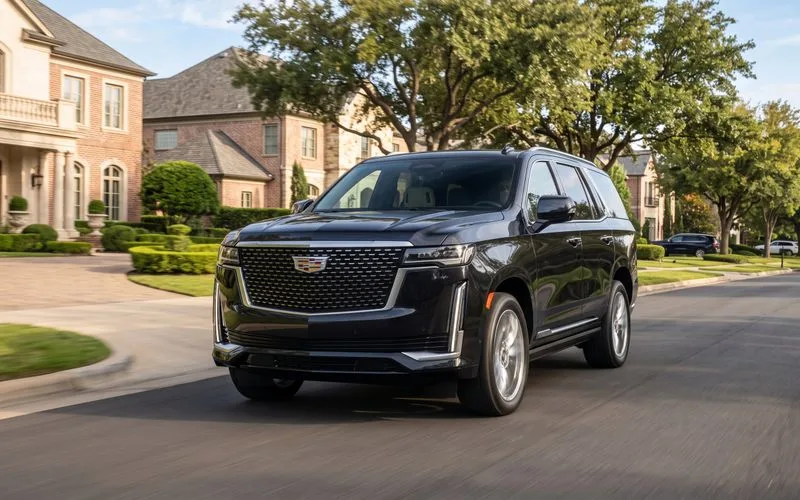 Cadillac EscaladeFull-Size Luxury SUVBetter at: Resale value
The direct rival holds its value far better and offers a much broader lineup, including a V8 and the supercharged Escalade-V.
Compare 2.92B-
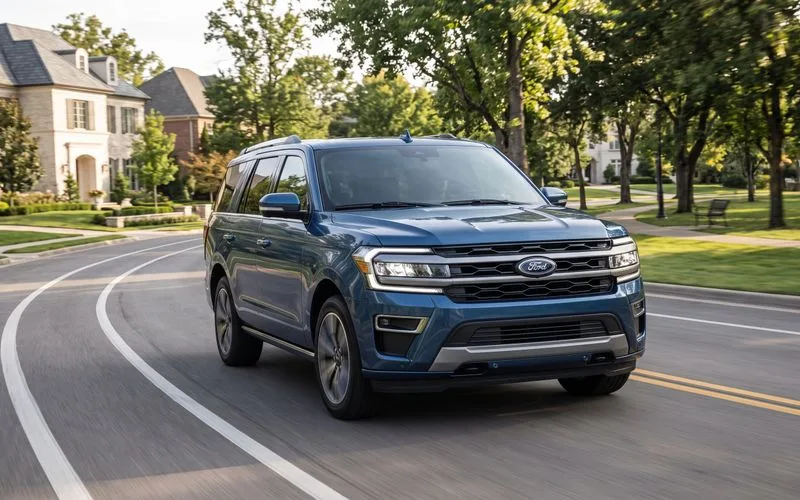 Ford ExpeditionFull-Size SUVBetter at: Value per dollar
Same platform, engine and third-row space for tens of thousands less, if you can live without the Lincoln materials and massage seats.
Compare 2.72B-
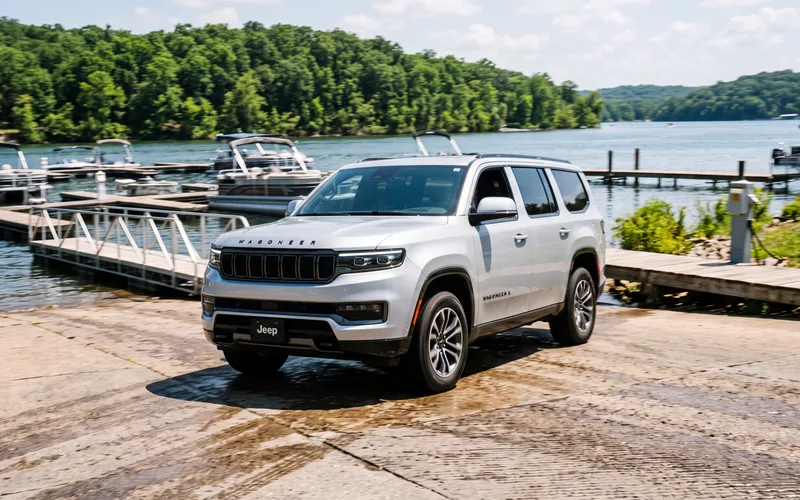 Jeep WagoneerFull-Size SUVBetter at: Price
Comparable size, seating and towing at a lower price, with a more rugged character than the Navigator's plush cruiser brief.
CompareHow it's evolved
10 scored model years · 2017–2026
Subject scores by year
Hover or tap a score to see what moved it versus the year before. A corner mark flags a big swing.
| Year | Performance | Efficiency | Safety | Space | Cost | Reliability | Tech | Use-case | Driving | Value |
|---|---|---|---|---|---|---|---|---|---|---|
| 2026 | 76 | 20 | 85 | 70 | 14 | 69 | 86 | 72 | 70 | 73 |
| 2025 | 74 | 20 | 79 | 82 | 16 | 60 | 82 | 71 | 65 | 73 |
| 2024 | 73 | 25 | 76 | 83 | 15 | 58 | 85 | 68 | 63 | 72 |
| 2023 | 74 | 25 | 75 | 84 | 15 | 60 | 85 | 69 | 65 | 74 |
| 2022 | 73 | 25 | 73 | 84 | 15 | 57 | 83 | 66 | 62 | 73 |
| 2021 | 73 | 19 | 66 | 82 | 15 | 54 | 70 | 65 | 60 | 70 |
| 2020 | 72 | 24 | 65 | 82 | 15 | 53 | 70 | 65 | 60 | 75 |
| 2019 | 73 | 24 | 61 | 84 | 15 | 60 | 68 | 64 | 60 | 74 |
| 2018 | 73 | 24 | 56 | 84 | 15 | 56 | 67 | 63 | 60 | 75 |
| 2017 | 63 | 25 | 42 | 74 | 14 | 54 | 45 | 58 | 53 | 58 |
Compare two years
Best fit & conditions
Higher scores mean a better fit for that use case. Learn more about use-case fit →
Subject profile
Detailed scoring by subject
1Performance & PowertrainOne of the Navigator's strongest categories.2.94B-
2018 is the launch year of the fourth-generation Navigator and the only engine offered across Premiere, Select, Reserve and Black Label is the twin-turbocharged 3.5L EcoBoost V6 rated 450 hp — the highest-output engine Lincoln had sold to that point, and 10 hp above the same engine's post-2022-refresh restatement. The rating is achieved on premium fuel; Consumer Reports notes roughly 411 hp on regular.
510 lb-ft at 3,000 rpm led the full-size luxury SUV field at the fourth generation's 2018 launch and is what makes a roughly 6,000-lb vehicle move off idle without drama. A handful of aggregator listings quote 500 lb-ft; Lincoln's own tech-spec sheet says 510, and the manufacturer figure wins.
The two instrumented tests of the 2018 car that I could verify bracket it at 5.9–6.2 seconds, and the 0-60specs aggregate of verified 2018 tests also lands at 5.90 s. That is quick for a body-on-frame full-size SUV — mid-pack against the band, which stretches to supercar-class times, but near the front of its own segment in 2018.
Reviewers of the launch-year car consistently describe smooth, essentially lag-free delivery with abundant midrange pull — the twin-turbo V6 moves the Navigator easily from a stop even loaded with people and cargo. It gives up the effortless character and sound of the Escalade's 6.2L V8, and the full 450 hp needs premium fuel, which keeps it out of the top band.
The 10-speed automatic (10R80) that replaced the previous generation's 6-speed is well matched to the engine, and 2018 reviews describe smooth, precise, quick shifts with paddle shifters and tow/haul mode. Occasional reluctance to downshift in this first-year calibration — and unrefined low-gear downshifts noted in the same generation — hold it below the top band.
Properly equipped with the $1,895 Heavy-Duty Trailer Tow Package, the standard-wheelbase 4x2 is rated 8,700 lbs — Lincoln's best-in-class claim at launch and above the top of the SUV band. The 4x4 drops to 8,300 lbs and the long-wheelbase Navigator L to 8,400 (4x2) / 8,100 lbs (4x4); without the package the rating falls to 6,200 lbs, which is the figure most aggregator pages quote.
4x4 is optional on Premiere and Select and standard higher up, and it is a genuine two-speed system: a BorgWarner 4417 transfer case with a 2.64:1 low range, plus a six-mode Lincoln Drive Modes selector that spans 2H, 4A, and locked 4x4 high and low. Rear-wheel drive remains the base configuration — where 2018 rivals such as the QX80, GLS and Range Rover made all-wheel drive standard — which keeps it out of the 80s.
About 9.6–9.7 in of ground clearance, a two-speed transfer case with 2.64:1 low range, and deep-conditions and slow-climb drive modes give the 2018 Navigator real light-duty ability in snow, sand and on unimproved roads. There is no locking differential, no skid plating and no off-road trim, and the volume car rides on 22-inch wheels with street tires — a snow-and-gravel SUV, not a trail vehicle.
One engine, one transmission, no electrification: every 2018 Navigator is the 450 hp 3.5L twin-turbo V6 with the 10-speed automatic, and the only drivetrain choice is 4x2 versus 4x4 (plus standard or L wheelbase). Full-size rivals of the era offered V8s, and the Escalade a diesel shortly after; the Navigator offered nothing else.
2Efficiency & RangeOne of the Navigator's weakest categories.0.00F
2018 launched the fourth generation with the 450-hp 3.5L twin-turbo V6 and 10-speed automatic, and its EPA ratings carried forward unchanged into 2019. Eighteen combined sits near the floor of the gas-SUV band — the cost of a body-on-frame full-size luxury SUV even with the new aluminum bodywork and standard auto stop-start.
City economy is 16 MPG across every 2018 configuration — auto stop-start and direct injection cannot do much for a roughly 6,000-lb SUV in stop-and-go traffic. It is identical on the 4x2, the 4x4 and the long-wheelbase L, and unchanged for 2019.
Twenty-one highway on the 4x4 is barely above the bottom of the gas-SUV band; frontal area and gearing chosen to support an 8,700-lb tow rating cap it. The rear-drive car does noticeably better at 23 MPG, but the 4x4 is the volume configuration in this segment.
A 23.0-gallon tank turns class-worst economy into a merely mid-pack cruising range — below the middle of the SUV band but not a road-trip liability, and the long-wheelbase Navigator L's larger (~27–28 gal) tank stretches it further.
At EPA's standard 15,000 mi/yr the 4x4 burns about 16.5 barrels of petroleum a year, putting annual fuel spend near the top of the SUV cost band — one of the most expensive vehicles in the catalog to feed, and that figure is calculated on regular unleaded.
EPA classifies the 2018 Navigator as a regular-gasoline vehicle and 87 octane is permitted, so no trim requires premium — but the full 450 hp is a premium-fuel rating (Consumer Reports measured the same engine at 411 hp on regular), and Edmunds notes it 'performs best on premium fuel, which may get expensive'. That is squarely the recommended-but-not-required band, and on a fuel bill this size the choice costs real money.
3SafetyMid-pack among this car's ten categories.1.79C-
NHTSA rated the launch-year 2018 Navigator 5 stars overall in both 4x2 and 4x4 form, with 5 stars in every frontal and side subtest and no tip in the dynamic rollover test; only the rollover metric separates the drivetrains (4 stars 4x4 at 19.3% risk, 3 stars 4x2 at 20.8%).
IIHS never crash-tested the fourth-generation Navigator that launched for 2018, so no Top Safety Pick was ever possible — the 2018 car carries NA across moderate overlap, small overlap and side. When IIHS eventually tested the mechanically-related Ford Expedition on the same T3 platform for 2023, it returned Marginal in driver-side small overlap, passenger-side small overlap and the updated moderate overlap, which makes 'untested' here closer to 'untested with reason for concern' than to a neutral gap.
In its launch year the Navigator standardized only blind-spot monitoring with cross-traffic alert, the rearview camera, front and rear parking sensors, rain-sensing wipers and brake assist — automatic emergency braking, adaptive cruise, lane keeping and auto high beams all sat inside the ~$2,600 Technology Package, which for 2018 was optional even on the volume Reserve trim and standard only on Black Label. A $75,000-plus luxury SUV charging extra for AEB in 2018, when far cheaper mainstream vehicles had standardized it, is a real gap; Lincoln closed it a year later by making the package standard on Reserve.
Pre-Collision Assist with Pedestrian Detection is Ford's competent late-2010s system — forward collision warning with automatic braking and daytime pedestrian recognition — but it has no nighttime pedestrian capability, was never given an IIHS front crash prevention rating on this vehicle, and for 2018 is a cost option on every trim except Black Label, so the typical 2018 Navigator on the road may not have it at all. The related 2023 Expedition's Marginal vehicle-to-vehicle result under the newer IIHS protocol argues against crediting the hardware any higher.
The Blind Spot Information System with cross-traffic alert is standard on every 2018 Navigator trim and includes trailer coverage, which extends the monitored zone alongside a conventional trailer — genuinely useful on an 8,000-plus-pound-rated tow vehicle and rare in the segment at launch. It stops at alerts, though: there is no active steering or braking intervention and no safe-exit warning for rear passengers.
The 2018 Navigator offers only Ford's Lane-Keeping System with Driver Alert — a departure warning with a steering-wheel vibration and a one-shot corrective nudge toward the lane. There is no lane centering of any kind, and even the basic system is inside the optional Technology Package on Premiere, Select and Reserve alike, so it is absent from most 2018 examples.
Adaptive cruise control with stop-and-go works down to a full halt in traffic and back up again, the right capability for a heavy highway cruiser, and drew no significant reviewer complaints in the launch year. What holds it back is that it cannot combine with lane centering into a true highway-assist mode — it is longitudinal-only — and for 2018 it is a cost option on the volume Reserve rather than standard equipment.
No hands-free highway system was offered on the 2018 Navigator at any trim or price. Lincoln BlueCruise did not reach the Navigator until the 2022 model-year refresh, four years later.
Full LED headlamps are standard from the base Premiere up and debut Lincoln's speed-dependent adaptive lighting — a wider spread at low speed narrowing as speed rises to cut sign glare — which is better hardware than most of the segment carried in 2018. Two things hold the score down: auto high beams are inside the optional Technology Package on every trim below Black Label, and no IIHS headlight rating exists to corroborate real-world output, with the related 2023 Expedition's LED units rated only Marginal.
Reviewers rate the launch-year Navigator as easier to see out of than GM's full-size rivals — large glass all round, a commanding H-point and third-row headrests that fold flat out of the sightline — and the available 360-degree camera stitches four views into an overhead image for parking. Thick front roof pillars obscure objects and the bluff front end makes the nose hard to place, and the surround-view camera is unavailable on the base Premiere, so the low-speed compensation is not there on every car.
Few vehicles at any price carry as many child seats: Cars.com found three complete sets of LATCH anchors in the second row and fitted three car seats across it, with two more sets plus three top tethers in the third row, behind unusually large rear doors and extra-roomy benches. Third-row installation and fit gave mixed results, which is the one real friction point.
4Space & ComfortThe Navigator's best-graded category.3.70A
Every 2018 Navigator ships with power-folding second-row captain's chairs for seven; the three-place 40/20/40 second-row bench is the alternate configuration and takes it to eight. Scored on the seven-seat volume Reserve configuration.
41.8 in of first-row headroom on the 2018 standard-wheelbase car — a launch-year figure for the new T3 body that carries unchanged through the fourth generation, and near the top of the SUV band.
43.9 in of first-row legroom, high in the SUV band but a little short of the contemporary Escalade. This is the launch figure for the 2018 redesign and does not change across the generation.
Second-row headroom of 40.0 in sits at the very top of the SUV normalization band — a benefit of the tall, square body Lincoln introduced with the 2018 fourth generation.
42.6 in in the second row clears the top of the SUV band outright — the power tilt-and-slide second row is one of the roomiest in the class and beats the contemporary Escalade by a wide margin.
One of the very few three-row SUVs whose rearmost bench genuinely works for adults — 40.9 in of legroom and 37.3 in of headroom, power recline, power fold standard on every 2018 trim, its own vents and USB ports, and a tilt/slide second row for access. Held below the 90s because the load floor is high enough to leave knees raised and the standard-wheelbase car surrenders most of its cargo hold when the third row is up.
57.5 cu ft behind the second row with the third row folded — mid-pack, and the weakest measured dimension in this category. Confidence is MEDIUM rather than HIGH because published behind-second-row figures for this body disagree (54.4 to 63.6 cu ft depending on measurement method); the endpoints either side of it are firm.
103.3 cu ft with both rear rows power-folded clears the top of the SUV band, and the power-fold seats leave a near-flat floor.
Strong conventional storage plus a genuinely useful power suite — a large floating center console with a covered bin, deep door pockets, six USB ports across all three rows, four 12V powerpoints and a 110V household outlet, with the wireless charging pad arriving at the Select trim and so fitted to the volume Reserve. No underfloor bin, no split gate and no powered-console trick keeps it out of the standout band.
Among the best long-haul seats in the class at launch: Perfect Position multicontour front seats with power thigh extension and ventilation on the volume Reserve, the 30-way Perfect Position chairs with Active Motion massage optional there and standard on Black Label, and second-row captain's chairs reviewers rate as adult-comfortable — heated as standard equipment for 2018. Short of the top band only because massage remains a paid upgrade on the trim most buyers order.
The clear weak point of an otherwise excellent cabin. The continuously controlled dampers (standard from Select up, so fitted to the volume Reserve) absorb sharp single impacts better than the Escalade does, but reviewers consistently report float and poor secondary control — body movement on undulating pavement and a shimmy over broken surfaces — which holds it below the segment's ride leaders despite the plush intent.
One of the quietest full-size SUVs of its era and an outright strength of the 2018 redesign — Active Noise Control, acoustic glass and heavy sound deadening leave the twin-turbo V6 effectively inaudible at cruise, and the measured highway figure edges the Escalade it was benchmarked against.
Comfort equipment is rich and unusually front-loaded for a launch year: tri-zone automatic climate with second-row controls, heated first- AND second-row seats and remote start on the base Premiere, heated steering wheel and wireless charging from Select, and heated/ventilated front seats plus the panoramic Vista Roof on the volume Reserve. Held short of the top band because massage comes only with the optional 30-way seats and the dual-screen rear entertainment system is an extra-cost option.
5Cost of OwnershipThe Navigator's lowest-graded category.0.00F
The all-new fourth-generation Navigator launched at $73,250 delivered for the rear-drive Premiere — roughly $8,250 beyond the top of the $25,000–$65,000 SUV band, so this item bottoms out. Four-wheel drive was a $2,655 option on the two lower trims.
Reserve is the volume trim and comes with four-wheel drive standard, listing at $82,400 delivered — about $14,400 past the top of the $27,000–$68,000 SUV band. Most Reserves left the lot with the $2,640 Technology package, which was still optional on this trim in 2018 and only became standard for 2019.
Published estimates disagree by a factor of three, so this blends them at roughly $7,800 — $300 above the 2019 car in this dataset, because the 2018 is the first build year of an all-new generation and platform, and it carries ten recalls against a 2.5/5.0 reliability record on Lincoln dealer labor rates.
iSeeCars' model-year-specific figure has the 2018 Navigator shedding 59.1% of its value over five years — 40.9% retained — which is worse than both the nameplate average and the luxury large SUV class, and lands at the very bottom of the 40–70% SUV band.
Lincoln's New Vehicle Limited Warranty ran 4 years or 50,000 miles for 2018 — a year longer than mainstream Ford coverage and squarely mid-pack in the 3–5 year band among luxury rivals.
Powertrain coverage is 6 years or 70,000 miles — near the bottom of the 5–10 year band, and on a full-size SUV the 70,000-mile cap typically expires well before the sixth year.
Lincoln includes no complimentary scheduled maintenance on the Reserve volume trim — no free oil changes at any point — which caps this below the 80+ band, but Pickup & Delivery with a complimentary Lincoln loaner for the whole 4-year/50,000-mile warranty period plus 24/7 roadside assistance is substantive. Scored level with the 2019 car because the ownership program is materially unchanged between the two years; the multi-year connected-service bundles that lift later Navigators did not exist yet.
$82,400 volume-trim price minus its estimated resale value after 5 years (40.9% retained, or about $33,702) leaves about $48,698 in depreciation. Add the projected $7,800 in 5-year maintenance and repairs, and owning this vehicle for 5 years costs about $56,498 in total.
6Reliability & QualityOne of the Navigator's weakest categories.1.76C-
2018 is the launch year of the all-new fourth generation, and the evidence splits along exactly that line. The three-year dependability study that surveys these specific cars came back better than average, and the owner-complaint file is actually lighter than 2019's — but this is the year that collects the assembly-defect recalls, introduces two unproven powertrain components at once, and carries the heaviest TSB load of the generation. Consumer Reports rates it below average and RepairPal flags a higher-than-normal chance that any given repair is a severe one.
The two independent brand yardsticks that cover this ownership window point in opposite directions and roughly cancel. J.D. Power's three-year study of 2018 model-year cars put Lincoln comfortably inside the above-average group, while Consumer Reports ranked Lincoln dead last among all brands in both of the annual report cards published over the same period. Mid-pack is the honest read: better than the bottom-third position Lincoln occupies in later dependability cycles, well short of a brand you would buy for its dependability reputation.
The worst recall record of any fourth-generation Navigator year — twelve campaigns against ten for 2019 — and the composition is what puts it well into the low band rather than the count alone. Four of the twelve are launch-year manufacturing omissions unique to 2018: fuel pump welds that fracture and leak near an ignition source, second-row center seats built without their reinforcement brackets, and a missing transmission roll pin that can disable Park outright. Those are parts left out on the line, not design wear-out. On top of them sit the same shared later campaigns the whole generation carries, including three successive expanding seat-belt pretensioner recalls and a park-pawl rollaway. TSB volume is the heaviest of the generation at 234.
2018 is the year the Navigator adopted both the 3.5L EcoBoost High-Output V6 and the 10R80 ten-speed, so a buyer got two new-to-the-model components simultaneously with no accumulated field history behind either. Both subsequently earned their own remedy programs that name this exact model year: the 10R80 harsh-shift bulletins and class action, and the High-Output oil-consumption bulletin that later Navigator years escape. The offsetting strength is real and structural — this is Ford's highest-volume premium powertrain, shared with the F-150 and Expedition, so diagnosis and parts depth are far better than a low-volume luxury unit. Mixed, with the launch-year timing on the wrong side.
This is the best-evidenced cabin claim on the site and the high point of the whole nameplate. In its launch year the Navigator did not merely win its segment on J.D. Power's perceived-quality study — it posted the highest score of any vehicle in the entire industry, the first American vehicle ever to do so. Stitched leather over most surfaces, open-pore wood, padded door cards and console, and bespoke Lincoln switchgear rather than the parts-bin Ford pieces reviewers criticized on the outgoing third generation. Class-leading for the price by any reading.
Reviewers of the new aluminum-bodied Kentucky Truck Plant build were emphatic that nothing rattled or squeaked, which is genuinely hard in a vehicle this size, and no one flagged panel gaps. The mark against it is not journalistic but documentary: three of the twelve recalls for this model year are parts an assembler failed to install — seat reinforcement brackets, a transmission roll pin, fuel pump welds that did not hold. Those are assembly-consistency failures in the most literal sense, they are specific to the launch year, and they sit alongside the generation's heaviest TSB count. Solid workmanship undercut by a first-year production line still settling.
A 2018 buyer caught the Lincoln network at its widest, before the consolidation that has since cut it by well over half — and because the large majority of stores are co-located with high-volume Ford dealers that already service the shared Expedition mechanicals, real-world coverage is denser than the retailer count suggests. That is a meaningful advantage over Genesis, Alfa Romeo or Land Rover for an owner outside a major metro. Service satisfaction is a genuine strength but sits mid-pack among premium brands rather than at Lexus or Porsche level, and the network shrinkage since means an eight-year-old car is now serviced by a materially thinner footprint than it was sold into.
Being a rebodied Expedition is the ownership advantage: the T3 platform, 3.5L EcoBoost and 10R80 are high-volume Ford truck hardware with deep aftermarket, salvage and independent-shop support, so almost nothing is dealer-only the way it is on a German rival, and measured annual spend lands just under the segment average. It is still expensive ownership in absolute terms, and at eight years old the Lincoln-specific content is what bites — load-leveling air suspension, power running boards, 30-way seats, 22-inch tires and aluminum body panels that need network body work rather than any-shop work, all long outside the 4-year/50,000-mile warranty.
7Technology & InfotainmentMid-pack among this car's ten categories.2.51C+
The 10-inch SYNC 3 display is standard across Premiere, Select, Reserve and Black Label, so the volume Reserve gets the full-size screen — but ten inches is a low-mid figure against a luxury segment already moving past twelve, and there is no larger option to buy.
SYNC 3 was one of the better systems on sale in 2018 — reviewers call it responsive and logically laid out, and Lincoln keeps physical climate controls and the chrome piano-key shifter alongside it rather than burying functions in menus. It falls short of the top band because the tile layout already looked plain against German luxury rivals and the hardware is two generations behind the SYNC 4 the Navigator gets in 2022.
Apple CarPlay and Android Auto are standard on every 2018 trim with no upper-trim gate — genuinely notable for a 2018 luxury SUV — but SYNC 3 is wired-only, so projection needs a USB cable. Standard-but-wired lands squarely in the middle band.
Voice-activated touchscreen navigation is standard on every 2018 trim — better provisioned than rivals that gated native nav behind a package — but SYNC 3's Enhanced Voice Recognition is a command-and-response system rather than the natural-language assistant the top band describes, and most owners default to CarPlay or Waze for routing.
The floor is a 14-speaker Revel system with HD Radio standard — a branded premium setup where most 2018 rivals started with a generic one — and the ceiling is the 20-speaker Revel Ultima with Stereo, Audience and On Stage listening modes, optional on Reserve and standard on Black Label. Just short of the top band because Ultima is a paid upgrade on the trim most buyers order.
A 12-inch fully configurable LCD instrument cluster is standard on all four 2018 trims — not a trim-walk item — with drive-mode-specific animated themes, navigation repeats and Lincoln's welcome sequence. Crisp and standard rather than gated, which is what the top band asks for; held at 85 because the graphics are a step behind the sharpest luxury clusters of the era.
The Navigator carries an embedded Lincoln Connect modem with 4G LTE, and SYNC 3 pulls its own software and map updates automatically over a paired Wi-Fi network — real over-the-air updating, but confined to the infotainment stack. Whole-vehicle Ford Power-Up updating that can change modules beyond the head unit does not reach the Navigator until the 2022 refresh, so this sits in the middle 'infotainment/maps only' band.
The Lincoln Way app was new alongside this car and covers the core remote set over the standard 4G LTE modem — remote start with climate pre-conditioning, lock/unlock, vehicle locate and status. It sits below the 2019+ score because 2018 was the app's launch year with a correspondingly rough reliability record, and there is no digital key: Phone As A Key does not reach the Navigator until 2020, so the fob stays mandatory.
Six USB ports spread across all three rows, four 12V points, a 110V household outlet and a hotspot for ten devices — well provisioned for eight occupants and ahead of most 2018 rivals. Below the top band because the ports are a USB-A/USB-C mix rather than fast USB-C throughout, the AC outlet is only 150 W, and the wireless charging pad starts at the Select trim rather than fleet-wide.
Comprehensive by 2018 standards: proximity entry with push-button start, remote start, Lincoln's SecuriCode invisible door keypad, a hands-free power liftgate and a universal garage remote are standard across the range, with power-deployable running boards and the Approach Detection welcome lighting from Select up. It stops short of the top band only because there is no phone-as-key on this model year.
The volume Reserve gets the 360-degree camera with front camera wash as standard (it arrives at Select) plus front and rear parking sensors, which is solid — but unlike the 2019 car, Enhanced Active Park Assist sits inside the $2,640 Technology package rather than being standard on Reserve, and the base Premiere gets only the rear camera. Good rather than best-in-class.
The Navigator's HUD is a genuinely good one — large, bright enough to read through polarized sunglasses, and reviewers singled it out at launch — but for 2018 it is not standard on any volume trim: it is bundled into the $2,640 Technology package, which Lincoln does not make standard on Reserve until 2019. Available on the volume trim, but only by buying the package, which keeps it in the upper middle band.
8Use-Case FitMid-pack among this car's ten categories.2.23C
Family logistics are close to the segment benchmark: enormous door openings, a power tilt-and-slide second row that opens a real path to the third, power-folding second and third rows on every trim, and multiple complete LATCH sets in row two plus two more in row three. Two things keep it out of the 80s — the lower anchors sit tucked into the seat bight, and with all three rows up there is only 19.3 cu ft behind the third row, which a full-size stroller plus a week's gear will beat.
The crash result is excellent — the 2018 Navigator was the only vehicle in its class to earn a five-star overall NHTSA rating — but the driver-assistance story costs a family real points in this model year specifically: blind-spot monitoring with cross-traffic alert and the rear camera are fleet-wide, while automatic emergency braking, pedestrian detection, lane keeping, adaptive cruise and auto high beams all sit inside the $2,640 Technology package, an extra cost on every 2018 trim including the volume Reserve (Lincoln only makes it standard on Reserve for 2019). IIHS never published crashworthiness ratings for this Navigator, so a key third-party check is simply missing, and there is no rear-occupant reminder.
Very close to the best in the class for hauling a family a long way: 66 dBA at 70 mph, a genuinely adult third row (40.9 in of legroom), tri-zone climate with second-row controls and third-row vents, heated first- AND second-row seats standard from the base trim, six USB ports across all three rows, a 110V outlet and optional dual 10-inch rear-seat screens. The one real limit is luggage — 19.3 cu ft behind an occupied third row means a seven-up trip needs the Navigator L or a roof box.
In traffic the Navigator is genuinely relaxing — 510 lb-ft from 3,000 rpm makes it effortless, the steering is feather-light and the cabin is quiet. It sits below the 2019 car because adaptive cruise with stop-and-go is optional on every 2018 trim rather than standard on Reserve, and it misses the top band because the sheer footprint keeps you working in tight traffic and the brake pedal is soft and nonlinear enough that smooth stops take learning.
One of the most expensive vehicles in the catalog to commute in: 16 MPG city and 18 combined for the 4x4 (19 combined for the 4x2), and an instrumented real-world average of 13 MPG — five short of the EPA combined figure. Premium-grade tires in 22-inch sizes and luxury-brand consumables make the rest of the per-mile bill no cheaper. The one mercy is that it drinks regular gasoline rather than premium.
This is a 210-inch, 80-inch-wide, three-ton vehicle that needs 41 feet to turn around — awkward in any urban setting, and the Navigator L is worse at 43.3 ft. The 360-degree camera standard from the Select trim up is what keeps it from the bottom of the band; it lands a little below the 2019 car because Enhanced Active Park Assist is inside the optional Technology package for 2018 rather than standard on Reserve.
Real capability by SUV standards — up to 8,700 lbs of towing (4x2) or 8,300 (4x4) with the Heavy-Duty Trailer Tow Package, a fully boxed steel ladder frame, an integrated trailer brake controller and Pro Trailer Backup Assist, and an engine that shrugs off a loaded trailer. It is capped well short of the work band by the roughly 1,700-lb payload, the absence of a bed, and the fact that the rating collapses without the tow package.
The bones are fleet-proven — body-on-frame construction and the 3.5L EcoBoost shared with the F-150 Raptor — but this specific configuration is not a work tool, and 2018 is the launch year of both a new generation and this application of the 10R80 ten-speed, so it has less field history behind it than later years. An aluminum body, a leather-and-veneer interior with nothing washable, 22-inch wheels on low-profile rubber and a well-documented shift-quality service record hold it mid-band.
Provisions exist but are consumer-grade: a 110V/150W household outlet, four 12V points, cargo-area tie-downs, standard raised roof rails that accept crossbars and a factory hitch with the tow package. There is no bed, no washable interior surface, no meaningful onboard power for tools and no upfit ecosystem — a luxury SUV asked to do jobsite work is out of its element.
A superb mile-eater on the strengths that matter most — 66 dBA at 70 mph, Perfect Position front seats reviewers single out for long-haul support, a genuinely adult third row and a smooth, effortlessly torquey powertrain. It sits below the later years because the fatigue-reducing half of the equation is optional: adaptive cruise with stop-and-go lives in the $2,640 Technology package for 2018. EPA range from the 23-gallon tank is respectable rather than exceptional, and real-world consumption erodes it.
The hardware is more serious than the chrome suggests — a two-speed transfer case with low range on 4x4 models, roughly 9.6–9.7 in of ground clearance, seven drive modes including Slippery, Deep Conditions and Slow Climb, 8,300 lbs of towing for toys and a 110V outlet for camp. What holds it to the middle band is that everything above the driveline is tuned for pavement: 22-inch wheels on low-profile tires, a low front air dam, no off-road trim or skid plating, and no appetite for scraping a $90,000 aluminum body.
Very flexible once you stop carrying seven people: 103.3 cu ft with both rear rows power-folded into a near-flat floor, around 57.5 cu ft with just the third row down, standard raised roof rails for a box or bikes, and a factory hitch with the tow package. Short of the top band because the load floor is high, there is no underfloor bin, and the 19.3 cu ft behind an occupied third row is genuinely restrictive on the standard wheelbase.
9Driving ExperienceMid-pack among this car's ten categories.2.02C
Better than the segment stereotype without ever being agile: the independent rear suspension and continuously controlled dampers produce roughly 0.78–0.81 g on the skidpad, ahead of the contemporary Escalade, and reviewers note the body stays tidier than three tons has any right to. It stays mid-band because the default Normal mode is soft and under-damped, with real float on undulating pavement, and Excite mode only partly reels it in. MEDIUM confidence because published instrumented skidpad figures for the 2018 car differ by test.
The weakest dynamic element. The rack is accurate enough to place the vehicle and on-center response is stable at highway speed, but the assist is so heavy-handed that there is effectively no feedback — a deliberate choice for the buyer, and one that lands this in the 'overly light' band.
The stopping distance is genuinely strong for a three-ton SUV — instrumented tests of the 2018 car put 70–0 mph between 184 and 191 ft, better than the contemporary Escalade, Yukon and Expedition — but the pedal undercuts it. Reviewers describe a soft, nonlinear action with noticeable nose-dive under hard braking, so the driver's confidence does not match the numbers.
The 450-hp twin-turbo V6 is the star of the car — 510 lb-ft from 3,000 rpm gives immediate, essentially lag-free thrust and acceleration that beat every V8 rival of the era. It is kept out of the top band by the 10-speed automatic, which reviewers catch shuffling or hesitating on low-gear downshifts; 2018 is the first year of this application and the one Ford addressed through service bulletins rather than a redesign.
Near-silent at cruise — 66 dBA at 70 mph with the engine effectively inaudible — and free of driveline vibration through the controls. Held below the top band because the EcoBoost's voice under full throttle is a functional turbo-V6 thrum rather than the V8 note this segment's buyers associate with the price, and it becomes obvious the moment you use the performance.
41.0 feet curb-to-curb on the 122.5-inch wheelbase — near the bottom of the SUV band, and a figure you feel every time a parking structure asks for a three-point turn.
Excellent for nearly any body: Perfect Position front seats with power thigh extension (30-way available), a power tilt-and-telescoping wheel with memory, a commanding sightline over a huge glass area, and physical climate and audio controls rather than menu-buried ones. The step-in height is the one demerit, largely answered by the power-deployable running boards fitted from the Select trim up; the chrome piano-key shifter takes a day to learn.
Fast is not the same as fun. The Navigator will out-accelerate every V8 rival in the class and its skidpad number is respectable, but the numb steering, soft default damping and imprecise brake pedal mean there is no reward in driving it hard — enthusiasts recommend it for the seats and the silence, not the road.
10Value & Market PositionOne of the Navigator's strongest categories.3.11B
The volume Reserve is richly furnished — 4x4, 22-inch wheels, panoramic roof, 24-way heated and ventilated power front seats, second-row console, remote start, blind-spot and rear cross-traffic alert, 12-inch touchscreen — but 2018 is the weakest year of this generation for what comes free, because active safety sits behind the $2,640 Technology package on every trim including Reserve. Consumer Reports called out the base car for having no forward-collision warning or automatic emergency braking at all; 2019 made the Tech package standard on Reserve and 2020 made Co-Pilot360 standard fleet-wide, so the 2018 scores seven points under the 2019 car.
For Escalade money the 2018 Navigator delivered an all-new aluminum-bodied SUV with a 450-hp twin-turbo V6, a 10-speed automatic and a cabin reviewers rated the best in the class, against an Escalade still on a 2014 platform — and the award sweep and Edmunds' 8.4/10 say the market agreed. Two things hold it out of the 80s: safety tech is a paid extra even on the volume trim, and resale is the worst side of the ledger, with the 2018 shedding 59.1% in five years against 54.3% for its class, so part of the sticker advantage comes back out at trade-in.
A well-spaced four-rung ladder from $73,250 to $98,100 — Premiere, Select, Reserve, Black Label — with the long-wheelbase Navigator L offered on three of them, rear- or four-wheel drive a $2,655 choice on the two lower trims, and second-row captain's chairs or a bench to pick between seven and eight seats. Held to the low 70s because there is exactly one engine and one transmission with no V8 or diesel alternative, against an Escalade lineup offering roughly twice the permutations.
The fastest-rising nameplate in its segment that year: 17,839 US deliveries in calendar 2018, up 69.5% on 2017 and the Navigator's best year since 2007, with cars averaging seven days on dealer lots and Ford lifting Kentucky Truck output about 25% to keep up. It is not scored higher only because it was still a clear number two — roughly half the Escalade's volume, in a full-size luxury SUV segment that itself contracted through the first half of 2018.
2018 is the high-water mark for this nameplate's desirability: the Navigator scored 915 in J.D. Power's 2018 APEAL Study — the highest score in the entire industry and the first time an American vehicle ever topped it — on top of becoming the first Lincoln to win North American Truck of the Year, and Lincoln itself climbed to fourth among premium brands. Eight points above the 2019 car for that reason, but short of the 80s because the badge still trailed Porsche, BMW and Genesis and still does not hold value like them: the 2018 depreciates faster than its own class average.
The worst year of this generation to be haggling. Launch demand outran supply — seven days on the lot, transaction prices up $21,000–$25,600 year over year, Ford adding 25% more production — so there was essentially nothing on the hood and little negotiating room, which is exactly the buyer-unfriendly end of this item. It is not scored into the 40s because there is no evidence of systematic over-sticker markups, and ordinary clearance money appeared late in the model year as 2019 stock arrived; Lincoln's $2,500 allowance announced in September 2018 applied to 2019 cars, not these.
2018 is the redesign itself — the launch year of the fourth generation, with an aluminum body, Continental-derived styling, a 450-hp twin-turbo V6 and a 10-speed automatic replacing a generation that had run since 2007. Redesign risk for a 2018 buyer was nil: the mid-cycle refresh was four years out and the fifth generation seven, while the Escalade it was chasing still ran a 2014 platform.
Close to a clean sweep, and the strongest award year of the nameplate's history: North American Truck of the Year, the highest APEAL score in the entire industry, and first place in its class from U.S. News, KBB and Edmunds simultaneously. Ten points above the 2019 car, where U.S. News had dropped it to fourth in class. Not higher because Consumer Reports' road test was pointedly mixed — floaty, disconnected handling, uncomfortable front seats, an unintuitive pushbutton gear selector and 16 mpg overall — and because base-trim safety equipment was a recurring criticism.