

The verdict
A mixed-report full-size luxury suv, strong on space and held back by ownership.
The 2020 Navigator is the year Lincoln's big SUV hit its stride: a genuinely first-class cabin, 40.0 in of second-row headroom and 41.1 in of legroom, 103.3 cu ft of cargo space with the power-folding rows dropped, and 450 hp / 510 lb-ft good for 8,700 lbs of towing — all for an $85,695 Reserve 4x4 that critics ranked ahead of the then-aging Escalade. The bill comes later: 18 MPG combined and roughly $3,400 a year in fuel, a 43% five-year resale figure that trails its own class, and a Lincoln brand that finished in the bottom four of J.D. Power's dependability study for exactly this model year. As a used buy in 2026 it is an enormous amount of luxury per dollar, provided you budget for the 10-speed transmission's documented shift problems and the 13 open-recall history. Buy it for the seats, the silence and the space — not for the drive or the running costs.
Jump to scoresStrengths
- A cabin that outclasses the sticker
- Class-topping room in every row
- Effortless muscle and a real tow rating
What holds it back
- It drinks like nothing else in the catalog
- Brutal depreciation on an $85,000 sticker
- A dependability record you have to plan around
Top alternatives
Cars shoppers cross-shop with the Lincoln Navigator 3.16B
3.16B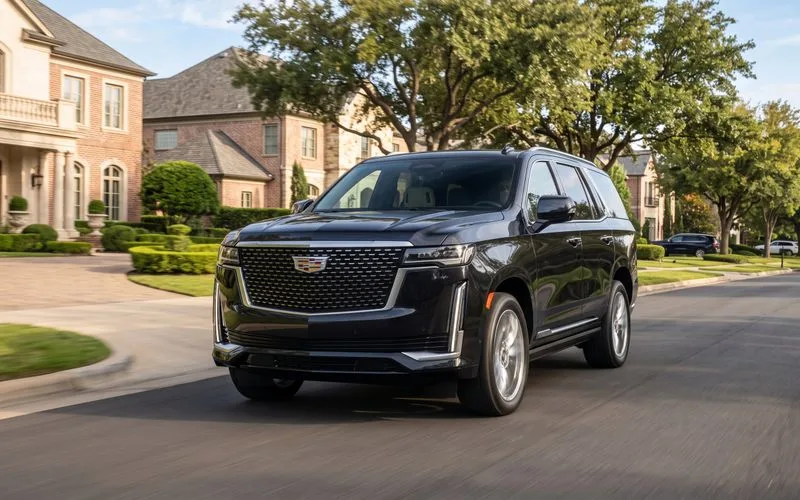 Cadillac EscaladeFull-Size Luxury SUVBetter at: Resale value
The direct rival holds its value far better and offers a much broader lineup, including a V8 and the supercharged Escalade-V.
Compare 2.92B-
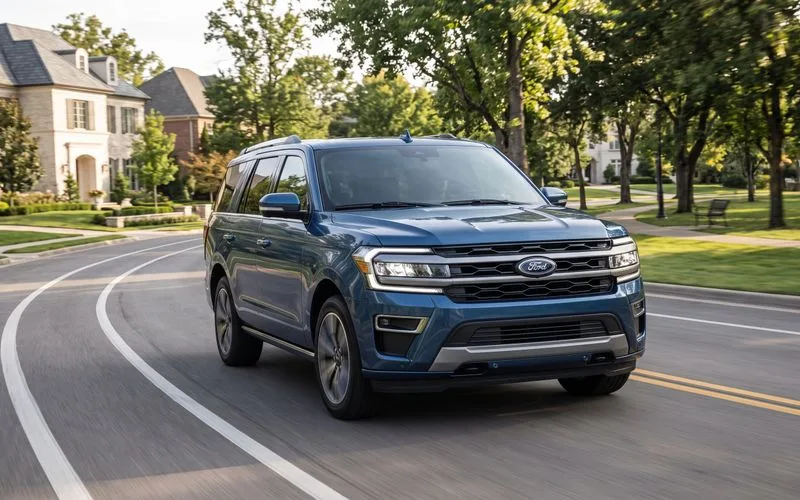 Ford ExpeditionFull-Size SUVBetter at: Value per dollar
Same platform, engine and third-row space for tens of thousands less, if you can live without the Lincoln materials and massage seats.
Compare 2.72B-
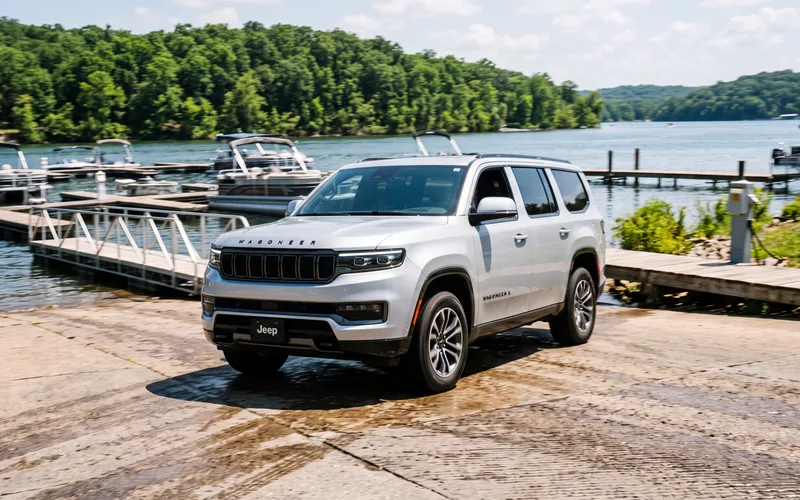 Jeep WagoneerFull-Size SUVBetter at: Price
Comparable size, seating and towing at a lower price, with a more rugged character than the Navigator's plush cruiser brief.
CompareHow it's evolved
10 scored model years · 2017–2026
Subject scores by year
Hover or tap a score to see what moved it versus the year before. A corner mark flags a big swing.
| Year | Performance | Efficiency | Safety | Space | Cost | Reliability | Tech | Use-case | Driving | Value |
|---|---|---|---|---|---|---|---|---|---|---|
| 2026 | 76 | 20 | 85 | 70 | 14 | 69 | 86 | 72 | 70 | 73 |
| 2025 | 74 | 20 | 79 | 82 | 16 | 60 | 82 | 71 | 65 | 73 |
| 2024 | 73 | 25 | 76 | 83 | 15 | 58 | 85 | 68 | 63 | 72 |
| 2023 | 74 | 25 | 75 | 84 | 15 | 60 | 85 | 69 | 65 | 74 |
| 2022 | 73 | 25 | 73 | 84 | 15 | 57 | 83 | 66 | 62 | 73 |
| 2021 | 73 | 19 | 66 | 82 | 15 | 54 | 70 | 65 | 60 | 70 |
| 2020 | 72 | 24 | 65 | 82 | 15 | 53 | 70 | 65 | 60 | 75 |
| 2019 | 73 | 24 | 61 | 84 | 15 | 60 | 68 | 64 | 60 | 74 |
| 2018 | 73 | 24 | 56 | 84 | 15 | 56 | 67 | 63 | 60 | 75 |
| 2017 | 63 | 25 | 42 | 74 | 14 | 54 | 45 | 58 | 53 | 58 |
Compare two years
Best fit & conditions
Higher scores mean a better fit for that use case. Learn more about use-case fit →
Subject profile
Academic Probation · NHTSA safety recalls
Jun 24, 2026Power train: automatic transmissionThe transmission park pawl may engage while the vehicle is in motion, resulting in park system damage.
Defect
Ford Motor Company (Ford) is recalling certain 2018-2021 Navigator, Expedition, 2020-2021 Explorer, Lincoln Aviator, and 2021 F-150 vehicles. The transmission park pawl may engage while the vehicle is in motion, resulting in park system damage.
Risk
Park system damage may result in a vehicle rollaway, increasing the risk of a crash.
Remedy
Dealers will update the powertrain control module software, and inspect and replace any damaged transmission components as necessary, free of charge. Interim letters, notifying owners of the safety risk, were mailed July 10, 2026. Additional letters will be sent once the remedy is available, anticipated in April 2027. Owners may contact Ford customer service at 1-866-436-7332. Ford's number for this recall is 26S48. Vehicle Identification Numbers (VINs) involved in this recall became searchable on NHTSA.gov on June 26, 2026.
NHTSA campaign 26V402000 ↗Manufacturer no. 26S48741,195 vehicles potentially affected (all models in the campaign)Filed by Ford Motor CompanyFiled as NAVIGATORMay 27, 2026Seat belts: pretensionerThe seat belt pretensioner in the driver and/or front passenger seat may inadvertently lock the seat belt, which will not allow the belt to retract or extend.
Defect
Ford Motor Company (Ford) is recalling certain 2018-2022 Expedition and Lincoln Navigator vehicles. The seat belt pretensioner in the driver and/or front passenger seat may inadvertently lock the seat belt, which will not allow the belt to retract or extend.
Risk
Seat belts that do not retract or extend can fail to restrain an occupant as intended, increasing the risk of injury in a crash.
Remedy
Dealers will inspect and replace the seat belt retractors as necessary, free of charge. Interim letters, notifying owners of the safety risk, were mailed June 8, 2026. Additional letters will be sent once the remedy is available, anticipated in August 2026. Owners may contact Ford customer service at 1-866-436-7332. Ford's number for this recall is 26S34. This recall replaces and expands previous NHTSA recalls 24V099 and 25V197. Vehicles previously inspected or repaired under the prior recalls will need the new repair completed.
NHTSA campaign 26V344000 ↗Manufacturer no. 26S34419,967 vehicles potentially affected (all models in the campaign)Filed by Ford Motor CompanyFiled as NAVIGATORSep 19, 2025EngineA short circuit within the battery junction box can cause an engine fire while driving or parked.
Defect
Ford Motor Company (Ford) is recalling certain 2020 Expedition and Lincoln Navigator vehicles. A short circuit within the battery junction box can cause an engine fire while driving or parked.
Risk
A vehicle fire increases the risk of injury.
Remedy
Owners are advised to park their vehicles outside and away from structures and other vehicles, until the remedy is performed. Dealers will inspect and replace the battery junction box, as necessary, and remove a ground wire. On models equipped with standard-duty radiator fan motors, dealers will also install an auxiliary electrical box with a wire jumper. Repairs will be performed free of charge. Owner notification letters were mailed October 3, 2025. Owners may contact Ford customer service at 1-866-436-7332. Ford's numbers for this recall are 22S36 and 22S48. Vehicle Identification Numbers (VINs) involved in this recall became searchable on NHTSA.gov on September 23, 2025.
NHTSA campaign 25V628000 ↗Manufacturer no. 22S36/22S484,632 vehicles potentially affected (all models in the campaign)Owners notified Oct 3, 2025Filed by Ford Motor CompanyFiled as NAVIGATORJun 27, 2025Back over prevention: softwareA software error may cause the rearview camera to display a blank image, or the image may remain on the display after the backing event has ended.
Defect
Ford Motor Company (Ford) is recalling certain 2018-2022 Transit Connect, 2019-2020 MKZ, MKX, Edge, Continental, F-150, Nautilus, Fusion, 2019-2023 Ranger, Mustang, 2020-2021 EcoSport, Expedition, Navigator, 2020-2022 Escape, F-250 SD, Corsair, 2020-2023 Aviator, Transit, 2020-2024 Explorer, 2021-2024 Bronco Sport, and 2022-2024 Maverick vehicles. A software error may cause the rearview camera to display a blank image, or the image may remain on the display after the backing event has ended.
Risk
A rearview camera that displays a blank image can reduce the driver's view behind the vehicle. A rearview image that continues to be displayed after the vehicle is shifted out of reverse may distract the driver. Both of these situations can increase the risk of a crash.
Remedy
Dealers will update the rearview camera software, free of charge. Owner notification letters were mailed September 4, 2025. Owners may contact Ford customer service at 1-866-436-7332. Ford's number for this recall is 25S72.
NHTSA campaign 25V442000 ↗Manufacturer no. 25S72200,237 vehicles potentially affected (all models in the campaign)Owners notified Sep 4, 2025Filed by Ford Motor CompanyFiled as NAVIGATORMay 23, 2025Electrical system: body control module: softwareThe Pre-Collision Assist features, such as forward collision warning and automatic emergency braking, are not functional due to a software error.
Defect
Ford Motor Company (Ford) is recalling certain 2020 Expedition and Navigator vehicles that were repaired incorrectly under recall 20V262. The Pre-Collision Assist features, such as forward collision warning and automatic emergency braking, are not functional due to a software error.
Risk
Inoperative pre-collision assist features that fail to perform as expected can increase the risk of a crash or injury.
Remedy
Dealers will update the body control module software, free of charge. Owner notification letters were mailed June 25, 2025. Owners may contact Ford customer service at 1-866-436-7332. Ford's number for this recall is 25S56.
NHTSA campaign 25V346000 ↗Manufacturer no. 25S56556 vehicles potentially affected (all models in the campaign)Owners notified Jun 25, 2025Filed by Ford Motor CompanyFiled as NAVIGATORMay 23, 2025Seat belts: pretensionerThe seat belt pretensioner in the driver and/or front passenger seat may inadvertently lock the seat belt, which will not allow the belt to retract or extend.
Defect
Ford Motor Company (Ford) is recalling certain 2018-2020 Expedition and Lincoln Navigator vehicles. The seat belt pretensioner in the driver and/or front passenger seat may inadvertently lock the seat belt, which will not allow the belt to retract or extend.
Risk
Seat belts that do not retract or extend can fail to restrain an occupant as intended, increasing the risk of injury in a crash.
Remedy
Dealers will replace the seat belt retractors as necessary, free of charge. Owner notification letters were mailed October 22, 2025. Owners may contact Ford customer service at 1-866-436-7332. Ford's number for this recall is 25S31. Some vehicles in this recall that were previously inspected under recall 24V-099 and did not have parts replaced will need to have this new recall remedy completed.
NHTSA campaign 25V197000 ↗Manufacturer no. 25S31112,951 vehicles potentially affected (all models in the campaign)Owners notified Oct 22, 2025Filed by Ford Motor CompanyFiled as NAVIGATORNov 8, 2024Equipment: other: labelsThe air bag warning label may be missing from the dashboard. As such, these vehicles fail to comply with the requirement Federal Motor Vehicle Safety Standard number 208, "Occupant Crash Protection."
Defect
Ford Motor Company (Ford) is recalling certain 2020-2025 Explorer, Lincoln Aviator, 2020-2024 Escape, Lincoln Corsair, 2018-2024 F-150, Expedition and Lincoln Navigator vehicles. The air bag warning label may be missing from the dashboard. As such, these vehicles fail to comply with the requirement Federal Motor Vehicle Safety Standard number 208, "Occupant Crash Protection."
Risk
Without a label that shows the proper restraint usage guidelines, the occupants may have an increased risk of injury in the event of a crash.
Remedy
Ford will mail owners the warning labels, free of charge. Owner notification letters were mailed December 19, 2024. Owners may call Ford customer service at 1-866-436-7332. Ford's number for this recall is 24C39.
NHTSA campaign 24V852000 ↗Manufacturer no. 24C3927,678 vehicles potentially affected (all models in the campaign)Owners notified Dec 19, 2024Filed by Ford Motor CompanyFiled as NAVIGATORFeb 9, 2024Seat belts: pretensionerThe seat belt pretensioner in the driver and/or front passenger seat may inadvertently deploy and lock the seat belt, which will not allow the belt to retract or extend.
Defect
Ford Motor Company (Ford) is recalling certain 2018-2020 Expedition and Lincoln Navigator vehicles. The seat belt pretensioner in the driver and/or front passenger seat may inadvertently deploy and lock the seat belt, which will not allow the belt to retract or extend.
Risk
Seat belts that do not retract or extend may fail to restrain an occupant as intended, increasing the risk of injury in a crash.
Remedy
Dealers will replace the seat belt retractors, as necessary. Additionally, dealers will install an HVAC drain tube elbow if it is missing. Repairs will be performed free of charge. Owner notification letters were mailed on July 8, 2024. Owners may contact Ford customer service at 1-866-436-7332. Ford's number for this recall is 24S06.
NHTSA campaign 24V099000 ↗Manufacturer no. 24S0677,574 vehicles potentially affected (all models in the campaign)Owners notified Jul 8, 2024Filed by Ford Motor CompanyFiled as NAVIGATORAug 25, 2023Back over prevention: sensing system: cameraThe rearview camera, or 360-degree view camera if equipped, may not display a rearview image when the vehicle is placed in reverse.
Defect
Ford Motor Company (Ford) is recalling certain 2020-2023 Lincoln Aviator, 2018-2021 Lincoln Navigator, 2022-2023 Ford Transit, and 2021 Ford Bronco vehicles. The rearview camera, or 360-degree view camera if equipped, may not display a rearview image when the vehicle is placed in reverse.
Risk
Loss of the rearview camera image can reduce the driver's rear visibility, increasing the risk of a crash.
Remedy
Dealers will replace the rearview camera, and update the software and wiring as necessary, free of charge. Owner notification letters were mailed November 20, 2023 to Lincoln owners. Ford vehicle owners notification letters were mailed March 4, 2024. Ford remedy parts are anticipated 2nd Quarter 2024. Ford's number for this recall is 23S48.
NHTSA campaign 23V598000 ↗Manufacturer no. 23S48177,402 vehicles potentially affected (all models in the campaign)Owners notified Nov 20, 2023Filed by Ford Motor CompanyFiled as NAVIGATORJun 9, 2023Equipment: other: owners/service/other manualThe owner's manual does not include instructions for adjusting or removing certain head restraints. As such, these vehicles fail to comply with the requirements of Federal Motor Vehicle Safety Standard number 202, "Head Restraints."
Defect
Ford Motor Company (Ford) is recalling certain 2018-2023 Expedition and Lincoln Navigator vehicles equipped with third-row seating; and 2019-2023 F-Super Duty F-250, F-350, F-450, and F-550 SuperCab vehicles. The owner's manual does not include instructions for adjusting or removing certain head restraints. As such, these vehicles fail to comply with the requirements of Federal Motor Vehicle Safety Standard number 202, "Head Restraints."
Risk
Without instructions, the head restraints may be improperly adjusted, increasing the risk of injury in the event of a crash.
Remedy
Ford will mail the Owner's Manual addendums that describe how to adjust and remove the head restraints for the center seating positions, free of charge. Owner notification letters were mailed July 21, 2023. Owners may contact Ford customer service at 1-866-436-7332. Ford's number for this recall is 23C20.
NHTSA campaign 23V420000 ↗Manufacturer no. 23C20691,133 vehicles potentially affected (all models in the campaign)Owners notified Jul 21, 2023Filed by Ford Motor CompanyFiled as NAVIGATORApr 14, 2022Visibility: windshield wiper/washer: linkagesThe windshield wiper arms may break, causing the windshield wipers to fail.
Defect
Ford Motor Company (Ford) is recalling certain 2020-2021 F-150, Expedition, 2020-2022 Super Duty F-250, F-350, F-450, F-550, and 2020-2021 Lincoln Navigator vehicles. The windshield wiper arms may break, causing the windshield wipers to fail.
Risk
Inoperative windshield wipers can reduce visibility in certain driving conditions, increasing the risk of a crash.
Remedy
Dealers will replace both front windshield wiper arms, free of charge. Interim owner notification letters, informing owners of the safety risk, were mailed on May 24, 2022. Remedy parts are expected to be available 3rd Quarter 2022. Owner notification letters were mailed on October 21, 2022. Owners may contact Ford customer service at 1-866-436-7332. Ford's number for this recall is 22S26.
NHTSA campaign 22V250000 ↗Manufacturer no. 22S26652,996 vehicles potentially affected (all models in the campaign)Owners notified Oct 21, 2022Filed by Ford Motor CompanyFiled as NAVIGATORJun 23, 2020Seats: mid/rear assemblyThe attachment bracket for the driver's side second-row seat headrest may not have been sufficiently welded to the seat frame. As such, these vehicles fail to comply with Federal Motor Vehicle Safety Standard number 202, "Head Restraints."
Defect
Ford Motor Company (Ford) is recalling certain 2020 Ford Expedition and Lincoln Navigator vehicles. The attachment bracket for the driver's side second-row seat headrest may not have been sufficiently welded to the seat frame. As such, these vehicles fail to comply with Federal Motor Vehicle Safety Standard number 202, "Head Restraints."
Risk
An improperly welded headrest bracket may have reduced strength and may not adequately restrain an occupant in a crash, increasing the risk of injury.
Remedy
Ford will notify owners, and dealers will inspect the seat structure and replace it as needed, free of charge. This recall began July 8, 2020. Owners may contact Ford customer service at 1-866-436-7332. Ford's number for this recall is 20C12.
NHTSA campaign 20V366000 ↗Manufacturer no. 20C122,620 vehicles potentially affected (all models in the campaign)Owners notified Jul 8, 2020Filed by Ford Motor CompanyFiled as NAVIGATORMay 8, 2020Electrical system: instrument cluster/panel · Forward collision avoidance · Forward collision avoidance: automatic emergency brakingVehicles built with the optional radar-plus-camera Pre-Collision Assist system are not affected. Due to incorrect coding of interfacing modules, the Pre-Collision Assist feature is not enabled, and the driver cannot access the menu functions necessary to enable the Pre-Collision Assist feature.
Defect
Ford Motor Company (Ford) is recalling certain 2020 Ford Expedition and Lincoln Navigator vehicles equipped with camera-only Pre-Collision Assist feature. Vehicles built with the optional radar-plus-camera Pre-Collision Assist system are not affected. Due to incorrect coding of interfacing modules, the Pre-Collision Assist feature is not enabled, and the driver cannot access the menu functions necessary to enable the Pre-Collision Assist feature.
Risk
If the driver is unaware that the Pre-Collision Assist feature is not enabled, they may rely on a system that is not functional, increasing the risk of a crash or injury.
Remedy
Ford will notify owners, and dealers will reprogram software for the Body Control Module, Antilock Braking System, Instrument Panel Cluster and Headlamp Control Modules, and reset the Tire Pressure Monitor System, free of charge. The recall began May 26, 2020. Owners may contact Ford customer service at 1-866-436-7332. Ford's number for this recall is 20S20.
NHTSA campaign 20V262000 ↗Manufacturer no. 20S2025,081 vehicles potentially affected (all models in the campaign)Owners notified May 26, 2020Filed by Ford Motor CompanyFiled as NAVIGATOR
33 recalls on other model years of the Navigator (2017–2019, 2021–2026)
Jun 9, 2026Electrical system: instrument cluster/panelAt vehicle start-up, the Instrument Panel Cluster Assembly (IPC) may not function, showing a blank display. As a result, these vehicles fail to comply with Federal Motor Vehicle Safety Standard (FMVSS) number 101, "Controls and Displays."
Defect
Ford Motor Company (Ford) is recalling certain 2019 Ford Mustang, Lincoln Nautilus, and Lincoln Navigator vehicles previously repaired incorrectly under recall number 19V076. At vehicle start-up, the Instrument Panel Cluster Assembly (IPC) may not function, showing a blank display. As a result, these vehicles fail to comply with Federal Motor Vehicle Safety Standard (FMVSS) number 101, "Controls and Displays."
Risk
A blank instrument cluster that fails to display critical safety information, such as vehicle speed or safety system warnings, increases the risk of a crash.
Remedy
Dealers will reprogram the Instrument Panel Cluster Assembly (IPC) software, free of charge. Owner notification letters were mailed July 13, 2026. Owners may contact customer service at 1-866-436-7332. Ford's number for this recall is 26C27. Vehicle Identification Numbers (VINs) involved in this recall will become searchable on NHTSA.gov on July 6, 2026.
NHTSA campaign 26V372000 ↗Manufacturer no. 26C272,349 vehicles potentially affected (all models in the campaign)Owners notified Jul 13, 2026Filed by Ford Motor CompanyFiled as NAVIGATORMar 31, 2026Visibility: windshield wiper/washer: linkagesThe windshield wiper arms may break, causing the wipers to fail.
Defect
Ford Motor Company (Ford) is recalling certain 2021-2023 Lincoln Navigator, Expedition, and 2022-2023 F-250 SD, F-350 SD, F-450 SD, F-550 SD, and F-600 SD vehicles. The windshield wiper arms may break, causing the wipers to fail.
Risk
Windshield wiper failure can reduce visibility, increasing the risk of a crash.
Remedy
Dealers will inspect and replace the wiper arms, as necessary, free of charge. Owner notification letters were mailed August 5, 2026. Owners may contact Ford customer service at 1-866-436-7332. Ford's number for this recall is 26S24.Vehicle Identification Numbers (VINs) involved in this recall became searchable on NHTSA.gov on April 1, 2026.
NHTSA campaign 26V204000 ↗Manufacturer no. 26S24422,613 vehicles potentially affected (all models in the campaign)Owners notified Aug 5, 2026Filed by Ford Motor CompanyFiled as NAVIGATORMar 18, 2026Back over prevention: software · Electrical system: adasThe Image Processing Module A (IPMA) may experience multiple unexpected resets, resulting in loss of the rearview camera image and advanced driver assistance (ADAS) features, including pre-collision assist, lane-keeping assist, and blind-spot monitoring.
Defect
Ford Motor Company (Ford) is recalling certain 2022-2025 Lincoln Navigator, 2024-2025 Lincoln Nautilus, 2025 Lincoln Aviator and Explorer vehicles. The Image Processing Module A (IPMA) may experience multiple unexpected resets, resulting in loss of the rearview camera image and advanced driver assistance (ADAS) features, including pre-collision assist, lane-keeping assist, and blind-spot monitoring.
Risk
Loss of the rearview camera image and certain driver assistance features, can reduce the driverâs ability to detect hazards, increasing the risk of a crash.
Remedy
The Image Processing Module A software will be updated by a dealer, or through an over-the-air (OTA) update, free of charge. This is a Phased campaign. Phase 1 will include 2025 Aviator, 2025 Explorer, 2025 Nautilus notified owners on 4/13/2026. Phase 2 will include 2025 Navigator will notify owners on or about 4/20/2026. Phase 3 will include 2022-2024 Navigator will notify owners on or about 6/8/2026. Phase 4 will include 2024 Nautilus will notify owners on or about 6/22/2026. Owner notification letters were mailed April 13, 2026. Owners may contact Ford customer service at 1-866-436-7332. Ford's number for this recall is 26S21. Vehicle Identification Numbers (VINs) involved in this recall will be searchable on NHTSA.gov beginning March 25, 2026.
NHTSA campaign 26V165000 ↗Manufacturer no. 26S21254,640 vehicles potentially affected (all models in the campaign)Owners notified Apr 13, 2026Filed by Ford Motor CompanyFiled as NAVIGATORMar 3, 2026Seats: front assembly: power adjustThe obstacle detection software for the driver seat may malfunction at low speeds, resulting in the seat reversing unexpectedly while driving.
Defect
Ford Motor Company (Ford) is recalling certain 2026 Lincoln Navigator vehicles. The obstacle detection software for the driver seat may malfunction at low speeds, resulting in the seat reversing unexpectedly while driving.
Risk
Unexpected movement of the driverâs seat may affect the driverâs ability to control the vehicle, increasing the risk of a crash.
Remedy
The seat control module software will be updated by a dealer, or through an over-the-air (OTA) update, free of charge. Owner notification letters were mailed March 13, 2026. Owners may contact Ford customer service at 1-866-436-7332. Ford's number for this recall is 26S11. Vehicle Identification Numbers (VINs) involved in this recall became searchable on NHTSA.gov on March 5, 2026.
NHTSA campaign 26V120000 ↗Manufacturer no. 26S111,189 vehicles potentially affected (all models in the campaign)Owners notified Mar 13, 2026Filed by Ford Motor CompanyFiled as NAVIGATORFeb 20, 2026Electrical system: integrated trailer brake control · Exterior lighting: tail lightsWhen towing a trailer, the integrated trailer module (ITRM) may lose communication with the vehicle, possibly causing a loss of brake and turn signal lights, or a loss of brake function. As such, these vehicles fail to comply with the requirements of Federal Motor Vehicle Safety Standard number 108, " Lamps, Reflective Devices, and Associated Equipment."
Defect
Ford Motor Company (Ford) is recalling certain 2021-2026 F-150, 2022-2026 F-250 SD, F-350 SD, F-450 SD, F-550 SD, Maverick, 2024-2026 Ranger, 2023-2026 F-600 SD, 2022-2027 Lincoln Navigator, Expedition, and 2026 E-Transit vehicles. When towing a trailer, the integrated trailer module (ITRM) may lose communication with the vehicle, possibly causing a loss of brake and turn signal lights, or a loss of brake function. As such, these vehicles fail to comply with the requirements of Federal Motor Vehicle Safety Standard number 108, " Lamps, Reflective Devices, and Associated Equipment."
Risk
Trailer lights or brakes that do not function can reduce the driverâs ability to control the trailer and decrease the trailers visibility to other road users, increasing the risk of a crash.
Remedy
The integrated trailer module software will be updated by a dealer, or through an over-the-air (OTA) update, free of charge. Owner notification letters were mailed March 25, 2026. Owners may contact Ford customer service at 1-866-436-7332. Ford's number for this recall is 26C10. Vehicle Identification Numbers (VINs) involved in this recall will be searchable on NHTSA.gov beginning March 17, 2026.
NHTSA campaign 26V104000 ↗Manufacturer no. 26C104,381,878 vehicles potentially affected (all models in the campaign)Owners notified Mar 25, 2026Filed by Ford Motor CompanyFiled as NAVIGATORDec 1, 2025Exterior lightingThe rear lightbar may have cracks in the outer lens or weld track that allow moisture to accumulate, which can result in inoperative or flickering reverse lights. As such, these vehicles fail to comply with the requirements of Federal Motor Vehicle Safety Standard number 108, "Lamps, Reflective Devices, and Associated Equipment."
Defect
Ford Motor Company (Ford) is recalling certain 2025 Lincoln Navigator vehicles. The rear lightbar may have cracks in the outer lens or weld track that allow moisture to accumulate, which can result in inoperative or flickering reverse lights. As such, these vehicles fail to comply with the requirements of Federal Motor Vehicle Safety Standard number 108, "Lamps, Reflective Devices, and Associated Equipment."
Risk
Inoperative or flickering reverse lights may not alert other drivers that the vehicle is reversing, increasing the risk of injury or crash.
Remedy
Dealers will replace the rear lightbar, free of charge. Owner notification letters were mailed January 14, 2026. Owners may contact Ford customer service at 1-866-436-7332. Ford's number for this recall is 25C66. Vehicle Identification Numbers (VINs) involved in this recall became searchable on NHTSA.gov on December 3, 2025.
NHTSA campaign 25V831000 ↗Manufacturer no. 25C661,195 vehicles potentially affected (all models in the campaign)Owners notified Jan 14, 2026Filed by Ford Motor CompanyFiled as NAVIGATORDec 1, 2025Service brakes, hydraulic: power assist: electric: control moduleThe Electronic Brake Booster (EBB) module may malfunction while driving or when the driver is utilizing an Advanced Driver Assistance System (ADAS) feature, resulting in a loss of power brake assist.
Defect
Ford Motor Company (Ford) is recalling certain 2025 Lincoln Navigator, F-150, Expedition, Bronco, and Ranger vehicles. The Electronic Brake Booster (EBB) module may malfunction while driving or when the driver is utilizing an Advanced Driver Assistance System (ADAS) feature, resulting in a loss of power brake assist.
Risk
An unexpected loss of power brake assist while driving can extend stopping distance and increase the risk of a crash. Additionally, a loss of power brake assist while ADAS features are engaged can result in the vehicle not braking as expected, increasing the risk of a crash.
Remedy
Dealers will replace the electronic brake booster, free of charge. Owner notification letters were mailed February 26, 2026. Owners may contact Ford customer service at 1-866-436-7332. Ford's number for this recall is 25SD4. Vehicle Identification Numbers (VINs) involved in this recall became searchable on NHTSA.gov on December 3, 2025.
NHTSA campaign 25V823000 ↗Manufacturer no. 25SD4679 vehicles potentially affected (all models in the campaign)Owners notified Feb 26, 2026Filed by Ford Motor CompanyFiled as NAVIGATOROct 24, 2025Visibility: sun/moon roof assemblyThe moonroof wind deflector clips may be inadequately attached to the moonroof frame, which can result in the wind deflector detaching from the vehicle.
Defect
Ford Motor Company (Ford) is recalling certain 2021-2022 Expedition, Lincoln Navigator, 2021-2023 F-150, 2022 F-250 SD, F-350 SD, and F-450 SD vehicles. The moonroof wind deflector clips may be inadequately attached to the moonroof frame, which can result in the wind deflector detaching from the vehicle.
Risk
A detached wind deflector can become a road hazard and increase the risk of a crash.
Remedy
Dealers will inspect and repair the moonroof wind deflector as necessary, free of charge. Owner notification letters were mailed November 10, 2025. Owners may contact Ford customer service at 1-866-436-7332. Ford's number for this recall is 25SB7. Vehicle Identification Numbers (VINs) involved in this recall will be searchable on NHTSA.gov beginning October 30, 2025.
NHTSA campaign 25V729000 ↗Manufacturer no. 25SB7174,853 vehicles potentially affected (all models in the campaign)Owners notified Nov 10, 2025Filed by Ford Motor CompanyFiled as NAVIGATORSep 3, 2025Back over prevention: sensing system: cameraThe rearview camera may display a distorted, inverted, or blank image when the vehicle is in reverse.
Defect
Ford Motor Company (Ford) is recalling certain 2015-2019 Lincoln MKC, Mustang, F-350 SD, F-250 SD, F-450 SD, 2015-2017 Lincoln Navigator, Expedition, 2015-2018 Edge, Transit Connect, 2016-2019 F-550 SD, Transit, 2017-2019 Econoline, and 2019 Ranger vehicles. The rearview camera may display a distorted, inverted, or blank image when the vehicle is in reverse.
Risk
A rearview camera that displays an inverted, distorted, or blank image can reduce the driverâs view behind the vehicle, increasing the risk of a crash.
Remedy
Dealers will inspect and replace the rearview camera as necessary, free of charge. Owner notification letters were mailed January 13, 2026. Ford owners will receive letters in phases, beginning January 2026 and June 2026. Owners may contact Ford customer service at 1-866-436-7332. Ford's number for this recall is 25S89. This recall expands previous NHTSA recall number 25V270. Vehicle Identification Numbers (VINs) involved in this recall will be searchable on NHTSA.gov beginning September 8, 2025.
NHTSA campaign 25V572000 ↗Manufacturer no. 25S891,456,417 vehicles potentially affected (all models in the campaign)Owners notified Jan 13, 2026Filed by Ford Motor CompanyFiled as NAVIGATORJul 25, 2025Service brakes, hydraulic: power assist: electric: control module: softwareThe Electronic Brake Booster (EBB) module may malfunction while driving or when the driver is utilizing an Advanced Driver Assistance System (ADAS) feature, resulting in a loss of power brake assist.
Defect
Ford Motor Company (Ford) is recalling certain 2025 Lincoln Navigator, F-150, Expedition, Bronco, and Ranger vehicles. The Electronic Brake Booster (EBB) module may malfunction while driving or when the driver is utilizing an Advanced Driver Assistance System (ADAS) feature, resulting in a loss of power brake assist.
Risk
An unexpected loss of power brake assist while driving can extend stopping distance and increase the risk of a crash. Additionally, a loss of power brake assist while ADAS features are engaged can result in the vehicle not braking as expected, increasing the risk of a crash.
Remedy
The EBB module software will be updated over-the-air (OTA) or by a dealer, free of charge. Owner notification letters were mailed on August 22, 2025. Owners may contact Ford customer service at 1-866-436-7332. Ford's number for this recall is 25S77.
NHTSA campaign 25V488000 ↗Manufacturer no. 25S77312,120 vehicles potentially affected (all models in the campaign)Owners notified Aug 22, 2025Filed by Ford Motor CompanyFiled as NAVIGATORJul 7, 2025Fuel system, gasoline: delivery: fuel pumpThe low-pressure fuel pump may fail, which can result in an engine stall while driving.
Defect
Ford Motor Company (Ford) is recalling certain 2021-2023 Bronco, Explorer, Lincoln Aviator, F-250 SD, F-350 SD, F-450 SD, F-550 SD, 2021-2022 Lincoln Navigator, Mustang, F-150, and 2022 Expedition vehicles. The low-pressure fuel pump may fail, which can result in an engine stall while driving.
Risk
An engine stall increases the risk of a crash.
Remedy
Dealers will replace the low pressure fuel pump on super duty vehicles and update the powertrain control module (PCM) software on all other affected vehicles, free of charge. Owner notification letters were mailed July 27, 2026. Owners may contact Ford customer service at 1-866-436-7332. Ford's number for this recall is 25S75.
NHTSA campaign 25V455000 ↗Manufacturer no. 25S75850,318 vehicles potentially affected (all models in the campaign)Owners notified Jul 27, 2026Filed by Ford Motor CompanyFiled as NAVIGATORJun 27, 2025Air bags: frontalThe passenger side air bag may have been manufactured incorrectly, which can cause the air bag to deploy with excessive force during a crash.
Defect
Ford Motor Company (Ford) is recalling certain 2025 Navigator and Expedition vehicles. The passenger side air bag may have been manufactured incorrectly, which can cause the air bag to deploy with excessive force during a crash.
Risk
An air bag that deploys with excessive force can increase the risk of injury during a crash.
Remedy
Dealers will replace the passenger side air bags, free of charge. Owner notification letters were mailed August 8, 2025. Owners may contact Ford Customer Service at 1-866-436-7332. Ford's number for this recall is 25S51.
NHTSA campaign 25V439000 ↗Manufacturer no. 25S51171 vehicles potentially affected (all models in the campaign)Owners notified Aug 8, 2025Filed by Ford Motor CompanyFiled as NAVIGATORJun 13, 2025Exterior lighting: lighting control module: softwareThe headlight control module software may cause the side marker and daytime running lights to fail. As such, these vehicles fail to comply with the requirements of Federal Motor Vehicle Safety Standard number 108, "Lamps, Reflective Devices, and Associated Equipment."
Defect
Ford Motor Company (Ford) is recalling certain 2022 Lincoln Navigator vehicles previously repaired under Recall 22V455 (22C14). The headlight control module software may cause the side marker and daytime running lights to fail. As such, these vehicles fail to comply with the requirements of Federal Motor Vehicle Safety Standard number 108, "Lamps, Reflective Devices, and Associated Equipment."
Risk
A loss of exterior lighting can reduce visibility and increase the risk of a crash.
Remedy
Dealers will update the headlight control module software, free of charge. Owner notification letters were mailed July 16, 2025. Owners may contact Ford customer service at 1-866-436-7332. Ford's number for this recall is 25C28.
NHTSA campaign 25V403000 ↗Manufacturer no. 25C2848 vehicles potentially affected (all models in the campaign)Owners notified Jul 16, 2025Filed by Ford Motor CompanyFiled as NAVIGATORMay 9, 2025Back over prevention: softwareA software error may cause the rearview camera image to delay, freeze, or not display when the vehicle is in reverse.
Defect
Ford Motor Company (Ford) is recalling certain 2021-2024 Bronco, F-150, 2021-2024 Edge, 2022-2025 Escape, F-250, F-350, F-450, F-550, F-600, 2022-2024 Expedition, 2022-2025 Transit, 2021-2023 Mach-E, 2024 Ranger, Mustang, 2021-2023 Lincoln Nautilus, 2022-2024 Navigator, and 2023-2024 Corsair vehicles. A software error may cause the rearview camera image to delay, freeze, or not display when the vehicle is in reverse.
Risk
A frozen or missing rearview camera image can reduce the driver's view behind the vehicle, increasing the risk of a crash.
Remedy
The accessory protocol interface module (APIM) software will be updated by a dealer or through an over-the-air update, free of charge. This will be a phased campaign, with the remedy becoming available in different phases based on model and model years. Interim letters notifying owners of the safety risk were mailed on June 26, 2025. Additional letters will be mailed once the final remedy is available on each phase. Owner notification letters were sent on October 8, 2025. Owners may contact Ford customer service at 1-866-436-7332. Ford's number for this recall is 25S49.
NHTSA campaign 25V315000 ↗Manufacturer no. 25S491,076,138 vehicles potentially affected (all models in the campaign)Owners notified Oct 8, 2025Filed by Ford Motor CompanyFiled as NAVIGATORMay 9, 2025Service brakes, hydraulic: foundation components: hoses, lines/piping, and fittingsThe front brake lines may contact the engine air cleaner outlet pipe and become damaged, possibly resulting in a brake fluid leak and reduced brake function.
Defect
Ford Motor Company (Ford) is recalling certain 2022-2024 Navigator and Expedition vehicles. The front brake lines may contact the engine air cleaner outlet pipe and become damaged, possibly resulting in a brake fluid leak and reduced brake function.
Risk
A loss of brake function increases the risk of a crash.
Remedy
Dealers will inspect the front brake line and replace the brake line or air cleaner outlet pipe, as necessary, free of charge. Owner notification letters were mailed May 29, 2025. Owners may contact Ford customer service at 1-866-436-7332. Ford's number for this recall is 25S47.
NHTSA campaign 25V314000 ↗Manufacturer no. 25S47273,789 vehicles potentially affected (all models in the campaign)Owners notified May 30, 2025Filed by Ford Motor CompanyFiled as NAVIGATORApr 11, 2025Service brakes, hydraulic: foundation components: master cylinder · Service brakes, hydraulic: power assistThe brake master cylinder may allow brake fluid to leak from the front wheel circuit into the brake booster.
Defect
Ford Motor Company (Ford) is recalling certain 2017-2018 F-150, Expedition, and Lincoln Navigator vehicles. The brake master cylinder may allow brake fluid to leak from the front wheel circuit into the brake booster.
Risk
A brake fluid leak can cause reduced brake function and extend the distance required to stop, increasing the risk of a crash.
Remedy
Dealers will replace the brake master cylinder. If the master cylinder is leaking, the brake booster will also be replaced. Repairs will be performed free of charge. Owner notification letters were mailed September 25, 2025. Owners may contact Ford customer service at 1-866-436-7332. Ford's number for this recall is 25S37. This recall is an expansion of NHTSA recall number 22V-150.
NHTSA campaign 25V236000 ↗Manufacturer no. 25S37123,611 vehicles potentially affected (all models in the campaign)Owners notified Sep 25, 2025Filed by Ford Motor CompanyFiled as NAVIGATORMar 28, 2025Engine and engine cooling: engine: oil/lubricationThe engine may have a misaligned engine cup plug, which can result in a rapid oil leak.
Defect
Ford Motor Company (Ford) is recalling certain 2024-2025 F-150, Expedition, and 2024 Lincoln Navigator vehicles equipped with 3.5L GTDI engines. The engine may have a misaligned engine cup plug, which can result in a rapid oil leak.
Risk
A rapid oil leak can result in an engine stall, increasing the risk of a crash. In addition, an oil leak in the presence of an ignition source such as hot engine or exhaust components, can increase the risk of a fire.
Remedy
Dealers will inspect the engine cup plug alignment, and replace the plug if necessary, free of charge. Owner notification letters were mailed May 22, 2025. Owners may contact Ford customer service at 1-866-436-7332. Ford's number for this recall is 25S30.
NHTSA campaign 25V198000 ↗Manufacturer no. 25S304,356 vehicles potentially affected (all models in the campaign)Owners notified May 23, 2025Filed by Ford Motor CompanyFiled as NAVIGATORFeb 28, 2025Electrical system: integrated trailer brake controlDue to a software error, a towed trailer equipped with an electric or electric-over hydraulic brake system may not brake.
Defect
Ford Motor Company (Ford) is recalling certain 2021-2022 F-150, 2022 Maverick, Expedition, Lincoln Navigator, F-250, F-350, F-450, and F-550 vehicles previously repaired incorrectly under recall number 22V-193. Due to a software error, a towed trailer equipped with an electric or electric-over hydraulic brake system may not brake.
Risk
Loss of trailer brake functionality can extend the distance required to stop, increasing the risk of a crash.
Remedy
Dealers will update the integrated trailer brake control module software, free of charge. Owner notification letters were mailed April 11, 2025. Owners may contact Ford customer service at 1-866-436-7332. Ford's number for this recall is 25S18.
NHTSA campaign 25V132000 ↗Manufacturer no. 25S1510,952 vehicles potentially affected (all models in the campaign)Owners notified Apr 11, 2025Filed by Ford Motor CompanyFiled as NAVIGATORFeb 14, 2025Visibility: rearview mirrors/devices: exteriorThe LED logo lights on the exterior mirrors may short circuit.
Defect
Ford Motor Company (Ford) is recalling certain 2015-2017 Lincoln Navigator vehicles. The LED logo lights on the exterior mirrors may short circuit.
Risk
An electrical short circuit in the exterior mirror increases the risk of fire.
Remedy
Dealers will disconnect the LED light wires, free of charge. Owner notification letters were mailed March 27, 2025. Owners may contact Ford customer service at 866-436-7332. Ford's number for this recall is 25S08.
NHTSA campaign 25V091000 ↗Manufacturer no. 25S0835,328 vehicles potentially affected (all models in the campaign)Owners notified Mar 27, 2025Filed by Ford Motor CompanyFiled as NAVIGATORDec 20, 2024Engine and engine cooling: engine: oil/lubricationThe engines may have a misaligned engine cup plug, which can result in a rapid oil leak.
Defect
Ford Motor Company (Ford) is recalling certain 2024-2025 F-150, 2024 Expedition and 2024 Lincoln Navigator vehicles equipped with a 3.5L GTDI engine. The engines may have a misaligned engine cup plug, which can result in a rapid oil leak.
Risk
A rapid oil leak can result in an engine stall, increasing the risk of a crash. In addition, an oil leak in the presence of an ignition source such as hot engine or exhaust components, can increase the risk of a fire.
Remedy
Dealers will inspect the engine cup plug alignment, and replace the plug if necessary, free of charge. Owner notification letters were mailed on May 23, 2024. Owners may contact Ford customer service at 1-866-436-7332. Ford's number for this recall is 24S70.
NHTSA campaign 24V851000 ↗Manufacturer no. 24S702,490 vehicles potentially affected (all models in the campaign)Owners notified May 23, 2025Filed by Ford Motor CompanyFiled as NAVIGATORFeb 24, 2023Power train: axle assemblyThe front axle pinion may not have been heat-treated, which can cause it to fracture.
Defect
Ford Motor Company (Ford) is recalling certain 2023 F-150, Expedition, and Lincoln Navigator vehicles. The front axle pinion may not have been heat-treated, which can cause it to fracture.
Risk
A fractured pinion can result in a loss of 4-wheel drive and may cause the front wheels to lock up, increasng the risk of a crash.
Remedy
Dealers will replace the front axle pinion gear set. If there is a broken front axle pinion, the entire axle assembly will be replaced. Repairs will be performed free of charge. Owner notification letters were mailed April 21, 2023. Owners may contact Ford customer service at 1-866-436-7332. Ford's number for this recall is 23S07.
NHTSA campaign 23V128000 ↗Manufacturer no. 23S07240 vehicles potentially affected (all models in the campaign)Owners notified Apr 21, 2023Filed by Ford Motor CompanyFiled as NAVIGATORAug 26, 2022Electrical system: wiring: interior/under dash · Visibility: defroster/defogger/hvac system: fan/motorThe front blower motor located behind the glove box may fail.
Defect
Ford Motor Company (Ford) is recalling certain 2015-2017 Ford Expedition and Lincoln Navigator vehicles. The front blower motor located behind the glove box may fail.
Risk
Front blower motor failure can increase the risk of a vehicle interior fire.
Remedy
Dealers will replace the front blower motor assembly, free of charge. Owner notification letters were mailed August 4, 2023. Remedy parts are expected to become available in the second quarter of 2023. Owners may contact Ford customer service at 1-866-436-7332. Ford's number for this recall is 22S56.
NHTSA campaign 22V648000 ↗Manufacturer no. 22S56198,482 vehicles potentially affected (all models in the campaign)Owners notified Aug 4, 2023Filed by Ford Motor CompanyFiled as NAVIGATORJun 24, 2022Exterior lighting: lighting control module: softwareThe headlight control module software may cause the side marker and daytime running lights to fail. As such, these vehicles fail to comply with the requirements of Federal Motor Vehicle Safety Standard number 108, "Lamps, Reflective Devices, and Associated Equipment."
Defect
Ford Motor Company (Ford) is recalling certain 2022 Lincoln Navigator vehicles. The headlight control module software may cause the side marker and daytime running lights to fail. As such, these vehicles fail to comply with the requirements of Federal Motor Vehicle Safety Standard number 108, "Lamps, Reflective Devices, and Associated Equipment."
Risk
A loss of exterior lighting can reduce visibility and increase the risk of a crash.
Remedy
Dealers will update the headlight control module software and recalibrate the headlights, free of charge. Owner notification letters were mailed July 13, 2022. Owners may contact Ford customer service at 1-866-436-7332. Ford's number for this recall is 22C14.
NHTSA campaign 22V455000 ↗Manufacturer no. 22C14965 vehicles potentially affected (all models in the campaign)Owners notified Jul 13, 2022Filed by Ford Motor CompanyFiled as NAVIGATORMay 17, 2022EngineAn engine compartment fire may occur while driving or parked, even with the ignition in the "Off" position.
Defect
Ford Motor Company (Ford) is recalling certain 2021 Expedition and Lincoln Navigator vehicles. An engine compartment fire may occur while driving or parked, even with the ignition in the "Off" position.
Risk
A vehicle fire increases the risk of injury.
Remedy
Owners are advised to park their vehicles outside and away from structures and other vehicles, until the remedy is performed. Dealers will inspect and replace the battery junction box, as necessary, and remove a ground wire. On models equipped with standard-duty radiator fan motors, dealers will also install an auxiliary electrical box with a wire jumper. Repairs will be performed free of charge. Interim owner notification letters informing owners of the safety risk were mailed May 25, 2022. Owners will receive a second letter once the remedy is available. Currently the remedy is available for vehicles equipped with heavy-duty radiator fan motors, and those letters were mailed July 21, 2022. Owners may contact Ford customer service at 1-866-436-7332. Ford's number for this recall is 22S36.
NHTSA campaign 22V346000 ↗Manufacturer no. 22S3666,221 vehicles potentially affected (all models in the campaign)Owners notified Jul 21, 2022Filed by Ford Motor CompanyFiled as NAVIGATORMar 25, 2022Electrical system: integrated trailer brake controlDue to a software error, a towed trailer equipped with an electric or electric-over hydraulic brake system may not brake.
Defect
Ford Motor Company (Ford) is recalling certain 2021-2022 F-150, 2022 Maverick, Expedition, Lincoln Navigator, F-250, F-350, F-450, and F-550 vehicles. Due to a software error, a towed trailer equipped with an electric or electric-over hydraulic brake system may not brake.
Risk
Loss of trailer brake functionality could result in extended stopping distance, increasing the risk of a crash.
Remedy
Dealers will update the integrated trailer brake control module software, free of charge. Owner notification letters were mailed April 22, 2022. Owners may contact Ford customer service at 1-866-436-7332. Ford's number for this recall is 22S17.
NHTSA campaign 22V193000 ↗Manufacturer no. 22S17391,836 vehicles potentially affected (all models in the campaign)Owners notified Apr 22, 2022Filed by Ford Motor CompanyFiled as NAVIGATORMar 11, 2022Service brakes, hydraulic: foundation components: master cylinder · Service brakes, hydraulic: power assistThe brake master cylinder may allow brake fluid to leak from the front wheel circuit into the brake booster.
Defect
Ford Motor Company (Ford) is recalling certain 2016-2017 Ford Expedition, Lincoln Navigator, and 2016-2018 F-150 vehicles equipped with 3.5L Ecoboost engines. The brake master cylinder may allow brake fluid to leak from the front wheel circuit into the brake booster.
Risk
A loss of brake fluid may result in a change in brake pedal travel, increased pedal effort and reduced front brake function, requiring greater effort and distance to stop the vehicle. These conditions can increase the risk of a crash.
Remedy
Dealers will replace the brake master cylinder. If the master cylinder is leaking, the brake booster will also be replaced. Repairs will be performed free of charge. An interim owner notification letter notifying customers of the safety defect were mailed on April 29, 2022. Owner notification letters were mailed April 29, 2022. This recall is an expansion of NHTSA recall number 20V-332. Owners may contact Ford customer service at 1-866-436-7332. Ford's number for this recall is 22S11.
NHTSA campaign 22V150000 ↗Manufacturer no. 22S11195,864 vehicles potentially affected (all models in the campaign)Owners notified Apr 29, 2022Filed by Ford Motor CompanyFiled as NAVIGATOROct 15, 2021Air bags: sensor: side impact · Air bags: side/windowThe front-door side impact pressure sensor modules may have been damaged during supplier assembly, which can cause the side impact air bags to not deploy properly in a crash. As such, these vehicles fail to comply with the requirements of Federal Motor Vehicle Safety Standard number 214, "Side Impact Protection."
Defect
Ford Motor Company (Ford) is recalling certain 2022 Super Duty F-250, F-350, 2021 F-150, Expedition, and Lincoln Navigator vehicles. The front-door side impact pressure sensor modules may have been damaged during supplier assembly, which can cause the side impact air bags to not deploy properly in a crash. As such, these vehicles fail to comply with the requirements of Federal Motor Vehicle Safety Standard number 214, "Side Impact Protection."
Risk
An air bag that does not deploy properly during a crash increases the risk of injury.
Remedy
Dealers will replace the driver and passenger front door side impact sensors, free of charge. Owner notification letters were mailed November 3, 2021. Owners may contact Ford customer service at 1-866-436-7332. Ford's number for this recall is 21C26.
NHTSA campaign 21V805000 ↗Manufacturer no. 21C26777 vehicles potentially affected (all models in the campaign)Owners notified Nov 3, 2021Filed by Ford Motor CompanyFiled as NAVIGATOROct 28, 2019Suspension: rearThe rear suspension toe link fasteners may not have been properly tightened to the frame, possibly allowing separation from the frame.
Defect
Ford Motor Company (Ford) is recalling certain 2019 Expedition and Lincoln Navigator vehicles. The rear suspension toe link fasteners may not have been properly tightened to the frame, possibly allowing separation from the frame.
Risk
A disconnected toe link can cause a sudden change to vehicle handling, increasing the risk of a crash.
Remedy
Ford has notified owners, and dealers will inspect and tighten the rear toe link fasteners, check and adjust the rear toe alignment, and inspect the rear tires for abnormal tire wear, replacing them if necessary. Repairs will be performed free of charge. The recall began November 14, 2019. Owners may contact Ford customer service at 1-866-436-7332. Ford's number for this recall is 19S36.
NHTSA campaign 19V773000 ↗Manufacturer no. 19S3618 vehicles potentially affected (all models in the campaign)Owners notified Nov 14, 2019Filed by Ford Motor CompanyFiled as NAVIGATORFeb 11, 2019Electrical system: instrument cluster/panelAt vehicle start-up, the Instrument Panel Cluster Assembly (IPC) may not function, showing a blank display. As a result, these vehicles fail to comply with Federal Motor Vehicle Safety Standard (FMVSS) number 101, "Controls and Displays."
Defect
Ford Motor Company (Ford) is recalling certain 2019 Ford Mustang, Lincoln Nautilus, and Lincoln Navigator vehicles. At vehicle start-up, the Instrument Panel Cluster Assembly (IPC) may not function, showing a blank display. As a result, these vehicles fail to comply with Federal Motor Vehicle Safety Standard (FMVSS) number 101, "Controls and Displays."
Risk
A blank instrument cluster will not show important information like vehicle speed, fuel or temperature level, or safety system warnings. Driving with an inoperative cluster can increase the risk of a crash.
Remedy
Ford has notified owners, and dealers will reprogram the Instrument Panel Cluster Assembly (IPC), free of charge. The recall began March 8, 2019. Owners may contact customer service at 1-866-436-7332. Ford's number for this recall is 19C03.
NHTSA campaign 19V076000 ↗Manufacturer no. 19C034,212 vehicles potentially affected (all models in the campaign)Owners notified Mar 8, 2019Filed by Ford Motor CompanyFiled as NAVIGATORNov 14, 2018Seats: mid/rear assemblyThe second row center seat track assemblies may be missing one or both of the J-Channel reinforcement brackets, possibly allowing the seat to move in the event of a crash.
Defect
Ford Motor Company (Ford) is recalling certain 2018 Lincoln Navigator, and Ford Expedition vehicles. The second row center seat track assemblies may be missing one or both of the J-Channel reinforcement brackets, possibly allowing the seat to move in the event of a crash.
Risk
In the event of a crash, a seat that moves may not properly restrain the seat occupant, increasing their risk of injury.
Remedy
Ford will notify owners, and dealers will inspect the second row center seat for any missing J-channel reinforcement brackets, replacing the center seat frame assembly as necessary, free of charge. An interim owner notification was sent on December 21, 2018. A second letter will be mailed once the remedy is available. Owners may contact Ford customer service at 1-866-436-7332. Ford's number for this recall is 18S37
NHTSA campaign 18V805000 ↗Manufacturer no. 18S3734,946 vehicles potentially affected (all models in the campaign)Owners notified Feb 15, 2019Filed by Ford Motor CompanyFiled as NAVIGATORJun 12, 2018Fuel system, gasoline: delivery: fuel pumpThese vehicles have high pressure fuel pump assemblies with welds that can fracture, which may cause an oil or fuel leak.
Defect
Ford Motor Company (Ford) is recalling certain 2018 Ford Expedition, F-150, and Lincoln Navigator vehicles equipped with 3.5L GTDI V6 engines. These vehicles have high pressure fuel pump assemblies with welds that can fracture, which may cause an oil or fuel leak.
Risk
A fuel leak in the presence of an ignition source may increase the risk of a fire.
Remedy
Ford will notify owners, and dealers will replace the high pressure fuel pump and associated components, free of charge. The recall began July 17, 2018. Owners may contact Ford customer service at 1-866-436-7332. Ford's number for this recall is 18S17.
NHTSA campaign 18V392000 ↗Manufacturer no. 18S175,645 vehicles potentially affected (all models in the campaign)Owners notified Jul 17, 2018Filed by Ford Motor CompanyFiled as NAVIGATORApr 4, 2018Power train: automatic transmissionA roll pin may not have been installed in the transmission, potentially causing a loss of the "Park" function.
Defect
Ford Motor Company (Ford) is recalling certain 2017-2018 Ford F-150 and 2018 Ford Expedition and Mustang and Lincoln Navigator vehicles equipped with 10-speed automatic transmissions. A roll pin may not have been installed in the transmission, potentially causing a loss of the "Park" function.
Risk
Despite the transmission shift lever being placed in 'Park' and the instrument panel display indicating 'Park,' the vehicle may roll away after it has been exited if the parking brake has not been applied, increasing the risk of injury or a crash.
Remedy
Ford will notify owners, and dealers will inspect the transmission to make sure it has the roll pin, installing one if it is missing, free of charge. The recall began on April 13, 2018. Owners may contact Ford customer service at 1-866-436-7332. Ford's number for this recall is 18S09.
NHTSA campaign 18V213000 ↗Manufacturer no. 18S09142 vehicles potentially affected (all models in the campaign)Owners notified Apr 13, 2018Filed by Ford Motor CompanyFiled as NAVIGATORJan 16, 2018Visibility: power window devices and controlsThe second row window control modules may intermittently stop the movement of the power window. If something, such as a finger, is pinched by the window glass, the stopped window control module may prevent the window from automatically reversing. As such, these vehicles fail to comply with the requirements of Federal Motor Vehicle Safety Standard (FMVSS) number 118, "Power-Operated Window Systems."
Defect
Ford Motor Company (Ford) is recalling certain 2018 Ford Expedition and Lincoln Navigator vehicles. The second row window control modules may intermittently stop the movement of the power window. If something, such as a finger, is pinched by the window glass, the stopped window control module may prevent the window from automatically reversing. As such, these vehicles fail to comply with the requirements of Federal Motor Vehicle Safety Standard (FMVSS) number 118, "Power-Operated Window Systems."
Risk
If the window does not automatically reverse when an obstruction is found, it can increase the risk of injury.
Remedy
Ford will notify owners, and dealers will inspect the second row window electronic control modules, and replace them as necessary based on their build date codes, free of charge. The recall began on February 16, 2018. Owners may contact Ford customer service at 1-866-436-7332. Ford's number for this recall is 18C01.
NHTSA campaign 18V058000 ↗Manufacturer no. 18C01361 vehicles potentially affected (all models in the campaign)Owners notified Feb 16, 2018Filed by Ford Motor CompanyFiled as NAVIGATOR
Source: NHTSA Office of Defects Investigation recall database, model years 2017–2026. Recalls are listed by model year as the manufacturer filed them; whether a specific car is affected depends on its VIN — check a VIN at nhtsa.gov ↗. NHTSA model names matched to this page: NAVIGATOR.
Detailed scoring by subject
1Performance & PowertrainOne of the Navigator's strongest categories.2.89B-
2020 is a carry-over powertrain year within the fourth generation (2018–2024): every trim — Standard, Reserve and Black Label, standard or L wheelbase — uses the same twin-turbocharged 3.5L V6 rated 450 hp, with no optional engine. The 450 hp rating requires premium fuel; Consumer Reports notes 411 hp on regular. The 2022 refresh later restated the same engine at 440 hp.
510 lb-ft at 3,000 rpm is at the very top of the full-size SUV field and above the ceiling of the SUV normalization band, and it is what makes a near-6,000-lb Navigator feel effortless from low revs. One aggregator listing quotes 500 lb-ft, but Lincoln and every major outlet publish 510.
Two independent instrumented tests of 2020 cars agree closely — Edmunds at 6.1 s and Consumer Reports at 6.2 s for a 4x4 — so the volume Reserve sits right around 6.1 s. That is quick for a 6,000-lb luxury SUV but a step behind the high-5s later published for post-refresh cars on the same engine.
The twin-turbo V6 delivers a smooth, near-lag-free swell of torque and reviewers repeatedly remark on how quick the Navigator feels for its size. Two things keep it out of the top band: a faint chugging note that never matches the Escalade V8's rumble, and a touch of lag when asked for passing power at highway speed.
The 10-speed automatic is the only gearbox and it shifts quickly and largely seamlessly, with paddles available. Pre-refresh cars were dinged for gear behavior more than later ones: testers reported frequent, mildly intrusive downshifts and occasional clunky 2–1 downshifts, and Consumer Reports called it only 'mostly smooth' — enough to sit a notch below the polished reputation the same unit earned by 2023.
Properly equipped with the Heavy-Duty Trailer Tow Package, the standard-wheelbase 4x2 is rated at 8,700 lbs and the 4x4 at 8,300 lbs — best-in-class-adjacent for a full-size luxury SUV and above the top of the SUV normalization band. The long-wheelbase L drops to 8,400/8,100 lbs, and cars without the package fall to roughly 6,200 lbs, which is the figure many spec listings quote.
4x4 is a straightforward option on Standard and Reserve and is standard on Black Label, and it is real hardware — a two-speed BorgWarner transfer case with a 2.64:1 low range plus terrain-oriented drive modes (Slippery, Deep Conditions, and Slow Climb when 4x4 is combined with the heavy-duty tow package). Rear-wheel drive remains the base configuration, where full-size luxury rivals of the era (X7, GLS, QX80, LX) made all-wheel drive standard, which caps it below the 80s.
9.6 in of ground clearance, a low-range transfer case and a Deep Conditions terrain mode give the 4x4 genuine light-duty ability on snow, sand and unimproved roads. But there is no locking differential, no skid plating and no off-road trim in the 2020 lineup, and the volume car rides on 22-inch wheels with street tires — a snow-and-gravel SUV, not a trail vehicle.
One engine, one transmission, no electrification: every 2020 Navigator is the 450 hp 3.5L twin-turbo V6 with the 10-speed automatic. The only drivetrain choice is 4x2 versus 4x4 (and standard versus L wheelbase). Full-size rivals of the year offered V8s and, in the Escalade's case, a coming diesel.
2Efficiency & RangeOne of the Navigator's weakest categories.0.00F
2020 is a carry-over powertrain year inside the fourth generation (2018–2024): the 450-hp 3.5L twin-turbo V6 and 10-speed automatic are unchanged, and so are the EPA ratings. Eighteen combined sits near the floor of the SUV band — the price of a body-on-frame full-size luxury SUV even with aluminum bodywork.
City economy is 16 MPG regardless of driveline — auto stop-start and direct injection cannot do much for a ~5,900-lb SUV in stop-and-go traffic. It is a point behind the 2023 Navigator's 4x2 rating, which picked up a point when the powertrain was retuned later in the generation.
Twenty-one highway on the 4x4 is the Navigator's best case and still sits barely above the bottom of the SUV band; frontal area and gearing chosen for an 8,700-lb tow rating cap it, and the 2020 4x4 is a point below the same configuration later in the generation.
A 23.2-gallon tank turns class-worst economy into a merely mid-pack cruising range, and the long-wheelbase Navigator L's bigger tank stretches it past 500 miles. Below the mid-point of the SUV band but not a liability on a road trip.
At EPA's standard 15,000 mi/yr the 4x4 burns roughly 830 gallons, putting annual fuel spend near the top of the SUV cost band — one of the most expensive vehicles in the catalog to feed, and that is on regular unleaded.
EPA classifies the 2020 Navigator as a regular-gasoline vehicle, so 87 octane is permitted and premium is not required — but Lincoln's advertised 450 hp / 510 lb-ft is quoted on premium, and the engine pulls timing on 87, so owners chasing full output pay a premium penalty on an already large fuel bill. That is squarely the "recommended but not required" band, and it matches the same engine's rating in later Navigator years.
3SafetyMid-pack among this car's ten categories.2.38C+
NHTSA fully tested the 2020 Navigator in both drivetrains and awarded 5 stars overall, with 5 stars in every frontal and side sub-test; only the rollover measure separates the two, at 4 stars for 4WD (19.3% risk) and 3 stars for RWD (20.8%), which is normal for a body-on-frame full-size SUV.
IIHS never tested the 2020 Navigator, and never tested its structural twin the 2020 Expedition either — the institute did not crash-test full-size SUVs as a group until September 2023, and that first round produced Marginal small-overlap results on both sides for the same fourth-generation (T3/U554) Expedition body. The 2020 car is therefore untested against a protocol its structure is known to struggle with, which is the bottom band; it is held a notch above the Expedition's confirmed Marginal because the Navigator's own results remain unmeasured and its NHTSA frontal and side performance is a clean 5 stars.
Lincoln Co-Pilot360 is standard on all three 2020 series — pre-collision assist with AEB, pedestrian detection, forward collision warning and dynamic brake support; blind spot detection with cross-traffic alert and trailer coverage; the lane-keeping system; auto high beams; and a washer-equipped reverse camera — plus front and rear parking sensors and Enhanced Active Park Assist fleet-wide. Adaptive cruise is the one core item not standard everywhere: it is a $695 standalone option on the base Standard and standard on the volume Reserve and on Black Label, which keeps this out of the top band even though the gap is cheap to close.
Pre-collision assist with AEB and pedestrian detection is standard on every 2020 trim, but no independent front-crash-prevention result exists for this car — IIHS has no Navigator rating at all, and NHTSA only records the system as present. The nearest read-across is the same Ford camera-and-radar stack in the 2023-24 Expedition, which rates Good for pedestrian detection but only Marginal on the tougher vehicle-to-vehicle 2.0 protocol, and the 2020 Navigator runs an earlier version of that stack without the intersection assist or evasive steering assist added later in the generation.
Blind Spot Detection with Cross-Traffic Alert is standard on every 2020 trim and explicitly includes trailer coverage, which matters on a vehicle rated to 8,700 lbs — the zone extends behind a hitched trailer rather than ending at the tailgate. It stays just below the top band because the system is alert-only with no steering or braking intervention, and there is no safe-exit warning for rear passengers.
The Lane-Keeping System is standard on all trims and bundles lane-keeping alert, a torque-nudge lane-keeping assist and a driver-alert drowsiness monitor, so the basic function is present everywhere. But 2020 predates lane centering on the Navigator entirely — no trim, package or option adds continuous steering support, which arrived with Co-Pilot360 2.0 on the 2022 refresh. A nudge-back system with nothing above it lands mid-band.
Adaptive Cruise Control with Stop-and-Go is standard on the volume Reserve and on Black Label and a $695 option on the base Standard, so the full-speed-range function including creep-and-resume in traffic is what most 2020 buyers actually got. There is no highway assist to combine it with, though: without lane centering the system manages only distance, leaving all steering to the driver, so the combined-assist half of this item scores nothing.
No hands-free highway driving is available on the 2020 Navigator at any trim or price. Lincoln's ActiveGlide, the BlueCruise-derived system with driver-facing attention camera and prequalified Blue Zones, did not reach the Navigator until the 2022 model-year refresh, and the 2020 car lacks both the driver-monitoring camera and the software.
The hardware is better than most of the class at this age: LED headlamps with adaptive (directionally bending) function and signature lighting are listed as standard exterior equipment across the 2020 range, not reserved for Black Label, and auto high-beam comes with Co-Pilot360 on every trim. The score is held mid-band because none of it is independently verified — IIHS never rated a Navigator headlight, and when the institute finally measured the same generation's lamps on the 2023-24 Expedition the result was Marginal.
The tall seating position, deep side glass and large greenhouse give genuinely good sightlines for something 210 inches long, and front and rear parking sensors are standard on every trim. Two things keep it out of the top band: thick windshield pillars create a real forward blind zone that reviewers single out, and the 360-degree camera that compensates for the sheer size is Reserve-and-above equipment rather than standard, so a base 2020 Navigator parks on sensors and a reversing camera alone.
Lincoln fits LATCH to every second-row seating position plus both third-row outboard seats, so with the optional 40/20/40 bench a 2020 Navigator offers three second-row lower-anchor sets — unusual in this class — and Cars.com found the second row roomy enough for three car seats and the third row able to take two. Cars.com's check of the same body graded second-row LATCH, third-row LATCH and third-row access all A, with anchors easy to find and use; the deductions are that the standard captain's-chair layout gives up the three-across ability and that booster fit in the third row is compromised.
4Space & ComfortThe Navigator's best-graded category.3.60A-
2020 is a carry-over interior year inside the fourth generation (2018–2024). Lincoln's own configuration table makes captain's chairs with a center console the standard second row on Reserve, giving seven seats, with the PowerFold 40/20/40 bench — which adds a class-exclusive sliding middle seat — as the eight-passenger option.
41.8 in of maximum first-row headroom sits near the top of the SUV normalization band, a product of the upright, boxy greenhouse the aluminum-bodied fourth-generation car carries over unchanged for 2020.
43.9 in of first-row legroom sits high in the SUV band and is generous by any measure, though short of the Escalade's 45.2 in; power-adjustable pedals and a power tilt/telescoping column standard on every trim extend the usable range further.
Second-row headroom of 40.0 in reaches the top of the SUV normalization band — even with the panoramic Vista Roof that is standard on the volume Reserve, nobody in the middle row is short of air.
Lincoln markets 41.1 in as best-in-class second-row legroom and the figure sits high in the SUV band, with the power tilt-and-slide captain's chairs able to trade room with the third row as needed. Aggregator tables that quote 42.6 in for this car are inconsistent with Lincoln's own dimension table, which is what is scored here.
36.1 in of third-row legroom and 37.3 in of headroom is among the best third rows in the full-size luxury class and is genuinely usable by adults, helped by a PowerFold 60/40 bench with power recline standard on every trim and a tilt-and-slide second row that opens a wide path. It falls short of the top band because the high body-on-frame load floor leaves knees raised and 36.1 in is medium-trip rather than all-day room for a six-footer — the long-wheelbase Navigator L does not help here, since it carries the identical 36.1 in and spends its extra 9.1 in of wheelbase on cargo.
57.5 cu ft behind the second row with the third row folded is the weakest measured dimension in this category — mid-band for an SUV and well behind the standard-wheelbase Escalade, because the fourth-generation car spends its length on third-row legroom rather than the hold. Buyers who need more have to step to the Navigator L.
103.3 cu ft with the PowerFold second and third rows dropped clears the top of the SUV band, and both rows fold electrically at the touch of a console button onto a near-flat floor.
Strong conventional storage with real onboard power: a large first-row floating console with a winged armrest and underfloor media bin housing a standard wireless charging pad, an overhead console, six USB ports across all three rows, four 12V points and a standard 110V/150W household outlet, plus an available second-row center console and a reversible cargo mat on Reserve. It stops short of the top band because nothing is genuinely inventive — the Tiered Cargo Management System with its configurable partition is a cost option in the Cargo Convenience Package, and the split gate and Cargo Tailgate Manager only arrive with the 2025 redesign.
The volume Reserve's 24-way heated and ventilated Perfect Position front seats with thigh extenders and adjustable head restraints are among the most adjustable chairs sold at any price, and the Luxury Package adds 30-way seats with Active Motion massage; the second row gets heated PowerFold captain's chairs and even the third row is a padded Lincoln Soft Touch seat with power recline. Held just below the top of the band because massage remains a package item and the second row is heated only, not ventilated.
Adaptive Suspension with continuously controlled damping is standard on every 2020 trim and, with an independent rear end where the GM rivals still used a live axle, it absorbs most surfaces well — Consumer Reports found it 'handles bumps quite well'. Two limits keep it mid-pack rather than segment-leading: the 22-inch wheels fitted to Reserve and Black Label let impact harshness through, particularly in Excite mode, and the camera-based Adaptive Suspension with Road Preview that smooths sharp inputs on the 2020 Aviator does not reach the Navigator until the 2022 refresh.
Active Noise Control is standard on every trim alongside heavy sound deadening, and reviewers consistently describe very little wind, road or engine intrusion at highway speed — one of the quieter full-size SUVs of its era. Short of the very top of the band only because the twin-turbo V6 is audible when pushed hard and the 22-inch tires add some coarse-surface roar.
Comfort equipment is close to fully standard on the volume Reserve: heated and ventilated 24-way front seats, heated second-row captain's chairs, a heated steering wheel, tri-zone automatic climate with rear auxiliary controls and vents, a power panoramic Vista Roof, remote start and illuminated power-deployable running boards, with heated and ventilated seats newly made standard fleet-wide for 2020. It sits below the Escalade-class top of the band because the second row is heated only — no ventilation and no second-row climate touchscreen, both of which arrive with the 2022 refresh — and front massage stays inside the Luxury Package.
5Cost of OwnershipThe Navigator's lowest-graded category.0.00F
The 2020 Navigator Standard 4x2 lists at $76,185 before Lincoln's $1,295 destination charge, giving an entry price of $77,480 — roughly $2,980 above the 2019 car and about $12,500 beyond the top of the $25,000–$65,000 SUV band, so this item bottoms out. The increase bought real content: Lincoln Co-Pilot360, Phone As A Key, wireless charging, power running boards and heated/ventilated front seats all became standard for 2020. Replaces a placeholder value.
Reserve is the volume trim and 4x4 is the volume driveline in this segment; at $84,400 plus $1,295 destination it lands at $85,695, about $17,700 past the top of the $27,000–$68,000 SUV band. Notably it is roughly $800 CHEAPER than the 2019 Reserve 4x4 — with Select gone, Lincoln repositioned Reserve downward and added a rear-drive Reserve that had not existed before. Replaces a placeholder value.
Published estimates disagree by a factor of three, so this blends them at roughly $7,400 — $100 below the 2019 car and $200 above the 2024, interpolating the same fourth-generation curve used elsewhere in this model's scorecards, since 2020 is a year further into the generation than 2019 but still carries air suspension, 22-inch rubber and the twin-turbo V6 on Lincoln dealer labor rates. Replaces a placeholder value.
The Navigator depreciates faster than its own luxury-large-SUV class average. The 2020 cars reached their five-year mark in 2025, by which point the pandemic-era used-value spike had largely deflated — so this sits a point under the 2019 scorecard's 44% and a point above the 42% used for 2023/2024. Replaces a placeholder value.
Lincoln's New Vehicle Limited Warranty is 4 years or 50,000 miles for 2020, unchanged from 2019 and carried through 2024 — a year longer than mainstream Ford coverage and squarely mid-pack in the 3–5 year band among luxury rivals. Corrects a placeholder value.
Powertrain coverage is 6 years or 70,000 miles — near the bottom of the 5–10 year band, and the 70,000-mile cap expires well before the sixth year for most full-size SUV owners. Corrects a placeholder value that overstated Lincoln's coverage.
Lincoln includes no complimentary scheduled maintenance on the Reserve volume trim — no free oil changes at any point — which caps this below the 80+ band, but complimentary Pickup & Delivery with a Lincoln loaner for the whole 4-year/50,000-mile warranty period plus 24/7 roadside assistance is substantive. Scored level with the 2019 car and four points under 2023/2024, because the 2020 ownership package is unchanged year-over-year and predates the multi-year connected-service bundles the later cars include.
$85,695 volume-trim price minus its estimated resale value after 5 years (43% retained, or about $36,849) leaves about $48,846 in depreciation. Add the projected $7,400 in 5-year maintenance and repairs, and owning this vehicle for 5 years costs about $56,246 in total.
6Reliability & QualityOne of the Navigator's weakest categories.1.54D
Signals conflict and the real-world data is the worse half. J.D. Power's pre-owner Quality & Reliability score of 84/100 reads as "Great," but the 2023 U.S. Vehicle Dependability Study — which surveys three-year-old cars, i.e. exactly this 2020 model year — put Lincoln at 259 PP100 against a 186 industry average and a 205 premium average, in the bottom four brands. RepairPal rates the Navigator 2.5/5.0 with an 18% chance a repair is severe, and owner-complaint volume for 2020 concentrates in Power Train (13 of 24 complaints). Third year of the fourth generation, so launch bugs should have settled, yet the transmission pattern persisted.
Lincoln sat in the bottom third across both J.D. Power studies bracketing this model year. The 2023 VDS placed it at 259 PP100 — bottom four of all brands, more than 70 problems worse than the industry average and 54 worse than the premium average. The 2020 Initial Quality Study had already ranked Lincoln 21st at 182 PP100 against a 166 average, below Genesis, Lexus and Cadillac (the only premium brands to beat the industry figure). Consistently below-average dependability rather than a single bad year.
One of the more recall-burdened years of this generation, and the campaigns are not trivial. NHTSA lists 13 recalls on the 2020 Navigator, headlined by 25V628 — a battery-junction-box short circuit that can start an underhood fire while driving or parked, covering 4,632 units and specific to the 2020 model year, with owners told to park away from structures pending repair. Beyond the fire risk there are repeated campaigns in the same systems: four seat-belt pretensioner recalls (25V197, 24V099 and successors), two rearview-camera recalls (23V598, 25V442), two Pre-Collision Assist software recalls (20V262, 25V346), and a 2026 transmission park-pawl campaign (26V402). TSB volume is heavy at 264. Repeated safety-system and fire recalls put this squarely in the bottom band.
The 3.5L twin-turbo EcoBoost V6 (450 hp in the Navigator) and 10R80 10-speed automatic are Ford's highest-volume premium powertrain, shared with the F-150 and Expedition, so the parts base and service familiarity are deep. But the 10R80 in this exact application carries a documented defect pattern: Ford TSBs covering 2018–2021 Expedition/Navigator for harsh/delayed engagement and harsh/delayed shifts, traced to valve-body and CDF drum wear, with a class action filed over the transmission's shift behavior. Power Train is the largest complaint category for the 2020 Navigator. A proven engine attached to a transmission with a real, model-year-specific durability record.
The clear standout of the car and the reason the fourth generation reset Lincoln's position in the segment. Reviewers consistently rate the material richness above the price point: low-gloss open-pore wood, supple leather (30-way Perfect Position seats with heat, ventilation and massage), padded surfaces on door cards, dash pad and console, and bespoke switchgear rather than parts-bin Ford pieces. Only the Range Rover reliably out-materials it here.
Kentucky Truck Plant assembly on the aluminum-bodied fourth generation is generally tight, and reviewers did not flag rattles or panel-gap problems. Initial quality data is the drag: J.D. Power's 2020 IQS ranked Lincoln 21st at 182 PP100 against a 166 industry average — below Genesis, Lexus and Cadillac, though ahead of Acura, Porsche, Jaguar, Mercedes-Benz, Audi and Land Rover. Solid build with measurable, mostly electronics-driven early-ownership problems rather than structural assembly faults.
Roughly 600 US Lincoln retailers, the large majority co-located with high-volume Ford stores, which gives genuinely dense nationwide coverage — a real advantage over Genesis, Alfa Romeo or Land Rover for an owner outside a major metro. Lincoln Pickup & Delivery is complimentary through the 4-year/50,000-mile new-vehicle warranty: a Lincoln loaner is delivered and the car collected and returned. Service satisfaction lands near the luxury average rather than at Lexus/Porsche level, and the pickup service adds a fee beyond 20 miles from the dealer.
Heavy component sharing with the F-150 and Expedition — 3.5L EcoBoost, 10R80 transmission, chassis and brake hardware — keeps common repairs and wear items cheaper than European three-row rivals, and RepairPal puts annual cost slightly under the segment average with a normal 0.4 unscheduled shop visits per year. In absolute terms it is still expensive ownership, and the Navigator-specific pieces pull it up: the load-leveling air suspension, 30-way Perfect Position seats, power running boards and the aluminum body panels, which are dealer-network body work rather than any-shop work.
7Technology & InfotainmentGrades above the middle of the scale.2.72B-
The 10-inch SYNC 3 display is standard across Standard, Reserve and Black Label, so the volume trim gets the full-size screen — but ten inches is a low-mid figure against a segment already moving past twelve, and there is no larger option to buy.
SYNC 3 was one of the better mainstream systems of its generation — reviewers consistently call it responsive and easy to navigate, and Lincoln keeps physical climate controls and the piano-key shifter alongside it rather than burying functions in menus. It falls short of the top band because the graphics and tile layout are visibly dated against a 2020 luxury field, and the system is a generation behind the cloud-connected SYNC 4 the Navigator gets in 2022.
Apple CarPlay and Android Auto compatibility is standard on every 2020 trim with no upper-trim gate, but SYNC 3 is wired-only — projection needs a USB cable, and wireless phone projection does not reach the Navigator until SYNC 4 in 2022. Standard-but-wired lands squarely in the middle band.
Voice-activated touchscreen navigation with pinch-to-zoom and a six-year SiriusXM Traffic and Travel Link subscription is standard on every trim — genuinely useful, and better provisioned than rivals that gate native nav behind a package. But SYNC 3's Enhanced Voice Recognition is a command-and-response system rather than the natural-language assistant the top band describes, and most owners default to CarPlay or Waze, which Lincoln effectively concedes by building Waze and Lincoln+Alexa integration into AppLink.
The floor is a 14-speaker Revel system with HD Radio standard on every trim — a branded premium setup where most rivals start with a generic one — and the ceiling is the 20-speaker Revel Ultima with Audience and On Stage listening modes, available on Reserve inside the Luxury Package and standard on Black Label. Just short of the top band because Ultima is bundled with the 30-way seats rather than sold on its own.
A 12-inch fully configurable LCD instrument cluster is standard on all three 2020 trims — not a trim-walk item — with drive-mode-specific themes and navigation and driver-assist repeats, plus the Lincoln 'field of stars' welcome animation. Crisp and standard rather than gated, which is what the top band asks for; held at 85 because the graphics are a generation behind the best luxury clusters of 2020.
The Navigator ships with an embedded Lincoln Connect modem and 4G LTE, and SYNC 3 pulls its own software and map updates automatically over a paired Wi-Fi network — real over-the-air updating, but confined to the infotainment stack. Whole-vehicle Ford Power-Up updating that can change modules beyond the head unit does not reach the Navigator until the 2022 refresh, so this sits in the middle 'infotainment/maps only' band.
The Lincoln Way app covers remote start with climate pre-conditioning, lock/unlock, vehicle locate, status readouts and scheduling, and for 2020 Lincoln made Phone As A Key standard on every Navigator — a genuine digital key that will unlock, open the liftgate and start and drive the car with no fob, included rather than sold as an add-on. That combination is top-band hardware; it is held at 85 because the app depends on connected-service activation and reviewers of this era found it less polished than the best luxury apps.
Six USB ports spread across all three rows — two smart-charging in the front console and four fast-charging for the second and third rows — plus a wireless charging pad made standard fleet-wide for 2020, four 12V points, a 110V/150W household outlet and a 4G LTE hotspot for up to ten devices. Genuinely well provisioned for eight occupants; short of the top band only because the ports are a USB-A/USB-C mix rather than fast USB-C throughout and the single AC outlet is 150 W.
About as complete as keyless convenience got in 2020: Phone As A Key standard on every trim, proximity entry with push-button start, a remote start system standard, Lincoln's SecuriCode invisible door keypad, a hands-free liftgate, the Lincoln Approach Detection System that wakes the car as you walk up, and power-deployable running boards made standard fleet-wide for 2020. Phone-as-key on the base trim is precisely what the top band asks for.
Every 2020 Navigator gets a washer-equipped reverse camera, forward and reverse sensing systems and Enhanced Active Park Assist with Park Out Assist as standard — automated parking on the base car is unusual — and the volume Reserve adds the 360-degree camera with a front camera wash as standard equipment. Held below the top band because the surround-view system is not standard on the base trim and its resolution is ordinary by 2020 luxury standards.
A head-up display is offered on the volume Reserve, but only inside Equipment Collection 201A (the Embrace Plus Package) or the 208A collection above it — a multi-thousand-dollar bundle rather than a standalone box — and it is standard equipment on Black Label. Available on the trim most buyers order keeps this above a pure top-trim-only score; the package gating keeps it out of the top band. The 2022 refresh makes the redesigned HUD standard on Reserve.
8Use-Case FitMid-pack among this car's ten categories.2.40C+
Lincoln fits LATCH to every second-row seating position plus both third-row outboard seats — unusually complete — and access is easy for small children thanks to power-deployable running boards standard for 2020, huge door openings, and PowerFold captain's chairs that tilt and slide to open a wide path to the third row at the touch of a button. It falls short of the segment benchmark because the load height is still body-on-frame tall, and with all three rows up there is only 19.3 cu ft behind the third row, which a stroller plus a grocery run fills.
The crash and equipment sides are good — NHTSA gave the 2020 Navigator 5 stars overall with 5 stars in every frontal and side sub-test, and Lincoln Co-Pilot360 is standard on all three trims, so AEB with pedestrian detection, blind-spot with cross-traffic alert, lane keeping and auto high beams cost nothing. Two real gaps hold it mid-band: IIHS never tested the 2020 Navigator or its Expedition twin, so there is no small-overlap or headlight verdict at all, and there is no rear-seat-occupant reminder — while at a $76,000 base price the 'trims families actually buy' argument cuts differently than it does for a mainstream three-row.
Close to the best case in the catalog for moving a family a long way: 24-way heated and ventilated front seats, heated second-row captain's chairs, a genuinely adult-usable third row with power recline, tri-zone climate with rear controls and vents, a panoramic Vista Roof, six USB ports across all rows, a 110V outlet, a hotspot for ten devices and an available Lincoln Play rear-seat entertainment system with two wireless headphone sets. The one compromise is luggage: 19.3 cu ft behind an occupied third row means a roof box or the Navigator L for a full eight-person trip.
In its own lane the Navigator is restful: 510 lb-ft at 3,000 rpm means it never strains, the cabin is quiet, the seats are the best in the class, and Adaptive Cruise Control with Stop-and-Go is standard on the volume Reserve, which takes the sting out of stop-start traffic. Against that, a 5,700–6,000 lb curb weight, a 41-foot turning circle and 210 inches of length make every parking structure and drive-through a deliberate act, and the light, feedback-free steering asks for constant small corrections at speed.
One of the most expensive vehicles in the catalog to commute in: EPA rates the 4WD most buyers order at 16/21/18 mpg and the RWD at 16/22/19, which is roughly $3,250–$3,400 a year in fuel at EPA's 15,000-mile assumption, before 22-inch tires, a 23.6-gallon fill and full-size-SUV consumables. The only mitigation is that Lincoln permits 87 octane — premium is needed for the full 450 hp, not for the car to run.
210.0 inches long, 93.8 wide including mirrors (83.6 folded), 76.4 tall and near three tons, with a 41-foot curb-to-curb circle that all but fills the SUV band — this does not fit a standard urban space or a older parking deck, and the Navigator L adds another foot. The 360-degree camera standard on Reserve, front and rear sensors and Enhanced Active Park Assist genuinely help, which is what keeps this out of the bottom of the band rather than at it.
Properly equipped the standard-wheelbase Navigator pulls 8,700 lb in RWD and 8,300 lb in 4WD — near the top of the full-size luxury field and enough for a real boat or a two-horse trailer — with 510 lb-ft, a 10-speed and an integrated trailer brake controller in the Heavy-Duty Trailer Tow Package. It is capped mid-band because that is where its work case ends: payload is modest for the class, there is no bed, and a $76,000-plus leather interior is not what anyone loads with lumber.
The bones are fleet-proven: the body-on-frame T3 platform shared with the Ford Expedition, the 3.5L EcoBoost V6 and the 10R80 ten-speed that run in millions of F-150s, and a corrosion-resistant aluminum body adopted with this fourth generation. What it does not have is any wear-friendly specification — no vinyl floor, no cloth, no work-grade trim of any kind — and turbo, air-suspension and 22-inch-wheel repair costs punish hard use, so it sits mid-band rather than with the fleet trucks.
The work-oriented provisions are thin and mostly optional: one 110V/150W household outlet and four 12V points, a hitch and Pro Trailer Backup Assist with the Heavy-Duty Trailer Tow Package, and a Tiered Cargo Management System plus roof-rack crossbars only inside the Cargo Convenience Package. There is no meaningful upfit ecosystem, no washable surfaces and no bed — the accessory catalog runs to cargo organizers, floor liners and a tent rather than racks and drawers.
This is the mission the Navigator was built for: 24-way heated and ventilated Perfect Position front seats (30-way with massage in the Luxury Package), Active Noise Control and a cabin reviewers describe as having very little wind, road or engine noise, adaptive dampers, effortless torque and Adaptive Cruise Control with Stop-and-Go standard on the volume Reserve. Range is the one restraint — 18–19 mpg combined against a 23.6-gallon tank is roughly 420–440 miles, respectable but not the 500-plus a diesel or hybrid tourer manages.
Real light-duty ability rather than pretence: optional 4WD with a two-speed transfer case and low range, roughly 9.6 in of ground clearance, Slippery and Deep Conditions drive modes (Slow Climb added with the tow package on 4WD), Hill Descent Control, an 8,300-lb 4WD tow rating for boats and toy haulers, and 110V power for camp. It stops mid-band because 4WD is an option rather than standard outside Black Label, the Reserve's 22-inch wheels and street tires are the wrong hardware for anything rougher than a fire road, and there are no skid plates or locking differentials.
103.3 cu ft with the PowerFold second and third rows dropped electrically onto a near-flat floor, 57.5 cu ft with just the third row down, a hands-free liftgate, a reversible cargo mat standard on Reserve, underfloor console bins and a hitch available for a bike or cargo tray — and the Navigator L stretches the same trick to 120.2 cu ft. Held below the top band because roof-rack crossbars and the tiered cargo partition are both cost options rather than standard fit.
9Driving ExperienceMid-pack among this car's ten categories.2.01C
Secure and predictable rather than capable. The independent rear suspension and standard adaptive dampers give the Navigator an advantage over the live-axle GM rivals of 2020 and Edmunds found body roll reasonably contained, but Consumer Reports' road test reached the opposite verdict on the same car — handling that 'feels floaty and disconnected in turns' — and J.D. Power described enough body lean on a freeway on-ramp that drivers back off. Three tons on a body-on-frame chassis is the ceiling here.
The weakest element of the way this car drives, and independent reviews of the 2020 agree on the same fault: an electrically assisted rack tuned so light that it is 'almost too light' and 'devoid of feedback', which makes the Navigator easy to place at parking speeds but requires constant small corrections to hold a lane on the highway. The 2022 refresh did not fix it either.
Stopping power is adequate for a near-three-ton SUV and no reviewer of the 2020 reported fade or a long stop, but the pedal is the issue: Edmunds noted the nose-dive and squirm typical of large SUVs under hard braking and rated the result 'perfectly adequate for the class' rather than good. The electronic brake booster that produced the 2022 car's genuinely strong 125-foot result is not fitted to the 2020, so this scores below its refreshed successor.
The 450 hp twin-turbo V6 is essentially lag-free off idle — 510 lb-ft arrives at 3,000 rpm — and hauls this much mass to 60 mph in about 6.1 seconds, which reviewers repeatedly note as shocking for the size. The 10-speed automatic is generally seamless with paddle-shift SelectShift available, but the pre-refresh calibration hunts between its upper ratios more than the 2022 car and auto stop-start restarts are noticeable, which keeps it out of the top band.
Active Noise Control is standard on every trim and the EcoBoost stays distant and vibration-free at cruise with no droning — Edmunds reports very little engine noise reaching the cabin. It is an inoffensive rather than a pleasant soundtrack: worked hard the twin-turbo six sounds workmanlike rather than special, and there is no acoustic character to enjoy the way a V8 rival offers.
A 41-foot curb-to-curb circle on a 122.5-inch wheelbase sits near the wrong end of the SUV band, where lower is better — this is a vehicle that needs a three-point turn where most SUVs need one arc, and the long-wheelbase L is worse again.
Adjustability is close to unmatched: 24-way heated and ventilated Perfect Position front seats with thigh extenders and adjustable head restraints on the volume Reserve, power-adjustable pedals, a power tilt/telescoping column, and memory Personal Profiles covering seat, mirrors, pedals, column, audio, climate and displays. The commanding seating position and deep glass give good sightlines for something 210 inches long, and the piano-key shifter frees console space; it is held below the top band by the low-set 10-inch screen and a step-in height that needs the power running boards.
The Navigator's appeal is serenity, not engagement, and it makes no pretence otherwise — the 510 lb-ft shove is genuinely satisfying in a straight line and the Excite drive mode sharpens the throttle, but numb steering, sustained body lean and nearly three tons of mass mean nobody takes the long way home in one. Enthusiast recommendation for this car is about the cabin, not the corners.
10Value & Market PositionOne of the Navigator's strongest categories.3.07B
2020 was the year Lincoln loaded the base car: Co-Pilot360, Phone As A Key, wireless charging, power running boards, heated and ventilated front seats and a heated steering wheel all became standard, on top of the 10-inch SYNC 3 touchscreen with navigation, 14-speaker Revel audio, leather, tri-zone climate, heated second row and hands-free liftgate already there — at $77,480 against an Escalade, X7 or GLS that cost the same or more with less included. It stops short of the 90s because full-speed adaptive cruise is a Reserve feature rather than base equipment, and Co-Pilot360 Plus was never offered on the Navigator at all.
For Escalade money the 2020 Navigator delivers 450 hp, 510 lb-ft, up to 8,700 lb of towing, eight seats and a cabin reviewers rated the best in the class — against a 2020 Escalade still running a nine-year-old platform and an aging interior, which is why U.S. News ranked the Navigator first among luxury large SUVs that year. Held out of the 80s by heavy fuel consumption and resale that trails the class (55.9% five-year depreciation versus 54.3% for luxury large SUVs), so part of the sticker advantage comes back out at trade-in.
2020 narrowed the ladder — the mid-tier Select was deleted, leaving Standard, Reserve and Black Label, a $77,480-to-$98,430 span with a wide gap where Select used to sit. Partly offset by adding a rear-drive Reserve that had not previously existed, so RWD/4WD is now a free choice on both volume trims, and by the standard-versus-L wheelbase option. Still a single powertrain with no engine choice, against an Escalade lineup offering roughly twice the trims plus a diesel.
Calendar 2020 was a down year — 15,252 units, off about 18% — though the pandemic shutdown of the Kentucky Truck Plant and of luxury retail explains most of that rather than any loss of appetite for the car. It held second place in the full-size luxury SUV set, but at 24% segment share against the Escalade's 45% it remains a distant runner-up, with the QX80 and LX behind it.
2020 was a high-water mark for Lincoln's image: second among premium brands in J.D. Power's APEAL study at 876 points, behind only Porsche and ahead of Cadillac, BMW and Land Rover, with the Navigator itself the most appealing vehicle in its own segment. Scored above the mid-60s the 2023–2026 cars carry for that reason, but still short of the 80s because the badge does not command German or Escalade money on the used market — depreciation runs above the luxury-large-SUV average.
A good year to be a buyer. Lincoln ran cash plus subsidized financing on the Navigator through most of 2020 as the pandemic hit demand — 2.9% APR with cash in the spring, and by November $1,000 customer cash stacked with 0% APR running through early January. Meaningful, stackable incentives on a full-size luxury SUV without the fire-sale pricing that signals a model in trouble.
2020 is year three of the fourth generation — no redesign, but a substantive content year that made Co-Pilot360, Phone As A Key and wireless charging standard, so the car did not feel neglected. It sits squarely mid-cycle: the 2022 refresh with the 13.2-inch screen and hands-free ActiveGlide was still two years out, while the rivals were renewing around it with an all-new 2020 GLS, a year-old X7 and an all-new 2021 Escalade already announced.
2020 is the strongest reception year in this nameplate's recent run: U.S. News ranked it #1 of 2020 Luxury Large SUVs at 8.0/10, J.D. Power's 2020 APEAL Study made it the most appealing vehicle in its segment, and it placed second in segment in the 2020 Initial Quality Study. Edmunds called it 'Lincoln at its new best' and rated it above just about any other luxury SUV. Short of the 90s because it is not a universal comparison-test winner — Consumer Reports and others consistently flag its fuel consumption and bulk, and the Escalade still takes some head-to-heads.