

The verdict
A capable full-size luxury suv, strong on technology and held back by ownership.
The 2023 Navigator is a first-class living room on wheels — a genuinely adult-sized third row, 24-way heated and ventilated seats, a 13.2-inch SYNC 4 screen and hands-free highway driving all wrapped in one of the quietest cabins in the class, with 440 hp and up to 8,700 lbs of towing behind it. What you pay for that is brutal: $96,530 for a volume Reserve 4x4, 18 MPG combined, roughly $3,400 a year in gas, and depreciation that leaves you about $63,000 lighter after five years. It is also the weakest-documented big luxury SUV on crash safety — IIHS has never tested it, and its structural twin the Expedition posts Marginal in three separate front-crash tests. Buy it for the road-trip comfort and the cabin; do not buy it expecting it to hold its money or go easy on your wallet.
Jump to scoresStrengths
- A third row adults will actually sit in
- Technology is standard, not a trim-walk shakedown
- Built for the long haul
What holds it back
- It costs about $63,000 to own for five years
- One of the thirstiest vehicles you can buy
- Crash safety is largely unverified — and the twin tests poorly
Top alternatives
Cars shoppers cross-shop with the Lincoln Navigator 3.16B
3.16B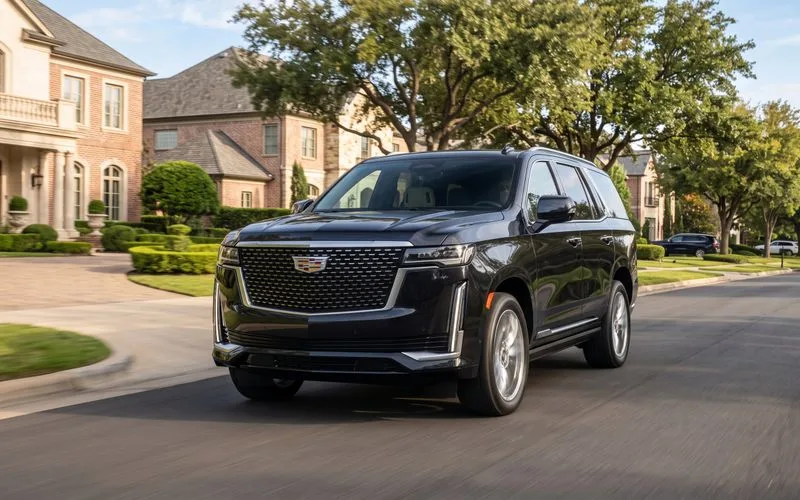 Cadillac EscaladeFull-Size Luxury SUVBetter at: Resale value
The direct rival holds its value far better and offers a much broader lineup, including a V8 and the supercharged Escalade-V.
Compare 2.92B-
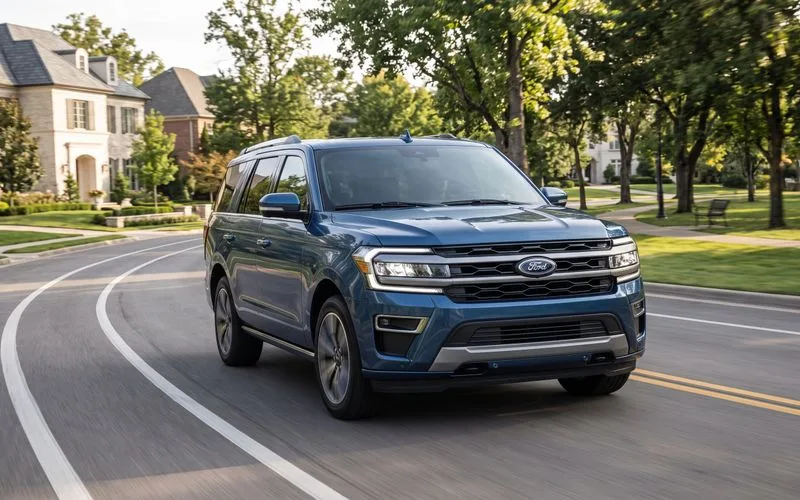 Ford ExpeditionFull-Size SUVBetter at: Value per dollar
Same platform, engine and third-row space for tens of thousands less, if you can live without the Lincoln materials and massage seats.
Compare 2.72B-
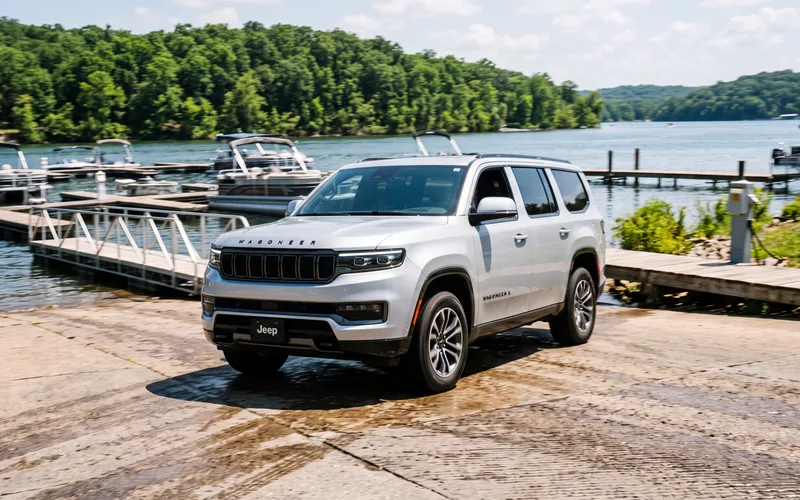 Jeep WagoneerFull-Size SUVBetter at: Price
Comparable size, seating and towing at a lower price, with a more rugged character than the Navigator's plush cruiser brief.
CompareHow it's evolved
10 scored model years · 2017–2026
Subject scores by year
Hover or tap a score to see what moved it versus the year before. A corner mark flags a big swing.
| Year | Performance | Efficiency | Safety | Space | Cost | Reliability | Tech | Use-case | Driving | Value |
|---|---|---|---|---|---|---|---|---|---|---|
| 2026 | 76 | 20 | 85 | 70 | 14 | 69 | 86 | 72 | 70 | 73 |
| 2025 | 74 | 20 | 79 | 82 | 16 | 60 | 82 | 71 | 65 | 73 |
| 2024 | 73 | 25 | 76 | 83 | 15 | 58 | 85 | 68 | 63 | 72 |
| 2023 | 74 | 25 | 75 | 84 | 15 | 60 | 85 | 69 | 65 | 74 |
| 2022 | 73 | 25 | 73 | 84 | 15 | 57 | 83 | 66 | 62 | 73 |
| 2021 | 73 | 19 | 66 | 82 | 15 | 54 | 70 | 65 | 60 | 70 |
| 2020 | 72 | 24 | 65 | 82 | 15 | 53 | 70 | 65 | 60 | 75 |
| 2019 | 73 | 24 | 61 | 84 | 15 | 60 | 68 | 64 | 60 | 74 |
| 2018 | 73 | 24 | 56 | 84 | 15 | 56 | 67 | 63 | 60 | 75 |
| 2017 | 63 | 25 | 42 | 74 | 14 | 54 | 45 | 58 | 53 | 58 |
Compare two years
Best fit & conditions
Higher scores mean a better fit for that use case. Learn more about use-case fit →
Subject profile
Detailed scoring by subject
1Performance & PowertrainGrades above the middle of the scale.3.00B
Every 2023 Navigator trim — Standard, Reserve and Black Label — uses the same twin-turbocharged 3.5L V6 rated 440 hp; there is no optional engine. The 2022 refresh restated output at 440 hp, down from the 450 hp quoted for 2018–2021, and 2023 carries that rating forward on every trim (Black Label was not rated higher, despite some 2022-era reporting to that effect). Rating is on premium fuel per SAE J1349.
510 lb-ft arriving at 3,000 rpm is at the top of the full-size SUV field and is what gives the Navigator its effortless low-rpm shove despite a curb weight near 6,000 lbs.
Edmunds recorded 5.6 seconds at its own test track on a 2023 car — roughly a second quicker than the Escalade it had most recently tested. MotorWeek timed a 2022 4x4 at 5.9 s and U.S. News quotes 6.1 s, so the volume Reserve realistically sits in the high-5s; the instrumented 2023 figure is used as the value.
The twin-turbo V6 is quiet, near-lag-free off the line and pulls hard through the midrange; reviewers consistently describe strong launches and ample passing power in a vehicle this size. It gives up the effortless character (and sound) of the Escalade's 6.2L V8, which keeps it out of the top band.
The 10-speed automatic is well sorted in this application — reviewers describe consistently smooth, well-timed shifts rather than the gear-hunting the same unit can show in lighter Ford products. No manual mode of real interest, and occasional hesitation choosing among ten ratios keeps it below the 90s.
Properly equipped with the Heavy-Duty Trailer Tow Package the standard-wheelbase 4x2 is rated at 8,700 lbs and the 4x4 at 8,300 lbs — near the top of the full-size luxury SUV class. The longer Navigator L drops to 8,400 (4x2) / 8,100 lbs (4x4), and without the package the rating falls to 6,200 lbs, which is the figure most spec listings quote.
4x4 is optional on Standard and Reserve and standard on Black Label, and it is a real two-speed system: a BorgWarner transfer case with a 2.64:1 low range plus selectable drive modes including Slippery, Deep Conditions and Slow Climb. Rear-wheel drive is still the base configuration — where full-size luxury rivals like the X7, GLS, LX and QX80 make all-wheel drive standard — which keeps it below the 80s.
9.6–9.7 in of ground clearance, a low-range transfer case and a Deep Conditions terrain mode give it genuine light-duty ability on snow, sand and unimproved roads, though the Slow Climb mode that engages 4x4 Low requires both 4x4 and the Heavy-Duty Trailer Tow Package. There is no locking differential, no skid plating, no off-road trim, and the volume car rides on 22-inch wheels with street tires — this is a snow-and-gravel SUV, not a trail vehicle.
One engine, one transmission, no electrification: every 2023 Navigator is the 440 hp 3.5L twin-turbo V6 with the 10-speed automatic. The only drivetrain choice is 4x2 versus 4x4. Rivals of the era offered V8s, a diesel (Escalade), hybrids or full EV siblings.
2Efficiency & RangeOne of the Navigator's weakest categories.0.00F
2023 is a carry-over year in the fourth generation (2018–2024): the 440-hp 3.5L twin-turbo V6 and 10-speed automatic are unchanged from the 2022 refresh, and so are the EPA ratings. Eighteen combined sits near the floor of the SUV band, which is what a body-on-frame full-size luxury SUV costs even with aluminum bodywork.
Auto stop-start and direct injection hold city economy at 16 MPG, a point behind the mechanically related Ford Expedition on the same 4x4 drivetrain — the Navigator carries more weight and a higher-output tune.
Twenty-two highway is the Navigator's best case and still sits near the bottom of the SUV band — the aluminum body helps, but frontal area and a 10-speed geared for a 8,700-lb tow rating cap it.
The large 23.6-gallon tank partly offsets the thirst, giving a mid-pack cruising range despite class-worst economy; the long-wheelbase Navigator L's 27.8-gallon tank stretches it past 500 miles.
At EPA's standard 15,000 mi/yr the Navigator burns roughly 830 gallons, putting annual fuel spend near the top of the SUV cost band — one of the most expensive vehicles in the catalog to feed, even on regular.
EPA classifies the Navigator as a regular-gasoline vehicle, so 87 octane is permitted and premium is not required — but Lincoln's advertised 440 hp / 510 lb-ft is quoted on 93 octane, and the engine pulls timing on 87, so owners chasing full output pay a premium-fuel penalty on an already large annual fuel bill. That is squarely the "recommended but not required" band. It sits below the mechanically related Ford Expedition (85) deliberately: Ford quotes the Expedition's lower-output tune of the same 3.5L on regular, so its rated power costs nothing extra at the pump.
3SafetyOne of the Navigator's strongest categories.3.09B
NHTSA has not run a frontal test on the Navigator since the 2022 facelift, so neither 2022 nor 2023 carries an overall star rating; the same fourth-generation body (U554, 2018–2024) earned a 5-star overall rating in every year it was fully tested, 2018 through 2021.
IIHS has never rated the fourth-generation Navigator — no ratings page exists for any year of it — and its structural twin the Ford Expedition, which shares the T3 platform, aluminum body, cabin and doors, posts Marginal in both small-overlap front tests and in the updated moderate-overlap test. Untested with well-documented structural concerns puts this in the bottom band, held a notch above the Expedition only because the Navigator's own results are unconfirmed rather than confirmed poor, and because the shared body's side and NHTSA frontal results are strong.
Lincoln Co-Pilot360 2.0 is standard on all three 2023 trims — base Standard included — bundling pre-collision assist with AEB and pedestrian detection, BLIS with cross-traffic alert, lane-keeping, auto high beams, full-speed intelligent adaptive cruise with stop-and-go and lane centering, speed sign recognition, evasive steering assist, intersection assist and a 360-degree camera. Nothing in the core suite is locked behind a trim walk, which is unusually generous for the full-size luxury class.
The Navigator has no IIHS front crash prevention rating; the mechanically identical Expedition, running the same Ford camera/radar AEB stack, rates only Marginal on the tougher vehicle-to-vehicle 2.0 evaluation while rating Good for pedestrian detection. Adequate real-world capability with a weak result on the current vehicle-to-vehicle protocol, helped slightly by the Navigator's standard intersection assist and evasive steering assist.
BLIS with cross-traffic alert is standard on every 2023 trim rather than optional, and trailer-aware blind-spot coverage is available with the trailer tow package — appropriate for an 8,000+ lb tow rating. Coverage is alert-based rather than steering-intervening, and there is no safe-exit alert for rear passengers, which keeps it at the bottom of the top band.
Lane-keeping is standard and lane centering arrives standard bundled with the intelligent adaptive cruise, so the volume Reserve buyer gets full functionality. Raised from the prior score because the centering behavior is materially better on the 2023 than on the 2022 it was judged against — a reviewer who found the earlier car cutting in and out repeatedly reported the 2023 Reserve holding lane without fault — though it still gives up ground in construction zones and unclear lane markings.
Full-speed-range intelligent adaptive cruise with stop-and-go, lane centering and speed sign recognition is standard on every trim including the base — unusual generosity in the full-size luxury class. Raised because the 2023-specific road tests found the combined highway-assist stack reliable rather than intervention-prone; it stays short of the top of the band only because it cannot reposition within the lane or handle a lane change, both of which arrived in the newer software the 2023 Navigator did not get.
ActiveGlide, Lincoln's BlueCruise-derived hands-free system, is standard on Reserve and Black Label and optional on the base Standard trim, covering roughly 130,000 miles of prequalified divided highway with a driver-attention camera rather than a hands-on-wheel requirement. It is the earlier version, though: the 2023 Navigator shipped without hands-free lane change, predictive speed assist or in-lane repositioning, all of which arrived in the 1.2 software that debuted on the 2023 Corsair and Mustang Mach-E instead. Capable and broadly available, but a step behind the mature systems.
No IIHS headlight rating exists for the Navigator. Raised because the adaptive hardware turns out to be broader than previously credited: projector-beam LED lamps with auto-leveling, directionally adaptive (bending) function and auto high beam are listed across the 2023 range rather than only on Black Label, which is materially better equipment than the Marginal-rated Expedition lamp. Held mid-band because the performance is entirely unverified by any independent test and owners report the bending function behaving inconsistently in practice.
Tall seating position, deep side glass and a large greenhouse give genuinely good sightlines for a vehicle this size, and the standard 360-degree camera with front and rear parking sensors compensates well in tight spaces. Thick windshield pillars create a real forward blind zone, and the sheer length still demands the cameras when parking.
Cars.com's car-seat check graded the 2023 Navigator A for LATCH access in both the second and third rows and A for third-row access, with anchors easy to find and use throughout and power running boards easing the step-in height for children. Two real limits keep it out of the top of the band: the captain's-chair layout cannot take three car seats across, and fixed third-row head restraints interfere with booster fit back there.
4Space & ComfortOne of the Navigator's strongest categories.3.74A
2023 Navigator (4th gen, carry-over from the 2022 refresh) seats seven as delivered on the volume Reserve trim via second-row captain's chairs; the 40/20/40 second-row bench is the alternate configuration and raises it to eight.
Published 2023 Navigator first-row headroom, unchanged from the 2022 refresh; among the most generous in the full-size luxury class and only 0.2 in behind its Expedition platform-mate.
First-row legroom of 43.9 in on the standard-wheelbase 2023 Navigator — near the top of the SUV band, though short of the Escalade's 45.2 in.
Second-row headroom of 40.0 in tops the SUV normalization band, helped by the boxy T3-platform roofline.
The power tilt-and-slide second row gives up to 42.3 in of legroom, above the top of the SUV band and well clear of the Escalade's 41.7 in; the Navigator's sliding bench also beats the fixed 41.5 in of its Expedition platform-mate.
One of the few three-row SUVs whose rearmost bench genuinely fits adults — 40.9 in of third-row legroom and 37.3 in of headroom, power-folding, with its own vents and USB ports and a power tilt/slide second row for access. Trimmed slightly from the prior pass to sit level with the mechanically identical 2024 car and to account for a load floor that sits high enough to leave knees raised.
57.5 cu ft behind the second row with the third row folded on the standard wheelbase — mid-pack, and the weakest measured dimension here: the Escalade SWB offers 72.9 cu ft. The sliding second row yields 63.6 cu ft pushed fully forward, but that trades away the second-row legroom scored above.
103.3 cu ft with both rear rows folded clears the top of the SUV band; the power-folding second and third rows leave a near-flat floor.
Generous conventional storage — large floating center console with wireless charging pad and covered bin, deep door pockets, six USB ports, power-folding rear rows for a flat load floor — but nothing like a Ford Flex-style powered console or an in-floor bin to distinguish it, and the 4th gen has no split-gate or cargo tailgate manager (both arrive with the 2025 redesign).
24-way Perfect Position front seats standard on the volume Reserve (30-way with Active Motion massage on Black Label), with heated and ventilated first and second rows standard; reviewers rate them among the best long-haul seats in the class, with the caveat that dialing in the adjustment is fiddly.
Adaptive suspension with camera-based Road Preview is standard and soaks up sharp impacts well, but road tests split on body control — Normal mode is criticized as alternately jittery and wallowy, with Excite mode needed to settle it. Aligned down two points to match the mechanically identical 2024 car.
Enhanced Active Noise Control, acoustic laminated door glass and extensive sound deadening make it one of the quieter full-size SUVs at highway speed; graded on reviewer consensus rather than instrumented dBA data, which is why this is not scored higher.
Comfort equipment is close to fully standard on the volume Reserve: tri-zone automatic climate with rear auxiliary controls and vents, heated and ventilated first AND second rows, heated steering wheel, panoramic Vista Roof with power shade, remote start and wireless charging. Held just below the top of the band because the massaging seats remain a Black Label/option item.
5Cost of OwnershipThe Navigator's lowest-graded category.0.00F
The 2023 Navigator opens at $79,725 for the Standard in rear-drive, and Lincoln's $1,895 destination charge brings the entry price to $81,620 — far above the $25,000–$65,000 SUV band, so this item bottoms out.
Reserve is the volume trim of the 2023 Navigator, and in the four-wheel-drive configuration most buyers choose it lists at $94,635 plus $1,895 destination = $96,530 — roughly $29,000 past the top of the $27,000–$68,000 SUV band.
Raised from the previous $7,200 estimate after retrieving Edmunds' full True Cost to Own split for the 2023 Navigator — $8,713 maintenance on top of $4,517 repairs, roughly triple CarEdge's $4,380 — so the blend now leans toward the source that actually prices the tires, brakes and battery a 6,000-lb luxury SUV on 22-inch rubber consumes.
The Navigator is one of the fastest-depreciating full-size luxury SUVs, and 2023 cars carry the extra handicap of a fifth-generation redesign landing for 2025. Three-year market data — a real figure now, not a projection — supports a low-40s five-year number.
Lincoln's New Vehicle Limited Warranty runs 4 years or 50,000 miles, a year longer than the mainstream Ford coverage and mid-pack among luxury rivals.
Powertrain coverage is 6 years or 70,000 miles — adequate but near the bottom of the 5–10 year band, and the 70,000-mile cap will expire before the sixth year for most full-size SUV owners.
Lincoln includes no complimentary scheduled maintenance — no free oil changes at any point — which caps this below the top band, but the perks that are included are unusually substantive: Pickup & Delivery with a Lincoln loaner for the whole 4-year/50,000-mile warranty period, 24/7 roadside assistance, and a 3-year ActiveGlide connected-service plan on the Reserve volume trim. Aligned with the identically-equipped 2024 Navigator (66), which the previous 64 understated for no year-specific reason.
$96,530 volume-trim price minus its estimated resale value after 5 years (42% retained, or about $40,543) leaves about $55,987 in depreciation. Add the projected $8,200 in 5-year maintenance and repairs, and owning this vehicle for 5 years costs about $64,187 in total.
6Reliability & QualityOne of the Navigator's weakest categories.2.07C
Signals are genuinely mixed: 2023 is the cleanest year of the fourth generation by owner-complaint volume, but it sits under a brand whose dependability scores remain below the industry average, and the complaints that do exist cluster in electrical/infotainment.
Lincoln has been consistently below the industry dependability average for several study cycles, but is improving faster than almost any other brand and is no longer a bottom-third name — mid-pack with an upward trend.
Eight NHTSA recalls against this model year, six of them substantive and several touching safety systems — a fracturing front axle pinion, brake lines that can be damaged by contact with engine components, and two separate rearview-camera software campaigns. TSB activity concentrates on the SYNC screen blacking out.
The 3.5L twin-turbo EcoBoost V6 and 10R80 ten-speed are a very high-volume, well-understood Ford family shared with the F-150 and Expedition — parts and know-how are everywhere — but the combination carries documented weak points rather than a clean high-mileage record, and powertrain was the single largest complaint area on the 2018-21 Navigators.
One of the strongest cabins in the full-size luxury class for the money — genuine open-pore wood, real leather across trims, and satin-nickel switchgear — with Black Label pushing into genuinely bespoke territory. It falls short of class-leading only where Ford-parts-bin switchgear and lower-cabin hard plastics show through.
Assembly quality reads as solid — tight panel gaps and consistent detailing are called out repeatedly in reviews — but scattered owner reports of screen blackouts, running-board misbehavior and window faults keep it out of the top band, and Lincoln's below-average dependability standing reflects the same electronics-side complaints.
Coverage is adequate rather than dense and was actively shrinking around this model year, which can mean a long drive in rural markets — but most Lincoln stores sit alongside Ford service operations, and complimentary Pickup & Delivery with a loaner removes the trip entirely for in-warranty owners.
Mechanically it is an Expedition/F-150 underneath, so hard parts and independent-shop expertise are abundant and cheap by luxury standards — but the Lincoln-specific content (air suspension, power running boards, 30-way seats, 22-inch tires, the big displays) is dealer-priced, and measured annual repair spend lands in the expensive tier.
7Technology & InfotainmentThe Navigator's best-graded category.3.80A
The 2022 refresh of the fourth-generation Navigator replaced the 10-inch screen with a 13.2-inch SYNC 4 center touchscreen, standard on every 2023 trim including the base Standard.
SYNC 4 on the 13.2-inch screen is one of the better-regarded systems of its era — reviewers cite reduced lag versus the outgoing SYNC 3 setup, a logical card-based layout, and retained physical volume and climate controls beneath the display. It falls short of the very best (BMW iDrive 8, Escalade's OLED array) mainly on graphical polish rather than usability.
Wireless Apple CarPlay and wireless Android Auto are both standard on all three 2023 trims (Standard, Reserve, Black Label) as part of SYNC 4, with no upcharge or trim gating.
SYNC 4's enhanced conversational voice recognition plus Alexa Built-in handles natural phrasing well, and connected cloud-based navigation with live traffic is standard on every 2023 trim rather than an option — unusual for the era.
A 14-speaker Revel premium system is the standard fitment, and the available Revel Ultima 3D setup runs 28 speakers with QuantumLogic Surround 3D and three listening modes — among the most ambitious factory audio systems offered in 2023 and a genuine class benchmark alongside Escalade's AKG.
A 12.0-inch fully digital, reconfigurable cluster is standard on all 2023 trims with Lincoln's animated Constellation drive-mode themes; it is crisp and well-executed, if smaller and less configurable than the widescreen units in the X7 and Escalade.
The 2022 refresh brought Lincoln Enhance over-the-air updates covering vehicle modules, not just maps — ActiveGlide 1.2 was delivered to existing vehicles this way. Scope and cadence remain well behind Tesla/Rivian, and owner forums show updates arriving slowly and unevenly.
The Lincoln Way app covers remote start and climate, lock/unlock, vehicle locate and status, and scheduled starts, with Phone As A Key digital key standard — a full feature set included with the connected-services trial. Points off for well-documented app reliability and connection complaints rather than missing functions.
A wireless charging pad is standard on every 2023 trim, with a mix of USB-A and USB-C outlets distributed across all three rows plus a household-style AC outlet — generous provisioning, though the mix still includes legacy USB-A rather than being fully USB-C.
Proximity entry, push-button start, remote start, the door-mounted keypad, a hands-free power liftgate and power running boards are all standard, and Phone As A Key lets a smartphone replace the fob outright on every trim — a complete keyless package with nothing gated to upper trims.
A 360-degree surround-view camera with front and rear parking sensors and reverse brake assist is standard on every 2023 trim as part of Lincoln Co-Pilot360 2.0 — important on a vehicle this size. Held below 90 because Active Park Assist 2.0 was widely deleted from 2022–2023 builds during the semiconductor shortage, so many cars lack the parking automation the brochure lists.
A large color head-up display is standard equipment on the Reserve — the volume trim — and on Black Label, and it is one of the bigger, more legible HUDs on the market. Only the base Standard trim goes without.
8Use-Case FitMid-pack among this car's ten categories.2.64C+
Cars.com's car-seat check found every anchor easy to locate and use: lower LATCH in both second-row captain's chairs, two more sets in the outboard third row and three third-row top tethers. Huge square door openings, standard power-deployable running boards (a real help for kids climbing into a 76-in-tall SUV), a standard hands-free power liftgate, power-folding rear rows and a wide captain's-chair pass-through make daily loading straightforward. Held out of the top band because the standard captain's-chair layout cannot take three car seats across — the no-cost 40/20/40 bench is the fix — and 210 in of length makes curbside loading a project.
Lincoln Co-Pilot360 2.0 is standard on all three trims including the base Standard — AEB with pedestrian detection, BLIS with cross-traffic alert, lane keeping and centering, full-speed adaptive cruise with stop-and-go, evasive steering, intersection assist and a 360-degree camera — so nothing families rely on is behind a trim walk. The crashworthiness side is the problem: NHTSA never ran a frontal test after the 2022 facelift, so 2023 carries no overall star rating, and IIHS has never rated the Navigator at all, while its structural twin the Expedition posts Marginal in both small-overlap tests and in the updated moderate-overlap test. Strong active safety on unconfirmed passive-safety credentials, at an $81,620 entry price where 'affordable trims' does not apply.
Close to the segment benchmark for multi-row long-haul duty: tri-zone automatic climate, heated AND ventilated first and second rows standard, heated steering wheel, panoramic Vista Roof with power shade, a 5.8-in rear-console touchscreen on the volume Reserve so kids manage their own climate and audio, six USB ports, the optional Lincoln Play rear-seat entertainment system, a 14-speaker Revel audio system and a third row with 37.3 in of headroom and 40.9 in of legroom that reviewers call genuinely adult-grade. The one real limit is luggage with all three rows occupied — 19.3–20.9 cu ft behind the third row on the standard wheelbase — and for 2023 the long-bodied L that fixes it is no longer offered on the base trim.
The 440 hp twin-turbo V6 and 10-speed automatic make effortless, near-lag-free progress in traffic, the cabin is one of the quieter ones in the class, and the volume Reserve's standard 24-way Perfect Position seats, head-up display and ActiveGlide hands-free highway driving genuinely cut commute fatigue. Working against it: roughly 5,900 lbs on a 210-in body-on-frame chassis, and reviewers found the adaptive suspension in Normal mode alternately 'firm and jittery like a pickup truck or soft and wallowy,' needing Excite mode to settle — low-speed polish is the weak spot, not power.
18 MPG combined on the 4x4 (19 on the 4x2) puts the annual fuel bill near $3,400 at EPA's 15,000 mi/yr, and while EPA classifies it as a regular-gas vehicle, Lincoln rates the full 440 hp on premium so owners chasing the advertised output pay more still. Consumables match: 22-inch tires, luxury-dealer labor with no complimentary scheduled maintenance, roughly $7,200 in five-year maintenance and repairs, and insurance running near $3,000–$4,400/yr. There is no hybrid or EV variant to pull a lever on — this is one of the most expensive vehicles in the catalog to commute in.
210 in long, 80 in wide and a 41.0-ft curb-to-curb turning circle (43.3 ft on Black Label's larger wheels) make this genuinely oversized for city parking and older garages — reviewers report hunting for spaces and struggling in narrow drive-thrus. It parks better than its dimensions suggest thanks to a 360-degree camera with front and rear sensors and reverse brake assist standard on every trim, plus a tall seating position and deep glass. The year-specific demerit is that Active Park Assist 2.0 was dropped from 2022–2023 builds in the chip shortage and is not even listed as an option for 2023, so the self-parking crutch the later cars get is absent.
Properly equipped with the Heavy-Duty Trailer Tow Package it pulls 8,700 lbs in 4x2 and 8,300 lbs in 4x4 — top of the full-size luxury class — behind 440 hp and 510 lb-ft on a body-on-frame chassis shared with the Expedition, with a two-speed transfer case, Slow Climb mode and a trailer brake controller to manage a load. What keeps it out of the serious-work band: payload is only about 1,400–1,700 lbs, there is no bed, the volume car rides on 22-inch street wheels, and without the HD tow package the rating drops to 6,200 lbs — which is how most of them leave the lot.
Mechanically this is an Expedition/F-150 underneath — the 3.5L twin-turbo EcoBoost and 10R80 ten-speed are deployed by the million, so parts, know-how and independent-shop support are everywhere. But the 2023 model year carries eight NHTSA recalls, six substantive, including a fracturing front axle pinion and brake lines that can be damaged by contact with engine components — both directly relevant to loaded or towing duty — on top of documented EcoBoost intercooler-condensation and carbon-buildup complaints. The luxury fitment compounds it: real open-pore wood, leather across every trim, air suspension, power running boards and 22-inch tires all make hard use expensive to repair.
The trailering half is well covered — the Heavy-Duty Trailer Tow Package brings a trailer brake controller and Pro Trailer Backup Assist, trailer-aware blind-spot coverage is available, and there is a 110V/150W household outlet plus USB ports across all three rows for tools and devices. Everything else argues against jobsite duty: no bed, no washable surfaces anywhere (leather, carpet and open-pore wood), only an accessory roof rack rather than a rated work rail system, and no factory upfit ecosystem — Ford Pro's fleet catalog targets the Expedition and F-150, not the Navigator.
This is what the Navigator is built for. The volume Reserve gets 24-way Perfect Position front seats with heating and ventilation (30-way with Active Motion massage on Black Label), heated and ventilated second-row captain's chairs, active noise control with acoustic laminated glass in a cabin reviewers call 'super quiet,' adaptive suspension with camera-based Road Preview, a large standard head-up display and ActiveGlide hands-free driving over roughly 130,000 miles of prequalified highway. Range is a strength for a gas full-sizer: about 425 miles on the 4x4's 23.6-gal tank, 448 on the 4x2 and near 500 on the L's 27.8-gal tank. Short of perfect only because ActiveGlide 1.2 has no automatic lane change, drops out on manual passes, and its lane centering needed frequent intervention through curves and construction.
As a tow-the-toys and reach-the-trailhead vehicle it is genuinely capable: an available two-speed 4x4 with 2.64:1 low range, Slippery, Deep Conditions and Slow Climb drive modes, 9.6–9.7 in of ground clearance, 8,700 lbs of towing for a boat or camper, an accessory roof rack for boxes and bikes, and a 110V outlet for camp gear. It is not an off-roader — no locking differential, no skid plating, no off-road trim, and the volume car wears 22-inch street tires, with one reviewer flatly noting 'you're unlikely to enjoy off-roading in this SUV.' It also loses ground to the later cars because 4x4 is optional on Standard and Reserve for 2023 rather than standard equipment.
With the power-folding second and third rows dropped it swallows 103.3 cu ft on a near-flat floor (120.2 cu ft on the L), 57.5 cu ft behind the second row, through a wide square opening served by a standard hands-free liftgate, with an accessory roof rack and a factory hitch rated to 8,700 lbs for anything that will not fit inside. The catch is the configuration families actually travel in: 19.3–20.9 cu ft behind the third row is thin for the segment against the Escalade's 25.5, and for 2023 the long-bodied L that resolves it is restricted to Reserve and Black Label. No signature trick either — no underfloor cargo well, no fold-flat rear window like the Expedition's.
9Driving ExperienceMid-pack among this car's ten categories.2.42C+
Composed and remarkably well-tied-down for a ~6,000 lb body-on-frame SUV — the camera-scanning adaptive suspension keeps body roll checked — but grip is modest and reviewers split on damping, with the standard 22-inch wheels producing wallowy or jittery ride motions in Normal mode. Secure rather than agile.
Accurate and easy to place for something this large, but light-effort and largely numb — precise enough to be effortless, not communicative enough to be involving.
Stopping power is adequate for the class and the pedal is progressive in normal use, but the mass tells: a long measured stop, and testers found the pedal went soft with reduced bite during sustained downhill work — the weakest link in an otherwise polished chassis.
The 440 hp/510 lb-ft twin-turbo 3.5L V6 delivers effortless, immediate thrust with little perceptible lag, and the 10-speed automatic is unusually well-calibrated for the application — a genuine strength of the car and quicker than most rivals of this size.
One of the quietest cabins in the segment — extensive isolation and active noise control keep the V6 distant at cruise, and it takes on a pleasing note under load rather than droning. Falls just short of the very best only because a turbo V6 lacks the V8 character rivals trade on.
41.0 ft curb-to-curb on the 122.5-in-wheelbase Navigator — near the wide end of the SUV band and a real liability in parking structures and tight urban maneuvering, which reviewers flag even with the full camera suite.
Commanding sightlines, an exceptional range of seat adjustment, and a 13.2-inch center screen that retains physical shortcuts make it easy to get comfortable. Held back by sheer bulk — placing the corners in tight spaces is work despite the camera coverage — and the dash-mounted piano-key shifter takes acclimatization.
Satisfying in a serene, big-mile way — the effortless torque, hushed cabin and sense of occasion make it a pleasure on the open road — but numb steering and its sheer size mean nobody drives it for the corners. Pleasant, not enthusiast-recommended.
10Value & Market PositionGrades above the middle of the scale.2.99B-
The $79,725 base Standard trim already carries a 13.2-inch Sync 4 touchscreen with navigation and wireless CarPlay/Android Auto, a 14-speaker Revel audio system, wireless charging, and the full Lincoln Co-Pilot360 2.0 suite (adaptive cruise with lane centering, 360-degree camera, blind-spot monitor, front and reverse AEB with pedestrian detection, intersection assist, evasive steering assist, parking sensors) plus a 90-day ActiveGlide hands-free trial. German rivals at the same price charge extra for navigation, premium audio and most of that driver-assist content.
At Escalade/X7 money the Navigator delivers 440 hp, 510 lb-ft, up to 8,700 lb of towing, eight seats and a genuinely first-class cabin, and reviewers consistently rate the content-for-price highly. Working against it are heavy fuel consumption and resale that trails the class — 55.9% five-year depreciation versus 54.3% for luxury large SUVs — so the sticker advantage is partly given back at trade-in.
Three well-spaced trims spanning $79,725 to $109,255 with RWD or 4WD on Standard and Reserve, plus the long-wheelbase L body — but 2023 narrowed the lineup by deleting the base Navigator L, leaving the stretched car in Reserve and Black Label only, and there is a single powertrain with no engine choice. The Escalade offers roughly twice the trim count plus a diesel alternative.
Calendar 2023 was a strong year in trajectory terms — 17,549 units, up about 33% — and the Navigator held second place in the full-size luxury SUV segment. In absolute volume it remains a distant runner-up: the Escalade family moved 10,206 units in Q4 2023 alone against the Navigator duo's 4,164, and Q4 growth of 3% trailed the segment's 8%.
Lincoln sits mid-pack among premium brands — fifth in the 2023 J.D. Power APEAL study — and lacks the badge pull of Cadillac's Escalade or the German marques, which shows up in above-average depreciation. The Navigator itself is the brand's halo and its strongest image asset, historically an APEAL segment topper and the vehicle that won Lincoln its first NACTOY Truck of the Year in 2018.
By 2023 the pandemic-era markups had faded and the Navigator was routinely discounted: roughly $1,000 in customer cash plus subsidized financing in the 5.9–6.9% range on a market-by-market basis, with average transaction data showing buyers paying under invoice. Solid negotiability that helps buyers without signaling distress pricing.
2023 is a carry-over year — changes were limited to colors, the deletion of the base L and a price rise — but it sits only one year after the substantial 2022 refresh that brought the 13.2-inch screen and ActiveGlide hands-free driving, so the tech is current. The underlying fourth-generation T3 platform dates to 2018 and the fifth-generation replacement was revealed in August 2024, making this the back half of the cycle.
Reviews are broadly warm — Kelley Blue Book named it the best luxury full-size SUV of 2023 with a 4.6/5 expert rating, and Edmunds called it 'Lincoln at its best' — and it earned Vincentric's 2024 Best CPO Value in the large luxury SUV class. It is not a habitual comparison-test winner though: Consumer Reports flagged heavy fuel use and cumbersome handling, and The Car Connection scored it a middling 7.2, with the Escalade usually taking the head-to-heads.