

The verdict
A capable full-size luxury suv, strong on technology and held back by ownership.
The all-new 2025 Navigator is one of the most comfortable, best-equipped three-row SUVs you can buy — a whisper-quiet cabin with a 48-inch dashboard display, a 28-speaker Revel Ultima stereo, hands-free BlueCruise highway driving and massaging seats, all standard on the entry Reserve. What it asks in return is money: Lincoln killed the cheap trims, so the cheapest Navigator now costs $101,990 delivered, it drinks 17 MPG combined ($3,600 a year in fuel), and it is projected to keep only about 40% of its value after five years — roughly $69,000 gone in five years of ownership. It is also a first-year design with six recalls already on file and no published reliability data yet. Buy it for the road-trip comfort and the standard equipment; go in clear-eyed about the running costs and the launch-year risk.
Jump to scoresStrengths
- A genuinely serene cabin over long distances
- Real space in all three rows, plus room for the luggage
- The screen-and-sound package is the segment's best
What holds it back
- It is expensive to fuel — genuinely, punishingly so
- Six figures to buy, and it sheds value fast
- First-year unknowns and a busy recall record
Top alternatives
Cars shoppers cross-shop with the Lincoln Navigator 3.16B
3.16B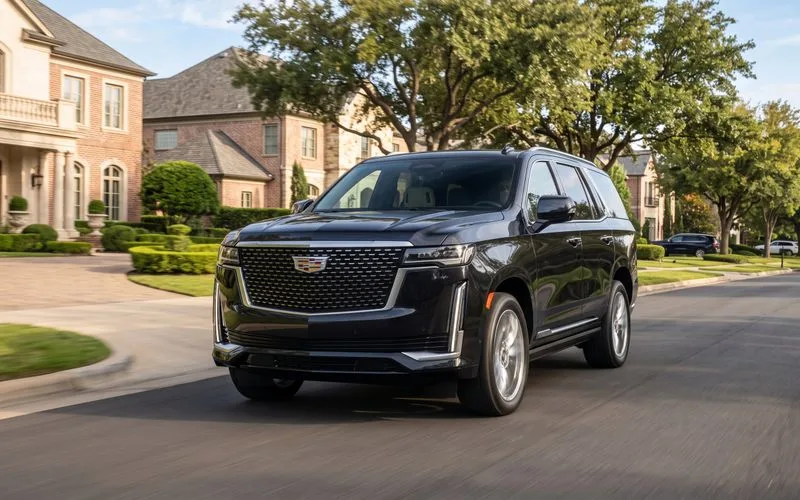 Cadillac EscaladeFull-Size Luxury SUVBetter at: Resale value
The direct rival holds its value far better and offers a much broader lineup, including a V8 and the supercharged Escalade-V.
Compare 2.92B-
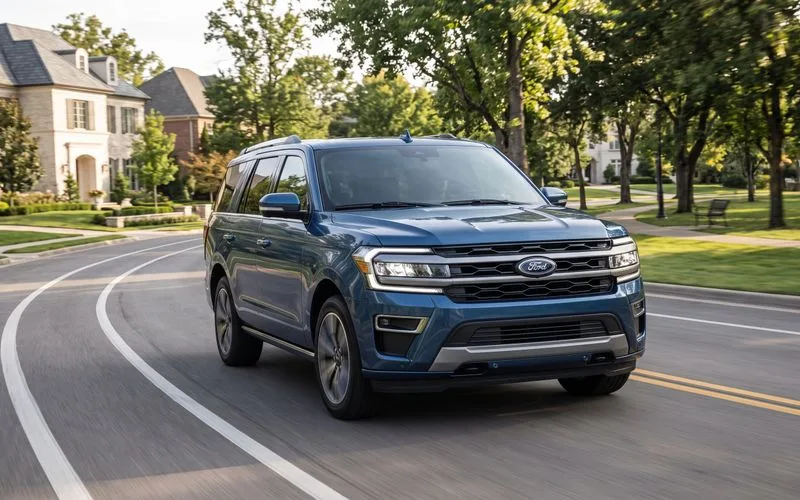 Ford ExpeditionFull-Size SUVBetter at: Value per dollar
Same platform, engine and third-row space for tens of thousands less, if you can live without the Lincoln materials and massage seats.
Compare 2.72B-
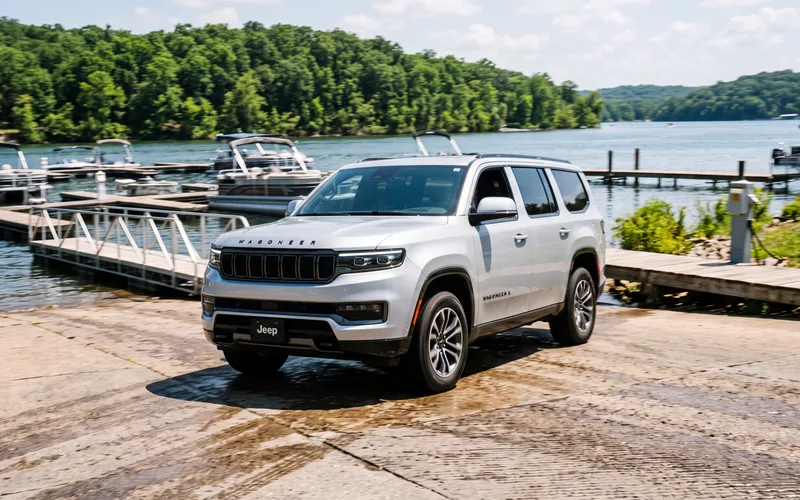 Jeep WagoneerFull-Size SUVBetter at: Price
Comparable size, seating and towing at a lower price, with a more rugged character than the Navigator's plush cruiser brief.
CompareHow it's evolved
10 scored model years · 2017–2026
Subject scores by year
Hover or tap a score to see what moved it versus the year before. A corner mark flags a big swing.
| Year | Performance | Efficiency | Safety | Space | Cost | Reliability | Tech | Use-case | Driving | Value |
|---|---|---|---|---|---|---|---|---|---|---|
| 2026 | 76 | 20 | 85 | 70 | 14 | 69 | 86 | 72 | 70 | 73 |
| 2025 | 74 | 20 | 79 | 82 | 16 | 60 | 82 | 71 | 65 | 73 |
| 2024 | 73 | 25 | 76 | 83 | 15 | 58 | 85 | 68 | 63 | 72 |
| 2023 | 74 | 25 | 75 | 84 | 15 | 60 | 85 | 69 | 65 | 74 |
| 2022 | 73 | 25 | 73 | 84 | 15 | 57 | 83 | 66 | 62 | 73 |
| 2021 | 73 | 19 | 66 | 82 | 15 | 54 | 70 | 65 | 60 | 70 |
| 2020 | 72 | 24 | 65 | 82 | 15 | 53 | 70 | 65 | 60 | 75 |
| 2019 | 73 | 24 | 61 | 84 | 15 | 60 | 68 | 64 | 60 | 74 |
| 2018 | 73 | 24 | 56 | 84 | 15 | 56 | 67 | 63 | 60 | 75 |
| 2017 | 63 | 25 | 42 | 74 | 14 | 54 | 45 | 58 | 53 | 58 |
Compare two years
Best fit & conditions
Higher scores mean a better fit for that use case. Learn more about use-case fit →
Subject profile
Detailed scoring by subject
1Performance & PowertrainGrades above the middle of the scale.3.00B
The all-new fifth-generation 2025 Navigator carries over the twin-turbocharged 3.5-liter V6 as the sole engine, rated 440 hp on premium fuel across all three trims — a step down from the 450 hp the fourth generation made, so the figure is not a carry-forward.
Peak torque of 510 lb-ft arrives at a low 3,000 rpm, above the top of the SUV normalization band and the reason the Navigator feels effortless despite a 5,929–6,044 lb curb weight.
Three independent instrumented tests of the 2025 Navigator bracket 5.1–5.5 seconds and 5.3 s is the median of that cluster. The heaviest trim posted the quickest run, so the spread reflects test conditions rather than trim weight; re-checking the sources this run turned up no fourth instrumented test to shift the median, and Lincoln publishes no official 0–60 claim.
The twin-turbo V6 delivers strong, quiet thrust with ample passing reserve and reviewers report it pulling hard across the rev range with no notable turbo lag once moving — but the drivetrain as a whole still hesitates a beat before answering a sudden request at low city speeds, which holds it in the upper half of the 50–79 band rather than the seamless top tier.
Reviewers split on the 10-speed SelectShift: it cruises imperceptibly and draws praise as Lincoln's best calibration of the unit, but multiple independent 2025 test drives flag it as slow to downshift when asked for a burst of acceleration at city speeds — a recurring complaint rather than a one-off, and the main thing keeping a six-figure luxury SUV out of the 80+ band.
Properly equipped with the Heavy Duty Trailer Tow Package the Navigator tows 8,700 lbs in either wheelbase, dropping to 8,500/8,400 lbs on the 24-inch wheels — at or above the top of the SUV band. The package is a $570 option on the volume Reserve trim and standard on Black Label, so the headline rating is genuinely attainable rather than a top-trim-only figure.
Four-wheel drive is standard on every 2025 trim — the fifth generation dropped the former rear-drive configuration entirely, unlike the Escalade, which still starts as a rear-driver — and is backed by Lincoln Drive Modes including Deep Conditions and Slippery. A two-speed transfer case with low range is available but bundled inside the Heavy Duty Trailer Tow Package rather than standard, which is why it lands below the LX/Range Rover tier.
Pavement-oriented despite body-on-frame construction: the manufacturer's own geometry is modest — 8.9 in running clearance with a 19.3-degree approach and 19.4-degree breakover angle — and there are no skid plates, no locking differential and no off-road trim (the mechanically related Expedition offers a Timberline; the Navigator has no equivalent), with low-range gearing available only inside an option package and 24-inch wheels newly offered on a chassis tuned for ride comfort. Deep Conditions and Slow Climb give it genuine light-duty ability, but it is nowhere near a Defender or GX.
A single powertrain for the entire model line — the 440-hp twin-turbo 3.5L V6 with the 10-speed automatic — with no hybrid, PHEV or EV variant on any of the three trims, while the rival Escalade offers a diesel, a V8, a high-output V-Series and a separate electric Escalade IQ.
2Efficiency & RangeOne of the Navigator's weakest categories.0.00F
The all-new fifth-generation 2025 Navigator carries the twin-turbo 3.5L EcoBoost V6 over unchanged but is rated 17 MPG combined against the 2024 car's 18 — a one-MPG drop on the same 4WD drivetrain, so the heavier, larger new body pays for its own reinvention. That lands just above the floor of the SUV band, which spans every body size from subcompact up, though it still beats the V8 Escalade and QX80.
15 MPG city for a 5,929-lb body-on-frame full-size SUV with standard four-wheel drive; Auto Start-Stop is standard but does little against the mass, and the figure sits one MPG above the floor of the SUV city band. It is also where the fifth generation lost its MPG to the fourth — the 2024 car managed 16.
22 MPG highway is where the turbocharged V6 makes its case against V8 rivals — a light-throttle cruise keeps the turbos out of it — and it is the one EPA figure the fifth generation held flat against 2024. Still bottom-quartile for the SUV band.
A large 23.6-gallon tank rescues what the MPG figure gives away: 401 miles of EPA range is mid-pack for the SUV band despite bottom-of-class economy, and the long-wheelbase Navigator L's 27.8-gallon tank stretches it to roughly 473 miles. Range is the one efficiency measure the Navigator does not lose on — though the MPG drop still costs it 24 miles against the 2024 car's 425.
At EPA's standard assumptions the Navigator costs $3,600 a year to fuel — exactly the top of the SUV cost band, so the item bottoms out — and EPA flags it as $7,000 worse than an average new vehicle across five years. Filling premium, which Lincoln recommends for the advertised output, pushes the real figure higher still.
Premium recommended but not required — the middle of the guidance band. The EPA classifies the Navigator as a regular-gasoline vehicle and Ford's own 3.5L EcoBoost fuel-quality documentation sets a minimum of 87 octane, so owners can legitimately run regular; but Lincoln quotes the 440 hp / 510 lb-ft ratings on 91-octane premium, and the manual notes the premium benefit is most noticeable in heat and while towing — precisely how a full-size luxury SUV gets used. No flex-fuel capability and no plug, so there is no cheaper energy path.
3SafetyOne of the Navigator's strongest categories.3.34B+
NHTSA tested the redesigned 5th-generation 2025 Navigator (SUV 4WD) and awarded 5 stars overall, with 5 stars in both frontal and side crash and 3 stars for rollover (20.4% rollover risk) — a typical rollover result for a body-on-frame full-size SUV. Re-verified against the NHTSA API this run; ratings are unchanged.
Lowered into the 'untested with known concerns' band this run on new structural evidence the previous score did not have. IIHS still publishes nothing for the Navigator — no page for 2025 or 2026 and no award — but its platform twin now supplies a direct read: the Ford Expedition, which shares the T3 body-on-frame architecture and basic dimensions, rates Marginal in small overlap front and Marginal in the updated moderate overlap front, and IIHS applies those results to 2023-26 models while noting the structure dates to the 2018 redesign. In other words IIHS treats the 2025 update as a facelift over an unchanged structure — the same structure the Navigator carries. The failure modes were structural, not incidental (A-pillar separating from the rocker panel on both sides, steering column partially detaching, footwell intrusion posing high leg-injury risk), and IIHS said the Expedition performed worse than 90% of new vehicles in small overlap. Add the passenger-airbag recall (25V439000, excessive deployment force) and this is untested with a documented, specific concern rather than merely unproven. It stays at the top of the band rather than lower because the Navigator itself is not the tested vehicle — Lincoln's structure forward of the windshield differs — and NHTSA's own 5-star frontal and side results on this exact vehicle are real, directly-measured counter-evidence.
Lincoln Co-Pilot360 Drive 2.0 is standard on both 2025 trims (Reserve and Black Label — there is no stripped base model): AEB with pedestrian detection, forward and reverse automatic emergency braking, adaptive cruise with stop-and-go and Predictive Speed Assist, lane centering, lane keeping with road-edge detection, blind-spot detection and assist, cross-traffic alert with trailer coverage, evasive steer assist and Intersection Assist, plus a 360-degree camera and park assist. BlueCruise hands-free is standard as well. Nothing meaningful in the safety suite is optional or trim-locked. Held at 92: this item measures what is standard on the volume trim, and the fitment breadth is unaffected by the reliability problems scored under 3.2.2-3.2.4.
Raised this run because measured performance for this sensor stack was located, which the previous score had assumed did not exist. IIHS rates the pedestrian front crash prevention system on the sibling 2025 Lincoln Aviator — the same Co-Pilot360 generation — as Good, with collisions avoided in the crossing-child tests at 12 and 25 mph, the crossing-adult night tests at 12 and 25 mph, and the parallel-adult night tests at 25 and 37 mph. That is top-band nighttime pedestrian performance on the same hardware and software family, and the Navigator layers reverse AEB and Intersection Assist on top of it. It does not return to the low 80s, though, because the braking actuation behind that sensing has been recalled twice: an OTA fix for the Electronic Brake Booster in July 2025 (25V488000) proved inadequate and was superseded in December 2025 by physical replacement (25V823000), with NHTSA stating that 'a loss of power brake assist while ADAS features are engaged can result in the vehicle not braking as expected,' and recall 26V165000 covers IPMA resets that disable pre-collision assist outright. Good sensing, demonstrated on a sibling; unproven reliability of the braking it commands.
Hardware and coverage remain excellent: standard blind-spot detection with assist and cross-traffic alert extending to a trailer when towing, plus Turn Signal View, which puts a live camera feed of the blind spot on the 48-inch panoramic display when the turn signal is used — genuine visual compensation on top of the alert, backed by a standard 360-degree camera and park sensors. Held at the reduced level set last run because recall 26V165000 names blind-spot monitoring among the systems lost when the Image Processing Module resets, so the standard-fitment coverage is not reliably available in service. Still short of full active cross-traffic braking intervention.
Lane centering, lane keeping and road-edge detection are standard, running the same mature stack as BlueCruise 1.4, which adds In-Lane Repositioning — the vehicle shifts subtly away from traffic in adjacent lanes, and a reviewer specifically noted it giving extra room to semi trucks. No reports of ping-ponging on this generation. Held at the reduced level set last run because recall 26V165000 names lane-keeping assist among the features lost to Image Processing Module resets; the tuning is good, the availability is not yet dependable.
Full-speed-range adaptive cruise with stop-and-go and Predictive Speed Assist is standard on every 2025 Navigator and integrates directly with lane centering and BlueCruise into one highway-assist experience reviewers describe as working exceptionally well. Held at the reduced level set last run because the twice-recalled Electronic Brake Booster defect specifically implicates deceleration while ADAS features are engaged, which is the adaptive cruise braking path — the integration quality is genuinely high, but a system that has needed a hardware remedy to brake as commanded cannot hold a top-band score.
BlueCruise 1.4 ships from the factory on every 2025 Navigator — standard, not optional, with a complimentary four-year plan included — covering roughly 130,000 miles of prequalified divided highways in North America and adding hands-free Lane Change Assist on a turn-signal tap plus In-Lane Repositioning. Standard fitment across the whole lineup is ahead of rivals whose hands-free systems are trim-locked or extra-cost. Held at 91: this item measures availability and road coverage, both re-confirmed unchanged this run.
Adaptive pixel projector LED headlamps with individually addressable elements are standard across the 2025 lineup — re-confirmed this run as standard equipment on the volume Reserve trim, not an option — providing glare-free high beam, speed-adaptive beam patterns, cornering illumination and auto high beam. IIHS has not rated this generation's headlights, so the score reflects the hardware rather than a measured Good rating. Held unchanged: the 2025 Navigator does carry an exterior-lighting recall (25V831000), but it concerns the rear lightbar and reverse lights, not forward illumination, so it is scored under rearward visibility rather than here.
Forward and rearward sightlines are easy from the commanding seating position, but reviewers report very large blind spots on both sides of this generation, and there is no digital rearview mirror even on a fully loaded car — an omission reviewers flagged as glaring in a vehicle carrying seven passengers and cargo. This score leaned heavily on camera compensation, and that is exactly what recall 26V165000 undermines: IPMA resets cause loss of the rearview camera image itself. A second recall (25V831000) covers rear-lightbar cracks causing inoperative or flickering reverse lights, a FMVSS 108 non-compliance that degrades rearward conspicuity when backing. With the natural sightlines mediocre and the electronic compensation twice recalled, this holds in the mid band.
Four full LATCH sets — both second-row outboard positions and both third-row seats — plus a tether anchor for the second-row center position, which is more usable capacity than most three-row rivals provide. Wide door openings, huge rear quarters and power third-row access make installation straightforward; the caveat is that the power second-row tilt-and-slide won't operate with a car seat installed, so third-row access requires manual work in that configuration. Unchanged this run — no IIHS LATCH ease-of-use rating exists for this generation and nothing in the recall record touches child restraints.
4Space & ComfortOne of the Navigator's strongest categories.3.55A-
All-new fifth-generation 2025 Navigator (Reserve is the volume trim) ships with second-row captain's chairs for seven, and the available second-row 40/20/40 bench takes it to eight — same maximum as the Expedition and Escalade it is cross-shopped against.
Lincoln publishes a single front headroom figure of 38.3 in for both Navigator and Navigator L. It reads low against rivals only because the Panoramic Vista Roof is standard equipment here, while Expedition (41.8 in) and Escalade (42.3 in) publish their no-sunroof numbers.
43.5 in of maximum front legroom, identical on the standard and L wheelbase — generous for the class, a shade behind the Escalade's 45.2 in and the Expedition's 43.9 in.
37.9 in of second-row headroom, again measured with the standard panoramic roof in place; mid-pack for a full-size SUV and below the Expedition's 40.0 in.
42.0 in of maximum second-row legroom tops the SUV normalization band; the power release tilt-and-slide second row lets passengers trade this against third-row space.
A genuinely adult-usable third row: 37.4 in headroom and up to 43.5 in legroom with the second row slid forward, PowerFold 40/20/40 with power recline, its own climate vents and four USB ports. Access is easy thanks to the power tilt-and-slide second row; the penalties are the rigid front and second-row seatback panels that press on taller passengers' knees, third-row heating being a Black Label item rather than available on the volume Reserve, and only 21.6 cu ft left behind the row on the short wheelbase when it is in use.
60.8 cu ft behind the second row with the third row folded on the standard wheelbase — identical to the Expedition it shares a platform with, and well short of the Escalade's 72.9 cu ft. The L adds roughly 15 cu ft in every configuration.
107.0 cu ft with both rear rows folded clears the top of the SUV band; the long-wheelbase L stretches that to 121.6 cu ft.
The fifth generation adds real cargo innovation: the new Lincoln Split Gate with Open-on-Approach and a Cargo Tailgate Manager that doubles as a bench seatback or a table, plus an available Tiered Cargo Area Management System with a four-way configurable partition. Everyday storage is strong too — under-floor storage, a winged-armrest front console, lockable damped glove box, 14 USB ports, wireless charging and a 110-volt/400-watt outlet. Lowered from 87: reviewers flag 'less cargo space than rivals' as a standing weakness, and the optional second-row Power Tailored Seats — the seats a buyer is most likely to specify — do not fold flat, so the headline 107 cu ft applies only to the plainer second row.
Among the best seats in the segment: 24-way Perfect Position driver and 22-way passenger seats with heating and ventilation standard on Reserve (30-way on Black Label), heated second row standard, and first-ever second-row Power Tailored Seats that add ventilation and massage. Multiple reviewers single out all-three-row comfort; the caveat is the rigid seatback panels that can press against second- and third-row knees.
Composed and well-isolated rather than segment-leading, and the criticism is now consistent across four independent reviews. Standard Adaptive Suspension with continuously controlled damping keeps the mass in check, but Lincoln forgoes the air springs the Escalade, Grand Wagoneer, GLS and X7 use, and testers report a firm, busy, sometimes jittery ride over broken pavement with road shock reaching the steering wheel — sharpest on the optional 24-inch wheels. Lowered from 78 on the addition of Consumer Reports, which calls the ride outright 'compromised' for the price; the score stays in the upper half of the 50-79 band because the harshest reports are on 24s while the volume Reserve rides on 22s and CarBuzz found the same car glides on good pavement.
Enhanced Active Noise Control, acoustic laminated first- and second-row glass and an infrared-reflective windshield are all standard, and three separate reviews describe the cabin as near-silent at highway speed. Points off only for the road-shock thrum the big wheel-and-tire packages transmit. Confidence raised to HIGH on multiple corroborating drives.
Close to a clean sweep of the category's checklist as standard equipment: tri-zone automatic climate with rear auxiliary controls and vents, heated and ventilated front seats, heated second row, heated power steering wheel, remote start with app pre-conditioning, Auto Air Refresh and Digital Scent, plus standard Lincoln Rejuvenate. Ventilated and massaging second-row Power Tailored Seats are available; third-row heating is reserved for Black Label.
5Cost of OwnershipThe Navigator's lowest-graded category.0.00F
The all-new fifth-generation 2025 Navigator dropped the entry Premiere and Select trims and made Reserve the base model, pushing the cheapest Navigator past $100,000 delivered — roughly $17,000 above the 2024 entry point and far beyond the top of the SUV pricing band.
Reserve is both the entry and the volume trim for 2025 and comes standard with four-wheel drive, adaptive dampers and BlueCruise; typically-equipped examples add the Jet Appearance or a convenience package, landing around $105,000 delivered.
Mean of the three published 5-year estimates. Full-size luxury SUV upkeep on a twin-turbo V6 with 24-inch wheel options and adaptive dampers is expensive per visit, but the 4-year/50,000-mile bumper-to-bumper warranty absorbs most repair exposure through year four, leaving only year five and wear items to the owner — which is why the two lower estimates land where they do.
Three independent residual projections cluster tightly just below 40% — the bottom of the SUV band — reflecting a six-figure sticker meeting a segment where heavy dealer incentives and lease returns pressure used values.
Lincoln's New Vehicle Limited Warranty runs 4 years or 50,000 miles — mid-pack for a luxury brand, matching Cadillac and Acura but short of Genesis's 5 years/60,000 miles.
Six years/70,000 miles of powertrain coverage sits near the bottom of the 5–10 year band and well behind Genesis (10 yr/100,000 mi), which matters on a twin-turbo V6 and 10-speed automatic — a driveline family that drew a 741,000-vehicle park-system recall in June 2026.
The volume Reserve trim includes no complimentary scheduled maintenance — that is a Black Label exclusive — which caps this below the 80+ band. But the included package is well beyond basic roadside: Lincoln Pickup & Delivery with a Lincoln loaner for the full 4-year/50,000-mile warranty period, 24/7 roadside assistance, and a four-year connected-services plan covering BlueCruise and connected navigation with no subscription due — a perk worth roughly $2,000 that the prior scorecard undercounted as a 180-day trial. That places it at the top of the no-included-maintenance tier, above rivals offering roadside only, but still below Genesis or BMW-style multi-year included service.
$105,000 volume-trim price minus its estimated resale value after 5 years (40% retained, or about $42,000) leaves about $63,000 in depreciation. Add the projected $6,000 in 5-year maintenance and repairs, and owning this vehicle for 5 years costs about $69,000 in total.
6Reliability & QualityOne of the Navigator's weakest categories.2.03C
2025 is the launch year of the all-new fifth-generation Navigator and, roughly 18 months after launch, Consumer Reports still shows "No Detailed Data Available" — the sample has not reached CR's 200-400 threshold, so no model-level predicted-reliability rating exists from either CR or J.D. Power. Held flat rather than moved because the two new signals point opposite ways: NHTSA complaints have grown from 7 to 11 and now include a Vehicle Dynamics Control Module failure that disabled steering and brakes at 45 mph, but the recall record turns out to be far less Navigator-specific than the prior pass assumed (see 6.1.3), and the third-party composite improved to 71/100 for the 2026 model year. What keeps this in the below-average band is unchanged: a first-year architecture with no dependability data, a complaint list weighted toward braking and ADAS behavior, and owner reports of unresolved electronics faults.
Lincoln is a solidly mid-pack dependability brand on an improving trend, and the score is held there. Consumer Reports' 2026 brand report card is the strong signal — 7th overall, the largest climb of any brand at 17 positions, explicitly credited to reliability, and the highest-ranked domestic marque. The J.D. Power evidence is more modest than the prior pass recorded and has been corrected: Lincoln's 179 PP100 in the 2026 Initial Quality Study is close to but still short of the 175 industry average, and below the 169 premium-brand average, so it is a two-year improvement trend rather than a top-tier standing. Vehicle Dependability lands exactly on the premium average but below the all-industry figure. Nothing here supports the top band, and nothing supports bottom-third either.
Raised substantially after pulling each campaign's population and remedy from NHTSA rather than counting campaigns. Six recalls in a debut year is more activity than typical and the consequences are genuinely serious, but only one campaign is Navigator-specific — the 1,195-unit rear lightbar, whose root cause Ford attributes to the supplier shipping lightbars in cardboard rather than hard-sided packaging. Three of the six are fleet-wide Ford software campaigns with over-the-air remedies that sweep the Navigator in because it shares Ford's truck electrical architecture, and one of those covers 4.4 million vehicles and 2022-2027 Navigators, so it is not a fifth-generation defect at all. The prior pass's two anchors were both wrong: the lightbar was recalled once, not re-recalled, and the December brake-booster campaign is a 679-unit narrow-build-window hardware supplement covering roughly five Navigators, not a failed fleet remedy. Held at the band edge rather than higher because airbag over-deployment, loss of power brake assist and loss of camera plus pre-collision, lane-keeping and blind-spot monitoring are safety-system faults, and because no campaign has been filed since March 2026 — a five-month clean stretch that is encouraging but short.
The proven part of the car and unchanged this pass: the twin-turbocharged 3.5L EcoBoost V6 and 10-speed automatic carry over from the fourth generation and have run in high volume across F-150, Expedition and Navigator since 2017, with the second-generation engine widely regarded as the most durable EcoBoost and commonly reaching 200,000 miles. None of the 2025 Navigator's recalls or NHTSA complaints implicate the engine or transmission — the fault pattern is entirely electrical, braking and ADAS. Kept out of the top band by the 10-speed family's mixed record, the 2017-2020 cam-phaser rattle, and ordinary timing-chain, water-pump and carbon-deposit wear items on this engine family.
The fifth-generation cabin is the model's strongest quality argument and reads as genuinely class-competitive with the Escalade: real wood, brushed aluminum and soft-touch surfaces at eye level, Nappa leather with visible stitching, a 48-inch full-width display and a 28-speaker Revel Ultima system. Reviewers consistently flag harder plastics in the lower cabin, which is what keeps it out of the very top of the band.
Lowered on new evidence of assembly and supplier quality escapes, not just software teething. The prior pass characterized the complaints as purely electronic; the current NHTSA file adds two spontaneous glass failures — a sunroof fracturing at low mileage and a rear windshield shattering when the driver's door was closed, which the owner attributed to installation pressure — and the Navigator-only lightbar recall traces to 1,195 units leaving the supplier with cracked lenses or weld tracks in cardboard packaging. Structural assembly still draws no significant criticism, and Lincoln's initial-quality standing has improved two years running, which is the closest available proxy for how these cars leave the plant. But the corroborated first-year faults now span glass, trim hardware and electronics rather than electronics alone, and one owner documents five service visits without resolution. The exploding-sunroof issue is weighted lightly because it is an industry-wide phenomenon rather than a Navigator defect.
Service satisfaction is a genuine and improving Lincoln strength — tied fifth among premium brands and above the segment average in J.D. Power's 2026 CSI study, up 18 points year over year from a below-average position, with pickup-and-delivery service offered. Held rather than raised because the offsetting contraction is not finished: the network is already down roughly a third from 2021 and Lincoln is targeting about 85 further closures during 2026, which would take it to roughly half its 2021 footprint and thin non-metro coverage further for exactly the buyers a full-size SUV serves.
Raised on a favorable data point the prior pass missed: RepairPal measures the Navigator at 0.4 unscheduled shop visits per year against 0.7 for luxury full-size SUVs, so it needs unplanned repair notably less often than its class even though each visit skews severe. That sits on top of the structural advantage — sharing platform, engine and transmission with the Ford Expedition and F-150 gives it far deeper parts commonality and aftermarket support than most luxury full-size SUVs — and measured running costs below the class average. Still capped below the top band because the redesign's signature hardware (the 48-inch display, the rear lightbar, 24-inch wheels) is dealer-only and expensive, as the module-level display replacements show, and because glass damage is drawing warranty denials.
7Technology & InfotainmentThe Navigator's best-graded category.3.58A-
The all-new fifth-generation 2025 Navigator uses an 11.1-inch center touchscreen as its control panel on both Reserve and Black Label; the 48-inch panoramic display above it is a non-touch information surface, so the touch-input diagonal is what this item measures.
Lincoln Digital Experience is genuinely fast, modern hardware on a striking 4K panoramic panel with Google built-in, and several reviewers found the multi-pane layout intuitive — but the daily-ergonomics criticism is broader and harsher than the previous scoring captured: the 11.1-inch control screen is mounted low enough that reviewers had to look well below the road for basic functions, air vents/drive modes/mirror and steering-wheel adjustment all live in that screen, and the unlabelled steering-wheel touchpads require a finger-rest to summon a control map. Reduced from 78 on that added weight of evidence, but held in the upper half of the band because the system's speed and graphics are not in dispute.
Wireless Apple CarPlay and wireless Android Auto are standard on every 2025 Navigator trim, layered over the Google built-in platform rather than replacing it, and reviewers reported seamless pairing.
Google Assistant is the built-in natural-language assistant and Google Maps is the embedded native navigation, with the Google Play Store and (new for Navigator) Pano Mode alongside — among the strongest factory nav/voice combinations in the segment; reviewers found it quick but noted it could not reach some vehicle functions such as seat ventilation.
A 28-speaker Revel Ultima 3D audio system with subwoofer and QuantumLogic 3D Surround is standard on both Reserve and Black Label — not an upgrade — which is a stronger baseline than the Escalade's standard 19-speaker AKG Studio or the Nautilus's standard 14-speaker Revel.
The driver's third of the standard 48-inch 4K panoramic display is the instrument cluster — fully digital, standard on both trims, mounted at the base of the windshield closer to the driver's forward sightline, with configurable widgets for fuel economy, tire pressure and weather.
The Navigator uses Ford/Lincoln Power-Up over-the-air updates, which reach beyond maps and infotainment to vehicle modules and have delivered feature additions (including BlueCruise revisions) without a dealer visit, with the included four-year connectivity package explicitly covering OTA data; it is a genuine whole-vehicle OTA program, if less aggressive about adding features than Tesla or Rivian.
The Lincoln app covers remote start/stop, lock/unlock, vehicle locator, window operation and liftgate control, and Phone As A Key turns a paired phone into a digital key with biometric or passcode authorization; a four-year Lincoln Premium Connectivity subscription with 5G Wi-Fi comes included, so the core functions are not immediately paywalled.
USB-C ports are distributed across all three rows plus the cargo area (reported at 14 total), a front wireless charging pad in the redesigned center console is standard with a second-row pad available, and two 110-volt household outlets are standard — device power is a genuine strength rather than a trim-gated extra.
Proximity entry, push-button start, remote start and Phone As A Key are all part of the standard package, and the redesign adds a hands-free Split Gate with Open on Approach plus the Lincoln Embrace approach lighting sequence — full keyless convenience with nothing meaningful reserved for Black Label.
A 360-degree surround-view camera, front/rear sensors, Active Park Assist 2.0 self-parking, Pro Trailer Backup Assist and the new Turn Signal View blind-spot camera feed are all included — comprehensive for a vehicle this large; held short of the top of the band because a digital rearview camera mirror, standard on the Escalade, is not offered.
No head-up display is offered on the 2025 Navigator at any trim — the previous generation's HUD was deleted in the redesign, with the 48-inch panoramic display at the base of the windshield taking its place. Scored at the top of the not-offered band because that display genuinely sits far closer to the driver's forward sightline than a conventional cluster, but it is not a windshield HUD and the driver's eyes still leave the road.
8Use-Case FitGrades above the middle of the scale.2.84B-
The all-new fifth-generation 2025 Navigator combines full-size door openings, standard power-deploying running boards, 42.0 in of second-row legroom and a new Split Gate that lets the lower quarter drop as a tailgate so gear can be staged without it rolling out — an unusually easy platform for daily kid-and-stroller logistics. It loses ground only on the very tall step-in height and on standard second-row captain's chairs that limit the middle row to two seats unless the no-cost 40/20/40 bench is specified.
Because there is no cheap trim, families get everything as standard: BlueCruise hands-free highway driving, a 360-degree camera, front and rear parking sensors, rear-occupant alert and new-for-2025 Intersection Assist, alongside a 5-star NHTSA overall rating. It falls short of the segment's best because IIHS crashworthiness credentials are thin for this generation and the rollover rating is only 3 stars — real gaps for a family-safety case at a six-figure price.
This is the Navigator's strongest family credential and a genuine segment benchmark: a reclining, heated third row with its own ceiling vents and cupholders, second-row Power Tailored seats that heat, ventilate and massage, tri-zone climate, a 28-speaker Revel Ultima 3D system and an available Lincoln Play rear-seat entertainment package with headphones. Crucially, luggage space survives with all three rows occupied — 21.6 cu ft standard and 36.1 cu ft in the L — so a full load of people does not mean a roof box.
The 440 hp twin-turbo V6, 10-speed automatic and standard adaptive suspension with continuously controlled damping make the Navigator effortless in traffic, and standard BlueCruise removes most of the fatigue from a stop-and-go highway commute. It is held back by sheer bulk, a reported low-speed rocking motion, a firm ride on the available 22- and 24-inch wheels, and reviewer criticism of the touch-driven 48-inch display interface for everyday tasks.
Among the most expensive vehicles in the catalog to commute in: 15 MPG city against an EPA-estimated $3,600 a year in fuel, with premium recommended to reach the advertised 440 hp, and 22- or 24-inch tires plus luxury-rate servicing making consumables costly. It scores marginally above the thirstiest V8 rivals only because the twin-turbo V6 returns a slightly better city figure than a 6.2-liter V8.
At 210.0 in long and 80 in wide with a poor 38.7 ft turning circle and no rear-axle steering to shrink it, the Navigator is genuinely awkward in tight urban settings, and the Navigator L adds nearly another foot. A standard 360-degree camera, front and rear parking sensors and active park assist make it manageable rather than pleasant, which is why it lands above the QX80 but well below the Escalade's camera-and-four-wheel-steer package.
Real capability for a luxury SUV: 8,700 lbs of towing with the Heavy Duty Trailer Tow Package, 510 lb-ft at 3,000 rpm to move it, Pro Trailer Backup Assist and an integrated trailer brake controller, plus 107 cu ft of cargo behind the front seats. It trails the purpose-built Wagoneer and its own Expedition platform-mate because those tow more and because the Navigator's payload is modest once a full luxury option load is on board.
The underlying hardware is work-grade — a body-on-frame T3 chassis engineered alongside the F-150 and an EcoBoost V6 with a long fleet record — but almost nothing above the frame is. The cabin is leather, suede and a 48-inch glass display with no wear-friendly or washable trim option, the body panels are aluminum, and Lincoln's recent quality record is the weakest part of this scorecard.
The new Split Gate and its available Cargo Tailgate Manager are the most genuinely practical hardware any luxury SUV in this class offers — a 500-lb-rated tailgate that becomes a shelf, a table or a bench seatback — and standard roof rails, tie-downs, a Class IV hitch and plentiful USB-C plus a 110V outlet cover light duty. There is no exportable-generator option, no washable surface anywhere and no upfit ecosystem, so it stays firmly in the light-duty band.
The mission the fifth-generation Navigator was designed around and its best result anywhere on this scorecard: a hushed cabin, massaging and ventilated seats, Lincoln Rejuvenate relaxation modes, a 28-speaker Revel Ultima system and standard BlueCruise hands-free driving that removes most of the effort from an interstate day. Range of 401 miles — 473 miles for the Navigator L on its larger tank — is respectable in absolute terms even though the underlying economy is poor.
Standard four-wheel drive, 8.9 in of ground clearance, Slippery and Deep Conditions drive modes, standard roof rails and an 8,700-lb tow rating make it a capable trailhead, ski-trip and toy-hauling vehicle. It is not an off-roader: the standard 22-inch and available 24-inch wheels wear low-profile touring tires, the front fascia hangs low, and there are no skid plates or a lifting off-road suspension setting.
Close to the best in the catalog: 107 cu ft behind the front seats (121.6 cu ft in the L), a new power-folding 40/20/40 third row that splits three ways rather than two, power-folding second-row seats, standard roof rails, an available Class IV hitch, and the Split Gate for carrying items longer than the load floor. The Cargo Tailgate Manager adds genuine multi-level organization that most rivals answer only with a cargo net.
9Driving ExperienceMid-pack among this car's ten categories.2.39C+
The all-new fifth generation keeps body-on-frame hardware but adds standard adaptive continuously-controlled damping (no air springs), and it holds a ~6,000 lb body flatter than most rivals in normal driving. Push it and the limits show: instrumented lateral grip is only fair, the slalom produces heavy roll and understeer, and multiple testers report a busy secondary ride on broken pavement. Secure and unremarkable — squarely mid-band.
A quick ratio and light effort make a 210-inch SUV feel far smaller than it is, and accuracy is fine — but the rack transmits essentially nothing, and the thin-rimmed squircle wheel is the single most common tester complaint on the 2025 car. Precise enough, but numb, and with an ergonomic asterisk no rival carries.
The strongest part of the 2025 chassis and a clear gain over the outgoing fourth generation — two independent instrumented tests put 60-0 at 119–123 ft for a ~5,940 lb SUV, with a firm pedal and little ABS pulsing. Held out of the top band by pronounced nose-dive under hard stops and a dissenting Consumer Reports verdict.
The carried-over twin-turbo 3.5L V6 (440 hp / 510 lb-ft) with standard 4WD hauls a three-ton SUV to 60 mph in the low fives, and reviewers rate this the best calibration Ford has yet given the 10-speed automatic — smooth under hard acceleration and rarely hunting for ratios. Only a slight tip-in delay before the turbos wake keeps it from the very top.
Near-silent at a cruise and pleasingly muted under load — the V6 is well isolated and takes on a restrained rumble rather than droning, with no vibration reported through the controls. Short of the top of the band because the character is deliberately anonymous next to a V8 rival, and because road/suspension noise (not the drivetrain) intrudes more than the price justifies.
The fifth generation trims about 1.3 ft off the outgoing 4x4's 43 ft, but at 41.7 ft curb-to-curb it still sits at the very wide end of the SUV band — a 123-inch wheelbase and standard 4WD leave it awkward in parking structures, and the long-wheelbase L is worse again at 43.9 ft.
The seat and sightline half is excellent — 24-way power driver's seat, a lowered dash that improves the forward view, and a flat-bottom/flat-top wheel that eases ingress without blocking the display. The control half is where the 2025 redesign regressed: capacitive touch pads on the wheel plus climate, vents and even drive modes buried in a low-mounted 11.1-inch screen drew consistent criticism, and that is a daily-use penalty a six-figure SUV should not carry.
Genuinely satisfying in the way it is meant to be — low-five-second thrust, a hushed cabin and a real sense of occasion make long hauls effortless, and Excite mode sharpens things enough to make a good road worthwhile. But numb steering, understeer at the limit and 5,900 lb mean no enthusiast recommends it for the corners: pleasant, not engaging.
10Value & Market PositionGrades above the middle of the scale.2.97B-
For the fifth-generation launch Lincoln deleted the cheap Premiere trim, so the 2025 entry point IS a high trim: Reserve at $99,995 ($101,990 delivered) arrives with the 48-inch Panoramic Display plus 11.1-inch center touchscreen, BlueCruise hands-free driving with a four-year subscription, 28-speaker Revel Ultima 3D audio, panoramic vista roof, adaptive suspension with continuously controlled damping, standard four-wheel drive, power-deployable running boards, the Split Gate, heated/ventilated front seats with heated second and third rows, wireless charging, 5G hotspot, and the full Co-Pilot360 suite including new Intersection Assist and Turn Signal View. Escalade, X7 and GLS all put premium audio, panoramic glass or hands-free driving behind option packs at comparable money — the catch is that Lincoln no longer sells a cheaper way in.
The redesign pushed the Navigator into six-figure territory — $101,990 delivered versus $85,260 to start a 2024, a $16,730 jump created mostly by killing the base trim, with the like-for-like Reserve still up $4,300. The content is real (440 hp, 8,700 lb of towing, the segment's most striking cabin and screen), but combined economy stays around 17-18 MPG and residuals are a genuine drag: iSeeCars puts five-year depreciation at 55.9% against a 54.3% luxury-large-SUV average, and Ford Authority found the long-wheelbase L fourth-worst among large SUVs. Fair content-for-price rather than a bargain, and weaker per dollar than the 2024 it replaced.
2025 is the narrowest Navigator lineup in years: two real trims, Reserve and Black Label, with the Jet Appearance Package sitting between them as a roughly $3,000 style step rather than an equipment tier, each available in standard or extended Navigator L wheelbase for about $2,990 more. One powertrain, no rear-drive, no performance or electrified variant. Cadillac counters the same money with Luxury through Premium Luxury Platinum, Sport and the Escalade-V, plus the Escalade IQ alongside — buyers who wanted a sub-$90K Navigator simply lost the option this year.
The fifth generation landed well commercially: calendar-2025 Navigator sales rose roughly 43% to 22,185 units, the biggest gain in the full-size luxury segment and a sharp reversal of 2024's 11% slide, with Navigator volume carrying much of Lincoln's year. It is still a clear runner-up, though — the Escalade duo took 46-53% of segment share through 2025 and outsold the Navigator roughly two to one — so this is a fast riser, not the leader.
Lincoln is a credible American luxury brand with a coherent 'Quiet Flight' identity and the Black Label ownership program, and 2025 was a good year for its image — MotorTrend named the Nautilus its 2025 SUV of the Year, and the Navigator remains the brand halo that won Lincoln its first North American Truck of the Year in 2018. It still trails Cadillac's Escalade for domestic flagship mindshare and sits well behind Range Rover and the German marques on aspiration, and the resale shortfall versus segment average is the market pricing that in.
A launch-year redesign selling into rising demand is the worst case for a deal hunter, and 2025 played out that way: incentives through the model year were thin — roughly $1,000 bonus cash during the Wish List event plus regional lease and low-APR programs — a far cry from the $10,000 Retail Customer Cash the outgoing 2024 carried. Ford's A/Z/X/D-Plan pricing remained the most reliable discount, and only once 2026 stock arrived did leftover 2025s draw interest-free financing and Employee Pricing for All. Some negotiability, but buyers paid close to sticker for most of the year.
2025 is year one of the fifth generation, revealed August 15, 2024 and on sale in the first half of 2025 — as fresh as a buyer can get. New body panels, hood, fenders and lighting, an all-new interior built around the 48-inch Panoramic Display with Google built-in, the Split Gate replacing the old separate rear glass, a first-ever power-folding 40/20/40 third row, available 24-inch wheels, standard adaptive suspension and standard BlueCruise. Zero redesign risk for the buyer.
Reception was warm but genuinely split. Kelley Blue Book made the 2025 Navigator its top pick among best luxury full-size SUVs with a 4.6/5 expert rating, U.S. News scored it 8.6/10, and Edmunds' head-to-head against the Escalade gave the Navigator the nod on cabin quality and straight-line pace. Edmunds' own road test, however, landed at just 6.3/10 — praising the technology and cabin while criticising the two-pronged square steering wheel and worse-than-expected ride — and the trophies went elsewhere: MotorTrend's 2025 SUV of the Year was Lincoln's own Nautilus, and the Navigator was not a NACTOY finalist. Well-reviewed and occasionally the pick, not a consistent comparison-test winner.