

The verdict
A capable full-size luxury suv, strong on technology and held back by ownership.
The 2024 Navigator is the last of the fourth-generation cars, and it goes out with one of the best cabins in the full-size luxury class — 40.0 inches of second-row headroom, 24-way heated and ventilated front seats, a 28-speaker Revel Ultima stereo on the volume Reserve, and BlueCruise hands-free driving now standard on every trim including the $84,660 base Premiere. What it costs to live with is the problem: 18 MPG combined and roughly $3,400 a year in fuel, no complimentary maintenance, and about 42% of MSRP left after five years, which works out to roughly $63,600 in depreciation and upkeep on a $97,220 Reserve. Buy it as a run-out bargain — $10,000 in customer cash was on the hood by late 2024 — and know you are buying the year that also carries seven recalls and an unresolved highway-speed vibration service bulletin.
Jump to scoresStrengths
- A genuinely huge, genuinely comfortable cabin
- Technology that isn't hidden behind a trim walk
- Every driver aid is standard, including hands-free driving
What holds it back
- It is expensive to own — badly so
- Class-worst thirst, with the cheaper option deleted
- A 2024-specific vibration problem with no fix
Top alternatives
Cars shoppers cross-shop with the Lincoln Navigator 3.16B
3.16B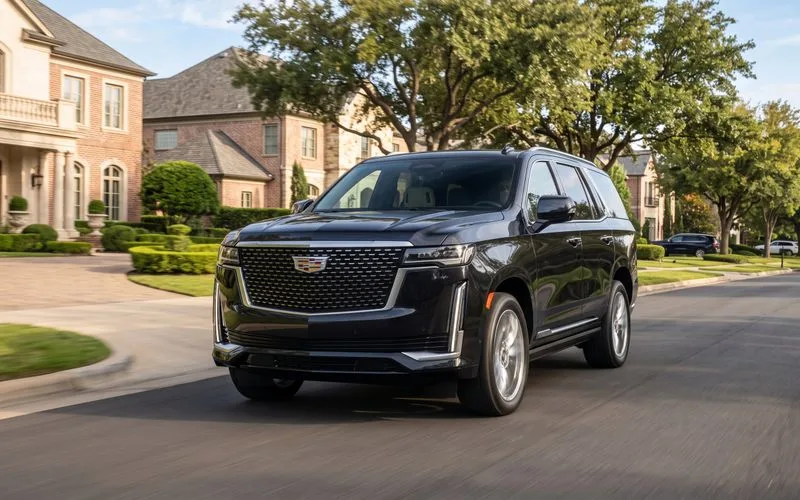 Cadillac EscaladeFull-Size Luxury SUVBetter at: Resale value
The direct rival holds its value far better and offers a much broader lineup, including a V8 and the supercharged Escalade-V.
Compare 2.92B-
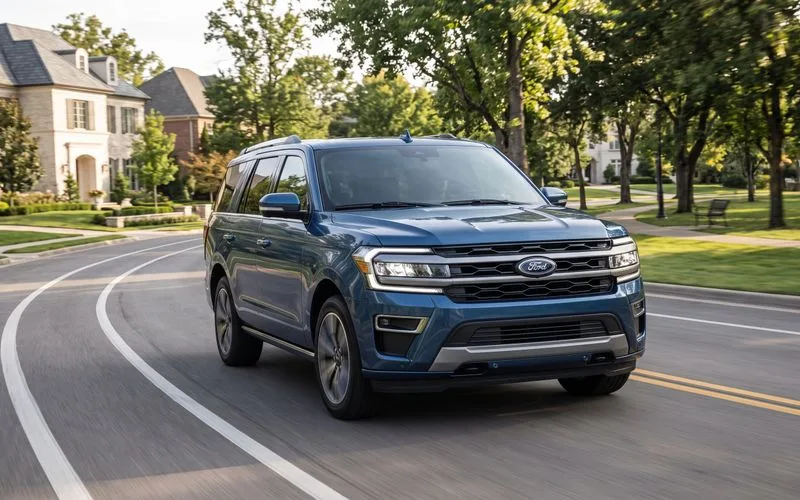 Ford ExpeditionFull-Size SUVBetter at: Value per dollar
Same platform, engine and third-row space for tens of thousands less, if you can live without the Lincoln materials and massage seats.
Compare 2.72B-
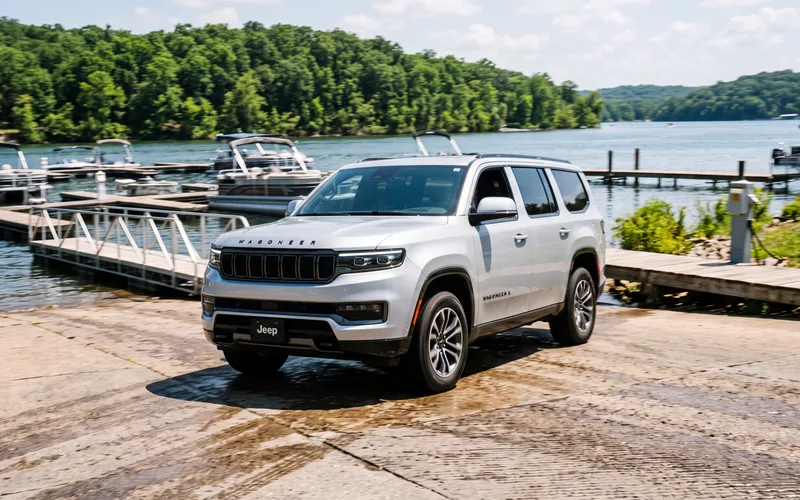 Jeep WagoneerFull-Size SUVBetter at: Price
Comparable size, seating and towing at a lower price, with a more rugged character than the Navigator's plush cruiser brief.
CompareHow it's evolved
10 scored model years · 2017–2026
Subject scores by year
Hover or tap a score to see what moved it versus the year before. A corner mark flags a big swing.
| Year | Performance | Efficiency | Safety | Space | Cost | Reliability | Tech | Use-case | Driving | Value |
|---|---|---|---|---|---|---|---|---|---|---|
| 2026 | 76 | 20 | 85 | 70 | 14 | 69 | 86 | 72 | 70 | 73 |
| 2025 | 74 | 20 | 79 | 82 | 16 | 60 | 82 | 71 | 65 | 73 |
| 2024 | 73 | 25 | 76 | 83 | 15 | 58 | 85 | 68 | 63 | 72 |
| 2023 | 74 | 25 | 75 | 84 | 15 | 60 | 85 | 69 | 65 | 74 |
| 2022 | 73 | 25 | 73 | 84 | 15 | 57 | 83 | 66 | 62 | 73 |
| 2021 | 73 | 19 | 66 | 82 | 15 | 54 | 70 | 65 | 60 | 70 |
| 2020 | 72 | 24 | 65 | 82 | 15 | 53 | 70 | 65 | 60 | 75 |
| 2019 | 73 | 24 | 61 | 84 | 15 | 60 | 68 | 64 | 60 | 74 |
| 2018 | 73 | 24 | 56 | 84 | 15 | 56 | 67 | 63 | 60 | 75 |
| 2017 | 63 | 25 | 42 | 74 | 14 | 54 | 45 | 58 | 53 | 58 |
Compare two years
Best fit & conditions
Higher scores mean a better fit for that use case. Learn more about use-case fit →
Subject profile
Detailed scoring by subject
1Performance & PowertrainGrades above the middle of the scale.2.93B-
2024 is the final year of the fourth generation and a carry-over powertrain year: the twin-turbocharged 3.5-liter V6 is the sole engine across all three trims, rated 440 hp on premium fuel since the 2022 refresh (down from the 450 hp of the 2018–2021 cars).
Peak torque of 510 lb-ft is unchanged for 2024 and sits above the top of the SUV normalization band — the reason a roughly three-ton body-on-frame SUV moves without effort.
Revised from 5.7 s: an instrumented 2024 test does exist — Consumer Reports recorded 6.2 s on a four-wheel-drive 2024 car — and Edmunds recorded 6.1 s on the mechanically identical 2022, both slower than the three tests the previous estimate averaged. 5.9 s is the median of the five instrumented runs on the post-refresh 440-hp car, and the heavier end of the spread is the right anchor for 2024 because rear-wheel drive was deleted, making the 4x4 the only configuration sold.
The twin-turbo V6 is quiet, strong from low revs and near-lag-free in normal driving, with abundant passing reserve for the vehicle's mass; it falls short of the top band mainly because reviewers note a beat of hesitation gathering itself from low city speeds and because a V6 soundtrack is a harder sell than the V8s in this price bracket.
Raised from 73: re-research turned up no MY2024 reviewer complaint about the downshift reluctance the previous score docked it for, and three independent 2024 road tests instead describe the 10-speed SelectShift as consistently smooth and decisive under load and at cruise. It still stops short of the top band because gear selection in a ten-ratio automatic remains busy rather than telepathic, and no reviewer singles it out as class-leading.
With rear-wheel drive discontinued for 2024, every Navigator is a 4x4, and the 4x4 short-wheelbase rating of 8,300 lbs is the maximum any 2024 configuration can be built to — the widely republished 8,700-lb figure belongs to the 4x2 that is no longer offered. Either number clamps to the top of the SUV band.
2024 is the year four-wheel drive became standard on every trim — Lincoln deleted the rear-drive configuration outright and raised the base price by the $3,000 cost of 4x4 — backed by selectable Lincoln Drive Modes including Slippery and Deep Conditions and, per the generation's specification, a two-speed transfer case with low range on 4WD cars. It sits just below the Escalade/LX/Range Rover tier because there is no locking differential or torque-vectoring rear axle.
Better geometry than the fifth-generation car that replaced it — 9.6 in of ground clearance with 22-degree approach and departure angles — and low-range gearing plus a Deep Conditions mode give it real light-duty ability, but it remains pavement-oriented: no skid plates, no locking differential, no off-road trim, and 22-inch wheels on street tires over a ride-comfort chassis.
One powertrain for the entire 2024 line — the 440-hp twin-turbo 3.5L V6 with the 10-speed automatic — with no hybrid, PHEV or EV option on any trim, while the rival Escalade offered a V8, a diesel, the V-Series and a separate electric model.
2Efficiency & RangeOne of the Navigator's weakest categories.0.00F
Final model year of the fourth generation (2018–2024) and a powertrain carry-over: the 440 hp 3.5L twin-turbo V6 and 10-speed automatic are unchanged from the 2022 refresh, and Wikipedia records no 2024 mechanical change. The one real 2024 change works against efficiency — rear-wheel drive was dropped, so every 2024 Navigator is 4x4 and the 19 MPG combined 4x2 rating that existed through 2023 is gone from the lineup. Eighteen combined sits near the floor of the gas SUV band, which is what a body-on-frame full-size luxury SUV costs.
Auto stop-start and direct injection hold city economy at 16 MPG, unchanged from the 2023 4x4. With the 17 MPG rear-drive version deleted for 2024, 16 is now the whole model line rather than the worse of two choices.
Twenty-two highway is the Navigator's best case and still sits near the bottom of the gas SUV band — the aluminum body of the fourth generation helps, but the frontal area of a 5,700-lb full-size SUV and a 10-speed geared for an 8,700-lb tow rating cap it.
A large 23.6-gallon tank partly offsets the thirst, producing a mid-pack cruising range despite class-worst economy; the long-wheelbase Navigator L's 27.8-gallon tank stretches it to roughly 500 miles on the same 18 MPG combined rating.
At EPA's standard 15,000 mi/yr the Navigator burns roughly 830 gallons, putting annual fuel spend near the top of the gas SUV cost band — one of the most expensive vehicles in the catalog to feed, even on regular. Losing the rear-drive option removes the cheaper-to-run configuration buyers had through 2023.
EPA classifies the Navigator as a regular-gasoline vehicle and Ford specifies 87 octane as the minimum, so premium is not required — but the advertised 440 hp / 510 lb-ft is quoted on premium per SAE J1349, and 87 costs roughly 5–10% of peak output as the engine pulls timing. Owners who want the full rating pay a premium-fuel penalty on an already large annual fuel bill, which is squarely the "recommended but not required" band.
3SafetyOne of the Navigator's strongest categories.3.16B
NHTSA has still not run a frontal test on the Navigator since the 2022 facelift, so 2024 — the final year of the fourth generation — carries no overall star rating. The same U554 body earned 5 stars overall every year it was fully tested, 2018 through 2021, and nothing structural changed for 2024. The weaker 3-star RWD rollover result no longer applies to any car a buyer can order: Lincoln made four-wheel drive standard for 2024 and dropped RWD entirely, so every 2024 Navigator is the 4-star, 19.1%-risk configuration.
IIHS has never rated any model year of the Navigator, and its structural twin the Ford Expedition — same T3 platform, aluminum body, cabin and doors — posts Marginal in both small-overlap front tests with the structure and safety cage rated Poor on both sides, plus Marginal in the updated moderate-overlap test. Untested with well-documented structural concerns sits in the bottom band; the Navigator gets a notch above the Expedition only because its own results are unconfirmed rather than confirmed poor.
For 2024 nothing safety-related is behind a trim walk at all: Lincoln Co-Pilot360 2.0 and Co-Pilot360 2.0 Vision are standard on all three trims — base Premiere included — bundling pre-collision assist with AEB and pedestrian detection, intersection assist, evasive steering assist, BLIS with rear cross-traffic alert and trailer coverage, lane-keeping, auto high beams, reverse brake assist, full-speed intelligent adaptive cruise with stop-and-go and lane centering, a 360-degree camera and front/side/rear parking sensors. 2024 also moved BlueCruise hands-free from a Reserve-and-up feature to standard equipment across the board, so even the last item that used to be gated is now included.
The Navigator has no IIHS front crash prevention rating of its own; the mechanically identical Expedition, running the same Ford camera/radar AEB stack, rates only Marginal on the tougher vehicle-to-vehicle 2.0 evaluation with mixed results at 43 mph. Raised from the previous score because the pedestrian side is stronger than earlier assessed rather than unproven — the Expedition rates Good and avoided collisions in both day and night crossing scenarios, so nighttime pedestrian detection is confirmed working. Held below the top band by the weak higher-speed vehicle-to-vehicle result.
BLIS with rear cross-traffic alert is standard on every 2024 trim rather than optional, and the blind-spot system extends coverage to a trailer — appropriate for an 8,000+ lb tow rating. Coverage is alert-based rather than steering-intervening, and there is no safe-exit alert for rear passengers, which keeps it out of the top of the band.
Lane-keeping is standard on every trim and lane centering arrives bundled with the standard intelligent adaptive cruise, so even the base Premiere buyer gets full functionality. Reviewers of this generation found the centering competent on straight highway but noted it struggles through curves, traffic transitions and construction zones, and 2024 cars did not receive the BlueCruise 1.2 in-lane repositioning that would have smoothed it.
Full-speed-range intelligent adaptive cruise with stop-and-go, lane centering and speed sign recognition is standard on every 2024 trim including the base Premiere — unusual generosity in the full-size luxury class, where rivals gate stop-and-go ACC behind packages. Marked down from the top band because the combined highway-assist behavior is the same one reviewers found needed frequent intervention outside clean, straight highway conditions.
Corrected upward: 2024 is the year Lincoln made BlueCruise standard across the entire Navigator range, base Premiere included, with the included connected-service term extended from two years to four — previously it was optional on the base trim and bundled only with Reserve and Black Label. Hands-free coverage spans over 100,000 miles of prequalified divided highway, which is top-band availability. Held to the bottom of that band because 2024 Navigators shipped and stayed on BlueCruise 1.0: no hands-free lane change, no in-lane repositioning, no predictive speed assist, and owners report a strict driver-monitoring camera that drops out of hands-free readily, while 1.2 and 1.3 were already on other Ford products.
Corrected upward: adaptive pixel projector LED headlamps with dynamic bending, speed-dependent lighting and auto high beams are standard on the 2024 Navigator including the base Premiere, not a Black Label exclusive as previously scored. That is materially better hardware than the twin Expedition, whose LED reflector lamps rate Marginal and were faulted by IIHS specifically for lacking curve-adaptive capability and being inadequate on right curves — the exact deficiency dynamic bending addresses. Still capped mid-band because IIHS has never rated the Navigator's lamps, so the performance itself is inferred from the hardware rather than measured.
Tall seating position, deep side glass and a large greenhouse give genuinely good sightlines for a vehicle this size, and the standard 360-degree camera with front, side and rear parking sensors compensates well in tight spaces. Thick windshield pillars create a real forward blind zone, and the sheer length of the Navigator L still demands the cameras when parking.
The carried-over 2024 cabin gives lower LATCH anchors in both second-row captain's chairs, two more sets in the outboard third row and three third-row top tethers, all easy to find and use behind wide door openings. The captain's-chair layout cannot take three car seats across and the third row's fixed head restraints interfere with high-back boosters, which are the two real limits; IIHS rates the identical Expedition rear-seat hardware Acceptable.
4Space & ComfortOne of the Navigator's strongest categories.3.68A-
The 2024 Navigator is the final year of the fourth generation (2018–2024, 2022 refresh) and carries over seven-passenger seating on the volume Reserve trim via second-row captain's chairs; a second-row bench raises it to eight.
First-row headroom of 41.8 in, unchanged for 2024 (a carry-over year for the body — the only mechanical change was dropping rear-wheel drive), sits near the top of the SUV band.
First-row legroom of 43.9 in on the standard-wheelbase 2024 Navigator — high in the SUV band, though the Escalade's 45.2 in is still ahead.
Second-row headroom of 40.0 in tops the SUV normalization band — a benefit of the tall, square T3-platform roofline that also gives the third row 37.3 in.
Corrected this run: 41.1 in is the published second-row legroom of the standard-wheelbase 2024 Navigator, not the 42.3 in carried previously — that figure is the Navigator L's published number, and the 42.6 in seen in some databases is the maximum with the sliding second row pushed fully back (the same max-slide convention that makes those tables print the L's 40.9 in third-row figure for every body). Still strong for the segment and just ahead of the Escalade's 41.7 in on the raw comparison, but no longer at the band ceiling.
Genuinely adult-usable rearmost bench by full-size standards — 37.3 in of headroom, reclining and power-folding, with its own vents and USB ports and a power tilt/slide second row for access — but on the standard wheelbase scored here the 36.1 in of third-row legroom is well short of the Navigator L's 40.9 in, and taller adults notice.
57.5 cu ft behind the second row with the third row folded on the standard wheelbase — the weakest measured dimension in this category, since the short-wheelbase Escalade offers 72.9 cu ft and the mechanically related Expedition 63.6.
103.3 cu ft with both rear rows folded clears the top of the SUV band, and the standard PowerFold second and third rows drop to a near-flat floor at the touch of a button.
Plentiful conventional storage — a large floating center console with covered bin and wireless charging pad, four door pockets, cupholders in all three rows, a household-style 110V outlet and power-folding rear rows for a flat load floor — but nothing structurally clever like an in-floor bin or the fifth-generation car's Cargo Tailgate Manager to lift it into the top band.
The volume Reserve trim gets heated and ventilated 24-way Perfect Position front seats as standard (30-way with Active Motion massage above it), and heated and ventilated second-row seats are standard all the way down to the base Premiere — long-haul comfort is a consistent strength in road tests, front and rear.
Adaptive Suspension with camera-based Road Preview is standard and filters big hits well, but reviewers still fault vertical float and the secondary shudder inherent to the ladder frame — more noticeable on the 22-inch wheels the Reserve wears as standard, and short of the air-sprung Escalade.
Enhanced Active Noise Control and acoustic laminated glass make it one of the quieter full-size SUVs at highway speed; graded on reviewer consensus, as no instrumented dBA figure was located for this model year.
Comfort equipment is near-fully standard from the base trim up: tri-zone automatic climate with second- and third-row vents and rear controls, heated and ventilated first AND second rows, a heated steering wheel, remote start and a household 110V outlet on every trim, with a panoramic Vista Roof, massage seats and a second-row touchscreen as the main paid extras.
5Cost of OwnershipThe Navigator's lowest-graded category.0.00F
The 2024 Navigator opens at $84,660 for the Premiere including Lincoln's $1,895 destination charge — $5,330 above the 2023 entry point, because the rear-wheel-drive base grade was deleted and every 2024 Navigator is now four-wheel drive. That is roughly $20,000 beyond the top of the $25,000–$65,000 SUV band, so this item bottoms out.
Reserve remains the volume trim of the 2024 Navigator and, with four-wheel drive now standard rather than a $2,700 option, it lists at $95,325 plus $1,895 destination = $97,220. That is roughly $29,000 past the top of the SUV band.
Published estimates disagree sharply — CarEdge models the first five years at $4,380 cumulative ($613 in year 1 rising to $1,216 in year 5), while RepairPal puts unscheduled repairs alone at $1,089/yr — so this blends them at roughly $7,200, which fits a luxury full-sizer running 22-inch tires, air suspension and a twin-turbo V6 on Lincoln dealer labor rates, and sits just above the 2024 GMC Yukon Denali's $7,000 in this dataset.
The Navigator depreciates faster than its own luxury-large-SUV class average, and the 2024 cars carry the maximum version of the run-out handicap: they are the final model year of the fourth generation, with the redesigned fifth-generation Navigator revealed 15 August 2024 and its 48-inch display and Google built-in interior making the outgoing cabin look a decade older. The value splits the difference between the two published estimates.
Lincoln's New Vehicle Limited Warranty runs 4 years or 50,000 miles for 2024, unchanged from 2023 — a year longer than mainstream Ford coverage and squarely mid-pack in the 3–5 year band among luxury rivals.
Powertrain coverage is 6 years or 70,000 miles — adequate but near the bottom of the 5–10 year band, and the 70,000-mile cap will expire well before the sixth year for most full-size SUV owners driving the ~13,500 mi/yr the depreciation models assume.
Lincoln includes no complimentary scheduled maintenance — no free oil changes at any point — which caps this below the 80+ band, but the surrounding perks are unusually substantive and improved for 2024: BlueCruise became standard across the whole Navigator range, and Reserve (the volume trim) bundles four years of BlueCruise connected service where 2023 gave three. Pickup & Delivery with a complimentary Lincoln loaner runs the full 4-year/50,000-mile warranty period, alongside 6-year/70,000-mile roadside assistance — enough to sit at the top of the 50–79 band.
$97,220 volume-trim price minus its estimated resale value after 5 years (42% retained, or about $40,832) leaves about $56,388 in depreciation. Add the projected $7,200 in 5-year maintenance and repairs, and owning this vehicle for 5 years costs about $63,588 in total.
6Reliability & QualityOne of the Navigator's weakest categories.1.93C-
Third-party predictions land squarely at 'average' and no worse, but 2024 carries a model-year-specific defect that is still unresolved — a highway-speed vibration/shimmy owners report from delivery — and complaint volume nearly tripled against the 2023 car, so the signals are mixed with a downward tilt.
Lincoln has sat below the industry dependability average for several consecutive study cycles, but it is improving faster than nearly any other brand and has climbed out of the bottom third — mid-pack with a clear upward trend rather than a chronic laggard.
Seven NHTSA recalls against a single model year, and the substantive ones touch systems that matter — a rapid engine oil leak campaigned twice, brake lines that can be chafed through by an engine component, and two separate rearview-camera software failures. Only the airbag-label campaign is trivial, and the open vibration TSB has produced no remedy.
The 3.5L twin-turbo V6 and 10R80 ten-speed are a very high-volume, well-understood Ford family shared with the F-150 and Expedition, so expertise and parts are everywhere — but this is a powertrain with documented weak points rather than a clean high-mileage record, and 2024 added two recalls against the engine itself.
One of the strongest cabins in the full-size luxury class for the money — genuine open-pore wood, real leather across the range, satin-nickel switchgear, and Black Label themes that read as genuinely bespoke. It stops short of the very top only where Ford parts-bin switchgear and lower-cabin hard plastics surface.
Static assembly quality is genuinely good — reviewers single out minimal panel gaps and careful detailing — but 2024 has a widespread dynamic-refinement defect that dealers cannot resolve, which is exactly the kind of built-in flaw this item is meant to catch, and it drags the year well below the 2023 car.
Coverage is adequate rather than dense and was actively contracting through this model year, which can mean a long drive in rural markets — complimentary pickup-and-delivery removes the trip for in-warranty owners, but 2024 owner accounts of the vibration issue describe dealers unable to diagnose it and declining further warranty work.
Mechanically this is an Expedition/F-150 underneath, so hard parts and independent-shop expertise are abundant and cheap by luxury standards — but the Lincoln-specific content (adaptive air suspension, power running boards, 30-way seats, 22-inch tires, the large displays) is dealer-priced, and measured annual repair spend lands in the expensive tier.
7Technology & InfotainmentThe Navigator's best-graded category.3.81A
2024 is the final year of the fourth-generation Navigator and carries over the 2022 refresh's 13.2-inch SYNC 4 center touchscreen, standard on every trim including the base Premiere — no larger screen is offered until the fifth generation's 48-inch panoramic display arrives for 2025.
SYNC 4 on the 13.2-inch screen remains one of the better-regarded native systems of its generation — reviewers praise the logical card layout, multi-pane display, retained physical climate/volume controls beneath the screen, and quick response after an initial boot load. It trails the very best (BMW iDrive 8, Escalade's OLED array) on graphical polish rather than usability.
Wireless Apple CarPlay and wireless Android Auto are both standard across all three 2024 trims (Premiere, Reserve, Black Label) as part of SYNC 4, with wired connection also supported and no trim gating or upcharge.
SYNC 4's enhanced conversational voice recognition plus Alexa Built-in handles natural phrasing well, and cloud-connected voice-activated navigation with live traffic is standard on every 2024 trim rather than an option — still unusual at this price point.
A 14-speaker Revel system is the standard fitment on Premiere, and the Reserve — the volume trim — and Black Label carry the 28-speaker Revel Ultima 3D setup with QuantumLogic Surround 3D and three listening modes. That is among the most ambitious factory audio systems sold in 2024 and a genuine class benchmark alongside Escalade's AKG Studio Reference.
A 12.0-inch fully digital, reconfigurable cluster with Lincoln's animated Constellation drive-mode themes is standard on all 2024 trims and is crisp and legible. It scores below the widescreen units in the X7 and Escalade because reviewers specifically fault its limited configurability and lack of the in-cluster map view rivals offer.
Lincoln Enhance over-the-air updates cover vehicle modules rather than maps alone — ActiveGlide revisions have been delivered to fielded Navigators this way — and the standard embedded modem/Wi-Fi hotspot makes the capability standard equipment. Scope and cadence still lag Tesla and Rivian, and owner reports show updates arriving slowly and unevenly.
The Lincoln Way app covers remote start with climate preconditioning, lock/unlock, vehicle locate and status, and scheduled starts, and Phone As A Key is standard on every 2024 trim including Premiere, with access shareable to other phones. Points off for persistent owner complaints about app connection reliability rather than for missing functions.
A wireless charging pad in the front console is standard on every 2024 trim, with USB outlets distributed across all three rows plus a household-style AC outlet. Generous provisioning for a three-row SUV, held short of the top band because the port mix still includes legacy USB-A rather than being fully USB-C.
Proximity entry, push-button start, remote start, the door-mounted keypad, a hands-free power liftgate and power-retracting running boards are all standard, and Phone As A Key lets a smartphone replace the fob outright on every trim including the base Premiere — a complete keyless package with nothing gated upward.
Lincoln Co-Pilot360 2.0 Vision brings a high-resolution 360-degree surround-view camera with front, side and rear parking sensors and reverse brake assist as standard from the Premiere up — important on a vehicle this long — and reviewers rate the image quality highly. Held below the top band because sources disagree on whether the surround view is truly base-trim standard or a Reserve addition, and Active Park Assist automation is not consistently fitted.
A large color head-up display is standard on the Reserve — the volume trim — and on Black Label, and it doubles as an ActiveGlide status display with the system's blue light cues. It is one of the bigger, more legible HUDs on the market; only the base Premiere goes without.
8Use-Case FitMid-pack among this car's ten categories.2.60C+
2024 is the final year of the fourth generation and a cabin carry-over, so the car-seat picture is unchanged: lower LATCH anchors in both second-row captain's chairs, two more sets in the outboard third row and three third-row top tethers, all easy to find. Huge square door openings, standard power-deployable running boards for kids climbing into a 76-in-tall SUV, a standard hands-free power liftgate, PowerFold rear rows and a power tilt/slide second row make daily loading straightforward, and 2024 added USB-C ports for device duty. Held out of the top band because the standard captain's-chair layout cannot take three car seats across (the second-row bench is the fix) and the third row's fixed head restraints interfere with high-back boosters.
Active safety is genuinely generous and ungated — Lincoln Co-Pilot360 2.0 and 2.0 Vision are standard on all three 2024 trims including the base Premiere, covering AEB with pedestrian detection, intersection assist, evasive steering, BLIS with rear cross-traffic and trailer coverage, lane keeping and centering, full-speed adaptive cruise with stop-and-go, a 360-degree camera and parking sensors. Crashworthiness is the hole: NHTSA has still not run a frontal test since the 2022 facelift so 2024 carries no overall star rating, IIHS has never rated a Navigator at all, and the structural twin Expedition posts Marginal in both small-overlap tests with the safety cage rated Poor. Marked slightly below the 2023 car because deleting rear-wheel drive raised entry pricing to $84,660, pushing 'the trims families actually buy' further out of reach.
Close to the segment benchmark for multi-row long-haul duty: tri-zone automatic climate, heated AND ventilated first and second rows standard on every trim, heated steering wheel, remote start, a 5.8-in second-row console touchscreen so kids run their own climate and audio, USB ports in all three rows plus a household 110V outlet, a 28-speaker Revel Ultima system on the volume Reserve, optional panoramic Vista Roof and Lincoln Play rear-seat entertainment, and a reclining third row with 37.3 in of headroom. Sound insulation was improved again for 2024. The one real limit is luggage with all three rows occupied — 19.3–20.9 cu ft behind the third row on the standard wheelbase — which is what the long-bodied Navigator L exists to fix.
The 440 hp twin-turbo V6 and 10-speed automatic make effortless, near-lag-free progress in traffic, the cabin is one of the quieter in the class, and the volume Reserve's standard 24-way Perfect Position seats, head-up display and BlueCruise hands-free highway driving cut commute fatigue. Against it: 4x4 became the only drivetrain for 2024, so every car now carries the heavier configuration on a 210-in body-on-frame chassis, reviewers still fault vertical float and ladder-frame secondary shudder on the Reserve's standard 22-inch wheels, and 2024 carries a model-year-specific highway-speed vibration owners report from delivery, with a Lincoln service bulletin issued and no remedy released.
One of the most expensive vehicles in the catalog to commute in, and 2024 made it worse: deleting rear-wheel drive removed the 19-MPG-combined configuration, so 18 MPG combined and roughly $3,400/yr in fuel at EPA's 15,000 mi/yr is now the entire model line. EPA classifies it as a regular-gas vehicle, but the advertised 440 hp is rated on premium, so owners chasing the full output pay more still. Consumables match: 22-inch tires, luxury-dealer labor with no complimentary scheduled maintenance, about $7,200 in five-year maintenance and repairs, and no hybrid or EV variant anywhere in the line to pull a lever on.
At 210.0 in long, 79.9 in wide and 76.4 in tall on a 41-ft curb-to-curb turning circle — 221.9 in for the L — this is genuinely oversized for city parking and older garages, and reviewers of this bodyshell report hunting for spaces and struggling in narrow drive-thrus. It parks far better than the dimensions suggest thanks to a standard 360-degree camera with front, side and rear parking sensors and reverse brake assist on every trim, plus a tall seating position and deep side glass. Kept in the bottom band because no camera compensates for the footprint, and sources still disagree on whether Active Park Assist automation is actually fitted to 2024 US cars.
Properly equipped with the Heavy-Duty Trailer Tow Package the 2024 car pulls 8,300 lbs on the standard wheelbase and 8,100 lbs as the L — near the top of the full-size luxury class — behind 440 hp and 510 lb-ft on a body-on-frame chassis shared with the Expedition, and for 2024 the two-speed transfer case with 2.64:1 low range and a trailer brake controller come on every trim rather than being optional. The headline number is nonetheless down for 2024: the 8,700-lb rating belonged to the rear-drive car Lincoln deleted. What keeps it out of the serious-work band is unchanged — payload of roughly 1,500–1,700 lbs, no bed, 22-inch street wheels on the volume trim, and a much lower rating without the HD tow package.
Mechanically this is an Expedition/F-150 underneath — the 3.5L twin-turbo EcoBoost and 10R80 ten-speed are deployed by the million, so parts, know-how and independent-shop support are everywhere. But the 2024 model year carries seven NHTSA recalls whose substantive entries land directly on loaded and towing duty: a misaligned engine cup plug causing a rapid oil leak with stall and fire risk (campaigned twice), front brake lines that can be chafed through by the air cleaner outlet pipe, and an integrated trailer module that can lose communication and take out trailer brakes and turn signals. The luxury fitment compounds it — open-pore wood, leather on every trim, adaptive suspension, power running boards and 22-inch tires all make hard use expensive to repair — and the unresolved highway-speed vibration TSB is an open question mark on a year-old truck.
The trailering half is well covered and improved for 2024: the Heavy-Duty Trailer Tow Package brings a trailer brake controller and Pro Trailer Backup Assist, blind-spot monitoring with trailer coverage is now standard equipment on every trim rather than tied to the tow package, and there is a household-style 110V outlet plus USB-A and USB-C ports across all three rows for tools and devices. Everything else argues against jobsite duty: no bed, no washable surfaces anywhere (leather, carpet and open-pore wood on every trim), only accessory aftermarket crossbars on the roof rails rather than a rated work rail system, and no factory upfit ecosystem — Ford Pro's fleet catalog targets the Expedition and F-Series, not the Navigator.
This is what the Navigator is built for. The volume Reserve gets heated and ventilated 24-way Perfect Position front seats (30-way with Active Motion massage on Black Label), heated and ventilated second-row captain's chairs, enhanced active noise control with acoustic laminated glass in a cabin reviewers call quiet and refined, adaptive suspension with camera-based Road Preview, a large standard head-up display and BlueCruise hands-free driving over 100,000+ miles of prequalified highway. Range is respectable for a thirsty gas full-sizer at 425 miles on the 23.6-gal tank, near 500 on the L's 27.8-gal. Trimmed below the 2023 car on two 2024-specific counts: the 448-mile rear-drive configuration is gone, and 2024 cars shipped and stayed on BlueCruise 1.0 — no hands-free lane change, strict driver monitoring that drops out readily — while the unresolved highway-speed vibration is precisely a long-haul complaint.
The 2024-specific gain: four-wheel drive is standard on every trim for the first time — Lincoln deleted rear-drive outright — so the two-speed transfer case with 2.64:1 low range, Slippery, Deep Conditions and Slow Climb modes now come on the car everyone buys rather than being a $3,000 box to tick. As a tow-the-toys and reach-the-trailhead vehicle it is genuinely capable: 9.6 in of ground clearance with 22-degree approach and departure angles, 8,300 lbs of towing for a boat or camper, roof rails for boxes and bikes, a 110V outlet and power-folding rows for camp gear. It is still not an off-roader — no locking differential, no skid plating, no off-road trim, and the volume car wears 22-inch street tires over a ride-comfort chassis.
With the PowerFold second and third rows dropped it swallows 103.3 cu ft on a near-flat floor (120.2 cu ft on the L) and 57.5 cu ft behind the second row, through a wide square opening served by a standard hands-free power liftgate, with raised roof rails for accessory crossbars and a factory hitch rated to 8,300 lbs for anything that will not fit inside. The catch is the configuration families actually travel in: 19.3–20.9 cu ft behind the third row is thin for the segment against the Escalade's 25.5, and there is no signature trick — no underfloor cargo well, no fold-flat rear window like the Expedition's, and the Split Gate and Cargo Tailgate Manager do not arrive until the fifth-generation 2025 car.
9Driving ExperienceMid-pack among this car's ten categories.2.26C
Body control is genuinely good for a ~6,000 lb body-on-frame SUV — the camera-scanning adaptive suspension checks roll and the now-standard 4WD adds traction security — but grip is modest and Consumer Reports' 2024 road test found it floaty and disconnected through turns. Secure and unintimidating rather than agile.
Accurate and easy to place for something 210 inches long, but light-effort and largely numb — the rack is calibrated to make the Navigator feel small, not to tell the driver anything. Carry-over hardware from the 2022 refresh, unchanged for 2024.
Stopping power is adequate for the class and the pedal is progressive in normal use, but the mass tells — a long measured stop and pronounced nose-dive under hard braking. The weakest link in an otherwise polished chassis.
The twin-turbo 3.5L V6 delivers effortless, near-lag-free thrust and the 10-speed automatic is unusually well-calibrated for the application — a real strength, and quicker than most rivals this size. Held just short of the top band by the premium-fuel dependency (411 hp on regular) and testers describing the transmission as 'mostly' smooth.
One of the quietest cabins in the segment — extensive isolation and active noise control keep the V6 distant at cruise, and it takes on a pleasing note under load rather than droning. Short of the very best only because a turbo V6 lacks the V8 character rivals trade on.
For 2024 Lincoln deleted rear-wheel drive and made 4x4 standard, so every Navigator now carries the wider 4WD turning circle — 43 ft rather than the 41 ft that the departing 2WD models posted. That is past the wide end of the SUV band and a genuine liability in parking structures and tight urban maneuvering.
Commanding sightlines, huge seat adjustment range, power running boards and a 13.2-inch screen that keeps physical shortcuts make it easy to get settled. Marked down for real, documented faults: Consumer Reports found the front cushions short enough to create pressure points on long drives and the dash-mounted piano-key shifter unintuitive, and the sheer bulk makes placing the corners work.
Satisfying in a serene, big-mile way — effortless torque, a hushed cabin and real sense of occasion make it a pleasure on the open road — but numb steering, floaty cornering and its sheer size mean nobody drives it for the corners. Pleasant, not enthusiast-recommended.
10Value & Market PositionGrades above the middle of the scale.2.88B-
The $83,265 Premiere base trim now includes full-time four-wheel drive as standard (rear-drive was deleted for 2024) on top of a 13.2-inch Sync 4 touchscreen with navigation and wireless CarPlay/Android Auto, 14-speaker Revel audio, wireless charging, heated and ventilated first- and second-row seats, power-folding third row, power running boards, heated steering wheel and the full Lincoln Co-Pilot360 2.0 suite, with ActiveGlide/BlueCruise hardware and an extended four-year subscription. Escalade, X7 and GLS all charge extra for AWD parity, navigation, premium audio or hands-free driving at comparable money.
At Escalade and X7 money the Navigator still delivers 440 hp, 510 lb-ft, up to 8,700 lb of towing, eight seats and one of the most comfortable cabins in the class, and 2024's run-out discounting pushed real transaction prices well under sticker. Against that, deleting rear-drive raised the entry point by roughly $3,500 over 2023's cheapest configuration, fuel consumption is heavy at 18 MPG combined, and value retention is poor — roughly 59-60% lost over five years, with Ford Authority flagging the long-wheelbase L as depreciating faster than most large SUVs.
Three well-spaced trims run from $83,265 to about $114,095, and for 2024 the long-wheelbase L returned across the whole range — Premiere L at $86,260, where 2023 restricted the stretched body to Reserve and Black Label. Offsetting that, rear-wheel drive was discontinued so the drivetrain choice is gone, there is a single powertrain with no engine alternative, and the Escalade counters with roughly twice the trim count plus diesel and V-Series options.
Calendar 2024 volume fell about 11% to 15,531 units as buyers waited out the announced fifth-generation replacement, reversing 2023's 33% gain. The Navigator held second place in the full-size luxury SUV segment but remains a distant runner-up — the Escalade family outsold every direct rival combined in Q4 2024 and commanded 44-47% segment share through the year.
Lincoln sits mid-pack among premium brands and behind the badge pull of Cadillac's Escalade and the German marques — it placed 25th of the brands ranked in the 2024 J.D. Power Initial Quality Study, and the resale shortfall reflects the weaker image. The Navigator itself is the brand's halo and its best image asset, the vehicle that won Lincoln its first North American Truck of the Year award in 2018.
As a run-out model year ahead of the redesigned 2025 car, the 2024 Navigator became one of the more heavily discounted vehicles in the class — subsidized low-APR financing through mid-year and up to $10,000 in Retail Customer Cash from November 2024, layered on top of dealer discounts that already put transactions below invoice. That is a strong buyer benefit rather than distress pricing, since the discounting is explained by the model changeover.
2024 is the last year of the fourth generation, a platform dating to 2018, and the changes for the year were administrative — the base trim renamed Premiere, rear-drive deleted, a colour swap. Its replacement was revealed publicly on August 15, 2024, partway through the model year, with sales starting in the first half of 2025, so buyers were choosing a car with a known successor already on the calendar; the 2022 refresh at least keeps the 13.2-inch Sync 4 screen and hands-free driving reasonably current.
Reviews stayed warm to the end of the generation — Kelley Blue Book made it the top pick among best luxury full-size SUVs for 2024 with a 4.6/5 expert rating, Edmunds scored it 8.4/10, and Vincentric named it Best CPO Value in America in the large luxury SUV segment for 2024. It is not a habitual comparison-test winner though: U.S. News rated it 7.8/10 and The Car Connection 7.2/10, both citing heavy fuel use and bulk, and the Escalade generally takes the head-to-heads.