

The verdict
A mixed-report compact sedan, strong on safety and held back by performance.
The 2026 Jetta is the grown-up bargain of the compact sedan class: about $23,900 gets you a car with every driver-assist feature Volkswagen makes, heated seats, a digital gauge cluster and wireless CarPlay standard, plus a turbocharged engine and a real 8-speed automatic instead of the droning CVT nearly every rival uses. It rides and sounds more expensive than it is, and the rear seat is genuinely roomy at 37.4 inches of legroom. The catch is what happens after you buy it — VW keeps only about 46% of its value after five years versus roughly 62% for a Civic, maintenance runs $1,200–$1,400 higher than the Japanese compacts, and there is no hybrid option anywhere in the range, so 33 MPG combined looks thin next to a 50-MPG Corolla Hybrid. Buy it if you plan to lease or keep it a long time and value equipment-per-dollar; skip it if resale value or fuel bills drive your decision.
Jump to scoresStrengths
- The cheapest way into the class, with the deals to match
- Every safety and tech feature is standard — even on the base car
- A real automatic and real torque — no CVT drone
What holds it back
- No hybrid — and the fuel bills show it
- Only one engine, front-wheel drive, and nothing beyond pavement
- Depreciation and warranty give back the low price
Top alternatives
Cars shoppers cross-shop with the Volkswagen Jetta 2.44C+
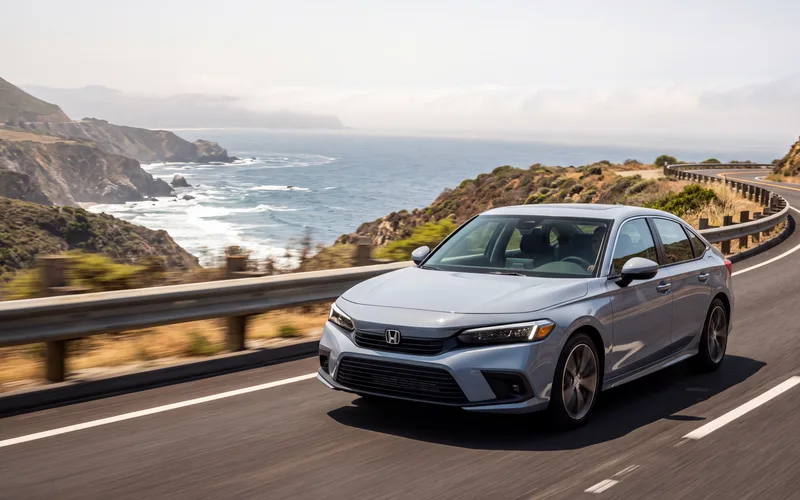 Honda CivicCompact SedanBetter at: Resale value
Costs more up front but keeps roughly 62% of its value after five years versus the Jetta's 46%, adds a 49-MPG hybrid, and is the more engaging car to drive.
Compare 2.40C+
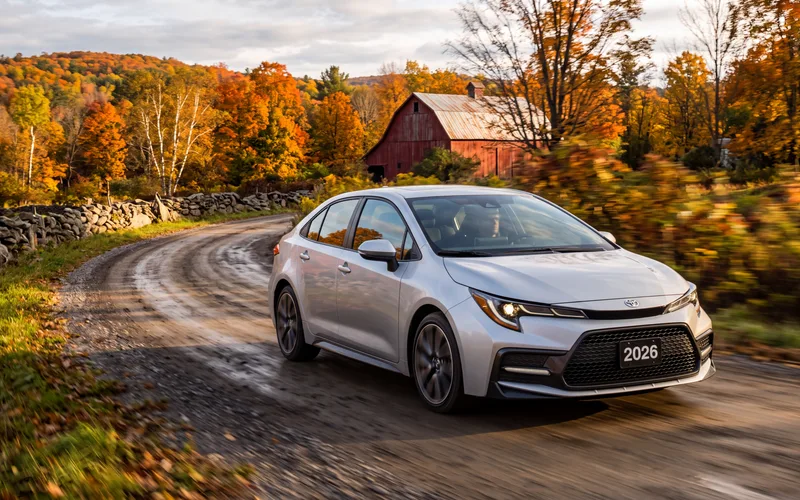 Toyota CorollaCompact SedanBetter at: Reliability
The dependability and running-cost benchmark of the class — best-in-class predicted reliability, roughly $1,450 less in five-year maintenance, a 50-MPG hybrid and optional all-wheel drive.
Compare 2.13C
2.13C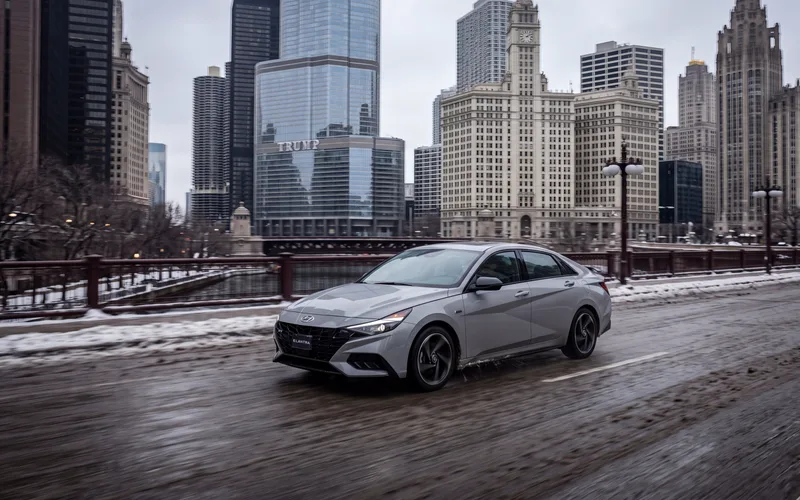 Hyundai ElantraCompact SedanBetter at: Warranty coverage
Prices about the same and matches the Jetta's value pitch, but backs it with a 10-year/100,000-mile powertrain warranty and a hybrid option the Jetta cannot offer at any price.
CompareHow it's evolved
10 scored model years · 2017–2026
Subject scores by year
Hover or tap a score to see what moved it versus the year before. A corner mark flags a big swing.
| Year | Performance | Efficiency | Safety | Space | Cost | Reliability | Tech | Use-case | Driving | Value |
|---|---|---|---|---|---|---|---|---|---|---|
| 2026 | 31 | 62 | 72 | 63 | 65 | 59 | 60 | 54 | 69 | 70 |
| 2025 | 32 | 58 | 66 | 63 | 65 | 55 | 56 | 53 | 69 | 68 |
| 2024 | 34 | 58 | 64 | 63 | 68 | 60 | 55 | 52 | 68 | 66 |
| 2023 | 35 | 58 | 63 | 63 | 76 | 61 | 48 | 52 | 66 | 66 |
| 2022 | 34 | 58 | 64 | 62 | 76 | 59 | 46 | 52 | 64 | 63 |
| 2021 | 31 | 57 | 57 | 62 | 77 | 58 | 43 | 50 | 62 | 61 |
| 2020 | 31 | 61 | 57 | 61 | 80 | 59 | 42 | 49 | 65 | 63 |
| 2019 | 31 | 61 | 57 | 61 | 80 | 53 | 41 | 49 | 63 | 64 |
| 2018 | 30 | 57 | 49 | 63 | 79 | 58 | 35 | 47 | 58 | 61 |
| 2017 | 30 | 57 | 51 | 63 | 67 | 59 | 31 | 50 | 66 | 60 |
Compare two years
Best fit & conditions
Higher scores mean a better fit for that use case. Learn more about use-case fit →
Subject profile
Trims & configurations
4 trimsScores above reflect the volume trim. Per-trim specs and scores are rolling out — the full lineup:
Academic Probation · NHTSA safety recalls
Mar 11, 2026Electrical system: wiringThe transmission ground wire may not have been properly connected during assembly, causing an open electrical circuit.
Defect
Volkswagen Group of America, Inc. (Volkswagen) is recalling certain 2025-2026 Jetta vehicles. The transmission ground wire may not have been properly connected during assembly, causing an open electrical circuit.
Risk
An open circuit may draw a higher current and increase the risk of a fire.
Remedy
Dealers will inspect and repair transmission ground wire as necessary, free of charge. Owner notification letters were mailed March 31, 2026. Owners may contact Volkswagen customer service at 1-800-893-5298. Volkswagen's number for this recall is 97TC. Vehicle Identification Numbers (VINs) involved in this recall became searchable on NHTSA.gov on March 13, 2026.
NHTSA campaign 26V138000 ↗Manufacturer no. 97TC48,165 vehicles potentially affected (all models in the campaign)Owners notified Mar 31, 2026Filed by Volkswagen Group of America, Inc.Filed as JETTA
25 recalls on other model years of the Jetta (2017–2022, 2025)
Mar 25, 2026Electrical system: instrument cluster/panelThe instrument panel may fail to display warning lights or gauges. As such, these vehicles fail to comply with the requirements of Federal Motor Vehicle Safety Standard number 101, "Control and Displays."
Defect
Volkswagen Group of America, Inc. (Volkswagen) is recalling certain 2025 Jetta and Taos vehicles. The instrument panel may fail to display warning lights or gauges. As such, these vehicles fail to comply with the requirements of Federal Motor Vehicle Safety Standard number 101, "Control and Displays."
Risk
An instrument panel that does not display critical safety information, such as the speedometer or warning lights, can increase the risk of a crash.
Remedy
Dealers will update the instrument panel software and replace the instrument panel as necessary, free of charge. Owner notification letters were mailed May 22, 2026. Owners may contact Volkswagen customer service at 1-800-893-5298. Volkswagen's number for this recall is 90Z5. Vehicle Identification Numbers (VINs) involved in this recall became searchable on NHTSA.gov on March 22, 2026.
NHTSA campaign 26V185000 ↗Manufacturer no. 90Z575,323 vehicles potentially affected (all models in the campaign)Owners notified May 21, 2026Filed by Volkswagen Group of America, Inc.Filed as JETTAFeb 14, 2024Fuel system, gasolineDue to a problem with a suction jet pump seal inside the fuel tank, fuel may flow into the evaporative emissions (EVAP) system and possibly leak out of the charcoal canister.
Defect
Volkswagen Group of America, Inc. (Volkswagen) is recalling certain front-wheel drive 2015-2020 Audi A3 Sedan, 2015-2019 Audi A3 Cabriolet, 2019-2020 Volkswagen Jetta GLI, 2018 Golf Sportwagen GP, 2018-2019 Golf Sportwagen A7, 2015-2017 Golf Sportwagen, 2015-2020 Golf GTI, and 2015-2020 Golf A7 vehicles. Due to a problem with a suction jet pump seal inside the fuel tank, fuel may flow into the evaporative emissions (EVAP) system and possibly leak out of the charcoal canister.
Risk
A fuel leak in the presence of an ignition source increases the risk of a fire.
Remedy
Dealers will replace the suction pump, free of charge. Final owner notification letters for Audi owners were mailed on July 25, 2024. Final owner letters for VW owners were mailed on August 13, 2024. Owners may contact Volkswagen customer service at 1-800-893-5298 or Audi customer service at 1-800-253-2834. Volkswagen's numbers for this recall are VW: 20UF/Audi: 20YF. Vehicles that were previously recalled under 16V-647 will need to have the new remedy completed. This recall expands and replaces previous recall number 16V-647.
NHTSA campaign 24V110000 ↗Manufacturer no. VW: 20UF/AUDI:20YF261,257 vehicles potentially affected (all models in the campaign)Owners notified Jul 25, 2024Filed by Volkswagen Group of America, Inc.Filed as JETTASep 6, 2023Electrical system: instrument cluster/panelThe instrument cluster may not provide an audible warning to let the driver know that the key is still in the ignition when the door is open. As such, these vehicles fail to comply with the requirements of Federal Motor Vehicle Safety Standard number 114, "Theft Protection."
Defect
Volkswagen Group of America, Inc. (Volkswagen) is recalling certain 2019 Jetta vehicles. The instrument cluster may not provide an audible warning to let the driver know that the key is still in the ignition when the door is open. As such, these vehicles fail to comply with the requirements of Federal Motor Vehicle Safety Standard number 114, "Theft Protection."
Risk
Without an audible warning, the driver may be unaware that the key is left in the ignition, which can increase the risk of vehicle theft or a crash.
Remedy
Dealers will update the instrument cluster, free of charge. Owner notification letters are expected to be mailed November 3, 2023. Owners may contact Volkswagen's customer service at 1-800-893-5298. Volkswagen's number for this recall is 90W7.
NHTSA campaign 23V619000 ↗Manufacturer no. 90W78 vehicles potentially affected (all models in the campaign)Owners notified Sep 26, 2023Filed by Volkswagen Group of America, Inc.Filed as JETTAAug 30, 2023Electrical system: ignition: switchThe ignition switch may fail, especially in high temperature environments.
Defect
Volkswagen Group of America, Inc. (Volkswagen) is recalling certain 2019 Golf, Golf Alltrack, Golf Sportwagen, 2019-2020 Golf GTI, and Jetta vehicles equipped with a conventional ignition switch. The ignition switch may fail, especially in high temperature environments.
Risk
Ignition switch failure can cause the electrical system to shut down and the engine to stall while driving, increasing the risk of a crash.
Remedy
Dealers will replace the ignition switch, free of charge. Owner notification letters were mailed February 1, 2024. Owners may contact Volkswagen's customer service at 1-800-893-5298. Volkswagen's number for this recall is 28H7.
NHTSA campaign 23V604000 ↗Manufacturer no. 28H762,538 vehicles potentially affected (all models in the campaign)Owners notified Feb 1, 2024Filed by Volkswagen Group of America, Inc.Filed as JETTAOct 31, 2022Tires: pressure monitoring and regulating systemsThe tire pressure monitoring system may not detect an air pressure loss in adequate time when deflating occurs among all four tires simultaneously. As such, these vehicles fail to comply with the requirements of Federal Motor Vehicle Safety Standard number 138, "Tire Pressure Monitoring Systems."
Defect
Volkswagen Group of America, Inc. (Volkswagen) is recalling certain 2019 Volkswagen Tiguan LWB, Golf Sportswagen A7, Golf Alltrack, Golf R GP, Audi Q3, Audi A3 Cabriolet, 2019-2020 Jetta NF, Jetta GLI, Golf GTI, Atlas, Golf A7, Audi A3, 2020-2021 Atlas Cross Sport, and 2021 Atlas FL vehicles. The tire pressure monitoring system may not detect an air pressure loss in adequate time when deflating occurs among all four tires simultaneously. As such, these vehicles fail to comply with the requirements of Federal Motor Vehicle Safety Standard number 138, "Tire Pressure Monitoring Systems."
Risk
An undetected sudden loss of pressure in all four tires increases the risk of a crash.
Remedy
Dealers will update the TPMS software, free of charge. Owner notification letters were mailed November 18, 2022. Owners may contact Volkswagen's customer service at 1-800-893-5298 or AudiÂs customer service at 1-800-253-2834. Volkswagen's numbers for this recall are (Audi) 45J7, and (VW) 45J6 and 45J8.
NHTSA campaign 22V815000 ↗Manufacturer no. AU:45J7,VW:45J6,45J8296,044 vehicles potentially affected (all models in the campaign)Owners notified Nov 18, 2022Filed by Volkswagen Group of America, Inc.Filed as JETTAJul 20, 2022Back over prevention: sensing system: camera · Equipment: electrical: infotainment: softwareThe manufacturing process of the eMMC memory module in the infotainment system may cause the rearview camera image not to display. As such, these vehicles fail to comply with the requirements of Federal Motor Vehicle Safety Standard number 111, "Rear Visibility."
Defect
Volkswagen Group of America, Inc. (Volkswagen) is recalling certain 2021 Golf GTI, Jetta GLI, Jetta NF, Arteon FL, Tiguan LWB, 2022 Taos, Jetta PA, Tiguan PA, 2021-2022 Atlas Cross Sport, and Atlas FL vehicles. The manufacturing process of the eMMC memory module in the infotainment system may cause the rearview camera image not to display. As such, these vehicles fail to comply with the requirements of Federal Motor Vehicle Safety Standard number 111, "Rear Visibility."
Risk
A rearview camera that does not display an image reduces the driver's rear view, increasing the risk of a crash.
Remedy
Dealers will update the infotainment software, free of charge. Owner notification letters are expected to be mailed September 16, 2022. Owners may contact Volkswagen's customer service at 1-800-893-5298. Volkswagen's number for this recall is 91DV.
NHTSA campaign 22V514000 ↗Manufacturer no. 91DV43,091 vehicles potentially affected (all models in the campaign)Owners notified Aug 2, 2022Filed by Volkswagen Group of America, Inc.Filed as JETTAJun 30, 2021Air bags: air bag/restraint control moduleThe air bag control module was welded in the incorrect position.
Defect
Volkswagen Group of America, Inc. (Volkswagen) is recalling certain 2020-2021 Jetta and Jetta GLI vehicles. The air bag control module was welded in the incorrect position.
Risk
Incorrect positioning of the air bag control module can cause the vehicle's air bags to deploy improperly during a crash, increasing the risk of injury. Additionally, the vehicle's air bags can deploy unintentionally, increasing the risk of a crash.
Remedy
Dealers will replace the air bag control module, free of charge. Owner notification letters were mailed on January 28, 2022. Owners may contact Volkswagen customer service at 1-800-893-5298. Volkswagen's number for this recall is 69CK.
NHTSA campaign 21V492000 ↗Manufacturer no. 69CK379 vehicles potentially affected (all models in the campaign)Owners notified Jan 28, 2022Filed by Volkswagen Group of America, Inc.Filed as JETTAFeb 1, 2021Seats · Seats: critical fastenersBolts may be missing from the front seat tracks.
Defect
Volkswagen Group of America, Inc. (Volkswagen) is recalling certain 2021 Volkswagen Tiguan Long Wheelbase and Jetta vehicles. Bolts may be missing from the front seat tracks.
Risk
The seat can move front and back without restriction if bolts are missing, increasing the risk of injury during a crash.
Remedy
Volkswagen will notify owners, and dealers will inspect the front seat tracks and, as necessary, install the bolts, free of charge. The recall began February 18, 2021. Owners may contact Volkswagen customer service at 1-800-893-5298. Volkswagen's number for this recall is 72L6.
NHTSA campaign 21V038000 ↗Manufacturer no. 72L657 vehicles potentially affected (all models in the campaign)Owners notified Feb 18, 2021Filed by Volkswagen Group of America, Inc.Filed as JETTANov 18, 2020Back over prevention: sensing system: cameraThe rear view camera could malfunction during an ignition cycle, leading to a black screen or infotainment system freeze. As such, these vehicles fail to comply with the requirements of Federal Motor Vehicle Safety Standard number 111, "Rear Visibility."
Defect
Volkswagen Group of America, Inc. (Volkswagen) is recalling certain 2021 Atlas Cross Sport, Tiguan LWB, Jetta NF, Jetta GLI, Golf GTI, Atlas FL and Arteon vehicles. The rear view camera could malfunction during an ignition cycle, leading to a black screen or infotainment system freeze. As such, these vehicles fail to comply with the requirements of Federal Motor Vehicle Safety Standard number 111, "Rear Visibility."
Risk
A black or frozen rear view image reduces the driver's visibility when reversing, increasing the risk of a crash.
Remedy
Volkswagen will notify owners, and dealers will update the infotainment system software, free of charge. The recall began December 11, 2020. Owners may contact Volkswagen customer service at 1-800-893-5298. Volkswagen's number for this recall is 91BB/91BC.
NHTSA campaign 20V716000 ↗Manufacturer no. 91BB / 91BC32,048 vehicles potentially affected (all models in the campaign)Owners notified Dec 11, 2020Filed by Volkswagen Group of America, Inc.Filed as JETTAOct 21, 2020Fuel system, gasoline: fuel injection system: fuel railThe fuel rail bolts may become loose over time, allowing fuel to leak.
Defect
Volkswagen Group of America, Inc. (Volkswagen) is recalling certain 2016-2018 Jetta vehicles. The fuel rail bolts may become loose over time, allowing fuel to leak.
Risk
A fuel leak increases the risk of a fire.
Remedy
Volkswagen will notify owners, and dealers will replace the fuel rail bolts and, as necessary, the fuel rail. The recall began March 31, 2021. Owners may contact Volkswagen customer service at 1-800-893-5298. Volkswagen's number for this recall is 24Gi.
NHTSA campaign 20V648000 ↗Manufacturer no. 24Gi218,192 vehicles potentially affected (all models in the campaign)Owners notified Mar 31, 2021Filed by Volkswagen Group of America, Inc.Filed as JETTASep 23, 2020Service brakes, hydraulic: foundation components: master cylinderThe fluid seal crimp on the master cylinder may be insufficient, causing brake fluid to leak or the cylinder to come apart.
Defect
Tenneco Automotive (Tenneco) is recalling certain Beck/Arnley Master Cylinders, part number 072-9831, sold as aftermarket or replacement parts for 2004-2018 Volkswagen Jetta, and 2012-2019 Volkswagen Beetle vehicles. The fluid seal crimp on the master cylinder may be insufficient, causing brake fluid to leak or the cylinder to come apart.
Risk
If there is a brake fluid leak, it can reduce braking ability, increasing the risk of a crash.
Remedy
Beck/Arnley will notify the distributors that sold the master cylinders and will work with the distributors to notify the end users. Affected master cylinders will be exchanged for a new master cylinder (part number 072-9990), free of charge. The recall began October 30, 2020. Owners may contact Tenneco customer service at 1-800-625-9319.
NHTSA campaign 20E064000 ↗38 vehicles potentially affected (all models in the campaign)Owners notified Oct 30, 2020Filed by Tenneco AutomotiveFiled as JETTAAug 26, 2020SeatsParts of the front seat frame and backrest adjuster may not have been welded properly.
Defect
Volkswagen Group of America, Inc. (Volkswagen ) is recalling certain 2020 Volkswagen Atlas Cross Sport, Jetta, Jetta GLI and Tiguan and Audi Q5 and SQ5 and 2021 Volkswagen Atlas vehicles. Parts of the front seat frame and backrest adjuster may not have been welded properly.
Risk
In the event of a rear-end crash, the backrest adjustment could break, possibly reducing the amount of occupant restraint, thus increasing risk of injury.
Remedy
Volkswagen will notify owners, and dealers will inspect the front seats, and, as necessary, replace the seatback frames, free of charge. The recall began September 11, 2020. Volkswagen owners may contact their customer service at 1-888-241-2289. Audi owners may contact their customer service at 1-800-893-5298. Volkswagen's numbers for this recall are 72L1, 72K8, and 72K9.
NHTSA campaign 20V505000 ↗Manufacturer no. 72L1, 72K8, 72K95,376 vehicles potentially affected (all models in the campaign)Owners notified Sep 11, 2020Filed by Volkswagen Group of America, Inc.Filed as JETTAJun 17, 2020Service brakes, hydraulic: foundation components: disc: caliperVolkswagen Group of America, Inc. (Volkswagen) is recalling one 2020 Jetta vehicle. The front brake caliper bolts may come loose.
Defect
Volkswagen Group of America, Inc. (Volkswagen) is recalling one 2020 Jetta vehicle. The front brake caliper bolts may come loose.
Risk
If a brake caliper bolt comes loose, it may affect the vehicle's brake performance, increasing the risk of a crash.
Remedy
Volkswagen will notify the owner, and a dealer will replace all four front brake caliper bolts, free of charge. The recall began July 1, 2020. Owners may contact Volkswagen customer service at 1-800-893-5298. Volkswagen's number for this recall is 47Q2.
NHTSA campaign 20V359000 ↗Manufacturer no. 47Q21 vehicles potentially affected (all models in the campaign)Owners notified Jul 1, 2020Filed by Volkswagen Group of America, Inc.Filed as JETTADec 11, 2019WheelsThe front wheel bearings may have been improperly machined, potentially causing excessive stress on the wheel, wheel bolts, or wheel bearings.
Defect
Volkswagen Group of America, Inc. (Volkswagen) is recalling certain 2019 Jetta GLI, Golf Alltrack, and Golf GTI vehicles. The front wheel bearings may have been improperly machined, potentially causing excessive stress on the wheel, wheel bolts, or wheel bearings.
Risk
The excessive stress can cause steering, traction or other stability issues or breakage relating to the front wheels, and increase the risk of a crash.
Remedy
Volkswagen has notified owners, and dealers will replace the wheel bearing assemblies, wheels, and wheel bolts, free of charge. The recall began December 11, 2019. Owners may contact Volkswagen customer service at 1-800-893-5298. Volkswagen's number for this recall is 40P1. Note: The affected owners are advised not to drive their vehicles until the repairs have been made.
NHTSA campaign 19V879000 ↗Manufacturer no. 40P18 vehicles potentially affected (all models in the campaign)Owners notified Jan 13, 2020Filed by Volkswagen Group of America, Inc.Filed as JETTASep 25, 2019Unknown or otherModifications made while the vehicles were in an internal evaluation period may cause the affected vehicles to not comply with all of the applicable regulatory requirements.
Defect
Volkswagen Group of America, Inc. (Volkswagen) is recalling certain 2017 Volkswagen Passat, 2018 Tiguan LWB, 2007-2009 Jetta Sedan, 2011-2013, 2015 and 2019 Jetta, 2013 Jetta Hybrid, 2008-2009 Jetta Sportwagen, 2015 Golf Sportwagen, 2013 Golf, 2008-2010 and 2012-2013 Beetle and Beetle Convertible, 2008-2010 Beetle, and Beetle Convertible vehicles. Modifications made while the vehicles were in an internal evaluation period may cause the affected vehicles to not comply with all of the applicable regulatory requirements.
Risk
If the vehicles do not meet all regulatory requirements, there could be an increased risk of a crash, fire, or injury.
Remedy
Volkswagen will notify owners and repurchase the affected vehicles. The recall began November 6, 2019. Owners may contact Volkswagen customer service at 1-800-893-5298. Volkswagen's number for this recall is 01D7. Note: This recall is an expansion of NHTSA recall number 18V-329.
NHTSA campaign 19V679000 ↗Manufacturer no. 01D7113 vehicles potentially affected (all models in the campaign)Owners notified Nov 6, 2019Filed by Volkswagen Group of America, Inc.Filed as JETTAAug 22, 2019Electrical system: ignition: anti-theft: control module · Steering: column locking: anti-theft deviceA build-up of silicate on the shift lever micro switch contacts may enable the key to be removed from the ignition when the transmission shift lever is not in "Park."
Defect
Volkswagen Group of America, Inc. (Volkswagen) is recalling certain 2015-2019 GTI, 2015-2016 and 2018-2019 Golf, 2012-2019 Beetle and Beetle Convertible, 2017-2019 Golf SportWagen and 2011-2018 Jetta vehicles equipped with an automatic transmission, manual handbrake and keyless entry. A build-up of silicate on the shift lever micro switch contacts may enable the key to be removed from the ignition when the transmission shift lever is not in "Park."
Risk
Removing the key while the shift lever is in a position other than "Park" increases the risk of an unintended vehicle rollaway that may result in personal injury or a crash.
Remedy
Volkswagen will notify owners, and dealers will install an additional switch and circuit board, free of charge. The recall began November 19, 2019. Owners may contact Volkswagen customer service at 1-800-893-5298. Volkswagen's number for this recall is 37M2.
NHTSA campaign 19V615000 ↗Manufacturer no. 37M2679,027 vehicles potentially affected (all models in the campaign)Owners notified Nov 19, 2019Filed by Volkswagen Group of America, Inc.Filed as JETTAMar 6, 2019Suspension: rear: springs: coil springsThe rear coil springs may prematurely fracture.
Defect
Volkswagen Group of America, Inc. (Volkswagen) is recalling certain 2017-2019 Golf Sportwagen, 2019 Jetta, 2015-2019 Golf, and 2018-2019 Tiguan vehicles. The rear coil springs may prematurely fracture.
Risk
If a coil spring fractures while driving, it may damage a rear tire causing a loss of vehicle control, increasing the risk of a crash.
Remedy
Volkswagen will notify owners, and dealers will replace the rear axle coil springs, free of charge. The recall began April 12, 2019. Owners may contact Volkswagen customer service at 1-800-893-5298. Volkswagen's number for this recall is 42J5.
NHTSA campaign 19V188000 ↗Manufacturer no. 42J556,173 vehicles potentially affected (all models in the campaign)Owners notified Apr 12, 2019Filed by Volkswagen Group of America, Inc.Filed as JETTAFeb 20, 2019Air bags: frontalAn incorrect driver frontal airbag may have been installed during a service/repair visit.
Defect
Volkswagen Group of America (Volkswagen) is recalling certain 2019 Jetta vehicles. An incorrect driver frontal airbag may have been installed during a service/repair visit.
Risk
In the event of a crash necessitating air bag deployment, the wrong air bag may not work correctly, increasing the risk of injury.
Remedy
Volkswagen will notify owners, and dealers will replace the driver frontal air bag with the correct part, free of charge. The recall began April 19, 2019. Owners may contact Volkswagen customer service at 1-800-893-5298. Volkswagen's number for this recall is 69Y7.
NHTSA campaign 19V110000 ↗Manufacturer no. 69Y74 vehicles potentially affected (all models in the campaign)Owners notified Apr 19, 2019Filed by Volkswagen Group of America, Inc.Filed as JETTADec 19, 2018Suspension: rear: springs: coil springsThe rear coil springs may prematurely fracture.
Defect
Volkswagen Group of America, Inc. (Volkswagen) is recalling certain 2018-2019 Volkswagen Atlas, 2015 Volkswagen Golf SportWagen, and 2019 Volkswagen Jetta vehicles. The rear coil springs may prematurely fracture.
Risk
If a coil spring fractures while driving, it may damage a rear tire causing a loss of vehicle control, increasing the risk of a crash.
Remedy
Volkswagen has notified owners, and dealers will replace the rear axle coil springs, free of charge. The recall began January 31, 2019. Owners may contact Volkswagen customer service at 1-800-893-5298. Volkswagen's number for this recall is 42J2/42J3.
NHTSA campaign 18V904000 ↗Manufacturer no. 42J2/42J36,322 vehicles potentially affected (all models in the campaign)Owners notified Jan 31, 2019Filed by Volkswagen Group of America, Inc.Filed as JETTANov 26, 2018Electrical system: instrument cluster/panelThe instrument cluster may not provide an audible warning to let the driver know that the key is still in the ignition when the door is open. As such, these vehicles fail to comply with the requirements of Federal Motor Vehicle Safety Standard (FMVSS) number 114, "Theft Protection."
Defect
Volkswagen Group of America, Inc. (Volkswagen) is recalling certain 2018-2019 Volkswagen Atlas and Tiguan and 2019 Volkswagen Jetta vehicles that do not have keyless entry. The instrument cluster may not provide an audible warning to let the driver know that the key is still in the ignition when the door is open. As such, these vehicles fail to comply with the requirements of Federal Motor Vehicle Safety Standard (FMVSS) number 114, "Theft Protection."
Risk
If the driver is not notified by an audible noise that the key is left in the ignition, it can increase the risk of vehicle theft or crash.
Remedy
Volkswagen will notify owners, and dealers will reprogram the instrument cluster, free of charge. The recall began December 13, 2018. Owners may contact Volkswagen customer service at 1-800-893-5298. Volkswagen's numbers for this recall are 90L3 and 90L4.
NHTSA campaign 18V824000 ↗Manufacturer no. 90L3 / 90L473,549 vehicles potentially affected (all models in the campaign)Owners notified Dec 13, 2018Filed by Volkswagen Group of America, Inc.Filed as JETTASep 26, 2018Exterior lighting: headlightsThe passenger side headlight may be incorrectly positioned, reducing the driver's visibility when it is dark. As such, these vehicles fail to comply with the requirements of Federal Motor Vehicle Safety Standard (FMVSS) number 108, "Lamps, Reflective Devices, and Associated Equipment."
Defect
Volkswagen Group of America, Inc. (Volkswagen) is recalling certain 2019 Volkswagen Jetta vehicles equipped with LED headlights. The passenger side headlight may be incorrectly positioned, reducing the driver's visibility when it is dark. As such, these vehicles fail to comply with the requirements of Federal Motor Vehicle Safety Standard (FMVSS) number 108, "Lamps, Reflective Devices, and Associated Equipment."
Risk
A reduction in the driver's visibility can increase the risk of a crash.
Remedy
Volkswagen will notify owners, and dealers will replace the passenger side headlight, free of charge. The recall began November 2, 2018. Owners may contact Volkswagen customer service at 1-800-893-5298. Volkswagen's number for this recall is 94L1.
NHTSA campaign 18V671000 ↗Manufacturer no. 94L128 vehicles potentially affected (all models in the campaign)Owners notified Nov 5, 2018Filed by Volkswagen Group of America, Inc.Filed as JETTAMay 31, 2017Equipment: other: labelsThe affected vehicles have Vehicle Identification Number (VIN) markings on the body that do not match the VIN plate near the windshield. As such, these vehicles fail to comply with the requirements of 49 CFR Part 567, "Certification."
Defect
Volkswagen Group of America, Inc. (Volkswagen) is recalling certain 2017 Jetta vehicles. The affected vehicles have Vehicle Identification Number (VIN) markings on the body that do not match the VIN plate near the windshield. As such, these vehicles fail to comply with the requirements of 49 CFR Part 567, "Certification."
Risk
The mismatched VINs make the vehicle noncompliant with regulatory requirements.
Remedy
Volkswagen has notified owners and has replaced the vehicles, free of charge. The recall began on July 7, 2017. Owners may contact Volkswagen customer service at 1-800-893-5298. Volkswagen's number for this recall is 06A8.
NHTSA campaign 17V352000 ↗Manufacturer no. 06A82 vehicles potentially affected (all models in the campaign)Owners notified Jul 6, 2017Filed by Volkswagen Group of America, Inc.Filed as JETTAMar 2, 2017Equipment: other: labelsThe affected vehicles have incorrect information on the tire information label, possibly causing the operator to overload the vehicle. As such, these vehicles fail to comply with the requirements of Federal Motor Vehicle Safety Standard (FMVSS) number 110, "Tire Selection and Rims."
Defect
Volkswagen Group of America, Inc. (Volkswagen) is recalling certain 2017 Jetta vehicles. The affected vehicles have incorrect information on the tire information label, possibly causing the operator to overload the vehicle. As such, these vehicles fail to comply with the requirements of Federal Motor Vehicle Safety Standard (FMVSS) number 110, "Tire Selection and Rims."
Risk
Overloading the vehicle may affect vehicle handling or result in tire damage, increasing the risk of a crash.
Remedy
Volkswagen will notify owners, and dealers install a corrected tire information label, free of charge. The recall began March 30, 2017. Owners may contact Volkswagen customer service at 1-800-893-5298. Volkswagen's number for the recall is 01B8
NHTSA campaign 17V137000 ↗Manufacturer no. 01B84,875 vehicles potentially affected (all models in the campaign)Owners notified Mar 20, 2017Filed by Volkswagen Group of America, Inc.Filed as JETTAMar 2, 2017Equipment: other: labelsThe affected vehicles have incorrect information on the tire information label, possibly causing the operator to overload the vehicle. As such, these vehicles fail to comply with the requirements of Federal Motor Vehicle Safety Standard (FMVSS) number 110, "Tire Selection and Rims."
Defect
Volkswagen Group of America, Inc. (Volkswagen) is recalling certain 2017 Beetle and Jetta GLI vehicles. The affected vehicles have incorrect information on the tire information label, possibly causing the operator to overload the vehicle. As such, these vehicles fail to comply with the requirements of Federal Motor Vehicle Safety Standard (FMVSS) number 110, "Tire Selection and Rims."
Risk
Overloading the vehicle may affect vehicle handling or result in tire damage, increasing the risk of a crash.
Remedy
Volkswagen will notify owners, and dealers will install a corrected tire information label, free of charge. The recall began March 30, 2017. Owners may contact Volkswagen customer service at 1-800-893-5298. Volkswagen's number for the recall is 01B9.
NHTSA campaign 17V136000 ↗Manufacturer no. 01B9797 vehicles potentially affected (all models in the campaign)Owners notified Mar 30, 2017Filed by Volkswagen Group of America, Inc.Filed as JETTAFeb 3, 2017Engine and engine cooling: engineThese vehicles have an engine that may seize due to an improper casting of the block.
Defect
Volkswagen Group of America, Inc. (Volkswagen) is recalling certain 2017 Jetta vehicles equipped with a 1.4L engine. These vehicles have an engine that may seize due to an improper casting of the block.
Risk
If the engine seizes, the wheels may suddenly lock up, causing a loss of vehicle control and increasing the risk of a crash.
Remedy
Volkswagen will either buy back the vehicle or replace the engine block, free of charge. The recall began February 2017. Owners may contact Volkswagen customer service at 1-800-893-5298. Volkswagen's number for this recall is 10F4.
NHTSA campaign 17V070000 ↗Manufacturer no. 10F42 vehicles potentially affected (all models in the campaign)Owners notified Feb 16, 2017Filed by Volkswagen Group of America, Inc.Filed as JETTA
Source: NHTSA Office of Defects Investigation recall database, model years 2017–2026. Recalls are listed by model year as the manufacturer filed them; whether a specific car is affected depends on its VIN — check a VIN at nhtsa.gov ↗. NHTSA model names matched to this page: JETTA.
Detailed scoring by subject
1Performance & PowertrainThe Jetta's lowest-graded category.0.01F
Every registry trim (S, Sport, SE, SEL) runs the same 1.5L TSI EVO2 turbo-four rated 158 hp @ 5,500 rpm, adopted with the MY2025 facelift when it replaced the 147-hp 1.4L TSI. That is modestly above the Civic's 150 hp and the Elantra's 147 hp but below the Corolla's 169 hp.
The 1.5T's 184 lb-ft is the Jetta's real performance advantage in this class — it arrives at 1,750 rpm and holds to 4,000, versus 133 lb-ft @ 4,300 rpm for the Civic's 2.0L and 132 lb-ft @ 4,500 rpm for the Elantra's. The car pulls in everyday driving without needing to be revved.
Instrumented results for the 1.5T Jetta land in the high-7-second range, making it the quickest of the mainstream compact sedans scored here — ahead of the Civic Sport (~8.2 s), Elantra SEL (~8.6 s) and Corolla (~8.7 s) — a direct consequence of the turbo torque plateau and a real geared automatic rather than a CVT.
The 1.5 TSI is one of the more satisfying base engines in the compact class: torque arrives early and the engine stays quiet and unstrained at cruise, avoiding the buzzy high-rpm thrash reviewers criticize in the naturally-aspirated Civic and Corolla. It is held below the 80s by mild off-the-line turbo lag and by cylinder-deactivation transitions that are noticeable when the system cuts to two cylinders under light load.
The Jetta's structural advantage is that it uses a conventional 8-speed torque-converter automatic where nearly every mainstream compact rival uses a CVT — there is no drone under sustained throttle and the car feels settled and conventional. It sits just below the Civic (75) because reviewers regularly fault VW's calibration for being slow and reluctant to kick down when asked for a pass, and for occasional low-speed shift harshness in stop-and-go.
The Jetta is front-wheel drive on every trim — VW has never offered 4Motion on the US-market Jetta, and the registry lists a single gas drivetrain. This matches the FWD-only Civic and Elantra (both 15) and falls well short of the Corolla (46), which offers electronic on-demand AWD on hybrid trims.
Per the project registry the 2026 Jetta offers a single powertrain — the 1.5L TSI with an 8-speed automatic — across all four trims, with no hybrid, PHEV or EV option anywhere in the range and no manual remaining. That is the narrowest lineup among the mainstream compact sedans scored here and squarely in the item's 'single powertrain, take-it-or-leave-it' band, far below the Elantra (76), Civic (72) and Corolla (60), all of which offer electrification.
2Efficiency & RangeMid-pack among this car's ten categories.2.19C
The 2026 Jetta carries over the 1.5L TSI evo (158 hp) and 8-speed automatic adopted in the 2025 facelift, rating roughly 33 MPG combined on the volume S/Sport/SE trims. Strong for a non-hybrid compact, but the sedan band tops out at 60 MPG where hybrid rivals sit, so the normalized score stays modest.
City economy is the Jetta's weakest efficiency figure — a conventional turbo gas four with no electric assist gives up 15+ MPG in town to hybrid compacts like the Civic and Corolla hybrids.
Highway is where the small-displacement turbo and tall 8-speed top gear pay off — around 40 MPG is among the better non-hybrid figures in the compact sedan class.
Derived from the Mk7 Jetta's 13.2-gallon tank at the 33 MPG combined rating. Real-world highway range clears 500 miles, but the small tank keeps the EPA-combined figure mid-pack for the segment.
Cheap to feed by class standards: 15,000 miles at 33 MPG combined is roughly 455 gallons, and the Jetta drinks regular rather than premium. Cost lands well under the segment midpoint even without electrification.
The volume 1.5T runs on regular 87-octane unleaded with no premium requirement — the cheapest-to-run case short of home charging. Only the low-volume GLI's 2.0T recommends premium, and it is not the representative configuration.
3SafetyThe Jetta's best-graded category.2.88B-
The Mk7 (A7) Jetta has carried a 5-star NHTSA overall rating since the 2019 launch of this generation, with 4 stars on the rollover subscore; the 2025 facelift did not alter the body structure, so the rating carries into 2026. Replaces a placeholder value of 4 stars.
The Jetta earned IIHS Top Safety Pick in earlier years of this generation, but the tougher 2025-26 award criteria (updated moderate overlap with rear-passenger measures, updated side impact, and the harder front crash prevention test) have knocked many compact sedans off the list. Scored in the mid band for mostly-Good crashworthiness without a confirmed 2026 award.
VW makes the full IQ.DRIVE package standard on every Jetta trim including the base S — Front Assist (AEB with pedestrian monitoring), Active Blind Spot Monitor, Rear Traffic Alert, Lane Assist, adaptive cruise with stop-and-go, Travel Assist lane centering, and Emergency Assist. That is a genuine class advantage over rivals that gate blind-spot monitoring or centering behind higher trims.
Front Assist with pedestrian monitoring is standard and performs adequately in daytime vehicle-to-vehicle scenarios, but there is no confirmed result under the harder 2024-onward IIHS front crash prevention protocol, where higher closing speeds and nighttime pedestrian scenarios have pulled many mainstream compacts down to Marginal or Poor.
Active Blind Spot Monitor and Rear Traffic Alert are standard on every trim, which places the Jetta at the top of the availability band, but coverage is essentially alert-only — there is no safe-exit warning and no 360-degree camera on any trim to compensate.
Lane Assist plus Travel Assist centering works reliably on well-marked highways and is standard rather than optional, but reviewers consistently describe VW's centering as prone to wander and re-correct on curves and faded markings, and the base Lane Assist tugs at the wheel more insistently than rivals.
Adaptive Cruise Control with full-speed-range stop-and-go is standard on all trims and integrates with Travel Assist into a single highway-assist mode, and the 8-speed automatic makes resume behavior smooth. Falls short of the top band because the system is a hands-on assist with no lane-change support and occasionally conservative gap-keeping.
Volkswagen offers no hands-free highway driving system in the US lineup, and the Jetta is no exception — Travel Assist is a hands-on system requiring continuous steering-wheel torque input. Scored in the low band per guidance for no hands-free option.
The 2025 facelift standardized LED projector headlights across the range with LED daytime running lights, and higher trims add Light Assist auto high beam, but no confirmed IIHS headlight rating is available for the refreshed car and VW's compact-car headlights have historically rated Acceptable rather than Good on volume trims.
The Jetta keeps a conventional three-box sedan profile with a relatively upright greenhouse, a low beltline and slim pillars for the class, giving better natural sightlines than most fastback-styled rivals. A rear camera is standard, but the absence of any surround-view option caps it below the top band.
The Jetta's rear seat is unusually roomy for a compact sedan (roughly 37-38 inches of rear legroom) with wide, near-square door openings that make loading a rear-facing seat easy, but the lower anchors sit deep in the seat bight and require digging, and the rear bench is too narrow for a genuine three-across installation.
4Space & ComfortMid-pack among this car's ten categories.2.24C
The Mk7 (A7) Jetta is a five-passenger compact sedan across the entire 2026 range — S, Sport, SE, SEL and GLI Autobahn all seat five. Replaces a placeholder value of 4.6 seats.
Front headroom of 38.5 in without the sunroof is mid-pack for a compact sedan — behind the Civic (39.3 in) and Elantra (40.6 in) but ahead of the Corolla. The sunroof-equipped trims give up roughly 1.4 in.
Front legroom of 41.1 in is the Jetta's weakest interior dimension and a clear class shortfall — the Civic and Elantra both publish 42.3 in and the Sentra 44.0 in. VW packages the A7 for rear-seat room rather than front stretch-out space.
Rear headroom of 37.2 in is slightly above the compact-sedan norm, helped by the A7's upright roofline versus more steeply raked rivals — marginally better than the Civic (37.1 in) and Sentra (36.7 in).
Rear legroom of 37.4 in is genuinely competitive and one of the Jetta's packaging strengths — level with the Civic and far clear of the Sentra (34.5 in) and Corolla (34.8 in), though a little behind the Elantra and K4 at 38.0 in.
A 14.1 cu ft trunk is solidly mid-pack for the segment and unchanged by trim or by the GLI's sportier hardware, with a wide opening and 60/40 folding rear seats standard. The sedan band (10-20 cu ft) is set by class leaders nearer 15 cu ft, so a competitive figure still scores in the low 40s.
Conventional compact-sedan storage with no standout innovation: covered center console bin, a front tray with wireless charging on SE and above, usable door pockets and a pair of USB-C ports. Competent rather than clever, and the 2025 facelift did not add bespoke storage features.
Front seat comfort is a consistent Jetta review strength — firm, well-shaped and supportive over long stints in the German idiom, and better regarded than the flat cushions criticised in the Civic and Elantra. Held below 80 because lumbar adjustment is limited on lower trims and the rear bench cushion sits low.
Non-GLI trims run a torsion-beam rear axle, yet VW's damping tuning delivers the composed, settled highway ride that reviewers routinely call more mature than the segment norm. Slightly firm over sharp urban impacts, especially on the SEL's larger wheels, which keeps it out of the 80+ band.
Better isolated at a highway cruise than most compact rivals — the Jetta suppresses road roar noticeably better than the Civic and Elantra, both of which draw explicit road-noise criticism. Points come off for the 1.5L TSI turning coarse and vocal under hard acceleration.
Heated front seats standard on every trim is a real Jetta advantage in a class where rivals paywall them, and dual-zone automatic climate plus a heated steering wheel arrive on mid trims. Capped in the 60s because ventilated seats are unavailable at any price and there is no rear climate control — only rear vents.
5Cost of OwnershipMid-pack among this car's ten categories.2.42C+
The Jetta S remains one of the cheapest ways into a compact sedan, undercutting the Civic and Mazda3 by roughly $2,000 and landing alongside the Corolla, Elantra and K4 at the bottom of the segment band.
SE is the volume Jetta — it adds heated leatherette seats, sunroof, larger touchscreen and wireless charging over Sport, and prices below the Civic Sport while carrying more standard driver-assist content.
German parts pricing and dealer labor rates put the Jetta about $1,200–1,400 above the Japanese and Korean compacts over five years, though it stays well clear of Audi/BMW territory because the 1.5T uses a conventional torque-converter 8-speed rather than a dual-clutch.
Depreciation is the Jetta's biggest ownership weakness — VW residuals trail the segment badly, costing roughly 14 points of retention versus a Civic or Corolla and largely erasing the up-front price advantage over a five-year hold.
VW's 4-year/50,000-mile New Vehicle Limited Warranty beats the 3-year/36,000-mile coverage from Honda, Toyota, Mazda and Nissan, and matches the Audi/BMW/Mercedes term.
VW offers no extended powertrain coverage — engine and transmission are covered only by the same 4-year/50,000-mile limited warranty, which falls below the segment band floor and is less than half of Hyundai/Kia's 10-year/100,000-mile term.
VW's Carefree Maintenance covers the first two scheduled services (2 yr/20,000 mi), backed by 3 years/36,000 miles of 24-hour roadside assistance plus a Car-Net remote-services trial — better than Honda's nothing-included approach, short of ToyotaCare's 2 yr/25,000 mi and well short of Hyundai's package.
$27,000 volume-trim price minus its estimated resale value after 5 years (46% retained, or about $12,420) leaves about $14,580 in depreciation. Add the projected $5,400 in 5-year maintenance and repairs, and owning this vehicle for 5 years costs about $19,980 in total.
6Reliability & QualityOne of the Jetta's weakest categories.1.96C-
The 2026 Jetta is the eighth US model year of the A7/MQB generation and the second year of the 2025 facelift, so the hardware is mature and the volume 1.5L TSI / 8-speed torque-converter automatic combination has been on sale since MY2022 with no defect wave attached to it. It is consistently the strongest predicted-reliability entry in Volkswagen's US lineup — a simple, low-content compact with a conventional automatic rather than a DSG — but it still carries the brand's below-average electronics and infotainment record, which lands it under the mainstream compact-sedan midpoint.
Volkswagen sits in the bottom third of recent Consumer Reports brand-reliability rankings and below the industry average in J.D. Power's Vehicle Dependability Study — a sustained multi-year pattern, not a single bad study year. This is a brand-level judgment and is held identical across every VW in the dataset; the Jetta gets no credit here for being the brand's best individual case, which is recognized at 6.1.1 instead.
The A7 Jetta's recall record across its 2019-2026 run is routine in volume and moderate in severity — fuel-delivery, rearview-camera software, restraint and lighting campaigns rather than fire or structural actions — and materially cleaner than the three-row Atlas or VW's EV lines. Service-bulletin traffic skews toward infotainment software and cooling-system components (water pump / thermostat housing) that recur across the EA211 family, which keeps it below the segment's cleanest records.
The 1.5L TSI EVO2 comes from the broadly proven EA211 family — millions of units, long-life belt drive, and four US model years in this application — and pairing it with a conventional 8-speed torque-converter automatic rather than a dry-clutch DSG removes the single biggest historical durability liability in VW's compact lineup. Against that, it is a boosted direct-injection four with the family's known carbon-buildup, water-pump and high-pressure-fuel-pump service themes, and the EVO2 tune is newer than the 1.4 TSI it replaced, so it lands mid-band rather than high.
Cabin presentation is one of the Jetta's genuine advantages in a $24-30k compact: the 2025 facelift added a larger standard digital cluster and touchscreen and upgraded the upper-dash treatment, and VW switchgear damping and door-pull feel still read a class above the price. It falls short of the segment's best because low-touch zones — lower dash, door bottoms, rear panels — remain plainly hard plastic, and reviewers routinely flag that decontenting relative to earlier Jetta generations.
Assembly quality out of VW's Puebla plant is solid and the structural feel — door thunk, panel alignment, absence of cowl shake — is a consistent point of praise for this generation. The score stops short of the top band because Volkswagen's initial-quality standing is below the industry average, with the complaints concentrated in infotainment and driver-assist behavior rather than in physical build.
Volkswagen's US network is roughly 600-650 dealers — about half of Toyota's and well under Honda's — which leaves real coverage gaps in rural and interior markets, a more meaningful drawback for a budget compact bought on running cost than for a premium model. Metro coverage is adequate and service satisfaction is mid-pack, so this sits mid-band rather than low, and it is held level with the other gas-powered VW in the dataset.
The Jetta is the best case in VW's lineup for out-of-warranty running cost: MQB platform and EA211 engine commonality across Jetta/Golf/Taos plus decades of Jetta volume support the deepest independent-shop familiarity and enthusiast aftermarket of any VW nameplate. It still scores below the mainstream Japanese and Korean compacts because VW parts price above their equivalents, some components remain effectively dealer-only or European-sourced, and coverage runs out at 4 years/50,000 miles with no longer powertrain term behind it.
7Technology & InfotainmentMid-pack among this car's ten categories.2.01C
The MY2025 facelift of the seventh-generation Jetta standardized the 8.0-inch MIB3 center touchscreen across the whole range, replacing the old 6.5-inch base unit — good news for base-trim buyers, but it means the volume SE and the top SEL get the same modest 8.0-inch display, and 2026 is a carryover year for the head-unit hardware. VW's larger 12.9-inch MIB4 screens went to Tiguan, Atlas and the ID models, not to the Puebla-built Jetta, so this is the smallest screen in the compact-sedan set and lands near the bottom of the sedan normalization band.
The Jetta is the VW that got the control ergonomics right: it kept physical knobs and hard buttons for climate and volume below the screen rather than adopting the capacitive touch sliders that draw the loudest complaints on the Golf and Atlas, and the MIB3 software itself is quick to boot and logically laid out. What holds it to the middle band is the hardware — an 8.0-inch panel with plain, dated graphics and modest resolution feels a generation behind the K4 and Elantra displays, so it is easy to live with but not impressive.
Wireless App-Connect — covering both wireless Apple CarPlay and wireless Android Auto — is standard on every 2026 Jetta trim including the base S, with no wired-only entry configuration, navigation-package requirement or subscription gate. That is the top band, and given how small the native screen is, phone projection is the way most owners will actually use this car's infotainment.
VW's in-car voice control on MIB3 is fixed-phrase and keyword-driven rather than conversational, and embedded navigation is reserved for the top SEL trim — the volume SE buyer has no native maps at all and is expected to route through CarPlay or Android Auto. Functional but routinely bypassed, which is the middle band, and a notch below the Atlas (58) because nav sits one trim higher in a four-trim lineup.
The standard six-speaker system is unremarkable, and the step-up BeatsAudio setup — roughly 400 watts across eight speakers with a subwoofer, offered on the upper trims — is a bass-forward, budget-branded upgrade rather than a genuine audiophile option, drawing lukewarm reviewer sentiment for muddy midrange. That is the definition of the middle band: adequate audio with a modest premium step, well short of the Harman Kardon systems in bigger VWs (Atlas 72).
This is the Jetta's standout tech feature and the inverse of its center-screen problem: a fully digital driver display is standard on every trim with no analog fallback anywhere in the lineup, and the volume SE and SEL get the 10.25-inch Digital Cockpit Pro with configurable map, media and driver-assist views. Crisp, reconfigurable and effectively standard puts it in the top band, just under the Atlas (82) because the base S and Sport run the smaller 8.0-inch version.
The MIB3 head unit accepts over-the-air infotainment software and navigation map updates, so the Jetta is not strictly dealer-only, but there is no whole-vehicle OTA layer that adds powertrain or driver-assist capability after delivery and VW's update cadence on this platform has been sparse. Infotainment-and-maps-only is the middle band, sitting just below the Atlas (58) on the same underlying architecture.
The myVW app with Car-Net Remote Access delivers the core set — remote start on automatic-equipped cars, remote lock/unlock, vehicle locate and status — but it is included only for an initial term before becoming a subscription, there is no phone-as-key digital key on the Jetta, and app login and sync reliability draw more owner complaints than the Hyundai and Kia equivalents. Squarely the subscription-gated middle band, a little under the Atlas (66) given the thinner feature set on a compact sedan.
Front USB-C data/charge ports are standard and rear-seat USB-C outlets plus the wireless phone charging pad arrive from the SE trim up, which covers the volume buyer adequately for a compact sedan. It stays mid-band rather than higher because the base S and Sport go without wireless charging, rear port provision is thin, and there is no household-style AC outlet or high-wattage front port.
KESSY proximity entry with push-button start is standard from the volume SE trim upward and remote start is available through the key fob on automatic cars, but the base S and Sport still use a conventional remote key, there is no phone-as-key, and as a sedan with a manual trunk lid there is no hands-free power liftgate to earn credit for. That is the middle band — proximity entry on most but not all trims — and below the Atlas (76).
A rearview camera is standard and front/rear Park Distance Control sensors are fitted on the upper trims, but no 360-degree surround-view camera and no automated parking system is offered on any 2026 Jetta trim — not even the range-topping SEL. That caps it at the low end of the middle band, well behind Elantra and K4 rivals that put surround view within reach at the top of their lineups, and behind the Atlas (70) for the same reason.
No head-up display is offered on any 2026 Jetta trim including the SEL — VW does not fit one to this platform. It is a straightforward not-offered result and the single biggest drag on the category score, matching the calibration already used for the Atlas and ID. Buzz (both 15).
8Use-Case FitOne of the Jetta's weakest categories.1.62D
Replaces a placeholder with a real assessment: 37.4 in of rear legroom is level with the Civic and far clear of the Corolla (34.8) and Sentra (34.5), and the A7's upright roofline and wide, near-square rear door openings make dropping a rear-facing seat over the sill genuinely easy. The 14.1 cu ft trunk with standard 60/40 folding seatbacks swallows a stroller, but the lower LATCH anchors are set deep in the seat bight and the trunk trails the Civic's 14.8 cu ft.
The standard-equipment story is the best in the class: VW fits the full IQ.DRIVE suite — Front Assist AEB with pedestrian monitoring, Active Blind Spot Monitor, Rear Traffic Alert, Lane Assist and full-speed-range adaptive cruise — to every trim including the $23.9k base S, so the family buying the cheap Jetta gets the same protection as the SEL buyer. What holds the score below the Civic and Corolla is the award column: NHTSA gives it 5 stars overall, but the Jetta does not carry a current IIHS Top Safety Pick under the tougher 2025-26 criteria.
Better than the compact-sedan norm for four on a long haul: rear legroom and headroom are both at or above class average, the front seats are a consistent review strength, the ride is composed rather than busy, and the Jetta suppresses highway road roar noticeably better than the Civic or Elantra. Rear amenities are the limiter — USB-C outlets for the back seat only arrive at the SE trim and up, and a 14.1 cu ft trunk is fully packed by four people's bags.
Commuting is where the Jetta's hardware choices pay off. The 1.5 TSI's 184 lb-ft arrives at 1,750 rpm and it drives through a conventional 8-speed torque-converter automatic instead of the CVT nearly every rival uses, so pulling away in traffic is torquey and drone-free; full-speed-range adaptive cruise with stop-and-go is standard on every trim; and VW kept real knobs and hard buttons for climate and volume. Front legroom of 41.1 in is a genuine class shortfall for tall drivers, and there is no one-pedal mode to ease stop-and-go the way a hybrid rival can.
Cheap to fuel, not cheap to keep. 33 MPG combined on regular 87 octane works out to roughly $1,500 a year at 15,000 miles — fine, but a full 17 MPG behind the hybrid Civic and Corolla that dominate this item, because no Jetta is electrified in any form. The consumables side then costs it further: German parts pricing and dealer labor put five-year maintenance and repair about $1,200–1,400 above the Japanese and Korean compacts.
Easy enough with care but not the class benchmark. The conventional three-box shape, upright greenhouse, low beltline and slim pillars give better natural sightlines than the fastback-styled rivals, which matters more in a tight garage than any camera. Against that, the Jetta is the longest of the mainstream compact sedans, a rearview camera is the only standard aid, front/rear park sensors are reserved for the upper trims, and no 360-degree surround-view camera is offered on any 2026 trim.
Not a work vehicle in any meaningful sense. Volkswagen publishes no US tow rating for the Jetta on any trim, there is no bed and no payload figure, and hauling is limited to a 14.1 cu ft trunk behind a front-drive unibody compact. The 1.5 TSI's early 184 lb-ft is the most usable low-end torque in the class and would handle a small utility trailer better than a CVT rival — but with no rating behind it, that is an academic advantage.
The mechanical package is the strong half — the EA211-family 1.5 TSI is a mature, high-volume engine and pairing it with a conventional torque-converter automatic avoids the CVT that is usually the first casualty of hard rideshare duty, with cloth interiors on the S and Sport that take abuse. The brand record is the weak half, and it dominates: VW sits in the bottom third of recent Consumer Reports brand reliability and below average in J.D. Power dependability, and a roughly 600-650 dealer network — about half of Toyota's — means downtime is worse when something does break. The Jetta is also not a US fleet staple the way the Sentra, Corolla and Elantra are.
Effectively no work-oriented provisions. There is no 120V AC outlet on any trim, no factory hitch, no roof rails, no washable-floor or vinyl-floor option, and no commercial upfit ecosystem. The only work-adjacent hardware is the standard 60/40 split-folding rear seatback, trunk bag hooks, and a VW accessory base-carrier bar kit that clamps to the roof — the same modest reach the Corolla's crossbar kit earns.
The interstate is the Jetta's natural habitat and its best use case. Firm, well-shaped German-idiom front seats hold up over long stints, the ride stays settled at speed, the 8-speed's tall top gear keeps the engine quiet and undramatic, and cabin isolation beats the Civic and Elantra outright. Adaptive cruise with Travel Assist centering is standard on every trim rather than a trim-walk item. Range is the one real limit: the 13.2-gallon tank yields only about 436 miles at the combined rating, though the 40 MPG highway figure stretches real cruising range past 500 miles.
Pavement-bound. The Jetta is front-wheel drive on every trim — VW has never offered 4Motion on the US Jetta — with compact-sedan ground clearance of roughly 5.6 in, no tow rating for a small trailer or toy hauler, and no factory roof rails. An accessory base-carrier bar kit will take a bike or ski attachment, which is the whole of its outdoor reach; unlike the Corolla, there is not even an AWD grade to fall back on for a snowy trailhead.
Fine for suitcases, a squeeze for anything bulky — the standard sedan compromise. The 14.1 cu ft trunk is solidly mid-pack and has a usefully wide opening, and 60/40 split-folding rear seatbacks are standard on every trim rather than a trim-walk item, so skis or flat-packed boxes pass through. But a sedan's fixed roof and narrow trunk aperture cap what fits, there is no factory hitch for a cargo tray, no underfloor storage of note, and roof carrying depends on an accessory bar kit rather than factory rails.
9Driving ExperienceOne of the Jetta's strongest categories.2.64C+
The Jetta drives with the composed, settled, mature feel VW is known for — stable and unflustered at highway speed, with better body control than the Elantra or K4 — but the non-GLI trims run a torsion-beam rear axle on low-rolling-resistance tires, so grip runs out early and the car washes into safe understeer when pushed. Secure and grown-up rather than agile, which places it below the eager Civic (78) and Mazda3 (78) and just under the Corolla (72).
VW's electromechanical rack is accurate and pleasingly weighted just off center — noticeably better resolved than the numb, over-assisted setups reviewers criticize in the Elantra (55) and K4 (56) — but it is light and transmits little genuine road feedback, keeping it in the 'precise enough but numb' band alongside the Corolla (66) and well short of the Mazda3 (84).
Pedal feel is a modest Jetta strength — firm and progressive in the German idiom rather than the soft, long-travel pedals common in the class — but stopping distances on the standard eco tires are mid-pack for a compact sedan and there is no performance brake hardware outside the GLI. Adequate and predictable, not a standout, so it lands just above the Corolla (68) and below the Civic (76).
The 1.5L TSI EVO2 pulls cleanly from 1,750 rpm and the conventional 8-speed torque-converter automatic gives the Jetta a settled, linear delivery no CVT rival matches. It is held out of the 80s by mild off-the-line turbo lag, cylinder-deactivation transitions that are perceptible when the engine cuts to two cylinders, and a transmission calibration reviewers fault as slow to kick down; consistent with the 72s this vehicle earned on cat1 powertrain refinement and transmission behavior.
Having a geared automatic instead of a CVT spares the Jetta the sustained drone that costs the Corolla (55) and Elantra (55) real points, and at a steady cruise the engine is quiet and unstrained. The 1.5T turns coarse and audibly thrashy under hard acceleration, however, which is the same limitation flagged in cat4 cabin quietness, so it sits just below the Civic (68).
At roughly 35.8 ft curb-to-curb on a 105.7-in wheelbase the Jetta is easy to park and maneuver, mid-pack for a compact sedan — tighter than the Civic (37.4 ft) but wider than the Elantra and K4 (34.8 ft). The previous value of 37.7 ft was placeholder data, which is why the delta here is large.
A genuinely good place to sit: an upright greenhouse with slim pillars and a low cowl give better outward visibility than most compact sedans, the seats are firm and well shaped, and telescoping reach is generous. It falls short of the Civic (78) and Corolla (76) because VW's facelift interior moved volume and temperature to touch-sensitive controls that reviewers consistently criticize as harder to use on the move, and lumbar adjustment is limited on lower trims.
In the 1.5T trims the Jetta is pleasant and effortless rather than entertaining — the early torque and real automatic make it more satisfying to hustle than a droning Corolla (58) or Elantra (52), but there is no sense of occasion, no sound worth hearing and no reward for pushing. Enthusiasts point buyers to the GLI, which sits outside this registry lineup, so the volume car lands squarely in the 'pleasant but forgettable' band far below the Civic (75) and Mazda3 (77).
10Value & Market PositionOne of the Jetta's strongest categories.2.73B-
Base-trim content is the Jetta's single strongest value argument: the full IQ.DRIVE suite (adaptive cruise with stop-and-go, Front Assist AEB, Active Blind Spot Monitor, Rear Traffic Alert, Lane Assist and Travel Assist), heated front seats, a fully digital instrument cluster, LED projector headlights and an 8.0-inch touchscreen with wireless App-Connect are all standard on the ~$23,900 S. Rivals paywall most of that — Civic LX has no wireless mirroring or heated seats, Elantra SE withholds blind-spot monitoring until SEL. It stops short of the top band only because wireless charging, proximity entry and navigation still wait for SE and SEL.
At the point of sale the Jetta is a strong buy — one of the cheapest entries in the class carrying the most standard safety and comfort content, backed by a 4-year/50,000-mile basic warranty that beats the 3/36 offered by Honda, Toyota, Mazda and Nissan. Over a five-year hold the case erodes: roughly 46% resale retention gives back most of the up-front advantage, maintenance runs about $1,200-1,400 above the Japanese compacts, there is no separate powertrain warranty, and no hybrid option means Civic, Corolla and Elantra hybrids beat it decisively on efficiency per dollar.
Five well-spaced grades — S, Sport, SE, SEL and the GLI Autobahn — cover roughly $24K to the low $30Ks, and the GLI's 2.0L turbo gives the lineup a genuine performance rung that Corolla and Sentra buyers do not get. The gaps are structural rather than cosmetic: front-wheel drive only, one mainstream engine, no hybrid, no hatchback or wagon body in the US, and the GLI's manual gearbox dropped with the facelift, leaving the whole range automatic-only.
The Jetta is Volkswagen's best-selling car nameplate in the US and a steady presence in the compact segment, but it is a distant follower rather than a contender — annual volume has run in the high five figures against roughly a quarter-million each for Civic and Corolla, and it also trails Sentra and Elantra. Acceptance is stable and the facelift gave it a lift, but it holds no meaningful share momentum in a shrinking sedan market.
Volkswagen occupies an awkward middle: the badge still carries real German-engineering cachet and the driving-feel reputation shows up in how the Jetta is reviewed, but that halo is offset by a bottom-third reliability reputation, residuals at the back of the mainstream field, a dealer network roughly half Toyota's size, and lingering post-Dieselgate wariness. Buyers do not aspire to a Jetta the way they do a Civic or Mazda3, and the resale market prices that in.
Scored on buyer benefit, this is the Jetta's best result in the category. Volkswagen is among the most incentive-heavy mainstream brands, and the Jetta is routinely available with subvented APR and some of the lowest advertised lease payments in the compact class, with transaction prices consistently landing under MSRP and real room to negotiate. The same weak residuals that hurt ownership cost are precisely what fund those offers.
2026 is the eighth US model year of the A7/MQB generation and the second year of the 2025 facelift, so the car looks and feels current inside — restyled front and rear, standard digital cluster, upgraded dash — while riding on a platform and body structure dating to 2019. Head-unit hardware is a straight carryover and VW's newer MIB4 screens went to other models. Replacement timing is a genuine buyer risk given VW's retrenchment from sedans.
Reviewers consistently describe the Jetta as the grown-up choice in the class — composed ride, quiet highway manners, a real torque-converter automatic instead of a CVT, roomy rear seat and generous standard kit — but just as consistently place it mid-pack, marked down for the modest 158-hp engine, a small dated touchscreen, no hybrid option and poor resale. It is rarely the winner of a comparison test, holds no 10Best or NACTOY recognition, and unlike most of its rivals has no confirmed Top Safety Pick under the tougher 2025-26 IIHS criteria.